SIG SAUER - Never Settle

Archive for April, 2025

Assac Networks Expands Presence in Central America with New Cyber Defense Contract

Friday, April 11th, 2025

Leading Cybersecurity Firm to Deploy ShieldiT Solution for State officials

Tel Aviv, April 10, 2025 – Assac Networks, a member of the Aspis Technologies Group and a specialized provider of cyber solutions for the comprehensive protection of communication devices, is pleased to announce that it has secured a significant contract with a state administration in Central America to deploy its ShieldiT system, Assac Networks’ flagship cybersecurity solution.

This new contract underscores the critical importance of mobile security in government operations. The ShieldiT system will provide high-ranking officials with a robust defense against cyber threats and eavesdropping, ensuring secure communication across widely used smartphones.

ShieldiT: Comprehensive Protection for Mobile Communications
As the most vulnerable endpoint in organizational networks, smartphones are a primary target for cyberattacks. ShieldiT offers a unified, managed anti-hacking and anti-tapping solution that includes real-time link and behavioral analysis, network-layer protection, and application risk assessment. This ensures a fully secured mobile environment, preventing cyber threats such as phishing and unauthorized surveillance.

Shimon Zigdon, CEO of Assac Networks, highlighted the company’s growing presence in the region: “This contract marks another milestone in our global expansion, reinforcing Assac Networks’ position as a trusted provider of cybersecurity solutions for government entities. The growing demand for ShieldiT worldwide reflects the urgent need for comprehensive mobile security against evolving cyber threats. We are proud to support government agencies with best-in-class protection for their communication infrastructure.”

The implementation of ShieldiT will commence in the coming months, enhancing the state’s cybersecurity resilience. This award further solidifies Assac Networks’ leadership in delivering cutting-edge cyber protection for government and enterprise clients worldwide.

For further information please visit assacnetworks.com.

Smith & Wesson Adds .45-70 to Model 1854 Series

Friday, April 11th, 2025

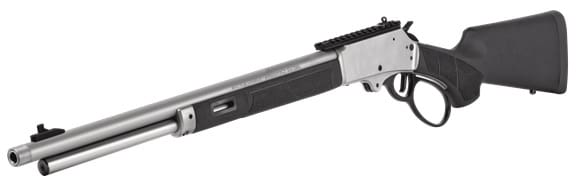
MARYVILLE, TN., (4/8/2025) – Smith & Wesson Brands, Inc. (NASDAQ Global Select: SWBI), a leader in firearm manufacturing and design, announces today the release of the Model 1854, chambered .45-70 Government.

The Model 1854 is crafted to combine the classic aesthetic of the American lever gun with modern enhancements. Smith & Wesson first introduced the series in a paired synthetic black polymer and stainless-steel finish, as well as an Armornite®and walnut furniture combination, across several pistol calibers including .44 Rem Mag, .45 Colt, and .357 Magnum. Starting today, you can own one of these smooth lever guns chambered in the time-honored .45-70 Government rifle cartridge.

Whether you’re hunting big game in deep woods or looking for a more modern lever-action platform, the Smith & Wesson Model 1854 Series provides the perfect blend of heritage and innovation. These new rifles have a 6+1 capacity, a forged 416 stainless steel receiver and 20-inch 410 stainless steel barrel, and include an 11/16-24 thread pattern for suppressor use. Their large loop lever is constructed for smooth operation, allowing for quicker follow-up shots, while their flat trigger design allows for consistent finger placement to support accuracy.

The Model 1854 .45-70 rifles come equipped with several out-of-the-box features such as a 5 ¾-inch Picatinny base for optics mounting, an adjustable XS Sights® ghost ring rear sight, a gold bead front sight, and a fixed magazine tube. The forend on the stainless-steel model offers three M-LOK compatible slots for the user’s preferred accessories and both variants incorporate mounts for the addition of a sling.

For more information on the Model 1854 Series, visit: Smith & Wesson

Hohenstein Supports Global Textile Scheme Initiative for Structured Data Exchange

Friday, April 11th, 2025

Strategic partnership for improved transparency in the textile industry

BOENNIGHEIM, Germany (April 9, 2025) – Global testing and research laboratory Hohenstein has acquired shares in Global Textile Scheme GmbH (GTS). The GTS initiative aims to create an international standard for handling structured product data in the textile and apparel industry. Hohenstein will support GTS in harmonizing and automating data exchange along the supply chain.

As an internationally recognized knowledge partner, Hohenstein is expanding its expertise in data standardization and transparency in the textile sector. “The demand for reliable, structured and machine-readable data along the textile value chain is rising rapidly,” explains Dr. Stefan Droste, CEO of Hohenstein. “We want to support our customers and are committed to close collaboration with GTS.”

Additionally, Hohenstein will leverage its global network to promote the adoption of the GTS standard worldwide. The goal is to facilitate access to standardized data structures for companies—a key requirement for recycling, circularity and more sustainable production. These topics are also increasingly important for new regulatory requirements, such as the Digital Product Passport.

“The Global Textile Scheme initiative offers a pragmatic solution for efficiently managing complex data without an excessive increase of manual processes,” emphasizes Dr. Stefan Droste. “Data is becoming the backbone of the circular economy, and we are excited to actively shape this development with GTS.”

MIL-STD-1553B: The Backbone of Modern Defense Tech

Friday, April 11th, 2025

For nearly half a century, MIL-STD-1553B has been the backbone of military and aerospace data communication, remaining indispensable thanks to its unmatched robustness, deterministic performance, and fail-safe architecture. As defense and aerospace systems evolve, this standard’s adaptability and reliability keep it at the forefront of the industry, proving that innovation isn’t always about replacing the old but enhancing time-tested foundations. Here, Jamal Hagi, RF engineer at connector specialist PEI-Genesis, explains how this standard is essential for innovative defense technology.

MIL-STD-1553B is a time-division multiplexing (TDM) data bus standard, first adopted by the U.S. Department of Defense in the early 1970s and initially used on the F-16 Fighting Falcon fighter jet. It soon became a de facto standard across military aircraft, ground vehicles, and maritime vessels and has since been adopted by all branches of the U.S. military, NATO, and NASA. Increasingly, it’s also finding applications in commercial aerospace and industrial environments.

A legacy of reliability

Operating at 1 Mbps, the 1553B bus employs a dual-redundant architecture, ensuring data integrity and continuity even in the event of a failure. Its low-frequency transmission, below 500 MHz, and two signal paths—a primary and a backup—provide a critical layer of reliability. The standard supports up to 31 remote terminals, including flight control systems, mission computers, and weapons systems, enabling synchronized and secure data exchange.

One of the key technical advantages of MIL-STD-1553B is its deterministic communication protocol. Unlike Ethernet-based systems, where packet delivery times can vary, the 1553B standard guarantees message delivery within a defined time frame. This predictability is essential in applications where timing precision and low-latency response directly impact mission success.

Moreover, the system topology includes not only the remote terminals (RTs) but also a Bus Controller (BC), which manages communication over the bus, and a Bus Monitor (BM), which observes data traffic without interfering. These components ensure seamless operation and data integrity across the system.

The System Controller (SC) oversees the entire system, ensuring proper coordination, while the System Monitor (SM) handles performance monitoring and diagnostics. This bus architecture is typically arranged in a daisy-chain configuration, with each terminal connected through the bus, facilitating efficient communication and data flow. The fail-safe redundancy architecture minimizes the risk of single points of failure, a critical factor in high-stakes environments.

Modern innovations

Despite its longevity, MIL-STD-1553B has not remained static. Modern implementations incorporate enhanced physical layer components, such as advanced transformer-coupled connectors and transceivers that offer increased signal integrity and reduced electromagnetic interference (EMI).

Twinax and triax connectors, like those offered by Cinch under the Trompeter brand, provide exceptional EMI protection and noise rejection through up to 90% shielding coverage and twisted-pair configurations. Similarly, Cinch offers a wide range of MIL-STD-1553 connectivity solutions, adapters, RFI caps, and terminators, as well as box bus couplers with 1–8 stubs and various fixed-length cable assemblies. These components are designed to meet stringent protocol requirements, ensuring low attenuation, precise impedance, and superior noise rejection—all critical for reliable data transmission in harsh environments.

In addition to connectors, MIL-STD-1553B cable assemblies are constructed with multiple layers of electrical shielding and environmental protection to withstand extreme temperatures, moisture, and mechanical shock. This combination of rugged design and advanced materials ensures consistent performance in mission-critical applications.

Furthermore, hybrid architectures that combine MIL-STD-1553B with higher-speed data protocols are becoming more common. These hybrid systems leverage 1553B’s reliability for critical command and control functions while offloading high-bandwidth data to faster channels. This approach preserves the robustness of the standard while addressing the growing need for data-intensive operations in modern defense systems.

Real-world applications

MIL-STD-1553B’s continued use across various platforms speaks to its versatility and dependability. In aviation, it forms the backbone of data exchange between flight control systems, navigation equipment, and weapon systems. Military ground vehicles rely on its robust architecture for onboard diagnostics and command functions. Even space exploration missions have adopted 1553B due to its proven resilience in extreme environments.

For example, missile systems use MIL-STD-1553 data buses to download targeting information from aircraft just before launch and coordinate information flow during flight. The International Space Station and lunar payload programs also leverage 1553B for common data links between space applications.

As the defense sector increasingly integrates AI-driven autonomous systems and advanced sensor networks, the deterministic nature of 1553B becomes even more valuable. Ensuring that decision-making algorithms receive precise, timely data from multiple subsystems is crucial for operational efficiency and safety.

The standard’s guaranteed message delivery within strict timeframes helps prevent data bottlenecks and ensures synchronized operation across complex systems. In AI-driven defense applications like unmanned aerial vehicles (UAVs) and autonomous ground systems, this reliability is vital for real-time decision-making and mission execution. MIL-STD-1553B’s ability to support multiple remote terminals ensures seamless communication between flight control, mission computers, and sensor arrays, creating a cohesive, integrated system ready for any operational challenge.

The future of MIL-STD-1553B

While newer data bus standards offer higher data rates and more advanced features, MIL-STD-1553B’s legacy of reliability and predictability ensures its ongoing relevance. Modernized implementations, such as advanced bus controllers and enhanced remote terminals, further extend the standard’s capabilities, allowing it to integrate with evolving digital infrastructure. These innovations not only maintain the standard’s robustness but also open opportunities for enhanced functionality in next-generation defense systems.

As a trusted partner, PEI-Genesis continues to support this evolution, providing state-of-the-art components that enhance the performance and longevity of MIL-STD-1553B systems. Our commitment to quality and customization ensures that a 50-year-old standard remains poised to support the next generation of aerospace and defense technology.

In an industry where failure is not an option, the enduring strength of MIL-STD-1553B—and the innovations keeping it relevant—serve as a powerful reminder that sometimes, the best way forward is to build on the foundations that have already proven their worth.

To learn more about the wide range of MIL-STD-1553 connectivity solutions offered by PEI-Genesis, visit www.peigenesis.com.

ADF LAND 300 Sidearm Weapon System (SWS) Update

Friday, April 11th, 2025

Big Milestone for the LAND 300 Program!

The LAND 300 program (formerly LAND 159) has reached a major achievement with the Sidearm Weapon System (SWS), hitting initial fielding ahead of schedule.

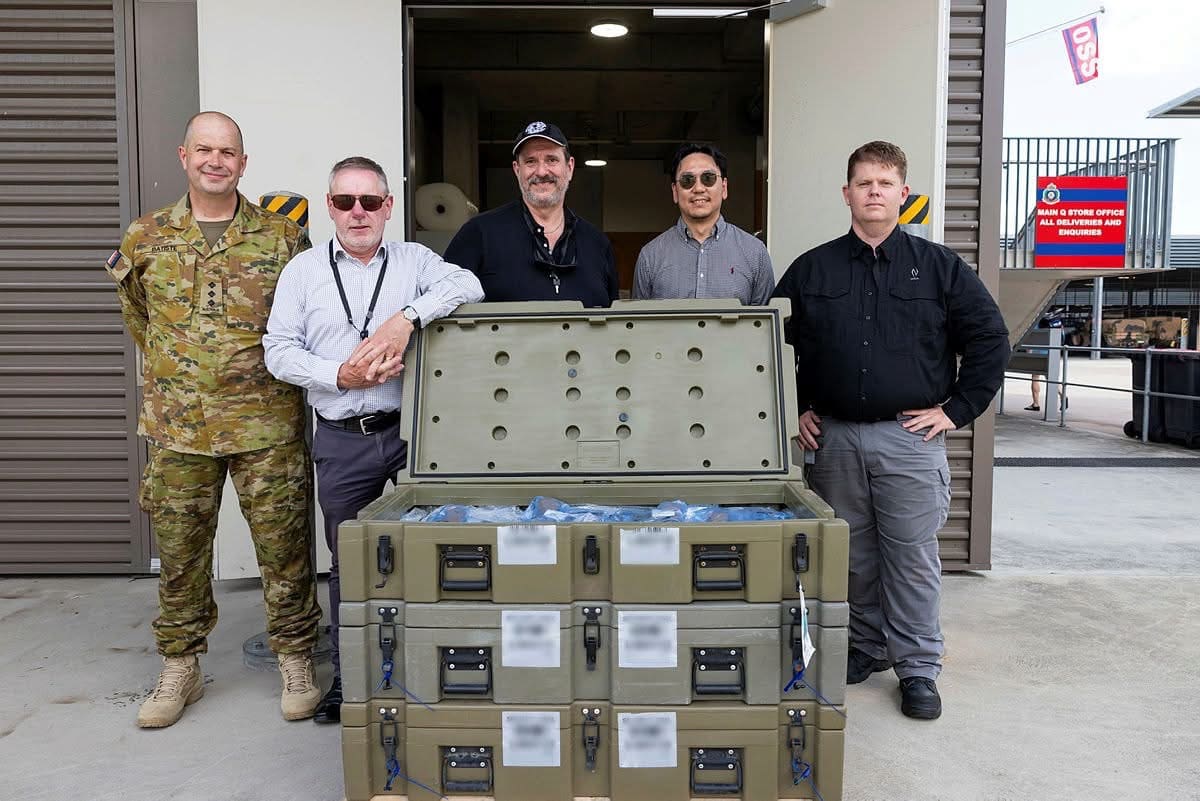
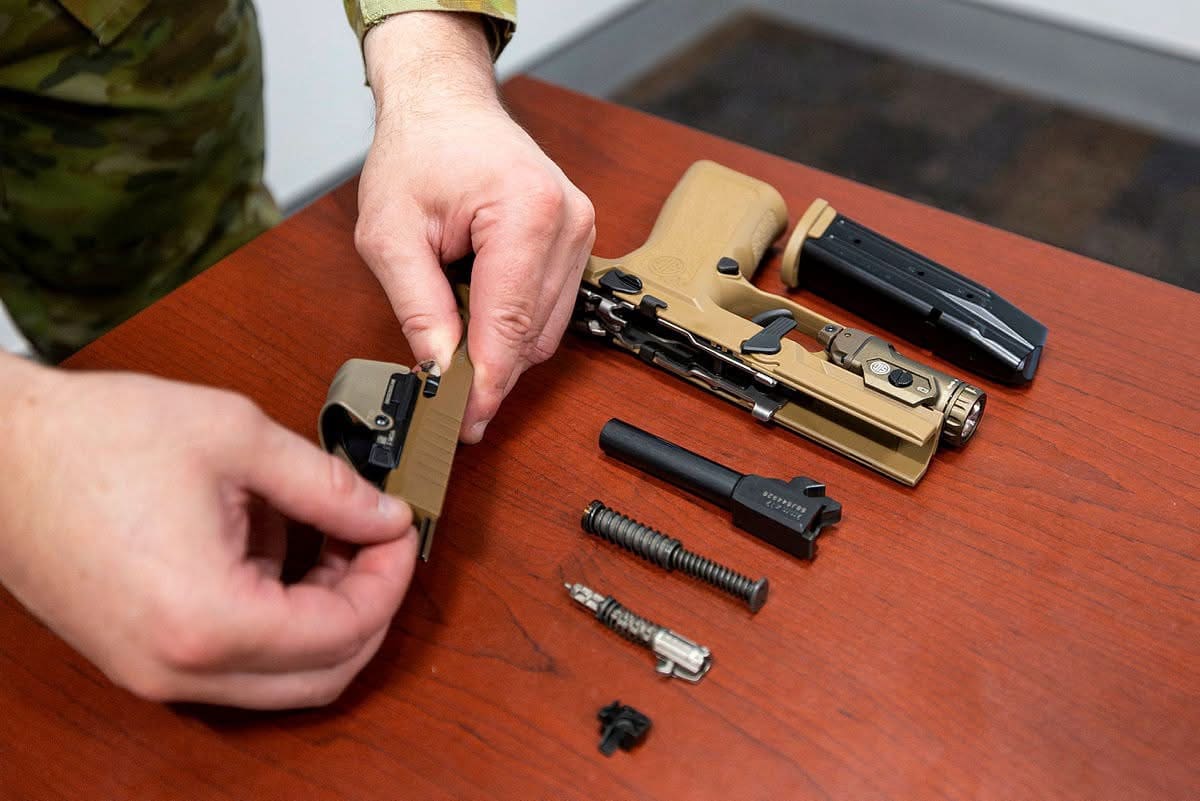
Thanks to the collaborative efforts of NIOA, CASG and the Australian Army, the SWS is now ready for service. It features the Sig Sauer P320 pistol, Romeo 2 red dot sight, white light torch, holster and retractable lanyard, which will be officially known by Defence as the F9 Pistol in service.

This milestone represents a significant leap forward for our defence capabilities. Stay tuned for more updates!

Photo 1: Army, CASG and NIOA staff co-ordinating deliveries of the new F9 Pistol direct to user units.

Photo 2: An Australian Army soldier dismantles the F9 pistol to showcase its individual components.

Photo 3: F9 Pistol with ambidextrous weapon controls

Copy courtesy of NIOA

Images courtesy of Defence

FirstSpear Friday Focus: Multi-Purpose Pack

Friday, April 11th, 2025

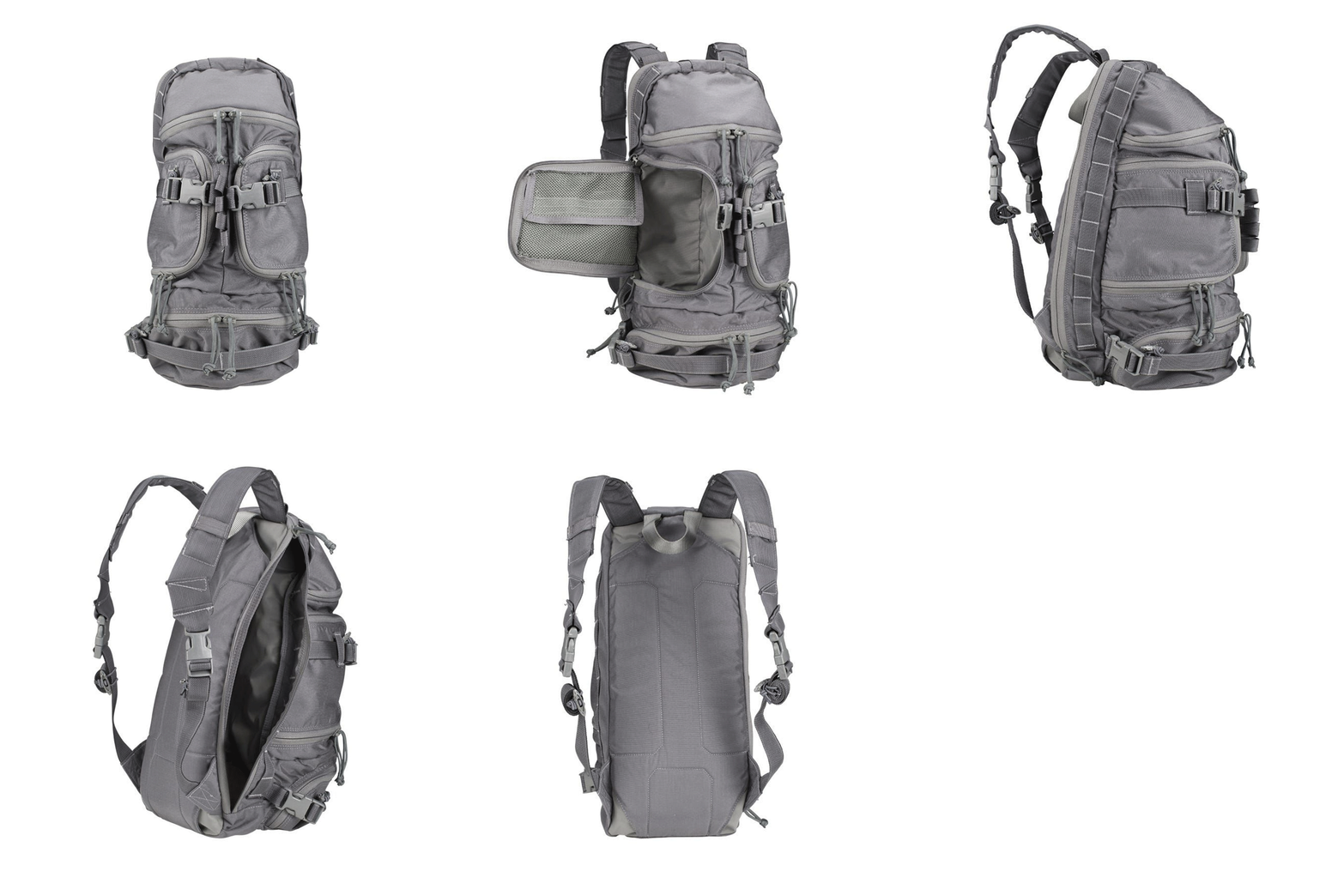
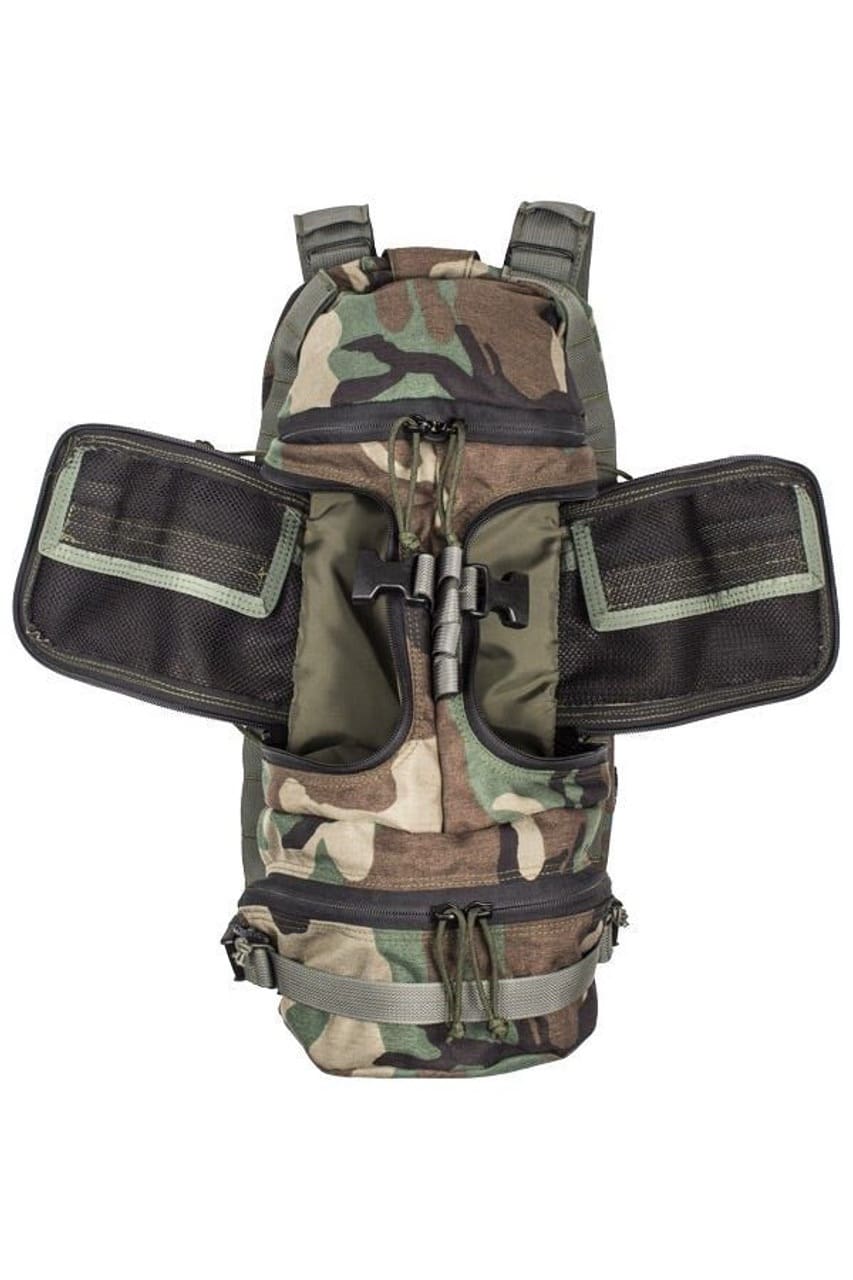
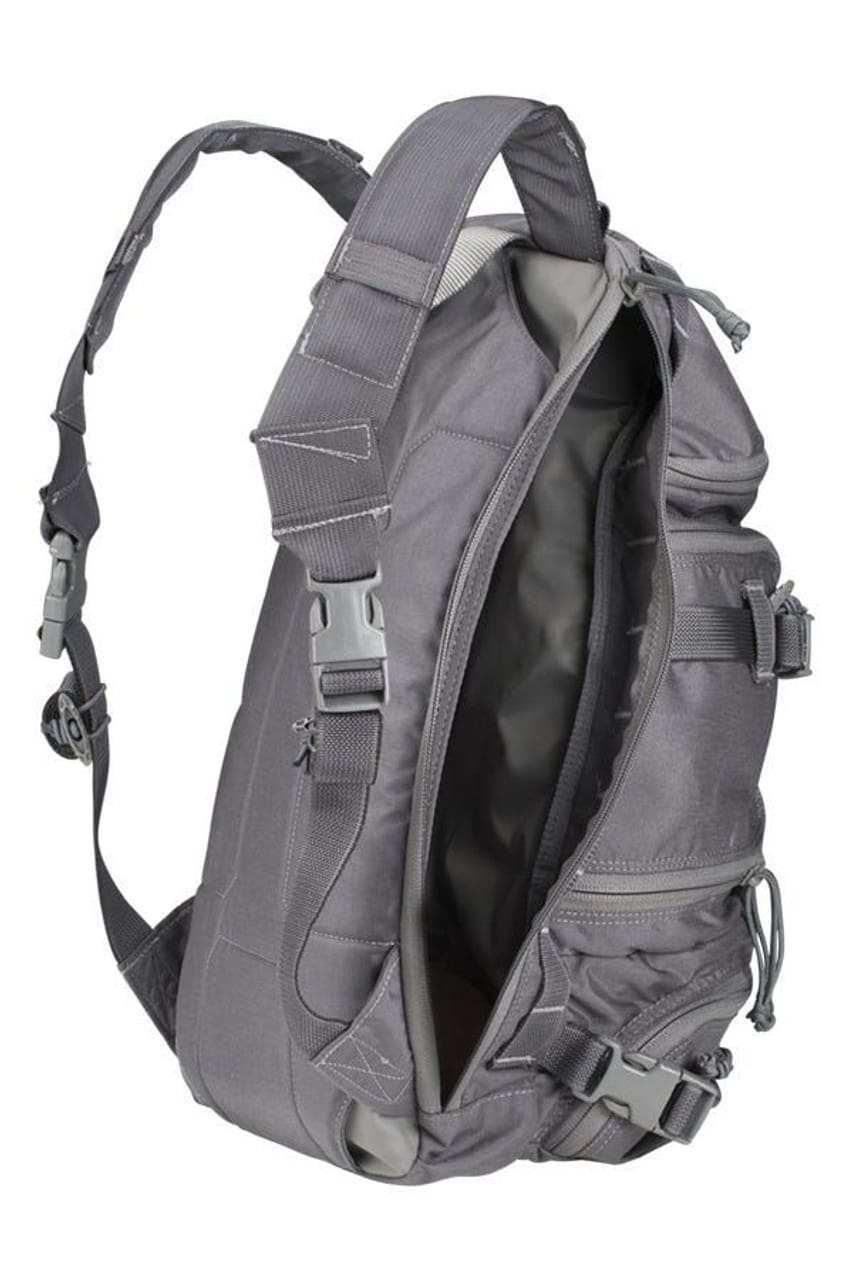
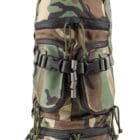
The FIRSTSPEAR MULTI-PURPOSE PACK is a highly versatile and durable pack originally developed as a medical bag for a U.S. Special Operations Forces element. It has since proven adaptable for a variety of uses such as a range bag, escape and evasion (E&E) pack, or a compact day-pack.

One of its standout features is the inclusion of five external pockets, offering ample organization and quick access to essential gear. A large hydration compartment ensures users remain mission-ready and hydrated during intense activity. The low-profile padded shoulder straps provide comfort during extended wear without adding bulk.

This pack’s design emphasizes discretion and utility, making it an exceptional choice for those needing low-visibility gear. Exterior compression straps help to stabilize the load and reduce the overall footprint of the bag, which is ideal for tactical or high-mobility scenarios.

The MULTI-PURPOSE PACK is especially valued for its ability to seamlessly transition between roles, catering to users who need flexibility in their gear. For those seeking a compact, low-profile pack with elite origins, the FIRSTSPEAR MULTI-PURPOSE PACK is a standout option.

FirstSpear is the premier source for cutting edge-tactical gear for military, law enforcement and those who train.

For more information visit First-Spear.com.

USSOCOM: Changing Operational Demands Require Acquisition Changes

Friday, April 11th, 2025

Worldwide threats put the U.S. at risk and sometimes demand attention from U.S. Special Operations Command. To best meet those challenges, U.S. military acquisition needs to change, said Army Gen. Bryan P. Fenton, Socom commander.

“The character of war is changing faster than we’ve ever seen,” he said today before the House Armed Services Committee’s intelligence and special operations subcommittee.

“The innovation cycle now turns in days and weeks, not months and years. Our adversaries use $10,000 one-way drones that we shoot down with $2 million missiles — that cost-benefit curve is upside down,” he said.

Fenton noted that this is the most complex asymmetric and hybrid threat security environment he has seen during his 38 years of service. Contending with these challenges demands more from special operations forces.

“[It] requires tough choices, forcing trade-offs, as we strive to balance an increase in operations readiness and the need for modernization,” he said.

Fenton explained that over the past two years, for example, demand for SOCOM capabilities by combatant commands has increased by more than 35%, while at the same time, SOCOM has dealt with years of flat budgets.

To meet the demands of increased mission requirements and increasingly complex missions, he said SOCOM needs to improve its acquisition process.

“Our current acquisition procurement system … I would just offer, it’s outdated,” he said. “It’s glacial. I think it works in years and decades.”

He added that the lessons learned from the conflict in Ukraine made it clear how the U.S. military acquisition process can be changed for the better.

“What we’re seeing through the lens of Ukraine needs to be an acquisition … and procurement system that is hyper-speed, supersonic,” he said. “Because over there, we’re watching the changes in minutes, hours and days, and that is a very stark contrast” to what the U.S. does.

Fenton said changes to the requirements process, including simplifying it, as well as changes to authorities, could help SOCOM quickly get what it needs.

“If I could say it so bluntly, take more people out of that system, get less hands on the requirements process,” he told lawmakers. “Go from operator to commander and then acquisition.”

Fenton also suggested how changes in funding could benefit acquisition within Socom.

Funding for systems comes in the form of operations and maintenance funds; research, development, testing and engineering funds; and procurement funds. The Defense Department can’t easily move money between those budget lines, and that could be simplified, he said.


“I think there’s a way to take a lot of that off, compress the multiple lines to just a couple, and really modernize there,” Fenton said.

The general also asked for greater flexibility in how the department contracts new systems, particularly the option to increase the length of multiyear procurements.

“Give us an opportunity to think through multiyear processes,” he said. “Two years might seem multiyear, I think, to all of us. Multiyear probably needs to be five to 10 years so we can move at the speed and evolution of what we’re seeing out on the battlefield.”

By C. Todd Lopez, DOD News

The Department of Defense Warrior Games Celebrates 15th Anniversary and 100 Days Out with a Return to Colorado Springs

Thursday, April 10th, 2025

Colorado Springs, Colorado – April 9, 2025 – The Department of Defense (DoD) is excited to announce that the Warrior Games are returning to Colorado Springs, Colorado, for the first time since 2018 for the 15th anniversary. This milestone year will showcase the strength, resilience, and unity of our wounded, ill, and injured service members representing five different teams on their road to healing and rehabilitation together. The 2025 DoD Warrior Games will take place July 18-26, 2025 at the main venue of Colorado College.

“As a community deeply rooted in military service and support for our nation’s heroes, Colorado Springs is once again honored to welcome the Warrior Games, a celebration of resilience, determination, and the unwavering spirit of our nation’s wounded and injured service members and veterans,” said Colorado Springs Mayor Yemi Mobolade. “As Olympic City USA, we deeply value the power of sport to inspire, heal, and unite. To all the athletes, your courage and perseverance embody the very best of our country, and we are proud to stand with you and cheer you on.” 

The DoD Warrior Games, a celebration and healing journey for wounded, ill, and injured service members alongside their family and friends, showcase the incredible power of the human spirit and the unwavering commitment of our military community. Five teams of participants will be representing all military services: U.S. Army, Marine Corps, Navy/Coast Guard, Air Force/Space Force, and the U.S. Special Operations Command. The participants will be competing in 11 different adaptive sports including Archery, Cycling, Field, Indoor Rowing, Powerlifting, Precision Air

Sports, Sitting Volleyball, Swimming, Track, Wheelchair Basketball, and Wheelchair Rugby.

“We love this event and everything it stands for, but nothing can compare to the impact this event has on the service members, their family and friends, and the fans,” said Mr. David Paschal, Director of the DoD Warrior Games. “This event is truly life-changing, and it is a tremendous honor for our team to have built this event into what it is today after 15 years and to have supported and encouraged thousands of service members on their road to healing and rehabilitation.”  

The public are invited to join the celebration in the beautiful community of Colorado Springs this summer at the event’s main venue of Colorado College to celebrate the 15th anniversary of the DoD Warrior Games and support the service members who have or are serving our country. 

“We are thrilled to be part of the Department of Defense Warrior Games at Colorado College this July,” said Lesley Irvine, Vice President and Director of Athletics at Colorado College. “This event is a celebration of resilience, determination, and the indomitable spirit of our nation’s service members and veterans. We look forward to welcoming these incredible athletes to our campus and providing a world-class experience for them, their families, and the community.”

More information about the Games, including the event schedule, volunteer opportunities, and ticketing information, will be available soon HERE.