FirstSpear

Archive for November, 2026

Boxer Amphibious Ready Group Innovates with Drone Warfare Capabilities at Sea

Monday, November 2nd, 2026

Arabian Sea – U.S. Marines and Sailors with the Boxer Amphibious Ready Group (ARG) and the 11th Marine Expeditionary Unit (MEU) recently conducted training with small unmanned aerial systems (sUAS) while underway in the U.S. 5th Fleet area of operations. The training aimed to find innovative ways to integrate sUAS and counter-sUAS (C-sUAS) platforms within a maritime operational environment.
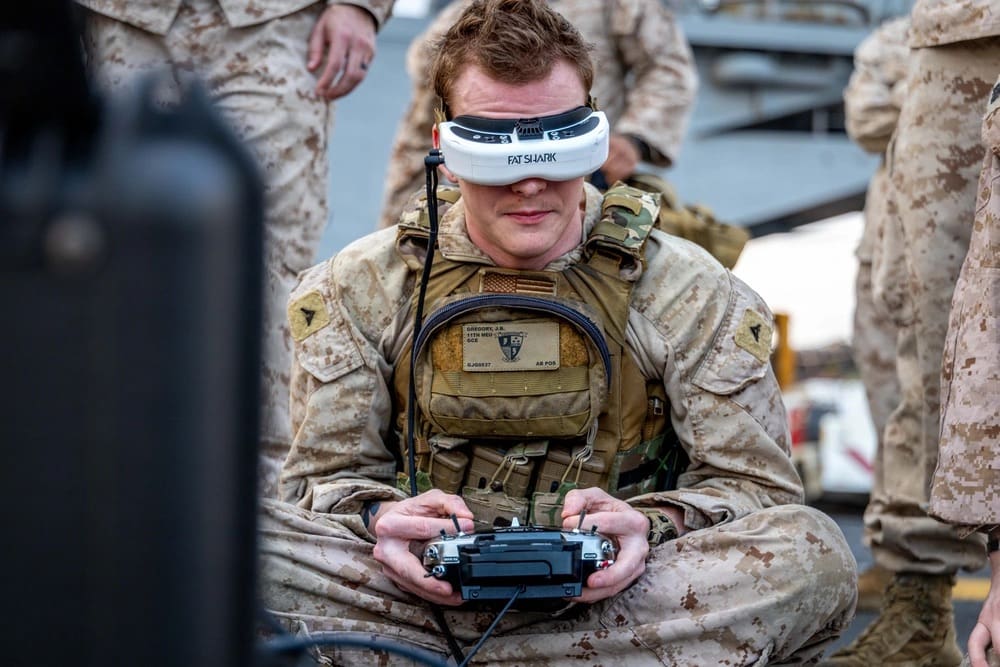
With the proliferation of drones in modern warfare, the Navy and Marine Corps team is preparing for the future fight by adapting and innovating with these emergent technologies. This experimentation with both sUAS and C-sUAS capabilities allowed Sailors and Marines to not only refine drone employment but also to enhance their ability to defend against these modern threats.

“A lot of what we see on modern battlefields is FPV drones being used to attack infantry units in the open or high-value targets like ground radar stations, energy and communications infrastructure, or hardened structures,” said U.S. Marine Corps 1st Lt. John Pfeiffer, a rifle platoon commander with Battalion Landing Team (BLT) 3/5, 11th MEU. “We’ve tailored our training towards defeating critical enemy infrastructure that could have kinetic means of defeat, which our drones are naturally more capable of achieving due to their acrobatic flying capabilities.”
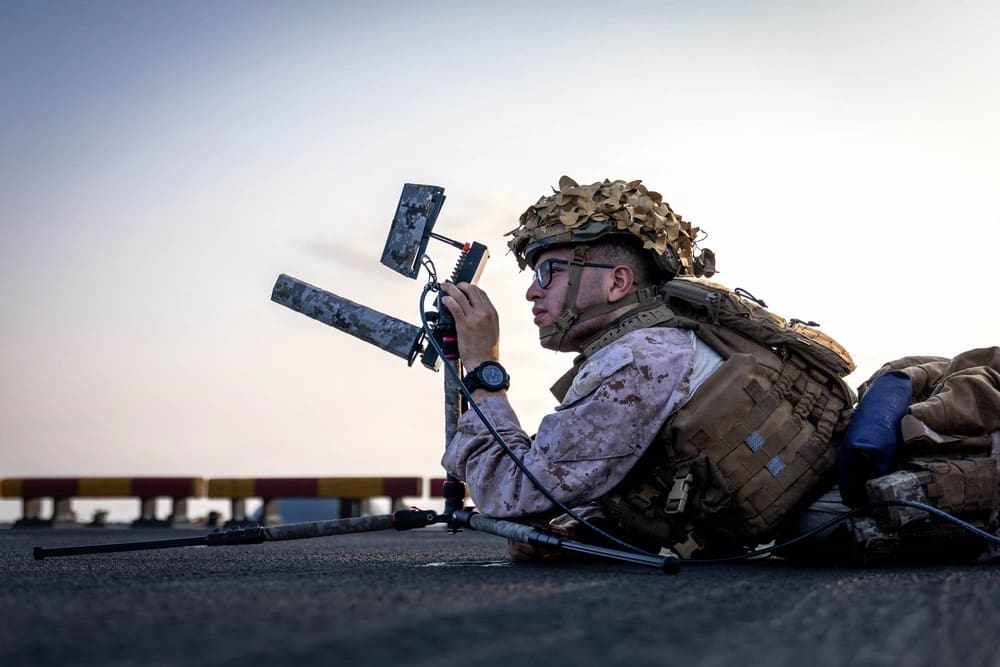
This training drew on lessons from contemporary conflicts, including the use of drones to both attack and launch from naval assets.

“We use these lessons learned in all of our training, both on the MEU and on Camp Pendleton, so that we can assist in integrating developing tactics, techniques, and procedures into our doctrine,” said Sgt. Austin Mercier, a battalion attack drone team leader with BLT 3/5, 11th MEU.
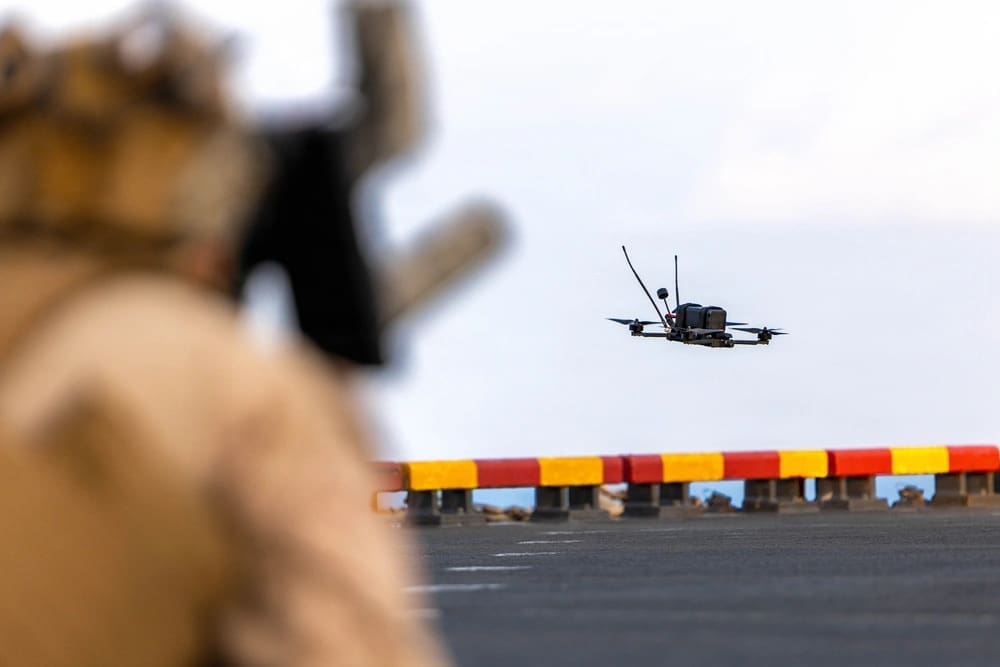
The training consisted of a Neros Archer, an expeditionary first-person-view controlled strike drone, taking off from both Wasp-class amphibious assault ship USS Boxer (LHD 4) and San Antonio-class amphibious transport dock ship USS Portland (LPD 27). The drones were piloted through various flight profiles to simulate precision strikes from the sea. This demonstrated the ARG/MEU’s ability to deploy sUAS in a maritime setting by launching, tracking, and recovering these assets aboard a moving naval vessel.

“Up to this point in deployment, we have primarily been utilizing our simulators to stay proficient on our systems,” said Mercier. “The simulator is a very good substitute, but it doesn’t bring in external factors very well, like wind, propeller oscillation, or density altitude. So, getting in actual flights was crucial for our sustainment and served as a proof of concept that our attack drone teams could be employed from the deck of amphibious ships.”
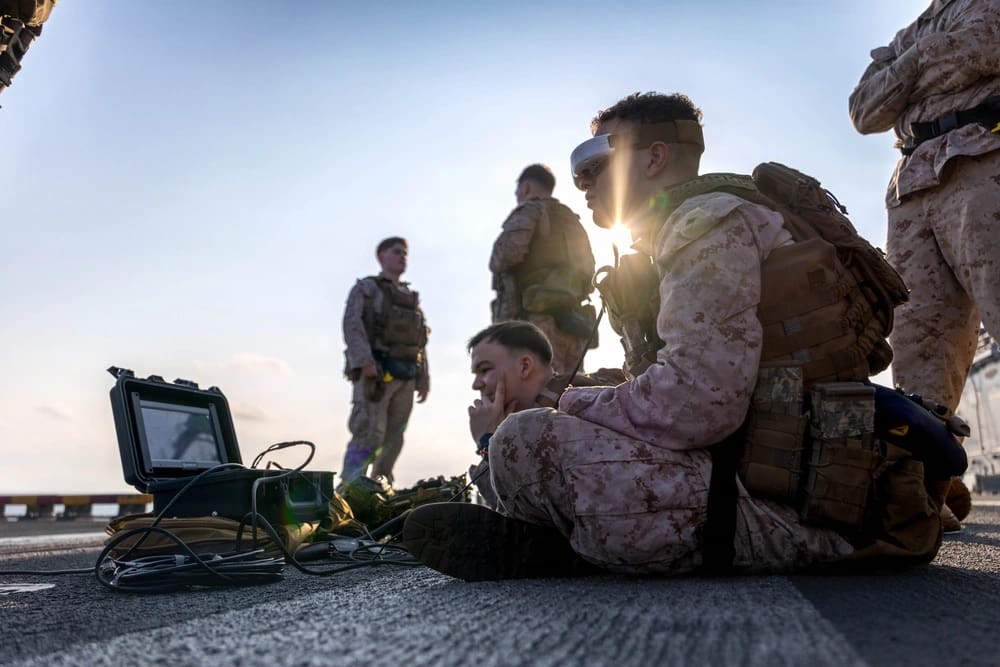
The Neros Archer, fielded to Marine Corps units in late 2025, is built to deliver modular warheads, providing platoon-level units with a rapidly deployable precision-strike capability.

“What this does for the MEU and ARG is that it gives the lowest echelon a precision-strike capability that simply did not exist within the formation before deployment,” said Pfeiffer. “With this system, we can damage, destroy, or neutralize critical enemy infrastructure with an exceptionally short kill-chain, giving ourselves an advantage in combat power.”
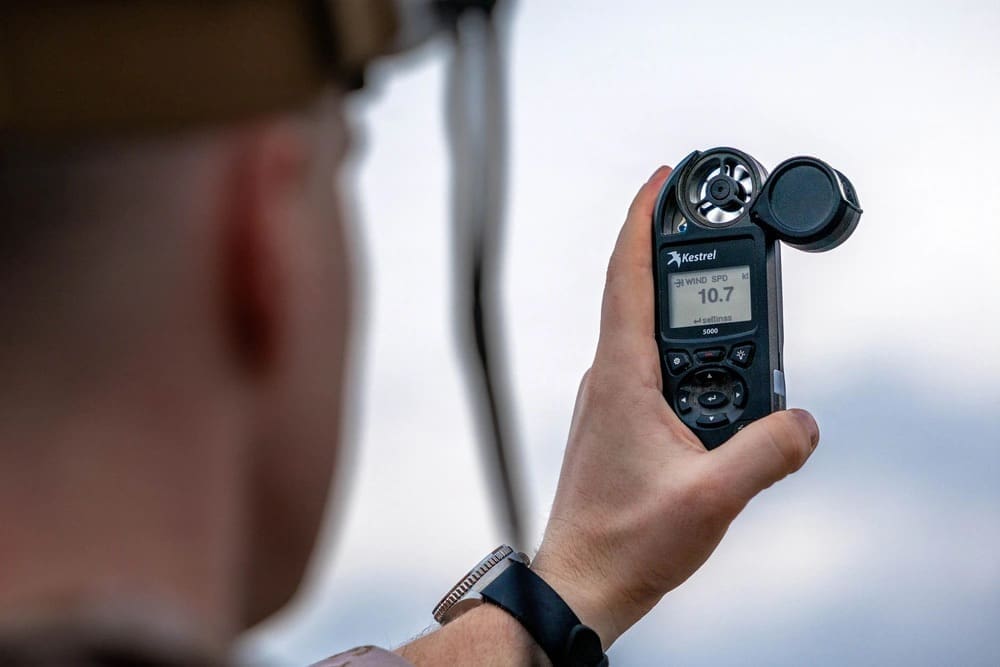
The training also validated the ARG/MEU’s C-sUAS abilities to detect and track sUAS assets on the high seas, ensuring that friendly forces remain postured to defend against this emergent threat. Platforms utilized included the SmartShooter (SMASH) optic, Regulus Ring, and Titan SV systems.

“Our kinetic system—specifically the SMASH optic mounted to a Marine’s issued service rifle—is going to become an incredibly common optic in future conflicts, so getting our Marines familiar with it is just as important as their standard optics,” said Pfeiffer. “Our non-kinetic means, like the Regulus Ring and TITAN SV, are also extremely important for use as part of a multi-layered defense against drones, with early detection and interception capabilities that could reveal critical information about whatever system is targeting them and what defense is best suited to defeat them.”

As technology continues to advance, the Navy and Marine Corps team remains committed to staying at the forefront, innovating to counter new challenges and maintain its tactical edge. As new threats constantly emerge, Marines and Sailors stand ready to face them head-on, sustaining readiness for future warfare.

“This system makes the nature of warfare much more complex through its psychological effects,” said Sgt. Aidan Shafer, an FPV attack drone team leader with BLT 3/5, 11th MEU. “My team can locate, close with, and destroy the enemy without ever physically encountering them. We bring utmost surprise, speed, and violence of action. We are not only warfighters, but technological strategists.”

Story by Sgt Trent A. Henry 

11th Marine Expeditionary Unit
VIKTOS Unveils the OPSEC Field Fleece: Field Proven Comfort for Fall’s Unfinished Business

Sunday, November 1st, 2026

VIKTOS, the U.S. veteran-designed brand known for blending hard-use performance with everyday style, introduces the Opsec Field Fleece as part of its Fall 2026 collection—built for cold starts, full schedules, and days that refuse to end when the sun does.

Field Proven Comfort.

Fall has a charming reputation. Turning leaves. Crisp mornings. Something involving apples. It also brings cold steering wheels, wet range benches, and a growing list of things that need doing before dark. The Opsec Field Fleece dresses accordingly.

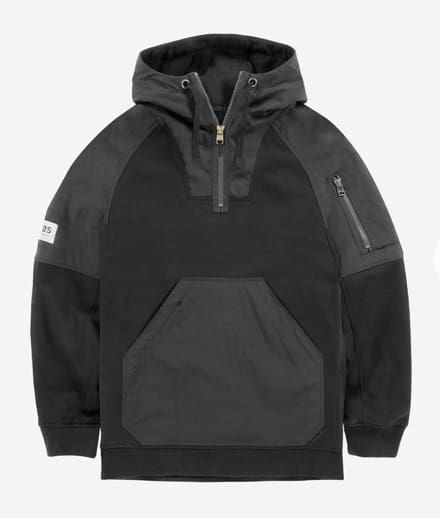
Midweight 9.4 oz fleece delivers comfortable warmth without making every movement a negotiation. Reinforced NyCo overlays at the shoulders and elbows add durability where daily wear tends to leave its signature, whether you’re leaning into a workbench or settling behind a rifle.

A relaxed fit keeps things comfortable, while raglan sleeves give you room to reach, lift, and get on with it. Because the day already has enough restrictions.

Keep Your Essentials. Lose the Excuses.

The Opsec’s zippered belly pocket keeps everyday essentials secure, while a zippered sleeve pocket handles the smaller items that otherwise develop a habit of disappearing. Up top, a quarter-zip neck makes it easy to vent heat when the work picks up or layer up when the temperature drops.

Built to stay useful well beyond the first frost, the Opsec moves comfortably between:

On the Clock: Reinforced shoulders and elbows for the places where work wears through good intentions.

On the Range: Freedom of movement, secure storage, and warmth for mornings when the steel is cold and the coffee is already gone.

Off the Clock: Everyday fleece comfort that looks perfectly at home in civilized company. Your conversation remains your responsibility.

Veteran-Designed. Built to Stay in Rotation.

Developed by U.S. military veterans, the Opsec Field Fleece brings practical details to a familiar fall staple. Comfortable enough to reach for daily and reinforced where it matters, it earns its place by the door. Every Opsec Field Fleece is backed by VIKTOS’ one-year workmanship and materials warranty.

Features:

  • Reinforced elbow and shoulder NyCo overlays for durability
  • Zippered belly pocket for secure EDC storage
  • Zippered sleeve pocket for small-item storage
  • Quarter-zip neck for easy on/off and ventilation
  • Midweight 9.4 oz fleece for balanced warmth and comfort
  • Raglan sleeve construction for increased mobility
  • Relaxed fit for easy everyday wear
  • U.S. veteran designed and developed
  • One-year workmanship and materials warranty

Sizing & Availability:

The Opsec Field Fleece fits true to size and is available in Black, Green, and SAR Orange, in sizes S–3XL. Retail price: $120. Shop the Opsec Field Fleece and explore the Fall 2026 collection at www.VIKTOS.com.

Darley and National Fallen Firefighters Foundation Announce Winners of the Fifth Annual Fire Service Thought Leadership Essay Competition

Sunday, November 1st, 2026

Industrial Fire Chief, Virginia Beach Captain, and an Australian firefighter show how AI can catch risk before a firefighter gets hurt.
“The best place to make firefighters safer is before the tones drop.” Second place winner – Captain Daniel Fernandez, Virginia Beach Fire Department

ITASCA, IL – October 29, 2026 – Darley and the National Fallen Firefighters Foundation (NFFF) today named the winners of the fifth annual Fire Service Thought Leadership Essay Competition, which drew over 40 essays from five countries: the United States, Canada, Australia, England, and Israel. This year’s question: How can artificial intelligence improve firefighter health, wellness, and safety?

The three winning essays approach the question from different angles but reach the same conclusion: the fire service already has much of the knowledge and information needed to understand its risks. The opportunity is to translate that knowledge into action, building on existing efforts to further improve firefighter survivability.

First place ($3,000): Alex Zielinski, Fire Chief, Eli Lilly Fire Department, Houston, Texas

Zielinski, who previously served as deputy chief and division chief of training for Lilly in Lebanon, Indiana, proposes a Firefighter Health Risk Intelligence System. It would read the records a department already keeps (incident reports, training logs, near-miss reports, PPE compliance) against the full library of NIOSH firefighter fatality investigations, then hand back specific findings and a ranked list of where to start. No new data collection, no analyst required.

“The gap between knowing and acting is no longer a technology limitation. It is a priority limitation,” he writes.

Second place ($2,000): Capt. Daniel Fernandez, Virginia Beach Fire Department

Fernandez calls for an AI “safety layer” built on data departments already collect, from rehab vitals to staffing patterns. He has built part of it himself. Stuck at a slow station with few chances to hear officers run a fire, he used AI to create a voice-driven command simulator that runs on a computer or tablet. Now called Fire Ground Sim, it is used by more than 400 firefighters.

Third place ($1,000): Sara (Mills) Kerr, Fire and Rescue NSW, Australia

Kerr, a qualified firefighter and communications operator who is also a doctoral candidate at the University of Newcastle, takes on cognitive overload. She proposes an AI assistant bound only to an agency’s own pre-incident plans, SOPs and hazmat references, running on crews’ existing tablets even when the internet drops. It would flag hydrants, hazardous materials and building risks before the first unit arrives. The decisions stay with people.

“AI appears to know everything, yet it thinks about nothing,” she writes.


Where the essays came from

Essays came from the United States, Canada, Australia, England and Israel, from members of career, volunteer and industrial fire departments. Writers ranged from line firefighters and company officers to chiefs, training officers, researchers and educators. Across the field, three ideas kept coming up: the data already exists but sits in separate systems or on paper; the goal is catching risk before an injury, with many writers pointing to the NFL’s Digital Athlete program as a model; and AI should back up firefighter judgment, never replace it, with privacy built in from the start.

“These essays came from people who live with the problem every shift. That’s exactly why we asked them. Several of these ideas could be tested in a firehouse next month, not five years from now,” said Paul Darley, CEO & Chairman of Darley.

“Everyone Goes Home has always been about preventing the next line-of-duty death before it happens. These firefighters showed how new tools can serve that mission without taking judgment out of human hands,” said Danny Kistner, Director of Fire Programs at the National Fallen Firefighters Foundation.


What’s next

Winners will be featured on Inside Darley, the Darley Times newsletter and the InService podcast, and in fire service publications including Fire Engineering, Firehouse, FireRescue1 and CRACKYL. The first-place winner will present at the TEEX Leadership Development Symposium, Jan. 6-8, 2027, in The Woodlands, Texas, and at Fire-Rescue International (FRI).

The winning essays will be published in the 2026 Top Essays Booklet, available in mid-November at darley.com/essay-competition. The 2027 prompt will be released before the end of 2026.

The competition was conceived by Garry Briese and is sponsored by Darley in collaboration with the National Fallen Firefighters Foundation.

­­­­­­­­­­About Darley: You serve others. We serve you. Darley provides the highest quality pump, technology, and equipment solutions for first responders around the world. With origins in Midwest manufacturing, Darley offers a complete line of unmanned systems, immersive training technology, equipment and pumps. Learn more on our websites: www.darley.com and shop.darley.com.

About the National Fallen Firefighters Foundation: The National Fallen Firefighters Foundation (NFFF) was created by Congress in 1992 to honor and remember America’s fallen firefighters, assist their families, and support programs that improve firefighter safety and prevent line-of-duty deaths. For more information, visit www.firehero.org.

Army & Air Force Exchange Service’s Salute to Service Month Returns with Giveaways for Veterans, Service Members

Sunday, November 1st, 2026

What you need to know:

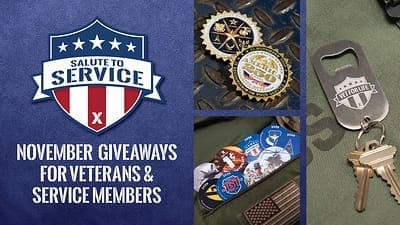
  • Free giveaways: The Army & Air Force Exchange Service (AAFES) will offer Veteran for Life keychains Nov. 7, challenge coins Nov. 11 and collectible Service-specific penny POGS Nov. 20 during Salute to Service Month.
  • Eligible shoppers include active-duty service members, military retirees and service-connected disabled Veterans with in-store shopping benefits.
  • Giveaways are available in-store only, while supplies last. Visit ShopMyExchange.com/salute-to-service or contact your local Exchange for details.

DALLAS, Oct. 26, 2026 — The Army & Air Force Exchange Service (AAFES, the Exchange) will honor active-duty service members, military retirees and service-connected disabled Veterans with in-store giveaways Nov. 7, 11 and 20 during Salute to Service Month. Giveaways are available to eligible shoppers with in-store shopping benefits, while supplies last.

The Exchange celebrates Salute to Service Month throughout November to recognize the service and sacrifices of America’s military community.

Salute to Service Month recognizes one day is not enough to celebrate our nation’s heroes. Active-duty military, retirees and Veterans with in-store shopping benefits are eligible to receive a token of appreciation throughout the month signifying the Exchange’s appreciation for their service, while supplies last.

“Salute to Service Month reflects the Exchange’s commitment to serving those who serve,” said Air Force Chief Master Sgt. Angela Holden, the Exchange’s senior enlisted advisor. “One day is not enough to honor our heroes. We are looking forward to recognizing those who have given so much to protect our freedoms.”

What are the Exchange’s Salute to Service Month giveaways?

In-store Salute to Service giveaway dates include:

Nov. 7: Veteran for Life keychains provide heroes with a tangible badge of honor to commemorate their service no matter where they go.

Nov. 11 (or near): An Exchange tradition going on its seventh year, the challenge coin features an America 250 design on one side and the emblems of all six military branches on the other.

Nov. 20: Collectible Service-specific penny POGS, designed for Salute to Service month. The penny POG serves as a special memento with history dating back to Southwest Asia in the early 2000s.

“We are excited to welcome our heroes to the Exchange for the recognition they deserve,” Holden said. “We look forward to strengthening our connection with the military community.”

Who is eligible for the Exchange’s in-store giveaways?

Giveaways are in-store only for active-duty service members, retirees and service-connected disabled Veterans with in-store shopping benefits. Quantities are limited. Shoppers can visit ShopMyExchange.com/salute-to-service for more information or contact their local Exchange.

Since 1895, the Army & Air Force Exchange Service has gone where Soldiers, Airmen, Guardians and their families go to improve the quality of their lives by providing valued goods and services at exclusive military pricing. The Exchange is the 60th-largest retailer in the United States. 100% of Exchange earnings support military communities. In FY 2025, the Exchange generated $307 million for military Quality-of-Life programs. In the last 10 years, the Exchange has generated $2.4 billion in dividends to Quality-of-Life programs. The Exchange is a nonappropriated fund entity of the Department of War and is directed by a Board of Directors. To find out more about the Exchange history and mission or to view recent press releases please visit our website at www.shopmyexchange.com or follow us on X at x.com/shopmyexchange.

Department of War Announces $150 Million in Awards to Multidisciplinary University Research Teams

Sunday, November 1st, 2026

The Department of War today announced $150 million in awards for basic defense-related research projects as part of the Multidisciplinary University Research Initiative (MURI). These awards, which average $7.5 million over five years, will support 20 teams at 57 U.S. academic institutions, subject to satisfactory research progress and the availability of funds.

“The MURI program brings together multidisciplinary teams from institutions across the country to tackle some of our most complex scientific challenges,” said Jason Day, Research Policy Director within the Office of the Under Secretary of War for Research and Engineering. “By deploying a mix of perspectives and approaches, MURI projects foster the kind of bold, cross-cutting research that can spark breakthroughs and push the boundaries of what’s possible.”

Since its inception in 1985, the Department’s MURI program has brought together teams of investigators from many different disciplines to generate collective insights, facilitating the development of cutting-edge technologies to address the Department’s unique challenges. The highly competitive program, which complements the Department’s single-investigator basic research grants, has contributed to current and future military capabilities and produced numerous commercial-sector applications. Notable MURI achievements include breakthroughs in solid-acid fuel cells, novel nanoscale X-ray imaging techniques that enable advances in battery design and microelectronics, and advances in self-assembled materials that led to the first demonstration of microcontact printing, now widely used in microelectronics, surface chemistry, and cell biology.

The Army Research Office, the Air Force Office of Scientific Research, and the Office of Naval Research solicited fiscal year 2026 proposals in topic areas of strategic importance to the Department. After a merit-based review of 451 white papers, a panel of experts narrowed the pool to a subset of 74 full proposals, from which the 20 final awards were selected. The list of winning teams is available here.