SIG SAUER - Never Settle

Author Archive

Griffin Armament AR Furniture Now Shipping

Sunday, March 13th, 2016

ECSKBLK1

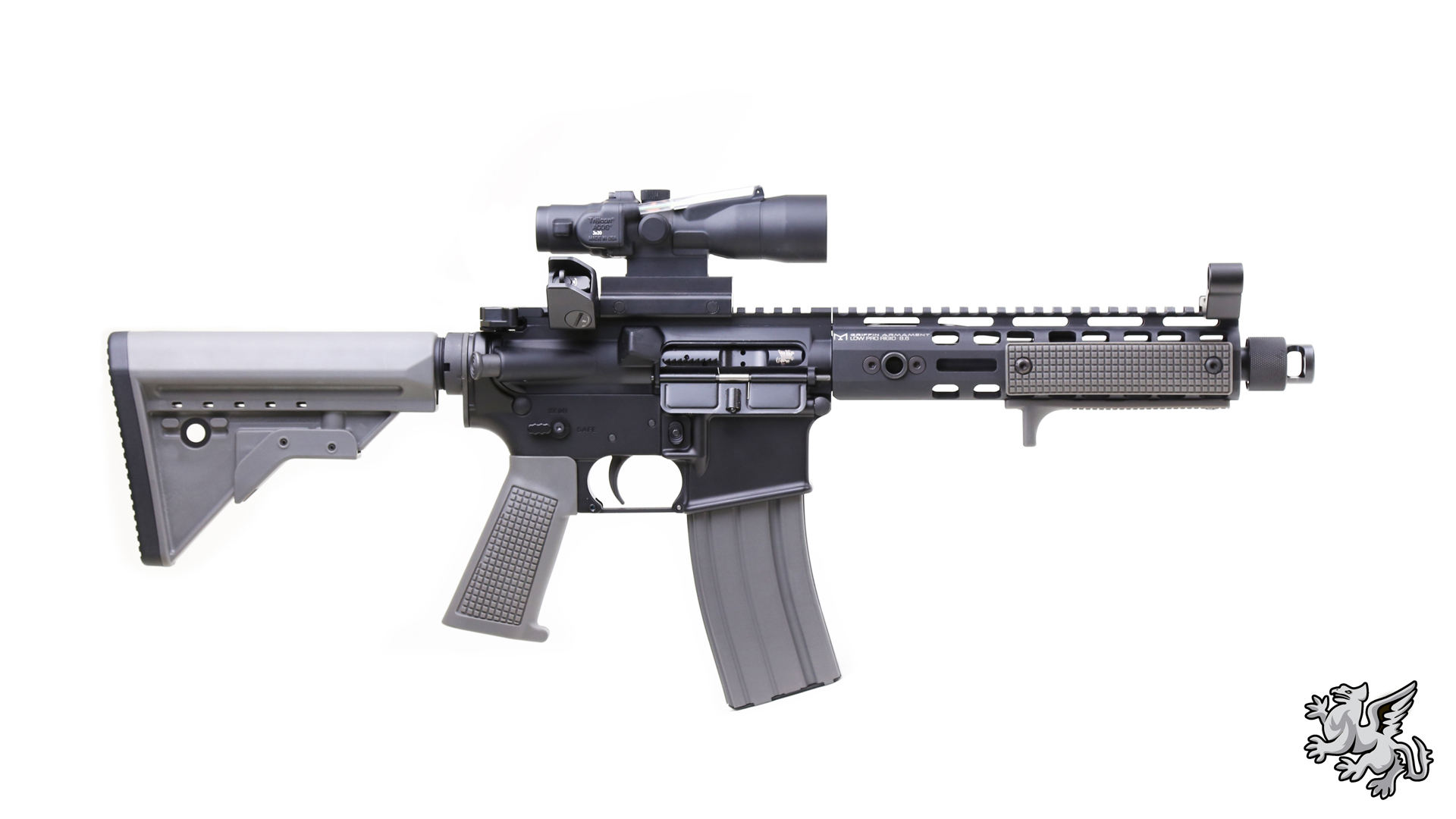
The design objective for the Griffin AR furniture products were to bring quality, functional options to the market that offered unique benefits at affordable prices. The ECS (Extreme Condition Stock), RailShield M-LOK compatible rail covers, and A3 grip are available in Black, FDE, OD Green, and Grey.

“The Extreme condition stock definitely took the most effort.”, Austin stated, Primary owner and Lead engineer for Griffin. He went on to say, “I wanted to make something unique and better. There is a lot of stuff that has come out on the market the last few years that is unique but doesn’t necessarily add any new function or improvement over what already existed.”
f

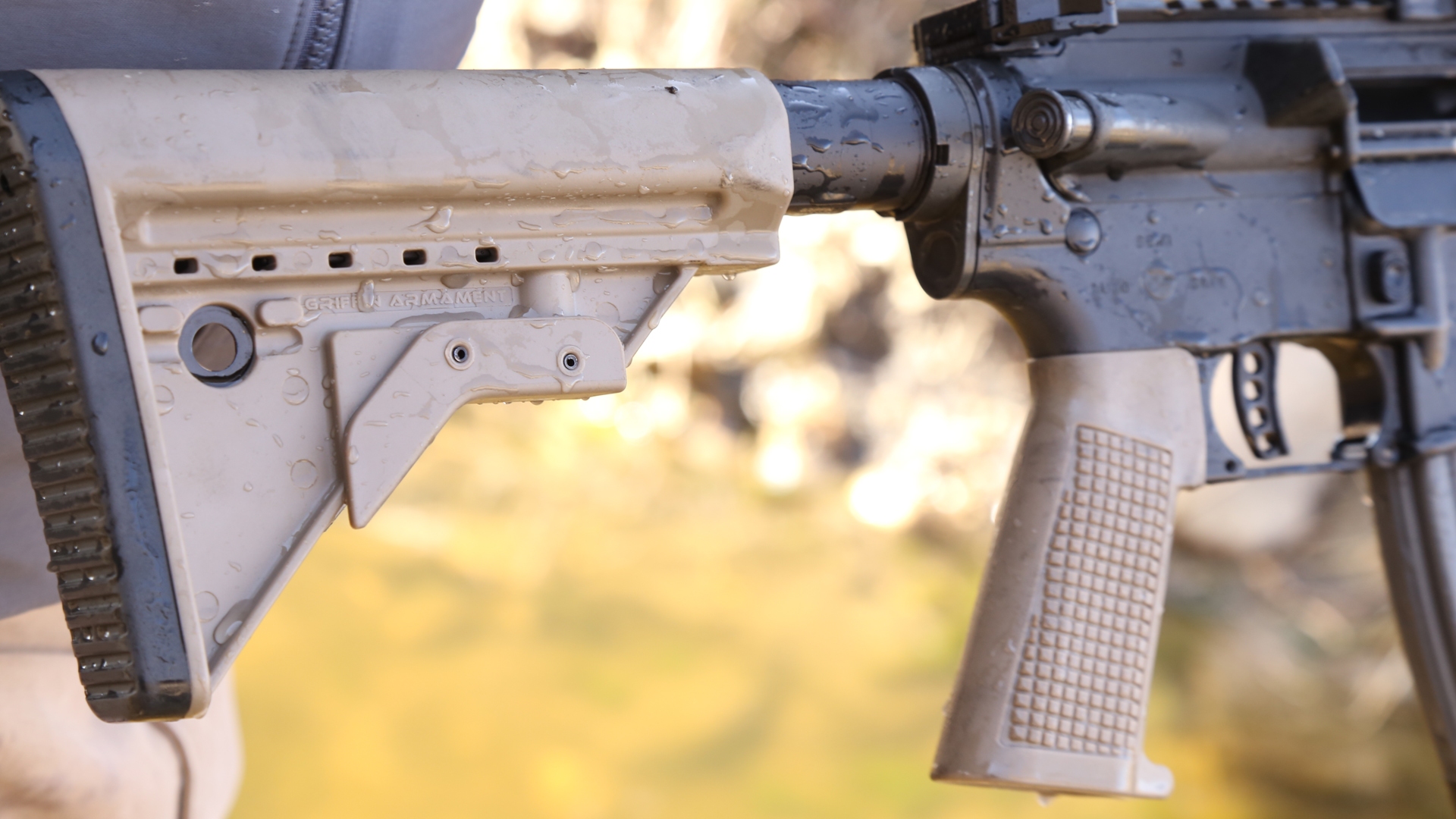
The Extreme Condition Stock features a proprietary low drag latching system designed around a beefy stainless tool steel locking pin. This mechanism in conjunction with optimal geometry, and impact modified injected materials, allow the ECS to pass a 10 foot drop test when used with the Griffin MRE-HD (Maritime Receiver Extension Heavy Duty). In Griffin’s testing, the ECS stock, when used in conjunction with their MRE, allowed direct impingement Ar15s to pass an “Over The Beach Test”. Holes in the rear butt plate and along the sides of the stock communicate with holes in the MRE allowing for reduced pressure in the operating system when fired immediately after the firearm is removed from the water. The stock has a canted rear butt angle for improved ergonomics to the body. This also ensures recoil is kept high and in-line with the barrel to minimize muzzle rise. Also the top of the stock is “beard friendly” meaning there is no hole present as found in mil-spec style stocks. A low profile anti-rotation QD sling swivel socket is the provided means of sling attachment.
Untitled-1

The A3 grip is simple in that it doesn’t have a plug on the bottom. “We polled a lot of our friends from military and contracting and a very small percentage ever used storage in plug grips even when they had them.” Said a representative from Griffin. The goal of this product was to make a very affordable improved grip over the A2 grip. “It features a more vertical grip angle and deletes the annoying finger shelf that nobody really likes.”, He went on to state
f2

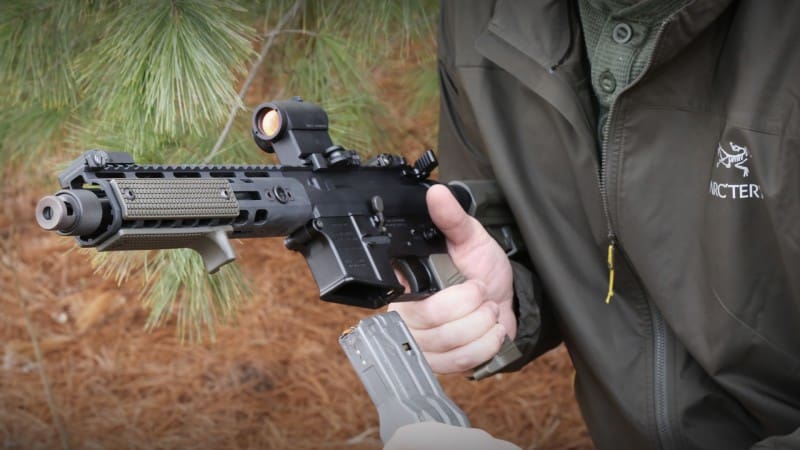
The RailShield panel kit sections are 4.6” long ensuring that you can get a full hand grip on the panels protecting your hand from thermal transfer of a hot rail if you are going through a lot of ammo fast. The styling of the kit matches the A3 grip. Four pieces are included. The user has the option of running the bottom flat panel or palm stop panel. The palm stop geometry is placed as rearward as possible, again allowing a full hand grip while giving the shooter an anchor point to pull the gun hard into the shoulder pocket to control recoil and grab fast follow up shots.

Griffin is shipping furniture at the time of this press release.

www.griffinarmament.com

American Knife & Tool Institute Applauds Passage Of West Virginia House Bill 4145

Sunday, March 13th, 2016

American Knife & Tool Institute, Partnered with the West Virginia Citizen’s Defense League, Worked to Ease Concealed Carry Restrictions for Law Abiding Citizens

Cody, WY (March 8, 2016) – The American Knife & Tool Institute (AKTI) today, in partnership with the West Virginia Citizen’s Defense League (WVCDL), applauded the override of Governor Tomblin’s veto of HB 4145. The legislation allows a law-abiding citizen of West Virginia, who is 21 years of age or older, to lawfully carry a knife, open or concealed, without needing to first obtain a government-issued permit. The West Virginia legislature overrode the veto this past Saturday, March 5th. The law goes into effect 90 days from the override.

AKTI is a non-profit 501(c)6 organization which represents all segments of the knife industry and knife users, promoting reasonable and responsible knife legislation and enforcement. We believe that law-abiding citizens should be able to carry their essential and valuable tools without the fear of arbitrary, inconsistent and ineffective governmental restrictions.

“We are extremely pleased to see HB 4145 pass the West Virginia Legislature,” said AKTI’s Executive Director, Jan Billeb. “We believe that HB 4145 will be beneficial to all citizens in the State of West Virginia. It allows for eligible persons to carry the knife of their choice. This positive legislation would ensure that law-abiding West Virginia citizens are not criminalized for possession and carry of a tool.”

AKTI worked closely with WVCDL, who was instrumental in the momentum behind the legislation. WVCDL is a non-partisan, non-profit, all-volunteer, grassroots organization of concerned West Virginians who support our individual right to keep and bear arms for defense of self, family, home and state, and for lawful hunting and recreational use.

For more details on West Virginia HB 4145 visit www.AKTI.org.

Gunfighter Moment – Mike Pannone

Saturday, March 12th, 2016

Cover, Concealment and Vehicles

It is important to have common definitions of common terms or further debate is senseless. Below are the definitions for cover and concealment taken from FM 21-75 COMBAT SKILLS OF THE SOLDIER:

COVER- Cover gives protection from bullets, fragments of exploding rounds, flame, nuclear effects, and biological and chemical agents.
CONCEALMENT-Concealment is anything that hides you from enemy observation. Concealment does not protect you from enemy fire”

Below are generally accepted definitions-

Obstacle- any item or thing that blocks one’s way or prevents or hinders progress
Terrain- the physical features of a tract of land
Vehicle- A device or structure for transporting persons or things; a conveyance
***From a tactical perspective this is only true when it is moving. If static, a vehicle is an Obstacle and can be either Cover or Concealment. ***

From RTC 350-1XX (Ranger Regimental Training Circular) at the unclassified level.
Close Quarters Battle (CQB)- As per 75th Ranger Regiment “Close Quarter Battle is a planned or well-rehearsed surgical small unit tactic, technique and procedure which encompasses the 4 principles of surprise, speed, violence of action and a fail-safe breech on a built up or enclosed structure.” This is separate and different from a vehicle ambush where the vehicle once stopped is dealt with tactically no differently than other terrain.

The concept of a vehicle as some special item is often misplaced. From a tactical perspective it is only a vehicle when it is moving. When static it is part of the terrain and may offer cover, concealment or just function as an obstacle. Overwhelmingly in engagements around vehicles the best option is to move from it. A non-armored vehicle affords different and inconsistent levels of ballistic protection based on the angles of engagement and the weapons system being employed against them. Since a vehicle sits off the ground, aside from upward or downward sloping terrain, high curbs or other manmade features on the threat side, they do not protect the feet and lower legs. Injuries to the lower extremities will cause what the military calls a “mobility kill”. Once mobility is lost the likelihood of success is slim without outside intervention. The experienced combatant i.e. military member, LEO or trained citizen for that matter must understand that a vehicle, except in the narrowest of circumstances does not afford cover as defined. There is no such thing as “pretty good cover” or “partial cover” there is “cover” or what I will call enhanced concealment which means you can hide behind it but it may or may not stop incoming fire reliably. If it cannot definitively stop bullets, then by definition it is not cover… that’s just a fact. With that established, anything between you and the threat is better than nothing, so I am not saying a vehicle can’t protect you in some ways. What I am saying is that a vehicle should not be viewed overwhelmingly as cover nor as some special item in the scope of tactical considerations. Another topic I hear talk about is the idea that glass can be cover in some instances. If we teach people to shoot out through glass at threats, then I think that neuters the argument right there. The concept of pillars being points of cover is patently false as well since one cannot claim that pillars though they may afford a level of enhanced ballistic protection will keep you from being shot. They are too narrow and are surrounded by either glass or open air if the windows are down or have been shot out. If you can’t hide your entire body behind it, then it’s not cover. Outside of luck and bad threat marksmanship, hiding behind a 3”-9” wide pillar for any length of time will likely leave you injured or dead in a combative engagement. For those that shoot pillars and say “see, it stopped x or y round” here is my 2 cents; bullets generally don’t come at you in ones and twos but by the magazine. There is not enough area covered by a pillar to make it worth loitering behind as though it is genuinely safer.


From the tactical perspective there are 6 principles I adhere to in open air engagements around vehicles. These should be common sense:

  • A vehicle is terrain unless it is moving, then it’s a vehicle again.
  • Fighting around vehicles is outdoor fighting and uses standard basic infantry tactical principles. THIS IS TRUE NO MATTER WHO SIGNS YOUR PAYCHECK, WHAT UNIFORM YOU WEAR OR WHERE YOU ARE i.e. RAMMADI IRAQ OR RICHMOND VIRGINIA. This is too often conflated with Close Quarters Battle (CQB) which is a more refined form of fighting “on a built up or enclosed structure”. It requires much more training, specialized equipment and detailed rehearsals when possible.
  • Anything is better than nothing but very little on a soft vehicle is cover.
  • Use every bit of ballistic protection that the vehicle may offer but don’t assume it is cover.
  • Keep the biggest chunk of metal you can between you and the threat as long as you can and be looking for the next best piece of terrain. As the threat moves you move keeping the vehicle as close to directly between you as makes tactical sense.

  • Move as soon as you can, move before you get pinned in a spot from which you can’t move.

  • That’s why the second of the first three steps of the SOF targeting methodology F3EAD is (Find) Fix and is followed by Finish. If you fix someone in place, then the finishing part is only a matter of time. If you were attacked in a certain spot more than likely it’s for the distinct advantage of the attacker. By moving and changing the angles you are disrupting the plan and can regain the initiative. If it is chance contact and you are losing the initiative, again the best course of action is to change the angles on the threat to regain it.

  • Don’t fight from the ground unless it is the last option you have. It is too easy to lose track of an adversary and across the hood or around a car it’s really just “who gets seen first gets shot first”. If an adversary rushes the vehicle you will not be able to counter his actions in a timely manner while trying to get up. Know how to do it but understand that fighting from the ground is a last resort.
  • A vehicle that is not in motion is terrain and should be treated as an obstacle with enhanced concealment that provides an unpredictable level of ballistic protection. The best course of action is to immediately return the best suppressive fire you can to blunt the attack and then move as soon as is tactically prudent to regroup and counter-attack or withdraw. Changing the angles changes their plan and changes the fight.

    – Mike Pannone

    GFmomentpic

    Mike Pannone retired from the Army’s premier assault force (1st SFOD-D) after an explosive breaching injury. A year after his retirement America was attacked on 9/11 and he returned to help serve his country as the head marksmanship instructor at the Federal Air Marshals training course and then moved to help stand up the FAMS Seattle field office. In 2003 he left the FAMS to serve as a PSD detail member and then a detail leader for the State Department during 2003 and 2004 in Baghdad and Tikrit.

    In 2005 he served as a ground combat advisor of the Joint Counter IED Task Force and participated on combat operations with various units in Al Anbar province. Upon returning he gave IED awareness briefings to departing units and helped stand up a pre-Iraq surge rifle course with the Asymmetric Warfare Group as a lead instructor. With that experience as well as a career of special operations service in Marine Reconnaissance, Army Special Forces and JSOC to draw from he moved to the private sector teaching planning, leadership, marksmanship and tactics as well as authoring and co-authoring several books such as The M4 Handbook, AK Handbook and Tactical Pistol shooting. Mike also consults for several major rifle and accessory manufacturers to help them field the best possible equipment to the warfighter, law enforcement officer and upstanding civilian end user. He is considered a subject matter expert on the AR based Stoner platform in all its derivatives.

    CTT Solutions

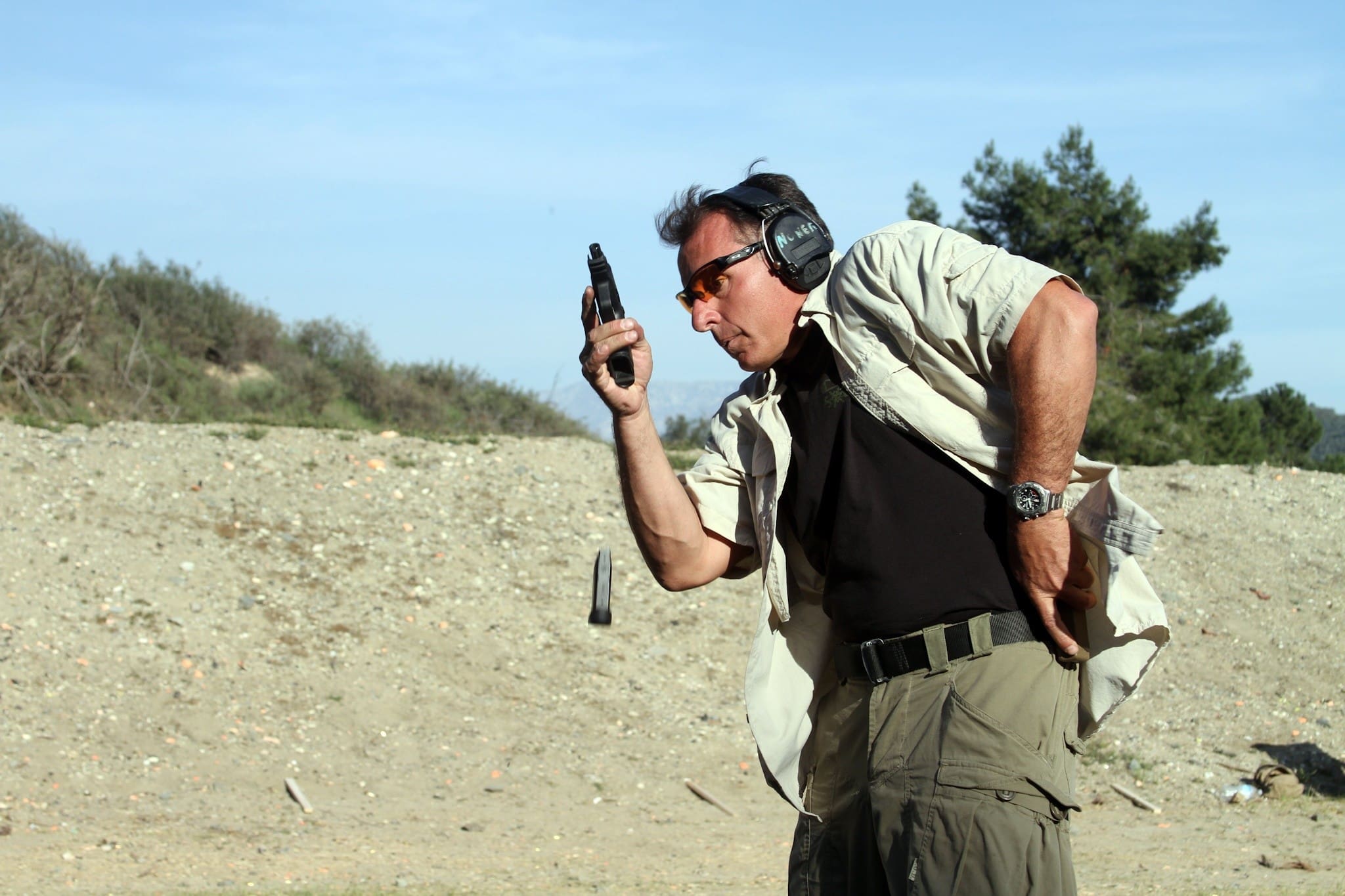
    Gunfighter Moment is a weekly feature brought to you by Alias Training & Security Services. Each week Alias brings us a different Trainer and in turn they offer some words of wisdom.

    FirstSpear Friday Focus – Bullfrog

    Friday, March 11th, 2016

    For this week’s Friday Focus, we’re taking a look at the FS Bullfrog.

    Bullfrog_Back

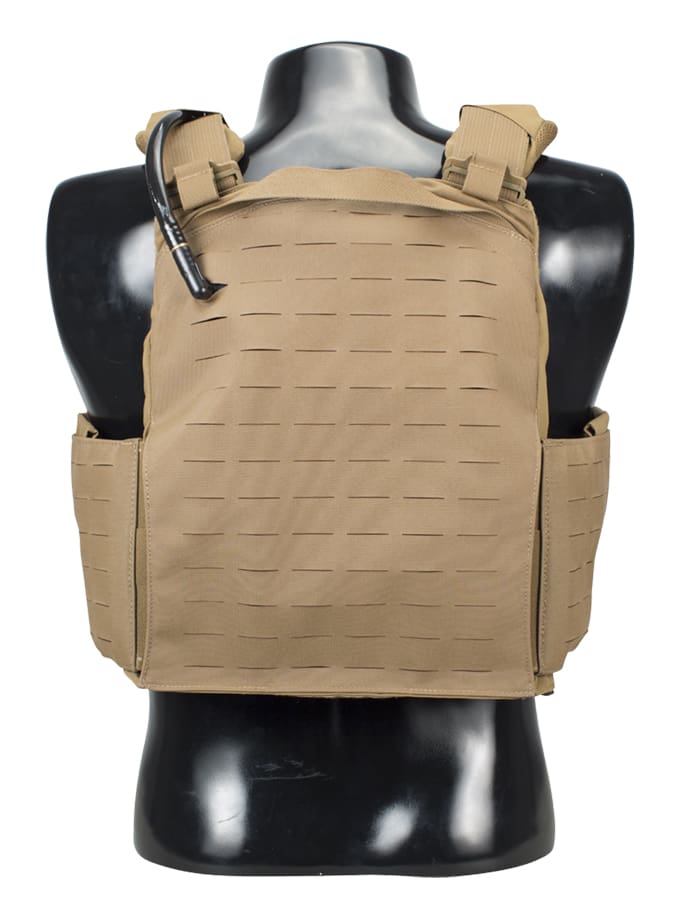
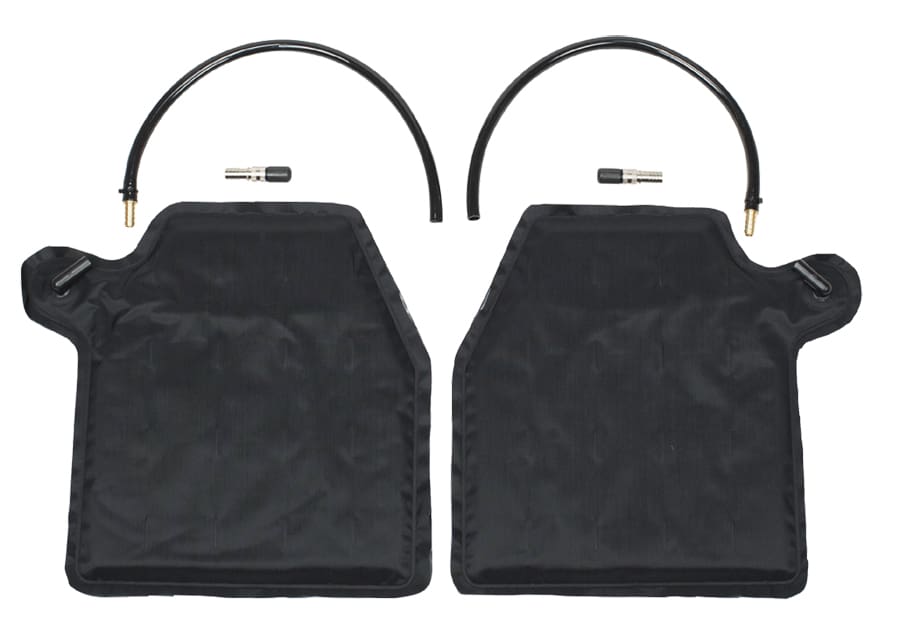
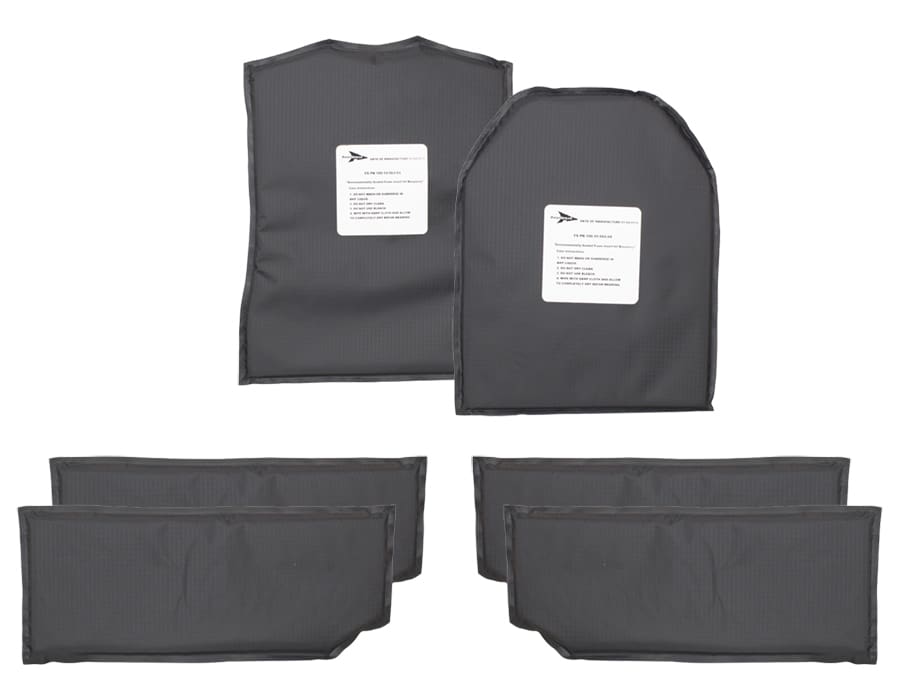
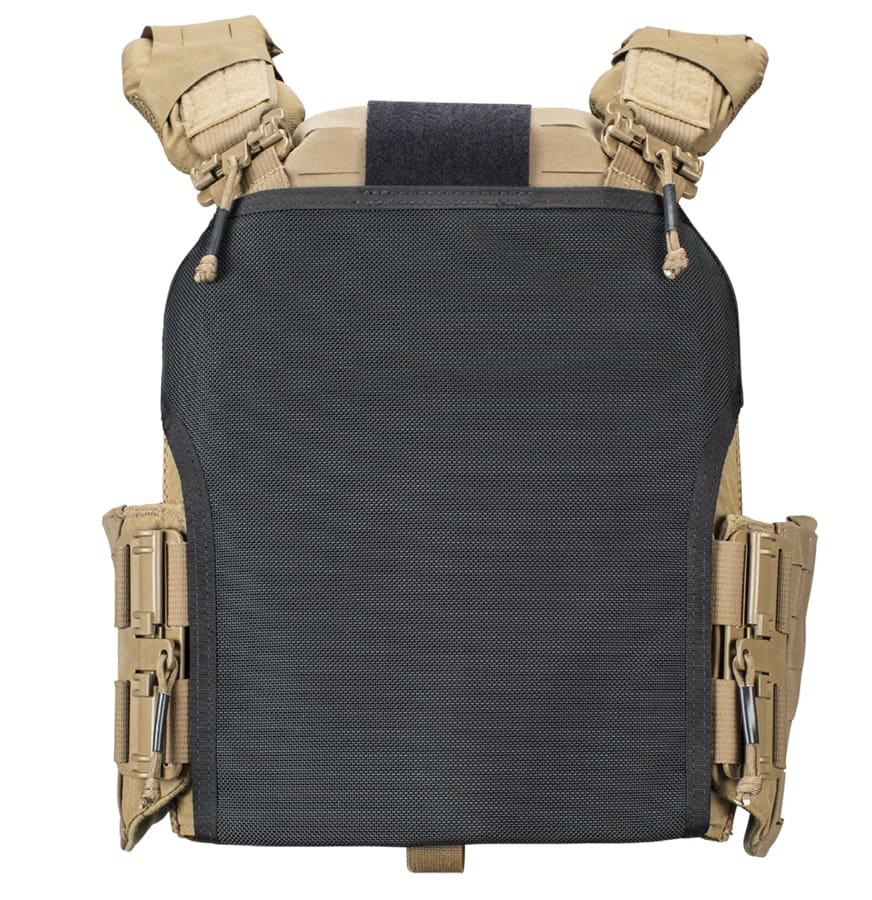
    The Bullfrog is one of the latest in FirstSpear’s line of user driven Maritime Plate Carriers, designed to fill the role of a passive/slightly positive approach for a Maritime Carrier, as requested by select FirstSpear end users. In that regard, the Bullfrog utilizes a unique foam insert that has been environmentally sealed in a watertight nylon laminate; the foams have been constructed in specific layers and densities so that the maximum amount of flexibility with the lowest possible amount of bulk is achieved.

    BouyancyCompensators

    The Bullfrog also utilizes the FS standard Buoyancy Compensators in the front and rear, which provide 5 lbs. of lift each, and is also adaptable to the belt mounted TFSS Flotation system, or various Flotation Collars. The Bullfrog is best paired with either FS’ Neutrally Buoyant Ballistic Plate, or the FS Patrol Plate.

    SealedFlotationInserts

    Currently available in Coyote, in either Medium or Large SAPI plate cut.

    www.first-spear.com – Bullfrog

    Skidplate

    FirstSpear also wanted to take this opportunity to introduce the Skid Plate. The Skid Plate is an accessory designed for SAPI Plate Carriers, used for long-term high abrasion-resistant protection for plate carriers exposed to the abuse from caving ladders and other cable assist climbing implements. Despite the appearance and feel of the high tenacity fibers used in the construction of the Skid Plate, it is not ballistic. It’s also only available in black.

    www.first-spear.com – Skid Plate

    Patch Panel Moves To In House Production To Strengthen Domestic Role

    Thursday, March 10th, 2016

    March 9, 2016

    Patch Panel announces move to complete in house production of customized Cordura patches, with enhanced offerings, and lead times.

    In 2012, Patch Panel (WMI Sports Ltd.) began offering IR Name Tapes as an industry first. In time, this grew to call signs, name plates, unit patches, and now, their exclusive Identification Panels. Throughout this time, we went places we had never expected, including military unit, division, and regimental sized orders, as well as the opportunity to support many police units with roadside safety marking patches, as well as identification units.

    Starting as a small company, we naturally did not have the resources to produce items entirely in house, and were forced to outsource parts of our production to save costs. This meant that the lead times just kept growing to weeks, and even months.

    At the beginning of 2016, Patch Panel initiated the steps to move all production to our facility in Peterborough Ontario, where production quality could be controlled to exacting standards, and produced expediently by their Canadian Forces Veteran production team.

    Today, we are happy to announce that long lead times are a thing of the past. Dropping from 10 weeks, to 10 days, and even an option to expedite to 2 business days. We are now able to provide the patches you need, in short order. All of these changes help us support our goals to generate more domestic manufacturing, as well as employ more veterans in our workforce.

    See the fully updated selection at www.patchpanel.ca.

    Grey Ghost Gypsy Pack In Full Production, Awes Everyone Who Carries It

    Thursday, March 10th, 2016

    Dalton Gardens, Idaho (10 FEB 16)

    GGG-Gypsy-07

    Grey Ghost, the parent brand of both Grey Ghost Gear and Grey Ghost Precision, is happy to announce that our Gypsy Pack is in full production. Our initial test run was wiped out fast. We’ve reallocated resources and now things are jamming.

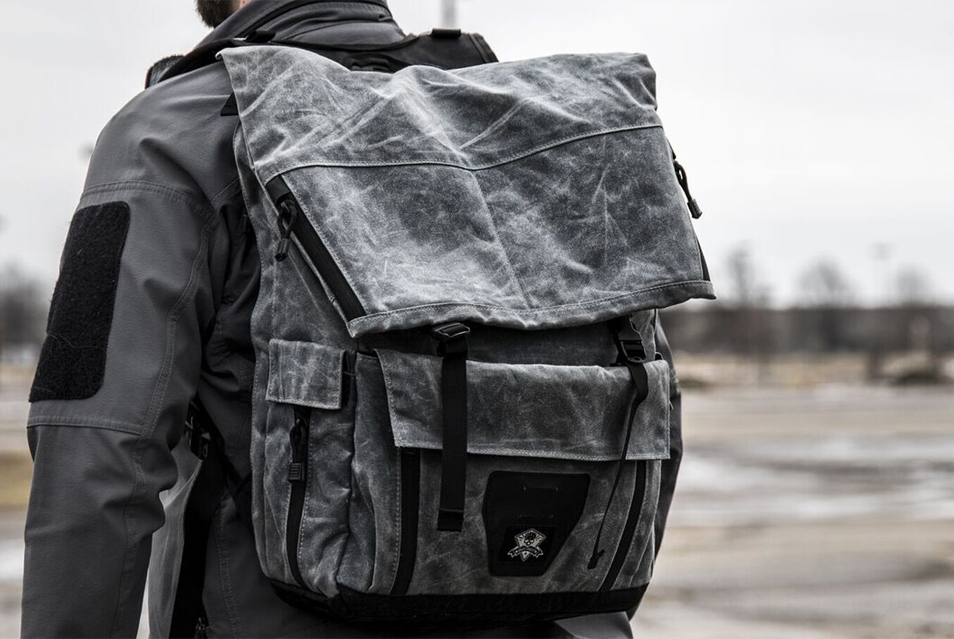
    The Gypsy isn’t so much the Throwback’s older brother as it is its big city cousin. It’s a radical departure from what you’ve come to expect from GGG and is imminently suitable for low-pro work (as you can see in the images). It’s a bag for the traveler or daily commuter who requires all the hoplogical features you have come to expect from us without any of the “Hey, yo, we got a badass over here!” look you get from rack upon rack of MOLLE/PALS.

    GGG-Gypsy-12

    Not that we don’t like a nice rack.

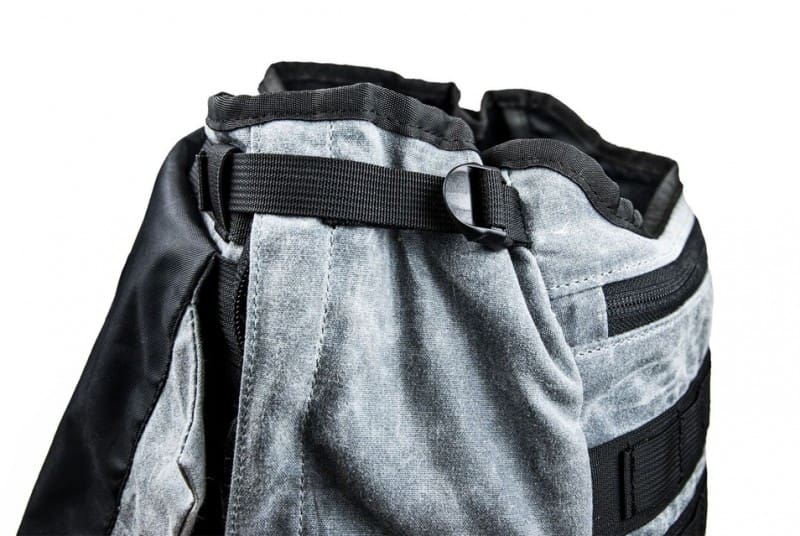
    The flat top design of the Gypsy echoes what you’ll see carried by bicyclists and 2-wheeled couriers, and we’ve intentionally used the waxed canvas for the exterior to give it a casual but dignified urban look. We just made sure it has all the interior geometry necessary to carry and access the tools you might need to kill some asshole if things go pear-shaped (or if you’re caught up in some sort of disaster).

    Please do not be frightened by the name. This is not a pack built for (or designed by) those shady vagabonds your Grandma warned you about. No one is going to kidnap you and sell you to the circus.

    Crazy grandma.

    Dimensions are generous and pleasing without being too big (that’s what she said). It’s 19 in. tall, 16 in. wide, and 4.5 in. deep. This gives the bag a volume of 1368 cubic inches.

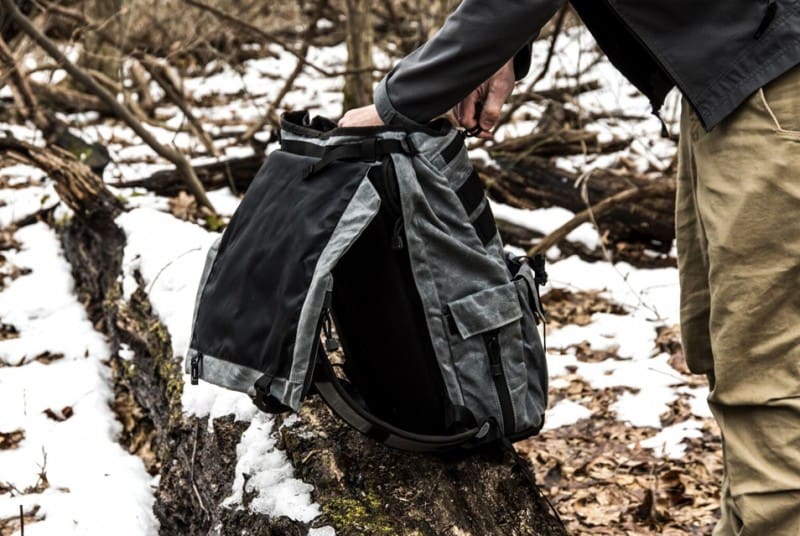
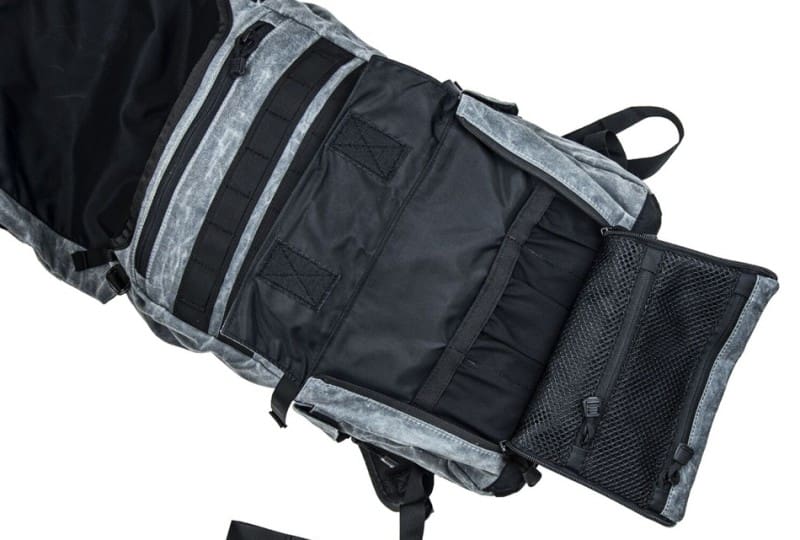
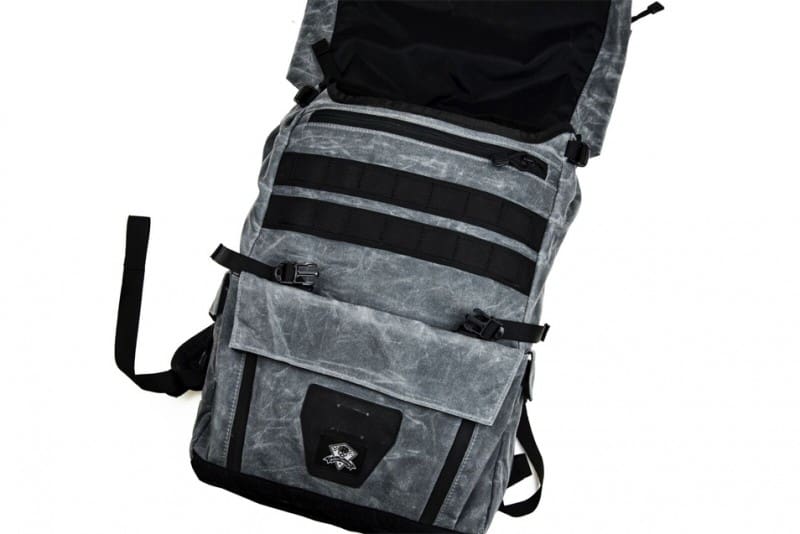
    The top flap of the bag includes a zippered pocket on either side, each lined with soft material to protect Eye Pro, your phone or even your jewelry. On the lower left side of the flap there appears the leather GG skull accent you know you love and adore. The flap is held down by two adjustable 1 inch side release buckles.

    Below the flap is a pocket that has a top cover secured with hook and loop material and two water resistant zippers that allows the pocket to be opened like a gate. On the front are two zippered mesh pockets properly sized to carry various small items sized between a bottle of pain reliever, a phone charger or brass knuckles. Further inside are stretch mesh pockets that vary in size to accommodate pens, flashlights, pistol mags or that extra battery for your laptop.

    GGG-Gypsy-16

    The front of the pouch has a Hypalon patch with slots cut in it so you add a light or an extra pouch. Under the flap are two rows of PALS webbing with 7 channels to allow you to expand the capacity of the pack by adding pouches to it. There is a zippered pouch just above the PALS webbing, 12 inches long and 8 inches deep. This will carry a notebook, a blowout kit and night vision goggles. Very roomy. The main compartment is 17 in. tall, 4 in. deep and 15 in. wide. That’s 1020 cubic inches, which is damn near enough to carry a midget stripper. You can access this area (or let her out) with vertical zippers along each side of the back panel. There’s also a large loop panel sewn to the inside of the back panel to affix holsters and hook-and-loop pouches, as well as another zippered pouch made of stretch mesh (it’s big enough to carry a MacBook Air).

    GGG-Gypsy-18

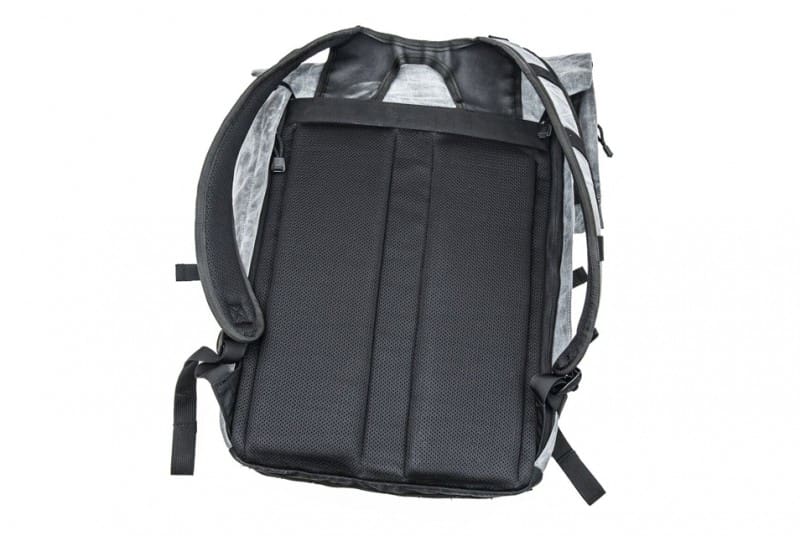
    Speaking of the back panel, it’s padded and uses air mesh that is quilted to improve wearer comfort and circulation. No one likes a sweaty back. The pack straps are in a yoke configuration and are adjustable for a wide array of body types (and feature a carrying handle).

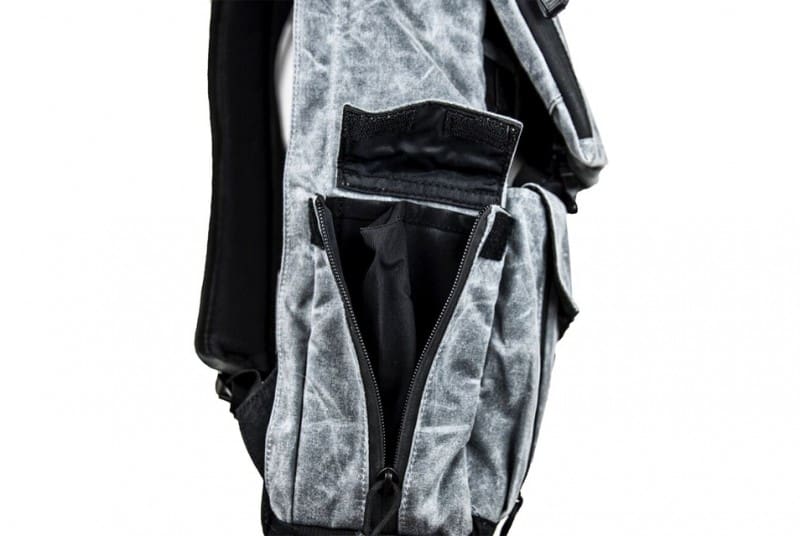
    Finally, each side of the pack has a cleverly disguised water bottle pocket and has a cover flap that protects the vertical zipper that expands the pocket when lowered.

    Overall, we’re very proud of this design and are confident it will become one of our most popular designs.

    Plus, it looks badass. Welcome to the gypsy.

    If you’re interested in getting your grubby paws on one of these packs to write or record a review, reach out to our High Lady Amazon Pirate Gynarch Lindsey Lea, ll@greyghostgear.com. We are happy to support worthy publications and sites and expect nothing but a candid, truthful review, but we won’t work with asshats or douche-bags. So if you run a reputable organization, hit us up. If you’re a shady bastard who expects free shit because you have a couple thousand viewers on YouTube or you have a sweet IG account with lots of followers but actually an insufferable little prick who serious professionals make fun of, don’t bother.

    See you out there. Be a good American today.

    The Gypsy Pack: www.greyghostgear.com/product-p/6025

    American Knife & Tool Institute Announces Additional Co-Sponsors For The Knife Owner’s Protection Act

    Wednesday, March 9th, 2016

    Eight Co-Sponsors Bring Bi-Partisan Momentum to Common Sense Knife Legislation

    Cody, WY (March 8, 2016) – The American Knife & Tool Institute (AKTI) today announced eight new co-sponsors to the Knife Owners Protection Act (KOPA): Senators Jon Tester, D-MT, Jerry Moran, R-KS, Tom Udall, D-NM, Steve Daines, R-MT, Maria Cantwell, D-WA, Mike Crapo, R-ID, Jeff Merkley, D-OR, and Jim Risch, R-ID. KOPA, a bill that will ensure federal protection for lawful knife owners from the current patchwork of state and local knife laws, has been an AKTI priority since its initial introduction in 2013. With the steadfast work of the bill’s sponsors, Senators Mike Enzi, R-WY, and Ron Wyden, D-OR, the bill is now well poised to pass the US Senate.

    “Folks who work with their hands know that a knife is a useful tool if it’s used properly,” said Senator Tester, D-MT. “Law-abiding knife owners traveling from state to state deserve to have their rights protected, and that’s exactly what this bill does.”

    AKTI

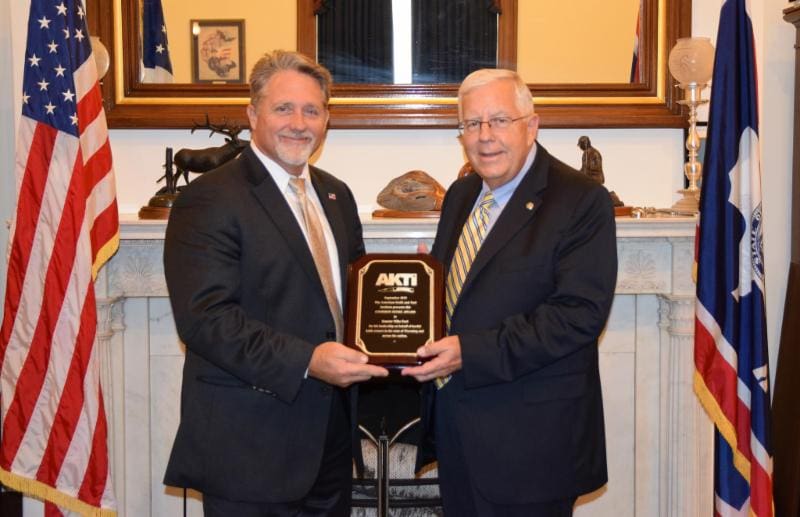
    AKTI President CJ Buck presenting Common Sense Award to WY Senator Mike Enzi

    Under current U.S. code, lawful gun owners are allowed to transport firearms legally in both the state of origin and the state of destination, provided they are properly stored and in accordance with all federal restrictions. However, no such protection exists for knife owners wishing to transport knives to and from states in which they are legal, but through jurisdictions with varying requirements. KOPA would allow legal interstate travel for knives, provided the knives are transported to and from states where the law allows possession of said knives, and they are transported in closed containers. The bill, S. 1315, which has passed the Senate Committee on Commerce, Science and Transportation, and is co-sponsored by Senators Mike Lee, R-UT, Joe Manchin, D-WV, John Thune, R-SD, and Martin Heinrich, D-NM.

    “It is crucial that hunters and tradesman feel confident that they can travel to the best opportunities they can, and bring the tools with them that they need to optimize their work and activities.” Said CJ Buck, AKTI President.

    For nearly 20 years, AKTI has served as the go-to resource for knife owners looking to ensure that they comply with all local, state, and federal laws related to knives. One of the biggest complaints and points of confusion AKTI hears about from lawful knife owners involves the interstate transport of knives. While citizens are making every effort to comply with patchwork state and local laws, it has become clear that there is the need for a federal protection for sportsmen, hunters, and other law-abiding knife owners that does not interfere with state and local restrictions on knife use.

    Visit www.AKTI.org for specific details on the Knife Owner’s Protection Act.

    High Angle Solutions – CTOMS – T2-Harness

    Wednesday, March 9th, 2016

    T2-Harness

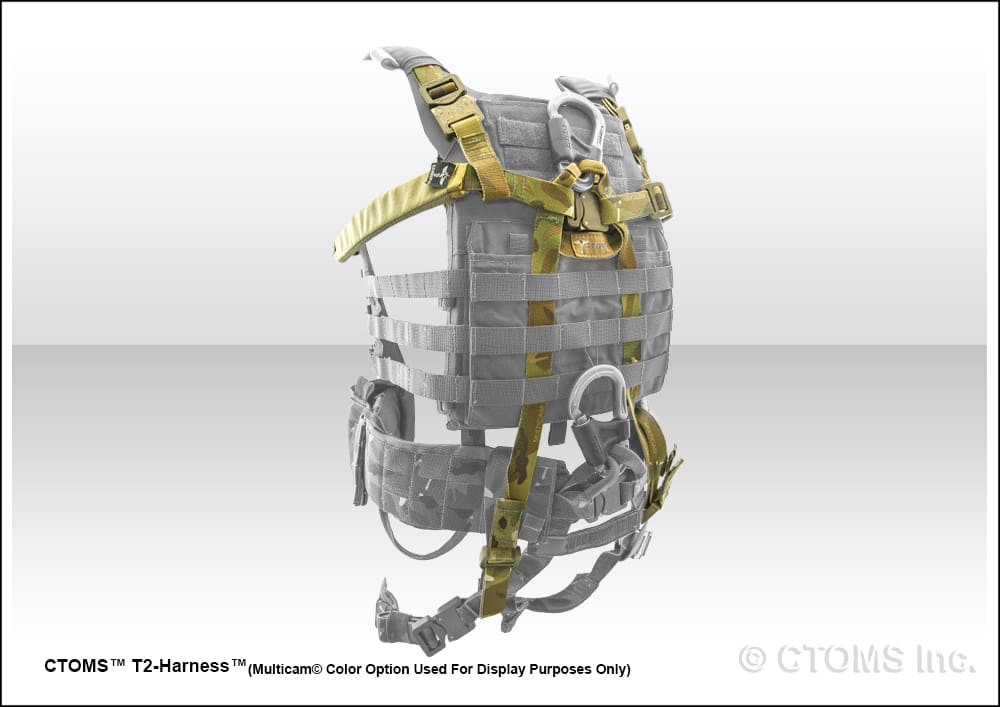
    We set out to solve the problem of wearing a chest or full body harness that incorporates into an armor plate carrier system. Typically a system like this would either go under the armor, making the high attachment point exit from behind the plate getting into the face of the wearer. The other more common option if for a system to go over top of the plate carrier and all the attached pouches. The problem with that is that it makes the pouches less accessible and when loaded can crush the content. Not ideal for things like first aid kits and even pressing the PTT switch on a radio.

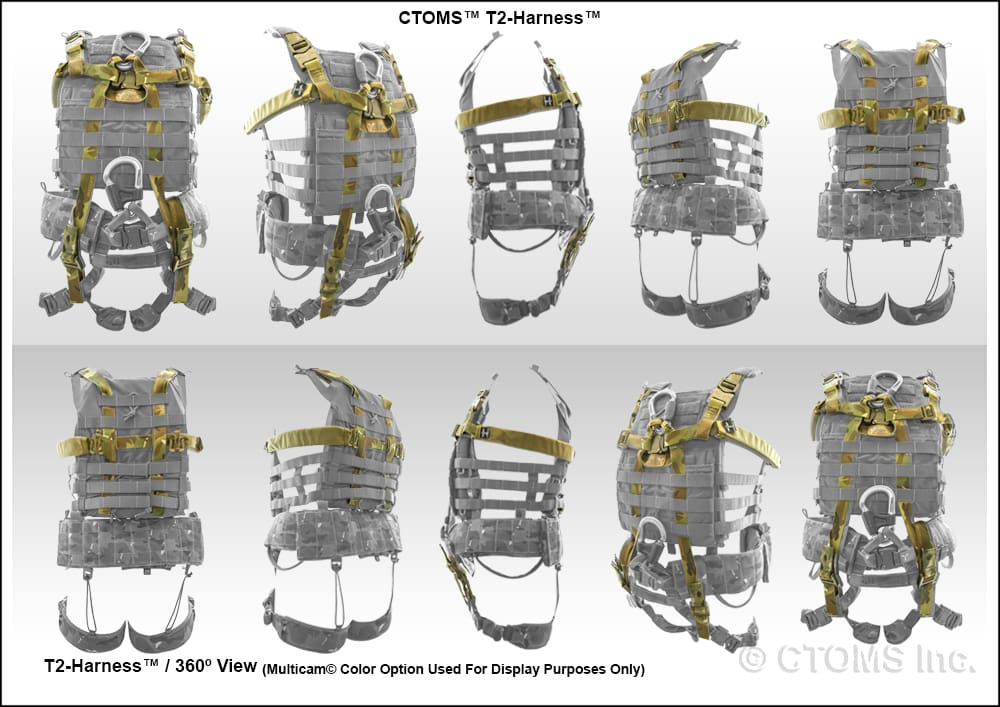
    We designed the T2-Harness to seamlessly integrate into a plate carrier. The webbing runs through the MOLLE in front of the armor, but behind any mounted pouches thus solving the two major problems. The T2 must be used in conjunction with either an M2 or G2 Harness (sold separately) as the only tested and compatible seat components, creating a Class 3 harness system.

    T2 Harness 360 View

    The T2 uses the same convenient connection style as our patented M2 Harness system. Comfort adjustment is fast and easy while donned to transition from suspension to walking and vice versa.

    ctoms.ca

    High Angle Solutions is a weekly feature by DMM, CTOMS, and Atlas Devices.