FirstSpear

Archive for the ‘SOF’ Category

Air Force Changes Path of Entry for Enlisted Special Warfare Operators

Friday, February 21st, 2020

JOINT BASE SAN ANTONIO-RANDOLPH, Texas – To better afford enlisted recruits the time and opportunity to find the path of their greatest calling, the Air Force has created a single path of entry into the special warfare recruiting and initial training pipeline.
TACP FTX @ Camp Bullis, Texas

The Special Warfare Operator Enlistment Vectoring program will officially commence in early April of this year with a new Air Force Specialty Code for accessions and the first shipment of special warfare candidates to the service’s basic military training.

“On initial entry into the Air Force, the 9T500 AFSC will be the only path for new Airmen to pursue a career into the Combat Control, Pararescue, Tactical Air Control Party or Special Reconnaissance career fields,” said Lt. Col. Joseph Lopez, chief of the special warfare division at Air Education and Training Command headquarters. “This change allows candidates to make a more informed career decision, prior to being vectored, after months of education, training, development, and mentorship, to see what career field might be the best fit for them. The program also enhances the Air Force’s ability to assign Airmen a permanent AFSC in an equitable way across the special warfare community after a thorough “whole-person” evaluation has been conducted on every candidate going through through the accessions and initial phase of training.”

Every day, special warfare Airmen deploy around the world to project American military power through global access, rescue friendly forces through personnel recovery operations and to destroy the enemy through precision strikes.

The SWOE-V program centers on a “coach-develop-mentor” mindset that begins in the pre-accession phase where recruiting development teams identify potential special warfare operators and begin the process to prepare them for the rigors of the special warfare training pipeline and later, their designated career field.

“The typical special warfare scouting, recruiting and development process for a candidate from pre-accessioning to shipping to BMT takes from four to six months,” said Lt. Col. Heath Kerns, commander of the 330th Recruiting Squadron which specializes in special warfare and combat support recruiting. “During pre-accessioning with help from our developers, candidates begin a 21-day “Pass the PAST” workout program developed to help them pass the Physical Abilities Stamina Test, while at the same time being educated on special warfare components, missions and specialties and the SWOE vector process.”

Another key element to the SWOE-V program will be the base lining of enlistment standards for recruits.

“Having a standardized baseline of enlistment standards will eliminate confusion amongst potential recruits, as well as opens up a larger pool of candidates during the recruiting process who might be eligible for and interested in a career in special warfare,” Kerns said.

After a potential candidate passes the PAST, a test that represents the minimum physical fitness entrance standards for enlisted special warfare career fields, they compete for selection and receive a developer recommendation before contracting and shipping to BMT at Joint Base San Antonio-Lackland, Texas, as a SWOE candidate, Kerns said.

During BMT, SWOE candidates will master curriculum that includes the Air Force mission and vision, core values, drill and ceremony, history and priorities, field training and joint warfare like every other trainee, but undergo additional training to prepare them for the Special Warfare Prep Course.
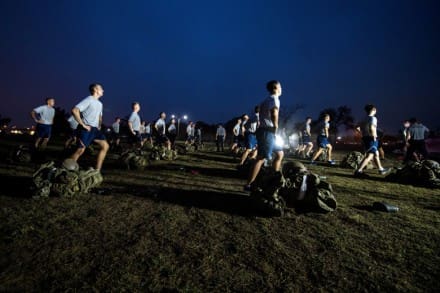
100% and then some, TACP apprentice course

“While assigned to their special warfare BMT flights, candidates conduct additional physical training and continue their education about all things special warfare related including components, missions and specialties and the SWOE vectoring process,” Lopez said.

SWOEs’ BMT performance evaluation data is collected throughout training to be included as part of the vectoring process once trainees enter the Special Warfare Prep course, administered by officials at the Special Warfare Training Wing, also at JBSA-Lackland.

“Along with the performance data from BMT, data from the Special Warfare prep course, and a SWOE’s career preference, candidates are vectored to either the Special Tactics and Guardian Angel, or the Tactical Air Control Party, courses of initial entry,” Lopez said.

Selection for a specific special warfare Air Force Specialty Code is heavily based on a candidate’s performance, which drives a competitive model early on, even before shipping to BMT, thus helping shape individual’s drive, determination and strengths, intended to create trust and team cohesion among candidates, Lopez said.
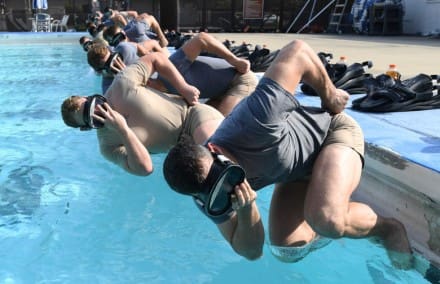
Special Warfare trainees honor fallen combat controller

“Nothing is given; Airmen must earn their spot in their chosen career field and fight for it,” Lopez said. “We are evaluating them continuously through pre-accessioning, BMT and the Special Warfare Prep Course, using a whole person concept that includes cognitive, physical skills, as well as Airmanship and instructors’ evaluation of teamwork and attitude.”

From this point in the pipeline, SWOE candidates are split into one of two paths: the four-week Special Tactics and Guardian Angel course of initial entry or the TACP initial course of entry.

“After successful completion of the ST/GA initial course of entry, candidates will be assigned into the combat controller, pararescue or special reconnaissance AFSC based on their continued performance during training and their preference,” Lopez said. “After successful completion of that course, candidates continue along their respective AFSC-specific training pipelines.”
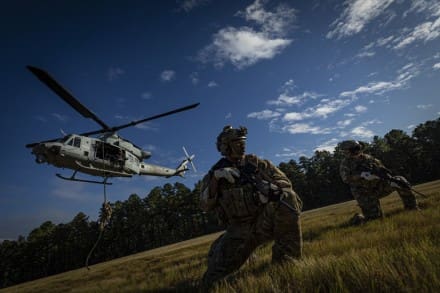
Special Warfare Airmen train with U.S. Marine Corps Reserve

Those who enter the TACP course of initial entry and successfully complete it will continue along in the remainder of the TACP training pipeline, said Lopez.

“The SWOE-V really is a big deal as it represents a momentous change for the Air Force special warfare community,” Lopez said. “By removing constraints in the recruiting and accessions process, we are expanding the talent pool while streamlining entry into the service. We also ensure ensure equitable distribution consistent with and proportional to Air Force-established production goals.”

By Dan Hawkins, Air Education and Training Command Public Affairs

AF Note: To hear more about the SWOE-V program, listen to “The Air Force Starts Here” podcast featuring Lt. Col Lopez, AETC’s special warfare division chief, and Lt. Col. Heath Kerns, 330th Recruiting Squadron commander. The podcast is available for download or streaming on Apple Podcasts, Spotify and Google Play, as well as on the AETC website.
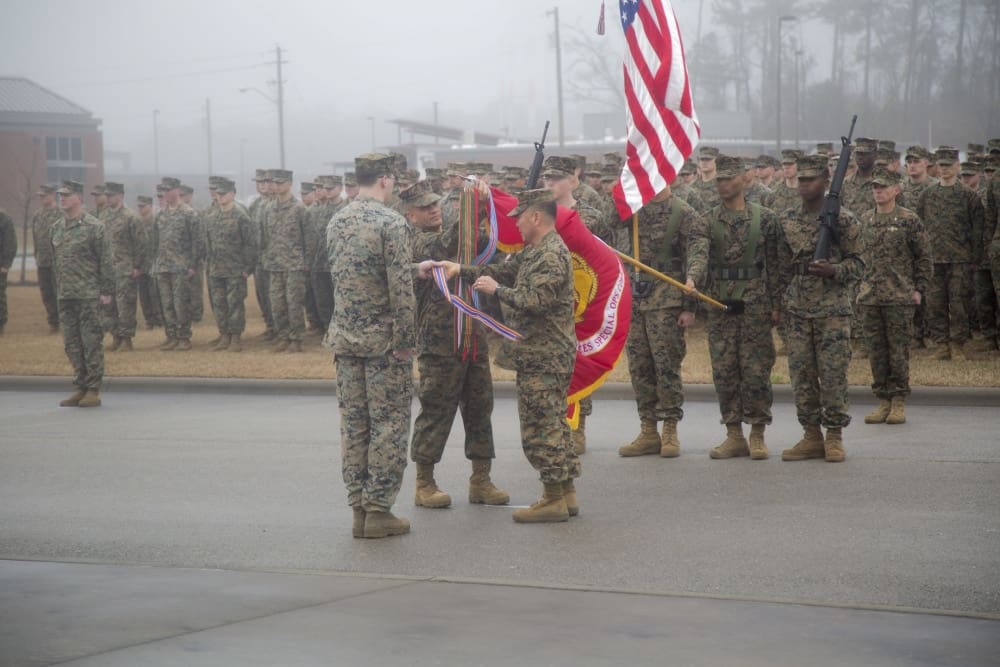
MARSOC to Consolidate All Marine Special Operations Forces to Camp Lejeune by 2022

Wednesday, February 19th, 2020

CAMP LEJEUNE, N.C. – Marine Forces Special Operations Command will soon begin implementing a phased plan to consolidate all MARSOC personnel and equipment to its headquarters aboard Camp Lejeune by the end of 2022. This initiative will relocate approximately 900 Marines, Sailors, and civilian employees from 1st Marine Raider Battalion and 1st Marine Raider Support Battalion, which have been located aboard Camp Pendleton, C.A. since MARSOC’s inception in 2006.

“MARSOC has been pursuing numerous lines of effort to increase performance, efficiencies, and capabilities in support of the 2018 National Defense Strategy’s imperatives to build a more lethal force and reform the department for greater performance and affordability. One line of effort is the consolidation of all Marine Special Operations Forces to the east coast. Consolidation will enhance the command’s Enterprise Level Agility to meet the future operating environment challenges articulated in the NDS, the Commandant’s Planning Guidance, and our own vision and strategy, MARSOF 2030,” said MajGen Daniel Yoo, MARSOC Commander. “It will also position MARSOC for more economical experimentation, testing, and evaluation of future operating concepts and near-peer offset capabilities, while streamlining organizational learning to enhance component-wide standards, performance, training, and readiness across the force.”

The efficiencies gained through consolidation extend beyond performance and training, with significant impacts to time and money. Consolidation will allow MARSOC to gain back almost 2000 man-days per year that would otherwise be lost to PCS and other TAD requirements not associated with deployments. This creates tangible and significant cost-savings and increased readiness across the force. In addition, MARSOC will be better positioned to meet the Secretary of Defense’s Deployment-to-Dwell (D2D) guidance, providing greater stability and increased quality of life to Marine Raiders and their families.

The physical movement of personnel and equipment from the West to the East Coast will occur over three phases. The phasing plan allows for minimal disruption to normal Marine Corps transition timelines, like those associated with Permanent Change of Station (PCS) orders. It also provides a managed population increase to the local area. Personnel and families will begin moving from the West Coast during the traditional PCS cycle beginning in the summer of 2021.

MARSOC and Marine Corps Installations East (MCIEAST) School Liaisons and Community Plans and Liaison Officers (CPLO) have been working together to estimate impacts on the local communities and school districts. According to Joe Ramirez, MCB Camp Lejeune Director of Government and External Relations, MCB Camp Lejeune will continue working with Onslow and Pender County Schools and Governments to anticipate and plan for increases in student population and to ensure that all students will be accommodated effectively and receive a quality education.

Story by Maj Kristin Tortorici, Marine Forces, Special Operations Command

Photo by Cpl Bryann K. Whitley , Marine Forces, Special Operations Command

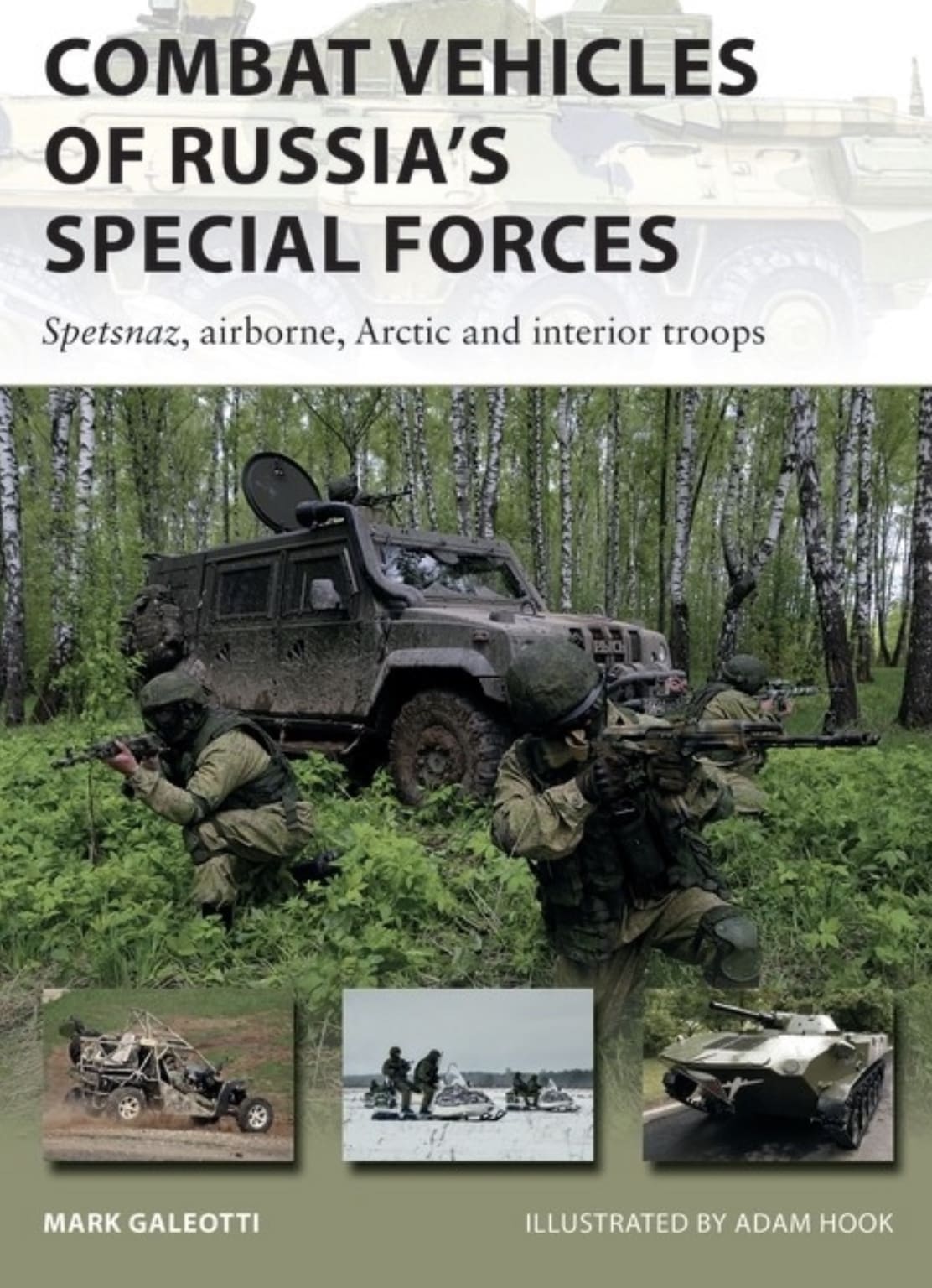
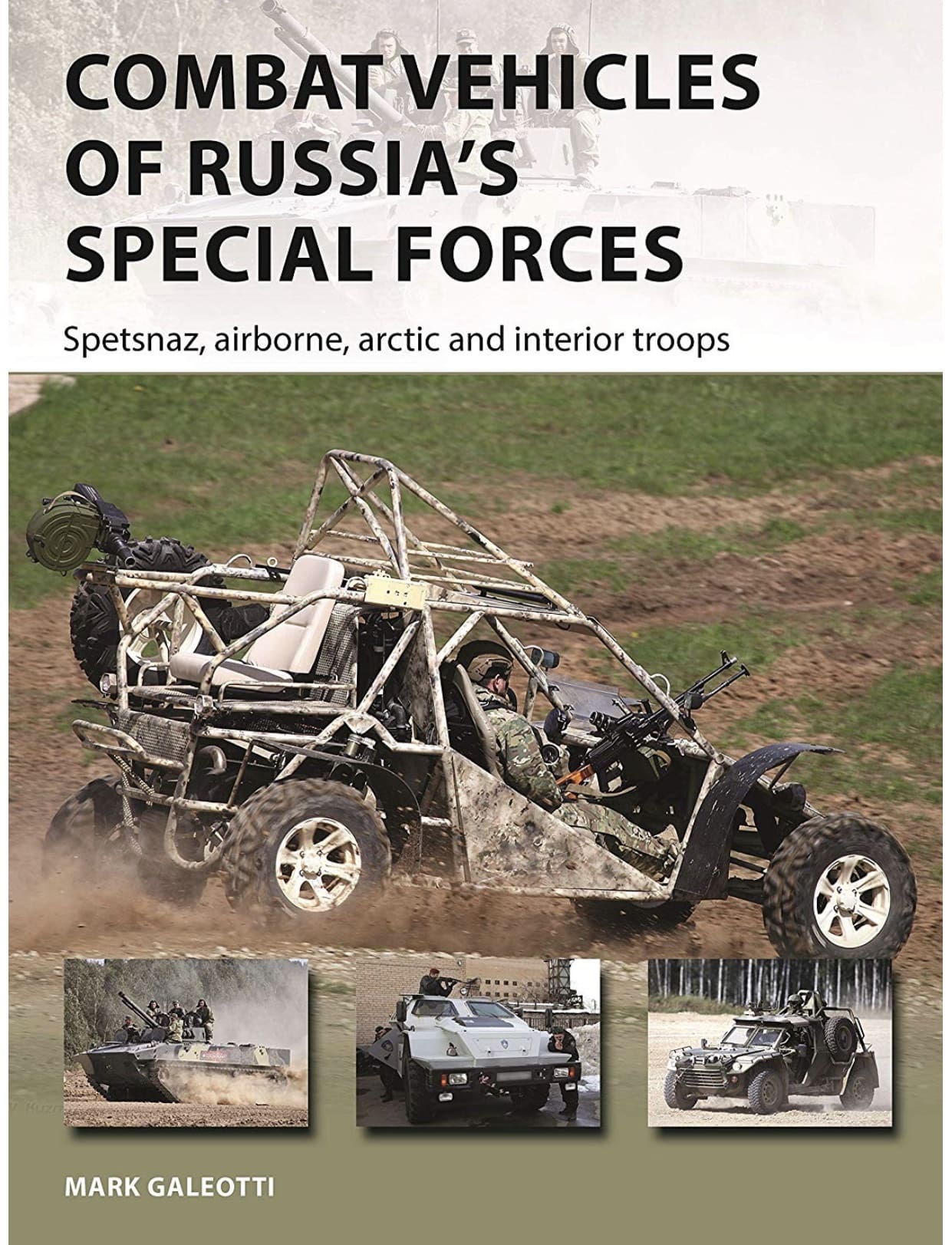
Osprey New Vanguard 282 – Combat Vehicles of Russia’s Special Forces

Monday, February 17th, 2020

The upcoming “Combat Vehicles of Russia’s Special Forces” from Osprey Publications will feature Spetznaz, Airborne, arctic and interior troops vehicles. It is written by Professor Mark Galeotti.

These books are always excellent general references and I recommend them for any library.

Russian SOF are being outfitted with a combination of armored vehicles and light all terrain vehicles for mobility regardless of the environ they’ll be operating in.

The contents give you an idea of what will be covered.

Introduction
The Spetsnaz: Whatever They Need
The Airborne Troops: By Air and Land
The Naval Infantry: Finding Their Sea Legs
Specialised Forces: War and Peacekeeping
Security Forces: Hurricanes And Punishers
Prospects For The Future
Further Reading
Index

It seems they have changed recently the cover, with the new version seen above. This title is expected to be released on May 26, 2020.

SOFWERX Presents The $225,000 Tech Sprint: Hyper Enabled Partner Force

Thursday, February 13th, 2020

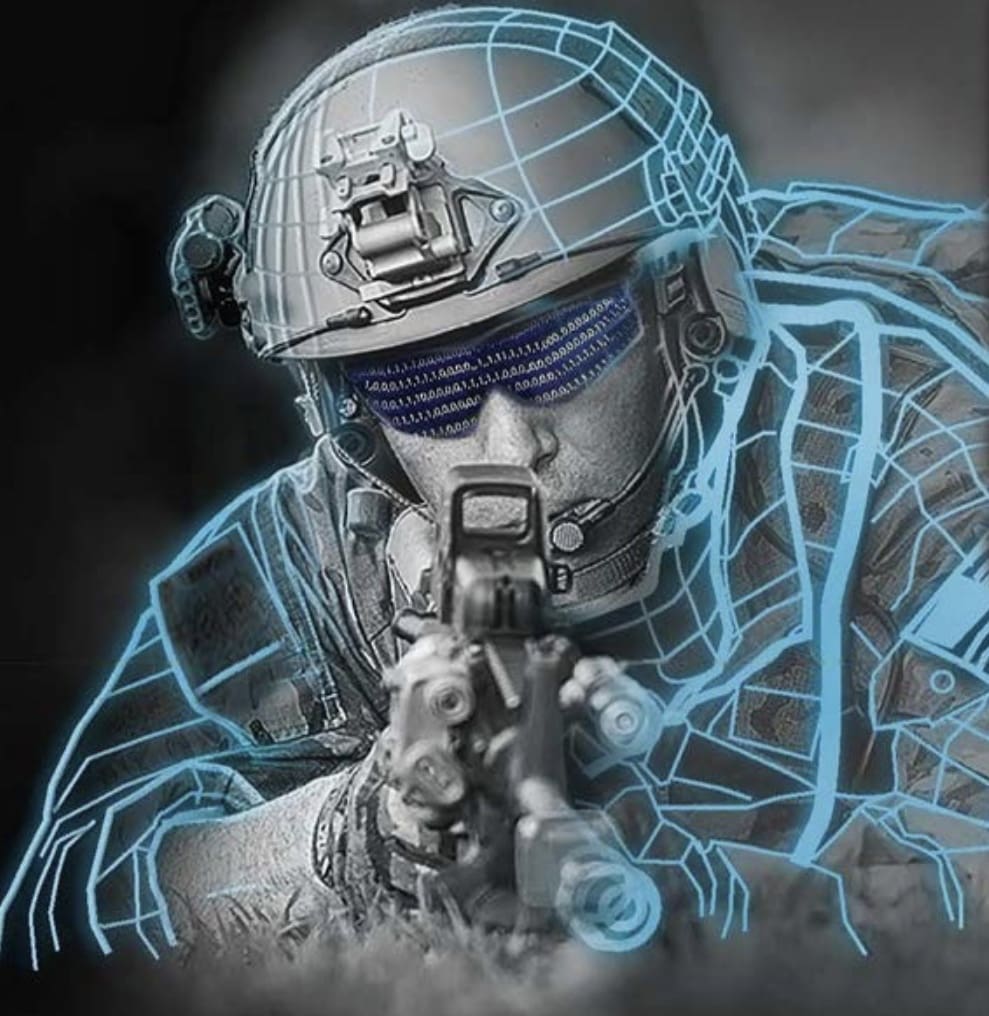
In concert with the USSOCOM Joint Acquisition Task Force (JATF), SOFWERX is hosting The $225,000 Tech Sprint: Hyper Enabled Partner Force event, 04-14 May 2020.

Up to 15 selected technologies and their submitters will receive a prize award in the amount of $15,000 to combine and/or integrate their most provocative technologies into the Hyper Enabled Operator (HEO) system. Participants may also have the opportunity to showcase their technology at SOFIC.

The technologies of interest are those that will assist in providing new, novel or provocative solutions in the following categories:

• Linguistical Fluency

• Cultural Fluency

• Social Awareness

• Operational Awareness

• Other Hyper Enabled Capabilities

To get involved, you’ll need to submit NLT 23 March 11:59 PM EST.

For full details, visit www.sofwerx.org/partnerforce

Review Finds No Systemic Ethical Problems in US Special Operations Forces

Sunday, February 2nd, 2020

WASHINGTON — U.S. special operations forces have no “systemic” failures of ethics, but a review points to the need for strengthening leadership at all levels, the commander of U.S. Special Operations Command said.

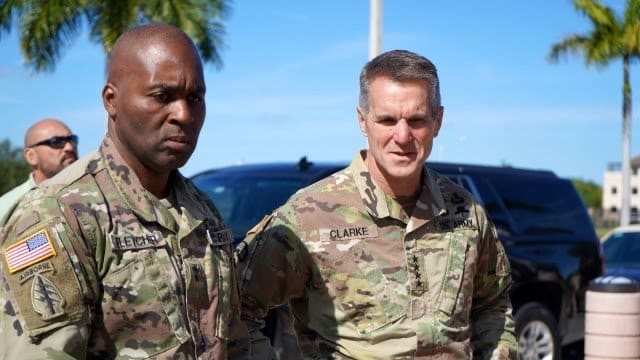
Army Gen. Richard D. Clarke told reporters at the Pentagon Tuesday that he ordered the comprehensive review of special operations culture after several instances of misconduct and unethical behavior threatened public trust and caused leaders to question special operations forces’ culture and ethics.

The review team looked at all aspects of the force and interviewed thousands of individuals, the general said.

Clarke said the review showed the vast majority of special operators maintain the highest standards of conduct every day, and they do so in some of the most challenging conditions around the globe.

However, he added, the review team did find that some aspects of the special operations culture did, at times, set conditions favorable for inappropriate behavior.

“We have a ‘can do’ culture with a bias toward action,” he said. “This culture is part of what makes us great. Nearly 20 years of continuous conflict have imbalanced that culture to favor force employment and mission accomplishment over the routine activities that ensure leadership, accountability and discipline.”

Force generation, force training and leader development are at the heart of the solution, Clarke said. “We need to improve our leader development programs and improve accountability in our training and management processes,” he said. “Leaders drive culture, and maintaining a healthy and high performing culture requires present and actively involved leadership.”

Clarke said some of the command’s professional military education is inadequate, and the command is taking steps to improve it.

The study also found that the pressure of deployments meant that leaders often were not present, or not involved, in training. “Our force has spent the last two decades rushing to get back into the fight,” the general said. “In doing so, we have often been too complacent as we build, train and certify our teams for the rigors of operating in a complex world. We are renewing emphasis on proper accountability and supervision, and setting conditions for leader presence in the right places.”

The review team concluded that special operations culture is overly focused on force employment and mission accomplishment, creating contexts or situations that allow misconduct and unethical behavior to develop.

“The review team uncovered not only potential cracks in the [special operations forces] foundations at the individual and team level, but also through the chain of command, specifically in the core tenets of leadership, discipline and accountability,” the review says.

Clarke said he will emphasize the need for leaders at all levels in the organization to be there for their troops and provide the corrections needed when teams are going astray. Leaders can give guidance on the ethical and moral aspects of irregular warfare and can model “what right looks like,” the general said.

The force knows how to produce ethical warriors, Clarke said, noting that standard operating procedures detail the training, education, exercises and certification needed to deploy. But the pressure of deployments sometimes means that troops go through these hoops without leaders present, the review found.

“U.S. Special Operations Command must manage the institutional bias towards employment and reclaim resources for investment in the other key areas by applying leadership, discipline and accountability to force employment processes and business rules,” the review states. “These actions will enable and complement those recommended under force accountability, focusing on bringing discipline to force generation processes, emphasizing active and engaged leadership during these periods.”

The press of operations and the seemingly endless demands for special operations forces has prompted a breakdown in force generation, which, in turn, disrupted leader development. “Bringing more structure and emphasis back to these areas enables [Special Operations Command] to reinvest in leader development and groom leaders with the required balance of character and competence,” the review says.

The command will invest the money and time needed to ensure units can institutionalize these changes. The command will also scrub the joint force’s current special operations requirements. “This assessment will impact SOF requirements for continued counter violent extremist organization efforts and inform [the command’s] transition as part of broader DOD alignment towards great power competition,” the review says.

As in most things, the review’s findings and recommended actions require a strong implementation plan and the will to execute it.

“This report reemphasizes our enduring responsibility as leaders and informs a consolidated, focused effort to drive necessary change across our formation,” Clarke said. “I am forming an implementation team that will follow through on these findings and recommendations, assess results, and refine our policies accordingly.”

The review team found concern about the force from all levels of special operations. Special operations noncommissioned officers spoke about the need for the presence of leaders and the need to ensure teams train together before they deploy, said Air Force Chief Master Sgt. Greg Smith, senior enlisted leader for the command.

Clarke and Smith agreed changing a culture takes time, and that the command is willing to invest the time.

By Jim Garamone, Defense.gov

SOFWERX – USSOCOM Innovation Foundry Event In March

Monday, January 27th, 2020

Space, Cyber Space and EMS/C4ISR Subject Matter Experts Needed !

On 10-12 March, SOFWERX, in collaboration with USSOCOM’s Directorate of Science and Technology (S&T), will host the Fifth Innovation Foundry Event (IF5) focused on Space, Cyber Space and the Electro-Magnetic Spectrum (EMS). This event will bring together Special Forces Operators and Subject Matter Experts to assist USSOCOM in discerning future capability areas for tech exploration in Unconventional Warfare (UW).?

Request to Attend NLT 12 February 11:59 PM EST U.S. Citizens Only

www.sofwerx.org/IF5

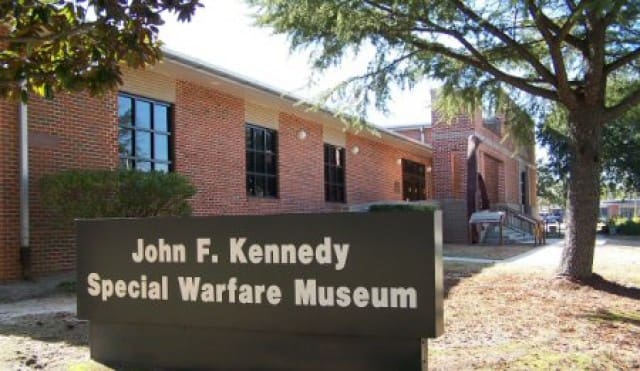
U.S. Army JFK Special Warfare Museum Becomes Army Special Operations Forces Museum

Sunday, January 26th, 2020

FORT BRAGG, N.C. — With the arrival of a new year, part of a new command vision will soon take place in the U.S. Army Special Operations Command (USASOC) footprint.

The U.S. Army Special Operations Command initiated a plan to reinvigorate the U.S. Army John F. Kennedy Special Warfare Museum. As a result, the museum is temporarily closed to the public while a complete historical inventory is conducted to identify and catalogue items. This will ensure a better understanding of the state of artifacts available to students and Soldiers, and to identify gaps in the history of Special Forces (SF), Civil Affairs (CA) and Psychological Operations (PSYOP).

Upon reopening, tentatively at the end of February, the former U.S. Army John F. Kennedy Special Warfare Museum will be renamed as the U.S. Army Special Operations Forces (ARSOF) Museum. It will still provide support to the Special Warfare Center and Schools as well as all of the subordinate commands and units under the USASOC umbrella.

“The former SWCS Museum, now the ARSOF Museum, has been reorganized under USASOC to fully represent all of USASOC’s equities,” said Dr. Michael Krivdo, U.S. Special Army Operations Command Historian.

The idea of the reorganization is to take ownership of ARSOF’s proud history and to get artifacts into the hands of Soldiers by intellectually engaging students and Soldiers in areas where they congregate. It is intended to keep artifacts on display engaging, relevant, and fresh.

“Where the ‘old’ museum construct focused only on artifacts and displays at one fixed location, and only featured SF, CA, and PSYOP, the ‘new’ reorganized museum provides museum support for all the subordinate units which fall within the whole ARSOF enterprise,” Krivdo added.

“The ARSOF Museum will expand to include artifacts and exhibits of the Ranger Regiment and the Army Special Operations Aviation Command, which were previously not included in the current museum as it was tied to the regiments that are assessed, trained and educated at SWCS; these are the Green Berets, PSYOP and CA Soldiers,” said Janice Burton, a spokesperson for the Special Warfare Center and School.

Staff Sgt. Keren Solano, a spokesperson for the Special Warfare Center and School said, “It also serves to illustrate the unique and specialized part played by all aspects of the Army Special Operations community both in conflict and during crucial roles in peacetime. The museum has also proven itself to be a valuable recruiting catalyst.”

The updated look and feel of the U.S. Army Special Operations Forces Museum will leverage technology by making displays hands-on and ideally, three dimensional. Active duty students and Soldiers are the ‘center of the bullseye’ as the target audience. The content will focus on informing and educating them about the dynamic history of Army Special Operations.


“This would not only include students, Soldiers assigned to operational units, and support units, but their families and retirees as well,” she added.

With the museum set to have a new name and broader scope of information, U.S. Army Special Operations Command is setting the stage for the implementation of a vision of immersing Soldiers and students in the organizational heritage and history.

By SGT Larry Barnhill, USASOC Public Affairs Office

USSOCOM J5 Donovan Group Disruptive Speaker Series – Humans over Hardware: Posturing the SOF Enterprise for the Future

Sunday, January 19th, 2020

Disruptive Speaker Series
Humans over Hardware:
Posturing the SOF Enterprise for the Future

03 March 2020

Are you smarter than a well-oiled machine?

On 03 March, SOFWERX, in collaboration with the USSOCOM J5 Donovan Group, will host a Disruptive Speaker Series entitled “Humans over Hardware: Posturing the SOF Enterprise for the Future,” led by Dr. Lydia Kostopoulos, Strategy and Innovation Advisor for the Donovan Group.

The presentation hopes to stretch the audience’s thinking about how USSOCOM can creatively leverage talent in the context of increased connectivity, demographic changes, new understandings of sovereignty and dynamic threats.

RSVP NLT 24 February 11:59 PM EST

www.sofwerx.org/hoh