Register Now for SOF Week

Archive for the ‘Advertiser’ Category

ZEV Technologies Announces Their Official Campaign Against The WA State Magazine Ban

Friday, June 24th, 2022

Zev Technologies announces their official campaign to fight the WA State Magazine Ban in partnership with the FPC (Firearms Policy Coalition). This collaboration will help fund the newly filed lawsuit “Sullivan v Ferguson”. Partial proceeds from every firearm sold by ZEV Technologies will go directly to help fund the FPC in their efforts to restore liberty and freedom.

“ZEV Technologies is extremely disappointed in the WA State Legislature for passing such an unjust law. This law greatly inhibits our unalienable rights, ability to perform business in a normal manner and service our customers without infringement. ZEV will continue to stand and fight anti 2A legislation. We are embedded for the duration of these legal battles. ” – Dan Groce, Director of Brand Engagement

Read more about Sullivan v Ferguson here:

www.firearmspolicy.org/sullivan

Spiritus Systems Releases the 34 Alpha Split Chest Rig Chassis

Friday, June 24th, 2022

Available today at 1600 EDT!

Spiritus Systems has added a new chest rig chassis to its line of modular chest rig components. The 34 Alpha Chest Rig is a split chassis that will interface directly with the existing Spiritus Systems straps and pouches.

This is a true blank-slate platform that enables load-carriage configuration options for weapon ammo of nearly any caliber, and when combined with the Spiritus Systems current Pouch Suite, the end user’s options are near-limitless. The system is constructed to be as low-profile as possible to add minimal bulk to the finished split rig, letting the end-user configure a chest rig that does exactly what they need it to do on any given mission without added bulk or unused space.

The system can be paired with a set of Micro Fight Fat Straps and Back Strap to create a complete platform for a wide range of load bearing configurations. The panels are built with Squadron MOLLE front faces and elastic cells on the back for extra storage. The bottom of each 34 Alpha Panel also has a Velcro slot to mount hanger pouches. The chest rig panels are connected via two sliding Fastex buckles that provide a secure connection point, as well as quick, one-handed, opening and closing when engaging in activities that may require an open front configuration (i.e. going into the prone). They also allow for micro adjustments at the front without having to modify the width of the back strap.

Each panel features six columns of MOLLE on the front and is compatible with all of Spiritus’ GP Pouches, our SPUD Pouch, the Liberty Dynamic Flash Bang Pouch, the JSTA Pouch, and Nalgene Water Bottle Pouch. Top of the panel is built with integrated anchor point holes that give the wearer a secure solution for internal magazine retention when combined with our bungee retention kit, or to tie down secure items stored on the chest rig pouches.

The internal elastic cells in the back are sewn in at three different widths to accommodate a wide range of items ranging from pistol magazines and multi-tools, all the way to 7.62 rifle mags and more. When assembled, the 34 Alpha Split Rig gives end-users access to a load bearing solution that will support a wide range of weapon platforms, mission profiles, and loadouts.

To purchase the 34 Alpha Split Rig visit spiritussystems.com

FirstSpear Friday Focus: No Bubbles No Troubles V2

Friday, June 24th, 2022

The most anticipated shirt of the summer is here for a limited time.

FirstSpear debuted No Bubbles No Troubles V2 at ADS Warrior East 2022.

Back by popular demand, FirstSpear releases a limited run of our fan favorite, No Bubbles No Troubles V2. This shirt is only available while supplies last. Don’t hesitate or you’ll be left high and dry.

The 60/40 cotton-poly blend is incredibly comfortable. Featured in red, this FirstSpear classic is available in sizes S – 3XL.

Check out FirstSpear to find all of our apparel and gear for America’s Warfighter.

Platatac K9 CAD Cold Weather Coat

Thursday, June 23rd, 2022

It might be triple digits here in the US, but it’s the middle of winter in Platatac’s homeland of Australia.

Their new K9 CAD Cold Weather Coat is designed to fit Adult German Shepard or Belgian Malinois but is adjustable for chest girth. It will keep your pup warm and dry thanks to the waterproof shell and fleece lining.

platatac.com/new-products/platatac-k9-cad-cold-weather-coat

Register Now: SIG FREEDOM DAYS New Hampshire

Thursday, June 23rd, 2022

Registration is now open for the one-of-a-kind range event, SIG FREEDOM DAYS: New Hampshire, taking place October 14-15, 2022 at SIG SAUER ACADEMY in Epping, New Hampshire!

At SIG FREEDOM DAYS, you will have the opportunity to:
• Get exclusive access to the SIG SAUER Academy grounds, including the new SIG Experience Center
• Be one of the first civilians to see the SIG-LMG (Lightweight Machine Gun) in action with demonstrations from our product experts
• Shoot nearly 50 new and existing SIG SAUER firearms alongside world-class SIG SAUER Academy Instructors
• Meet Team SIG Shooting Champions Max Michel, Lena Miculek and Daniel Horner
• See stage presentations by pro shooters, industry leaders and personalities
• Connect with sponsors and partners

Location: SIG SAUER Academy, Epping, NH

Dates: Friday, October 14-Saturday, October 15, 2022

Times: 10:00am – 5:00pm

Price: $199.95 per person, per day

There will be a limited number of tickets available which will give you more time with our instructors. This will also mean short lines, giving you more trigger time on SIG products.

*Must be 12+ to attend SIG FREEDOM DAYS with a parent/guardian. Must be 18+ to handle firearms without parent/guardian supervision.

CLICK HERE TO REGISTER NOW

ORSM 22 – Mystery Ranch

Tuesday, June 21st, 2022

The High Water Flip is part of a line of waterproof packs and duffels for outdoor pursuits.

It features RF welded construction of TPU coated 840D Ballistic Nylon for 22.9 L of carrying capacity.

www.mysteryranch.com

MATBOCK – Soteria Belt

Tuesday, June 21st, 2022

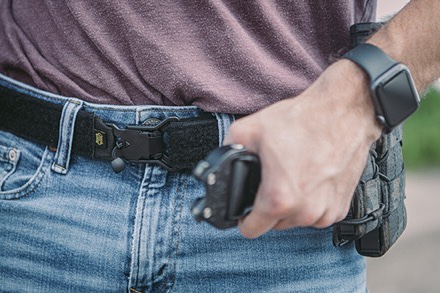
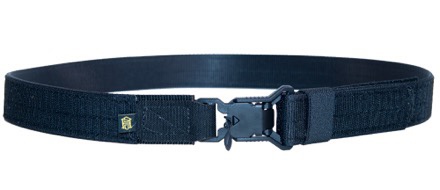
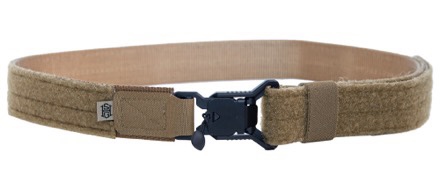
MATBOCK has taken a whole new approach to the very battle belt setup with their Soteria Belt.

The Soteria Belt gives the operator total kit flexibility for any kind of operation or environment. It features an overbelt design with a removable stiffened MOLLE cage to mount your gear. The cage allows you to change out your kit in as little as 30 seconds. The lightweight inner belt has an outward facing loop that secures the outerbelt and it can also be used as an everyday belt. The Soteria Belt converts to a sit/climbing harness with the addition of MATBOCK Soteria Leg Loops. The Soteria belt is rated for a dynamic 3600lb load. Available in S, M, L and XL.

Features:

– Our cage system is made out of Boltaron – a strong yet flexible material

– The belt is designed to allow the operator to quickly switch mission sets by changing out cages

– Seamlessly becomes a full sit/climbing harness with the attachment of the Soteria Leg Loops

– The underbelt is a lightweight and low profile belt which can also be used daily as a regular belt 

To find out more: www.matbock.com/products/soteria-belt

SCUBAPRO SUNDAY – OPERATION Gunnerside

Sunday, June 19th, 2022

Only a few months after the discovery of nuclear fission on December 17, 1938, the military potential of nuclear power became apparent, and the race to develop an atomic bomb began.

Germany began its nuclear-weapons development program in April 1939. During their research for a nuclear reactor, the scientists discovered that deuterium oxide, also known as “heavy water” because it has a higher molecular weight than regular water, performed well as a moderator, allowing them to have greater control over the fission process than they had previously thought.

There was only one area on the planet capable of creating heavy water on an industrial scale: Norsk Hydro’s Vemork hydroelectric power plant in southern Norway, which was built in the 1960s. Heavy water was produced as a byproduct of the plant’s primary function, which was to manufacture ammonia for use in nitrogen fertilizer.

As early as January 1940, German officials inquired about the possibility of purchasing the whole Norsk Hydro heavy water storage and increasing the plant’s monthly output by a factor of ten to fulfill German demand.

This defeat only temporarily hampered the Nazis. Germany attacked Norway precisely one month later and seized the country by the beginning of June. Vemork, now under German control, raised its heavy-water output BY 50%.

In collaboration with the Norwegian Resistance, the Special Operations Executive (SOE) devised a plan for two squads to be dropped into Norway simultaneously.

The first, codenamed Operation Grouse, was composed of four Norwegian commandos. They were to parachute into Norway, conduct reconnaissance, and secure a landing zone for a 34-man team of British commandos, codenamed Operation Freshman, who would land in two gliders and then assault the plant, destroying the 18 electrolysis cells that produced heavy water.

The launch of Grouse took place on October 18, 1942. During the next three weeks, the group trekked to Freshman’s intended landing place, which they finally reached on November 9. Operation Freshman was officially initiated on November 19. An aircraft carrying a glider crashed after experiencing mechanical issues and poor weather, killing the flying crew and several commandos on board. When the bomber towing the second glider decided to cancel the operation, the cable attached to it snapped, leading it to crash as well.

In response to Hitler’s Commando Order, survivors from both gliders were apprehended and executed by the Germans. The loss of 41 soldiers resulted in enhanced security at Vemork, including land mines on the surrounding mountains, and the Grouse crew was trapped and forced to fend for itself.

Norway’s Operation Gunnerside was planned to drop a team of six Norwegian commandos into Norway to hook up with members of the Grouse squad. They would be dressed as British soldiers, so the Germans would not retaliate against the locals if captured.

The unit parachuted into Norway on February 16, 1943; it would take them five days trekking thru waist-deep snow to join up with the Grouse team on February 22. On February 27, nine members of both teams embarked on their journey to Vemork, with one member remaining behind to connect with their counterparts in Great Britain.

On reaching the plant’s perimeter, they discovered that the bridge, which served as the only direct entry point into the complex, was now heavenly guarded because of the failed British raid. Currently, the only way in was to follow the railway (the only place not mined) and to reach the railway gate, and the team had to drop 350 feet into a riverine and then climb an almost 500-foot rock face to gain access to the complex’s rear entrance through a fenced railway gate. As soon as they arrived, the guards changed shifts, and they could cut their way through the barrier just after midnight.

Once inside, the group was divided into two sections. During the attack, five commandos took up positions outside the barracks, the bridge, and the main gate, while the remaining four entered the factory. In the building, they came across only one Norwegian employee, who didn’t put up any resistance or raise the alarm.

The target chamber, which was in the basement, was rigged with explosives. The members of the team were evacuated and were waiting for the blast. It was possible to escape because the room was so far underground, and the walls were so thick because there was little noise when the bombs went off, allowing the entire team to flee before the Germans discovered what had happened. As they rushed through the barracks, they could hear the muffled crump of the explosion ahead of them. At the factory, sirens began to blare shortly after. When German soldiers raced out of the barracks and workers scattered in confusion, the saboteurs had vanished out of the picture. A hunt involving 2,800 soldiers was conducted throughout the area. However, by the time the sun rose, the saboteurs had already embarked on a 280-mile journey across forests and mountains to neutral Sweden.

The commandos demolished the electrolysis cells and more than 500 kg of heavy water in the process. They could flee without firing a single shot or inflicting any fatalities on the other side. By May, the Germans had repaired the damage, but successive Allied air raids had prevented the company from ramping up production. Eventually, the Germans halted all heavy water production and attempted to divert the remaining supplies to the country’s borders.