GORE-TEX Professional

Archive for the ‘Advertiser’ Category

FirstSpear Friday Focus: M4 Single, M4 Double, & M4 Triple

Friday, February 27th, 2026

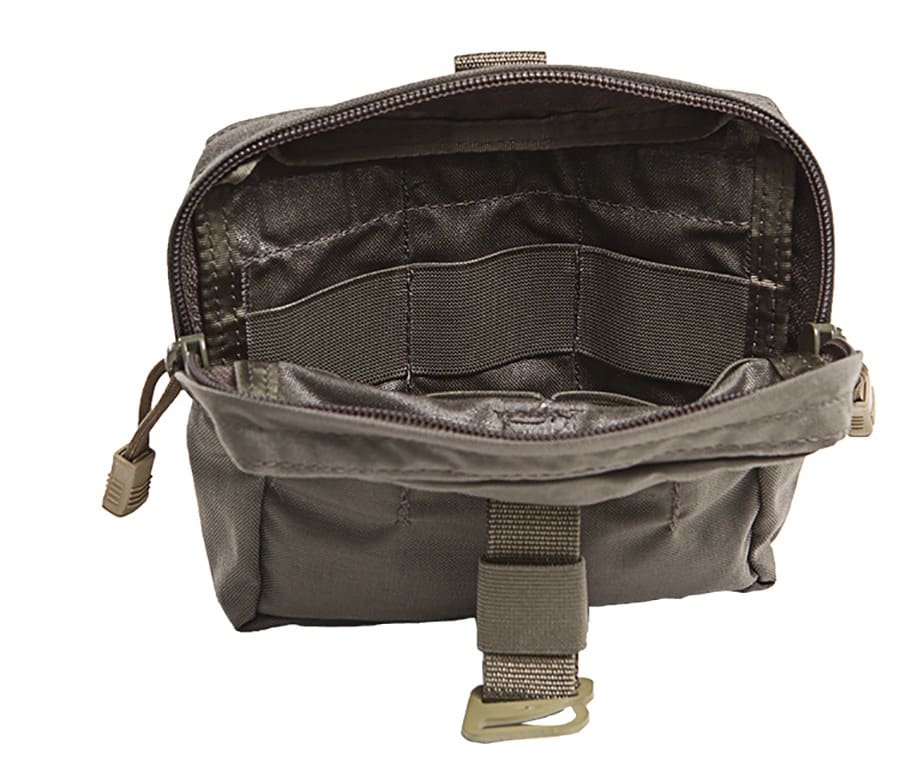
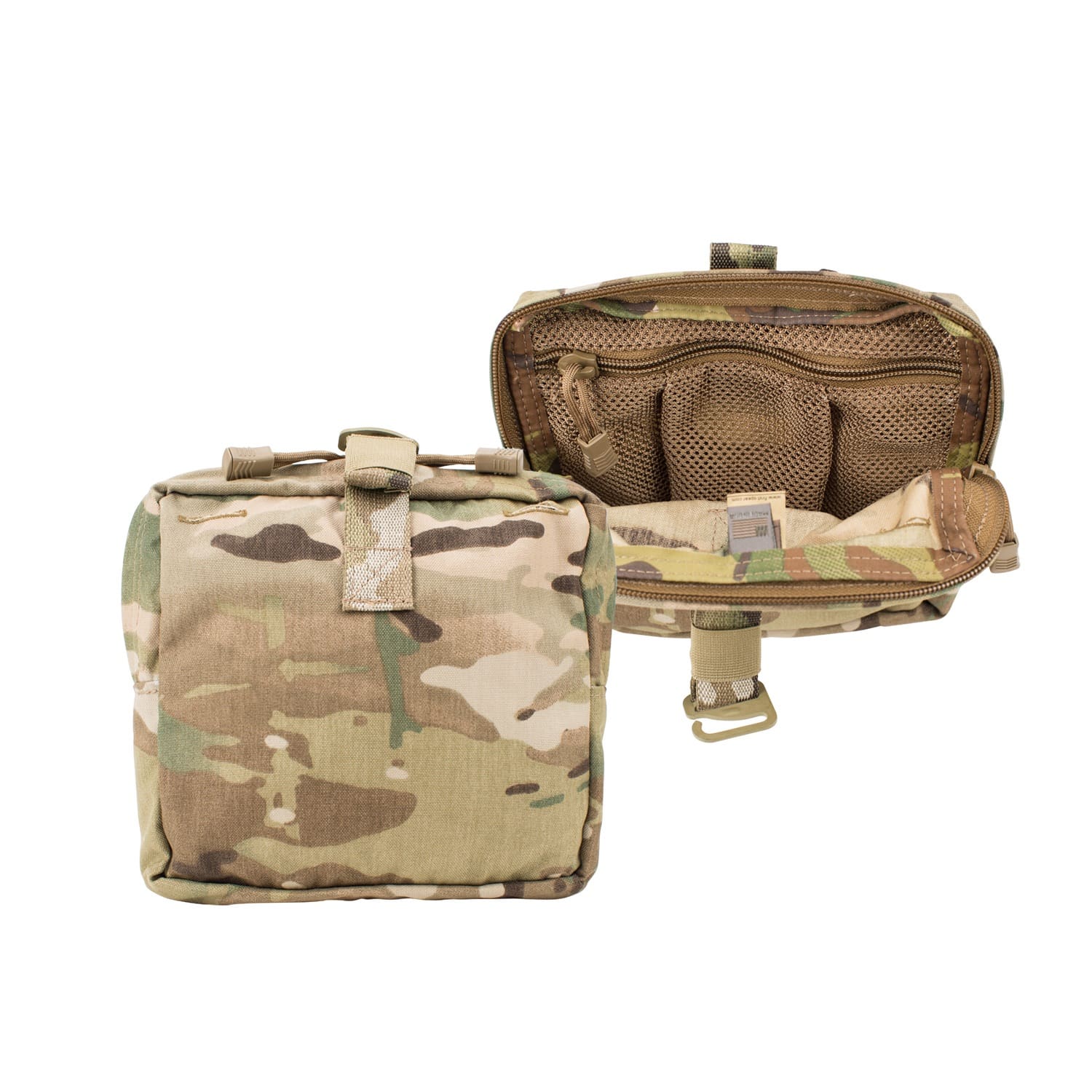
FirstSpear’s M4 Single, Double, and Triple pouches deliver scalable 5.56×45 magazine carriage for operational loadouts. Each pouch is built to securely hold 30-round magazines with mil-spec elastic webbing and a reinforced flap for positive retention. The hook-and-loop closure provides fast access while keeping mags locked in during movement.

The M4 Single holds one or two stacked magazines in a compact footprint, ideal for streamlined setups where space and weight matter. It’s available in both 6/9™ and 6/12™ attachment styles for mission-specific integration.

The M4 Double features two adjacent pockets, carrying up to four total magazines. It offers increased capacity without sacrificing retention or accessibility and is also available in 6/9™ and 6/12™ configurations.

For maximum on-kit ammo load, the M4 Triple carries up to six magazines across three pockets. Built with the same secure retention system, it mounts via 6/12™ for a lightweight, low-profile attachment. Whether scaling up or running slick, the M4 line provides reliable, mission-ready magazine carriage.

To request an estimate click image above or visit First-Spear.com/Request-For-Estimate. FirstSpear is the premier source for cutting-edge tactical gear for military, law enforcement and those who train. For more information visit First-Spear.com.

Global Military Products Receives Contract to Provide Scorpion Light Mobile Mortar System on the Polaris MRZR Alpha 6×6

Wednesday, February 25th, 2026

TAMPA, FL – (Feb. 24, 2026) Global Military Products, a Global Ordnance Company, received a contract to deliver its Scorpion Light mobile mortar system through the Naval Surface Technology & Innovation Consortium for the U.S. Marine Corps. Mounted on the Polaris MRZR Alpha 6×6, the fully integrated platform enhances the mobility, lethality, operator safety and air transportability of these assets.

“This contract signals a step forward in the Marine Corps’ mortar modernization,” said James Knight, director, Global Military Products. “This partnership delivers a revolutionary ‘shoot and scoot’ capability designed for expeditionary forces operating in high-threat, dispersed environments by providing critical indirect fire support to light infantry formations.”

The Scorpion Light mobile mortar system can be deployed, fire 8 rounds and relocate in less than 2 minutes, which was recently demonstrated on a range at Quantico in conjunction with the Marine Gunners Symposium. Rapid emplacement and displacement are critical for survivability on a modern battlefield, allowing mortar teams to engage targets and reposition before an adversary can return effective counter-battery fire.

The Scorpion Light mobile mortar system will also incorporate an advanced digital fire control system that enables rapid, accurate targeting and re-aiming with minimal crew intervention. Marines can use the rapid-fire control system to engage multiple targets quickly and efficiently during combat operations, elevating operational efficiency, while the expanded payload of the MRZR Alpha 6×6 variant allows for 48 mortars to also be transported.

The pre-production MRZR Alpha 6×6 is manufactured by Polaris. This TRL-8 prototype vehicle is a two-seat platform with a 65 percent larger cargo bed optimized for heavier systems and payloads, like the Scorpion Light. The vehicle has 3,600 lbs (about 1632.93 kg) of payload available, with 3,000 lbs (about 1360.78 kg) of that available in the extended cargo bed. The third axle and short wheelbase also have a positive impact on mobility, enhancing performance in soft soil, mud and bogs. The MRZR Alpha 6×6 maintains top speed and has more than 90 percent parts commonality with the base MRZR Alpha that are currently being fielded with the U.S. Marine Corps and U.S. Special Forces.

With its ability to be internally transported by a V-22 Osprey helicopter, the integrated Scorpion Light and MRZR Alpha 6×6 platform provide rapid deployment in remote and austere environments.

The firm-fixed price contract has a ceiling of $4.9M. Once delivered, the systems will undergo Marine Corps live-fire testing and evaluation.

B.E. Meyers & Co. at Enforce Tac 2026

Tuesday, February 24th, 2026

February 23, 2026 (Redmond, WA)B.E. Meyers & Co., Inc., a defense technology manufacturer specializing in advanced photonics solutions for military, law enforcement, consumer, and aerospace applications worldwide, will be with JK Defence And Security, February 23rd-26th, in booth #8-418 at the Exhibition Centre Nuremberg in Nuremberg, Germany.

Established in 2012, Enforce Tac offers mission-critical solutions for homeland and homeland security, enabling direct, discreet interaction with a wide range of security experts and qualified manufacturers from around the world. It serves as a valuable platform for networking, collaboration, and showcasing cutting-edge technologies and solutions in the field of defense and security.

If you are interested in scheduling a meeting with a member of our team, please do not hesitate to contact us at info@bemeyers.com. Otherwise, please pay us a visit at the JK Defence booth to see the latest VCSEL-based laser systems and more from B.E. Meyers & Co. including our signature Defense Systems product lines:DAGIR®, IZLID®, MAWL®, GLARE®, and BOARS® M2.1, or visit our current Defense Systems and Integrated Systems product catalogs at bemeyers.com/catalogs.

Patrol Incident Gear Launches PIG (FDT) OPFOR Glove for Force-On-Force Training

Tuesday, February 24th, 2026

St. Louis, MO (February 24, 2026)- Patrol Incident Gear, LLC., introduces a new glove for marking cartridge training called the .

The ALL-NEW PIG (FDT) OPFOR Glove protects hands from marking cartridge injuries by combining industry-leading design with the impact-stopping protection of precision molded TRP pads.

Getting hit in the bare knuckle by a UTM® or Simunition® round (especially of the 5.56mm variety) can not only derail a promising career in hand-modeling, but leave lasting dexterity issues. YES – pain is an essential component to marking cartridge training, but NO – hand injury that can affect real world gun-handling ability is not a desired outcome.

PIG’s signature tapered and sensitized trigger-finger delivers the best trigger sensitivity on the market. The touch screen compatibility of the trigger finger and thumb allows you to shoot, move & communicate on your high-speed device without removing your gloves.  Tested by private training companies as well as Federal, State and local LE personnel, the PIG (FDT) OPFOR was roundly lauded as a game changer for training, especially for role players.

If you participate in scenario-based training that involves marking cartridges, or sports like airsoft or paintball, the PIG (FDT) OPFOR is the glove you’ve been waiting for.

Available online purchase at SKD Tactical. Please direct all quotation requests to pig.gloves@skdtac.com.

Enforce Tac 26 – 6-Color Desert at Helikon-Tex

Tuesday, February 24th, 2026

Last month we told you about Helikon-Tex creating gear in the classic US 6-color desert pattern. At Enforce Tac they outfitted a manikin with their new clothing paired up with Desert Storm-era gear to recreate the SCUD Hunter.

Here’s the rear of the manikin.

Here’s a shot of the Raid Shirt worn on the manikin to give you an idea of some of the details.

This manikin is wearing their new 6 Color & DNC Hoodie.

They’ve also introduced a cool graphic t-shirt with a SCUD Hunter design.

helikon-tex.com

Enforce Tac 26 – UNITY Tactical’s Bridge for FAST REKE

Tuesday, February 24th, 2026

One of Five New FAST Line Extensions Launched Since SHOT Show
UNITY Tactical unveiled its Bridge for FAST REKE at Enforce Tac. Bridge is a high-performance accessory for the FAST REKE mount that brings an LRF to 12 o-clock above a mid- to long-range scope, clearing taller turrets while allowing full access to dial them.

Replacing FAST REKE’s original top rings, Bridge was developed specifically for USSOCOM to clear the INOD and INOD-X Cooled Thermal CNVD. The design allows full access to dial and set zero stops on the scope but can also be easily removed for initial zeroing procedures. Once reinstalled, the Bridge maintains minimal to no shift in the LRF.

“The removable, snag-free M1913 Bridge ensures repeatable zero retention while allowing full access to dial tall turrets,” said Mike Roth, VP of domestic business development. “Featuring innovative pass-through ring caps, shooters can verify zero stops and settings without coming off the glass – ideal for weapons checks while seated in a vehicle. Bridge offers a purpose-built solution for absolute alignment that solves the turret access problem for shooters running these larger scopes.”

The Bridge’s dual support system eliminates susceptibility to bend or whip from impact, transport, or normal carry, ensuring superior zero retention compared to other mounts. Further, pass-throughs are visible from either side of the weapon.

Bridge is manufactured from 7075-T6 Aluminum and is Type III Hardcoat Anodized for durability. It is available in 30, 34 and 35mm ring sizes. The Bridge for FAST REKE will start shipping in early summer.

This is UNITY’s fifth product release already in 2026, with the first four dropping at SHOT Show last month. I gave an overview of their FAST SideKar, which was the coolest thing I saw at SHOT this year. In case you missed it, they also launched:

• Built at the request of a USMC unit, the FAST SCO Ring is specifically engineered to fit around the Marine Corps Squad Common Optic (Trijicon VCOG 1-8x). It allows any RMR footprint micro red dot optic to attach at a 12 o’clock position over the scope tube, clearing the top turret. This provides an option for shooters to immediately access a parallax-free optic during Close Quarters Battle, passive NODs engagement, or while wearing a protective mask. The FAST SCO Ring is currently only available for active-duty sales, but I’m told it will be available for purchase on their website in the coming weeks.

• The FAST KICKR was developed at the request of USSOCOM specifically for the EOTech Vudu 3-9×32 SFP as a lightweight drop-in replacement for the current factory mount. It places the optical centerline at 1.54” over the rail at optimal position for eye relief. FAST KICKR also accepts the new EOTech Vudu 4-12×36 FFP, all Trijicon ACOG, VCOG and Primary Arms MicroPrism optics. An optional anti-rotational MRDS Ring (sold separately) provides a 12 o’clock mounting platform for an MRDS. Compatible with the suite of FAST Optic Adapter Plates, users can attach their mini red dot to the self-indexing / anti-rotational ring.

• UNITY also released a stand-alone version of their integrated FAST FTC 4X. The FAST 4X Magnifier allows for use with the FAST FTC OMNI or mounts with a similar footprint but has the same clear, durable sighting designed for rapid transitions and confident shot placement. The fixed 4x magnification, 2.6-inch eye relief and generous field of view make it easy to pick up targets at a distance.

Creativity: The Art of the Possible

Saturday, February 21st, 2026

Creativity is often described as imagination, inspiration, or artistic expression. In professional fields especially those tied to real-world consequences like tactical operations, engineering, or business creativity is something far more practical.  It is the disciplined art of making the possible real.

You start with a vision > You have the initiative to try > Now comes the hard part.

The Foundations of Practical Creativity.

Real creativity is not spontaneous. It is built on layers of competence and understanding. Before a solution can exist, certain conditions must be met.

You must have:

• Knowledge of the subject.

• Experience to understand its practical or tactical application.

• A clear understanding of the problem set.

• The technical ability to create a solution.

• The mental flexibility to see that solution before it exists.

• A defined and realistic end state.

Creativity is not just about inventing something new. It is about answering the right question.

Sometimes that question hasn’t even been asked yet.

Are You Solving the Right Problem?

Before building anything, you must understand the nature of the problem itself.

• Are you answering a question no one has recognized yet?

• Are you solving a clearly identified problem?

• Is the problem singular, or is it multi-layered?

• If you solve one part, will the rest fall into place?

• Or is each layer its own independent requirement?

Many failed designs are not failures of execution—they are failures of problem definition.

From Concept to Reality

Once the problem is understood, creativity shifts from abstract thinking to applied execution.

You must consider:

• Is the solution efficient?

• Can it be produced at scale, or only as a one-off?

• Does it actually improve the system, or just look different?

In tactical equipment design, creativity is not measured by novelty. It is measured by effectiveness.

A new concept must:

• Improve function

• Reduce complexity

• Increase survivability or efficiency

• Be producible and supportable in the real world

Otherwise, it is just an experiment or as some say it’s just a hobby.

Rethinking the Paradigm: Symmetry and Function

One example of practical creativity is the concept of load carriage symmetry.

Ergonomic symmetry exists when a task or tool allows the body to operate in a balanced, neutral, and repeatable manner—without forcing one side to compensate for the other.

In equipment design, this often translates to:

• Three to four rifle magazine pouches centered on the torso

• Pistol magazines placed for rapid access

• Grenades, flashbangs, and mission items distributed evenly

• Ambidextrous access to critical equipment

This configuration promotes balance, consistency, and repeatable performance across a team. But symmetry is not always the answer. During special tasks or mission-specific operations, the real question becomes: Is visual or load symmetry more important than immediate access to the correct tool at the exact moment it is needed? In many cases, the answer is no. Creativity means knowing when to follow the paradigm and when to break it.

Understanding the business side of creativity is just as important as the technical side.

A great idea must:

• Reach the market

• Be produced reliably

• Be supported long-term

• Compete against other solutions

Creativity without execution is just theory

Case Study: The Mayflower UW Chest Rig Evolution

One example of creativity as an iterative, problem-solving process is the development of the Mayflower UW (Unconventional Warfare) chest rig series. These designs were not the result of a single flash of inspiration. They were the result of years of operational experience, observation, and incremental improvement.

Each generation solved a specific problem. I took the lessons learned from my designs for the DBT Low-Vis Chest Rigs and operationally improved them:

UW Gen I – The Baseline Concept, breaking the paradigm:

The Gen I represented a shift away from traditional load carriage systems that were either:

too minimal (CHICOM Chest Rig) or too complex (full vest systems replacing belt kit). The goal was simple: carry the essential fighting load in a compact, balanced, low-profile format.

The Gen I focused on: centerline rifle magazine carriage, integrated general-purpose storage, only what you need. A balanced, symmetrical layout, dual comms, ambidextrous and low bulk for vehicle and urban operations.

It established the core concept: self-contained, multi-missionfighting load in a simple chest-mounted platform.

UW Gen II & GEN II.V Refinement Through Use

The Gen II was not a radical redesign. It was a refinement.

Changes were driven by real-world feedback. Long-term wearand practical adjustments from field use.

Key improvements included:  H-Harness refinements, initially fixed but still range of motion/size adjustable then a quick don/doff capability was added.

The lesson from the Gen II was simple: small, thoughtful changes often produce the biggest performance gains.

UW GEN I “Custom” that led to future development (as it was worn in combat).


UW Gen III — The Standardization Phase

By the time the Gen III emerged, the concept had matured.

This generation focused on: refined magazine retention, a cleaner manufacturing processes, and a format suitable for broader adoption across units

The Gen III represented the transition from:

“a good idea” to “a scalable, supportable piece of equipment.” This is a critical step in creativity:

A solution is not complete until it can be produced, issued, and sustained.

UW Gen IV — Modularity and Integration

The Gen IV reflected changing operational realities.

Users increasingly needed, integration with armor, greater modularity, and compatibility with multiple mission sets

The Gen IV addressed this byimproving attachment options, increasing compatibility with plate carriers and allowing mission-specific add-ons

This generation acknowledged a key truth: The environment changes. The equipment must evolve with it.

UW Gen V — The next step

By the time the Gen V arrived, the original concept had been fielded in the tens of thousands.

This design focused on splitting the base in half to meet a different operational need (an open front), streamlined construction, matching H-Harnesses, similar construction techniques, optimized pouch geometry to meet operational requirements, magazine inserts for different calibers, improved materials and manufacturing methods.  Abalance between modularity and simplicity.

UW Gen VI “Pusher” — The Mature Concept

The “Pusher” chest rig represented the evolutionary development of the UW series—a single platform, multi-caliber capable, and configurable for use with or without armor. It was built as a plug-and-play system, allowing magazine pouches to be mounted on the lower back for prone use, the addition of a cold-weather jacket pouch, and the ability to carry a NODS-mounted helmet as required.

Lessons from the UW Series.

The evolution from Gen I to Gen VI demonstrates several key principles of practical creativity:

• Creativity is iterative; no design is perfect at the start. Each generation solves a problem the previous one exposed.

• Experience drives innovation; most improvements were not theoretical. They came from actual use, under real conditions.

• Simplicity is the end state, as a concept matures, unnecessary complexity is stripped away.

• Production matters; a design is only successful if it can be produced in quantity and supported over time.

The Business Reality of Creativity

Creative success brings its own set of challenges.

After achieving even moderate success, many designers and entrepreneurs experience a predictable cycle:

• Imposter syndrome: was this a one off or have I spent my creativity?

• Learning to deal with success

• Reconciling unconventional paths to achievement, no college degree versus experience

• Pressure to recreate the successful formula

• Pushing through self-doubt

• Selling your own strengths while trying to remain humble

• Regaining the drive to outperform competitors

The Next Chapter

At some point, you begin to recognize where your real strengths lie.  Not just what you can create, but:

• What problems you are best suited to solve

• What environments you perform best in

• What kind of impact you want to have

That realization marks the transition into the next chapter.  You stop trying to prove yourself = You start building with intent.  Creativity, at its core, is not about originality for its own sake. It is about:

• Understanding the problem

• Seeing a path forward

• Having the skill and discipline to make it real

That is the true Art of the possible.

About the author:  Travis Rolph is a retired Airborne Infantry and Special Forces veteran and founder of Mayflower Research & Consulting.

Sign Up Now for the 3rd Annual Samsung Solutions & Partner Expo

Friday, February 20th, 2026

Samsung is co-hosting the 3rd Annual Samsung Partnership Day with Juggernaut, on April 2nd, 2026. This collaborative technology and emergency-response showcase is designed to highlight how strategic partnerships across the public sector, private industry, and the Department of Defense enable mission-critical operations. Modern response efforts rely on seamless integration; without one component, the others cannot achieve full effectiveness. This event brings together technology providers, solution integrators, and government agencies to demonstrate how coordinated systems, platforms, and communication tools work in unison to accomplish complex tasks.

This year’s theme focuses on multi-level emergency response, emphasizing how local, state, federal, and military partners collaborate during crisis events. Through live demonstrations, scenario-based simulations, and expert discussions, we will explore how these partners coordinate—from initial incident and situational awareness to resource deployment, on-scene operations, and long-term recovery.

Attendees will see firsthand how technologies such as mobile communication platforms, command and control systems, secure data-sharing solutions, and field-level devices intersect to support a unified response effort across all jurisdictions and military components. All of this will take place in a casual, mixed indoor/outdoor setting overlooking the McDowell Mountains.

Companies exhibiting

When:

Thursday, April 2, 2026

7:30 AM – 4:00 PM

Where:

Juggernaut HQ

9229 E Verde Grove View

Scottsdale, AZ 85255

Sign up here.