Aquaterro

Archive for the ‘Advertiser’ Category

SCUBAPRO Sunday – Pirates

Sunday, December 5th, 2021

“Been to Disney World one too many times? Have we, Captain Ron?”
During the American Revolution, George Washington, while serving as head of the Continental army during the siege of Boston in 1775, started using pirates to help attack the British where they were most vulnerable on the sea. “Finding that we were not likely to do much in the land way, I fitted out several privateers, or rather armed vessels, on behalf of the Continent. With an offer of a percentage of spoils as an inducement, the call for citizen sailors to hijack inbound supply ships tapped the same vein of self-interest and comradeship that had led the colonies to seek independence in the first place.” Although private piracy proved detrimental to the Royal Navy, it ultimately helped turn the British public against the war.

“He said gorilla. Not guerrilla. Guer, go. HUGE difference kids,” Martin Harvey

A pirate is a seaman who threatens, seizes, or destroys any ship at high seas and often even harbors at the shore. Besides, they have been involved in many other criminal activities, such as piracy and the slave trade. Without any legal rights, the pirates are doing it for personal reasons. And they were regarded as criminals in all countries because those attacks were illegal acts. Piracy was punishable by death almost everywhere during the times when it was at its height. The critical difference between them and the privateers or buccaneers, about whom we can also claim that they were some sort of pirates, but not treated like criminals, is also the legality of their acts.

The U.S. allowed about 1,700 private warships to cruise the ocean, searching for British prizes during the Revolution, when a cash-strapped Congress could not launch an efficient navy of its own at the time. These revolutionary privateers carried congressional commissions, effectively legalized pirates, which outlawed attacks on neutral ships and prisoners’ mistreatment but otherwise allowed them free rein to rob and plunder. Most privateers were motivated by greed as much as by patriotism.

However, Washington was also outfitting a fleet of lightly armed schooners, and the debate over the navy took place in Congress. Although most members thought the idea of a navy insane, the Marine Committee was formed to oversee the production of 13 frigates.

Meanwhile, with its deep-rooted culture of fishing, shipbuilding, and ocean trade, Massachusetts considered whether to unleash its citizens by allowing state-sponsored privateering. Throughout history, governments at war have used the authority under international law to authorize independent operators to transport enemy merchant cargoes. There had already been incidents off the Massachusetts coast of scavenging looting crews abandoning ship down one side as local marauders clambered up the other side wielding clubs and cutlasses; the loot from these raids had to give them visions of bigger gains to come. To legalize privateering, the government would provide the colony with an instant navy for little to no cost.

In March of 1776, Congress followed suit and ordered that all British ships be considered “fair game for civilian warships.” After months of bitter debate on the general theme of business and patriotism, Philadelphia leaders embraced trade, going so far as to provide signed preprinted applications for commissions complete with blank spaces where names of ships, captains and owners could be inserted with minimal fuss. An early proponent of privateering, John Adams, appreciated, “I was always extremely interested in it.” Privateers had to pay monetary obligations to ensure their proper conduct under regulations. Although it is only fragmentary, incomplete information, more than 1,700 Letters of Marque were granted during the American Revolution. Approximately 800 privateers were commissioned and are frequently attributed with burning, looting, and capturing around 600 British ships.

Following congressional recognition of privateering, privateers flocked from Massachusetts, New Hampshire, and Rhode Island. Most had reputations for contraband, quirkiness, and eccentricity until this point. Most privateers just smuggled items throughout the Royal Navy’s blockade.

Weapons shortages resulted in delays in securing gunpowder, but some, like the Brown brothers, managed to solve the problem by converting their iron foundry to cannon-making. The Brown brothers were accused of charging ‘extortioners’ prices for guns for Congress’ frigates, giving preference to their vessels and advertising for crews with promises of quick fortunes, congenial captains, ample alcohol, and a thrilling opportunity to smite “the tyrant’s pilferers.”

Privateering was a natural fit for the brothers, and they immediately began cutting gun ports through the trade ships’ bulwarks and clearing holds to make room for more crewmen needed to sail the captured prizes home for auction. They were also named a member of the congressional committee that oversaw Congress’ frigates’ construction.

In 1777, the Ranger, an 18-gun sloop captained by a young John Paul Jones, sailed across the Atlantic with a vow “to draw off the enemy’s attention by attacking their defenseless structures,” a plan fulfilled the following spring in his daring hit-and-run raid on the British port of Whitehaven. However, Richard Grenville’s prediction that he would do infinite damage to their shipping was realized by the pirates he so loathed. While still skeptical of America’s ability to defeat them on the battlefield, the British were forced to concede one point about the rebel privateers that diplomats on the European Continent had noted in July 1776: “What is certain on the side of the Americans is their activity at sea and the ships of the Crown they are capturing.”.

In the Caribbean alone, whose position as the hub of Britain’s New World trade made it the primary hunting ground for at least a hundred New England privateers by May 1776, maritime losses reached over $2 million within a year. Royal Navy captains in the West Indies learned that a storm was approaching, but their superiors had no clue. “Time is running out,” they urged their companion, “for our journey to the English Channel.”

Before then, most American vessels carried goods such as tobacco and paper to trade for European munitions. The privateers among them were adventurous predators who might provision in French and Spanish ports but rarely sold prizes there (doing so violated those nations’ neutrality agreements with Britain), instead dispatching them back to America for appraisal and auction.


The first ship that sailed into Europe was the 16-gun Continental brig named Reprisal. Under its captain, Lambert Wickes, and carrying Benjamin Franklin to France to serve as an ambassador, the Reprisal sailed to Europe in December 1776 to join the endeavor to create an international alliance. Reprisal then set out to plunder the seas, capturing 13 merchant vessels before being chased into a French harbor by an enemy frigate.

Small privateers like Retaliation and most other ships were forced to flee before a frigate’s firepower, which could hurl a barrage of hurtling metal from up to two dozen 12-pound cannons mounted along each side. The frigate HMS Brune, for instance, destroyed a 12-gun schooner with a single broadside and significantly damaged a 9-gun schooner. In trying to treat the wounded among Volunteer’s crewmen, the boarding party found the vessel “so much damaged that we hardly had time to get them all on board before she sank.” Similarly, a Boston privateer, Speedwell, carrying 14 guns and 90 men, took a frigate’s broadside “between wind and water” (the portion of the hull usually below the waterline but exposed to the air the vessel is heeled over in the wind). The study revealed that “she was lost at sea immediately, and all her crew perished during the voyage.”

On May 17, 1777, another American captain, Gustavus Conyngham, sailed aboard Surprise with 25 men from the French port of Dunkirk and intercepted Prince of Orange, a mail steamer plying between Holland and the British port of Harwich.

In the late 1700s, British political and military leaders denounced the Revenge’s hit-and-run combat style and the many other warships now swarming European waters. For the people in Parliament, the pirates were an immoral group of terrorists to be exterminated. One report of the capture of a supply ship alleged that “rebels stripped the killed and wounded, robbed every article of clothes, bedding, and provisions belonging to the sick, burned the cutter and added every insult to the distress.” And any foe that would, “against the laws of God and Man,” fire on a vessel under a flag of truce deserved, it was declared in Parliament after one such incident, “all the horrors of rebellion,” by which was meant no mercy.

Privateers comprised two distinct ventures. A Letter of Marque permitted merchants to attack any hostile vessel they encountered along their commercial voyage. A privateer commission was issued to those who were commissioned to attack enemy merchant shipping. The primary objective was to engage a lightly armed commercial ship.

Privateers of every type of vessel were pressed into service. The largest 18th-century ship was the 600-ton, 26-gun ship Caesar out of Boston. Simultaneously, crew sizes were as little as a few men in a whaleboat and as high as 200 aboard a fully equipped privateer. Vessels designated for Privateering and Letters of Marque were launched from places up and down the east coast.

Privateers didn’t usually fly the black pirate flags; they flew a flag that looked very similar to the “Don’t tread on me flag.” Privateers that could effectively convince their opponent that the opposition was futile did the best. When that plan failed, it often resulted in extremely violent fighting with unpredictable results. Many of the pirates were captured or sank when the situation wasn’t going their way. Most did not raise the pirate flags that we know of today, but there were two basic types, Black and Red, if they did. The black was raised when you planned to raid the ship but didn’t plan on killing everyone and the Red Flag or “no quarter giving” or “the blood flag” meant they planned to kill everyone, and no mercy was to be given. It also didn’t always have to have a skull and bones. It was up to the captains what it would look like, and most pirates didn’t fly them. Those flags were used truly by pirates not necessarily by privateers.

Despite all the hardships, the crippling of British commercial shipping was highly effective, and fortunes destined to aid the founding of the new Republic were made. It is estimated that American privateers’ total economic damage was about $18 million, or about $302 million in today’s dollars during the war.

George Washington recognized early in the war that his best strategy was to “sink Britain under the disgrace and expense of war.” To survive against the formidable British military, countless small- and large-scale offensive operations needed to be conducted and maintained to keep the enemy off balance, under strain, and demoralized.

SCUBAPRO Sunday is a weekly feature focusing on maritime equipment, operations and history.

Varusteleka Särmä TST Alpina Recon Boots

Friday, December 3rd, 2021

Built for Varusteleka by Alpina, this high leg, leather combat boot incorporates an upper made from black hydrophobic Box leather with a reinforcement piece on the toes and the heel. The lining is hydrophobic Napa leather. The outsole is rubber and the midsole injected polyurethane. The exchangeable anatomic insole has antibacterial treatment. The round black shoelaces are made from polyester/polyamide.

Get yours at www.varusteleka.com/en/product/sarma-tst-alpina-recon-boots.

FirstSpear Friday Focus: Buy Socks, Give Socks & Exclusive Yippee Ki-Yay Stickers

Friday, December 3rd, 2021

In the immortal words of a damn fine soldier, Lt. Dan Taylor, “There is one item of G.I. gear that can be the difference between a live grunt and a dead grunt. Socks, cushion, sole, O.D. green. Try and keep your feet dry when we’re out humpin’. I want you boys to remember to change your socks wherever we stop.” – Forrest Gump (1994)

Like any good leader we’ll get you the items you need to succeed. Here at First Spear, we remember what Lt. Dan said, and we have the tools for you to do this. Exclusive during the season of giving, we are offering a buy a pair, give a pair on our grunt-proof Merino Wool socks. We have both our Everyday Sock and Boot Sock. These socks will not only stave off that foot eating bacteria, but they’ll keep your feet dry, thanks to Merino Wools natural antimicrobial and high breathability. The reinforced and added cushion to the heal and toe will absorb those long days on your feet and shrug off those long hours of wearing boots.

In addition to our month of giving, every web order for the month of December will receive a limited edition FS Festive Yippee Ki-Yay Sticker.

Beginning of December 10th, we’ll be launching our 12 Days of Christmas, be sure to sign up for our email newsletters to be the first to know, first-spear.com/landing.

To check out our merino wool socks, go to: www.first-spear.com/technical-apparel/american-merino-wool.

VSS and Centre Firearms Co Team-Up to Provide IED Familiarization Training

Thursday, December 2nd, 2021

A three-day familiarization-level course which teaches the basic knowledge needed to identify possible Improvised Explosive Device (IED) threat situations and the skills to address the threat safely and effectively.  Topics covered in the course:

• History, overview, and evolution of explosives

• Detection, identification, and sample variations

• Awareness and countermeasure tactics

This course presented by a top-level subject matter expert with relevant operational experience spanning from the 1970’s until 2013.

2022 courses: January 14-16, April 11-13, July 25-27, October 3-5
Location: Henderson, NV
Minimum students: 5

*Restricted to US Government Agencies, DoD & qualified Law Enforcement officers

For more information visit www.centresupport.com/ied-familiarization

www.vig-sec.com


Tactical Strike Cleaner / Disinfectant Effective Against Omicron Variant

Wednesday, December 1st, 2021

[POOLER, GA, November 29, 2021]

As the Omicron Variant comes to US shores, Blue Force Gear wants to remind the public and First Responders of its new groundbreaking quaternary disinfectant Tactical Strike. This cleaner/disinfectant is EPA Registered to kill numerous bacteria and viruses to include COVID and ALL VARIANTS. A partial list includes:

* SARS-Related Coronavirus 2 (SARS-CoV-2, cause of COVID-19)

* Human Coronavirus

* SARS Associated Coronavirus (SARS)

* Respiratory Syncytial Virus (RSV)

* Hepatitis B and C Virus

* Herpes Simplex Virus Type 1 and 2

* HIV-1 (AIDS Virus)

* Influenza Virus Type A / Brazil, H7N9 and H3N2 (Influenza)

Tactical Strike can be used on soft and hard tactical gear, vehicle interiors, upholstery, hard surfaces, K9 equipment, kennels, etc. Importantly, and unlike its competitors, Tactical Strike was formulated with no dyes or perfumes that will stain, discolor or odorize your equipment.

Packaged in a Ready-To-Use (RTU) formulation that requires no mixing or prep, Tactical Strike is currently being offered for sale in pint and quart sizes with trigger sprayers. Just unwrap and use.  The pint bottle was specifically selected for its sizing that allows storage in vehicle cup holders. Larger or smaller volumes and other packaging formats are available via special order.

Tactical Strike pints are priced at $9.95 and quarts for $14.95.

Available for individual purchase or in case quantities for agency purchase through www.blueforcegear.com/tactical-strike or by contacting BFG Customer Service at 877-430-2583.

High Speed Gear Releases Core Cummerbund

Wednesday, December 1st, 2021

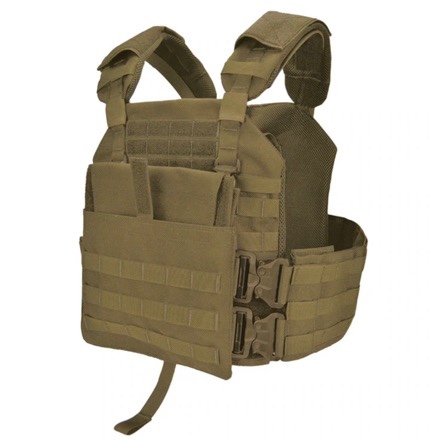
SWANSBORO, N.C. – December 1, 2021 – High Speed Gear® announces the Core™ Cummerbund accessory to customize the already top selling, Core™ Plate Carrier.

The Core™ Cummerbund is the first, with more to come, upgrade to the High Speed Gear Core™ Plate Carrier. Available in a variety of colors, the Core Cummerbund comes in three different sizes based on the body-type of the user. The Core Cummerbund allows the user to adapt to his/her environment by adding mission-essential gear to the Core™ Plate Carrier such as medical equipment, extra magazine pouches, a dump pouch, and more, while keeping a minimalistic, low-profile look.

“The Core Cummerbund adds additional MOLLE real estate to the carrier, allowing the user to build their kit precisely to their needs.” said Chief Operations Officer, Bill Babboni. “Our team planned for added scalability and customization when we launched the Core™ Plate Carrier earlier this year. As with all our products…quality, functionality and versatility are key.”

The Core™ Cummerbund is now available for purchase by visiting the High Speed Gear® website or by contacting your local Authorized Dealer of High Speed Gear® and Comp-Tac® products.

Click here to view more details on the Core Cummerbund www.highspeedgear.com/coretm-cummerbund

Leading Global Eyewear Manufacturer Bollé Safety Launches New Bollé Safety Standard Issue Tactical Eyewear Brand Featuring Eyewear from Jade Struck

Wednesday, December 1st, 2021

Bollé Safety, the world-renowned leading manufacturer of safety glasses and goggles, has announced the rebranding of its Bollé Tactical division to become Bollé Safety Standard Issue.  The new Bollé Safety Standard Issue features a range of products designed to offer unparalleled eye protection for tactical professions including law enforcement, first responders, firefighters, EMS, military and special forces, as well as shooting enthusiasts and hunters. The division’s mission is focused on the development of ballistic and protective eyewear while concentrating on improved comfort, style, and safety, giving tactical customers the competitive advantage they need to do their job in the safest way possible.

As part of the launch of this new brand, Bollé Safety Standard Issue has worked with Jade Struck, the competitive shooter, firearms instructor, model and actress, to create a pair of custom tactical glasses called The SENTINEL STRUCK. “As a firearms instructor, safety is my top priority, so I believe that all gear plays an important role, but I believe that eye protection is the most important,” said Struck. “A great pair of safety glasses shouldn’t just protect your eyes, but should also help you perform to the best of your abilities, so that’s what I’m hoping we’re bringing to the table with the SENTINEL STRUCK.” Certified to MIL-PRF-32432 A and ANSI Z87.1 safety standards to ensure maximum protection, these ballistic sunglasses are specifically tailored for the active woman who partakes in shooting, and other outdoor activities.

Like the SENTINEL STUCK sunglasses, each Bollé Safety Standard Issue product is a tailor-made solution that answers the specific needs of its wearers. The entire range of protective eyeglasses are crafted to be compliant with all major international safety standards worldwide.

“Our mission is to provide the best eye protection to those who need it and the people who protect us, beyond just the military field, so renaming the Bollé Tactical Division was evident,” explained Rubina Meunier, Vice President of Brand from Bollé Safety. “Bollé Safety Standard Issue is a more comprehensive name, with the ‘Standard Issue’ phrasing resonating globally and the new logo being catchy, bold, and a bit mysterious.”

“Niveh T’ah’in (Warrior)” a Film by Mystery Ranch & Mission Roll Call

Tuesday, November 30th, 2021

MYSTERY RANCH has always had the utmost respect for the servicemen and women of our country. We build our gear to help them complete their mission with no compromise. Our commitment to helping these individuals does not stop when they finish their service but rather to help provide veterans connect with communities that advocate for positive change.

MYSTERY RANCH has partnered with Mission Roll Call, an organization dedicated to providing veterans with a powerful, unified voice that our Nation’s leaders heard, to create a short film called Niveh T’ah’in (Warrior) – centered around veteran of the U.S. Army, Sam Alexander, who served as a Green Beret and his transition into civilian life.

Sam’s story is about finding purpose in life after the military. Follow him through the centennial climb of Denali, his guided backcountry trips to bring people into his Gwich’in community, and his way of life in this short, powerful film.

Connect with Mission Roll Call to learn more about their movement.