TacMed Solutions offers three main types of litters: poleless litters, Foxtrot® litters, and the Rescue Task Force litter. What are the differences between them, and which one works for you?


The poleless litter is offered in the form of the TacMed™ Poleless Litter or the Phantom® Litter. Poleless litters are a form of non-rigid litters that are ultra-lightweight and ultra-compact making it easy to carry for medical operators or individual soldiers. It is durable and has multi-life casualty evacuation capacity. Additionally, it can function as a casualty equipment bag after the casualty has been loaded on a standard litter to hold an individual’s combat equipment or sensitive items, minimizing the risk of loss during the casualty evacuation process. Although easy to carry and store, use of a poleless litter often requires multiple people to evacuate a casualty.
TacMeds Foxtrot® litters are offered in the form of the Foxtrot® Litter and the Foxtrot® DA. The primary difference between these two litters is that the Foxtrot® DA utilizes quick connect buckles that allow strapping in a casualty with a snap motion whereas the Foxtrot® Litter utilizes two metal D-Rings that, although may be slightly slower, often allow for a tighter strap and are more robust. The Foxtrot® line of litters are semi-rigid litters that are draggable and easy to carry. Being designed by a special operations medic, they are specified to meet the applications of quickly moving a target off an objective. It is made of low friction plastic, allowing it to slide easily, that is connected to a rapid deployment drag line, allowing for a single person to sling the strap over their chest and still move the casualty with two free hands. It is the first litter system to be light and compact, being small enough to fit in our ARK™ Bag. A differentiator of this litter is that it is designed smaller and narrower in order to quickly move down bus or airplane aisle, as well as turn corners and fit through doorways more easily. Because it is semi-rigid, the plastic bed is also pliable, allowing the casualty to sit upright in it if needed. Lastly, it has a color-coded strap system, allowing for speed and easy use. The Foxtrot® system is ideal for SOF medics, police, SWAT, or people working in a tactical setting.
TacMed also makes the Rescue Task Force Litter. The RTF litter is designed similarly to the concept of the Foxtrot® system except that it is morphed for a domestic active shooter environment. It is designed with a thicker plastic bed which improved durability and product life when responding to multi-casualty situations. Like the Foxtrot®, it is narrower in size allowing for easy maneuverability through doorways, down aisles, or around corners. It comes equipped with a rapid deployment drag line, but also has handles for the ability to carry a casualty. Additionally, the RTF litter is designed with larger buckles, making it easier to apply while wearing bulkier rescue gloves. The straps are positioned so that one adult or two children could be evacuated at once. The Rescue Task Force Litter is ideal for firefighters, EMS, or police with gear for mass casualties.
Today, pre-orders begin for the second Arc’teryx LEAF SMU, the Gamma Anorak. SMU is an acronym for “Special Make Up” which is a custom run, not included in the standard lineup, but generally based on an in-line item.
The Gamma Amorak is quite popular in the outdoor line and this SMU, the Gamma Anorak IFF is identical except for the distinctive Ranger Green color and the 4″ x 4″ Velcro arm patches for attaching IFF to your anorak. These also incorporate V-Lite retention loops.
It’s made from a lightweight 4-way stretch nylon/spandex double weave treated with DWR. It has great air-permeability for high intensity use.
It features articulated patterning, a deep front zipper for ventilation, a zippered low-profile exterior left chest pocket, drawstring hem, adjustable hood, and elasticized cuffs.
I have tried one of these on and I own one of the Outdoor line versions. If you like anoraks, you will love this one. Sizing is directly from the outdoor version of the Anorak, so if you want some extra room, go up a size.
Although retailers are taking orders now, these jackets will not ship until Tuesday, 7 Dec 2021. I fully expect these to sell out quickly.
Here is a list of where you can order yours, based on your region:
For Frogman, the battle of Tarawa marks the birth of the UDT and the start of a very long history for Naval Special Warfare. Because the Higgins boats that were taking the Marines to shore got stuck on coral reefs, the Marines would have to jump out in some case far from shore. More Marines drowned or died in the water from enemy fire then killed in the next two days of fighting. So, the Navy came up with the Underwater Demolition Teams to recon landing sights to make sure the Marines could land.
But for the Marines, it was another day in an already long history. The Battle of Tarawa was fought on 20–23 November 1943. It took place at the Tarawa Atoll in the Gilbert Islands, in the Pacific Theater of WW2 and was part of Operation Galvanic, the U.S. invasion of the Gilberts. Nearly 6,400 Japanese, Koreans (forced labor by the japenese), and Americans died in the fighting, mostly on and around the small island of Betio, in the extreme southwest of Tarawa Atoll. The U.S. had similar casualties in previous campaigns, like the six months of the Guadalcanal Campaign, but the losses on Tarawa happened in just 76 hours.
The Battle of Tarawa was the first American offensive in the critical central Pacific region. It was also the first time in the Pacific War that the United States had faced severe japanese opposition while conducting an amphibious landing. Previous landings met little or no initial resistance. As the Japanese strategy was to let them land and attack after they let their guard down. (but that didn’t work against the USMC). On Tarawa, the 4,500 Japanese defenders were well-supplied and well-prepared, and they fought almost to the last man, exacting a heavy toll. The Japanese said it would take the U.S. “one million men 100 years to take Tarawa.” That is saying a lot for a piece of land that was only 3 miles long and about 800m wide. The Japanese had fortified the island with about 500 pillboxes, four eight-inch gun turrets, and numerous artillery and machine-gun emplacements. A coral and log seawall ringed most of the island, and 13mm dual-purpose anti-boat/antiaircraft machine guns protected the beaches.
On the morning of November 20, following a naval bombardment, the first wave of Marines approached Betio’s northern shore in Higgins boats. The men encountered lower tides than expected and were forced to abandon their Higgins Boats on the reef that surrounded Betio and wade hundreds of yards to shore under intense enemy fire. When the Marines reached the Red beach, they struggled to move past the sea walls and establish a secure beachhead. By the end of the day, the Marines held the extreme western tip of the island, as well as a small beachhead in the center of the northern beach. In total, it amounted to less than a quarter of a mile.
There were immediate issues from the start. The naval gunfire stopped at 0900, while the Marines in their Landing Vehicles, Tracked (LVT), were still 4,000 yards offshore. Because of the lower-than-expected tide, the Higgins boats carrying later waves would not be able to make it over the reefs in the bay. As the Marines approached the shore, they realized the naval bombardment had been rather ineffective. They started taking heavy fire from the Japanese as they made their way across the lagoon.
Assault companies, K and L, suffered over 50 percent casualties in the first two hours of the assault. The following waves were in even more trouble. Embarked in Higgins Boats, they had no choice but to unload at the reef due to the low tide. They had to wade ashore over 500 yards under heavy fire.
This was how the men of L company under Major Mike Ryan made it ashore. Rather than leading his men directly into the carnage of Red Beach 1, Ryan followed a lone Marine he had seen breach the seawall at the edge of Red Beach 1 and Green Beach, the designated landing area that comprised the western end of the island. Ryan’s landing point caught the eye of other Marines coming ashore and they headed towards Ryan’s position.
As more Marines from successive waves and other survivors worked their way to the west end of the island, Ryan took command and began to form a composite battalion from the troops he had. These men would come to be known as “Ryan’s Orphans.”
On the beach, the Marines of 3/2 continued to fight for their lives. After managing to wrangle two anti-tank guns onto the beach, they realized they were too short to fire over the seawall. As japanese tanks approached their positions, cries went up to “lift them over!” Men raced to get the guns atop the seawall just in time for the gunners to drive off the Japanese tanks. Maj. Ryan’s Orphans and others had acquired a pair of Sherman tanks. Learning as they went, the Marines coordinated assaults on pillboxes with infantry and tank fire. This gave the Marines on Betio their most significant advance of the day as Ryan’s orphans were able to advance 500 meters inland.
3rd Battalion was severely mauled in the initial assault on Betio. Surrounded by strong Japanese fortifications, the survivors on Red Beach 1 would fight for their lives for the remainder of the battle. Ryan’s orphans made a significant contribution to the battle in opening up Green Beach, so men of the 6th Marine Regiment could come ashore to reinforce the battered survivors. Now reformed, 3/2 would take part in one of the final assaults to secure the island, helping to reduce the dedicated Japanese fortification at the confluence of Red Beaches 1 and 2.
By November 23, 1943, after 76 hours of fighting, the battle for Betio was over. More than 1,000 Marines and sailors had been killed, and nearly 2,300 were wounded. Of the roughly 4,800 Japanese defenders, about 97% were thought to have been killed. Only 146 prisoners were captured.
Maj Ryan was awarded a Navy Cross. Four Marines would be awarded the Medal of Honor for their actions during the battle — three of them posthumously.
The military learned vital lessons from the invasion of Tarawa. The organization of amphibious landings was changed, and by D-Day, they would be far more effective. The tactics techniques and procedures of using tanks and infantry together to fight a well-intrenched enemy and other lessons learned would be used for the rest of the war. To this day, the lesson learned on Tarawa is used as the base for all amphibious operations.
SENTRY’s new line of Every Day Carry holsters offers a super sleek design with adjustable settings for a comfortable, all-day fit.
Virginia Beach, Va. (November 2021) – SENTRY Tactical expands their new line of EDC holsters to include a stylish Comfort Carry holster in microfiber suede, a “leather-look” Variable Fit holster, and an optimal solution for a pocket carry holster, the IWB/Pocket holster.
The Comfort Carry Inside the Pant/Tuckable Holster is covered with an anti-slip microfiber suede and features edge stitching for a casual look that is comfortable for all-day wear, easy to clean and good looking. Just like the Inside the Pant/Tuckable holster, this microfiber suede version with the unique angle adjust clip attachment system allows the user to tuck a shirt over the firearm for the ultimate in concealability and accessibility. This Level 1 retention holster is also adjustable for height and holster inclination and has a sight channel for a smooth draw and reholstering. Available in a grey-suede look for GLOCK Models G17, 19, 43, S&W Shield 9/40, and SIG 238 with an MSRP of $65.99.
SENTRY’s Variable Fit Inside the Pants Holster is a thin, lightweight concealed carry holster featuring a “leather-look” reinforced microfiber body with an interior lining of suede microfiber. The holster is internally reinforced with a non-deformable material with a differentiated polymer reinforcement at the top insert area of the holster, for easy drawing and reholstering. The multi-position Rubber-Tech hook-and-loop fastener, allow the Easy-Fit to be worn in a variety of cants on the belt, and inside the pants. Available in black and four sizes for a sub-compact, medium semi-auto, large auto (G19), and large auto with longer barrel (G17) with an MSRP of $62.99.
The ideal pocket holster is SENTRY’s IWB/Pocket Holster, a comfortable concealed carry holster with a non-slip exterior and a closed-cell foam interior that conforms to the shape of the firearm. The soft interior liner protects and reduces friction and wear on the firearm. Ambidextrous design available in black for GLOCK Models (G26, G27, G29), (G19, G23, G25), (G17, G20, G22), .380 semi-autos to 2.75” barrel, 2” – 3” small revolvers (except for 5-shot), 3” – 4” medium barrels (.32/.380) and 2” small revolver/5-shot and small frame .380 with Crimson Trace. MSRP is $18.99.
VIRGINIA BEACH, Va. – November 18, 2021 – Blackhawk®, a leader in law enforcement and military equipment for over 20 years, has announced the addition of competitive shooter Todd Jarrett as a brand ambassador.
With 38 years of competitive shooting experience under his belt, Todd Jarrett is a 16-time U.S. National Champion, 4-time World Champion, and holds hundreds of regional, state and area championships in USPSA, 3-Gun, Steel Challenge and IDPA. He is also the only USPSA Triple Crown Winner to have won the Open Nationals, Limited Nationals and World Championship in the same year.
Outside of competition, Jarrett is passionate about firearms education and he’s been actively involved in not only training law enforcement, military and civilian shooters, but consulting for numerous companies to improve their firearms, ammunition, holsters, optics, gear and more. Throughout Jarrett’s years of experience, he has been involved in television, sales, marketing, and training of dealers and distributors worldwide.
With his new role on the Blackhawk Tactical team, Jarrett will be working closely with law enforcement and other agencies in the use and development of Blackhawk’s duty lines of holsters and other tactical equipment.
“I really enjoy working with the team at Blackhawk because of our common mission,” Jarrett said. “They’re dedicated to maximizing the capability of the modern warrior with dependable holsters and gear, and they don’t look at failure as an option.”
Jarrett recently attended the SWAT Roundup in Orlando, and in the coming months he will travel to other law enforcement events with Blackhawk, including to Philadelphia, Denver and Washington D.C. Jarrett will also be competing at the USPSA PCC Nationals, Open Nationals and Fort Benning Multi-gun Challenge.
To learn more about Blackhawk and to see their full lineup of holsters and tactical gear, visit Blackhawk.com.
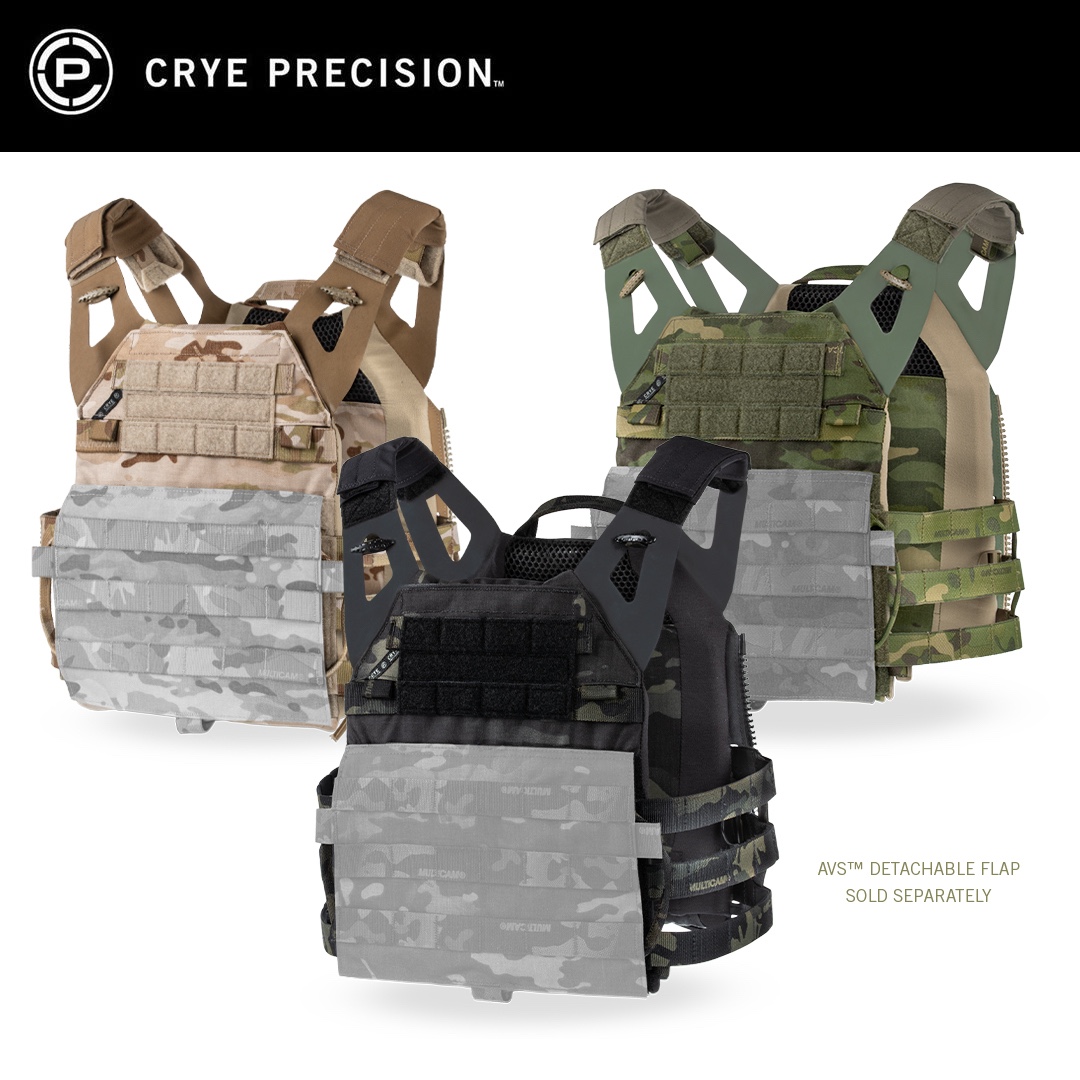
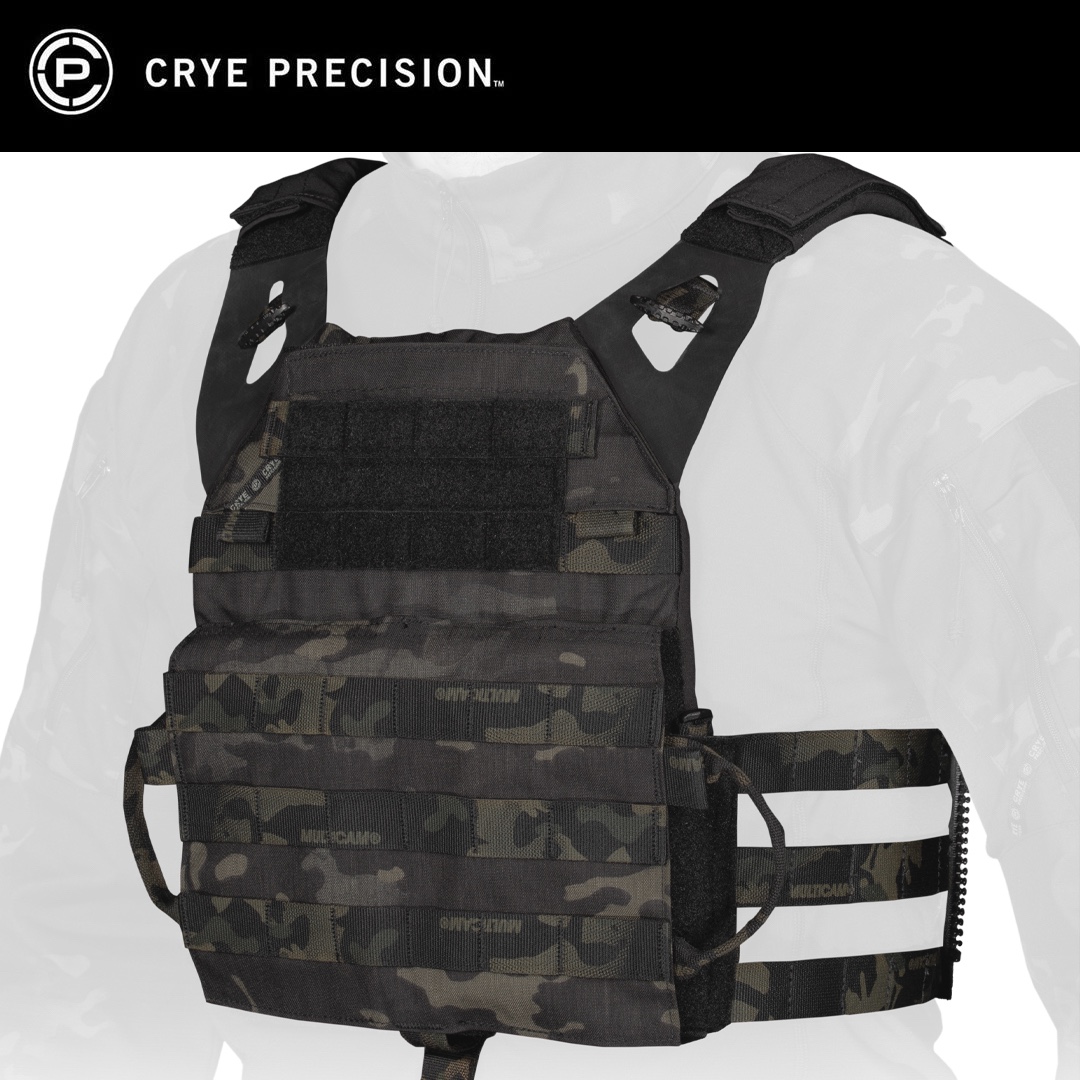
Crye Precision’s Standard G4 Uniform line is now officially available in MultiCam Arid, Tropic, and Black. The G4 Uniforms feature the exclusive stretch VTX Ripstop fabric and is constructed with Invista’s T420 high-tenacity nylon fiber, allowing the uniform to be light yet strong. The integrated stretch allows for a more streamlined and slimmer cut with maximum mobility throughout the entire garment, with the stretch panels being replaced with the newer fabric throughout.
SENTRY’s new line of Every Day Carry holsters offers a super sleek design with adjustable settings for a comfortable, all-day fit.
Virginia Beach, Va. (November 2021) – SENTRY Tactical™ enters the holster market with five new inside-the-waistband holsters and magazine pouches. Using the latest polymer injection technology and thermoforming, SENTRY’s EDC holsters offer superior strength and flexibility with adjustable settings to create a perfect fit whether worn behind the back, appendix carry, or cross draw. Worn under a shirt or vest, SENTRY’s EDC holsters offer minimal printing, level 1 or 2 retention, and all carry the SENTRY Lifetime Warranty.
The SENTRY Inside the Pant/Tuckable Holster is a concealed carry holster thermoformed out of SENTRY’S proprietary Polyform. Designed with a Level 1 retention the Tuckable holster employs SENTRY’s Drop Retention Safety Device, a semi-spherical protrusion that acts on the trigger guard to adjust the weapon draw resistance providing confidence in carry. A pre-formed sight channel prevents any catching while drawing or reholstering. SENTRY’s innovative Rubber-Tech loop on the holster side, facing the body allows the user to customize the height and angle carry using the two available screws. Available in black for GLOCK Model, 43, S&W Shield 9/40, and SIG 320 with an MSRP of $48.99.
The SENTRY Ultra Carry Inside the Pant/Tuckable Holster is an injection molded soft polymer blend concealed carry holster providing low profile with comfort and flexibility. The Level 2 retention Tuckable holster with the Drop Retention Safety Device and the STR System, allows a retention screw operating on the weapon’s slide to be adjusted for a smooth draw and re-holstering. The Ultra Carry also features the Rubber-Tech adjustable system. Available in black for GLOCK Model G43 and SIG Model 365 with an MSRP of $34.99.
SENTRY’s Angle Adjustable Belt Slide Holster allows for comfortable and secure belt-worn carry in an injection molded, adjustable retention holster. Ride height and angle are fully adjustable. Available in black or coyote brown for GLOCK Models G17, G19 and G43 with an MSRP of $64.99 to $79.99.
No holster family is complete without a magazine pouch. SENTRY’s Injection Molded Double Mag Pouch is made from durable injection molded Polyform that features an adjustable angle belt clip, paddle and spring tension. Available in black for 9mm/.40 mags. MSRP is $32.99.