
The Max Velocity Tactical Forum is now open.


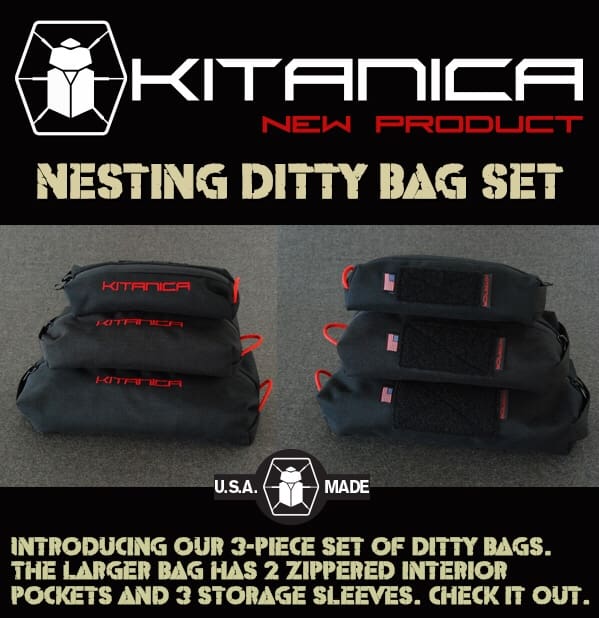
Kitanica’s set of three nesting bags is constructed of 1000D Cordura. The larger bag has two mesh zippered side pockets on the interior walls attached at top and bottom, leaving storage sleeve behind them. There is also a larger sleeve with one end closed, in the floor of the larger bag.
The bags are machine washable and Made In The USA.
www.kitanica.net/NESTING-DITTY-BAGS
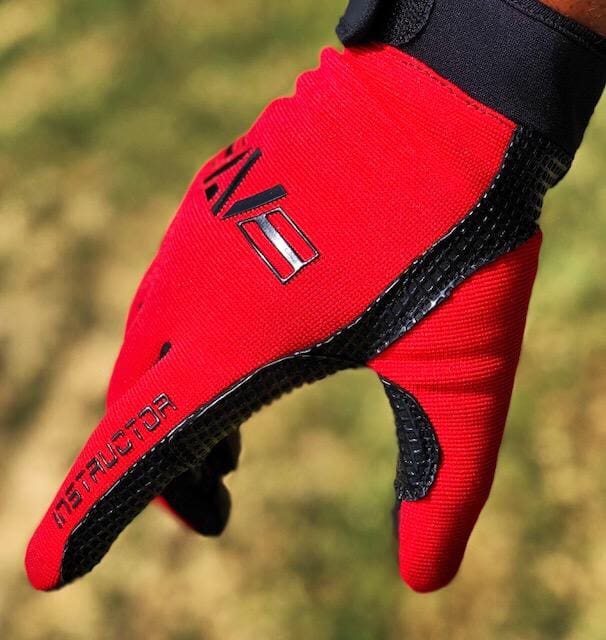
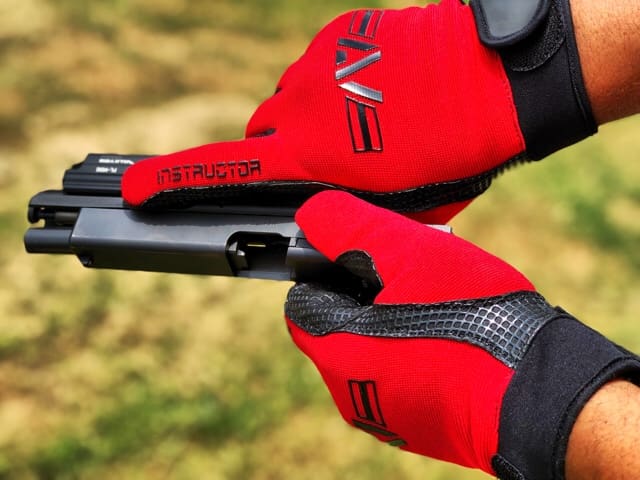
A7 Defense & Aerospace introduces the all new A7 “INSTRUCTOR” gloves. A7’s Instructor gloves utilize the same platform as A7’s Gunfighter™ tactical gloves, yet are bright red to increase visibility for non verbal communication, signaling, and instruction. The bright red color allows the gloves to be easily seen from anywhere on the range and also allows an instructor to be easily identified.
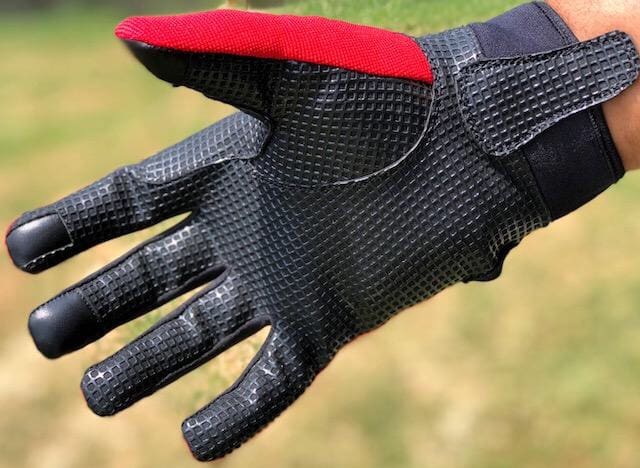
A7 Instructor gloves are made from the highest quality materials available and are designed for high dexterity, extreme grip, comfort, and durability. A7 Instructor gloves are low profile with tops made of a breathable 4 way stretch material and palms and thumb cradle made of a proprietary silicone webbing that is extremely durable yet breathable, yet provides extreme grip even when wet.
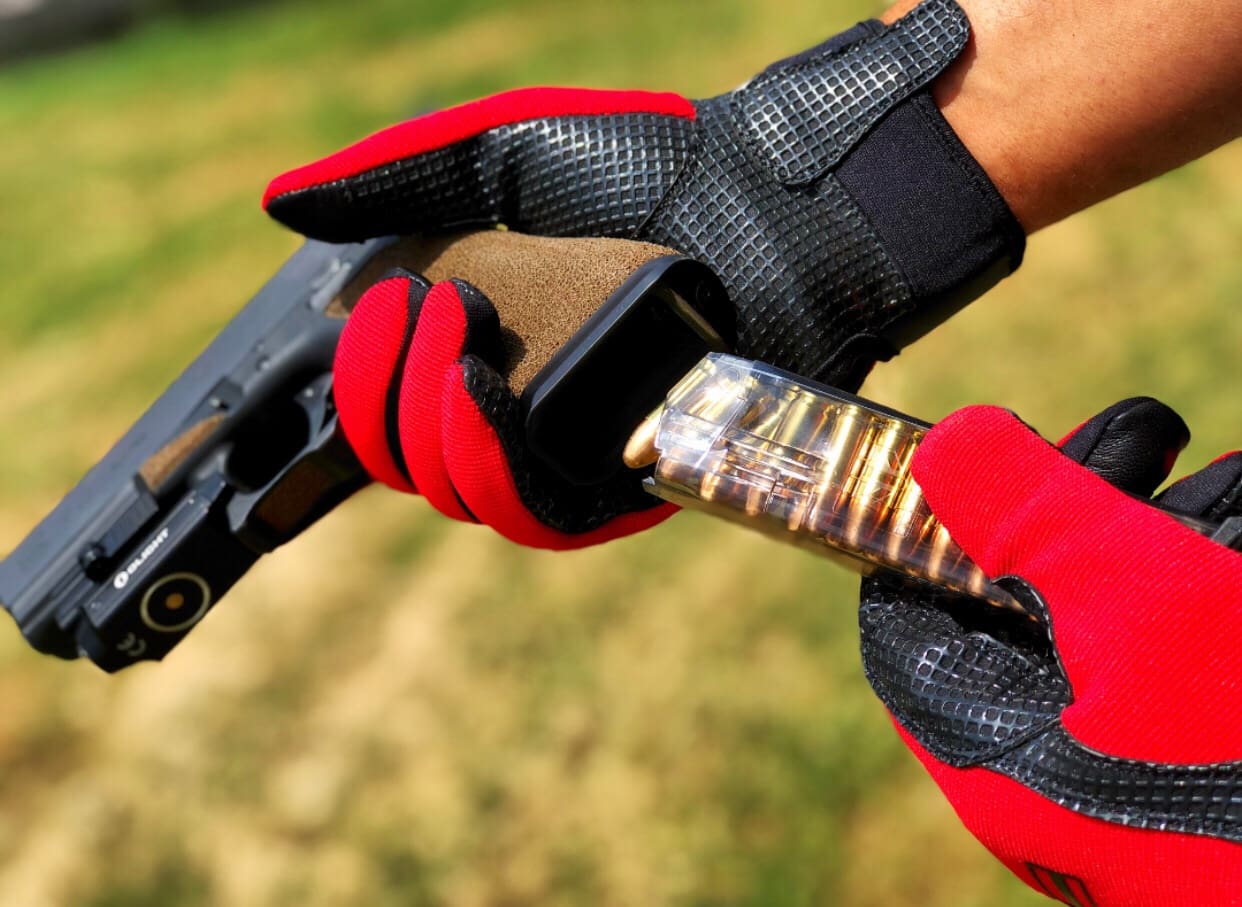
Features:
-Bright red for visibility, signaling, and quick identification
-Breathable top made of 4 way stretch material for additional comfort and a custom fit
-Proprietary silicone webbing on the palms that provide a sure grip even when wet yet is breathable, durable and provides a high degree of dexterity.
-Reinforced thumb cradle for durability and positive control.
-Double stitching for added durability.
-Highly sensitive touch-screen capability on the index finger, middle finger, and thumb.
-Pull tabs for easy donning.
-Machine washable
www.a7defenseandaerospace.com/

SIG SAUER, Inc. of Newington, NH, USA, and Aquaterro of Melbourne, VIC, Australia; have announced an agreement to manufacture, assemble, upgrade, and support of small arms platforms and capability systems for the duration of the Capability Life Cycle. This landmark agreement is a demonstration of commitment by both SIG SAUER and Aquaterro to the Australian Defence Force. For the first time, the Australian Defence Force will be able to access the best, modular, integrated firearms solutions quickly, delivering small arms overmatch to Australia’s future soldiers, sailors, and airmen.
SIG SAUER is synonymous with industry-leading quality and innovation which has made it the brand of choice amongst the U.S. Military, the global defense community, and law enforcement.
In 2017 SIG SAUER was chosen for the highly coveted U.S. Army’s Modular Handgun System with the P320-based M17. This contract, worth $580 million U.S. Dollars (AUD $800m) was awarded to the P320-M17 for its unrivaled modularity, unmatched capability, and indisputable quality, and cemented the P320-M17 into the historical record of the world’s most innovative firearms. In 2018 the P320 X-Carry was selected by the Danish Ministry of Defence as their standard service pistol covering the Army, Navy, Air Force, and Special Operations Command as it outperformed the competition throughout their rigorous and stringent testing process.
The SIG MCX and MPX rifle platforms are the most sought after, modular, close quarters/PDW and urban tactical rifles in the world today. In July 2018 the SIG MCX Virtus Rifle System was awarded the Suppressed Upper Receiver Group (SURG) award by the U.S. Department of Defense (DoD) for the existing M4A1 Carbine. The MCX SURG System will upgrade, and optimize military weapons for continuous, suppressed use on the battlefield. SIG SAUER is currently competing for the U.S. Army’s Next Generation Squad Automatic Rifle program that is intended to replace the M249 Minimi.
Aquaterro is the leading provider of operational, tactical, and safety equipment to government, military, and commercial end users in Australia and the Australasian Region. Aquaterro is a current contract holder and provider to Land 125 and Land 53 and the exclusive provider of systems and lifecycle support for SIG SAUER small arms integrated weapons to all Australian agencies.
The strategic partnership between SIG SAUER and Aquaterro will be further enhanced by Aquaterro’s new purpose-built facility (due to open in Q1 2019), and expanded highly-skilled workforce in South Eastern Melbourne. This expansion enables Aquaterro to offer turn-key, vertically integrated capability solutions for the Capability Streams sought by Land 159, Land 4108, and Land 1508, ensuring a qualitative edge to Australia’s warfighters.
In ‘Max Talk 027: The Combat Reload’ Max instructs best practices for the combat reload, including tactical context, nuance and use of the combat reload in various tactical situations and training scenarios. This includes live fire demo of the various techniques.
This is the third installment of ‘Max Talk Monday’ which shares select episodes from a series of instructional videos. Max Velocity Tactical (MVT) has established a reputation on the leading edge of tactical live fire and force on force training. MVT is dedicated to developing and training tactical excellence at the individual and team level.
Max is a tactical trainer and author, a lifelong professional soldier with extensive military experience. He served with British Special Operations Forces, both enlisted and as a commissioned officer; a graduate of the Royal Military Academy Sandhurst. Max served on numerous operational deployments, and also served as a recruit instructor. Max spent five years serving as a paramilitary contractor in both Iraq and Afghanistan; the latter two years working for the British Government in Helmand Province, Afghanistan.
Website: Max Velocity Tactical
YouTube: Max Velocity Tactical
Dive Knifes
The general maintenance of your dive knife is easy and will not be hard as long as you get into a good habit of always raising the knife and scabbard in fresh water properly.
Post Dive care
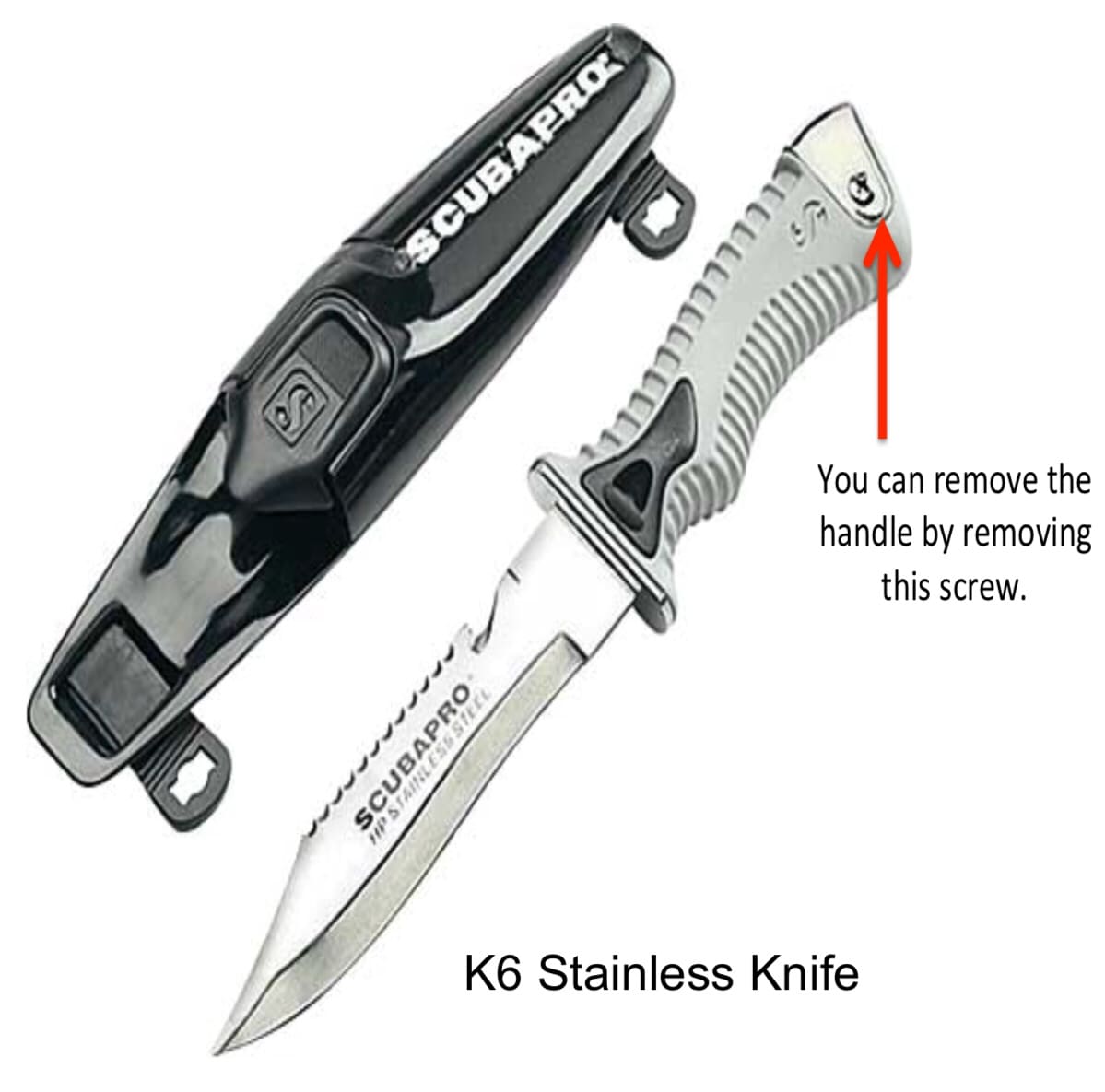
After diving, rinse the knife and sheath in fresh water. Wash the scabbard thoroughly to ensure no salty residue is left inside, remove the knife from the sheath and operate any moving parts while soaking. This helps remove sand and other debris that may have gotten inside. If not done properly when you put the knife back the remaining salt will cause the blade to rust. If the knife can be disassembled (usually by taking the handle off), take it apart and rinse the individual pieces in fresh water after every couple of dives or if you plan to store for a long time. This helps prevent salt buildup and corrosion from happening underneath the grip where you can’t see it. Dry all of the pieces thoroughly before putting the knife back together.
If you are done diving for the day you can apply a light coat of silicone to the blade to prevent corrosion, but don’t use a petroleum-based lubricant. Petroleum will attract dust and sand. Use a light oil designed for knifes for lubricating and storage. You will want to use a lightweight honing or mineral oil designed for knife care. If your knife does start to rust try and clean it as soon as possible. For very light corrosion, you may be able to wipe it off with just a towel or toothbrush. Again you can also use a cleaning cloth that is designed to help remove light rust marks. For more stubborn stains and rust, soak the knife in distilled white vinegar for about three – five minutes. Remove the blade from the vinegar and wipe it down. Again, a toothbrush will work nicely for removing the lighter stuff. An abrasive sponge can be used for tougher jobs but be careful not to scrub too hard because you could scratch the blade and you can also remove some of the outer coating and it will make it rust faster. Do not use a steel wool, as that will cause more rust to form later. The steel wool will leave small pieces of steel behind that will start to rust.
Rinse the knife in fresh water in the same manner as you would for post-dive care. Dry the knife thoroughly and apply a light coat of silicone to protect against corrosion.
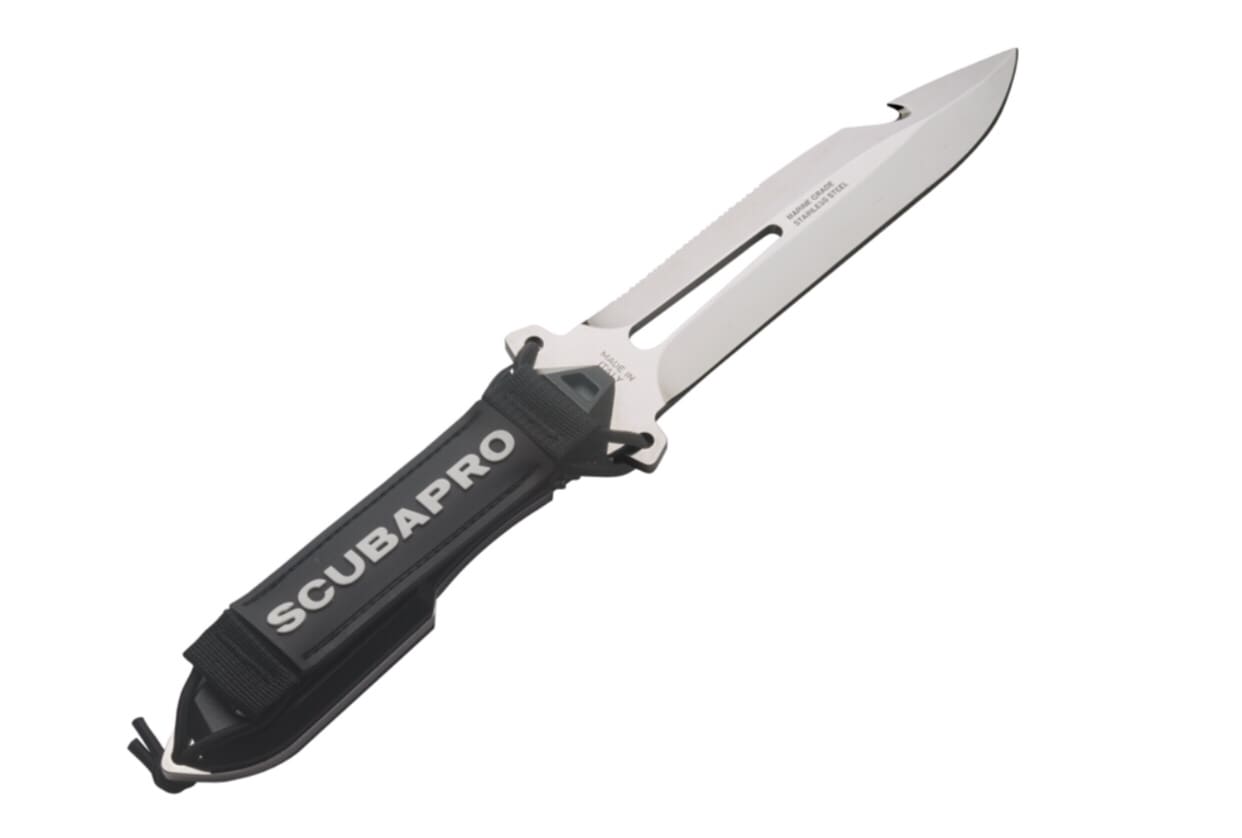
K6 Stainless Knife
Storing your knife
You can store your knife in the scabbard once you are sure both the knife and scabbard are dry. For long-term storage you should store the knife outside the sheath/ scabbard. If you have a leather sheath, that retains moisture and will cause rust. You can store the knife outside the scabbard in a cloth that has some oil on it. They make cloths that are treated with mineral oil you can use or just spray some on one. Store the knife in a dive mask box or put the knife wrapped in the cloth in a Zip lock bag.
Sharping your knife
Dive knifes can be hard to sharpen as most have a straight edge and a serrated edge to them. So you cannot really use the easy methods, like a quick pull sharpener, that you just pull the knife thru. You can use a sharpening stone for the straight edge and a ceramic rod for the serrated edge.
1. With your knife at the correct angle, slowly draw the knife down and across the stone in a smooth motion, starting at the heel and finishing at the tip.
2. The number of times this must be done will vary depending on how dull your knife is. But what’s most important is that you do the same amount of pulls on both sides of the knife.
3. After five draws, flip the knife to the other side and repeat the heel-to-tip motion.
4. Repeat this process, but instead push the knife from tip to heel. Knives are used to cut in both push and pull motions, so it’s important to sharpen them in both directions as well.
5. Flip the stone over to the finer side, and complete steps again until your knife is sharp.
Serrated Edge sharping
There are lots of ceramic rods out there so I am just going to talk about one the Lansky rod. It is tapered so it will fit all sorts of sizes of serration bevels.
1. First size the bevel by taking the rod and place it in a serrated bevel so that the angle is the same. Run the rod from the top (side closest to the spine of the blade) to the bottom (the cutting edge) a few times in each serrated groove. Try and stay with the angle of the serration.
2. Knock off the burr by taking a fine grit sandpaper or sharpening stone and remove any burr from the flat side of the serrated grooves by making a few light passes. Be sure to only take the tapered rod to the width of each serrated groove so that it does not deform them. You don’t need to use a lot of pressure with this method.
3. If you don’t understand this look on YouTube there are a ton of ways to do this.
Titanium Dive Knives
Sharping a titanium dive knife is the same as a stainless steel, but there is a difference. Most companies recommend a diamond sharpener. You will have to make sure you know what type of titanium knife you have as some are only coated with titanium. If it is called military grade it should be pure titanium. Remember when sharpening to use a light touch, titanium is easy to deformed and excessive pressure in sharpening will roll the edge causing difficulties getting a sharp edge.
SCUBAPRO Professional Knife
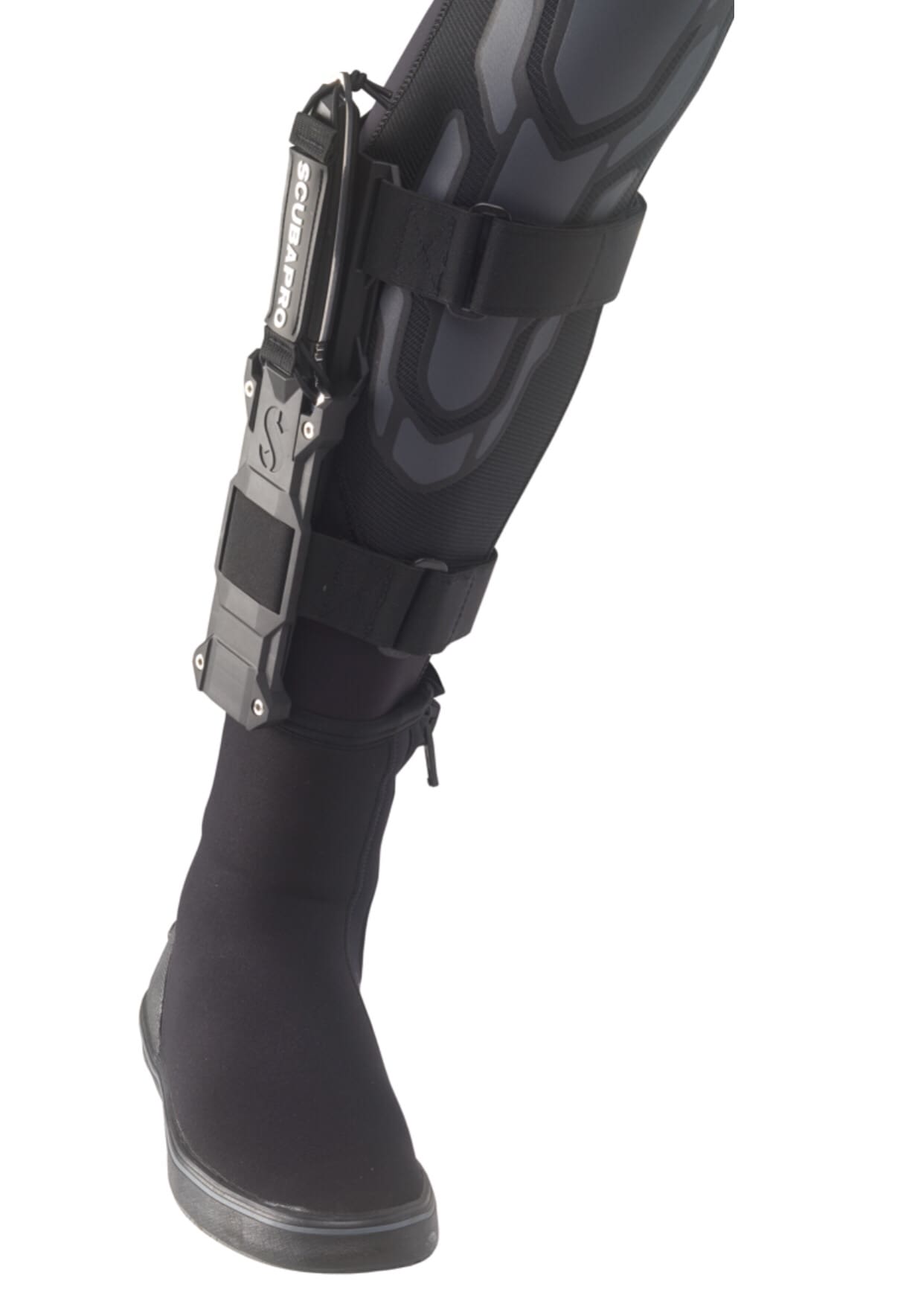
The SCUBAPROs TK15 is the first in a new series of Tactical dive knifes. It is built around a single piece of marine-grade stainless steel machined to achieve the ideal balance of strength and weight. Its surface is specifically polished to let water drain easily and prevent oxidation. The thickness of the stainless steel is consistent from one end to the other, creating a high level of stiffness. This is a traditional, heavy-duty, no-frills type of knife designed to handle all cutting jobs, large and small.
The blade is a generous 15cm/6in long and features a lower full-length smooth-edge and an upper serrated edge positioned close to the handle so you can maintain maximum control of the cut. A line cutter is positioned closer to the tip of the blade to enable you to easily hook lines, plus in this position it doesn’t weaken the blade. Also, a shackle key is built into the body of the blade, a great addition for boat divers.
Marine-grade stainless steel offers the best balance between cutting edge reliability and resistance to corrosion. This can be a difficult balance to achieve on the same piece of steel, but SCUBAPRO succeeded by adding a handmade polish finishing on the steel surface which promotes water run-off for long-term oxidation-free durability.
The TK15 comes with a heavy-duty handle that’s sized and shaped for solid gripping. The rugged sheath is made from fiberglass reinforced polyamide. The knife is kept in place by two teeth on the sheath matching the recesses on the handle. The sheath includes heavy-duty nylon straps for easy attachment and a SCUBAPRO branded hand cover with bungee to secure the knife to your hand under critical conditions.
I have a buddy who is an Army Ranger and Green Beret. A guy with multiple tours in Iraq and Afghanistan. Your typical SOF type, (at least in my experience) easy going, down to earth, smart as a tack and a one tough bastard, both inside and out. When he isn’t deployed, or deep in a training loop, I get him down here to be a guest speaker for my international leadership class. He’s a great speaker and the students love him. I love the fact that we get to hang out and catch up later over some chow and beer. As he’s still on active duty, I get to pick his 50 lb brain, especially on current ops, weapons and PT.

When it comes to PT we think a lot alike. More functional, than sports minded and definitely more outdoor, than gym stuff. He has shared a lot about his team’s PT routine and their other training. Much of it wasn’t a surprise, (other than the insane amount of live fire they do). But, one thing that surprised me on their PT program, was that they almost never do any long-distance running? In fact, he told me that they rarely ever run more than a ½ mile at once. The vast majority of their PT is combination workouts of short runs/sprints, functional movements with tires, sandbags, ammo cans and calisthenics. Intense, functional and in the dirt. Of course, as a matter of operational training, they do a bunch of humping with heavy packs, and on his own time he likes to lift weights. That shows, as he’s built like a linebacker at around 6’ 220lbs. Funny thing when I was a young Jarhead, most of the SOF I saw were all skinny? Now they’re almost all big, stocky guys? I guess it’s more Capt Crunch and Creatine, than Marlboro’s and Jack Daniels nowadays.
In any case I asked him, you guys don’t ever do any longer runs, 5-6 miles every once in a while? “Naw, almost never, some of the guys like to run, they do marathons and all that, but that’s their own thing. It doesn’t help us for what we need. What good is it to jog around in PT gear when in real life we’re carrying weapons, ammo, water, etc. and it’s all in full uniform and in the dirt? When we’re forward it’s humping hills, short dashes, climbing up, around and over crap, and always carrying gear (and sometimes people). We need to train here, for how we fight there. Besides, I hate all that long running, hurts my knees and it’s boring.” I was a typical response from him on any issue; Cut to the chase, let’s do what’s important and forget the bullshit.
Thinking back to my Marine infantry days, we did a lot of running. Many times we went over 10 miles at a pop and lot of it was pretty fast too, even in formation. It seemed that most times it was more of a manhood test than anything else, but I never questioned its value then, as it just seemed like a must do thing, to be in top condition. However, as I’ve grown older (and maybe a little wiser) I find less and less value in long running: just jogging along for mile after mile on the side of road. God knows I’ve done more than my share of it. Having run many marathons, triathlons and other road races, I’ve done training runs over 20 miles for those events. However, if your aim is to achieve a high level of all around “real world” conditioning, I think spending a lot of time on long runs is overrated and frankly probably counterproductive.
Besides being as what my buddy calls; “F’ing boring”, it yields little overall conditioning and can lead to repetitive motion injuries. Especially after you reach the level where you can easily run a 10k. Now I get the fact that it’s mindless and burns calories pretty well. I also get that many people don’t care about “functional fitness”. They just want something simple to keep in decent shape and maintain a good body weight. Running an hour everyday will do that, no doubt. However, if you’re in the military, a 1st Responder, or do have a desire for something better, you need to do more than just jog.
Not that running isn’t valuable, it’s extremely valuable and IMO necessary for conditioning. But, running will serve you better by mixing up the distance and intensity. Interval running that combines fast runs of up to a ¼ mile with jogging, or walking. Beach runs and hill sprints in different combinations and all of this made even better when combining it with some other movements. Besides, taxing and conditioning your body in a more realistic way, it’s almost impossible for this type of workout to become boring, as there is an endless variety of combinations you can dream up. I do at least one of these workouts a week and it’s never exactly the same way.
I shoot for an hour workout total, which is about 5 minutes of warm-up, 45 minutes of continuous running, calisthenics and functional stuff with tires, ammo cans and even some big rocks that are down near the beach here. In the end I probably run 2-3 miles total and all at fast clip, but never more than ¼ mile at once. I finish up with 10 minutes of stretching out and cooling down. A workout like this will hit every area of your body and builds strength, muscular endurance and aerobic fitness all at once. Certainly, much better overall than just jogging for the same amount of time and a whole lot less boring.
In the end, a lot of finding the right workouts for you is more about what you need (and want) vs. than what is just “mindless”. Mix up your running workouts and I’m sure you’ll see some good results. Besides if it works for SOF, I’m pretty sure it will work for the rest of us.
Headed north for a few weeks of climbing, hiking and relaxing. We’ll talk next month. Till then;
“Be Safe always, be Good when you Can.”
Semper Fi
MGunz
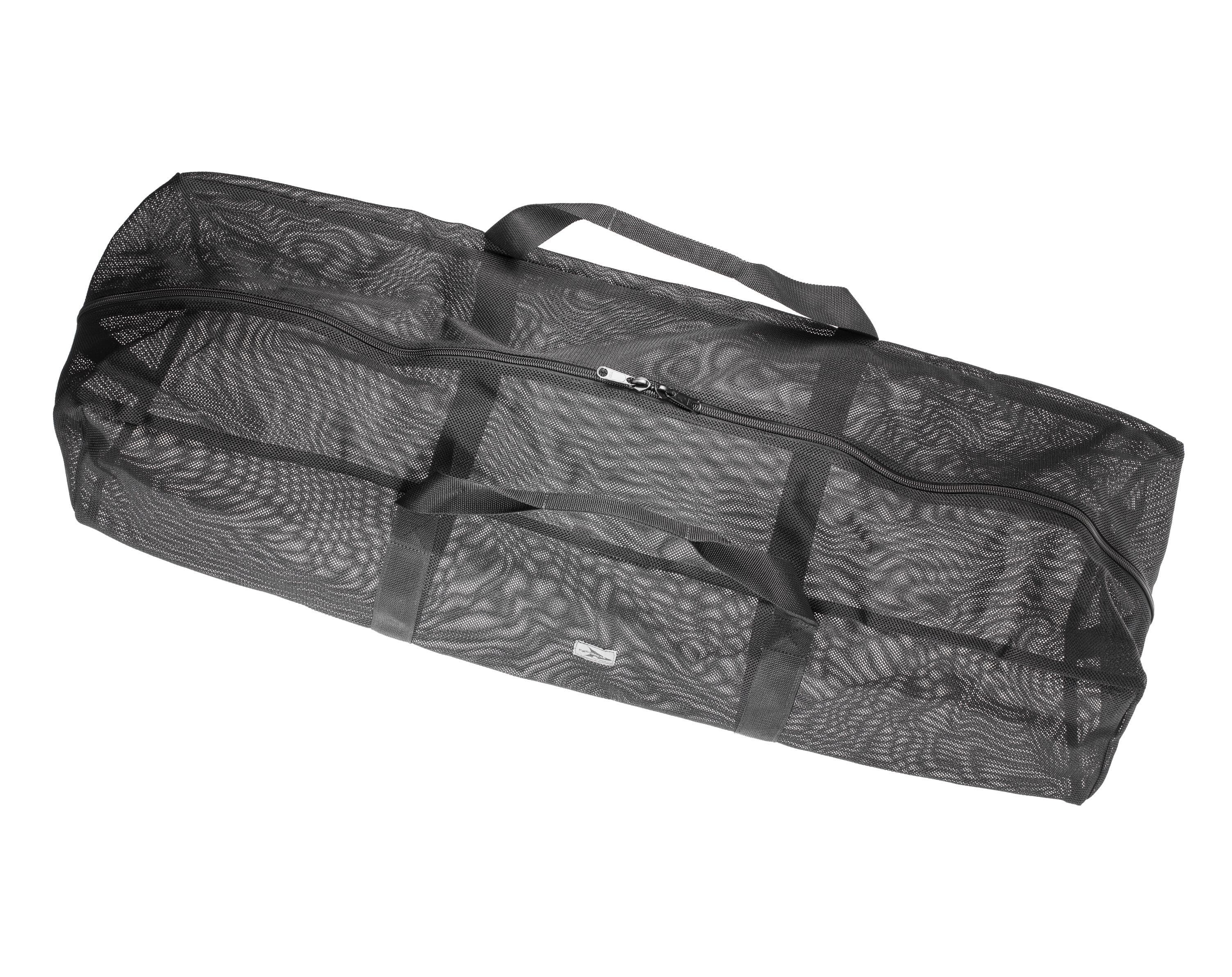
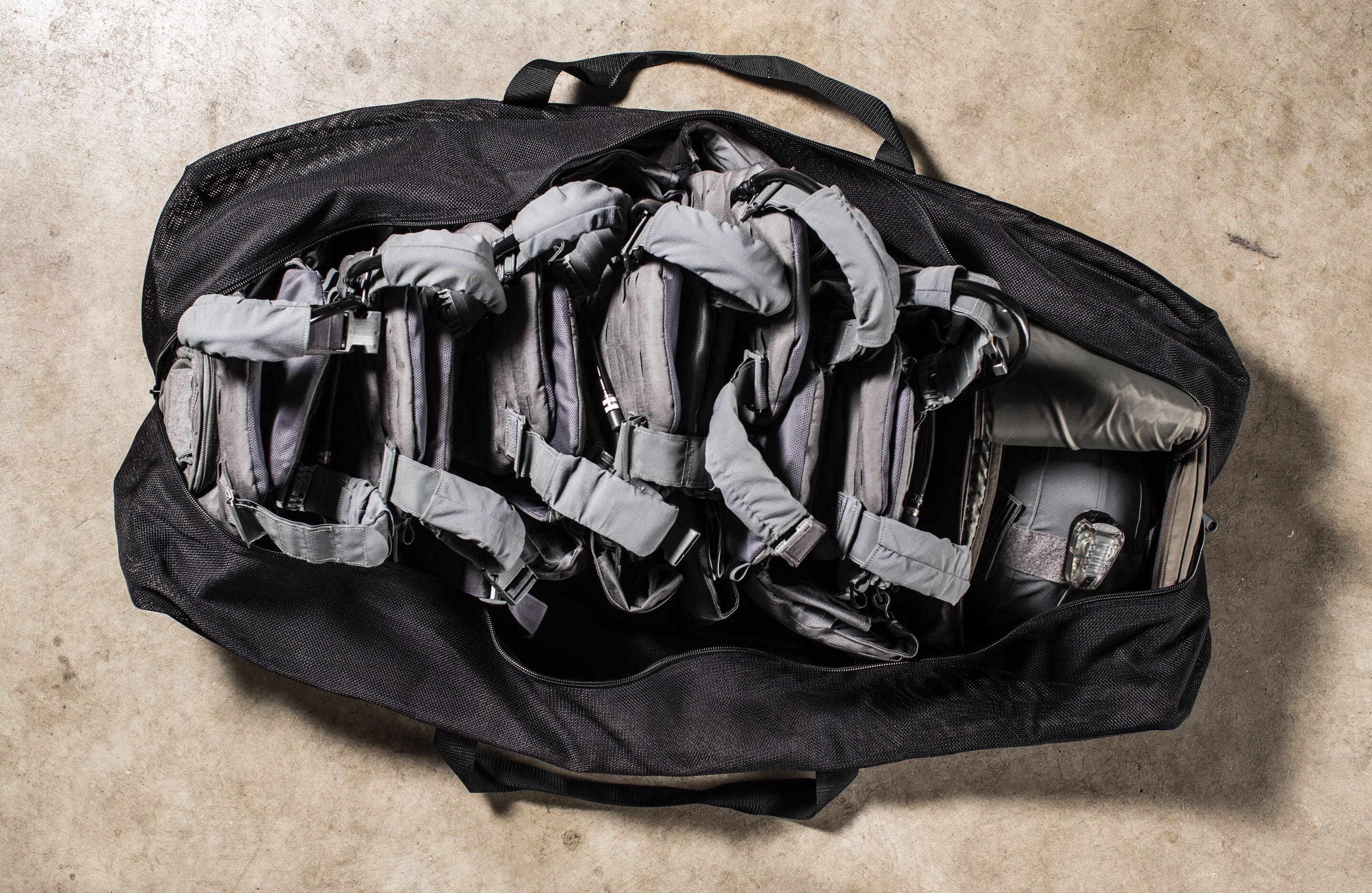
Introducing the XL Mesh Bag now available while supplies last in the Non-Standard Non-Stocking section of the FS web store. This mesh duffel is extra long at approximately 48x14x10 and was originally built for a US government agency when FirstSpear had just opened its doors. Only available in black with limited quantities grab one of these today before they are gone! No back orders will be filled.
www.first-spear.com/non-stocking-non-standard/extra-large-mesh-bag