Danner Boots - Built in the USA

Archive for the ‘Ammo’ Category

Hybrid Anti Materiel Round (HAMR): Delivering Decisive Advantage Through Unconventional Innovation

Wednesday, May 6th, 2026

As the Army enhances Soldier lethality, Joint Program Executive Office for Armaments and Ammunition’s (JPEO A&A) Product Manager (PdM) Small Caliber Ammunition is developing the XM1224 Hybrid-Anti Materiel Round (HAMR) precision cartridge for the MK22 Precision Sniper Rifle.

No matter the operational environment, snipers continue to maintain relevancy and technologies to sense and see farther demand persistent investment in precision sniper ammunition. Traditionally, this has meant equipping snipers with multiple weapon systems and ammunition types, which increased load. The XM1224 HAMR will deliver improved accuracy and performance when compared to the existing M1162 round and addresses the anticipated capability gap when the Army divests of the legacy M107 weapon system.

The XM1224 program streamlines ammunition choices, reduces combat load and is an evolutionary increase in precision ammunition that will outpace the threat.

TRANSFORMING IN CONTACT REQUIRES AGILE THINKING

Driven by a commitment to providing warfighters with the best tools to win decisively, PdM Small Caliber Ammunition adopted a fast, unconventional approach to rapidly deliver capability by combining the capability of government scientists and engineers with the speed and efficiency of commercial partners—developing the lethal projectile and high-pressure cartridge case in parallel with continuous integration touch points. This is accomplished in partnership with contracting professionals who leveraged acquisition authorities, which enabled speed and agility.


The XM1224 logo developed by the team at DEVCOM-AC. (Photo courtesy of JPEO A&A)

FILLING THE VOID

The XM1224 HAMR program is a significant advancement in precision ammunition. No commercially available .338 caliber projectile could provide the terminal performance needed to replace the legacy anti-materiel M107 sniper rifle with its larger and heavier .50 caliber ammunition.

Recognizing the importance of precision for sniper systems, The U.S. Army Combat Capabilities Development Command Armaments Center (DEVCOM AC) prioritized ballistics during the initial design phase. A comprehensive modeling and prototyping effort evaluated numerous projectile shapes to identify the most aerodynamically efficient solution. Prototypes underwent rigorous testing, utilizing advanced radar to precisely measure aerodynamic performance. This data-driven approach ensured the solution was optimized for both precision and the incorporation of advanced anti-materiel technologies.

To deliver the required terminal performance across a wide range of targets at extended ranges, PdM Small Caliber partnered with DEVCOM AC to leverage Picatinny Arsenal’s fully integrated, in-house design and fabrication capabilities. The infrastructure and cutting-edge equipment enabled rapid build-test-build cycles to rapidly meet requirements. The XM1224 HAMR projectile stands as a testament of the synergies between JPEO A&A and DEVCOM AC at the Army’s Center of Excellence for Guns and Ammunition.

A MISS IS A MESSAGE

The XM1224 HAMR fundamentally redefines long-range precision. PdM Small Caliber and DEVCOM AC have moved beyond incremental improvements, signaling a fundamental shift in the program. The XM1224 delivers a 20% increase in accuracy over currently fielded precision ammunition, but the real breakthrough comes with a stunning 75% increase in accuracy compared to the legacy .50 caliber precision ammunition for the M107. The new HAMR round provides warfighters with an overmatching capability against emerging threats, ensuring they maintain a critical edge and operational superiority in any environment; this technology is designed to dominate the battlefield.

ACCELERATING INNOVATION: DEPARTMENT OF WAR AND INDUSTRY PARTNERSHIP

The team partnered with industry through a Department of Defense Ordnance Technology Consortium, Other Transaction Authority, contract for maturation and further refinement of key cartridge component technologies with a focus on cost-reduction and producibility. Leveraging the innovative capabilities and expertise of private sector partners, we are not only accelerating the development of advanced technologies but also ensuring that these solutions are economically viable and scalable for military applications. This partnership exemplifies the Department of War’s commitment to engaging with industry leaders in pursuit of modernization and enhanced operational readiness. This strategic alignment profoundly enhances our military’s operational effectiveness, ensuring we are fully prepared to address any challenges that may emerge on the battlefield.
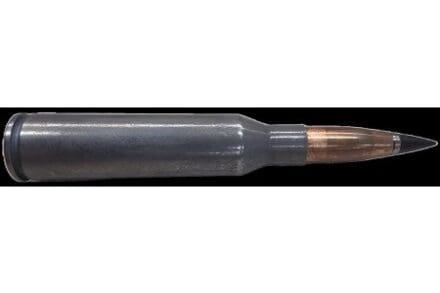

The XM1224 cartridge. (Photo courtesy of JPEO A&A)

ARSENAL TO INDUSTRY: SCALING FOR SUCCESS

As the program proceeds through the Engineering and Manufacturing Development phase, the PdM Small Caliber and DEVCOM AC team at Picatinny Arsenal will leverage in-house capabilities to produce and complete acceptance testing. Following Milestone C, full-rate production will be competed. This transition is expected to ensure a seamless handover of production and the preservation of critical expertise, ultimately maintaining a continuously ready force equipped to pace evolving threats.

CONCLUSION

The XM1224 HAMR program illustrates how blending government innovation with commercial execution, planning a phased transition and emphasizing continuous knowledge sharing, we can deliver capabilities to the field faster and more effectively model with significant implications for the future of defense acquisition and modernizing the Army to be the most lethal force against the evolving threat. The XM1224 HAMR isn’t just about getting ammunition into the field, it’s about equipping Soldiers with the capability they need to fight and win decisively.

For more information, go to the PdM Small Caliber Ammunition webpage at jpeoaa.army.mil/Project-Offices/PM-MAS/Teams/PdM-Small-Caliber.

MAJ. CALVIN W. TAYLOR III, an armor and signal officer, serves as the assistant product manager for Small Caliber Ammunition within Project Manager Maneuver Ammunition Systems and is the project lead for the XM1224 HAMR. He holds an M.S.in systems engineering from the Naval Post Graduate School and a B.B.A. in business management from Austin Peay State University. He has been in the acquisition workforce for three years and is Certified Contracting Professional.

TYLER ROTUNNO, Ph.D., serves as the armaments project officer and lead engineer for the Precision Family of Ammunition, including the XM1224 HAMR program, at Picatinny Arsenal, New Jersey. He holds a Ph.D. and an M.S., both in armament engineering, from the U.S. Army’s Armament Graduate School and a B.S. in biomedical engineering with a specialization in biomechanics from the New Jersey Institute of Technology. He brings 10 years of engineering experience to the Department of War, including six years focused on sniper weapon systems and four years on precision ammunition development.


Tiberius Aerospace Achieves World-First in Artillery: Liquid-fuelled Ramjet Ignition Successfully Achieved from a NATO-Standard 155mm Howitzer

Thursday, April 23rd, 2026

Tiberius Aerospace, a modern defence technology company built to empower the UK, US and their global allies with next-generation weapon systems and AI-powered solutions, has successfully demonstrated, for the first time, that a liquid-fuelled ramjet projectile can be launched from a NATO-standard 155mm howitzer, achieve ramjet ignition and perform as intended in flight. This liquid fuel breakthrough, achieved during recent test firings of its Sceptre system in New Mexico, represents a fundamental shift in what artillery systems are capable of delivering on the modern battlefield.

Sceptre is a 155mm precision-guided munition designed for full compatibility with existing NATO-standard artillery systems. The latest round of testing confirmed that it can reach ranges of up to 150 kilometres, travel at speeds of approximately Mach 3.5 and operate at altitudes exceeding 65,000 feet beyond typical jamming range. It delivers a 5.2kg payload with a circular error probability (CEP) of less than 5 metres, even in GPS-contested environments, and requires no modifications to current artillery platforms. The system is designed with a modular, open architecture that allows for continuous upgrades and uses widely available fuels such as diesel variants (JP-4 and JP-8), reducing the logistical burden associated with deployment.

A critical milestone in these trials was the successful ignition of the liquid-fuelled ramjet following exposure to launch forces of approximately 18,000 g, alongside the validation of stable flight dynamics, controlled rotation and the effective deployment of in-flight stabilisation systems.

Together, these results demonstrate that the technology is not only viable in theory but can function reliably in operationally relevant conditions. In practical terms, this successful test firing shows that it is now possible to combine the long range and speed typically associated with missile systems with significant cost savings, flexibility and the deployability of traditional artillery. This creates a new category of capability that sits between conventional artillery and high-end missile systems, addressing a long-standing gap in military capability.

While missile systems provide range and accuracy, they remain expensive and constrained in supply. Conventional artillery, by contrast, is scalable and cost-effective but limited in range and capability. Sceptre bridges this gap by offering missile-like performance while retaining the production advantages and flexibility of artillery systems. When enabled by Tiberius Aerospace’s AI-powered GRAIL platform, Sceptre has the potential to materially increase the volume of precision firepower available to allied forces, reduce reliance on high-cost missile inventories and enable faster, more scalable production at a time when industrial capacity is under strain. Crucially, the system is designed to support licensed domestic manufacturing, enabling allied nations to produce Sceptre within their own industrial base, strengthening sovereign capability, shortening supply chains and accelerating time to field. It also supports a shift towards more resilient, sovereign and distributed manufacturing models across allied defence ecosystems.

Chad Steelberg, Founder and CEO of Tiberius Aerospace, said: “This is a genuine world first breakthrough. These tests prove not only the technology, but a new way of delivering capability at pace, at scale and at significantly lower cost. Having successfully proved our design and engineering methodologies, we now need to move to much larger ranges to deliver the next phase of testing, validation and certification. Sceptre is an ambitious and complex project, but these successful US test firing results prove we are quickly advancing along the right trajectory.”

The Army Holds Organic Industrial Base Industry Day As It Looks To Expand Munitions Production Capacity

Sunday, April 19th, 2026

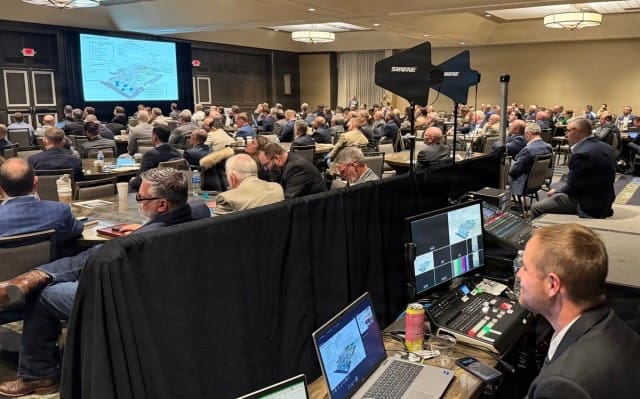
PICATINNY ARSENAL, NJ – In a landmark event to bolster the nation’s defense capabilities, Army Contracting Command – Rock Island (ACC-RI), on behalf of Portfolio Acquisition Executive Agile Sustainment and Ammunition (PAE AS&A) and Army Materiel Command (AMC), held an Industry Day event on 19-20 March 2026 focused on highlighting opportunities across the Organic Industrial Base (OIB).

The general session drew an impressive crowd of more than 450 industry partners and government leaders. The remarkable attendance and active engagement from all participants made the event an overwhelming success, fostering invaluable collaboration that is crucial for strengthening our nation’s defense capabilities.

The objective of the event was to bring together government leaders and industry partners to discuss opportunities available across the OIB for public-private-partnerships (P3) and/or co-production at Government Owned, Government Operated (GOGO) installations, as well as with the Armament Retooling and Manufacturing Support (ARMS) Program at Government Owned, Contractor Operated (GOCO) installations. The government also provided an overview of Enhanced Use Lease (EUL) opportunities. Both traditional and non-traditional defense contractors attended and helped shape the outlook for utilization of P3s, co-production, and EULs across the OIB.

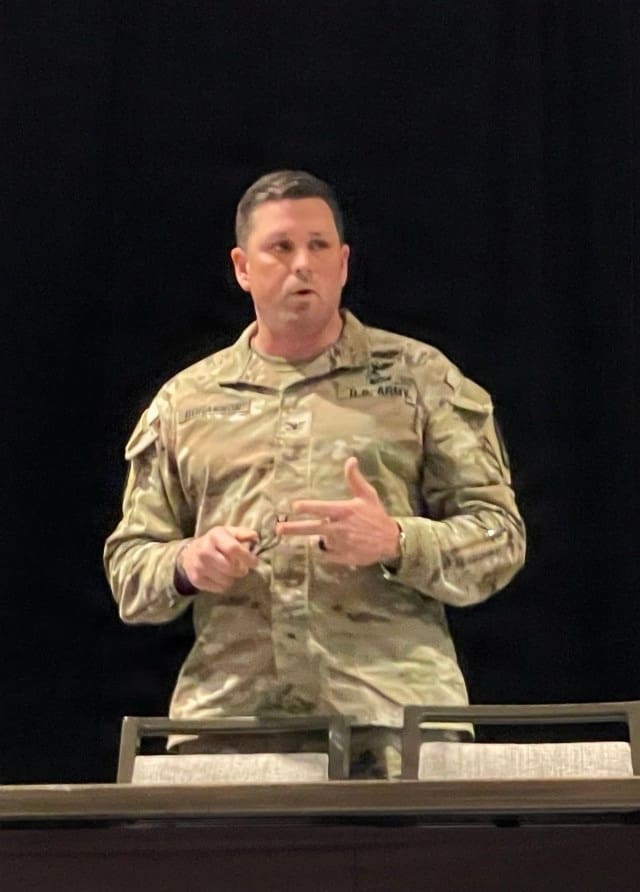
Liz Miranda, AMC Executive Deputy to the Commanding General, and Col. Jason Bohannon, Capability Portfolio Executive Ammunition and Energetics (CPE A&E), provided opening remarks that shaped the focus on the rising global demand for munitions and the pressing need to modernize our industrial infrastructure.

Companies in attendance were provided a comprehensive overview of key initiatives, including EULs, ARMS, P3s, an overview of GOGO sites, pyrophoric flares production, assured munitions initiatives, and market intelligence, as well as updates on the GOCO Construction and Iowa Army Ammunition Plant competitions. The government also detailed upcoming opportunities for a range of critical components, including projectiles, metal parts, fuzes, and propellants. A key focus of the event was identifying and addressing critical gaps within the OIB, where industry innovation and partnership can make a significant impact.

Following the general session, more than 120 one-on-one meetings were held with companies interested in providing solutions based on the information provided in the general session. The one-on-one meetings were a cornerstone of the event, allowing for focused, in-depth discussions between industry and government representatives.

Lynda Armer, Executive Director, ACC-RI, closed out the session emphasizing the need to build off the collaboration fostered at the event. “We look forward to growing critical capabilities across the OIB. The innovative solutions proposed by industry are a key step in this process,” said Armer. “These exchanges of ideas are fundamental to building the strong, collaborative relationships needed to advance our shared objectives.”

Industry partners were encouraged to respond to the U.S. Army Enterprise Strategic Capital Partnership Request for Information posted on SAM.gov with whitepapers detailing proposed solutions identified in the one-on-one meetings.

By Michael Chambers

Paratroopers Train with Anti-Drone Ammunition

Saturday, April 18th, 2026

US Army Soldiers assigned to the XVIII Airborne Corps train and familiarize themselves with the 5.56mm L-variant Drone Round to counter small unmanned arial systems at Oak Grove Training Center, N.C., April 9, 2026. The 5.56mm L-variant Drone Round is designed to neutralize sUAS by volume of fire and projectiles.

US Army video by SGT Kamar Williams

Drone Round from Freedom Munitions

Tuesday, April 7th, 2026

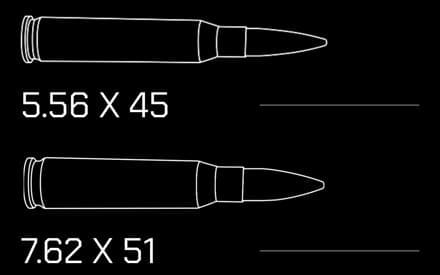
Freedom Munitions has developed counter drone ammunition in 5.56mm NATO and 7.62mm NATO. Other calibers to come.

These rounds offer twice the velocity of 12 ga (2200 fps for 5.56) with 5 (100m range) or 8 (50 m range) projectiles.

Made in America, they are compatible with current weapons (including suppressed) and magazines and are available now.

For those of you interested, Garand Thumb created a video about these new rounds which resemble standard ammunition.

For more information on the rounds visit dronerounddefense.com/product-information.

Image capture from Garand Thumb’s video.

Army Under Secretary Tours Scranton Army Ammunition Plant

Saturday, April 4th, 2026

SCRANTON, Pa. — The Under Secretary of the Army, Honorable Michael Obadal, visited the Scranton Army Ammunition Plant on March 19.

SCAAP is a government-owned, contractor-operated facility, and is one of 17 arsenals, depots, and ammunition plants that are subordinate installations of the Joint Munitions Command.

JMC provides the conventional ammunition life?cycle functions of logistics sustainment, readiness and acquisition support for all U.S. military services, other government agencies, and allied nations, as directed. JMC is also the logistics integrator for life-cycle management of ammunition providing a global presence of technical support to frontline units.

SCAAP was established in 1953, and U.S. Hoffman Machinery was the contractor until 1963 when Chamberlain Manufacturing Corporation took over. General Dynamics-Ordnance and Tactical Systems assumed the operation of SCAAP in 2006 and is the current contractor.

SCAAP manufactures large-caliber metal projectiles to ensure warfighters have the ammunition they need to carry out missions around the globe. SCAAP has played a vital role in producing 155 mm artillery rounds, enabling allied nations to strengthen both their defensive and offensive capabilities.

SCAAP is in the middle of one of the most significant modernization efforts in its history, driven by the need to increase U.S. production of 155 mm artillery shells. Demand for these shells has surged, and the Army has responded by investing hundreds of millions to overhaul equipment, expand capacity, and update aging infrastructure. Much of the plant’s machinery had been in service for many decades, well beyond its intended lifespan.

Obadal was briefed on SCAAP’s production and modernization operations and saw the new 155 mm production lines while being briefed on the importance of SCAAP’s redundant production capabilities. The tour also included the legacy 155 mm rough turn and finish turn production lines, where Obadal witnessed numerous production processes from billet forge to heat treat.

“We welcome connecting face?to?face with senior leadership and providing them with a visual understanding of SCAAP’s production capability,” said Rich Hansen, SCAAP’s commander’s representative. “Their firsthand perspective drives home the importance of the work we carry out in Scranton, Pennsylvania, in support of those who defend our nation.”

While at SCAAP, Obadal underscored the need to maintain optimal production levels. He emphasized that future requirements must be factored into future planning.

“We value the opportunity to speak directly with senior leadership during their visits,” said Jason Shradnick, SCAAP’s deputy commander’s representative. “Hearing their concerns allows us to align our efforts more precisely and effectively to accomplish the Army’s production goals.”

By Matthew Wheaton, Joint Munitions Command, Public and Congressional Affairs

US Government Awards Contract to Global Military Products to Manage the Army’s Quad Cities Cartridge Case Facility at Rock Island Arsenal

Friday, April 3rd, 2026

TAMPA, FL – (April 1, 2026) – The U.S. Government has awarded a four-year contract to Global Military Products to take over facility management and new product development of the Army’s Quad Cities Cartridge Case Facility (QCCCF) at Rock Island Arsenal, Ill. The change in operation management will help boost predictable and sustainable workload at the facility, while expanding on the skilled workforce, equipment and production capacity critical to the nation’s defense industrial base.

“The Army’s Rock Island Arsenal has been in operation for more than a century to keep our country lethal and ready, with the Quad Cities Cartridge Case Facility focused on production of brass and steel cartridges,” said Jeff Brunozzi, president, Global Ordnance Holdings, LLC. “Under this agreement, we will leverage the facility’s capacity and employees’ capabilities to better serve the U.S. and its allies by expanding current cartridge case production and establishing a Mortar Barrel Production Center of Excellence.”

The 180,000 square-foot QCCCF has deep-drawn forging technology that produces brass and steel cartridge cases, ranging from 40mm through 155mm. In addition to managing the current workload, Global Military Products will look to add production of additional cartridge cases in support of its contracts for both U.S. and non-NATO cartridge cases. This effort leverages the facility’s existing and underutilized manufacturing tooling assets, equipment and workforce while replenishing critical cartridge case inventories for the U.S. and partner-nation demand.

Global Military Products will also establish a domestic Mortar Barrel Production Center of Excellence within the QCCCF in partnership with Ellwood National Forge (ENF). Establishing a second source, solely U.S.-based production capability mitigates risk, improves readiness, strengthens supply chain resilience and aligns with government priorities for expanding critical munitions manufacturing under the U.S. Industrial Base Modernization Strategy. QCCCF will remain a government-owned facility, creating a reliable, scalable and domestic source for critical mortar components and reducing supply chain vulnerability for U.S. and allied forces.

“By integrating mortar barrel production into QCCCF’s expansive and well-structured manufacturing layout, we will create a second-source domestic capability for 81mm and 120mm mortar systems,” said James Knight, Director of Business Development, Global Military Products. “Our approach will both enhance the facility’s operational versatility and transform its unused capacity into a strategically relevant manufacturing node for critical mortar barrels.”

The teams at Global Military Products and ENF leading this effort have extensive experience with modernization efforts and plant management, including leading and supporting modernization efforts at Scranton Army Ammunition Plant (SCAAP), Holston Army Ammunition Plant (HSAAP) and Radford Army Ammunition Plant (RFAAP). These efforts were planned and sequenced to minimize production impact, reduce technical risk, and maintain compliance with Army safety and quality standards.

As part of the ELLWOOD Group, ENF has drawn on the vertically integrated capability to design, melt, remelt and forge steel ingots to ensure consistent supply of high-quality cannon and artillery barrels and component forgings ranging from 81–155mm for the past 40 years. This long production experience has enabled ENF to fully develop, mature, and continuously improve its manufacturing and quality processes. ENF’s technical expertise, customer service orientation and breadth of offerings is a demonstrated capability for achieving effective results at QCCCF.

The four-year Other Transaction Authority (OTA) contract is firm-fixed price. The contract value is not being disclosed.

Photos by Dori Whipple, Joint Munitions Command

DOT&E Report on Next Generation Squad Weapons, Ammunition and Fire Control

Thursday, March 26th, 2026

On 13 March, 2026, the Department Of War’s Director, Operational Test and Evaluation Office (DOT&E) released their 2025 annual report to Congress. DOT&E provides oversight for acquisition related testing of new capabilities and releases an annual report. The report covers acquisition programs from each of the services and United States Special Operations Command, as well as missile systems. You can check it out here.


This article concentrates on the Next Generation Squad Weapons (NGSW) and Ammunition (W&A) and NGSW – Fire Control (FC) section.

As a reminder, the NGSW system includes the M7 Rifle, M250 Automatic Rifle, 6.8mm ammunition common to both weapons, and XM157 Fire Control mounted on each weapon. Recently added to the NGSW program is the XM8 Carbine. The M7, XM8, and the M250 are replacements for the 5.56mm M4/M4A1 carbine and M249 Squad Automatic Weapon currently used in the close combat force (CCF).

I’d like to note that the report refers to the XM157 FC without the eXperimental designation prefix it continues to carry. Over the years I have noted such instances of small details slipping through the cracks on their reports which remain at a very generic, high level for executive use.

NGSW is being procured under two separate Middle Tier of Acquisition programs: weapons and ammunition in one and Fire Control in the other. These are not traditional procurement programs but rather much more adaptive and fast paced. The NGSW W&A are manufactured by SIG SAUER, Inc, and the NGSW-FC is manufactured by Sheltered Wings, Inc, doing business as Vortex Optics.

According to the report, the Army completed an Operational Assessment of the NGSW system in October 2024 and limited lethality testing of the 6.8mm SP ammunition in December 2024 to support the planned transition of both the NGSW W&A and NGSW-FC programs from the MTA rapid fielding pathway to separate major capability acquisition programs in 3QFY26. The Army anticipates completing Live Fire Test & Evaluation (LFT&E) of the 6.8mm GP ammunition by 2QFY26. NGSW is no longer under DOT&E oversight for Developmental or Operational Testing. It has completed those tests. It does however, remain under Live Fire oversight.

The Army anticipates completing LFT&E of the 6.8mm GP ammunition at Aberdeen Proving Ground by 2QFY26. DOT&E will report on the 6.8mm GP ammunition LFT&E results in a classified lethality report in 3QFY26.

An Early Fielding Report (EFR) assessed individual soldier and squad performance using the NGSW system on static and maneuver ranges; highlighted the weapons’ suitability and soldiers’ safety concerns; and compared performance of the SP ammunition to that of current ammunition against specific types of targets.

Overall results of testing revealed these comments regarding the EFR report:

– Individual soldiers consistently qualified with their NGSW and, when firing on the variable distance range, demonstrated the ability to engage targets at extended distances.

– The 6.8mm SP ammunition generally provides increased lethality over the M855A1 (i.e., the SP ammunition for the legacy M4A1 weapon) against the tested targets.

– Improvements to system reliability, safety, human-systems integration, and compatibility with cold weather operations are needed.

– During the OA, soldiers reported negative physiological effects caused by the noxious off-gassing from their weapons, as well as concerns about the extreme heat from the weapons’ suppressors after firing.

– Most M250s equipped with M157s did not retain zero during the OA or the airborne test.

– Ergonomic complaints about the M157 persisted.

– The NGSW is compatible and safe for use during static line and military free-fall airborne operations.

In the end, the report leaves this lone recommendation:

The Army should:

1. Address the recommendations in the June 2025 EFR and classified limited lethality annex.

Naturally, we have no idea what is the classified annex. In fact, no information has been released regarding ammunition performance of NGSW than a mention that it performs similar to the commercial 270 WSM cartridge. However, considering the NGSW program remains under DOT&E oversight for the LFT&E portion of testing, we may learn more in the future.

Until then, NGSW remains a fast track program that has fielded over half of its basis of issue plan.