XC3 Weaponlight

Archive for the ‘Ammo’ Category

USMC Issues Sole Source Notice for 5.56mm Anti-Drone Rounds

Monday, June 8th, 2026

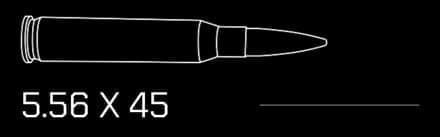
According to a sole source notice issued last week, Portfolio Acquisitions Executive Marine Corps (PAE MC), Program Manager, Combat Support Systems (CSS), PdM Ammunition (PdM AMMO), Quantico, VA 22134, intends to enter into a sole-source negotiations and subsequently award an Indefinite Delivery/Indefinite Quantity (ID/IQ) contract to Drone Round LLC for the 5.56mm “L Variant” Anti-Drone Rounds. This effort is estimated for award December 2026.

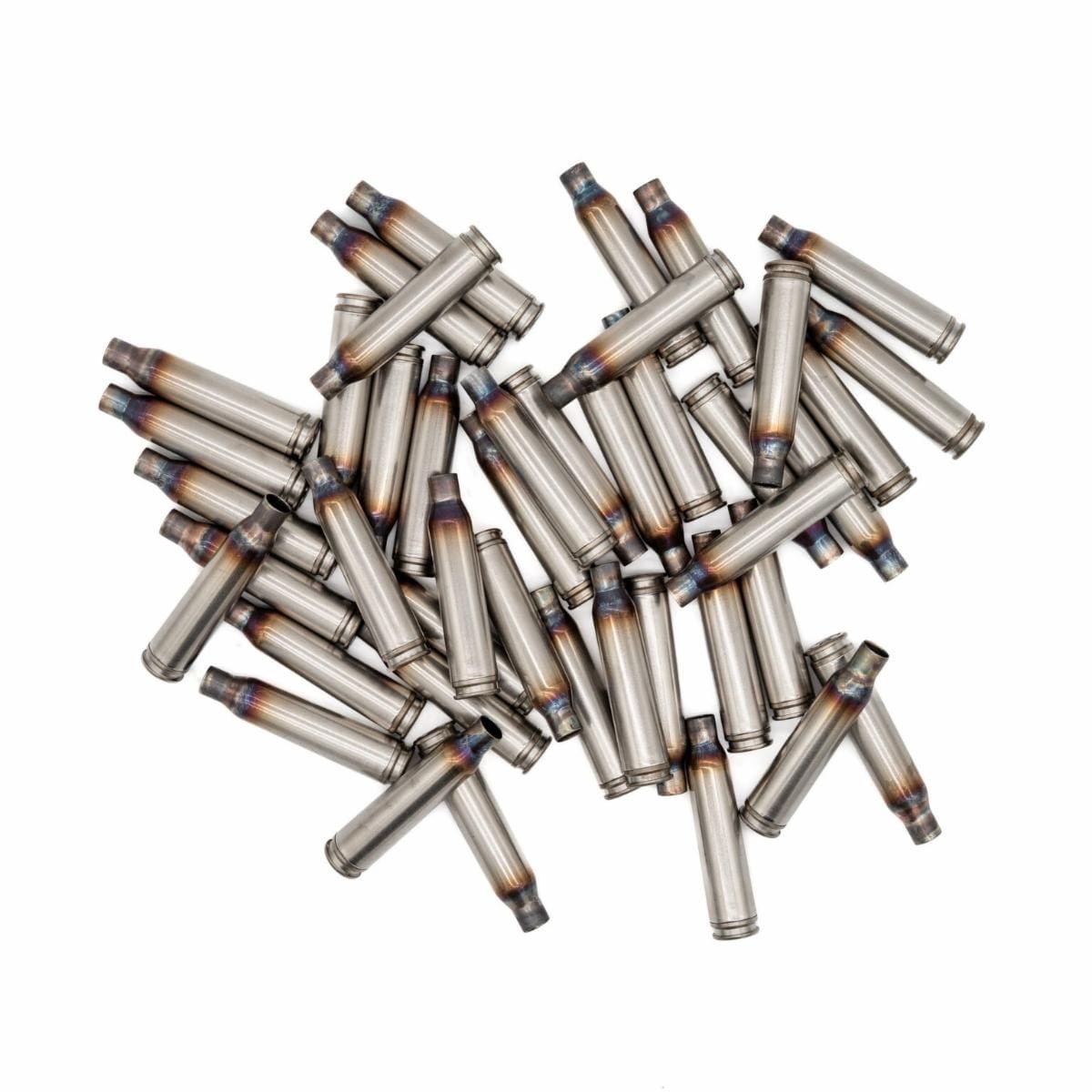
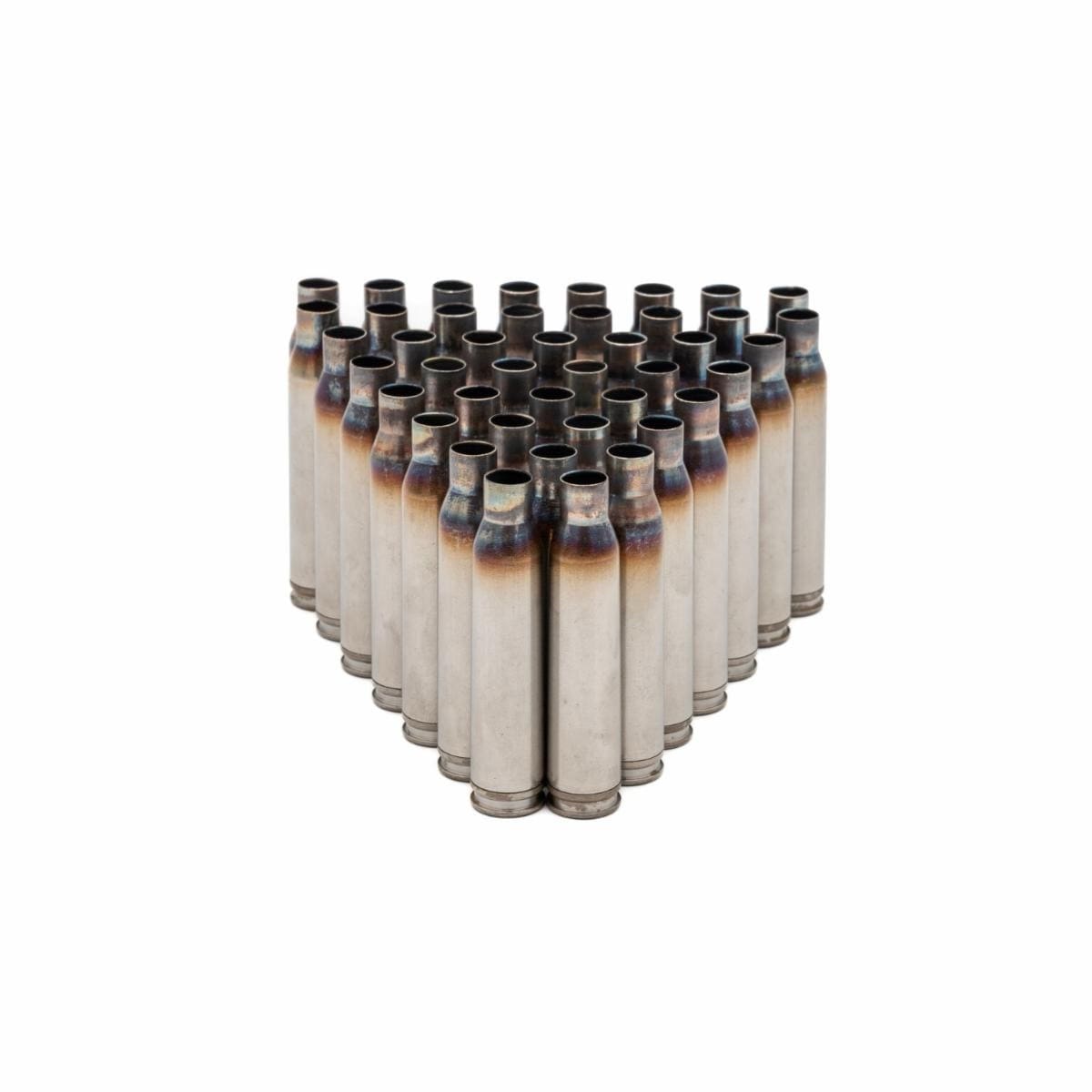
Launched earlier this year, the 5.56mm Drone Round “L Variant” projectile separates into several pieces to act in a similar fashion to a shotgun, making it effective against drones.

According to the Marines, it is the only kinetic munition currently available in the commercial or defense marketplace that meets the Marine Corps’ strict minimum capability requirements for immediate c-sUAS defense. Specifically, this round is the only solution offering “drop-in” compatibility that requires no physical modifications, specialized upper receivers, or distinct weapon platforms to be operable in current-issue Marine Corps 5.56mm weapons (e.g., M27 M4, and M4A1). Furthermore, its deployment requires zero additional New Equipment Training or specialized occupational specialties, rendering it immediately effective upon issue. Failure to deliver this capability places an unnecessary risk to Marines and could lead to mission failure and loss of life. Market Research indicates that Drone Round LLC is sole manufacturer and reseller of this ammunition. The appliable North American Industry Classification System code is 332992, Small Arms Ammunition Manufacturing.

D&M Holding Company Acquires Czech-Based EKOCHEM 94 s.r.o.

Wednesday, June 3rd, 2026

TAMPA, FL (June 3, 2026) – D&M Holding Company, Inc. (D&M), the global leader in delivering complete solutions for ammunition, primer, and propellant manufacturing facilities, has acquired EKOCHEM 94 s.r.o. of the Czech Republic. This acquisition further strengthens D&M’s capabilities as the company continues to support the United States, NATO allies, Ukraine, and other friendly foreign governments seeking long-term ammunition independence.

Headquartered in Pardubice, Czech Republic, EKOCHEM 94 is an engineering, design, and industrial project company specializing in chemical, mechanical, and process industries, including for propellants and propellant raw materials. Its specialties include:

  • nitrocellulose production equipment
  • propellant production equipment
  • design of complete energetics
  • distillation systems
  • combustible cartridge case production lines
  • diethyl ether production lines
  • explosive-material processing equipment

“The acquisition of EKOCHEM 94 is a key part of our aggressive global growth strategy as we extend our footprint in Europe and beyond,” said Dan Powers, President and CEO, D&M Holding Company. “Escalating global conflicts and supply chain issues are driving the soaring demand for reliable supplies of ammunition, primers, and propellants. This geopolitical instability has created deep urgency among nations for ammunition independence. They want to manufacture it themselves, and we are uniquely positioned to help them do that.”

“We are pleased to become a part of the D&M family and look forward to expanding our capabilities,” said Boris Fukatko, founder and President of EKOCHEM 94.

As friendly nations race to achieve their defense industrialization goals, D&M is increasingly sought after as a trusted, specialized design, engineering, and manufacturing partner. D&M not only manufactures the machinery and systems needed to build ammunition; the company also trains its clients and transfers the technical knowledge required to operate facilities independently.


About D&M Holding Company

D&M Holding Company, Inc. (D&M) is an ammunition and energetics engineering company headquartered in Tampa, Florida, with additional operations in Cabot, Arkansas. D&M specializes in the design and manufacture of ammunition and energetics equipment, as well as in the turnkey factory solutions for customers worldwide. D&M Holding International Sp. z o.o. in Warsaw, Poland is D&M’s European sales office which supports international sales and Ukraine projects. D&M Novatrax, LLC, based in Kyiv, Ukraine is an engineering and investment company dedicated to the Ukraine defense industry. White River Energetics, LLC (WRE) is a wholly owned subsidiary of D&M, located in Des Arc, Arkansas, with the objective of manufacturing energetics for the ammunition industry.

For more information visit D&M Holding Company and White River Energetics.

Federal Signs Landmark Agreement with U.S. Army to Accelerate High-Performance Ammunition

Sunday, May 31st, 2026

Federal Ammunition announced it has executed an agreement that allows the United States Army to utilize its patented Peak Alloy ammunition case technology for use in multiple cartridges and weapon systems. The new agreement specifies conditions necessary prior to granting Government Purpose Rights, such as the delivery of 40 million cases featuring technology.

Peak Alloy was first introduced in the commercial market in 2025 with the all new 7mm Backcountry. It is a high-strength, proprietary steel alloy casing that enables significantly higher chamber pressure — in excess of 80,000 PSI — than traditional brass for higher velocities in smaller, lighter, shorter-barreled rifles typically configured for suppressors. This case technology is also being evaluated by multiple allied European countries.

The agreement with the U.S. Army is inclusive of multiple chamberings including 50-cal and below.

“This is a historic agreement between the United States military and Federal Ammunition,” says Chairman and CEO Jason Vanderbrink. “As a 104-year-old American company, it further demonstrates our unwavering commitment to innovation. As the world’s most prominent manufacturer of small-caliber ammunition, I am particularly proud of the speed at which our team can develop a product with a purposeful application that improves the advanced systems our brave American warfighters use in the field of battle,” said Vanderbrink.

Federal Ammunition products are available at dealers nationwide and online. For more information on all Federal products and to sign up for notifications about new product availability, rebate promotions, and other brand news via email, visit www.federalpremium.com.

USSOCOM Seeks Hypervelocity Improved Capability Assault Rifle (HICAR)

Wednesday, May 20th, 2026

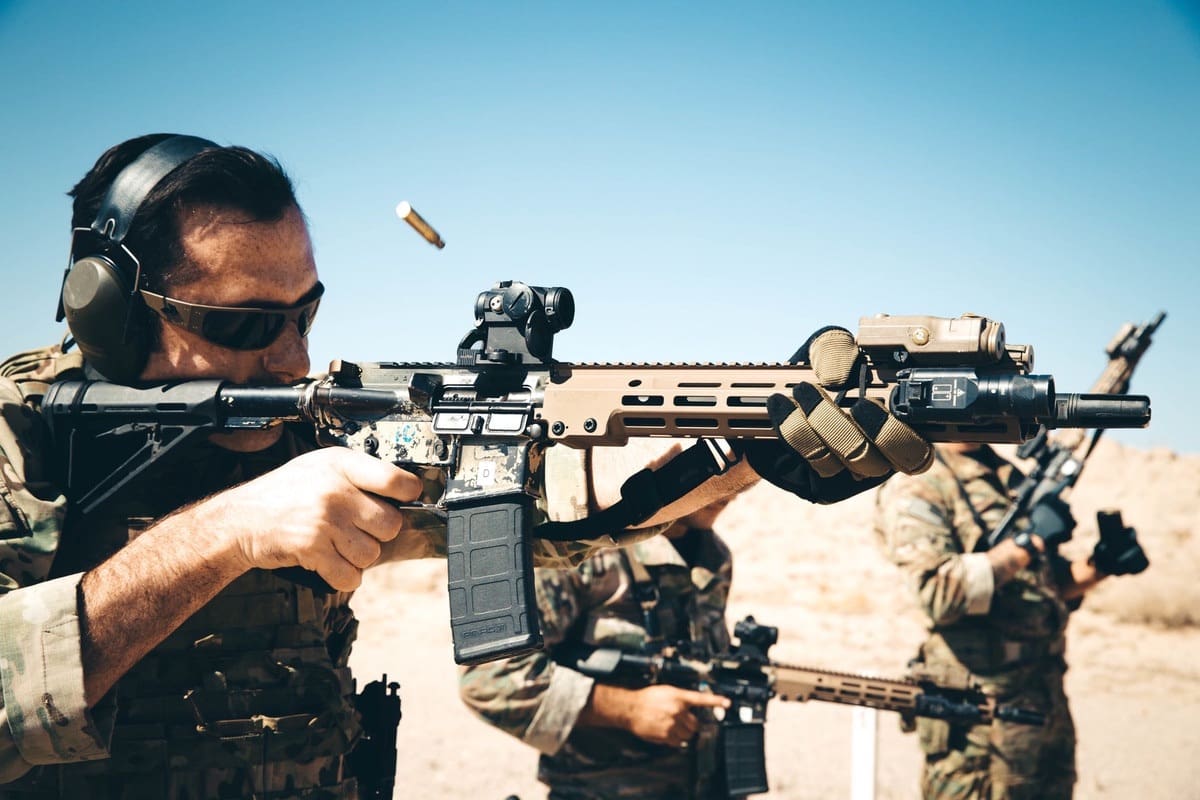
Rumors have been floating around since ISOF Range day that USSOCOM was going to issue a Request For Proposals for an M4 compatible upper receiver group capable of firing high pressure 5.56 ammunition as well as currently used M855A1 and Mk262 cartridges. This week Naval Surface Warfare Center Crane released an RFP.

The means of procurement will be Other Transactional Authority. Additional information on this process is available by referencing CSO N0016425SC0001, the Naval Surface Warfare Center (NSWC) Crane Commercial Solutions Opening (CSO).
The Requirement:

USSOCOM is seeking a carbine system to act as a replacement or upgrade for the current URG-I (Upper Receiver Group – Improved). The goal is to integrate advancements in material science and weapon design to provide operators with a technically superior individual weapon system capable of firing both legacy 5.56x45mm NATO and emerging hyper velocity ammunition.

The stated goal of this effort is to extend effective endgames ranges from the current 300 meters out to 600 meters.

Additional details:

The RFP states that “Weapon submissions that address the following technology priorities will benefit during the selection process:”

Hypervelocity Ammunition Compatibility: The ability to accept and reliably cycle both 5.56NATO and hyper velocity 5.56x45mm ammunition is a primary objective. The development of a complete weapon system or conversion kit optimized for hypervelocity ammunition will be a collaborative effort between the government and the proposer. Hypervelocity rounds offer significant performance benefits, including:

Increased Effective Range: Higher muzzle velocity allows the projectile to maintain kinetic energy over longer distances, extending the effective range to 600m+.

Improved Terminal Performance: Enhanced energy transfer upon impact leads to more effective terminal ballistics.

Enhanced Barrier Penetration: The increased velocity and kinetic energy enable the projectile to more effectively defeat body armor, barriers, and other hardened surfaces.

Longevity and Durability: The system must be engineered to withstand the increased chamber pressures and bolt thrust generated by hypervelocity ammunition without compromising the weapon’s service life or operator safety.

Interoperability: The system must remain fully interoperable with USSOCOM’s existing suite of Visual Augmentation Systems and Weapon Accessories (VASWA).

Primary Attributes as Threshold and Objective:

HICAR shall be chambered in 5.56x45mm NATO. (T=O)

HICAR shall be compatible and capable of fit and functioning with the M4A1 lower receiver group without permanent modifications (T); with zero modifications (O)

HICAR shall fire and function with M855A1, Mk262 as well as Government supplied M855A1+ hypervelocity ammunition loaded to 82kpsi (T); with future hypervelocity ammunition designs optimized for projectile velocity and terminal effects on target (O).

HICAR barrel shall be between 11- 12 inches in length, measured from bare muzzle to bolt face (T=O).

HICAR shall not fire when on safe and dropped in accordance with TOP 3-2-045 (T=O).

HICAR shall employ the HUXWRX Flow 556k L In “Black Magic” suppressor (SKU: M3228) to reduce signature (T=O).[1]  (this suppressor will serve as a surrogate for HICAR testing, an optimized suppressor requirement will follow in the future)

Secondary Attributes:

Average Mean Radius of 1 MOA (T); 0.5 MOA (O) when fired unsuppressed.[2]

Measured by averaging total of three (3) groups of ten (10) shots each fired by three (3) separate weapons in unsuppressed, manned, supported configuration at 100 meters with Black Hills Mk262 Mod1-C 77gr, PN# MP460556N9-COMMammunition.

No single ten round group larger than 2.5MOA extreme spread (T=O)

Barrel muzzle threaded to 1/2×28 or 5/8×24 threads per inch (T=O).

Weight not to exceed, unloaded and without suppressor, of 8lbs (T); 6.5lbs (O).

Length not to exceed, when measured from the end of the receiver extension to the end of muzzle device, of 31 (T); 28 (O) inches.

Continuously timed and biased M1913 picatinny rail at 12 o’clock minimum of 16 inches in length. (T=O)

Interoperability with all current SOCOM POR Visual Augmentation Systems (VAS) accessories and enablers (T=O).

Recoil shock impulse less than the POR Mk17 7.62NATO to ensure VAS survivability (T=O)

HICAR ergonomics similar to M4A1 (T=O).

HICAR MRBS of 800 (T); 1,600 (O) rounds between stoppages.

HICAR MRBF of 5,000 (T); 10,000 (O) rounds between failures

Cycle and function with M855A1 and Mk262 ammunition (T) cycle and function with current training ammunition to include ball, frangible, and tracer cartridges (O).

Barrel life 8,000 (T); 20,000 (O) rounds.

Measured with M855A1+ ammunition fired as a function of Muzzle Velocity loss of 5% below mean or dispersion above an established threshold, whichever occurs first (T=O).

Trigger pull weight less than 5lbs (T), 3lbs (O)

Selection of fire: Safe, Semi-auto (T) fully Automatic (O).

Cycle and function with Gen3 PMAG Magazines (T=O)[3].

Handguard should minimize deflection and POI shift when under load from a bipod or supported on a barricade (O).

Handguard with M-LOK mounting points at 7 positions radially for mounting accessories and enablers (T=O).         

Modular ambidextrous safety lever (O). (“Modular” defined as ability to have a selector lever on left, right or both sides simultaneously)

Ambidextrous bolt catch/bolt release, ambidextrous magazine release, and ambidextrous charging handle (O).

Fencing around the controls to prevent accidental engagement of the magazine release and bolt release mechanisms (T=O).

Single rigid sling point at the rear of the receiver for maritime operations (O)[4].

Resistant to damage from immersion in three (3) feet of seawater for two (2) hours without affecting the weapon’s performance and able to fire within thirty (30) (O); ten (10) (T) seconds after submersion.

Protected with durable corrosion resistant coating in all SOF climatic environments including NBC contaminated environments. Corrosion and abrasion proof coatings to minimize the attraction of dust and contaminants (T=O).

Utilize where possible self-lubricating coatings and minimize buildup of dust, carbon, copper, and debris (O).

Fully functional in all environments from -40 to 165 degrees Fahrenheit (O).

Comply with relevant direct-fire MIL-STD specifications as directed by NSWC-Crane SOCOM Weapons Team (O).

Industry Partner submit to and successfully perform all tests required by NSWC-Crane SOCOM Weapons Team to achieve limited safety release (LSR) from the Navy Weapon Safety Evaluation & Review Board (WSESRB) (O).

Inscribed at position of Government-choosing with Industry Partner, OASW (SO/LIC) & SSO CD&I TOS Team Lethality logos. (Nice touch guys)

Contain markings to include caliber, year of manufacture, and manufacturer identification.

Not rely on any first-order-supply-chain components from adversary countries as defined in the National Defense Authorization Act (NDAA) (O). Any such reliance must be fully documented and mitigated in the Contract Risk Register by Industry Partner (T). 

If not already in BASE, Industry to provide industrialization plan to produce HICAR in the United States by the completion of the contract (T). Designed, engineered, and assembled in the United States (O).

A complete HICAR system to consist of the following:

Weapon System, Urban

Heat Mitigation Rail Covers

Buttstock, Multi-Point Adjustable

7x Magpul Gen3 556 Magazines

Field Maintenance Kit, Fix-It Sticks

Field Cleaning Kit

User Manual and Maintenance Manual, hard copy and digital.

The Ammunition

The ammunition used is going to drive this program. As currently configured, neither the M4A1 or USSOCOM’s URG-1 will reliably withstand this new cartridge’s wear and tear. If they would, there would be no reason for this procurement.

Many vendors who are interested in this effort may be disadvantaged due to access to the government provided ammunition and the shirt timelines. White papers must be submitted by 8 June and the government won’t announce those who are invited to a vendor day until 29 June and can’t pitches the specified ammunition until then. They will then have until 15 September to prepare for the Pitch Days where selected vendors will have one-on-ones with the government and must demonstrate their candidate URG on the range.

The big question has been which high pressure 5.56 cartridge they are actually planning to field. It is being referred to as M855A1+ in the RFP and we also know that USSOCOM is planning for chamber pressures in excess of 82kpsi.

The Army has been quietly working on a couple of solutions and SOF another. Even with the fielding of the Next Generation Squad Weapon M7 rifle and M8 carbine, the US Army alone will still have around 900,000 M4/M4A1 carbines in its inventory so enhanced lethality for the M4 platform is in everyone’s best interest. While the Army didn’t adopt the URG-I to improve its service rifle capability, the increased capability of a new high pressure case 5.56 would likely lead to Army interest in fielding an “M4A2” variant using the new URG and appropriate operating system upgrades. In such a scenario, the M4 lower would remain. USSOCOM’s goal is the same, improve the capability of the current M4A1.

Likewise, SOCOM has multiple ammunition improvement efforts afoot including what they are referring to as “Hyper Velocity” ammunition.

Concerns

Aside from access to the ammunition which will become a serious eye opener for those who lack experience with high pressure cartridges, I have a couple of other concerns. The government has stated they are willing to accept Technology Readiness Level 6 proposals which are still in the realm of a science experiment. Additionally, other than what is specified above, there is no proposed timeline for the procurement.

Conclusion

It certainly offers a huge capability increase for US military small arms. This will be an interesting effort to watch and even more so to see what industry proposes and how much of that will be introduced commercially.

Shell Shock Technologies Launches .338 Lapua NAS3 Cartridge Cases

Thursday, May 14th, 2026

New lightweight .338 Lapua two-piece case delivers increased internal capacity and higher velocities for civilian, military, and law enforcement marksmen.

Eubank, Ky. (May 2026) – Shell Shock Technologies, LLC. (SST), a leading innovator in the ammunition industry, today announced the commercial release of its .338 Lapua NAS3™ cartridge cases, now available online in quantities from 250 to 5,000. The launch extends SST’s revolutionary NAS3 two-piece technology – a corrosion-resistant nickel-alloy body locked to an ultra-durable stainless-steel head – into one of the most demanding long-range calibers used by precision rifle competitors, military sniper teams, and law enforcement tactical units.


The .338 Lapua NAS3 unloaded case delivers unmatched durability, reduced weight, and repeatable precision that outperforms traditional brass in every critical category. The cases are approximately 30 percent lighter than traditional brass and offer roughly 11 percent more internal volume, allowing more efficient energy use when powder is ignited. The result is the ability to achieve higher velocities at standard SAAMI pressures, with customers reporting standard-bullet velocities up to approximately 3,125 feet per second.


“The .338 Lapua has been the benchmark for long-range performance for decades, and our NAS3platform takes it into a new performance class,” Peter Foss, Managing Partner and CEO of Shell Shock Technologies. “By increasing internal case capacity by roughly 11 percent and reducing case weight by about 30 percent, we’re giving shooters meaningful velocity gains and tighter shot dispersion. For military and law enforcement teams, that translates to extended effective range without compromising safety or reliability. For civilian precision shooters and competitive marksmen, it means a more consistent, longer-lasting case at a better cost per round.”

Manufactured to exacting tolerances, each .338 Lapua NAS3 case delivers consistent internal volume, concentricity, and neck tension, the foundation of the tight velocity spreads required for sub-MOA accuracy at extended distances. The two-piece case construction is engineered to be lightweight, corrosion-resistant, and gentle on extractors, supporting flawless extraction and smooth ejection through repeated firing cycles.

Key features of the .338 Lapua NAS3 cartridge cases include:

  • Two-piece construction: corrosion-resistant nickel alloy body locked to an ultra-durable stainless-steel head.
  • Approximately 30 percent lighter than traditional brass for reduced carry weight in the field without sacrificing strength.
  • Roughly 11 percent more internal capacity, enabling higher velocities at standard SAAMI pressures.
  • Match-grade dimensional consistency for repeatable ignition and tighter group sizes.
  • Designed for easy loading and extended service life, the unloaded cases reduce waste and lower total cost per round.
  • Compatible with standard .338 Lapua Magnum load data and the full range of commercial, match, and tactical projectiles.

From open-country big-game hunting and long-range competition to military special operations and law enforcement counter-sniper deployments, the .338 Lapua NAS3 case is designed for the demands of high-pressure, high-volume shooting environments. Reduced case weight supports faster movement for dismounted operators, while extended service life supports cost-conscious civilian handloaders and high-round-count training programs.

Shell Shock .338 Lapua NAS3 unloaded cartridge cases are available now in quantities of 250, 500, 1,000, 2,500, and 5,000 directly from Shell Shock Technologies. For all larger orders, please email SST@shellshocktech.com. 

?Keep up with Shell Tech’s advanced ammunition on the website and social media platforms: Facebook, Instagram, and YouTube.

Saab Strengthens RBS 70 NG with New Bolide 2 Missile

Monday, May 11th, 2026

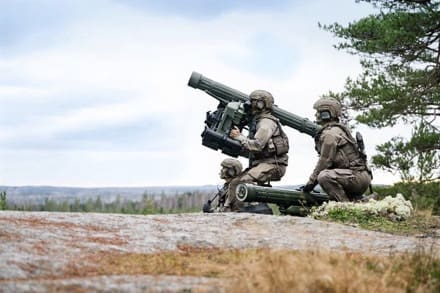
Saab has launched the new Bolide 2 missile for the RBS 70 short-range air defence missile system. Bolide 2 brings a larger warhead and better terminal flight performance for superior capability, and an improved modular design to allow for future updates.

Bolide 2 retains the unjammable guidance method used by RBS 70 with its previous missile generations. Deliveries are starting in 2027 and this new missile will become the standard ammunition for RBS 70 NG.

“With Bolide 2 we are ready to provide our customers with an even more capable missile, ready to be adapted for any new threats in the sky. RBS 70 users can benefit from improvements including a more powerful warhead, whether they are operating in the man-portable role or, as is increasingly common, from a vehicle firing unit,” says Stefan Öberg, head of Saab’s business unit Missile Systems.

Bolide 2 can be fired from the latest RBS 70 NG or prior generations. A series of successful test firings have already been conducted as part of the missile’s development. 

Yuma Test Center’s Proof Gun System Supports Army Goal to Increase Munition Production

Sunday, May 10th, 2026

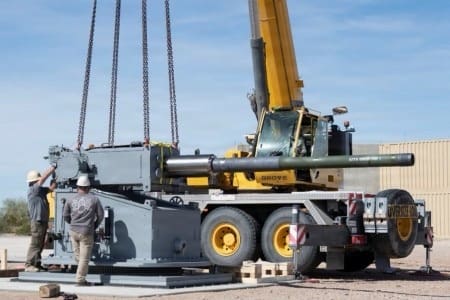
YUMA PROVING GROUND, Ariz. — In the past, testing a gun tube required an accompanying weapon system. The future is here where that is no longer necessary.

Yuma Test Center acquired a proof gun system, or PGS, developed by U.S. Army Combat Capabilities Development Command Armaments Center which allows a gun tube to be mounted and fired for testing without the weapon system.

“The idea was to build a system that would allow them to put a number of different tubes in,” explained Quentin Sorenson, the test officer with the Munitions and Weapons Division who oversaw the installation of the PGS at YTC.

He further explained, “There are no electronics, it’s hydraulic or mechanical. It was specifically designed to sit out in the desert. They are hoping for a 30–50-year lifespan.”

The timing of this advancement is no coincidence. In fact, its funding comes directly from the U.S. Army’s initiative to ramp up overall production capacity for 155mm artillery munitions. The Army’s goal is to produce 100,000 artillery rounds per month. The PGS will aid with production testing.

For the last several months, YTC has worked to acquire, assemble, emplace and test fire the first of two PGS. YTC crews placed the system on a reaction mass that was built to YTC standards by a U.S. Army Corps of Engineers contractor to sustain the immense power of firing.

“The concrete is about 7 feet deep and contains rebar grids and a fabricated cage that houses the removable mounting rods designed to secure the ground engagement system adapter plate,” explained Jered Ford, chief of the Indirect Fire Modernization and Mines Branch.

Sorenson added, “It took us most of the day to get the PGS on the reaction mass. We had to get the adapter plate cleaned up and prepared to emplace the saddle or lower portion, then we mounted the gun mount, or upper portion on top of that. Then we spent the rest of the week making sure everything was securely locked down.”

Crews used a special large pneumatic wrench to torque the mounting bolts to 3,100 foot-pounds. Then the carpenters constructed a wooden deck around the system to allow closer access to the PGS’s loading side. Once the system was set up Sorenson conducted acceptance firing.

“We fired at four [quadrant elevations] just to make sure everything was good as we elevated up and down. Most were done at zone five to introduce maximum shock and everything went well.”

YTC’s second PGS arrives in May. Currently, both systems work with M776 tube sleeves, yet there are plans to expand their capabilities to include other types.

This new capability provides industry partners testing artillery flexibility, efficiency and cost savings explains Sorenson.

“You just swap the tubes in and out as you need and then you are not trying to constantly maintain a chassis because you have this one system that will handle everything.”

Currently artillery testing requires a significant effort to prepare and emplace an entire weapon system at the test site.

“We have to tow in a towed howitzer, like an M777A2 or an M199 or you have to drive in an M109A6.You have to bring in the whole system and then you have to have ready and running to conduct your test.”

Omitting the weapon system cuts the extra time and effort needed on a test site and the time when switching between programs.

“It minimizes set up costs and it minimizes the mechanical effort of keeping the whole system functioning when all we really need is the tube,” said Sorenson of the new capability.

By Ana Henderson

Saab Launches New Carl-Gustaf Anti-Tank Round

Thursday, May 7th, 2026

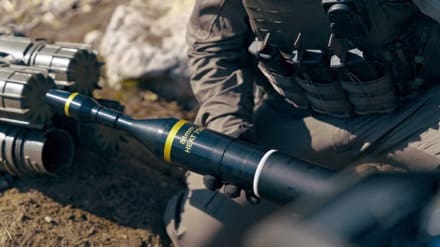
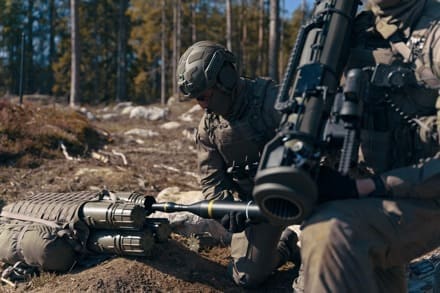
Saab has launched its new anti-tank ammunition round for the Carl-Gustaf weapon during a live firing customer demonstration in May at Karlskoga, Sweden. 

The new round, designated HEAT 758, has been designed to defeat heavy armoured vehicles equipped with Explosive Reactive Armour (ERA). Vehicles protected by ERA are increasingly more common on the battlefield. HEAT 758 features a tandem warhead; the initial charge neutralises the ERA installed on the outside of the armoured vehicle, allowing the main charge to then successfully penetrate the main armour. The main charge can defeat up to 700mm of armour, enough to defeat the heaviest armoured vehicles. 

An undisclosed Carl-Gustaf customer has ordered HEAT 758 and production is underway.

“This round is our response of developments of the battlefield where reactive explosive armour has become a major problem for regular munitions trying to defeat armoured vehicles. HEAT 758 is an example of how Saab continues to generate ever more capable products while decreasing the armoured vehicle threat to the operator,” says Michael Höglund, head of Saab’s business unit Ground Combat.

HEAT 758 uses Saab’s Firebolt technology, meaning it can communicate with the Carl-Gustaf M4 weapon in which it is loaded and with the Fire Control Device 558 used to aim the M4, thereby simplifying the workload on the gunner while increasing first-round hit probability.