In January, the US Army updated their Cavalry doctrine with a new version of FM 3-98 Reconnaissance and Security Operations.
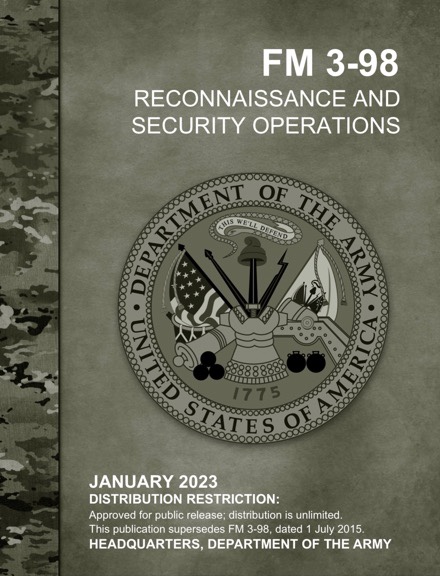
Download it here.


In January, the US Army updated their Cavalry doctrine with a new version of FM 3-98 Reconnaissance and Security Operations.
Download it here.
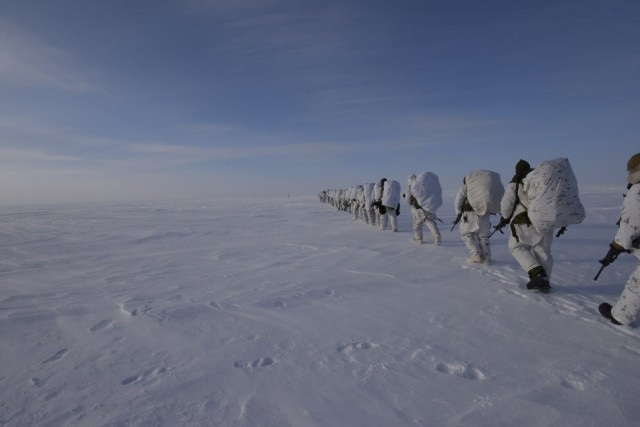
NUNAVUT, Canada — Thirty-seven U.S. and Canadian soldiers were tactically inserted by way of an LC-130 Hercules on Arctic Ocean ice just east of Little Cornwallis Island in Nunavut, Canada, during exercise Guerrier Nordique 23 on March 15, 2023. The multi-country and joint effort is the first ever platoon movement of its kind.
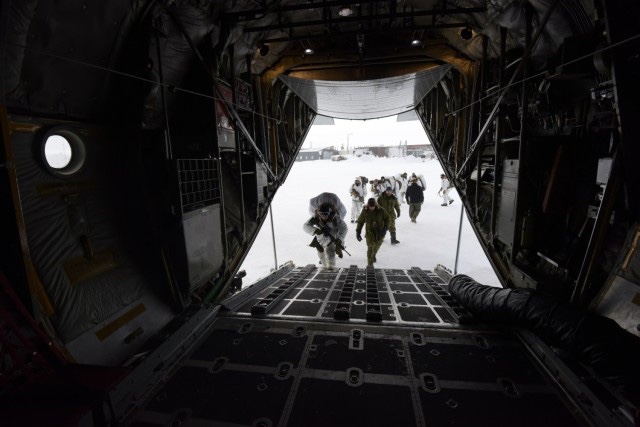
The New York Air National Guard’s 109th Airlift Wing is the only ski equipped tactical C-130 with flying missions focusing on snow and ice landings, which is made possible by multi-capable Airmen trained to build and groom those runways. The LC-130H is equipped with 4-by-20-foot feet skis that make landing possible on specially built skiways and ski landing areas.
“We’ve been flying missions in Greenland and Antarctica for over 30 years, and this is the first time we’ve ever conducted a tactical insertion with Canadian reserve soldiers,” said Lt. Col. Matthew Sala, officer-in-charge of the 109th Airlift Wing’s Polar Camp Skiway Team and Ski Landing Area Control Officers. “This is just the starting point for us to build from. We hope to expand our capacity and have more training missions like we had here with Guerrier Nordique. This exercise demonstrated the LC-130s full capability to infill and exfil tactical forces providing Arctic agile combat employment while also incorporating valuable training to our multi-capable airmen,” said Sala.
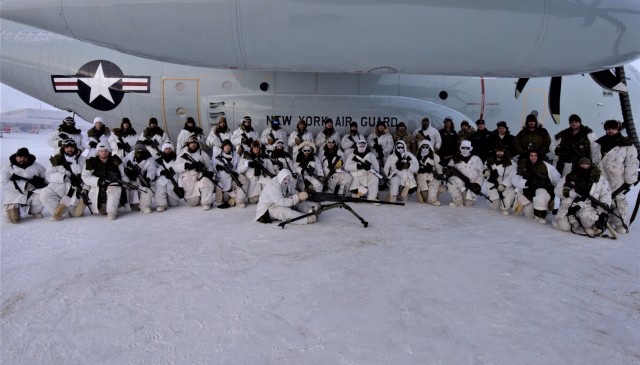
Soldiers and Airman loaded the LC-130 at the Canadian Armed Forces Arctic Training Center in Resolute Bay. They were flown northwest to a location just east of Little Cornwallis Island. Airmen from the 109th had groomed a ski landing area on the Arctic ice, which is where the aircraft landed. The location was previously secured by a small section of U.S. Soldiers, Canadian Rangers, and a Canadian Pathfinder.
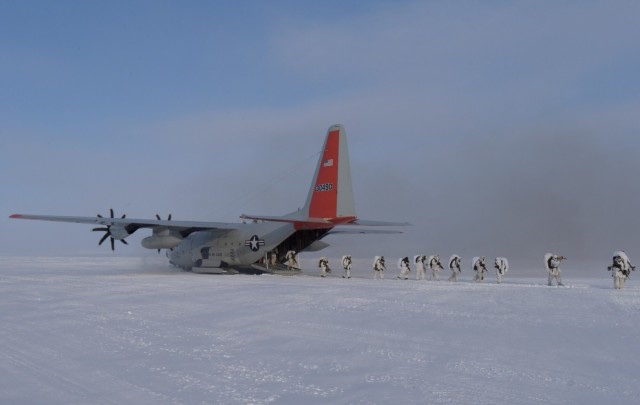
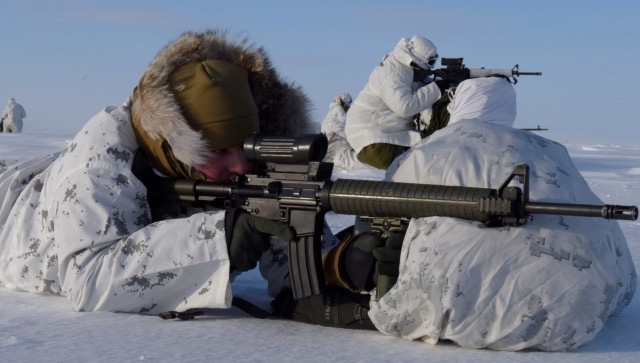
After landing, soldiers disembarked and set a security perimeter 100 meters from the landing zone. Dressed in overwhite camouflage, soldiers established their security positions. Soldiers were equipped with individual weapons, machine guns and everything they needed to sustain themselves for up to three days in the Arctic.
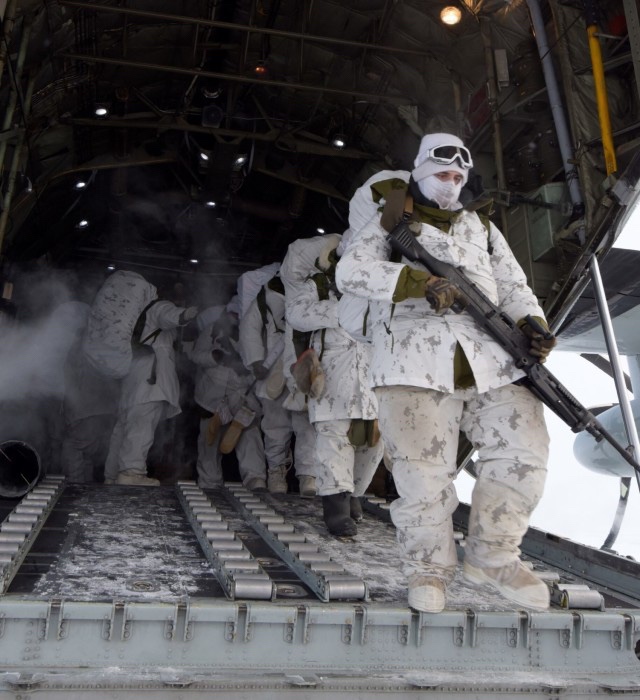
“This is only the beginning,” said Canadian Army Lt. Col. Andre Morin, land component commander for Guerrier Nordique. “The partnership between the Canadians and Americans is invaluable. I would like to see this exercise grow from here and make it bigger and better. We have now confirmed that we have the ability to deliver Soldiers in a very difficult environment. Eventually, in the future, I hope to have a Canadian battalion and a company from the United States.”
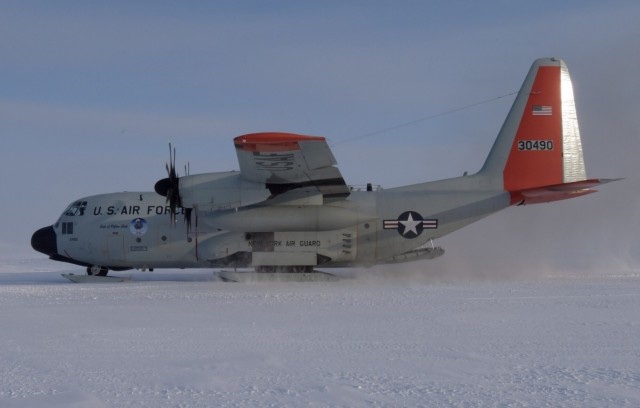
Guerrier Nordique is a cold-weather training exercise for the Canadian Army that takes place in a different location each year. Resolute Bay is one of the few places that is located above the 60th parallel or the Arctic Circle. The Vermont National Guard has participated each year since 2012 and hopes to continue well into the future.
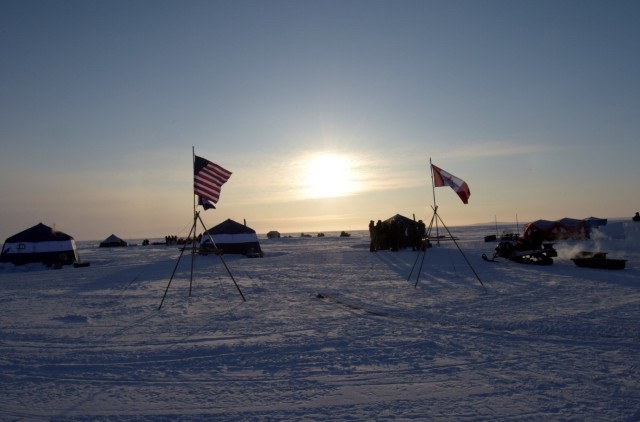
“This is my sixth time participating in Guerrier Nordique and it’s gotten bigger and better each year,” said U.S. Army Maj. Matt Hefner, officer-in-charge for the U.S. Soldiers during Guerrier Nordique. “This year the 105th and 109th Airlift Wings took part in the exercise and we certainly hope they continue in this multi-national and now joint training. The sky is truly the limit.”
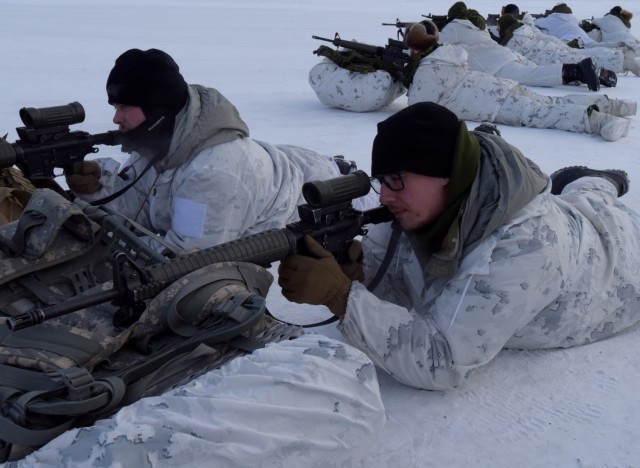
Most of the U.S. Soldiers delivered came from the National Guard; Vermont, Connecticut, New Hampshire and Utah were all represented. The 11th Airborne Division out of Fairbanks, Alaska, also sent two Soldiers. Canadian Soldiers taking part in the exercise are also mostly reservists from the 35th Canadian Brigade Group based in Eastern Quebec. Canada also sent Soldiers from the 34th Canadian Brigade Group, 4th Health Services Group and from the Canadian Rangers. In total, 235 soldiers and airmen participated in Guerrier Nordique.
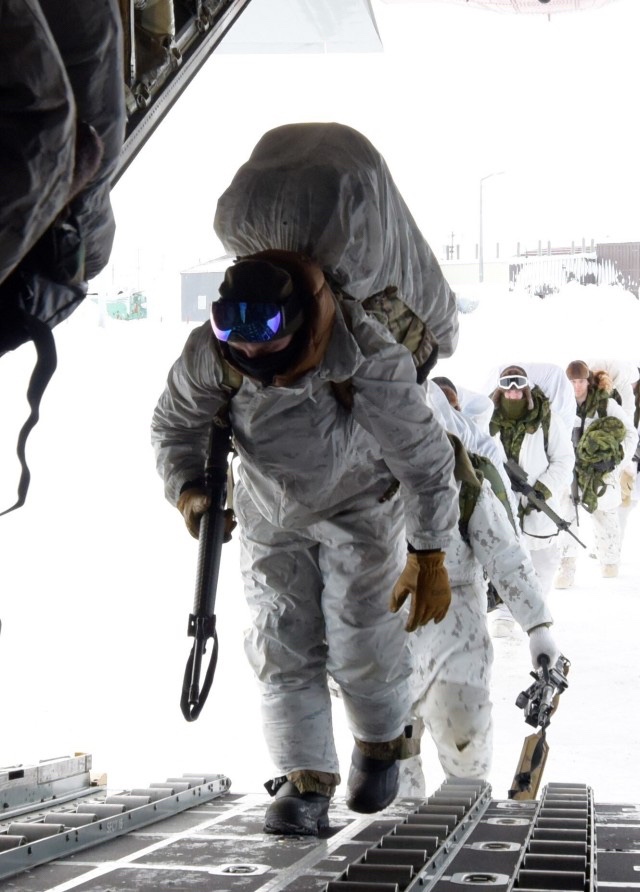
“Almost every single soldier and airman here are from the National Guard or a reservist in the Canadian Army,” said Hefner. “Organizing and executing this task has been a challenge, but seeing the Air National Guard, Army National Guard and Canadian Army Reserve work together to execute this exercise has been an awesome experience. The Hercules landing and those Soldiers coming out in close to 50 below was awesome.”
By CPT Mikel Arcovitch
ATLANTA –
U.S. Army Reserve Sgt. Maria Henderson, assigned to the 300th Mobile Public Affairs Detachment, recognized as the valedictorian and earned the “top shot” title in her Atlanta police academy class during an Atlanta Police Department private swearing-in ceremony on the Atlanta Metropolitan State College campus.
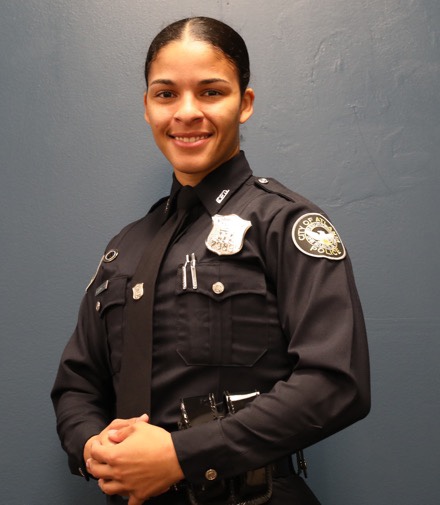
Henderson, the first female recruit in APD history to earn both titles for best performance, hopes to be an inspiration for other recruits, particularly women, and encourages others to consider a life of service.
“I wanted to become a police officer to help people,” Henderson said. “When I would see police officers in my community, I could always see myself doing that job. I knew it would be something that would really fulfill me, give me purpose… to go out and help the community and touch lives every day.”
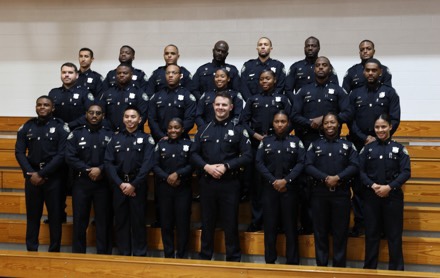
She, along with 20 of her peers from Atlanta Police Academy Class 276, were issued their badges following the ceremony and will now begin six weeks of field training working alongside experienced partners in the force, and a formal graduation ceremony will be held in the spring.
Henderson, who has served in the U.S. Army Reserve for eight years, is no stranger to rigorous training. She credits her success at the academy in large part to her military experience and the discipline she learned from being a Soldier.
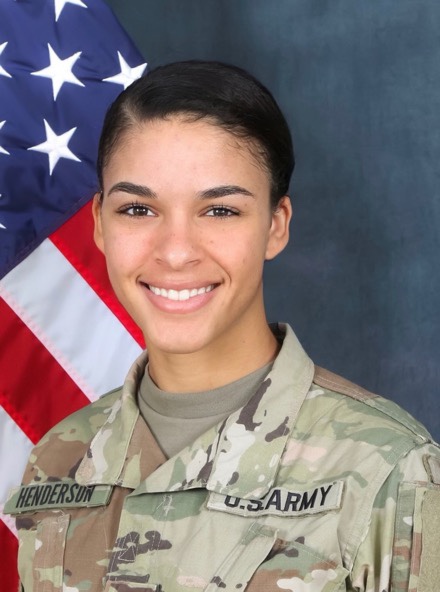
“I’m incredibly honored,” said Henderson. “I’ve always wanted to serve, and this is incredibly fulfilling for me.”
She added that she is proud to now serve both her local community and her country.
The Atlanta Police Academy program tests recruits both mentally and physically during 900 classroom hours and 12 weeks of fieldwork prior to graduation.
City of Atlanta Police Department Recruit Unit Supervisor Sgt. Courtney Murphy praised Henderson’s talent and work ethic.
“She is determined, she always wants to achieve and be the best at everything,” said Murphy. “She is very nice; she is very kind– and she is a leader among the recruits in her class.”
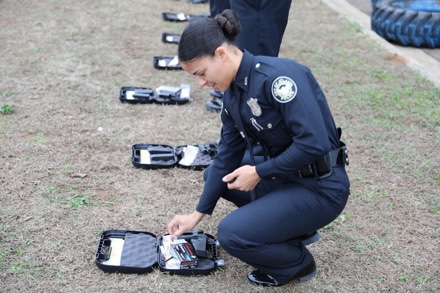
Murphy said Henderson’s military training paid off at the academy.
“It’s definitely a good foundation to have when you are coming into a paramilitary environment like the police academy,” Murphy said. “It gave her an outlook a lot of other recruits didn’t have. She understood our structure, our ranking… and she understood what we needed her to do often before we told her.”
“She is a really hard worker. She stays late, she comes early… she keeps everybody together,” Murphy added. “She is amazing.”
Murphy, a female officer herself, said being a woman on the force would be a challenging but a worthwhile opportunity.
“You always feel like you have to prove yourself more, you have to show that you can do the job,” said Murphy. “I have no doubt Henderson will move up.
“I am very confident in her abilities,” Murphy added. “I hope that she always remembers her foundations— and the women that came before her.”
Henderson will soon be out in the community serving as what she called part of a “new generation of police officers.”
“Now that I am a sworn police officer I would like to go out in my community and help change people’s perspectives,” explained Henderson. “We are people, too, and we really do want to be the change we want to see out there. That is what I want to put out into the world.”
-By SSG Elizabeth Bryson 300th Mobile Public Affairs Detachment
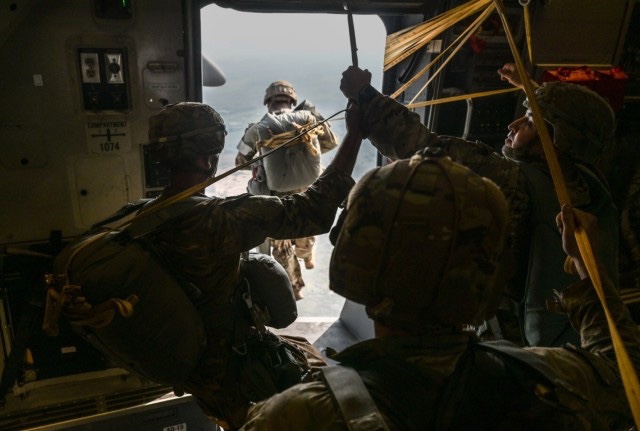
PATTAYA, Thailand — The U.S. Air Force’s 15th Wing successfully supported a personnel drop operation while in an eight-ship formation on Mar. 3, 2023, during one of the largest multilateral theater security operation exercises in the Indo-Pacific.
Operation planning took place on Diego Garcia, British Indian Ocean Territory, from Feb. 27 to Mar. 2, 2023, before dropping over a combined 600 U.S. Army 82nd Airborne Division and Royal Thai Army soldiers over the Kingdom of Thailand as part of Exercise Cobra Gold 2023.
U.S. Army Col. Todd Burroughs, commander, 2nd Brigade Combat Team, 82nd Airborne Division, mentioned that nearly 150 Thai soldiers were integrated to jump alongside the U.S. army.
“They are very proficient and they are ready to roll as part of Task Force Falcon,” said Burroughs.
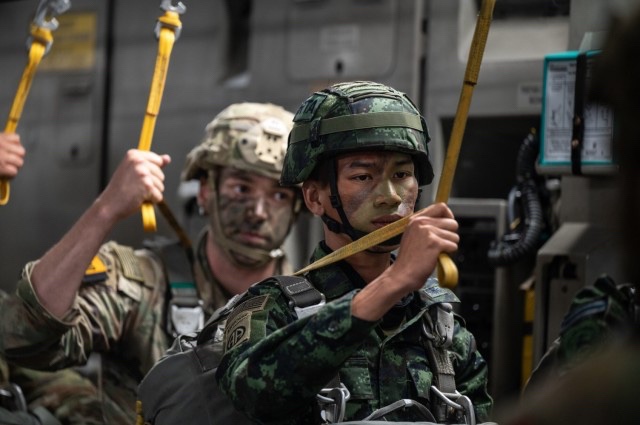
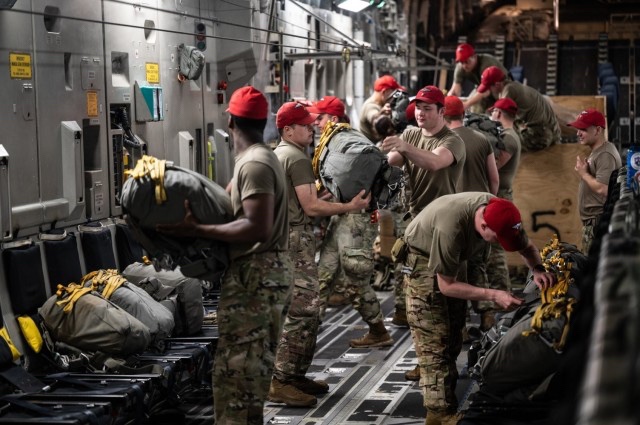
To support the 82nd Airborne Division, aircrew assigned to the 535th Airlift Squadron and the 204th Airlift Squadron coordinated flight and personnel drop plans for the aerial operation, creating the majority of products needed for the event within two days.
“For an operation of this size, the planning timeline is typically nine months long,” said U.S. Air Force Maj. Mike Hank, 204th Airlift Squadron chief of tactics. “The Air Force planning team, in conjunction with the Air Mobility Division, accomplished this in 20 days.”
Of the eight C-17s that arrived on Diego Garcia, three were assigned to Joint Base Pearl Harbor-Hickam, Hawaii; two to Joint Base Charleston, South Carolina; and three to Joint Base Elmendorf-Richardson, Alaska.
“We’ve amassed seasoned pilots and loadmasters across all of our jets, and we have a robust maintenance team with participation from both the active duty, guard, U.S. Pacific Air Forces, Air Mobility Command, and integrated support from the Joint Communications Support Element and the AMD,” said Hank.
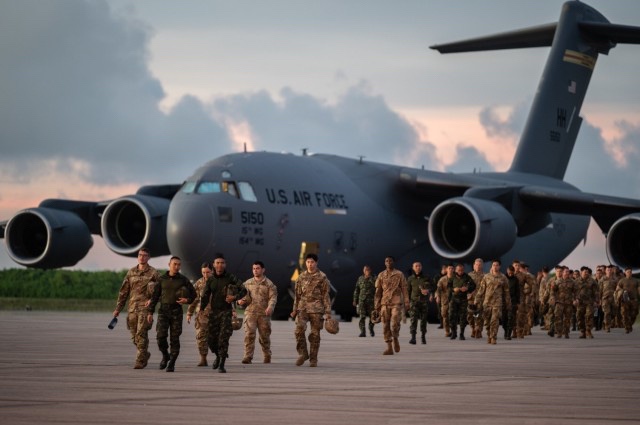
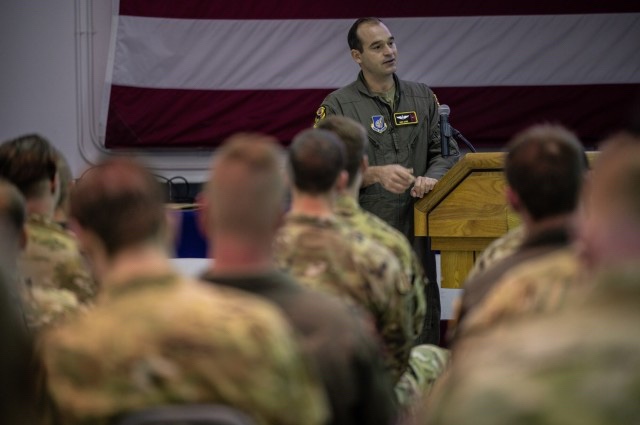
A joint mission brief was held the morning before the operation, highlighting important information needed for all participating parties, including weather conditions, aircraft rosters and drop zones.
“It’s in our DNA as air droppers — from joint forcible entry operations into Iraq in 2003 to the annual swift response exercises on our eastern flank — delivering the 82nd Airborne Division’s global response force concept is our bread and butter,” said Hank. “This time we get to conduct with the 82nd Airborne Division and our allies, the Royal Thai Army, always delivering our promise of anywhere, anytime and on time.”
Cobra Gold, now in its 42nd year, is a Thai-U.S. co-sponsored training event that builds on the long-standing friendship between the two allied nations and brings together a robust multinational force to promote regional peace and security in support of a free and open Indo-Pacific.
By SSgt Alan Ricker, U.S. Air Force
According to the Airborne and Ranger Training Brigade:
Effectively immediately, Ranger School graduates will no longer receive hard copy Ranger Tab orders. The Soldier’s ATRRS output will reflect G-GRADUATE, SUCCESSFULLY COMPLETED CLASS for the course. The completion of the course in ATRRS will then feed IPPS-A, updating the Soldier’s SQI (Special Qualification Identifier) in the career management skills section.
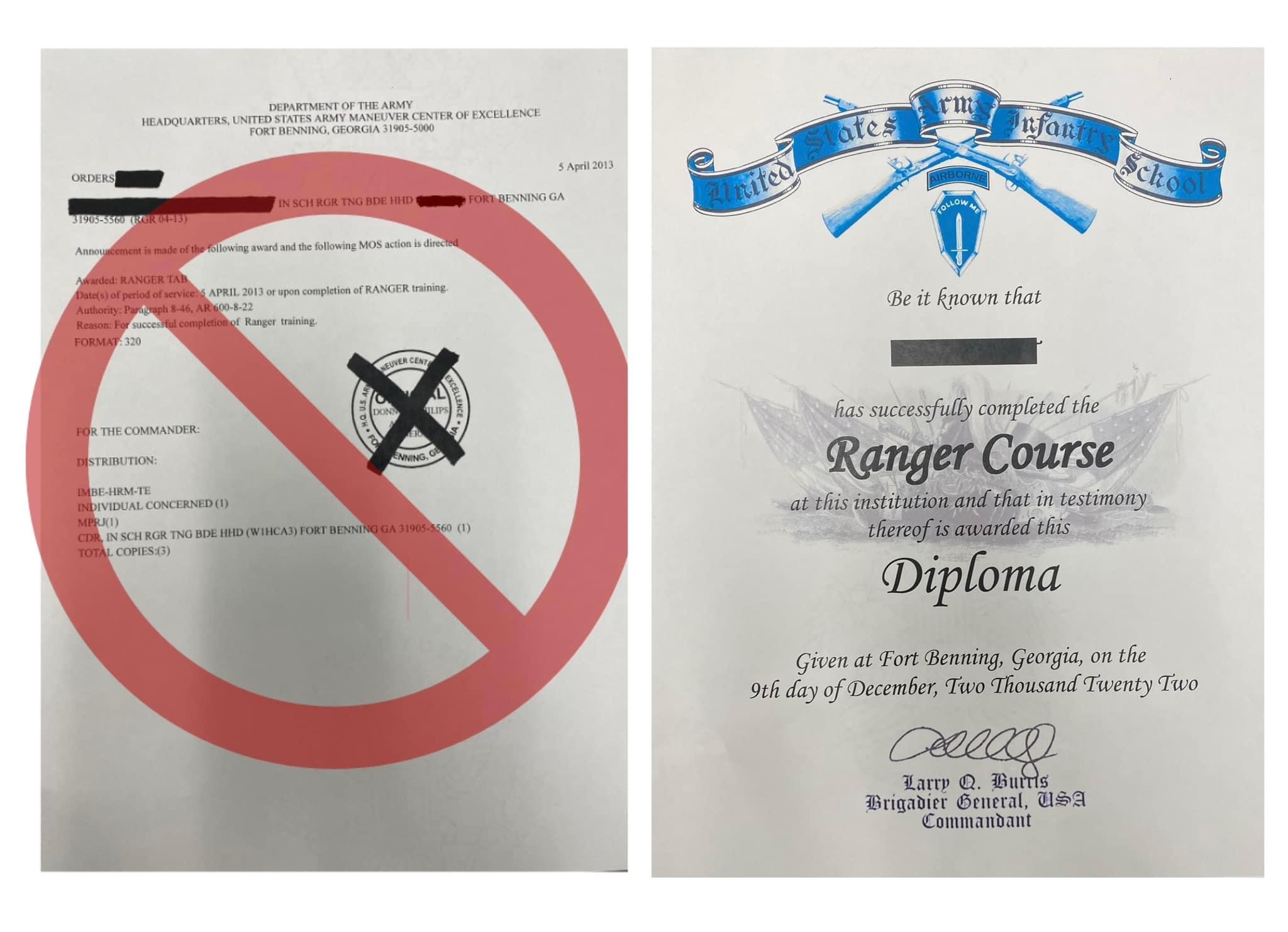
All graduates will still receive a Ranger Course diploma on graduation day.
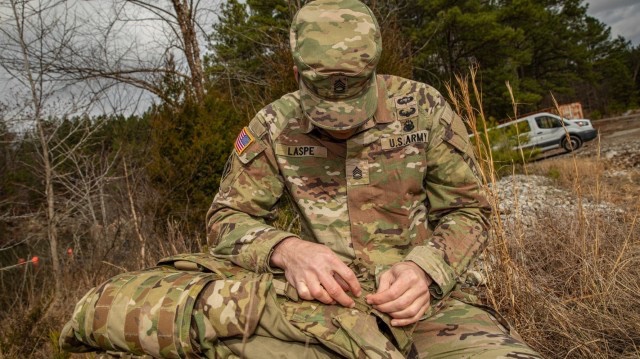
FORT PICKETT, Va. — While accomplishing the mission is among the top priorities in the U.S. Army, the importance of keeping Soldiers safe in the midst of dangerous situations cannot be understated.
According to research published in a 2007 peer-reviewed journal article in the Society of Federal Health Professional’s Military Medicine Journal, between 2003 and 2005, 3% of the Department of the Navy and Department of the Army causes of death during Operations Iraqi Freedom and Enduring Freedom were drowning.
U.S. Army Sgt. 1st Class Brandon Laspe, first sergeant of the 511th Engineer Dive Detachment, discovered a potential cause and solution to prevent some of these casualties.
Laspe was invited by U.S. Training and Doctrine Command to help photograph an Army Combat Water Survival Test at Joint Base Langley-Eustis, Virginia. During the test, two of the three Improved Outer Tactical Vests, or IOTV, used failed to properly quick-release, keeping the weight on the Soldier.
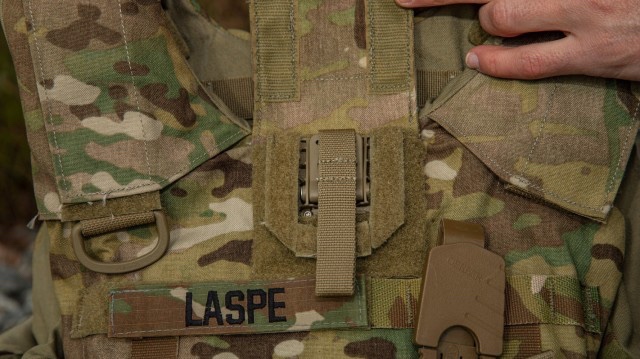
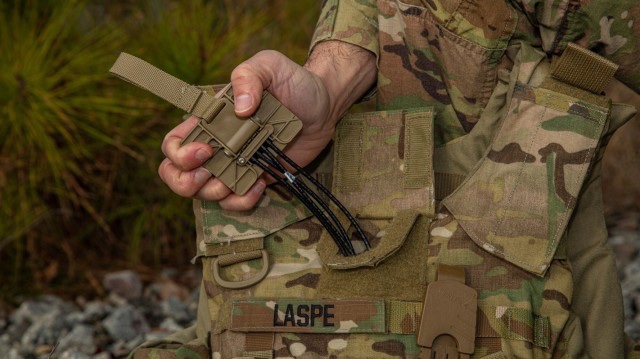
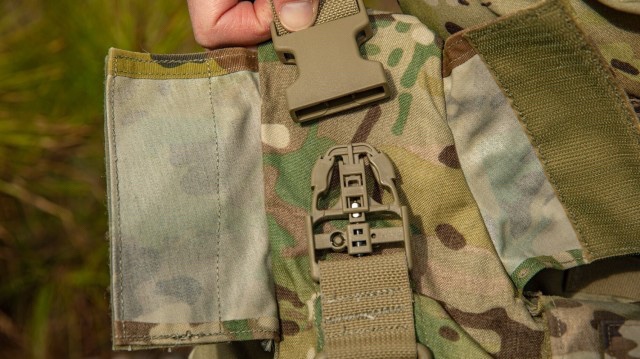
Normally, when the quick release tab is pulled, the four cables linked to the buckles disconnect, allowing the IOTV to fall apart in two pieces. When submerged in water, the hook and loop fastener may lose grip and the cables never release. Upon this discovery, Laspe realized this could contribute to the problem of Soldiers drowning. His team went to work expeditiously to fix the problem.
Through some trial and error, they discovered the most basic solution was proper training and use of the quick release. If the Soldier pulls the tab all the way down instead of away from the body, the quick release functions perfectly, even under the water.
“The problem is that when Soldiers are submerged under the water and are in a panic, pulling the tab away is the most natural motion,” explained Laspe. “We’re not setting the Soldiers up for success if the equipment is not robust, simple and they are not properly trained to use it.”
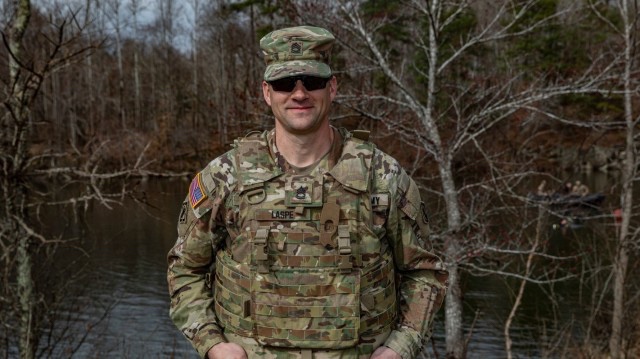
The first solution they were able to engineer was applying two safety pins to the sides of the quick release. This keeps the hook and loop fastener in place, preventing mechanism slippage, and allowing the tension needed to unhook the cables internally in the IOTV.
The ultimate solution, Laspe suggested, is to redesign the IOTV so there is sewn stitching along the seam of the fastener. Laspe, in conjunction with the XVIII Airborne Corps Dragon Innovation team is working with Program Executive Officer product managers and engineers through the Soldier Enhancement Program to initiate a change in the IOTV Gen IV quick release mechanism. The PEOs have piqued interest with this new innovation, meeting with Laspe March 2 to discuss the next steps.
When Soldiers identify shortcomings, it is the creative minds within the ranks that can find the solutions and develop innovative ways to push the U.S. Army forward. With a simple change to the IOTV, Sergeant 1st. Class Brandon Laspe discovered a simple way to keep our Soldiers safer on the battlefield.
By SGT Jameson Harris
The Army is continuing its rigorous testing and evaluation of small arms systems to meet their requirements and deliver increased lethality to the Soldier. Last April, the Army awarded a contract to Sig Sauer to produce the NGSW Rifle, Automatic Rifle and a 6.8mm family of ammunition to replace the M4A1 Carbine, M249 Squad Automatic Weapon and 5.56mm family of ammunition within the Close Combat Force. Since that time, PEO Soldier, JPEO Armaments & Ammunition, Product Manager (PdM) Next Generation Weapons, PdM Small Caliber Ammunition, Soldier Lethality – Cross Functional Team, Sig Sauer, and the collective Army enterprise have worked feverishly to get this new capability ready to field to the Army.
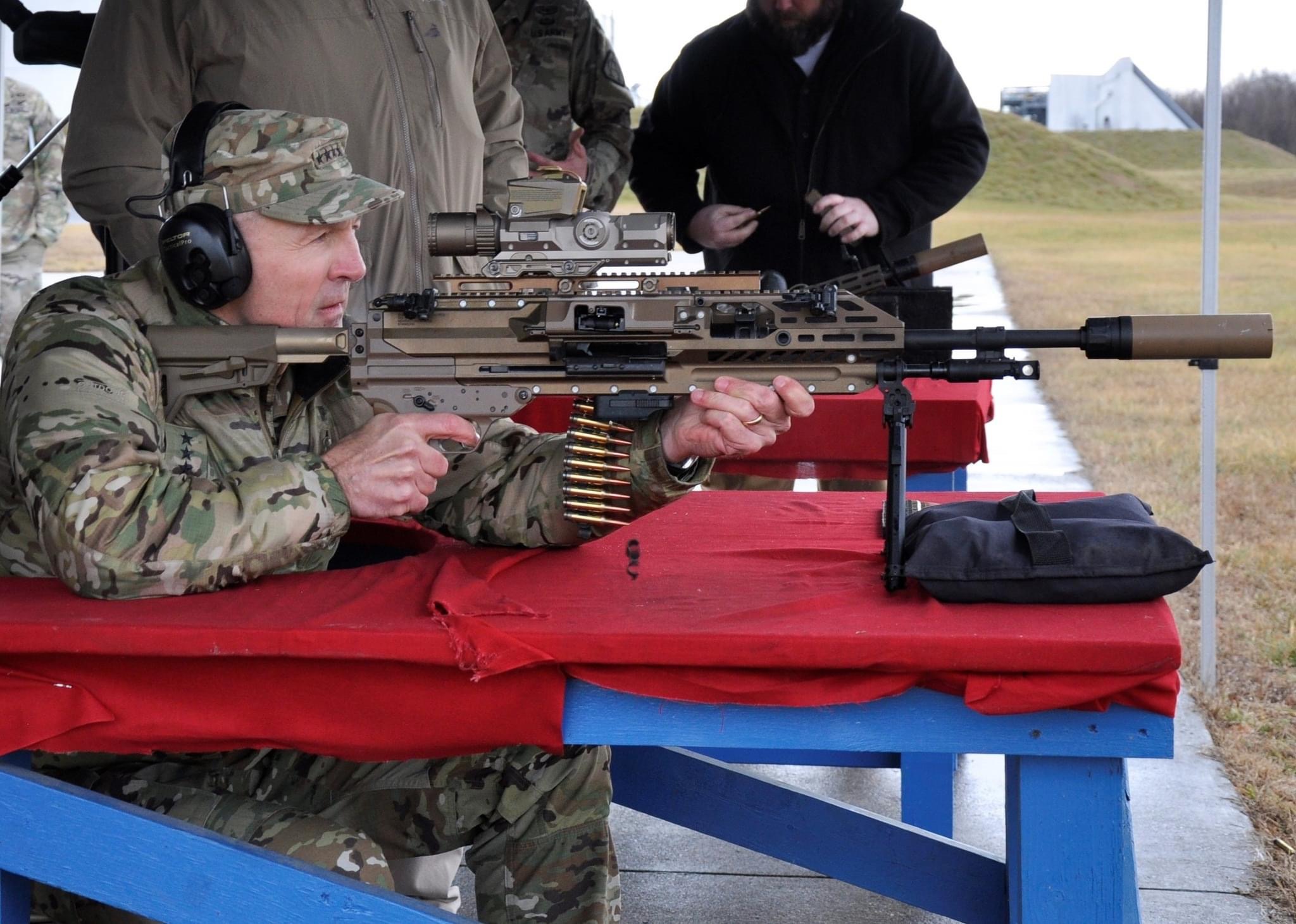
During the competition to award the contract, the team conducted over 100 technical tests, fired over 1.5 million rounds of 6.8mm ammunition and executed over 20,000 hours of Soldier testing across three different vendor weapon systems. The team continued this pace by conducting a Soldier Touch Point last fall with a squad of National Guard Soldiers and a squad from the 75th Ranger Regiment.
“The Soldier Touch Point allowed the program and Sig Sauer the opportunity to solicit direct Soldier feedback on the systems post-contract award and inform simple design changes to improve the weapons before going into Production Qualification Test and Operational Tests in the coming year,” said Capt. Tyler Morgan Assistant Product Manager, NGSW
A Soldier with the 75th Ranger Regiment said on the XM7, “Absolutely would take this weapon to combat in a heartbeat. It is light, functions very well, has an awesome load system, and is easy to handle and engage targets with.”
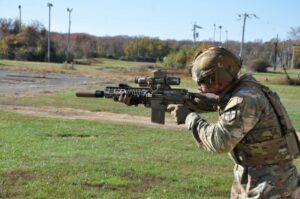
The next step in the NGSW program will be Production Qualification Testing (PQT), May-July 2023. PM Soldier Lethality is preparing to accept delivery of two dozen XM7 Rifles and XM250 Automatic Rifles in preparation for testing. Once these deliveries are received, the Aberdeen Test Center (ATC) will conduct 31 tests including weapons reliability, immersion, cook-off, flash and blank fire performance. The ATC will also test environmental conditions like extreme hot and cold, sand, dust, salt fog and mud.
Following PQT, the Army will conduct an operational test focused on setting the conditions for the First Unit Equipped scheduled in the second quarter of FY24. Future operational testing is planned for FY24 to assess natural environments and airborne qualifications.
-PEO Soldier, Public Affairs
Over the past year, the Army tested, evaluated and refined the Integrated Visual Augmentation System’s (IVAS) capabilities in a manner that will result in improved systems being incrementally fielded to Soldiers over the next several years – IVAS 1.0, IVAS 1.1 and IVAS 1.2 variants.
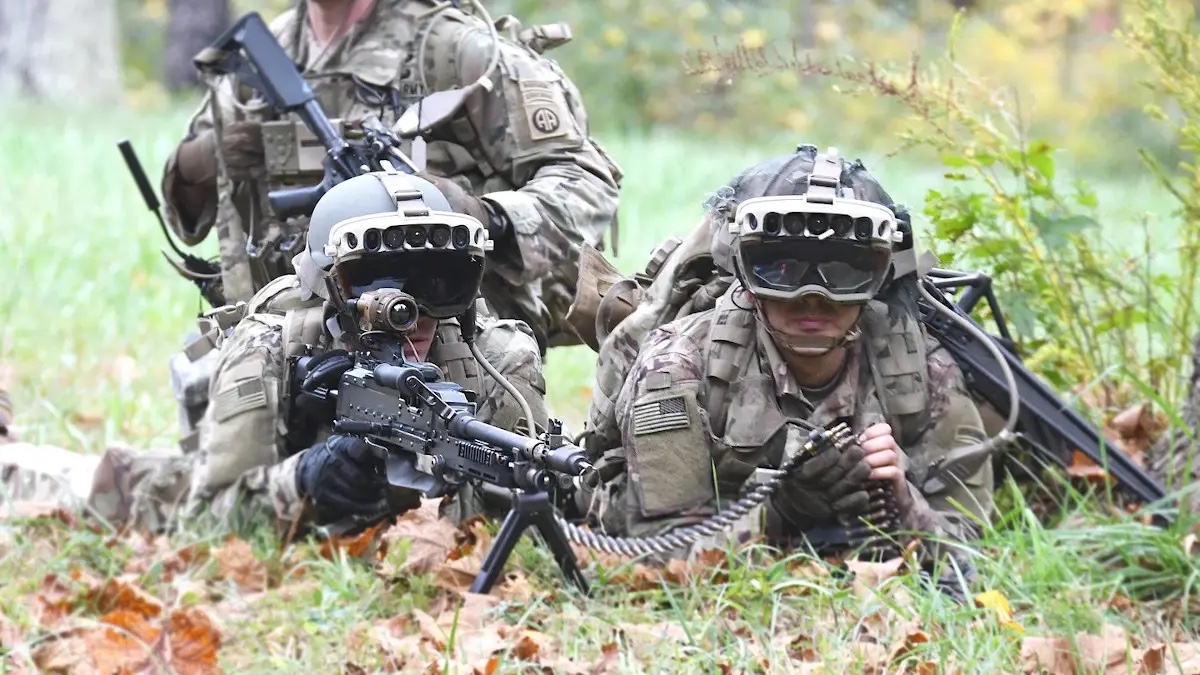
Last June, IVAS completed its Operational Test, during which Soldiers trained on IVAS 1.0 systems in company-level missions and live-fire exercises. The Army determined that IVAS demonstrated several transformational capabilities, but three areas prevented the systems from achieving Soldier acceptance: reliability, low-light sensor performance and form factor.
The Army and its industry partner, Microsoft, used the lessons learned from testing to address concerns and adjust its fielding plan. To specifically address reliability, in November 2022 Microsoft and the Army incorporated a new software release into IVAS 1.0 resulting in a more stable and reliable user experience. Software improvement is a continuous effort that will transcend all current and future versions of IVAS.
IVAS 1.0 systems will be fielded to training and doctrine units next year to support the Army’s Campaign of Learning, an ongoing process that gathers and incorporates user feedback from user studies, user assessments, Soldier Touch Points and operational demonstrations to improve IVAS’ performance.
IVAS 1.1 upgrades reliability and features an improved low-light sensor that performs comparable to the PVS-14 night vision goggles. These systems will be delivered and fielded in Fiscal Year (FY) 2024.
The Army awarded an IVAS 1.2 technology insertion effort to Microsoft in December 2022, with the anticipation of moving to production in late FY2024 and fielding to operational units beginning as early as 4Q FY2025. The majority of the close combat force will receive IVAS 1.2; this version features an improved form factor in addition to reliability and low-light sensor upgrades, as well as a lower profile heads-up display (HUD) with distributed counterweight for improved user interface and comfort.
In recent exercises the Army has shown a number of different ways IVAS can be used on the battlefield, ranging from ingesting video and data from small Unmanned Aerial Systems to integrating with ground and air platform sensors to provide Soldiers the ability to see what the platform drivers, commanders and pilots see before dismounting into a hazardous situation.
The Army remains fully committed to IVAS. Despite some revisions to the fielding timeline, the developmental process for IVAS will result in fielding several years ahead of standard acquisition programs.
By PEO Soldier PAO