SIG SAUER - Never Settle

Archive for the ‘Army’ Category

Spartan Paratroopers Harness Biometric Technology


Wednesday, March 3rd, 2021

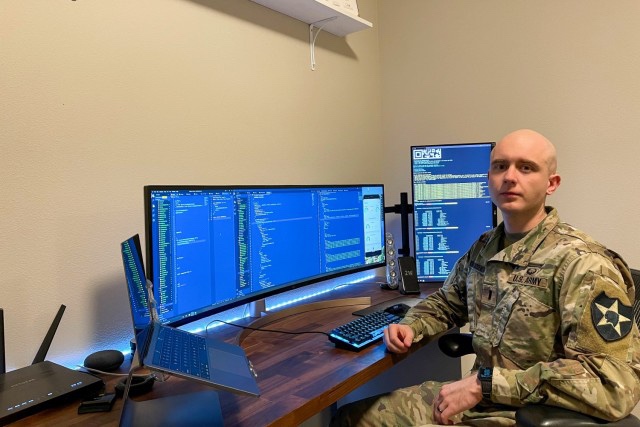
JOINT BASE ELMENDORF-RICHARDSON, Alaska – Paratroopers of the 4th Infantry Brigade Combat Team (Airborne), 25th Infantry Division, “Spartan Brigade,” began a six month-long study on Joint Base Elmendorf-Richardson, Alaska, using wearable technology to study the resiliency of soldiers operating in an Arctic environment, Jan. 11, 2020.


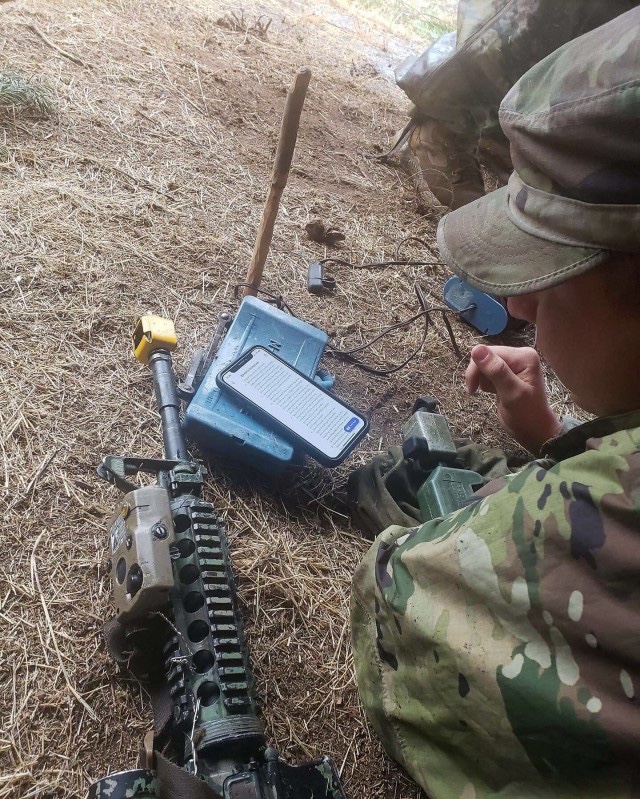
The Spartan Brigade contracted with wearable technology company WHOOP and scientists from the University of Queensland to conduct a 6-month study of nearly 1,000 paratroopers. Paratroopers use the real-time data provided by the WHOOP straps and accompanying mobile phone application to measure their daily strain and recovery rates while training in extreme Arctic winter conditions.

“The rigors of Arctic airborne operations take a toll on the human body,” said Col. Chris Landers, the Spartan Brigade commander. “How do we maximize a paratrooper’s effectiveness on the battlefield while dealing with extreme cold and lack of sunlight?”

As the only airborne infantry brigade combat team in the Arctic theater, the Spartan Brigade paratroopers conduct airborne operations in sub-freezing temperatures, during high winds, and with minimal hours of sunlight.

“We’re called on by our nation to respond with little notice to contingencies around the globe,” said Landers. “We don’t choose the time or the place, but we can choose how well we perform when we get there.”

Using adjustable wrist straps, the study captures biometric data on each volunteer participant throughout the workday and while they’re sleeping, providing an analysis of their exertion, heart rate behavior, and sleep quality, all of which is used to determine overall strain and recovery.

Unlike blind studies, the paratroopers participating in this study will each have immediate access to their own data through the accompanying mobile application, and can make decisions using this feedback to improve their personal performance.

“We are empowering our paratroopers to better understand themselves,” said Command Sgt. Maj. Alex Kupratty, the Spartan Brigade command sergeant major. “This study is all about putting the power of technology and data directly into their hands, so they can truly harness their own potential.”

Paratroopers will also be provided educational blocks to teach them techniques to maximize their recovery. Partway through the study, a section of participants will be asked to concentrate on three habits: creating a cold, dark space for sleeping; not eating after 7pm, and sticking to a rigid sleep time schedule.

“The goal of the study is twofold,” said Chief Warrant Officer 4 Phillip Ranck, study project leader for the Spartan Brigade. “First, that soldiers gain a better understanding of themselves. Second, that soldiers understand that their leaders are taking an aggressive approach to understanding the impacts of training and the Arctic environment’s impact on their mental and physical health.”

Participants can also sign up for social groups, adding a competitive incentive within their peer groups as they compare their strain and recovery numbers every day.

“The goal is to give our paratroopers the data and education to shape the conversations among their peers about their daily fitness and health,” said Kupratty. “Not only do they better understand their own bodies, but they’re building lifelong, healthy habits along the way.”

All leaders from the squad level and up will have access to their paratroopers’ data, so they can adjust training and operational plans to maximize the health and potential of their teams.

“Imagine as a squad leader that you have a paratrooper that has had an abnormally low recovery for several days,” said Kupratty. “Maybe your platoon has been in the field for weeks, or the paratrooper just returned from an Army school. Now you have the data to better help them recover, or to adjust your training to match the team’s needs.”

According to some researchers, fluctuations in someone’s recovery rate may indicate a buildup of social or personal stressors that can lead to decreased motivation or resiliency, or the development of an illness like influenza or COVID-19.

“This is all about better understanding what a soldier needs to be the best version of themselves as fast as possible,” said Kupratty.

The study is organized by the brigade’s digital technology innovation cell, SPARwerx. The SPARwerx initiative crowdsources innovators from across the brigade to develop internal technologies, systems, and concepts to maximize the welfare, safety and efficiency of Spartan paratroopers.

By MAJ Jason Welch

Army Partners with Air Force’s THOR for Base Defense

Saturday, February 27th, 2021

KIRTLAND AIR FORCE BASE, N.M. (AFNS) —

In an effort to counter the increasing threat posed by enemy drones and other airborne threats, the U.S. Army is making an investment in directed energy prototype technology, with the Tactical High Power Operational Responder, or THOR, system, developed at the Air Force Research Laboratory’s Directed Energy Directorate at Kirtland Air Force Base, playing a key role.

THOR is a prototype directed energy weapon used to disable the electronics in drones, and specifically engineered to counter multiple targets – such as a drone swarm – with rapid results. The technology is housed in a 20-foot-long shipping container that can be stowed in a military cargo plane and assembled by just two people.

Army Lt. Gen. L. Neil Thurgood, the director for Hypersonics, Directed Energy Space and Rapid Acquisition, who oversees the Army Rapid Capabilities and Critical Technologies Office, paid a visit to Kirtland AFB Feb. 11 to watch THOR in action and to meet with its developers.

“The Army’s directed energy capabilities will need to provide a layered defense with multiple ways to defeat incoming threats,” Thurgood said. “High energy lasers kill one target at a time, and high powered microwaves can kill groups or swarms, which is why we are pursuing a combination of both technologies for our Indirect Fire Protection Capability rapid prototyping effort. Our partnership with the Air Force Research Laboratory gave the Army a running start on the high power microwave mission, and we look forward to continuing to advance these capabilities to protect our warfighters.”

Drones represent an emerging threat to U.S. military bases, personnel and infrastructure. Prior to THOR’s deployment overseas, the prototype is undergoing a series of risk reduction and system characterization efforts at Kirtland AFB, as well as hands-on Soldier touchpoints that solicit input from operational users.

“THOR, and other DE systems, provide non-kinetic defeat of multiple targets at once,” Thurgood said, after watching a system demonstration that took place in a remote canyon of the 52,000-acre base. “Keeping our Soldiers safe is our number one priority, and we need to employ effective defensive weapons systems to stay ahead of the changing threats presented by our adversaries.”

The AFRL THOR program took on the challenge to design, build and test an effective counter-UAS system that could engage many targets at once, and at long distances. High power microwaves are one solution to this challenge.

“The system output is powerful radio wave bursts, which offer a greater engagement range than bullets or nets, and its effects are silent and instantaneous,” said Amber Anderson, THOR program manager.

During and after THOR deployment, the RCCTO will continue to partner with the Air Force on the THOR program in support of the U.S. Army’s effort to provide a prototype Indirect Fire Protection Capability-High Power Microwave system to a platoon by fiscal year 2024.

Additionally, the Army will deliver a prototype IFPC-High Energy Laser capability in FY24 that uses a 300 kilowatt-class laser for fixed site defense.

Courtesy Air Force Research Laboratory

Soldiers Use Biometrics to Vet Drivers Sustaining Syrian Logistics Ops

Thursday, February 25th, 2021

ERBIL AIR BASE, IRAQ – Military intelligence Soldiers assigned to the Syrian Logistics Cell at Erbil leverage biometric technology to screen drivers for a long haul to outposts in the area of operations.

“Biometrics screenings are important because they not only keep the drivers safe as they enter Syria, but they also help protect military convoys as they complete the Syrian haul line,” said Chief Warrant Officer David Lente, the officer in charge of the SLC’s military intelligence team, or S2. “It’s a way to filter out any drivers who have nefarious goals.”

The Syrian Logistic Cell operates out of Erbil Air Base in the northern section of Iraq, where the Soldiers equip and sustain the warfighters in the AO.

The principle biometrics tool includes scans of the iris and fingerprints and taking the driver’s photo, said Lente. If there is a hit on the driver’s record, then the Soldier performs additional follow-up.

“This is utilized when a deeper dive in the driver’s history of activity is required. It is a more thorough scrub of the driver for any criminal activity,” he said. It has more in-depth information on the drivers and allows the military or civilians checking a driver into a secure installation to view any previous notes left on their file.

Drivers are vetted often and their photos and personal information must be updated regularly. “The biggest task we are working through now is updating all the records of the drivers for 2021 since there are hundreds of drivers who could potentially be used each cycle,” said Lente.

According to Spc. Nicholas Filak, an SLC intelligence specialist, the biometrics program is supplemented with driver interviews used to collect atmospherics concerning the area of operation. “Road conditions, possible hazards, traffic delays, enemy threats, any kind of disruptions along the route could cause the GLOC [ground lines of communication] to be halted or delayed,” Filak said.

Chief Warrant Officer Mark Tegtmeyer, the officer in charge of the SLC Mobility Team, said the drivers are part of a rigorous logistics planning cycle allowing continuity among all key personnel, including the truck drivers.

The SLC team also works closely with other strategic partners on EAB to further gather information, Lente said. This ensures that cross communication is occurring with all agencies involved.

By CPT Elizabeth Rogers

Newest Handheld Leader Radios Get Tested by Elite Army Airborne Forces

Wednesday, February 24th, 2021

FORT BRAGG, North Carolina – Airborne Soldiers with 1st Battalion, 504th Parachute Infantry Regiment (PIR), 82nd Airborne Division, completed almost two weeks testing the Army’s newest small leader radio (LR) packages.

“Soldiers of the 82nd Airborne Division demonstrated tactical communications at its finest during the initial operational test,” said Maj. Brian Ramirez, Leader Radio (LR) Test Officer with the Fort Hood-based U.S. Army Operational Test Command’s Mission Command Test Directorate (MCTD).

The Handheld, Manpack and Small (HMS) Form Fit/Tactical Radio variants are two-channel handhelds, used at the company and platoon levels by squad and team leaders to talk to each other and to aircraft to improve battlefield situational awareness.

Ramirez said the LR system is designed as an interoperable family of advanced software-reprogrammable, dual-channel, net-centric reliable communications radio sets.

The Generation 2 Manpack (MP) Radio is a two-channel, software defined, multi-waveform, General Purpose User (GPU) radio designed to support mounted and dismounted operations.

Explaining the two systems in non-technical, every-day terms, Ramirez said, “This initial operational test of radio capabilities gave the Army the opportunity to demonstrate the current and future of tactical communications.”

The HMS MP will be fielded primarily to Brigade Combat Team (BCT) Battalions, Companies, and Platoons.

The GEN2 MP is deployed in three configurations: a Tactical Operations Center (TOC) kit for command posts; mounted configurations integrated into the Army’s tactical and combat platforms; and a rucksack-held configuration to support Army dismounted operations.

Ramirez said operational testing of the radios are no different than an improved tank or new weapon system.

“These radio systems are subjected to weather, terrain, and the daily regimen of Light Infantrymen in an effort to replicate the actual operational environment to which they will be subjected if selected,” said Ramirez.

“Operational testing helps determine the effectiveness, suitability and survivability of operational systems Soldiers can use that works.”

The test, like many other previously routine operations, adjusted its daily operations to cope with the ongoing COVID-19 pandemic.

“Soldiers from the test unit and test team begin with daily COVID-19 screening and temperature checks;” Ramirez said. “This allowed the test team to identify and contain any possible transmission between specific bubbles.”

Once cleared into their specific environments, all attempts were made to maintain social distancing, between operations and test support functions, reducing interaction between test support personnel and test unit Soldiers.

“Operational Testing is about assisting the Army in providing modern software-defined radios with the latest technology for Soldiers,” said Col. Patrick Curry, director of MCTD.

“It is about making sure that the communication systems developed assist the Soldier in their mission and ensuring Soldiers are effective against all enemies in any operational environment.”

By Mr. Rick Michael, Mission Command Test Directorate, U.S. Army Operational Test Command

Associated link

US Army EOD Soldiers Collaborate with Kosovan Demining School

Tuesday, February 23rd, 2021

CAMP BONDSTEEL, Kosovo — The 702nd Explosive Ordnance Disposal Company, assigned to the explosive ordnance team for Regional Command-East, Kosovo Force, traveled to Dakovica to witness the Mine Action Training Kosovo school conduct their range day qualifications.

MAT Kosovo is a humanitarian demining school which trains its student in different levels of EOD certification. The course covers many techniques concerning unexploded ordnance (UXO) identification and removal as well as methods of disposal. MAT Kosovo also works closely with the Kosovo Security Force EOD team to complete training and focus on demining efforts.

“MAT Kosovo is a phenomenal opportunity to take advantage of when it comes to training with the KSF and promoting the humanitarian demining efforts in Kosovo,” said 1st Lt. Taylor Firn, platoon leader with the 702nd. “MAT Kosovo originated here to restore freedom of movement in Kosovo.”

As the KFOR and KSF EOD teams observed, the MAT Kosovo students qualified and demonstrated their abilities by using low-order techniques to dismantle an unexploded ordnance. They used different small explosives to render simulated UXOs ineffective. Low-order methods are designed to slowly burn off high-explosives and prevent a UXO from detonating to its full potential, said Firn.

By the end, the students were qualified in level three EOD operations.

“High-order is when the explosive functions how it’s meant to function,” said Doug York, the general manager for MAT Kosovo. “Low-order is where you’re trying to dispose of the ordnance without it functioning. We use explosives to initiate deflagration within the ordnance to burn all the explosives on the inside.”

Firn has made it a priority for his EOD team to reach out and forge relationships with institutions in Kosovo that play a key role in maintaining peace and stability in the region.

“We appreciate our friendship with American forces,” said York. “It’s important to us to build on it and continue to do cross-training to keep the flow of information between EOD teams active.”

Military EOD teams and civilian organizations like MAT Kosovo routinely enter high-risk situations to remove UXO and dispose of it in a safe manner. Their coordinated efforts help ensure freedom of movement as well as a safe and secure environment for the people of Kosovo.

“It’s always fun to get out and watch explosions,” said Firn, “but my favorite thing was getting face time and furthering that link between the KSF and MAT Kosovo. That’s our real mission here in KFOR.”

Story by Jonathan Perdelwitz

Photos by SGT Jonathan Perdelwitz

Military Overwhites Put to the Test at Tobyhanna Army Depot

Monday, February 22nd, 2021

Tobyhanna Army Depot, PA —

Data collected at Tobyhanna Army Depot will help improve specialty uniforms for U.S. Army Soldiers and Marines.

The depot hosted four government entities in late January in support of an ongoing study to assess the effectiveness of military overwhite uniforms. Also called “snow camouflage,” the attire is designed to conceal soldiers from an array of sensors in different snow environments.

Tobyhanna was selected as a data collection site after analysis by the U.S. Army Corps of Engineers found that the depot’s terrain resembled potential combat environments in the Baltic region of Northern Europe. Other sites included in the study were Camp Dawson in West Virginia and Fort Drum in New York.

The study team was comprised of representatives from the U.S. Army Combat Capabilities Development Command, Naval Surface Warfare Center Dahlgren Division (NSWCDD), Product Manager Soldier Clothing and Individual Equipment (PM-SCIE) and Program Executive Office (PEO) Soldier. Those involved commended Team Tobyhanna’s hospitality.

“Tobyhanna’s support was phenomenal. Everything went right – the weather conditions were perfect and we captured the exact data we needed. The Tobyhanna team went above and beyond,” said Clay Williamson, the future programs officer at PEO Soldier.

The study’s mission was to capture imagery of the uniforms in locales that were similar to areas where future battles may occur. The imagery will then be used in an experiment to determine success of the uniforms’ “signature mitigation properties”. Called a “probability of detection study,” the test is similar to a scientific version of ‘Where’s Waldo?” according to technical lead Jacob Quartuccio, PhD. Hundreds of Soldiers will view the imagery taken at the three locations and indicate if they can “find” the person wearing the overwhite uniform. Results from the study will be used for future product development and procurement.

Depot personnel say they were happy to accommodate such an important mission.

“Team Tobyhanna is ready, willing and able to support Soldier requirements of all kinds. We’re here when the Soldier needs us,” said Edward Kovaleski, an architect in the Installation Services Directorate.

Tobyhanna Army Depot is a recognized leader in providing world-class logistics support for command, control, communications, computers, cyber, intelligence, surveillance and reconnaissance (C5ISR) systems across the Department of Defense. Tobyhanna’s Corporate Philosophy, dedicated work force and electronics expertise ensure the depot is the Joint C5ISR provider of choice for all branches of the Armed Forces and industry partners.

Tobyhanna’s unparalleled capabilities include full-spectrum logistics support for sustainment, overhaul and repair, fabrication and manufacturing, engineering design and development, systems integration, post production software support, technology insertion, modification, foreign military sales and global field support to our joint warfighters.

About 4,000 personnel are employed at Tobyhanna, which is located in the Pocono Mountains of northeastern Pennsylvania. Tobyhanna Army Depot is part of the U.S. Army Communications-Electronics Command. Headquartered at Aberdeen Proving Ground, Maryland, the command’s mission is to empower the Soldier with winning C5ISR capabilities.

By Ms. Danielle E. Weinschenk

Historian Shares 101st Airborne Division Black History Moments

Sunday, February 21st, 2021

FORT CAMPBELL, Ky. – When the 101st Airborne Division needed big guns at the Battle of the Bulge, two corps artillery units of Black Soldiers delivered.

When the Little Rock Nine needed escorts just to attend Central High School in Little Rock, Arkansas, President Dwight D. Eisenhower sent in 101st Abn. Div. Soldiers from Fort Campbell.

And when the odds were stacked against them, two Black Soldiers from the 101st Abn. Div. risked it all to save others.

These were all touchstones in the history of the 101st Abn. Div. (Air Assault), the United States Army and nation’s progress in race relations over the years, said John O’Brien, director of the Brig. Gen. Don F. Pratt Memorial Museum.

As the Army celebrates Black History Month, O’Brien reflected on several moments that tell the story of successful integration over the years.

“The result of the progress that has been made is visible when you look at pictures and listen to the stories of where we are today,” he said. “You look at a picture and you see men and women of all races, creeds and religions involved in the operations in which we have been involved.”

World War II

“In World War II, the Army was racially segregated,” O’Brien said. “There were occasions where those segregated units fought with the 101st. One of those occasions was the very famous defense of the city of Bastogne in the Battle of the Bulge, which occurred December 1944 to January 1945.”

“There were a number of other units that were on the battlefield that came to be encircled with the 101st and fought with the 101st,” he said. “Two of those units were segregated, all Black artillery units.”

He said the 333rd Field Artillery Battalion and 969th Artillery Battalion, made up of Black Soldiers, supplied the big fire power that turned the tide during the siege and repelled the Germans.

The 969th and 333rd were equipped with M1 155mm howitzers, one of the heaviest pieces of artillery at the time. The 101st were a light airborne unit so they had only 75mm and 105mm howitzers.

“Part of the success of the 101st at Bastogne was overwhelming use of artillery and so these two co-corps artillery units that ended up working with the 101st, being part of the 101st and awarded battlefield honors, along with the 101st, are these two African American units,” O’Brien said. “They had the big guns, big artillery pieces. Despite there being a segregated Army, there was not a segregated battlefield.”

Little Rock Nine

On May 17, 1954, the U.S. Supreme Court ruled unanimously in Brown vs. Board of Education of Topeka that racial segregation in public schools violated the Equal Protection Clause of the 14th Amendment to the Constitution and called to desegregate schools nationwide.

“The Supreme Court did not say when segregation was to end, and in Arkansas, Gov. (Orval) Faubus prevented the integration of the Little Rock Central High School,” O’Brien said.

President Dwight Eisenhower, who was the Supreme Allied Commander of the European Theater of Operations in World War II, had relied on the 101st to be the vanguard in the invasion into Europe. As president and faced with national and international criticism of segregation in 1957, he again reached out to the 101st Abn. Div.

Some 600 101st Abn. Div. Soldiers assigned to 1-327th Airborne Battle Group were deployed to protect the nine black students from protestors for about three months, O’Brien said.

“It was a civil disturbance and their mission was to make sure the students got to school and protestors were not allowed to prevent them from getting into the school,” he said.

Vietnam and Medals of Honor

“The 101st deployed to Vietnam from 1965 to 1972 and what’s going on in the United States is the height of the Civil Rights movement of that era,” O’Brien said. “We have a fully integrated Army but race relations in Vietnam were an interesting problem.”

O’Brien said the integrated units were not a problem on the battlefield, but at division base camps and some other areas, “there were manifestations of the racial tensions in the United States. The division was very aggressive in addressing that problem.”

Even in combat, he said, leaders addressed racial issues rather than ignoring the topic.

Two 101st Medal of Honor recipients were Black Soldiers – only Sgt. 1st Class Webster Anderson made it home.

Staff Sergeant Clifford C. Sims was posthumously awarded the Medal of Honor after the squad leader of D Co., 2nd Battalion, 501st Infantry Regiment, led a furious attack against the enemy Feb. 21, 1968.

After moving his Soldiers away from a burning munitions building, it exploded, wounding two Soldiers but his actions saved lives, according to the Medal of Honor citation.

“While continuing through the dense woods, Staff Sgt. Sims and his squad were approaching a bunker when they heard the unmistakable noise of a concealed boobytrap being triggered immediately to their front,” the citation reads. “Staff Sgt. Sims warned his comrades of the danger and unhesitatingly hurled himself upon the device as it exploded, taking the full impact of the blast. In so protecting his fellow Soldiers, he willingly sacrificed his own life.”

The Staff Sgt. Clifford C. Sims Building on Indiana Avenue at Fort Campbell was named in his honor.

Anderson, then a staff sergeant, was awarded the Medal of Honor for his actions while serving as chief of section in A Battery, 2nd Battalion, 320th Field Artillery Regiment.

After being attacked by North Vietnamese infantry Oct. 15, 1967, Anderson directed howitzer fire on the enemy while providing rifle and grenade defensive fire. Two grenades landed at his feet, severely wounding his legs. Despite excruciating pain he continued to fire and encouraged his men to fight.

“Seeing an enemy grenade land within the gun pit near a wounded member of his gun crew, Staff Sgt. Anderson, heedless of his own safety, seized the grenade and attempted to throw it over the parapet to save his men,” according to the Medal of Honor citation. He was grievously wounded again but refused medical evacuation and encouraged his men to defend the position, showing heroism at the risk of his life.

By Stephanie Ingersoll, Fort Campbell Courier

US Army Integrated Visual Augmentation System Mounted Amplifies Capabilities

Friday, February 19th, 2021

“IVAS is more than just a goggle, it’s changing the way we fight.”
– MAJ Kevin Smith, PM IVAS Platform Integration DRI

JOINT BASE LEWIS-MCCORD, WA – The Integrated Visual Augmentation System (IVAS) is being developed to address capability gaps in the dismounted close combat force identified by Army leadership via the 2018 National Defense Strategy. The intent is to integrate key technology systems into one device to provide a single platform for Soldiers to fight, rehearse, and train.

IVAS looks at the Soldier as a weapons system, carefully balancing weight and Soldier load with its enhanced capabilities. Therefore, the Army is looking to amplify the impact of one dismounted Soldier equipped with IVAS and apply its capability set to mounted platforms as well.

“Up until this point IVAS has really been focused on the dismounted Soldiers and getting that fighting goggle right,” said MAJ Kevin Smith, C5ISR Night Vision and Electronic Sensors Direction (NVESD) Research and Development Coordinator and PM IVAS Platform Integration Directly Responsible Individual (DRI). “So in parallel, we in the Night Vision Electronic Sensors Directorate have been working to build-in applications to leverage both new and existing sensors on the vehicles to give the Soldier not just enhanced visual situational awareness, but also C2 [Command and Control] situational awareness while they’re inside of a platform or vehicle.”

The integrated team made up of Project Manager IVAS, Soldier Lethality Cross Functional Team (SL CFT), NVESD and C5ISR Prototype Integration Facility (PIF), PM Stryker Brigade Combat Team (SBCT), PM Bradley, Army Capability Manager Stryker (ACM-S) and Bradley (ACM-B), and industry partners came together at Joint Base Lewis-McCord to tackle how to best amplify the capabilities of IVAS onto vehicle platforms.

“In the past, as the Soldier in the back who’s going to actually be dismounting on the objective you may have a single screen to look at that can maybe toggle between the driver’s view or the commander’s view, or the gunners view, or perhaps you’re looking through periscope blocks or asking the crew themselves what is actually happening around you,” said SFC Joshua Braly, SL CFT. “But overall when you are buttoned up in the back of a platform you have very limited situational awareness to what you’re walking into.”

Beyond the original problem set, IVAS is looking to be applied to an additional capability gap in order to allow the mounted and dismounted Soldier to maintain both C2 and visual situational awareness seamlessly across Army vehicle platforms.

Soldiers from 1-2 SBCT and 3rd Infantry Division joined the multi-dimensional team to learn IVAS and provide feedback on what would be most operationally effective as the technology integrates onto larger platforms.

SOLDIER EXPERIENCE

“I struggled when I was a squad leader getting out of the bay not knowing where I was because we get dropped at different spots in the op order,” said SGT John Martin, Bradley Master Gunner from 3rd Infantry Division. “Not having information on the ground was definitely a challenge that tripped us up.”

The squads took turns in the Stryker and Bradley vehicles testing each camera view and function, power management, communications, and the ease of mounting and dismounting with the IVAS. The Soldiers quickly saw that the capabilities being developed for dismounted Soldiers via IVAS are amplified by integrating the system into platforms using World View, 360 degree, and See capabilities that leverage the view of external sensors to be transmitted to the Heads Up Display (HUD) of each individual Soldier.

“There’s always a line between the squads and the tracks, and having this equipment is going to help tie them in so the dismounts in the back can see the actual optics of the vehicle itself and then they can seamlessly work with the crew because everyone can see around the vehicle without actually having to step outside of it,” said Martin. “It has countless uses like land navigation, being able to track things while on the battlefield, moving through urban complexes, moving through open terrain, it’s insane.”

Each Soldier with IVAS can “see through” the vehicle to what its external sensors are feeding into the individual HUDs, as if the vehicle has invisible armor. Soldiers with the Stryker Brigade Combat Team understood the implications to not only C2 situational awareness management and safety, but also overall lethality of the force.

“This changes how we operate honestly,” said SGT Philip Bartel with 1-2 SBCT. “Now guys aren’t hanging out of vehicles in dangerous situations trying to get views on what’s going on. Leadership will be able to maneuver their elements and get view-on-target without having to leave the safety of their armored vehicles. Maneuvering elements with that kind of information will minimize casualties and will overall drastically change how we operate and increase our effectiveness on the battlefield.”

“The fact that we are going to be more lethal on the ground, the fact that we won’t be losing as many guys because everyone can see and track the same information, the capabilities and possibilities and implications of this technology are endless,” added Martin.

SOLDIER CENTERED DESIGN

Soldier Centered Design is a driving principle of IVAS technology development. It calls for the Soldier and squad to be understood and developed as a comprehensive weapons system and prioritizes Soldier feedback. By addressing operational capability gaps with a holistic view, it allows the physical interface and load requirements of Soldiers to be better managed and balanced while integrating leap ahead technology to increase lethality on the battlefield.

“Right now the technology is in prototype phase, so we’re getting some really good feedback from actual Soldiers here on the ground today that we can take back and make some critical improvements with, which is awesome,” said Smith. “The reason why we do this is because these requirements need to be generated from the bottom up, not from the top down. So enlisting Soldier feedback is really important to us so that we understand what they need and what their requirements are.”

The program is revolutionizing the way that acquisition requirements are generated. Though engineers and industry experts have always been dedicated to develop effective products to meet Soldier needs through requirements, best practices have now shown that requirements should be developed hand in hand with and by the end user.

“Whereas before requirements were generated, in my opinion, inside of silos, we really need the Soldier’s feedback in order to generate a proper requirement that’s best for the Soldier, period,” said Braly. “It’s really important because we can’t build something that Soldiers are not going use. We have to get that feedback from Soldiers, listen to Soldiers, and implement that feedback. Then it becomes a better product for the Soldier, and they’re going to want to use it. If they don’t want to use it, they won’t, and it’s all for nothing.”

FUTURE OF IVAS

The event was another step towards developing IVAS, which was recently approved to move from rapid prototyping to production and rapid fielding in an effort to deliver next generation capabilities to the close combat force at the speed of relevance.

“One of the goals of IVAS was that it’s going to be a fighting goggle as well as a training goggle and we are 100% attempting to bring both to reality,” said Braly. “This is one of those key moments in our military’s history where we’re able to look back and acknowledge that we’re not where we want to be and we’re willing to make bold strides to get there. IVAS is without question an effort to do that, and we’re working diligently every day to make this a reality.”

Team IVAS continues to iterate the hardware and software prototype towards the Operational Test planned for July 2021 and FUE in 4QFY21.

“This is something that none of us imaged we would see in our careers,” said Martin. “It’s futuristic technology that we’ve all talked about and seen in movies and video games, but it’s something that we never imaged we would have the chance to fight with. It’s definitely technology that we are really excited to use as soon as they can get it to us.”

Story by Courtney Bacon, PEO Soldier