Pirata Series from OTB Boots - Coming March 2026!

Archive for the ‘Army’ Category

Drill Sergeants to Start Receiving Army Greens This Month

Monday, August 17th, 2020

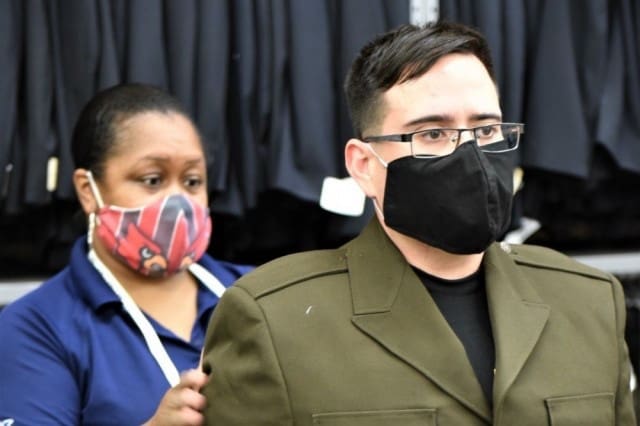
WASHINGTON — Along with their iconic round brown hats, drill sergeants will soon be donning the Army’s new, long-awaited everyday business uniform, a project manager confirmed Tuesday.

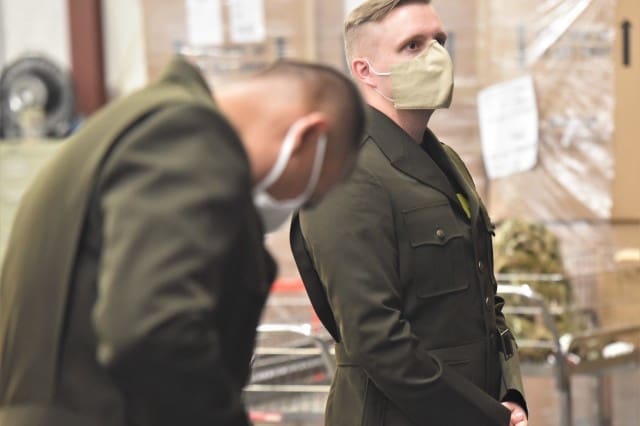
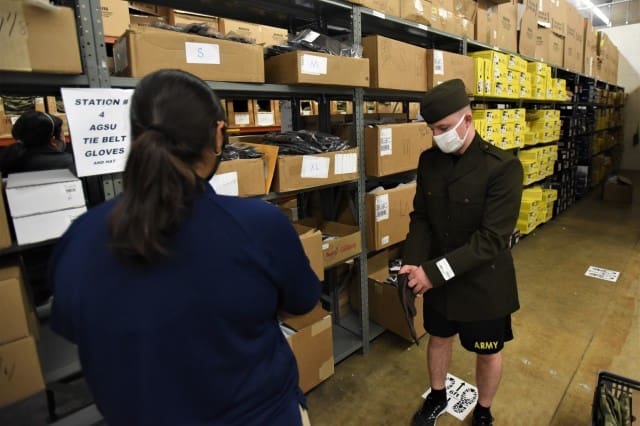
The Army Green Service Uniform, which is based on the dress uniform worn by Soldiers during World War II, will be delivered to basic combat training drill sergeants at Fort Sill, Oklahoma; Fort Benning, Georgia; Fort Leonard Wood, Missouri; and Fort Jackson, South Carolina, later this month with general sales at those installations’ post exchanges beginning this fall.

The full wave of AGSU sales throughout the Army is slated to be implemented by March 2021.

Trainees in basic training and one-station unit training are scheduled to begin receiving the new uniform starting from October through December. Soldiers must fully transition to the new uniform by Oct. 1, 2027.

“The everyday professional look of the AGSU will complement Soldiers of today and in the future,” said Col. Stephen Thomas, project manager of Soldier survivability for Program Executive Office Soldier, during a media event Tuesday.

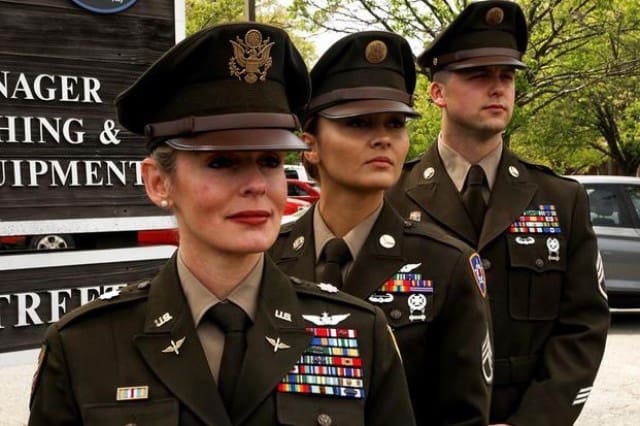
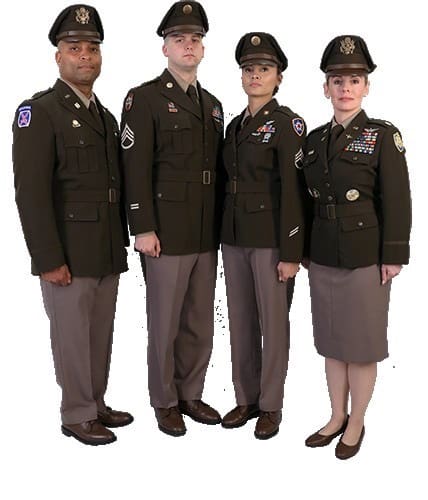
With its olive-colored top and light brown trousers, a similar dress uniform gave Soldiers a unique look during WWII. Army senior leaders pushed for a revamped design to connect today’s Soldiers with the service’s past.

Former Army Chief of Staff Gen. Mark A. Milley met with designers at the Army Combat Capabilities Development Command Soldier Center in Natick, Massachusetts, in 2017 to discuss possibilities for a new service uniform. The command’s design team fashioned uniform options for Milley and made recommendations to PEO Soldier.

“[Milley] spoke of the pride and heritage of that uniform in our Army’s history and wanting to bring it back,” said Annette LaFleur, design team lead at CCDC Soldier Center. “He wasn’t very specific in terms of the exact design detail. He just spoke about the fit, the aesthetic, and the look of it and uniting everybody together with this uniform.”
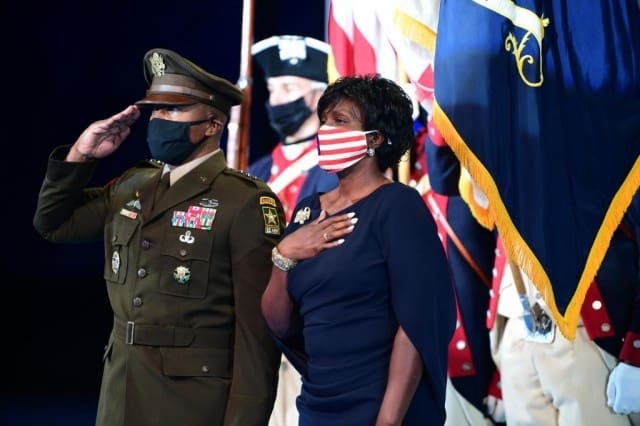
Extensive testing followed with as many as 1,200 test uniforms worn by Army recruiters and 700 prototype models used during a limited-user test last year. For nearly two years, Milley and former Sgt. Maj. of the Army Daniel A. Dailey campaigned for the new uniform, even donning the AGSU at nationally-televised events such as the annual Army-Navy game.

The updated service uniform is intended for all Army ranks, while the WWII-era uniform was only authorized for officers to wear. The average cost varies depending on the combination of clothing, but the standard price hovers around $500 per uniform. The yearly clothing allowance, which officers do not receive, will help cover the cost of the uniform for enlisted Soldiers.

The shelf life of the clothing will span six years — two years longer than the Army Service Uniform, or commonly known as Dress Blues.

LaFleur added that designers adjusted the original WWII design for everyday wear. The uniform is made from a high quality, wool blend designed to make it last longer.

“Designers put together illustrations of different design options for various coat styles. These were early concepts where we started thinking about how we could actually modernize the designs,” LaFleur said. “The current configuration of the uniform really is very close to what you would have seen during the World War II-era. It really speaks back to that heritage and we haven’t changed that much in terms of the aesthetics of the uniform.”
Brown jump boots will eventually be added as options and prototypes are still being tested, Thomas said. Like its predecessors, the uniforms will have options for women, who can choose between trousers and knee-length skirts. An all-female board helped design the intricacies of the female AGSU.

In addition to a different color scheme, the AGSU has curved pocket flaps and a more rugged look than the Army Service Uniform, which the AGSU will eventually replace.

To accelerate delivery, Army & Air Force Exchange Service, or AAFES, used Army funds to directly procure the initial run of the new uniform at the Army’s request. In July, AGSUs were issued to about 70 Army Recruiting and Retention College students at Fort Knox, Tennessee.
“The Exchange procurement office was able to speed up the traditionally longer process typically required for the procurement of new uniforms,” said Daniel Koglin, AAFES divisional merchandise manager.

By Joseph Lacdan, Army News Service
Robotic Combat Vehicles Display Next-Gen Features in Live-Fire Exercises

Friday, August 14th, 2020

FORT CARSON, Colo. — The Army’s collection of armed robotic combat vehicles showcased an “exceptional” ability to identify enemy positions after about a month of testing, but more development is still needed to improve battlefield precision, said Brig. Gen. Richard Coffman.

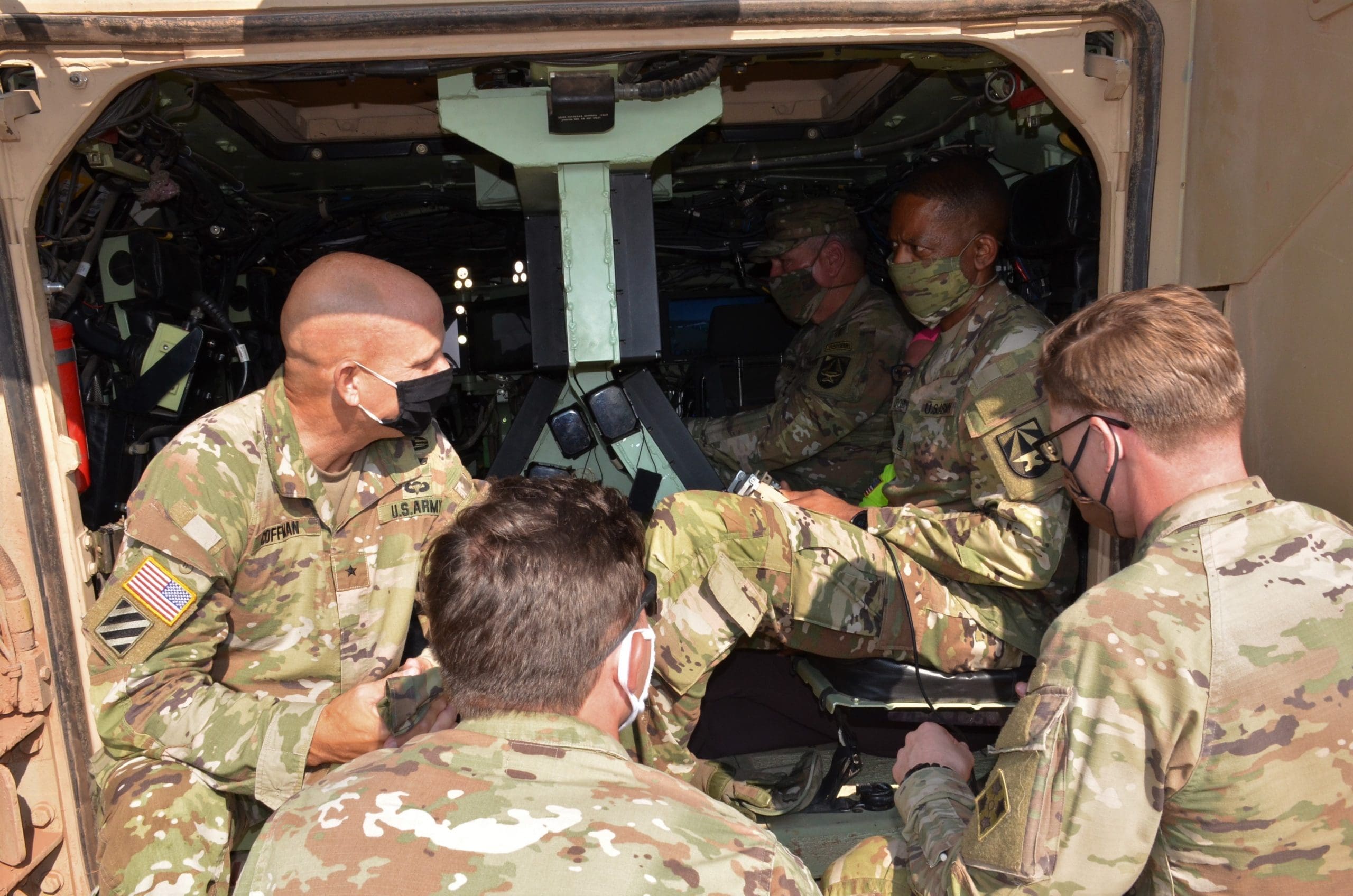
Coffman, director of the Next-Generation Combat Vehicle Cross-Functional Team, praised the capabilities of the four robotic combat vehicles, or RCVs, during the platoon live-fire exercises here.

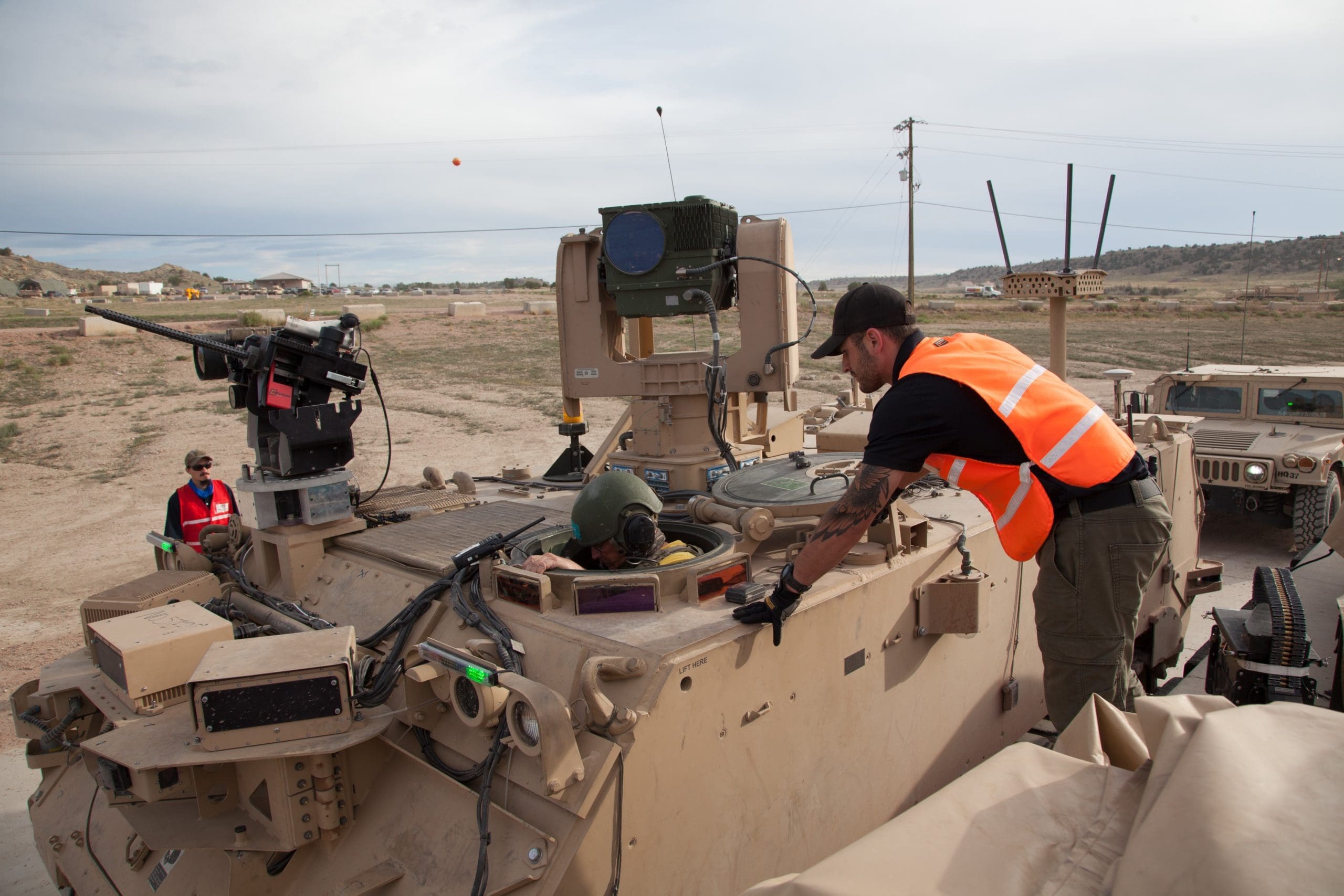
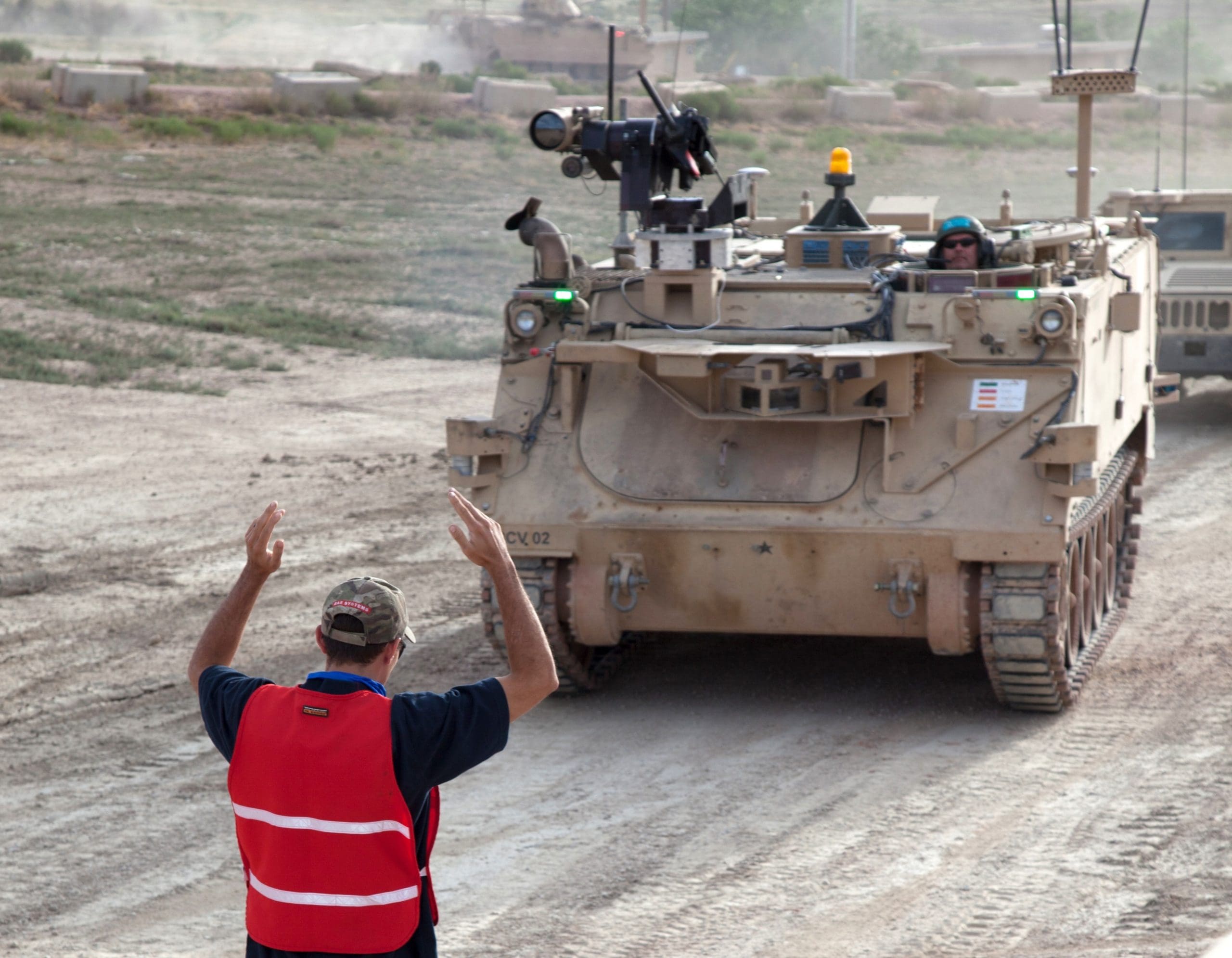
Soldiers from the 4th Infantry Division used two modified Bradley Fighting Vehicles, called Mission Enabling Technologies-Demonstrators, or MET-Ds, to control and maneuver the RCVs to determine whether the autonomous vehicles increased the lethality and efficiency of ground units.

“The ability [to spot enemies] was exceptional, because that reduces the risk on our Soldiers and allows us to remain in a covered and concealed position and make decisions,” Coffman said during a media conference call Thursday.

The MET-Ds, which are manned with six Soldiers, have 360-degree situational awareness cameras, a remote turret with a 25 mm main gun, and enhanced crew stations with touchscreens. The RCVs are M113 surrogate platforms that also have 360 cameras and fire 7.62 mm machine guns.

From inside the MET-Ds, Soldiers were able to control the RCVs up to a 2,000-meter range, but struggled to extend that distance in dense forest regions, Coffman said.

Developers plan to add more features to the vehicles in Phase II of testing, including a new radio tether to increase the operating range, an unmanned aerial vehicle and a target recognition capability based on synthetic data. Phase II, which is scheduled for the first quarter of fiscal year 2022 at Fort Hood, Texas, will feature three platoons of robotic vehicle with control vehicles.

“This is about commanders on the battlefield and giving them more decision space and reducing the risk on our men and women,” Coffman said. “We go into the nastiest places on earth. And these robots are absolutely going to do that in the future. We’re not there 100% yet.”

A third party will evaluate the technical and tactical performance of the operating crews and robotic vehicles, as well as the overall success of the experiment. The findings will then be briefed to the service’s senior leaders.

After the evaluation of Phase II’s results, Coffman said the Army will decide whether to continue testing.

Room for improvement

Soldiers testing the autonomous vehicles noted that greater sensory capabilities must be developed for the controlled vehicles to serve as unmanned replacements.

“Right now we don’t have sensors that can tell whether we’re coming across a little puddle that we can just drive through or whether that puddle is 8 feet deep and going to bog us down,” said Jeffrey Langhout, director of the Army Combat Capabilities Development Command’s Ground Vehicle System Center. “A robot can navigate its own way and it relies on the sensors that it has to keep from driving into ditches and all kinds of problems. We certainly have a long way to go on that.”

Sgt. Matthew Morris, assigned to 3rd Armored Brigade Combat Team, 4th ID, said the lack of downward visibility hindered operation of the RCVs. He said the vehicle’s ability to see down steep terrain must improve to prevent the vehicle from overturning.

When a human drives a vehicle into soft sand they instinctively know to shift to a lower driving gear and the RCVs must develop that sensitivity, Coffman said.

“For me specifically, I think that the ability to see downward once we approach certain inclines and declines would probably be an astute upgrade that would push us forward in the right direction,” Morris said, adding the vehicles must increase its audio signature to increase communication abilities with crew members.

Vehicle operator Sgt. Scott Conklin, who is also with 3rd ABCT, said that the two-person crew could handle the increased workload, but the frenetic pace of operating with the 360 cameras made the RCVs challenging to operate.

Coffman said regardless of how the program evolves, he said humans will retain a level of autonomy over the robotic combat vehicles.

“We don’t want a fully autonomous vehicle,” he said. “We don’t want the machine deciding. We want very specific rules of what that machine will and will not do. The humans are in charge.”

By Joseph Lacdan, Army News Service

US Army Study Suggests Optimal Social Networks of No More Than 150 People

Friday, August 7th, 2020

RESEARCH TRIANGLE PARK, N.C. — New rules of engagement on the battlefield will require a deep understanding of networks and how they operate according to new Army research. Researchers confirmed a theory that find that networks of no more than 150 are optimal for efficient information exchange.

“This is the beginning of a new way to address competition and conflict in today’s complex world,” said Dr. Bruce West, senior scientist, Army Research Office, an element of the U.S. Army Combat Capabilities Development Command’s Army Research Laboratory. “To increase the utility of the Army’s evolving network structures in terms of robustness, resilience, adaptability and efficiency, requires a deeper understanding of how networks actually function, both ours and those of our adversary.”

Researchers at ARO and the University of North Texas tested a theory proposed by British anthropologist Robin Dunbar in the 1990s, which suggested that 150 was the largest group that humans can maintain stable social relations. In the vicinity of this size the social group becomes unstable and splinters into smaller groups.

“It takes a network to defeat a network,” wrote retired Army Gen. Stanley McChrystal, in his book Team of Teams. He discusses understanding the implications of the theory, abstracting from battlefield experiences in Iraq battling the loosely networked but effective terrorist organization Al Qaeda.

Researchers published their findings in the peer-reviewed Proceedings of the National Academy of Sciences of the United States of America. In their study, they prove Dunbar’s conjecture, demonstrating that certain sized network has better information transport properties than others, and that networks of no more than 150 are optimal for internally sharing information.

“A fundamental property of a network is the relation between its functionality and size, which is why understanding the source of the Dunbar Number is important,” said West, a co-author of the paper.

The researchers propose that the number 150 arises as a consequence of internal dynamics of a complex network self-organizing within a social system.

Based on that theory, the researchers also indicated that a peaceful demonstration can be turned into a mob by just a few agitators, with the size of 150 being the most vulnerable to such disruption.

“The 150 optimum has been observed by Dunbar and others, but Dr. West and colleagues are the first to computationally capture the theorized process of information dynamics, which are fundamental to problem-solving, development of group factions, and formation of cohesive groups,” said Dr. Lisa Troyer, who manages ARO’s social and behavioral sciences research program. “This is an important leap forward by for social science theory and will likely lead to further research and insights on collective action.”

Dunbar predicted that social groups have optimal sizes. He referred to these group sizes as nested layering and that they have a scaling ratio of approximately three. Consequently, he identified the sequence of sizes of cognitively efficient social groups 5, 15, 50, 150 and 500, explaining that these layers were not equal in terms of strength of relationships.

“The layering sequence is interesting because each number in the sequence is within a factor of two of the empirical magnitudes of entity sizes in the U.S. Army, ranging from a squad of roughly 15 to a platoon of approximately three times the squad size, next to a company consisting of three platoons and followed by a brigade the size of roughly three companies and so on,” West said. “This is the intuition on which armies have been hierarchically constructed by military leaders since the Roman Empire.”

According to West, understanding how information flows within, is analyzed by, and is accepted or rejected from groups of various sizes is crucial in the training of teams. He said that this is not only true in the development of a single team, but is just as important for the training of teams to work together, to form teams-of-teams.

“The size of a team may be the determining factor in the potential success of a complex mission that depends on adaptability and collective problem solving,” West said. “The same understanding can be applied to the reverse process, that of insinuating disinformation within an adversarial group. The size of the group may at times be more important than the form the lie takes for its acceptance and immediate transmission, witness the recent riots.”

By U.S. Army CCDC Army Research Laboratory Public Affairs

Quantum Chip Fabrication Paves Way for Scalable Processors, Producing the Largest Quantum Chip of its Type Using Diamond-Based Qubits and Quantum Photonics

Sunday, August 2nd, 2020

RESEARCH TRIANGLE PARK, N.C. — An Army-funded project marks a turning point in the field of scalable quantum processors, producing the largest quantum chip of its type using diamond-based qubits and quantum photonics.

Millions of quantum processors will be needed to build quantum computers, and new research at MIT and Sandia National Laboratories, funded and managed in part by the U.S. Army Combat Capability Development’s Command’s Army Research Laboratory’s Center for Distributed Quantum Information, demonstrates a viable way to scale-up processor production.

“Building large scale quantum devices will entail both the assembly of large numbers of high-quality qubits and the creation of reliable circuits for transmitting and manipulating quantum information between them,” said Dr. Fredrik Fatemi, Army researcher and CDQI co-manager. “Here, the research team has demonstrated exceptional progress toward reliably manufacturing complex quantum chips with both critical elements.”

Unlike classical computers, which process and store information using bits represented by either 0s and 1s, quantum computers operate using quantum bits, or qubits, which can represent 0, 1, or both at the same time. This strange property allows quantum computers to simultaneously perform multiple calculations, solving problems that would be intractable for classical computers.

The qubits in the new chip are artificial atoms made from defects in the diamond, which can be prodded with visible light and microwaves to emit photons that carry quantum information. The process, which the researchers describe in the peer-reviewed journal Nature, is a hybrid approach, in which carefully selected quantum micro-chiplets containing multiple diamond-based qubits are placed on an aluminum nitride photonic integrated circuit.

“In the past 20 years of quantum engineering, it has been the ultimate vision to manufacture such artificial qubit systems at volumes comparable to integrated electronics,” said Dirk Englund, an associate professor in MIT’s Department of Electrical Engineering and Computer Science. “Although there has been remarkable progress in this very active area of research, fabrication and materials complications have thus far yielded just two to three emitters per photonic system.”

Using their hybrid method, the researchers were able to build a 128-qubit system — the largest integrated artificial atom-photonics chip yet.

The artificial atoms in the chiplets consist of color centers in diamonds, defects in diamond’s carbon lattice where adjacent carbon atoms are missing, with their spaces either filled by a different element or left vacant. In the chiplets, the replacement elements are germanium and silicon. Each center functions as an atom-like emitter whose spin states can form a qubit. The artificial atoms emit colored particles of light, or photons, that carry the quantum information represented by the qubit.

Diamond color centers make good solid-state qubits, but “the bottleneck with this platform is actually building a system and device architecture that can scale to thousands and millions of qubits,” said Noel Wan, MIT research and the paper’s coauthor. “Artificial atoms are in a solid crystal, and unwanted contamination can affect important quantum properties such as coherence times. Furthermore, variations within the crystal can cause the qubits to be different from one another, and that makes it difficult to scale these systems.”

Instead of trying to build a large quantum chip entirely in diamond, the researchers decided to take a modular and hybrid approach.

“We use semiconductor fabrication techniques to make these small chiplets of diamond, from which we select only the highest quality qubit modules,” Wan said. “Then we integrate those chiplets piece-by-piece into another chip that wires the chiplets together into a larger device.”

The integration takes place on a photonic integrated circuit, which is analogous to an electronic integrated circuit but uses photons rather than electrons to carry information. Photonics provides the underlying architecture to route and switch photons between modules in the circuit with low loss. The circuit platform is aluminum nitride, rather than the traditional silicon of some integrated circuits.

Using this hybrid approach of photonic circuits and diamond chiplets, the researchers were able to connect 128 qubits on one platform. The qubits are stable and long-lived, and their emissions can be tuned within the circuit to produce spectrally indistinguishable photons, according to the researchers.

While the platform offers a scalable process to produce artificial atom-photonics chips, the next step will be to test its processing skills.

“This is a proof of concept that solid-state qubit emitters are very scalable quantum technologies,” Wan said. “In order to process quantum information, the next step would be to control these large numbers of qubits and also induce interactions between them.”

The qubits in this type of chip design wouldn’t necessarily have to be these particular diamond color centers. Other chip designers might choose other types of diamond color centers, atomic defects in other semiconductor crystals like silicon carbide, certain semiconductor quantum dots, or rare-earth ions in crystals.

“Because the integration technique is hybrid and modular, we can choose the best material suitable for each component, rather than relying on natural properties of only one material, thus allowing us to combine the best properties of each disparate material into one system,” said Tsung-Ju Lu, MIT researcher and the paper’s co-author.

Finding a way to automate the process and demonstrate further integration with optoelectronic components such as modulators and detectors will be necessary to build even bigger chips necessary for modular quantum computers and multichannel quantum repeaters that transport qubits over long distances, the researchers said.

“The team has made an incredible advance toward the large-scale integration of artificial atoms and photonics and, looking forward, we are very excited for increasingly complex testing of the devices,” said Dr. Sara Gamble, program manager at the Army Research Office, an element of CCDC ARL, and CDQI co-manager. “The modular approach so far successfully demonstrated by the team has enormous promise for the future quantum computers and quantum networks of high interest to the Army.”

By U.S. Army CCDC Army Research Laboratory Public Affairs

*Adapted with permission from an article by Becky Ham, MIT News.

Army Project Develops Self-Healing Material Patterned After Nature

Wednesday, July 29th, 2020

RESEARCH TRIANGLE PARK, N.C. — An Army-funded project developed a self-healing material patterned after squid ring teeth protein. The biodegradable biosynthetic polymer could be used to repair materials that are under continual repetitive movement such as robotic machines, prosthetic legs, ventilators and personal protective equipment like hazmat suits.

“Materials that undergo continual repetitive motion often develop tiny tears and cracks that can expand, leading to catastrophic failure,” said Dr. Stephanie McElhinny, biochemistry program manager, Army Research Office, an element of the U.S. Army Combat Capabilities Development Command’s Army Research Laboratory. “With a self-healing bio-based synthetic material, any sites of damage that emerge can be repaired, extending the lifetime of the system or device.”

The research at Penn State University and Max Planck Institute for Intelligent Systems, Stuttgart, Germany, funded in by part by ARO, and published in Nature Materials produced high-strength synthetic proteins that mimic those found in nature. The researchers surveyed large libraries of novel proteins created by assembling repetitive sequences from the squid ring teeth protein in different configurations.

Squid ring teeth are circular predatory appendages located on the suction cups of squid used to grasp prey. If the teeth are broken — they can heal themselves. The soft parts in the proteins help the broken proteins fuse back together in water, while the hard parts help to reinforce the structure and keep it strong.

“Our goal is to create self-healing programmable materials with unprecedented control over their physical properties using synthetic biology,” said Melik Demirel, professor of engineering science and mechanics at Penn State and the paper’s co-author.

Current strategies for material self-healing have significant limitations, including requirements for potentially hazardous chemicals, loss in functionality of the healed material relative to the original state, and long healing times, often greater than 24 hours.

“We were able to reduce a typical 24-hour healing period to one second, so our protein-based soft robots can now repair themselves immediately,” said Abdon Pena-Francelsch, Humboldt postdoctoral fellow, physical intelligence department at the Max Planck Institute for Intelligent Systems and lead author of the paper. “In nature, self-healing takes a long time. In this sense, our technology outsmarts nature.”

The self-healing polymer heals with the application of water and heat, although Demirel said that it could also heal using light.

“Self-repairing physically intelligent soft materials are essential for building robust and fault-tolerant soft robots and actuators in the near future,” said Metin Sitti, director, physical intelligence department at the Max Planck Institute for Intelligent Systems.

By adjusting the number of tandem repeats, the researchers created a soft polymer that healed rapidly and retained its original strength. They also created a polymer that is 100% biodegradable and 100% recyclable into the same, original polymer.

“We want to minimize the use of petroleum-based polymers for many reasons,” Demirel said. “Sooner or later we will run out of petroleum and it is also polluting and causing global warming. We can’t compete with the really inexpensive plastics. The only way to compete is to supply something the petroleum-based polymers can’t deliver and self-healing provides the performance needed.”

Demirel explained that while many petroleum-based polymers can be recycled, they are recycled into something different. For example, polyester t-shirts can be recycled into bottles, but not into polyester fibers again.

Just as the squid the polymer mimics biodegrades in the ocean, the biomimetic polymer will biodegrade. With the addition of an acid like vinegar, the polymer will also recycle into a powder that is manufacturable into the same, soft, self-healing polymer.

“This research illuminates the landscape of material properties that become accessible by going beyond proteins that exist in nature using synthetic biology approaches,” McElhinny said. “The rapid and high-strength self-healing of these synthetic proteins demonstrates the potential of this approach to deliver novel materials for future Army applications, such as personal protective equipment or flexible robots that could maneuver in confined spaces.”

In addition to Army funding, the Max Planck Society, the Alexander von Humbolt Foundation, the Federal Ministry for Education and Research of Germany and the Huck Endowment of the Pennsylvania State University supported this work.

By U.S. Army CCDC Army Research Laboratory Public Affairs

US Army Prototypes Integrated Visual Augmentation System Network Capabilities for Tactical Vehicles

Tuesday, July 28th, 2020

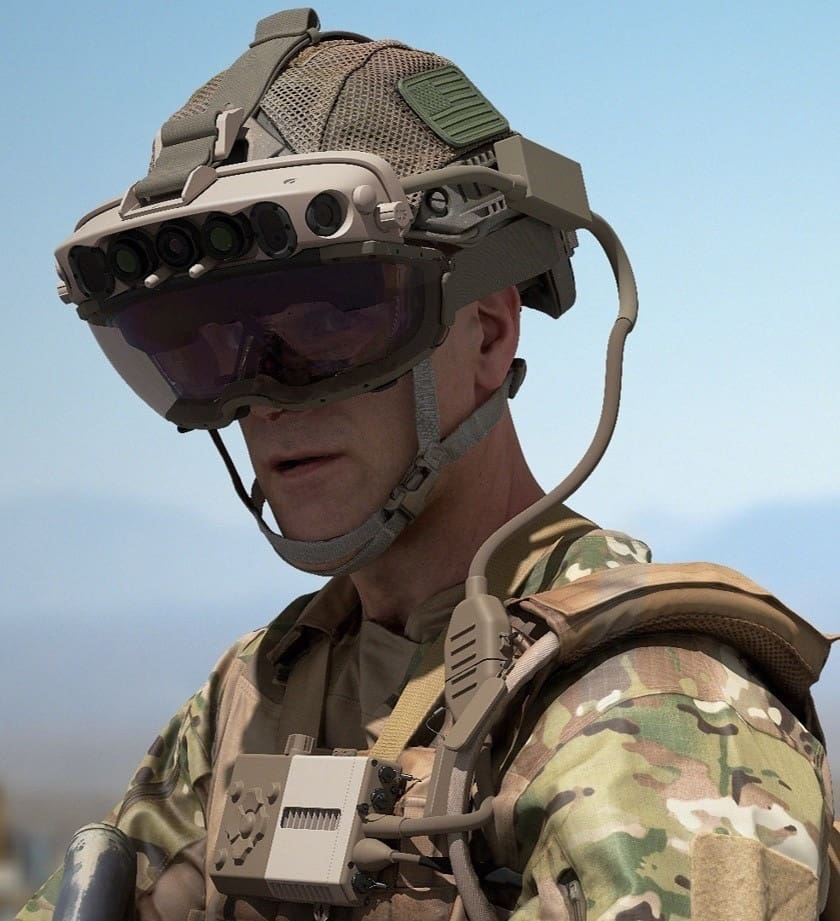
ABERDEEN PROVING GROUND, Md. (July 23, 2020) — Army Futures Command (AFC) is using rapid prototyping to integrate tactical network systems, which will enhance functionality of the Soldier-worn Integrated Visual Augmentation System (IVAS), onto combat vehicles.

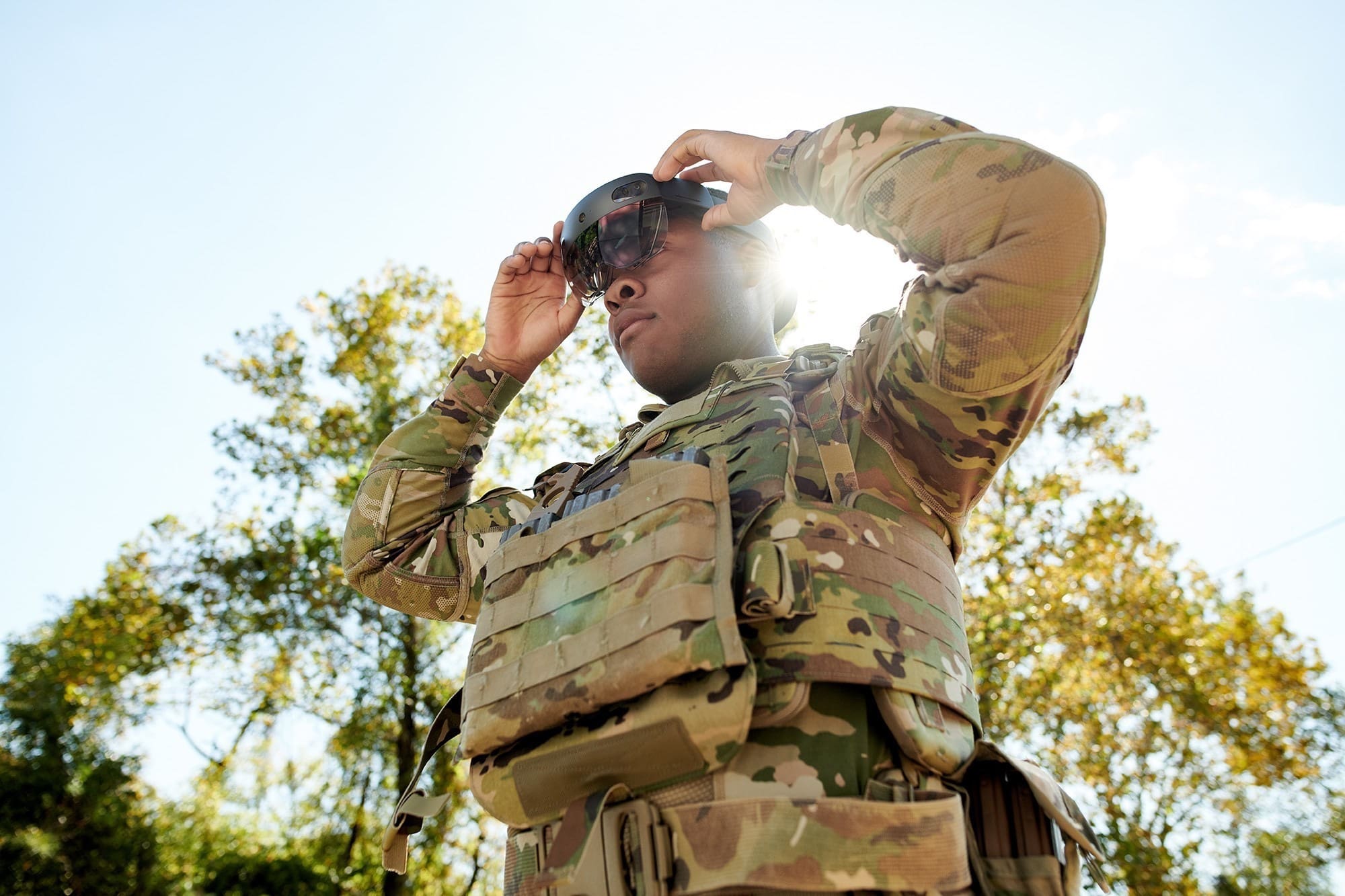
IVAS provides Soldiers with improved situational awareness capabilities as they fight, train and rehearse missions. IVAS capabilities include a digital display to access information without taking eyes off the battlefield, thermal and low-light sensors, rapid target acquisition, aided target identification and augmented reality.

The Command, Control, Communications, Computers, Cyber, Intelligence, Surveillance and Reconnaissance (C5ISR) Center — a component of AFC’s Combat Capabilities Development Command — is leading the prototyping efforts, in coordination with IVAS developers and network project management offices. The Center uses its in-house expertise to inform and refine the design, fit and function needed to house and integrate network components, including radios, servers and cables.

The C5ISR Center started design work this spring to integrate IVAS devices with Stryker armored vehicles, leading to Vehicle Excursion 2 (VE2) in January 2021 at Joint Base Lewis-McChord, Washington. The Soldier Lethality Cross-Functional Team (SL CFT) will host VE 2 with about a dozen participating organizations from Army research and development, acquisition and operational forces. It will be a static vehicle user study focused on assessing the utility and proof of concept of new capabilities on Strykers and Bradley Fighting Vehicles to gain early Soldier feedback.

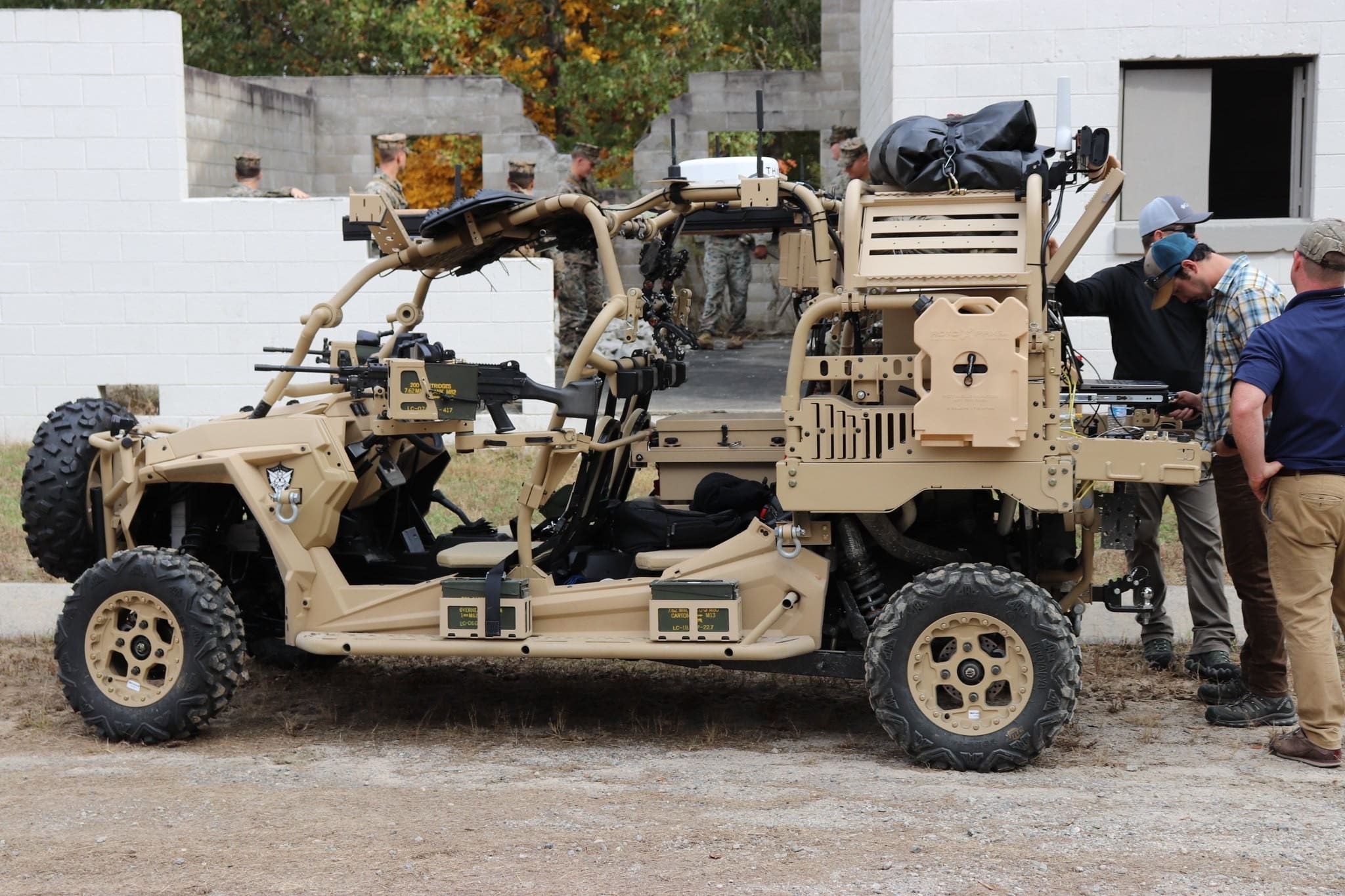
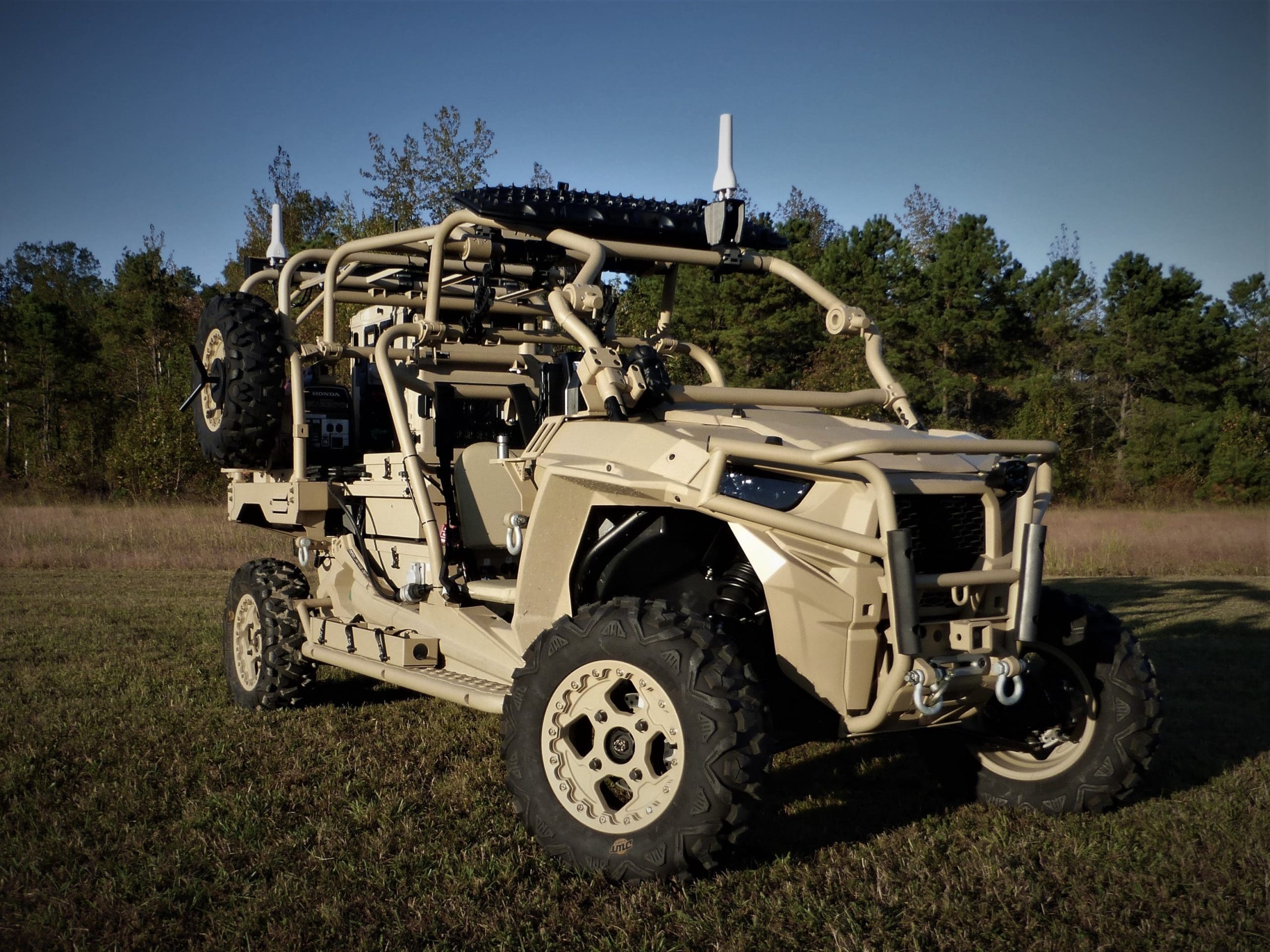
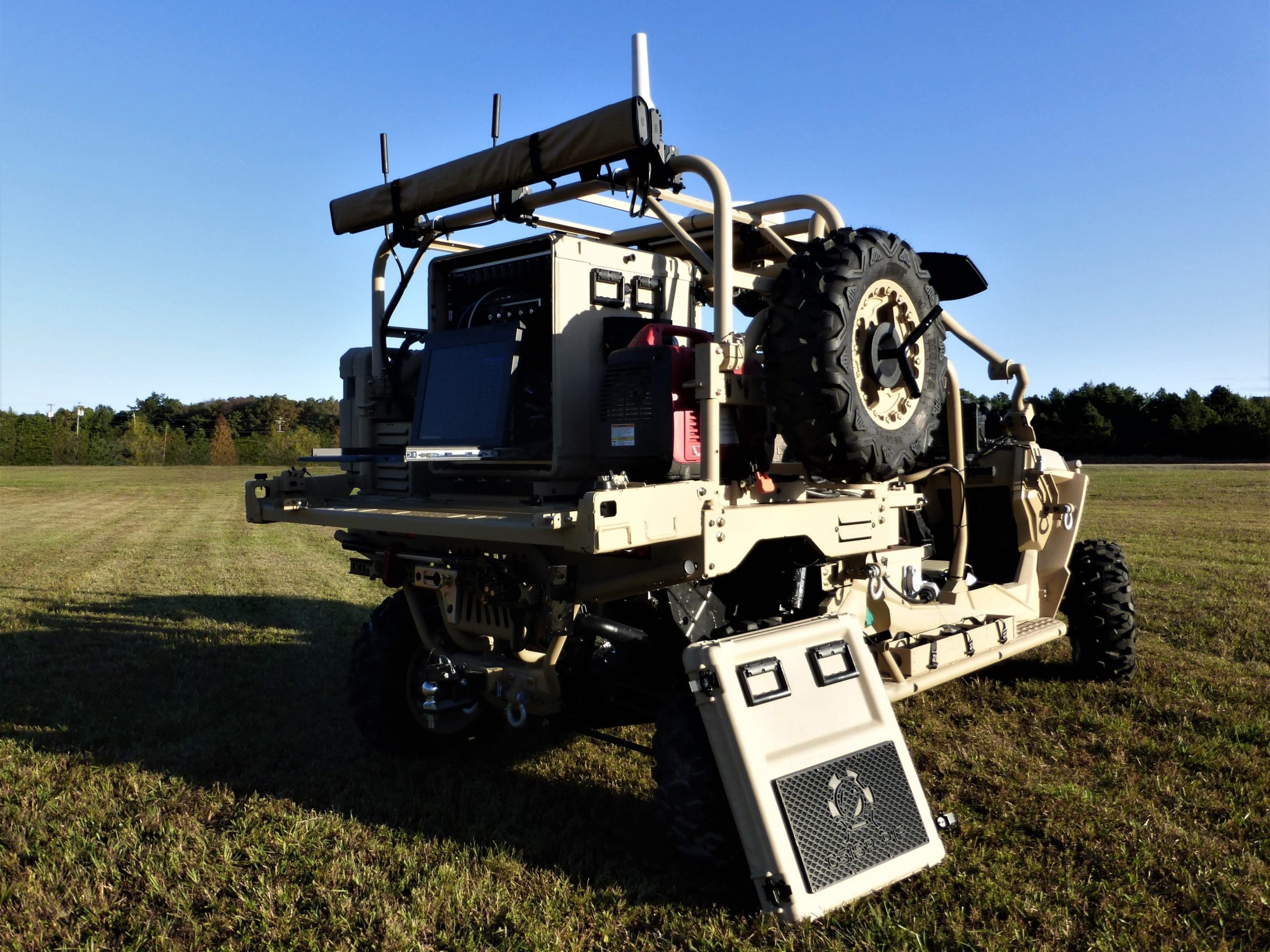
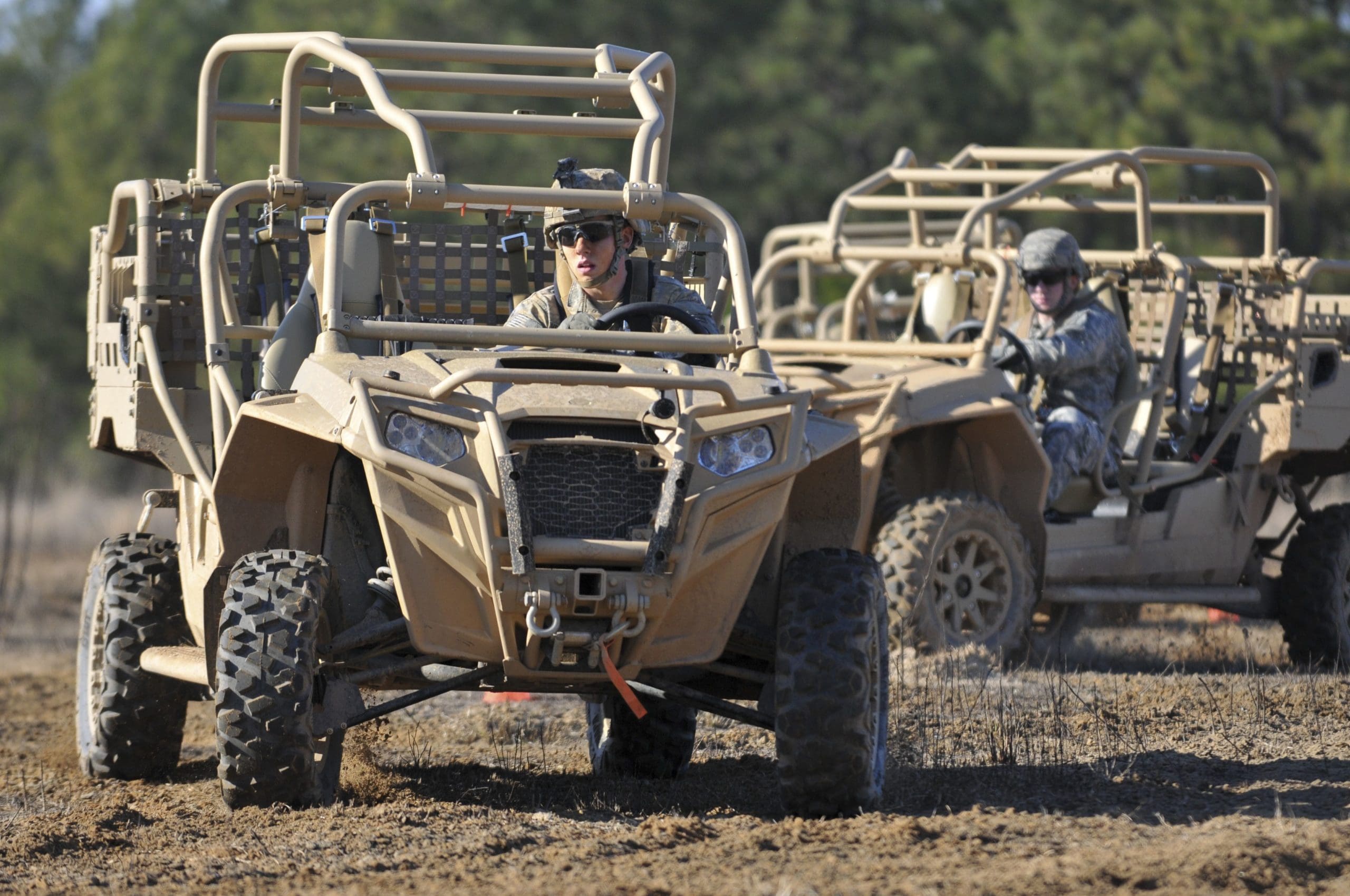
To enhance IVAS network connectivity and capabilities, C5ISR Center engineers and network system developers engineered a network communications gateway and data management kit known as Project Bloodhound in 2019. The C5ISR Center delivered the integrated network kit mounted on an MRZR all-terrain vehicle, which allowed dismounted Soldiers using IVAS to connect into the broader Army tactical network to share and receive data.

This prototype and others will enhance modernization efforts led by the C5ISR Center, SL CFT, the Network CFT, Program Manager IVAS, and PM Tactical Radios.

Bloodhound allows greater connectivity throughout the company echelon, through a tactical radio integration kit that includes radio gateways that enable voice and data information to be pushed and pulled from multiple sources. This concept is being applied to the Stryker prototype effort.

“We designed Project Bloodhound as a modular vehicle-mounted system that can be integrated into any vehicle,” said C5ISR Center mechanical engineer Ryan Stuk. “Certain features could be employed in a command post or dismounted capacity. We’re now taking the knowledge and expertise gained from the MRZR integration and applying those to Strykers.”

The Stryker effort will provide additional capabilities for Soldiers, whether they are mounted, dismounted or in transition, Stuk said. The Army’s three objectives are to leverage the Strykers as an IVAS power source to maintain mission capability, integrate with existing and future vehicle-based onboard camera systems, and enhance Soldiers’ situational awareness while mounted or transitioning to dismounted.

The Center’s organic, internal prototype integration facility (PIF) has enabled the Army to meets its objectives for multiple design iterations, changing requirements and quick deadlines, said Tom Brutofsky, chief of the C5ISR PIF. A key aspect to Project Bloodhound has been additive manufacturing, commonly known as 3D printing.

“The C5ISR PIF has invested heavily in additive manufacturing to develop a rapid prototyping capability to deliver functional designs with significant cost and time savings,” Brutofsky said. “The PIF manufactured the MRZR Bloodhound prototype approximately 80 percent through additive processes and went from concept to functional prototype in less than three months.

“Additive manufacturing also enables easier modifications as engineers gather Soldier feedback during exercises and as the Army identifies additional vehicles for network kit integration.”

Soldier touch points like VE2 enable the Army to transition from R&D to prototypes and then mature capabilities for fielding.

“For the C5ISR Center, incorporating Soldier feedback is essential,” Brutofsky said. “Understanding the needs of Soldiers on the battlefield early on helps us make better use of time and resources.”

By Dan Lafontaine, CCDC C5ISR Center Public Affairs

US Army Awards Contract for Hybrid Electric Prototype

Saturday, July 25th, 2020

Fort Belvoir, Va. — The Army recently issued a contract award to rapidly prototype hybrid electric drives into an Army combat vehicle as a key step in scaling-up this widely available commercial technology.

Hybrid electric drives (HEDs), used today in commercial cars, buses, heavy trucks and other vehicles, could significantly reduce Army vehicle costs related to maintenance and fuel consumption, increase reliability, and improve performance, with no added size, weight and power (SWaP) demands.

Under an Other Transaction for Prototype Authority (pOTA) agreement, issued by the Army Rapid Capabilities and Critical Technologies Office (RCCTO) on July 16 in the amount of $32.2 million, BAE Systems will deliver two vehicles retrofitted with HEDs. The entire effort, from contract to delivery, is expected to take 24 months.

The HED – consisting of an upgraded engine, a transmission replaced by an electric drive motor, and the addition of lithium ion batteries – turns engine power into electricity for greater mobility and operating additional onboard equipment.

“By rapidly prototyping HEDs on a small scale, we can jump-start advanced electrification and hybridization of Army platforms, and encourage our industry partners to invest in these products to meet Army standards,” said LTG L. Neil Thurgood, director of Hypersonics, Directed Energy, Space and Rapid Acquisition, who oversees the RCCTO.

With the HED replacing the traditional heavy mechanical powertrain, the design has the potential to provide increased automotive performance, increase survivability by reducing the thermal and acoustic signature of the vehicle, increase acceleration capability, and improve lethality. The Army anticipates reduced fuel consumption by as much as 20 percent, and with a smaller number of parts, vehicles with HED technology should be easier to maintain.

Under the contract, the Army will use the A2 Bradley as the surrogate vehicle. BAE will integrate two HED vehicles, which will then undergo contractor performance assessments, testing and validation, ultimately leading to the transition to Program Executive Office Ground Combat Systems (PEO GCS). The RCCTO is working closely with PEO GCS throughout the effort.

“HEDs add a high-voltage generator that turns engine power into electricity for greater mobility and for operating additional equipment, both of which increase combat effectiveness,” said Mike Foster, director of the RCCTO’s Rapid Acquisition Prototyping Project Office. “It also offers the ability, because of its electric powertrain, to conduct silent over-watch missions and silent mobility.”

The Bradley is being used because of the small form factor fit of the engine, which is smaller than other tracked vehicles and can then scale-up to be applied to other platforms, including future vehicles.

Once the two vehicles are complete, the RCCTO will conduct additional field assessments on the HED technology with Soldier feedback prior to the handoff with PEO GCS.

The Army RCCTO, headquartered at Redstone Arsenal, Ala., is chartered to develop rapid prototypes and field residual combat capabilities. Its top focus areas are hypersonics and directed energy, but the organization is also conducting rapid prototyping in areas such as the hybrid Bradley, an electronic warfare kit for dismounted threat mapping, and advanced radars.

By Nancy Jones-Bonbrest, Army Rapid Capabilities and Critical Technologies Office

Army Greens Slated to Reach All Installations by Mid-2021

Friday, July 24th, 2020

WASHINGTON — Recruiters, drill sergeants, and initial entry trainees will be among the first to receive the new Army Green Service Uniform, as program officials look to distribute it to all installations by the middle of next fiscal year.

The uniform harkens back to the “greatest generation” of Soldiers who fought during World War II.

“For the past year, I’ve been wearing the Army Greens. Wherever I go, people tell me that they love the uniform,” said Army Vice Chief Of Staff Gen. Joseph M. Martin.

“As we transition to the next phase of the rollout, I’m excited for the Soldiers who are about to receive the uniform,” he added. “I think that when they see themselves in the mirror they’ll feel connected to the Soldiers of the past and realize that they’re writing the next chapter of what people feel about our Army.”

Rollout schedule

Personnel in basic combat training and one-station unit training should receive the AGSU beginning in the first quarter of fiscal year 2021, said Lt. Col. Naim Lee, product manager of Soldier Clothing and Individual Equipment at Program Executive Office Soldier.

Fort Sill, Oklahoma, will be the first training location to issue the uniform, shortly followed by Fort Leonard Wood, Missouri; Fort Benning, Georgia; and Fort Jackson, South Carolina, he added.

The Army had originally planned to begin issuing the uniforms at IET locations before the end of this fiscal year. However, Lee said, setbacks during production related to COVID-19 forced a short delay in the rollout process.

Soldiers attending the Army’s Recruiting and Retention College at Fort Knox, Kentucky, started to receive their AGSUs earlier this month, he said.

The Army is continuing to work through its distribution and production channels to ensure all recruiters are issued the uniform starting in November through April 2021.

“The Army prioritized recruiters and drill sergeants, because they serve as the face of the Army,” Lee said.

After a select group of recruiters were able to wear the uniform as part of a pilot, they indicated that the new uniform may help attract quality applicants. The uniform may also help inspire the next generation of leaders by connecting the “all-volunteer force” to its historical lineage, Lee said

Moving forward, the Army and Air Force Exchange Service will supply the new uniform through a wave-based rollout approach, Lee said. The AGSU is currently available for purchase at the Fort Knox AAFES location.

The majority of AAFES locations within the U.S. are scheduled to have the new uniform by December. Stores in Alaska, Europe, Japan, and South Korea, along with National Guard and Reserve military clothing locations, should have a supply of uniforms by February 2021.

The mandatory wear date for all Soldiers is Oct. 1, 2027.

Active-duty enlisted Soldiers, including Active Guard and Reserve Soldiers, will continue to receive their annual clothing-replacement allowance to offset the new uniform’s cost, Lee said. Other Guard and Reserve Soldiers will begin receiving uniforms no later than the fourth quarter of fiscal year 2021.

Everyday service uniform

The Army is currently the only service without an everyday business uniform, Lee said.

The current Army Service Uniform, commonly known as dress blues, was previously considered an optional purchase uniform prior to 2008, PEO Soldier officials said. Over time, leaders realized that the dress blues were too formal for everyday business use.

With the launch of the AGSU, Soldiers will now have an everyday service uniform, which will set an appropriate standard for professionalism within an office setting, Lee added.



Eventually, the Army will stop issuing the dress blues to all Soldiers. The uniform will continue to be optional and serve as a dress uniform for all Soldiers requiring a formal attire.

Limited user test, evaluation

As the Army delivers its new uniform, PEO Soldier will continue to conduct limited user testing and evaluations through May 2021, Lee said.

Early in the development process, the Army held an all-female uniform board that determined the design, components, features and fit of the female uniform. While both the male and female uniforms are similar, PEO Soldier officials said the female version allows for an elective skirt and shoe wear option.

In January, leaders held an additional uniform board to solidify minor changes to the uniform that were identified during ongoing user evaluations.

“Soldiers shared how the uniform is a better fit to their body,” when compared to the Army Service Uniform, Lee said. “In terms of comfort — we made changes through the limited user evaluation feedback process” to improve the Army Greens.


Feedback will continue to be solicited from a larger Army population, specifically from Soldiers who wear the uniform often. Through this process, program leads will shape future iterations of the ensemble to accommodate different body types or make improvements to the product’s longevity.

“We have teams that will receive feedback through Soldier touchpoints,” Lee said. “And given the current environment [with COVID-19], we will have to incorporate” other forms of communication.

“Soldiers are enjoying this new uniform and they are eager to go out and get it,” he added. “We can’t get it to them fast enough.”

By Devon Suits, Army News Service