Phantom Lights

Archive for the ‘Army’ Category

NY Guard Teammates Ready for National Guard Sniper Challenge

Wednesday, December 16th, 2020

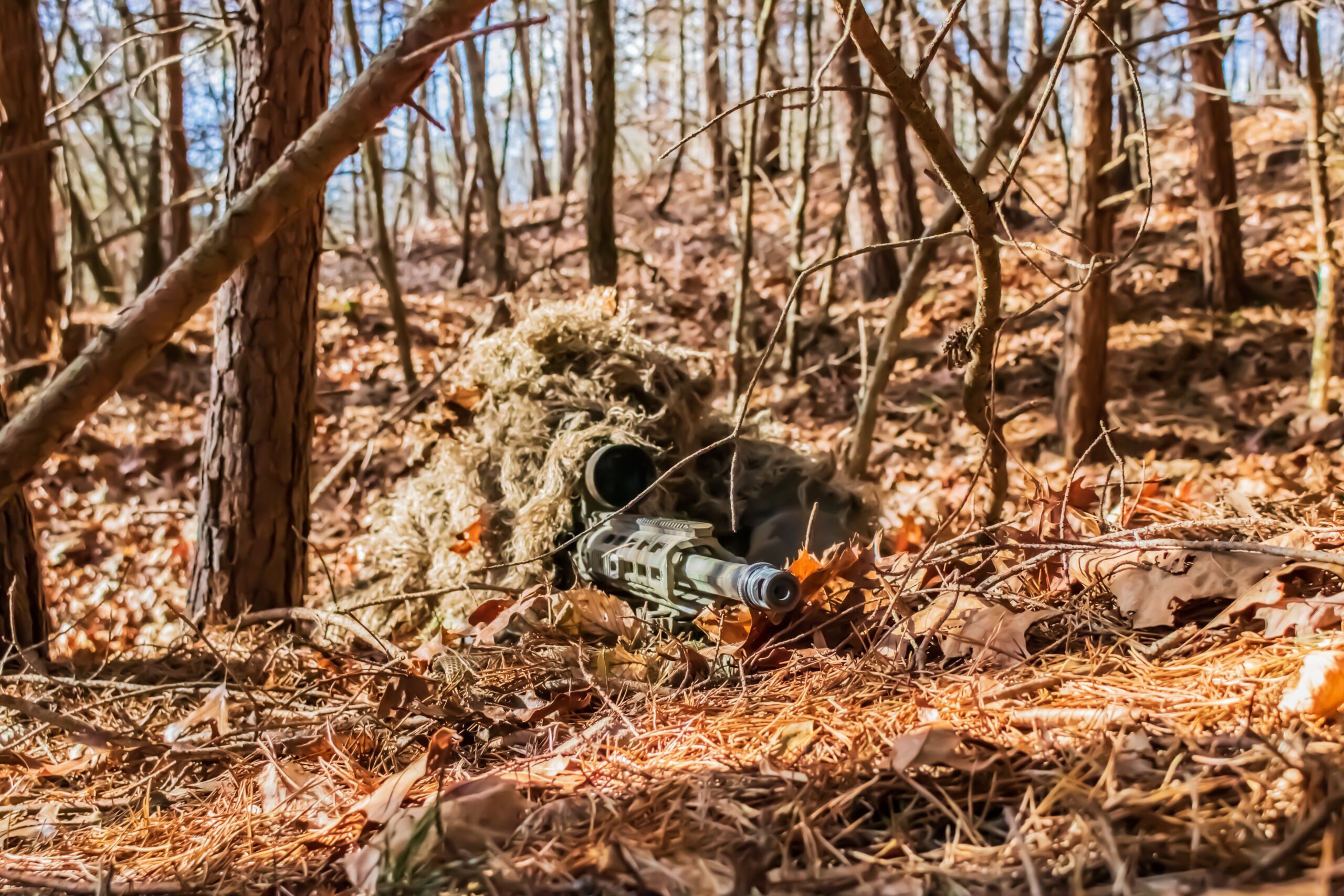
NEW YORK, New York – Sgt. 1st Class Matthew Melendez and Sgt. Andreas Diaz went to Afghanistan together, took the New York Police Department test together, graduated from the police academy together and served together in the sniper section of the 1st Battalion, 69th Infantry.

Diaz is even godfather to Melendez’s son.

Now the New York Army National Guard Soldiers are out to do one more thing together: win the annual Winston P. Wilson National Guard Sniper Competition.

The two New York City residents will be representing the New York Army National Guard when the latest edition of the competition kicks off on Dec. 4, 2020.

The sniper competition tests the Soldiers’ ability to acquire and engage targets using sniper rifles and pistols, their physical fitness, and their ability to approach and engage a target undetected.

Army National Guard teams from around the country, along with snipers from other services and other nations, will compete in the weeklong event at the Fort Chaffee Joint Maneuver Training Center in North Little Rock, Arkansas.

“This competition has always been on my list of things to do,” Melendez said. “For one reason or another, I have never been able to get there.”

Now his promotion to sergeant first class takes him out of the Battalion’s sniper section. “This is my last chance to get there, my last chance to check the block,” Melendez said.

Melendez, now a platoon sergeant in Alpha Company of the 1st Battalion, 69th Infantry, joined the New York Army National Guard in 2008. He joined the Battalion’s sniper section in 2009 and attended the Army sniper school in 2010.

In 2012 he deployed to Afghanistan with Bravo Company of the New York Army National Guard’s 2nd Battalion, 108th Infantry.

He and another sniper provided support to the infantry platoons on mission as dedicated marksmen and observers. He spent a lot of time watching areas of interest for the company and Battalion.

“I think that there is a popular misconception of sniping that it is 100 percent long-range shooting,” Melendez said. “That is about ten percent of what we do.”

“A big part of our job is the observation and reporting,” he said. “You use your fieldcraft to get in position and provide overwatch and observation.”

During a deployment to Afghanistan, Melendez met Diaz, another member of the 69th Infantry, who had deployed with the 108th as a machine gunner.

The two men hit it off and Melendez convinced Diaz to think about becoming a sniper instead.

When they returned from Afghanistan in 2013, both men applied to the New York City Police Department and passed the civil service test. When space in the police academy opened up in 2016, they were both in the same class.

In the meantime, Diaz joined the battalion sniper section in 2014, and the two served together with Melendez in charge.

When Melendez gave up the job he loved as sniper section sergeant, Diaz moved into the role.

With their Army sniper experience, joining a newly formed NYPD Long Range shooting team was the logical thing to do. The 60-member group is a recreational activity for police officers.

As team members, they have access to a range in the Catskill Mountains near Palenville, New York, where the team shoots, Diaz said.

“It’s the only range near New York City which lets you shoot out to 1,200 meters,” Diaz said.

They couldn’t bring their military weapons, but they got a chance to work together engaging targets at ranges of hundreds of yards. The team gave them range time, firearms and ammunition to get ready.

When Melendez and Diaz hit the ground in Arkansas for the sniper competition, Diaz will be the shooter and Melendez will act as his spotter.

Diaz has more recent experience at the sniper school –he graduated in 2017– so it makes sense for him to use the M-2010 sniper rifle, Melendez explained.


In the two-person sniper team, the spotter, armed with the M110 semi-automatic sniper rifle, provides close-in protection for the team while helping the shooter identify targets.

The M110 looks like a bigger M-16A2 and fires a 7.62 millimeter round with a range of 800 meters instead of the smaller 5.56 mm round usually fired by the M16/M4 weapons.

The shooter uses the bolt action M-2010 enhanced sniper rifle, with a range of more than a kilometer, to engage targets. Bolt action weapons don’t fire as quickly but are more accurate than semi-automatic weapons, Diaz said.

Melendez said he thinks their biggest weakness will be the team stalk and patrolling portions of the competition. “We just haven’t done it as a team as frequently,” he said.

Diaz said he wished they had a chance to test-fire the M-2010 they will be using for the competition before they get to Arkansas.

He will have to wait until they get to Fort Chaffee so he can do some test shooting and make sure the weapon is properly adjusted, he explained. He said that shooting from alternative firing positions will also be challenging.

“Anybody can shoot on their stomach lying down, but can you shoot on a platform that moves?” he said.

Both men agreed that the fact that they’ve worked together for so many years, and know each other so well, will be a significant advantage.

At a sniper competition held by the 27th Infantry Brigade Combat Team, he and Melendez beat other competitors because they worked so well together, Diaz reasoned.

“We have cohesion. We understand each other’s body language and without even speaking, we can get things done,” Diaz said.

By Eric Durr, New York National Guard

Army’s Mobile Protected Firepower Program Begins Crucial Soldier Evaluation Phase at Fort Bragg

Sunday, December 13th, 2020

Detroit Arsenal, Mich. (Friday, Dec. 11, 2020) – Soldiers of the 82nd Airborne will soon get the chance to do something no U.S. infantry Soldier has done in 26 years – employ a dedicated mobile, direct fire vehicle platform against hardened positions, dismounted personnel and light armored vehicles.

The experience comes to them as the first of several pre-production Mobile Protected Firepower (MPF) ground combat platforms are being delivered to Fort Bragg, N.C. to be used in the Soldier Vehicle Assessment (SVA).

“We are incredibly excited to see the MPF platform entering into this phase,” said Brig. Gen. Glenn Dean, the program executive officer for Ground Combat Systems. “MPF represents an innovative and aggressive approach to system acquisition. The beginning of our SVA in January illustrates how hard the teams are working to keep the major events of this program on schedule.”

Currently the Army’s Infantry Brigade Combat Teams (IBCT) do not have a combat vehicle assigned that is capable of providing mobile, protected, direct, offensive fire capability. To fill that capability gap the Army is using an innovative and competitive Acquisition approach to provide IBCTs with their own organic lethality platforms to ensure overmatch against peer and near peer threat.

The MPF solution is an integration of existing mature technologies and components that avoids development which would lengthen the program schedule. The priority has always been to field this new critical capability soonest, but the MPF will also be capable of accommodating additional weight and spare electrical power to support future growth.

The SVA is on track to commence on Jan. 4, 2021. It will be conducted at Fort Bragg and will run through June 2021. During that time, Soldiers will use the MPF prototypes to conduct a wide variety of operational scenarios. The SVA is an operational assessment rather than a formal test event, and it will directly inform the development of tactics, techniques and procedures (TTP) of this new capability for the IBCT.

“The MPF brings a new level of lethality to our infantry forces. The SVA gives us the first opportunity to put these vehicles in the hands of our Soldiers with the 82nd Airborne and begin to develop the methods by which our forces can best employ MPF,” said Brig. Gen. Ross Coffman, the Army’s director for the Next Generation Combat Vehicles Cross Functional Team. “Once they are able to begin interacting with these prototypes, I know that our Soldiers are going to come up with the best ways to utilize MPF in our light formations.”

The competitive phase of the program is scheduled to conclude with the selection of a single materiel solution and transition into production near the end of fiscal year 2022.

By Ashley John

TRADOC Delivers New Doctrine to Equip Unit Leaders

Saturday, December 12th, 2020

Training and Doctrine Command’s Combined Arms Center kicked off the new decade prioritizing equipping the Army’s troop-level formations with new doctrine as the Army continues to modernize its formations and the way it fights.

It’s a surge effort to equip unit leaders across warfighting disciplines with the tactics, techniques and procedures to help them lead Soldiers and build lethal, cohesive teams.

The roll-out began in 2019 with an overhaul of all of the Army’s foundational Army Doctrine Publications such as ADP 3-90 (Offense and Defense), ADP 2-0 (Intelligence), ADP 3-19 (Fires), and ADP 4-0 (Sustainment).

The publishing blitz continued through 2020 and is set to carry into 2021 with more publications developed from the outgrowth of its doctrine overhaul. It aims to deliver specific and tailored guidance for the different warfighting disciplines with new Field Manuals, Army Technique Publications, Training Circulars and handbooks.

The Army even updated its doctrine about doctrine, publishing APD 1-01, Doctrine Primer, July, 2019. It says, “doctrine provides a coherent vision of warfare, and provides a common and standardized set of principles, tactics, techniques, procedures, and terms and symbols for the Army.”

“These revisions [to doctrine] make publications relevant to near-term operational environments and ensure Army doctrine is balanced to support Army forces conducting operations across the competition continuum and the range of military operations.”

After establishing its doctrinal foundation with its new ADPs and FMs, TRADOC turned its attention to publishing even more doctrine publications offering practical guidance such as ATPs for Soldiers and leaders operating at the lowest tactical levels.

“ATPs provide Soldiers with ways or methods to accomplish or complete a mission, task, or function.”

The Army’s most fundamental warfighting elements are squads, platoons, companies and battalions. TRADOC aimed much of its focus center mass at platoons to make the most difference.

Many senior leaders see mastery of fundamentals as essential to success on the battlefield. Platoon level publications help junior leaders train their Soldiers to gain that mastery.

Soldiers are considered members of a profession whose common language is doctrine. Leaders and Soldiers in a platoon are tied to together by that common language and framework. That’s why their knowledge of it is deemed so critical.

“The Army has expectations that when you show up to your first job, you have a certain baseline of knowledge. A large part of that comes from doctrine,” said Col. Richard Creed, Director Combined Arms Doctrine Directorate.

“Your Soldiers and NCOs expect you to understand what your role and responsibilities, what the doctrine says for the kind of organization you’re a part of.”

“It gives you a common point of departure. When you have a common baseline of knowledge, you can start at a higher level of learning. It allows you to communicate easier with those above and below you.”

In 2020, TRADOC published numerous ATPs to arm its leaders and units with the latest insight on a myriad and training and operations. Examples include, ATPs covering Infantry Small-Unit Mountain and Cold Weather Operations, Techniques for Multiple Launch Rocket System and High Mobility Artillery Rocket System Operations, and Materiel Management-Supply-Field Services Operations.

Training Circulars were also published to guide certification and qualification training for Field Artillery and Air Defense Artillery Soldiers and units.

“You need to know which doctrine applies to you. Some of it is branch specific and some job specific,” said Creed.

There are also several publications set to publish beginning in 2021. Medical platoons can expect, ATP 4-02.4 Medical Platoon, Aviation platoons – ATP 3-04.23, Engineer and Air Defense Artillery platoons a new handbook for their operations. Later in the year, units performing Electronic Warfare, Chemical-Bio-Nuclear-Radio-Explosives, and Military Police operations will see updated doctrine as well.

TRADOC’s doctrine push shows no sign of slowing. It stands to be an ongoing process of learning, modernizing, and revising its doctrine to keep Soldiers and leaders equipped with much needed guides to inform their training and support their operations. Commandants at the Army’s Centers of Excellence that represent the Army’s diverse warfighting disciplines are leading efforts to update publications within their purview.

“We revise doctrine continuously and we capture lessons learned. We take lessons learned about operations going on all over the world and we update and revise doctrine to account for those lessons,” said Creed.

Lt. Gen. James Rainey, Combined Arms Center’s Commanding General, took it a step further, saying he wanted feedback from junior leaders using the publications. He said he wants to know if leaders and units have what they need and to provide feedback if anything is missing from the Army’s doctrine catalogue.

TRADOC also reinforced its emphasis on strengthening Soldiers’ tactical and technical expertise with the development of a web-tool, called Army 21. It’s a web-based multimedia interactive learning tool that allows Soldiers to learn about their unit’s formations and their doctrine from an internet browser (CAC login required).

“Army 21 addresses what we see as a knowledge gap for our junior leaders,” said Col. Chris Keller, Director of Center for Army Lessons Learned. “Soldiers must understand how the Army mans, equips, and fights.”

“It delivers a one-stop resource to quickly learn and understand current Army organization and about the unique capabilities of our Brigade Combat Teams across the force.”

You can access the tool at atn.army.mil/getmedia/449fcb0e-3b11-404f-b012-f5c85b429fd0/a21 (CAC login required)

Here’s a video tutorial of Army 21.

By Maj Orlandon Howard, Public Affairs, U.S. Army Combined Arms Center

Congratulations to PM IVAS

Friday, December 11th, 2020

Congratulations to Program Executive Office (PEO) Soldier’s Project Manager Integrated Visual Augmentation System (PM IVAS) for being recognized as Assistant Secretary of the Army – Acquisition, Logistics & Technology’s O6 Project Manager of the Year.

Combat Divers Submerge Inside Cheyenne Mountain

Thursday, December 10th, 2020

CHEYENNE MOUNTAIN AIR FORCE STATION, Colo. —

A Special Forces Operations Detachment – Alpha (SFOD-A) with 10th Special Forces Group (Airborne) put their combat dive skills to use November 5, 2020 where one would least expect: in the heart of the Cheyenne Mountain Complex. 

Inside the complex are three reservoirs that hold water for a variety of uses, including cooling the mountain’s generators and expelled exhaust. Because the mountain is designed to function independently, the water systems are vital to the success of the mountain’s operations. Assessing the Structural integrity of the reservoirs and ensuring the water is flowing freely through the cave systems that connect them keeps things running smoothly. 

“They originally contracted with a civilian company to get this done,” says the Officer in Charge of the Dive LIfe Support Maintenance Facility at 10th SFG (A). “My brother, an Air Force Logistical Officer tasked to the Space Force, recommended they get in contact with (us) to do it for free.”

The facility manager of the complex and the DLSMF and a chosen combat dive SFOD-A set out to accomplish the mission.

“Dive operations don’t happen very often in special forces,” says the OIC. “This was a good chance for us to go out and showcase our capabilities as a legitimate maritime force within (Special Operations Command) to actually do a real world mission. It’s not infiltrating into enemy country or territory, but it was a chance for us to show everyone that we do have this capability and it’s important to keep the capability within the Special Forces community.”

10th SFG (A) to establish and develop relationships outside of the Army and Special Operations Command. It started a relationship with the Cheyenne Mountain complex to provide future opportunities for real world missions, training and equipment testing. These relationships are essential to interoperability within different branches of the military enhancing our overall capabilities as one united force. 

By Sgt Angela Walter, 10th Special Forces Public Affairs

US Army Develops Advanced Integrated Kneepad for Army Combat Pant

Wednesday, December 9th, 2020

For years the Army Combat Pant has used the Crye Precision AirFlex Kneepad. The Army has had to buy them from Crye Precision and not owning the Intellectual Property isn’t able to make changes or outsource manufacturing elsewhere.

USSOCOM uses a different two-piece kneepad for their Level 9 combat uniform which was developed by Patagonia. It’s called the Versatile Integrated Knee Protection with a padded portion placed inside a pocket at the knee with four grommets to accommodate connecting a hard shell component to the outside.

Adoption of the VIKP would have put the Army in the same position regarding changes and manufacturing.

For some time the Army been working on an alternative and it looks like they’re getting close to fielding the Advanced Integrated Kneepad. Like the Patagonia VIKP, it’s a two-piece design, but connects via straps.

The differences in the AIK design required the Army to make changes to the ACP knee.

The Technical Data Package (TDP) for the Supply Request Package (SRP) is expected to be submitted to DLA 2nd Qtr FY 21 so it can be procured from industry.

Planned improvements will include various threat level protections as necessary and integration across additional operational ensembles such as the new Chemical Biological Protective Suit and National Fire Service Smoke Jumper Garment.

US Army Evaluating Mini Tactical 5-R System from Gantz-Mountain Inc

Tuesday, December 1st, 2020

As part of the ongoing Army Expeditionary Warrior Experiment 2021, they are experimenting with the Mini Tactical 5-R from Gantz-Mountain, Inc.

It is a smart surveillance system using ground sensors with artificial intelligence. This super micro-computer and artificial intelligence algorithms are packaged within one of five ruggedized camera systems with low light/night, thermal, and acoustic sensors.

The Experimentation Force (EXFOR), 1-29 IN, will conduct missions using the fixed or long range capabilities of the MT-5-R for AEWE’s Force-on-Force experimentation missions on Fort Benning, GA February through March 2021.

The Mini Tactical SOF Intelligence System is available for agency and unit orders through ADS Inc.

First Basic Training Class Graduates Wearing Army Green Service Uniform

Wednesday, November 25th, 2020

FORT SILL, Okla. — The first class of basic combat trainees to graduate wearing the new Army Green Service Uniform (AGSU) showed off their threads Nov. 16, during a ceremony at Fort Sill.

Almost 200 Soldiers from A Battery, 1st Battalion, 79th Field Artillery completed their 10-week basic combat training. The 434th Field Artillery command team and many of the drill sergeants also wore the AGSU.

Guest speaker Lt. Col. Jason Carter, Fires Center and Fort Sill Commanding General’s Planning Group director, highlighted the historical significance of the uniform.

“The Army’s greatest generation wore the iconic greens uniform when America was in the throes of World War II. Men like (generals of the Army Dwight) Eisenhower, (Omar) Bradley, and (George) Marshall wore it,” Carter said. “Now you, as our next great generation, are among one of the first in our United States Army to wear one of the most admired and recognizable uniforms in our history as it is being reinstituted to honor our heritage.

“While the Army Green Service Uniform invokes a feeling of nostalgia, it’s what’s under the uniform that counts,” Carter said. “The heart, the character, the grit, and the resolve of the American Soldier.”

Drill Sergeant (Staff Sgt.) Hayon Ju, A/1-79th FA, said the uniform links the greatest generation to millennials. She said she loved the practicality of the new dress uniforms.

“They’re a lot easier for females to set up our ribbons and badges,” Ju said. “We just go off our pocket flaps.”

Senior Drill Sergeant (Sgt. 1st Class) Antrell Bender, A/1-79th FA, said the trainees received the AGSU Oct. 14. They learned about the historical significance of the uniform. And, last week they were shown how to properly wear the uniform with adornments.

“On Saturday morning (Nov. 14), a final inspection was given to identify any deficiencies,” Bender said.

He noted that since it was the trainees’ first dress uniform they don’t have anything to compare it to, but for him, it’s the third dress uniform he has worn in his career.

“I’ve been in since we had the green dress uniform, then we switched over to the ASUs (Army Service Uniform),” Bender said.

Graduate Pvt. Rebeca Beaird, age 19, from Houston, recalled what she and some of her fellow trainees thought when they were first issued their AGSUs.

“A lot of us were thinking: Oh, Captain America, Like yea! We get to be there,” said Beaird, who will go on for further training at Fort Sam Houston, Texas, to become a behavioral health technician.

She said the AGSU is about building on the women’s legacy in the Army.

“Soldiers who wear this uniform are going to be honored to wear them,” she said. “Veterans who wore them will be happy to see us bring it back.”

Graduate Pfc. Tyree Smith, 20, of Indianapolis, said he was honored to be in the first class to graduate with the AGSUs. He said the uniform makes him feel like a man, ready to achieve.

Smith moves on to training at Fort Leonard Wood, Missouri.

Col. Daniel Blackmon, 434th FA Brigade commander, said the AGSU is special for him because his father and grandfather served in the Army and wore similar uniforms.

He said he’s heard a lot of positive comments when wearing his AGSU. “One, the history, and two, just the way it looks.”

By Jeff Crawley, Fort Sill Tribune