SIG SAUER - Never Settle

Archive for the ‘Army’ Category

Anduril Awarded $99.6M for U.S. Army Next Generation Command and Control Prototype

Friday, July 18th, 2025

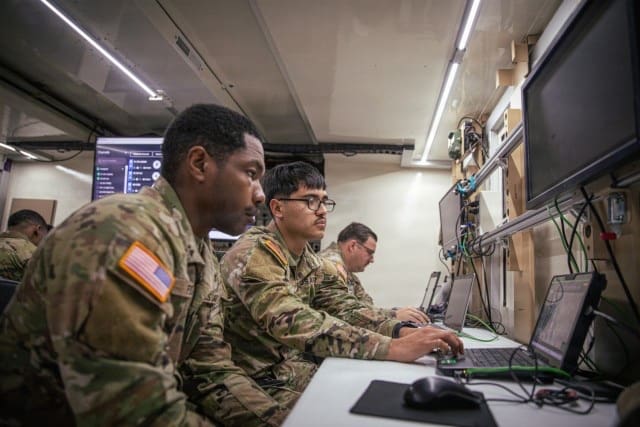
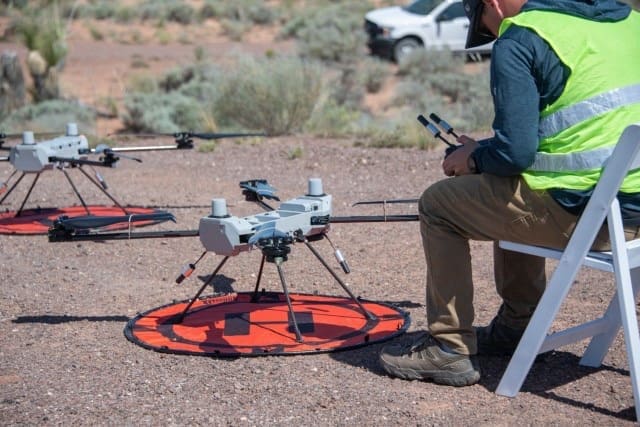
As an Allied combined arms formation rolls quickly through a heavily fortified enemy area, the dangers they face are unknown. Enemy adversaries could be dug in, difficult to identify, and ready to open fire. A soldier launches a drone to perform reconnaissance of the area, spotting a series of dangerous enemy positions. But there are only minutes to convey that critical information to the Battalion and Brigade commanders and adjust tactics before large groups of soldiers advance. With the right software tools, commanders are able to receive and process this information from miles away on a mobile device, and then transmit new orders to their subordinates that integrates real-time intelligence before they engage the enemy. In a matter of seconds, the lethality and effectiveness of the advancing unit is significantly upgraded.

The information age is transforming the battlefield. Soldiers must be equipped to go into battle with the best technology American industry can muster, with connectivity from the outer edge to the operations center. As the battlespace becomes digitized — and timely data, information processing, and decision-making decide success or failure — a transformed, modernized Army will need transformed, modernized software, networking, and communications equipment.

Next Generation Command and Control (NGC2) is the Army’s answer to this challenge. It’s the principal Army initiative to modernize the service’s communications and networking technologies, equipping the warfighter with seamless and resilient connectivity at the edge while simultaneously supplying commanders with the best decision-making information available — all through a modular, extensible, and open architecture software platform.

Anduril Industries today announced that it was awarded a $99.6 million Other Transaction Authority (OTA) agreement by Program Executive Office Command, Control, Communications, and Network (PEO C3N) to lead the delivery of an NGC2 prototype, integrating partner capabilities from other technology-first companies like Palantir, Striveworks, Govini, Instant Connect Enterprise (ICE), Research Innovations, Inc. (RII), and Microsoft.

For NGC2, Anduril and its partners will create an ecosystem that can rapidly integrate a range of technologies into a singular architecture so that soldiers can access various kinds of compute, communications, and information processing capabilities all at once. Time-sensitive decisions will be faster, and soldiers will be more connected across Corps to Company. Critical data might include enemy locations, logistics and sustainment information, terrain mapping, tactical control measures, and weapons statuses. In turn, Lattice Mesh will enable machine-to-machine interfaces that deliver effects in a fraction of the time compared to legacy systems and networks.

Lattice Mesh is already the foundational edge platform that underpins several Joint and Service initiatives, including the DoD’s Chief Digital and Artificial Intelligence Office Edge Data Mesh. In the same fashion, Lattice will create immediate Joint interoperability for the Army’s Command and Control ecosystem. As a result, NGC2 will connect digital assets, remote sensors, command posts, and soldiers on the ground with real-time intelligence and systems. This solution is in stark contrast to the siloing of data and intelligence across classified and unclassified stovepiped systems that currently exists.

The announcement of OTA continuation follows an 18-month competitive experimentation process, which Anduril entered in late 2023. From the ground up, Army Futures Command has reimagined a new construct for command-and-control in just two years, considering multiple proposals from industry with the intent of standing up NGC2 at rapid speed. Contrasted with a typical five to seven year timeline, the Army moved from proof-of-concept to capability validation in just one year, a pace which Army CTO Alex Miller called “astronomically fast.” The Army established NGC2 as a program office in April 2025.

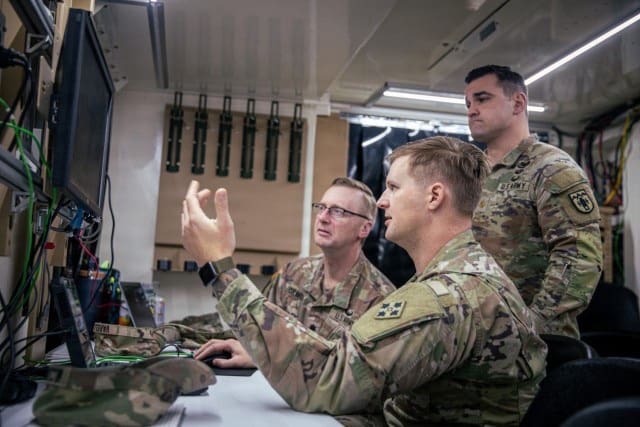
Anduril and its partners will deliver the NGC2 prototype to the 4th Infantry Division immediately upon award, working through a series of Soldier touchpoints and exercises to stress the performance of the software solution in operational environments at scale. The capability will be integrated onto compute nodes aboard multiple different types of mechanized vehicles throughout the 4th Infantry Division. Throughout the process, we will continue to evaluate new products, partners, and technologies that could strengthen the NGC2 ecosystem, contributing to continued improvement and evolution of NGC2. This prototype will serve as a proof-of-concept that with Anduril software, tactical units are better connected, informed, and more agile as they conduct real-time operations — precisely aligned with the Connected Warfare mission at Anduril as it works with customers across the Department of Defense.

This latest announcement from the Army is a reflection of Anduril’s commitment to delivering every conceivable battlefield advantage to the United States military — starting with the information they use and ending with the weapons they carry. And we’re still just getting started.

www.anduril.com

Ukraine’s Battlefield Innovations Reshape Global Military Thinking

Friday, July 18th, 2025

WIESBADEN, Germany – Since the onset of full-scale Russian aggression in 2022, Ukraine has adapted swiftly to conditions on the battlefield, turning what was expected to be a quick invasion into a costly quagmire for the Russian armed forces. These operational, institutional, and technological adaptations adaptation were the focus of a panel convened at LANDEURO on July 16 with military leaders, defense industry representatives and Ukrainian officials which examined the evolution of Ukraine’s defense capabilities since the onset of full-scale Russian aggression.

The panel moderated by Dr. John Nagl, professor of warfighting studies at the Army War College, featured Armed Forces Ukraine Maj. Gen. Volodymyr Horbatiuk, Deputy Chief of the General Staff; U.S. Army Lt. Gen. Curtis A. Buzzard, Commanding General, Security Assistance Group – Ukraine; Armed Forces Ukraine Maj. Robert Brovdi, Commander, Unmanned Systems Forces; Maximillian Froch, Head of Strategic Programs International Rheinmetall AG; and Oleksandra Azarkhina, Co-founder, We Build Ukraine.

The transformation of the way Ukraine fights began with the structure of its armed forces, according to the panelists. Lt. Gen. Buzzard described how the country’s military expanded from 20 to over 100 brigades in a very short time. This transformation has required new approaches to training, organization, and leadership, all under intense pressure of an ongoing war.

“Never be satisfied with our efforts to try to learn as much as we can,” said Lt. Gen Buzzard, reminding NATO and U.S. leaders of their responsibility to keep learning from Ukraine’s experiences.

Strong collaboration between government officials, private companies and citizens strengthened Ukraine’s ability to innovate quickly, bypassing slow-moving systems in favor of fast, flexible and more cost-effective solutions driven by people on the ground, panelists said.

Azarkhina described Ukraine’s approach as values-driven and resourceful. She emphasized the role of civic engagement and cooperation and encouraged NATO and partners to align efforts through intelligence sharing, joint procurement, and smarter coordination to stabilize the frontline.

Panelists highlighted the central role of unmanned systems including aerial drones and ground vehicles, in Ukraine’s military operations. This kind of technology is helping Ukraine gather information and carry out missions more safely. Maj. Brovdi, a decorated member of the Ukrainian military and awarded by Volodymyr Zelenskyy as the “Hero of Ukraine,” discussed Ukraine’s developing doctrine for using unmanned systems. He believes this framework will serve as a model for NATO.

Brovdi praised the efforts of fellow countrymen, but said Ukraine is facing three major challenges at this stage in the war. He said Russian forces are being deployed in such large numbers that Ukraine defenses are struggling to keep up; vital infrastructure across Ukraine are continuing to suffer heavy damage from ongoing Russian assaults; and Ukraine’s civilian population is already fully engaged in the war effort, therefore, there is no reserve remaining for more personnel.

Ukraine’s experience during the war is changing how countries around the world think about defense and is influencing programs like the Army Transformation Initiative. Instead of using old systems, Ukraine is finding faster, more flexible ways to respond with new technology and working with all parts of society.

The full video of the panel can be found here.

By Natalie Weaver

Gray Eagle Armed Persistence

Thursday, July 17th, 2025

Source General Atomics;

An essential element of the U.S. Army’s Aviation Modernization Plan, GA-ASI’s Gray Eagle Unmanned Aircraft System (UAS) is an innovative and technologically advanced derivative of the combat-proven Predator®. Gray Eagle offers a reliable, affordable, low-risk, and compelling next-generation tactical UAS solution to meet challenging service requirements for persistent Reconnaissance, Surveillance, and Target Acquisition (RSTA) and attack operations.

Gray Eagle has an endurance of 25 hours, speeds up to167 KTAS, can operate up to 29,000 feet, and carries 1,075lb (488 kg) of internal and external payload. The aircraft can carry multiple payloads aloft, including Electro-optical/Infrared (EO/IR) with laser designation, Synthetic Aperture Radar (SAR), communications relay, and four Hellfire missiles.

Compared to the Predator predecessor, Gray Eagle’s Heavy Fuel Engine (HFE) supports the Army’s “single fuel in the battlefield” concept and provides increased horsepower and significantly improved fuel efficiency, utilizing either jet or diesel fuel.

An extremely reliable UAS, Gray Eagle features a fault-tolerant control system and a triple-redundant avionics system architecture, similar to the systems integrated in the battle-proven Predator B. Designed with airworthiness as a primary consideration, Gray Eagle is engineered to meet and exceed manned aircraft reliability standards.

This long-range, long-dwell UAS is dedicated to direct operational control by Army field commanders. Its expansive mission set includes, but is not limited, to wide-area Intelligence Surveillance and Reconnaissance (ISR), convoy protection, Improvised Explosive Device (IED) detection and defeat, close air support, communications relay, and weapons delivery missions.

Gray Eagle features an automatic takeoff and landing system (ATLS) that allows the aircraft to be launched and recovered without any operator interaction. Gray Eagle aircraft have successfully conducted tens of thousands of takeoffs and landings.

Gray Eagle Dugway:

Gray Eagle AV SN# 70125 was one of the first aircraft off the Gray Eagle production line, built specifically to meet the ARMY’s needs. AV 70125 is special to Dugway and the ARMY both, shortly after production, it was designated as a test asset and sent here to Dugway. While here, AV 70125 was a key asset to all 4 ARMY production prove out tests to ensure the Gray Eagles abilities and reliability. AV 70125 has also been an invaluable asset to testing, accomplishing, enhanced safety, reliability, combat effectiveness, and readiness of the fielded ARMY Gray Eagle fleet, supporting our troops in the real-world environments they see every day. Through the course of AV 70125’s 15+ year service life, it has flown over 230 flights, of which all were related to testing and evaluation to continue providing the most cutting-edge technology for the U.S. ARMY.

Most importantly, the Gray Eagle program still remains here at Dugway and continues to prove its value to the ARMY every day. UAS PMO plans on continual testing and technology insertions with the Gray Eagles that reside on Dugway, operated and maintained by General Atomics.

By Rodney Mitani

Epirus Receives $43 Million Contract from U.S. Army RCCTO for IFPC-HPM Generation II Systems

Thursday, July 17th, 2025

Second generation of company’s energy-based high-power microwave platform marked by increases in range, power, lethality and usability

Los Angeles, Calif—July 17, 2025—Epirus announced today a $43,551,060 contract from the U.S. Army’s Rapid Capabilities and Critical Technologies Office (RCCTO). The base contract includes delivery of two Integrated Fires Protection Capability High-Power Microwave (IFPC-HPM) Generation II (GEN II) systems, along with associated test events, support equipment and spares with options for additional tests, components and support.

The IFPC-HPM GEN II systems will build upon the four IFPC-HPM systems Epirus delivered to U.S. Army in May 2024¹ and leverage the company’s solid-state, energy-based high-power microwave (HPM) technology platform for counter-electronics and critical asset protection.

The enhanced systems will incorporate Soldier feedback from IFPC-HPM Generation I (GEN I) testing, including engineering developmental testing, joint integrated air and missile defense live-fire exercises and operational assessments with combatant commands.

“Our first IFPC-HPM prototypes were put through the wringer and emerged from sophisticated testing with favorable outcomes. The second generation of our energy-based HPM platform and the next increment of IFPC-HPM will be even more powerful, more mission capable and more impressive all around,” said Andy Lowery, Epirus CEO. “Drones are everywhere. We’ve seen drone incursions over U.S. bases, incursions over our southern border and swarm attacks are defining overseas conflicts. Epirus is prepared to answer the Army’s call and rapidly produce at scale to help solve the asymmetric drone threat with our HPM technology.”

The IFPC-HPM GEN II systems are expected to more than double the maximum effective range of GEN I systems, increase power by a projected 30 percent and feature the inclusion of high-density batteries for prolonged operating times and decreased external power requirements, extra-long pulse widths for maximizing energy output for target defeat, high-duty burst mode for faster multi-target engagement, advanced waveform and polarization techniques for increased lethality against a broader set of targets of interest and Soldier usability enhancements.

These enhancements will build upon the demonstrated effectiveness, usability and safety of the first four IFPC-HPM systems and enable the U.S. Army RCCTO to conduct additional system performance validation through critical parametric assessments, inform potential future Program of Record requirements and support the evolution of a broader directed energy portfolio in line with the Army Transformation Initiative.

¹ Epirus. (2024, May 15). Epirus Finalizes Delivery of Four IFPC-HPM Systems to U.S. Army, Completes New Equipment Training and Engineering Developmental Testing

About Epirus:

Epirus is a high-growth technology company dedicated to overcoming the asymmetric challenges inherent to the future of national security. Epirus’ flagship technology, Leonidas, is a software-defined, energy-based high-power microwave platform, built using intelligent power management techniques which allow power-hungry systems to do more with less.

MyDefence Receives Landmark $26 Million C-UAS Order from U.S. Army

Wednesday, July 16th, 2025

July 3rd 2025 – MyDefence, a global provider of Counter-Unmanned Aerial Systems (C-UAS) solutions, today announced it has received a landmark contract from the U.S. Army valued at $26 million. This is the largest order in MyDefence’s history. The agreement underscores the Army’s continued focus on strengthening its defense capabilities against unmanned aerial threats.

Under the contract, MyDefence will supply its advanced C-UAS technologies designed to detect and track a broad spectrum of drone threats. These systems will be deployed across U.S. Army operations to enhance force protection and tactical readiness.

“This historic contract represents a defining moment for MyDefence and a strong endorsement of our position in the global C-UAS industry.

We are honored to have been selected by the U.S. Army as supplier for C-UAS procurement – an endorsement of the trust placed in our team, our mission,and our ability to deliver battle-proven technology at scale. This commitment from the U.S. Army further strengthens our dedication to the U.S. market, and we are accelerating our investments and expanding job creation across multiple roles in response”

Dan Hermansen, CEO, MyDefence Group

William Ostrowski, recently appointed President and CEO of MyDefence North America LLC, added:

“This agreement marks a strategic milestone for our North American operations. We are committed to long-term collaboration with U.S. defense stakeholders and to delivering high-performance systems that adapt to the complex and fast-evolving threat landscape. The growing use of unmanned aerial systems presents a persistent threat across operational environments. Following extensive testing and evaluation, MyDefence’s systems proved reliable, adaptable, and mission-ready. These capabilities will enhance force protection and enable our units to operate with greater confidence in contested airspace.”

William Ostrowski, CEO, MyDefence North America LLC

MyDefence specializes in modular, scalable C-UAS solutions engineered for complex radio-frequency environments. Its technologies are fielded globally by armed forces and security agencies, enabling proactive defense against unmanned systems across diverse mission sets.

Editor’s Note: The US Army has purchased 485 Soldier-Kits, consisting of “Wingman” drone detector for real time scanning and “Pitbull” jammers from MyDefence. Of those, 15 have undergone evaluation during last month’s Project Fly Trap in Germany, along with other Counter-UAS systems.

US Army Begins Fielding Improved Ghillie System

Wednesday, July 16th, 2025

The Improved Ghillie System is hitting the field!

Supply Soldiers from the 1st Special Forces Group (Airborne) got a first look at this next-gen base layer-modular system during a recent fielding at Joint Base Lewis-McChord.

Led by Blaise Liess from Tactical Soldier Mobility under PdM SCIE, the team partnered with Salute Uniforms to innovate design and textiles, boosting mobility and concealment for snipers and recon teams while cutting production costs.

The result? An advanced and more accessible concealment system for the Soldiers who need it most!

– Via PEO Soldier

US Army Electromagnetic Warfare Capabilities Update

Monday, July 14th, 2025

Aberdeen Proving Ground, Md. – The U.S. Army is addressing a critical need for enhanced electromagnetic warfare (EW) capabilities with a new strategy and refined modernization approach. Recognizing a gap in extended-range, persistent ground and airborne EW assets, the Army is shifting its focus to improve targeting and provide commanders with the ability to effectively manipulate the electromagnetic spectrum in support of maneuver formations.

In March 2025, the Army published a comprehensive EW Strategy, designed to institutionalize enduring EW capabilities across the Army to support Joint Force operations. In conjunction with this strategy, the Army is refining its approach to the Terrestrial Layer System (TLS) for Brigade Combat Teams (BCT) and the Multifunction Electronic Warfare – Air Large (MFEW-AL) programs.

The recently concluded TLS BCT Rapid Prototyping program provided valuable insights into lightweight, modular architectures, informing the transition to the TLS Manpack as the primary EW/SIGINT system for all BCTs, with full fielding expected by FY28. Additionally, the Army plans to enhance TLS Manpack’s capabilities with vehicle agnostic modular adaptor kits (MAK) for mounted options that provide enhanced processing, extended range, and increased power. TLS Manpack will have the ability to provide EW capabilities at the brigade level, alongside distributed EW capabilities for division and higher echelons.

The MFEW-AL program will now prioritize leveraging Commercial-Off-The-Shelf (COTS) and Government-Off-The-Shelf (GOTS) solutions to rapidly deliver incremental capabilities for testing and feedback with Transformation in Contact (TiC) units in early Fiscal Year 2026. The program will utilize an incremental approach for delivery of capability that will evolve over time toward the full Army’s Airborne Electromagnetic Attack requirements.

These updates will be key in meeting recent direction from the Secretary of Defense that the Army remains the most lethal and ready land force in the world and achieve electromagnetic dominance by 2027.

Protected Logistics Truck: Rheinmetall MAN Military Vehicles Presents New TGS-Mil Protected

Sunday, July 13th, 2025

At the RMMV Mobility Days, which were held for the first time this year, Rheinmetall MAN Military Vehicles (RMMV) presented its new TGS-Mil Protected armoured truck. The TGS-Mil Protected is based on the TG-generation of military trucks produced by RMMV in Vienna. The TGS-Mil Protected model on display is equipped with a protected cabin for two persons. The solution developed by Rheinmetall complies with current NATO standards and is available in 6×6 and 8×8 variants.

Thanks to its modular design philosophy, the vehicle can be adapted to a wide range of mission profiles, including protection levels, communication systems, and specialised payload options.

With the TGS-Mil Protected, RMMV is specifically targeting a broad and growing segment of the international market that demands protected logistical mobility combined with long-term cost efficiency. The development of this vehicle highlights RMMV’s commitment to continuously adapt its militarized truck portfolio to evolving mission requirements and geopolitical developments. With the TGS-Mil Protected, RMMV can now offer both protected and unprotected variants within the same modular system, providing flexibility, fleet harmonisation and reduced life-cycle costs for new and already existing customers alike.

The TGS-Mil Protected is powered by a MAN D2676 six-cylinder diesel engine with up to 382 kW/520 hp and up to 2,650 Nm of torque. The engine complies with Euro II, V and VIe-standards and is compatible with NATO fuel F34. The drive and chassis systems are based on proven components from the civilian sector, which simplifies maintenance and worldwide service. The all-wheel drive ensures excellent off-road capabilities.

The RMMV Mobility Days 2025 were held under the motto ‘Innovation in Motion’. Around 120 participants from 22 countries gathered in Vienna for the event. They received information about RMMV’s current products and activities. The programme included a factory tour at the long-standing production facility in Vienna-Liesing which has recently been upgraded with a state-of the-art logistics system and digitised manufacturing processes. In future, around 4,000 HX and TG vehicles can be produced here each year to meet growing global demand. RMMV also demonstrated the versatility and off-road capabilities of its vehicle families (HX and TG) on an off-road site near Vienna. In addition, future technologies such as tele-operated driving and autonomous mobility were also part of the presentation.

Rheinmetall MAN Military Vehicles (RMMV) is the competence centre for professional military and militarised logistics trucks within the Rheinmetall Vehicle Systems Division. The joint venture, headquartered in Munich, is one of the world’s leading providers of defence solutions in the field of land mobility logistics, in which Rheinmetall AG holds a 51 per cent majority stake and MAN Truck & Bus SE holds the remaining 49 per cent. Together with its predecessor companies, RMMV can look back on more than 100 years of experience in truck manufacturing for the most demanding military applications.