FirstSpear TV

Archive for the ‘Army’ Category

Army Conducts Fifth Annual Positioning, Navigation and Timing Assessment Experiment

Saturday, October 21st, 2023

WHITE SANDS MISSILE RANGE, N.M. — As part of its ongoing transformation effort, the Army recently brought together joint, multinational and industry partners to experiment with emerging technologies in a denied and degraded environment.

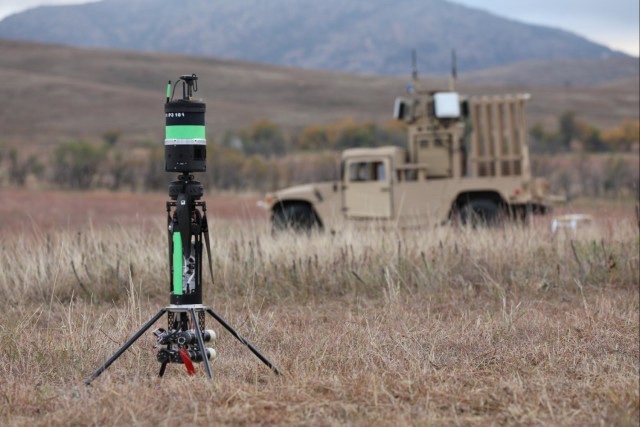
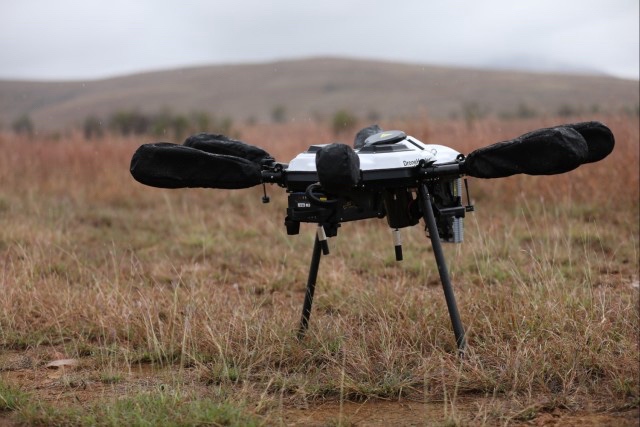
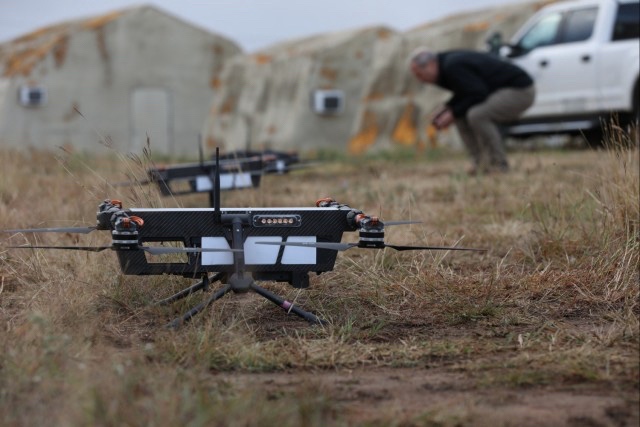
Held at White Sands Missile Range during the month of August, the fifth annual PNT Assessment Experiment, also known as PNTAX, provided an opportunity for participants to evaluate new tools and systems and align their understanding of how future warfighters can operate successfully in settings where access to standard GPS and communications functionality may be limited.

PNTAX is part of Army Futures Command’s campaign of persistent experimentation and continuous learning. The experiment allows participants to field-test new and existing space-based, terrestrial, aerial and ground technologies. Analyzing the effectiveness and interoperability of these technologies enables the Army and its partners to improve kinetic and non-kinetic targeting and increase Soldier mobility, lethality and survivability.

“Experiments like PNTAX provide a valuable opportunity for Soldier touchpoints that directly influence requirements,” said Mike Monteleone, director of the Army Futures Command Assured Positioning, Navigation and Timing/Space Cross-Functional Team (APNT/Space CFT), which hosted the event.

“This is an environment where we can learn as an enterprise, ensuring we can build resilience and situational awareness of the battlespace. With situational awareness of the battlespace, we can more confidently build force survivability and lethality,” Monteleone said.

Putting technology in the hands of the Soldier

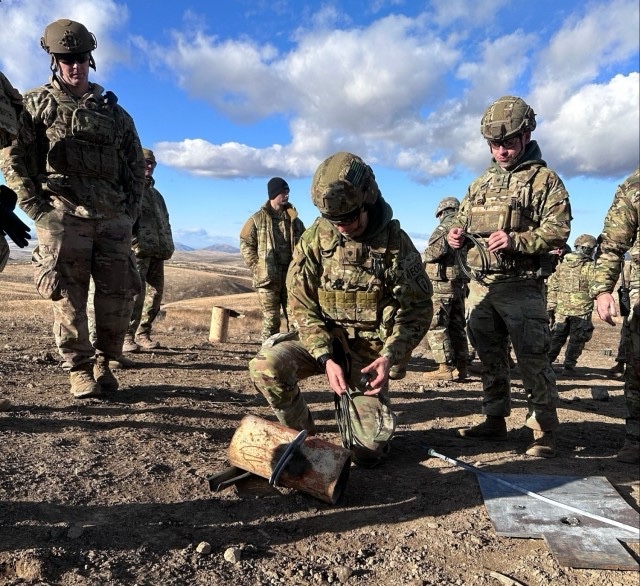
PNTAX provides an opportunity for early, immersive experimentation, which allows the Army and its partners to put technology, at any readiness level, directly into Soldiers’ hands. These early opportunities for direct end-user feedback, referred to as Soldier touchpoints, directly inform the technology development and capability requirements process.

This year, PNTAX provided a multitude of Soldier touchpoints across multiple divisions. Soldiers from the 101st Airborne Division conducted terrain walks and feedback for the Dismounted Assured Positioning System with system training conducted by partners at the Program Manager for Positioning, Navigation and Timing.

Additionally, Soldiers from the 1st Armored Division had the opportunity to conduct their own training objectives utilizing the threat environment provided by the experiment. They were faced with tailorable, threat-based GPS denied and degraded environments and were presented with opportunities to conduct realistic tactical scenarios as if they were in a multi-domain operating environment.

Soldiers from the 10th Mountain Division worked with the CFT’s sensor-to-shooter team in the denied environment to learn from its effects upon the links associated with the tactical architecture, while the 2nd Infantry Division facilitated a variety of ground maneuver activities that enabled operations throughout the experiment.

“This is training I can’t recreate at my home station,” said Warrant Officer Andrew Farnsworth, electronic warfare technician from the 1st Armored Division. “The waveforms in this environment provide a unique opportunity for Soldiers to test and integrate capabilities in a denied and degraded environment.”

Connecting with joint, industry and multinational partners

This year’s PNTAX hosted a variety of participants. Government, industry and academic partners converged on the range with their technology in tow, seeking to test advanced abilities in a challenging environment. Partners were encouraged to experiment with their technology, at any readiness level, to understand its strengths and limits. This approach allows for continuous improvement, a greater understanding of the environment and ultimately, better equipment in Soldiers’ hands.

Allied partners from Canada and Australia joined to observe and scope future participation, while partners from the United Kingdom conducted land navigation experiments with their Soldiers. Multinational participants worked alongside their participating Soldiers and U.S. Soldiers to replicate what operations will likely look like in future, combined force settings.

Partners are welcome to participate in the experiment with any relevant technology, as long as they agree to share data and lessons learned following the event. This exchange of information allows the Army to continue developing relevant scenarios for experimentation and advancement.

Navigating in contested environments

The open-air denied, degraded, intermittent and limited environment at PNTAX was achieved through jamming and a variety of other threat interfaces that resembled real-world, layered approaches Soldiers might face in a multi-domain operating environment. Because of the unique environments the team can create within the electromagnetic spectrum, the team is able to address a multitude of learning objectives.

“So much of our Soldiers’ mission and safety hinges on their ability to effectively operate in contested environments,” said Andy Hotaling, integration director of the APNT/Space CFT. “Events like PNTAX give the Army and its partners the opportunity to ensure the technology they may see in the future can perform in these operationally focused, intelligence-informed environments.”

What’s next?

“We have a lot of valuable data to interpret following our experiment,” Monteleone said. “This data is a crucial stepping stone that informs a variety of Army needs.”

He added that the Army intends to expand opportunities for allied partners, increase the number of Soldier training activities and broaden the scope of electromagnetic spectrum experimentation for participants during next year’s event.

Next year’s experiment is already in the early planning phase alongside our partners within the United States Air Force’s 746th Test Squadron and the Joint Navigation Warfare Center, U.S. Army Combat Capabilities Development Command and the Army Test and Evaluation Command.

By Madeline Winkler, Assured Positioning, Navigation and Timing Space Cross-Functional Team

General Highlights China’s Military Advantages, Disadvantages

Tuesday, October 17th, 2023

WASHINGTON — There are three things that the Chinese military has that the U.S. military, allies and partners in the region do not have, said Army Gen. Charles A. Flynn, commander of U.S. Army Pacific.

“They have interior lines,” he said. He noted that they’re just 100 miles from Taiwan, and they have anti-access, area-denial means to keep opposing forces at a distance — such as missiles, aircraft and ships, as well as cyber and space capabilities.

“The second thing they have is mass,” he said, meaning they have a very large military force.

“The third thing they have is magazine depth,” he said, which would include large quantities of stand-off munitions.

Flynn spoke Tuesday, Oct. 10, 2023, on a panel about land power in the Indo-Pacific region at the Association of the U.S. Army Annual Meeting & Exposition in Washington.

The goal of U.S. forces along with allies in the region is to take time and space away from China to deny them key terrain “and to keep our physical presence forward with hard power to deter a war from happening,” he said.

“The goal is no war. We already have a war in Europe. We have another war that just started this past week in the Middle East. We do not need another war in Asia. That is the land powers’ contribution to the joint force to prevent that from happening,” Flynn said.

The anti-access, area-denial arsenal that the Chinese military possesses “is primarily designed to defeat our air power and maritime power. And, secondarily, it’s designed to degrade, deny and disrupt our space and cyber capabilities. It’s not, however, designed to find, fix and finish distributed, mobile, fixed, semi-fixed, reloadable, lethal and non-lethal land power,” he said.

“We present a dilemma to them that they did not design into the A2/AD arsenal that they built. And this has proven out in war game after war game after war game,” he said, referring to anti-access, area-denial.

The general went on to speak about the importance of the U.S. and allied military presence in the region to deter Chinese aggression.

While air and sea power are crucial, land power is, as well, he said. Flynn added that militaries in the region are composed of anywhere from 65% to 80% ground forces.

“Land power and the armies in the Indo Pacific are an absolute central part of defending [nations’] national sovereignty and protecting their territorial integrity,” he said.

Flynn highlighted steps the U.S., allies and partners are taking to deter China’s aggression, including increased bilateral and multilateral training exercises, the U.S. Army’s new training center in the region, and nations beefing up their defense spending and working together on improving interoperability.

By David Vergun, DOD News

Digital Transformation: Laying the Foundation

Sunday, October 15th, 2023

WASHINGTON — The Army becoming a data-centric, technology-driven service is one of the Secretary of the Army Christine E. Wormuth’s top objectives.

During her keynote speech to kick off the 2023 Association of the U.S. Army Annual Meeting and Exposition in Washington, D.C., she spoke about the importance this plays in fielding the Army of 2030.

“We must continue to embrace innovation and transformation or risk failing to address future threats,” she said. “In close partnership with industry, the Army has pressed ahead and stayed on track to implement our most ambitious modernization effort in 40 years. With the introduction of each new system, we continue to increase our force’s capability to respond to various threats and serve as a credible deterrent to our adversaries.”

To expedite changing the Army and its business and operating model to leverage data strategically, the service created the Digital Transformation Strategy in 2021.

This outlines three key areas the Army must improve to leverage innovative and transformative technologies: modernization and readiness, optimized digital investments, and a technically savvy, operationally effective digital workforce.

In the last two years, the Army has been laying the foundation of the strategy by implementing the right policy, guidance and resourcing so it can quickly integrate technologies in the future.

“I think that is a big piece of where we are moving right now, and as you look at the next couple years, it really is about maturing that foundation,” Army Chief of Information Leonel Garciga said during an AUSA panel this week. “I don’t care how good an algorithm is. If you don’t trust the platform, or you don’t trust the network, do you trust the output of that algorithm? I think the answer is no.”

One of the key foundational pieces is making sure that the data being collected is properly labeled across the entire Department of Defense. This will allow the systems to communicate and scale quickly.

“We’ve got to ensure across all the functional communities in the Army, we have a common way of tagging, governing and ensuring that the data is accurate,” said Under Secretary of the Army Gabe Camarillo, who serves as the Army’s chief operating and management officer. “Once we do that, then I think we’ll be able to really start humming.”

The Army is taking an enterprise approach to change and transform faster. It is working on a more unified and coherent network. It’s changing how it trains Soldiers to use and interact with emerging technologies. It’s also adopting industry best practices for software development and updating its acquisition policy.

“In order for us to succeed, the challenges aren’t really technical because industry has most of this stuff already figured out,” Camarillo said. “The real question is how quickly can we adopt and change our processes to make the most advantageous use of capabilities that are already in the market.”

All this work is being done to give commanders and Soldiers on the battlefield the timely information they need to make informed decisions.

“So much of what we do involves software, involves data, it’s going to impact the entire range and spectrum of military operations in the future,” Camarillo said. “For us to maintain [our technological] advantage, we absolutely, as an imperative, have to get this right.”

Story by Christopher Hurd, Army News Service

Photos by Henry Villarama

Yuma Proving Ground Pioneers Radar Sharing With Fellow Test Centers

Saturday, October 14th, 2023

YUMA PROVING GROUND, Ariz. — Radar units send out pulses of high-frequency electromagnetic waves that reflect off objects, and modern radar systems are sophisticated enough to track even small, rapidly moving objects like rockets and mortar and artillery shells.

The Army Test and Evaluation Command, known as ATEC, relies heavily on multiple radars to gather test data on a variety of military systems under evaluation.

“Out of all the ATEC test ranges, YPG’s systems have the greatest amount of usability for different types of testing,” said Herbert Kiser of Yuma Proving Ground’s Instrumentation Division. “Yuma does a lot of different things with what we have and does them well.”

This versatility in radar capabilities makes YPG’s systems prime candidates for supporting testing elsewhere across the ATEC enterprise in a bid to share expensive, highly specialized assets between installations.

Tests at U.S. Army White Sands Missile Range, the ATEC post that specializes in evaluating long-range missiles, tend to have a higher level of complexity than YPG. Most notably, the post’s range safety requirements often include double or triple redundancies that aren’t necessary for the shorter-range artillery and mortar testing conducted in Yuma.

Safety is so paramount that testers might have to detonate a missile in flight if a redundant radar doesn’t work due to technical problems, which would cause significant test delays and cost millions of dollars in lost time. Borrowing a radar system from YPG in such a situation helps prevent this, but at what cost in test delays and lost time at YPG if their radar was transported to WSMR for many weeks?

“We knew the systems could be used for a missile test, but YPG has a different network structure than White Sands does,” said Kiser. “The concern was always that it had never been done before.”

Among other things, it had been assumed by some that successfully integrating the two could take months of preparations, not least of which was moving the massive 12-foot dish that generates the AN/FPS 16’s one million watts of power along with its personnel shelter and calibration tower. Two support personnel also must accompany the apparatus.

“It’s not just sharing the radar systems, it’s sharing the personnel,” said Kiser. “Our greatest asset is the people we have with specialized knowledge and skill sets.”

To prove the concept, YPG personnel configured the AN/FPS 16 in the same manner as WSMR’s while the apparatus was still on site in Yuma. They then tracked an orbiting satellite as it passed, then electronically handed the track off to a radar at WSMR. The two installations then did the same test in reverse and were successful again.

“This proves that we can assist White Sands based on their schedule to accommodate a redundant range safety asset,” said Kiser. “It’s a big feat: We’ve taken our weapons systems and radars there as a stand-alone before, but we had never integrated with White Sands’ radars.”

By Mark Schauer

Army Names USASOC Team as Best Squad, Best Soldier Winners

Wednesday, October 11th, 2023

WASHINGTON — With the Georgia heat bearing down on them, Sgt. Jake Phillips and members of 3rd Ranger Battalion, 75th Ranger Regiment, struggled to finish the final leg of the 2023 Army Best Squad Competition’s first phase in September.

Still, the Soldiers had confidence in one another as they carried 35-pound rucks for 15 miles in the woods of Fort Stewart, Georgia. The Soldiers operated on only two hours of sleep and endured food deprivation. Fortunately, the squad boasted some of the most physically-fit Soldiers in the Army including Spc. Chancellor McGuire, who had the highest physical training test scores among all 60 competitors.

They had also competed and trained together for at least three years and some members even deployed together. Knowing his team’s robust fitness levels, Phillips wanted to push his squad to its limits.

The fire team leader learned that slowing their speed during the march actually helped his squad find the endurance needed to secure victory.

“I was always wanting to push the pace past what I think we’re capable of as a squad,” said Phillips, 25. “I was wanting to put more gas when it should have been more brakes. That was personally more challenging.”

Phillips’ guidance helped his 75th Ranger Regiment, U.S. Army Special Operations Command squad win the 2023 U.S. Army Best Squad of the Year award. Phillips, a native of West Chester, Pennsylvania, took Non-Commissioned Officer of the Year honors. McGuire, who hails from Austin, Texas, won Soldier of the Year.

“I think the key for us to win was we’ve all been working together for years,” Philips said. “We all know each other pretty well.”

Sgt. Maj. of the Army Michael R. Weimer presented the awards in a ceremony at the 2023 Association of the United States Army Annual Meeting and Exposition in Washington, D.C. today. Soldiers from Army Medical Command finished in second place while the Army Pacific Command squad took third.

McGuire said keeping the goal in sight helped his squad weather through the endurance march.

“It was the last day of the competition. You can do anything for however long you tell yourself you can,” he said.

The 24-year-old McGuire credited his squad leaders and company commanders with helping mold him into a more capable special operations Soldier.

“It means I’m doing something right,” McGuire said of winning Soldier of the Year. “I took a lot from my team leaders coming up, my squad leaders. I took in everything that they have taught me … I’ve kind of become a sponge, so really I’m an image of them.”

The Army revamped its former Best Warrior contest two years ago into the Best Squad Competition to encourage a greater focus on team building and unit cohesion.

This year’s contest, executed by 1st Armored Brigade Combat Team, 3rd Infantry Division, featured another incentive. While competing, the participants could simultaneously earn their special skills certifications: the Expert Infantry Badge, awarded to Soldiers in infantry and Special Forces units; the Expert Soldier Badge, given to Soldiers who are not in infantry, Special Forces and medical branches; or the Expert Field Medical Badges, earned by outstanding medical technicians.

Twelve, five-person squads competed in the first phase of the competition during 10 grueling days at Fort Stewart.

The Soldiers went on ruck marches, completed exercises and did battle drills across more than 200,000 acres of land. The Soldiers engaged in land navigation, operated in urban areas and rucked from each destination. They learned to operate while sleep-deprived, while also taking part in night exercises.

During the competition’s final phase, the competitors travelled to Washington D.C. to be interviewed and evaluated by senior leaders.

McGuire said that his squad, which also includes Staff Sgt. Andrew Ewing, Spc. George Mascharka, and Spc. Shane Moon, finished first because of the bonds that the Soldiers share during and outside of duty. The Soldiers know each other’s families. They work out together and spend time studying in coffee shops.

The USASOC Soldiers faced stiff competition, particularly from the MEDCOM squad of Sgt. Jaime Padilla, Spc. Axxel Pasos, Sgt. 1st Class Kaleb Richardson, Spc. Robert Rupers and Christopher Trejo.

“My squad is the best squad,” said McGuire, a fire team leader. “We achieved something that we set our hearts and minds to, but at the end of the day we came out on top.”

By Joe Lacdan, Army News Service

AUSA 23 – Gentex Asks What’s Next for Army’s Integrated Head Protection System

Tuesday, October 10th, 2023

Gentex is one of the current manufacturers for the Integrated Head Protection System. Currently rolling off the line is the Next Gen IHPS which has transitioned to a “holeless” design meaning there are no holes bored into in the helmet’s shell to accept the liner and external accessories.

Instead, there are adhesive receivers for the bolts adhered to the shell with epoxy. The effect is just as strong as the old way and doesn’t compromise the integrity of the ballistic shell.

However, IHPS still has a compromise shape in that it is a mid-cut helmet, making it difficult to wear with hearing protection.

Consequently, Gentex is examining offering a high-cut option and incorporating their tried-and-true ARC rails into IHPS and chin strap.

While no decision has made by the Army, I would suspect we will eventually see something along these lines.

Spectra Group’s Award-Winning SlingShot Satcom System Selected for Project Capstone 4

Monday, October 9th, 2023

Spectra Group, a specialist provider of secure voice, data and satellite communications systems, in partnership with Inmarsat, has been selected to support Project Capstone 4 (Army Futures Command’s premier integration and experimentation exercise in 2024) with their award-winning SlingShot satellite communications system. Spectra Group has a strong pedigree of successfully supporting previous command and control innovation and integration demonstrations for the USDOD and USSOCOM, the Army Maneuver Battle Lab (AEWE 2019) and the Fires Battle Lab (MFIX 2022).

SlingShot is a compact and user-friendly tactical radio range extension system designed to enhance Beyond Line Of Sight (BLOS) Communications On The Move (COTM) C2 (Command and Control) communications. This innovative system effortlessly enables in-service Ultra High Frequency (UHF) and Very High Frequency (VHF) radios to utilise L-Band satellite frequencies, extending their reach over thousands of kilometers. A standout feature of SlingShot is its intuitive plug-and-play capability, making it a reliable choice for both stationary and mobile setups. It serves as a direct augmentation to existing tactical radios. When paired with the Inmarsat L-TAC service, SlingShot significantly expands its user base and coverage, enabling the immediate transmission of voice, data and specialized military applications, such as artillery coordination and situational awareness, across vast distances.

Project Capstone leads the integration of all the domains that the US Army is dependent on — air, land, sea, space, cyberspace adopting a truly multi-domain/multi-national approach, while at the same time looking at concepts for the future. The Network Cross Functional Team (N-CFT) acknowledges that as national armies operate in multinational coalitions during future expeditionary operations, integration and interoperability of communications is paramount to ensuring battlefield success. Therefore, the N-CFT hosts foreign liaison officers from the armies of two close allies, the U.K. and Australia, to help shepherd information interoperability initiatives, concepts and goals and Spectra Group from the UK has been selected to support this project.

SlingShot plays a pivotal role in advancing interoperability among forces. By bridging communication gaps and ensuring seamless integration between different communication systems and networks, SlingShot fosters collaboration and coordination among diverse military units and allies. For broader connectivity, SlingShot can adeptly link the L-TAC networks to major, distant headquarters worldwide using cutting-edge digital RF-Over-IP technology. With a commendable track record, marked by over 7,000 units actively utilised by both specialised and regular forces globally, SlingShot has proven its mettle in the most challenging environments and diverse locales.

Pat Gallagher, General Manager Spectra Group (US) said: “SlingShot has a fantastic operational record with USSOCOM and is the perfect system to support AFC’s communication innovation and integration experiments as it can be added to any existing or future capability. When combined with the Inmarsat L-TAC service, SlingShot delivers the ultimate interoperability for secure voice, data and applications at scale for operations anywhere in the world.”

Future of Human-Machine Integration Must Bring Right Mix of Robotic Elements to Formations

Monday, October 9th, 2023

WASHINGTON — As ground robotics and autonomy are expected to play a critical role in future warfare, four Army leaders will jump start AUSA with a Warriors Corner discussion on human-machine integration at 12:50 p.m. Monday, Oct. 9, 2023.

Michael Cadieux, director of U.S. Army DEVCOM Ground Vehicle Systems Center; along with Brig. Gen. Geoffrey Norman, director of the Next Generation Combat Vehicles Cross-Functional Team, shortened NGCV CFT; Maj. Gen. Curtis Buzzard, commanding general at Maneuver Center of Excellence; and Col. Shane Upton, director of the Contested Logistics CFT, will address formation-based concepts developed with human-machine integration advances. Brig. Gen. Stephanie Ahern, concepts director at Army Futures Command, will moderate the panel discussion.

The session will be livestreamed on DVIDSHub.net.

Transforming for the future fight requires engagement across the Army and joint force. Advances in ground robotics and autonomy and the effective fusion of robotic systems into formations will provide new capabilities to help the Army achieve goals for multi-domain operations.

The fusion of robotics in formations is already taking place on the ground at various Army training locations.

“Soldier Touchpoints help us to help define future tactics and techniques for fighting with these revolutionary systems while informing future required capabilities for the science and technology community to develop,” Cadieux said.

“Human-machine integration is all about bringing the right mix of robotic elements to our formations to enable a total formation that is more capable than the sum of either the human or robotic elements,” he said.

Robotic combat vehicles will provide formation leaders new options on both the offense and the defense. The NGCV CFT has been at the forefront of robotic combat vehicle development and the experimentation that refines those vehicles.

“We’re already seeing the first robotic capabilities that we’ll be fielding, and our teams for years have been experimenting with the best way to integrate them into formations,” Norman said.

“We’re not sure yet what the integrated formations will look like, but it could require warfighters to control multiple platforms simultaneously, or perhaps multiple warfighters working different parts of the same system, or the flexibility to move between these two paradigms as the mission requires,” Norman said.

Robotic combat vehicles can accomplish some of the more dangerous and mundane tasks, such as refueling and for port logistics, while freeing up Soldiers to do the tasks that call for more thinking.

“Human-machine integration is fundamental to sustaining the future joint force operating in a contested logistics environment,” Upton said.

The integration of robotics into manned formations will iterate between doctrinal and training insights informing what the robots need to do and insights from experiments with the robots informing how doctrine and training need to adapt.

The Army has created a ground vehicle autonomy strategy built on a foundation of modular open systems approach, or MOSA, which will enable common unmanned maneuver capabilities across the ground vehicle fleet.

“Building a MOSA based, common approach to ground autonomy software lets the Army collaborate with a wide range of industry-leading partners while controlling current and future costs,” Cadieux said.

Understanding formation-based concepts developed with Human-Machine Integration advances is a key priority to designing the Army of 2040.

“The technologies Army pursues in the ground vehicle space drive at both robotic capability growth and in strengthening the interface between the Warfighter and the robotic elements,” Cadieux said.

By Jerome Aliotta