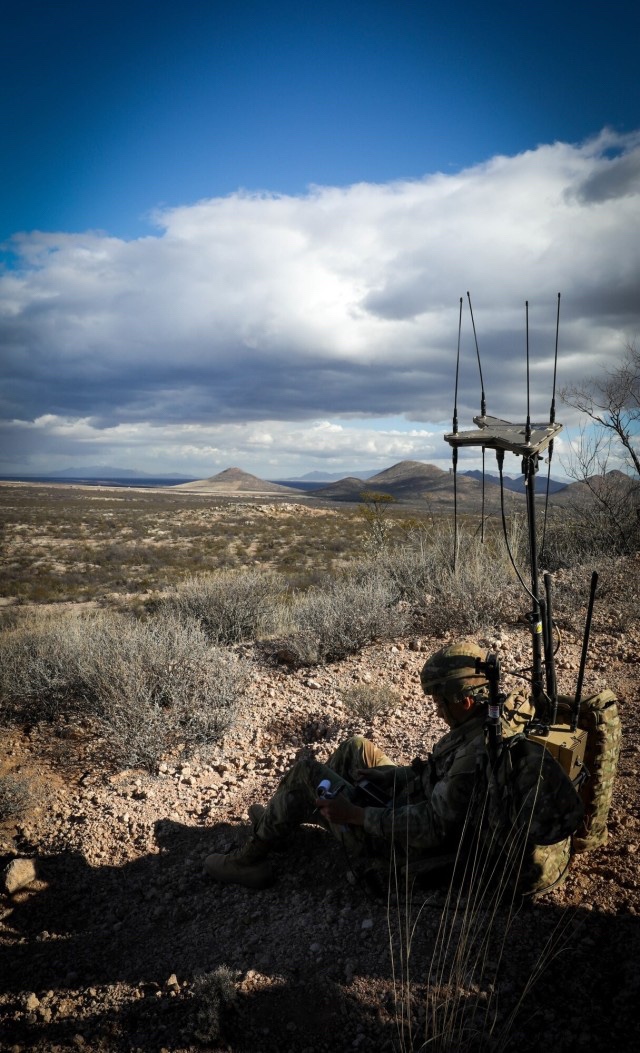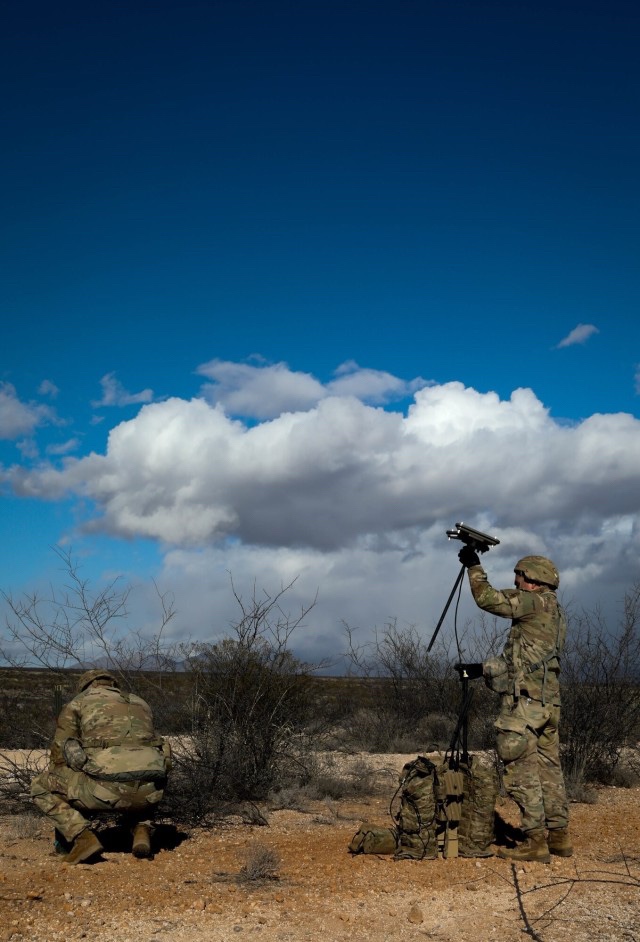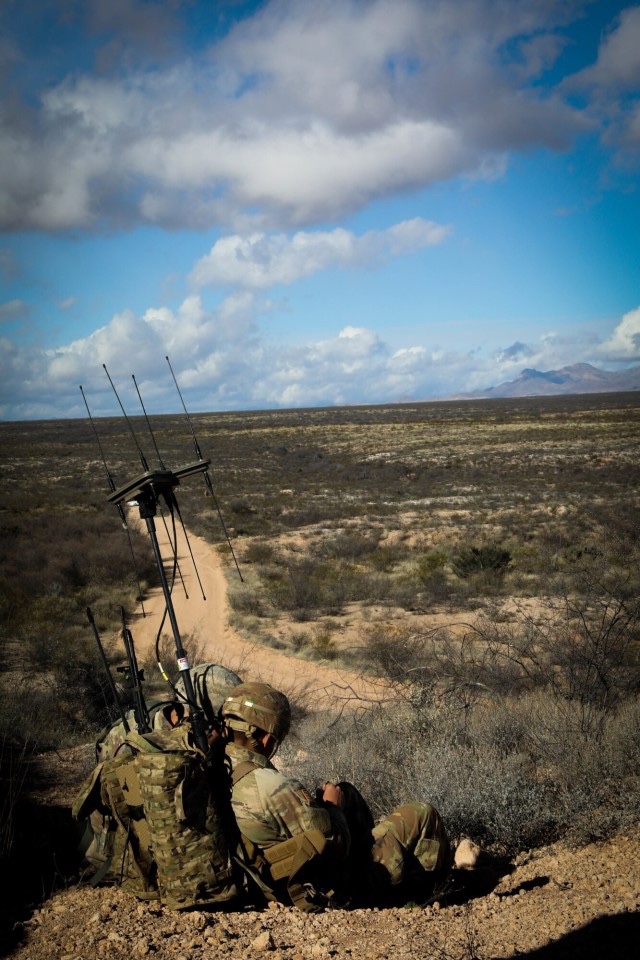
BOSS-Xe from Wilcox Industries

Archive for the ‘Army’ Category

US Army Units Hone Skills Together at Defense Nuclear Weapons School

Tuesday, January 10th, 2023

KIRTLAND AIR FORCE BASE, N.M. — Units from the U.S. military’s premier all hazards command trained together during a radiological course at the Defense Nuclear Weapons School on Kirtland Air Force Base, New Mexico.

Soldiers from the 20th Chemical, Biological, Radiological, Nuclear, Explosives (CBRNE) Command’s 1st Area Medical Laboratory and Nuclear Disablement Teams both participated in the Applied Radiological Response Techniques Level 2 course.

The five-day course is designed to apply radiological hazard theories and develop applied radiological problem-solving methods.

“Approximately 20 percent of the course is conducted in detector laboratories while the remaining course time is dedicated to hands-on radiological experiences and the interpretation of survey data,” said Capt. David D. Manzanares, a Nuclear Medical Science Officer from Nuclear Disablement Team 1. Originally from Miami, Manzanares has been in the U.S. Army for 18 years and served overseas in Baumholder, Germany.

NDTs contribute to the nation’s strategic deterrence by staying ready to exploit and disable nuclear and radiological weapons of mass destruction infrastructure and components to deny near-term capability to adversaries and facilitate WMD elimination operations. The U.S. Army has three NDTs — the NDT 1 “Manhattan,” NDT 2 “Iron Maiden” and NDT 3 “Vandals.”

The 1st AML identifies and evaluates health hazards through unique medical laboratory analyses and rapid health hazard assessments of nuclear, biological, chemical, endemic disease, occupational and environmental health threats. The one-of-a-kind medical laboratory is based on Aberdeen Proving Ground, Maryland.

Together with the 1st AML and three NDTs, the 20th CBRNE Command is home to 75 percent of the active-duty Army’s Explosive Ordnance Disposal (EOD) technicians and Chemical, Biological, Radiological, Nuclear (CBRN) specialists, as well as five Weapons of Mass Destruction Coordination Teams.

Headquartered on Aberdeen Proving Ground, Maryland, the 20th CBRNE Command has units on 19 bases in 16 states that take on the world’s most dangerous hazards in support of joint, interagency and allied operations around the world.

Tracing its roots to the Manhattan Project, the Defense Nuclear Weapons School provides training on radiological and nuclear weapons, incident command and response and CBRNE modeling for the U.S. Department of Defense and other Federal, state and local agencies.

The school is accredited by the American Council on Education, Chairman of the Joint Chiefs of Staff, U.S. Department of Homeland Security and the State of New Mexico.

Col. Matthew J. Grieser, the commander of the 1st Area Medical Laboratory, and his senior enlisted leader, Command Sgt. Maj. Jackie S. Mims, visited the Soldiers during the course.

Grieser is a native of Mulino, Oregon, who has deployed to Afghanistan four times and Iraq five times. He has also served in Haiti, Panama and New Orleans following Hurricane Katrina.

“The skills gained from this course will make us even more effective,” said Grieser. “It takes teamwork to tackle the kinds of challenges that we confront and we have many great partners, including the professionals at the Defense Nuclear Weapons School.”

By Walter Ham

Integrated Visual Augmentation System 1.2 Development Task Order Awarded

Monday, January 9th, 2023

Washington – On Dec. 20, 2022, the U.S. Army awarded a task order to Microsoft Corporation to develop the 1.2 variant of the Integrated Visual Augmentation System.

This task order is the latest step in the process that began in March 2021, when the Army awarded Microsoft a firm-fixed-price Other Transaction Authority production agreement to manufacture IVAS. Under that agreement, the Army envisioned improving the system through an iterative process, and this task order will provide improvements based on completed test events.

The IVAS will provide Soldiers with a single device to fight, rehearse and train by integrating next-generation situational awareness tools. To date, the Army has conducted over 30 Soldier test events and more than 100 technical sub-tests, with more than 1,000 Soldiers contributing nearly 100,000 hours of IVAS user feedback. These tests validated the system’s continued progress while identifying areas for focused improvements.

IVAS will begin incremental fielding in September 2023. IVAS 1.0 provides baseline warfighter capability, and the IVAS 1.1 features an improved low-light sensor to aid maneuver and positive target identification. In addition to the IVAS 1.1 improvements, IVAS 1.2 will include a new form factor to address Human Systems Integration, including physiological impacts identified during testing, and a lower profile heads-up display with distributed counterweight for improved user interface and comfort. IVAS 1.2 will also include software improvements for increased reliability and reduced power demand.

Delivery orders for IVAS 1.2 production systems will be placed after qualification and operational testing.

The Army will continue to work with its IVAS industry partner, Microsoft, to execute the IVAS program in a rapid and innovative manner. The iterative and Soldier feedback oriented developmental process for IVAS will result in fielding substantial capability several years ahead of traditional acquisition program timelines. The Army is fully committed to IVAS and the leap-ahead capability it will provide for Soldiers to prevail on the battlefield.

By U.S. Army Public Affairs

Soldier Earns Ranger Tab, Airborne Wings, Air Assault Badge in One Year

Saturday, January 7th, 2023

BOISE, Idaho — Pfc. Cooper Hayes has only served in the Idaho Army National Guard for 14 months, but he has already compiled a career’s worth of accomplishments. Over the past 11 months, the 20-year-old has completed the U.S. Army’s Ranger, Airborne and Air Assault schools.

“It’s been a long year,” Hayes said.

Hayes moved from Bothell, Washington, to Boise to attend Boise State University and enlisted into the Idaho Army National Guard in October 2021 to help pay for college, where he is a business student.

He took a semester off from school to attend the Army’s 11B infantry school at Fort Benning and was planning on being home in time to resume classes in August. That changed after he was offered the chance to attend Ranger School.

“I wanted to challenge myself and be the best Soldier I can be,” he said. “So, I decided to take another semester off and go to Ranger School. It sucked in the moment, but it’s the most rewarding thing I’ve done in my life.”

On average, less than 50 percent of Soldiers complete the first phase of the three-phase course, making it one of the Army’s most challenging courses. The course is 61 days and tests Soldiers’ physical stamina, mental toughness and tactical fundamentals.

After earning his Ranger tab, Hayes completed the Basic Airborne Course to earn his jump wings. Earlier this month, he completed the Army’s Air Assault School. Air Assault School has close to a 55 percent fail rate, including a washout rate of 15 percent on the first day.

“Airborne and air assault were great experiences,” Hayes said. “They are both another thing to add to my resume.”

Hayes is currently assigned to C Company, 2-116th Combined Arms Battalion, Idaho’s only infantry company. He plans to commission through the Boise State University Army ROTC program.

By MAJ Robert Taylor, Idaho Army National Guard

Airborne Innovation Lab Develops PMN-2 Mine Training Aid

Thursday, January 5th, 2023

Fort Bragg’s Airborne Innovation Lab has developed a PMN-2 mine training aid.

Photo 1: The PMN-2 replica attaches to an M-80TR paintball AP mine. If stepped on, the PMN-2 training aid will release both paint and smoke.

Photo 2: The inert training aid next to the reactive training aid. The bottom portion (where the spoke and CO2 canister resides) will be buried.

Photo 3/4: The PMN-2 is not the only mine they have adapted to fit the M-80TR. You can swap the PMN-2 with the PMN-1, increasing the versatility of the training aid.

Soldier of the Future to be Fielded by RIA-JMTC

Thursday, January 5th, 2023

ROCK ISLAND ARSENAL, Ill. — What formerly belonged to the realm of science fiction has become reality for Soldiers, with advances enabling them to fight and win with next-generation technology.

Rock Island Arsenal – Joint Manufacturing and Technology Center will help distribute one of these advances to Soldiers across the force and in the field, a mixed-reality headset called the Integrated Visual Augmentation System, or IVAS, in a partnership with Program Executive Office (PEO) Soldier.

The IVAS is designed for dismounted close-combat force Soldiers to integrate key technology systems into one device enhancing situational awareness, lethality, survivability, maneuverability and other warfighter capabilities, to include synchronization with Soldiers in armored vehicles and helicopters.

IVAS provides Soldiers a field of view nearly twice as wide as those offered by current systems. It is capable of navigation and passive target interrogation, which allows users to identify targets without being seen by opposing forces.

Currently, thousands of IVAS systems are on ground in RIA-JMTC’s staging facility, in preparation for fielding. The Army anticipates procuring up to 121,500 units for close-combat forces over the coming years.

The RIA-JMTC IVAS team is on track to begin deliveries to units in the fall of 2023.

“That gives us time to receive everything, dress-right-dress,” said Sunny Koshal, branch chief, Program Management IVAS, RIA-JMTC. “It gives us time to get a good accountability. It gives us time to pack and ship each item that needs to go because every item has to go as a lot, not as an individual item.”

Besides their partnership with IVAS, RIA-JMTC and PEO Soldier have built a strong relationship through their work on other programs, to include a four-year partnership with PM Lethality for weapon cleaning kits. At one time, the warehouse held more than $20 million worth of kits awaiting fielding.

The IVAS is delivered in multiple packages so RIA-JMTC employees will need time to package each kit with the system, batteries and any other required components prior to shipping to Soldiers all over the world.

This fight-rehearse-train system will not only assist Soldiers on the battlefield but also improve their training opportunities. The goggles allow Soldiers to plan a mission virtually, without concern for available space, in addition to providing real-time mapping and augmented reality capabilities. Soldiers can train for missions and rehearse operations at the point of need.

The mixed-reality headsets allow Soldiers to see through smoke and around corners, use holographic imagery, thermal and low-light sensors to see in the dark and display 3D terrain maps and a compass projected into their field of vision. They provide tools to better conduct land navigation, battlefield tracking and movement through urban buildings and open terrain.

The IVAS will be the single most advanced fighting goggle available anywhere in the world. Its capabilities result from the tireless, integrated efforts of the Army and industry. The partnership between RIA-JMTC and PEO Soldier will help ensure these systems get to our Soldiers as soon as they are ready.

Rock Island Arsenal – Joint Manufacturing and Technology Center develops, manufactures and delivers readiness solutions through conventional and advanced manufacturing processes for the U.S. Army and Department of Defense systems globally.

By Debralee Lutgen

Massachusetts Army Guardsman Wins CENTCOM Innovation Contest

Wednesday, January 4th, 2023

WASHINGTON — Before deploying this summer with his Massachusetts Army National Guard unit, Sgt. Mickey Reeve had little idea he’d be on a world tour just a few months later talking about innovation in the military.

However, that’s where he found himself after winning the U.S. Central Command’s Innovation Oasis contest this fall for his counter-unmanned aerial system training software.

The tool simulates U.S. military c-UAS operating systems allowing operators to train with adjustable scenarios and locations. The customizable trainer can be used by teams to sharpen reaction time, refine engagement drills and streamline communications.

“This tool will potentially have the ability to influence operators to become more proficient at their jobs, which could positively impact the mission and save lives,” Reeve said. “I think it is going to be a massive benefit to our organization.”

For CENTCOM, the contest was a way to find a practical idea to help the joint force and inspire change across the command.

“This program is about building a culture of innovation across all of CENTCOM,” said Gen. Michael Kurilla, commander of CENTCOM. “It’s about finding those great ideas hidden from view inside a squad, trapped inside of a ship, locked down in a cubicle in one of our bases, or tucked away in an aircraft hangar. We want to unlock, embrace and then uplift those ideas and then implement them across the entire organization.”

Reeve came up with the winning idea while assigned to the Prince Sultan Air Base counter UAS team. Noticing a training gap within their simulators, he used his programming background to find a solution.

“I’m somebody that’s always had that work-oriented mindset, and I’m always craving that next thing to do,” he said. “This was a great opportunity for me to provide that outlet and to work on a solution that I found for my base.”

After seeing flyers for Innovation Oasis, he decided to enter and spent hours refining a functional prototype for his pitch. Thanks to the help from those around him, the Interim Platform Agnostic Counter-Unmanned Aircraft System Trainer was born.

“My team did a fantastic job of supporting me the entire way,” he said. “None of this would’ve been possible without them.”

CENTCOM awarded Reeve the Defense Meritorious Service Medal for winning Innovation Oasis. He also can attend the military school of his choice during the calendar year.

After the selection, Reeve went on a tour of Washington, D.C. and the Middle East to promote his idea and innovation throughout CENTCOM.

“The ideas are out there and they’re good ideas,” he said. “We have a tremendous talent pool throughout our organization.”

Army Futures Command’s Software Factory will work on bringing Reeve’s idea to the field.

With the success of the first Innovation Oasis, CENTCOM is planning for another contest this spring.

By Christopher Hurd, Army News Service

TRADOC Commanding General Visits Fort Huachuca, Army’s First Multi-Domain Training Range

Monday, January 2nd, 2023

FORT HUACHUCA, Ariz. — Gen. Gary M. Brito, Commanding General of U.S. Army Training and Doctrine Command, made his first visit to the U.S. Army Intelligence Center of Excellence and Fort Huachuca Dec. 19-20.

TRADOC oversees 32 Army schools organized under 10 Centers of Excellence, each focused on a separate area of expertise within the Army — such as intelligence and maneuver. These centers train more than 750,000 Soldiers and service members each year.

Brito, accompanied by his wife, Michelle, took a tour of the installation; experienced Fort Huachuca’s Resiliency, Awareness, Prevention, Inclusion, and Diversity (RAPID) Escape Room; and met with installation leadership, Soldiers, and spouses to discuss command priorities and was briefed on Fort Huachuca programs and initiatives.

“I think Fort Huachuca is at the forefront of building the Army of 2030, 2040, and I shared with the team earlier in that respect that 2030 is right around the corner,” Brito said. “With all the tenet organizations here at Fort Huachuca, it’s critical; the training, development, testing, and experimentation, is necessary for the Army of 2030, 2040 and beyond.”

Maj. Gen. Anthony R. Hale, USAICoE and Fort Huachuca commanding general, took Brito to Star Hill to give him an overview of the 1st Lt. John R. Fox Multi-Domain Range.

Renamed this past summer as the 1st Lt. John R. Fox Multi-Domain Operations Non-Kinetic Range Complex, it is the first Army range dedicated solely to training and enhancing the Army’s multi-domain operations capabilities.

“Fort Huachuca is well-positioned to meet the Army’s demands by building on our current capabilities as a major range test facility Base,” Hale said. “The 1st Lt. John R. Fox MDO Range will be an environment with the full development and representation of threat capabilities and activities across the electromagnetic spectrum to address our warfighting concepts and modernization requirements.”

During the USAICoE update brief, Brito heard from organizations across the installation to include Intelligence Capabilities Development Integration, the USAICoE NCO Academy and the HUMINT Training Joint Center of Excellence.

Anne Marshall, USAICoE CHRD/SGS civilian training coordinator, briefed Brito on how her office supports the development of its civilian workforce through training needs analysis, professional development, and career workshops. Some of these programs have become TRADOC best practices.

“Our programs are largely successful due to full support of leadership and Maj. Gen. Hale proves that people are his number one priority through fully funding the Professional Development Training Fund, and giving new and innovative trainings a chance,” said Marshall.

By Amy Stork, USAICoE public affairs

YEAR IN REVIEW: Soldiers Take Next Steps, Preparing for Future Fight

Saturday, December 31st, 2022

WASHINGTON — In 2022 the Army announced that the Next Generation Squad Weapon Program will become Soldiers’ primary firearms, awarded a defense contract for new, Mobile Protected Firepower vehicles and outlined its designs to build the Army of 2030.

The Army of 2030 is a plan to modernize and upgrade Army forces while preventing near peer adversaries from outpacing the service on the battlefield.

The branch also took the next step in its annual series of experiments, Project Convergence, and produced its Organic Industrial Base Modernization Implementation Plan to upgrade its facilities and work force across its organic industrial base. The industrial base is comprised of 23 depots, arsenals and ammunition plants, which plays the critical role of providing crucial materiel and sustainment support to the Joint Force.

Finally, the Army announced in December that it had awarded the Future Long Range Assault Aircraft contract to Texas-based manufacturer Bell Textron.

Next Generation Squad Weapon

For the first time in 65 years, Soldiers will field a new standard service weapon. In the spring of 2022 the Army announced that the Next Generation Squad Weapon, consisting of the XM5 rifle and XM250 light machine gun, will replace the M4 carbine, M16 rifle and the M249 light machine gun.

The lightweight weapons will make Soldiers significantly more lethal, with improvements in accuracy and range and the capability of mitigating recoil, improved barrel performance, and integrated muzzle sounds and flash reduction.

Infantry Soldiers, cavalry scouts, medics, combat engineers and forward observers can expect distribution of the NGSW in fall 2022.

To upgrade overall performance, the new weapons system will move from the 5.56 mm ammunition of the M16 and M4 to the 6.8 mm series of ammunition.

The service awarded a 10-year contract to New Hampshire-based weapons manufacturer Sig Sauer who will produce and deliver the new weapons system and its ammunition.


Mobile Protected Firepower Program

Soon Mobile Protected Firepower vehicles will also help Soldiers move at a faster pace and will not restrict movement and flexibility when driving on off-road terrain. The MPF vehicles will help the service’s light-maneuver forces achieve overmatch against adversaries.


The Army announced plans to field up to 96 MPF vehicles that will give infantry brigades the ability to identify threat systems earlier and at greater distances and improve overall survivability.

Feedback from Soldiers who tested the vehicles directly impacted the design. The Army awarded the $1.14 billion contract to Michigan-based company General Dynamics Land Systems.

Army of 2030

In October, the Army unveiled the “Army of 2030,” its plan to fully prepare for the future battlefield and to outpace near-peer adversaries.

To fully ready its forces to meet the challenge of evolving threats, the Army outlined six lines of effort.

First, the service must acquire sensors to see at a wider range and at greater distances than enemies. Second, the Army will develop the capability to rapidly deploy lethal, low-signature combat forces from a wide range of locations to overwhelm the opposition.

Next, Soldiers will deliver accurate, long-range precision missiles as part of the joint, all-domain force to strike deep targets. Army leaders said the Army will protect itself from air, missile and drone attacks. The branch must also secure its data and shield communication with coalition forces and other U.S. military branches from enemy cyber and electronic attacks.

And finally, Soldiers will learn to sustain the fight over contested land and over time.

The Army will also shift how it organizes its forces, moving to larger formations capable of working with other military branches. Division and corps commanders will view the battlefield from a wider perspective while divisions and corps will develop weapons to attack enemies across multiple domains.

Project Convergence

In October and November, the Army expanded the scope, complexity and range of Project Convergence, its annual series of experiments to include participation among partner nations and other military branches.

The service began the event in 2020 to rapidly integrate joint, all-domain service capabilities and to achieve overmatch through greater speed, range and decision dominance.

The Army experimented with its capabilities at long distances across the Pacific, breaking up the series into two phases at two California locations: Camp Pendleton and Fort Irwin.

More than 4,000 service members, civilians and contractors took part in the experiments testing about 300 new technologies. The experiments took place in maritime environments across the Indo-Pacific at locations in Japan, the Philippines, Australia and Hawaii.

In addition to all five military branches taking part in the experiments, Australian and British troops participated and representatives from the Canadian and New Zealand militaries acted as observers.

Organic Industrial Base Modernization Implementation Plan

The Army outlined how it will modernize and upgrade its facilities processes through implementation of its Organic Industrial Base Modernization Implementation Plan.

Army Materiel Command and Doug Bush, the Assistant Secretary of the Army for Acquisition, Logistics, and Technology will lead the 15-year, $16 billion plan in seven lines of effort that will augment the service’s industrial base.

The plan includes measures to update and modernize facilities, invest in tools and machinery, recruit and retain the best qualified work force and implement cybersecurity and protection.

The OIB modernization implementation plan will also improve production and manufacturing methods, participate in projects on health and safety and make energy use improvements while ensuring environmental safety compliance.

Future Long Range Assault Aircraft

The service took the next step in bringing the FLRAA capability to Soldiers in fall 2022. FLRAA, which will have a hybrid design that combines characteristics of planes and helicopters, will eventually replace the UH-60 Black Hawk as the Army’s utility and tactical transport helicopter.

The Army announced it had awarded the $1.3 billion FLRAA contract to Bell Textron on Dec. 5. The agreement will enable the service to continue with preliminary design development as well as the production and delivery of FLRAA virtual prototypes.

Maj. Gen. Walter Rugen, Future Vertical Lift Cross Functional Team director, said that the Army accelerated the development of the FLRAA capability by four years.

By Joe Lacdan, Army News Service