TYR Tactical

Archive for the ‘Comms’ Category

ITS 10-4 Radio Pouch

Friday, December 7th, 2018

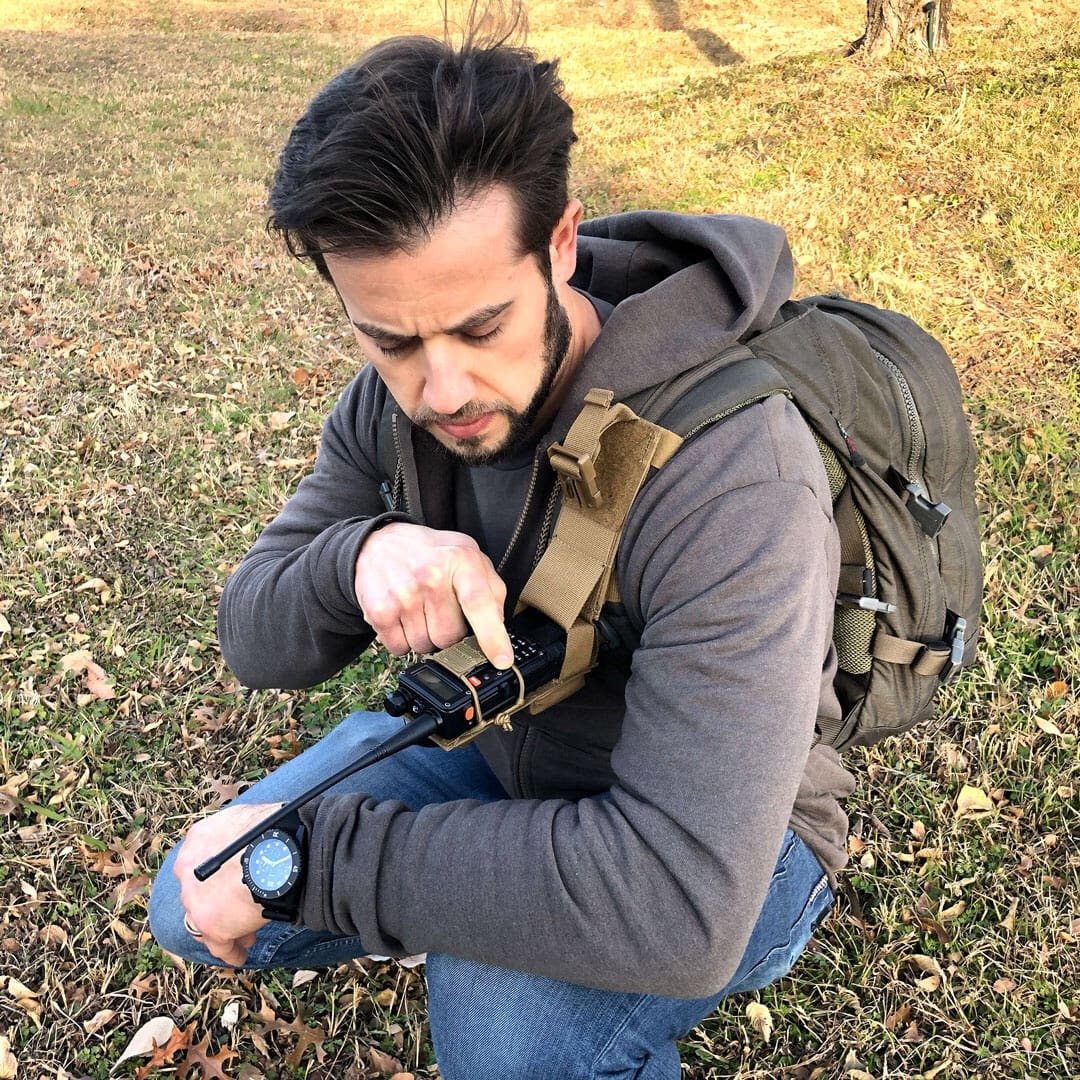
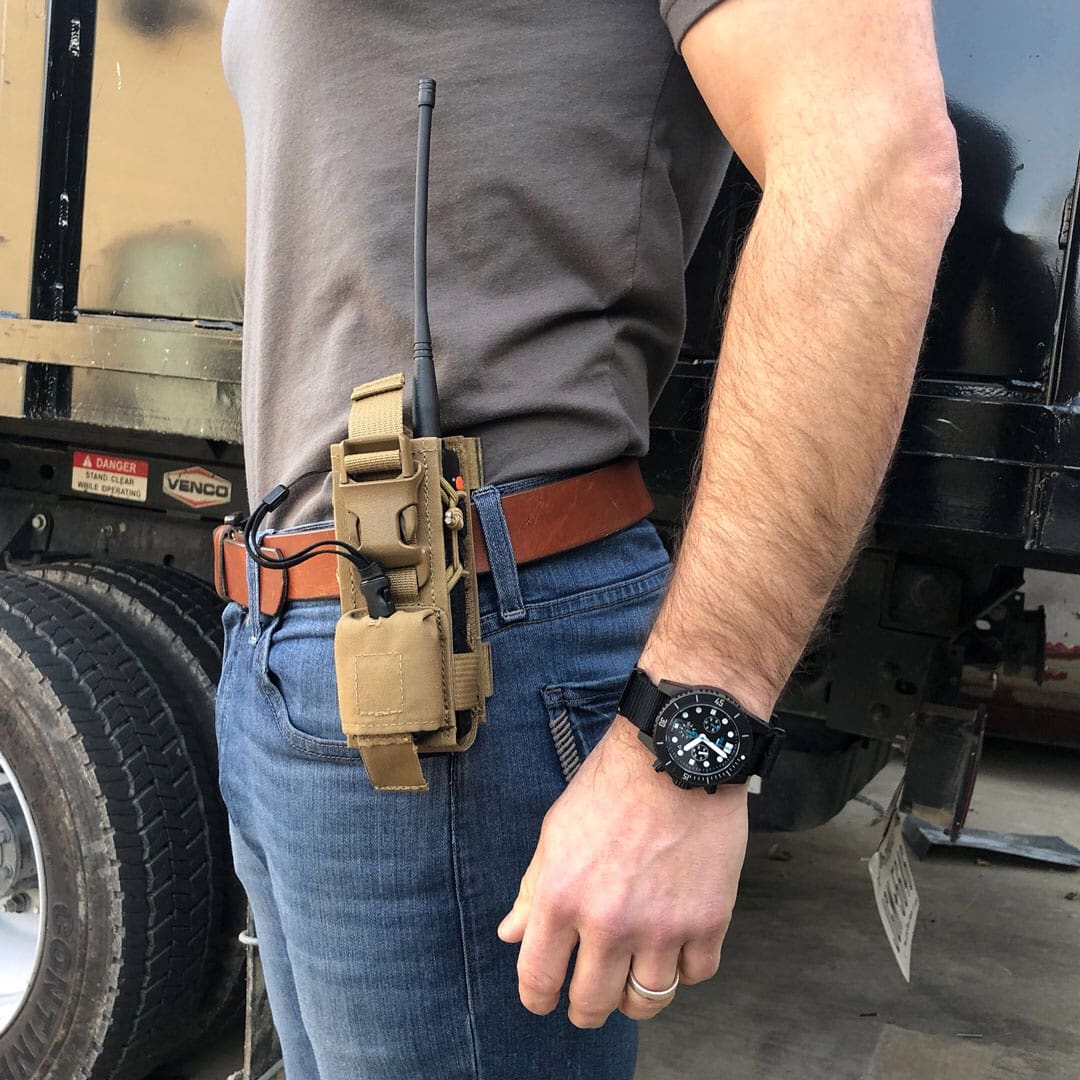
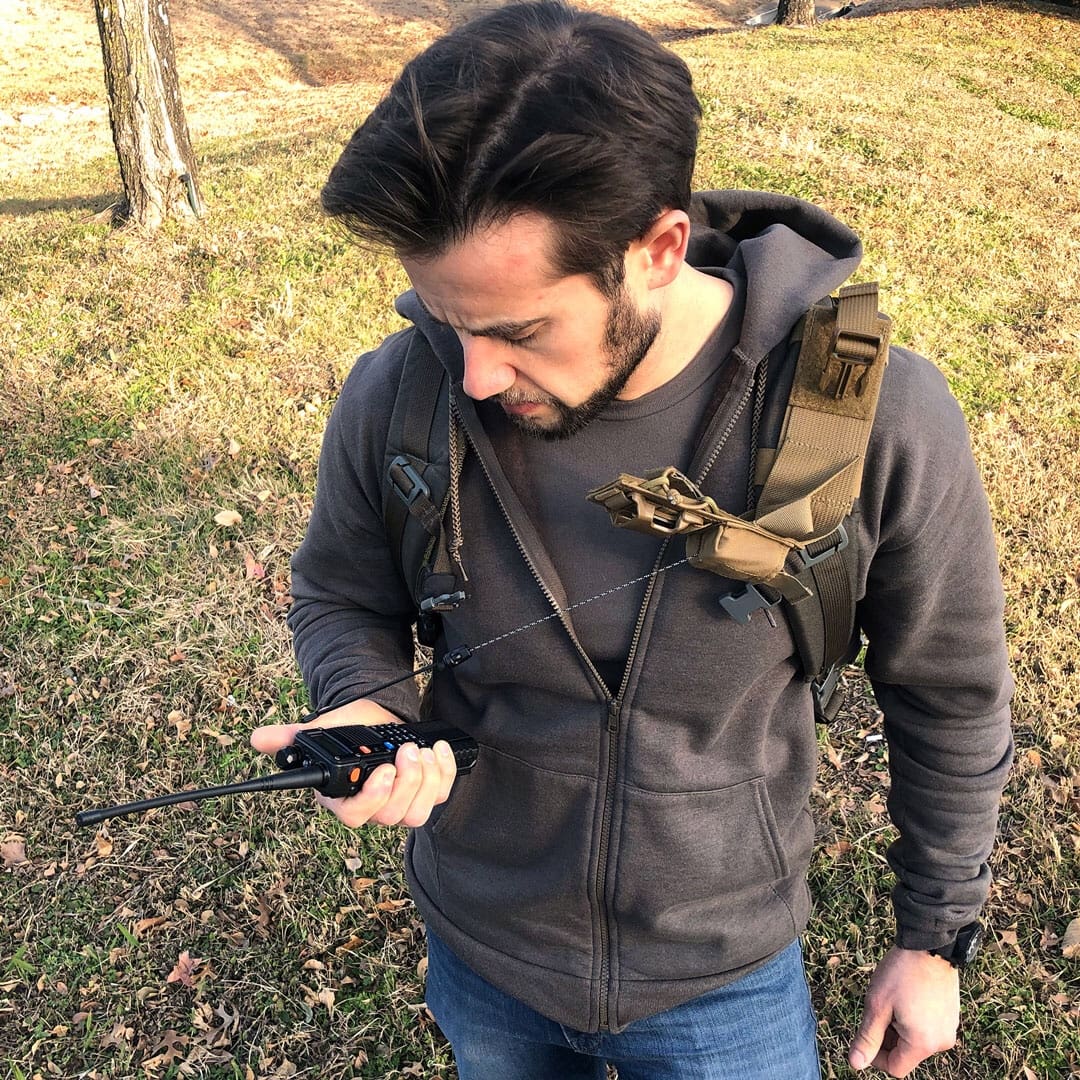
[ARLINGTON, TX, 12/7/2018] Imminent Threat Solutions is proud to release the 10-4 Radio Pouch™, a lightweight and skeletonized pouch offering rapid acquisition, the ultimate in retention and multiple mounting methods. While designed for Baofeng UV-5R style radios (transceivers) with extended batteries, it may fit other radios. (Please see the ITS product description for specifications.)

This revolutionary pouch features four built-in levels of retention, first using the interior opening webbing base to align the radio into place. Next, the adjustable shock cord locks in the radio, while still allowing easy insertion and removal. Additionally, the integrated hook strip facilitates faster operational access and stowage, providing temporary on-the-go retention. Lastly, the durable slide release buckle provides the final retention strap for ultimate security.

The 10-4 Radio Pouch™ doesn’t impede any functional operation of your Baofeng radio, leaving buttons and ports available for use. ITS’s patent-pending 4-Way Mounting System™ allows you to mount the 10-4 Radio Pouch™ vertically on a duty belt, vertically to MOLLE (PALS webbing), horizontally on a belt or even vertically on a backpack or chest rig strap. The mounting possibilities for this pouch are truly unlimited.

Imminent Threat Solutions provides indispensable skill-sets and products to explore your world and prevail against all threats.

For more information on ITS Nylon products, please visit store.itstactical.com/collections/nylon-gear

Seeing the light: LiFi will revolutionize IT on mission command posts

Wednesday, November 28th, 2018

NATICK, Mass. — When investigating new ways of transmitting and communicating information, sometimes it helps to see the light.

This is the idea behind a new technology being investigated by the Research, Development and Engineering Command Soldier Center’s Expeditionary Maneuver Support Directorate, along with its industry partner, VLNComm of Charlottesville, Va.

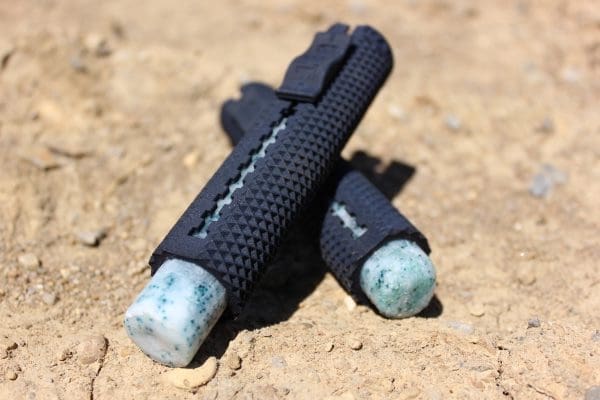
A technology revolution that fits in the palm of your hand. The Research, Development and Engineering Command Soldier Center’s Expeditionary Maneuver Support Directorate, or EMSD, has come up with a concept for using LiFi technology as a new way of transmitting and communicating information. The wireless system uses infrared light instead of radio frequencies. Since LiFi does not use radio waves, it cannot be detected outside the confines of the mission command platform. LiFi is un-hackable and untraceable within the command post shelter. EMSD is working with its industry partner, VLNComm of Charlottesville, Va., on adapting the technology to meet enclosed mission command platform needs. The transceiver (pictured here) is simply put into a USB port and will then detect the signal and users will be hooked up to the IT network of their command post. Then a Soldier just needs a light shined overhead to have network access. (Photo is courtesy of the RDECOM Soldier Center Expeditionary Maneuver Support Directorate)

“It’s a wireless system but instead of using radio frequencies it uses infrared light,” said Frank Murphy, an engineer on EMSD’s System Development and Engineering Team. “It is called LiFi, or light fidelity. It has many advantages.”

Murphy has been investigating ways to utilize the emerging commercially available technology in a tactical environment as the physical characteristics appear to solve many issues facing wired and wireless field command post network systems.

The technology will be used in expeditionary mission commands. EMSD has come up with a concept for using LiFi within any enclosed mission command platform. LiFi eliminates the problems associated with the time-consuming task of running data lines in tactical operation centers and command posts. Moreover, since the technology does not use radio waves, it cannot be detected outside the confines of the mission command platform.

“The technology uses light waves to transmit and receive data between the servers and the user’s computer,” said Melvin Jee, the leader of EMSD’s Command Post Platforms Branch. “As light cannot pass through walls, the enemy cannot detect the signal.”

Murphy’s investigation into the technology was inspired in part by Douglas Tamilio, the director of RDECOM Soldier Center, sharing an article about LiFi with RDECOM Soldier Center leadership. Murphy’s investigation was also inspired by the vision of Claudia Quigley, the director of EMSD, and the RDECOM Soldier Center’s ongoing partnership with the 82nd Airborne. The RDECOM Soldier Center and the 82nd Airborne have worked together extensively to find out ways to best meet the needs of warfighters.

Murphy explained that Quigley and other members of the directorate were working with the 82nd Airborne during a field exercise. During the exercise, Murphy noticed that the setup of IT cabling was proving to be a time-consuming and difficult task.

“They had a hard time setting up their IT network, which isn’t usually an NSRDEC area, but we felt that we could address the need,” said Murphy. “Tactical speed is absolutely essential for command post setup. LiFi is potentially faster, easier to install and doesn’t have the security and exposure issues of other technologies. LiFi is un-hackable and untraceable when used within the command post shelter.”

“It’s virtually impossible to find the wavelength the data is being transmitted on, so if LiFi is detected, it’s hard to intercept the data stream,” said Jee.

EMSD is working with industry partners. Murphy explained that the commercially available technology was modified to fit a tactical environment. The technology will affect how Soldiers communicate and, thus, carry out a mission.

“A command post of any size is an information processing center,” said Murphy, “They take information from the field whether it comes in from a drone, Soldier/squad reports, other personnel in the area, satellite information, information from wheeled vehicles, or from behind the front lines — all this information gets fed to the command post staff. They make a decision and then the information goes right back out. Lives depend on this communication.”

“LiFi is part of NSRDEC’s plan to provide a fully integrated platform with all of the necessary infrastructure in order for the warfighter to set up his command post,” said Jee. “Just as a house is fully integrated with power, lights and network cabling — allowing the homeowners to just concentrate on the furnishings — NSRDEC plans to provide a fully functional house, allowing the warfighter and program managers to provide the “furniture.'”

“In a command post, everyone has a job to do and they have their information chain,” said Murphy.

“All these Soldiers need network access. With this, you simply shine the light over their head. After you hook the transceiver into the USB port, the transceiver will detect the signal and you will be hooked up to the IT network of your command post. It’s as simple as that. We also hope to have it integrated into the wiring harness for the lighting so we can just roll up the tent and pack it away during a move.”

Murphy emphasized that the NSRDEC project is really a team effort and that several entities at the Natick Soldier Systems Center were important to the development of the technology. He also received “great guidance” from his branch chief, Melvin Jee, and from his team leader, Connie Miles-Patrick, System Development and Engineering Team, as well as the DREN team and people in the Natick Contracting Division.

He also credited the use of the Base Camp Integration Lab, or BCIL, which was created by and is expertly run by, Product Manager Force Sustainment Systems. A first-generation Li-Fi system prototype was recently set up at the BCIL and successfully demonstrated the capability to send and receive data using the BCIL’s IT network.

“The people at the BCIL were incredible,” said Murphy. “They gave us the perfect platform to showcase the tactical capabilities of this device. This project really showcases what Natick is all about. The Natick team dove in with both feet. Great things happen when people believe in each other and in an idea. We all want to help the Soldier.”

Murphy believes that LiFi is truly the wave of the future.

“The demand for data inside the command post is only going to continue to increase,” said Murphy, “So data quantity and quality need to improve to meet this demand. This technology can be hooked up permanently in rigid wall mission command platforms, but it can be used anywhere. We will be bringing world-class communications, security, speed and capability to the frontline Soldier. Information in the field is a weapon. This technology will help the warfighter make better decisions and be more effective and lethal in the field. This changes everything in the IT network system. It’s a game changer.”

By Ms. Jane Benson (RDECOM)

Dickie’s Reflective Prints

Thursday, November 15th, 2018

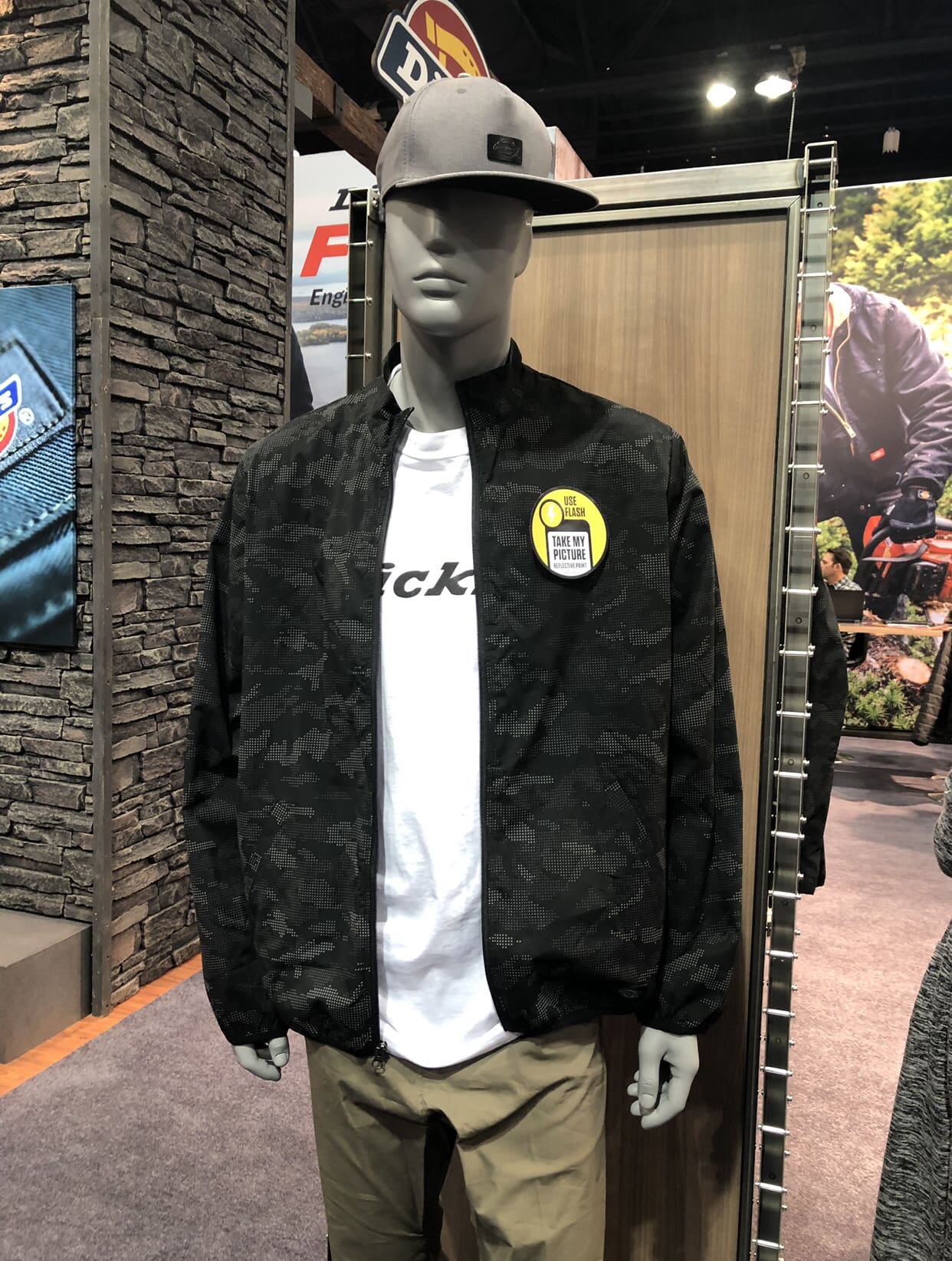
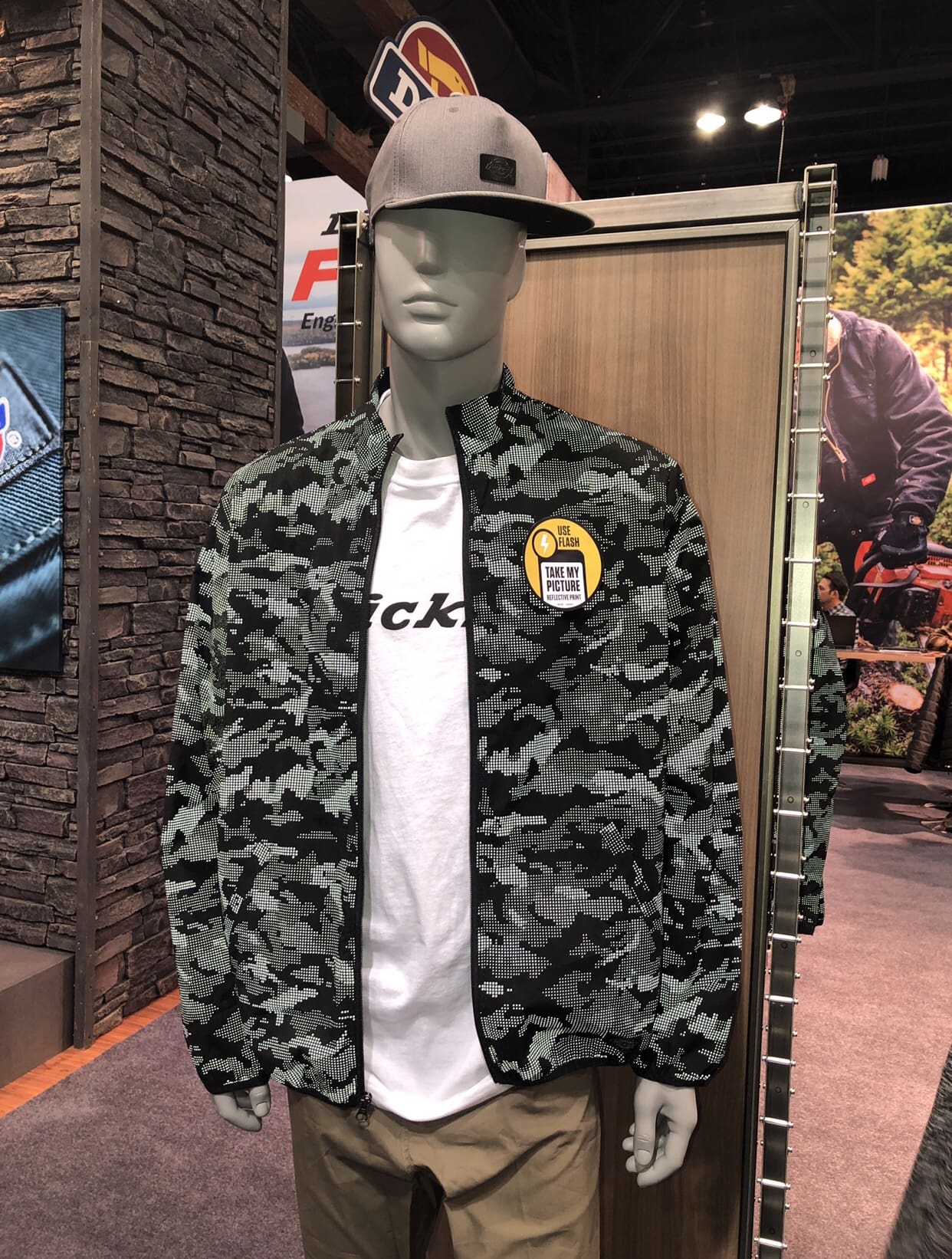
Although Dickie’s wasn’t the only brand at Outdoor Retailer Winter Market to feature these reflective prints on their garments, this was the best example I had seen. Think safety and not camouflage.

Now, consider designators printed into fabric which only reflect certain bands of light, only visible with the assistance of night vision or thermal devices.

CPS Puts goTenna’s Pro X & ATAK to the Test, Under Canopy

Tuesday, November 13th, 2018

Achieve Total Team Awareness in Any Situation with goTenna Pro X & ATAK
Complete Parachute Solutions recently put goTenna’s ATAK enabled Pro X to the test for off-grid SA & C2, at their advanced training facility in Coolidge, Arizona.

Battle Sight Technologies – MARC IR

Monday, October 22nd, 2018

The MARC IR (Marking Appliance Reusable Chemiluminescence – Infrared) is a pressure-activated chemiluminescence writing instrument that facilitates written or graphic communication in low-light and no-light conditions with the capability to be invisible to the enemy.

AUSA 18 – Shakespeare

Tuesday, October 9th, 2018

Shakespeare Company showed a new antenna head to be mounted on the Rolatube mast. It weighs just 2.5 lbs and accommodates up to 50w of power (think vehicle radio) in the 30-88 MHz range, which is the same as the OE-254 and Com 201B.

Contact TJ Gilroy for additional details on this product.

Orolia Introduces SecureFind Wearable  Combat Search and Rescue Beacon

Tuesday, October 9th, 2018
Dual-mode supports combat missions, even in GPS-denied environments 


Washington, D.C. – October 8, 2018  Orolia, the world leader in Assured Positioning, Navigation and Timing (PNT) solutions, introduces its latest military technology innovation, the SecureFind™ Combat Rescue Beacon at the 2018 AUSA Annual Meeting in Washington, D.C.
In addition to protecting our most critical assets and leaving no one behind, Combat Search and Rescue (CSAR) technology can significantly enhance military operations by avoiding the loss of sensitive information and technology, avoiding hostage situations and helping to prevent conflict escalation.
SecureFind is based on Orolia’s proven search and rescue technology suite, backed by more than 30 years of world-leading innovation and selected by military forces for CSAR missions. The wearable base unit includes an open channel search and rescue solution, for military use in training or test mode. It can also be configured with a customer-defined, secure channel solution for covert operations. This versatile CSAR solution operates with a silent, push-button functionality that does not require voice activation. SecureFind enables military forces to precisely and safely execute CSAR missions, with optional Assured PNT technology that prevents GPS signal interference, spoofing and jamming. 
“There is no greater need for urgency, stealth and precision than when military personnel are isolated in rugged environments or behind enemy lines,” said Orolia VP Defense Programs, Paul Zweers. “As the only end-to-end provider of Assured PNT technology, Orolia is proud to introduce SecureFind for covert military operations – even when GPS signals are unavailable.”
“Software-defined, wearable communications technology is now more important than ever on today’s air, land, sea and cyber battlefields,” said Orolia CEO Jean-Yves Courtois. “CSAR missions are just the beginning of potential uses for this resilient military technology, which can ensure reliable positioning, navigation and timing data in any operating environment. Orolia’s solutions are tailored to support today’s soldiers and engineered with a view toward the future of global military networks.”
The standard SecureFind solution is available at a price point that could enable thousands of warfighters to benefit from this new battlefield technology. More advanced functionality is also available, such as the ability to change signals on-the-go for additional security, to detect and mitigate GPS jamming and spoofing, and to generate important strategic information such as virtual battlefield maps of jamming and spoofing activity.
Orolia offers a cost-effective, modular approach to Assured PNT, with a flexible, open architecture that integrates easily with legacy systems. This layered platform meets critical technology requirements without over-engineering a solution that is complex, expensive and difficult to maintain. Additional SecureFind product information is available at the AUSA Annual Meeting, Orolia Booth #8051. 

MCTSSA Conducts Systems Operability Testing Aboard USS Boxer

Sunday, October 7th, 2018

CAMP PENDLETON, Calif.—Engineers and technical experts from Marine Corps Tactical Systems Support Activity conducted systems operability testing in September aboard the amphibious assault ship USS Boxer (LHD 4) in support of 11th Marine Expeditionary Unit operations.

Amphibious warships must be able to sail in harm’s way and provide a rapid buildup of combat power ashore in the face of opposition. This requires cyber-enabled network Marines to integrate shipboard systems, and provide combatant commanders real-time command and control capabilities.

Capt. Victor Castro (left), Marine Corps Tactical Systems Support Activity engineer, provides over-the-shoulder training to Cpl. Jonathan Parlett (right), 11th Marine Expeditionary Unit data systems administer, during systems operability testing aboard the amphibious assault ship USS Boxer (LHD 4) Sept. 5. (U.S. Marine Corps photo by Sky M. Laron)

“Whether you are fighting the ship or assaulting an objective, communications and information management are critical for mission success,” said U.S. Navy Capt. Ronald Dowdell, Boxer’s commanding officer. “The MCTSSA experts that came aboard the ship enhanced Navy and Marine Corps integration, and also enabled Boxer [Amphibious Ready Group] to become a more lethal force.”

The 11th MEU is a forward-deployed, flexible sea-based Marine air-ground task force capable of conducting amphibious operations, crisis response and limited contingency operations, to include enabling the introduction of follow-on forces and designated special operations in order to support the theater requirements of geographic combatant commanders.

The primary objective for the MCTSSA team was to assist the 11th MEU in integrating tactical command, control, communications and computers—or C4—systems into the afloat environment.

Marine Corps Tactical Systems Support Activity engineers and technical experts tested various command and control systems in the afloat environment aboard the amphibious assault ship USS Boxer (LHD 4) Sept. 4-7 (From left: Derrek Bond, Rudy Banzali, Joe St. Onge, Will Santiago). (U.S. Marine Corps photo by Sky M. Laron)

For Marines aboard ship, the Landing Force Operations Center, or LFOC, is the primary space for leaders to plan and execute amphibious operations. The functions of the LFOC mirror those of a Combat Operations Center, controlling and monitoring all landing force activities until command is established ashore.

“The support received from MCTSSA enabled months’ worth of troubleshooting systems checks to be completed in days, setting the stage for the 11th MEU to move forward with greater confidence in our amphibious C4 systems,” said Capt. Jeffrey Robbins, 11th MEU assistant communications officer.

The time spent optimizing systems in the LFOC and Supporting Arms Coordination Center allowed the MEU to validate critical satellite communications and digital fires systems, which will be used to plan and execute landing force fire support and amphibious operations, said Robbins.

Brig. Gen. A.J. Pasagian (right), commander of Marine Corps Systems Command, speaks with Capt. Ronald Dowdell (left), USS Boxer commanding officer, Sept. 13, aboard the amphibious assault ship USS Boxer (LHD 4). The familiarization tour came one week after engineers and technical experts from Marine Corps Tactical Systems Support Activity conducted systems operability testing aboard the ship. (U.S. Navy photo by MC2 David Ortiz)

“Both the 11th MEU and MCTSSA were equally invested in the effort,” said Capt. Caleb Wu, MCTSSA assistant naval systems integration officer. “It was great to see the two teams tackle difficult technical issues side by side.”

Many of the C4 systems integration issues that MEUs face at sea include: physical connectivity, power, space, network accessibility and throughput, data and voice communications, system configurations, information assurance and cybersecurity.

“MCTSSA’s presence onboard BOXER was absolutely invaluable, and they are the bridge that ensures that all blue in support of green communications suites are properly fine-tuned prior to the embarkation of the 11th MEU or any MEU,” said Ens. Joe Tran, Boxer communications officer. “All of our efforts are ultimately geared toward safe operations of the ship and supporting our combat power.”

Specifically, the testing supported engineering and risk reduction, identification, and possible elimination or development of work-arounds for any C4 interoperability issues.

“By resolving many of those concerns months prior to their first ‘at sea’ period, the 11th MEU is far more prepared for any work-up or deployment,” said Maj. Paxton Miller, MCTSSA naval systems integration officer. “As we better understand the requirements and challenges of how MEUs employ C2 systems aboard ship, the value of these events will continue to grow.”

Boxer is homeported at Naval Base San Diego. For more news from USS Boxer (LHD 4), visit www.navy.mil/local/lhd4/.

MCTSSA, an elite, full-scale laboratory facility operated by the Marine Corps, is a subordinate command of Marine Corps Systems Command. MCTSSA provides test and evaluation, engineering, and deployed technical support for Marine Corps and joint service command, control, computer, communications and intelligence systems throughout all acquisition life-cycle phases.

By Sky M. Laron, Public Affairs Officer, MCTSSA