Wilcox Ind RAID Xe

Archive for the ‘Contracts’ Category

Liteye C-AUDS Chosen to Defend Critical Infrastructure by the US Government

Friday, July 17th, 2020

Recent Selection by DOD Joint Counter UAS Office (JCO) ties to Liteye Systems Inc. 

Centennial, Colo. (July 16, 2020) — Liteye Systems, Inc., is pleased to announce the selection of its Containerized Anti-UAS Defense Systems (C-AUDS) as the first system of systems chosen for integration with the USAF developed MEDUSA Command and Control (C2) System which was recently identified in the DoD’s down selection of Interim Counter Small Unmanned Systems (C-sUAS).


Deployed since 2016, C-AUDS Technology Continues to Defend Critical Infrastructure

Liteye has delivered essential equipment to the US Government for over 20 years and has sustained growth starting with the Anti-UAS Defense System (AUDS) as a Combat Proven product with over 1000 defeats against enemy drones flown by ISIS, Taliban and others; C-AUDS is based on that tradition.  Liteye’s portfolio of defense and critical infrastructure protection products continues to be a game-changing force to protect airfields, government installations and lives across the US Government.

“C-AUDS is our most advanced C-sUAS solution built on the foundation of fielded combat capabilities since 2016.  It is a self-contained C-sUAS system that integrates very well with other sensors, C2 systems and weapon systems.” said Kenneth Geyer, CEO and Co-Founder of Liteye Systems.  He goes on to say, “The fact that the MEDUSA C2 System was chosen, and C-AUDS is an integral part of MEDUSA for protection of critical infrastructure is no surprise.  We are committed to continue deliveries of these capabilities to our current customers and to any organization with a requirement to protect lives and defend critical infrastructure.”


Liteye is a world leader in C-sUAS, ruggedized thermal cameras and helmet mounted displays with over $100M in products, support, and services provided to the US Government in recent years. Liteye’s Counter UAS solutions are deployed worldwide.

www.Liteye.com

Saab to Provide $100m in Carl-Gustaf Ammo & AT4 Systems to US Army

Friday, July 17th, 2020

The US Army has awarded a $100 million (USD) contract to Saab for delivery of Carl-Gustaf ammunition and AT4 systems. It’s an “indefinite-delivery, “indefinite quantity” (IDIQ) contract, which EG will have to explain if you want details, but essentially the Big Army, the USMC, and JSOC can reportedly buy more than $400 million worth of them during a 5-year period.

Remember the testing in Sweden last year?

The advent of the new Carl-Gustaf munition ? assuming this is in fact the new laser-guided system ? will is probably more exciting news for more people than the new deal for AT4s. After all, the DoD has purchased well over half a million of them since the heady days of Rick Astley’s debuy album and the very first appearance of The Simpsons.

Back in 2018 the US Army announced it would be acquiring the latest version of the M4 “Goose”, the M3E1. Note that this is M4 is not that other M4 SSD readers might be thinking of. That one, which is much smaller and shoots 5.56mm instead of 84mm, is far more ubiquitous but not as much fun to use.

The Swedish Defence Materiel Administration also recently announced the approval of Carl-Gustaf systems to Latvia, Estonia, and other countries over a ten-year period.

Erik Smith, President and CEO of Saab in the US, says,

“The Saab family of shoulder-fired munitions provides the U.S. Armed Forces with effective capabilities against a wide area of targets. With these systems, soldiers and Marines gain reliable, easy-to-use technology optimized for complex environments and engagements.”

The Swedish Defence Materiel Administration also recently announced the approval of Carl-Gustaf systems to Latvia, Estonia, and other countries over a ten-year period.

The M3 MAAWS (Multirole Anti-armor, Anti-personnel Weapon System) has been in the US inventory for several years now. As with any weapon system, there is (or should be) an ongoing interest in increased lethality and more efficient use.

No immediate references could be found as to whether the new ammunition is thought to mitigate concerns of brain injury to those shooting the recoilless rifle, or if that was even a necessary or valid consideration. The most recent reference easily accessible was this report from the Blast Injury Research Program at Ft. Detrick. It’s nearly a decade old, and the helmet sensors formerly fielded to combat troops have since been withdrawn.

You can find additional details and confirmation at the Saab Group website.

From Defense Web TV:

Talk to me Goose.

By David Reeder

CBP Purchases B&T Army APC9 from Army Sub Compact Weapon Contract

Wednesday, July 15th, 2020

US Customs and Border Protection, part of the US Department of Homeland Security is purchasing 285 Brugger & Thomet APC9s by leveraging the US Army Sub Compact Weapon contract. The contract vehicle was modified earlier this year to allow other agencies to purchase from it and to supply Glock and SIG compatible magwells.

The B&T APC9K was adopted by the US Army just last year as their Sub Compact Weapon as seen above.

The CBP APC9s will be fitted with Aimpoint optics and Glock compatible magwells. We understand the agency plans to replace their fleet of around 2000 H&K UMPs over time.

US Marine Corps Intends To Sole Source Knights Armament Co NT-4 Suppressor

Tuesday, July 14th, 2020

Marine Corps Systems Command has published their intent to solicit and negotiate with only one source, specifically Knights Armament Co to purchase 5.56mm Small Arms Suppressors to be used on the M27 Infantry Automatic Rifle (IAR), M4 Carbine and M4A1 Close Quarter Battle Weapon. The Marines plan to field the KAC NT-4 to satisfy their requirement for close combat forces.

During last year’s NDIA Armaments Symposium, the Corps listed suppressors as a priority for their Squad Small Arms Capabilities.

In 2016 and 2017 the 1st and 2nd Marine Divisions conducted experimentation utilizing an unspecified number of KAC suppressors from Joint Operational formerly issued to SOF. In 2017, the Marines issued a Sources Sought Notice to Industry for commercially available suppressors.

This planned purchase will supplement those already on hand to fulfill their fielding plan. However, this isn’t exactly the latest in suppressor technology.

On the plus side, it’s got an NSN: 1005-01-437-0324 which was issued by US Special Operations Command. Despite being around since 1998, it’s a workhorse, currently in use with loads of federal and local law enforcement agencies. Plus, it has already been fielded on the M38 Squad Designated Marksman Rifle which is an M27 IAR fitted with a Leupold TS-30A2 Mark 4 MR/T optic.

All of that sounds great right? Here’s where they lose me. The crux of their argument for sole sourcing the NT-4 isn’t that it has an NSN, not that they already have some. Instead, they push its compatibility with Bayonets, Collimators, Boresights and Blank Firing Adapters.

The KAC Small Arms Suppressor will enable the USMC to continue to use their existing bayonets, as well as their existing Small Arms Collimators (SAC), Laser Boresights (LBS), and Blank Firing Adapters (BFA), all of which are critical to accuracy and lethality in both training and combat. These items are interoperable with the current Small Arms Suppressor.

Since this a notice of intent, other companies can still submit (see SAMS for details) if they believe they meet these requirements.

TenCate Advanced Armor USA Inc Awarded US Navy Maritime Buoyant Plate Body Armor Contract

Monday, July 13th, 2020

TenCate Advanced Armor is pleased to announce the award of a four-year contract framework for the delivery of the U.S. Navy Maritime Buoyant Plate body armor. Valued in excess of $15M, TenCate Advanced Armor will provide a new generation of body armor to U.S. Navy developed to comply with a demanding specification for performance. The Maritime Buoyant Plate will be manufactured at TenCate Advanced Armor’s facilities in Hebron, OH.

On June 24, 2020, the Naval Sea Systems Command’s (NAVSEA) awarded TenCate contract N61331-20-D-0011, as an ID/IQ (Indefinite Delivery / Indefinite Quantity) to provide Maritime Buoyant Body Armor (MBP), both in torso and side configurations. This award complements other recently awarded body armor contracts by Army Contracting Command (ACC) for high performance, lightweight body armor, such as SPS-VTP side and torso plates.


This is a similar plate to the one selected.

The TenCate Technical Center USA (TTC-US) developed the design for the MBP by leveraging prior Internally funded Research and Development (IR&D) efforts, which optimized the construction of high performance raw materials, and, through specialized consolidation and manufacture, met all the requirements of NQ/PQ 16-04, entitled Body Armor, Maritime Buoyant Plate (MBP), such as weight, thickness, and ballistic performance requirements.

The President of TenCate Advanced Armor USA, Col. (ret.) Andy Mills, stated: “I am extremely satisfied with the confident and effective response by TenCate Advanced Armor to the U.S. Navy’s strict requirements for a new generation of body armor. The contract underlines TenCate Advanced Armor’s position as a key partner in high-performance personal protection equipment for the U.S. Department of Defense and for allied nations.”

The maximum contract value is $15,335,930.81, with First Article Test (FAT) plates due within 120 days of the award.

TenCate Advanced Armor USA, Inc. is a major provider of personal protection solutions for police departments, federal agencies, and large multi-year government programs. With years of experience in body armor development and manufacturing, TenCate Advanced Armor USA, Inc. provides a diverse portfolio of stand-alone (SA) and in-conjunction (IC) plates with special capabilities to meet the needs of US and allied warfighters and law enforcement officers.

www.tencateadvancedarmour.com

Schiebel Camcopter S-100 to Perform Coast Guard Services for European Maritime Safety Agency in Finland

Saturday, July 11th, 2020

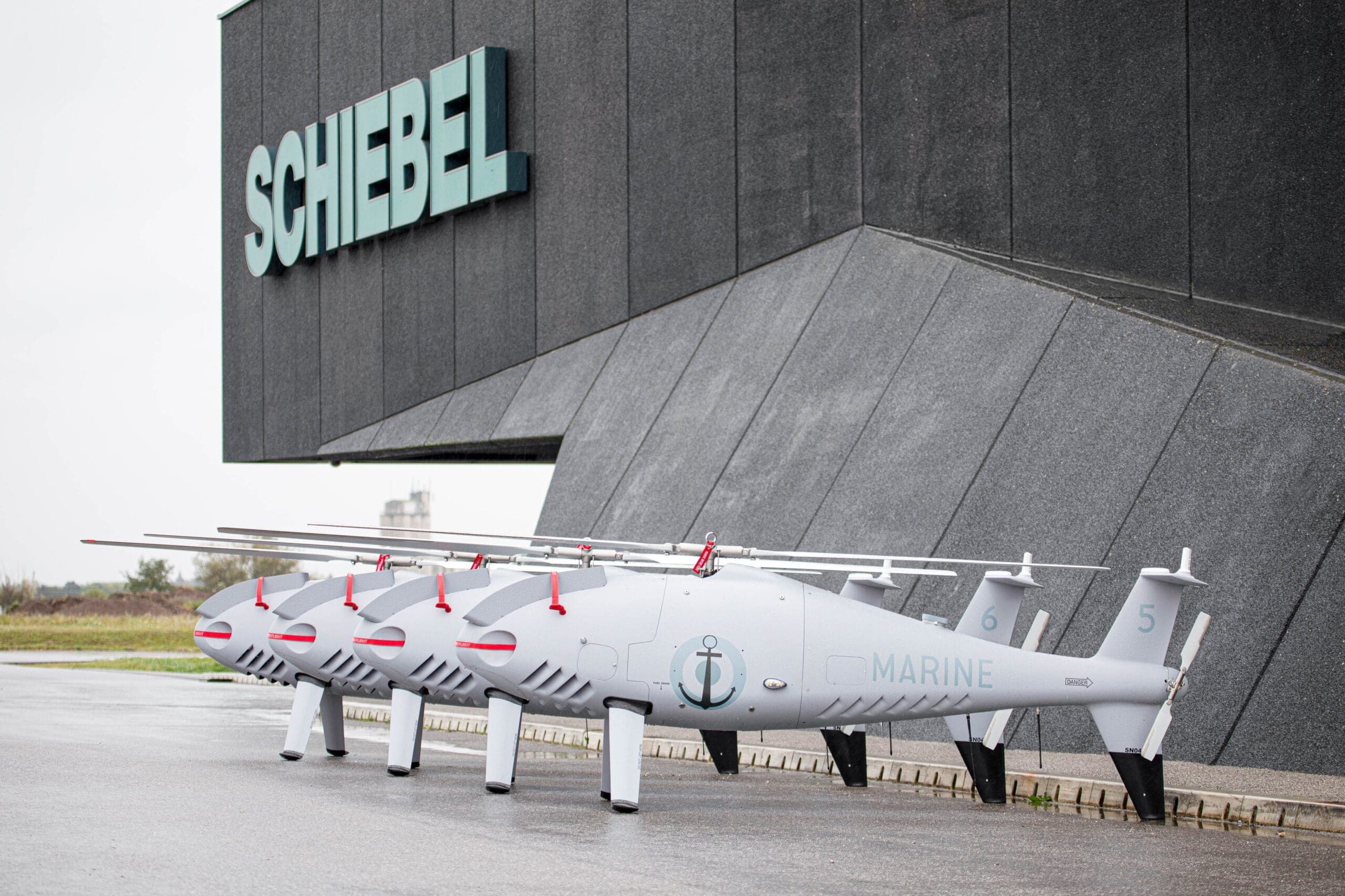
Vienna, 6 July 2020 – The Finnish Border Guard will operate the CAMCOPTER® S-100 for maritime surveillance purposes. The Remotely Piloted Aircraft System (RPAS) service is offered by the European Maritime Safety Agency (EMSA) and will also extend to Estonia and Sweden.

The CAMCOPTER® S-100 will support the Finnish authorities in carrying out Coast Guard functions, such as search and rescue, monitoring and surveillance, ship and port security, vessel traffic, environmental protection and response, ship casualty assistance, as well as accident and disaster response. The S-100 will execute these tasks equipped with an L3 Wescam Electro-Optical / Infra-Red (EO/IR) camera gimbal, an Overwatch Imaging PT-8 Oceanwatch, a Becker Avionics BD406 Emergency Beacon Locator and an Automatic Identification System (AIS) receiver.

EMSA awarded the multi-year maritime surveillance contract for a Vertical Takeoff and Landing (VTOL) RPAS to Schiebel in November 2018. In execution of this contract, Schiebel provides simultaneous maritime surveillance services to several EU member states and EU bodies. Currently, the CAMCOPTER® S-100 is also operational in the Republic of Croatia supporting the Maritime Safety Directorate of the Ministry of Sea, Transport and Infrastructure of the Republic of Croatia.

Hans Georg Schiebel, Chairman of the Schiebel Group, said: “The S-100 has extensive experience in the maritime domain. It is the UAS of choice when it comes to sophisticated maritime surveillance. We’re proud to be EMSA’s chosen RPAS providing vital surveillance services to its member states.”

About Schiebel:

Founded in 1951, the Vienna-based Schiebel Group focuses on the development, testing and production of state-of-the-art mine detection equipment and the revolutionary CAMCOPTER® S-100 Unmanned Air System (UAS). Certified to meet AS/EN 9100 standards, Schiebel has built an international reputation for producing quality defense and humanitarian products, which are backed by exceptional after-sales service and support. With headquarters in Vienna (Austria), Schiebel now maintains production facilities in Wiener Neustadt (Austria) and Abu Dhabi (UAE), as well as offices in Washington, DC (USA) and Shoalhaven (Australia).

About the CAMCOPTER® S-100:

Schiebel’s CAMCOPTER® S-100 Unmanned Air System (UAS) is an operationally proven capability for military and civilian applications. The Vertical Takeoff and Landing (VTOL) UAS requires no prepared area or supporting equipment to enable launch and recovery. It operates by day and by night, under adverse weather conditions, with a beyond line-of-sight capability out to 200 km / 108 nm, over land and sea. Its carbon fiber and titanium fuselage provides capacity for a wide range of payload/endurance combinations up to a service ceiling of 5,500 m / 18,000 ft. In a typical configuration, the CAMCOPTER® S-100 carries a 34-kg / 75-lbs payload up to 10 hours and is powered with AVGas or JP-5 heavy fuel. High-definition payload imagery is transmitted to the control station in real time. In addition to its standard GPS waypoint or manual navigation, the S-100 can successfully operate in environments where GPS is not available, with missions planned and controlled via a simple point-and- click graphical user interface. The high-tech unmanned helicopter is backed by Schiebel’s excellent customer support and training services.

www.schiebel.net

AeroVironment Receives $21 Million Initial Contract Option for Raven Radio Frequency Modifications Under Previously Awarded US Army Contract with Potential $55 Million Total Value

Thursday, July 9th, 2020

• Contract option for Army Small Unmanned Aircraft Systems (SUAS) Flight Control Systems (FCS) domain includes avionics and data link upgrades to modify radio frequency

• Raven tactical unmanned aircraft system is designed for rapid deployment, delivering real-time tactical situational awareness to warfighters

U.S. Army Soldier hand-launches Raven tactical unmanned aircraft system during a platoon live fire exercise at Fort Campbell, KY. (U.S. Army Photo by Capt. Justin Wright)

SIMI VALLEY, Calif., July 8, 2020 – AeroVironment, Inc. (NASDAQ: AVAV), a global leader in Unmanned Aircraft Systems (UAS), today announced the United States Army exercised the first of three options under the sole source Flight Control Systems (FCS) domain of the Army’s multi-year small UAS contract on April 28, 2020. The value of the initial contract option is $21,058,643 and includes avionics and data link upgrade packages to modify radio frequencies employed by the Army’s existing fleet of Raven® tactical UAS, the largest fleet of Raven systems in the world. Delivery will take place over a two-year period.

The Army exercised the option under the FCS domain awarded to AeroVironment by the Army in June 2019. FCS is one of six domains comprising the Army’s existing five-year Indefinite Delivery, Indefinite Quantity (IDIQ) SUAS contract, and has a potential value of up to $55 million.

“AeroVironment is committed to providing continuous support to the Army’s ongoing, multi-year programs of record for tactical UAS, such as the Raven, with quick and efficient field upgrades to help operators around the world perform their missions more effectively,” said Rick Pedigo, Vice President, Business Development and Sales for AeroVironment.

AeroVironment’s Raven system is designed for rapid deployment and high mobility for operations requiring low-altitude intelligence, surveillance and reconnaissance. With a wingspan of 4.5 feet and weighing just 4.2 pounds (1.9 kilograms), the hand-launched Raven provides situational awareness, day or night, with an operational range of 6.2 miles (10 kilometers). The Raven’s Mantis i23 EO/IR gimbaled payload delivers real-time video or infrared imagery to ground control and remote viewing stations.

AeroVironment’s family of tactical UAS comprises the majority of all unmanned aircraft in the U.S. Department of Defense (DoD) inventory, and its rapidly growing international customer base of 50 allied governments. To learn more, visit www.avinc.com.

Air Force Awards Contract for Improved Female Body Armor

Thursday, July 9th, 2020

WRIGHT-PATTERSON AFB, Ohio (AFNS) —

The Air Force Life Cycle Management Center Female Fitment Program Office has awarded a contract to begin production and development for body armor designed to better protect female Airmen during combat and contingency operations.

Finding uniform items and gear optimized for female Airmen is an Air Force Chief of Staff initiative. The Female Fitment Program Office was created in response to identify problems and find solutions quickly. The office partnered with the Air Force Security Forces Center in San Antonio to find a “sufficient armored plate carrier system that addresses appropriate form, fit and function while providing adequate protection for female Airmen.”

“This is a perfect example of Air Force Materiel Command getting feedback from the field and delivering the Air Force we need to the warfighter,” said Gen. Arnold W. Bunch Jr., AFMC commander. “I’m proud of the team pulling together to do what is right for our Airmen. They deserve gear that offers the protection they need while allowing them to complete their mission.”

AFLCMC’s Human Systems Division is the lead organization to assess, evaluate and acquire new body armor for Security Forces Defenders and other female Airmen whose jobs require them to operate in dangerous environments. The new body armor will be specifically fitted to the female body preventing exposure to risks.

“Our female Airmen had gaps due to poor fitment issues,” said Maj. Saily Rodriguez, Female Fitment Program manager. “The new gear fits properly which improves protection and offers better comfort for gear that has to be worn in difficult environments and conditions.”

The program office conducted an evaluation that included laboratory and field assessments. The contract was awarded to TSSi of Harrisonburg, Virginia for the Aspetto “Mach V” system that was deemed the best solution in terms of price, effectiveness and fitment.

“The feedback during our field assessment was overwhelmingly positive. This is something our Airmen want because it offers a great benefit to their health and safety,” Rodriguez said.

The first product deliveries are expected in Fall 2020.