XC3 Weaponlight

Archive for the ‘Contracts’ Category

United States Customs & Border Protection Identifies Leupold Mark 5HD Riflescope for Future Use

Wednesday, August 29th, 2018

United States Customs & Border Protection (CBP) has identified and cleared the new-for-2108 Leupold Mark 5HD riflescope for future use by U.S. Border Patrol officers.

The award-winning Mark 5HD from Leupold & Stevens, Inc., launched in early 2018 and combines elite optical performance, rugged reliability, and user-friendly features in a package that could only be produced by leveraging the 70 years of optics manufacturing Leupold possesses. It has wowed end-users throughout the industry.
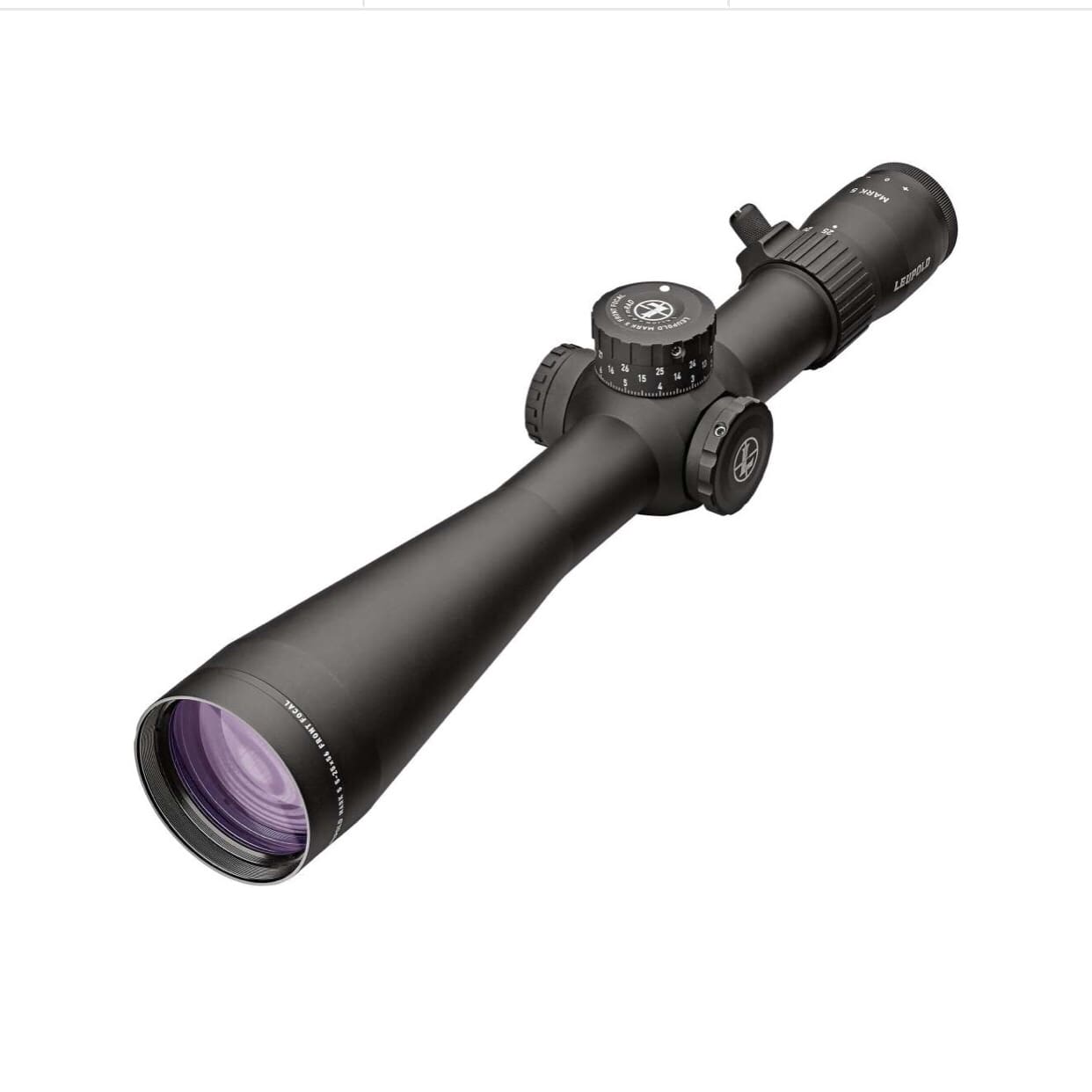
The U.S. Border Patrol, which has worked with Leupold in the past, has deemed the Mark 5HD worthy of potential use by its officers and agents across the nation.

“We’re dedicated to building optics that deliver game-changing optical performance and unquestioned reliability,” Bruce Pettet, president and chief executive officer for Leupold & Stevens, Inc., said. “The men and women of the U.S. Border Patrol deserve to have the best tools available, and we’re happy to be able to provide them a top-of-the-line optical solution that’s designed, machined, and assembled here in the United States.”

Two Mark 5HD models are currently available: A 5-25×56 model is ideal for those seeking maximum usable magnification and a 3.6-18×44 edition that balances compactness with big-time optical performance. Both feature 35mm maintubes for increased adjustment travel. Elite professional and top level competition shooters were consulted during the designing of the Mark 5HD, and the end result is an optic that provides everything necessary – in both quality and features. Both models deliver superior edge-to-edge clarity and extreme low-light performance. The Twilight Max® HD Light Management System delivers the perfect balance of image color and contrast, light transmission, and glare management.

“The Mark 5HD has been built from the ground up to deliver the unparalleled performance that law enforcement agents require,” said Sam Horstman, Director of Military Sales for Leupold & Stevens, Inc. “And, like all of our optics, the Mark 5HD has been strenuously tested for durability, and fully meets the extremely high standards that CBP demands. Border Patrol officers need their optics to perform, and we’re glad to be able to offer a solution that’s built to deliver on those expectations.”

Cubic Awarded Contract from Canadian Government to Deliver Urban Operations Training Capability

Tuesday, August 21st, 2018

Cubic Global Defense to deliver cost-effective realistic urban effects, updated instrumentation and training devices into the CWES environment
SAN DIEGO – Aug. 20, 2018 – Cubic Corporation NYSE: CUB today announced its Cubic Global Defense (CGD) business division was awarded a task authorization worth more than USD $27 million from Public Service and Procurement Canada (PSPC) on behalf of Canada’s Department of National Defence to deliver Urban Operations Training capability into the Canadian Weapon Effects Simulation (CWES) environment. Under this task authorization, Cubic will equip Urban Operations sites at Canadian Forces Base Gagetown (CFB Gagetown) and the Canadian Manoeuvre Training Centre (CMTC) Wainwright, to satisfy the force-on-force training capability requirements of the Canadian Army.

“Cubic is committed to providing our customers with innovative solutions that deliver dynamic, effective training experiences to improve operational readiness and reduce training costs,” said Dave Buss, president of Cubic Global Defense. “Our solutions prepare warfighters to engage in the complex and constantly changing urban environment. We also help develop intuitive decision-making skills, so warfighters have the confidence to act appropriately and decisively. Once delivered, the Canadian system will be one of the most advanced Urban Operations Training Systems (UOTS) anywhere in the world.”

UOTS will track actions and events, collect and process UOTS training exercise data and control UOTS urban training devices. In addition, it will provide exercise control staff with the capability to evaluate the results of CWES exercises against objective Battle Task Standards, providing trainees with timely after action reviews specific to urban environments. Some of the unique capabilities include a high-fidelity, ultra-wideband tracking system; shoot-through-wall capability; special effects generators such as smoke, smell, aroma, light, sound as well as improvised explosive device and grenade simulators.

Cubic anticipates full acceptance of UOTS capability at CFB Gagetown in October 2019 and CMTC Wainwright in September 2020, to support Exercise Maple Resolve in 2021.

Radical Firearms to Supply Police and Security Forces in Brazil

Friday, August 17th, 2018

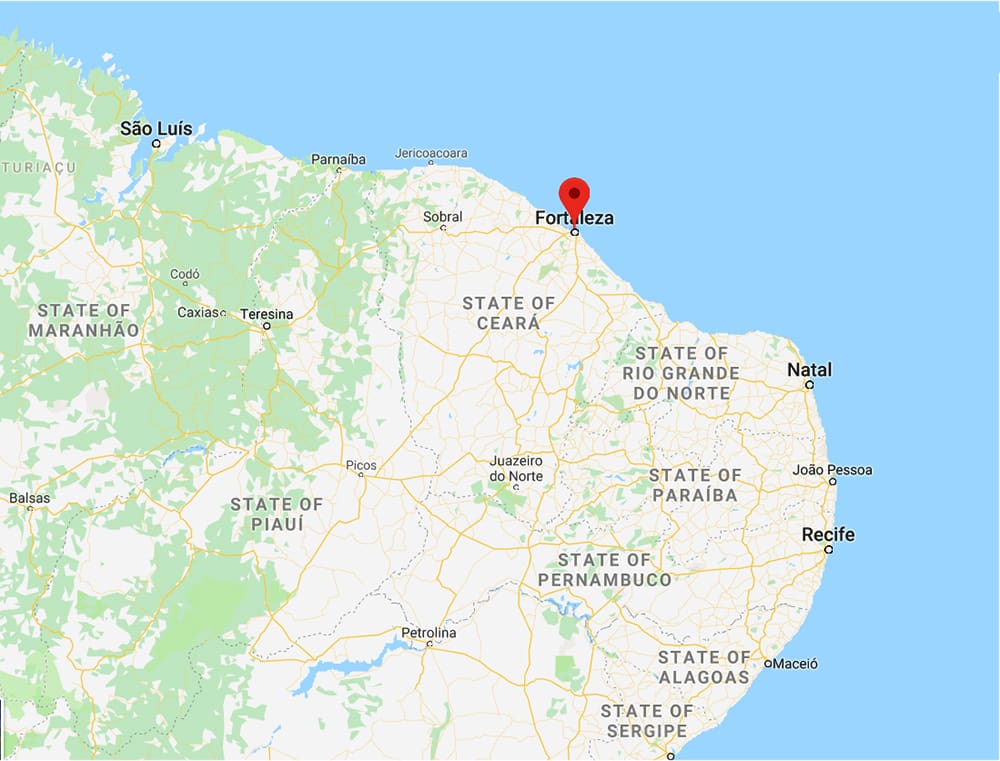
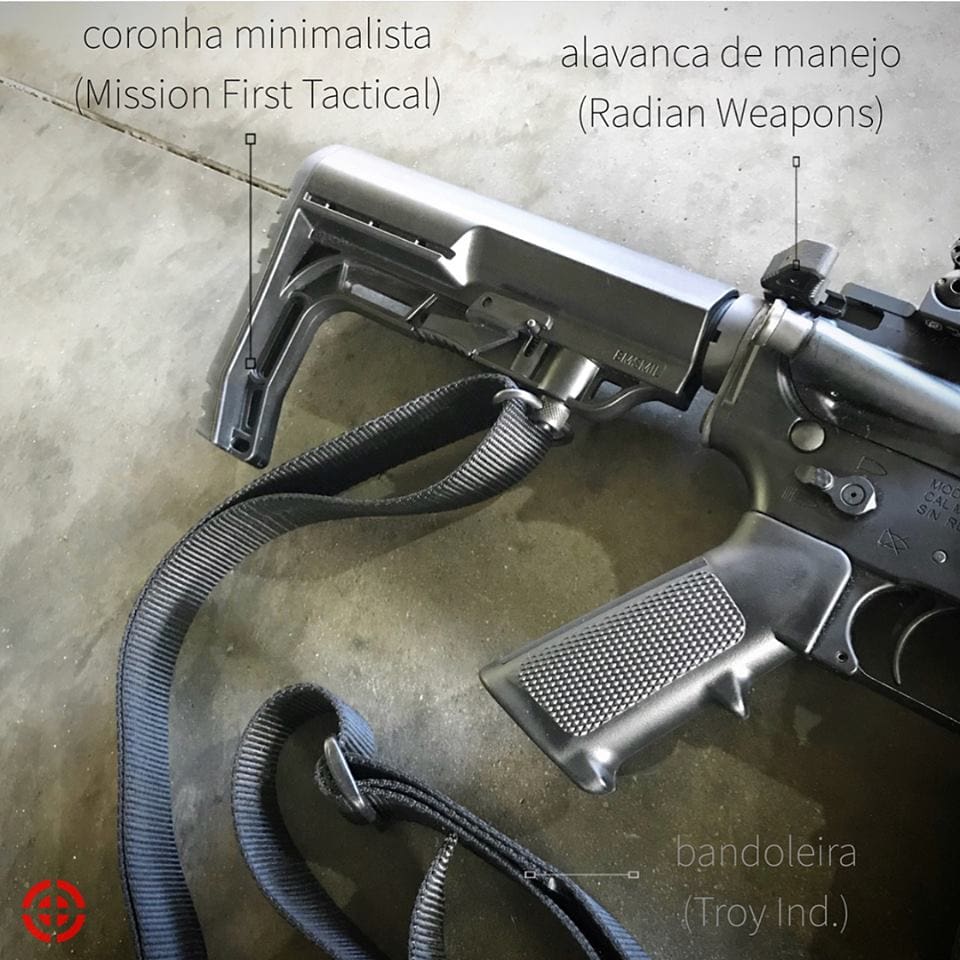
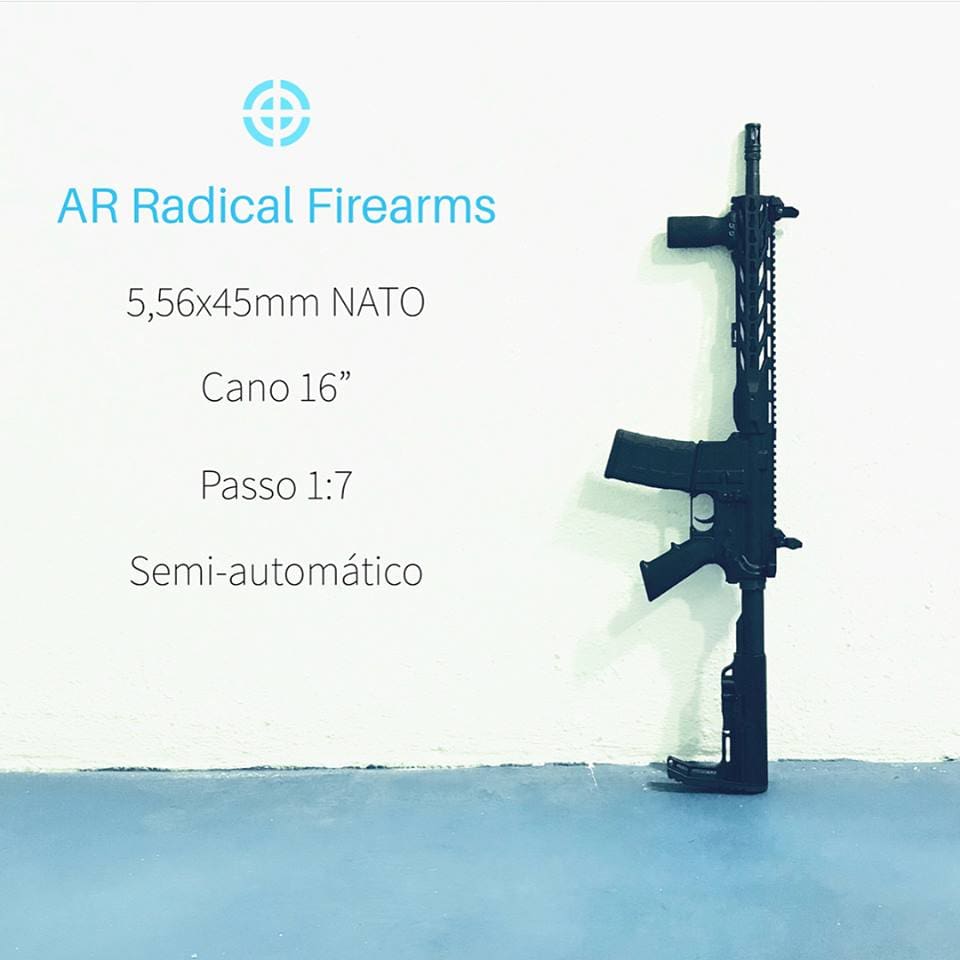
Radical Firearms is proud to share its recent partnership with local law enforcement in Brazil. Just a few days ago Radical Firearms completed delivery of 150 RF-15 rifles to the PPCE (Polícia Civil do Estado do Ceará, or Ceará State Civil Police).

Ceará is but one of 13 Brazilian states who have chosen Radical Firearms for their security forces.

The selection of the RF-15 was completed after an extensive evaluation process. Included in that was a visit to the Radical Firearms facility by a team from C.O.R.E. (Coordenadoria de Recursos Especiais, the civil police tactical unit of Rio de Janeiro) and members of the Brazilian government. This particular model of RF-15 were built with a specialty maritime coating to deal with humidity and other unique conditions of the PPCE’s operational area.

A1081850-3EE1-4637-99B6-26DE12C7DDA4

These RF-15s were part of a larger order of imported weapons for Brazilian agency, which also included a large number of .40 S&W SIG SAUER P320s and five Armalite AR-10 SuperSASS rifles. Although this initial import was to equip PPCE agents only, additional weapons will be imported by the end of the year for other agencies, including the PPCE’s military counterpart, the PMCE (Policia Militar do Ceara Policia Militar do Brasil). Unlike PPCE agents, PMCE personnel do not conduct traditional criminal investigations, but rather work special emphasis operations to deter violent crime. Other Brazilian agencies, including PCES PMES (Polícia Militar and Polícia Civil do Estado do Espírito Santo) are also in the process of upgrading their weapons and equipment.

Historically, Brazilian agencies have been required to source firearms from such local manufacturers as IMBEL and Taurus, but that is slowly changing. In fact, as TFB’s Ronaldo Olive reports, Brazil’s Departamento de Polícia Federal (Federal Police Department) and the Polícia Rodoviaria Federal (Federal Highway Police) have both been equipped with foreign-built weapons.

The RF-15 is a 5.56mm rifle with 1 in 7″ Twist 16 in. 4140V Chromoly Melonite Coated barrel. It features M4 feed ramps, 1/2×28 thread pitch, a low profile micro gas block system, and fore end quad Pic Rails. Options for bolt carrier group, charging handle, and rail furniture are available.

Ceará is one of 27 states in Brazil, and is the 8th largest, with a population of some nine million people (about the same as Virginia). It covers a geographic area somewhere between that of Minnesota and Michigan. Its capital, Fortaleza, is the fourth most populous city in Brazil, a major ocean port and a significant tourist destination. The crime rate there is very high, and like many urban areas suffers from the violent activities of organized gangs (such as the Comando Vermelho and Guardiões do Estado). It has recently significantly increased its available manpower.

radicalfirearms.com

Photos by Paolo Bedran and PPCE

Trijicon Awarded $7.6 Mil for USSOCOM Miniature Aiming System – Day Optics Program

Thursday, August 16th, 2018

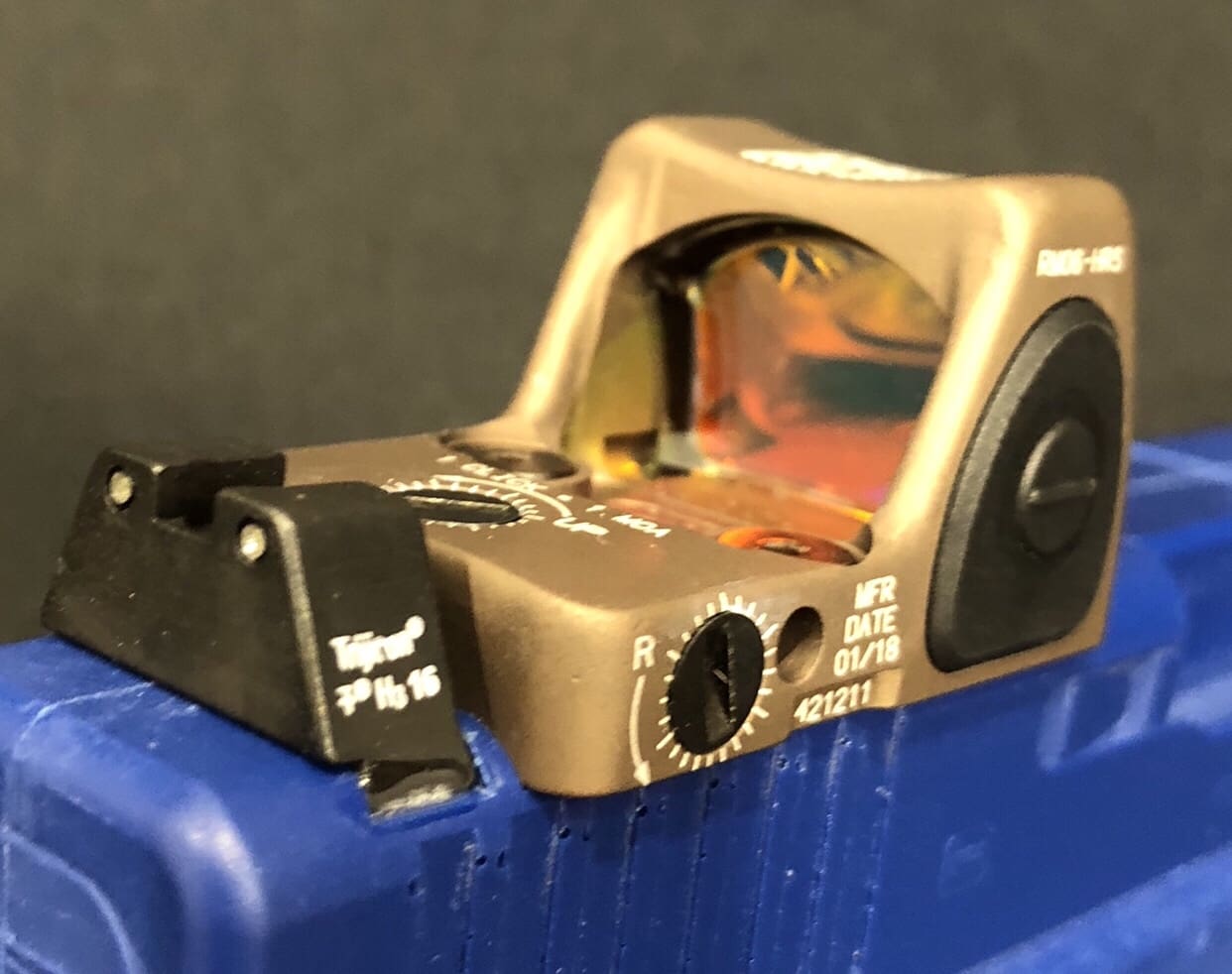
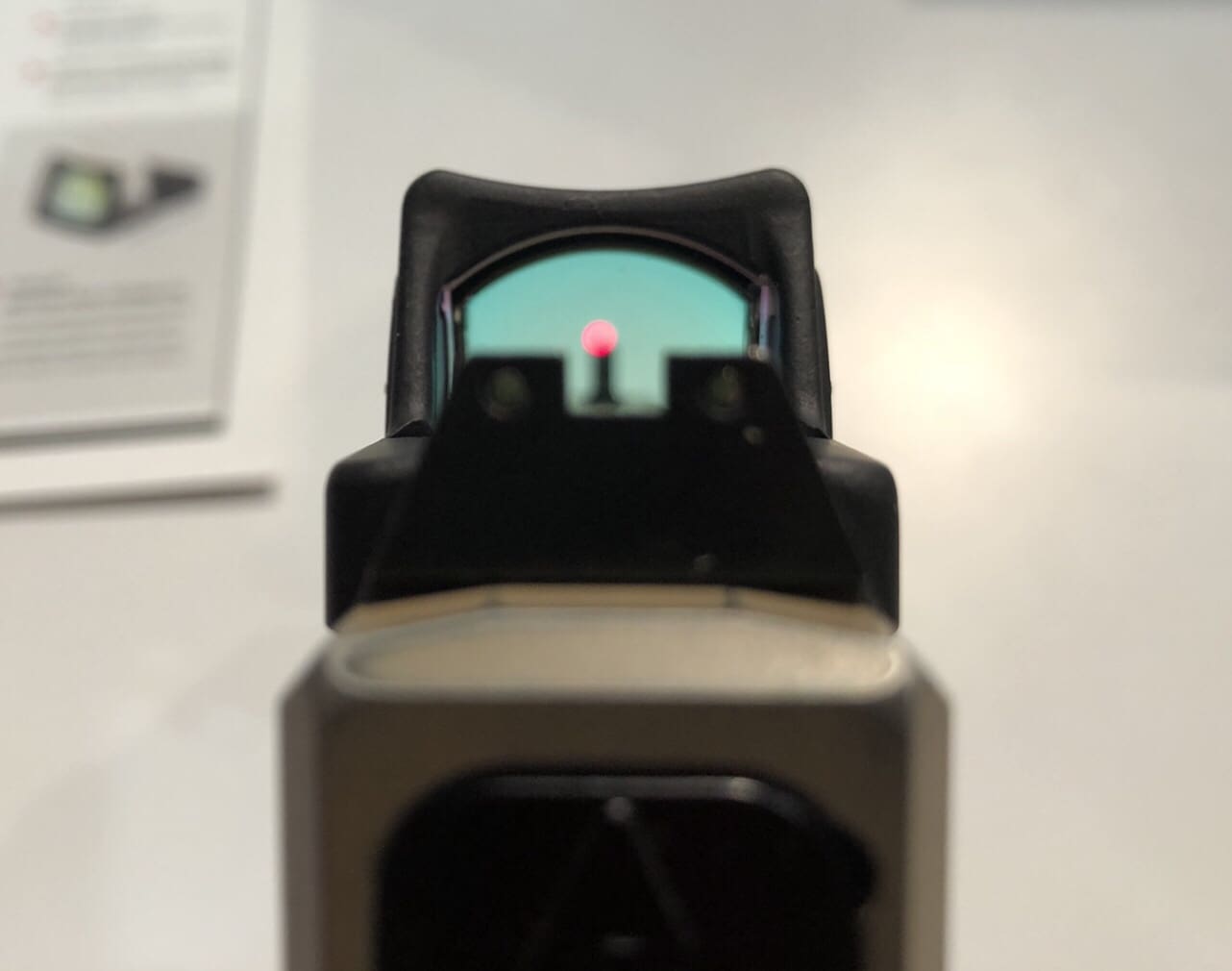
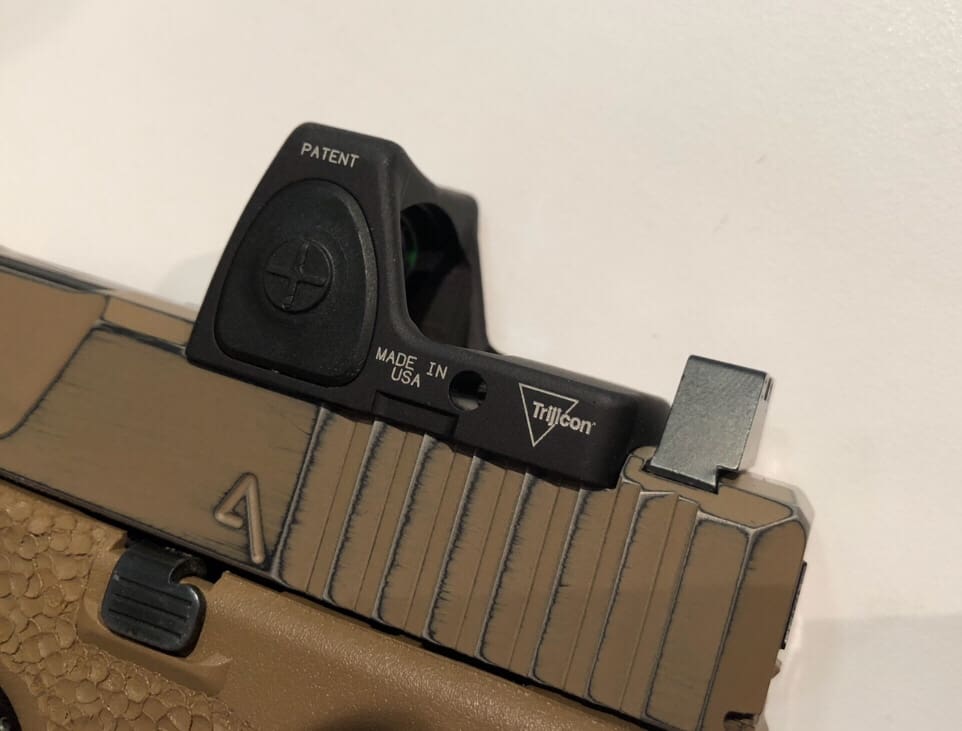
USSOCOM has selected the Trijicon solution for their Miniature Aiming System – Day Optics Program. Under MAS-D, there are four different systems: Handgun Reflex Sight, Close Quarters Sight, Squad Variable Power Scope and Precision Variable Power Scope.

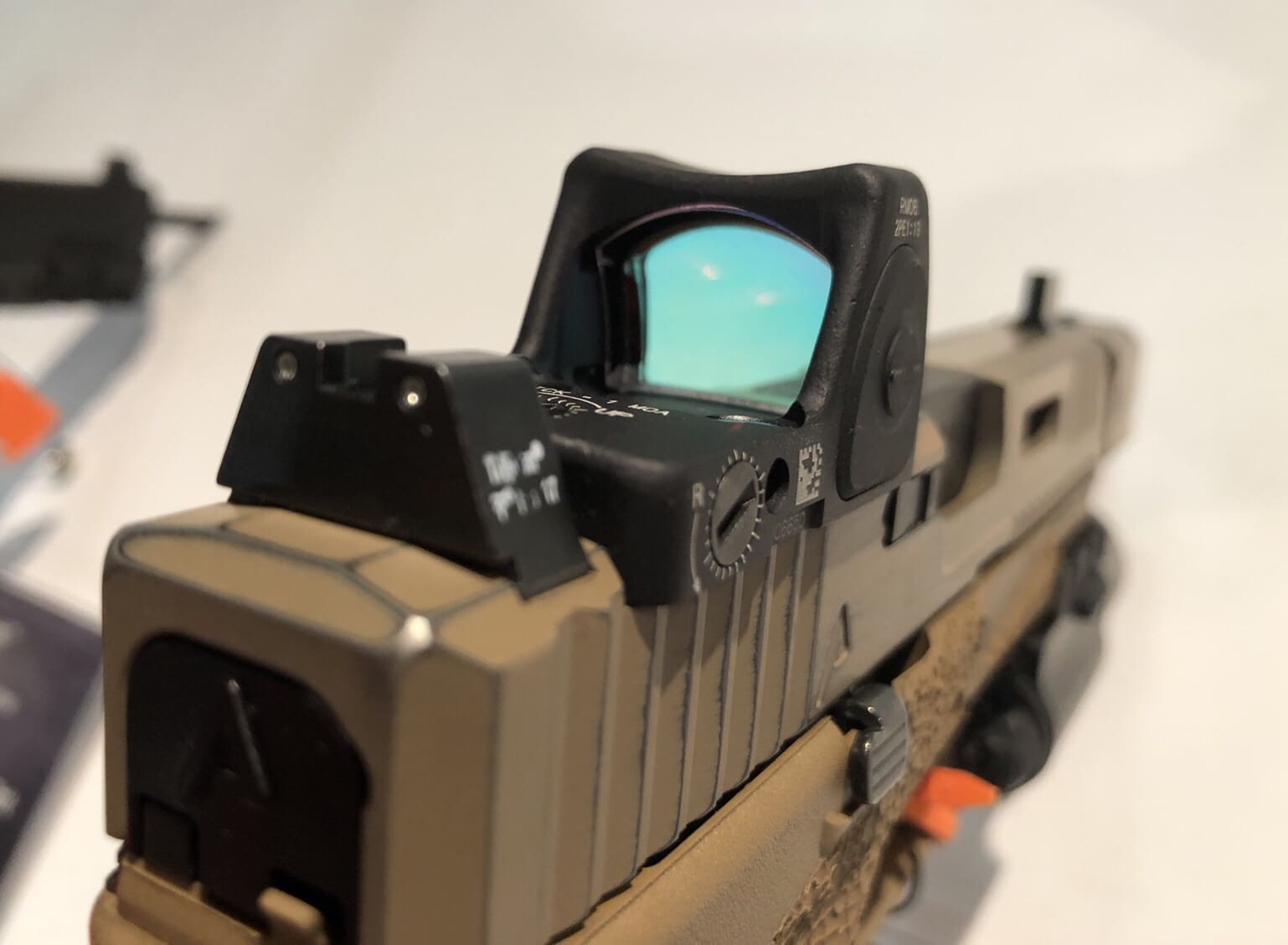
This award is for the Handgun Reflex Sight (HRS), which is designed for rapid day and night pistol target engagements. It incorporates an illuminated dot or shape imposed on a Wide Field of View (WFOV) lens to increase the speed of target acquisition when maneuvering in confined spaces, or in extremis if the primary weapon malfunctions.

With Trijicon winning it is based on their RMR Type 2 and will assuredly be mounted to SOCOM’s Glock 19s.

The RMR’s Aiming Dot features eight adjustable brightness settings including 2 NV and 1 super bright. It’s powered by a CR2032 battery which lasts up to 4 years at a brightness setting of 4 out of 8. Additionally, it automatically adjusts to ambient lighting conditions after 16.5 hours and there is a lockout feature for the buttons. It is also waterproof to 20m.

Trijicon Inc., Wixom, Michigan,* is awarded a $7,626,587 firm-fixed-price, indefinite-delivery/indefinite-quantity contract with a five-year ordering period for handgun reflex sights for the miniature aiming system – day optics program. The handgun reflex sight is a low profile, wide field of view, passive sight for rapid day and night pistol target engagements in confined spaces, while prisoner handling, or in extremis after the primary weapon malfunctions. Work will be performed in Wixom, Michigan, and is expected to be completed by August 2023. Fiscal 2018 defense procurement funding in the amount of $1,158,052 will be obligated at the time of award and funds will not expire at the end of the current fiscal year. The contract was competitively procured via the Federal Business Opportunities website, with three offers received.  The Naval Surface Warfare Center, Crane Division, Crane, Indiana, is the contracting activity (N0016418DJQ25).

The award was decided on best value. SOCOM plans to field over 14,000 of these optics to its various components.

USMC Seeks New Lightweight Hard Armor Plates

Wednesday, August 15th, 2018

Marine Corps Systems Command (MCSC), Portfolio Manager (PfM), Ground Combat Element Systems (GCES), Program Manager (PM) Infantry Combat Equipment (ICE) released a sources sought notice seeking information regarding industry’s capability to produce a Berry Amendment compliant lightweight hard armor plate.

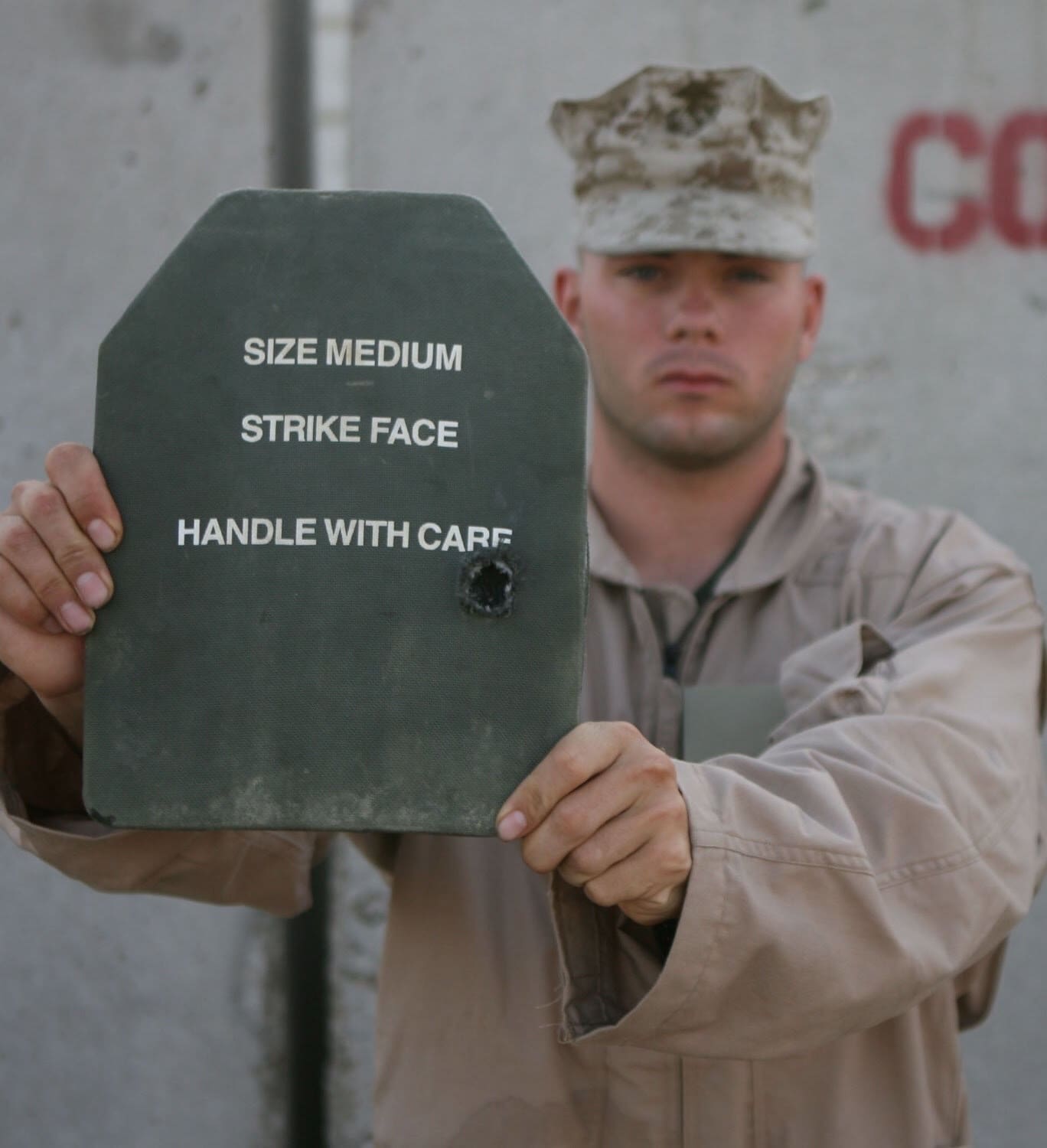
For years, the current Enhanced Small Arms Protective Insert (ESAPI) has protected Marines, and other service members from harm, but they are relatively heavy, having been designed well over a decade ago. The Marine Corps wants to leverage advancements in armor protection.

MCSC’s Marine Expeditionary Rifle Squad Team tested a selection of currently available commercial armor plates through the Marine Corps Load Effects Assessment Program course wearing all of their combat gear. MERS discovered that a lightweight hard armor plate in the range they are seeking will increase the mobility of Marines by 8 percent. It is envisioned that these new plates will be used woth the upcoming Plate Carrier Gen III, expected to begin fielding in 2019.

Over the past year, PM ICE conducted an analysis of more than 200 commercial plate designs from 38 different companies to see what type of armor is possible. However, according to the notice, there’s no actual requirement written yet, so it is important that industry respond to this Request for Information in order to inform the requirement.

According to PM ICE, the lightweight hard armor plate should:

– Provide two-shot ballistic protection from non-armor piercing rounds that are currently prevalent in counter-insurgency operations and other low intensity threat environments.
o Rounds primarily fired by sniper rifles will be tested at a velocity expected at 100m-200m standoff.
o One shot will be in the crown location at 0-degrees obliquity; the other shot will be at off-center locations at 30-degrees obliquity.
o Meet back-face deformations less than 58 mm.

– Conform to ESAPI shape and area of coverage.
– Possess a thickness that is the same or less than current ESAPI.
– Possess an areal density of 3.75 pounds/square foot (Objective) to 5.16 pounds/square foot (Threshold).

Additionally, vendors should be able to produce a minimum of 40,000 lightweight armor plates within a year of First Article Test approval, which is expected 180 days after contract award, once the solicitation is released.

Responses are required by 7 September 2018, 12:00 p.m. Eastern Standard Time (sic).

Visit www.fbo.gov for full details.

USMC photo and video.

First Look – USSOCOM’s New Suppressed Upper Receiver Group (SURG) from SIG SAUER

Thursday, August 2nd, 2018

Late last week, the United States Special Operations Command announced they had awarded SIG SAUER a $49 million contract for Suppressed Upper Receiver Groups for the M4A1 weapon.

Here is the first photograph of the SURG in the wild. The SURG components are mounted to a generic AR-style lower receiver.

EEFF537A-1498-4229-9E74-5BF62BB072A2

Based on the SOCOM requirement, SURG includes a 5.56mm NATO upper receiver group (URG) composed of upper receiver, barrel, operating system assembly and bolt/carrier assembly along with a sound suppressor (may be integral with barrel), operators manual and maintenance manual. In addition to the URG itself, candidate systems could include a folding stock if the operating system didn’t require use of the lower receiver extension, buffer and action spring.

As we can see here, SIG went a different direction than most and used an MCX piston driven upper with detachable suppressor and an MCX folding stock. As part of SURG, SOCOM will receive the folding stock and knuckle adapter for use with existing M4A1 lowers. The suppressor is covered with some sort of aramid-based mesh to protect the hand of the operator. When you get to the performance specs below, you’ll understand why this is so significant.

I’m now going to go over some of the requirements for SURG so you can see how SIG (and the other candidates) had to perform to win this solicitation.

SOCOM stipulated that SURG could be no more than 25.5 inches in length but that they preferred a system that was no more than 21.0 inches. The barrel has to be at least 11.5 inches in length and the weapon can’t weigh more than 7.0 pounds, but the preferred weight is just 4.5 pounds. It also needed to be Coyote 498 in color.

The real meat of the requirement is in the suppressor performance. First off, a SURG equipped M4A1 has to be optimized to fire the M855A1 and the MK318 MOD0 / MOD1 cartridges and be able to do so reliably for at least 1200 rounds without lubrication. Obviously, they also didn’t want anything that could vibrate loose. While the suppressor must be rebuildable, only one component of the suppressor has to be serialized but that part had to last the lifetime of an M4A1 lower receiver (125,000 rounds). The rebuildable components need to last at least 15,000 rounds but SOCOM further challenged industry to make them last for 20,000 rounds.

Additionally, a SURG equipped M4A1 shall not exceed 140 dB ten shot average sound pressure level at shooter’s ear during barrel life minimum (15,000 rounds).

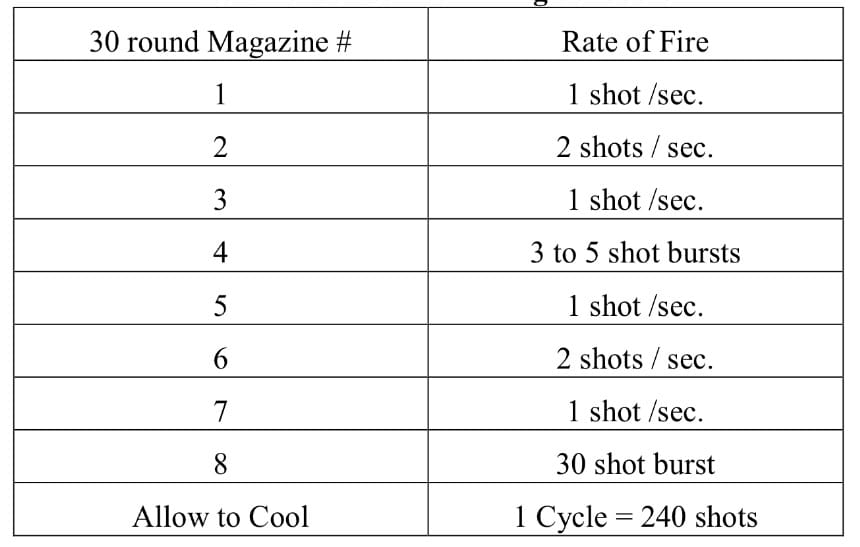
In the past I’ve mentioned the so-called SOCOM suppressor torture or stress test. The SURG equipped M4A1 has to withstand at least 6 complete cycles of the firing schedule seen below below using MK318 MOD0 / MOD1 ammunition with SURG allowed cooling to 120°F after each cycle. However, SOCOM was hoping to complete 20 cycles.

img_3867.jpg

The weapon firing MK318 MOD1 for 5 groups of 10 rounds each suppressed, has to average over the 5 groups no more than 1.50 MOA Extreme Spread (ES) beyond the ammunition Lot Acceptance Test (LAT) average ES at 300 yards. Also, it has to maintain a maximum ES Average of 1.50 MOA over LAT using MK318 MOD0 / MOD1 ammunition from 0 to 10,000 rounds fired.

In addition to that stress test, SURG has to prevent operator contact or sustained contact burns from the suppressor (or equivalent) through 1 layer of standard military duty uniform material after firing 210 rounds in 7 minutes at a rate of 1 round every 2 seconds ± 0.2 seconds. A contact burn will be defined as a peak temperature over 160°F in 1 second of contact. A sustained contact burn will be defined as a peak temperature over 160°F in 5 seconds of contact.

These stringent requirements, combining suppression, reliability, accuracy service life, and operator protection were very challenging for industry. It took three tries at bat for the SURG program to finally select a system. In the two earlier attempts, none of the systems could meet all of the program’s objectives. Kudos to SIG for putting together a winning system.

USSOCOM Awards SIG SAUER $48 Mil for Suppressed Upper Receiver Group

Sunday, July 29th, 2018

The Department of Defense has announced that USOCOM selected SIG SAUER to provide SURG.

Sig Sauer Inc., Newington, New Hampshire, was awarded a $48,000,000 five-year, indefinite-delivery/indefinite-quantity, firm-fixed-price contract for the acquisition of the Suppressed Upper Receiver Group (SURG).  The SURG weapon is an upgrade of the M4A1 lower receiver group in support of U.S. Special Operations Command (USSOCOM) Procurement Division.  Fiscal 2018 procurement funds in the amount of $24,620 are being obligated at the time of award.  The majority of the work will be performed in Newington, New Hampshire, and is expected to be completed by July 2023.  This contract was awarded through full and open competition.  USSOCOM headquarters, MacDill Air Force Base, Florida, is the contracting activity (H92430-18-D-0005).

SURG is a 5.56mm, integrally suppressed upper receiver. Despite assertions to the contrary on other websites, this is not a SIG Rattler kit.

However, there an entirely different program to offer a Personal Defense Weapon upper in .300. Earlier this year, SOCOM purchased a handful of SIG upper receiver systems to inform the requirement. Expect SOCOM to release a solicitation in FY19.

SURG asked industry to keep the handguard cool enough to handle even after firing the SOCOM suppressor torture test with M855A1. Several companies took up the challenge but experienced various issues.

US Army Issues Prototype Opportunity Notice for Sub Compact Weapon System

Friday, July 27th, 2018

Leveraging similar Other Transactional Authorities used conduct the Next Generation Squad Automatic Weapon program, the US Army wants to give up to six companies an opportunity to offer a, “highly concealable SCW system capable of engaging threat personnel with a high volume of lethal force while accurately firing at close range with minimal collateral damage.” The weapon should be optimized for shooting 147 grain 9mm.

This Prototype Opportunity Notice OTA has a goal of delivering a quantity of 15 functional weapons with Slings & Manuals, 40 – 20 round magazines and 80 – 30 round magazines, 5 cleaning kits, 3 suppressors, 2 specialized tool kits (if required for assembly/disassembly), and spare parts, within 30 days after award. If successful, a follow-on production OTA or Federal Acquisition Regulation (FAR) based award, may be made to one offeror for up to 350 SCW systems, which may include an option for additional quantities up to 1,000 SCW systems that may be exercised in quantities no greater than 350 SCW systems.

Once again, the requirement for the SCW is because the United States military operations take place worldwide and in all types of terrains as well as under every environmental condition. The Secretary of the Army and/or the Chief of Staff approves senior commanders and key personnel as High Risk Personnel (HRP). HRPs are authorized a Personal Security Detail (PSD), which are assigned to guard against outlined threats. To address this operational need, PSD military personnel require weapons with greater lethality than pistols that are more concealable than rifles. The ultimate objective of this program is to acquire a highly concealable Sub Compact Weapon (SCW) system capable of engaging threat personnel with a high volume of lethal force while accurately firing at close range with minimal collateral damage.

To learn more, visit www.fbo.gov.