FirstSpear

Archive for the ‘Contracts’ Category

BAE Awarded IOTV Contract

Friday, March 16th, 2012

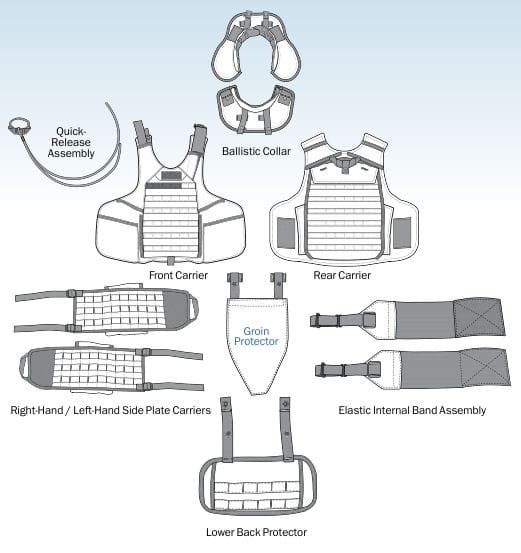
BAE Systems has been awarded a four-year Defense Logistics Agency (DLA) contract to produce Improved Outer Tactical Vests (IOTV) and accessories used by the US Army. That DLA awarded the contract lets you know that this is a sustainment contract.

“This award reinforces our position as a valued partner in the body armor market” said Don Dutton, vice president and general manager of Protection Systems at BAE Systems Support Solutions. “DLA continues to see demand for sustaining these life-saving products, as well as the value and quality that all of our equipment affords.”

The company has received an initial $48 million in orders, which are expected to be completed by February 2013. The total value of the contract orders could reach approximately $267 million over the next four years.

www.BAEsystems.com

Personal Augmentation Technology – Call for White Papers

Wednesday, March 7th, 2012

The US Army Research Development Engineering Command, Natick Soldier Research, Development and Engineering Center (NSRDEC), Natick, MA, is conducting a Request for Information for Concept (White) Papers on Personal Augmentation Technologies for the Warfighter and Homeland Defender.

They are interested in technologies and concepts that provide improvements in strength, endurance and/or ergonomics while maintaining user safety and reducing muscular fatigue, physical injury, and soreness during various load carriage and various tasks, are of interest. Example load carriage tasks include heavy and repetitive lifting, load transport, and difficult load tasks in unique environments. Ease of use and integration with current and future user clothing and individual mission equipment are factors of interest. Long operating life from a reliable power source, and low cost are also factors of interest.

There are 4 specific personal augmentation technology types sought:
1. Agility – Lightweight, low-powered, quick reaction physiological assist device for dismounted users. Injury reduction, high mobility, and endurance are key focuses.
2. Support – Physiological assist device that helps wearer to conduct sustainment and logistics tasks including heavy supply lifting, loading, unloading, and transporting at a Forward Operating Base (FOB) or alike. Injury reduction, strength assist, and throughput/production augmentation are key focuses.
3. Extreme Support – Specialized physiological assist device designed for specific tasks in extreme environments. Able to interface with special tools to conduct specific tasks. Example users include wild land firefighters and urban search and rescue. Injury reduction, strength assist, and high mobility are key focuses.
4. Depot / Industrial – Specialized physiological assist device designed for specific tasks in unique depot environments. Able to interface with special tools to conduct specific tasks. Injury, stress, and fatigue reduction and throughput/production augmentation are key focuses.

Interested parties have until March 31 to submit white papers in accordance with NSRDEC Broad Agency Announcement (BAA) 11-13, under topic # C16- Future Warrior Technology Integration, which can be found at https://www3.natick.army.mil/. Proprietary information will not be shared outside of the Government.

Check out the solicitation on FBO.

The Brookwood Army Camo Improvement Effort Submission

Tuesday, March 6th, 2012

We got some photos of Brookwood’s finalist submission for the US Army Camouflage Improvement Effort and at first we didn’t want to offer them because the patterns didn’t seem to share a common geometry. We were actually hoping to get some better photography that would show the patterns’ common features. Turns out, having a true family of patterns with common geometry was just general guidance and not a factor in selection and the Brookwood patterns don’t include this feature. So here they are.


Thanks for the photos LH

Army Interested in Consolidating iCVC and A2CU

Tuesday, February 28th, 2012

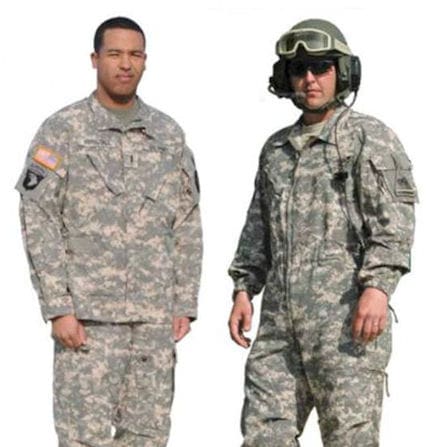
The Army has released an RFI, looking for information on combining their Improved Combat Vehicle Crewman Coverall (iCVC) and Army Aircrew Combat Uniform (A2CU). These FR (and electrostatic dissipative) garments are worn respectively by mounted crewmen such as tankers and aviators such as pilots.

Specifically they are looking for “capability statements from companies for the purpose of identifying potential sources to assist in the development of an innovative Design and Specification” for a garment that:
Is a single uniform which meets the requirements of both the Aviation and Armor communities.
Constructed of a light weight, breathable and durable fabric (lighter weight than the current iCVC Coverall fabric and more durable than the current A2CU fabric).
Is equal to or is lesser in cost than the current iCVC Coverall.
Can be used in either a one piece or two piece configuration.
Provides a sizing system matching the Army Combat Uniform and Army Combat Uniform-Alternate Sizing spectrum.

They’re also not planning on giving up camouflage printing or Permethrin treatment.

The root designs of both uniforms predate the adoption of both UCP and OCP with the iCVC being a one-piece coverall and the A2CU a two-piece. Interestingly, USAF airlift and rotary wing crews have recently adopted the A2CU as well as a commercially developed two-piece FR garment because the issue CWU-27/P flight coveralls can be so uncomfortable in the hot environments found in Southwest Asia.

One additional aspect of both the iCVC and A2CU is that they are both components of the Fire Resistant Environmental Ensemble (Free). By combining the two products into one, and keeping the various other components of FREE in mind vendors can increase the utility and performance of both systems.

Another interesting issue is that a significant number (>20%) Army aviators are female. This may be a factor in combining the two garments.

In addition to design disparities, the two garments are made from different FR fabrics. It seems that during testing for alternative FR fabrics, the two communities preferred the fabrics they are using.

Hopefully, a common sense approach will be reached that can accommodate the needs of both communities.

Army Preparing to Produce Baseline Camo Gear for Testing

Wednesday, February 22nd, 2012

Natick has released a Special Notice making known their intent to “negotiate on a sole source basis with Beyond Clothing, LLC” to produce 310 sets of “AOR 1/2 Fabric (50/50 Nyco), Helmet Covers, Pants and Blouses. These uniforms are among the baseline uniforms required for camouflage testing and evaluation.”

Army-style uniforms and OCIE do not exist in the AOR 1 & 2 patterns. What’s more, the patterns are restricted, so any gear must be manufactured by a company already certified to handle the fabric. OCP, or as it is commercially known, MultiCam is the other baseline pattern for the upcoming field trial phase of the US Army Camouflage Improvement Effort. Due to its use in Afghanistan, there is already an ample supply of the equipment available.

One interesting note. Currently, OCP is only issued as the FR ACU and not the standard FR ACU. While much work has been done to color match dyed TenCate’s Defender-M fabric used to manufacture the FR ACU, the pattern may look differently than it would when printed on 50/50 NYCO. This is a variance that will have to be considered in performance unless the Army also pursues the acquisition of an adequate number of OCP NYCO test uniforms. If they are commercially sourced, further care will need to be taken that such uniforms are not in the so-called MultiCam VS print which does not provide NIR protection.

These ‘baseline’ Government issue patterns will be pitted against four commercial families of patterns to determine the best performer and possible new Army issue camouflage.

The commercial finalists are:
ADS Inc as Prime, partnered with Guy Cramer
Brookwood Companies
Crye Precision
Kryptek

ADS Unveils Army Camouflage Finalist PatternsADS Tactical

Tuesday, February 14th, 2012

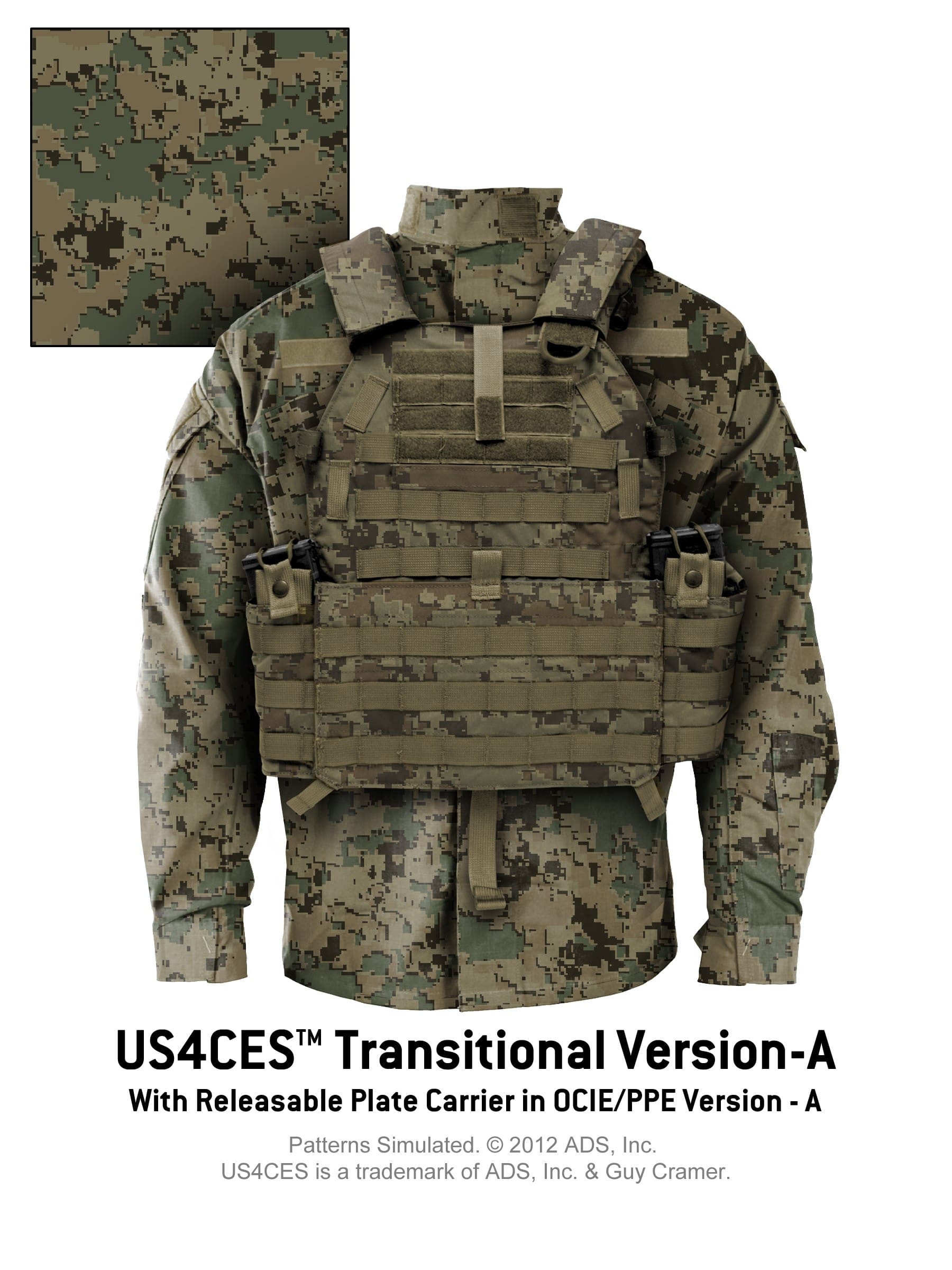
We just received the following information from ADS regarding their US Army Camouflage Improvement Effort finalist patterns developed in conjunction with Guy Cramer. As you know from reading SSD, they submitted two pattern families named Alpha and Delta. We previously broke the story on the Delta patterns during SHOT Show. Interestingly, the cleaner Alpha pattern (seen here) outperformed the Delta variants during the Army’s Picture-in-Picture down-select process. Here are the first images and descriptions of the patterns released to the public. While these images are simulated, meaning the pattern has been superimposed on an ACU coat and an armor vest, they do give you a great idea of how the environmental-specific patterns will work with their OCIE pattern.


(more…)

US Army Camouflage Improvement Effort Update

Monday, February 13th, 2012

Everyone is asking to see the finalist families of patterns for the US Army Camouflage Improvement Effort. We, as well as Military.com and Army Times asked the Army for access and the Army punted, giving us a couple of different dates, planning to bring us all in and show us the various finalists.

Unfortunately, the Army’s lawyers have determined that they do not have any rights to the patterns and through the PAO at PEO Soldier informed us that they would be unable to share them with us. Interestingly, they remain mum on sharing the sole US Army-sponsored entry, which to me is the most interesting, because it gives me insight into what direction they think this will go.

Our only alternative is to request that the finalists release the patterns to the press themselves. Some of the contenders are open to it and others are not. Early on, Army contracting officials gave the finalists the impression that public release of the patterns would be looked upon disfavorably. Obviously, this makes people nervous. It would be in everyone’s best interest to unveil all of the patterns at once. To keep a somewhat level playing field, if for no other reason. But that’s not going to happen. The companies that hold off only hurt themselves, and here’s why.

The Army will be forced to select a family of camouflage patterns that is a compromise. Yes, even a family of three patterns will be a compromise. It’s the nature of the program. In the camo business increased specificity equals decreased utility. The better a pattern performs in a particular environment, the more it works against the wearer in others. For example, there are different types of woodland environments. What works great in a jungle might not do so well in mountainous regions below the treeline. The same holds true for all military operating environments. Consequently, lots of patterns on the market are a good thing. From a commercial standpoint, more patterns mean more choices. The finalists are all the cream of the crop based on performance. The downselect has already demonstrated that and makes them very lucrative.

The various companies that entered the competition in the first place got a virtual copper mine, the finalists now have a silver mine and they are each vying for that veritable gold mine. I’ve been asked plenty what I think the winner’s submission is worth on the commercial market and I will tell you that its true value is incalculable. The problem is that this situation is unprecedented. Between commercial use of the patterns in both soft and hard goods, it could easily be worth Billions (yes, with a “b”) over the lifecycle of the Army’s use of the patterns. Which leads us to an interesting point.

The Army is going to pay the winner chump change compared to what this is really worth. It’s a great bargain for the American taxpayer but at the same time, they need to be cognizant of the stakes. This isn’t a typical PEO Soldier program. We’re treading into the world of ship and tank and aircraft procurements. And with it will come some of the same things we see with those programs.

Despite the intentions of PEO Soldier to make this more about science than fashion, in the end, the Army’s leadership is going to make its decision based on three factors; Cost, Performance, and Branding.

Cost
How much is it going to cost to field all of these new patterns and what does the Army’s budget look like?

Performance
Do the patterns perform as advertised? Do they conceal the Soldier?

Branding
Does the camouflage chosen portray a positive image for the Army? Does it make the wearer look like a Soldier?

These questions will be asked by the decision makers. There’s no getting around that. In the end, all three of these factors will be weighed against each of the families of patterns. A cost-benefit-analysis will be conducted and an edge of performance here vice an argument that there is already an ample investment in a similar pattern there combined with a question of whether a pattern “just looks funny” and you will have a decision. The final choice is going to be a compromise.

It’s in the finalists’ best interest to publicize their patterns and make their case as to why their offerings are the most appropriate. Even if they aren’t selected in the end, they’ve still got a good 18-24 months to cash in on that silver mine. The clock is ticking.


US Army Seeking Individual Water Purification Systems

Saturday, February 11th, 2012

Natick is conducting a market survey for US Army PEO Soldier’s Product Manager-Soldier Clothing and Individual Equipment domestic products, suppliers and manufacturers of individual water treatment/purification systems. Additionally, industry should expect a solicitation to purchase such technologies in the next 60-120 days.

Their interest runs the whole gamut of purification systems from standard bacterial and viral removal to dealing with turbidity and industrial waste. Additionally, they’d like info on systems that are designed for salt and brackish water.

Specifically, they are seeking info on systems with these attributes:

“The U.S. Army is interested in identifying firms with products, technologies, and capabilities to provide a man-packable, water treatment/purification system for Individual Soldier use in purifying water (for drinking) from indigenous fresh water sources in basic, hot and cold environments. The system shall be compatible with current and future organizational clothing and equipment such as the MOLLE Hydration System, standard military canteen, and/or both.

Purification systems sought must be lightweight (not to exceed 1lb. dry), easy to use/clean/maintain, low bulk/compact, capable of producing microbiologically purified water in its operational life with/without purification element replacement and meeting the volume capacities of Soldier hydration needs (135 liters). It shall have an unused service life of 180 days and should include an indicator of service life status; it shall be storage stable for 5 years and be environmentally-safe during use and subsequent disposal. It shall have the capability to resist freezing or withstand freezing without damage. Freeze/Thaw cycle testing should be conducted according to MIL-STD-810 (Method 524), “Department of Defense Test Method Standard for Environmental Engineering Considerations and Laboratory Tests”. The device shall remove or resist growth and build-up of mold, mildew and bio-films. It shall be durable to a 6 foot drop and 300 pound load(static and dynamic).

The device must be capable of disinfecting and/or removing microbiological contaminants to levels mandated by the HQDA Technical Bulletin, Medical 577 (TB MED 577). Pathogen reduction capabilities must be documented through laboratory testing to the NSF International P248 Protocol for “Emergency Military Operations Microbiological Water Purifiers” (bacterial removal to 6-log, viral removal to 4-log, and protozoan cyst removal to 3-log) or better with all test plans, data, and test reports validated by the U.S. Army Public Health Command (USAPHC). The water purification time must be 20 minutes or less (objective less than 15 minutes) with a flow rate of not less than 200 mL/min. Batteries, if used, must be a commercially-available type and of weight and bulk compatible with the overall device requirements for weight and bulk.

Consideration will also be given to removal of toxic industrial chemicals/materials to US Army short-term potability standards (TB Med 577) from fresh water sources, removal of chemical/biological warfare agents (desired), and reducing turbidity (less than 1 NTU). Processed water shall be palatable with taste/flavor as in commercial bottled spring or municipal waters. Additional consideration will be given to devices capable of desalination and purification from seawater and brackish water sources.”

If you’ve got a system, you’ve got until 9 March to let the Government know. Actual requirements for solicitations are often derived from the information received through these RFIs so it’s important to participate in the process.