Phantom Lights

Archive for the ‘Forces Focus’ Category

Modernizing the Army’s OPFOR Program to Become a Near-Peer Sparring Partner

Thursday, October 4th, 2018

NATIONAL TRAINING CENTER, Calif. — While the United States fought conflicts and insurgencies in the Middle East, South Asia, and Africa over the last seventeen years, potential adversaries were studying U.S. operations and developing sophisticated weapons, munitions, and disruptive technologies. U.S. forces must anticipate that adversaries will employ these increasingly advanced systems, some approaching or even surpassing U.S. capabilities, while also proliferating them to their allies and proxies around the globe.

U.S. Army Soldiers, posing as an Opposing Force, operate OPFOR Surrogate Vehicles and Main Battle Tanks at the National Training Center, May 2, 2017. (Photo Credit: U.S. Army photo by Sgt. David Edge)

Both Russia and China, our two most sophisticated strategic competitors, are developing new approaches to conflict by modernizing their concepts, doctrine, and weapon systems to challenge U.S. forces and our allies across all operational domains (land, sea, space, cyberspace, and space). Russia’s New Generation Warfare and China’s Local Wars under Informationized Conditions are two examples of these new approaches.

In the Middle East, South Asia, and Africa, non-state actors and radical militant groups are gaining military capabilities previously associated only with nation-states. Irregular forces are growing more capable as they adopt new weapons and tactics. Hezbollah has used advanced anti-tank guided missiles, man-portable air defense systems, and a sophisticated mission command system in its conflicts with Israel and participation in the Syrian civil war. Joining Hezbollah in the employment of unmanned aerial vehicles are Al-Qaeda and ISIS, and ISIS has also used chemical weapons. In addition, Iran adopted a very sophisticated warfare doctrine aimed at the U.S., and the Houthi insurgency in Yemen aims rockets and missiles at Saudi Arabia.

Soldiers of the 11th Armored Cavalry Regiment maneuver through the streets of a compound at the National Training Center, Calif., during an OPFOR training exercise. (Photo Credit: U.S. Army photo by Sgt. David Edge)

The U.S. Army exists to fight our nation’s wars and it rigorously prepares to reach the highest possible level of sustained readiness to defeat such a wide array of threats and capabilities. To attain this end state, training at U.S. Army Combat Training Centers, or CTCs, must be realistic, relevant, and pit training units against a dynamic and uncompromising Opposing Force, or OPFOR.

The CTC program employs several professional OPFOR units, including the 11th Armored Cavalry Regiment at the National Training Center in California’s Mojave Desert, the 1-509th Airborne Infantry Battalion within the swamps of Louisiana at the Joint Readiness Training Center, 1-4th Infantry Battalion at the Joint Multinational Training Center in Hohenfels, Germany, and the World Class OPFOR within the Mission Command Training Program at Ft. Leavenworth, Kansas. The Army’s Cyber Command also provides specialized support to these OPFOR units with cyber aggressors.

The OPFOR is representative of adversary forces and threat systems that reflect a composite of current and projected combat capabilities. The OPFOR must be capable of challenging training units’ mission essential tasks and key tasks within the Army Universal Task List. To maintain OPFOR’s relevance as a competitive sparring partner, U.S. Army Training and Doctrine Command devotes major analytic efforts to studying foreign armies and determining the optimum configuration for OPFOR units that both represent a plausible threat and challenge training tasks. This also requires the Army to consistently modernize the OPFOR with replicated peer or near-peer threat weapons and capabilities.

The OPFOR must be capable of challenging U.S. Army training units with contemporary armored vehicles that are equipped with stabilized weapon systems and advanced night optics, as well as realistic kill-or-be-killed signatures and effects via the Multiple Integrated Laser Effects Systems. The OPFOR must also have air attack platforms, advanced integrated air defense systems, unmanned aerial systems, modern-day anti-tank munitions, long-range and guided artillery fires, and improvised explosive devices.

Additionally, the OPFOR must be capable of subjecting training units to chemical, biological, radiological and nuclear effects and technologically enhanced deception capabilities. The OPFOR must also be capable of degrading or denying training unit dependency on Cyber-Electromagnetic Activities with threat electronic warfare, cyberspace, and space effects.

Modernizing the U.S. Army’s OPFOR program is an unremitting endeavor, because threats continuously change and technology relentlessly revolutionizes the art of war. Replicating the most realistic threat capabilities and tactics is critical for training units and commanders to practice their tactics, techniques, and procedures, and learn from the consequences of their decisions under tactical conditions.

This topic, as well as the challenges the OPFOR enterprise faces in developing much-needed capabilities to effectively replicate threats in a dynamic Operational Environment that postulates a changing character of future warfare, will be highlighted during a Warriors Corner at the annual Association of the United States Army meeting in Washington D.C. on Wednesday, Oct. 10, from 2:55-3:35 p.m.

By Mario J. Hoffmann

Asymmetric Warfare Group – Operational Advisor Training Course Small Arms Block Of Instruction

Tuesday, September 25th, 2018

F18692EC-CEDB-405F-B9C4-45A4BF2F5BC2

Asymmetric Warfare Group members conduct multiple pistol and rifle drills form different firing positions to transitioning from rifle to pistol as part of the Operational Advisor Training Course (OATC) at Fort A.P. Hill, Va., Sept. 11-13, 2018. The drills they were conducting were designed to: Improve accuracy and efficiency under stressful situations while transitioning from a rifle to a pistol.

OATC is designed to train and prepare Operational Advisors (AOs) for the Group’s global mission to provide operational advisory support to U.S. Army Forces in order to rapidly transfer relevant observations and solutions to the tactical, and operational point of need, to prepare Army Commanders to defeat emerging asymmetric threats and enhance multi-domain effectiveness.

0DAED93C-FAA2-4570-B22A-C5833C569009

Sneak Peek – Adaptiv.X Brings Something For The Ladies

Friday, July 6th, 2018

Here’s a a sneak peek at what Adaptiv.X has coming in the near future; functional women’s athletic carry apparel. Designed and developed by Navy SEAL’s (they might know a thing or two about defense). It incorporates their patented IWS technology allowing you to carry whatever self defense tools you could ever need, including their custom designed holsters.

Concealment, comfort, retention and security.

Made in USA. Very early prototype depicted. Shown with holster, G10 blade and pistol magazine pouch. Stay tuned because adaptiv.x is “Changing the way you think by what you wear.”

SFAB – Company Advising Team

Tuesday, May 29th, 2018

Theres been a lot of debate about what the Security Force Assistance Brigade brings to the table.

The core action element of the SFAB is the Company Advising Team (CAT) which consists of twelve personnel. Senior advisors lead the operations section and the support section. Both of the Infantry or Armor battalions, as well as the Cavalry squadron, can field nine of these teams, which are assigned the warfighting function enablers.

Team Leader = KD CPT 11A/19A
Assistant Team Leader = KD 1SG 11Z/19Z

Operations Senior Advisor = SSG 11B/19D
Intelligence Advisor = SGT 35F/M/N/P
Assistant Operations Advisor = SSG 11B/19D
Fires Advisor = SGT 13F
Explosive Hazard Advisor = SGT 89D/12B
Support Senior Advisor = SSG 11B/19D
Medical Advisor = SGT 68W
Logistics Advisor = SGT 92Y/92A
Communications Advisor = SGT 25U/C/L/S
Maintenance Advisor = SGT 91B

Additional SFAB Bases Announced

Monday, May 21st, 2018

The US Army has announced the final three bases for its new Security Force Assistance Brigades. The 3rd SFAB at Fort Hood, TX; the 4th SFAB at Fort Carson, CO, and 5th SFAB at Joint Base Lewis-McChord, WA. Tgese john n the 1st at Ft Benning and 2nd at Ft Bragg. SFABs are specialized units whose core mission is to conduct advise-and-assist operations with allied and partner nations.

UF PRO Presents – SIGMA, Latvia’s Border Guards

Tuesday, May 15th, 2018

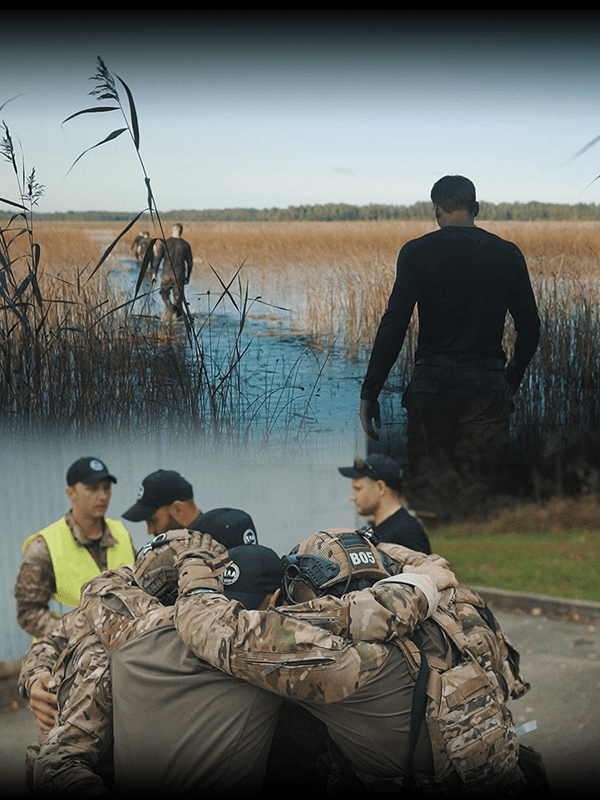
UF PRO presents this video on SIGMA, Latvia’s Border Guards. People, drugs and other contraband, such as tobacco and fuel are being routinely smuggled to Latvia and throughout Europe. More than 2,600 Latvian border guards keep a constant watch over domestic borders. Take a look SIGMA operates.

www.ufpro.si

The Art of the Operational Advisor

Monday, May 7th, 2018

The U.S. Army’s Asymmetric Warfare Group (AWG), headquartered at Fort Meade, Maryland, selects, trains, and prepares the most qualified applicants to become Operational Advisors (OAs). Operational Advisors are subject matter experts in their field. They are seasoned warriors who support Army and Joint Force Commanders to enhance Soldier survivability and combat effectiveness, and enable the defeat of current and emerging threats in support of Unified Land Operations.

IMG_7025

Operational Advisors are senior enlisted Soldiers (Sgt. 1st Class and above), Officers (Capt. to Lt. Col.) and Consultants. Most of the consultant Operational Advisors are combat veterans with Special Operations background, who were once senior ranking enlisted and officers, and are now retired from the military. The consultants continue their service supporting AWG deployed in theater and stateside by mentoring, coaching, and providing guidance to the active duty Operational Advisors. These OA consultants are a critical asset to the organization and assist in the overall completion of the mission. All OAs communicate with each other to spread the knowledge from their observations past and present across the formation.

The Asymmetric Warfare Group has a worldwide focus with regionally aligned squadrons. Traveling in small teams, OAs must also be able to accomplish the mission individually with ambiguous instruction to meet the Commanders Intent. As the OAs prepare to conduct a mission, they will gather information that allows them to identify the initial threat situational template and understand the Operational Environment. The OA will then embed with units and gather first hand observations on enemy tactics, techniques, and procedures (TTPs) to increase their situational understanding of the threat. As an external observer, AWG OAs can then assist commanders with material or non-material solutions to provide a time sensitive upper hand in a complex and fluid environment. Operational Advisors will think, adapt, and anticipate ensuring mission success.

IMG_7026

It is clear that AWG places emphasis on readiness of all personnel prior to deploying into a combat zone. As a Combat Cameraman (COMCAM) in support of the Asymmetric Warfare Group, I received an extensive amount of training to prepare myself for most missions during my assignment. (This training is a requirement for all OAs, Operational Advisory Support Personnel, and consultants in the organization regardless if scheduled to deploy or not.) I attended the Combat Skills Training Course (CSTC) where advanced and refresher tactics such as shoot, move, communicate, and medicate skills are taught. In addition to immediate and remedial drills, transition drills from primary to alternate weapons, barrier shooting, and several shooting positions are enforced through scenario driven events. I received a class on different communication platforms and their tactical applications in combat. The medical training was an introduction to mass casualty situations and how to categorize patients for treatment and evacuation if an event became catastrophic. I also attended an IFAK (Individual First Aid Kit) 101 class to get familiarized with all equipment in the personal medical aid kit and how to properly use it. The medic cannot save everyone, but with helping hands from combat lifesavers many battlefield deaths have been prevented simply by someone stopping the bleeding of a casualty. First Aid is a high pay off task and Operational Advisors and OA support personnel go through extensive training to maintain proficiency on this skill.

Integration is a major component of becoming part of the team. After completing CSTC, Charlie Squadron members provided further mentoring to complete additional training and prepare for deployment. Additionally, I attended weekly briefings alongside senior members of the squadron to gain situational awareness of the areas I could be providing support. The squadron’s logistician ensured I was ready to deploy and coordinated for issue of AWGs equipment and weapons. They worked hand in hand assisting me to make sure I had everything I could possibly need in combat and so I could be outfitted and look similar to the advisor I would be shadowing. They helped me coordinate the shipment of my equipment overseas; thus making the deployment official.

IMG_7027

I had the unique opportunity to deploy in May, 2018 with Sgt. 1st Class Roberto (Rob) Crull, an AWG Explosive Ordnance Disposal Advisor from Charlie Squadron to Iraq, as he supported units during Operation Inherent Resolve (OIR). I was able to witness first hand how an advisor works from getting into country, to coordinating embeds with an operational element. Prior to departure from the AWG hub in Iraq, we prepared equipment to be self-sufficient so that we would not be a burden on the supported unit. I learned that AWG has the capability to establish expeditionary communications via BGAN (Broadband Global Area Network) for secure communication in remote locations. Sgt. 1st Class Crull established a point of contact with the unit to make sure that they could accommodate our stay in their area of operations. Sgt. 1st Class Crull stated that “an OA should never be a hindrance to a unit he/she embeds with. An OA brings everything they need to establish all forms of communications to include solar kits for power for when in austere environments.”

Upon arrival to the unit we were supporting, Sgt. 1st Class Crull met with leadership, introduced himself, gave a capabilities brief on his role, why he was in their area of operations, and presented an overview of what he was looking to accomplish. Once communication was established within the unit, I witnessed the relationships immediately grow between Sgt. 1st Class Crull, unit leaders, and the Soldiers around the area. Sgt. 1st Class Crull quickly became an icon as many Soldiers opened up to him with the many challenges they faced. Sgt. 1st Class Crull and I made ourselves a part of that team by sleeping in the transient tent with the Soldiers versus being in a VIP tent away from unit members, which is what the camp mayor was trying to do out of generosity. A humble servant spirit is necessary to operate with AWG.

IMG_7028

An incident occurred during my time with him where the supporting unit had to respond to a Fallen Angel crisis in their area of operations. Sgt. 1st Class Crull’s past experience in Fallen Angel incidents and mine in forensic photography to assist investigators played a vital role in this unfortunate situation. Sgt. 1st Class Crull was able to integrate us into the flow of operations to assist during the crisis. We loaded into vehicles and moved out with the Quick Reaction Force (QRF) to the site. My initial impression was that this was enemy related and my training prepared me to respond with force if necessary. I was ready to perform my duties as a Soldier and secure the site. My training allowed me to be confident in my abilities and calm under stress, but also to respond accordingly. Nothing can prepare you mentally for how to respond to all situations. It is true what they say, in stressful situations your training will kick in and it’s like you automatically know what you have to do. Once the scene was secure and all heroes were recovered from the site, I switched from rifleman to a combat photographer. I began to take photos of the scene to paint the picture for the investigators before the scene could have been contaminated from wind or operational disturbance.

Unit members in the supported unit, valued the knowledge that Sgt. 1st Class Crull presented. Before our departure from the unit, Sgt. 1st Class Crull was able to provide advice and “Make the Unit in Contact Better”. I learned that an Operational Advisor has extensive resources and reach back capabilities, providing the units in contact with rapid solutions. Everything the OA does is based on building relationships within units and earning their trust. The supporting unit was very thankful and opened the doors for him to return. Sgt. 1st Class Crull bolsters the term “quiet professional” and is a great representation of AWG. This was a great experience and I was able to see how AWG operates from a tactical and operational perspective.

The OAs job is never-ending. Upon returning to the states they must gather their observations from the duration of the deployment for post mission dissemination. Those observations are non-attributable towards any specific unit, and identify ways to properly assist the fighting force to defeat current and future threats. The process then starts over and the OA will engage with units during home station training and also at the Combat Training Centers (CTC) to support the next deployment.

When talking to Sgt. 1st Class Crull during one of my days with him, he stated the Charlie Squadron Commander’s vision and in his own words what an AWG Operational Advisor does:

“We strive to make units in contact better by understanding the enemy and the complex operating environment while moving to the sound of guns. AWG is not there to tell a unit they are doing things wrong, we are there to identify outdated doctrine and friendly TTPs so that units in contact can adapt. Successes of operational solutions can then be carried forward to units deploying and currently deployed across the globe” Lt. Col. Kirk Liddle, Charlie Squadron Commander.

Earning the title of an Operational Advisor is not for everyone. The job is very demanding, but the rewards are endless. Once you are part of the Asymmetric Warfare Group, you become part of the AWG family. Families make lifelong bonds through the unique experience of a high operations tempo environment. If you wish to make a difference and be part of the solution, apply for selection at www.awg.army.mil.

Photos feature U.S. Army SSG Jeremiah Hall and SFC Roberto Crull, an Explosive Ordnance Disposal (EOD) Operational Advisor with Charlie Squadron, Asymmetric Warfare Group, waits at a landing zone for transport at a Forward Tactical Assembly Area in Al Anbar Province, Iraq, Mar. 22, 2018. AWG provides operational advisory support globally and rapid solution development to enhance survivability and combat effectiveness, and enable the defeat of current and emerging threats in support of Unified Land Operations. (U.S. Army photo by Sgt. Randis Monroe)

Story by SGT Randis Monroe, AWG

US Army Rapid Equipping Force Update

Wednesday, February 28th, 2018

Although yesterday was Rapid Equipping Force Director, Colonel Lanier Ward’s last day on the job, he invited members of the defense press to visit the organization and learn about their latest activities.

For those of you unfamiliar, this Army unit was stood up in 2002. The REF reports directly to the U.S. Army Training and Doctrine Command, providing rapid material solutions to Soldiers for urgent combat requirements by harnessing current and emerging technologies.

The organization has met challenges as diverse as improving force protection, providing ISR in austere locations, improving operational energy sources and enhancing communications. The REF maintains a forward presence in Iraq, Afghanistan and Kuwait and routinely coordinates with forces deployed globally.

COL Ward started out talking about the term “Rapid”. Lots of new organizations are being formed within DoD and are being referred to as “Rapid”. The REF has been doing it for quite some time now and seem to have the process down. However, COL Ward reminded us that although they work with all of the Army Service Component Commands, the REF’s focus is fairly narrow; specifically on small unit solutions. He related “we are about the now, and buy the Army time.”

Although they’ve downsized about one-third in recent years, the organization remains robust. It is currently 140 personnel including 30 military and 21 Department of the Army Civilians. The rest of the REF’s strength comes from a dedicated contractor force.

When asked how the REF differs from a PM shop, COL Ward replied “I’m an operator; I came in here without a clue how acquisition works. I look at everything through the prism of how Operations work.” He went on, “I’m more operationally focused, because I’m about the now.” While he might be a stranger to the Acquisition process, COL Ward and his predecessors understand Operations. Consequently, they’ve been given authority by the Army’s G3/5/7 to validate requirements from the field.

Unfortunately, with that Operations background comes some misperception from those outside the organization. One misunderstanding COL Ward wanted to address is that the REF is not strictly Commercial Off The Shelf (COTS) focused. Instead, they rely heavily upon Government Off The Shelf (GOTS), which they may employ in new ways, or are not yet ready for full fielding, due to funding. This tactic leverages money that’s already been spent, but also provides feedback on developmental systems, leading to improvements based on operational use. The reality is that the REF goes where the solutions are. They partner with Industry, Academia, and Government entities to provide innovative solutions to urgent needs.

One of the REF’s biggest successes is the Expeditionary Lab which offers design and limited production capability in a deployed environment. The ExLab is equipped with design software, 3D printers and other limited metal bending capability. A Soldier can show up at the ExLab, identify a problem, and the REF team designs and produces prototype solutions right there on site. Currently, one ExLab is operational in Afghanistan, while the other is mothballed in Kuwait. When asked why one was out of service, COL Ward replied, “It works best when it has the Soldier footprint around it.” Based on the situation in Iraq, they closed that one, at least for now.

The REF focuses on capability gaps. Any Soldier can submit a 10-liner, which is a message used to identify a capability gap. The REF follows up with the submitter’s chain of command to ensure the requirement is valid and not a case of a Soldier trying to get some shiny new kit he saw on SSD. The majority of 10-liners focus on Force Protection, Intelligence and Movement and Maneuver. Naturally, the vast majority originate from the CENTCOM AOR. Although they come from all levels of command, COL Ward said that he had denied a 10-liner from a Division commander. “I can’t fix all of the Army’s shortfalls.”

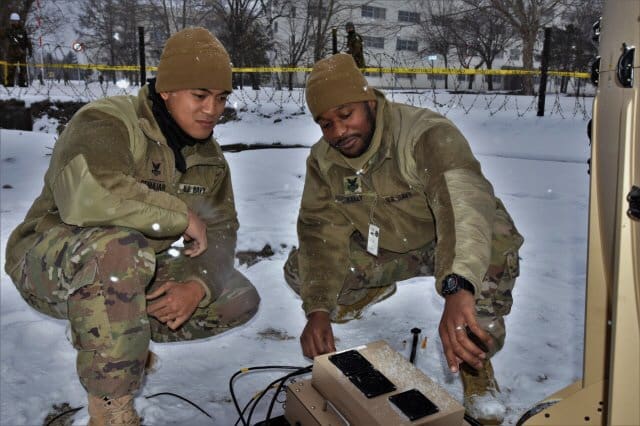
The REF’s military personnel include Outreach & Assessment NCOs. We met with three of them, SFC Rahamane Cisse, SFC Mark Walker Jr., and SSG Duryea Williams who walked is through several C-UAS and EW technologies. At home station, they conduct assessments of candidate technologies and in the field, they work with their deployed customers to provide required capabilities.

The REF uses Burnoff events to evaluate commercial capabilities for certain problem sets. “We see if your dog can hunt. If it can, maybe I’ve got a solution I can give to Soldiers,” stated COL Ward. Additionally, the REF provides the safety confirmation. In some cases, that safety confirmation will include cautions that the material must be used within certain parameters. That’s another reason they keep up with the capability for up to two years, to ensure information like that is passed from one deployed unit, to the next.

Counter-UAS is a major focus, answering Joint Urgent Operational Needs Statements from Iraq, to offer the best, readily available capabilities. However, these are interim steps, not final solutions. COL Ward doesn’t look at pieces of gear as his “items” the way a traditional PM would mentioning “we field, not equip.” Sometimes they have to remind industry. He said, “We’ve had to go back and spank companies on occasion,” after they’ve sold something to the REF and then advertised they are providing the Army’s solution.

The REF is linked in very tight with JIDO on the C-UAS front. COL Ward told us that they are good at looking at emerging capabilities, “We don’t do anything alone. We don’t have the capacity and I’d be fooling myself.”

While the UAS threat continues to evolve, the REF continues to work on solutions. For instance, their efforts have evolved from just dismounted small tactical units to providing input to support FOBs. The concept of “defense in depth” requires multiple capabilities to counter the various UAS threats. There isn’t just one UAS, meaning there must be multiple counters. They are also working with other agencies as part of a greater whole. For example, PM C-RAM is office of primary responsibility to support all of C-UAS for CENTCOM. Despite their extensive work, COL Ward sees an eventual end to the REF’s C-UAS efforts.

REF is also working with the Army’s Rapid Capabilities Office on the Electronic Warfare problem set. Their initial EW capability deliverable was a manpack system based on GOTS equipment such as C-IED equipment, with some system integration and capability enhancement. Not only does it offer an immediate capability, it also informs future requirements. They are now taking it one step further by increasing capability with the EW Tactical Vehicle capability which required additional, off-site system integration. They’ll hold a mobile EW event in March.

IMG_6628

RCO looks at problems from one to five years out, while the REF is much closer, at zero to two years. In fact, REF’s goal is to put a capability into the Soldier’s hand within 180 days. Their two year window is because units rotate. The REF prepares units due to rotate so they can fall in on equipment they’ve already fielded.

Partnering with the Asymmetric Warfare Group, REF is also looking at a Subterranean capability which was most recently evaluated in Indiana. However, they initially went to nearby Quantico to work with the FBI, leveraging lessons learned from law enforcement. Specifically, they’ve evaluated command and control, breaching, power generation, and self-contained breathing apparatus. However, they haven’t fielded any equipment. Instead, they’ve got a menu of capabilities they can provide to the warfighter in the event they are needed.

They recently assisted in fielding equipment for 1st Security Force Assistance Brigade including comms and fire support. COL Ward expects to help this new unit out even more. For instance, they’ve been looking at a tethered ISR capability for use by SFAB and others. One solution is a tethered copter which answers the need for extended duration.

The REF isn’t going away. It is very relevant. The REF is a modular organization within TRADOC, working on Army problems. Focusing on the now, REF has become an enduring capability, unlike similar, ad-hoc organizations stood up during previous conflicts which were disbanded after a short period of time. In fact, COL Ward related that the REF is finally going to move out of the trailers they started in 16 years ago. As a permanent part of the Army, it’s about time they move to a permanent home.