Tropo Performance

Archive for the ‘Guest Post’ Category

National Guard Rifle Team Clinches Dogs of War Trophy

Saturday, August 17th, 2024

CAMP PERRY, Ohio – The All National Guard six-person marksman team won the National Trophy, also known as the Dogs of War Trophy, at the National Matches in August. It was only the third time the National Guard has won this prestigious award, with previous wins in 1986 and 1977.

The National Trophy, a revered symbol of excellence in marksmanship, represents more than individual prowess; it embodies the collective discipline, skill and dedication of a team working in harmony.

“The greatest thing about it is that we are all from different states and at some point in time, every state has been part of the all-Guard rifle team,” said Sgt. 1st Class Amanda Elsenboss of the Pennsylvania Army National Guard, a shooter and coach on the team. “Those Soldiers and Airmen are taking back to their units the knowledge that they’ve gained from these national matches, and they’re sharing that wealth of knowledge with those Soldiers and Airmen back at their bases.”

The atmosphere at Camp Perry, steeped in history and tradition, was charged with patriotism and honor, reflecting the connection between military service and the art of marksmanship.

Maj. Kirk Freeman, a shooter and coach from the South Carolina National Guard, emphasized the impact and difficulty of the achievement.

“This is demonstrating the lethality that we are gaining here, being able to engage a target at 600 yards,” Freeman said. “We were able to make the correct wind call to get a hit 119 out of 120 times with six different shooters, shooting off a sling, not off a bi-pod, not off a bag, this was off elbows and a sling.”

Individual achievements and another team award further highlighted the team’s success.

During the award ceremony, Freeman presented Sgt. Jonathan Wood of the Louisiana National Guard with the U.S. Army Distinguished Rifleman Badge. Elsenboss was awarded the Women’s Rifle Trophy. The team also won the Hilton Trophy given to the highest scoring reserve component team in the National Trophy Rifle Team Match, adding to the National Guard’s legacy in the competition.

“To win this is really a big achievement,” said Master Sgt. Michael Hester, an Arkansas National Guard gunsmith and machinist for the team. “The shooters did exactly what they were supposed to do and the coaches were absolutely on point this year. It’s almost a 40-year try for this match, and this year we secured it.”

As the team members return to their respective units, they carry not just the trophy but the pride of having contributed to a tradition that spans generations. Their achievement at Camp Perry is a reminder of the National Guard’s enduring role in both national defense and the preservation of America’s marksmanship heritage.

By Shawn Monk, 171st Air Refueling Wing

FirstSpear Friday Focus – NEW ACM 150 Short-Sleeve Field Shirt

Friday, August 16th, 2024

• American sourced Wool
• Made in the USA
• Antimicrobial
Don’t be fooled by its lightweight feel – the ACM Base 150 wool fabric offers unparalleled performance and durability. Updated with 55% Lenzing, 33% wool and 12% nylon, the new Field Shirts offers the perfect blend of synthetic and wool.

Use it as a base layer or standalone, no matter which way you choose, it will be a year-round go-to. The moisture-wicking properties of wool, means it’s perfect in all seasons. Whether its protection from the sun or a base layer in inclement weather, the ACM 150 Weight Short Sleeve Field Shirts get it done. Available sizes are S-2XL and colors include Midnight Blue, Black, Charcoal, Commando Green and not in stock, but coming soon is Stone Grey.

FirstSpear is proud to partner with Texollini in the creation of the Field Shirt. They are a fully vertically integrated company who specializes in yarn and fabric capabilities, and have a long-standing history of quality fabrics, specifically in their wool offerings. They have been in the military industry for decades and are well versed with Berry Compliant offerings such as the Field Shirt. Check them out here: www.texollini.com.

For more information, check out www.first-spear.com.

Soldiers Test Drive Autonomous Equipment Decontamination System at MSPIX 24

Friday, August 16th, 2024

Aberdeen Proving Ground, MD — The best way to find out if a new car is right for you is to take it for a spin. When it comes to a new way to decontaminate military vehicles using mobile robotic technology, the same holds true. Take a seat at the computer, operate the system’s remote controls and see what feels right and what doesn’t.

That is exactly what four Soldiers from the U.S. Army’s 1st Armored Division did at this year’s Maneuver Support and Protection Integration eXperiments event, or MSPIX, held at Fort Leonard Wood, Missouri, May 6 to 23. The robotic system they were operating was the U.S. Army Combat Capabilities Development Command Chemical Biological Center’s (DEVCOM CBC) Autonomous Equipment Decontamination System.

The Soldiers were excited. “This system takes us away from the threat completely, and its buttons and controls are easy to use,” said Spc. Yaleidi Escalera. “We are the ones who will be using it in the fight, so it feels good to be able to tell the technology developers exactly what we need now.”

Escalera and three other CBRN Soldiers spent four days operating the system, followed by face-to-face feedback with the technology development team on what they liked about it and what parts of it can be improved.

“We usually never get a chance to meet the people designing the instruments we’re using as Soldiers,” said Sgt. First Class Joseph Bennett, also of First Armored. “So getting to experience the brain behind the equipment was exciting. They’re coming to us and asking, ‘Is this what you really want,’ and we get to tell them what we think.”

The Autonomous Equipment Decontamination System consists of a camera mounted on an unmanned ground vehicle (UGV). The camera scans the entire vehicle surface as it circles around it, transmitting the contamination data back to the system operators seated at a computer safely in the rear. A robotic manipulator arm then uses that data to spray a decontamination slurry developed by DEVCOM CBC on only those chemical agent hotspots, conserving decontaminant and saving time.

The Autonomous Equipment Decontamination System team received valuable feedback that they will use to refine the technology. The Soldiers pointed out the challenges encountered by the robotic platform while navigating around and manipulating the odd shapes and hard to reach surfaces of some military vehicles. The Soldiers also noticed simple things, such as adding right click functionality to the mouse on the computer interface to add more user capability. Finally, the Soldiers wanted to have a manual override for the applicator arm in case they find that not all the hot spots are being reached in autonomous mode.

Autonomous Equipment Decontamination is a multi-year cooperative project led by DEVCOM CBC. In addition to DEVCOM Army Research Laboratory support in designing the system’s robotic arm, DEVCOM Ground Vehicle Systems Center supports the computer interface and UGV operations. Industry partner Teledyne FLIR supports the development of software for the system’s camera.

Currently, it takes a team of 20 to 30 Soldiers in full protective gear 45 to 60 minutes to decontaminate each vehicle exposed to chemical or biological hazards. Soldiers must perform this task close to the point of exposure and may be vulnerable to enemy fire. The process takes more than 500 gallons of water and 50 gallons of decontaminant per vehicle.

Warfighter feedback is the acid test for a technology initiative according to Maj. Paul Austin, a CBRN experimental officer with the Maneuver Support Battle Lab who coordinates and runs MSPIX. “I know from my experience as a CBRN officer during my time in the Special Operations Command the value of fast, efficient decontamination in the field,” said Austin. “Chemical and biological agents are a weapon that can severely disrupt an operation, so being able to quickly address it is essential to completing the mission.”

Story by Brian Feeney, U.S. Army Combat Capabilities Development Command Chemical Biological Center

US Army’s First TITAN Ground Station Prototype Delivered at JBLM

Thursday, August 15th, 2024

JOINT BASE LEWIS MCCHORD, Wash. — The Army’s need for a next generation intelligence, surveillance and reconnaissance system that rapidly processes sensor data from space, high altitude, aerial and terrestrial layers to provide real-time intelligence support for targeting and situational awareness is the impetus behind Project Manager Intelligence Systems and Analytics’ delivery of the Army’s first Tactical Intelligence Targeting Access Node, or TITAN, ground station prototype to Joint Base Lewis-McChord. This milestone marks a significant advancement in the Army’s capabilities to support multi-domain operations.

“Delivering the first TITAN prototype to JBLM is a pivotal step in enhancing our warfighters’ capabilities,” said Col. Chris Anderson, PM IS&A. “TITAN provides game-changing technologies that revolutionize how we collect, process, and disseminate intelligence across the battlefield, giving us a decisive edge.”

The system which leverages cutting-edge artificial intelligence and machine learning technologies is a ground station that will significantly reduce the sensor-to-shooter timeline, enabling faster and more accurate decision-making in complex operational environments. This delivery is part of a broader effort to equip the Army with advanced intelligence, surveillance and reconnaissance capabilities that support the rapid and effective execution of multi-domain operations.

Product Director Intelligence Systems, Rich Licata said, “We are proud of the successful delivery of the first TITAN prototype. We look forward to continuing our collaboration with our partners in the development efforts to refine and expand these capabilities, ensuring our forces remain at the forefront of technological innovation.”

The prototype delivered to JBLM is one of ten being developed. These prototypes will undergo rigorous testing and evaluation to ensure they meet the operational needs and will be used to refine the system through Soldier feedback obtained from a disciplined user-centered design process including extensive unit use of the prototypes.

“We are thrilled to move into the next phase of delivering these revolutionary capabilities to the Army,” added Anderson. “The feedback from our Soldiers will be invaluable in refining and enhancing the TITAN system to meet the demands of modern warfare.”

By Larry Glidewell

U.S. Marines with Littoral Craft Company Charlie complete the Colombian Fluvial Operations Course

Wednesday, August 14th, 2024

Apartado, Colombia —

U.S. Marines with Littoral Craft Company Charlie, 4th Assault Amphibian Battalion, 4th Marine Division, graduated from the Colombian Fluvial Operations Course, at Centro Internacional Excelencia Avanzado Fluvial (CIEF), Aug. 2, 2024.

Littoral Craft Company Charlie is the first group of U.S. service members to participate in the Colombian Fluvial Operations Course as 4th Assault Amphibian Battalion is gradually making the switch from Amphibious Assault Vehicles (AAV) to Littoral Craft, which are maneuverable small boats.

“As we enter the infancy of littoral craft training, we are seeking knowledge and training from any and all sources,” said U.S. Marine Corps Maj. Lance Sutton, the Inspector-Instructor with LCC Charlie.

The Colombian Marine Corps is highly regarded as world class experts in facilitating and executing littoral exercises because their geography and security challenges heavily emphasize maneuverability and quick reaction on the nation’s waterways.

“They are the best in the world at riverine operations and it’s a great match for our training,” said Sutton.

The Fluvial Operations Course consists of multiple training exercises such as swim qualification, classroom lectures, weapons handling and maintenance, and littoral craft maneuvers.

“We came here and trained with the Colombian Marines on gunnery and piloting littoral crafts,” said Sutton. “We learned a lot from them. We hope to take this knowledge back to the United States and implement them into our tactics, techniques and procedures (TTPs) and our standard operating procedures (SOPs).”

“They are the best in the world at riverine operations and it’s a great match for our training”.

– Maj. Lance Sutton, Company C, 4th Assault Amphibian Battalion

For the Marines of LCC Charlie, the Fluvial Operations Course was a three-week course. The first week comprised classroom training and familiarization with the different classes of Colombian littoral crafts, the second week comprised isolated training between the gunnery and pilot groups, and the final week comprised integration of all coursework. The Marines of LCC Charlie endured and graduated from the course and are now more knowledgeable and confident in their abilities to maintain, operate, and execute missions with littoral crafts.

Providing expert-level instruction in riverine warfighting was something the Colombian Marines were happy to do.

“For years, the Marines of Colombia have received training from the United States Marine Corps,” said Major General Jorge Federico Torres Mora – Commandant of the Colombian Marine Corps, “and I am pleased that we are now able to provide them with this training, demonstrating reciprocity and strengthening our relations as friendly countries.”

Teniente Coronel de IM (Colombian Marine Corps Lt. Col.) Juan Pablo Lozano Borrero, Head of the Department of Instruction, Training and Doctrine for the Colombian Marine Corps, said of the training: “It fills us with pride and satisfaction to see the Marines of Colombia and United States training together, complementing each other, as if they were the same force. This means that we are getting closer and increasing interoperability between the two Marine Corps.”

The 4th Assault Amphibian Battalion is steadily and efficiently working in accordance with Force Design 2030. With the phasing out of AAVs, Marines of LCC Charlie aim to modernize, compartmentalize and become a more maneuverable and lethal fighting force in order to meet the demands of a rapidly evolving future operating environment.

By Cpl Trystan Taft | Marine Corps Forces South

Special Operations Forces Cut Through Kunsan’s Rainy Skies to Demonstrate Strike Capability

Tuesday, August 13th, 2024

KUNSAN AIR BASE, South Korea (AFNS) —  

South Korea’s summers are famous for cloudy skies and torrential downpours that may appear at a moment’s notice. However, during a week in mid-July, members of the Wolf Pack at Kunsan Air Base observed a spectacle precipitate from the open skies unlike the typical monsoon rains.

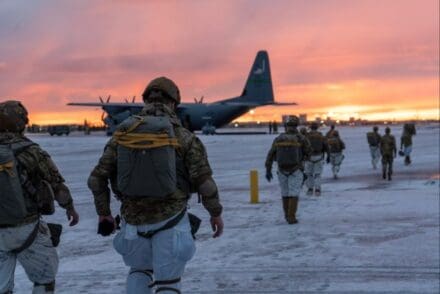
Spectators throughout the installation could spot paratroopers descending from the sky onto a drop zone near the base’s alternate landing area, delivered by a U.S. MC-130J Commando II and a Republic of Korea air force MC-130K Hercules flying in formation together.

The nearly three-week, multinational training called Joint Combined Exchange Training, was hosted by the Special Operations Command Korea from July 15-31.

The goal of the training was to ensure interoperability with coalition special operations forces partners in realistic training environments. To do this, mission organizers created challenging scenarios in different domains to replicate adversarial tactics in combat scenarios.

“Joint Combined Exchange Training is where USAF SOF train alongside our ROK SOF counterparts to rehearse mission essential tasks while enhancing our lethality,” said U.S. Air Force Capt. Raymond Lessig, 320th Special Tactics Squadron drop zone controller and mission commander. “The training provided opportunities for U.S. and ROK SOF to work through language barriers, exchange tactics techniques and procedures, and gain a better understanding of our collective strengths and weaknesses so that we can better leverage each other’s capabilities during real-world contingency operations.”

As the only theater special operations command in which the U.S. and host-nation SOF are institutionally organized for combined operations, SOCKOR and aligned units regularly train with their counterparts in the ROK army special warfare command, air mobility and reconnaissance command, naval special warfare flotilla command, and other units.

To successfully accomplish the training, planners relied heavily on the coordination between the 8th Fighter Wing, SOCKOR, the 353rd Special Operations Wing, ROK AMRC, and the 51st Fighter Wing at Osan Air Base. Each unit played a complementary role in achieving desired training objectives. Throughout the second week, participants utilized Kunsan AB to conduct the jump training portion of the JCET.

“This is the fourth year we’ve conducted this training at Kunsan,” Lessig said. “We keep choosing to come back because of how accommodating and helpful the Wolf Pack has been. Each aspect of Kunsan from airfield management to the medical group have been ready to support our team execute this high-value training.”

The ability to accept follow-on forces is one of the key tenets of the Wolf Pack’s core mission and was on full display during the weeklong training on Kunsan AB. According to U.S. Air Force Col. Peter Kasarskis, 8th Fighter Wing commander, this is what makes Kunsan such a crucial asset in optimizing U.S. Forces Korea’s agility and ability to project airpower throughout Asia.

“Kunsan exemplifies readiness in the Indo-Pacific,” Kasarskis said. “Our Airmen here at the Wolf Pack demonstrate daily what it means to be forward-deployed and ready to fight tonight. Supporting training, like the JCET, highlights our ability to rapidly receive follow-on missions and integrate with allies and partners. Kunsan is more than just a fighter base; it’s an agile power projection platform ready for any mission.”

Lessig said Kunsan’s location also made the difference in ensuring this iteration of the training was as representative of potential real-world scenarios as possible.

“Kunsan’s location is invaluable to creating realistic training conditions,” Lessig said. “Its location, surrounding environment and mission set, forces participants to plan and rehearse airborne operations far from their desired landing area, potentially at night and in adverse weather conditions, and to safely navigate as a team with all combat equipment to their objective.”

As this portion of the JCET ends, the event showcased the military partnership between the U.S. and ROK forces, serving as a powerful reminder of their unwavering commitment to regional security. However, for some, this event was more than just a testament to their strength; it was a once-in-a-lifetime opportunity to witness the seamless interoperability of two of the world’s most formidable military forces.

Story by MSgt Michael Charles, 8th Fighter Wing Public Affairs
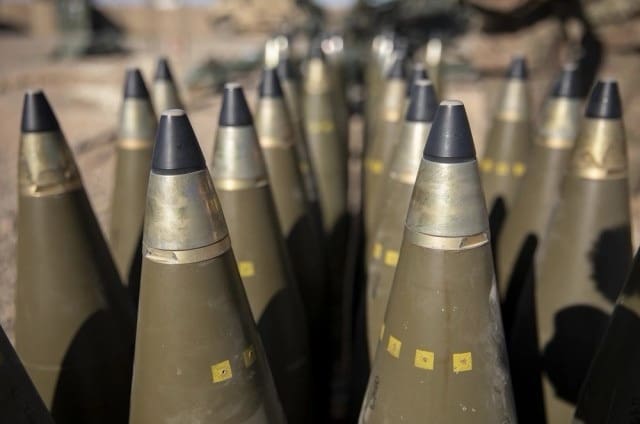
Photos by Senior Airman James Johnson

MATBOCK Monday: Lightest Chest Rig

Monday, August 12th, 2024

Simple and lightweight, the redesigned MATBOCK Rhodesian vest offers incredible weight savings without compromising strength. Our Ghost material will not absorb water, sweat or chemicals. The Rhodesian offers dual radio pouches, and our Ghost material transfers heat to keep the operator cooler. With three different height adjustments for the front panel, the Berserker Rhodesian can go from minimalist to fully kitted. 100% Made in the USA




Features:
– Precision laser cut MOLLE for attaching pouches and gear
– Customizable front panel allows the user to quickly adjust to three different heights
– One of the lightest Rhodesian vests on the market that weighs at 8 oz (226.7grams)
– Ghost and Ghost Lite are hydrophobic, meaning they do not absorb any liquids like water or sweat. It can also be sanitized or decontaminated without compromising the integrity of the material.

This thing only weighs 7.98oz (226 grams). Check it out here: www.matbock.com/collections/berserker/products/rhodesian-chest-rig

Email us at sales@matbock.com if your unit needs a quote.

Army Cyber Protection Brigade-Led Exercise Brings Multiple Service Elements, Components Together

Monday, August 12th, 2024

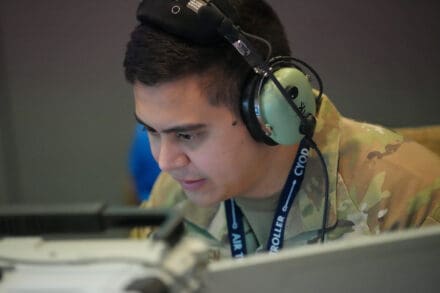
CAMP DAWSON, W.Va. ­­– As the late July heat continues to scorch, cyber Soldiers, Sailors, Marines, and civilians assembled in the foothills of a remote training base in West Virgina to hone their skills to build an effective defensive cyber force.

Every year, the Army Cyber Protection Brigade (CPB) plans, prepares, and executes Exercise Grungy Zion (EGZ) to simulate a joint task force employing defensive cyber operations across multiple echelons. From July 22 to August 3, 2024, the CPB deployed teams to Camp Dawson, W.Va., Orlando, Fla., and Fort Eisenhower, Ga. to participate in this exercise.

For the CPB task force staff and the brigade’s subordinate battalions, this was an opportunity to validate how information is received, managed and communicated to the Cyber Protection Teams (CPTs) that were operationally engaged in the training scenario.

“Exercise Grungy Zion is the Cyber Protection Brigade’s annual certification exercise,” said Col. Christopher Stauder, CPB commander. “Historically, this exercise has been focused on certifying mission elements, cyber protection teams, and battalion-size task forces. This year the CPB took a giant step forward in certifying the brigade headquarters as a maneuver element and by incorporating multiple partners into this exercise.”

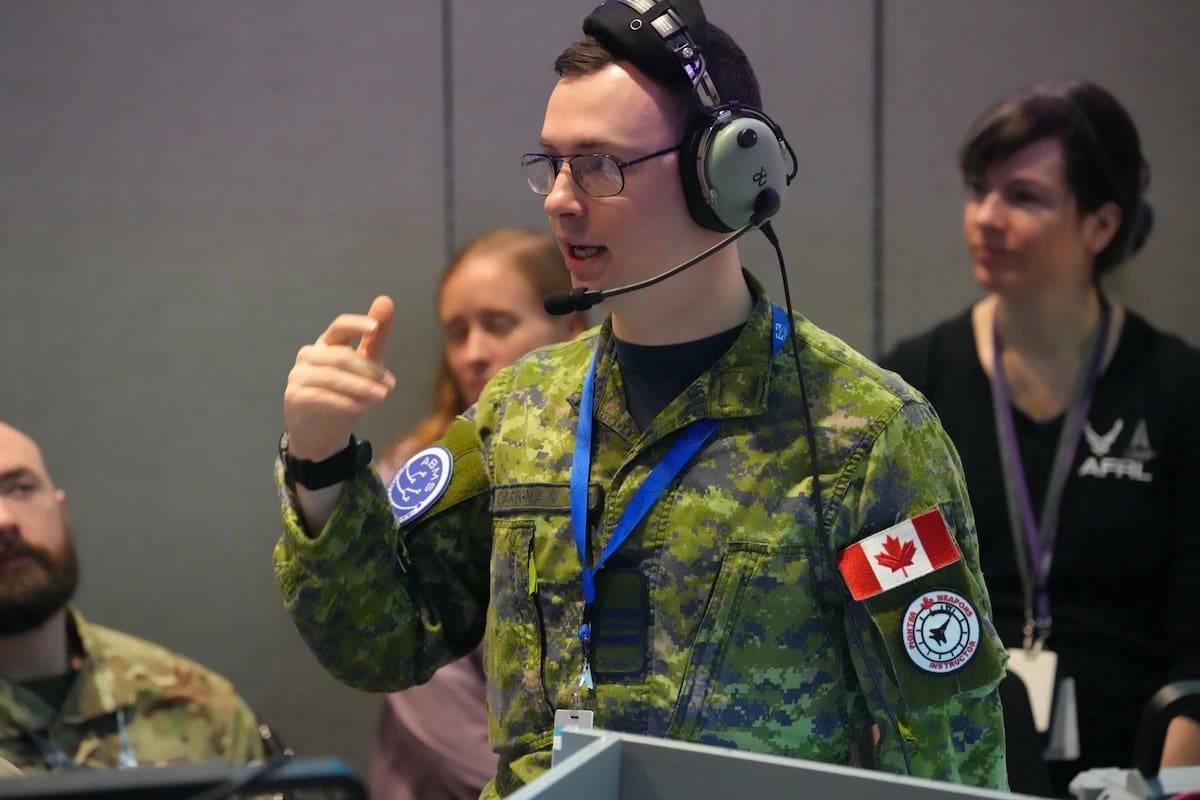
This year’s exercise was the first time the Army’s sister service cyber elements participated in EGZ, working alongside their Army counterparts. Some of the partners included elements from Marine Corps Forces Cyber, Navy mission elements, Multi Domain Task Force mission elements, Army Reserve and National Guard CPTs, and signal professionals from the 60th Signal Battalion (OCO).

“Working joint with the Army during EGZ has been exceptional,” said U.S. Marine Corps Cpt. Michael Goff of 652 CPT, U.S. Marine Corps Cyberspace Operations Battalion. “This is the first time my team had an Army crew integrated with us. It has been a huge success, because they are proficient in all the tools, allowing us to achieve success much faster than normal.”

EGZ also demonstrated how the advancement of technology forces cyber elements to continuously transform how they train and fight to become a more competent force. This includes protection of mission-essential information as well as networks supporting infrastructure, logistics, and communication between joint and multinational allies and partners.

“It feels nice to be hands-on developing and learning new skills,” said Spc. Andrew Stout, 155 CPT, 1st Cyber Battalion, CPB. “Cyber is important, because it provides a broad range of assets and technical support to help the Army complete its mission all over the world.”

In the past, the exercise has taken place on Fort Eisenhower and Camp Dawson; each year new remote locations participate in the training. This is the fourth year the CPB has hosted EGZ and due to its success, plans to continue the exercise for many years to come.

“EGZ is successful because it stresses our units to see what operational load we can handle,” said 1st Lt. Luke Meyer, 155 CPT, 1st Cyber Battalion, CPB. “It measures how we respond in real time, our processes, and hunting capability to react to any cyber threat that might pop up.”

By Lloyd Bedford