BOSS-Xe from Wilcox Industries

Archive for the ‘Guest Post’ Category

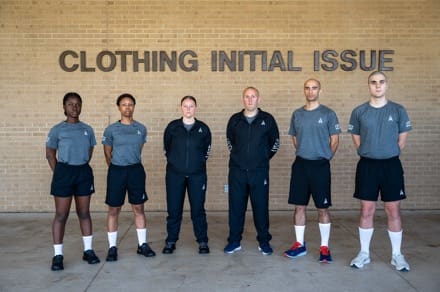
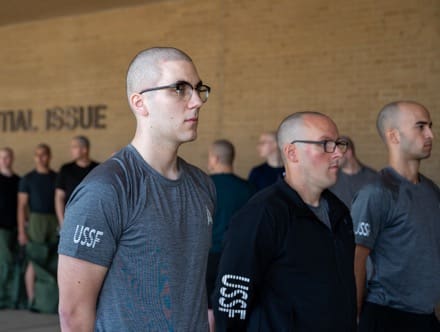
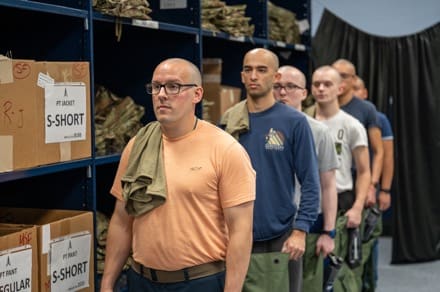
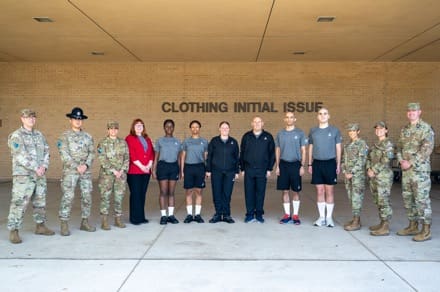
USSF Rolls Out New Physical Training Uniform at BMT

Tuesday, March 12th, 2024

ARLINGTON, Va. (AFNS) —
The United States Space Force began the roll-out of its Physical Training Uniform March 8, when it was provided to the newest Basic Military Training Guardian trainees.

“This is more than a uniform rollout, this is the first finalized service-specific uniform that Guardians can wear with pride,” said Maj. Gen. Steven Whitney, Space Force Director of Staff.

The new uniform now includes performance features such as breathable, moisture-wicking shorts designed for running, and soft, quick-drying material to help curb sweat and odor. The uniforms will be available in both men’s and women’s sizes, rather than unisex, for a better fit.

Overcoming material shortages and supply chain delays stemming from the COVID-19 pandemic, the uniform development team diligently worked to design the Space Force PT uniform with Guardians in mind.

“From the word ‘go’ we have been committed to keeping Guardian feedback at the forefront of developing service-specific uniforms,” said Catherine Lovelady, Space Force change management team program analyst. “We are grateful to our partners at the Air Force Uniform Office who helped make this a reality for Guardians.”

The Space Force will celebrate its fifth anniversary Dec. 20, 2024; this rollout is significant as the youngest military service continues building its culture and identity.

“The Space Force is committed to making the Guardian experience something that our service members can be proud of,” said Chief Master Sergeant of the Space Force John Bentivegna. “The uniform connects Guardians to each other and their service. It represents our spirit and our strength operating as one team.”

Uniform delivery to select AAFES locations will begin in the next several months at Peterson, Schriever, Buckley, Vandenberg, and Patrick Space Force Bases, Los Angeles Air Force Base, and the Pentagon.

Guardians will utilize the same wear instructions as the U.S. Air Force physical training uniform utilizing DAFI 36-2903, Dress and Personal Appearance of United States Air Force and United States Space Force Personnel, until a standalone Space Force Instruction for Dress and Appearance is released later this year.

The PT uniform cost will be calculated into the Guardian uniform replacement allowance beginning April 2024. Guardians are encouraged to only purchase one set of the uniform as supplies will be limited as rollout begins.

Story courtesy of Secretary of the Air Force Public Affairs

U.S. Space Force photos by 2nd Lt Kate Anderson

MATBOCK Tarsier Eclipse Issued NSN

Monday, March 11th, 2024

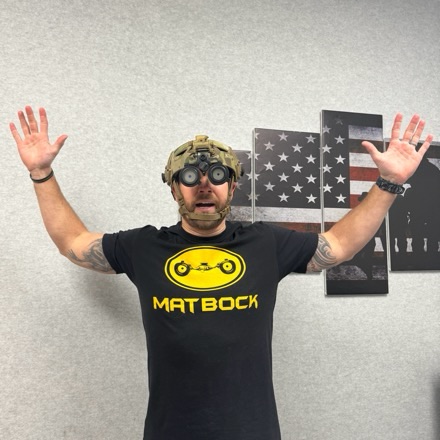
Exciting news coming from our partners in Australia, S8 Products Group, as they assisted us in getting the Tarsier Eclipse an NSN. This was particularly important as we started to outfit Australia SOCOM with them but also other global units.

We have been supplying  them for nearly a decade now, but now it will be part of a larger procurement strategy. S8 Products Group has been a great partner in helping us to grow the MATBOCK brand globally and the addition of the Tarsier Eclipse for their forces continues to help that. 

If you aren’t familiar with the Tarsier Eclipse and how it works, here is a great side-by-side video taken at Freedom Outdoors in Virginia Beach.

The MATBOCK Tarsier Eclipse NSN is 6650-01-718-0894. Please reach out to sales@matbock.com or check www.matbock.com if you have any more questions.

Army Enters into Development Phase of the Joint Targeting Fires Product

Monday, March 11th, 2024

ABERDEEN PROVING GROUND, Md. — The Army has officially started development of a new software that will automate the fires targeting process, giving commanders rapid data, situational awareness, and visualization to successfully deliver fires.

The software, known as Joint Targeting Integrated Command and Coordination Suite, or JTIC2S, will replace the Joint Automated Deep Operations Coordination System, JADOCS, and provide fires targeting capability and a joint fires targeting common operational pictures across forces.

Now in the engineering and manufacturing development phase, the Army will develop the software’s first iteration known as the minimum viable product, conduct testing in the field, incorporate Soldier feedback and then look to industry to further develop the software’s capabilities.

“Entering this phase of development is an exceptional achievement and a critical step to consolidating safety-critical fires software onto a single baseline,” said Col. Matthew Paul, project manager for Mission Command at Program Executive Office, Command, Control, Communications – Tactical, known as PEO C3T. “While JADOCS has served the Army well for more than 30 years, moving to JTIC2S will allow us to keep pace with the speed of technology, evolving Army priorities, and help us deliver a product that is effective for the warfighter.”

PEO C3T has determined the JTIC2S and the Advanced Field Artillery Tactical Data System Artillery Execution Suite and collective capabilities/development effort is considered a Fires Safety Critical Baseline. This capability will leverage a common back-end architecture, an open application programming interface and a common/intuitive role-based user interface shared by all fire support command and control and mission command systems using Tactical Assault Kit software.

As a software-only program, JTIC2S will link sensors to shooters without the need for specific hardware. It will provide rapid target engagement, near real-time access to friendly and enemy unit data, and be fully interoperable with Army, joint, intelligence community and coalition forces systems. Military service branches across echelons will utilize the functions within JTIC2S to support combined joint all-domain command and control and joint all-domain operations against a near-peer adversary.

Data, once tracked through Excel and PowerPoint files, will now be automated and displayed through 4D visualization to help commanders see themselves in time and space. The new system will utilize Tactical Assault Kit, a situational awareness web application that provides quick access to a common operating picture. JTIC2S will also be able to process varying data formats and leverage artificial intelligence and machine learning to aid commanders and forces in the decision-making process.

“Modernizing this software means the Army will be agile and responsive to the needs of the operational force,” said Lt. Col. Timothy Godwin, product manager for PEO C3T Fire Support Command and Control. “It will also be backwards compatible with JADOCS so that joint forces that continue to use JADOCS will still be able to communicate effectively. We know that theaters fight differently. Developing JTIC2S as a software only program will help us integrate into any network, and as technology enhances, we can make changes without a lot of time and money.”

The Army plans to use a multi-vendor approach for contracting and will be seeking various industry partners later in the fiscal year to help build this iterative software in addition to Advanced Field Artillery Tactical Data System Artillery Execution Suite and the Fires Safety Critical Baseline.

By Danielle Kress, PEO C3T Public Affairs

US Army Special Operations Museum Launches New Exhibit

Sunday, March 10th, 2024

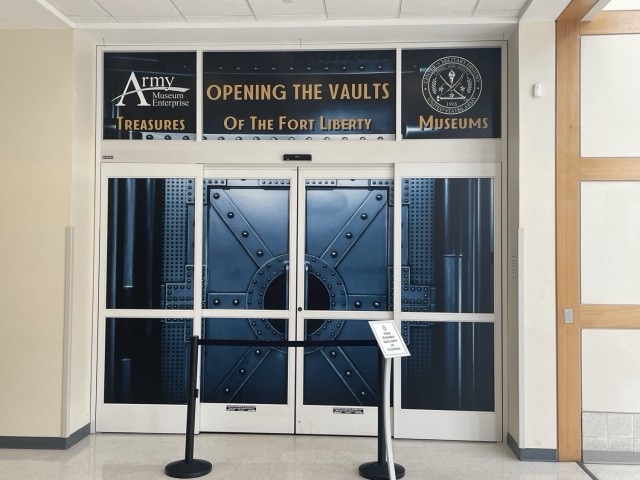
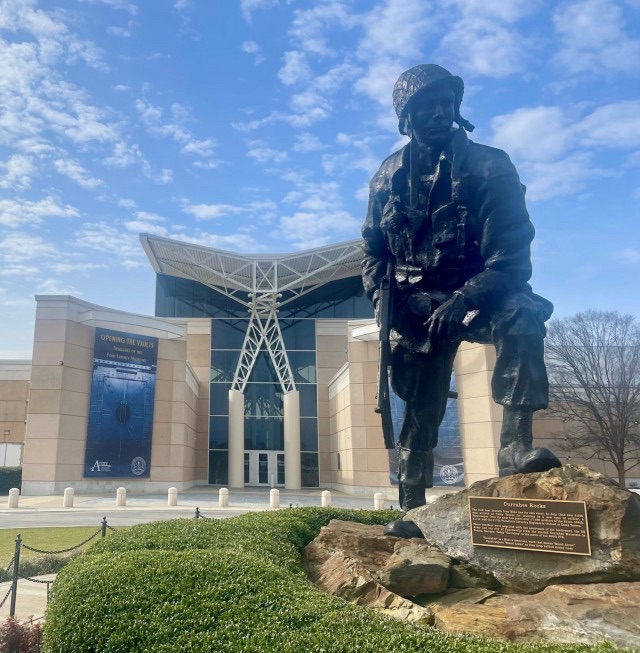
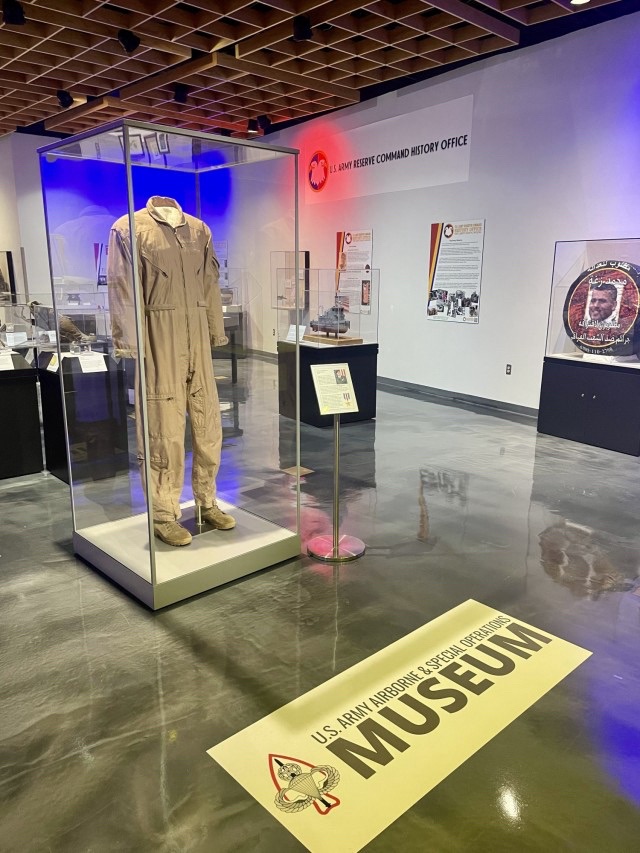
WASHINGTON — On March 14th, 2024, the U.S. Army Special Operations Museum will launch an exciting new exhibit, “Opening the Vaults” at Fort Liberty, North Carolina, formerly Fort Bragg.

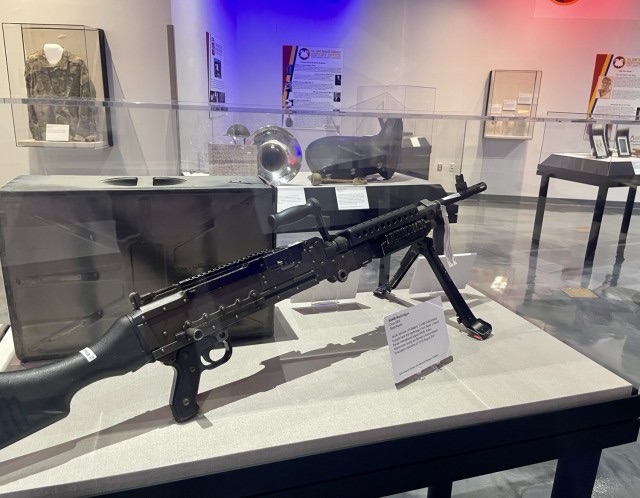
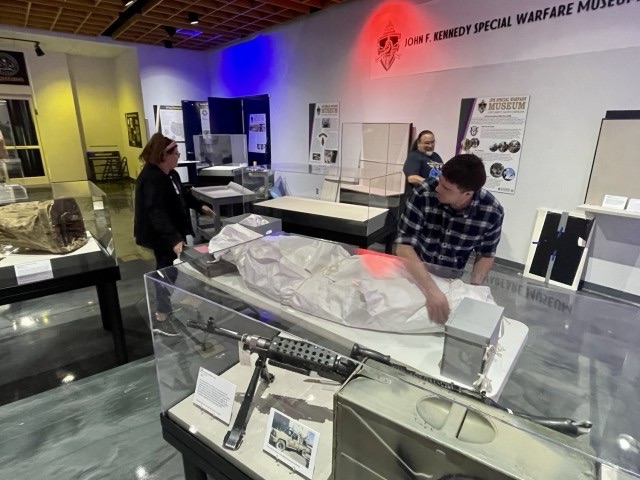
Opening The Vaults: Treasures of the Fort Liberty Museums is a temporary exhibit that will present rare and never-before-seen artifacts from the Fort Liberty Museums and historical holdings.

The exhibition is a collaborative effort with the John F. Kennedy Special Warfare Museum, 82d Airborne Division War Memorial Museum, U.S. Army Reserve Command History Office, and the 503d Military Police Battalion (Airborne).

ASOM, constructed in 2000, is the first U.S. Army Museum built outside the perimeters of an Army installation. Artifacts from the Fort Liberty Museum Enterprise as well as assets from the U.S. Army Center of Military History (John F. Kennedy Special Warfare Museum) will be housed together and accessible to the public, in the heart of downtown, Fayetteville, North Carolina.

Jim Bartlinski, Director of the Fort Liberty Museum Enterprise, said, “we thought that this would be a good opportunity not only to showcase rare artifacts, and never before seen artifacts, that we have here at ASOM, but also to give folks who necessarily don’t know about the museums on Fort Liberty the chance to see what those museums offer.”

This exhibition tells the story of the Army Reserve, Special Forces, and the 82d Airborne Division.  “So, it is a great collaborative effort for all of us.”

Historical panels were designed for each museum’s section by the John F. Kennedy Special Warfare Museum. The 503d Military Police Battalion, the only airborne military police battalion in the U.S. Army provided uniformed mannequins to “guard” the vault, while drawing in visitors to the exhibit.

The exhibit will also feature a “Seek and Learn” activity geared towards interacting with children to learn about the history of the U.S. Army, developed by ASOM’s Volunteer Coordinator, Laura Monk.

ASOM Curator, Jimmie Hallis, said, “The exhibit is a first of its kind at the Fort Liberty Army Museum Enterprise.”

“Everyone (involved in the exhibition) jumped right on board with it. Up until the artifact installation dates, I really didn’t even know what the other museums would bring. The selection of artifacts run the history realm, from the Civil War to the Global War on Terror, there is something for everyone to see,” Hallis said.

To see the exhibit, visit the U.S. Army Special Operations Museum web page for location and operating hours. Go to: history.army.mil and click on the Museums tab.

Story by CPT Janeen R. Phelps

Photos by James Bartlinski

School’s in Session: Report to the Tower

Sunday, March 10th, 2024

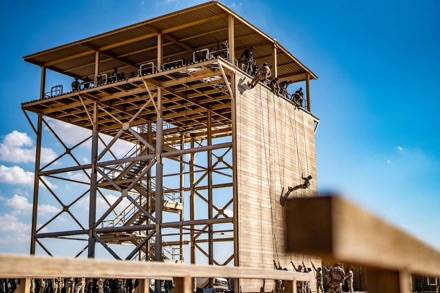
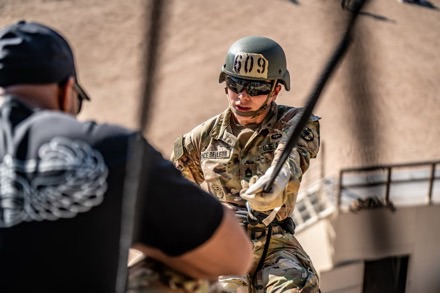
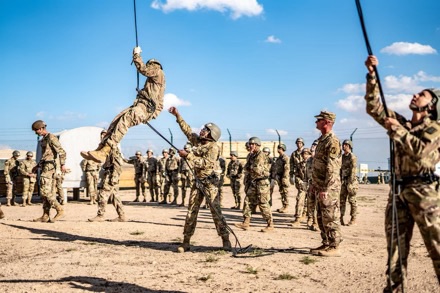
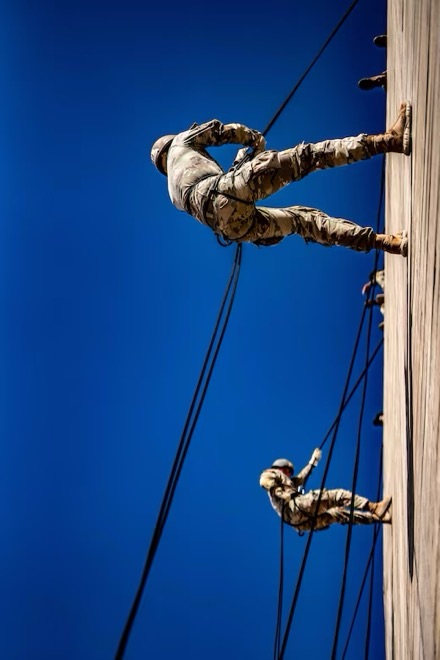
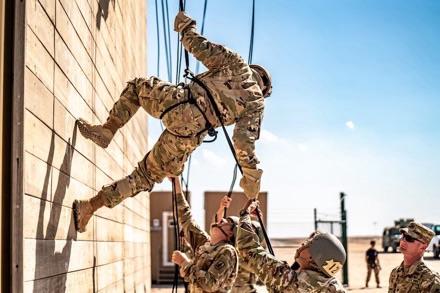
With harnesses on their hips, hardhats on their heads and rope in their hands, soldiers participating in air assault school rappelled off towers at Camp Buehring, Kuwait.

During air assault school, soldiers train on rotary wing aircraft, aircraft safety, aeromedical evacuation procedures, pathfinder operations, principles and techniques of combat assaults, rappelling techniques and sling-load operations. These trainings prepare soldiers to make use of their helicopter skills in combat.

Courtesy DoD News Service

Photos by Army SGT Vincent Levelev

FirstSpear Friday Focus: NEW Tiger Stripe Fleece Pullover

Friday, March 8th, 2024

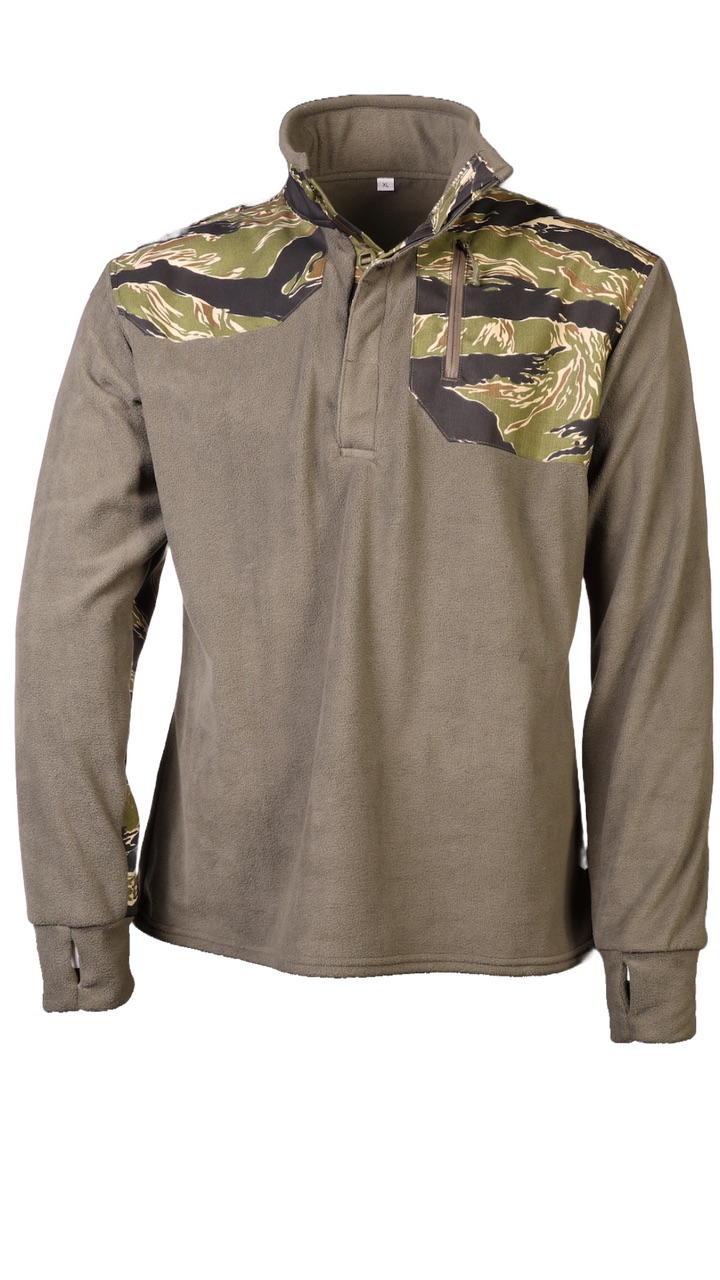
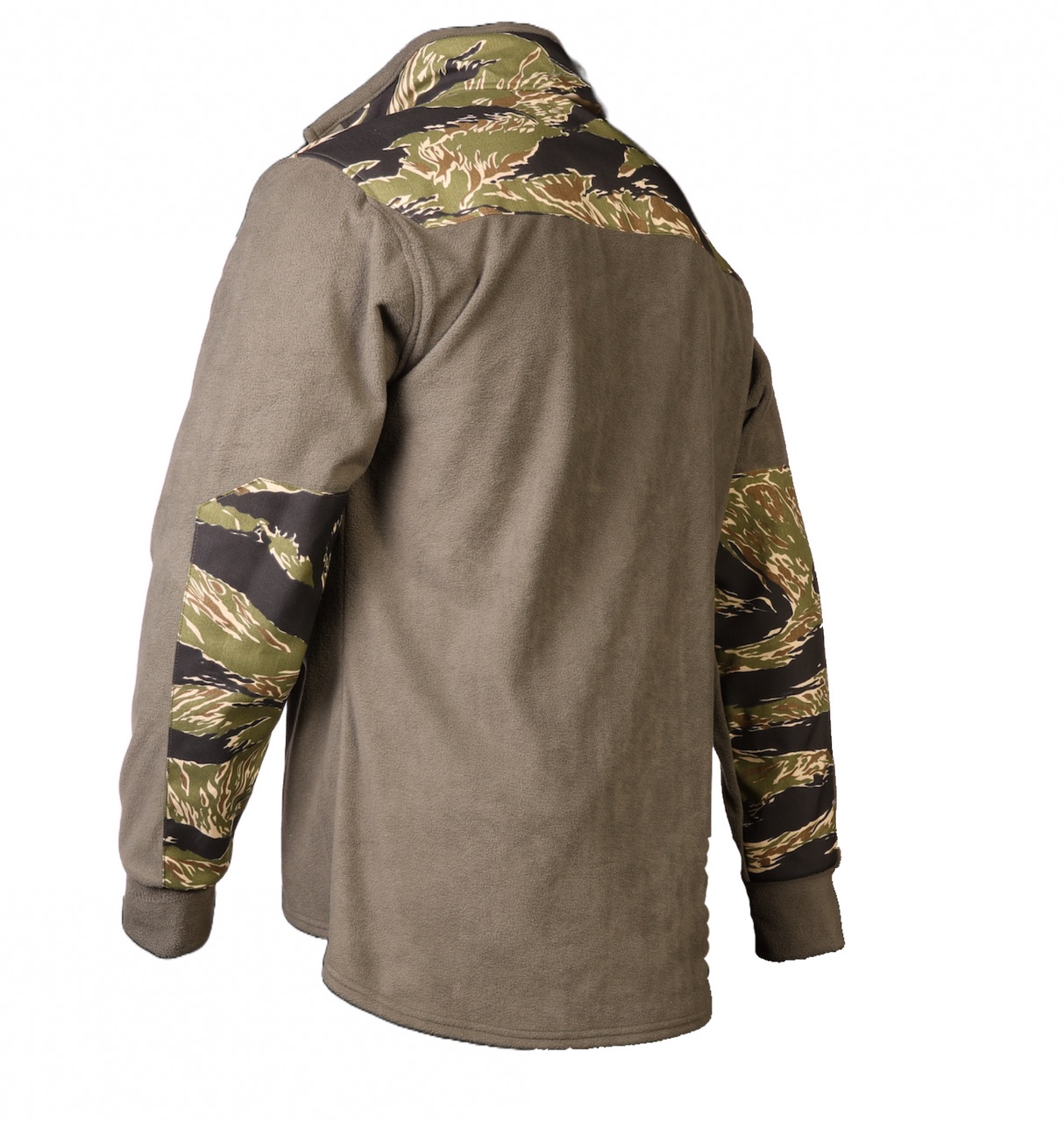
Launching now our latest technical garment: the Tiger Stripe Fleece Pullover. Those at SHOT Show 2024 got a first glance. Designed with precision and crafted for performance, this pullover embodies the spirit of adventure and the legacy of tactical excellence.

Few patterns evoke the aura of mystique and tactical prowess quite like the Tiger Stripe Camouflage. Born out of necessity during the Vietnam War, this iconic pattern has transcended its origins to become a symbol of stealth, agility, and sheer determination on the battlefield.

At FirstSpear, we understand the importance of versatility, durability, and comfort in every piece of gear. The Tiger Stripe Fleece Pullover exemplifies these qualities, offering a perfect balance of functionality and style. The Fleece Pullover features extra ambush tiger stripe material on the arms and elbow, a functional zippered chest pocket for small items and thumb holes.

Whether you’re navigating urban jungles or remote wilderness, the Tiger Stripe Fleece Pullover is your ally in the quest for victory.

Get yours today www.first-spear.com/fleece-pullover.

FirstSpear Friday Focus – Discreet Backpack

Friday, March 8th, 2024

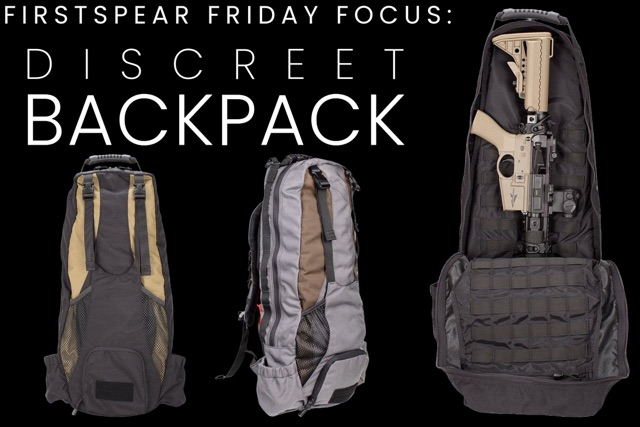
A long time fan favorite, the Discreet Backpack is a must-have accessory for anyone who owns a short-barreled firearm or sub-gun. This versatile and adjustable pack can carry all your gear in one convenient place, under the radar. The quick release buckle strap and durable materials provide protection and security for your firearm, while the small zippered pocket on the back is perfect for storing small accessories. Whether you’re heading to the shooting range, traveling or need a convenient way to stow your truck gun, this pack will help mitigate unwanted attention.

Visit FirstSpear to find American Made kit and accessories, Built For The X.

Soldiers Prepare for Combat Operations in the Arctic

Friday, March 8th, 2024

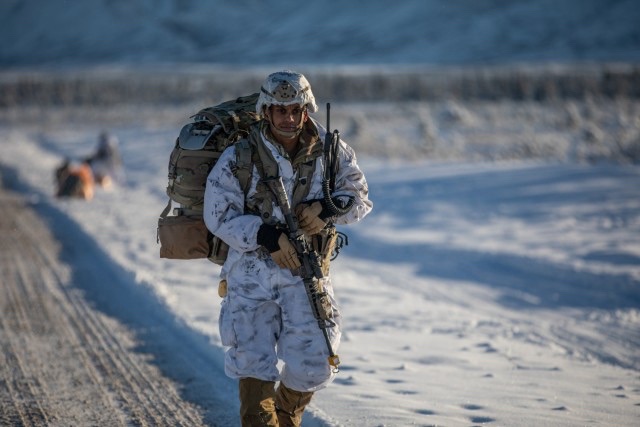
WASHINGTON — Braving subzero temperatures, about 9,000 Soldiers clad in white camouflage gathered in Alaska for a joint, multinational exercise.

Soldiers engaged in 40 training events over two weeks to prepare for combat operations in the northernmost region on Earth. During the largest multinational training exercise in the Arctic to date, called Joint Pacific Multinational Readiness Center 24-02, the Army simulated large-scale training operations in cold weather conditions for the first time. They tested next-generation weapons and operated cold weather, all-terrain vehicles or CATV, snow mobiles to traverse the terrain.

“What we’ve learned in this exercise is you’ve got to be ready for the full spectrum,” said Maj. Gen. Brian Eifler, 11th Airborne Division commander.

Five countries participated in training from Feb. 8 to Feb. 22 including a Canadian battalion and elements from Mongolia, Australia, Finland and Sweden. Exercises which align with the Army’s Arctic Strategy, stretched from Anchorage in the south to Utqiagvik, Alaska, the northernmost city in the U.S.

Climate change has made the Arctic more navigable, and as part of the Army’s Arctic Strategy, service must be ready to deter and defend against potential adversaries in the region, Eifler said. The guidance details how the service will train, organize and equip forces and partner nations.

The Army deployed an entire division during one joint exercise, which had U.S. Soldiers playing roles on both sides. Two battalions simulated enemy forces, equipped with artillery and rockets, Eifler said.

During that exercise, U.S. Soldiers learned to fight without air superiority and support. The friendly forces embarked on a 150-mile simulated, deep attack to train Army pilots to weave in and out of air defenses.

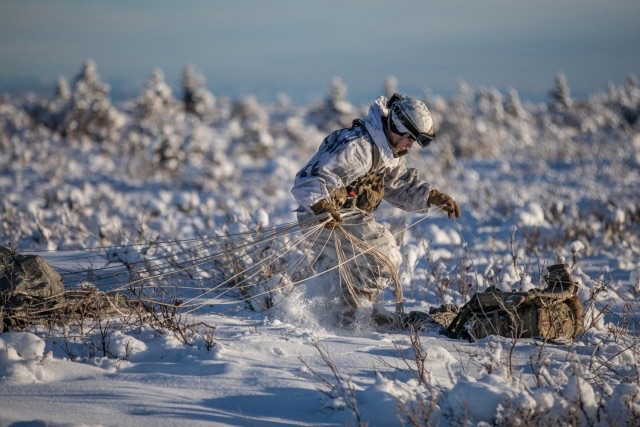
Soldiers, Airmen and Marines took part in a joint multi-battalion, joint force entry exercise into the Donnelly Training Center drop zone, north of Fort Greely. Soldiers also faced the challenge of disguising equipment in a snowy environment.

“In this battlefield, it’s very hard to be camouflaged like we used to,” Eifler said. “In some spectrums, you’re observed, whether it’s electronics, whether it’s physical, informational … across the cyber space … so we had to create windows to do a deep attack.”

Finally, troops engaged in an air assault simulation with American and Canadian Chinook helicopters, UH-60 Black Hawks and two battalions.

“That distance and scope and scale hasn’t been done before,” he said.

Soldiers also tested how the Next Generation Squad Weapon, the XM7 rifle, fared in frigid conditions and found parts of the weapon caused frostbite. Soldiers also had to adjust their survival measures. In addition to carrying more water, troops melted ice blocks and purified snow to help themselves hydrate.

“In this environment, if you stop, you freeze, and you get hypothermia,” Eifler said. “But at the same time you’re sweating, and you need more water. So that really challenged our sustainment.”

“All Soldiers require grit,” he added. “But Arctic grit … is a little bit more.”

They also had to keep electronic and digital equipment, including monitors and keyboards at a consistent temperature while sometimes operating them amid hurricane-strength winds.

Eifler said the 11th Airborne’s reactivation in 2022 gave Soldiers of that unit a greater purpose and reinvigorated Soldiers assigned to the unit. The Army also reassigned the 4th Infantry Brigade Combat Team and 1st Stryker Brigade Combat Team under the 11th Airborne.
“The forces up here had no real unity, purpose and identity,” Eifler said. “Being aligned as a division now — as warfighting capable force has increased readiness in the Indo-Pacific and for the Arctic. The [realignment] was extremely strategic. When you don’t have an identity, it’s really tough, no matter what line of work you’re in. And that was transformational up here.”

Eifler said that Soldiers who took part in the exercise can earn an Arctic skill identifier certifying that they served in a cold weather environment. Some troops even requested extensions to continue serving in the remote location.

In the past the Army has faced challenges with Soldiers experiencing depression and feelings of isolation. Eifler said that more new recruits have requested assignments in Alaska.

“Having that mentality and having that mindset that winter’s here and summer is short, and winter’s coming tomorrow; having that attitude has really changed the culture up here,” he added. “And we’re actually retaining people that have that expertise.”

Soldiers have also leaned on the Alaskan Inuit population who have taught Soldiers how to survive in Arctic conditions. For example, Soldiers learned to use ice drills to stake tents on the frozen tundra. Soldiers flew 500 miles north to Utqiagvik to perform a rapid infiltration test of the M142 High Mobility Artillery Rocket System or HIMARS. They tested HIMARS on a C-130 in -20 degree weather.

Pilots had to take extra steps to start Apache engines in cold weather conditions. They tackled a wide range of temperature changes from wind chills 40 degrees below to temperatures 40 degrees above. They studied the differences between light snow, heavier snow and wet snowfall, Eifler said.

“The temperature wasn’t consistent, which made it just a great testing environment to go full gamut on everything we needed to do,” Eifler said. “And then it really tested the grit of the Soldiers.”

The Soldiers treaded into new territory during the exercises. Eifler said that warrant officer pilots submitted white papers for Army manuals on how to operate Apaches in extreme cold. About 18 multinational observers took part including representatives from France, Japan, Nepal and Chile.

Next month, during Exercise Arctic Shock in Bardufoss, Norway, Army paratroopers will fly over the North Pole and perform an air entry operation. About 150 Soldiers from the 11th Airborne and 100 members of the Norwegian Army will take part in the exercise from March 18 to March 22.

“We’ll continue to push ourselves up here,” Eifler said. “And increase the scale and scope of these exercises. Because we’ve got to be better; we’ve got to be challenged. And we’ve got to help the Army resource us and structure us properly so we can meet those threats tomorrow.”



By Joe Lacdan, Army News Service