GORE-TEX Professional

Archive for the ‘Guest Post’ Category

Rainey: C2, Defensive Measures Key to Next-Generation Warfighting

Wednesday, January 3rd, 2024

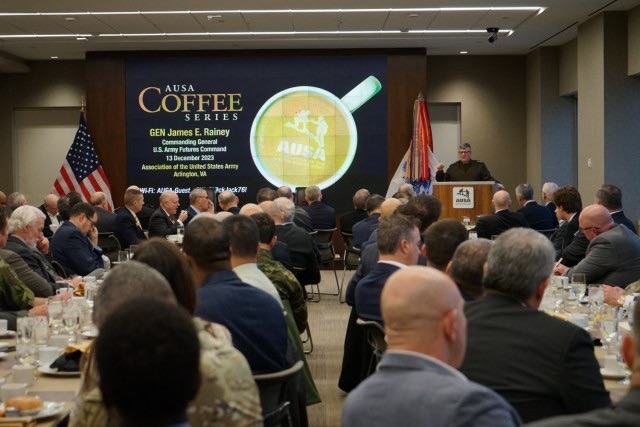
ARLINGTON, Va. — On Dec. 13, Army Futures Command Commanding General Gen. James E. Rainey spoke to Army stakeholders, supporters and media about Army transformation activities as part of an Association of the United States Army featured speaker coffee series in Arlington.

Reflecting on how modernization efforts have evolved in the five years since AFC’s founding, Rainey shared that the command’s scope has grown to encompass “overall responsibility for the entire transformation portfolio.”

“I remain convinced that it was a bold move and it was the right move for the Army to stand up Army Futures Command,” Rainey said.

He emphasized that the command works hand-in-hand with Army Training and Doctrine Command, Army Materiel Command, Army Forces Command and the Office of the United States Assistant Secretary of the Army for Acquisition, Logistics and Technology to create, evaluate and develop new concepts, systems and equipment for the Army and Joint Force, with essential support from Congress.

In looking ahead to priorities for 2024 and beyond, Rainey highlighted the need to continue investing strategically in command and control and defensive measures, given their weighty importance in shaping tomorrow’s warfighting landscape.

“We’ve got to keep getting better, get lighter,” Rainey said of current network capabilities.

AFC is also looking at ways to make data more available and user-friendly as part of next-generation C2 efforts, and Rainey acknowledged that the future force will require commanders, Soldiers and Department of the Army civilians alike to be data literate or data fluent.

“We have the potential to reinvent and really develop a data-centric command and control system,” he said, stressing the need for a more “complex, adaptive, systems-to-systems approach to warfare.”

“I believe that if we move to a truly data-centric approach to fighting, it’ll revolutionize most of warfare, primarily deterrent value. Somebody being willing to attack into the face of a lethal, data-driven capability, it would be pretty foolish.”

According to Rainey, future deterrence and defense measures will include advanced air and missile defense technologies and integrated offensive and defensive fires, along with measures that improve adaptability and endurance of formations.

“We’ve got to preserve our people and our ability to do maneuver warfare,” he said.

Rainey underscored the criticality of maintaining and strengthening Soldier lethality, in part by leveraging human machine integrated formations, or HMIF, to optimize battlefield outcomes.

“Our best weapon system we have is still the Soldier; best formation we have is still the rifle squad.”

Protecting Soldiers in combat and further enabling them to do what only humans can do will require smart investments in transformational machine capabilities, particularly those that capitalize on mobility and can increase lethality and survivability, Rainey explained.

“Autonomous and robotic systems are going to disrupt the land domain, starting now,” Rainey said, detailing how technology available today can help mitigate risks to Soldiers by placing robots in traditionally higher risk positions.

“We have the ability and I think the moral responsibility to not trade blood for first contact with the enemy,” he asserted.

Rainey shared that the Army has already started to prototype an HMIF light infantry platoon at Fort Moore, Georgia, as well as a heavy infantry version at the National Training Center, California. The formations will incorporate robots and configurable payloads designed to augment human capabilities in modern but realistic ways.

“If you take robots and try and replace humans or combat vehicles, you’re on a vision quest, and it’s going to take a long time. If you take humans and robots and put them together in a coherent formation, you start solving all the problems in both directions,” Rainey said.

With continuous transformation as a chief Army priority, AFC has increased its experimentation and analytic efforts by approximately 20 percent in 2023, Rainey reported. Upcoming experiments include the joint, multinational Project Convergence Capstone 4, which will take place at Camp Pendleton and Fort Irwin, California, in early spring 2024.

The command is also developing the Army’s next warfighting concept that will inform future planning actions and address institutional challenges. The draft concept has drawn insights from future study initiatives and current conflicts like those taking place in Ukraine and Gaza. This includes honing the Army’s ability to “look at things that are happening in the world and move into a rapid acquisition of capability,” Rainey said.

In addition, AFC is conducting a tactical fires study and recently reached full operational capability of its Contested Logistics Cross-Functional Team, which is focused on predictive logistics, alternative power, demand reduction and autonomous and robotic resupply.

The command continues to support enduring priorities as well, such as the Army’ signature modernization efforts, which fall under the categories of long-range precision fires, next generation combat vehicles, future vertical lift, network, air and missile defense, and Soldier lethality.

During the coffee series conversation, Rainey spoke to audience members, including industry representatives, about the importance of supporting support rapid acquisition – “the need to transform, be agile, be adaptive inside the next two years” — as part of the Army’s overall transformation effort, noting that technologies such as loitering munitions and company-level unmanned aircraft systems could provide pivotal effects. He explained that the Army is working to incorporate such capabilities within a doctrine, organization, training, materiel, leadership and education, personnel, facilities and policy framework, to ensure appropriate training, sustainment and leader development. At the same time, the Army is also eyeing frameworks for 2025-2030 and leap-ahead capabilities for 2030-2040.

“That’s the real opportunity, where things are fundamentally going to change,” Rainey said of the latter.

By Maureena Thompson, Army Futures Command

Army Stands Up Special Trial Counsel with Independent Authority for 13 UCMJ Offenses

Tuesday, January 2nd, 2024

WASHINGTON — The Congressionally mandated Office of Special Trial Counsel officially stands up today with independent prosecution and referral authority for 13 UCMJ offenses known as “covered offenses.”

“Today marks a historic day for the Army as the Office of Special Trial Counsel begins exercising its independent decision-making and prosecution authority for sexual assault, domestic violence and other serious offenses,” said Secretary of the Army Christine Wormuth. “The Office of Special Trial Counsel will execute its mission to seek justice in the best interests of the Army community and build trust in the military justice system by employing a worldwide team of highly skilled and specially trained attorneys and legal professionals.”

Col. Rob Rodrigues, acting lead special trial counsel, will bring 22 years of courtroom experience, serving as a prosecutor, defense counsel and supervisor of military justice practitioners.

“The creation of our office has been years in the making and was born out of the recognition that the Army needs to improve the way it processes and prosecutes serious crimes,” he said. “We have taken the lessons learned of the past 20 years and built an organization at the direction of Congress designed to improve decision-making and the handling of cases at every phase of the military justice process.”

The Office of Special Trial Counsel is headquartered on Fort Belvoir, Virginia, and operates 28 field offices across the Army.

Beginning today, the office will become responsible for making independent decisions about serious offenses such as sexual assault, domestic violence and murder. This includes the authority to send a case to a court martial. This authority was traditionally held by commanders.

“This change will ensure that each case is evaluated by an independent and objective legal expert,” he said. “If we determine a case should go to trial, the attorneys who work in our office, known as Special Trial Counsel, will be responsible for prosecuting the case.”

Maj. Amanda P. Beckham is a Special Trial Counsel attorney at the Fort Jackson field office.

“This independence means that the attorneys, much like in a civilian district attorney office, are deciding which cases go forward to trial based upon the case’s evidence,” she said.

Rodrigues said the most important feature of this initiative is the exercise of independent decision-making regarding the disposition and prosecution of cases by the OSTC.

“Our office has been empowered to independently evaluate and prosecute cases based on the facts and evidence, free from outside influence,” he said. “Our goal is to seek justice in every case. We will evaluate cases based on the evidence and apply an expert legal review to determine which cases should go forward to trial. We will ensure this process is fair for all involved in the military justice process.”

The Secretary of the Army said it will be a collaborative approach among the commanders and the special trial counsel.

“While the Office of Special Trial Counsel assumes some of the authority previously held by commanders with regards to the disposition of allegations, commanders still retain the overall responsibility for the well-being of Soldiers and mitigating the impact of these incidents within their units,” she said.

Rodrigues said the OSTC has two main goals. The first is to seek justice in every case.

“We will evaluate each case on the merits and apply a rigorous review to determine which cases should go forward to trial,” he said. “We will make disposition decisions in light of the evidence, the interests of the Army, which includes the alleged victim, all while respecting the due process rights of Soldiers accused of misconduct.”

His team’s second goal is to restore and promote trust for the military justice system.

“We will accomplish this by employing a team of highly trained and qualified expert prosecutors, paralegals and support personnel who are the best at what they do in the Army,” he said. “We will treat victims with respect and care. Throughout every phase of the case, we will communicate with victims and ensure they are informed and have the opportunity to provide input into our decisions. We will hold ourselves to the highest ethical standards and ensure the rights of accused Solders are always respected.”

Beckham said the Special Trial Counsel will provide victims with honest, clear communications.

“A victim may be more willing to come forward if he or she knows that the Special Trial Counsel may exercise authority over potential misconduct,” she said. “One of our goals is to have a personal meeting with each victim to inform them of case progress or case disposition.”

“I want victims to know that our office is fully committed to seeking justice and earning back trust in the system,” Rodrigues said. “If you report a crime, it will be thoroughly investigated, and our office will make the best decision we can based on the evidence. You will have the opportunity to provide input about your case directly to our prosecutors. You will be treated fairly and with compassion throughout the entire process, regardless of the final outcome of your case.”

Rodrigues said his office is the largest, best trained, most experienced group of prosecutors the Army has assembled into one organization in the 22 years he has served.

“Each Special Trial Counsel prosecutor has been hand-selected and certified to serve in our office,” he said. “Supporting them are our NCO paralegals and Special Victim liaisons, who will provide compassionate support to victim throughout each case. I’m in awe of the talent we have in this organization that truly represents the best of Army legal professionals.”

By Shannon Collins

Airman of GUNDAM 22 Posthumously Promoted

Sunday, December 31st, 2023

HURLBURT FIELD, Fla. —  

The Secretary of the Air Force posthumously promoted Captain Terrell “Terry” K. Brayman to the rank of Major, with an effective date of December 15, 2022 reflecting when Terry was selected for Major following the conclusion of the Air Force promotion board.

The posthumous promotion is in recognition of Terry’s outstanding service and in acknowledgment of the ultimate sacrifice he made in the line of duty.

Terry was one of the eight Airmen of GUNDAM 22 that died in a CV-22 mishap off the shore of Yakushima Island, Japan on Nov. 29, 2023.

“Major Brayman’s legacy will forever endure in the hearts and minds of those who served alongside him, as his commitment to his country will continue to inspire current and future generations of Air Commandos,” said Lt. Gen. Tony Bauernfeind, AFSOC commander. “The AFSOC community continues to stand with the families, friends, and teammates affected by this devastating loss.”

By Air Force Special Operations Command Public Affairs

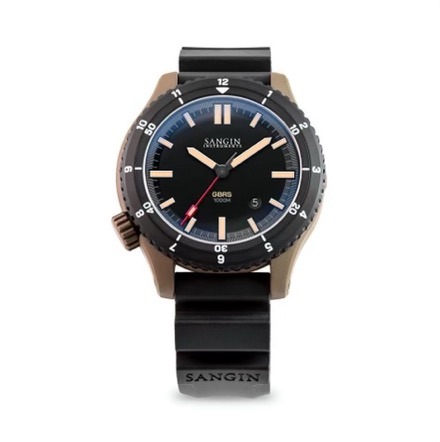
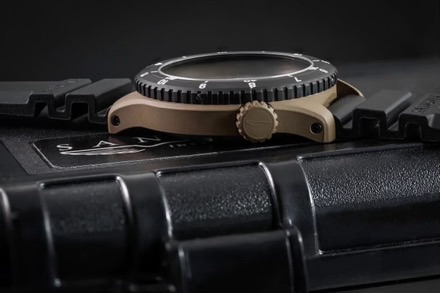
Sneak Peek – GBRS Kinetic Ti by Sangin Intruments

Saturday, December 30th, 2023

The GBRS Kinetic Ti represents a timeless partnership between two veteran-owned companies. Collaborating to create a robust and enduring timepiece, their shared goal was to craft a watch specifically designed for real-time operations.

This collaboration timepiece is produced in small batches annually, limiting it to one per customer. Available 1-1-24 @ 1300 EST.

gbrsgroup.com

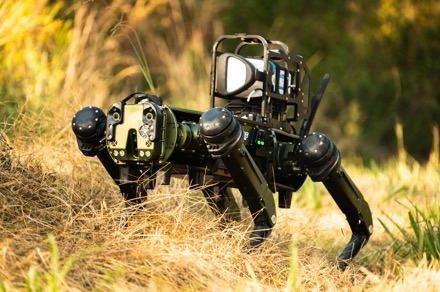
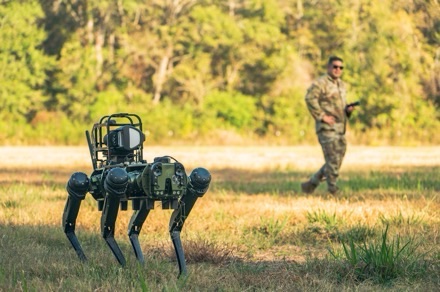
Robot Dogs Protect Lives Through Innovation

Saturday, December 30th, 2023

BARKSDALE AIR FORCE BASE, La. —  

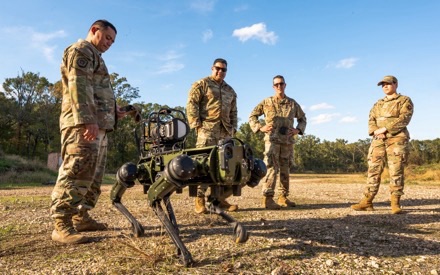
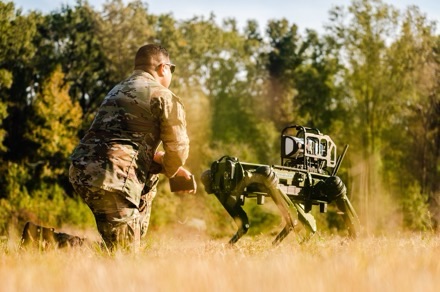
 “These robot dogs not only have the potential to save Airmen’s lives, but they also serve as a reminder of how valuable your voice is, regardless of rank.”

Master Sgt. Dominic Garcia, the emergency management flight chief from the 2nd Civil Engineer Squadron, devised the concept of robot dogs and while he advanced his idea into building and testing the robots, he learned some valuable lessons along the way.

Garcia is originally from Denver, enlisted in the Air Force in 2006 and spent most of his career working under Air Force Global Strike Command.

In 2017, Garcia deployed to Syria from his home station at Dyess Air Force Base, Texas. After returning from his deployment Garcia reflected on his time in Syria.

“I had a really hard time adjusting back, and when you’re trying to adjust back, you replay a lot of things in your head,” said Garcia. “You replay certain situations, you think; what could I have done better? What could I have done differently?”

While reflecting on his deployment he remembered seeing canine teams on some of the chemical, biological, radiological, and nuclear missions. He said while he considered the things he would improve; he wondered if there was a way to arm the dogs with detectors instead of sending an entire team into a potentially hazardous environment.

In 2019, Garcia was one of six AFGSC Airmen of the Year award recipients and met people from across AFGSC. His networking led to the opportunity to bring the concept of robot dogs to life through the Air Force Work Project.

AFWERX is an Air Force innovation program that connects Airmen with technology developers to turn creative ideas into a reality. While Garcia worked on his concept with AFWERX, he connected with the company Ghost Robotics who agreed to build the robot dogs.

In 2022, Garcia and his team applied for the Silver Award Grant and they were awarded 1.25 million dollars for the project. Garcia said he was delightfully surprised as he discovered opportunities and programs as he progressed in his journey to make his robot dog idea possible.

“All I knew up until 2018 and 2019 was, if you want something done, you have to wait for policy or requirements,” said Garcia. “I didn’t know that there’s this whole other side of the Air Force that allows you to fast track and get what you need, kind of at the speed of relevancy to the tactical edge.”

Once the robot parts were ready and delivered Garcia and his team assembled the parts into two user-friendly robotic canines.

The team tested the functionality of the newly assembled robot dogs before advancing to test their capabilities to tackle Chemical, Biological, Radiological and Nuclear materials incidents. The team tested the dogs’ CBRN readiness by putting them through radioactive sites at the Defense Nuclear Weapons School at Kirtland Air Force Base, New Mexico.

While it might seem odd to build expensive equipment and then immediately expose it to extreme situations, this testing is necessary. Garcia created the robot dogs to replace Airmen in life-threatening situations and withstand dangerous environments. He also armed the robotic canines with detectors capable of simultaneously detecting various threats.

Garcia and his team went to the Dugway Proving Grounds in Utah to test the detectors, sensor data feedback, communication, and terrain performance.

Garcia’s focus while developing the dogs was to design equipment that could save Airmen’s lives both here in the United States and when deployed overseas. He said in addition to preventing Airmen from risking their lives, the robots could fill operational gaps and increase the manpower in hazardous specialties.

Persistent to meet these goals, Garcia and his flight continue to test the robotic canines through further research and development.

Throughout the development of his robot dog concept, Garcia discovered a new passion for empowering Airmen to share their perspectives.
He emphasized the importance of listening to and encouraging different perspectives of his teammates.

“We need to be able to say yes more and listen more,” said Garcia. “We need to be able to allow our Airmen, our sergeants, our lieutenants, whoever, to be able to give those ideas and support them because if you say no you’ll never know the return on investment. But a simple yes can have so many positive effects that we don’t even see sometimes.”

Prior to his innovative journey Garcia said he didn’t know he could come up with a concept and receive the support to make it a reality.

Going through this process opened his eyes to the value of involving Airmen at every level, encouraging them, and supporting their ideas. Garcia said that is the reason he wanted to involve his teammates in the testing and evaluation of the robot dogs.

“This is one of the few times that we get to build by the end user, for the end user. Yes, end users test certain pieces of equipment, but very rarely do they get to build it out for an entire career flow for an entire mission,” said Garcia. “That’s why I wanted to create an exposure for these guys to show them that it doesn’t matter what rank you are, it doesn’t matter how much experience you have in the Air Force, we all bring something to the table.”

One of Garcia’s flight members, Airman 1st Class Daisy Slater, an emergency management specialist from the 2nd Civil Engineer Squadron, has been learning from Garcia while they work with the robot
dogs.

She said she is grateful for the opportunity to work with Garcia and learn about the dog’s performance
and capabilities.

“I feel like getting to this flight, I’ve been given the opportunity to hit the ground running, so to speak,” said Slater. “There are so many NCOs and especially Airmen coming out of this flight that are making waves in the career field. And when you situate yourself next to people doing great things, it opens a door for you to also do great things.”

Garcia said he is inspired by the adaptability and eagerness displayed by the newer generation of Airmen and he hopes he has paved a path for the many Airmen who have innovative ideas.

“The robot dogs are amazing. I love them, and I believe they’re going to save lives,” said Garcia. “What we’re doing for the career field, I think is awesome because we’re the first ones in the whole emergency management career field doing this, but the more important message is, we need to be able to be more open.”

By Airman Rhea Beil & Master Sgt. Delia Martinez, 2nd Bomb Wing

Chief Digital, Artificial Intelligence Office to Host Hackathon in Hawaii

Friday, December 29th, 2023

WASHINGTON (AFNS) —  

The Office of the Secretary of Defense Chief Digital and AI Office, Defense Innovation Unit, U.S. Indo-Pacific Command, U.S. Army Pacific Command and the U.S. Air Force will host a multi-classification hackathon open to all U.S. citizens, Feb. 5-9, 2024.

A hackathon is an innovation event commonly employed by technology companies in which teams develop prototypes in response to enterprise challenges associated with data. The BRAVO 11 Bits2Effects hackathon will occur at one of the DOD AI Battle Labs on the island of Oahu, Hawaii.

Any American citizen is eligible to apply, regardless of whether they currently work for the federal government or possess a security clearance. Applications, available online here, will be accepted on a rolling first-come-first-serve basis with the first group of acceptances taking place in mid-December. Due to past events exceeding 400 participants, BRAVO has secured an over-flow room, although organizers still expect demand to exceed supply.

Attendees are not required to hold a security clearance. However, certain spaces, use-cases and datasets may require a U.S. secret security clearance or higher. Applicants may apply as an employee for the U.S. government, a U.S. government contractor working on behalf of a federal contract or as U.S. citizen either affiliated or unaffiliated with a company. Any U.S. federal employees or federal contractors are eligible to submit potential use-cases and proposed collaborations within the application process. Sourcing a use-case to these hackathons often results in an operational prototype and feedback for the sourcing organization.

Starting in 2021, the U.S. Air Force began organizing multi-service prototyping events, known as BRAVO hackathons, to expedite learning and capability development from classified and protected operational data. This year’s BRAVO 11 Bits2Effects, the fourth BRAVO hackathon and first-held inside a combatant command, is seeking to produce solutions to combatant command challenges utilizing Indo-Pacific operational theater data. BRAVO utilizes a permissive software development environment that permits the co-mingling of classified and protected data with untrusted open-source and commercial software otherwise not approved for production systems within minutes.

Prior hackathons have produced prototypes influencing major Defense Department programs in areas including large language models, space launch, flight telemetry and biometrics, unmanned systems, personnel recovery, security classification, sensing and targeting and battle damage assessment among others.

“In the early 1920s, Army Col. Billy Mitchell assessed battleships, a top military funding priority of the Department of War, could be sunk by bombers just 1/80th the cost,” said Stuart Wagner, Chief Digital Transformation Officer for the Department of the Air Force and BRAVO AI Battle Labs Executive Agent. “To disprove widely held resourcing beliefs of senators, four-star generals and the Secretary of War, Mitchell organized the Project B exercises where bombers repeatedly sunk German-captured battleships, changing warfare by turning investments to airpower in the leadup of World War II.

The BRAVO DoD AI Battle Labs are again seeking to change how warfare is conducted by enabling innovators to develop and employ data driven effects during competition and conflict.”

Applicants looking to participate may do so in one of three roles:

The “Hacker” role is open to all applicants and expects project builders with varying skill sets and experience, including operational and warfighter expertise, software development, data science, machine learning, design and user interface/user design, data visualization and product management. Hackers may optionally supply a use case during the application process.

The “Hacker Subject Matter Expert” role is open to government and government contractors who lead one or more teams with specific expertise about a use case or dataset or supplies and administers infrastructure utilized at the hackathon. HackerSMEs will be required to supply a use case during the application process.

The “Supporter” role, open to government and government contractors, provides administrative support to the event by running security, facilitating supplies delivery, organizing social events and facilitating the delivery of science fair materials and attendee check-in.

Any federal government organization (contractor or government) is eligible to submit a use case, dataset, infrastructure or potential collaboration with the hackathon by submitting a Hacker/HackerSME application to the event. Further clarification can be obtained via saf.cn.bravo@us.af.mil. U.S. citizens and industry not leveraging an existing DoD contract for their proposed collaboration are encouraged to contact the Defense Innovation Unit at onramp-hack-bravo@diu.mil.

Story by U.S. Department of Defense

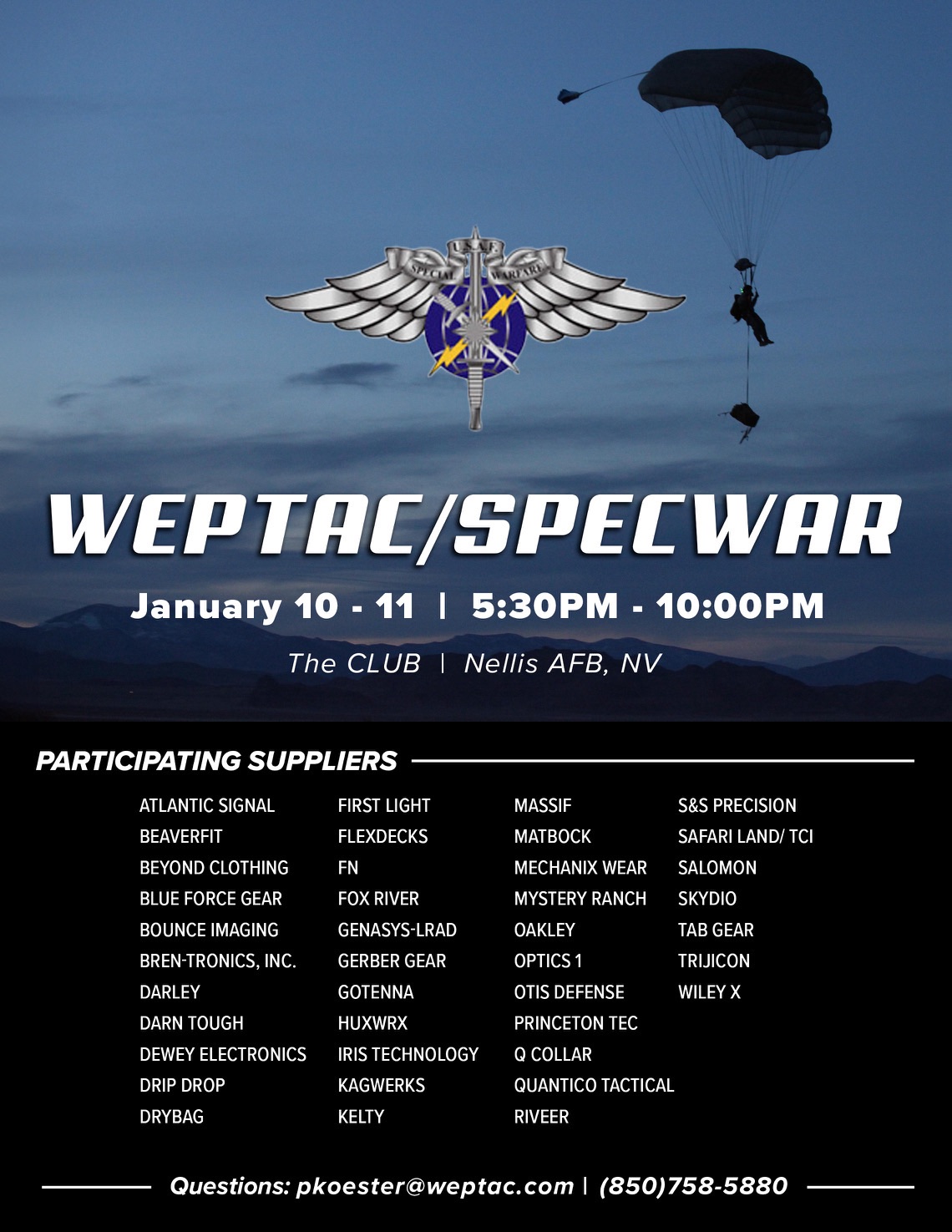
WEPTAC / AFSPECWAR Vendor Nights

Thursday, December 28th, 2023

January 10-11 at the Nellis Club.

820th BDG Tactical Leader, Battle Staff Courses Shape Future Leaders

Thursday, December 28th, 2023

MOODY AIR FORCE BASE, Ga. – The 820th Base Defense Group plays a pivotal role in ensuring safe operations by securing air base infrastructure, safeguarding personnel and providing a strong defense posture to enable Air Force, Joint and Coalition missions.

In a joint environment with unpredictable challenges, dispersed execution and mission command becomes imperative for operational success and maintaining a lethal edge.

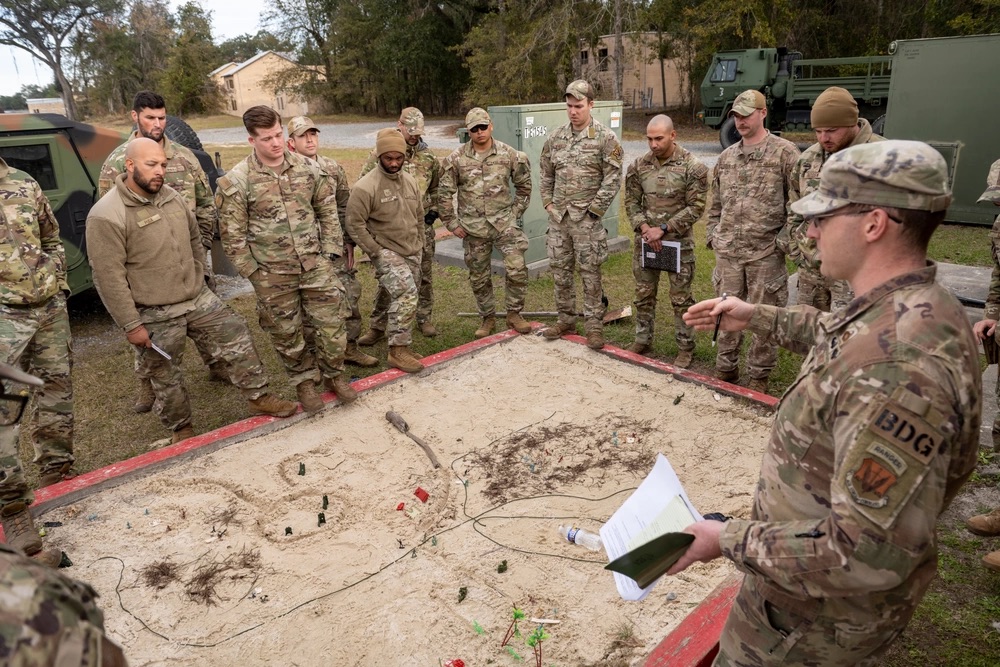
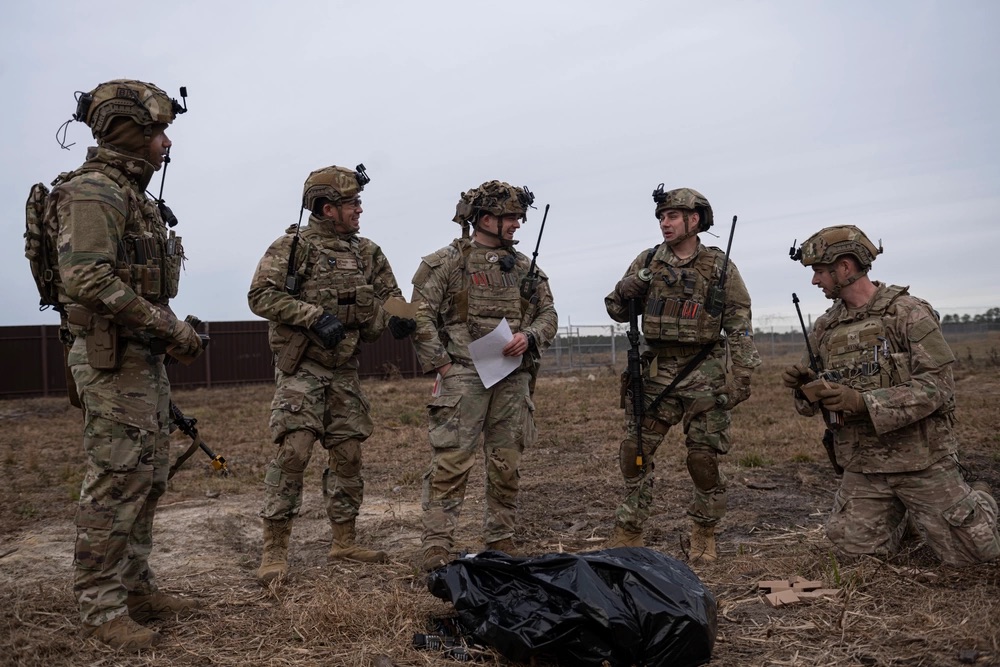
To create a more cohesive unit, the 820th BDG created a two-week Battle Staff Course for its unit leadership and merged its execution with the Group’s existing Tactical Leader course for squad leaders. The first iteration of this combined training occurred Dec. 1-18, 2023, at Moody Air Force Base, Georgia.

A Battle Staff consists of officers and non-commissioned officers working together to support command decision-making processes, manage resources, plan and direct subordinate missions, analyze intelligence, and oversee communications and logistics during military operations. Tactical leaders are senior airmen and NCOs appointed as leaders within their unit entrusted to make decisions at the ground level.






The Battle Staff course teaches Air Base Defense Doctrine and how to implement it into mission planning for tactical leaders to employ. The tactical leader course empowers Airmen to interpret, execute and conduct lower-level planning to support the commander’s intent in the Battle Staff’s operational orders.

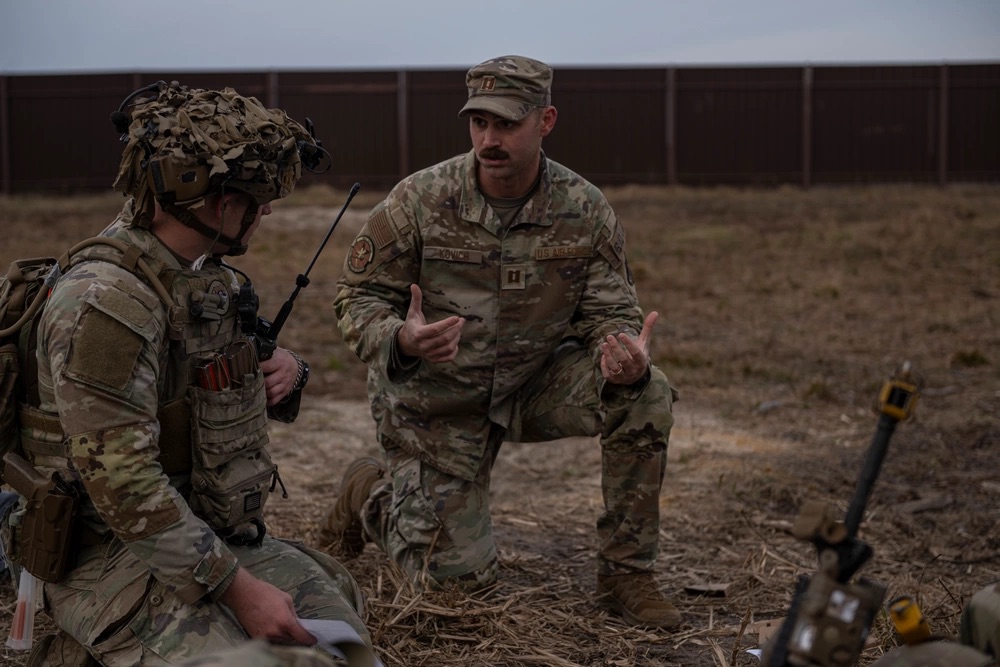
“By immersing students in this intensive training regimen, the (Tactical Leader) course empowers Airmen with ample leadership opportunities, allowing them to make critical decisions throughout the entirety of the program,” said Senior Airman Garrett Montilla, 820th Combat Operations Squadron training instructor.

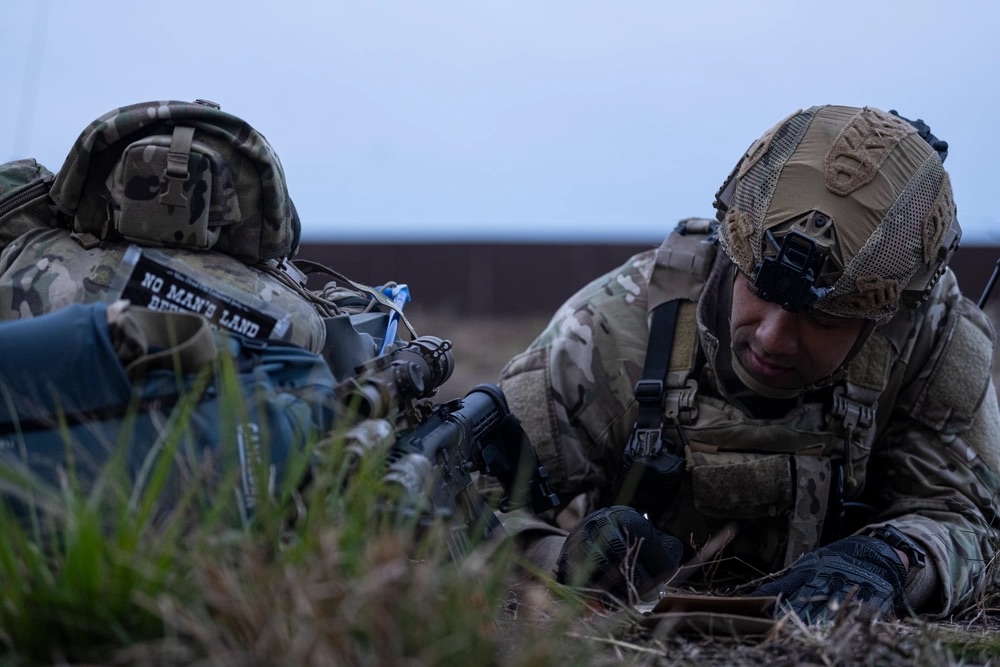
These courses culminated with a five-day field training exercise immersing tactical leaders and battle staff in real-world scenarios where they had the freedom to experiment, make mistakes, and most importantly, learn from them.

“They’re working through very realistic problems in an environment where failure is totally fine because everything is executed in a controlled environment,” said Lt. Col. Justin Bateman, 822d Base Defense Squadron commander and course creator. “We have a chance to play it back and show them the decisions they made and let them reflect on it and figure out how to learn from it during the debriefing process.”

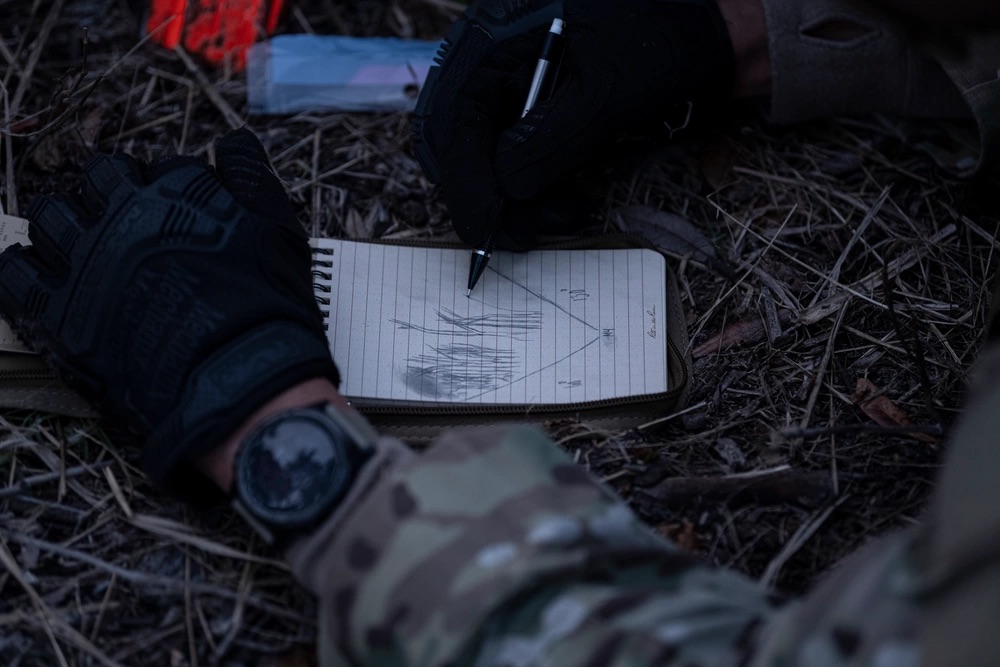
During the training exercise, students in the Battle Staff course produced an operational order for their squadron driving a series of tasks for tactical leaders in the field to execute.

“These orders guide the squads during missions, conducting area reconnaissance and gathering crucial intel from ground forces,” Montilla said. “They ultimately inform strategic decisions by shaping future operations and their dynamic scenarios.”

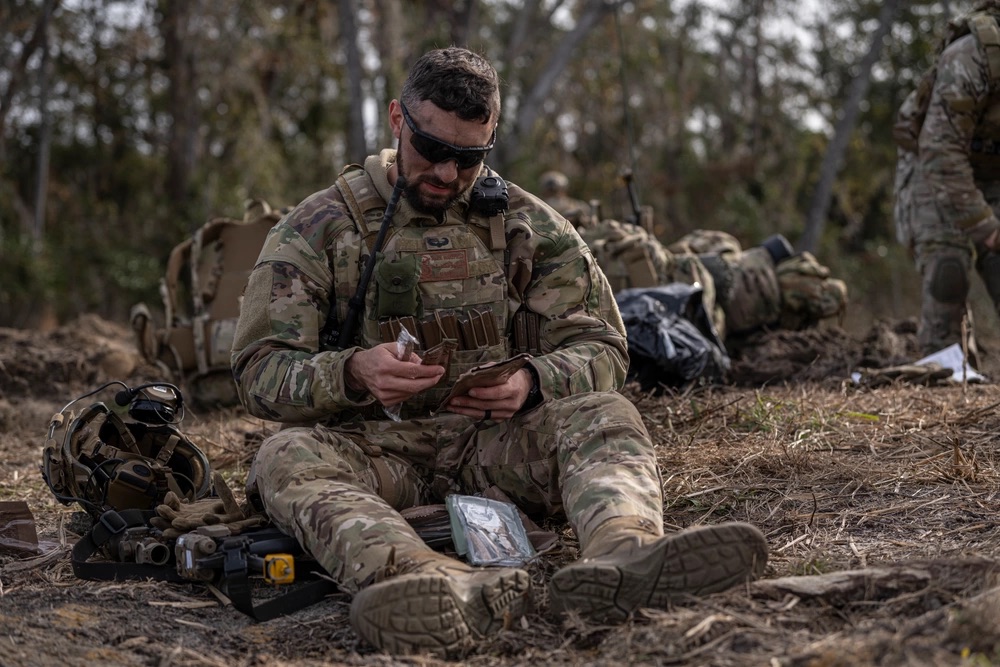
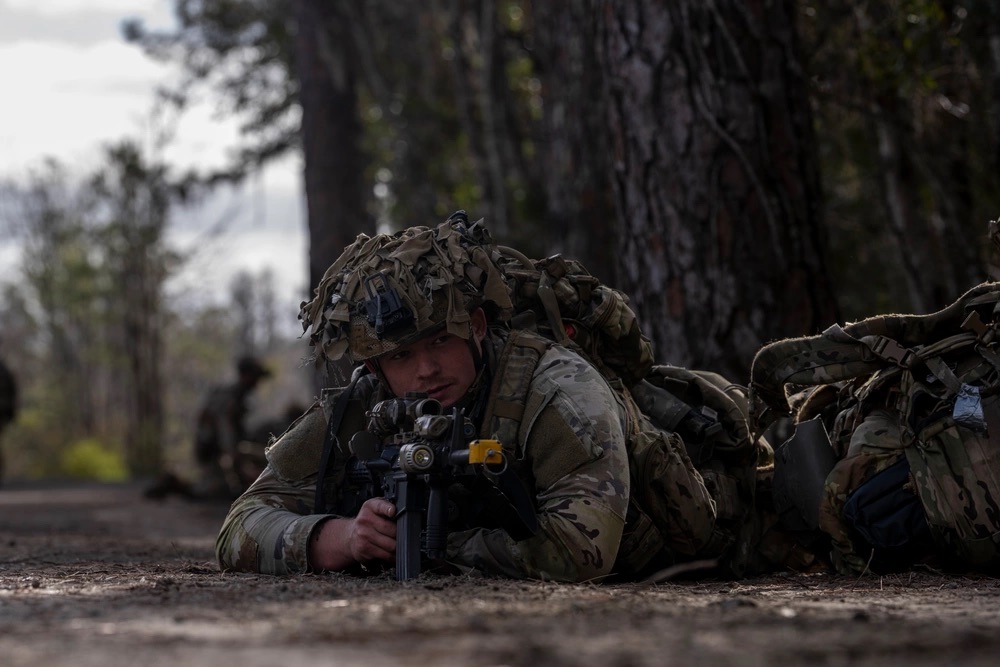
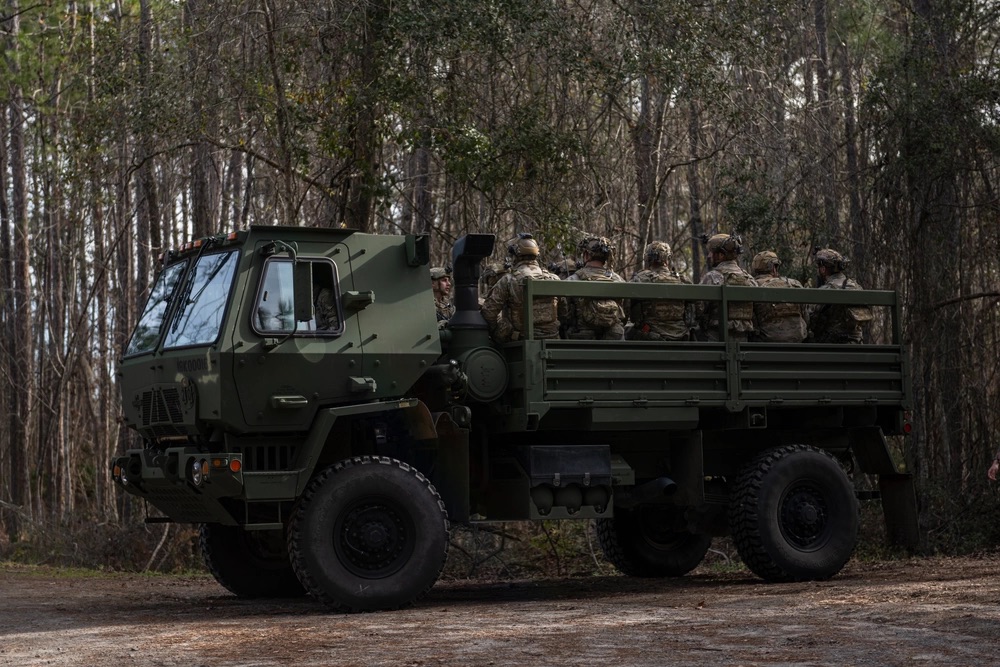
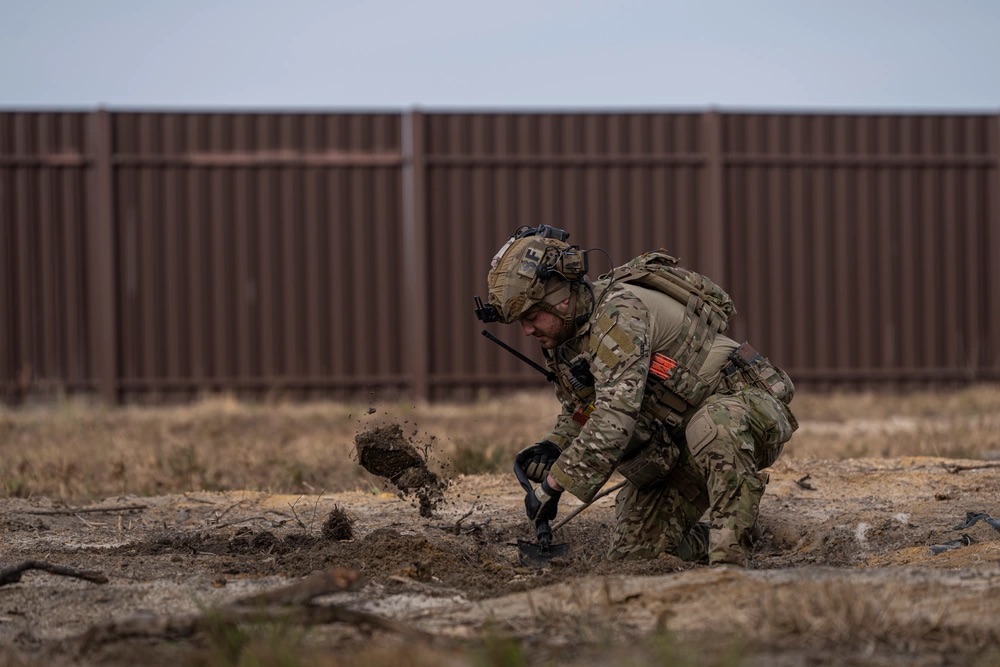
To initiate the exercise, the squad leader faced the challenge of maneuvering a squad through an enemy-contested area. Upon reaching the designated operating location with low visibility, they efficiently established a base in four hours which included digging 4-foot trenches for defensive positions and setting up communications with the Battle Staff.

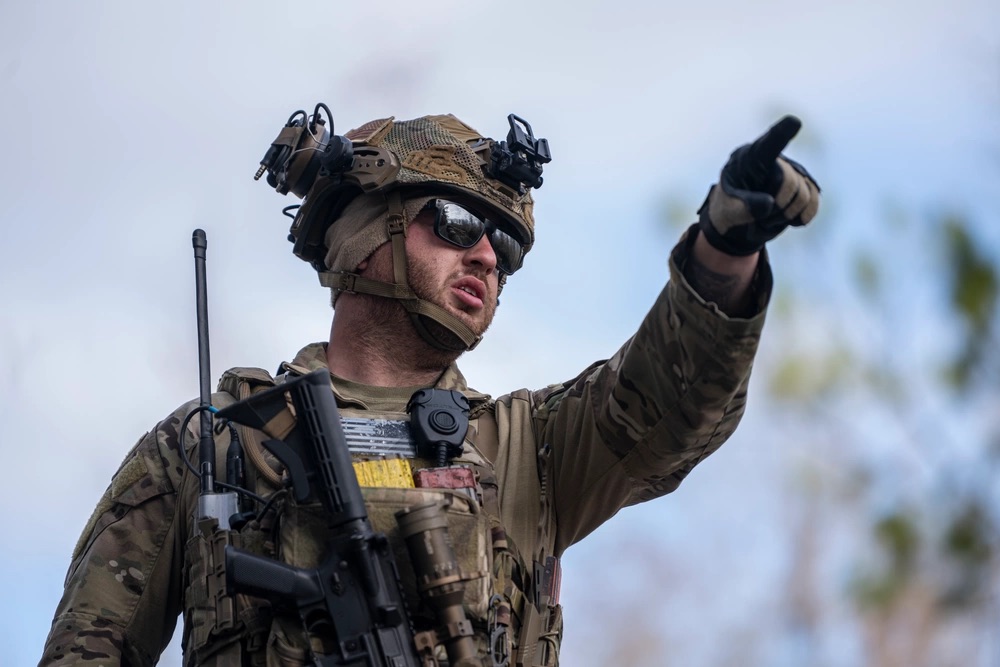
Operating on minimal sleep, tactical leader students underwent frequent rotations as squad leaders and team leaders. Instructors evaluated them from the moment they received patrol orders to the end of each mission. These operations focused on denying adversarial access to key terrain and enemy movement as well as eliminating adversaries in proximity to bases, decreasing enemies’ capability and willingness to fight.

“I hope that they take away a better understanding of their role and what is required of them in an airbase defense environment,” Bateman said. “I also hope that they take away the realization that we all have a lot to learn and must stay growth-minded no matter our rank. Regardless, the students are growing and you can see that in their execution.”

Story by Senior Airman Deanna Muir, 93rd Air Ground Operations Wing