Streamlight TLR VIR II

Archive for the ‘Guest Post’ Category

Royal Thai Navy Special Warfare Command, Naval Special Warfare Conduct Joint Combined Training Exchange

Monday, April 1st, 2024

SATTAHIP, Thailand — A West Coast-based U.S. Naval Special Warfare (NSW) Unit conducted joint combined exchange training (JCET) with members of the Royal Thai Navy Special Warfare Command (RTN SWC) from Jan. 28 – Feb. 29, 2024.

The joint training took place in Sattahip, Thailand, and included visit, board, search and seizure (VBSS) tactics, close-quarters combat, tactical combat casualty care, live weapons ranges and training, airborne water entry training, and mission planning.

While JCET events inherently focus on U.S. military readiness and training, they also mutually enhance bilateral relations, contribute to regional stability and improve interoperability among partners and allies.

“Working with the Thai special warfare unit has given us a chance to share knowledge and expand our working relationships with a partner nation,” said a U.S. Naval Special Warfare operator. “JCETs like this enhances our integrated special warfare capabilities and fosters growth as partners and allies.”

During the JCET, the RTN SWC also hosted a cultural day for NSW operators.

“The opportunity to take a day to learn and share in our Thai partners’ rich culture only deepened our partnership,” said the NSW operator. “While warfighting and mutual capabilities are always our shared focus, the opportunity to learn more about our cultures together is invaluable.”

The United States and Thailand have enjoyed nearly two centuries of diplomatic relations and have been security treaty allies for over 65 years. The enduring relationship covers political, security, and economic cooperation, as well as a shared commitment to a free and open Indo-Pacific region.

Naval Special Warfare is the nation’s elite maritime special operations force, uniquely positioned to extend the Fleet’s reach and ensure readiness for future security challenges.

By Mass Communication Specialist 1st Class Chelsea D. Meiller

Space Force Guardians Advance SOF Space Interoperability During Emerald Warrior Exercise

Sunday, March 31st, 2024

HURLBURT FIELD, Fla. —

Air Force Special Operations Command, in collaboration with the United States Space Force Special Operations Element (USSFSOE), unveiled the 527th Space Aggressor Squadron full suite of capabilities for the first time during its annual Emerald Warrior exercise, underscoring the unique and invaluable role of USSF Guardians in advancing SOF Space integration.

Emerald Warrior is an AFSOC-sponsored combined joint exercise that provides realistic, relevant, high-end training to prepare special operations forces, conventional forces and international partners for the evolving strategic environment.

The USSFSOE coordinated Guardian support to deliver specialized space expertise, space-related intelligence and integration over the three-week exercise. As representatives of the newest service, the USSFSOE is responsible for space coordination and support to U.S. Special Operations Command.

“The United States Space Force Special Operations Element is strengthening the SOF-Space relationship by integrating our service capabilities into SOCOM exercises like Emerald Warrior,” said Maj. Jonathan Green, USSFSOE plans and programs chief. “These exercises and training opportunities provide Guardians and SOF personnel with much needed interoperability for future joint operations.” 

Support for the exercise from the 527th SAS included joint personnel from the USAF, USMC and USSF.

During the exercise, they replicated satellite communication and GPS-based electromagnetic interference to emulate a contested, degraded, operationally limited environment prevalent in areas of operation around the world. This support provided operators the real-world experience that they require. 

“Our team allows units to operate in a realistic radio frequency limited environment, providing commanders the benefit of preparing their units with the most effective training,” said U.S. Marine Corps Capt. Bryan Hernandez, 527th SAS mission commander.

“The relationship between the USSF and special operations is imperative as we address next-generation challenges related to great power competition,” said Green. “We will continue to integrate space capabilities and personnel with special operations to meet joint warfighter needs.”

By Maj Jessica Gross & 1st Lt. Cassandra Saphore, Air Force Special Operations Command Public Affairs

Air Force to Establish New Squadron at Beale AFB

Saturday, March 30th, 2024

ARLINGTON, Va. (AFNS) —  

The Department of the Air Force selected Beale Air Force Base, California, as the home of a new Battle Management Control Squadron. 

The new mission will add 140 military authorizations at Beale AFB over the next few years with personnel expected to begin arriving in summer 2025.  

This is a vital step in the Department of the Air Force’s battle management modernization as the department desires to perform this function for multiple theaters simultaneously from a location outside the theater(s) of operations.  

The BMCS will integrate with the Common Mission Control Center at Beale AFB and perform battle management of manned and unmanned new and legacy aircraft and allow greater collaboration between information systems.  

The CMCC’s mission is to present integrated and fused multi-domain intelligence, surveillance and reconnaissance data to decision makers by using artificial intelligence and machine learning to reduce human task load. It manages command and control productivity, shortens the task execution chain and reduces human-intensive communications.  

Secretary of the Air Force Public Affairs

Agilite Launches the Magnetix Battle-Belt from Gaza

Friday, March 29th, 2024

Agilite just launched their brand new Magnetix Patented Battle Belt from inside an active war zone. In the video below, Lev, Agilite’s Head designer reveals the features of their much talked about new Belt system including the patented magnet system, while on active duty in the Israel Hamas war. Check it out below:

The belt went live today on Agilite’s website: www.agilitegear.com 

CRO Soft Medication Case

Friday, March 29th, 2024

ANTI-CRUSH, SMALLER ORGANIZATION FOR POI MEDS

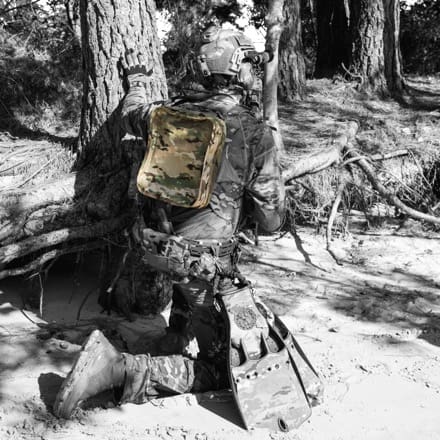
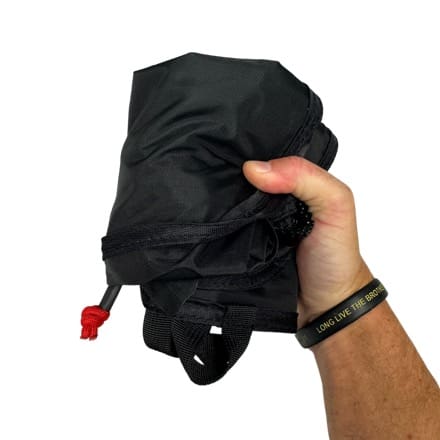
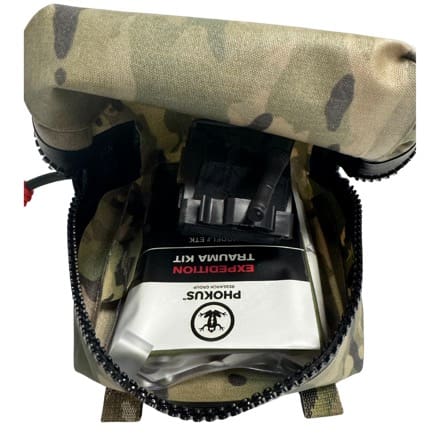
Designed for POI med carry. Doesn’t hold the kitchen sink, but good for medics who have multiple setups. The CRO Soft Medication Case includes a customizable loop panel for Velcro “dot” vial retention. The organizing sleeves in the lid are designed for a few syringes, needles, swabs, atomizers, etc. Low-profile tether attachment so you can secure it to your kit. That’s it, it’s a med case, just smaller.

FirstSpear Friday Focus: The Line One Belt

Friday, March 29th, 2024

This week, we’re highlighting a foundational piece of gear: the Line One Belt.

• Urethane covered nylon
• Superior strength and weather resistance
• Tempered non-slip coating
• Impervious to sweat and water
• Available in Black, Coyote, Manatee Grey & Rich Mahogany

In the realm of tactical gear, every element plays a crucial role. The Line One Belt is pivotal, offering functionality, durability, and adaptability. It’s the last belt you’ll ever need.

Functionality Redefined

The line one belt is our most popular everyday belt! Borrowing its name from an old NSW term for the first level of clothing or gear, the Line One Belt has amazing tactical performance that maintains the high level of comfort and mobility usually associated with leather. Urethane covered nylon provides superior strength and weather-resistance.

This belt won’t crack, peel, or become stiff in frigid temperatures. Specially tempered, non-slip coating eliminates “break-in” time and allows for leather like flex, yet it is impervious to sweat and water and will not stretch or lose its original shape. The Line One Belt is an excellent platform for concealed carry or for just keeping your pants up with style!

Durability Where It Counts

In demanding environments, reliability is non-negotiable. Constructed from high-quality polyurethane, the Line One Belt withstands the rigors of heavy every-day use. It ensures performance even in rugged terrain or harsh weather conditions.

For more information about the line one belt check out here.

Next Generation Squad Weapon Tested at Army’s Cold Regions Test Center

Friday, March 29th, 2024

FORT GREELY, Alaska — It is vital that military equipment work wherever in the world American Soldiers need it, and extreme cold is a weather condition troops have had to contend with frequently in American history.

From Korea to Afghanistan, the lives of American Soldiers have frequently depended on properly functioning equipment in inhospitably frigid environments.

This fact led to a multiweek test of the Army’s Next Generation Squad Weapon at the U.S. Army Cold Regions Test Center at Fort Greely, Alaska early this year.

The XM7 and XM250 are successors to the M4 rifle and M249 light machine gun that American forces have used for decades. The new weapons boast improved accuracy and range, weigh less and fire with less recoil even though their 6.8-millimeter round is larger than the two legacy weapons’ 5.56 mm cartridge.

“The big idea behind this weapon is for close-combat forces,” said Steven Prewitt, test officer. “It’s a capability gap-filler for infantry and special forces, not necessarily an M4 replacement. It gives them a different tool.”

Even when outfitted with a flash suppressor, the XM7 weighs less than 10 pounds. The new weapon has a standard rifle scope with an etched reticle, but also much more.

“It has adjustable modes of operation where it can act like a red dot or close combat optic,” said Prewitt. “It also has a corrected aimpoint: it has a ballistic calculator and range finder built in, so if you range a target it takes into consideration your environmental conditions, the distance to target, and the attitude of the weapon to ensure first shot accuracy.”

Soldiers from the Army’s 11th Airborne stationed at Alaska’s Joint Base Elmendorf-Richardson supported the testing.

“We had an organic troop, which was nice,” said Isaac Howell, senior test officer. “We had the entire leadership from the company commander on down.”

The Soldiers and testers utilized the weapons in rigorous scenarios, from static and kinetic ranges at Fort Greely and Fort Wainwright to maneuver live fires and ultimately a 72-hour simulated mission across CRTC’s vast ranges. All the while, a team of 16 data collectors recorded information in the weapons’ battery life, hit-miss data on targets the Soldiers engaged, and a variety of human factors data involving utilizing the weapons in extreme cold.

“We knew it was going to be extremely fast-paced and that usually means there will be changes,” said Monica Gaschler, senior data collector. “We settled on 16 data collectors, which meant one data collector per three Soldiers. 14 went out in the field, and two stayed in house to do quality assurance on the data and write test incident reports.”

Extreme cold was a coveted commodity for this test, and the weather forecast delivered beyond the highest hopes of the testers.

“We were fortunate to have some pretty substantial cold weather for the duration of the test,” said Prewitt. “The last urban rifle marksmanship course we did was -54 degrees Fahrenheit when we started, so it was incredibly cold.”

“The Soldiers really got to experience what a long, cold day was,” added Howell. “Every day they went out one week it didn’t get above minus 20. The next week it was hovering in the minus 30 to minus 40 range all day, every day.”

The majority of data collectors who supported the test traveled from Yuma Test Center in Arizona, which like CRTC is under the command of U.S. Army Yuma Proving Ground.

“It was an endurance challenge for data collectors from the desert,” said Gaschler. “It’s rare for data collectors to be out in the field in temperatures below minus 50 degrees, but they did it without complaints. They got every bit of data, and I am so proud of every one of them.”

“We’ve got a lot of data that is informing decisions,” added Howell. “It’s very fortunate that we had a good block of cold to test this equipment, especially something as prominent as the NGSW is going to be. It has definitely been a successful test.”


By Mark Schauer

Army Delivers Next Generation Squad Weapon to First Unit

Thursday, March 28th, 2024

FORT CAMPBELL, Ky. – A brigade from the 101st Airborne Division at Fort Campbell was the first unit equipped with the Army’s new Next Generation Squad Weapon (NGSW) system today.

Soldiers from the 1st Battalion, 506th Infantry Regiment, accepted Next Generation Rifles and Automatic Rifles in preparation for New Equipment Training (NET) in April. NET is an in-depth, train-the-trainer course that prepares designated non-commissioned officers to facilitate follow-on training across the company.

“The process of developing and fielding new equipment is never without challenges and setbacks and speed bumps, so we’re celebrating the fact that we’re delivering on schedule, as promised,” said Lt. Col. Mark Vidotto, the NGSW lead for the Soldier Lethality Cross-Functional Team (SL CFT) at Fort Moore, Georgia. “It was a team effort from start to finish.”

The “start” was 2018, and the “team” included the SL CFT and their Program Executive Office Soldier partners, Joint Program Executive Office Armaments and Ammunition, Sig Sauer, Vortex and a number of other stakeholders who teamed to hasten development and production of the new system after the requirement was identified in a 2017 study that recognized the need for weapons that will perform better at range.

More than 25,000 hours have been invested by Soldiers during the development and testing of the NGSW system, which includes the XM7 Rifle, the XM250 Automatic Rifle, the XM157 Fire Control and the 6.8 mm family of ammunitions.


LTC Mark Vidotto, Next Generation Squad Weapons (NGSW) requirements manager for Army Futures Command, LTC Eric Evans, Battalion Commander, 1st Battalion, 506th Infantry Regiment, CSM Ryan Jeffers, senior enlisted leader of the 1st Battalion, 506th Infantry Regiment, and MAJ Eric Forsgren, assistant product manager for the NGSW for PEO Soldier, pose for a group photo at an NGSW first unit equipped and unboxing event at Fort Campbell, Ky., March 28.

“The NGSW fielding is a culmination of a comprehensive and rigorous process of design, testing and feedback, all of which were led by Soldiers,” said Col. Jason Bohannon, project manager, Soldier Lethality, PEO Soldier. “As a result, the Army is delivering on its promise to deliver to Soldiers the highest quality, most capable small-caliber weapons and ammunition.” 

Based on modernization schedules, the Army will field NGSW systems to a National Guard armored brigade in May.

Note from SSD: This came from Army Futures Command. It did not include a photo but few people read articles without photos. I included the image at the top from PEO Soldier’s PM Soldier Lethality. It was not taken during this First Unit Equipped event and only illustrates the XM250 Automatic Rifle. The optic shown is not currently part of the program of record. The previous test event with the 101st was considered first unit issued. Later in the day, PEO Soldier released the two additional images.