BOSS-Xe from Wilcox Industries

Archive for the ‘Guest Post’ Category

Green Berets Partner with Spanish Special Operations Forces for Training

Wednesday, November 1st, 2023

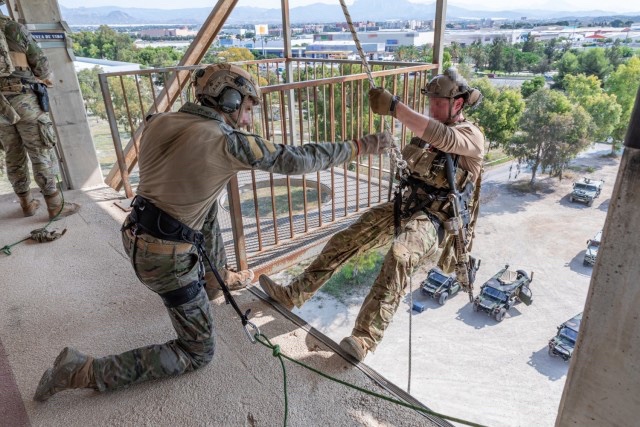
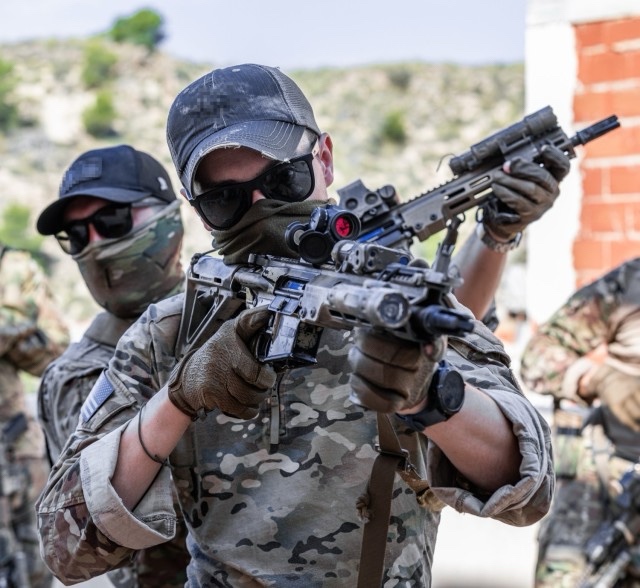
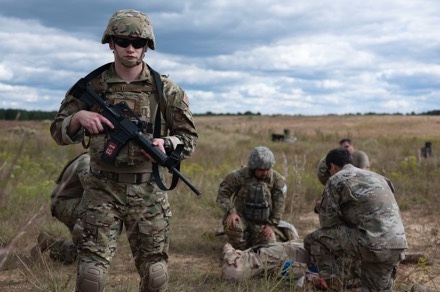
ALICANTE, Spain — Green Berets with the U.S. Army’s 10th Special Forces Group (Airborne) concluded a nearly two-month joint combined exchange training — known as JCET — with members of the Spanish Army’s Grupo Especial de Operaciones near Alicante.

The U.S. and Spanish special operations forces practiced a wide variety of skills during this exercise, including training in long-range marksmanship, crew-served weapons familiarization, mission planning, close-quarter battle, breaching operations, military operations in urban terrain, rappelling and other critical combat and unconventional warfare skills.

U.S. Special Forces conduct JCETs with foreign militaries and partner agencies in their home countries. “JCETs facilitate shared understanding and awareness of capabilities and readiness,” said Lt. Col. Kevin Bowman, U.S. Special Operations Command Europe’s special operations liaison officer to Spain. “More importantly, they allow for both country’s units to build bonds and relationships, which are invaluable, particularly in times of crisis.”

Conducting JCETs with traditional U.S. allies like Spain is important to U.S. Special Operations Forces. “Spain is a very capable NATO ally with diverse, yet shared interests around the globe. It is critical that both countries collaborate wherever possible, given the high probability that we’ll be asked to work together in a future scenario,” Bowman said.

This JCET built upon past training and exercises for the Green Berets of 10th SFG (A). “This two-month JCET was extremely successful – not only did we increase our own tactical capabilities, but we also improved our interoperability and integration with our Spanish Army SOF peers,” said a U.S. Army special forces detachment commander directly involved in the training. “My Spanish counterpart and I integrated our teams to the maximum extent possible… this afforded both detachments the opportunity to develop our mission planning skills, mobility capabilities, and combined special reconnaissance and direct action tactics, techniques, and procedures.”

Both the Green Berets and the GOE gained valuable experience and increased their interoperability according to the detachment commander. JCETs continue to provide unique training opportunities for both U.S. forces and their multinational counterparts.

By CPT Jonathan Leigh

Photos by SSG Jacob Dunlap

Climatic Lab Returns Home Under 96th Test Wing

Tuesday, October 31st, 2023

EGLIN AIR FORCE BASE, Fla. (AFNS) —  

After almost eight years, Eglin Air Force Base’s McKinley Climatic Lab returns to 96th Test Wing possession as of Oct. 1.

The realignment moves the lab from Arnold Engineering Development Complex back to the 96th Range Group. A 2016 Air Force Test Center consolidation moved the lab under the unit at Arnold AFB, Tennessee.

The return, to better align with local infrastructure and Eglin AFB’s test and evaluation missions, puts the Lab back under the 782nd Test Squadron.

The capabilities available at the Lab help engineers ensure maximum reliability and operational capability of complex systems as global operational theaters continue to impose harsh environments.

Tests at the facility for the Department of Defense, other government agencies and private industry included items such as large aircraft, tanks, missile launchers, shelters, engines, automobiles and tires.

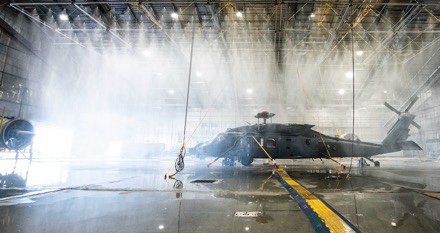
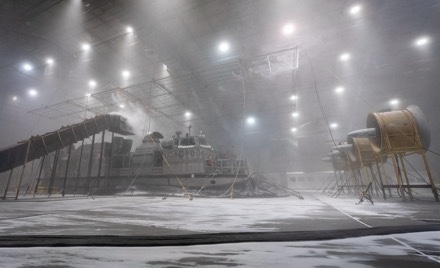
The Climatic Laboratory has five testing chambers: the main chamber; the equipment test chamber; the sun, wind, rain and dust chamber; the salt fog chamber and the altitude chamber.

The main chamber is the largest environmental chamber in the world. At approximately 252 feet wide, 260 feet deep and 70 feet high, tests have consisted of large items and systems for aircraft such as the B-2 Spirit Bomber and the C-5 Galaxy. The temperatures achieved in the chamber range between -65 degrees Fahrenheit to 165 degrees Fahrenheit with a simulation of all climatic conditions including heat, snow, rain, wind, sand and dust.

The equipment test chamber is 130 feet long, 30 feet wide and 25 feet high. Although it is smaller, it has the same capabilities of the main chamber. Tests usually consist of jet engines, small vehicles and turbine-driven ground power units.

The sun, wind, rain and dust chamber produces ambient or hot test conditions. Wind-blown rain at rates up to 25 inches per hour and heavy sand and dust storms can also be created in this chamber.

Because of the corrosive properties of salt fog test conditions, the salt fog chamber was designed to provide an ambient test chamber that is away from other test chambers. The chamber has two steam-fed heat exchangers that create the temperature to perform the salt fog test.

The chamber is approximately 55 feet long, 16 feet wide and 16 feet high. The chamber doesn’t have refrigeration capability.

The altitude chamber can create pressure altitudes as high as 80,000 feet with a temperature capability of -80 degrees Fahrenheit to 140 degrees Fahrenheit. The chamber measures 13 by 9 feet and 6 feet high.

By Samuel King Jr., Air Force Test Center

Prometheus Design Werx – P42 Raider Pants

Monday, October 30th, 2023

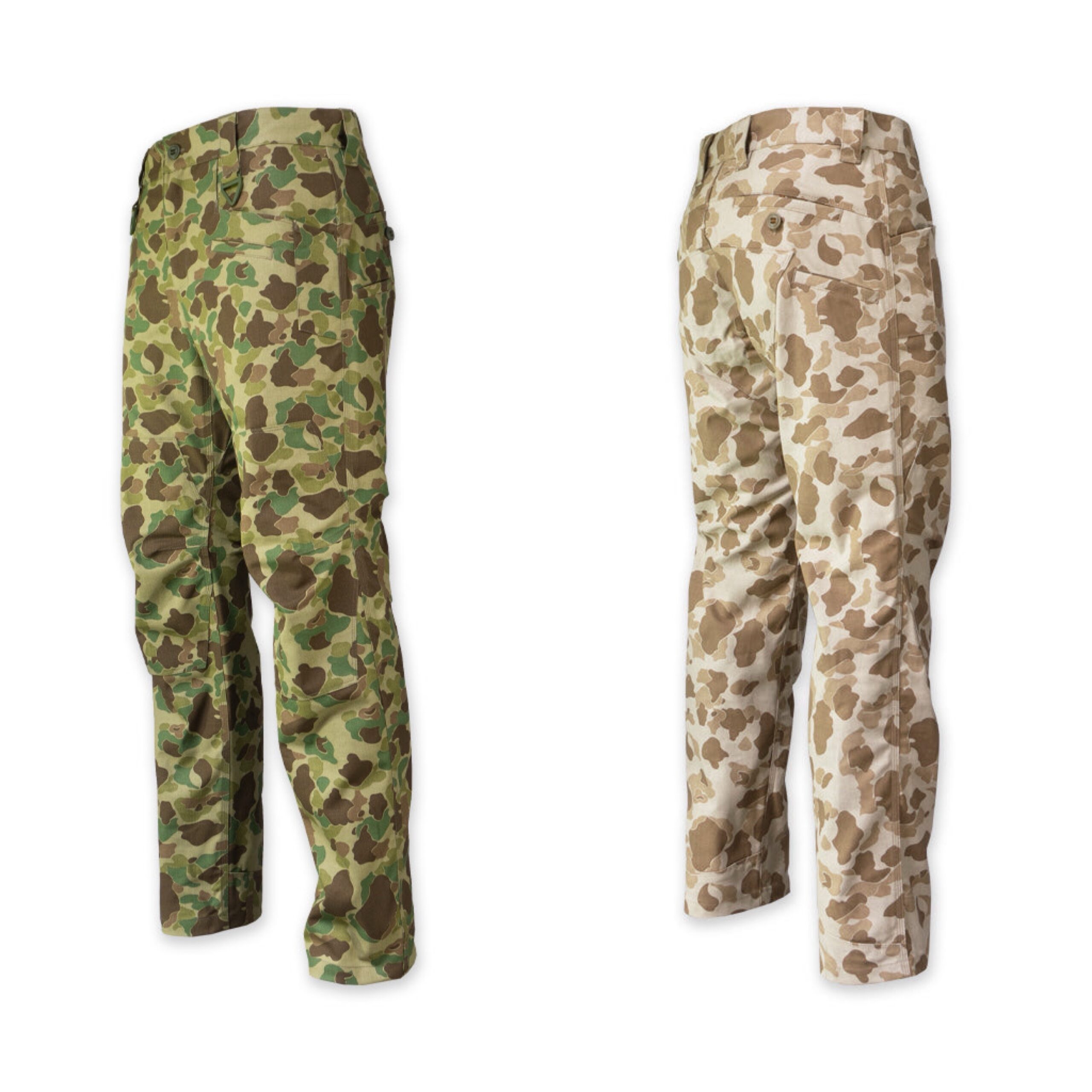
The Raider Field Pant was originally inspired by the classic USMC Dungaree and reimagined as what it might be as made today with updated sensibilities, features and fit.

Coming full circle the SPD Edition Raider Field Pant HBT uses America’s original camouflage pattern issued during WWII.

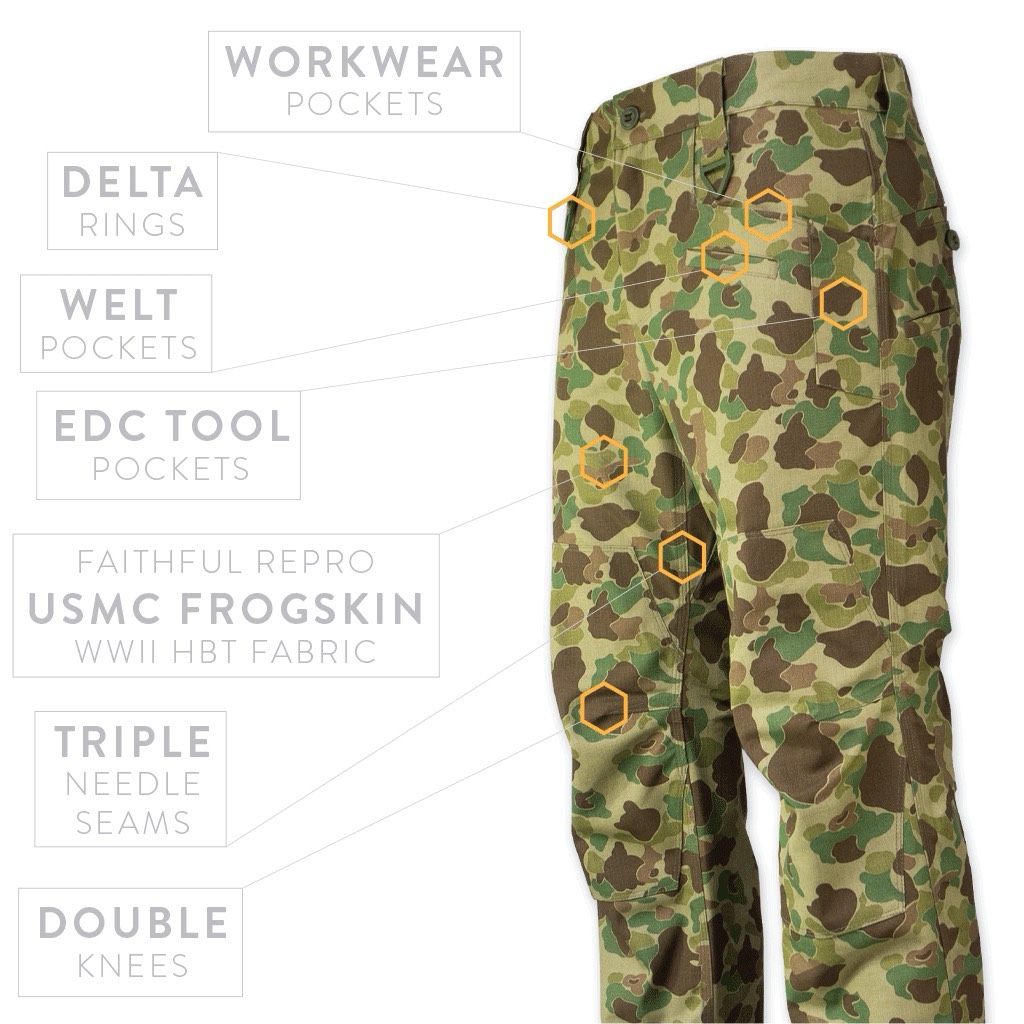
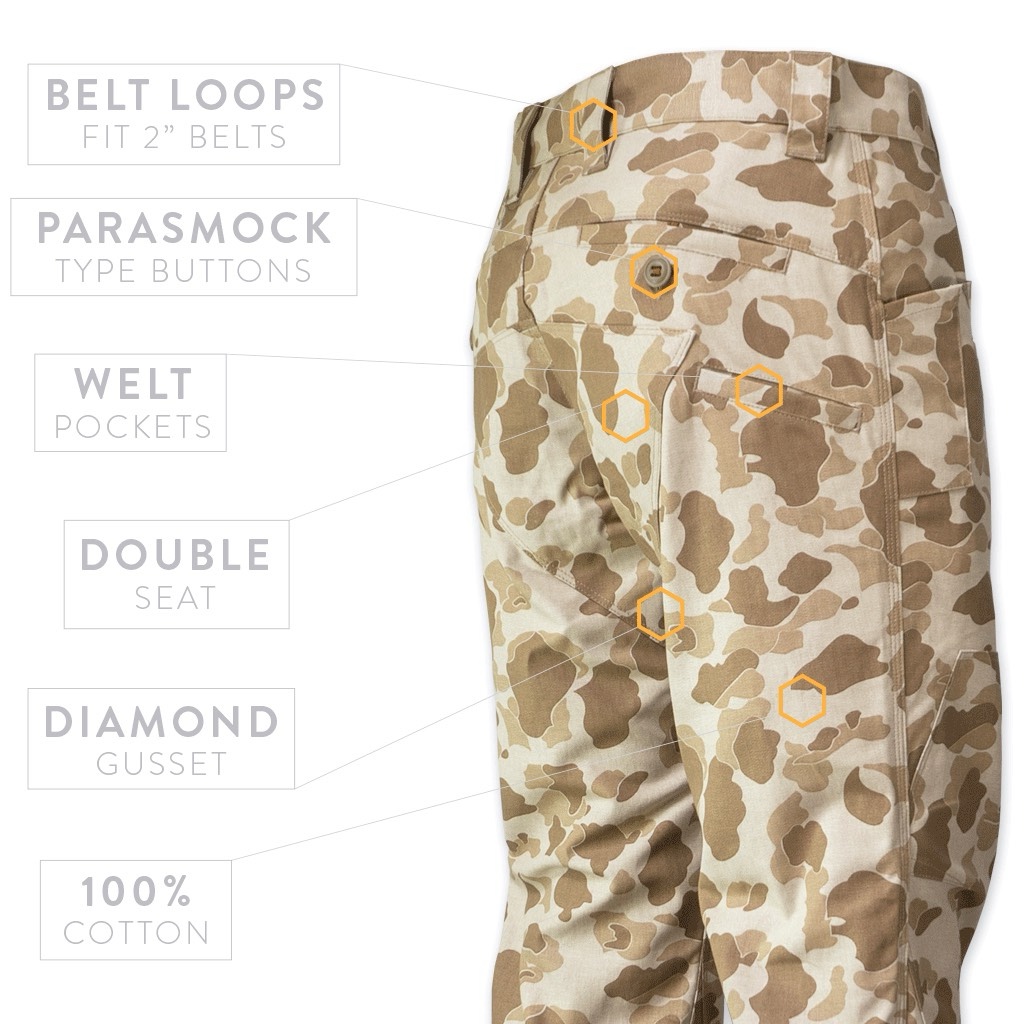
Made in a rugged, durable, 9oz, 100% cotton herringbone twill fabric that was custom milled to faithfully follow the original P42 Frogskin pattern.

With many considerations for today’s user, there are ample pockets without creating a cluttered or bulky design.

Like most of our designs, we use industrial grade construction methods such as heavy duty nylon thread, triple needle stitching on major seams, and more bar-tacks to reinforce stress points than any other pant in its class.

This limited edition run of the Raider Pant will be available only on the PDW website November 1st at 1200 PDT.

Armed Forces Work to Adapt to A Changing Climate

Monday, October 30th, 2023

Rivulets of sweat dripped down the Soldiers’ flushed faces as they marched across the arid land mid-summer. As temperatures rise to over 100°F, the humid air becomes oppressive and heat-related illnesses become an increasingly real threat to Warfighters. Extreme temperatures and intensifying weather, influenced by a warming climate, continue to get worse or at best sustained, becoming a perfect recipe for noncombat-related injuries.

Climate change is not a new phenomenon but is one that continues to not only affect the ecosystem–plants, animals and resources–but also Army operations. Like a pendulum, temperatures oscillate between hot and cold, which is normal, but can be amplified to more extreme levels.

“It is hard to ignore climate change when it has real world effects, as it directly impedes how we conduct military operations or training,” said Dr. Adam Potter, Research Physiologist in the Thermal & Mountain Medicine Division (TMMD) at the U.S. Army Research Institute of Environmental Medicine (USARIEM). “It poses increasing risks to the health of Service Members and has the potential to jeopardize our missions.”

Heat-related illnesses and injuries can take a Warfighter out of operations during both training and in real-world military activities, such as combat, security operations and humanitarian missions. With increasing environmental temperatures, Warfighters might find themselves facing exertional heat illness that can range from heat exhaustion to life-threatening heat stroke. This risk increases during strenuous operations such as foot marches, running activities or when carrying heavy loads.

“When carrying out military-specific tasks, such as the 2-mile run or 12-mile foot march, often carrying heavy packs, the chances for an individual to reach a dangerous level of body core temperature, or hyperthermia, increases greatly in higher ambient temperatures, especially if clothing or high humidity prevent the evaporation of sweat,” said Dr. Nisha Charkoudian, Chief of TMMD. “In a practical sense, standard military training becomes progressively more thermally stressful compared with just a few decades ago.”

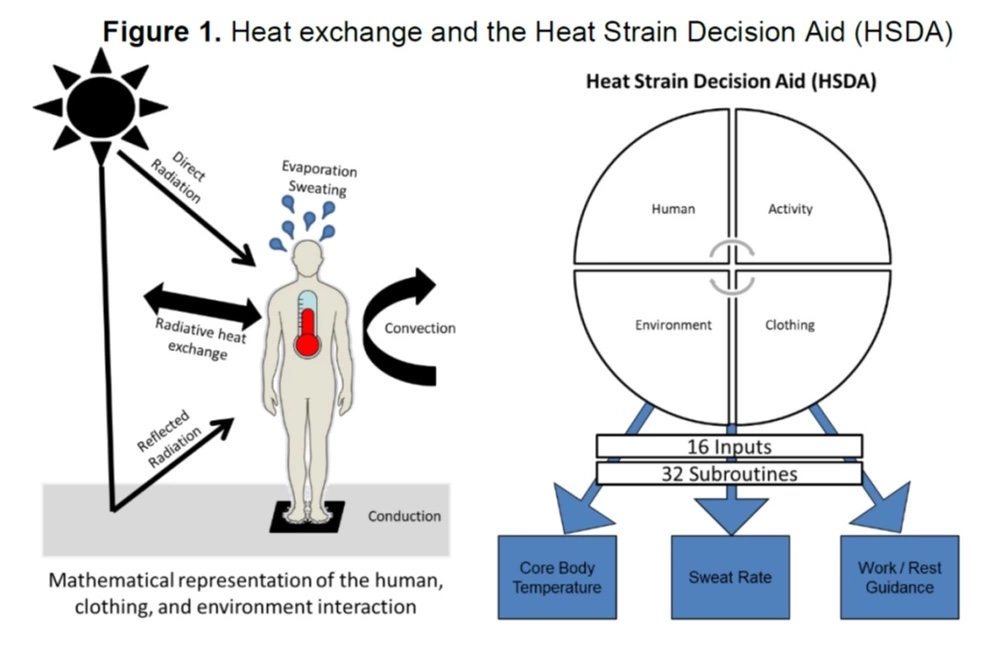
To predict the potential impacts from environmental exposures, such as increased temperature or humidity, the Army has developed sophisticated biophysical mathematical models. “Typically, we need to consider a minimum of four factors in our modeling, including the environment, the human – fitness, body size, etc. – their activity level and the clothing they are wearing,” Potter says. “We can put quantifiable numbers to each of these elements and mathematically describe or predict likely changes to occur in a given scenario to a human and their physiological and/or thermal responses.”

These models enable Potter and other researchers to calculate the differences in exposure risks between individuals based on their size, acclimation status and health status. If there are shifts in the environment, these models allow for data-informed comparisons to suggest how sudden changes can impact the individuals or groups. The relative risk of heat stress of a Service Member could be assessed based on the combination of conditions and their specific clothing. For example, a full combat uniform could be removed, or items worn could be adjusted to decrease the thermal burden on the individual.

Some environmental conditions the model accounts for include elements such as solar radiation, wind velocity, humidity and temperature. These factors can drastically change and may force Soldiers to adjust their training. For example, conditions could be shifted to nighttime when there is little to no solar radiation compared to during the day.

“With an increase in a temperature alone, there becomes an increased risk to individuals that may shorten the amount of time they may safely work in a given condition. While individual differences can also be modeled; where, for example, in some conditions, a person of a smaller size will be better off in one condition than another and vice versa. The models provide us with powerful tools, as they allow us to assess the complex interactions of all these different variables,” Potter said.

The military has procedures for training, tactics and operations, but the climate can be an additional adversary or ally depending on the Army’s approach. Charkoudian and Potter suggest that the military implement creative or “outside the box” methods to adapting to a changing climate.

“One approach may be to investigate potential impacts of a reversal of sleep-wake cycles during basic training during the hot months of the year, to minimize the usual increase in heat-related injuries, and to enhance the capacity for physical training and combat performance,” Charkoudian said. “Switching day and night could decrease both heat-related illness/injury and lost training days over the course of the basic training program. However, this approach would have multiple ramifications regarding Soldier health and logistics of training, so the feasibility remains to be determined.”

“It can be difficult to implement a systemic shift, but it could be necessary if the risks of heat injuries are so high that they result in heat casualties,” Potter said. “It could even be a tactical advantage to doing operations at night.”

This kind of shift in structure could provide us with both physiological and tactical advantages but may result in unconventional alterations.

“We recognize that there would be multiple effects of such a modification and data collection would be necessary to evaluate the effects of these types of changes, such as inverted sleep-wake schedule on physical and mental health and on physiological and cognitive performance,” Charkoudian said.
Solutions for a warming climate will not be found overnight, but in the meantime, the Army is finding revolutionary ways to adapt to an unpredictable and modifiable environment.

“Climate change is a threat, but we can also use it to our advantage by changing traditional military operations for new recruits and mitigating health threats that reduce military readiness,” Potter said.

USARIEM is a subordinate command of the U.S. Army Medical Research and Development Command under the Army Futures Command. USARIEM is internationally recognized as the DOD’s premier laboratory for Warfighter health and performance research and focuses on environmental medicine, physiology, physical and cognitive performance, and nutrition research. Located at the Natick Soldier Systems Center in Natick, Massachusetts, USARIEM’s mission is to optimize Warfighter health and performance through biomedical research.

By Maddi Langweil, USARIEM Public Affairs

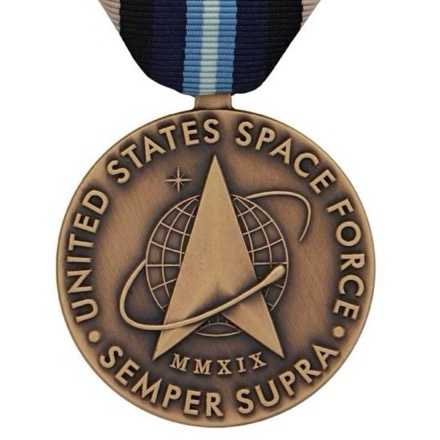
SECAF Authorizes Space Force Good Conduct Medal

Sunday, October 29th, 2023

U.S. Space Force Guardians are now eligible to receive the Space Force Good Conduct Medal (SFGCM) if eligibility criteria are met, effective immediately.

This medal recognizes “exemplary behavior, efficiency, and fidelity of enlisted members of the United States Space Force,” according to a memo signed by Secretary of the Air Force Frank Kendall Aug. 30, 2023.

The memo also outlined award eligibility for the SFGCM will be retroactive to the date the U.S. Space Force was established by law, Dec. 20, 2019.

Eligibility for the award includes members demonstrating the Space Force core values of Character, Connection, Commitment, and Courage; members will receive the SFGCM after serving in the Space Force for three years.

Award of the SFGCM is automatic unless denied by the unit commander.

This new medal comes after Executive Order 8809, Good Conduct Medal, was amended by Executive Order 14085, Expanding Eligibility for Certain Military Decorations and Awards, dated Oct 3. 2022, and will be reflected in the next revision to DAFMAN 36-2806, Military Awards: Criteria and Procedures, Attachment 14.

By Secretary of the Air Force Public Affairs

Soldier Touchpoint Supports XM30 Combat Vehicle Program

Saturday, October 28th, 2023

WARREN, Mich. — Soldiers from the 1st Cavalry Division out of Fort Cavazos, Texas, helped the Army better understand how Armored Brigade Combat Teams may fight in the future, thanks to a Soldier touchpoint held in September at the Detroit Arsenal in Michigan.


The Soldiers from Bravo Company, 2nd Battalion, 5th Cavalry Regiment supported a virtual experiment with the XM30 combat vehicle program, providing feedback on how Soldiers might best utilize the vehicle in a combat scenario.


“The input we gain from our Soldiers in these touchpoints is invaluable to the vehicle development process,” said Brig. Gen. Geoffrey Norman, director of the Next Generation Combat Vehicles Cross-Functional Team, which is based at the Detroit Arsenal.

“These touchpoints are part of the iterative process between our Army engineers and our industry partners to ensure we deliver the vehicle the Army needs for 2030 and beyond.”

During the experiment, Soldiers from the platoon worked in a vehicle simulator, with Soldiers serving as the crew of the simulated XM30 and infantry dismounts who would be transported in the rear of the vehicle.

The XM30 is now under development and will replace the Bradley Infantry Fighting Vehicle in the Army’s Armored Brigade Combat Teams in the future. The first XM30s will be delivered to the first unit equipped in fiscal year 2029. XM30 will have a crew of two Soldiers and will carry infantry Soldiers in the rear of the vehicle.

Virtual experimentation is helping the Army to determine what functions or tasks a member of the dismount team could perform to support the crew.

“We’re running through a variety of simulations and scenarios to assess the benefits of different configurations,” explained the first lieutenant who led the group of Soldiers participating in the virtual experiment. “Most of these Soldiers have live experience in Bradleys, they understand the mission sets and they know what they would like to see in the XM30.”

During the experiment, after the Soldiers participated in a mission scenario, engineers would immediately conduct an after-action interview, gathering input from the Soldiers on what worked and what didn’t. Other engineers studied a wide range of hard data, determining in which crew scenario the Soldiers were best able to meet mission goals.

“The engineers here in Detroit are really listening to what we have to say,” said a participating staff sergeant. “I think it is pretty exciting to see how the Army is taking what we’ve seen in the field and putting that together with this new technology to create a better system.”

Another staff sergeant who participated in the virtual experiment said that even though the XM30 is still in development — currently two companies are under contract by the Army to build and deliver physical prototypes by 2026 — “there are some things in this simulated version that I wish we had now, that will simplify tasks for the crew.”

The staff sergeant said all the Soldiers who participated in the touchpoint understood the important role they were playing.

“We’re making the connection between the user world and the influencer world. That’s pretty cool,” he said.

Norman said a number of additional Soldier touchpoints are scheduled throughout the XM30 development process.

By Dan Heaton, Next Generation Combat Vehicles Cross-Functional Team

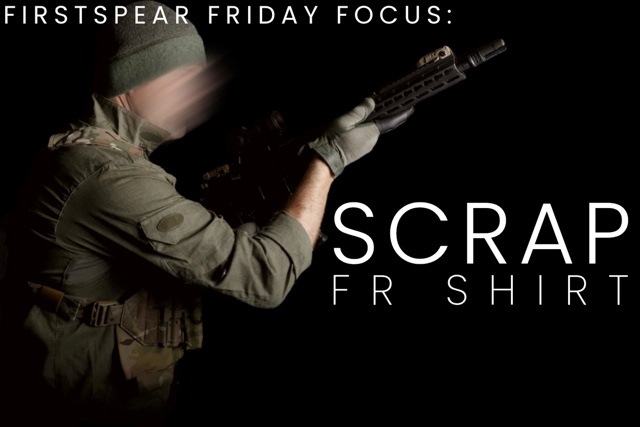
FirstSpear Friday Focus – Scrap FR Shirt

Friday, October 27th, 2023

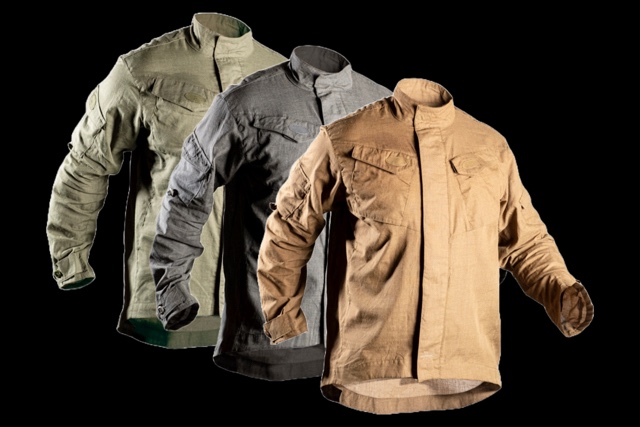
The Scrap FR Shirt stands out not only for its flame-resistant properties but also for its lightweight and breathable design. Made of an advanced aramid blend, it offers full protection against open flames and hot brass while keeping you cool and comfortable. This revolutionary combination makes it perfect for outdoor activities in hot and humid weather conditions. The Scrap FR Shirt features various pockets with breathable mesh for drainage, standard FS IFF Oval Fields, organization features within the pockets, and security straps that keep the sleeves rolled up.

Cut for shooting, moving, and being active, its slightly longer tail aids in protective overlap and concealed carry requirements. Moreover, the Scrap FR Shirt is machine washable and has minimal shrinkage, making it a durable and long-lasting investment for any active individual. This advanced shirt has a zippered front opening reinforced with webbing sewn buttons. Unzip the front and button up for added ventilation. The shirt also has a breathable mesh at the bottom and back of the front pockets, armpits, and across the entire back yoke. These features make this shirt extremely comfortable and highly ventilated in hot and humid conditions.

Visit FirstSpear to find American Made kit and accessories, Built For The X.

Thunder Challenge 2023: Combat Weather Airmen Showcase Battlefield Skills

Friday, October 27th, 2023

MOODY AIR FORCE BASE, Ga. —  

Seven teams of combat weather Airmen competed in Thunder Challenge 2023 at Fort Liberty, North Carolina, Oct. 15-17, 2023.

Thunder Challenge is an annual competition between combat weather Airmen which tests their core weather competencies and battlefield skills to analyze readiness and share best practices throughout the career field. Units from the 5th Combat Weather Group, 1st Combat Weather Squadron, 7th Combat Weather Squadron, 607th CWS and 23d Special Operations Weather Squadron competed in the event.

“Getting together with other combat weather squadrons, learning from them and sharing best practices is critically important,” said Lt. Col. Tyler West, 7th Combat Weather Squadron commander headquartered in Wiesbaden, Germany. “Overall, it’s going to contribute to more combat-ready forces, starting with the teams that competed here and then spreading across the entire community as competitors take the capabilities and drive gained here back to their units.”

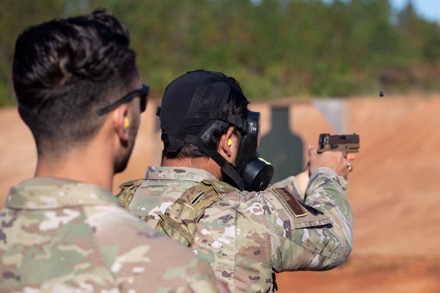
During the challenge, competitors manually forecasted weather, operated tactical weather sensing equipment, provided weather impacts in a simulated chemical attack, completed weather knowledge tests, reacted to simulated enemy small arms and explosives attacks, performed base defense, conducted tactical combat casualty care, navigated through forests, conducted a 10-kilometer weighted ruck and completed a course of fire after exercising in gas masks and body armor.

“This is a way for them to really improve their readiness as it requires them to complete these key tasks while under high pressure. We don’t want the first time they do these tasks under that pressure to be when they’re in combat,” said West. “We never know exactly when we’re going to be called upon, so we need everyone to be ready at all times.”

Evaluators aimed to create a high-pressure environment to recreate stressors these Airmen may experience in operational scenarios.

“Having seen these Airmen in the fight today, and the sheer willpower and warrior spirit these Airmen displayed was absolutely phenomenal,” said Col. Patrick Williams, Headquarters Air Force Director of Weather. “It really shows that these guys can do the mission, and I’m proud to call these Airmen warriors.”

Throughout the exercise, senior leaders conducted career field discussions to strategize how to best operationalize weather forces to create battlefield advantages.

“We looked at how we gain opportunities and shape the battlespace to create opportunities for our forces,” Williams said. “Weather operators can forecast the weather to create precision out of chaos, and they soften the battlespace for superiority of all sorts.”

Tech. Sgt. Brandon Hutchinson, Staff Sgt. Hunter Haggerty and Staff Sgt. Nicholas Schlabach from the 23rd SOWS took first place in the competition and will receive an Air Force Achievement Medal for their accomplishment.

“It’s really an honor for us to come here to Fort Liberty and get to participate with all the combat weather teams across the Air Force and showcase our skills and training,” Schlabach said. “We have people coming from around the world here to compete against each other, it really showcases that all our units are training toward the accomplishment of being a combat-ready Airman.”

By 1st Lt Christian Little, Combat Weather