BOSS-Xe from Wilcox Industries

Archive for the ‘Guest Post’ Category

Luminae Battle Boxers

Thursday, October 26th, 2023

The Luminae Battle Boxers are high-performance underwear developed for training or high intensity environments. The Fabric is designed to dry fast and to avoid chafing. They can be used in warm or cold climates and wick away sweat and water. Unlike other brands, we have used close cell elastic fabric meaning no dirt or sand can be trapped within the weave of the boxers to avoid any chaffing from particles caught in the fabric.

Made from stretch quality fabric treated with Hydro Pro functionality that wicks moisture away from the skin to keep you dry. With smooth seams and elastic to avoid chafing, and an elastic waistband in soft microfibre for extra comfort.

The legs of the boxers have been extended to cover thighs to stop your skin rubbing agains cold or wet trousers.

• Lightweight Stretch fabric has the comfort of cotton, but dries much faster

• No side or back seams for ultimate comfort

• 4-way stretch material moves better in every direction

• Material wicks sweat & dries quickly

• Performance waistband with matte Luminae Branding

www.luminae.co.uk/Shop/Luminae-Battle-Boxers-3-Pack

SWCS Enhances Allied SOF Partnership with International Military Student Ceremony

Thursday, October 26th, 2023

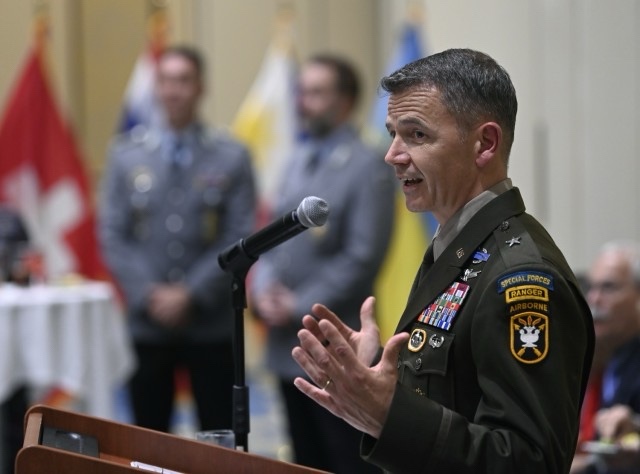
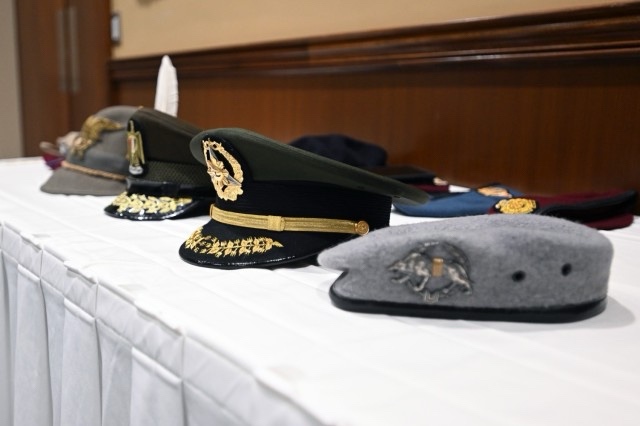
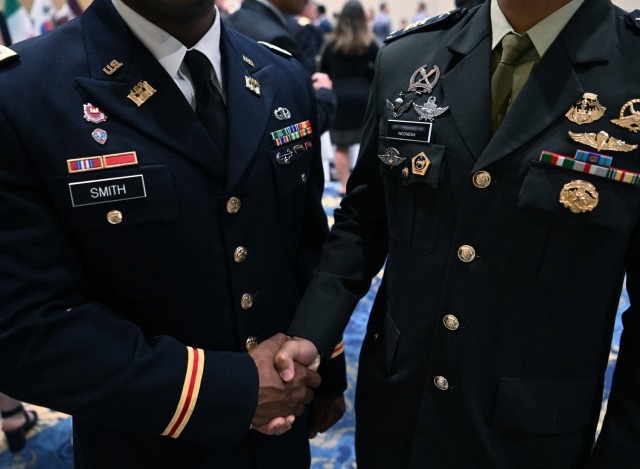
The U.S. Army John F. Kennedy Special Warfare Center and School’s International Military Student Office conducted a ceremony for the international students, their military sponsors, and the IMSO staff to recognize the partnerships and bonds formed across American and allied partner Special Operation Forces, Sept. 18, 2023.

Brigadier General Guillaume “Will” Beaurpere, SWCS commanding general, hosted the social at Fort Liberty, North Carolina.

“It is an honor to have them here and, every time, it is an impressive group of leaders,” Beaurpere said, recognizing the additional obstacles, such as language or different operating procedures, that the international students must negotiate and surpass. Many countries send their top officers and soldiers to receive training through SWCS.

The recognition ceremony of allied SOF relates to the USSOCOM line of effort to expand and reinforce generational and new relationships. The partnership and relationship for the Soldiers begin at SWCS during initial acquisition and later in advanced skills and education experiences.

“The Special Warfare Center and School is honoring approximately 40 international military students and international exchange officers representing 23 countries such as Germany, Canada, and Switzerland, among others,” he said.

Our allied partners are here for a myriad of reasons: Joint Special Operations Master of Arts Program, Army Special Operations Forces Qualification Courses, liaison officers, and advanced skills training such as Military Freefall Jumpmaster Course. These international military soldiers embark on a unique journey, experiencing a world-class education in special operations and a first-rate intercultural exchange.

At the core of ARSOF is fostering relationships built on trust and understanding to create an ability to partner with people from other nations and to help strengthen both partners’ capabilities.

ARSOF Soldiers invest a baseline of six months to acquiring a foreign language, which help to create mutual trust and understanding, build partnerships, and forge alliances.

“Perhaps the greatest benefit of training here are the enduring interpersonal and professional relationships,” Beaurpere said.

He added explaining the benefit of having international students enrolled in SWCS. Their experiences help build the foundation of interoperability and integration that are critical to SOF.

The IMSO ceremony represents a snapshot of the larger global SOF network, creating an opportunity for attendees to connect and further develop intercultural exchange. Relationships formed at SWCS become the bedrock from which many operational and strategic partnerships develop.

Echoing Beaurpere’s comments is an international student, who completed the Special Forces Qualification Course. The student’s name is not being released to the public as an active international special operations service member.

“We’re building the relationship with each other,” the student said. “As partner nations, we might have to face the same enemy in the future, so we are now building the rapport and making our relationship stronger by doing so.”

The students spent an evening celebrating international students and strategic partnerships.

Beaurpere concluded the evening’s events by highlighting the importance of partnership.

“The strength to stand against our adversaries will never come alone, it will come together,” he said.

Editor’s note: Capt. Shao, a recent graduate from SWCS, contributed to the article.

The U.S. Army John F. Kennedy Special Warfare Center and School (USAJFKSWCS) at Fort Liberty, N.C., is one of the Army’s premier education institutions, managing and resourcing professional growth for Soldiers in the Army’s three distinct special operations branches: Special Forces, Civil Affairs and Psychological Operations.

For more information about the U.S. Army John F. Kennedy Special Warfare Center and School, visit www.swcs.mil.

Story by By Steve Morningstar, U.S. Army John F. Kennedy Special Warfare Center and School Public Affairs Office

Photos by K. Kassens, SWCS Public Affairs Office

Thyrm Launches CLENS for Modlite HOG

Wednesday, October 25th, 2023

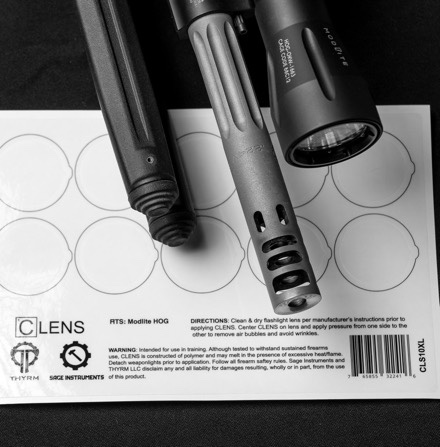
Lights perform best when their lenses are clean. CLENS provides an easy way to protect lenses during extended shooting sessions.  Like goggle tear-offs for off-road racing, just remove the CLENS to return a light to its optimal brightness.

CLENS is now available for the Modlite HOG.

thyrm.com/product/clens-protector

CMSAF Underscores Need for 137th SOW Multi-Capable Airmen

Wednesday, October 25th, 2023

WILL ROGERS AIR NATIONAL GUARD BASE, Okla. (AFNS) —  

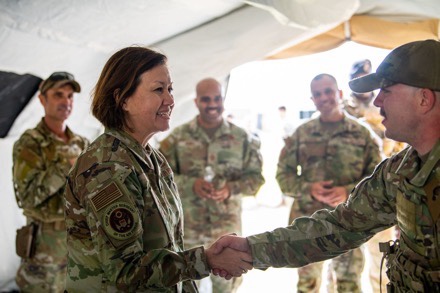
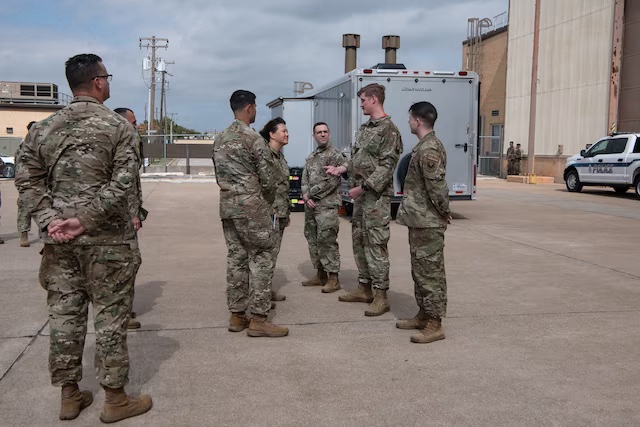
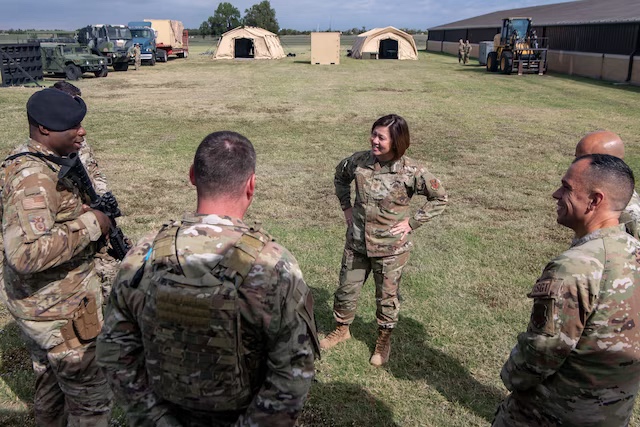
Chief Master Sergeant of the Air Force JoAnne S. Bass saw firsthand how Airmen with the 137th Special Operations Wing set the Oklahoma Standard across the force during a visit Oct. 12.

She encouraged every service member she met to understand the “why” of the Air Force’s prioritization of learning multiple skill sets and becoming multi-capable Airmen, noting that the wing had leaned into the concept through its mission sustainment team.

“I hope you appreciate learning this skill set that we hopefully will never have to tap into,” Bass said. “We are more focused on reoptimization than we ever have been before. How do we reoptimize what the Air Force looks like to do the number one thing we are supposed to: defend our nation?”

She noted that the variety of civilian and military experience of Air National Guardsmen makes them ready-made to be formed into small mission teams, whether someone is a power production specialist in the Guard and a mechanic as a civilian, or a fireman in the Guard and a carpenter as a civilian.

Staff Sgt. Anthony Hill, 137th SOW Mission Sustainment Team, or MST, member, is a civil engineer Airman and policy analyst for the Choctaw Nation of Oklahoma as a civilian. He encountered the MCA concept during a previous deployment to Africa where they did not have the equipment and training needed to rapidly establish a base for austere operations.

“The tent systems we were setting up were more difficult and heavier in design, it took a longer time to train individuals and assemble units with those different levels of experience and they required a dedicated power grid,” he said. “The tent systems that are now part of our MST deployment package would have made a huge difference in sustaining the mission in that expeditionary environment.”

Discovering how to better equip Airmen for expedient operations in locations with limited resources has been the focus of the MST since its inception. A photo of the MST’s preliminary training activity was featured in the U.S. Air Force “Profession of Arms” as it calls for Airmen to serve in whatever form is needed to get the mission accomplished while meeting the expected standard of excellence.

“Our number one job is to deter. If deterrence does not succeed, we will make sure that we are able to compete and win. We are not fighting conflicts that we have before. We have to optimize ourselves in the information, space and cyber domains because if you lose in those things, you lose – period.”

Chief Master Sgt. of the Air Force JoAnne S. Bass

Airmen with the 137th Special Operations Group have developed equipment to be compatible with an expeditionary warfare environment. On the tour, Bass encountered the mobile processing, exploitation and dissemination center, which was built to provide intelligence, surveillance and reconnaissance operations in austere locations.

“We were the first to develop this package,” said Tech. Sgt. Stephen Rosebrook, 285th Special Operations Intelligence Squadron, Oklahoma National Guard. “We have since trained active-duty special operations squadrons as well as partner nation forces.”

The 137th SOW mission is to provide forces organized, trained and equipped to support combatant commanders across the spectrum of conflict. Ensuring its citizen air commandos are prepared to deploy to the fight together anytime, anywhere, is a focus of the wing.

“We have got to reprioritze and reoptimize to make sure that we can continue deterring,” Bass said. “It is not our job to predict when challenges and crises and conflict will come, but it is our job to be ready today for anything.”

By TSgt Brigette Waltermire, 137th Special Operations Wing Public Affairs

SIG P365-AXG LEGION Available for Pre-Order

Tuesday, October 24th, 2023

Available via pre-order exclusively for LEGION members, the new P365-AXG LEGION combines an all-metal AXG grip module paired with their patent-pending slide-integrated expansion chamber.

Utilizing the AXG (Alloy XSeries Grip) all-metal grip module finished in the distinctive LEGION Gray Cerakote Elite, the P365-AXG LEGION is still 1” wide and accepts a full-size 17+1 capacity magazine into the thin, iconic profile of the P365. The P365-AXG LEGION’s grip module is fitted with exclusive custom LEGION Hogue G10 grips and an extended magwell for fast, easy reloads.

The slide comes optic-ready to accept the SIG SAUER ROMEOZero Elite or ROMEO-X Compact red dot optics.

Features:

Two port slide-integrated expansion chamber for recoil mitigation

Optic-ready slide with enhanced serrations

AXG grip module with installed magwell and Hogue Custom G10 grips

XSeries flat trigger

XRAY3 Day/Night sights

www.sigsauer.com/program/p365-axg-legion

Theater Fires and Multi-Domain Operations in the USAREUR-AF Area of Operation

Tuesday, October 24th, 2023

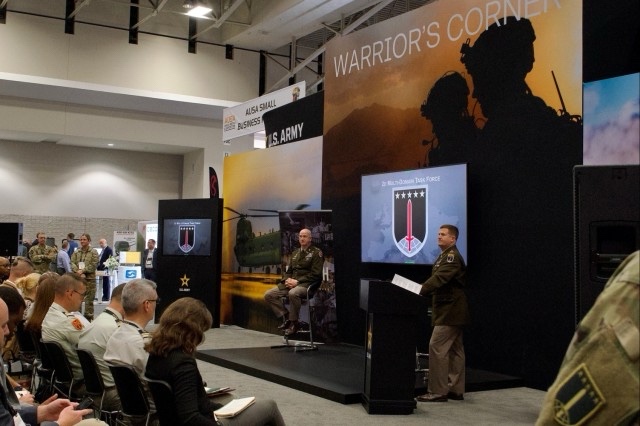
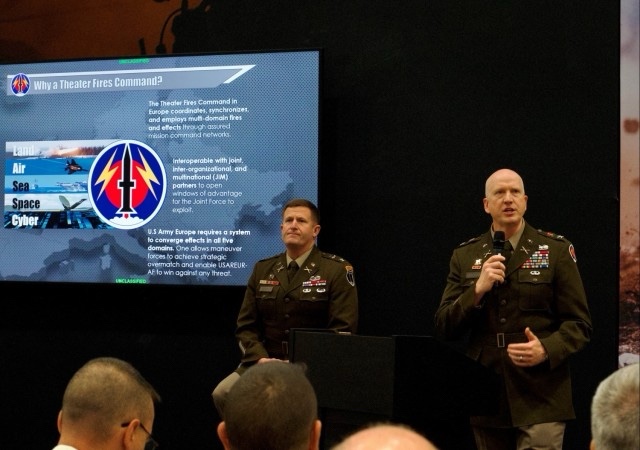
WASHINGTON — The 56th Artillery Command and the 2nd Multi-Domain Task Force, U.S. Army Europe and Africa, co-hosted a Warriors Corner presentation titled “Theater Fires and Multidomain Operations,” during the 2023 Association of the United States Army Annual Meeting and Exposition, Oct. 11, at the Walter E. Washington Convention Center, Washington, D.C.

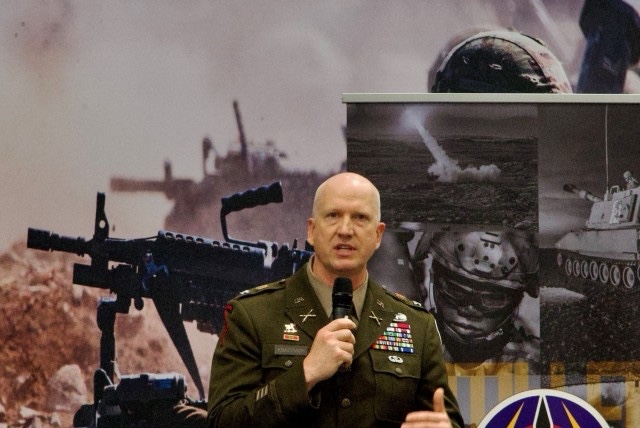
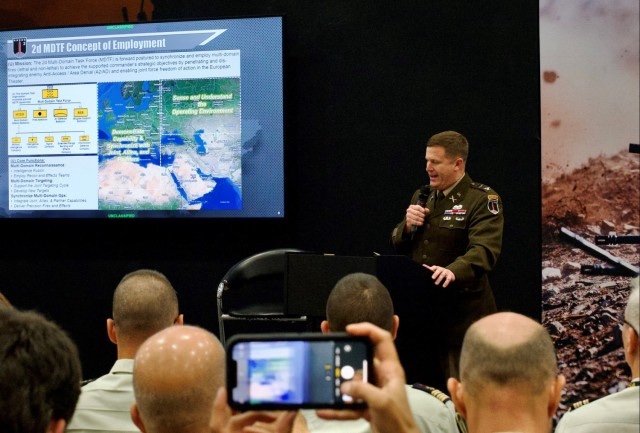
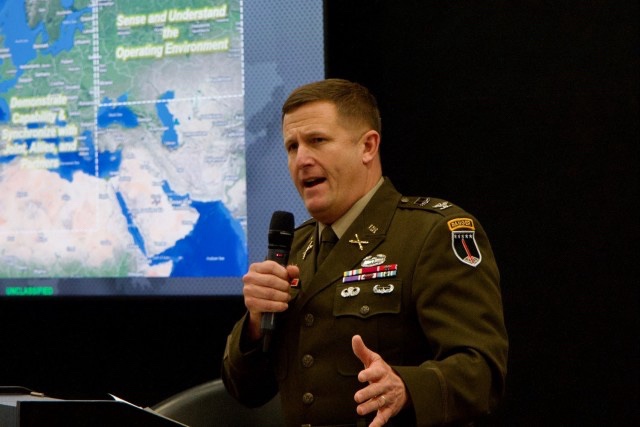
Col. Seth Knazovich, chief of staff for the 56th Artillery Command was joined by Col. Patrick Moffett, commander of the 2nd Multi-Domain Task Force to present their organizations and share valuable insights.

Knazovich initiated the discussion by emphasizing the complexity of theater fires and multi-domain operations, demonstrating USAREUR-AF’s theater fires architecture and forward focus on key influences including threat, interoperability, setting the theater for the Army of 2030 in Europe and employing the full spectrum of multi-domain capabilities to achieve convergence in depth.

“The 56th Artillery Command continues to incorporate the use of innovative technologies, such as the long-range hypersonic weapon and medium range capability battery as well as new formations, like the Theater Information Advantage Detachment into European exercises to understand and demonstrate how these capabilities support and provide opportunities for both the land component and joint allied forces in Europe,” said Knazovich.

Knazovich described employing multi-domain capabilities in depth as a part of large-scale combat operations.

“The 56th Artillery Command, not only shapes the theater with traditional surface-to-surface platforms, but also the space, information, cyber and electronic warfare capabilities available, both from the U.S. as well as our NATO allies and partners,” said Knazovich.

Knazovich said that the 56th Artillery Command’s headquarters and subordinate commands work together to synchronize capabilities and converge effects in time and space. He emphasized the success of multi-domain operations is greatly attributed to the support of two key organizations, the 2nd Multi-Domain Task Force and the 19th Battlefield Coordination Attachment. Highlighting how the organizations play a pivotal role in training, exercises, and joint partnerships alongside NATO allies.

While introducing the 2nd MDTF, Moffett shared the vision for the organization and the challenges they have faced while focusing throughout Europe and Africa. The 2nd MDTF is positioned as the land component commander’s “go-to organization” for multi-domain operations and effects. This mission sets the organization apart and allows for adaptation to the evolving threat landscape.

“The 2nd MDTF operates daily in competition, while remaining trained and postured to transition to conflict whenever called,” said Moffett. “We operate at the cutting edge of capabilities to ensure we are prepared for tomorrow’s fight.”

Moffett shared that part of the preparation includes training alongside allies and partners while commenting on the success and challenges of Arcane Thunder, the 2nd MDTF’s flagship exercise.

“Arcane Thunder 23 was a game-changer,” said Moffett. “It allowed us to fine-tune our skills, push boundaries, and demonstrate our capabilities across Europe.”

Moffett explained that sharing data across multi-domain operations is a critical element of working with NATO partners during exercises. Improving data sharing, especially in electromagnetic spectrum and cyber operations, along with ensuring classified information is accessible at the right level and shared with allies is a key priority.

The presentation focused on modernizing and employing full spectrum multi-domain capabilities to achieve convergence in depth. Attendees heard fist-hand how focused the 56th Artillery Command and 2nd Multi-Domain Task Force is in establishing a cohesive joint and allied theater fires Architecture through federated mission networks, developing Soldiers, and training in exercises alongside our allies and partners. Further focusing on building systems capable of leveraging the best asset to create the best effect to achieve convergence.

“This is the future of fires in Europe,” concluded Knazovich.

The 56th Artillery Command and the 2nd Multi-Domain Task Force illustrated the critical role of theater fires and multi-domain operations in contemporary warfare. This collaborative effort paves the way for a more secure and effective defense posture for the United States and its allies in Europe.

For more information on the 56th Artillery Command, visit their official website.

Story by Casey Slusser

GAFPB: A Powerful Symbol and More Than a Badge

Monday, October 23rd, 2023

Soldiers endure discomfort and pain for many reasons. They may do so as part of their wartime duties, or in training. Everyone reaches a point where they choose to quit or drive on. Military awards – particularly badges – are earned, not given. Each course or task demands some level of sacrifice.

Many servicemembers particularly value the chance to earn a foreign award. No badge is worn by as many U.S. servicemembers though as the German Armed Forces Proficiency Badge – GAFPB.
My introduction to the badge came as a 19-year-old draftee serving in the German Air Force, Luftwaffe, after graduating from Berlin’s John F. Kennedy School. This opportunity presented itself to me courtesy of my German mother. My American father served as a U.S. Army JAG officer attached to the U.S. embassy to Germany at the time. I recall that the sewed on GAFPBs adorning my basic training instructor’s uniforms served as a symbol of their competence and professionalism. Everyone in my unit wanted a chance to prove themselves and receive the badge.

My understanding of this particular award would evolve over time. I would earn, and then encounter, this badge throughout my career.
The badge in German is formally called the, “Abzeichen für besondere Leistungen im Truppendienst.” This term more accurately translates as, “award for special performance in military service.” In U.S. military service, we refer to it as the German Armed Forces Proficiency Badge, but it is officially the German Armed Forces Efficiency Badge.

Army Regulation 600-8-22, Military Awards, stipulates that foreign decorations will only be presented by a designated representative from the awarding nation. As such we work with our German partners as part of each event, and they generate and sign award certificates. Army Regulation 600-8-22 also includes the German Armed Forces Efficiency Badge as a specifically named foreign badge specifically authorized for acceptance and wear by both enlisted personnel and officers.
A U.S. Army commander may also approve the wear of the foreign badge. Many units publish memorandums that authorize acceptance, retention and wear of the badge or use the DA Form 4187.

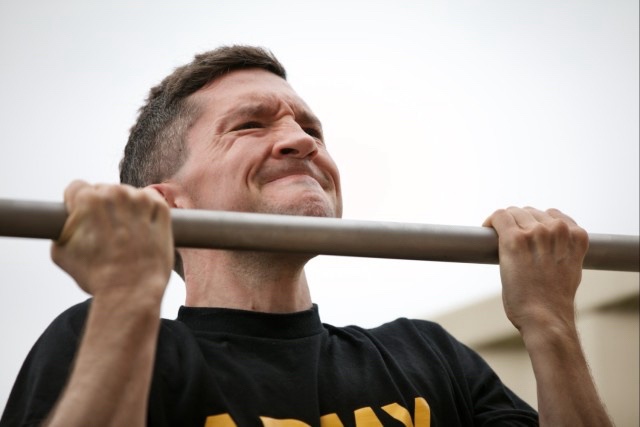
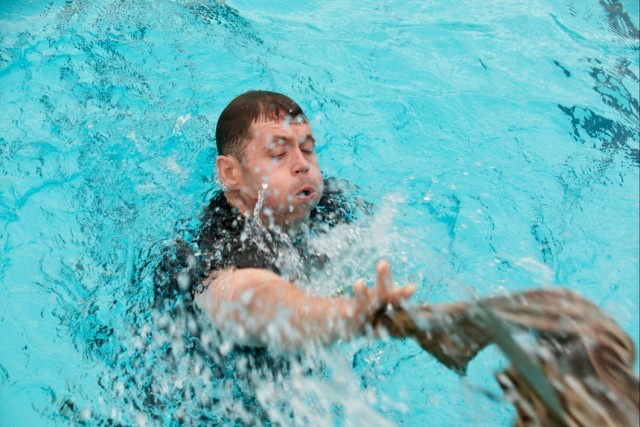
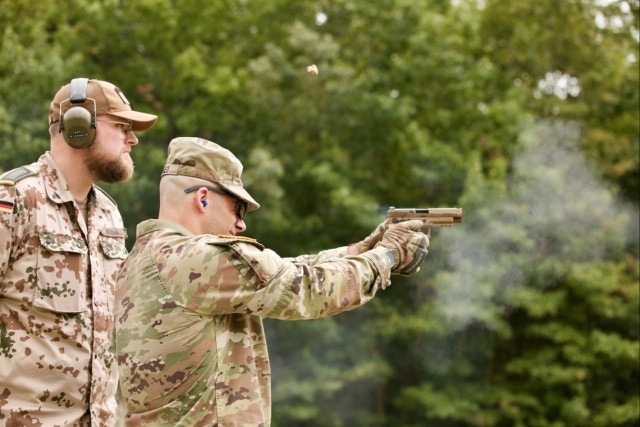
Events required to receive the GAFPB include completing various sport exercises including a shuttle run, flexed arm hang, and a one-kilometer run. Servicemembers must also pass a first aid exam and demonstrate proficiency in their chemical, biological, radiological, and nuclear protective equipment. Pistol marksmanship is also key, with shooters required to engage three targets using five rounds. Most events conclude with the required ruck march, or the challenging 100-meter swim and uniform doff.

German servicemembers wear the badge on the left breast pocket of their utility and service uniforms, while U.S. Soldiers may only wear it on their Army Service Uniform coat and shirt and Army Green Service Uniform coat. Soldiers may only wear one foreign badge on their uniforms, centered, or aligned with the right edge of unit awards or nameplate, above the right pocket and unit awards.
The West German Bundeswehr established the award in 1971 and servicemembers of all branches may earn the badge. It is an award of the Federal Republic of Germany’s Bundeswehr and available in three steps, or levels. Gold, silver and bronze. Interestingly, the German military places more value on gold than we do in the U.S. military. U.S. O-1 rank is gold across all services and branches, while O-2 is silver. German officer rank is silver, while all general officer ranks are gold. As such the gold GAFPB is more difficult to earn than the silver or bronze.

The badge prominently features the Bundesadler – the federal eagle – surrounded by a wreath. It’s interesting and relevant that Germany and the United States of America share an affinity for the same bird and use it as national symbols.
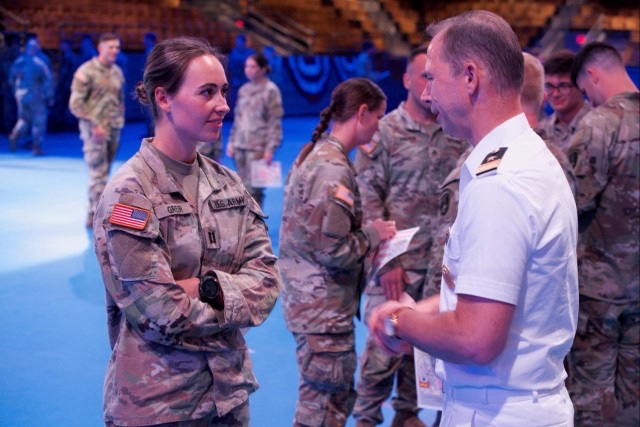
After I left the German military, I attended university in the U.S., enlisted in the Army Reserve, and then later commissioned as a Regular Army officer. During the Basic Officer Leaders Course, German liaison officers detailed to the Maneuver Support Center of Excellence offered another opportunity to earn the GAFPB. I witnessed hundreds of young U.S. Army military police 2nd Lt.’s earn their badges.

Some years later I was assigned as provost marshal to 2d Cavalry Regiment based in Vilseck, Germany. I again saw our formations regularly host German partners during various GAFPB events. Units and individual soldiers drew close to German units and servicemembers.

Last summer I served as officer in charge during a large GAFPB event held at Camp Shelby, Miss. We worked closely with German servicemembers assigned to the German Armed Forces Command in Reston, Va. and the defense attaché staff detailed to the Federal Republic of Germany’s embassy to the United States. We hosted over 300 servicemembers during the event.
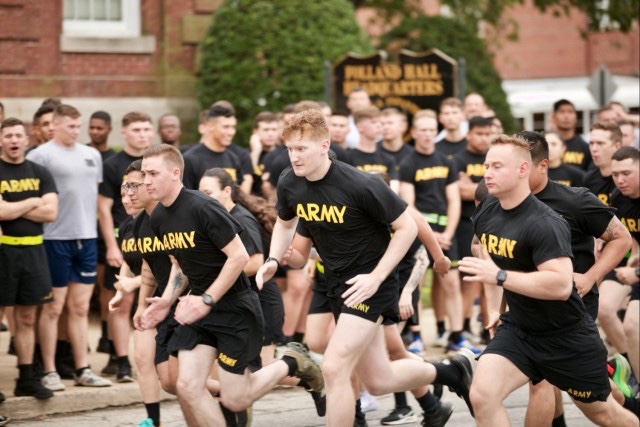
Most recently I attended the 3d U.S. Infantry Regiment (The Old Guard) GAFPB event. Historic Joint Base Myer-Henderson Hall served as a backdrop for the competition. Abutting Arlington Cemetery and a stone’s throw from the Pentagon, the installation is also very close to the German embassy located in Washington D.C.’s Foxhall Village neighborhood close to Georgetown. The defense attaché staff again took time to run over 250 servicemembers through each event. This time I covered the event as a public affairs officer.

Supporting GAFPB events is both time consuming and expensive for German servicemembers and their commands. Each GAFPB event may take two or three days – not including travel. This takes leaders away from their missions and staffs out of their offices. We must acknowledge the sacrifices they make as well.

So why do we go through all this effort to earn a badge? Its great training. Each event builds teams and camaraderie. Individuals reach their limits – and push past them. The badge is a visible symbol of an enduring partnership.

Over the years I watched men and women fight through pain, fatigue and doubt. This year a young soldier marched the soles off his feet, his boots red with blood and skin sloughing off. He made it past the ruck march. I’ve watched well prepared swimmers cramp up in the pool, sink to the bottom, yet manage to remove their uniform blouse and trousers to complete the swim. I’ve seen senior leaders compete alongside their young soldiers, earning a badge – and respect – after over 25 years of service.
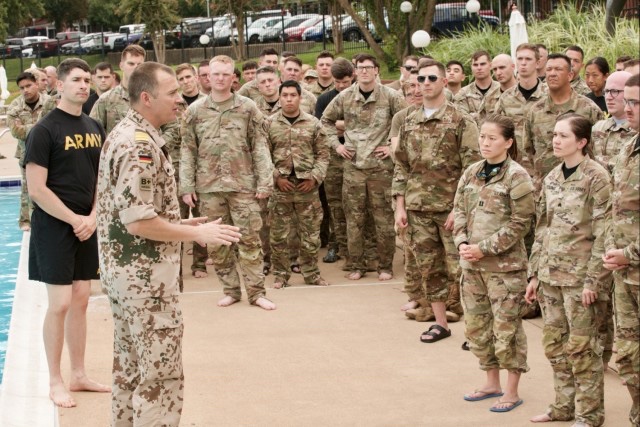
What I enjoyed seeing most though were the conversations and insights shared between allied servicemembers before, during and after a GAFPB event. The briefest conversations between the Germans and our troops sparked interests that led to much greater understanding.

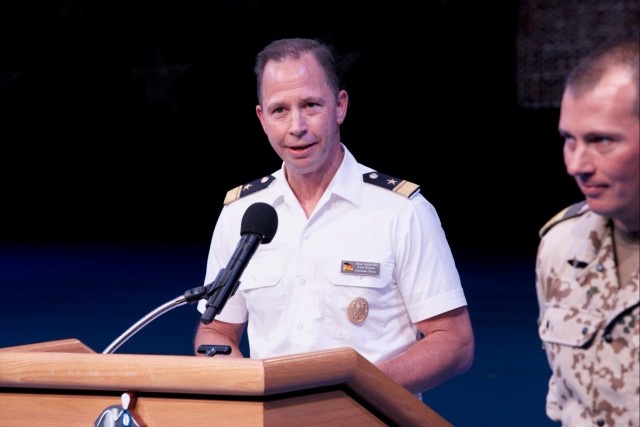
German Navy Rear Adm. Axel Ristau, the German embassy’s defense attaché, emphasized both moral and physical fitness after the latest GAFPB. He also highlighted the alliance between the two countries. “It’s a visual sign of our outstanding bilateral cooperation, and we both, the Americans and German soldiers who earn this badge, can be very proud.”

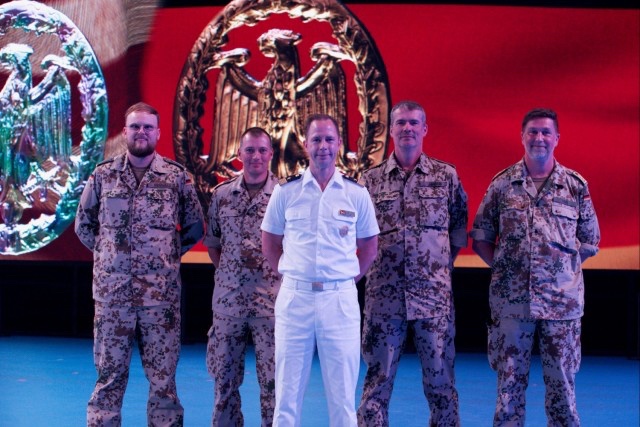
Ristau earned his badge in 1987. He marveled at how this award binds two nations together – “It’s a sign of a transatlantic link. I wear, and my comrade here, wears the same badge on a military uniform.” He told me this as 213 U.S. servicemembers, their friends and families celebrated their achievement in Fort Myer’s Conmy Hall, its massive display screen showing enmeshed German and American flags braced by the gold, silver and bronze GAFPBs.

While not as far removed from earning my badge as Ristau, I also appreciate its importance and feel much the same way. What at first to me was a badge worn by my respected instructors and superiors in the German military, has now as a U.S. Army officer become that symbol of proficiency, and of true German-American partnership.

By MAJ Joshua Frye

MAJ Joshua Frye is the public affairs officer for the Military Intelligence Readiness Command, U.S. Army Reserve.


Army Conducts Fifth Annual Positioning, Navigation and Timing Assessment Experiment

Saturday, October 21st, 2023

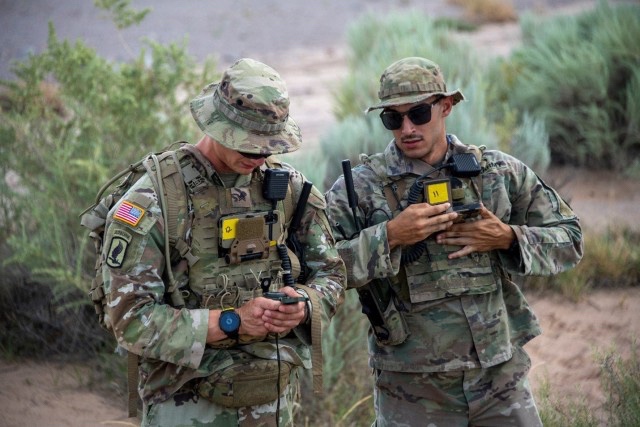
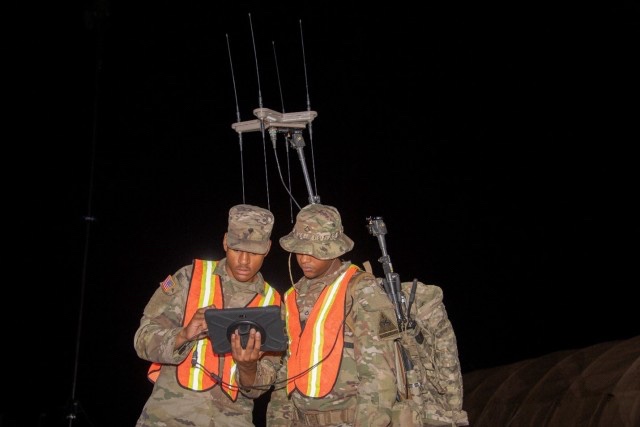
WHITE SANDS MISSILE RANGE, N.M. — As part of its ongoing transformation effort, the Army recently brought together joint, multinational and industry partners to experiment with emerging technologies in a denied and degraded environment.

Held at White Sands Missile Range during the month of August, the fifth annual PNT Assessment Experiment, also known as PNTAX, provided an opportunity for participants to evaluate new tools and systems and align their understanding of how future warfighters can operate successfully in settings where access to standard GPS and communications functionality may be limited.

PNTAX is part of Army Futures Command’s campaign of persistent experimentation and continuous learning. The experiment allows participants to field-test new and existing space-based, terrestrial, aerial and ground technologies. Analyzing the effectiveness and interoperability of these technologies enables the Army and its partners to improve kinetic and non-kinetic targeting and increase Soldier mobility, lethality and survivability.

“Experiments like PNTAX provide a valuable opportunity for Soldier touchpoints that directly influence requirements,” said Mike Monteleone, director of the Army Futures Command Assured Positioning, Navigation and Timing/Space Cross-Functional Team (APNT/Space CFT), which hosted the event.

“This is an environment where we can learn as an enterprise, ensuring we can build resilience and situational awareness of the battlespace. With situational awareness of the battlespace, we can more confidently build force survivability and lethality,” Monteleone said.

Putting technology in the hands of the Soldier

PNTAX provides an opportunity for early, immersive experimentation, which allows the Army and its partners to put technology, at any readiness level, directly into Soldiers’ hands. These early opportunities for direct end-user feedback, referred to as Soldier touchpoints, directly inform the technology development and capability requirements process.

This year, PNTAX provided a multitude of Soldier touchpoints across multiple divisions. Soldiers from the 101st Airborne Division conducted terrain walks and feedback for the Dismounted Assured Positioning System with system training conducted by partners at the Program Manager for Positioning, Navigation and Timing.

Additionally, Soldiers from the 1st Armored Division had the opportunity to conduct their own training objectives utilizing the threat environment provided by the experiment. They were faced with tailorable, threat-based GPS denied and degraded environments and were presented with opportunities to conduct realistic tactical scenarios as if they were in a multi-domain operating environment.

Soldiers from the 10th Mountain Division worked with the CFT’s sensor-to-shooter team in the denied environment to learn from its effects upon the links associated with the tactical architecture, while the 2nd Infantry Division facilitated a variety of ground maneuver activities that enabled operations throughout the experiment.

“This is training I can’t recreate at my home station,” said Warrant Officer Andrew Farnsworth, electronic warfare technician from the 1st Armored Division. “The waveforms in this environment provide a unique opportunity for Soldiers to test and integrate capabilities in a denied and degraded environment.”

Connecting with joint, industry and multinational partners

This year’s PNTAX hosted a variety of participants. Government, industry and academic partners converged on the range with their technology in tow, seeking to test advanced abilities in a challenging environment. Partners were encouraged to experiment with their technology, at any readiness level, to understand its strengths and limits. This approach allows for continuous improvement, a greater understanding of the environment and ultimately, better equipment in Soldiers’ hands.

Allied partners from Canada and Australia joined to observe and scope future participation, while partners from the United Kingdom conducted land navigation experiments with their Soldiers. Multinational participants worked alongside their participating Soldiers and U.S. Soldiers to replicate what operations will likely look like in future, combined force settings.

Partners are welcome to participate in the experiment with any relevant technology, as long as they agree to share data and lessons learned following the event. This exchange of information allows the Army to continue developing relevant scenarios for experimentation and advancement.

Navigating in contested environments

The open-air denied, degraded, intermittent and limited environment at PNTAX was achieved through jamming and a variety of other threat interfaces that resembled real-world, layered approaches Soldiers might face in a multi-domain operating environment. Because of the unique environments the team can create within the electromagnetic spectrum, the team is able to address a multitude of learning objectives.

“So much of our Soldiers’ mission and safety hinges on their ability to effectively operate in contested environments,” said Andy Hotaling, integration director of the APNT/Space CFT. “Events like PNTAX give the Army and its partners the opportunity to ensure the technology they may see in the future can perform in these operationally focused, intelligence-informed environments.”

What’s next?

“We have a lot of valuable data to interpret following our experiment,” Monteleone said. “This data is a crucial stepping stone that informs a variety of Army needs.”

He added that the Army intends to expand opportunities for allied partners, increase the number of Soldier training activities and broaden the scope of electromagnetic spectrum experimentation for participants during next year’s event.

Next year’s experiment is already in the early planning phase alongside our partners within the United States Air Force’s 746th Test Squadron and the Joint Navigation Warfare Center, U.S. Army Combat Capabilities Development Command and the Army Test and Evaluation Command.

By Madeline Winkler, Assured Positioning, Navigation and Timing Space Cross-Functional Team