Celebrate 20 years of the TLR-1

Archive for the ‘Guest Post’ Category

Agilite Launches the MicroMAP Plate Carrier Rear Panel

Friday, October 20th, 2023

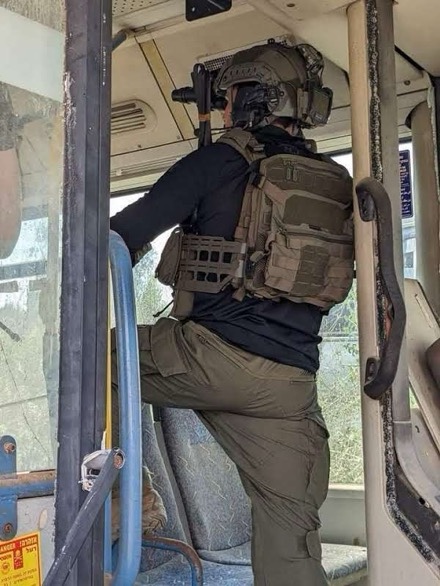
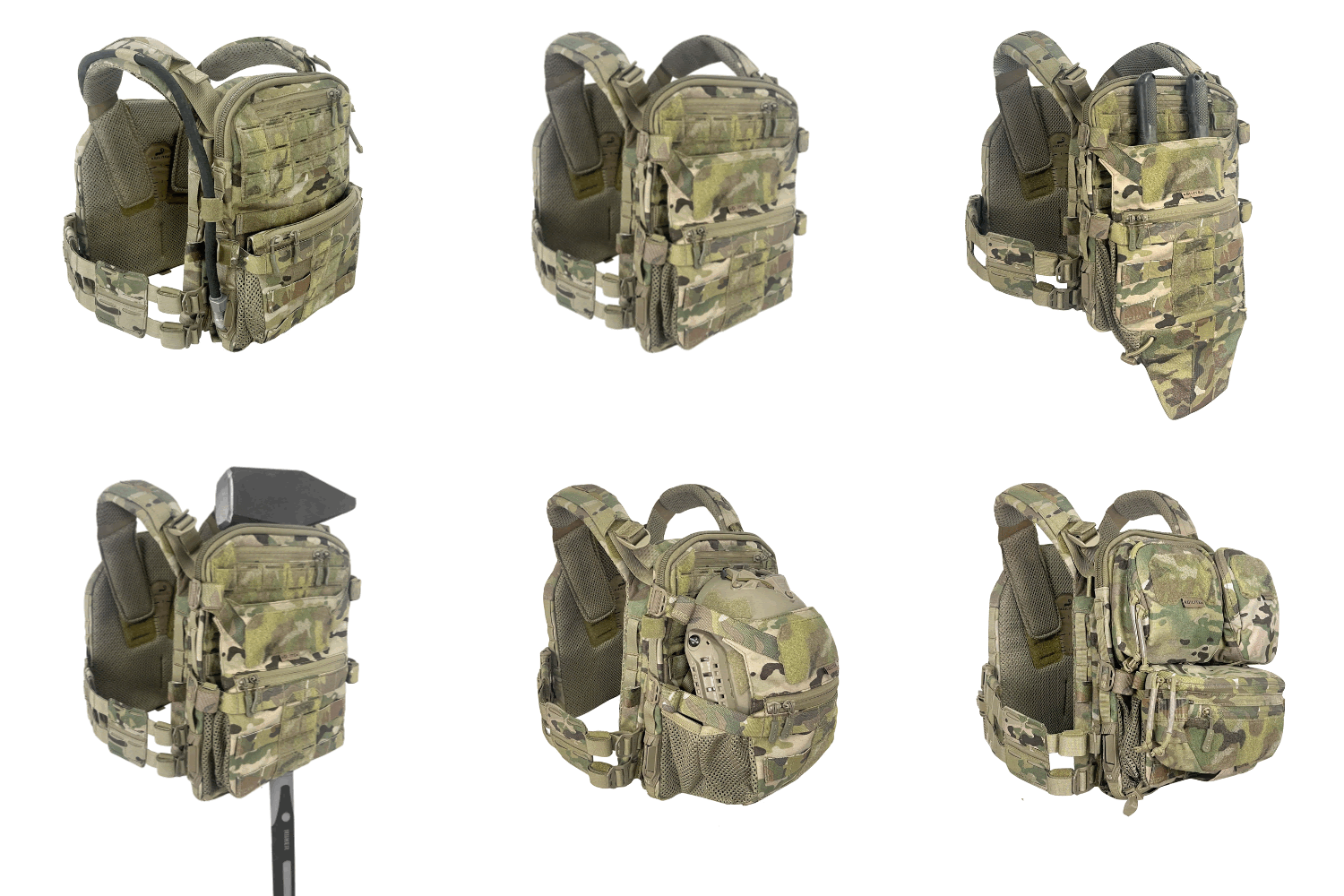
Amid war in Israel, Agilite just launched its extraordinarily versatile MicroMAP back panel that fits onto any plate carrier with rear MOLLE-Check out the features here:

A lot of units had a hand in developing this and there are many of them in the Gaza war right now.

See more at www.agilitegear.com

FirstSpear Friday Focus – Lightweight Hoodie

Friday, October 20th, 2023

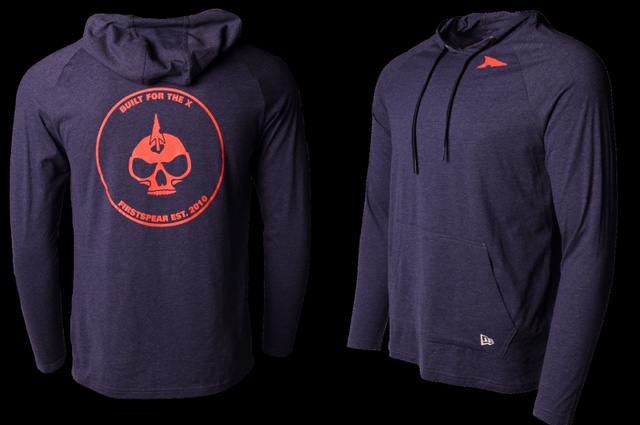
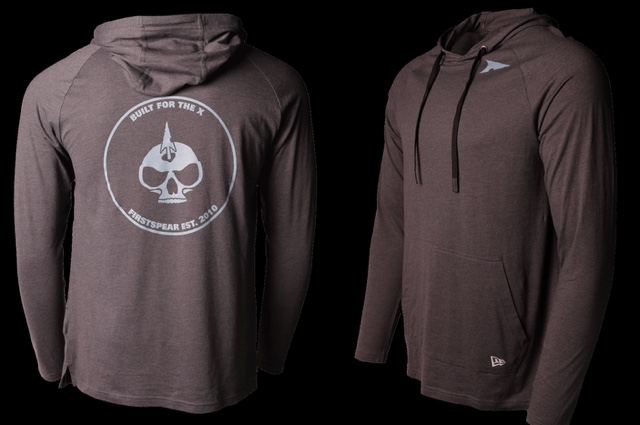
We just dropped the FS Lightweight Hoodie in two new colors, Navy and Charcoal. Head over to the website and check them out. These are short batch, limited stock hoodies for the Fall season.

The new color options, Navy and Charcoal, are modern update to this fan favorite. The athletic fit of the hoodie highlights your physique without feeling too tight or constricting. Who says you can’t look good while running errands or grabbing drinks?

Its soft material feels great and ensures freedom of movement and comfortably wherever you go. Whether you’re on a morning jog or just lounging around the house, this hoodie is the go-to.

Designed and printed in the USA

Visit FirstSpear to find American Made kit and accessories, Built For The X.

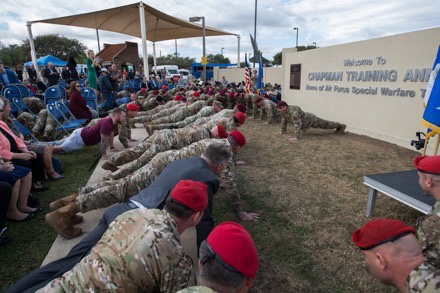
Special Warfare Training Wing: Five Years of Advancing Ground Combat Forces Training

Friday, October 20th, 2023

JOINT BASE SAN ANTONIO-LACKLAND, Texas —  

Five years ago, the U.S. Air Force took a significant leap forward in combat preparedness by establishing the Special Warfare Training Wing (SWTW), an evolution that addressed decades of training shortfalls and operational demands. The SWTW marked a paradigm shift, assuming control over an extensive network of squadrons and detachments. Notably, the wing superseded the former Battlefield Airman Training Group, extending its legacy of ground warfare specialization. Official establishment at JBSA-Lackland was green-lit by SECAF Heather Wilson and materialized on October 17, 2018.

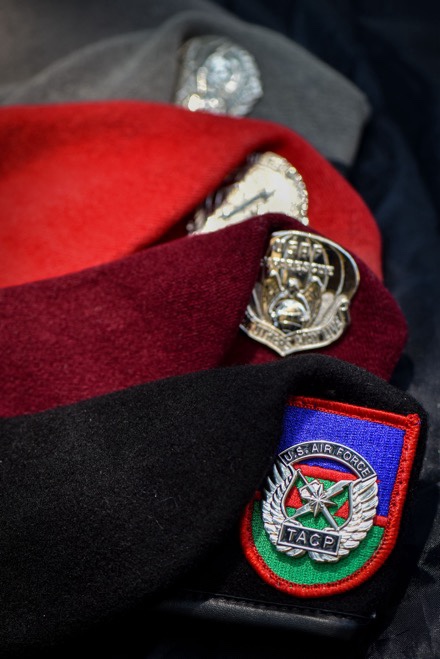
The term “Battlefield Airman” had become somewhat of a misnomer, not fully encapsulating the range of expertise within the unit. The rebranding to “Special Warfare Training Wing” sought to rectify misconceptions, focusing on a collective warrior identity, irrespective of Air Force Specialty Codes (AFSCs). This new identity was also strategic, positioning the Air Force competitively in the quest for robust recruitment and aligning with joint terminology familiar within military echelons. The change acknowledged the unique needs of these Airmen, from recruitment to combat deployment.

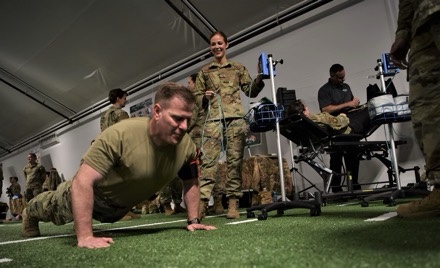
A critical component of this new wing was the Human Performance Support Group (HPSG), tasked with optimizing the ‘human weapon system.’ “Much like the wing, this group is one of a kind and was built upon the lessons of two decades of sustained combat operations,” said Col. Nathan Colunga, Special Warfare Training Wing commander. “The Air Force acknowledged that the harsh nature of ground combat requires a level of care for Special Warfare Airmen not unlike that of high-end weapons systems across our force.” The HPSG provides research, development, testing and evaluation of human performance techniques and tools that can translate into the operational community and more broadly, the rest of the Department of Defense.

Senior Master Sgt. Gregory Navickas, Human Performance Support Group senior enlisted leader, emphasized the power of this integrated approach. The group’s success, according to Navickas, is due to its expert staff, who are “committed to the mission” and excel in their respective fields. Its multidisciplinary team, encompassing medical professionals, physical therapists, coaches, nutritionists, dieticians, and additional combat support staff, who work cohesively across the training enterprise. Their unified vision transcends traditional roles, working collaboratively to preemptively address issues before they escalate. This holistic approach ensures Airmen are comprehensively prepared for combat and receive thorough care afterward, extending into post-military life.

A poignant moment in the young wing’s existence, Joint Base San Antonio-Lackland, Medina Training Annex was officially renamed Chapman Training Annex in March 2020. It is now a tribute to the bravery and sacrifice of Medal of Honor recipient Master Sgt. John A. Chapman, an Air Force combat controller who gave his life fighting to save his teammates’ lives in Afghanistan in 2002. This annex was the beginning of establishing San Antonio, Texas as the “Home of Air Force Special Warfare.” Since making Chapman home, the wing has developed and begun an expansive campus plan that includes the Senior Airman Bradley Smith fitness facility, Forbes Hall renovations, and a monumental new aquatic training center scheduled to open in Spring 2024.

Now five years old, the wing has shown profound progress. “We have attained more consistency and efficiency in the pipeline’” said Michael Delsoldato, Special Warfare Training wing historian. “What we are training our Airmen to do has inherent dangers both in training and in the real world. Although there is always room to improve, the creation of the wing allows full concentration on the holistic production of the Airmen.”  

As warfare evolves in the face of rapid technological advancements, the SWTW stands as a testament to the Air Force’s commitment to adaptability and the continuous pursuit of combat excellence. Its establishment not only signifies the evolution of specialized combat training but also underscores the irreplaceable value of human resilience and adaptability in modern warfare.

“Our mission is the same,” Colunga says. “Prepare these Airmen for the physical and psychological load of close combat. This mission is simply stated, yet as I’ve witnessed, difficult to execute. This load is not theoretical, it is real, well established, and these Airmen make a professional choice to shoulder it. And in doing so they accept the personal risk and sacrifice that goes with it. Therefore, we must prepare them and care for them accordingly – and that is the charge of the Special Warfare Training Wing.”

By Jennifer Gangemi, Special Warfare Training Wing

Forging the Future: How Advanced Manufacturing Is Revolutionizing Marine Corps Logistics

Wednesday, October 18th, 2023

Marine Corps Base Quantico, Va. —

As the United States Marine Corps continues to execute its strategic shift towards the Indo-Pacific, the importance of overcoming the logistical challenges of the modern battlefield has become increasingly evident. At the vanguard of this transformative landscape, Marine Corps Systems Command’s Advanced Manufacturing Systems team, or AMS team, is innovating to overcome the logistical challenges of the modern battlefield.

As stated in the Marine Corps’ Installations and Logistics guidance, to succeed on the modern battlefield, the Corps “will need a logistics enterprise fully integrated with the broader objectives of Force Design, capable of supporting multi-domain and distributed operations in contested environments.”

Keeping these insights in focus, the AMS team is leading the charge to field bleeding-edge solutions to ensure the warfighter has access to mission-critical equipment and replacement parts without having to rely on traditional supply lines or navigate the constraints of iron mountains.

According to Matt Audette, AMS program analyst, having the ability to essentially 3D print key components on the battlefield could stand to revolutionize how the Corps thinks about logistics.

“With its smaller footprint and easy-to-use technology, we can construct essential components right on the battlefield, making us nimbler and more responsive in any combat scenario.”

-Matt Audette, AMS program analyst

“In a nutshell, additive manufacturing is a game-changer for the Marine Corps. It allows us to repair equipment and innovate solutions right on the frontline,” said Audette. “With its smaller footprint and easy-to-use technology, we can construct essential components right on the battlefield, making us nimbler and more responsive in any combat scenario.”

When speaking to the AMS team, there appears to be a consensus that this innovative approach to manufacturing enables rapid delivery of mission-critical components to the front lines, with multiple subject matter experts underscoring the significance of augmenting the traditional supply chain.

“Parts break—that’s the reality of the battlefield,” said Robert Davies, AMS team lead. “You used to have two simple choices: bring the parts or order the parts. Our advanced manufacturing solutions rewrite that playbook. Now, we can actually manufacture essential components right in the combat zone. When something breaks, a call is made: ‘We need a component.’ No more ‘We forgot it’ or ‘It’ll take months to arrive.’ We contact our machinists and within a couple of hours, we’re making and sending parts back up to the frontline.”

While it might be tempting to view advanced manufacturing as a futuristic endeavor still on the horizon, recent successes suggest otherwise and Marines are now empowered to create stand-alone items such as hand tools, jigs, table models, training aids, and even vehicle parts.

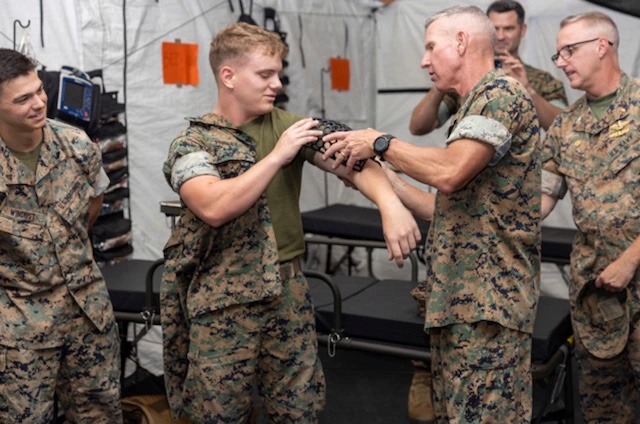
Just this past June, Navy and Marine engineers demonstrated the technology’s real-world potential by successfully 3D-printing a medical cast aboard a Marine Corps Osprey in mid-flight—demonstrating not only an increase in operational survivability but also an enhancement in battlefield lethality by minimizing downtime and accelerating troop readiness.

Similar successes to those achieved with the medical cast are seen in the creation of vehicle parts, with the Joint Light Tactical Vehicle serving as a prime example.

“We’re taking what our guiding documents say about modern day battlefield foraging and creating a real capability to do so with repair parts,” said Audette. “With our 3D printers and CNC mills, we can now craft these parts right where the fight is happening. What’s more, our allies possess the same industrial capabilities as we find here in the US. This also means that whether we’re in Darwin, the Philippines, or Japan, we can harness local expertise and resources to ensure our equipment remains mission-ready without relying on traditional supply chains.”

Dr. Kristin Holzworth, chief scientist on the AMS team, explains that this capability becomes increasingly vital as the Corps continues its strategic shift towards the Indo-Pacific.

“We have to do some very creative work to do additive manufacturing and 3D printing forward.”

-Gen., Eric M. Smith, Commandant of the Marine Corps

“Large-scale advanced manufacturing offers a solution to complement our limited assets. What makes it truly advantageous is its adaptability. Unlike traditional manufacturing, where we conform to one build, with 3D printing, we tailor each print to the specific mission’s requirements,” she noted.

Ultimately, advanced manufacturing technologies help advance Force Design’s transformative goal of creating, “Smaller but better-connected formations that organically possess a complete kill chain appropriate to echelon, and that can prevail in a contested operating environment.”

Citing “major end items” such as aircraft engines and propellers, Gen. Eric M. Smith, Commandant of the Marine Corps, recently told the Senate Armed Services Committee, “We have to do some very creative work to do additive manufacturing and 3D printing forward,” stressing the importance of taking pressure off of the lines that come from the United States through contested logistics areas.

After all, as he noted, “Every pound matters when you’re trying to move things across the expanse of the Pacific.”

As the Marine Corps continues its journey towards modernization under Force Design and the challenges posed by a pivot to the Pacific, feedback from Marines on the ground has been overwhelmingly positive. Notably, younger generations of Marines, who have grown up in a digital age, are embracing advanced manufacturing technologies with remarkable ease.

According to Audette, “The advantage of additive manufacturing is its accessibility and rapid training. Unlike traditional machining, which requires months of training and involves large equipment, additive manufacturing’s smaller machines have a lower learning curve. Many junior Marines already have experience with 3D printers, enabling us to quickly train them in a matter of days, enhancing readiness and problem-solving capabilities.”

This easy access to the capability aligns closely with the objectives of Talent Management, which urges the Corps to cultivate an adaptive, highly skilled force that can “solve problems faster and more creatively.”

“Advanced manufacturing isn’t about replacing traditional production lines; it’s about supplementing them.”

-Robert Davies, AMS team lead

But advanced manufacturing does much more than reduce iron mountains and streamline logistical demands; it also offers significant cost savings to the taxpayer.

“In traditional manufacturing, it takes time to scale production and achieve cost efficiency. With additive manufacturing, we reach optimal cost on day one, making it possible to produce low-volumes of parts efficiently” Audette explained.

It is important to understand, however, that this capability is not meant to replace industry partnerships; rather, it serves as a crucial alternative for the warfighter in the heat of battle who cannot afford to wait for traditional resupply channels to fill a request.

“Advanced manufacturing isn’t about replacing traditional production lines; it’s about supplementing them,” said Davies. “We’re not here to mass-produce hundreds of components in an hour—that’s for dedicated facilities. What we offer is the ability to produce a limited number of key components on-site when they’re urgently needed, all while respecting intellectual property laws. This shortens the supply chain and enables rapid response, whether that means getting Marines into the fight quicker or extracting them more safely.”

 The AMS team is not solely focused on monetary or cost savings; instead, the true triumphs are found in the logistical innovation and the time efficiencies that heighten combat readiness.

Ultimately, advanced manufacturing is a pivot point in military logistics, crystallizing the future of warfare into an immediate reality. By infusing cutting-edge technology into the very sinews of Marine Corps operations, the AMS team is not only revolutionizing logistics but also fundamentally altering how we conceive of readiness and adaptability on the 21st-century battlefield.

As the Marine Corps intensifies its focus on global littorals, particularly within the intricate geopolitics of the Indo-Pacific, advanced manufacturing emerges as a crucial enabler for sustaining combat effectiveness. This technological leap is more than a contingency; it’s a strategic imperative. By melding innovation with real-world application, the Corps isn’t just gearing up for future conflicts—they’re actively shaping the battlespace of tomorrow.

By Johannes Schmidt, MCSC Office of Public Affairs and Communication | Marine Corps Systems Command |

Editor’s note: Learn more about how the AMS team is redefining the Corps’ logistical capabilities on MARCORSYSCOM’s Equipping the Corps podcast, featuring Matt Audette, here: www.dvidshub.net/audio/73020/equipping-corps-s2-e11-advanced-manufacturing-systems-team-with-maj-matthew-audette


General Highlights China’s Military Advantages, Disadvantages

Tuesday, October 17th, 2023

WASHINGTON — There are three things that the Chinese military has that the U.S. military, allies and partners in the region do not have, said Army Gen. Charles A. Flynn, commander of U.S. Army Pacific.

“They have interior lines,” he said. He noted that they’re just 100 miles from Taiwan, and they have anti-access, area-denial means to keep opposing forces at a distance — such as missiles, aircraft and ships, as well as cyber and space capabilities.

“The second thing they have is mass,” he said, meaning they have a very large military force.

“The third thing they have is magazine depth,” he said, which would include large quantities of stand-off munitions.

Flynn spoke Tuesday, Oct. 10, 2023, on a panel about land power in the Indo-Pacific region at the Association of the U.S. Army Annual Meeting & Exposition in Washington.

The goal of U.S. forces along with allies in the region is to take time and space away from China to deny them key terrain “and to keep our physical presence forward with hard power to deter a war from happening,” he said.

“The goal is no war. We already have a war in Europe. We have another war that just started this past week in the Middle East. We do not need another war in Asia. That is the land powers’ contribution to the joint force to prevent that from happening,” Flynn said.

The anti-access, area-denial arsenal that the Chinese military possesses “is primarily designed to defeat our air power and maritime power. And, secondarily, it’s designed to degrade, deny and disrupt our space and cyber capabilities. It’s not, however, designed to find, fix and finish distributed, mobile, fixed, semi-fixed, reloadable, lethal and non-lethal land power,” he said.

“We present a dilemma to them that they did not design into the A2/AD arsenal that they built. And this has proven out in war game after war game after war game,” he said, referring to anti-access, area-denial.

The general went on to speak about the importance of the U.S. and allied military presence in the region to deter Chinese aggression.

While air and sea power are crucial, land power is, as well, he said. Flynn added that militaries in the region are composed of anywhere from 65% to 80% ground forces.

“Land power and the armies in the Indo Pacific are an absolute central part of defending [nations’] national sovereignty and protecting their territorial integrity,” he said.


Flynn highlighted steps the U.S., allies and partners are taking to deter China’s aggression, including increased bilateral and multilateral training exercises, the U.S. Army’s new training center in the region, and nations beefing up their defense spending and working together on improving interoperability.

By David Vergun, DOD News

The Spiritus Systems / S&S Precision SHOP Show Afterparty

Monday, October 16th, 2023

Spiritus Systems & S&S Precision will be hosting a Shop Show after party Tuesday evening. It will be a private event at the Rec Room in Southern Pines, NC and open to all vendors and customers of SHOP Show.


Event Details:

Where is it happening?

The Rec Room in Southern Pines

750 SW Broad St.

Southern Pines, NC 28387

maps.app.goo.gl/SXAGxWFtQWN3HMX58

When is it happening?

1730-2200

How do I get in?

This will be a private venue hosted by Spiritus Systems and S&S Precision. Admission and drink tickets for the event will be issued to all vendors at SHOP Show and are required for admission. Vendors will also receive a flyer at the show with event details. 

Do I have to pay?

Admission for SHOP Show vendors and customers is free. We encourage vendors to invite customers to the event during the show.

Any other cool reasons to go?

Spiritus Systems will be hosting a raffle at the event. Participation is free for all attendees.

OSI Takes Aim at Laser Pointers, Aircraft Safety

Monday, October 16th, 2023

QUANTICO, Va. (AFNS) —  

As the Office of Special Investigations safeguards the Department of the Air Force, they are confronting a surge in incidents involving laser pointers, which pose significant threats to Air Force aircraft, especially at night. 

These seemingly harmless beams, often used for classroom presentations or amusing a house cat, can also disrupt flight operations and create challenges for pilots. 

“We refer to these as lazing incidents. It’s crucial for the public to understand that aiming a laser pointer at an aircraft is not only dangerous but a felony,” said an official from the OSI Center. 

Officials added the importance of real-time reporting and response by all agencies and law enforcement, both stateside and overseas, as a key strategy in addressing these incidents. 

In addition, individuals may incur fines up to $250,000 and face imprisonment for up to five years. 

Additionally, the Federal Aviation Administration has the authority to impose civil penalties, with fines escalating to $11,000 per violation and $30,800 for multiple incidents. 

Officials said the necessity of ensuring smooth information lanes, emphasizing that efficient communication between pilots, command posts, OSI and local law enforcement is crucial for rapid responses to incidents. 

“The challenge is not just in reporting the incident. What makes it actionable is the pilot’s ability to specify, with a degree of certainty, a geo-coordinate from which the laser originated,” officials said. 

The effect of a laser beam on pilots is like a camera flash in a pitch-black car at night, resulting in sudden disorientation and temporary blindness. This risk is worse during critical phases of flight, potentially leading to the loss of aircraft and crew, thereby imperiling lives on the ground. 

“These are not harmless pranks. There’s a risk of causing permanent visual impairment. From the public’s standpoint, misusing lasers can severely impact a person’s ability to see and function,” said an OSI Center official. 

According to the FAA, the United States has experienced a notable surge in reported laser incidents, with 2021 marking a 41% increase in aircraft laser strikes compared to the previous year. Since 2010, a total of 244 injuries have been reported, underscoring the escalating and pervasive threat. The nearly 9,500 laser strikes reported to the FAA in 2022 highlight the severity of this growing concern. 

The OSI Center officials underscored the significance of public awareness and reporting. They encourage individuals who witness such incidents to describe the individual, location and event, and report it to both local law enforcement and OSI, regardless of whether the aircraft is military or civilian. 

If you or anyone you know witnessed an individual directing a laser towards an aircraft, report the incident to laserreports@faa.gov or contact OSI here.

By Thomas Brading, OSI Public Affairs

Digital Transformation: Laying the Foundation

Sunday, October 15th, 2023

WASHINGTON — The Army becoming a data-centric, technology-driven service is one of the Secretary of the Army Christine E. Wormuth’s top objectives.

During her keynote speech to kick off the 2023 Association of the U.S. Army Annual Meeting and Exposition in Washington, D.C., she spoke about the importance this plays in fielding the Army of 2030.

“We must continue to embrace innovation and transformation or risk failing to address future threats,” she said. “In close partnership with industry, the Army has pressed ahead and stayed on track to implement our most ambitious modernization effort in 40 years. With the introduction of each new system, we continue to increase our force’s capability to respond to various threats and serve as a credible deterrent to our adversaries.”

To expedite changing the Army and its business and operating model to leverage data strategically, the service created the Digital Transformation Strategy in 2021.

This outlines three key areas the Army must improve to leverage innovative and transformative technologies: modernization and readiness, optimized digital investments, and a technically savvy, operationally effective digital workforce.

In the last two years, the Army has been laying the foundation of the strategy by implementing the right policy, guidance and resourcing so it can quickly integrate technologies in the future.

“I think that is a big piece of where we are moving right now, and as you look at the next couple years, it really is about maturing that foundation,” Army Chief of Information Leonel Garciga said during an AUSA panel this week. “I don’t care how good an algorithm is. If you don’t trust the platform, or you don’t trust the network, do you trust the output of that algorithm? I think the answer is no.”

One of the key foundational pieces is making sure that the data being collected is properly labeled across the entire Department of Defense. This will allow the systems to communicate and scale quickly.

“We’ve got to ensure across all the functional communities in the Army, we have a common way of tagging, governing and ensuring that the data is accurate,” said Under Secretary of the Army Gabe Camarillo, who serves as the Army’s chief operating and management officer. “Once we do that, then I think we’ll be able to really start humming.”

The Army is taking an enterprise approach to change and transform faster. It is working on a more unified and coherent network. It’s changing how it trains Soldiers to use and interact with emerging technologies. It’s also adopting industry best practices for software development and updating its acquisition policy.

“In order for us to succeed, the challenges aren’t really technical because industry has most of this stuff already figured out,” Camarillo said. “The real question is how quickly can we adopt and change our processes to make the most advantageous use of capabilities that are already in the market.”

All this work is being done to give commanders and Soldiers on the battlefield the timely information they need to make informed decisions.

“So much of what we do involves software, involves data, it’s going to impact the entire range and spectrum of military operations in the future,” Camarillo said. “For us to maintain [our technological] advantage, we absolutely, as an imperative, have to get this right.”

Story by Christopher Hurd, Army News Service

Photos by Henry Villarama