SIG SAUER - Never Settle

Archive for the ‘Guest Post’ Category

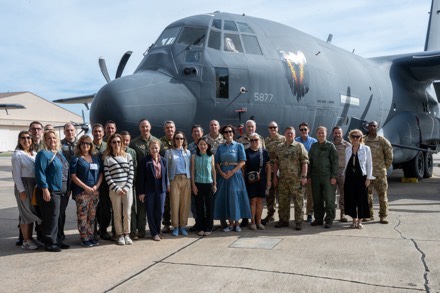
AFSOC Hosts Semi-Annual SAF/FM Executive Session

Sunday, April 23rd, 2023

HURLBURT FIELD, Fla. —  

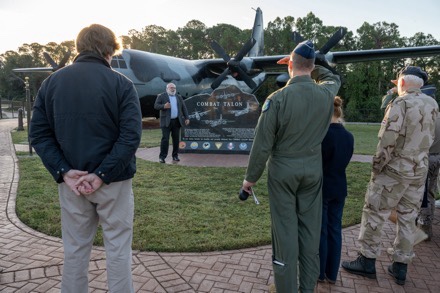
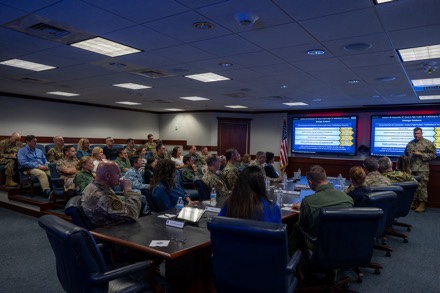
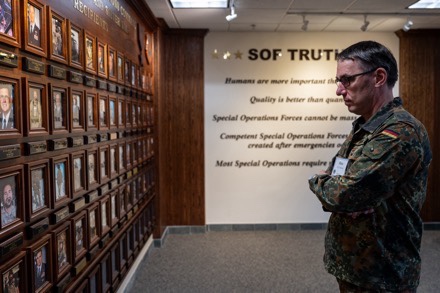
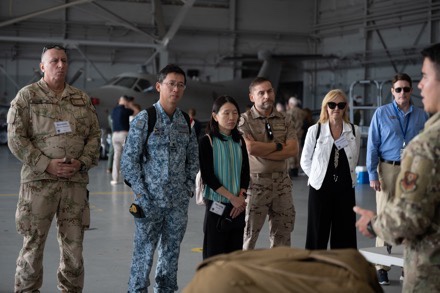
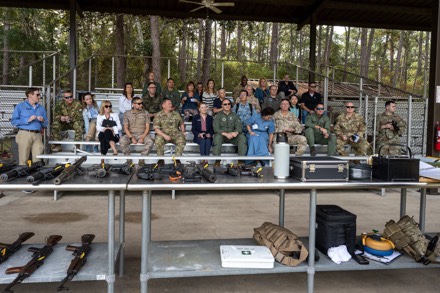
Carlos Rodgers, the Principal Deputy Assistant Secretary for Financial Management and Comptroller, recently met with senior leaders here to discuss the strategic issues and priorities impacting the financial management career field.

The meeting was hosted by Air Force Special Operations Command at the Joint Operations Planning Center for members of the Executive Session.

“The AFSOC team provided exceptional planning support and created an environment that drove the success of this session,” said Rodgers.

During the three-day executive session, FM leaders engaged in detailed discussions on the future design of financial management functions. The participants covered topics such as resource management optimization, budgeting in the garrison and deployed environments, and enhancing customer service.

“We need to achieve these goals while balancing audit requirements, automating processes, improving data analytics capabilities, and maintaining a highly trained, diverse, and inclusive workforce.” said Rodgers.

Events like these can help improve the future of the Air Force by ensuring commanders have the resources they need to properly handle the mission in today’s shifting operational and constrained financial environment.

Additionally, timely and accurate delivery of financial services allows Airmen and Guardians to focus on the mission instead of the cost of how to accomplish the mission.

Furthermore, these types of events can also improve business systems and processes that will lead to accurate financial statements, thereby driving increased confidence with Congress and the American taxpayer.

“The overarching intent of the session is to improve the delivery of financial management services and decision support across the DAF,” said Rodgers. “With a focus on driving progress toward the vision set out in the DAF FM Strategic Plan, the attendees reviewed the progress, re-vectored as necessary, and established a clear way ahead for each line of effort.”

Insights gained from this executive session are integrated into AFSOC and the Air Force’s overall strategy and operations.

Jeff Decocker, AFSOC director of Financial Management and Comptroller, pointed out that AFSOC stands at a strategic inflection point.

He also stated that the challenges that AFSOC face include great power competition, tightening fiscal constraints, and the accelerating pace of technological change. This ensures that AFSOC will overcome those obstacles, it starts with Airmen because they form the core of Air Force competitive advantage.

AFSOC efforts are focused on providing forces ready to generate advantage in competition, enable the joint force in conflict, and respond to crises while remaining engaged in countering violent extremist organizations.

“The Department of the Air Force must invest in operational capabilities that protect our ability to deter conflict and project power against pacing challenges,” said Rodgers. “Financial management is at the core of our ability to accelerate these investments.”

Innovation is an integral part of the Air Commando culture and that extends to the Comptroller community.

Hurlburt Field is leading an initiative to improve financial customer service across the Air Force. The 1st Special Operations Comptroller Squadron created an appointment-based system enabling a virtual face-to-face meeting between the customer and the member using Microsoft Teams. This innovative approach gives time back to the customer enhancing mission accomplishment.

AFSOC FM is also partnering with our U.S. Army and United States Special Operations Command counterparts to implement financial approaches to impose cost, reduce purchasing power, and decrease our adversaries’ operational efficiency. Understanding how our adversaries move, store, and use resources can be a powerful deterrent for our commanders to apply down range.

Many innovations are being brought to fruition by Airmen, Guardians, and senior leaders throughout the Air and Space Force.

“The DAF FM Executive Session is a critical element in maintaining the momentum toward building the future FM organizations and capabilities needed by the Department of the Air Force,” said Rodgers. “This executive session was an essential step in improving financial management across the Air and Space Force.”

By U.S. Air Force Airman 1st Class Alysa Knott

1st Special Operations Wing

445th AW Participates in Total-Force Trauma Care Training?

Saturday, April 22nd, 2023

CINCINNATI (AFNS) —  

Airmen with the 445th Aeromedical Evacuation Squadron integrated with the Center for the Sustainment of Trauma and Readiness Skills program to conduct trauma and critical care training at the Cincinnati Municipal Airport April 6.

The five-person AES team helped train critical care air transport teams who are part of the C-STARS program at the University of Cincinnati Medical Center while also maintaining aeromedical evacuation proficiency.

“Today was about getting CCATT crews to experience flying on the plane and what it’s like to be up in the air with patients,” said Capt. Brianne Koessel, 445th AES flight nurse. “It’s a lot different taking care of patients on the ground versus up in the air where it’s definitely a lot tighter quarters and limited supplies, and you definitely have to manage your resources very effectively for you to be successful in taking care of these patients.”

CCATT Airmen transported six mannequin patients from the UC medical center and provided care for them while working through several situations.

“There are different scenarios that will happen during phases of flight,” said Capt. Josh Boswell, C-STARS CCATT instructor. “There are different stressors that come along with patient care that happens on takeoff, once you get to altitude, on landing. There are different things that will be thrown at them for them to mitigate and respond to in flight, depending on what’s going on with their patient and the injury pattern that this patient has come with.

“They’ll have to be able to work through those problems and figure out what to do to safely keep that patient going through a flight,” Boswell said, who is also a critical care and emergency nurse. “Then we will land. We’ll load them back up into the bus. We’ll transition back here [UC Medical Center], and then they will hand off to a trauma bay as a simulated role for the facility.”

The Airmen exercised trauma care aboard an Air National Guard C-130J Hercules from the 123rd Airlift Wing out of Louisville, Kentucky, while also experiencing a combat takeoff and landing.

“It’s a lot different being in a simulator versus being on the ground,” Koessel said. “We did those tactical maneuvers, so we definitely felt things a little bit differently. Even if you’re in a fuselage where you have it all set up, you feel the stresses of flight because you get dehydrated a lot faster. You feel that vibration. It can tire you out.”

The training wasn’t only beneficial for medical Airmen but for the C-130 Guard crew as well.

“It keeps us up to speed in case we have to do this real world,” said Staff Sgt. Jonathan Geary, 165th Operations Support Squadron aircraft loadmaster.

Speaking about his unit, Geary explained, “We were doing an exercise in Guam recently, and we actually had somebody injured and had to do an evacuation of this injured person. Training like this does get us prepared for stuff in real world.”

This was the first time the 445th Airlift Wing trained alongside the C-STARS program with the hopes of more in the future.

“It’s really cool to have that partnership established,” Koessel explained.

A partnership that extends past a Reserve aeromedical evacuation unit.

“We had active duty. We had Guard. We had Reserve,” Koessel continued. “It was really a total force kind of thing today. It was really neat”

The C-STARS program is a 14-day course at UC that trains between 12 to 15 Air Force medical professionals each course with 14 classes held annually.

Story by Amanda Dick, 445th Airlift Wing Public Affairs
Photos by MSgt Patrick O’Reilly

SIG CROSS STX

Friday, April 21st, 2023

Introducing the New CROSS STX: The Latest Evolution in the CROSS Bolt-Action Rifle Series

The CROSS STX brings a new level of performance and capability to the tactical shooter. Featuring a 20” precision barrel, full length picatinny top rail, thumb-rest safety selector, PRS-stye grip, AR style controls, and AR style ergonomics. The CROSS STX is the result of input from professional end-users looking for extreme performance in a lightweight, long-range platform.

Available Calibers: 308WIN & 6.5 Creedmoor

www.sigsauer.com/cross-stx

Introducing the Reptilia CQG-L

Friday, April 21st, 2023

We have heard a lot of love for the CQG grips over the years, but we have also heard a lot of requests for a full length CQG. We are happy to unveil our newest CQG!

Introducing the next addition to our line of AR pattern grips, the CQG-L™ Grip. The CQG-L has all of the geometry users have loved in the CQG for 4 years now, specifically designed to enhance ergonomics and performance of compact sized short-barreled rifles, AR15 pistols, pistol caliber carbines, and PDWs , with an additional 0.5? of length for those who have larger hands or prefer a longer grip.

The CQG-L supports a wide range of hand sizes and weapon configurations, featuring a more pronounced vertical grip angle, anti-slip front and rear texture, and an enhanced beaver tail design; the CQG-L encourages the shooter’s hand to be positioned higher on the grip, for greater control and improved comfort.

As with all Reptilia products, the CQG-L is 100% designed and manufactured in the USA, and features a full lifetime warranty against manufacturer defects.

Technical Specifications:

• Materials: Impact Modified, Glass-Filled Nylon Polymer

• Available Colors:
Black
Flat Dark Earth
Field Drab / Fed. Std. 30118
Mid-Grey
OD Green

• Compatibility: AR15/M16, AR10/SR25, Q Fix, SIG Cross, and AR-type grip interfaces

• Includes 1/4 – 28 Mounting screw and lock washer

• Designed & Manufactured in the USA

• MSRP: $21.95

FirstSpear Friday Focus – MultiCam Black

Friday, April 21st, 2023

This week, we’re highlighting our popular MultiCam Black Trucker Hat and Streetwalker Bag in MC Black. Our Trucker Hat is perfect for the range or barbecue. This hat features a high-quality custom leather patch and can be worn comfortably under ear pro. The Streetwalker is constructed from a lightweight ripstop and 500D Cordura nylon. This bag features a FirstSpear laser fused 6/12™ accessory panel for attaching pockets on the interior or exterior of the pocket. This bag also features an extra-large ventilated pocket thats perfect for separating gym clothes, muddy boots, or anything else you need to keep separated.

Check out FirstSpear to find American Made kit and accessories, Built For The X.

2nd Battalion, 7th Marines Tests Scout Platoon Capabilities for IBX-30

Friday, April 21st, 2023

TWENTYNINE PALMS, Calif. —

Marines with 2nd Battalion, 7th Marine Regiment, 1st Marine Division, participated in a scout platoon mobile training team event at Marine Corps Air Ground Combat Center Twentynine Palms, California, March 20-31.

The training increased the Marines’ knowledge of scouting and reconnaissance fundamentals to test future infantry battalion scout platoon capabilities.

The Marines and Sailors of 1st Marine Division continue to lead the way in Infantry Battalion Experiment 2030, or IBX-30, initiatives. The training the battalion recently completed was another area the Marine Corps is looking to develop more versatile and lethal units to compete in austere environments. The scout platoon transition is also part of a renewed focus on basic reconnaissance and looks to provide ground combat commanders with early indications and warnings, real-time battlefield analysis, and undetected observation of adversary forces.

 “The training allows our scout platoon to assist the commander’s decision-making ability and also extend the battlefield through employment of small unmanned aerial systems.”

Capt Mike Larson, the company commander for Weapons Company, 2nd Bn., 7th Marines

“A likely vision of warfare centers on the recon/counter-recon contest,” U.S. Marine Gen. David H. Berger, commandant of the Marine Corps, wrote in his 2019 Commandant’s Planning Guidance. “This demands an agile, stealthy, tactical system employing forces that are able to locate, target, and fire precisely first.”

Under the guidance of a mobile training team from Advanced Infantry Training Battalion, School of Infantry – West, the “War Dogs” of 2nd Battalion, 7th Marines went through a challenging program of instruction designed to give the foundational skills expected of a scout platoon member. The course focused on individual reconnaissance skills such as reporting, surveillance, communications, and patrolling. The course also introduced various collective skills on scout employment in the offense and defense.

“The scout platoon mobile training team provided the foundational reconnaissance and surveillance skills that will be required moving forward for the V27 scout platoon,” explained Maj. Neil Simmons, the operations officer for AITB. “As we continue to transition toward this FD2030 concept, these competences will be key factors to our success in future operating environments.”

The 10-day training event included instruction and practical application on all-weather, ground, reconnaissance and surveillance tactics, techniques, and procedures with an emphasis on support to battalion intelligence collections. Throughout the course, the instructor cadre stressed the importance of effectively operating in an all-domain environment to include capabilities not historically found within an infantry battalion.

“2/7’s scout platoon learned how to effectively operate and manage their signature in a multi-domain environment, to include the electromagnetic spectrum, while also integrating enhanced technical capabilities such as ground sensors and special intelligence/electronic warfare teams,” said Capt. Mike Larson, the company commander for Weapons Company, 2nd Bn., 7th Marines. “The training allows our scout platoon to assist the commander’s decision-making ability and also extend the battlefield through employment of small unmanned aerial systems.”

Scout platoon integration is the most recent step in the IBX-30 evaluation process. With an organic scout platoon, along with other integrated units, weapons, and skillsets, future infantry battalions can provide more versatile, more experienced, and more lethal forces to commanders around the world.

Story by Capt Joseph DiPietro, 1st Marine Division

Photo by LCpl Emma Gray

Stories of Service: TACP turning the tide of battle

Wednesday, April 19th, 2023

ARLINGTON, Va. (AFNS) —

Some missions require exceedingly specialized skills and knowledge to be successful in highly contested environments. To win in these environments, highly trained battlefield Airmen embed with Army, Navy and Marine units to provide lethal airpower in the fight.

During a deployment in support of Operation Freedom Sentinel and Resolute Support, one such Air Force Special Warfare Tactical Air Control Party Specialist Tech. Sgt. Cam Kelsch, put years of training and preparation into action by providing guided precision strike airpower as close as 35 meters away to turn the tide of battle against an overwhelming enemy ambush.

In the span of six hours, with no regard for his own safety, he stepped into heavy enemy fire, and directed dozens of 40 mm and 105 mm rounds, two 500-lbs. bombs and saved the life of a wounded teammate … even after being shot himself in the chest plate.

Kelsch, alongside Army Rangers and Afghan special forces, were directed to find a high-value target in enemy-held territory. With clear skies and the moon’s illumination sitting high at 90%, Kelsch’s team made first contact with enemy forces outside of the target compound.

According to Kelsch, the contact resulted in a small firefight that quickly neutralized the enemy.

As the team successfully secured the target compound and interdicted the targeted individual, the force continued to encounter small enemy forces. Intelligence gathered during the operation within the compound led Kelsch and his team to believe there was a second high-value target nearby.

Due to the brightness of the night, Kelsch utilized the oversight of an AC-130-U “Spooky” gunship to develop a low-profile route for the assault force to maneuver to the next target compound: a creek bed with a 1-foot-wide path.

“When we were down in the creek bed, it was pitch black because we were covered in trees, and there were high walls on either side of us,” Kelsch said.

Then … chaos.

“It was like a bomb went off,” Kelsch said. “It was so bright and looked like fireballs going off all around me.”

Kelsch and his team were ambushed by enemy forces using assault rifles, fragmentation grenades and belt-fed machine guns.

“The fire was so overwhelming, I couldn’t stick my head out,” Kelsch said. “Bullets were ricocheting; dirt was being kicked up.”

Another teammate called out the position of the attackers … a mere 40 meters away.

“I realized that I had to get eyes on target, so I had to leave the protection of cover,” Kelsch said.

With no regard for his own safety, Kelsch exposed himself to fire to conduct danger close air strikes from the AC-130 with 40mm rounds to suppress the threat, several only 35 meters away from his position.

“If it weren’t for the true competency of that AC-130 crew, I wouldn’t be here today,” Kelsch said. “The aircrew really brought their A-game that night and made sure we got out of there.”

With a moment without fire in all directions, Kelsch and his ground force commander seized the opportunity to recover their wounded teammate. While dragging him to safety, Kelsch took a direct hit to the magazine on his chest rack the plate in his armor caught the bullet.

Upon recovering his wounded teammate and receiving more enemy fire, Kelsch opted to upgrade to the 105 mm rounds from the gunship, still danger close to his fighting position. The effective munitions proved enough to allow Kelsch and his team to fall back roughly 100 meters, but not before suffering an Afghan casualty.

At that time, the team elected to call for extraction.

To ensure aircraft could land so close to the ambush site, Kelsch directed a coordinated attack from two F-16 Fighting Falcons using precision-guided 500-lbs. bombs, neutralizing all remaining threats.

In the end, Kelsch’s actions played a role in completing a successful mission, suppressing multiple prepared forces and saving the lives of the joint special operations forces members. In 2019, for his gallantry in action that day, Kelsch was awarded the Silver Star, the third-highest award for valor in combat.

Secretary of the Air Force Public Affairs

Army Integrated Air and Missile Defense System Achieves Full Rate Production

Tuesday, April 18th, 2023

HUNTSVILLE, Ala. — The Integrated Fires Mission Command Project Office, under Program Executive Office Missiles and Space, announced that the Army’s Integrated Battle Command System received a successful full rate production Defense Acquisition Board decision on April 10.

This major milestone for the Integrated Battle Command System, or IBCS, follows completion of initial operational test and evaluation, which concluded in October 2022.

“IBCS is the Army’s top air and missile defense modernization effort and the only Army acquisition category 1D program with the Defense Acquisition Executive, Dr. William LaPlante, as the milestone decision authority,” said Col. Chris Hill, project manager of the Integrated Fires Mission Command Project Office in Huntsville. “Navigating a successful [full rate production Defense Acquisition Board decision] is truly a monumental accomplishment for the collective team. Our Soldiers’ and civilians’ dedication, expertise and collaboration with industry and the stakeholder community has paved the way for a more effective and coordinated capability against complex air and missile threats that will serve our Army and joint force for decades to come.”

IBCS executed a diverse range of rigorous testing on its path to achieving FRP. Testing and evaluation proved the system’s capability to integrate a variety of sensors and effectors to work together under an integrated command and control system. IBCS is a key component of the Army’s broader modernization efforts and provides transformational air and missile defense capabilities.


“The Army is proving it can and will succeed with its modernization plans as we continue to build momentum for the future,” said Brig. Gen. Frank Lozano, Program Executive Officer, Missiles and Space. “The sensor and effector integration this program brings to air and missile defense will ensure that our warfighters are best equipped to provide air defense against enemy threats. The success of this program is a testament to the incredible talent and capability of the Soldiers, civilians and industry partners whose work ensures the safety and security of our nation.”


Story by Nathaniel Pierce