BOSS-Xe from Wilcox Industries

Archive for the ‘Guest Post’ Category

Joint Warfighters Train in LVC Environment Prioritizing Agility and Sustained C2 Capabilities

Friday, October 7th, 2022

The 705th Combat Training Squadron, also known as the Distributed Mission Operations Center, executed exercise VIRTUAL FLAG: Battle Management in a synthetic, joint combat environment, ensuring joint operational and tactical warfighter readiness in the U.S. Indo-Pacific Command area of responsibility at Kirtland Air Force Base, New Mexico, and eight distributed locations.
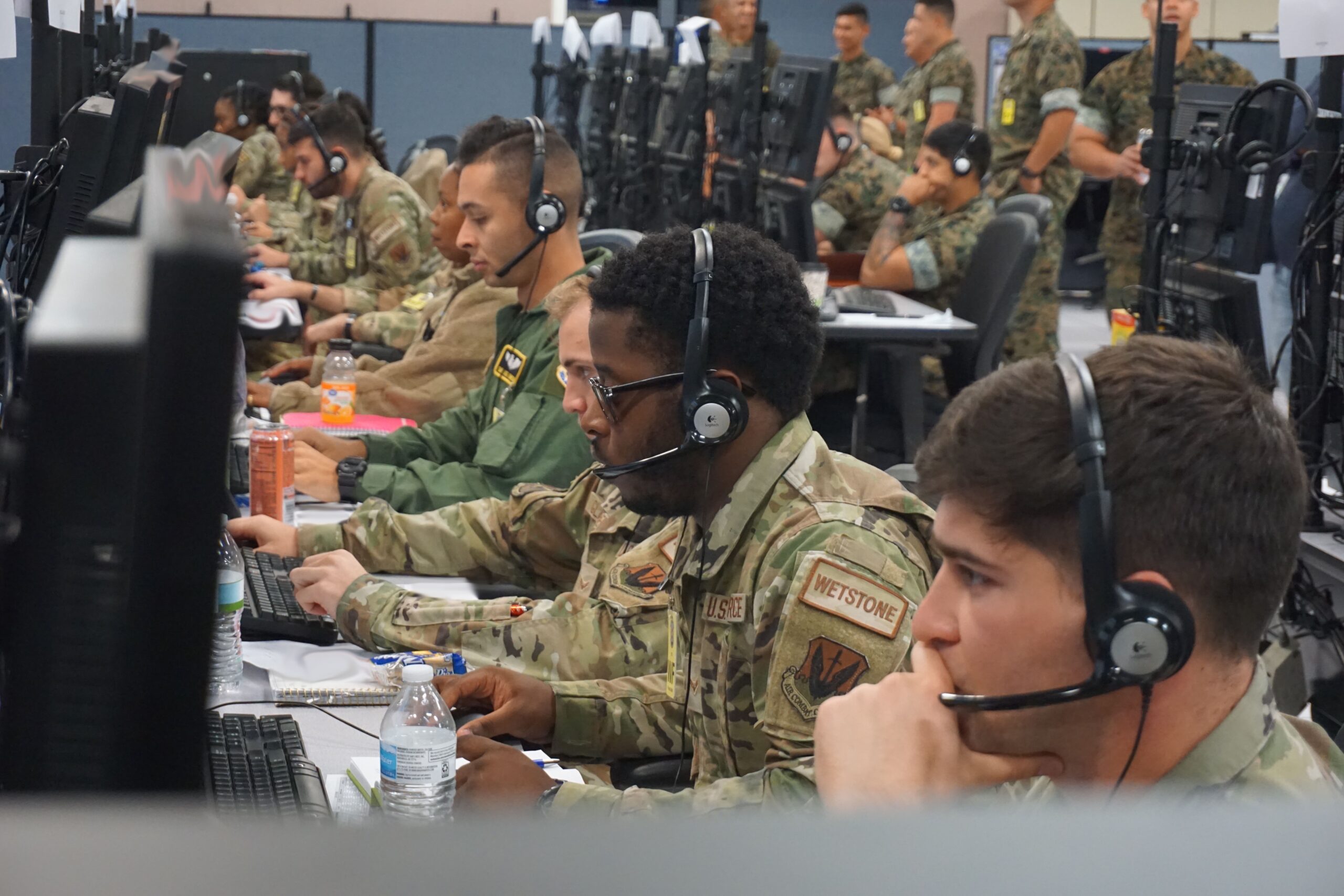
The DMOC used its live, virtual, and constructive, or LVC, environment capabilities to connect simulators and live aircraft in a dynamic battlespace to challenge air, land, and maritime combatants in the USINDOPACOM AOR and incorporating multiple U.S. Air Force, U.S. Space Force, U.S. Navy, U.S. Marine Corps, and U.S. Army platforms.

“For VIRTUAL FLAG: Battle Management, the DMOC replicated a combat environment, prioritizing agility and sustained command and control capabilities integrating joint warfighters to meet our pacing challenge in the USINDOPACOM AOR,” said U.S. Air Force Maj. Christopher Hawzen, 705th CTS VF exercise director, Kirtland AFB, New Mexico.

Joint military participants traveled from across the U.S. to train and integrate with geographically separated units in scenarios that executed mission-type orders with degraded communications and limited air operations center, or AOC, connectivity.

“The virtual environment allows GSUs to train together for contingency operations or combat without leaving homebases while simultaneously integrating multiple high-end training events,” said Scott Graham, 705th CTS exercise director, Kirtland AFB, New Mexico.
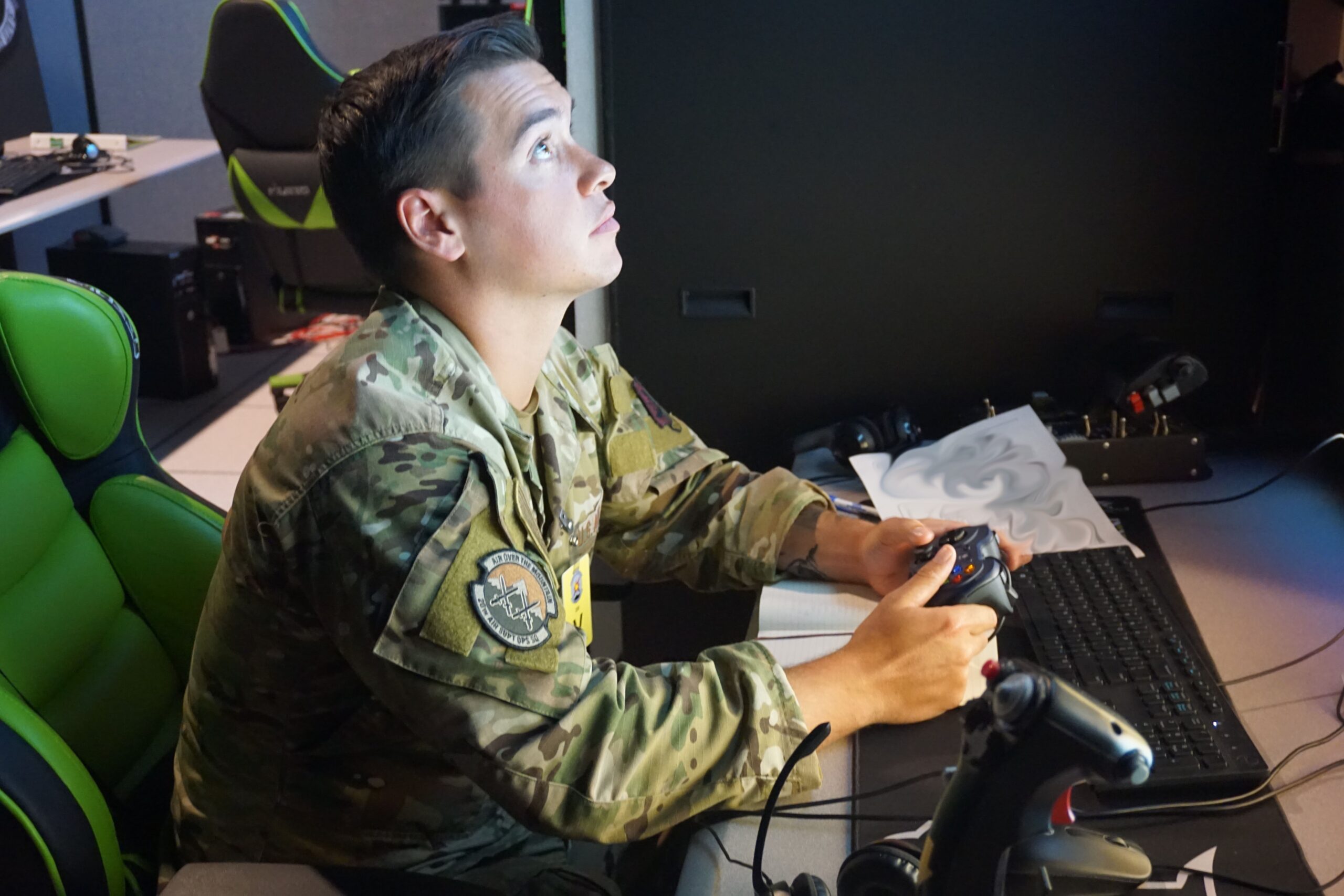
More than 262 operators were trained & 339 readiness training events were accomplished, building experience and familiarizing Airmen, Guardians, Sailors, Marines, and Soldiers in a joint combat environment.

VF: Battle Management’s use of LVC training improved air combat training systems enabling all-domain air dominance in combat against peer- and near-peer adversaries.  LVC training also expanded combat operations training by enabling rapid execution of multiple scenarios over a limited time frame; the rapidly adaptable environment encourages learning and builds experience without the time or cost of an exclusively live exercise.

“VIRTUAL FLAG is a great opportunity for us to work with our joint partners face to face and distributed to gain a better understanding of the capabilities we can bring to bear in a joint fight. This exercise gives us a chance to practice tactics, techniques, and procedures that could be used during our next deployment and future war,” U.S. Navy Commander Phillip Boice, Carrier Strike Group NINE deputy operations officer for commander/Navy VF lead, North Island Naval Air Station, California.

The flag-level exercise involved E-3C Airborne Warning and Control Systems, E-8C Joint Surveillance Target Attack Systems, RC-135V/W Rivet Joints, MQ-9 Reapers, C-17 Globemaster IIIs, E-2 Hawkeyes, P-8 Poseidons, MH-60 and MH-60R Seahawks, AN/GSQ-272 SENTINEL weapon systems and the U.S. Marine Corps Multi-Function Air Operations Center and U.S. Air Force Control and Reporting Center.
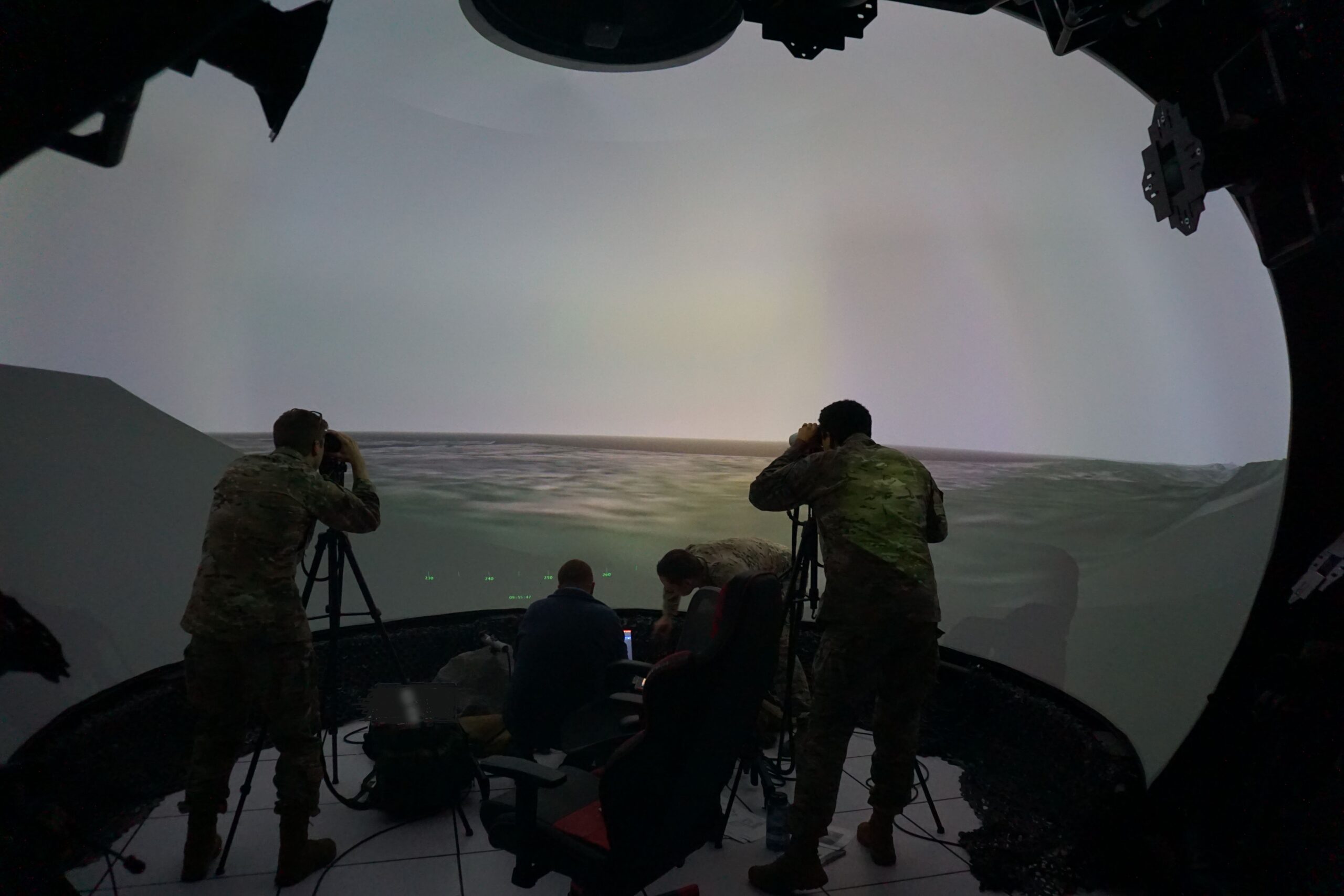
“One thing never changes: the DMOC enables warfighters to sharpen their combat skills in a live, fast-paced, and realistic joint training environment,” said Hawzen.

VF also integrated kinetics with non-kinetics effects to practice wartime tactics in a degraded environment.  One of the major non-kinetic players in VF 22-4 was the cyberspace element which integrated cyberspace to support the defense of an AOC and a CRC.

The cyberspace defensive force was composed of members from the 834th Cyberspace Operations Squadron, 92d Cyberspace Operations Squadron, 552d Air Control Networks Squadron mission defense team, and the U.S. Marine Corps’ 9th Communication Battalion.  The teams defended against Advanced Persistent Threats, or APTs, whose objectives were to gather critical tasking orders and data from the AOC and to deny, delay, disrupt, destroy, and manipulate, or D4M, the AOC during operations.  The defensive units hunted and cleared the APTs on the network so that the cyber attackers could not achieve their objectives.

“Integrating cyberspace into flying exercises like this supports the education of the flying community as to what capabilities and threats are present within the cyberspace domain.  It also helps our cyberspace forces expand their knowledge of the joint fight and how it integrates into the other domains of warfare, preparing both sides for the joint concept of all-domain warfare,” said U.S. Air Force Capt. Travis Britton, 834th Cyberspace Operations Squadron Weapons and Tactics chief, Joint Base San Antonio, Texas.

The 805th Combat Training Squadron’s Shadow Operations Center-Nellis with direction from the 318th Cyber Operations Group, Detachment 2, planned, organized, and executed red team actions during VF.  The red team included Air Force and Marine Corps personnel assigned to execute actions according to desired learning objectives from the 552d ACNS’s E-3 Sentry AWACS mission defense team and 834th COS cyber protection team.

“The ShOC-N stands as the vanguard beacon of efforts to engage current and future pacing challenges. In this regard, performing red team actions within the VIRTUAL FLAG: Battle Management construct helped ShOC personnel develop penetration testing skills that are vastly needed during experimentation within the confines of our Air Force Battle Lab,” said U.S. Air Force Lt. Col. Shawn Finney, 805th CTS/ShOC-N operations officer, Nellis AFB, Nevada.

Guardians from the 310th Space Wing, an Air Force Reserve unit, honed their skills while providing warning of inbound enemy missiles, analyzing degradation of global positioning signals caused by jammers, as well as sharing and analysis of electronic intelligence and overhead persistent infrared data from satellites, and providing valuable information that helps the warfighter understand the threats they face on the battlefield.

“VIRTUAL FLAG exercises provide a superb opportunity to train space operators in a joint environment,” said Walt Marvin, 392d Combat Training Squadron exercise planner, Schriever Space Force Base, Colorado.  “Our space element learned their role very quickly and ensured that support from the space domain played an integral part in mission accomplishment on the tactical battlefield.”

During VF, air battle managers and tactical air control party, or TACP, Airmen traveled to Kirtland from across Air Combat Command, Pacific Air Forces, and U.S. Air Forces in Europe to participate in the experiment executed the third Tactical Operations Center – Light experiment iteration.  The experiment was designed to continue development of future C2, concepts intended to expedite kill chains and improve distributed battle management.

“The 705th CTS team has been extremely supportive in our efforts to leverage their capabilities and expertise to experiment with these concepts.  Integrating within VIRTUAL FLAG: Battle Management provided exposure to unique tactical problem sets and an amplified intensity from our previous experiment iterations, which enabled the team to make strides in our collaborative experimentation,” said U.S. Air Force Maj. Dustin Nedolast, 505th Command and Control Wing, Detachment 1 experiment director, Fort Leavenworth, Kansas.

VF: Battle Management executed 8-hour vulnerability windows allowing C2 over time and enabling participants to work through force and battle management challenges across all five domains from start to finish. 

“Although we have been conducting VIRTUAL FLAG exercises for more than 21 years, the mission and execution have changed dramatically,” said U.S. Air Force Lt. Col. Michael Butler, 705th CTS commander, Kirtland AFB, New Mexico.  “We’re constantly evolving to meet the needs of joint and coalition warfighters, adding elements, changing threats – anything that a pacing challenge may present, we want to address at the DMOC.”

The exercise also included the use of condition-based authorities, which enabled tactical C2 units to train mission commanders, contested logistics problem sets, and a dedicated mission planning cell that operated concurrently with execution.

“Technology, equipment, and participants change. The DMOC’s use of LVC training environment prepares joint and coalition warfighters for any pacing challenge,” said U.S. Air Force Col. Aaron Gibney, 505th Combat Training Group commander, Nellis Air Force Base, Nevada.

Deb Henley

505th Command and Control Wing

Public Affairs
North Idaho Law Enforcement Industry Day This Sunday

Thursday, October 6th, 2022

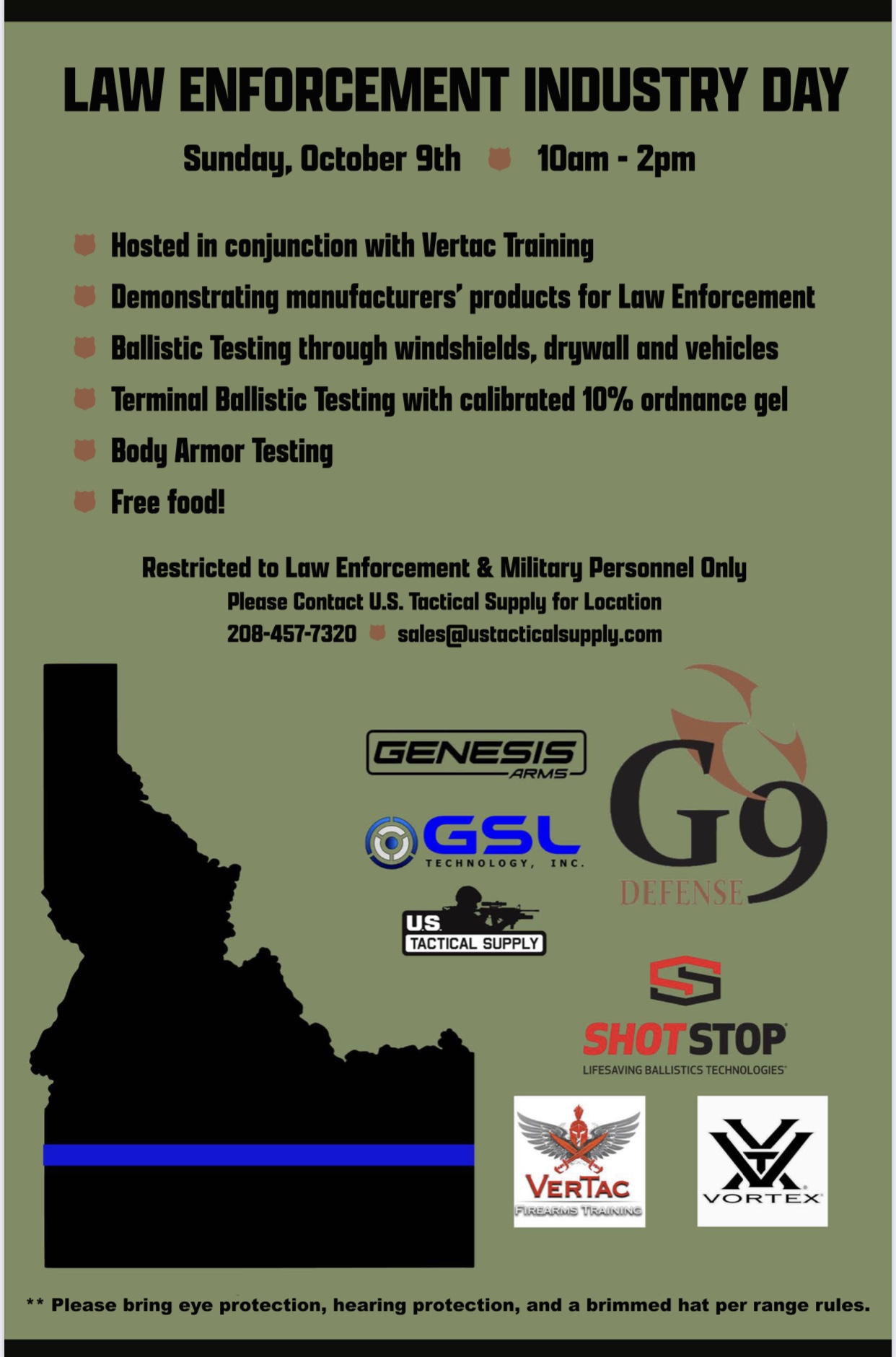
Vertac Training / G9 Defense North Idaho Law Enforcement Industry Day 10/09/2022

Restricted to Law Enforcement and Military Personnel only

• Barrier Blind G9 Defense Pistol and Rifle ammunition testing on Windshields, Drywall & Vehicles

• Terminal Ballistic Gel testing in conjunction with the various barriers

• Body Armor Demos, Precision Rifle & Surveillance Tripod Kits

Genesis Arms GEN-12 Live Fire Demo

• FREE FOOD!

For location and time please contact U.S. Tactical Supply @ 208-457-7320 or email sales@ustacticalsupply.com  

Air Force Releases the ‘Purple Book’

Thursday, October 6th, 2022

ARLINGTON, Va. (AFNS) —  

The Air Force added another guide, titled The Joint Team, or the “Purple Book,” to its arsenal of foundational documents dedicated to developing Total Force Airmen.

The “Purple Book” educates Airmen on how airpower fits into the Joint Force construct and identifies the joint doctrine, values, capabilities, and warfighting concepts that capture how the Air Force effectively partners with other services to protect America’s interests across the globe.

“Today, we find ourselves in an era of strategic competition against adversaries who seek to outpace and eventually overtake us,” said Chief Master Sgt. of the Air Force JoAnne S. Bass. “Every Airman must know what is at stake and understand the critical importance of synchronizing our capabilities with our joint partners to amplify our collective strength and power.”

The new book provides a baseline for understanding the value each service contributes to the Joint Force and outlines the essential framework to work with other branches to compete, deter, and win the high-end fight.

The new “Purple Book” explains all service members are part of a Profession of Arms. This holds them to a strong set of Joint Core Values and supports a foundational strategy to defeat any threat, anytime and anywhere.

Additionally, it clarifies the fundamental questions all Airmen must answer: “How do I fit into the Joint Force;” and “How can I ensure I hone and deliver my unique capabilities to assure its success?” This guide helps Airmen internalize what it means to fight jointly, understand the missions of the joint force, appreciate the joint organizations that are leading the fight, comprehend how to integrate into a joint warfighting environment, and identify how the Air Force fits into the joint construct.

“Airmen of tomorrow will be required to collaborate and communicate with our joint teammates to win in future complex and contested environments,” said Air Force Chief of Staff Gen. CQ Brown, Jr. “We owe our Airmen a solid foundation on jointness much earlier in their careers.”

Developing and updating these guides was part of the 28 Enlisted Force Development Action Plan objectives focused on developing the future enlisted force. The new “Purple Book” can be found here. The revised “Brown Book” can be found here. The revised “Blue Book” can be found here.

Secretary of the Air Force Public Affairs

Join TenCate Protective Fabrics for Happy Hour at AUSA 2022

Wednesday, October 5th, 2022

Heading to AUSA? Join TenCate Protective Fabrics for Happy Hour at their booth (#2611) beginning at 3pm on Monday, October 10th for an afternoon of good drinks and great friends. During that time, TenCate Protective Fabrics will be giving out Free Anchor Lite™ T-Shirts (Booth #2611 *while supplies last).

Checkout TenCate Protective Fabrics at booth #2611 to see their full lineup of innovative fabrics designed to keep you comfortable and protected in the field and on the job.

OTTO Communications Showcasing New Products at AUSA 2022

Tuesday, October 4th, 2022

Join OTTO Communications at the Association of the United States Army 2022 Annual Meeting (AUSA), October 10-12, 2022. Come by booth #7741 where OTTO is showcasing several new products in communications, navigation, and timing, including the all-new Lynq PRO™ and more. You will See and Hear the Difference.

To schedule a meeting with OTTO at AUSA, please email GOVTeam@ottoexcellence.com, or visit otto-comm.com for more information.

Agilite Buddystrap-The Extraordinary Rescue Device

Tuesday, October 4th, 2022

This is something you don’t see every day: 

Agilite has released the Buddystrap™, a life saving medevac device made for small teams who work deep into enemy territory. It requires just one person to evacuate a downed operator and unlike the Fireman’s Carry, the carrier can maintain both hands on their rifle. The latest incarnation of a previous Agilite device, the Buddystrap includes a built-in bucket seat and its own self-containing hanger pouch and it weights just 0.7lbs. It is available in a Berry Compliant Version for US Forces.

See more about the Buddystrap™ at www.AgiliteGear.com

Platatac – ASAD B&S XL

Monday, October 3rd, 2022

The Platatac ASAD B&S XL (All Singing All Dancing Bits & Stuff) Pouch is part of the versatile ASAD Velcro-In accessories range and provides you with a configurable plate carrier/chest rig mounted pouch.

It can be mounted either under the front flap and cummerbund, or inserted into the plate pocket on most plate carriers.

The front of the pouch features a zippered pocket for storage of smaller or flat items, the pleats allow for expansion for bulky items. Dual zippers allow the pouch to fold down to clear your platform allowing easier access Velcro loop is sewn internally front and back to allow for the attachment of the Velcro hook backed elastic loop organiser panels (sold separately).


Available MultiCam®, MultiCam® Tropic, MultiCam® Black, M81 Woodland, Ranger Green & Black.

platatac.com/platatac-asad-b-s-xl

NextGen 2.0 Helmets on the Way to Defenders Across Air Force


Monday, October 3rd, 2022

JOINT BASE SAN ANTONIO-LACKLAND, Texas – Defenders at installations across the Department of the Air Force are set to don the Security Forces NextGen Helmet 2.0 later this year.

Following a recent contract award by the Air Force Security Forces Center (AFSFC), Helmet 2.0 includes the ability to mount a wider variety of accessories, features bolt-on accessory rails and a night vision goggle mount that’s easy to adjust or replace, and a chinstrap extender for gas masks.

The 2.0 effort is part of AFSFC’s “replacement through attrition program,” and builds on the functionality of the SF NextGen 1.0 helmet released in 2020, said Master Sgt. John Sutherland, individual protective equipment (IPE) program manager at the center.

“In modern society, we’re all familiar with the urge to update our phones to the latest and greatest model, but this hasn’t translated to some of the most important things in our profession, like ballistic helmets,” the master sergeant said.

“The rate of technological advancements today is astounding, and produces emerging threats and requirements rapidly,” Sutherland said. “As the world’s preeminent air power, we make great strides to update and upgrade airframes and other operational technologies, so it only makes sense to modernize the equipment used by those that defend them.”

Part of that modernization includes listening to and implementing, where possible, feedback from Defenders across the enterprise.

“Feedback from the field is critical and is actually the reason that some of the characteristics for the 2.0 helmet were developed.,” Sutherland said. “No amount of testing or technical evaluations will cover everything because at the end of the day, only Defenders know what Defenders need.”

“The field has multiple avenues of approach from surveys, direct visits to installations and open lines of communication like quarterly teleconferences and emails,” said Master Sgt. Raymond Santiago, AFSFC’s security forces individual equipment manager.

The AFSFC’s S-4 Individual Equipment section is a customer service entity and relies on the enterprise to provide feedback and submit issues, Santiago added.

“We can’t grow, if we don’t know,” he said.

“The best way to get feedback from the field is by putting our equipment through real-life practical scenarios that a Defender might face in every part of their career from year one all the way through retirement,” said Defender Instructor Supervisor Tech. Sgt. Travis Hillard with the 343rd Training Squadron’s Security Forces Apprentice course in San Antonio.

Hillard, other instructors and students were instrumental in testing functionality before AFSFC gave the modified helmet the thumbs up.

The Defenders put the helmets through “rigorous testing” conducted during field training which included mounted and dismounted operations, low crawl/high crawl and a variety of other air base defense training objectives, Sutherland said.

“These helmets were soaked in sweat and caked in sand, and after hours of use each tester was fitted with a gas mask and jacket to ensure compatibility with the helmet,” he added.

Participants also completed an extensive survey on the equipment and its functionality.

The NextGen helmet program is just one part of the greater AFSFC’s individual protective equipment effort to standardize and modernize Defender equipment across the Air and Space Forces.

“Helmet 2.0 is only one aspect of the initiative,” Sutherland said. “The Modular Scalable Vest and Female Body Armor … Model Defender which will provide equipment such as pouches, holsters, duty belts and more for each and every member. These efforts ensure that Defenders can expect technologically relevant and high-quality gear no matter where they are performing their mission.”

“The need to innovate gear is important for the protection of our Airmen and Guardians,” said Santiago.

Hilliard echoed those sentiments.

“It’s incredibly important to constantly update our equipment to meet both modern threats, and to best utilize the constantly upgrading technology available to security forces protecting installations around the globe,” he said.

Consistently rolling out new and updated equipment across the enterprise “helps create the elite weapon systems Defenders need to be in the modern operating environment.”

“Threats are increasing and evolving so it’s critical our team provides the enterprise with the latest technology to ensure mission capabilities aren’t hindered and our greatest of asset are protected,” Santiago said. “At AFSFC, we continue to collect feedback and upgrade Defender gear to defeat or deter any enemies that threaten our installations.”

“Helmet 2.0 is a big win for security forces but it only plays a part in bigger things to come for our Defenders,” he said. “We’ll continue these efforts with an agile approach while keeping an eye on emerging requirements and new technologies.”

“In five years’ time, we may be fielding IPE solutions that we’ve only seen in science fiction a few years ago.”

By Debbie Aragon, AFIMSC Public Affairs