Phantom Lights

Archive for the ‘Guest Post’ Category

Access and Opportunity: How the Naval Studies Certificate Starts the Journey of Lifelong Learning

Wednesday, March 1st, 2023

OAK HARBOR, Wash. – AWO2 Brooke Graham was one of the first 34 students to complete the Naval Studies Certificate, a naval-relevant education program offered as a part of every associate degree program with USNCC.

“Petty Officer Graham, you have a visitor,” says one of the chief petty officers attached to the command. Naval Aircrewman (Operator) 2nd Class Brooke Graham, of Oakley, California, looks at the senior enlisted leader with furrowed brows. Sgt. Maj. Michael Hensley introduces himself and congratulates her on her recent completion of the Naval Studies Certificate.

“I’m used to being around Navy people all the time,” said Graham about her experience with USNCC. She said her interactions with active duty Sailors, Marines, and Coast Guardsmen in the five courses that comprise the Naval Studies Certificate “makes me take a step back and see how we fit in. It gave me more awareness of our place in the world and how our mission impacts it.”

Graham was one of the first 34 students to complete the Naval Studies Certificate, a naval-relevant education program offered as a part of every associate degree program with USNCC. These five courses were taught entirely online and asynchronously, giving service members access and opportunity to balance their work life with the pursuit of naval-relevant education.

“We can’t spend our way to victory,” said USNCC’s Sgt. Maj. Michael Hensley. “We need to educate our Sailors, Marines, and Coast Guardsmen if we want to invest in our success.”

 “The Naval Studies Certificate is designed with fleet input to be both a part of the student’s associate degree and build skills the operating force needs,” said Russ Evans, associate dean of Naval Studies at USNCC. “Whether it is expeditionary advanced operating bases or distributed lethality, we will ask more junior individuals to make bigger decisions with less support more quickly. The Naval Studies Certificate is designed to prepare students for those challenges.”

The Naval Studies Certificate’s 15-semester-credit program is a stackable certificate within each of the associate degree programs offered by USNCC. These stackable certificates mean USNCC students will be able to build on the education they earn to develop a journey of lifelong learning.

“We want our Sailors, Marines, and Coast Guardsmen to continually progress in learning. Through continued lifelong learning, our men and women in uniform are key to enhancing operational readiness and advancing the warfighting advantage over our competitors and adversaries,” said President Randi R. Cosentino, Ed.D., of USNCC. “This Naval Studies Certificate program is a key component to ensuring the Navy, Marine Corps, and Coast Guard better develop the intellectual talent we have at all paygrades in the services.”

The Naval Studies Certificate program opened up for a pilot command-referral phase February 1, 2023. These Sailors, Marines, and Coast Guardsmen will be directly referred by their commands as prime candidates to earn an independent Naval Studies Certificate.

“For the USNCC to be successful, we have to provide naval-relevant classes and content,” said Dan Goff, Ph.D., professor of Naval Studies and a retired Marine. “The only way we can really ensure that is feedback from the students, but also the commands where those students come from.”

After her studies, Graham was meritoriously promoted to petty officer 2nd class, a process that relies on the Sailor maintaining sustained superior performance as identified by command leadership. While the promotion was not the direct result of her education, Graham said the Naval Studies Certificate helped her take a step back and see how she fit into the bigger picture of the mission.

To learn more about the Naval Studies Certificate program, or to find out more about the command nomination program, go to www.usncc.edu

The United States Naval Community College is the official community college for the Navy, Marine Corps, and Coast Guard. To get more information about the USNCC, go to www.usncc.edu. Click on the Apply Now link to become a part of the USNCC Pilot II program.

From Chief Mass Communication Specialist Xander Gamble

Army Software Factory, USAREUR-AF Partner on Tech Modernization

Tuesday, February 28th, 2023

GRAFENWÖHR, Germany — In today’s rapidly evolving digital landscape, many organizations strive to stay ahead of the curve in terms of technology and innovation. The Department of the Army is no exception, and its efforts to modernize and streamline its operations have recently taken a leap forward due to the agile software development processes of the Army Software Factory, or ASF.

The ASF is a significant step forward in the modernization of military operations. By streamlining an agile software development cycle, minimizing the need for external acquisition and promoting collaboration, the ASF is positioned to deliver innovative solutions to the military.

“The idea here is that we’re trying to meet Soldiers where they are at,” said 1st Lt. Aanand Shah, a software engineer for ASF. “What that means here in Europe is we are able to develop solutions that can work across multiple networks with Allies, partner countries and nations as well as internally within theater.”

During a recent interoperability exercise at 7th Army Training Command the Soldier-led ASF, in collaboration with U.S. Army Europe and Africa Mission Command Support Branch, developed new solutions directly addressing issues that in the past created challenges for U.S. and NATO allied system interoperability.

“My developer initially wrote an application that would bridge data between U.S. and NATO systems from the Army Tactical Assault Kit,” said Martin Christian Dudel, a civilian senior software engineer with USAREUR-AF. “The Army Software Factory came to Europe and helped us modernize the code and take it from a standalone application that must run on a server, into a container that can operate in a cloud native environment on the tactical edge bridging U.S. and NATO systems. This is a capability that we didn’t have before.”

The solution opens an entirely new range of possibilities as now essentially any application can be developed, deployed and seamlessly interact with the data of a partner nation’s application operating at the tactical edge.

“We’ve developed a path to production where apps go from origin to security scanning to deployment into Kubernetes clusters that will run on a TSI stack here on the edge of the battlefield,” said Sgt. 1st Class Joshua Millett, a platform engineer with ASF.

At the heart of ASF is a commitment to continuous improvement and a focus on collaboration. Teams within the ASF are encouraged to work together and closely with their end users to cultivate user stories, share ideas, determine best practices and learn from each other. This helps foster a culture of innovation and ensures that everyone is working toward a common goal of delivering high-quality software solutions to meet the needs of the military.

“It’s incredibly rewarding for our Soldiers to assist USAREUR-AF in accomplishing its challenging mission while we help Army Futures Command design the Army of 2040,” said Col. Vito Errico, director of ASF. “The Army has exceptionally talented Soldiers who can help lead us through digital transformation at the lowest levels.”

Upon meeting with representatives from the 7th Army Training Command’s public affairs team, Col. Michael Kaloostian, a senior leader and decision maker with USAREUR-AF’s G-6 division, confirmed the ongoing collaboration and solutions from ASF’s efforts.

“Our relationship with the Army Software Factory is essential to the command’s digital transformation,” said Col. Kaloostian. “The European theater’s digital landscape is complicated, and it’s our responsibility to simplify it by innovating software-based solutions that are shareable with our mission partners at the speed of conflict. Incorporating a DevSecOps model into our cloud environment assures that we can rapidly meet the command’s operational priorities and truly become data-centric.”

One of 7th Army Training Command’s core missions is to lead the Army in developing Allied and partner nation interoperability by providing the Army with an active learning, near-peer environment to press modernization initiatives. Working with ASF to furnish a realistic operational training environment for U.S., NATO, Allied and partner nations to introduce solutions to the military’s modern challenges is one of the ways 7th ATC works toward accomplishing that mission.

Story by CPT Darryl Padgett

Photos by SSG Ashley Low

The Baldwin Files – Hacking Tactical Gear Part 1

Monday, February 27th, 2023

“Amateurs train until they get it right. Professionals train until they can’t get it wrong.” Unknown

By now, anyone who has been reading my articles knows that I have an absurd amount of tactical kit. Bits and pieces, dating back to the 1950s, that accumulated over the years; as well as newer stuff I just bought or otherwise acquired as recently as last week. Enough to equip a Rifle Platoon more or less. My wife says I have way too much. She is right, but I have the tactical gear monkey firmly on my back. I have told her that when I die, she can build my funeral pyre out of all that excess equipment and give me a Viking send-off. The kind of bonfire that could be seen from low Earth orbit. She likes that idea. I am no doubt a connoisseur of tactical gear, but I do not consider myself a collector. I admit that I have more than I need, but I have not amassed any of this stuff just to admire it. Rather, I always have the intent to put it to good use.

When I was still in the Army, I experimented with anything and everything I picked up to see if it suited my purposes or was better than what I was already using. Since I retired, I still put everything I get my hands on through its paces for the same reason. For my personal satisfaction if nothing else. I have yet to find a piece of gear that I did not feel the need to modify (hack) in some fashion. Even though I am more extreme than most, I know I am not alone. Of course, as I have mentioned before, many in the ranks tend to be more pragmatic if not pessimistic. They just accept the fact that issued gear is always going to be sub-optimum for their mission or personal comfort. One size fits all and made by the lowest bidder. Perhaps their plate carrier or harness causes hot spots and in the worst cases leaves welts. Or critical gear seemingly cannot be positioned exactly where they need it to be for quick and easy access under stress. Eventually, by necessity, they apply some 550 cord, tape, and/or ad hoc padding here and there to at least make everything less painful and drive on. A few, out of frustration, will start cutting off offending pieces of webbing haphazardly and worry about turning in their gear later.

With a little tutoring, I think I can help some of those folks do a little better than that. Therefore, I am going to use the opportunity to explain some general gear principles and hacks that are undoubtedly, targeted primarily toward newer troopers. However, hopefully, old-timers will find something useful as well. Over the years, I found that many junior NCOs and Officers were poorly trained on how to configure and manipulate tactical gear in order to maximize their own efficiencies. And if they do not know how to make their stuff more effective, then they cannot teach their soldiers how to do it better either. I am going to provide a few examples of how I have worked through some problems I encountered over the years. I will also try to explain the supporting field craft lessons behind WHY I did what I did – and maybe throw in a little history as well. I am going to keep this simple, but I am not trying to insult anyone’s intelligence or level of experience. We all started from zero knowledge at one point or another.

I will begin with hacks I first started using many years ago with the older stuff. Because it was cheaper and more minimalistic than modern gear, the ALICE system was made for hacking. For example, the finicky metal clips on the suspenders were taken off by the tens of thousands and replaced with 550 cord. Additional small pouches like those for compasses and strobes could be – and were – sewn on the canteen covers. Likewise, as I have written about at length, the ALICE packs were extensively hacked and individualized by countless soldiers of that era. I know that some ALICE gear is still issued or in circulation; perhaps in ROTC detachments or maybe even some Reserve Component units out there. However, the vast majority still serving are now using some MOLLE variants. Still, since I am talking in generalities, the common hacking techniques I will describe can apply to both old and new systems.

Since the obvious shortcomings of ALICE were well known, during the 80s and 90s Army leaders typically accepted individual modifications to the gear as well as non-standard after-market substitutions – like chest rigs or holsters – in the field. Strangely, as the military transitioned to various MOLLE systems touted for their modular design features in the early 2000s, there had been something of a uniformity backlash. The attitude seemed to be that promiscuous “modularity” was a gateway drug to unchecked individual expression and that was just one slippery step removed from a catastrophic collapse of unit discipline. Therefore, as soon as a unit had been issued MOLLE, leaders felt justified – nay, compelled – to dictate and enforce strict SOPs on the configuration of tactical gear. No modifications or variations authorized! Indeed, from some of the feedback I get, it seems most soldiers today at least feel like they have a lot less latitude to modify their gear than we did back in the day with ALICE.

Here are some general “rules” to consider when hacking gear. Addition is always less problematic than subtraction. Fractions of inches matter. A relatively small alteration may be all that is needed. Before and after adjustments, try out the gear with winter gloves on. If it does not work with gloves, readjust or redo until it does. Test drive modifications in increments. Avoid major – irreversible – surgery if possible. Do not over tailor gear. Leave room to make adjustments to accommodate different missions, or inclement/cold weather clothing layers, etc. All changes should be competently executed. Half-ass frayed nylon butchery is counterproductive. Always use a “hot knife” to make and seal cuts instead of scissors for example. Heat and fire are the gear hacker’s friend – learn how to use them the right way. Always use judiciously to seal any frays, cuts, or holes, made in nylon. Make it a habit to seal the ends of 550 and bungee cord and eliminate loose threads, etc.

None of this is rocket science, but it does take practice to do it right. Experiment with unserviceable gear that you can afford to risk – not the good stuff. Of course, get professional sewing done when necessary. Have custom accessories made – or customize existing accessories like pouches at local sew shops or by making modifications yourself if you have sewing skills and a machine. In some cases, items need to simply be moved up or down to be more readily accessible. Holsters or field knife sheaths are common examples. Substitution of more suitable after-market items for issue equivalents may also be an easy option – albeit more expensive. It is true that most gear manufacturers have some proprietary intellectual property associated with their kit. However, because attachment systems compatible with PALS are commonly required with current military or other large government contracts both in the US and worldwide, it is a de facto standard that most manufacturers voluntarily conform to. Therefore, there is more commonality and interchangeability between brands than one might first imagine.

A professional soldier, like an expert in any other field, should strive for excellence. Continually seeking to master his or her craft. That, in turn, requires constantly adjusting and refining individual personal equipment and getting to know that gear – intimately. In most cases – especially at the entry level – there is absolutely no need to spend lots of cash on modifications or expensive commercial kit substitutes. But, over time, a reasonable investment of effort and money is warranted to get the best results. Whether a new piece of gear is bought or issued, take time to read the instructions first. Inspect the gear in detail. Assemble and disassemble it – after all, that is how we get familiar with new weapons.

Here is a good place to introduce some cheap and simple “tools of the trade” for tactical gear maintenance and modification (above, top tight). From left to right, the first four items are my “hot knife” kit. A Nomex glove to protect my hand, an old butter knife I have used for this purpose for over 30 years, a propane torch to provide the heat required, and a round scrap block of wood that acts as a cutting/work surface. Below the block is a hobby knife. Any razor blade type cutter will work, but the hobby knife is designed for precise cutting and works especially well for this application. Next is a Thread Cutter, a common sewing tool that works well to split seams or separate sewn items. An orange Bic lighter provides the flame for other small tasks like sealing 550 cords. And, lastly, an old star screwdriver that I can heat with the torch to punch out neat round holes in nylon for surface-mounted ITW buckles. The holes in the wood block help with that. A T-handle from an old M16 cleaning rod would work as well.

So, let’s hack some simple stuff. In the same slide (above) we have some LCE/LBE suspenders. On the far left is the M1967 nylon H-Harness. It was essentially the nylon-ification of the M1956 system (not shown). I always preferred the H-Harness (4 legs) to the ALICE Y-Harness (3 legs, second from left) and used the M1967 suspenders when I could get them. However, it was not designed to be used with a rucksack as can be seen by the two metal buckles mounted on top of the yoke (blue circles). Those had to be removed or they would grind into your shoulders under weight. The back leg on the ALICE suspenders was bifurcated and I am going to refer to it as a B-Strap to differentiate it from the other, singular straps (S-Strap). Here is a fun fact: neither the M1967 nor the ALICE suspenders have any foam padding as we would now expect. Instead, a black plastic mesh was used to provide some cushioning. I peeled back one ALICE yoke (yellow circle, center) to expose it, but unfortunately, it is too small to be seen clearly in the picture. The mesh was used because it did not absorb water and, therefore, the yoke dried quickly. And that choice was in response to a common complaint by soldiers in Vietnam that the M1956 gear got wet and stayed wet in the high humidity of the jungle.

When I was issued ALICE suspenders, I usually stripped off the S-Straps in the front and replaced them with the B-Straps salvaged from a couple of other suspenders. As I said, ALICE gear was cheap and easy to come by. By the late 70s – early 80s, Surplus Stores usually had pallets of semi-serviceable examples on hand for a couple of bucks each. What good was that? For one thing, it helped eliminate pistol belt sag or droop. On the top left of the slide above I have put together a M1967 yoke with four B-Straps. All the buckles on the straps have been removed, and 550 cord is used exclusively to attach the harness to the belt. 16 points of attachment in all for this hypothetical example. On the top right is a more modern, but very similar arrangement using elements of the SPEAR ELCS and an Eagle yoke that achieves the same purpose. I used a version of this when SPEAR was first issued in ~1997-2001 before 911.

Stabilizing the belt in some fashion is especially important if you want to run a classic British style Belt Kit – as I usually did – with pouches and other gear like holsters and knife sheaths all around the circumference of the belt. Bottom left is a reconstructed example of my usual setup. In this case, I used an old Blackhawk H-Harness, left the S-Straps on the back because I normally carried a buttpack back then, and put B-Straps on the front (yellow circles) to support a total of four Ammo pouches. I routinely carried four pouches, as a lot of guys did, not to make space for more ammo; but rather to have a convenient place to put all the small tools of war I needed to carry where they would be easy to get to, like chem lights, camo sticks/compacts, mini-Maglite, and so on.

Obviously, that setup is very “old school” and has been largely – but not entirely – superseded by load carriage systems adapted for body armor applications. However, H-Harnesses are still out there and still getting the job done. Bottom right is the recent Velocity Systems “Jungle Kit” that is a modernized version in 21st-Century materials of the old system. Yet, even though this setup is an improvement in almost every way to my vintage harness, I still saw the need to make one adjustment – so far – to optimize it for me. The suspenders have two front straps on either side that come down independently from the front of the yoke portion (large yellow oval on the left side). This arrangement left a hole between the straps that was too big for my taste. I imagined myself shoving my arm through that space while rushing to get the harness on during a pitch-black night in a driving rainstorm. So, I added a flat metal triglide through both straps. And slid the triglide down to form an inverted V similar in size to the one on the old B-Strap (small yellow circle, bottom right). That small adjustment/addition solved the problem to my satisfaction.

How about bringing old ALICE components further into the 21st Century? Above (left) is the current issue Tactical Assault Panel (TAP) in service with the Army and Marines. I have admitted before that I do not have “real world” experience with this system since it was just hitting the streets when I was getting out. But I have been playing with it now for several years and I have some suggestions that I think make it better. The body has built-in pockets for six 5.56 magazines and the two outer pockets can hold slightly larger items like GPSs, some IMBITR radios, and 7.62 magazines. That is a good thing. I tucked the flaps that come with the magazine pockets inside and put in Kydex inserts to hold M4 magazines in place. I am just not fond of flaps for this particular application. Because the TAP is designed to “plug and play” with IOTVs or plate carriers, other pouches like IFAKs and various utility pouches are usually added on the front (not shown). That puts all the weight on the front and that has always been a common problem with classic chest harnesses. In the old days, a rucksack on the soldier’s back helped balance the load fairly well and body armor was not a factor. Times have changed.

The independent Y-Harness that comes with the TAP (center left) is certainly minimalistic and also clearly shows its ALICE DNA. The darn thing is even bifurcated in the back! It also is not that comfortable. It is true that a wider shoulder strap – like found on the FLC or A-TAP – can be reasonably comfortable without padding; however, the TAP yoke is unpadded and narrow. When I put six loaded magazines in the TAP with this harness it rides the sides of my neck in a way I would not find comfortable for any length of time. Some adjustments are needed. First, I looked for a way to spread the front of the straps out as much as possible. I used two T-Bars (red circles) through the top side webbing loops to give me another couple of inches of space. I tucked the buckles that come with the TAP into the stow pockets on the back. Indeed, I cut nothing off the TAP or made any permanent changes.

The extra space in the front helped, but alone was not enough. The narrow V of the TAP yoke still rode up on the back of my neck uncomfortably. The rear of the yoke needed to be wider – say like the ALICE yoke. Therefore, I built a hybrid ALICE/TAP harness (top left). It provides some much-needed cushioning along with wider shoulder straps, and a crossbar in the back to hold it further apart (top red circle). It is a simple adaption, but it helps the TAP ride a lot more comfortably in my opinion. In fact, I think if some entrepreneur manufactured a good number of reasonably priced ALICE/TAP harness hybrids in OCP (Army) and Coyote Brown (Marines) there would likely be a ready market. Just call it the A1 version and units might even buy it. In any case, I would argue it is a demonstrably “more better” harness and would be a clear product improvement over the current issue item.

Still, I was not entirely satisfied and for strictly personal preference, I cranked it up to 11. On the right, I used an old Eagle harness and other pieces I had on hand to make my preferred H-Harness style to replace the Y-Harness version entirely. If I was running this setup as a standalone rig, I would consider putting the IFAK on the back and a hydration carrier as shown. By putting those items on the back, they provide some counterbalance to the heavier front load. Some female QASM buckles on the front of the TAP (yellow triangles) and male buckles on the H-Harness (yellow circles) stabilizes the entire rig the way I like it. That is enough hacking for now. More to follow. Of course, none of my examples or suggestions may be directly applicable to anyone else’s situation or preferences. However, everyone who uses tactical gear should be able to functionally triage their kit, identify things that need to be changed, rearranged, adjusted, removed, or replaced, and not be afraid to make those changes.

De Oppresso Liber!

LTC Terry Baldwin, US Army (Ret) served on active duty from 1975-2011 in various Infantry and Special Forces assignments. SSD is blessed to have him as both reader and contributor.

SMA Plans To Reward Soldiers Who Meet Rising Standards

Monday, February 27th, 2023

ARLINGTON, Va. — By raising the standards of its physical assessment tests and Basic Leader Course, the service will continually challenge its Soldiers resulting in more successful missions, the Army’s top enlisted leader said.

Sgt. Maj. of the Army Michael A. Grinston, speaking during an Association of the U.S. Army meeting Feb. 14, praised Soldiers for their ongoing efforts on one such mission, supporting the conflict in Ukraine.

To allow Army leaders to focus on the larger battle picture, Grinston said Soldiers at the squad level must be proficient in battle drills, land navigation and basic first aid.

“If you don’t know how to stop a Soldier from bleeding, it doesn’t matter if you’re in large-scale combat or counterinsurgency, you don’t know how to do your tasks,” Grinston said. “At the battalion and below, you need to be an absolute expert in your job. Every Soldier in your organization needs to know their job so well that we shouldn’t have to worry about that. [Then] we can worry about the deep fight and long-range hypersonics.”

The Expert Infantryman Badge, which distinguishes Soldiers who demonstrate excellence or proficiency in infantry skills, and the Expert Soldier Badge and the Expert Field Medic Badge form the EIB3.

To qualify for the EIB, Soldiers must complete a new physical assessment test.

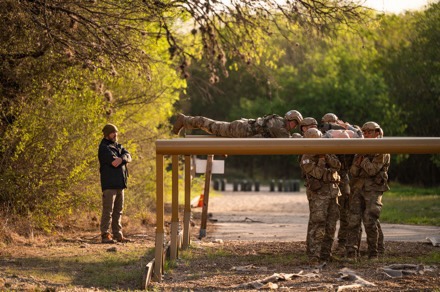
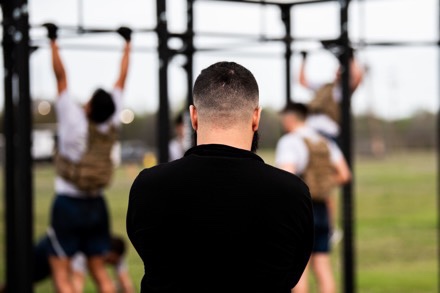
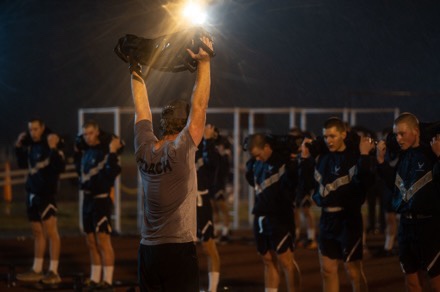
During the qualification, Soldiers must don operational camouflage pattern uniforms and helmets, run for one mile, perform pushups and sprints, and push through a sandbag course. Then Soldiers must complete a high crawl, perform a series of exercises with a partner, run a designated distance while carrying weights and finally, Soldiers will finish another one-mile run.

Grinston said the service plans to reward Soldiers who maintain a high level of physical fitness. Soldiers who score 540 or higher on the Army Combat Fitness Test will be exempt from the body composition measurements with a directive expected to be published in March, Grinston said. Soldiers can score a maximum of 600 on the exam.

Additionally, Grinston announced last year that the service will bring land navigation qualification back to the Basic Leader Course.

“What we need to do is continuously challenge our NCOs,” Grinston said. “So that’s one of our biggest changes; make our first NCO course rigorous and bring back a little rigor and field time and the tactics.”

Grinston lauded the efforts of Soldiers who deployed in support of the war in Ukraine, crediting Army units’ swift response times and ability to carry out logistics support to the Ukrainian military.

Within seven days of the Feb. 24 Russian invasion of the Eastern European country, the 1st Armored Brigade Combat Team, 3rd Infantry Division deployed to Grafenwoehr, Germany, where they test fired tanks and Bradley Fighting Vehicles, Grinston said. The brigade deployed on short notice after completing a tour in South Korea.

“When Russia invaded Ukraine, your Army knew exactly what we needed to do,” Grinston said. “You should be proud of what we’ve done.”

The 82nd Airborne Division completed its fourth no-notice deployment to Europe to aid the Ukrainian military. Last month the Defense Department announced that it would send 90 Stryker armored combat vehicles to assist the Ukrainian military.

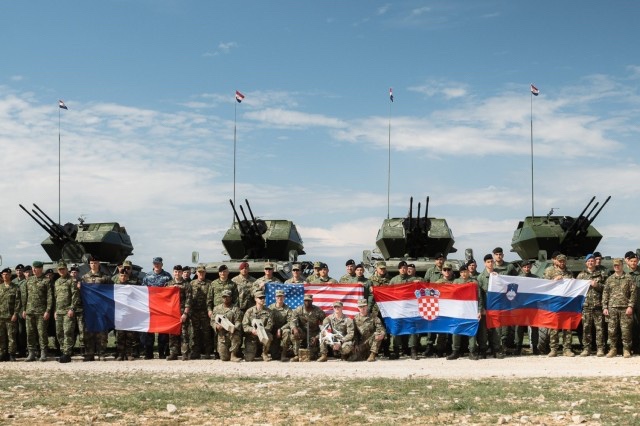
In January Grinston visited Soldiers at Grafenwoehr to watch Army units conducting air defense training with Bradleys. Members of the National Guard have trained and mentored Ukrainian Soldiers.

“The Ukrainians have a huge will to fight,” Grinston said. “Whether it’s air defense, Bradleys or medical [training], they were really motivated so they could get back into the fight. I’m extremely proud of the Ukrainians and what they’re doing. But I’m also extremely proud of our Soldiers at getting rallied around that mission and doing anything asked of them.”

By Joe Lacdan, Army News Service

193rd Special Operations Wing Welcomes New Aircraft, Mission

Saturday, February 25th, 2023

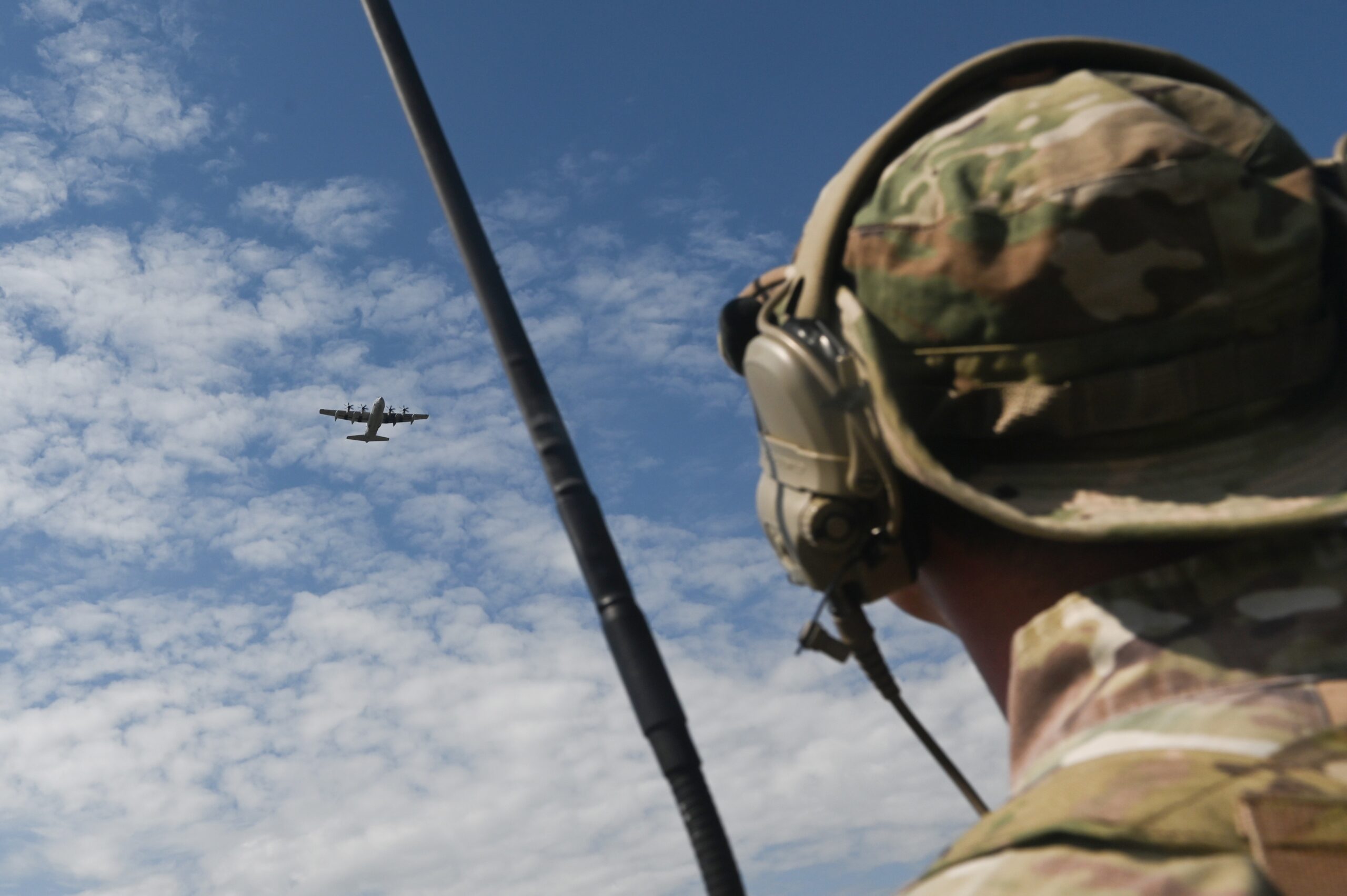
MIDDLETOWN, Pa. – The 193rd Special Operations Wing became the first Air National Guard unit to receive an MC-130J Commando II aircraft Feb. 2 as part of its mission conversion to a flagship mission of Air Force Special Operations Command.

“This is a monumental day for the 193rd, ANG, and AFSOC. The Commando II mission will ensure the 193rd SOW remains not only relevant but also at the forefront of the battlespace for years to come,” said Col. Edward Fink, 193rd SOW commander.

Led by the efforts of Lt. Col. Benton Jackson, unit conversion officer, the wing has been preparing for its mission conversion since 2021. Jackson believes the hard work of 193rd SOW Airmen and the support of the community led to the completion of this first step.

“Seeing the Commando II on our flight line is a tangible symbol of the progress we’ve made as a wing in bringing this versatile mission to central Pennsylvania,” Jackson said. “It’s an exciting time to be a part of this team, and I have the utmost confidence we have the right culture and people to continue with a successful mission conversion.”

For decades, the wing operated the EC-130J Commando Solo as part of the only airborne Military Information Support Operations broadcasting platform in the U.S. military. Col. Jaime Ramirez, 193rd Special Operations Maintenance Group commander, sees the move to the Commando II as a major shift in the unit, AFSOC and ANG.

“The Commando II is the special operations workhorse in that it performs many different types of missions and performs them well,” Ramirez said. “There is no doubt in my mind the aircraft that landed here today will be integral in any future conflict.”

Ramirez said the wing maintained the full operating capabilities of the outgoing aircraft while simultaneously preparing for the arriving mission.

“We were ready to maintain the Commando II well before it arrived, all while never losing a step in maintaining and launching EC-130s,” Ramirez said. “That only happens if you have the best people. I’d put our maintainers up against anyone.”

While the 193rd SOMXG is prepared to maintain the aircraft, the 193rd Special Operations Group is postured to fly them immediately. Col. Gordon Frankenfield, 193rd SOG commander, said his Airmen are very familiar with the aircraft and mission set.

“We’ve executed similar mission sets for years, which likely contributed to AFSOC trusting us with this critically valuable aircraft,” Frankenfield said. “Our goal from Day One has been to operate the Commando II with the same potency as an active duty unit, and our aircrews are trained and ready to make that a reality.”

Frankenfield sees the Commando II’s arrival in Pennsylvania as an important strategic move domestically and abroad.

“The 193rd now offers something the U.S. military didn’t have before,” Frankenfield said. Special Operations Forces based in the Northeast now have a crucial air asset in their backyard to build their combat readiness. Combatant commanders have a much more robust and versatile capability to project air power in different geographic regions.”

The aircraft’s arrival at night was perhaps appropriate given the nature of its mission. The Commando II flies clandestine – or low visibility – single or multi-ship, low-level infiltration, exfiltration and resupply of special operations forces by airdrop or air land and air refueling missions for special operations helicopters and tiltrotor aircraft, intruding politically sensitive or hostile territories.

“The Commando II is the embodiment of Agile Combat Employment and will present complex dilemmas to our adversaries. It’s a shadow in the dark and sends a clear message that the U.S. military owns the night,” Fink said. “The 193rd is ready today to add to the impressive lineage of the Commando II.”

By MSgt Alexander Farver, 193rd Special Operations Wing

FirstSpear Friday Focus: FS Attends Enforce Tac 2023

Friday, February 24th, 2023

Come see us out at Enforce Tac, stand 8-116. FS will be exhibiting at NürnbergMesse GmbH in Nürnberg, Germany, 28 February through 01 March.

Stop by and check out our maritime capabilities and our latest LaserFrame™ pocket releases for 2023.

Visit FirstSpear to find America’s premier tactical gear and equipment.

Navy Explosive Ordnance Disposal Completes Arctic Training Exercise Snow Crab Ex

Friday, February 24th, 2023

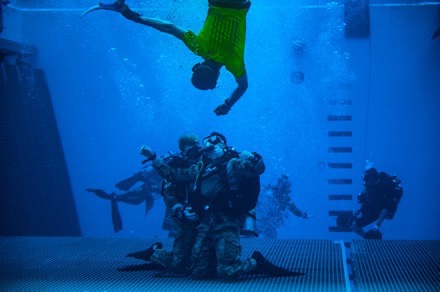
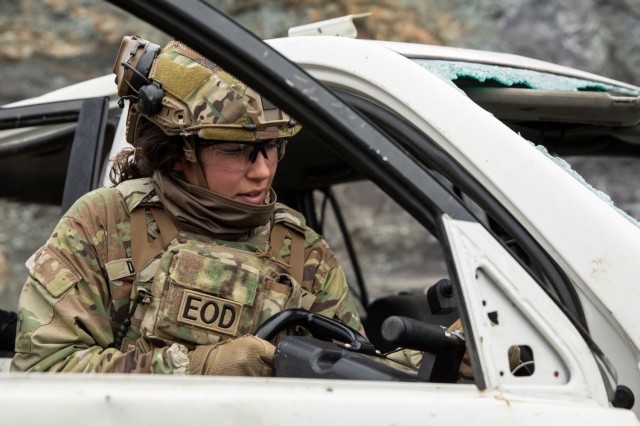
LITTLE FALLS, Minn. –U.S. Navy Explosive Ordnance Disposal (EOD) completed Snow Crab Exercise (Snow Crab Ex) 23-1 this week following the departure of U.S Navy EOD units and Navy Divers at Camp Ripley in Little Falls, Minnesota.

During the two-week exercise, U.S. Navy EOD tested and evaluated operating in a simulated Arctic environment.

“Navy EOD and Navy Divers clear explosive hazards and underwater obstacles to enable access in (typically) denied areas for the U.S. Navy Fleet,” said Capt. Chuck Eckhart, commander, Explosive Ordnance Disposal Group (EODGRU) 2, “so it’s important we continue to train and evolve our capabilities. Snow Crab Ex trained Navy EOD and Navy Divers forces to better operate and survive in the challenging Arctic environment.”

U.S. Navy forces must be able to operate in the Arctic due to “rapidly melting sea ice and increasingly navigable waters”, according to the Department of the Navy’s Strategic Blueprint for the Arctic.

Several Navy EOD units of action participated in Snow Crab Ex, including Explosive Ordnance Disposal Mobile Unit (EODMU) 12, which exercised tactical control over Navy EOD from EODMU 2, Navy Divers from Mobile Dive and Salvage Unit (MDSU) 2, as well as Sailors from EOD Expeditionary Support Unit (EODESU) 2 and Explosive Ordnance Disposal Group (EODGRU) 2.

“During Snow Crab Ex, we put our people and our gear to the test,” said Cmdr. David Scherr, commander, EODMU 12. “The Arctic presents challenging conditions, and lessons learned from Snow Crab Ex will help these Navy EOD teams operate quickly and efficiently anywhere with cold weather.”

All participating units completed Arctic mobility and survival training to ensure they could effectively operate in cold-weather conditions. Navy EOD cleared simulated unexploded ordnance, secured critical infrastructure, and effectively communicated between distributed operating units in a training environment. Navy Divers successfully completed ice dive training to ensure they can complete dive and salvage operations in Arctic waters.

Camp Ripley and the Minnesota National Guard provided ideal conditions and training areas to simulate an Arctic environment for ice and cold weather dive training, where Navy divers can train in a subzero temperature and arduous conditions at training ranges.

EODMU 2, EODMU 12, EODESU 2, and MDSU 2 are headquartered at Joint Expeditionary Base Little Creek-Fort Story under EODGRU 2. EODGRU 2 operates as part of Navy Expeditionary Combat Command and EODGRU 2 provides skilled, capable, and combat-ready deployable Navy EOD and Navy Diver forces around the globe to support a range of operations.

By Lt Brittany Stephens, Explosive Ordnance Disposal Group Two

Vice Chief’s Challenge Calls Airmen to Operationalize Agile Combat Employment

Thursday, February 23rd, 2023

WASHINGTON (AFNS) —  

The Department of the Air Force 2023 Vice Chief’s Challenge begins Feb. 21. Its goal is to find innovative responses to challenges affecting Agile Combat Employment.

ACE is designed to increase survivability while generating combat power in geographically dispersed locations. Announced last year, ACE intends to be both proactive and reactive in addressing threats.

Airmen can submit their ideas here. Submissions are due between Feb. 21–May 22.

“We have heard the call to Accelerate Change or Lose from Air Force Chief of Staff Gen. CQ Brown, Jr.; he has set the vision for the force we need to become. Through the Operational Imperatives, Secretary of the Air Force Frank Kendall has refined our focus on delivering threat-informed capabilities that the force needs to prevail,” said Air Force Vice Chief of Staff Gen. David W. Allvin. “The changing character of war will privilege lethality, speed, agility, and resilience – acceleration matters.”

This year’s challenge focuses on two key areas:

Rapidly transitioning to a wartime footing and delivering combat power to the point of need at the speed of relevance

Operating in a highly contested environment consistent with the concept of ACE

Operationalizing ACE aids four areas: codifying repeatable and understandable processes; forces that are suitably organized, trained, and equipped; theaters that are postured with the appropriate equipment, assets, and host nation agreements; and joint service and partner nation integration and interoperability.

Idea selection will be based on which have the broadest appeal and highest probability of delivering impacts toward designing, improving, and employing ACE.

“The imagination and creativity resident in our Airmen is vital,” Allvin said. “Airmen are our critical advantage. Airmen have the ideas and ingenuity required to help us accelerate and fly, fight and win…airpower, anytime, anywhere.”

Airmen whose ideas move forward in the Vice Chief’s Challenge will be paired with innovators from across the force, to include key players on the Air Force headquarters staff who advocate to adopt similar concepts. Morpheus innovation team will take 6 to 12 promising ideas and directly shepherd Airmen and ideas through the innovation adoption process.

A Platform One account is required to participate in the Vice Chief’s Challenge. Instructions can be found here.

For additional support available by email, visit here.

To learn more about the Vice Chief’s Challenge visit here.

By Secretary of the Air Force Public Affairs