Streamlight TLR VIR II

Archive for the ‘Guest Post’ Category

FirstSpear Friday Focus: Operator Glove

Friday, October 22nd, 2021

This Friday we are focusing on an FS classic the Operator Glove. When maximum manipulation and tactility are required while protecting your digits consider the Operator Glove (OG) first!

• Patent pending design creates a “no glove” feel
• Touch screen friendly thumb and index finger
• Super high dexterity leather palm (FS-HDLTM)
• Ultra lightweight and breathable
• No Melt No Drip construction
• 100% USA Berry Compliant materials with Core-Spun USA Merino Wool

When maximum manipulation and tactility are required while protecting your digits consider the Operator Glove (OG) first! Comprised of the most technologically advanced materials and modern construction details no corner is cut in this design. The trigger finger of the OG has an advanced patent pending design that will still give excellent transmission of trigger feel, magazine release and other key weapons functions.

The OG can work as a stand-alone capability or when higher durability and toughness is required it can be utilized in conjunction with the Operator Outer Glove (OOG). In order to achieve this amazing level of peak performance, the OG utilizes extremely light, thin materials which by their very nature will not stand up to extremely long periods of hard abuse but will perform through several mission-focused cycles.

Available in commando, sand and manatee in small through 2XL sizes.

For more information check out www.first-spear.com/operator-glove .

MCSC Begins Fielding Amphibious Robot System for Littoral Missions

Friday, October 22nd, 2021

MARINE CORPS BASE QUANTICO, Va. —

In September, Marine Corps Systems Command began fielding an amphibious, unmanned robot system to support littoral operations globally.

The Explosive Ordnance Disposal Remotely Operated Vehicle is a next-generation, box-shaped robot that enables Marines to navigate safely and efficiently in shallow waters to identify and neutralize explosive hazards and other threats.

“This robot gives Marines eyes in the water,” said Master Sgt. Patrick Hilty, an Explosive Ordnance Disposal project officer at MCSC. “It is a capability the Marine Corps has never before had.”

The ROV employs sound navigation and ranging sensors, a high-definition video capability and cameras that provide real-time feedback for EOD divers. It includes an articulator arm that helps Marines maneuver through underwater foliage or neutralize explosive threats.

“It is a system that saves Marine divers from having to swim hundreds of meters, an activity that can tire them out,” said Hilty.

Marines can use the robot for various amphibious missions. For example, they can leverage the ROV to search harbors before docking a Marine Expeditionary Unit ship. Operators can use it for activities in very shallow waters, conducting littoral lost object searches, damage assessments and mine countermeasure missions.

Hilty applauded the ROV’s tether feature, which keeps EOD technicians at a safe distance from explosive hazards. Before the capability, Marine divers could only disrupt or dispose underwater explosive threats by swimming in close proximity, exposing them to hostile elements.

“The ROV gives us a remote means to search underwater while also helping us stay at our best when having to prosecute explosive devices,” said Hilty.

Master Sgt. Matthew Jackson, a staff non-commissioned officer in charge of 1st EOD Company’s Littoral Explosive Ordnance Neutralization section, said the ROV is highly stable in an underwater environment. He noted how the machine requires minimal equipment and reduces the Marine Corps’ overall footprint during operations.

“This intuitive system has the ability to complete critical underwater tasks much deeper than manned missions can,” said Jackson. “The ROV will serve as an important capability to support our tasks.”

Jackson also praised the system for its ease of use. He said it requires minimal training when compared with other unmanned underwater systems. This ultimately saves the Marine Corps time and money required for training.

“Instead of sending a Marine to a course for seven or eight weeks, it takes about four days to learn basic operations for successful employment,” said Jackson.

The ROV also supports naval integration. In 2019, the Navy acquired this commercial off-the-shelf capability. The service conducted a series of tests to determine its viability for EOD missions. These tests included reliability and maintenance evaluations to test its effectiveness and ease of employment during simulated activities.

“Testing conducted by the Navy allowed us to field this capability to Marines more quickly,” said Hilty. “Additionally, the Marine Corps and Navy both having this system increases interoperability among the services.”

The robot is the first increment in the Littoral Explosive Ordnance Neutralization Family of Systems. This series of robotic capabilities will allow Marines to search a wider area in the littorals, including the very shallow water, surf and beach zones.

This robot gives Marines eyes in the water.

– Master Sgt. Patrick Hilty, an Explosive Ordnance Disposal project officer at Marine Corps Systems Command

LEON systems, to be fielded gradually by MCSC over the next several years, will also help the Marine Corps complement Navy EOD teams in joint operations as it strives to evolve naval force integration in the future.

“Having this capability aids in naval force integration by giving us the same equipment that the Navy is using,” said Staff Sgt. Seth Barnes, EOD Technician with 1st EOD Company. “It allows us to bolt on with Navy EOD as we move forward.”

Achieving Force Design 2030 remains an ongoing, concerted effort for the Marine Corps, as repeatedly stated by Commandant of the Marine Corps Gen. David Berger. This goal requires the acquisition of next-generation, unmanned systems, like the ROV, to support Expeditionary Advanced Base Operations.

“We’re bringing the EABO concept to the modern day,” said Ronald Diefenbach, a program analyst on the Explosive Hazard Team at MCSC. “Adhering to this concept, we can use the ROV to support Marines when operating from the littorals and while conducting island-hopping tasks.”

Hilty said the Marine Corps has never before leveraged waters for missions. In the past, Marines would begin operations from land, typically a beach. This new concept requires a shift in the paradigm in how the Marine Corps operates.

Fielding capabilities that conform to the vision to support an evolving naval fight will ultimately support the present and future Marine.

“We’ve always done this piece via the Navy,” said Hilty. “Now that the Marine Corps is doing it, we are learning valuable skillsets, becoming much better-rounded and proving to be a bigger asset to the MAGTF.”

Story by Matt Gonzales, MCSC Office of Public Affairs and Communication

Photos by LCpl Kristy Ordonez Maldonado

Joint ASA ALT and AFC Statement on the Integrated Visual Augmentation System

Thursday, October 21st, 2021

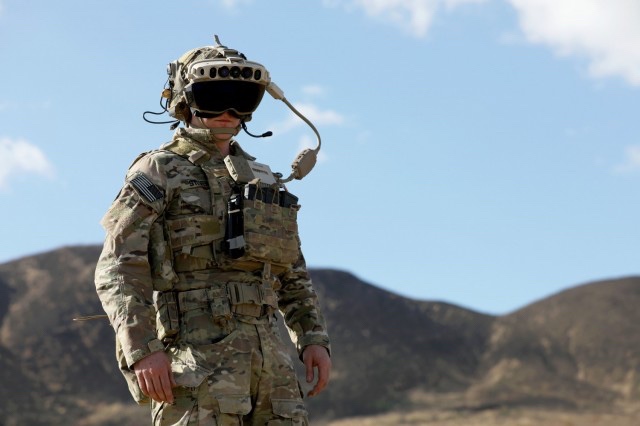
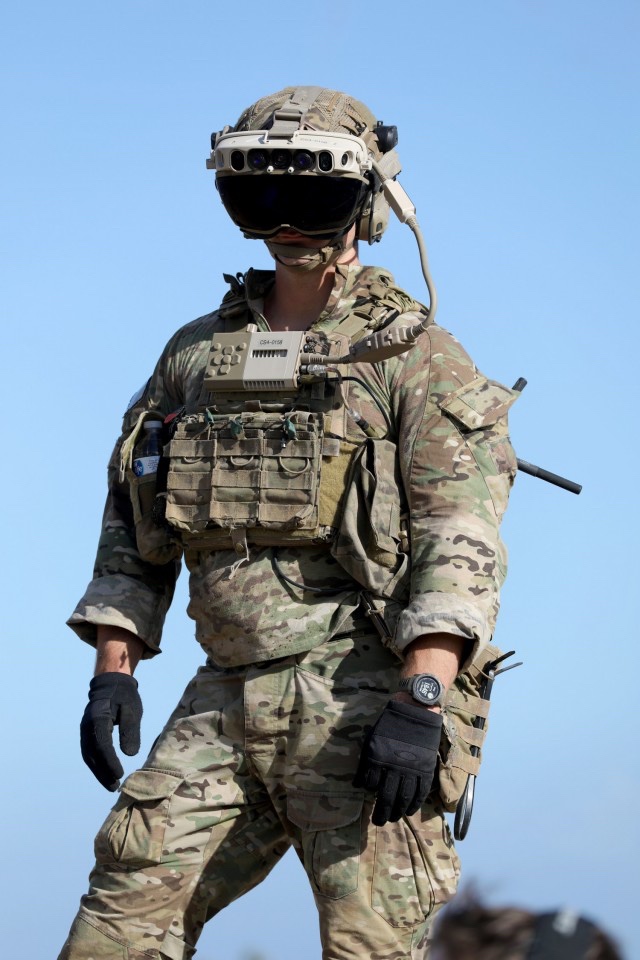
The Office of the Assistant Secretary of the Army for Acquisition, Logistics and Technology, in coordination with Army Futures Command, has decided to shift the Integrated Visual Augmentation System operational test to May 2022 and its fielding to September 2022.

The Army did not halt or stop the IVAS program, and remains committed to getting the best equipment in the hands of our Soldiers as quickly as possible. The shift in the IVAS program will allow the Army and industry team to continue to enhance the IVAS technology platform, ensuring Soldiers achieve overmatch in multi-domain operations.

The Soldier Lethality Cross-Functional Team, Program Executive Office Soldier, and Microsoft are working together to develop and field IVAS – a technology platform for fighting, rehearsing and training – which will provide close-combat forces with unprecedented capabilities that are extensible to any combat environment or combat platform.

Developers used the Microsoft HoloLens to build a system capable of rapid target acquisition, navigation, target marking and a host of other features, including a field of view nearly twice as wide as those offered by current systems.

At 80 degrees, IVAS pushed the boundaries of waveguide technology capabilities, and the field of view began to lose resolution. By making minor reductions, developers are finding greater quality and clearer visibility.

The process will require a little more time, but it will still result in the fielding of a next-generation combat system six to 10 years ahead of the traditional acquisition program timelines.

Calculated risk and time for adjustment have been baked into our processes, and are vital to rapid Army modernization practices. The new timeline does not affect contract agreements.

At this year’s Association of the United States Army annual event we stated, the Army has to be willing to accept some early risk, or we will never be able to keep up with the pace of change required to achieve and maintain overmatch in MDO.

By Karen Saunders and Gen. John M. Murray

Karen Saunders is the senior official performing the duties of the assistant secretary of the Army for acquisition, logistics and technology. Gen. John M. Murray is the commanding general of Army Futures Command.

Extending Head Protection Technology Beyond The Frontline

Thursday, October 21st, 2021

From frontline operators under fire to law enforcement officers on the street, comfortable, reliable and rugged personal protective equipment (PPE) is vital to get the mission accomplished. Operators must be confident that what they’re wearing equips them to perform effectively and safely against a continuously increasing range of threats, every time, without failure.

The dangers posed by aggressors constantly change. Recent images from around the world have not only shown troops facing higher energy ballistic threats in military engagements in the Middle East and Southwest Asia but also ferocious assaults on Special Weapons and Tactics (SWAT) teams. Police in Portland were frequently confronted by hails of rocks and concrete during disturbances in the summer of 2020 and a fire extinguisher was notoriously hurled at a group of officers during the US Capitol riots in January this year.

In response to these and other unpredictable military and law enforcement scenarios in-theatre, impact protection specialist D3O has applied its world-class material and product engineering capabilities to develop a new addition to its head protection range to better protect both military and law enforcement operators.

As this article goes on to explain, D3O’s latest innovation meets and exceeds blunt impact performance requirements at multiple impact velocities.

As a result, D3O offers head protection for the frontline warfighter who may be wearing a helmet for 15 hours uninterrupted as well as for the law enforcement officer facing a different type of threat on a short-duration mission.

Responding to evolving threats

An integral component of an operator’s PPE kit is the helmet, which offers critical protection against threats including ballistic impact from arms fire and explosive devices, blunt impact from falls or contact with solid objects, and blast overpressure from explosive devices.

The helmet’s core components include an external hard shell, an internal liner and suspension system to achieve a customized fit and minimize acceleration and deceleration of the head while providing comfort, and a retention device such as a chin strap to secure the system to the wearer’s head.

These components work together to reduce the risk of injury by preventing penetration from a ballistic impact and absorbing energy from a blunt impact or blast event – any of which can lead to traumatic brain injury (TBI), where the brain’s normal function is disturbed.

Furthermore, the geometry and mass of additional accessories such as mandible protection, communications equipment or a ballistic visor cannot compromise the level of blunt impact protection or the overall balanced effectiveness of the helmet’s functioning parts. 

All operators are aware of the adage, ‘Ounces equal pounds and pounds equal pain’. The average U.S. military warfighter carries at least 60 lbs of gear, with that figure often doubling for an extended patrol. Every component and accessory increases the total weight, which is particularly felt when added to the helmet. Operators must execute their mission without being distracted by their comfort level or fatigue. As a result, helmet system designers constantly face the challenge of increasing performance while ideally reducing weight.

The U.S. Army’s Integrated Helmet Protection System (IHPS) is one of three subsystems of the cutting-edge Soldier Protection System (SPS) – a platform designed to defeat current threats at a reduced weight while supporting the operator’s agility, maneuverability and survivability. SPS provides multiple levels of protection that can be tailored to a broad range of missions. The IHPS can also be configured and optimized to a specific task.

To help counter ever more unconventional projectiles, PPE specifications also evolve to provide enhanced levels of protection for operators. The IHPS product specification has a new requirement for a helmet that can perform at an impact velocity of 14 feet per second (fps) while not compromising performance at the traditional impact velocity of 10 fps, based on the Advanced Combat Helmet (ACH) standard (AR/PD 10-02). Protection at an impact velocity of 14 fps delivers a higher performance capability against the increasing energy exposure posed by many modern-day threats.

Applying cross-sector expertise

In 2015, D3O created the D3O® TRUST Stealth™ helmet pad system by leveraging its expertise from developing market-leading impact protection across the industrial, sports, motorcycle, electronics and defense markets. This system exceeds the required level of protection at 10 fps by 45 percent and maintains consistent performance on second impact. The seven-pad system fits most ground combat helmets and provides comfort during extended periods of wear.

TRUST Stealth™ was followed by TRUST Nimbus™, which delivers a 30 percent weight reduction and also exceeds the required level of protection at 10 fps by 50 percent in polyethylene (PE) shells and 39 percent in aramid shells. A seven- or nine-pad system that can be incorporated within most ground combat helmets, Nimbus™ offers state-of-the-art comfort, significantly easing the wearer burden.

D3O® TRUST Stratus™ is the latest innovation in D3O’s Defense head protection range. Testing shows that Stratus™ is the only commercially available system to exceed the impact performance requirements of the ACH standard simultaneously at 10 and 14 fps in both PE and aramid shells.

An integrated comfort liner in each pad, head-side fabrics offering antimicrobial protection and superior moisture-wicking properties, plus a ventilated moisture barrier to prevent pressure points at high altitude, also help to keep the operator’s focus on the task rather than their PPE.

TRUST Stratus™ meets SPS hook and loop adhesion requirements and can be integrated as an eight- or 10-pad system within most infantry combat helmets. This opens up a range of commercial possibilities for law enforcement and military tenders.

Optimizing for protection and comfort

For Oliver Sunnucks, D3O’s Senior Product Design Engineer, D3O® TRUST Stratus™ is “a natural evolution of the work we’ve been doing on the D3O® TRUST range over the last six or seven years. Throughout our development of the D3O Defense head protection range, we have continually fine-tuned the balance between applications, materials and standards.

“Ballistic performance is delivered primarily by the shell, whereas blunt impact performance comes from the synergy of the shell and the system inside. However, where the shells are specifically designed to meet a ballistic requirement, the internal pad systems are required to work effectively with a range of varying helmet shell designs. From a design engineering perspective, we must also consider the effect of geometric variables such as shell size and profile, material property variables such as temperature and strain rate (that is, the different impact speed requirements) and how the system response is changed through multiple impacts (due to damage).

“Our expertise is in understanding how these things play off against each other and knowing how to optimize the variables in order to deliver maximum protection and comfort at the lightest weight.”

Kevin Fleer, D3O’s Head of Product, explains that the requirement for impact resistance at a speed of 14 fps is “based on real-life impacts that modern-day operators encounter. It’s no longer a niche solution but a mass market one.

“Also, it doesn’t equate that a helmet system capable of passing a 14 fps standard will automatically pass at 10 fps. In almost all cases, the materials in a system tuned to 14 fps will be too rigid at the lower impact velocity.

“D3O® materials are extremely rate sensitive, meaning they react instantly to different velocities and energies. Therefore, it is possible to meet both the 10 and 14 fps standards using materials that remain soft enough for the 10 fps test and hard enough for the 14. This is only achievable with so much rate sensitivity from your chosen materials, a performance advantage that is unique to D3O®.”

The D3O Defense head protection range draws on the company’s world-class material and product engineering capabilities in order to create technology that serves those who need it most.

Furthermore, the ability to scale up US production capacity to handle the demands of the SPS IHPS program means the company is ideally positioned to serve both military and law enforcement needs for head protection.

By offering these solutions off the shelf, D3O is pushing the boundaries of head protection for a variety of users and providing a range of options for specifiers looking to increase protection for their teams.

by Bill VanMullekom, D3O

New Marine Corps Annual Rifle Qual: A Shooter’s Perspective

Thursday, October 21st, 2021

OKINAWA, Japan —

U.S. Marines across Okinawa participated in the new Annual Rifle Qualification from Oct. 4-8. This consisted of a three-day course of fire that tests Marines’ marksmanship skills in a dynamic-shooting environment.

The intent of ARQ is to provide an enhanced combat centric evaluation that uses a lethality based scoring system with more realistic standards. Shooters utilize artificial support to engage moving targets both while on foot and remaining stationary.

Day one

The day began with heightened nerves and rigid composures. However, not for battlesight zero, but for what was to occur in the days to come. These Marines were the first on the island to shoot the new ARQ course of fire.

“When I first heard about the range changing, I was concerned,” said Sgt. Morelia Capuchino Diaz, a food service specialist with Camp Courtney Mess Hall, Combat Logistics Regiment 37. “I wasn’t sure what to expect.”

She expressed that she came to the range really nervous. She knew the course of fire was going to be more difficult and physically demanding due to moving while shooting in full gear. Overall, it was unfamiliar for everyone and that meant all of the Marines needed to work side-by-side to conduct the range in a timely and proper manner.

What changed?

The Marines still shoot at the 500, 300, 200, 25 and 15-yard line, however, major adjustments were made. A few changes include: static engagement of stationary and moving targets, barricades for weapon stabilization, on the move engagements of static targets, and an adjusted scoring system.

“It’s more combat oriented and combat effective to train this way,” said Staff Sgt. Kaleb Bill, a marksmanship school house staff noncommissioned officer with Marine Corps Installations Pacific, Marine Corps Base Camp Butler’s Formal Marksmanship Training Center. “It also judges Marines based on their lethality as opposed to precision style shooting.”

Shooting this new course of fire allows Marines to make their own judgements and think critically. In a combat situation, while the fundamentals still apply, they may need to determine how to utilize the materials they are given by themselves.

The preparatory period of instruction has also been adjusted with the new rifle qualification. Grass week, a scheduled time Marines use to practice marksmanship fundamentals, is now a command dictated event. There is no longer a formal requirement to attend a grass week. However, it is still strongly encouraged by range personnel to participate in these preparatory classes.

“It’s more combat oriented and combat effective to train this way.”

Staff Sgt. Kaleb Bill

Marksmanship school house SNCO

“It is highly, highly recommended that you attend,” said Bill. “I strongly encourage all commanders to enforce grass week to ultimately prepare the Marines for the new ARQ. I can’t stress it enough. It may not be a requirement, but conduct the grass week, the preparatory training and issue out range books to your Marines.”

Day two

The second day of the range was the first time the Marines officially shot the new rifle qualification course of fire. Each shooter had an opportunity to run through the course of fire and ask the coaches as many questions as they needed. It was communicated to them to use the time allotted to completely understand the drills and ask for help.

As the day progressed, Capuchino expressed that she started to understand the course of fire a little better, however, there was still a clear adjustment period to work through.

“At first I was a little off because it was something new, especially the failure to stop – going from the pelvis to now the head and also applying a lot of individual headshots,” she said. “I felt way more confident once I realized we had a lot of opportunities for each drill to get at least one destroy for each.”

A ‘destroy’ is a zone on a target where the shots must impact to be counted. Additionally, failure to stop drill used to consist of shooting into the chest and pelvis zone. However, now the drill has transitioned to chest and head shots only.

The hardest part was time management during the second day, says Capuchino. The Marines were still learning and had not fully grasped the time hacks and how long it would take to shoot which she expresses was very stressful.

Day three: Prequalification

“The third day I was more confident, but was still learning the course of fire,” said Capuchino. “Even though it was a little intimidating, the challenge of it made me want to succeed. It is something new and as Marines say, we need to adapt and overcome.”

Capuchino explains that she’s always enjoyed a challenge, especially as a competitive person. With a wide smile, she continues to say she and her friends have always tried to compete and beat each other’s rifle scores. Fortunately for her, Capuchino has been a strong shooter since recruit training and sees this range as an opportunity to challenge herself and mentor her junior Marines about the new rifle qualification.

“My favorite part about the range is you get to make decisions on your own,” said Capuchino. “Even though it’s a different range, we still use the fundamentals we were previously taught. Now it’s just more high-tempo and you have to think fast. Like during the barricade drills, you have eight seconds to get a controlled pair. So you’re standing and you have seconds to get into position, aim right, take those rounds and get up.”

Day four

Day four was originally slated for qualification day, however, due to inclement weather the Marines were unable to finish and had to continue shooting on the fifth day.

Despite shooting through rain and wind, Capuchino was doing better than ever.

“At this point I already knew where all my holds were at and all I had to do was get used to applying all the fundamentals faster,” she said. “I was nervous, but I ended up getting all three ‘yes’ for qual due to good coaching and sufficient.”

While shooting at the 25 and 15-yard line, a ‘yes’ means that the Marine gets all of their shots for that drill in the destroy zone.

Day five: Qualification

“The last day I was confident and knew what to expect,” she said. “I was ready to shoot my best, and I ended up getting higher than I expected.”

The range was finally complete and Capuchino finished with an expert score. Achieving this score was a significant accomplishment to her because of her initial intimidation of the new course and the values she holds of leading from the front with an expert score.

“Especially now as you get higher up in rank, you need to set the example for your junior Marines,” she said. “I try to do well so my Marines see that I am trying, and then hopefully that helps instill that motivation to continue to improve themselves despite a challenge. As a leader, it’s now our role to tell them our mistakes and give advice on what they should and shouldn’t do so it can help set them up for success.”

Despite the inclement weather, success reached Capuchino and other shooters on the range. Every Marine finished with a qualifying score, which to range staffs’ knowledge, this was the first time there were no unqualified Marines.

“After shooting this new ARQ, I can tell that I like this range, and it is better than the last,” said Capuchino. “I prefer this new course of fire because it goes back to that combat mindset and is combat oriented. As you are shooting, take into consideration that the chances of going into combat are always there. It’s important to take what we learn here and apply that knowledge if ever needed. Remember, train as you fight.”

By Cpl Karis Mattingly

4ID Stryker Brigade Combat Team Tests Army’s Newest Mounted GPS Devices

Wednesday, October 20th, 2021

WHITE SANDS MISSILE RANGE, New Mexico – 4th Infantry Division Soldiers tested the Army’s next-generation Assured Positioning Navigation and Timing (APNT) solution here, which allows Soldiers to maintain integrity of position and timing in GPS-contested environments.

The Mounted Assured Position Navigation and Timing (MAPS) will integrate across the Army’s wheeled and tracked platforms, bringing heightened protection levels against evolving GPS threats to support multi-domain operations.

During the first week of testing, 1st Stryker Brigade Combat Team (1SBCT) Soldiers received New Equipment Training (NET) to familiarize them with the MAPS system capabilities and user interface.

Throughout the rest of the test, they provided feedback on the system during operationally realistic missions, including Call for Fire (CFF), Reconnaissance, Quick Reaction Force (QRF) and Medical Evacuation (MEDVAC) in a GPS degraded environment.

“I’ve never seen what happens to GPS Systems when they encounter an Electronic Warfare (EW) attack,” said Capt. Christopher Mazeau, Assistant Operations Officer for 1SBCT.

He said he is glad to see the Army is working to develop an answer to such threats.

MAPS is designed to support command and control by replacing the need for multiple GPS devices on a single platform, and it also helps to mitigate EW attacks with an onboard anti-EW antenna.

The system aligns with the Army Futures Command (AFC)-directed requirement to prepare for tomorrow by providing overmatch in multi-domain operational environments.

By MAJ Matthew Truax, Test Officer, Intelligence Electronic Warfare Test Directorate, U.S. Army Operational Test Command

TacMed Tuesday – TacMed Solutions Foxtrot Litter Helps Save a Life

Tuesday, October 19th, 2021

TacMed Solutions is a proud supporter of Cops Direct, a non-profit organization which helps supply law enforcement agencies in need with lifesaving first responder medical equipment. Part of the May 2021 Cops Direct allocation of equipment donations was to the Limestone County Sheriff’s Department located in Athens, Alabama.

The equipment received is pictured with the agency personnel. On June 14th, the donation was received, and just two days later, they put a TacMed Solutions Foxtrot Litter into real-life use on a missing person/medical emergency call. The patient suffered a diabetic emergency and had been missing for three days when he was found off the beaten path in a heavily wooded area.

The Deputies utilized the Foxtrot Litter to get the patient back to the closest dirt road where they awaited EMS. We are thankful for the lifesaving actions of the Limestone County Deputies and are excited to continue to support Cops Direct. If you want to help us in supporting underfunded departments, make a donation and support the organization at copsdirect.org!

Special Warfare Training Wing Dedicates New Tactical Training Facility to Fallen Special Warfare Airman

Tuesday, October 19th, 2021

JOINT BASE SAN ANTONIO-CHAPMAN TRAINING ANNEX, Texas –

The Special Warfare Training Wing at Joint Base San Antonio dedicated their newest tactical training facility to fallen teammate Maj. Walter David Gray at the JBSA-Chapman Training Annex Oct. 8, 2021.

”We are honored and touched that the TACP community remembers him in this way,” said Maj. Gray’s oldest daughter, Nyah, when offering remarks about the event. “While we will never forget him or the example he led, it can often feel as if we are the only ones left who do remember.

“The TACP community has been so kind to us; they have put together event after event and have given us every opportunity to learn about the man they knew through the stories spread amongst the brotherhood,” she added. “We are ever thankful for their contribution to the continuance of his legacy, and are, once again, honored to be cared for so well.”

Gray, a Tactical Air Control Party air liaison officer, who was assigned to the 13th Air Support Operational Squadron at Fort Carson, Colorado, was killed in action Aug. 8, 2012, during Operation Enduring Freedom. He was killed that day by the second of two suicide bombers in Kunar Province, Afghanistan. After the first blast, Gray and his team rushed to the scene to help when the second blast went off.

“If Dave were sitting here today, he would say this is silly … and would be embarrassed that we are making such a fuss over him,” said U.S. Air Force Lt. Col. Matthew McMurtry, 353rd SW Training Squadron commander. “That’s how humble he was. So, in typical TACP fashion, let’s make a big fuss over Dave! Remember him today, celebrate him, and honor the legacy he left within our community!”

The 353rd Special Warfare Training Squadron requested the dedication of the facility and Lt. Gen. Marshall B. Webb, commander of Air Education and Training Command, approved the memorialization of the SWTW Tactical Training Facility, now the Gray Tactical Training Facility in March 2020, but the COVID-19 pandemic caused delays in scheduling the ceremony.

“This facility is central to the migration of Special Warfare training to the JBSA-Chapman Training Annex. It’s already used extensively by our TACP candidates,” said Col. Mason R. Dula, SWTW commander. “Looking to the near future, it will enable training events for all Special Warfare candidates as our preparatory and assessment and selection courses will shift from JBSA-Lackland to JBSA-Chapman Training Annex.”

The outdoor tactical training facility is made up of an athletic field, strength and conditioning areas, sandpits and restrooms. It supports JBSA Special Warfare training, including courses of initial entry, non-prior service enlisted Pararescue, Combat Control, Special Reconnaissance, and Tactical Air Control Party students.

Additionally, it supports the Pararescue Phase II selection course and multiple Special Warfare officer courses to include Air Liaison Officer, Special Tactics Officer, and Combat Rescue Officer courses for themselves and their Guard/Reserve/prior service counterparts.

The wing commander reiterated the importance of honoring the fallen during his remarks.

“Events like these are part of the cultural bedrock of the Special Warfare community. We are committed to honoring our fallen teammates, lost in combat and training,” Dula said. “We are convinced the best way to keep them from becoming just pictures on the walls of our buildings, or names etched in stone on unit memorials, is to tell stories to do our best to keep the memories of our teammates alive in our formation.”

“While his memory lives on with us, it is an entirely different feeling altogether when others join in on our remembrance,” Nyah said. “No matter the circumstances, it always means the world to us to see that others still care, that they loved him too.

McMurtry, Gray’s best friend, spoke of the dedication it takes to become a TACP.

“Most Airmen don’t consider volunteering for TACP and attempting the 106 TACP training days. ’Dave’ completed this schoolhouse as an enlisted Airman in 1996, and became an officer, he repeated the schoolhouse and graduated a second time in 2011 with Raptor Zero One,” he said. “I’ve served 16 of my 20 years in the Air Force as a TACP, enlisted and officer. Through all the stories and the people that knew Dave, I have yet to hear someone say anything negative about him.  He was the TACP everyone wants to be!”

An Air Force Tactical Air Control Party Airman is part of Air Force Special Warfare which consists of ground combat forces specialized in airpower application across hostile, denied, or diplomatically or politically sensitive environments. Special Warfare members provide global access, precision strike, and personnel recovery capabilities across the spectrum of conflict and the multi-domain battlefield.

By Andrew C. Patterson 502nd Air Base Wing Public Affairs