TYR Tactical

Archive for the ‘Guest Post’ Category

TacMed Tuesday – New Trauma Simulator Rental Program

Tuesday, October 26th, 2021

TacMed Solutions is excited to announce its new Trauma Simulator Rental Program! It is designed to offer any agency – large or small – with the opportunity to use high fidelity trauma simulators in classes, providing their students and trainees with the ability to learn on manikins that simulate a real-world experience.

The TacMed Simulation Rental Program consists of both human and K9 simulators, customers can choose the package and simulator that will best meet their specific training needs, as well as have access to discounts on medical  supplies to help supplement their courses.  

Jo-Anne Brenner, executive director and founder of K9 Medic™, has recently utilized the program to rent K9 Diesel. “Our use of renting K9 Diesel was so successful that we’ve since purchased K9 Hero and still continue to rent K9 Diesel when needed,” Brenner said. “The rental program itself is equally commendable. From shipping to packaging to user support, our course coordinators can rely on the professionalism of TMS to ensure we deliver excellence to our students.”  

If you are interested in becoming a part of our rental program and gaining access to these high-fidelity simulators, check out the available packages and submit a rental request at:  TacMed™ Simulation Rental Program – TacMed Solutions™

Air Force Installation Contracting Center Acquisitions Bolster EOD Readiness for FY21, Beyond

Tuesday, October 26th, 2021

TYNDALL AIR FORCE BASE, Fla. (AFNS) —


EOD robot upgrade The Air Force Installation and Mission Support Center is acquiring new base support robots for Explosive Ordnance Disposal flights Department of the Air Force-wide. The new T7 Robotic system replaces the 20-year-old Andros F6A. (U.S. Air Force graphic by Greg Hand)

The success of implementing new explosive ordnance disposal technology in fiscal year 2021 has the Air Force Civil Engineer Center looking forward to FY22.

“Our Airmen conduct high-risk operations in support of the mission, and we ensure they have the tools and resources they need to perform their jobs safely, efficiently and effectively,” said Col. John Tryon, AFCEC Detachment 1 commander. “It’s our duty to identify civil engineering needs and advance Air Force capabilities through research, development, test and evaluation, and we take that very seriously.”

AFCEC’s Readiness Directorate partnered with the Air Force Installation Contracting Center to use more than $41 million for new EOD equipment, such as a new base support robot to clear unexploded ordnance from airfields, during the past year.

In July, the AFICC awarded an $85 million, 10-year, indefinite-delivery, indefinite-quantity contract for the T7 Robot System to replace the Andros F6A robot, which has been used by the Air Force for two decades. The T7 offers a suite of new and enhanced capabilities, including a more modular design that allows users to repair it by swapping subassemblies rather than individual parts — an issue that plagued the previous robot.

“This system will move robotics forward 20 years,” said Dennis Carson, EOD robot product manager. “It enhances warfighter readiness with its ability to resolve hazardous threats and missions remotely, allowing Airmen freedom of movement at any location.”

AFCEC will begin distributing the first of the T7s in May 2022 — 56 of the 170 inventory objective of T7s were funded at contract award. The remaining requirement will be purchased this fiscal year.

The T7 is the second of two new robotic systems AFCEC is upgrading for the EOD career field. A year ago, the directorate delivered the first of the Man Transportable Robot System Increment II to the 325th Civil Engineer and the 823rd Rapid Engineer Deployable Heavy Operational Repair Squadrons.

To date, the readiness directorate has distributed 129 MTRS IIs and provided system training to 49 EOD flights. The directorate expects to distribute the remaining 202 systems by January 2023.

The second wave of new technology deliveries took place in July when the AFCEC team debuted the Vidisco Guardian 12 Digital Radiographic X-ray system, a $27 million procurement package, at Eglin AFB, Florida, and Hill AFB, Utah.

“This new system is essentially everything old wrapped into a new package with the addition of digital technology enhancements,” said Dave Hodgson, EOD logistics lead for AFCEC. “Compared to the previous analog models, this new system gives Airmen clear and concise images, which reduces the amount of time they have to spend analyzing the images.” 

To date, the AFCEC team has distributed 36 X-ray systems, with the remaining 15 base support systems to be distributed in 2022 and mobility configurations through 2026.

Just as FY21 came to a close, AFICC awarded a $24 million contract for the Large Clearance Blade Assembly, or L-CBA. Attached to armored front-end loaders, the equipment is used for rapid clearance of unexploded ordnance from airfield surfaces after an attack.

Because it’s mounted to an armored front-end loader, the paired capability will dramatically reduce clearance times, Hodgson said.

AFCEC plans to begin blade deliveries to bases in the European and Pacific theaters and some training sites in mid-October. Full fielding will run through 2026. The contract enables the Air Force to obtain more than 70 large blades needed to support the Rapid Mass Mechanical Clearance program over the next several years.

The directorate also executed a Life Cycle Sustainment order for bomb suits. The suits are designed to protect EOD personnel responding to scenarios with potential explosives. The $2.2 million annual acquisition provides 76 suits to replace one-seventh of the current inventory.

“When EOD technicians have to make that long walk down range to manually perform procedures, this suit — the EOD 10E — provides the best possible protection if an explosion occurs,” Hodgson said.

Rounding out FY21 EOD funding executions, AFCEC’s EOD modernization program is seeing its work pay off as the Air Force prepares to take the next steps in bringing the Recovery of Airbases Denied By Ordnance, or RADBO, system to the Air Force EOD suite of tools.


EOD robot upgrade The Air Force Installation and Mission Support Center recently contracted for the delivery of new explosive ordnance disposal base support robots for the Department of the Air Force enterprise. This chart shows a comparison of the 20-year-old Andros F6A to the new T7 Robot System. (U.S. Air Force graphic by Greg Hand)

AFCEC funded a $3.9 million effort in FY21 to convert the state-of-the-art ground-based laser prototypes to the final production configuration. The system will be delivered to Nellis AFB, Nevada, in December to support career field training as well as tactics, techniques and procedures incorporating the RADBO system, L-CBA, the prototype design completion on the Small Clearance Blade Assembly and an unmanned system application for Rapid Explosive Hazard Mitigation and Rapid Airfield Damage Repair vehicles.

By David Ford, Air Force Installation and Mission Support Center Public Affairs

CAP NRAT Reduces Arizona Plane Crash Search Area from Hundreds of Square Miles to 100 feet, One Survivor

Sunday, October 24th, 2021

Arizona emergency responders were able to quickly locate a small plane crash site in northern Arizona, thanks to the work of Civil Air Patrol’s volunteer National Radar Analysis Team, Sept. 23.

The plane, a Piper PA-28R-200 Arrow II, single-engine aircraft departed from San Martin, California with two people onboard. The plane crashed on approach to Page Municipal Airport, Page, Arizona. 

After the crash, the passenger was only able to send text to family member but she did not know her location.  The family member contacted authorities who contacted the Federal Aviation Administration about the crash.  The FAA put out an Alert Notification, or ALNOT, to Air Force Rescue Coordination Center who then requested NRAT’s assistance in the crash site search.  

The NRAT team analyzed and processed millions of raw radar targets, reduced down to hundreds for this track in seven minutes to determine the end of the aircraft’s radar track, and probable crash location.  This reduced the search area from hundreds of square miles to less than a 100 feet.

“They were looking in the wrong location based on a text received from the passenger; but we [NRAT] were able to put them in the right place for the rescue,” said Lt. Col. John Henderson, CAP vice commander of NRAT and 84th Radar Evaluation Squadron member. 

When emergency services arrived at the crash site, they confirmed the death of the pilot.  The wife of the pilot, was flown to a hospital in St. George, Utah for treatment.

“With these types of missions, where you know that someone has survived the crash, time is of the essence.  We lost the track 125 feet above the terrain in a decent, so we knew right where they had crashed,” said Henderson.  “Based on our precise location, less than 100 feet from our prediction, a rescue helicopter was able to fly to the crash site an hour after dark and rescue the lone survivor.  This was on top of a plateau in a very remote, desolate area.”

The NRAT is now up to 13 saves this year which sets their record for number of annual saves over the past 13 years.  In 2021, the entire NRAT has volunteered more than 420 hours to support search and rescue missions.

“Five of the six NRAT team are either past or present members of the 84th RADES,” said Lt. Col. Jesse Scott, 84th RADES commander, Hill Air Force Base, Utah. “I am so proud of how our NRAT members use their radar skills not only for the 84th RADES national defense mission, but also to reduce search areas for plane crash locations enabling emergency responders to get there faster.”

The 84th RADES at Hill Air Force Base, Utah, reports to the 505th Test and Training Group, which is assigned to the 505th Command and Control Wing; both are headquartered at Hurlburt Field, Florida.


SCUBAPRO Sunday – Seahawk 2

Sunday, October 24th, 2021

The SCUBAPRO Seahawk 2 was redesigned and improved in 2019. It is an all-purpose back inflation BCD features a new ergonomic shoulder design with rotating buckles and a new soft, reinforced backpack; this makes the improved Seahawk 2 much lighter than its predecessor and extremely easy to fold and pack. The stainless-steel Super Cinch tank band is positioned a little lower than before, and an additional hook and loop strap has been added to secure the tank when diving. Other new features include a 2″ (50mm) waist strap with a lightweight cam buckle, redesigned cargo pockets, and a new range of airway and valve fittings. Offering a streamlined shape yet substantial buoyant lift when needed, the Seahawk 2 is the perfect choice for divers looking for freedom of movement, comfort, and stability when cruising the depths. Quick-release shoulder buckles and adjustable shoulder straps, adjustable sternum strap, and waist strap all improve fit. All these straps are equipped with squeeze-style” quick-release buckles for easy donning and doffing.

Ergonomic shoulder design with rotating buckles improves fit, helps distribute the load, and enhances stability. Reinforced soft backpack with high-grip tank patch and inner padding add to comfort, reduce overall weight, and make it easy to fold and pack. Super Cinch stainless steel tank band system is positioned lower and teamed with a second hook and loop strap to secure the tank for transport and diving. 2″ (50mm) waist strap with lightweight plastic buckle lets you fine-tune adjustments for a perfect fit. Two large zippered pockets have been redesigned, providing lots of cargo-carrying capability. 1000-denier nylon outer bladder and 420-denier nylon inner, with urethane laminate interior and radio frequency (RF) welded seams for maximum resistance to punctures and abrasion. A high-quality air cell offers a streamlined shape when deflated and substantial buoyant lift when inflated. The BCD provides 54 lbs. (24.5 kg) of lift in all sizes.

Quick-release integrated weight pouches secure with low-profile buckles. Two rear trim pouches help create a comfortable swimming position. Pouches accommodate 12 lbs. (5.5 kg) each. Two back trim pockets counterbalance front weights and provide a well-balanced swimming position with 10 lbs. (4.54 kg) capacity. BC comes equipped with a Balanced Power Inflator (BPI). SCUBAPRO’s BPI’s, corrugated hose, elbow, and low-profile dump valves using the latest technology for full safety and comfort. The BPI is equipped with a cable-activated pull-dump mechanism on the left shoulder. There are a right shoulder and right lower rear over-pressure relief/pull-dump valves, both equipped with pull cords for ease of trimming buoyancy.

The Dogs of War: Slow Boat to Zangaro

Sunday, October 24th, 2021

Movies, guns, some tactics, some snark, and lots of nostalgia. Those are a few of the things you’ll find in the Saturday Night at the Movies film reviews from GunMag Warehouse. Interested in an example? Remember Dogs of War (book not movie)? Come take the…

Slow Boat to Zangaro

The Dogs of War

by Scott Waters

Carrying on with the idea of a period film that started when I reviewed The Way of the Gun sometime back, I took a spin through my DVD collection (yeah, I still have one). There it was, that classic of Bush War post-colonial havoc, The Dogs of War.

The-Dogs-of-War-movie-poster

Set principally in the fictional country of Zangaro (played handily by Belize), this 1980 film, based on the Frederick Forsythe novel, revolves around a small group of mercenaries who set out to lead the overthrow of that country’s despotic leader. Starring Christopher Walken, Tom Berenger, and Colin Blakely, the film also has worthwhile supporting roles by JoBeth Williams and Ed O’Neill.

If you’ll forgive me a small indulgence here, I’ve often through that Walken, in his youth, looks almost translucent (see The Dead Zone or the second half of The Deer Hunter). In The Dogs of War, you get the sense that looking through his skin and seeing into his soul, you’d feel troubled indeed.


Dogs-of-War-the-Crew

While the film is ostensibly about a team of mercenaries developing and executing a mission, it’s perhaps more accurately about morality and errant compasses, centering on Walken’s character, Jamie Shannon. I say this based on many watchings of the “European” version, which adds about 14 minutes of character development over the so-called “U.S.” version. Early on, Shannon attends a baptism for a fallen comrade’s newborn — he is the Godfather. The widow, however, explains that he will be allowed nothing to do with his Godson’s life.

There you have the central tension for the very stoic Shannon: he’s a man who wants some facsimile of domesticity but can’t find a way to it. Shortly thereafter, fate and a job offer intervene, forcing him to revert to the hard skills and harder stares of his profession.

Here’s a more off-the-cuff reading of what this film is about: it’s a love letter to the fictional XM-18. Many are the scenes of the team firing from what is essentially a rotary magazine shotgun. It’s all gleaming chrome and stubby purpose. Based on the Manville Gas Gun that first appeared in 1935 and was designed for crowd control purposes, the movie version was modified by the film’s armourers.

In one fun scene, an arms dealer extols its virtues, including the variable-load possibilities that he refers to as a “mixed-fruit pudding”. In that same scene, Shannon pops out a zinger when he asks the dealer if he’s ever been in combat, to which the dealer replies, “no, I’m Canadian.”

dogs_of_war_berenger_XM18

There are folks out there who hate this film, and one podcast in particular (it shall remain nameless but you can search for “Christopher Walken podcast” on YouTube) seemed to not know what to make of it at all. Is it an action film? Is it a drama? Is it a thriller?

Well, I submit that it’s all of those genres and none. It does fit nicely within the genre of 70s military procedurals that Fredrick Forsythe (author of the original novel) is known for. If you enjoy Forsythe’s The Day of The Jackal or The Fourth Protocol, you’ll likely enjoy this film.

In another memorable scene, the team has gathered in a hotel room to plan the mission. They talk about who to source their materiél from and the need to drive hard bargains; they drink beer and order food: pizza and maybe “drinking pudding”. The French team member, played with a certain charm by Jean-François Stévenin, then offers a very memorable toast,

Vive la mort, vive la guerre, vive le sacre mercenaire.

This translates to: “Long live death, long live war, long live the cursed mercenary.”

Much film time is spent on logistics: hiring a ship and crew, transporting Uzis across European land borders, negotiating the sky-high prices for 9mm quad (a term I never bothered to research until right now). For me, this stuff is a real pleasure. The film slows down, and the viewer is forced into the back-end of warfighting. But this is what will make or break the operation. What’s that quote?

Amateurs talk about tactics, but professionals study logistics.

But the main reason I come back to The Dogs of War, again and again, is that it’s a period piece. I’m not referring so much to post-colonial exploits in Africa, but more that of a pacing style in action/thrillers that is hard to come by these days. There are pleasantly long periods where little excitement occurs, but the film is immensely watchable for just those reasons. The same can be said for The Day of The Jackal or more recently, the George Clooney vehicle, The American.

dogs_war_spray_pray

By the time we reach the climactic assault we’ve watched the guerilla army that Shannon’s team will lead demonstrate their military discipline, as well as their proficiency with Uzis. There’s also a subplot involving a journalist (played with great verve by Colin Blakely) that winds its way through the first two acts. All these elements lead to the final assault.

The approach onto objective by the force is a quietly tense pleasure, and then, finally, all hell breaks loose, including many a loving shot of the XM-18 being reloaded and firing off all of its 18 rounds. Having said all that, it’s the slow build-up – like the boat that carries them from Europe to Africa – that remains the most worthwhile aspect of this film.

Check out the entire Saturday Night at the Movies series, from GunMag Warehouse.

About the Author: Scott Waters escaped the North of England as a child and has lived in the occasionally frozen/occasionally fecund land of Canada since then. An epigrammatically jocose former Canadian Infantry soldier who got himself some “higher education”, he became an artist and writer. These days he does some work with aid groups, dips his toes in the Army while continuing to dip his toes in art and writing. As you can see, there is a general “toe-dipping” theme. @militaryart_swaters

SOFWERX – USSOCOM Autonomous Interoperability Standards Development Event

Saturday, October 23rd, 2021

SOFWERX, in collaboration with USSOCOM’s Directorate of Science and Technology (S&T) and Naval Special Warfare (NSW), will host the Autonomous Interoperability Standards Development Event, 07-09 December, 2021. In the Human Machine Teaming Aspects of Mission command, the objective is to bring together Special Operations Forces (SOF) representatives and Subject Matter Experts (SMEs) to assist USSOCOM in discerning the future of Autonomous Interoperability for Unmanned Air, Ground, Surface, and Underwater Systems (UxS). Focus areas will include but are not limited to sensors, communications, and platforms.

NSW has developed a vision for the future whose key elements include next generation UxS and autonomy solutions, and interoperable maritime and air assets. To do this effectively, NSW needs interoperability standards for the heterogeneous UxS platforms that they will use now and in the future. USSOCOM thus needs to develop and implement a set of interoperability standards that are not cumbersome, that are flexible, and that will support new technologies. They will also need to provide enough freedom for companies to use their creative approaches but with well-defined interfaces, messaging, communications, navigation, and control systems. Further, the backing of NSW and USSOCOM should provide an incentive for commercial players to rally around the new standards. This effort will support agility, wider government and commercial participation and ensure cost-effective development.

This event is restricted to U.S Citizens Only.

Submit NLT 29 October 11:59 PM ET, details at events.sofwerx.org/interoperability.

Multi-Domain Warfare Students Observe Real-Time CSpOC C2 Operations

Saturday, October 23rd, 2021

The Multi-Domain Warfare Officer Initial Skills Training class 21B visited the U.S. Space Command’s Combined Force Space Component Command at Vandenberg Space Force Base, California, to observe real-time operations, Sept. 20-21.

Vandenberg SFB was the first of a four-leg trip for the Multi-Domain Warfare Officer, or 13O, students traveling to geographic and functional operations centers. The 13Os also traveled to the Shadow Operations Center – Nellis, or ShOC-N, at Nellis Air Force Base, Nevada, 612th Air Operations Center, Davis-Monthan AFB, Arizona, and the 616th Operations Center at Joint Base San Antonio, Texas.

The 19 students of class 21B were able to tour and observe real-time operations at the Combined Space Operations Center. The CSpOC’s mission is to execute operational command and control of space forces to achieve theater and global objectives. 

The 13O students were also given the opportunity to talk to several senior U.S. Space Force leadership, including CFSCC Commander Maj. Gen. DeAnna Burt. Discussions focused on inter-service interactions and daily planning challenges facing CSpOC Guardians such as command relationships, authorities, and the development of C2 strategies as USSPACECOM components are reorganized, and new components become operational. 

Maj. Gen. Burt stressed the significant role local 13Os have and continue to play in overcoming these challenges, bringing all these efforts together into one integrated plan. 

“Observing real-time CSpOC operations allowed our students to witness first-hand many of the space capabilities, threats, limitations, and planning considerations previously covered in our classroom academics,” said Lt. Col. Ernie “Bert” Chen, 705th Training Squadron deputy director of operational warfare training, Hurlburt Field, Florida.

The Multi-Domain Warfare Officer course is taught by the 705th Training Squadron whose mission is to provide advanced operational level multi-domain C2 training and education for joint and coalition senior leaders and equip air operations center warfighters through tactics development.

To learn more about 13O training and the Multi-Domain Warfare Officer career field, visit the following websites:  intelshare.intelink.gov/sites/C2/13O/SitePages/Home and www.milsuite.mil/book/groups/13O.

The 705th TRS reports to the 505th Test and Training Group and 505th Command and Control Wing, both are headquartered at Hurlburt Field, Florida.

ITS Tactical – Know How to Apply a Tourniquet?

Friday, October 22nd, 2021

Your belt isn’t an acceptable tourniquet and neither is a bandanna with a stick twisted in it. These are modern times; commercially available tourniquets are ubiquitous and have been proven over and over again to save lives. Don’t plan to improvise, plan to have a real tourniquet ready and available.

The number one goal in treating any extremity hemorrhage (i.e. bleeding out) is to keep the blood in the body. The human body only has so much blood and while there’s no specific quantity that’s agreed upon for how much you can lose before you’re gone, suffice it to say you want to lose the least amount possible.

When it comes to tourniquet selection, we support the CoTCCC recommendations for commercially available tourniquets; the two most widely used and proven being the SOF Tactical Tourniquet (SOFTT) and the Combat Application Tourniquet (C-A-T).

Here’s How to Apply a Tourniquet

Orient the Tourniquet: The direction of pull to tighten the tourniquet should be towards the midline of the body. This is a good rule to remember and will make application easier if you have to apply a tourniquet on yourself one-handed. Picture an imaginary line running vertically up and down the center of the body; that’s your midline.

High as Possible:  Always keep the tourniquet as high as possible on a limb; never on a joint.

Grab the Loop and Pull: Don’t get in the habit of grabbing the tail of the tourniquet to tighten it right away. By grabbing the loop and pulling it towards the midline, you’ll keep the tourniquet from spinning and control it better during one-handed application.

Pull the Tail: Take all the slack out of the tourniquet by pulling the tail to tighten it.

Manipulate the Base: If there’s still slack left in the tourniquet, or you can’t tighten it any further because of its position, grab the base and move it. Then take up the rest of the slack.

Tighten the Windlass: Continue turning the windlass until all bleeding stops, or is controllable/manageable. It doesn’t matter what color the blood is, tighten it until it stops.

Anchor the Windlass: Each side of the windlass has a groove that locks into the d-ring, preventing it from coming undone. Lock this in and ensure it’s locked in the windlass groove.

Time and Date: At the end of the tail, the SOFTT has a sewn-in tag for writing in the time and date. A sharpie works great for this, but anything will do. It’s important to note this for higher echelon care, (i.e. hospitals) so that they know how long the tourniquet has been in place.

Practice: You should be able to deploy and apply your tourniquet in 12 seconds, one-handed. Practice until you can meet that goal each time. You’re also not going to ruin your tourniquet by practicing with it, just be sure you’re checking it after each practice session and if you see anything that’s damaged or has the potential to fail, replace your tourniquet.


Get Training: This email shouldn’t be used as a replacement for medical training in the usage of a tourniquet. Seek training for yourself and your loved ones from competent trainers. Remember, a tourniquet is not a last resort!

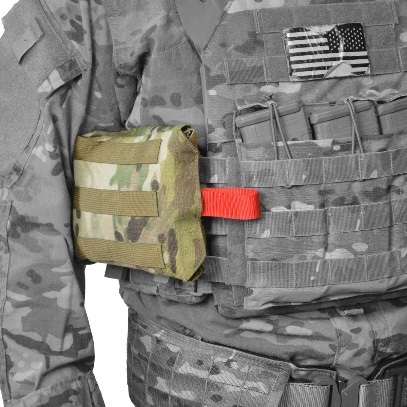
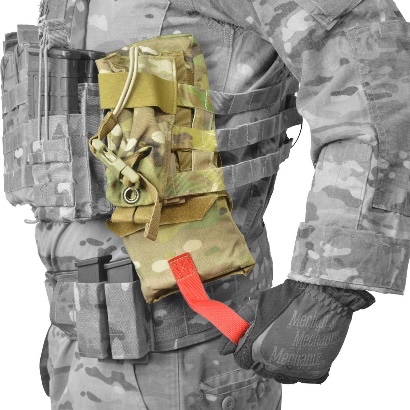
The last thing to discuss is how to store a tourniquet, we’ve recently developed and patented our TourniQuick® Pouch. It provides not only a fully-enclosed storage method, but more importantly, a revolutionary deployment system that reduces time from deployment to application, saving valuable seconds. Remember, seconds count when you’re bleeding out!™

Whether you purchase from ITS or not, always buy tourniquets from a reputable resource to avoid fakes. A failure to plan is a plan to fail, so keep a tourniquet with you and be prepared to save a life.

Thanks to ITS Tactical for allowing us to share this post.