Perhaps the title of this article is a bit out of place considering many of the readers are already taking shots at three hundred yards or more with an AR. Even with an AR-15, that doesn’t lend itself as well to long range precision shooting as the AR-10 or cloned versions of the .308 AR, shooters are consistently taking shots past 300 yards with an AR.
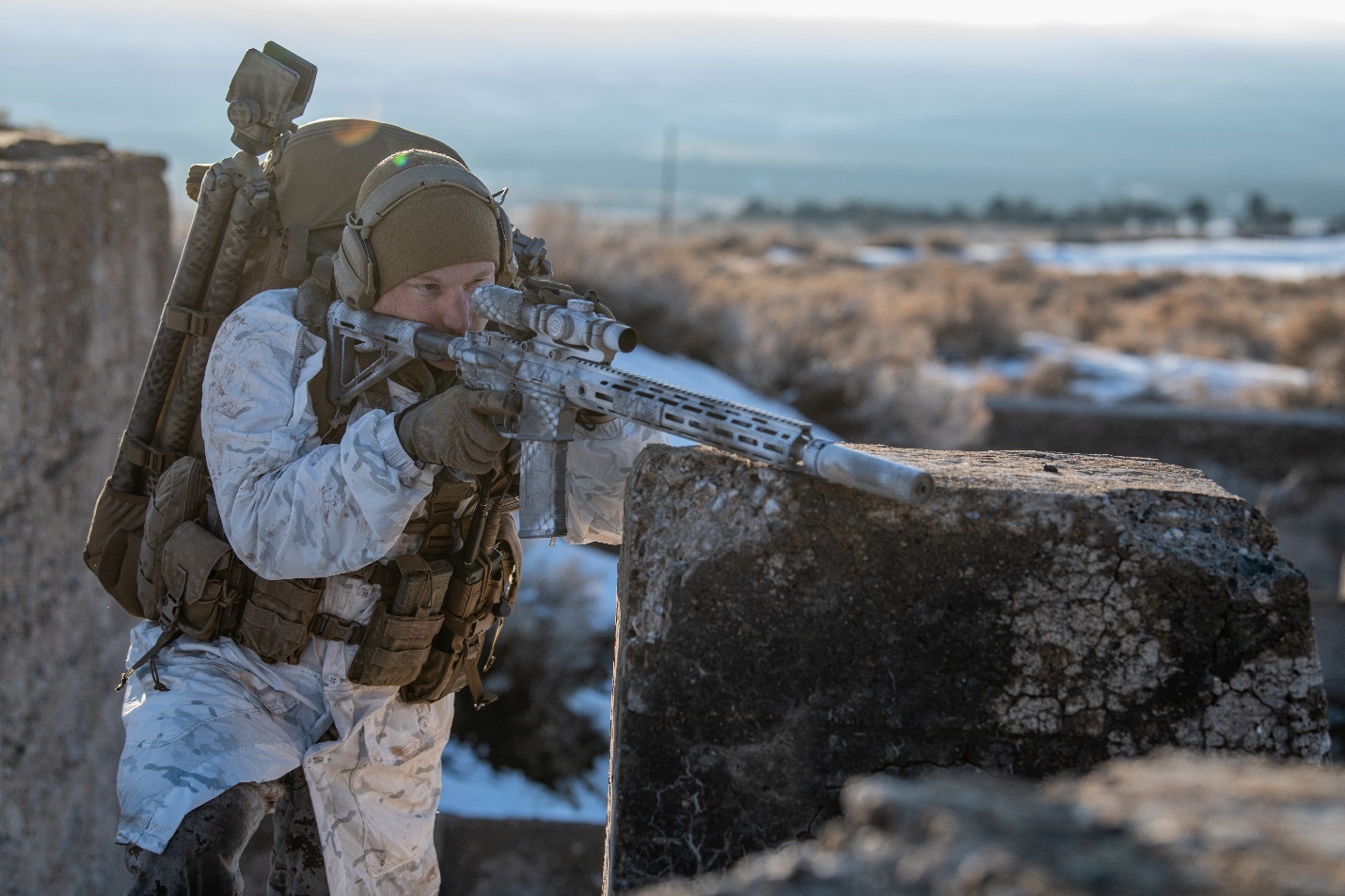
In fact, with a simple change like a bolt-on, drop-in AR-15 conversion upper, one could even reasonably expect to get to under a minute of angle at 300 yards shooting a popular mainstream cartridge.
Perhaps a better explanation of what this article is about is how one could take any regular AR-15, or AR-10 and put it in a consistent 300 yard range for anything within the spectrum of being capable of using an AR platform to accomplish.
The concepts we want to explore at some level in this article are:
• Can you take consistent shots at three hundred yards with your run-of-the-mill AR?
• Can the AR compete broadly against other platforms shooting at more than 300 yards on a regular basis?
• Can the AR be built to be a real competitor, and can it have multivariate use cases at more than 300 yards, consistently?
• What are the limits of the current AR spectrum of rifles, out of factory?
• What are the limits of bespoke builds based on the AR spectrum of rifles when absolute attention is paid to long-range precision accuracy?
• What should you focus on when building, or buying an AR capable of taking difficult shots at longer ranges and turning them into routine, easy to take shots?
In this article we’d like to explore the concept of the AR moving past the hurdle of 300 + yards of range with any kind of capability, into a Brave new world for the AR platform. What follows is a more in-depth discussion about how you can get ultra consistent performance out of an AR platform, far beyond where most normal shooters are pushing the firearm.
Can you really make the argument that the AR platform is suitable for a consistent shot taking on targets that matter past 300 yards?
This point is pretty much settled in stone at this time, with the AR platform having been proven to be a success hunting game animals, and shooting in mainstream competitions, where the AR may not have been a factor in the previous decades. So, the answer is already existent: the AR certainly can shoot past 300 yards with accuracy and lethality in pretty much any configuration.
Where it really becomes an issue, and where there is a real world application here, that needs further discussion is when defining what are the parameters at the extreme end of the spectrum that constrain the AR platform from an accuracy or lethality perspective. And this is not just a discussion that starts and ends with the 5.56 or the .223. The AR-15 is much more than the original AR-15 that came out in the sixties.
Given the plethora of options, loads, optics and other add-on components that now is extant in the AR arena, what can the AR do in the realm past 300 yards?
From a hunting perspective:
We’ve all got a friend that has a mythical story of taking a trophy game animal across a ridge, past a Valley, that’s probably more than 850 yards, and who knows how much of the truth got stretched in that story.
From the perspective of the AR, certainly it’s capable of being built into a rifle that can shoot and reliably take large game animals at 850 yards. However, this tends to be at the outer limits of what’s capable with a multi receiver build, like the AR platform.
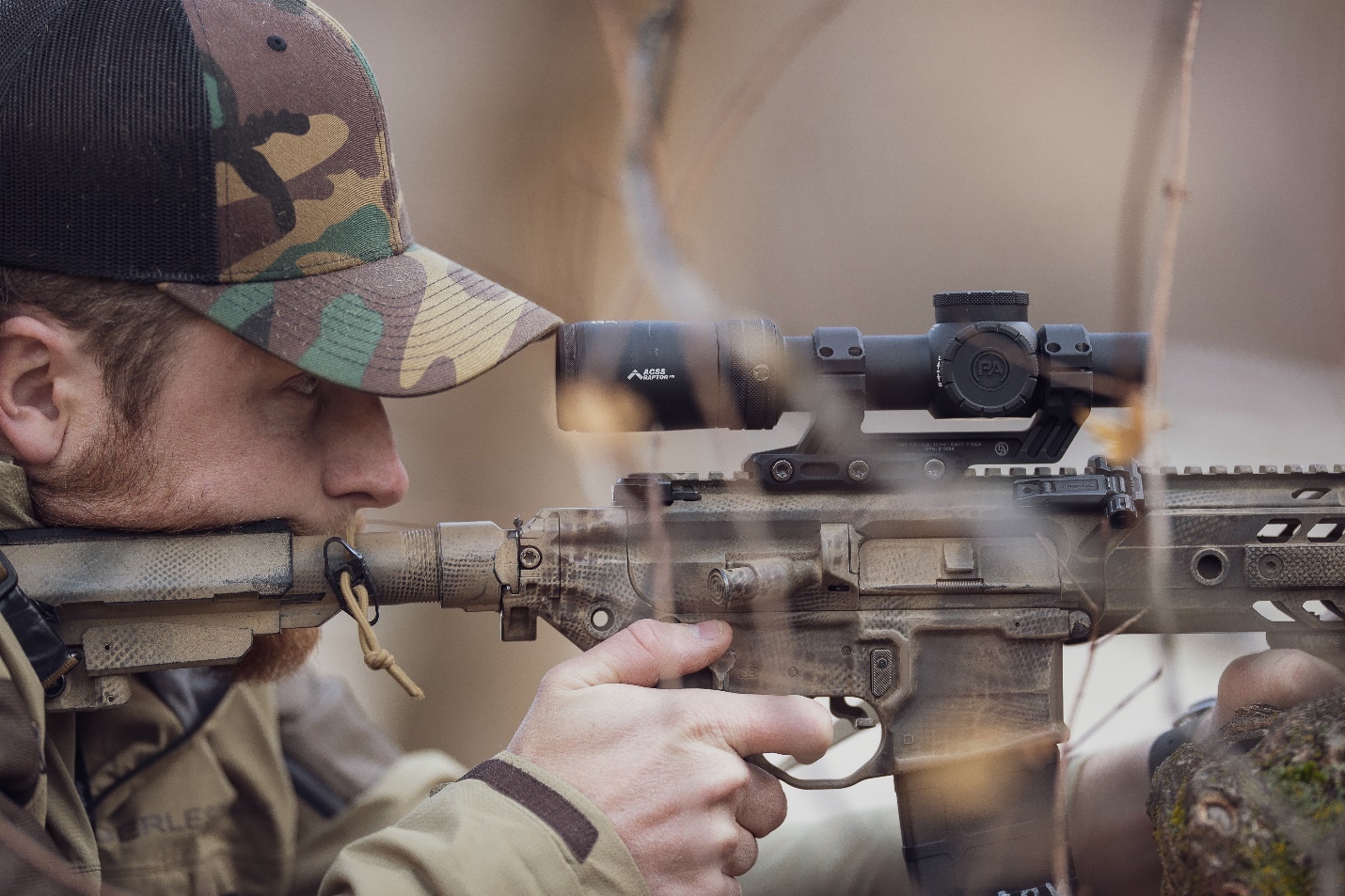
It is certainly not outside the realm of possibility to build an AR-15 that can shoot 650 yards or more, and dispatch a moderately sized game animal, or on the lowest end of the spectrum of the largest game animals.
Furthermore, it’s quite easy to build an AR-10, depending on the cartridge that can take a large game animal at 850 yards. Whether or not the shooter has the skill level to do so on a consistent basis, will be up to the shooter and their experience.
Certainly, these are at the limits of where the AR-15 and the component parts are currently on the market.
That isn’t to say that thousand-yard shots can be done or haven’t been taken, but to be consistent, and to be consistent with gamesmanship principles, especially when hunting an animal, it might not make sense to push the envelope past 650 yards unless you have absolute confidence that such a shot can be lethal, well-placed, and is a smart shot to take at that moment.
From a competition perspective:
For a 3-gun competition shooter, the realistic need to shoot up to 500 yards is even few and far between. Essentially, if you’ve built a gun that can handle 500 yards (which many out of the box factory rifles can handle, easily at minute of angle), you’ll be okay.
For a CMP sanctioned match, that is what most people know as “National Match Competitions” run by the Civilian Marksmanship Program with a lot of carryover into the military end of the spectrum. In these competitions, if you’ve built a gun that can handle 600 yd at a minute of angle, you’ll be more than prepared.
For the NRA’s competition “America’s Rifle Challenge”, for a level one match, anything that can shoot minute of angle at 100 yards is acceptable; and for a level two match, anything that can shoot at five hundred yards or closer at minute of angle is more than acceptable.
From a competition perspective, you’re going to be shooting at targets on average less than 350 yards away. Very rarely are you even looking at a 700 yd + shot. The sweet spot on the high end of the range spectrum is under 350 yards for the .223/5.56 – a shooter can compensate for beyond that quickly with a BDC type optic too.
From an anti-personnel or anti-materiel (or a general law enforcement) perspective:
Because a man sized target, and the threat level that a target like that might perpetuate, taking long distance shots on an AR platform, simply isn’t the best practice for law enforcement. This is especially true when the target has access to or is wielding a firearm or is in a hostage situation of any type.
When law enforcement and military are utilizing an AR style rifle as an anti-personnel implementation, the range is reduced, and the projectile is increased in payload size.
This is to ensure a single shot kill. Most law enforcement agencies will not be shooting an AR style rifle at any distance more than 250 to 300 yards.
Even then, this is at the far end of the spectrum of where the liability concerns and difficulty in consistent shot placement become a factor. In today’s legal environment, law enforcement tried to avoid concerns like that.
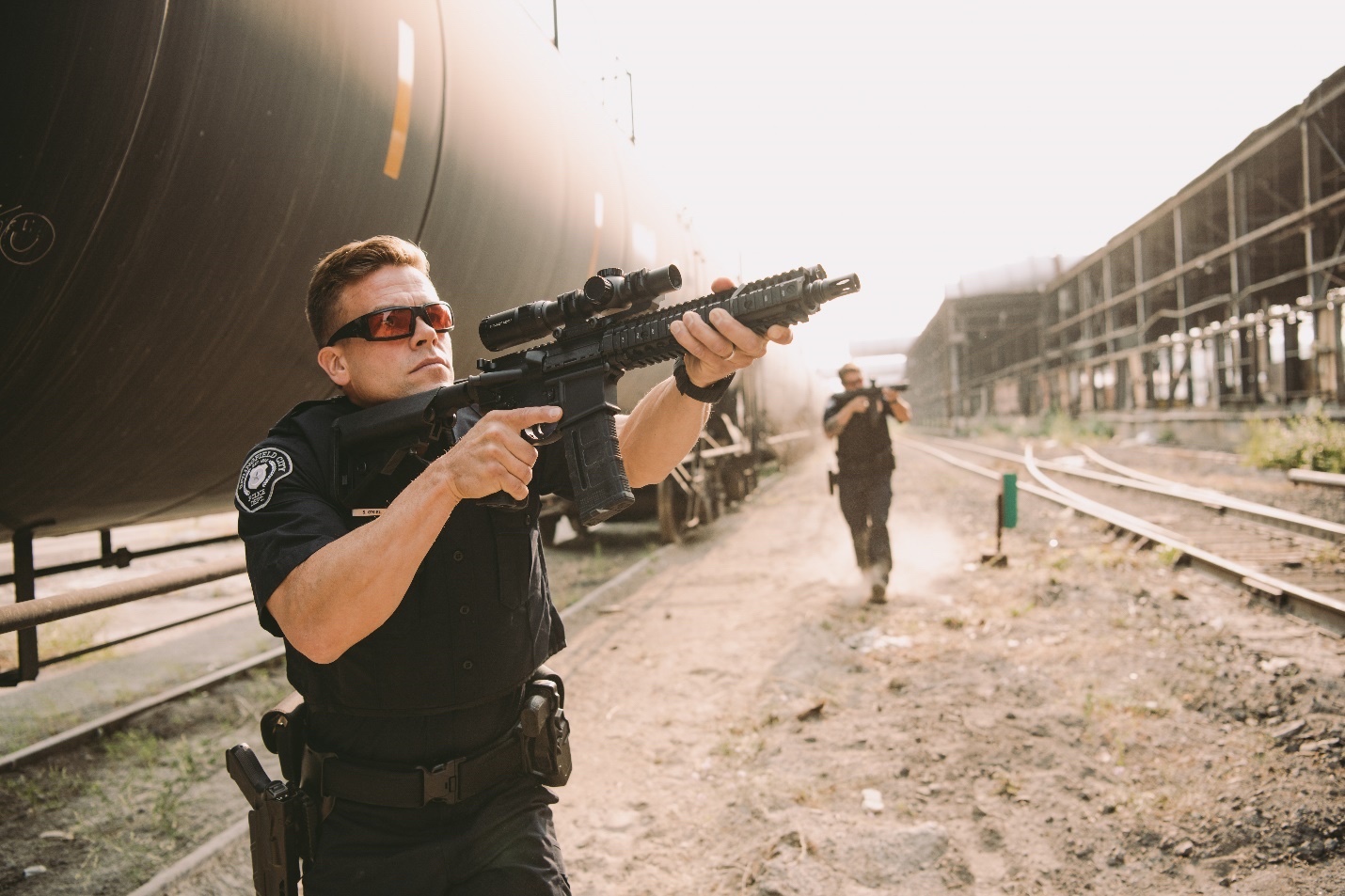
Rather than trust a basic beat cop and their basic rifle in their basic Police cruiser to be able to take shots past say, two hundred yards, in a situation that may even be time-sensitive, a department would likely opt for a long-range precision marksman on staff to take that shot, and likely with a different platform of rifle.
Now, speaking in the real world, many law enforcement agencies utilize the AR-10, or even the AR-15 for moderate ranges, and even into the long-range precision marksman category. Not everything is done with Remington 700’s or Winchester 70’s, or Steyr bolt actions.
There was a period where Walther WA-2000’s and HK PSG-1’s were coveted pieces of hardware for departmental use, but those days are over.
Many intermediate-range firearms can be built out of the AR platform nowadays and offer substantially similar accuracy to these “Crown Jewel” type semi-automatic anti-personnel rifles of the past.
Larger teams and even smaller organizations generally default to bolt action highly accurate rifles to ensure they have most of the hardware equation taken care of and spend significant resources on training sharpshooters within their law enforcement agencies how to handle those rifles at longer distances.
From a depredation perspective:
Looking at the big business of killing hogs, coyotes, or other predatory animals nowadays, the AR has become a bit of a superstar in that realm. The ability to take animals at anywhere from 30 ft to 500 yd using the same cartridge, load, and hardware sets up an interesting scenario.
Looking at the landscape of the newer cartridges online in the AR realm, one can see plenty of fantastic options for depredation. We’ll explore a bit of that in the next segment regarding calibers and cartridge options.
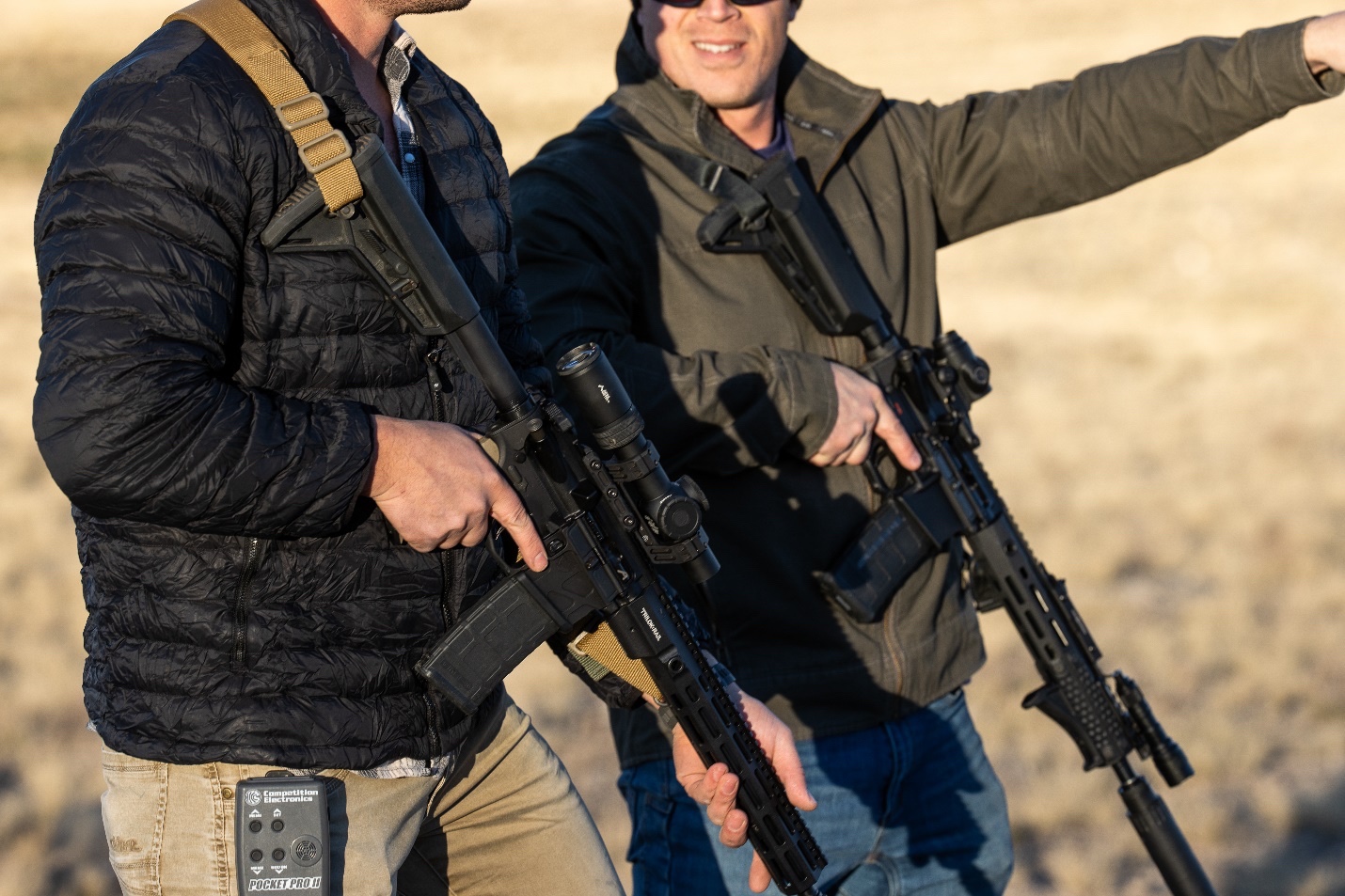
Suffice it to say there are plenty of standout options for the AR platform that can generally achieve any goals a depredation-specific AR build has set out to accomplish.
From a multi-use perspective – specifically with regards to more versatile cartridge options:
First and foremost, the AR-15 utilizing the 223 Remington, or the 5.56 x 45 is already quite a versatile firearm.
But the argument gets much more interesting when you start talking about the available cartridges, especially those introduced in the last 5-10 years or so. When you look at the availability to the AR-15 of cartridges like the 6.5 Grendel, the .224 Valkyrie, the 6.8 SPC, the 300 Ham’r, and the .300 Blackout, you start to see a significantly versatile group of cartridges that combines well with one of the most versatile firearms in history.
Piggybacking on the success of the cartridges that fit within the ecosystem of the AR-15, one might also look at the long-range capabilities that come from using the AR-10 or .308 Winchester platform of the AR. This system allows you to get into cartridges like the .308, of course, which is here to stay, and has significant ballistic advantages over smaller cartridges, and the 6.5 Creedmoor. Some builds utilizing the 6.5 Creedmoor can push 1000 yd + capabilities on game targets, shooting sub minute of angle, easily.
What variables are most important when trying to improve consistency and ballistics past three hundred yards on a rifle like the AR-15?
From a component perspective, one of the most important parts you’ll want to emphasize to get past 300 yards routinely, will be your barrel, and how that matches from a twist rate and length perspective to the actual load you’ve settled on for the specific task you’re trying to accomplish.
You can also design this aspect from a different perspective: instead of settling on a specific load, look at the capabilities of the barrel length and the twist rate and then dial in a load to ensure that you have the maximum performance out of the barrel.
All things considered, the largest Improvement in overall capabilities is going to be the cartridge in which you will be shooting, paired with the most robust and finely tuned barrel you can find for the cartridge that you choose to use.
This does not mean that you can discount barrel mounting stability and the importance of trying to lock-in the stability and monolithic nature of the barrel connection to the firearm. These are necessary features that must be paid attention to.
A significant trigger upgrade can also do wonders in keeping you consistently on target. But an even bigger variable may be your optics and how they factor into your ability to get on and stay on target., especially when you need to compensate for bullet drop or on-the-fly windage concerns.
Additionally, mating a high tolerance upper receiver to a high tolerance lower receiver, or buying a matched set that prioritizes tight tolerances and is built to mate together for the long term, can also improve overall strategic accurizing methodologies.
Balancing the rifle can also be incredibly important, especially if you’re shooting something like a bespoke 26 inch 6.5 Creedmoor barrel, which will cause the front end of the AR to get incredibly heavy, while the back end remains considerably lighter.
Having the correct systems in place to improve balance, including things like a bipod, an improved buffer system, or a significantly adjustable buttstock and pistol grip, will be important. Matching the right forend or other furniture will also help to build a more “monolithic” rifle in general.
Did we completely overlook the AR-10 and substantially similar cloned 308 pattern semi-automatic AR rifles?
While we only spoke briefly about the 6.5 Creedmoor, it has become the poster child for modern-day AR accuracy. This goes without saying, that the larger, more robust .308 Winchester based AR-10 platform is already more suitable to a more accurate firearm build.
The inherent accuracy bonuses of using a round like the 6.5 Creedmoor, and the component parts that come along with such an inherently accurate cartridge, only improve the platform further. And as touched upon earlier, it is a proven concept, that a cartridge can have one of the biggest impacts on accuracy of all the variables within the accuracy equation.
While this discussion was initially built around the idea of pushing the limits of accuracy, and usability beyond what was a normal envelope of performance for the AR-15, it would be ridiculous not to include the AR-10, and the 6.5 Creedmoor.
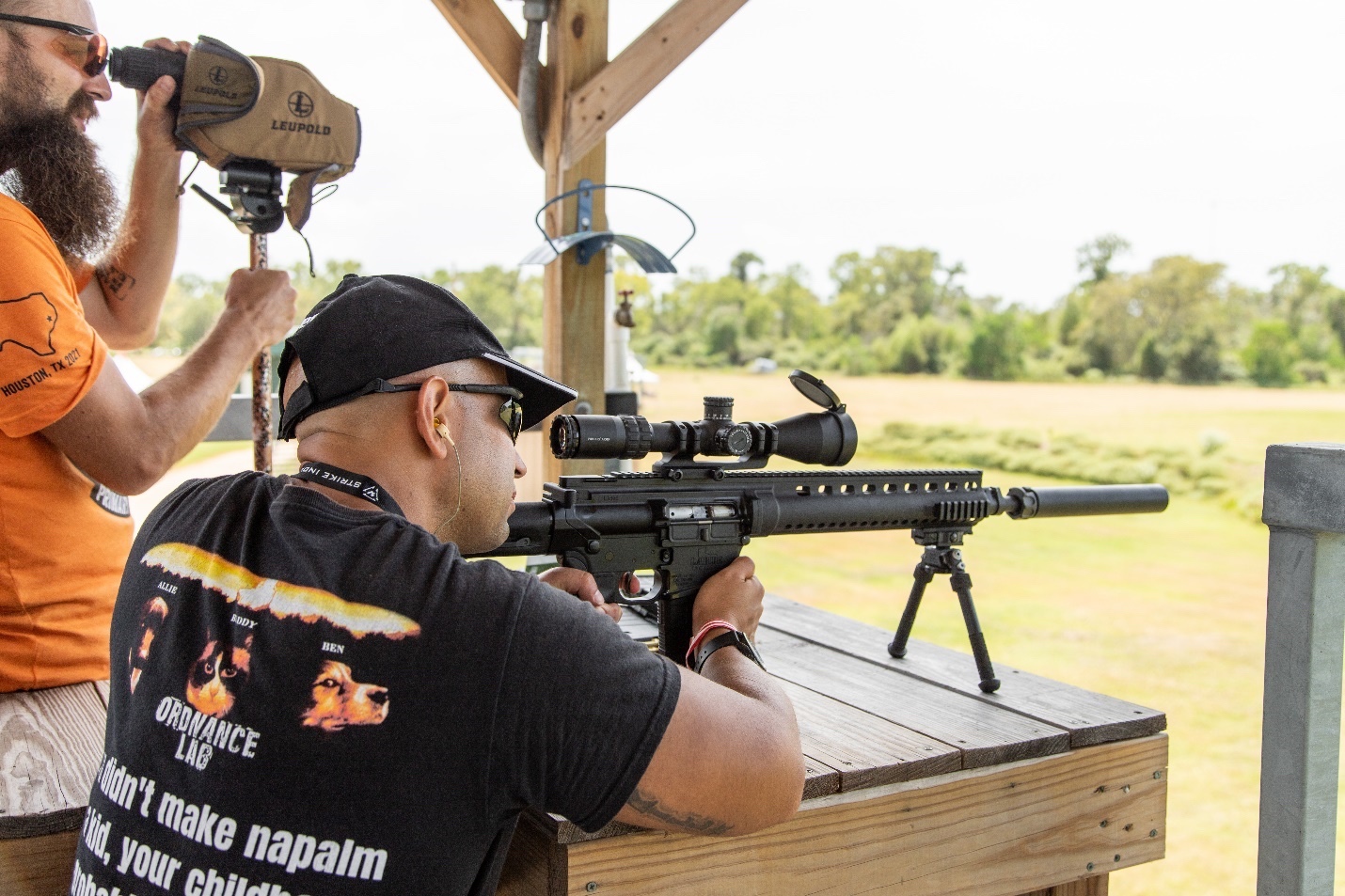
That is also not to mention the .308 Winchester, which offers double or triple the long-range capabilities of the .223/5.56 cartridge.
When you look at the capabilities of such a compact and lightweight firearm as the AR-15 however, it is a little more difficult to achieve huge range capabilities, while also having ballistic superiority to comparative marketable options in the size range.
All that said, it’s important to understand how much impact the newer, more ballistically viable loads can have on pushing the AR-15 beyond its normal limits.
Before we even started discussing the topic in this article, it was probably already a foregone conclusion that anyone who didn’t understand that the AR-15 was capable of shooting on a regular basis, past three hundred yards, was being a little unfair to such a versatile rifle. But it should also not be discounted, that most shooters generally are never going to take a shot beyond 300 yards with an AR-15.
In fact, most readers of this article are maybe just now, for the first time, exploring the idea of shooting for long-range precision with an AR-15.
Again, this is not to say that the AR-15 should forever be pigeon-holed into something that only utilizes the .223 Remington or the 5.56 x 45 and must stay within the 350 to 400 yd extended range of those cartridges.
With the introduction of cartridges like the .224 Valkyrie and the 6.5 Grendel, and even the 6.8 SPC, the .300 Blackout, and the .300 Ham’r, the AR-15 has become something of a jack of all trades. A rifle that’s capable of shooting in a native capacity out of a bone stock rifle with a drop-in conversion on the upper end, out past 450 yd and significantly further – even out into the 650 yard territory without many changes to the original configuration.
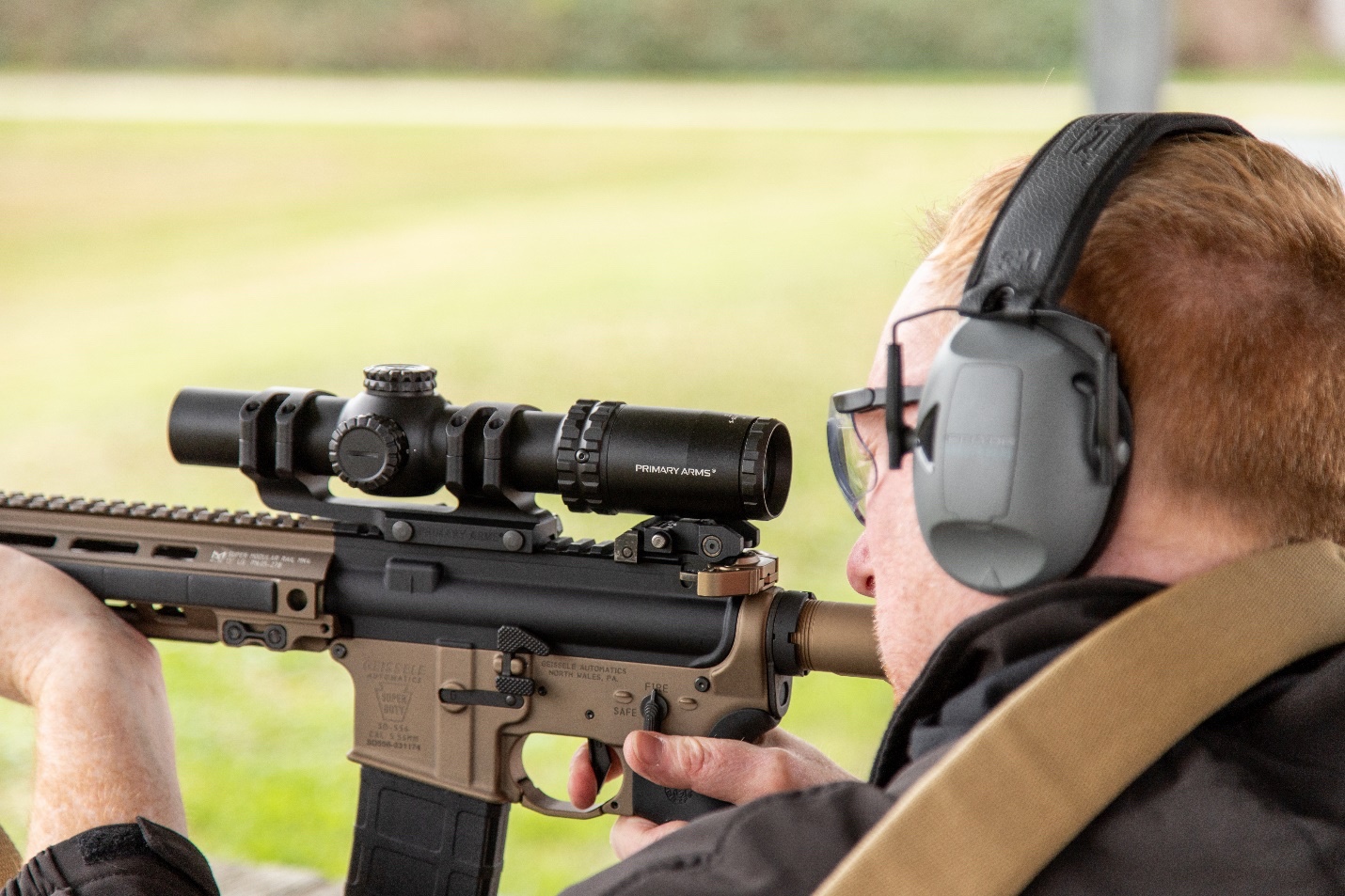
The 224 Valkyrie, for instance, probably shoots well beyond 650 yards given the right wind conditions. The 6.5 Grendel would be a fine round to use when you have difficulty shooting out past six hundred yards where the Grendel is still quite comfortable. If you need to get past that point you can move into the AR-10 platform and access the .308, or the 6.5 Creedmoor.
Even without getting into the AR-10 spectrum, you could still utilize the 6.5 Grendel or the 6.8 SPC out past the usable strategic range of mainstream mil-spec 7.62 x 51mm ammunition under ideal conditions.
Considering this is available on a smaller, lighter weight and easier to wield, lower recoiling AR-15 platform, instead of utilizing the .308 Winchester, or the 7.62 x51mm on the larger platform, there are a lot of options for the AR-15 to go past 300 yards.
Let’s draw some conclusions about shooting past 300 yards with an AR
Given the plethora of rounds, and the ability to customize the AR, one is not stuck within the relatively short-range provided by the original caliber of the AR-15. Given the ability to hop up into the next class level of AR, with the AR-10, the shooter now also has access to a nearly 1,000 yd firearm, out of factory, without much accuracy-tweaking necessary.
Part of the problem with many shooters never pushing the limits of their AR, is that many ranges don’t offer sufficient long-range shooting capabilities, and public lands don’t offer the clean environment full of safety considerations for them to shoot their rifle past the 300 yard mark.
Perhaps it was a little disingenuous to peg the .223 and a 5.56 x45 into a corner that establishes a mere 300 or 350 yard range as the extended operational range of the cartridge.
But, for the purposes of this discussion we believed it opened up the concept that one need not settle for arbitrary ranges, when one can custom build or custom-tailor a factory rifle built on an AR platform, to shoot far beyond, and even double or triple the average range of mainstream loads with mainstream factory battle rifles in the AR-15 platform.
Hopefully, with a bit of research and a little bit of effort, everyone who has read this article to this point, we’ll have the impetus to push their own personal comfort zone past the 300 or 350 yd range with the AR-15.
It may help push readers to contemplate building something capable of shooting double or even triple the range, with around the same “near minute of angle accuracy” that most factory rifles are coming to market with.
Given the high customizability of the AR-15 platform, building a one-off version of a highly competent and highly accurate, moderate to long range precision rifle is within the grasp of most users reading this article.
Primary Focus is a weekly feature from Primary Arms that covers various firearms related subjects.