GORE-TEX Professional

Archive for the ‘Guest Post’ Category

FirstSpear Friday Focus— Merry Christmas from FS

Friday, December 25th, 2020

Happy Holidays and Merry Christmas from the FirstSpear team. We’re proud to bring you 100% American made products and to continue to support those at the tip of the spear.

Free domestic shipping on orders over $99; check out our non-standard, non-stocking page for discounted items.

For more information about FirstSpear, check out First-spear.com.

Check out our latest technology on first-spear.tech.

Nellis AFB’s 24th Tactical Air Support Squadron Inactivates, Leaving Mark on Joint Integration, Close Air Support Training

Thursday, December 24th, 2020

NELLIS AIR FORCE BASE, Nev. —

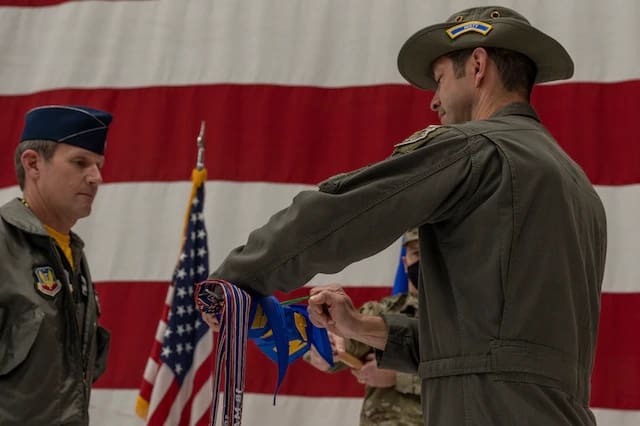
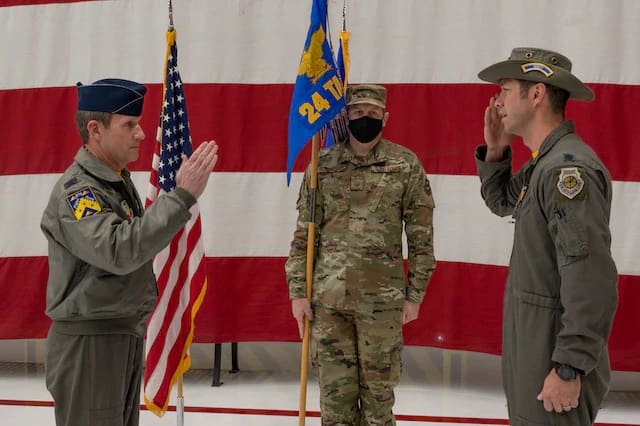
The 24th Tactical Air Support Squadron was inactivated during a ceremony at Nellis Air Force Base, Nevada, Dec. 23, 2020.

The inactivation is part of an overall Air Force strategy to reactivate the 65th Aggressor Squadron.

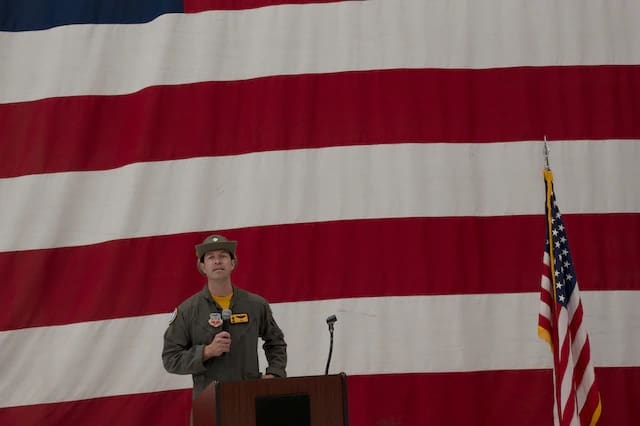
“Our era of great power competition is highlighting the need to integrate across domains – air, land, sea, space, cyberspace and information,” said Lt. Col. Jesse Breau, 24th TASS commander. The force that is able to effectively and consistently accomplish that integration will win against peer adversaries. Forces who are unable or who choose not to integrate in training will become obsolete.”

The Air Force is repurposing the F-16s assigned to the close air support-focused 24th TASS and moving them to an aggressor role as part of the 65th AGRS to enhance air-to-air training and provide adversary aircraft that will better replicate peer adversary military forces.

The 24th TASS was activated at Nellis in March 2018. Its primary mission was to train forward air controllers (Airborne) and joint terminal attack controllers. The squadron’s pilots flew F-16 Fighting Falcons, more commonly known as the “Viper.”

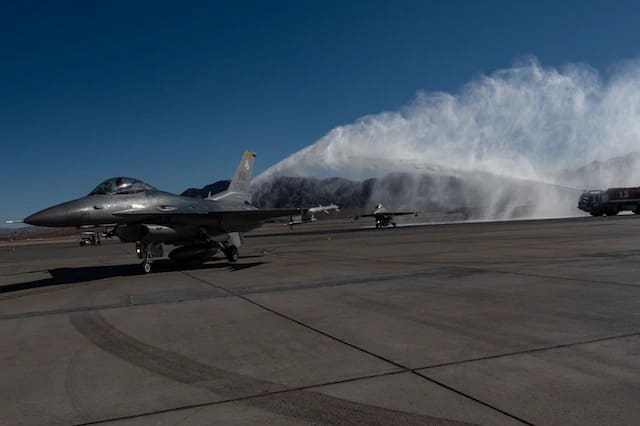
As part of the inactivation ceremony, a 24th TASS Viper conducted a fini flight, celebrating the unit’s rich history.

During the Vietnam era, the 24th TASS’ operators wore non-standard headgear known as Saigon Cowboy hats that link them to the rich heritage of USAF forward air controllers.

While activated at Nellis, the unit’s tactical air control party members hosted JTACs and meshed them with pilots from the combat air force. Pilots who completed a demanding seven-week course were then qualified to control CAS airstrikes from the cockpit of their fighter jets.

The 24th TASS’s mission was unique in that it was the only centralized FAC (A) training course in the United States Department of Defense. The former students and instructors from the 24th TASS will carry on the unit’s legacy of air-ground integration and CAS expertise as they move on to other assignments throughout the CAF.

“There are very few fighter pilots in the U.S. Air Force that know Army or Marine Corps doctrine and tactics. So in that sense, I think one of the key outputs of the forward air controller training course is an officer who can integrate joint fires,” said Breau. “Graduates of our course are focused on close air support and integrating airpower with surface forces’ maneuver and fires. They graduate as close air support subject matter experts, and bring that knowledge back to their combat units.”

The 24th TASS’s training leveraged the Nevada Test and Training Range and the wide range of aircraft types stationed at Nellis to provide premier CAS training. The course immersed fighter pilots into the TACP members’ mission through planning, briefing, executing the mission on range and debriefing with the JTACs.

“To integrate with the ground scheme of maneuver, our philosophy that’s written into joint fires doctrine is that a forward air controller should always be an extension of the tactical air control party,” said Maj. Andrew Bolint, 24th TASS director of operations. “So the JTACs on the ground with the special operations teams just need us to support their objectives and extend their capabilities, whether that’s firepower, sensors or communication.

“What I took away as a forward air controller pilot that completed and eventually managed the course is an understanding of the ground scheme of maneuver and the ground force commander’s objectives for each mission,” he added. “This taught me to better predict where and how to allocate weapons and sensors that would best support friendly forces on the ground.”

The result was a high level of trust and rapport between the JTACs and fighter pilots, along with an in-depth understanding of the purpose and role of all of the air and ground players involved in the training mission scenarios.

“The in-person planning and debriefs isn’t common for JTACs and pilots, however it is an invaluable way to increase the lethality of the CAS team,” said Master Sgt. Andrew MacDonald, 24th TASS TACP flight chief and JTAC instructor.

Although there will no longer be a centralized USAF F-16 FAC(A) training course, the future of air-ground integration is in good hands, according to Breau. Several Nellis Combat Training Squadrons are dedicated to joint integration exercises, and the USAF Weapons School continues to produce expert weapons officers.

“What will always be useful in large-scale combat operations will be the ability to mesh across domains, and the forward air controllers and JTACs that we’ve helped to train have the expertise to do that,” said Breau.

Additionally, the Congressional decision to maintain the A-10 platform ensures that Close Air Support focus and institutional knowledge remains.

“I think the 24th TASS has done an exceptional job of training for what a major conflict will look like, in terms of threats,” said 1st. Lt. Benjamin Harris, 24th TASS intelligence officer in charge. “Some of our training audience are unfamiliar with advanced integrated air defense systems and ground force tactics that we expect to face in a fight with peer adversaries.

“Since we plan, brief, execute and debrief every tactical air support mission as an air-ground team, our student pilots and operators completed the course with the ability to cover each other’s blind spots and leverage each other’s strengths,” he added.

The decision to inactivate the squadron was finalized in May 2020 by Gen. Mike Holmes, former commander of Air Combat Command.

Story by 2nd Lt Nicolle E. Mathison, 57th Wing Public Affairs

Photos by TSgt Alexandre Montes

National Cyber Range Complex Charleston and NIWC Atlantic Fosters Collaboration through Cybersecurity Simulation Exercises

Wednesday, December 23rd, 2020

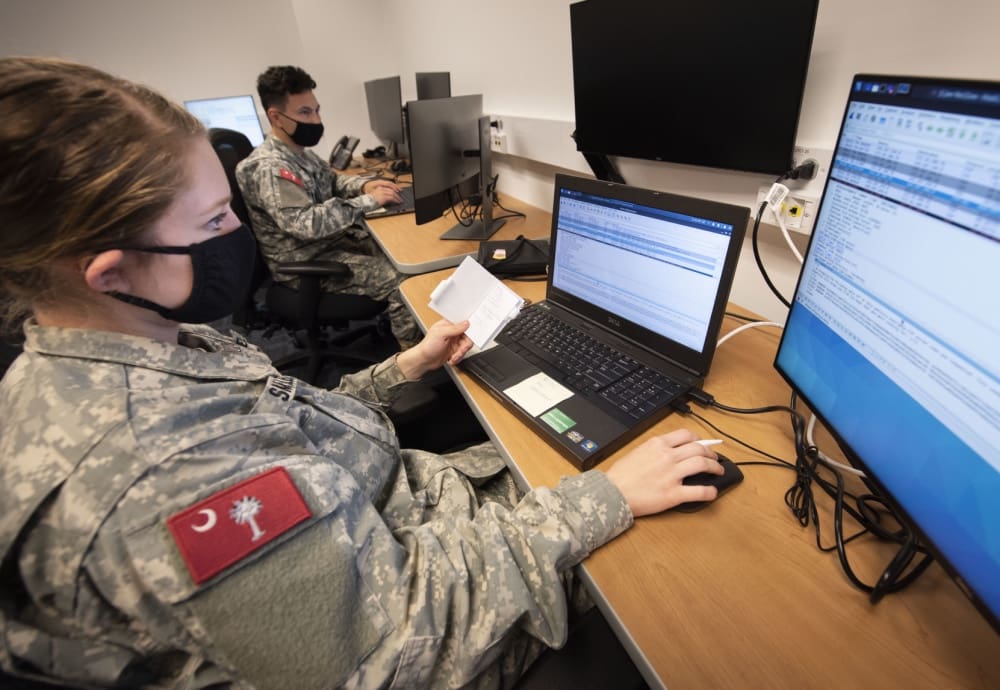
The National Cyber Range Complex (NCRC) Charleston, located at Naval Information Warfare Center (NIWC) Atlantic, recently hosted teams of cybersecurity professionals to compete and hone their cybersecurity skills in the NCRC Cyber Red Zone Capture the Flag (CTF) competition.

Based loosely on the outdoor “capture the flag” game, as well as the board game, “Battleship,” this year’s Cyber Red Zone CTF event was given a maritime twist. During CTF, 35 teams competed in 48-hour time slots to find hidden clues and virtual flags by hacking into mock computer systems. In order to accommodate all the teams of cybersecurity professionals from across the Department of Defense, as well as the three collegiate Reserve Officers’ Training Corps (ROTC) teams, the NCRC held 11 sessions from early October to mid-November with four teams competing concurrently in each session.

The NCRC Charleston hosted two teams in October with participants from The Citadel’s Cybersecurity Team, as well the Marine Corps Operational Test and Evaluation Activity (MCOTEA). Although NIWC Atlantic cybersecurity professionals have previously participated in past National Cyber Range CTFs, this was the first year NCRC Charleston hosted any teams.

“By learning how to thwart an attack, or better yet, seeing how an attacker attacks, it helps cybersecurity professionals design better defenses, which ultimately protects your information and mine,” said Jeff King, NCRC Charleston director.

For the CTF, the flags were assigned point values based on difficulty and each team worked under the pressure of time limits to accumulate points, said Scott West, NCRC Charleston lead event director. The teams with the most points won in their respective event.

During the NCRC Cyber Red Zone CTF, cadets from The Citadel used their offensive cybersecurity skills to compromise modern wireless networks, web applications, and Windows and Linux operating systems. During the event, cadets also researched specialized embedded Real Time Operating Systems (RTOS) and communications standards, to include the National Marine Electronics Association 2000 standard and Automatic Identification System. Both of these communications standards are commonly used on marine vessels for navigation and engine operations.

As part of the event, West said that the cadets learned new lessons and techniques while solving several of the competition’s more complex challenges.

“We had to learn a lot of protocols, a lot of new skills,” said Citadel Cadet Shiloh Smiles, The Citadel. “We had to apply things used in other areas here in ways that are difficult. I was just trying my best to get information and do some damage.”

Cadets that competed in the NCRC Cyber Red Zone CTF are also recipients of either the National Science Foundation (NSF) Scholarship for Service (SFS) or the DoD Cyber Scholarship Program (CySP).

“These cadets will go on to spend at least three years working for the United States government as cyber professionals, so CTF training really helps to prepare them for future tasks,” said West.

The Citadel cadets expressed their appreciation for participating in the CTF at NCRC Charleston as a chance to reinforce classroom training.

“I don’t think anywhere else could have provided an actual experience like this for us.” said Smiles. “I’m really thankful that I was able to have this opportunity.”

The NCRC CTF event offered a similar experience for Marine Corps cyber professionals to practice and sharpen skills in a realistic training environment.

“Members of the MCOTEA team use these types of events to maintain proficiency,” said King. “MCOTEA is the independent operational Test & Evaluation authority for the Marine Corps and is responsible for the operational and cyber testing of products that NIWC Atlantic builds prior to them going to warfighters.”

While the networks and systems in the CTF are simulated, the technology represented is common to many of the systems actively being developed, tested, and fielded across the DoD, said West.

“Serial-based protocols used in the CTF are actively used in U.S Navy vessels and Marine Corps vehicles,” said West. “These type of events provide those vulnerability assessment analysts with tools and realistic challenges needed to identify deployments and determine potential mission impact to assess risk to interconnected mission-critical systems.”

NCRCs conduct cyberspace testing, training and mission rehearsal/preparation events for the full spectrum of DoD customers including those involved in research, development, acquisition, testing, training and operations. The NCRC Charleston supports a wide variety of event types including science and technology demonstrations, developmental test & evaluation, operational test & evaluation, security controls assessments, cyberspace operations training, cyberspace tactics, techniques procedures development, forensics/malware analysis, and cyberspace operations mission rehearsal/preparation.

The Charleston facility is one of two OSD R&E resourced Navy cyber test and training range facilities, with NCRC Patuxent River as the second facility.

Story by Kris Patterson, Naval Information Warfare Systems Command (NAVWAR)

Photo by Joe Bullinger, US Navy

Army-funded Smart Fabric Collects Space Dust on International Space Station

Tuesday, December 22nd, 2020

RESEARCH TRIANGLE PARK, N.C. –– An Army-funded smart fiber being tested on the International Space Station could be used to develop space dust telescopes and allow astronauts to feel through their pressurized suits.

Researchers at the Army’s Institute for Soldier Nanotechnologies at the Massachusetts Institute of Technology developed an acoustic fabric so sensitive to vibrations that it can detect impacts from microscopic high velocity space particles. A more earthly application of these fabrics could be for blast detection and in the future act as sensitive microphones for directional gunshot detection.

The fabric system contains thermally drawn vibration-sensitive fibers that are capable of converting mechanical vibration energy into electric energy. When micrometeoroids or space debris hit the fabric, the fabric vibrates, and the acoustic fiber generates an electrical signal.

“This is an exquisite example of harnessing nanoscience for technology development that bridges the physical and digital domains,” said James Burgess, ISN program manager for the Army Research Office, an element of the U.S. Army Combat Capabilities Development Command, now known as DEVCOM, Army Research Laboratory. “Delivering revolutionary methodologies that result from foundational science is always one of our main priorities, and the opportunity to collect data from space dust using a fiber sensor as a key building block of the system is truly exciting.”

The U.S. Army established the ISN in 2002 as an interdisciplinary research center devoted to dramatically improving the protection, survivability, and mission capabilities of the Soldier and Soldier-supporting platforms and systems.

The acoustic fiber was developed through ISN projects aimed at building next-generation fibers and fabrics for Soldier uniforms and battle gear that could detect a variety of physiological parameters such as heart rate and respiration as well as external sounds like gunshots and explosions.

“Traditional telescopes use light to learn about distant objects; this fabric uses space dust analysis to learn about space,” said Dr. Yoel Fink, professor of Materials Science and Electrical Engineering at MIT. “This is a great example of how ISN projects allow us to be highly responsive to opportunities and meet challenges far beyond what we initially imagined.”

MIT graduate student Juliana Cherston, the project’s leader, applied another piece of ISN technology—the Laser-induced Particle Impact Test array, which uses lasers to accelerate tiny particles to supersonic or even hypersonic speeds, and allows researchers to image and analyze their impact on target materials—to demonstrate that the fabric system could accurately measure the impulse of small particles travelling at hundreds of meters per second.

Scientists are now using ISN facilities to test the sensitivity of the acoustic fabric for impacts from micro-particles with similar kinematics as certain types of high velocity space dust. Simultaneously, researchers are baselining the fiber sensor’s resiliency to the harsh environment of Low Earth Orbit on the International Space Station.

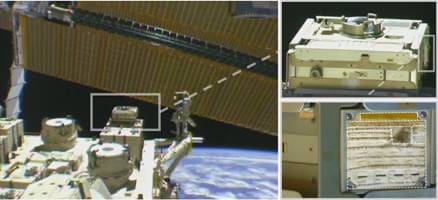
For this initial launch, the research team worked with the Japan Aerospace Exploration Agency and Japanese company Space BD to send a 10 cm by 10 cm sample of the high-tech fabric to the International Space Station, where it was installed on an exterior wall, exposed to the rigors of space. The fabric sample, unpowered for now, will remain on the orbiting laboratory for one year, in order to determine how well these materials survive the harsh environment of low Earth orbit.

The team is also scheduled for an electrically powered deployment of the fabric through sponsorship of the International Space Station U.S. National Laboratory in late 2021 or early 2022. The International Space Station U.S. National Laboratory works in cooperative agreement with NASA to fully utilize the orbiting platform to bring value to our nation through space-based research and enable a low Earth orbit economy.

 “Thermally drawn multi-material fibers have been developed by our research group at MIT for more than 20 years,” said Dr. Wei Yan, postdoc in MIT’s Research Laboratory of Electronics and the Department of Materials Science and Engineering. “What makes these acoustic fibers special is their exquisite sensitivity to mechanical vibrations. The fabric has been shown in ground facilities to detect and measure impact regardless of where the space dust impacted the surface of the fabric.”

The white surface of the International Space Station is actually a protective fabric material called Beta cloth, a Teflon-impregnated fiberglass designed to shield spacecraft and spacesuits from the severity of the elements more than 250 miles above the Earth’s surface.

The research team believes the acoustic fabric could lead to large-area fabrics that accurately measure the impulse on spacecraft of micrometeoroids and space debris travelling at kilometers per second. The smart fabrics may also help provide astronauts with a sense of touch through their pressurized suits by providing sensory data from the exterior of the suit and then mapping that data to haptic actuators on the wearer’s skin.

In one year, these samples will return to Earth for post-flight analysis. The researchers will measure any erosion from atomic oxygen, discoloration from ultraviolet radiation, and changes to fiber sensor performance after one year of thermal cycling.

“It’s easy to assume that since we’re already sending these materials to space, the technology must be very mature,” Cherston said. “In reality, we are leveraging the space environment to complement our important ground-testing efforts. Our focus is on baselining their resiliency to the space environment.”

By US Army DEVCOM Army Research Laboratory Public Affairs

First USAF Members Complete RCAF Sentinel Program

Monday, December 21st, 2020

This article is almost a year old and discusses United States Air Force participation in a Royal Canadian Air Force program to train personnel to serve as links between service members and the Royal Canadian Chaplain Service in order to combat suicide. The RCAF has about 1400 Sentinels out of just 14,500 active service members. That’s quite an investment.

The goal of the Sentinel Program, a growing initiative within the Canadian Armed Forces (CAF), is to use wingmanship and tactical-level supervisors as mental health advocates. The program is designed to empower junior leaders to be the first line of defence against real and serious threats such as mental stress, work-centred exhaustion, and suicide.

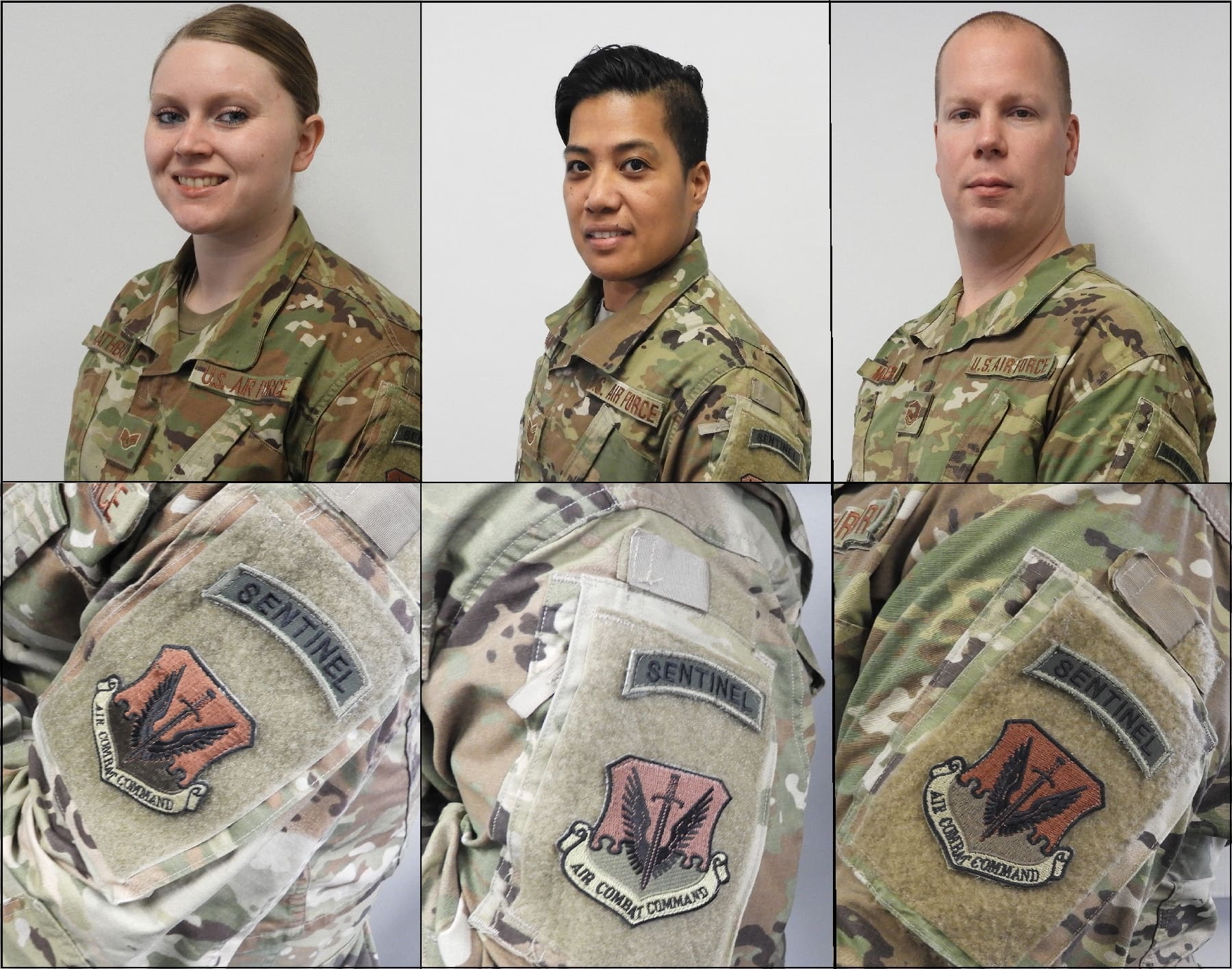
Staff Sergeant Sierra Rathbun, Technical Sergeant Sheryl Ubando and Master Sergeant Jonathan Miller are the first United States Air Force (USAF) members to have completed the Sentinel Course. They were nominated for the training by their leadership to represent the USAF and build relationships, bringing our two countries closer together. 

“I am honored to have a chance to serve side-by-side with my Canadian military family,” said Master Sergeant Jonathan D. Miller, a Detachment 2, First Air Force, operations superintendent. “This opportunity is truly unique, one that I will cherish for years to come. This training opportunity is a bridge between the USAF Resiliency Program and the CAF Sentinel Program, and is a huge step toward bi-national integration.”

Offered by the 22 Wing/Canadian Forces Base North Bay, Ontario, chaplains, “The Sentinel course is a valuable asset for strengthening the spiritual resiliency of our forces,” explained Captain Justin Peter, a wing chaplain.

During training, the volunteers were asked to remember how important it is to “just listen”, to ask open-ended questions, and to be an extension of the chapel as “eyes in the lines”.

The Sentinel Program was introduced at 22 Wing in 2018 by Lieutenant (Navy) Timothy Parker, also a 22 Wing chaplain. Currently, the wing boasts 66 trained Sentinels who must undergo a full day of training every year to maintain their readiness.

By Staff Sergeant Patrick Bisigni

Staff Sergeant Patrick Bisigni serves as public affairs representative and unit photographer with Detachment 2, First U.S. Air Force Unit.

SCUBAPRO Sunday – Operation Just Cause

Sunday, December 20th, 2020

President George H. W. Bush ordered the invasion of Panama on December 16, 1989. Its primary aim was to depose and capture Manuel Noriega, the country’s military dictator, charged in the United States on drug trafficking charges, dubbed “Operation Just Cause.”

Bush cited four reasons for the invasion: safeguarding the lives of Panama’s approximately 35,000 U.S. citizens; defending democracy and human rights; fighting drug trafficking in a country that had become a base for drug money laundering and a point of transit to the U.S. and Europe for drug trafficking and maintaining the dignity of the treaties signed by President Jimmy Carter.
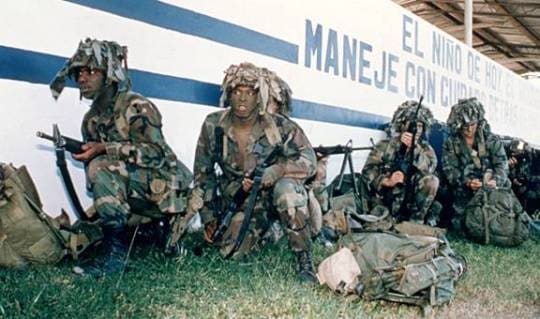
27,684 U.S. troops and over 300 aircraft were involved in the campaign. It started with an attack on strategic assets, including the Panama City commercial airport and a garrison and airfield of the Panamanian Defense Force at Rio Hato, where Noriega maintained a home.

SEAL Team Four and Two sank Noriega’s private boat and destroyed his Panamanian gunboat.

Punta Paitilla Airfield was one of the worst days in SEAL team history. Team Four were tasked with destroying Noriega’s aircraft at the airfield. When first assigned, the SEALs to stand off and just shot up the plane so it couldn’t be used; as the day of planning went on, it got more and more complicated; it started with destroying the aircraft, to just shot out the engine, to shoot the tires to cut the tires. With three platoons of 48 operators total, this was more of a job for the Rangers; at 0030 hours on the 20th, the SEALs under the command of LtCdr Patrick Toohey inserted just south of the airfield from Zodiacs CRRC.

They were in place by 0105 hours, but safety elements announced that the Panamanian V300 Cadillac Gage armored cars were approaching the airfield quickly. Toohey sent a squad to set up a blocking position, but the Panamanians opened fire on the airfield as soon as they started to move, killing one SEAL and injuring five others. The other SEALs reinforced the troops under fire and suffered two more casualties and four more injuries in the ensuing firefight. They damaged Noriega’s aircraft with an AT-4 missile.
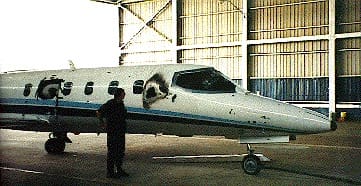
They rolled an aircraft into the middle of the runway during the night to prevent the airfield from being used. The injured were taken to Howard Air Force Base by MEDEVAC. The SEALs guarded the airfield until mid-morning when a company from the 75th Ranger Regiment relieved them. Team Four was also tasked with sending a recon team to watch one of the central prisons, as it was believed that when the invasion took place, Noriega would order all the prisoners to be released to help fight the Americans and add to the chaos. The Four Team guys that died were.  LT John Connors, ENC Don McFaul, Torpedoman’s Mate 2nd Class Issac Rodriguez and Boatswain’s Mate 1st Class Chris Tilghman.

Don McFaul purposely laid himself across a brother during the gunfight to shield him and was honored by the posthumous award of the Navy Cross and the Purple Heart. The USS McFaul (DDG-74) was named in honor of CPO Don McFaul.
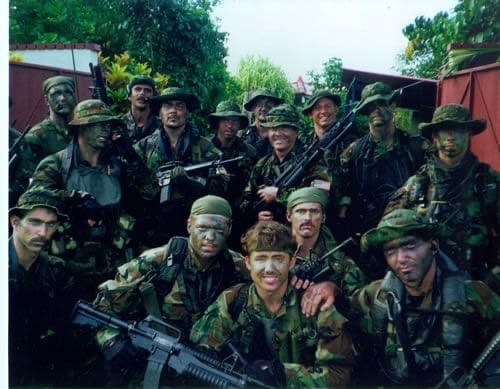
SEAL Team TWO was tasked with sinking Noriega’s boat. Four SEALs were inserted from Zodiac that had departed from NSW Unit 8. The swim pairs planted explosives on Presidente Porras’s pier. They then swam and plated explosives on Noriega’s boat and were then fired at by Panamanian guards who threw grenades into the sea. The SEALs swam to the pier and could see the gunboat destroyed by the explosions, hiding beneath it. They later swam back out into the canal, where the CRRCs picked them up.
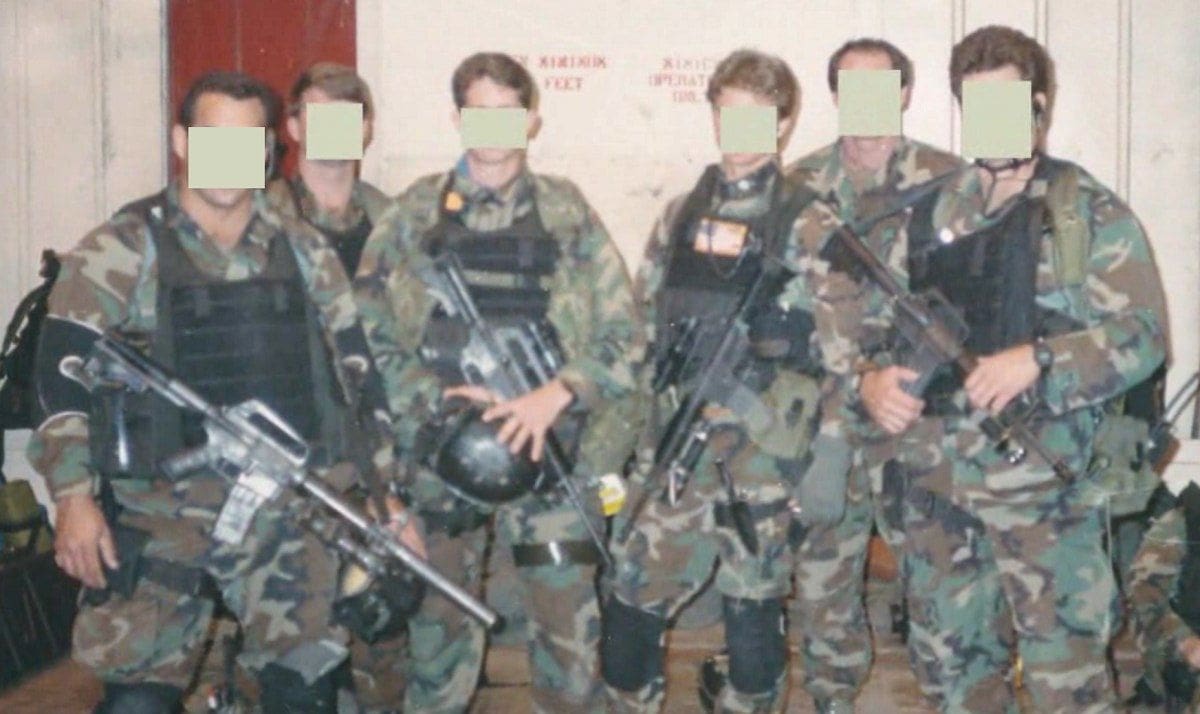
Operation Acid Gambit. The rescue of Kurt Muse’s. Muse was an American who grew up in Panama, got married, and moved back after his military service had ended. His wife was a schoolteacher from the DOD. In May 1989, he was arrested and placed in Modelo Prison for operating a clandestine anti-Noriega radio station. Muse was an (a ledged) CIA operative, one Panamanian newspaper reported.

President Bush determined that after getting a letter smuggled out of jail, but a U.S. military doctor allowed to treat him, Muse’s rescue was the course of action. 1st Special Force Delta (CAG) was tasked with his rescue

Delta began rehearsing the prison raid in a mockup they designed at Eglin AFB, Florida. They had used notes supplied by the doctor. Undetected, they fled to Panama and began tentative preparations to raid the jail. 23 Delta operators boarded four MH-6 “Little Bird” helicopters shortly after midnight on the 20th and landed on the prison roof.

The operators got to the most defensible position and prepared for Muse’s defense. Around 15 minutes later, an IR-strobe light signaled a passing chopper. They relayed their location by radio, and a 5th Infantry Division armored vehicle arrived shortly afterward, picked up everyone, and took them to safety. In the field and the Comandancia (Noriega’s Headquarters) across the street, Delta Snipers quickly removed sentries. To get attention away from Modelo Prison, two Air Force C-130 Spectre Gunships started shelling the Comandancia at that moment.

As soon as a rescue attempt began, one operator climbed down the building’s side to a window outside Muse’s cell to remove the guard tasked with killing him is a rescue was attempted.

The breaching team blew the door to the roof, and the extraction teams began two floors down the stairs to Muse’s cell. The Delta operators eliminated two guards, and another who was not armed and did not fight was bound. Muse saw their flashlight beams and saw their smoke. It was only then that he heard an American voice asking him to cover up. Delta operator Pat Savidge attempted to shoot the lock off, but with bolt cutters supplied by Delta’s Kelly Venden, it stood up and had to be cut off. Savidge said “Merry Christmas” to Muse, giving him body armor, goggles, and a Kevlar helmet. They climbed up to the roof again.

The now overloaded Little Bird started nose-diving for the street, 60 feet below, once onboard the MH-6 that was called back for extraction. Just a few feet from the road, the pilot regained control, and they flew down the highway, placing the gap between themselves and the prison just a few feet from the ground. The pilot was going to try to take off again after putting himself down in a courtyard. During the chaos, Savidge and Venden refused to cave in.

The severe ground fire took place as the chopper lifted off. Venden was struck in the chest and dropped 20-30 feet from the helicopter to the ground. To save his mate, Savidge grabbed his gear to hold onto him and was also pulled out. The Little Bird was peppered with fire on the right side of it and crashed. The skid pinched the ankle of Delta operator James Sudderth. The four operators were all injured, but Muse and the pilots were all right.

Now on the ground, the guys found the most defensible position and prepared for a counterattack. About 15 minutes later, an IR-strobe light signaled a passing chopper. They relayed their location by radio, and a 5th Infantry Division armored vehicle arrived shortly afterward, picked up everyone, and took them to safety.
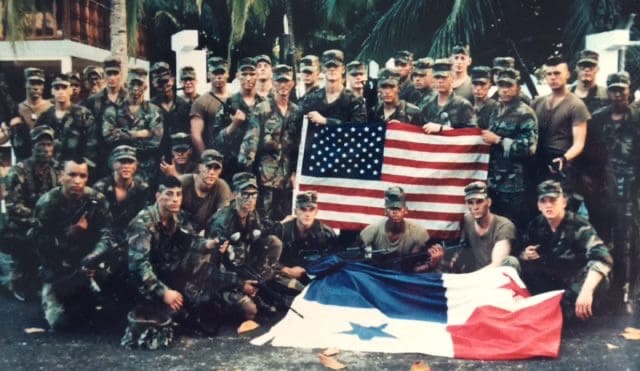
Seize Rio Hato Rangers, Tocumen Airports: The 2nd and 3rd Ranger Battalions were charged with seizing the Rio Hato airfield, destroying the base’s PDF garrison [the largest in the military], and seizing the plush beach house of Noriega.

Two F-117A stealth fighter-bombers delivered two 2,000-lb at H-hour. This was done to shock and confuse the PDF garrison of the two of the most heavily armed infantry companies defending the airfield, and precision bombs were missing. The precision munitions only managed to wake the defenders.

The Rangers lowered thirteen C-130s flying from the U.S. into a vortex of fire from just 500 feet. Despite the incoming fire, two Rangers’ companies rushed and assembled to take the airfield, cut the Pan-American Highway running through it and capture a nearby ammunition dump.

Another company targeted a nearby NCO academy complex, and another hit the two PDF companies deployed to protect the airfield. The PDF defending the airfield was said to be Noriega’s best, and the firefight was furious. Two Rangers were killed and four injured when targeted in a friendly fire incident by a helicopter gunship. But within five hours, it was safe for the entire complex to include Noriega’s beach house.

The 1st Ranger Battalion jumped in to capture it and protect it for follow-up forces outside of Panama City, Torrijos [Tocumen] Airport, the national commercial airport location. The Rangers suffered just two deaths, with only five killed and 21 captured, while Panama’s losses were minor. Around an hour after the Rangers had secured the airfield, the 82nd Airborne Division arrived and started to jump in.

Special Forces Capture Pacora River Bridge Stop Bn 2000: A Co. 3rd Bn 7th Special Forces Group men stationed in Panama were assigned to oversee Fort Cimarron, home of Bn 2000, Noriega’s only armored unit. Under Major Kevin Higgins’ order, A-3-7 was informed that ten vehicles were leaving Cimarron. He and 24 Green Berets were heading to the Pacora River Bridge to stop the convoy from reaching Panama.
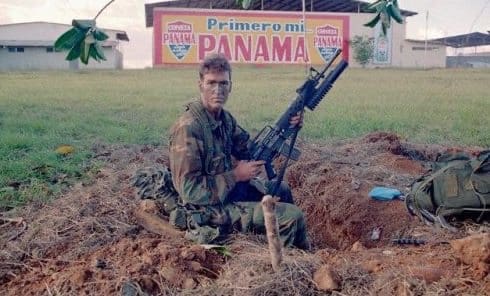
River Pacora Bridge

On the way, the Blackhawk helicopters flying to the bridge got lost, but they soared quickly, reaching the bridge over the armored column. Just as the Panamanians came to the eastern side, the S.F. troops got to the bridge’s western side. The slope to get up to the bridge was steep, and when the headlights of the Panamanian vehicles were illuminated, the heavily laden S.F. troops were getting to the bridge. Among the first men on the bridge were SFC ‘Tico’ Roman and SFC Dana Bowman, and they blasted the lead vehicle with AT-4s. That made the convoy stop in its tracks. But the Green Berets were mainly armed with M-16s, M-249s, and M-203s. Higgins had no hesitation. He called in close in air support from an AC-130 Spectre gunship, dangerously close to his men, and gunships decimated the column. By crawling under the bridge, the Panamanians attempted to get away from Spectre. But with machine-gun fire and buckshot rounds with M-203s, the S.F. forces raked the girders. Much of the night, the running firefight lasted with the Panamanians attempting to flank the S.F. forces, who were reinforced by A Co. 1st Bn, 7th SFG elements from Ft. During the night, Bragg. After their Sheridan armored reconnaissance vehicles moved from the airport, they eventually joined up with representatives of the 82nd Airborne later the next day.
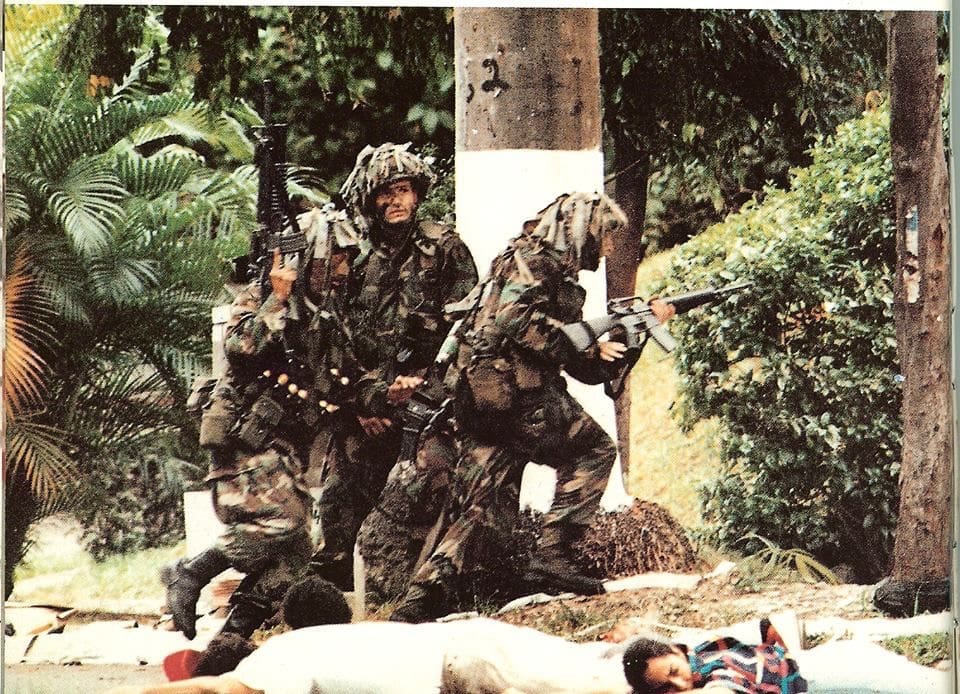
Noriega remained at large for several days. Realizing he had few options in the face of a massive fugitive hunt and a $1 million reward for his capture, he sought refuge in the Vatican diplomatic mission in Panama City. However, the U.S. military’s psychological pressure on him and diplomatic pressure on the Vatican mission proved relentless — as was the nonstop playing of loud rock and roll music in the densely populated area.

Noriega surrendered on January 3, 1990. He was immediately put on an MC-130E Combat Talon I aircraft and flown to the United States. He was tried, sentenced, and sent to federal prison for 17 years.

Twenty-three U.S. soldiers were killed, and 325 were wounded during the conflict.

Operation Just Cause was not like the operation conducted today, and they’re still were some of the same problems that the U.S. had during the invasion of Grenada. The communications were still failing, and several units were unable to communicate with each other. At times, communication between Special Operations and conventional units was shaky and at others non-existent. Despite this in later conflicts, various elements of our Special Operations Forces laid the groundwork for engaging with each other. I did not talk about all of the missions that conducted by US Special Operation Forces; Development Group was also involved as well as other Special Mission units. I just tried to get a good portion of the story out there and show the different operations conducted during the invasion.  

I checked into SEAL Team Four a couple of years after Panama; my first Leading Petty Officer was one of the people wounded on the airfield. I would never take anything away from the guys that were on the ground. There were many lessons learned, not just by Team Four, but by everyone on the ground. Not one unit didn’t have some problems. I will always call Team Four my home, and I am very proud of gowning as a SEAL and working in the “J” (that’s the jungle for you, none Team Cuatro folks). Lastly, please take a moment to remember all who have gone before us and their families celebrating another holiday without one of their loved ones.


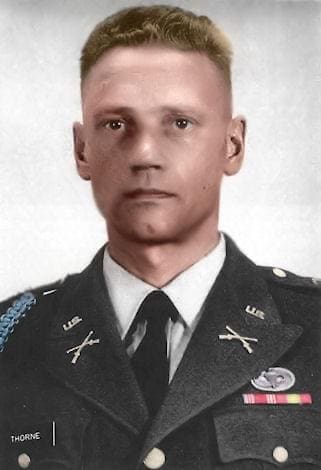
Capt Larry Thorn – Soldier of Three Wars

Saturday, December 19th, 2020

Larry Thorne enlisted in the Army as a private in 1954, but he wasn’t your everyday new trainee – he had already spent a majority of his adult life fighting against the Soviets in brutal winter conditions.

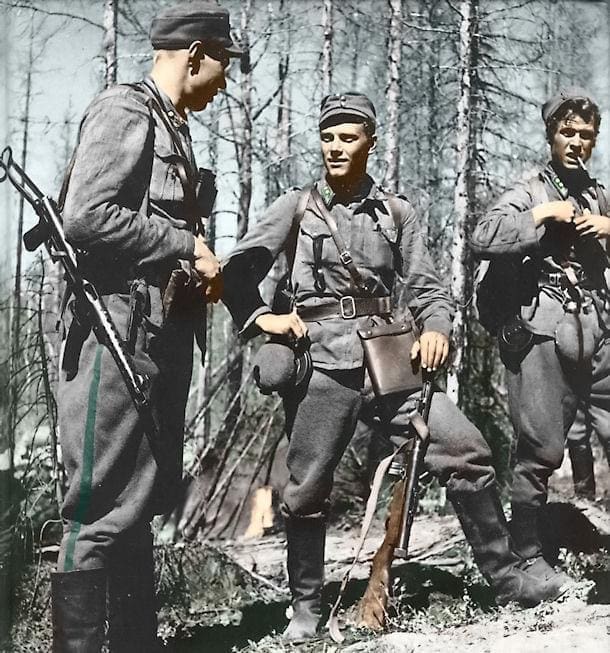
Born in Finland in 1919, Törni enlisted at age 19 in his country’s army and fought against the Soviet Union in the Winter War of 1939-40, rising to the rank of Captain and leading ski troops who literally skied into battle against enemy forces.

In 1944 during what the Finns called The Continuation War, he received Finland’s version of the Medal of Honor — the Mannerheim Cross — for his bravery while leading a light infantry battalion.

After Finland signed a cease-fire in 1944, he joined the German Army so that he could continue fighting. After Germany’s defeat, Törni returned to Finland and later moved to the United States where he enlisted under the name Larry Thorne.

He was able to enlist because of the Lodge-Philbin Act passed, which allowed foreigners to join the U.S. military and allowed them citizenship if they served honorably for at least five years.

More than 200 eastern Europeans joined the Army Special Forces before the Act expired in 1959, including Larry Thorne. Thorne quickly distinguished himself among his peers of Green Berets. Though he enlisted as a private, his wartime skill-set led him to become an instructor at the Special Warfare School at Fort Bragg teaching everything from survival to guerrilla tactics. In 1957, he was commissioned a second lieutenant and would rise to the rank of captain.

In Vietnam, he earned the Bronze Star medal for heroism, along with five Purple Hearts for combat wounds, before being killed in a helicopter crash in 1965.

Thorne Plaza is directly in front of the 10th Special Forces Group (Airborne) Headquarters here on Fort Carson and is a common site for promotions, retirements, and other ceremonies.

Source – 10th SFG(A)

505th Command and Control Wing Supports Largest US Army Warfighter Exercise on Record

Saturday, December 19th, 2020

The 505th Command and Control Wing supported the U.S. Army’s Mission Command Training Program during its execution of Warfighter Exercise 21-1, the largest WFX ever conducted.

The exercise directly trained over 5,300 joint warfighters and accomplished training objectives for 12 training audiences using more than two dozen different systems connecting seven sites across the country.

WFX 21-1 was not initially planned for 12 TAs, but when WFX 20-4 and 20-5 canceled due to the COVID-19 pandemic; their TAs moved to WFX 21-1. To ensure U.S. Army warfighters were adequately trained for current and emerging mission sets, WFX 21-1 increased its training audience by over 2,300 personnel.  

The 505th CCW, Detachment 1, Fort Leavenworth, Kansas, served as the U.S. Air Force’s liaison during WFX 21-1 and replicated doctrinally correct air component capabilities to the U.S. Army warfighters. 

“The purpose of the WFX is to train U.S. Army two & three-star division and corps commanding generals and their staffs on LSCO [large-scale combat operations]; an Army Chief of Staff directive to ready Soldiers for great power competition after 19-years of counterinsurgency,” said U.S. Air Force Col. Michael Goodman, 505th CCW, Det 1 commander.  

WFX 21-1 trained three U.S. Army primary training audiences. The XVIII Airborne Corps, 82nd Airborne Division, and the 1st Cavalry Division, and their respective subordinate units were trained to meet National Defense Strategy requirements. 

WFX events are geared toward the tactical level of war during LSCO using a hybrid near-peer adversary. While the adversary’s name doesn’t match any known country, the terrain, equipment, and tactics used are based on real-world places, assets, and capabilities. WFX 21-1 was designed to train, rehearse, team build, and contribute to the Army’s overall combat preparation.

“Approximately 200 Airmen participated in WFX 21-1 from five locations throughout the CONUS,” said Goodman. “Perhaps most importantly, was the support of the 505th Combat Training Squadron, and 505th Communications Squadron, who provide the Air Operations Center RC [response cell] and communication infrastructure.”

Goodman continued, “an RC is a small team that has the capability to replicate a much larger entity, often by a factor of ten or even 100; e.g., a 60-member AOC RC replicates a 1000-member AOC to include some of the fighters and multi-place aircraft.”

Additionally, U.S. Army partners from the Army Joint Support Team and XVIII ABC leveraged the 505th CS’s Joint Targeting Toolbox to create a joint targeting database for future WFXs. Using this targeting database, the training audience could conduct legitimate target development in the pre-STARTEX phase of a WFX using the appropriate Army Battle Command System and doctrinal processes.

“During execution, training audiences will be able to use those same doctrinally correct ABCS and processes to nominate targets, both dynamic and planned, to the joint force for execution,” said Goodman. “This capability enables Army warfighters to practice how they fight. WFX 21-1 was the first WFX to leverage and test this new targeting database.”

Based on WFX 21-1’s training objectives and audience locations, the 505th CS designed and connected a realistic cyberspace environment that could seamlessly exchange mission and model systems data between U.S. Air Force and U.S. Army warfighters across seven training locations. This data exchange is critical to any desired interactions and overall exercise fidelity.

Additionally, with three major training audiences, there was a requirement to apportion airpower in line with the Joint Force Commander vision, which required the TAs to communicate more with one another and request capabilities instead of specific assets, enabling more efficient use of limited airpower.

“Ultimately, this [environment] allowed USAF participants to provide air injects and role player responses to U.S. Army warfighters undergoing critical operational-level command and control exercise execution,” said U.S. Air Force Lt. Col. Veronica Williams, 505th CS commander, Hurlburt Field, Florida. “The 505th CS’s C4I [command, control, communications, computers, and intelligence] and modeling and simulation systems created a common operating picture which allowed the U.S. Army training audience to view and train in a realistic cyberspace environment as close to what they would be viewing during real-world operations while interacting with an Air Operations Center.”

While this was the ‘largest Warfighter exercise on record,’ the TA’s increase presented few challenges to the 505th CTS. 

“They proved up to the challenge with our professional control force, and pilot role players, handling several aircraft and integrations simultaneously. This is why while they are not the only option available for capability sourcing, they are always the training audiences’ first choice,” said U.S. Air Force Lt. Col. Patrick Applegate, 505th CTS director of operations, Hurlburt Field, Florida.

The Model and Simulation team takes over the Air Tasking Order in execution and includes model controllers and Professional Control Force and Pilot Role Players. Model Controllers oversee the virtual battlespace and all the entities it contains and the physical system connections that allow it to be seen by the TAs. The Professional Control Force and Pilot Role players provided the fidelity and physical representation of tactical units and systems that enable realism and human interactions across the full spectrum of military operations, including high fidelity and responsive command and control, deliberate or dynamic strike, Close Air Support, intelligence collections, and reporting, Air Mobility, Personnel Recovery, and Combat Search and Rescue. 

Applegate continued, “Air Doctrine, which relates directly to AOC Replication, focuses on large force conflict and COCOM [combatant command] to global span of command and control. For this reason, our involvement and participation largely remained unchanged as the AOC processes and outcome in the Air Tasking Order are the same whether planning small scale regional engagement or large force action. The Part Task Trainer air simulation system was designed to handle this level of detail and is in the baseline for the AOCs attached to the geographic combatant commands.”

WFX 21-1 met all training objectives for the U.S. Army major combat units involved and senior leaders from both services.

Debbie Henley, 505th Command and Control Wing (ACC) Public Affairs