GORE-TEX Professional

Archive for the ‘Guest Post’ Category

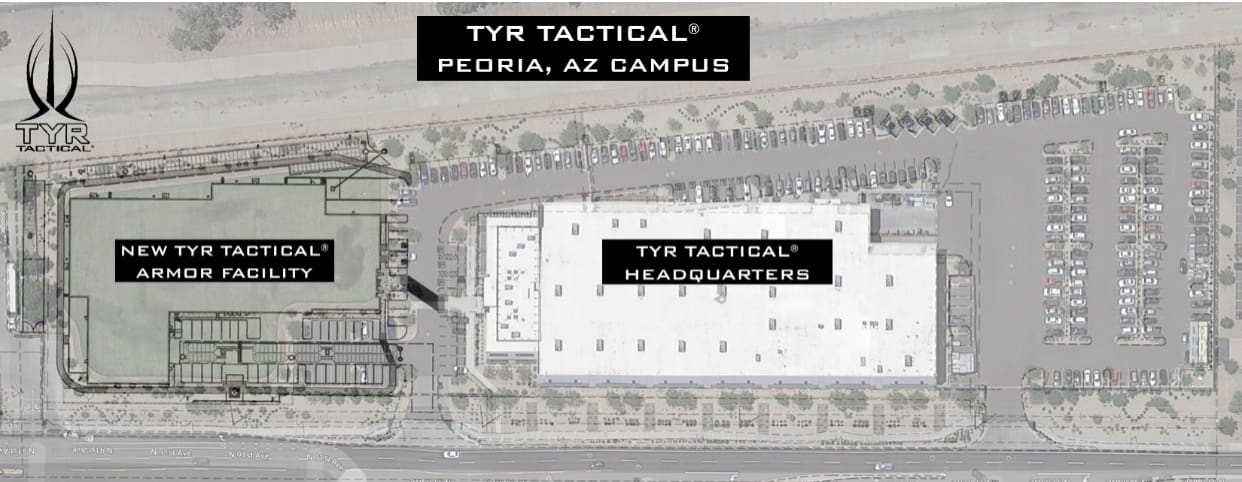
TYR Tactical Tuesday: Armor Manufacturing Facility | Phase One |

Tuesday, November 3rd, 2020

Construction is well on its way at TYR Tactical® HQ in Peoria, AZ. Their $14M New Armor Manufacturing Facility will house state-of-the-art presses and autoclaves to support hard armor production. This much needed expansion, along with their current in-house Ballistic Test Range, will give them unmatched armor development capability.

Watch Phase One Now:

So why now?

Owner & CEO Jason Beck had this to say about the driving force behind the Armor Facility Expansion: “As one of the few remaining family owned businesses in our industry I feel a responsibility to always be the guy making everyone else strive to get better. I felt the armor industry had grown stagnate, become too reactionary, and too contract focused. The industry stopped innovating and the end user community simply deserved better. We have had a very productive year in spite of the ongoing pandemic. Investing back into the company and our people seemed like the right thing to do. We are building a world class armor production facility and adding next generation equipment, to continue to push our industry and build kit for the Next Generation Warrior®. Innovate or Die®!”

www.tyrtactical.com

Construction of New Army Mountain Warfare School Facility Begins

Tuesday, November 3rd, 2020

Jericho, Vt. – The Vermont National Guard will break ground on a new $27 million facility for the Army Mountain Warfare School on Thursday, Nov. 5 at Ethan Allen Firing Range in Jericho.

The socially-distanced ground-breaking ceremony is scheduled for 10:00 a.m.

“In my many conversations with the Secretary and the Chief of Staff of the Army, the Chief of the National Guard Bureau, and the Director of the Army National Guard, it was clear to me that replacing the facilities of the Army Mountain Warfare School allowed the Army to greatly expand and improve its capabilities,” said Vermont Senator Patrick Leahy. “As Appropriations Vice Chairman I was glad to be in a position to be able to ensure that it was funded, when the Army told me that despite the need it had not been included in the budget submission. I’m proud of the opportunity ahead of us for Vermonters to expand our ability to teach Soldiers and other members of our Armed Services how to not only survive, but to master and make the most of difficult terrain and cold climates.”

The 82,668 square foot facility will include educational space, billeting for 174 personnel, and a dining facility. The new schoolhouse will also offer students a unique four-story indoor climbing wall and will use a geothermal ground source system to provide heating and cooling. Space for the installation of photovoltaic panels will also be incorporated. Project completion is expected near April 2022.

“The Army Mountain Warfare School cadre are among the best and brightest in the field; this school is where students learn to become competent mountaineering professionals,” said Maj. Gen. Greg Knight, Vermont adjutant general. “This new facility is a testament to those Soldiers, and the thousands of graduates and cadre that have come through the school for nearly four decades.”

The Vermont National Guard has operated the only Army Mountain Warfare School in the country since 1983. They now instruct courses in basic, advanced, and specialty mountain warfare. They also provide additional mission specific training to United States and foreign military forces in a variety of countries.

“This new facility ensures the continuation of excellence in mountain warfare operations, and the lasting value this school brings to Vermont and the U.S. Army. Sincere thanks to Senator Leahy for his efforts in making this a reality,” said Knight.

Joint Force Headquarters, Vermont National Guard Public Affairs

MATBOCK Monday – Lift Ladder

Monday, November 2nd, 2020

Lift Ladder

Good morning and Happy MATBOCK Monday!

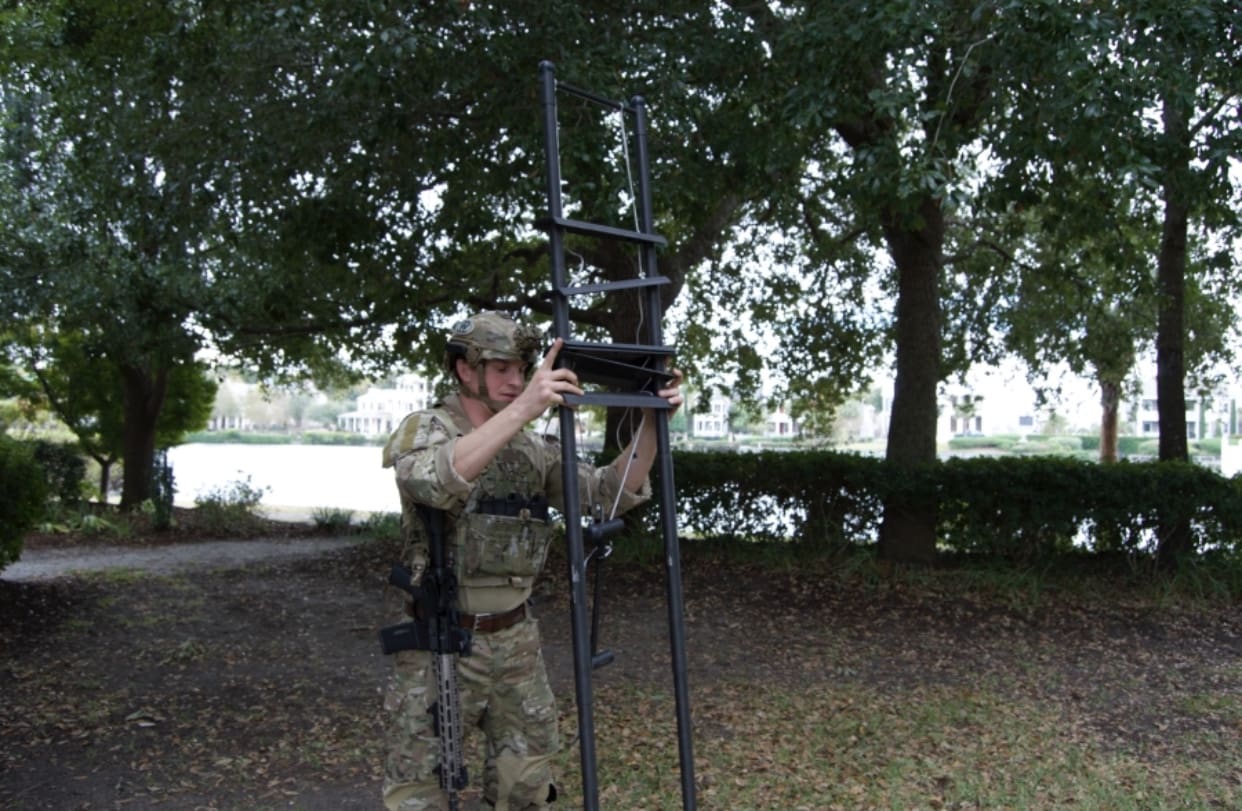
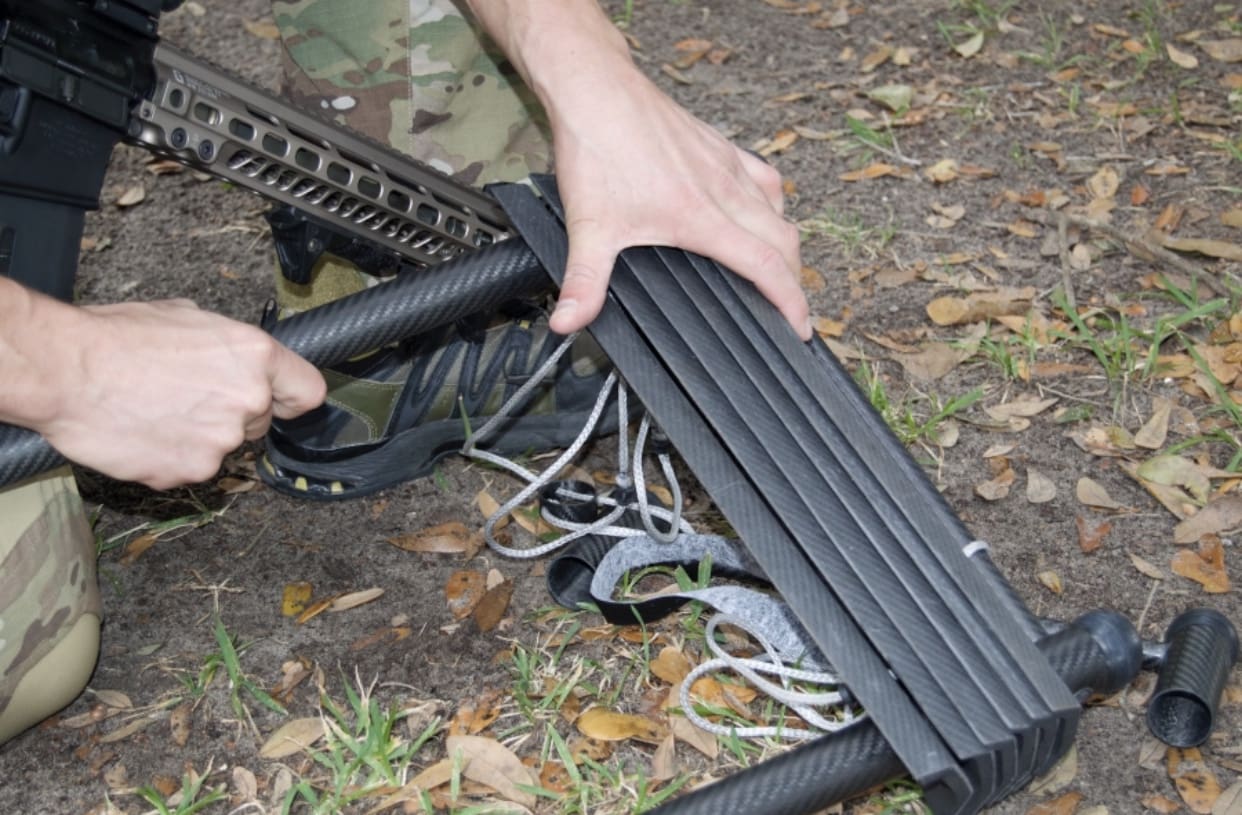
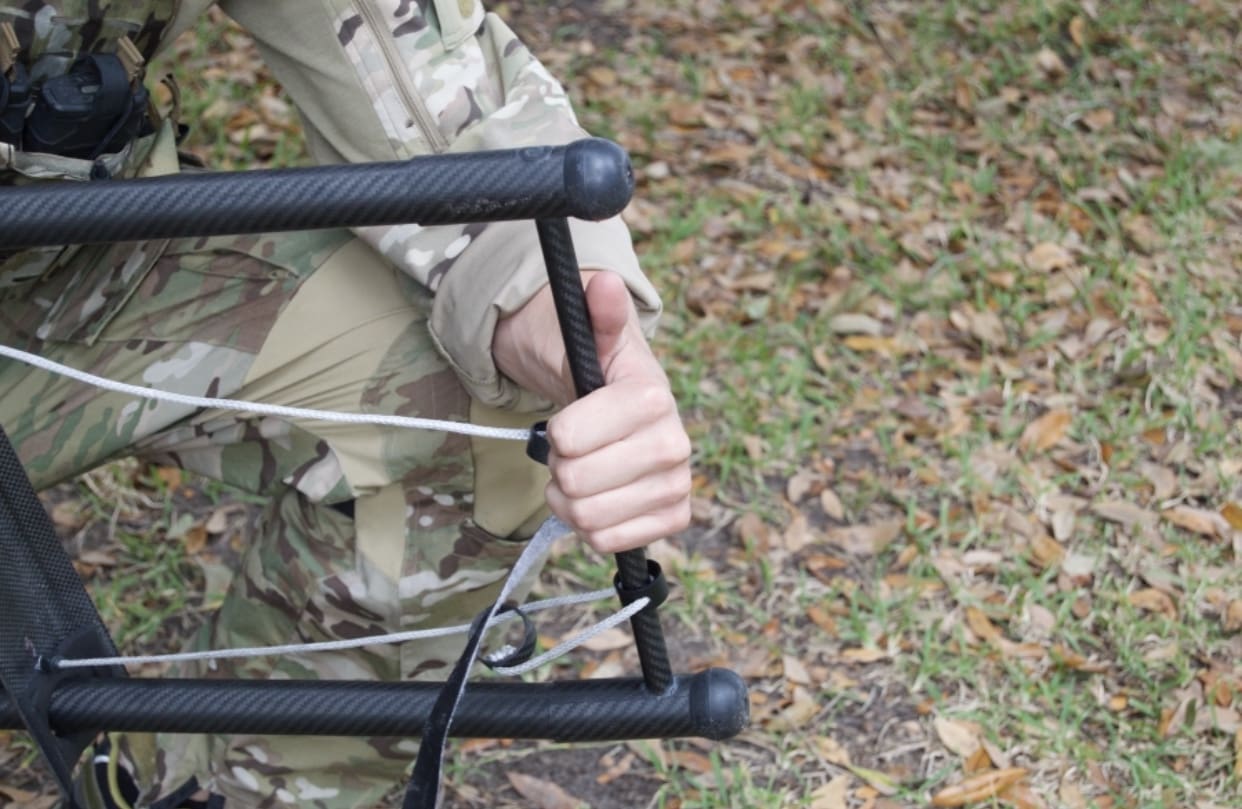
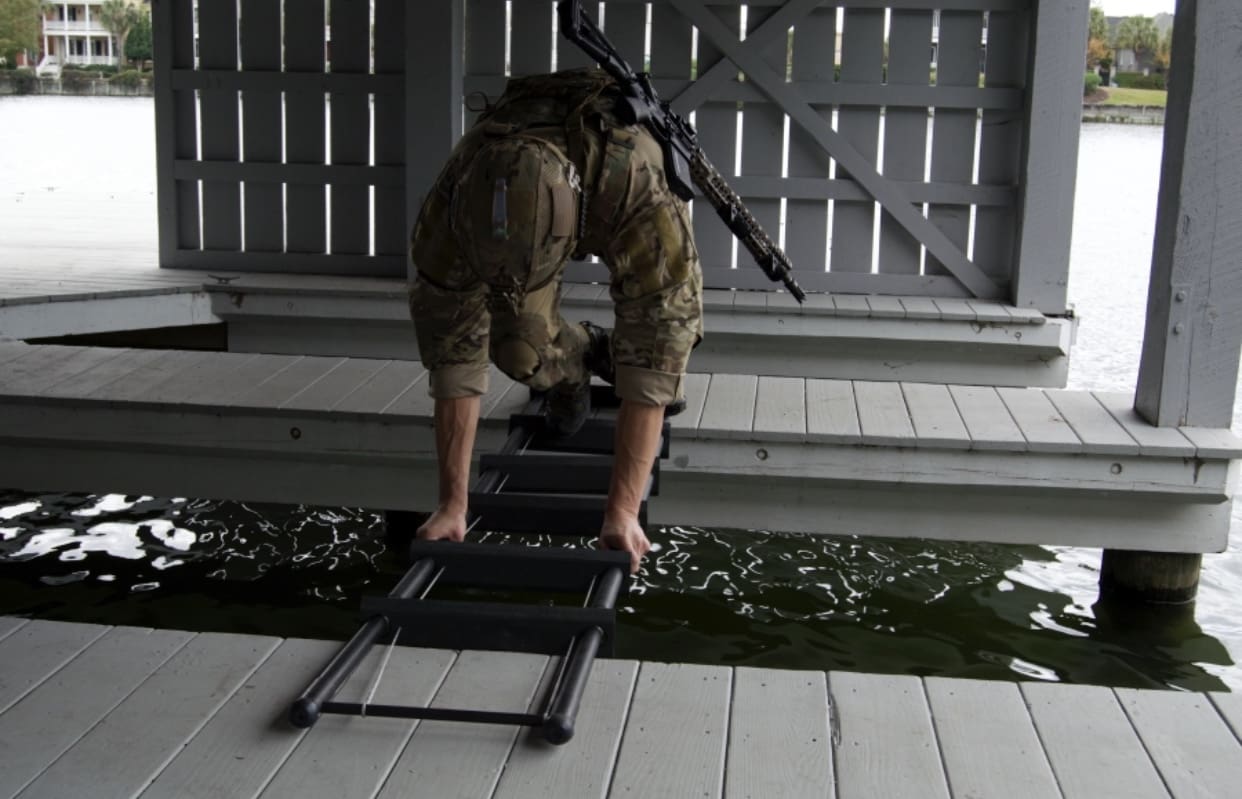
The LIFT Ladder continues the innovation that is the LIFT System. The LIFT Ladder deploys in seconds over the Combat Carbon Poles to create a 7.5 ft fully rigid ladder with a 400 pound carrying capacity for both scaling and bridging operations. Total system weight is 4.975 pounds and the attachment can be removed very easily to use the poles for any other parts of the LIFT System. The ladder attachment folds up compactly and can be stored in its own carrying case when not in use. (Carrying Case Sold Separately)

Don’t forget to tune in on Monday at 1:00 PM EST as we go live to demo the Lift Ladder and answer your questions!

www.matbock.com/collections/medical/products/lift-ladder

The Baldwin Files – Airborne Tactical Assault Panel

Sunday, November 1st, 2020

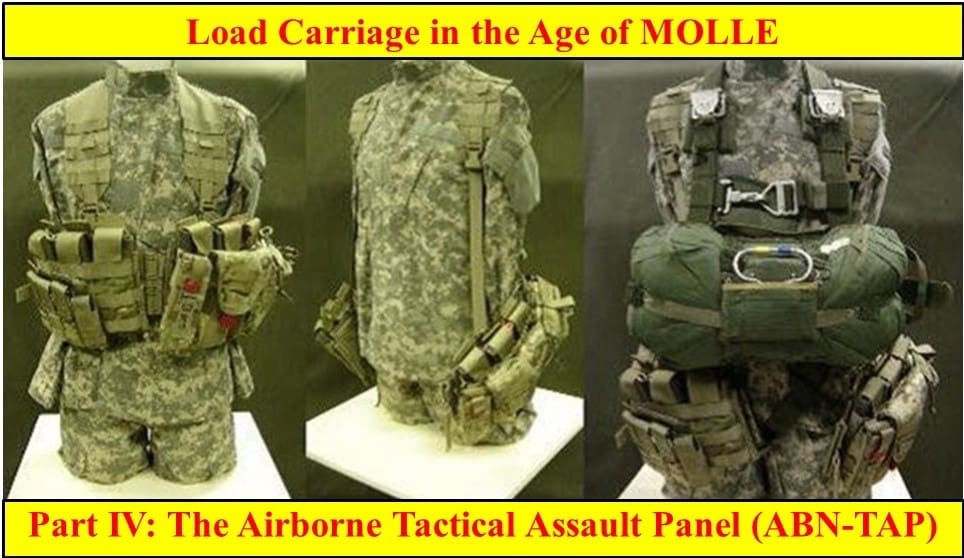
I have long planned to do a deeper dive into the history of Load Carriage in the U.S. Military with articles called “On the Road to ALICE” and “Beyond ALICE” sometime afterward. I did not prioritize it because…well, it was history and was not going to change. Of course, precursor parts of the series on the MOLLE era would focus on the Fighting Load Carrier (FLC) or “Flic” and the Tactical Assault Panel (TAP). However, I am pushing this contemporaneous chapter on the Airborne TAP (ABN-TAP) to the front because it is relevant to gear that is on the verge of entering the inventory and being worn by at least some Soldiers today and perhaps more in the future. In other words, I am doing it Star Wars or Pulp Fiction style – out of sequence. I know right now most people have more important things to be concerned about than tactical gear, but I hope this will – at least – be a welcome distraction for some.

I am going to assume that long time readers of SSD have a passing familiarity with the FLC and the TAP already. If not, a quick search on this site or the net can bring someone up to speed. When I started doing gear articles on SSD, someone asked my thoughts on the FLC. I had no opinion at the time. I had seen it in Iraq and Afghanistan but had never been issued any of the MOLLE I or II web gear or rucks. Since then I have acquired a number of samples and have experimented with them here on the Homestead. Therefore, I acknowledge that my observations and impressions are based on limited practical experience with the kit. Those of you with more “time in the harness” with these items should feel free to correct me or elaborate based on your own experiences.

There are several serious challenges with developing load carriage “systems” in the military. The big one is that load carriage is a low dollar line item in the DoD budget and is not ever going to be sexy or a high priority. Consequently, the Service involved generally makes little effort to articulate more than a vague concept of what they want because at the macro level load carriage is rarely considered mission essential. Notwithstanding the slideshows steeped in useless generalities and buzzwords, such as “it will support agile full spectrum operations” pseudo-guidance. While I was not in the room, I suspect that for the ABN-TAP the conversation was something like this, “Hey, the TAP is hard for paratroopers to rig to jump. OK, the ALICE web gear was easier to rig…so let’s splice the DNA and see if we get a racehorse or a camel.” I call the result a camel – it will get you there but is not the best ride. It certainly does seem that the focus was largely on adding one gimmick to the new system to make it more jumper friendly. Is that really all the ABN-TAP needs to do for troopers? Sure, old fashioned systems did interface a whole lot easier with a parachute harness. Still, should we not concentrate more on the functionality of the ABN-TAP during the vast majority of time a paratrooper is not wearing a parachute?

And, inevitably, we always seem to prefer fast and cheap over good. At some point, a senior leader gets frustrated because one or more components of “the system” are stuck in the process and it is all taking too long. He decides to go with it “as is.” Reasoning that other changes will be incorporated in the A1 and A2 versions. I think we are at that point with the ABN-TAP. That is not necessarily a bad decision. Much like soldiers have to eventually leave the schoolhouse and go to real units to complete their education, advancements in gear get to a point of diminishing returns if not sent out to the force for larger-scale evaluations and critiques. Unfortunately, that is also a glaring point of failure in the development process. When the item(s) is fielded, the team responsible has been habitually disbanded – leaving no dedicated point of contact or continuity of responsibility tasked to shepherd additional product improvements. It was true of ALICE and it is still true today.

Moreover, units will simply not spend time writing and sending in those hypothetical gear evaluations if not formally tasked to do so. Likewise, soldiers are not encouraged to provide input nor are they afforded any routine way to plug their individual feedback into the system. MOLLE I was only marginally improved by the Army into MOLLE II because soldier complaints went public after the initial operations in Afghanistan in 2001-02. As we know, those negative reports contributed to the USMC abandoning the MOLLE rucksack altogether. The result is that many soldiers – with good justification – simply accept the fact that some of their issue gear sucks and the chain of command does not care. Obviously, it would be better if that were not the case. Soldiers need confidence in their gear – from individual rifles to parachutes and tanks. They need even more confidence in their leaders.

Putting the Airborne transformer requirement aside, what should a good fighting load carriage system be able to do? First, it has to enhance – not interfere with – the soldier’s ability to shoot, move, and communicate effectively as part of a team. Specifically, it should be able to integrate reasonably well with issue IOTVs or plate carriers. It has to securely carry the items of the fighting load like magazines, grenades, IFAKs, etc. in such a way as to make those items readily accessible to a trooper under the stress of battle. With that in mind, the system also has to allow for the distribution and balance of that weight so that it is reasonably comfortable when worn – with or without armor as the mission may dictate – for days at a time. Finally, it helps if the system is as intuitive and uncomplicated as possible thereby allowing soldiers to individually configure, reconfigure, and field repair, the system quickly and as often as necessary. Does the ABN-TAP meet those criteria? No, it falls short in a number of areas.
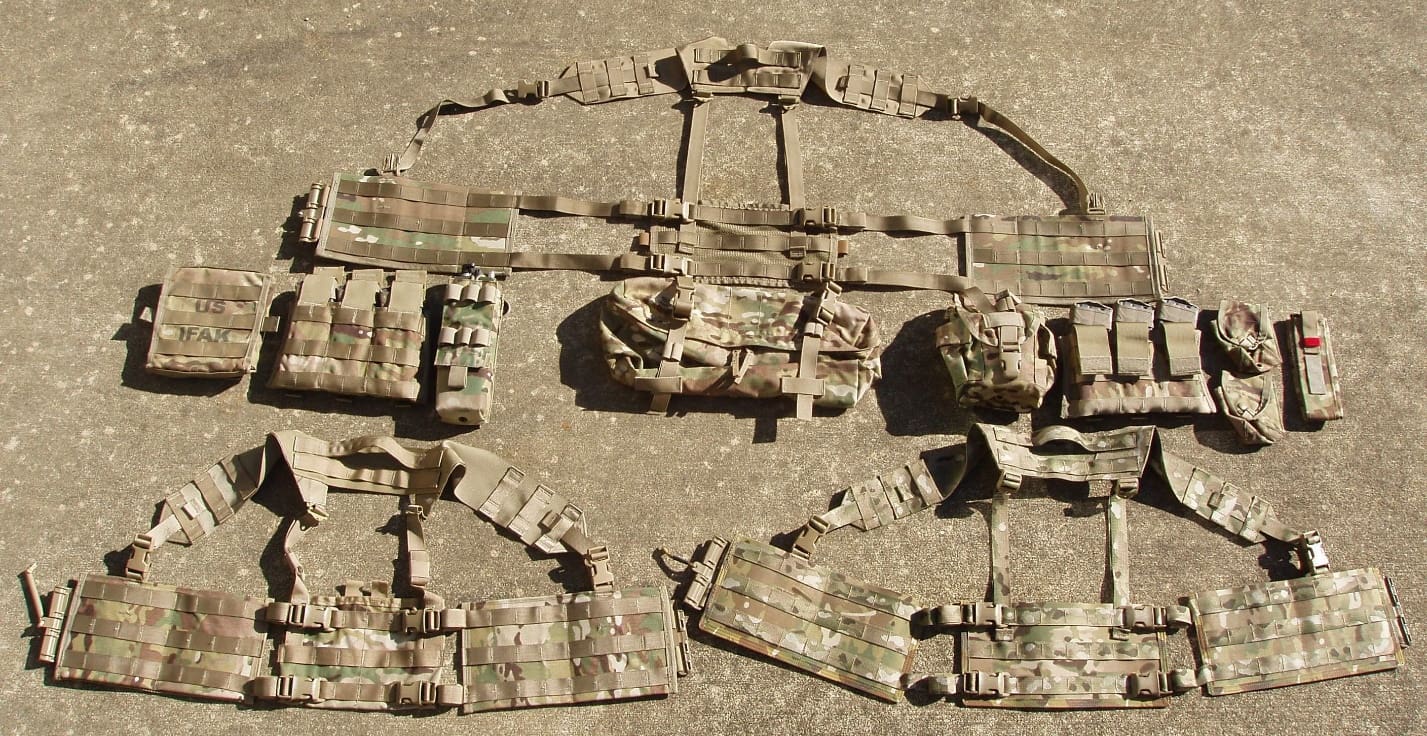
Let us look at the three samples I have of the ABN-TAP (shown above). The first one (bottom left) I believe is an original prototype. It is unmarked and I expect this was made in house at Natick. SSD has posted earlier news releases on the ABN-TAP. It has been noted that the mechanism for dropping the two front panels is the same as the First Spear JOKER chest harness. It is indeed the same – exactly the same. However, First Spear confirmed to me that although they provide some of their technology like Tubes to Natick, they had no involvement in fabricating these ABN-TAP prototypes. The second version (top center) is labeled as being made by SEKRI. Based on the pictures released by the Army, this is the version I believe that was provided for testing at Fort Bragg. The third (bottom right), all multicam version, is also unmarked. I suspect this is close to the “finished” version that will be more widely issued to Airborne units of the Army.

The ABN-TAP, as shown, has some good points. Obviously, the wider, unpadded M1956-like H-harness yoke will be more comfortable – and no doubt more stable under load – to wear for longer periods than the narrow ALICE-like Y-harness yoke that comes with the TAP. As a side note, I am not a believer in the premise that entirely unpadded yokes are ideal for long term wear. With a full combat load, a little padding goes a long way to providing some needed comfort for the shoulders. The ABN-TAP yoke has webbing bars on the back to allow for the direct mounting of a hydration carrier or MAP. A useful feature that is missing from the FLC and TAP. It is also true that the JOKER drop mechanism works as designed and that will streamline the parachute rigging process. Likewise, the use of a First Spear Tube facilitates quick donning and doffing. That is about it for the positives.

One of the most glaring oddities of this system is that it is clearly not designed to directly replace the TAP. Even calling it a TAP as if it is in the same category as its predecessor is a misnomer. The ABN-TAP is a chest harness and is not designed to work like the TAP. At best, since it has to be worn on top of armor, it is more of a replacement for the FLC. However, while both are “slick” without built-in magazine or other hard gear pockets, the ABN-TAP has considerably less PALs surface area than the FLC. Likewise, the ABN-TAP provides less than half the potential load carriage “real estate” compared to the current TAP which does have built-in internal storage space. That is a poor trade-off. Moreover, the ABN-TAP is absolutely not set up to readily “plug and play” with issue body armor or plate carriers as is the TAP. Indeed, the JOKER mechanism is semi-permanent and is not user friendly or expedient to assemble, adjust, or disassemble. In short, it is a PITA to manipulate and does not allow for the yoke to be dropped and reattached as expediently as the older TAP.

There are some other issues with the ABN-TAP that make me scratch my head. For one thing, it is not a good idea to put those female QASM buckles on the back panel. It probably does not matter if wearing body armor; but, when worn without armor under a heavy rucksack they will likely cause hot spots or even welts on soldiers’ backs. I am sure that was done to conserve the already limited space on the front panels. However, in terms of comfort, it would be better if those buckles were shifted to the front panels instead. There is also a lot – I would say an excessive amount – of webbing supplied to adjust the harness horizontally. When fully extended, the ABN-TAP is 64 inches across! Do we have Soldiers or Marines who are 64 inches in diameter? I looked up Dwayne “The Rock” Johnson’s stats. At 6 feet 5 inches, and 260 pounds, he has a 50-inch chest. I suppose that with body armor and a puffy Level 7 parka HE might need all 64 inches of room…maybe. Most of the rest of us could do without all of that extra webbing.

I was always taught that if you identify a problem you should also present some possible solutions. Hence, I have some suggestions. Upfront, I appreciate First Spear’s innovative technologies and Natick’s dedicated and quality work on this project. I have no doubt the ABN-TAP delivers exactly what they were asked to deliver. It just is not a fully effective replacement for either the FLC or the TAP. Do we really need three load carriers in the system when one could do? I recommend eliminating the problematic drop-down mechanism first. It is a permanently sewn-in superfluous solution to a temporary problem. Even for paratroopers, the rig is only going to be worn under a parachute harness for very brief periods of time. The exact same effect can be more simply achieved with two ~18-inch straps (as shown below) The straps can be used during rigging procedures to drop the front panels clear of the parachute harness. After the jump, they can be easily removed and stowed or used as cargo lashing straps on the harness or rucksack.

I have said before that there is no such thing as perfect gear and that everything needs at least some customization to better serve each individual trooper and specific mission needs. Likewise, there is no “universal” gear that can be all things to all people at all times. However, we can approach the broadest utility possible by maximizing the options for unit and individual customization. I suggest that can best be achieved by modifying the ABN-TAP yoke to make it a stand-alone item that can be instantly attached and detached as missions dictate. Additionally, simplify and standardize the design with a single identical panel template that can be used alone as a placard or minimalist chest rig or “daisy-chained” with one, two, or even three other panels into a TAP, a full (high ride) chest rig, or an old-style (low ride) H-harness; whichever is preferred. A truly modular and more flexible system like that should be able to effectively replace all the legacy FLCs and TAPs across the Airborne, the Army, and ultimately throughout DoD.
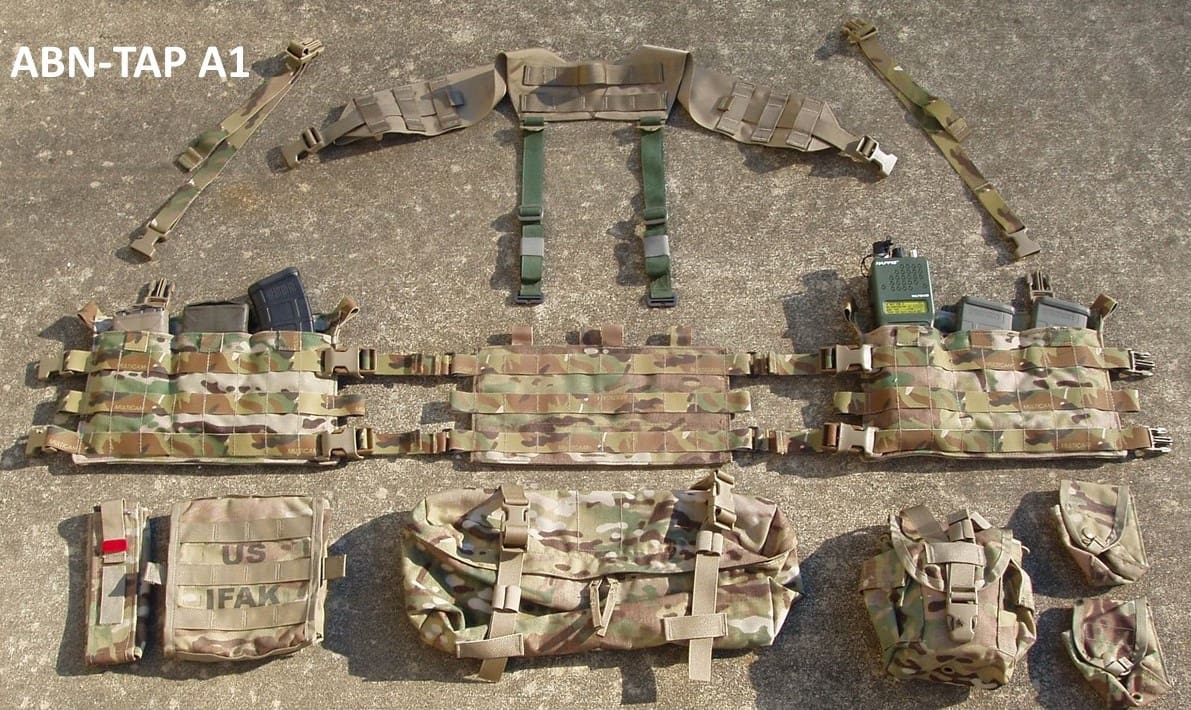
I have attached a picture or two of some pieces I cobbled together to show what I am talking about – a mock-up of the ABN-TAP A1 if you will. There is nothing expensive, radical, or even very innovative here. These are mostly commercial off the shelf (COTS) design features that have been available for decades. Many pre-date MOLLE and have been used by the military and commercial gear companies in other applications. First, the use of web loops on 3 sides of the panels – rather than sewn on straps –facilitates modularity, interchangeability, and field repair, with no left, right, or rear, specific panels. Tactical vests from various manufacturers had those loops in the 80s. Paired with a modern split bar, a.k.a. repair style “Fastex” buckle, these loops allow a soldier to use a variety of methods to link elements of the system securely together horizontally and vertically. That includes the option of lacing up with shock or 550 cord, male to female buckles including QASM versions, or the appropriate length of 1-inch webbing and split loops and/or buckles as displayed in this last picture.
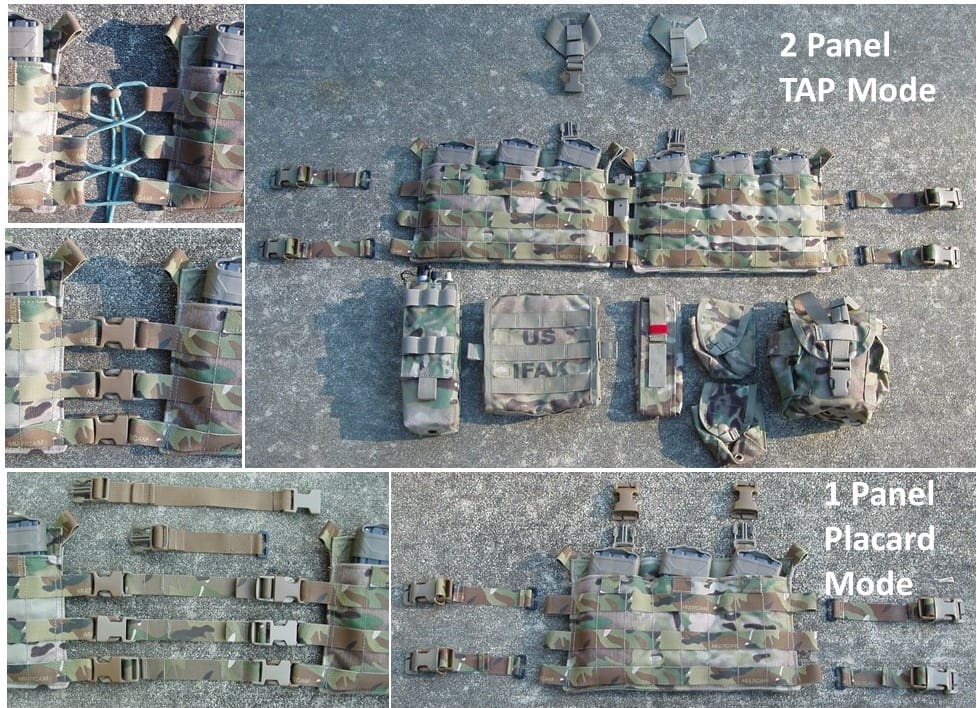
I used three similar but not identical panels to illustrate the concept since I did not have three of a kind on hand. As I alluded to earlier, I believe one of the best features of the TAP is that it provides internal space for weapons magazines and some other items. I used two Beez Combat Systems (BCS) placards on the ends. The panel in the middle is no longer available but came from Hybrid Defense Strategies. It can be worn flat, but the built-in envelope allows for magazine inserts to be used (not shown). Unlike the current TAP designed only for the M4, I think it would be advisable to have slots on the ABN-TAP panels sized slightly larger to accommodate magazines beyond 5.56mm; including 7.62mm and 6.8mm, as well as some common individual radios, GPSs, and similar sized items.

Carrying these “common to all” items internally is not just a stylistic preference. If there is no internal space made available, ammo pouches or shingles have to be mounted on the outside and then other items like IFAKs, radio pouches, grenade pouches, and utility pouches for NODs, have to be stacked on top of the ammo pouches. Multi-layered pouches tend to be overly bulky, sag under combat weight, and interfere with access to each other. In the ABN-TAP’s case, since it does not convert readily into TAP mode as is, a soldier would need to have two full sets of pouches – or be prepared to move the pouches from body armor to harness and back for every jump or mission change. No one is going to want to do that routinely – nor should troopers have to. It would also be preferable for a soldier to set up his or her pouches just one time on the harness and train with that identical set up whether attached or detached from their armor carrier.

I used short straps from Velocity Systems to connect the panels for my example but have also displayed some others of varying lengths I had made for different projects. Laid out this way the 3 panel A1 harness is 54 inches across. Still too big for me but just right for The Rock. I should also point out that if my ideas were ever incorporated onto the ABN-TAP, the First Spear Tubes would be incompatible without some sort of adapter. I suppose for some, that might be a deal-breaker. I think it is a reasonable trade-off. Moreover, First Spear makes a split bar repair version of their Tubes and could perhaps make a version that works on three slots rather than two and solve that problem if the Army asked for it. Finally, although it did not receive much notice earlier, the ABN-TAP was tested with a new version of the Triple Magazine Pocket (shown above) that closes with reverse flaps like those on the TAP. That looks like a worthy product improvement to me and I presume those will be issued with the ABN-TAP.

De Oppresso Liber!

LTC Terry Baldwin, US Army (Ret) served on active duty from 1975-2011 in various Infantry and Special Forces assignments. SSD is blessed to have him as both reader and contributor.


SCUBAPRO Sunday – Kokoda Track Campaign WW2

Sunday, November 1st, 2020

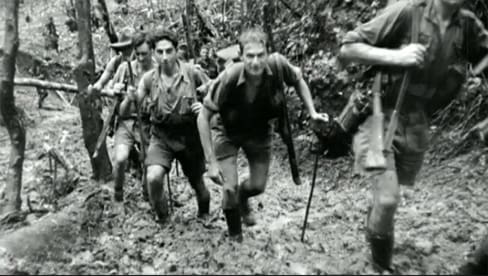
The 3rd of November is Kokoda day or Kokoda Track day in Australia. The Kokoda Track Campaign was mainly fought between the Australians, and the Japanese, with the Americans helping at first with supplies and then with troops. The Australian troops had to save Port Moresby from being captured by the Japanese because Papua New Guinea would have been a great staging point for Australia’s invasion.

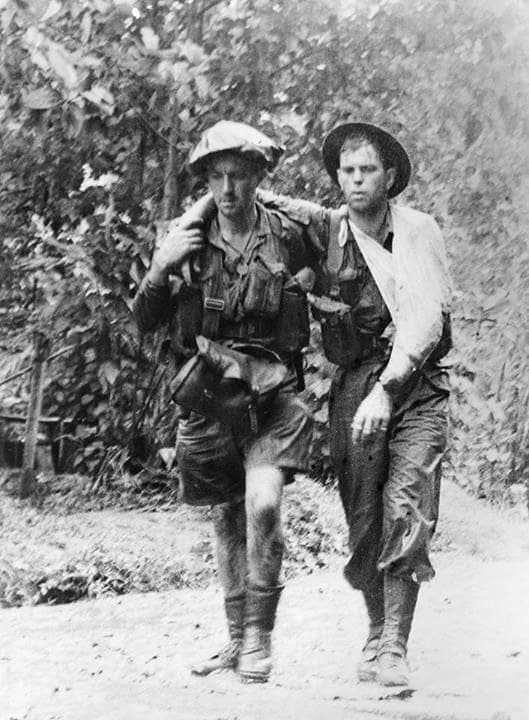
The Australian forces fought exceptionally well in the harsh and unforgiving jungle of the Kokoda Track. More than 600 Allies were killed, and about 75% of the allied troops got sick, with diseases like malaria, dengue fever, and dysentery. The campaign consisted of a series of battles fought between July and November 1942 in what was then Australian Papua New Guinea. The Australian Army halted the furthermost southward advance by Japanese forces in Papua New Guinea and then pushed the enemy back across the mountains. Kokoda was one the most significant battles fought by Australians in the Second World War, first because it was fought so close to home, second because it was kind of Australia’s birth as a prominent player on the world stage. The Kokoda campaign saved Australia from possible invasion from the Japanese. Port Moresby held a tactical position, and preventing the Japanese from reaching it was vital. The battle was fought over five months, and the odds were stacked heavily in favor of the Japanese. They outnumbered the Aussies 5-1, had much better equipment, and a lot more of it, and at the time, they were considered by many the best jungle fighters in the world. The astounding feats performed by the diggers soldiers to hold off the Japanese and turn them back lead to the growth of Australia as a nation.

The Kokoda Track started as many small trails used as mail routes and to supply settlements around Kokoda. The military modified it. It became the main route that linked Ower’s Corner, 40 kilometers north-east of Port Moresby, and the small village of Wairopi, on the northern side of the Owen Stanley mountain range. But it was a lot more than 40 kilometers within walking distance because you had to take the jungle into account. The soldiers were challenged by steep, treacherous inclines, deep valleys, dense jungle, a debilitating climate, and drenching rain that frequently turned the ground into that jungle mud that sticks to everything just by looking at it.  

The Australians fought against all odds and without the help of Great Britain. It was fought mainly by Militia (reserve) troops or “chocolate soldiers” as the Australian Imperial Forces (AIF) called them because they were poorly trained, and it was said, “they would melt in the heat of battle.” At the start of the war, Australia sent its best troops, the AIF, to the middle east to help the brits. So, Australia stood up a Militia Battalions to serve in Australia, to help protect the homeland.

The 39th was only to be used on mainland Australia, but the government used a loophole saying that Papua New Guinea was a territory. Hence, they sent the 39th Militia there to help protect the island. This was one of the hardest fought battles in WW2 by anyone. I have attached a couple of links so you can read about this. As many military units are getting back into the jungle, this is full of instrumental lessons learned and is an excellent piece of history that should not be forgotten by any side. So, this week stop for a minute or raise a beer to the diggers and all the people that have made the ultimate sacrifice for freedom everywhere and have gone before us.

Long Live the Brotherhood.

kokodacampaignww2.weebly.com

FirstSpear Friday Focus—Centurion Pants

Friday, October 30th, 2020

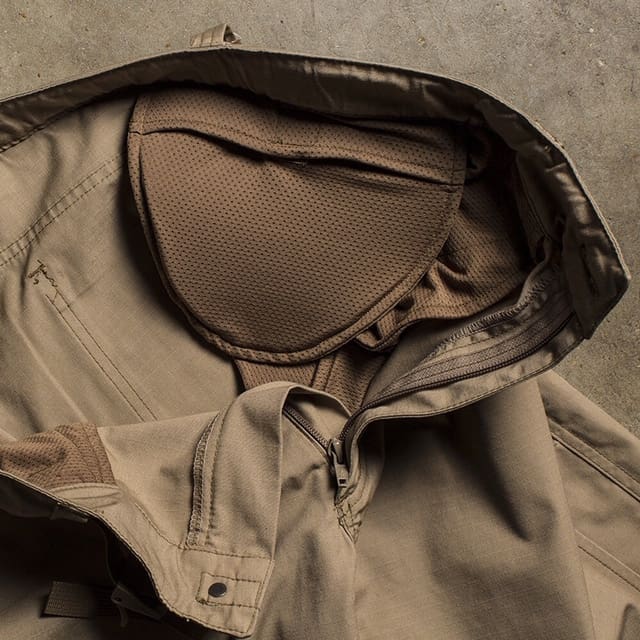
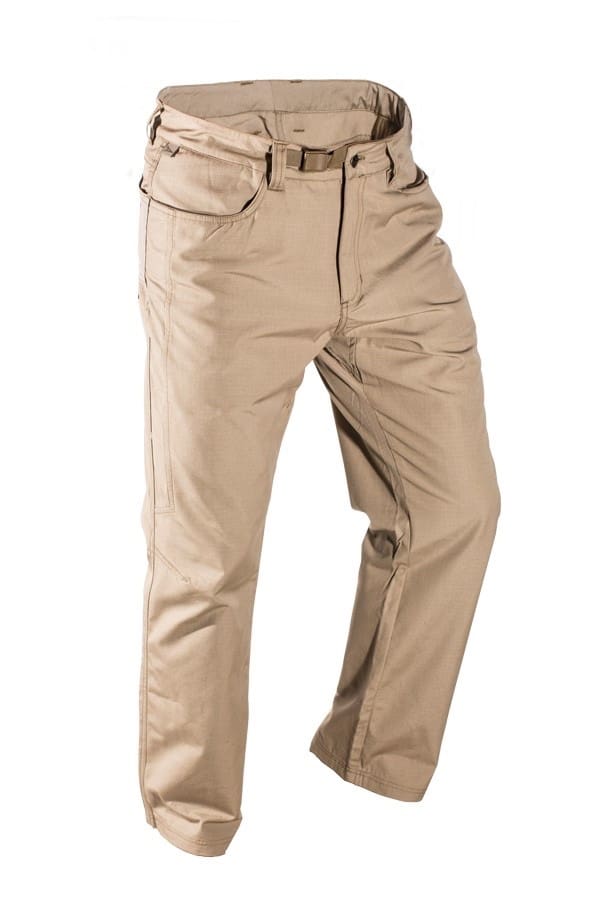
Completely made in America with U.S. sourced materials, the FirstSpear Centurion pants are made to be a workhorse. The Centurion pants are made from nylon ripstop comb cotton material, these pants will withstand long hours on the range, but are casual enough to wear out on the town. Additionally, they feature nano-glide stretch mesh pockets with breathable materials, these pockets are extra deep, the mesh material is smooth and comfortable against your leg.

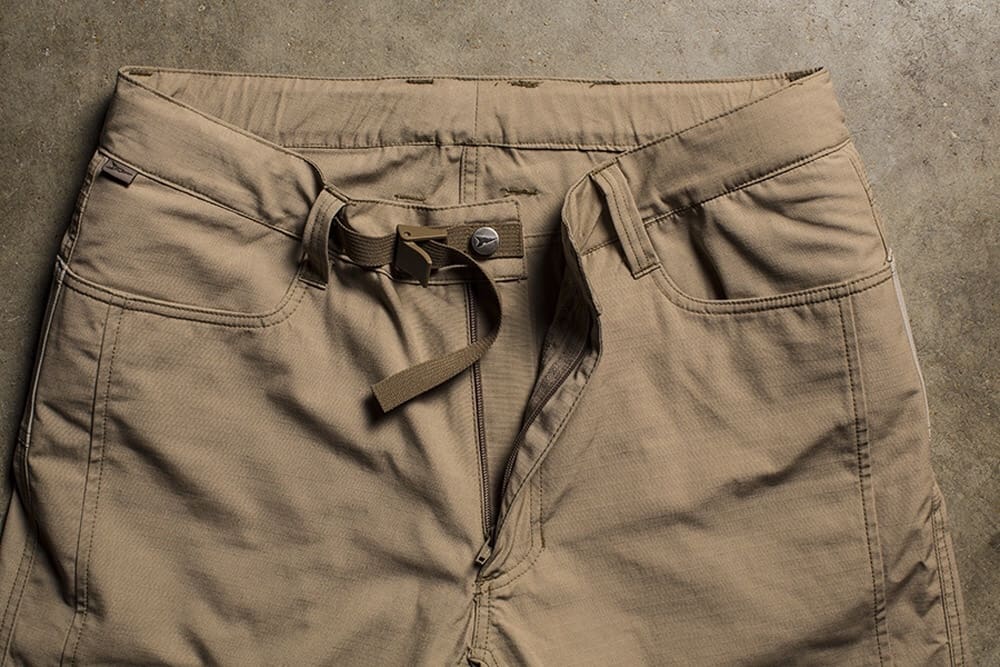
The integrated low-profile belt system uses a customized BioThane webbing and jam lock buckle, for a secure fit. Diamond pattern crotch for extreme mobility and all day long comfort with enhanced patterning through the thighs and calves. Standard with every Centurion pant is a removable padded insert for each hip to provide comfort when wearing a gun belt and molded holster. These inserts are held in place with the same low volume Nano-Glide stretch mesh as the front pockets.


“No complaints about these whatsoever. Fit is spot on, the relaxed cut allows for freedom of movement. Although other reviewers felt there is too much material around the ankle, I actually appreciate that these pants do not taper, which seems to be the fad currently. If you wear a 14 like I do, you’ll appreciate that the cuff can fit over a good-sized boot. Material feels quality, stitching is perfect–I’d put it up against anything the other top manufacturers are putting out.”


— CMB online review

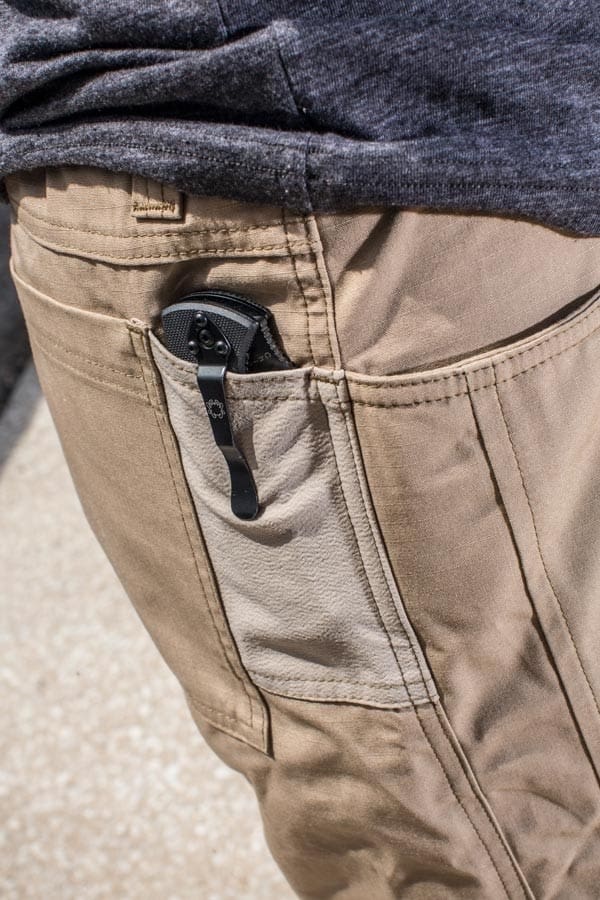
The belt loops have been spaced to accommodate outside-the-waistband holsters. The side bridge pockets are constructed of 520 stretch fabric that will easily fit folding knives, common pistol magazines and other small tools or a flashlight.

For more information, check out First-Spear.com. To discover more about FirstSpear’s technology, check out First-Spear.tech.

SureFire Presents – Training VS Practice

Thursday, October 29th, 2020

The terms training and practice are often interchanged, but in SureFire Field Notes 43, Northern Red’s Zack Harrison explains that training and practice are two distinctly different actions when it comes to being proficient in firearms and CQB tactics. “An example of that would be [when] you learn a new skill, such as ballistic breaching, and you’re unfamiliar with it,” Harrison explains. “So, you go to the training piece where you are seeking instruction on the weapon system and how to use it. When you’re seeking new information or to get better at a skill from an instructor, that’s training.”

Practice is when you take the newly acquired knowledge/skillsets and rehearse them on your own time to ingrain them flawlessly into your subconscious. “The practice piece is something we need to start investing time in as an individual,” Harrison says, adding that he likes to use the saying, “Practice makes permanent.” You’ll note that’s a deviation from the more recognizable “Practice makes perfect” idiom, and there’s a reason for it. Practicing new concepts can improve proficiency, but Harrison’s caveat points to the fact that you need to be properly trained before you practice it. “If you practice something the wrong way over, and over, and over again, you’re just going to get very efficient at doing it incorrectly,” Harrison says. “So, you need to take a good look at, ‘Hey, am I maximizing my time? Is what I’m doing leading me in the right direction? If not, you need to self-correct.”

The definition of training is, “the action of teaching a person or animal a particular skill or type of behavior.” Training involves learning of new skills, techniques, or concepts. Qualified instructors like those from Northern Red can provide everything from valuable techniques, tactics, and procedures, based on real-world experience, to training regimen recommendations for an intended mission set. Sadly, training is too often mistaken for practice with many students, including military and law enforcement professionals. The mistake is misinterpreting the occasional training they attend for practice when they need to take the knowledge from the training home and put time into practicing that.

Harrison’s philosophy is that practicing gets the body and the mind in sync so that your movements and actions become second nature. And once you’ve achieved that, you need to keep practicing to maintain the skillset. “The bottom line is that [with] skills you’re not particularly familiar with, as soon as you acquire them and you walk away from them, the moment you walk away from them they are starting to die,” Harrison said. “You need to constantly feed them. Pistol shooting is a perfect example. You should be picking that pistol up every single day, even if it is for 30 seconds to a minute. Be consistent with your training and your practice, do it the right way, and you’ll see the improvements.” This is especially important in the world of gunfighting, be it for SOF, LE, or average Americans who intend to defend themselves with a CCW. The more you practice to ingrain specific skillsets into your subconscious, the freer your mind will be to process the hyper-complicated scenarios that will likely unfold at the worst time possible.

In class, Harrison made the comparison to driving. Early in our driving careers, we often have a white knuckle grip on the wheel and are extremely focused on every detail. Minor distractions often result in a major disturbance or negative effect on the way you’re driving. Eventually, as you get more practice and seat time, you find yourself driving home via multiple freeway interchanges, changing lanes, adjusting the radio, adjusting the climate control, making phone calls, all the while constantly braking, accelerating, and avoiding collisions, through skills that are by now virtually automatic. That is the level of proficiency you should aim to achieve with whatever level of gunfighting you are pursuing, whether it is concealed carry draws and accuracy or CQB. Once that level of proficiency is available, your subconscious will handle the minutia of necessary actions leaving your mind free for high-level problem-solving. Training is not practice, and practice is not training. Neither one should be confused for the other.

For more articles like this, visit surefire.news

About Zack Harrison:
Zack Harrison served for 10 years within the Special Operations community for the U.S. Army at Fort Bragg, North Carolina. He was a member of Special Operations detachments and an instructor of U.S. Army Green Berets. Before enlisting in the military, Harrison was a history teacher and coach in his hometown of Richmond, Virginia. After being honorably discharged in 2014, he joined Northern Red, LLC.

About Northern Red:
Northern Red is U.S.-based, Service-Disable Veteran Owned Small Business that was founded in 2011 by former U.S. Army Special Operations Veterans and private-sector entrepreneurs. Based in Alton, Virginia, it provides clients with a wide spectrum of services, including the following programs of Instruction: Pistol/Carbine/Designated Marksmanship, Open Air/Small Unit Tactics, Close Quarters Battle, NVG/Laser Marksmanship and tactics, Low-Visibility Operations, Combatives, Team Leader/Planning courses, and Full Mission Profile/Joint Readiness Exercises. For more information, visit NorthernRedTraining.com.

About SureFire:
Since 1979, SureFire, LLC has been the leading manufacturer of suppressors, high-performance flashlights, weapon-mounted lights, and other tactical equipment for those who go in harm’s way or anyone who demands the ultimate in quality, innovation, and performance. SureFire illumination tools are used by more SWAT teams and elite special operations forces than any other brand. SureFire is an ISO 9001:2015-certified company. For more information, visit SUREFIRE.COM.

By Scott Rousseau for SureFire

Fort Sill Basic Combat Trainees Issued New Army Green Service Uniforms

Thursday, October 29th, 2020

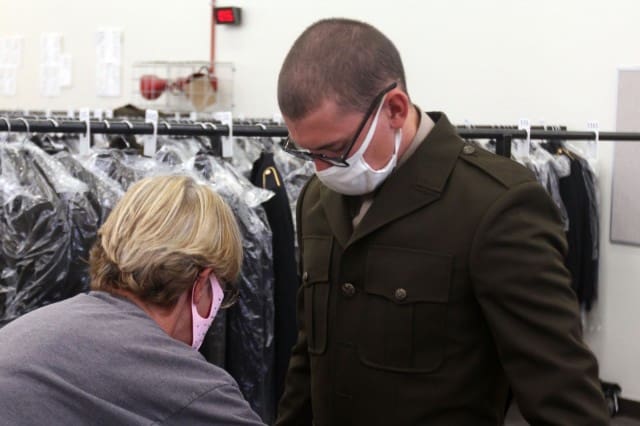
FORT SILL, Okla. –A basic combat training battery at Fort Sill is the first in the Army to get the new Army Service Green Service Uniform, a retro-style dress uniform modeled after the one worn by Gen. Dwight E. Eisenhower and other notables during World War II.

“Matter of fact, we’re the first Army training base to get the Army Green Service Uniform, which is pretty neat for obviously these Soldiers in training and obviously for the leadership,” 434th Field Artillery Command Sgt. Maj. Donald Harding said as nearly 200 trainees in A Battery, 1st Battalion, 79th Field Artillery waited outside the Vessey Hall Clothing Initial Issue Point (CIIP) Oct. 14 to receive the various components of their new uniforms.

Drill sergeants with 434th FA Brigade were issued their Army Green Service Uniforms the first week of September, during a three-night event at Military Clothing and Sales inside the PXtra.

Harding said he had nothing to do with the decision for Fort Sill to be the first to get new uniforms, as it came down from higher headquarters. He’s definitely proud that trainees here are first in line “because it brings back the tradition and the histories of the U.S. Army.”

The decision as to which battery here would get the uniforms was based on timing and the phase of training, Harding said. The brigade was given a date for the issue to take place, and it so happened that this battery was in week five of the second phase of their “2+8” training cycle.

“A basic combat training battery at Fort Sill is the first in the Army to get the new Army Green Service Uniform, a retro-style dress uniform modeled after the one worn by Gen. Dwight D. Eisenhower and other notables during World War II.

So they’ll come through, they’ll get the sizing, and then they get the alterations done here at CIIP, and then they’ll come back here in about three weeks or so to receive the tailored uniform and turn it in to dry cleaning for the graduation week,” he said.

The senior enlisted man for 434th FA Brigade does not yet own a set himself, but expects to get one as battalion and brigade command teams are getting over to the store to buy the issue.

Luis Navas, chief of supply services for Fort Sill, said the uniform is a big deal in the Army right now – “they’ve been working toward this day for a long, long time. We have a lot of people from outside, in the Army, just looking at what we do, how we do it, the quality of the product, so we can improve from this point on.”

Each trainee is issued one free uniform. They get the jacket, pants, dress shirt, brown oxfords, matching socks, their rank, two T-shirts (one long-sleeve, the other short), ties, gloves, and the garrison cap. Female trainees were segregated from the males and taken to changing rooms upstairs to be fitted for their version of the Army Green Service Uniform.

Since the trainees get only one suit of dress clothes, everyone gets instructions on how to take care of their uniform and make it last for a long time.

Navas said basic training units run around 240 trainees, and he was told that 150-200 would be going through the CIIP for the Oct. 14 uniform issue.

By Mitch Meador, Fort Sill Tribune