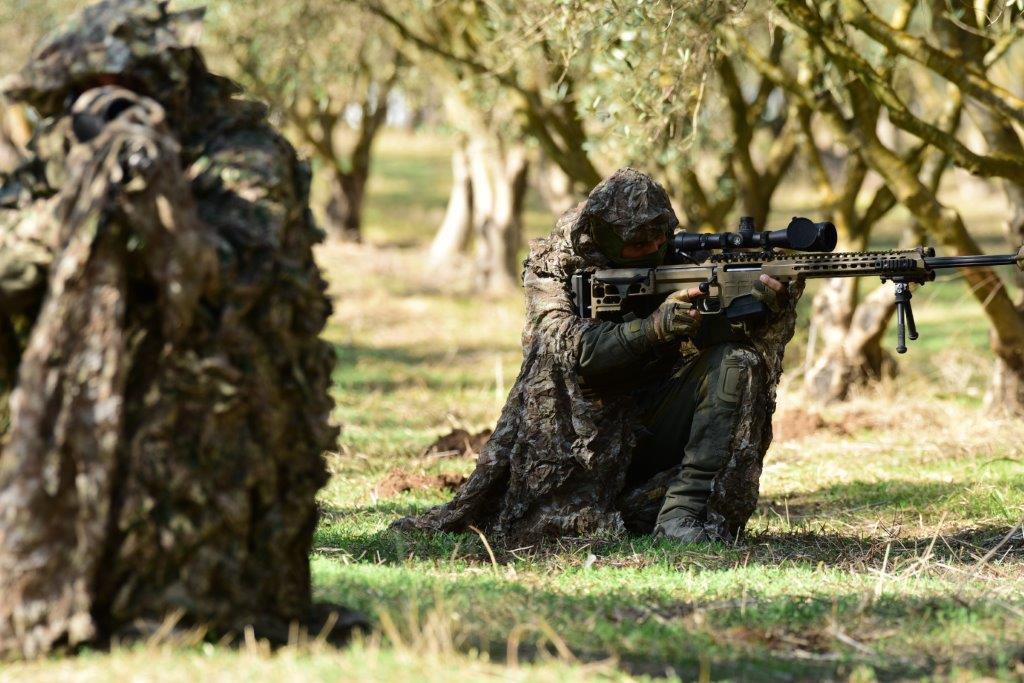
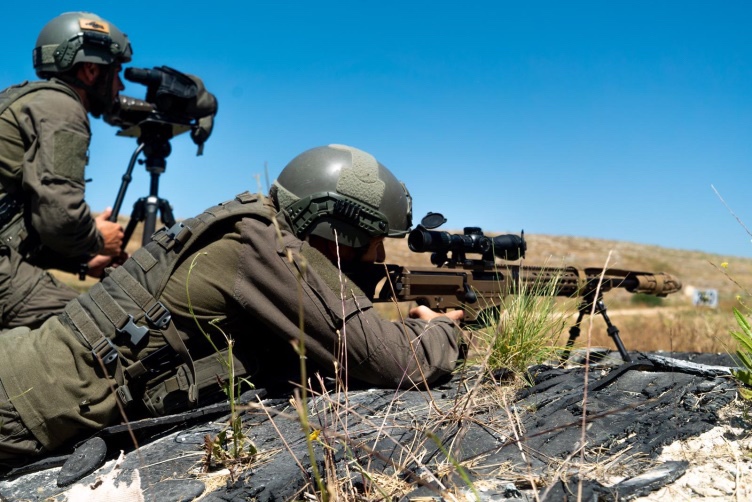
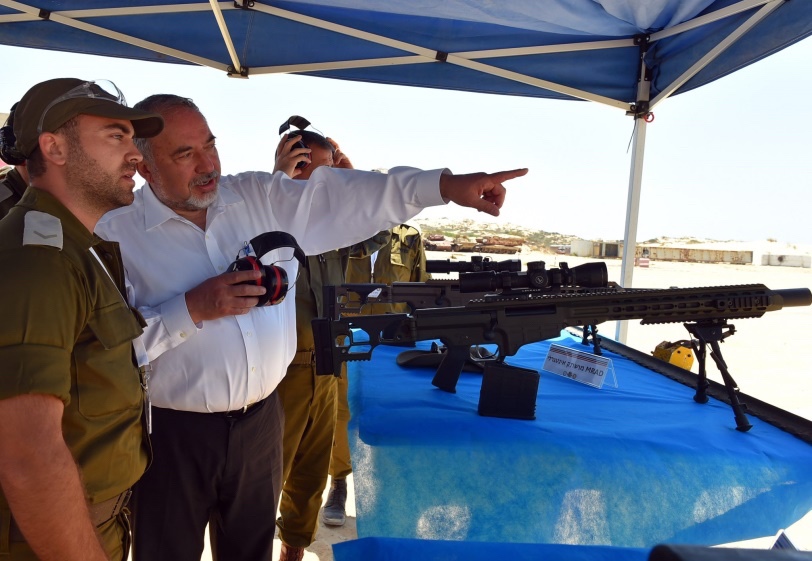
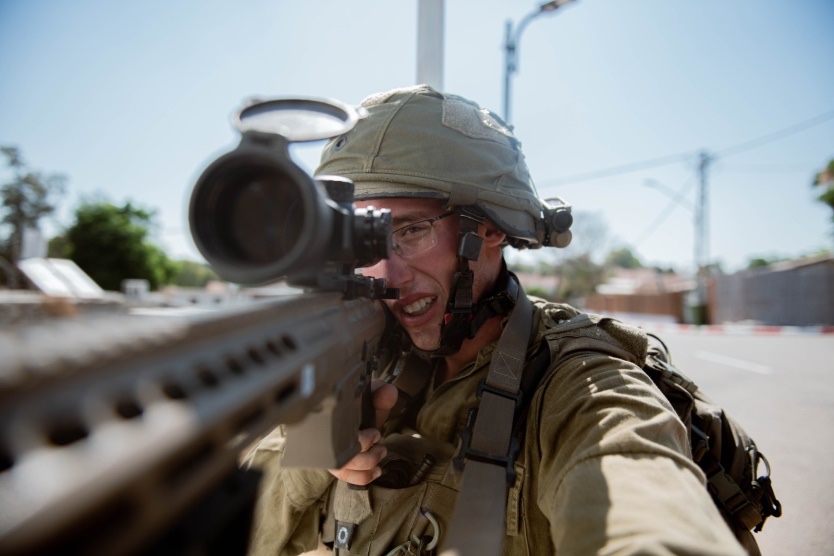
Wilcox Ind RAID Xe

Archive for the ‘Guest Post’ Category

SCUBAPRO Sunday – The Battle of Hue

Sunday, February 7th, 2021

I will try and tell this story the best I can, but there was a lot that happened during this month of fighting, and not going to lie, I forget how it all happened every time I read about it.

The Tet Offensive was a coordinated series of attacks by the North Vietnamese on over 100 South Vietnamese cities and outposts. The attack was an attempt to promote resistance among the South Vietnamese people and encouraging the U.S. to decrease its participation in the Vietnam War. The ensuing battles were characterized by confusion, gallantry, and bravery for almost one month, 30 January through 28 February. Without losing any strategically important foundation, the United States effectively repelled the assaults by the north in every city except Hue.  

Hue City is a center of Vietnamese culture and religion. The city’s cultural prominence during the war made it a place of strategic importance for U.S. forces. The Marines were forced to go home-to-house, for 26 days, carrying out urban operations for the first time since WWII. Hue was challenging for Marines as the Perfume River separates it, and no air support was provided for the first ten days following the Tet Offensive.

Hundreds of Viet Cong (VC) had already entered the city in the days leading up to Tet and had mingled with the pilgrim crowds that were streaming into Hue for a holiday. Their arms and munitions were quickly transported into the vibrant city and disguised in the bikes, cars, and trucks carrying the flood of merchandise, food, and goods intended for the day’s festivities. Like clockwork, the VC unpacking their guns in the middle of the morning of 31 January, and they put their uniforms into their assigned positions in Hue in preparation for connecting them with cracked Vietnamese People’s Army (PAVN) and city-closed VC agents. Infilters gathered at the gates of Citadel to lead their comrades to achieve their primary objectives.

On the holiday morning of 31 January 1968, as dawn broke, almost all could see it in Hue’s old walled town. The National Liberation Front’s gold-starred, blue-and-red banner flew at the top of the Citadel’s ancient flag tower. Just a few hours before bed on the eve of Tet, the elegant former capital city citizens were packed with anticipations for the forthcoming festivities and celebrations. But now, as they were in battle, a shield of terror and foreboding descended on them. The Communists now appeared to be in charge of Hue in a flash.

This moment was inevitably made possible by months of careful preparation and training. The Communists chose the time for the attack attentively. With Tet, the enemy knew that troops in the city were reduced in strength, with northeastern monsoon usually bad weather impeding all ally re-supply operations and impeding close air support.

Around 0330, the assault forces signed an attack by launching a simultaneous missile and mortar barrage from the mountains to the West of the city. This lasted until daybreak, and by then, they had gained reasonable control of the city. As PAVN and VC troops roamed to consolidate their victories, political officials were unlucky to compile the “special lists” for South Vietnamese and foreigners. The cadres marched along the Citadel’s narrow streets, called out the names on loudspeakers, and told the cadet to report to a local school. Those that do not submit will be hunted down. It is not until the end of the war that what became of the rounded-up would become readily apparent.

The activity in Hue on the morning of 31 January was just one aspect of an astonishing, orchestrated assault. About three-quarters of southern Vietnam’s capital and most of its key cities were affected by about 80,000 North Vietnamese and VC simultaneously. They were almost completely surprised in most objective locations, as they did in Hue, where a long, bloody battle was being waged.

Hue’s 140,000 inhabitants in 1968 made it the third-largest town in South Vietnam and one of the most celebrated areas in Vietnam. In reality, Hue is two cities separated by the Song Huong River, two-thirds of the city population living in the old town’s walls called the Citadel, to the north of the River of Perfume. The 3-square-mile Citadel, once the residence of the Annamese emperors who controlled the center of Vietnam, was enclosed by walls up to 30 feet and up to 40 feet in thickness, each about one mile and a half in length on its side. There is a zigzag seam across three walls not bordering the Perfume River, 90 meters wide at several points and 12 meters deep.

The Citadel had homes, apartment blocks, villas, restaurants, and parks. Another fortified experience, the Imperial Palace, is located in the old walled city, where emperors kept court until the French took over Vietnam in 1883. The square with 20-foot high 2,300-foot-long walls is situated at the south end of the Citadel. The Citadel was once was dream destination, but it would prove to be “a marine rifleman’s nightmare” in February 1968.

The current portion of the city of Hue, which had around half of the Citadel site and existed in around 1/3 of the city’s population in 1968, is located to the south of the Perfume River and connected to the Citadel by the Nguyen Hoang Bridge. The jail, the regional prison, the Catholic Cathedral were there.

A reinforced army of the Republic (RVN) 1st Infantry Division head office in the Citadel’s northwest corner has been the only military presence in the region. In the city, the only fighting force was the recognition company, the Hac Bao elite, called the Black Panthers, which was established outside of the city. The national police were mainly responsible for the preservation of protection within Hue.

Around one- and one-half blocks to the south of the Ngary Hoang Bridge in the eastern edge of the modern sector was the U.S. military’s only presence in Hue on 31 January. The compound had approximately 200 U.S. Army, Marine Corps, and officers and men of Australia who acted as advisors of the 1st Division of ARVN.

The closest U.S. combat base was at Phu Bai, about eight miles south on Highway 1. Phu Bai was a major Marine Corps command post and support facility, home to Task Force X-Ray, a forward headquarters of the 1st Marine Division. Commanded by Brig. Gen. Foster LaHue, assistant commander of the 1st Marine Division, the task force consisted of two Marine regimental headquarters and three battalions—the 5th Regiment, with two battalions: and the 1st Regiment, with one battalion. LaHue and most of the troops had only recently arrived in Phu Bai from Da Nang and were still getting acquainted with their area of operations when the Battle of Hue City began. There were U.S. Army units in the area as well. Two brigades of the 1st Air Cavalry Division (Airmobile), including the 7th and 12th Cavalry Regiments. The 1st Brigade of the 101st Airborne Division, recently attached to the 1st Cavalry Division, had recently arrived at Camp Evans, north on Highway 1 between Hue and Quang Tri.

There were eight thousand communist forces in the area of Hue, with ten total battalions, including two three PAVN regiments and one battalion each. The North Vietnamese regular units were highly trained. The PAVN units were joined by six major battalions of the Viet Cong, including the 12th and the Hue City Sapper units.

While the PAVN and VC troops were very skilled in the jungle and rice paddies, they required more urban areas training. As the soldiers preparing for the war ahead, a list of “cruel tyrants and reactionary elements” prepared by VC intelligence officials was ready for Hue’s battle during the early hours of the attack. Most officers, military officers, and politicians from South Vietnam and American civilians, and other foreigners were on this list. They were taken to the jungle outside the town after being “arrested,” and they were held responsible for their “crimes” against the Vietnamese people.

The PAVN 6th Regiment launched the main southeast assault, connecting it to the VC infiltrate and racing across the Perfume River into the Citadel to the ARVN 1st Division’s headquarters, with two infantry battalions and the 12th VC Sapper Battalion. Much of the Citadel was taking, but General Ngo Quang Truong, the first commander of ARVN Division, and his squad held attackers at the compound at bay, hoping not to be overrun by the 800th and 802nd Battalions of the 6th Regiment.

Meanwhile, the ARVN held its position on the east end of the airfield until it was ordered to retire to the Division’s headquarters to facilitate its reinforcement. While in the hours of pre-dawn, the PAVN 802 battalion has repeatedly probed the ARVN defenses, its soldiers were thrown back, leaving the I Division compound in the hands of the southern Vietnamese. But at daylight, much of the Citadel and the Imperial Palace was occupied by the PAVN 6th Regiment.

The condition was not much better for Americans south of the Parfum River. Twice, the PAVN 804th Battalion attacked the MACV complex. Each time, security forces armed with individual guns were quickly mobilized. The North Vietnamese soldiers subsequently stormed the compound walls, where a group of Marines in a bunker held them away for a short time until they were removed with several B-40 rockets. This action slowed down the PAVN attack and allowed the Americans and Australians time for defense organization. The communists attempted to cut down with mortars and automatic guns from the adjacence building after they did not take the compound in an intense firefight. The defenders went to the ground and called for reinforcements.

Two Viet Cong fighters took over the Thua Thien headquarters, the police station, and other state buildings south of the river as the fighting went raging around the MACV complex. The PAVN 810th Battalion also blocked the south edge of the city to avoid this route’s strengthening. The PAVN 810, The 4th Regiment of North Vietnam, occupied the entire city south of the Perfume River in the morning except for the MACV complex. The Communists thus took over almost all of Hue in very short order.

With only a tiny hold of his Citadel headquarters, General Truong ordered his 3rd Regiment to battle their way into Citadel northwest from their positions, supported by two airborne battalions and an armorial cavalry troop. These forces met with heavy opposition, but Truong’s headquarters reached late afternoon.

As Truong strengthened his forces, the surrounding Americans and Australians in the MACV complex issued yet another call for reinforcement. Responded, but not completely aware of the enemy situation in Hue, Brig. General Foster C. Marine Amphibious Force order. LaHue Frosty, Commander of the X-ray Task Force, has sent Company A, 1st battalion, and 1st Marine (1/1) to Phu Bai on Route 1 to alleviate the 200 MACV advisor surroundings.

Once the Marines entered the area, just a few kilometers away from the consulting team. More Phu Bai Marines joined the original forces to fight for the compound with ten people who were killed in the fight. After their relation, the Marines were ordered to cross the river and break into the Citadel of ARVN 1st DivisionDivision’s headquarters. A hail of enemy fire met the Marines as they went across Nguyen Hoang Bridge, subjecting them to heavy casualties.

Marines south of the river met Lt. Gen. Hoang Xuan Lam, commander of the ARVN I Corps, and Lt. Gen. Robert Cushman, commander of the III Marine Expeditionary Force, to come up with a plan to retake Hue. They chose to clear communist fighters from the Citadel and the rest of Hue north of the river by ARVN troops, while X-Ray task force would control the southern part of the city.

Colonel Stanley S. Hughes, First Marine Regiment Commandant, was sent by General La Hue to take overall charge of U.S. forces, now completely understanding what his marines were up to. A bitter, room-to-room building war to throw out the Marinas waged communist forces. The Marines were expected to learn on-site strategies and methods untrained in urban warfare, and their progress was expensive and methodical. The soil was gained in centimeters, and the blood was paid for each alley, street corner, window, and garden. Serious injuries have taken place on both sides.

The Thua Thien Province Headquarters, which acted as a post to monitor the PAVN 4th Regiment, was captured by H Company 2-5 of Marines on 5 February, which caused the North Vietnamese’ credibility defenses to collapse. The next week lasted hard fighting, but much of the city to the south of the river had been in U.S. hands by 14 February. Rockets and mortar rounds began to fall, and snipers threatened naval patrols, taking another 12 days to avoid. For the Marines, 38 dead and 320 injured, the new town’s fighting had been expensive. The communists were paying a higher price, and the bodies of over 1,000 soldiers from the VC and NVA were scattered over the city to the south of the river.

In the meantime, the northern battle of the river was still raging. While ARVN forces had been mobilized, the progress on the northwest and southwestern Citadel walls had effectively been blocked by 4 February, between the houses, the alleys, and the narrow streets. The Communists, who had burst deep within walls and tightly packed homes, still had the Imperial Palace and the majority of the area around and seemed to be improved as the reinforcements made their way into the city.

His troops halted, General Truong was disappointed and humiliated and compelled to seek III MAF assistance. General Cushman ordered General LaHue on 10 February to transfer a battalion to the Citadel. On 12 February 1/5 Marines reached the Citadel through a gap in the northwest wall on landing ships through the river. Around the same time, the Citadel’s south-west corner was pushed by two battalions. This accumulation of allies put intense pressure on the communist powers, but they stood up.

The Marines attacked the southern wall and suffered major losses, as the struggles were much more challenging than in the southern part of the city. The Marines were supported by aerial attacks, naval guns, and artillery support, but the enemy fiercely fought back. Back and forth was the battle before, after losing 47 people killed and 240 wounded on 17 February, the 1/2 Marines accomplished their objective.

The battle lasted for days, but ARVN soldiers eventually shot down a banner from Viet Cong, 25 days, at dawn of 24 February, hung the South Vietnamese flag on the Citadel flag tower. The communist forces suffered heavy losses in this battle, losing 5,133 men at Hue; about 3,000 more were estimated to be killed outside of the city. American losses were about 142.

The epic battle over Hue left much of the historical town a devastated pile, leaving some 116,000 people homeless, as 40% of its buildings were demolished. 5,800 people have been listed as killed or missing in the population. Many of the bodies disappeared for a long time, months after the battle, mass graves were found with about 1,200 civilian bodies in 18 hastily hidden mass graves. A second large group of graves was discovered within the first seven months of 1969. Then, in September, three communist defectors said that, at the Da Mai Creek, about 10 kilometers south of Hue in February 1968, 101 AIDS agents witnessed the killing of a few hundred civilians. The majority of about 300 people in the bed of the creek were found on a quest. In all, about 2,800 bodies from these mass graves have been retrieved.

In the beginning, in the American media, the mass graves were not widely talked about. The media did not accept the early findings since they came from outlets that they viewed as discredited. Instead, most journalists appeared to focus on the bloody battle and downfall of the region. However, when the graves were identified, inquiries were started to discover the truth of the murders.

Pham Van Tuong was hiding with his family when the VC came to make the list of “reactionaries” in Viet Cong for serving as a part-time janitor in the Government Information Office. The Viet Cong gunned down all of them instantly when he came out with his three-year-old daughter, five-year-old son, and two nephews and left them on the street as a reminder for the rest of the family.

The Viet Cong traveled to Phu Cam Cathedral on the fifth day of the occupation, where about 400 men and boys had gathered. Some were on the list as the enemy; some were military age, and some looked wealthy.  This party was found later on in the bed of Da Mai Creek.

An account from a group of Mennonite aid workers trapped at their homes in the communist occupation is documented by Omar Eby’s book A House in Hue, published in 1968. The Mennonites said they saw some Americans, one a farmer from the United States. They had been seen with the VC leading them away with their arms bound behind their backs. They, too, were found to be executed later.

Over the ensuing four weeks, Hue’s fighting was house by house, street by street, block by block slow with the Marines battling and tactically adapting to their enemy’s new tactics. Gradually, untimely, the Marines won back the Triangle and the Citadel, first and foremost. The devastation and bloodletting were of the essence, as well as the killing of souls. The massacre of innocents was deep, with countless civilians embedded within the fighting forces.

The political system, rooted in the NVA, forces people to recognize, chase and exterminate lists of individuals unfolded. Political cleansing started deliberately immediately after the start of the Hue attack.

This battle is one of the most important for the Marine Corps history and has been taught to every new Marine. The Marines are trained from the beginning of training “Hue City: house by house, street by street,” shouting it until their voice is grieved. Lessons learned in Hue city are still used to this day and were used in the battle of Fallujah. This battle also demonstrated every Marine’s ability to improvise and overcome as they could adapt from jungle to urban territory. Hue City is an excellent example of how fast Marines can “adapt and survive.”

There were 5 Medals of Honors awarded for actions during the Battle of Hue.

Gunnery Sergeant John L. Canley received his award over 50 years after carrying wounded Marines to safety.

Chief Warrant Officer Frederick Ferguson flew his helicopter through a barrage of anti-aircraft fire to rescue wounded comrades.

Sergeant Joe Hooper is described as the most decorated soldier of the Vietnam War

Sergeant Alfredo Gonzalez repeatedly exposed himself to direct enemy fire, leading his men despite his personal wounds.

Staff Sergeant Clifford Sims flung himself on top of an explosive device to save his platoon.

taskandpurpose.com/news/battle-hue-city-medal-honor

mca-marines.org/commanders-forums/bsp-asia/hue-city

digitalcommons.lsu.edu

Embracing Holistic Health and Fitness for ACFT Success

Sunday, February 7th, 2021

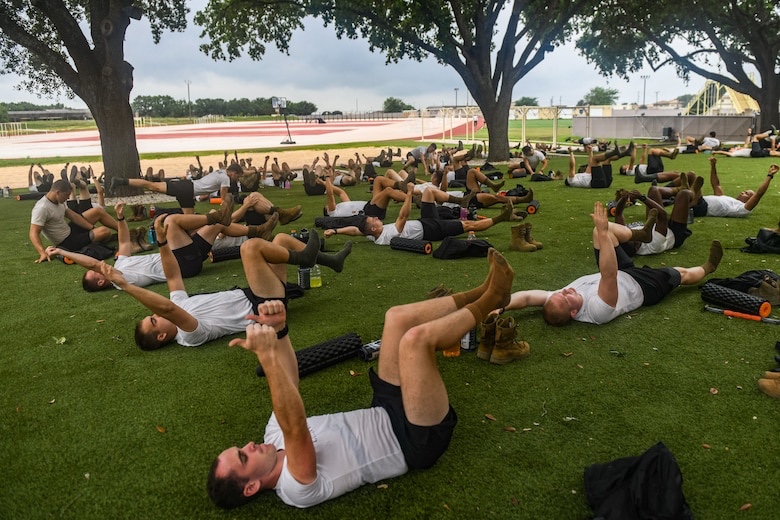
JOINT BASE LANGLEY – EUSTIS, Va. – With the New Year comes a fresh start and a chance to start new positive habits, and that’s exactly what the U.S. Army is doing with the new Holistic Health and Fitness initiative.

The Holistic Health and Fitness system, led by the U.S. Army Training and Doctrine Command’s Center for Initial Military Training, represents a new approach to building lethality and readiness by focusing on Soldier physical, mental, and spiritual health.

From this new initiative came the new Army Combat Fitness Test, which will eventually replace the Army Physical Fitness Test as the official physical fitness test of record. Though the ACFT is still in the data collection stage, Soldiers across the enterprise have been encouraged to continue to train so they are ready to pass once the test is fully implemented.

A New Way to Train

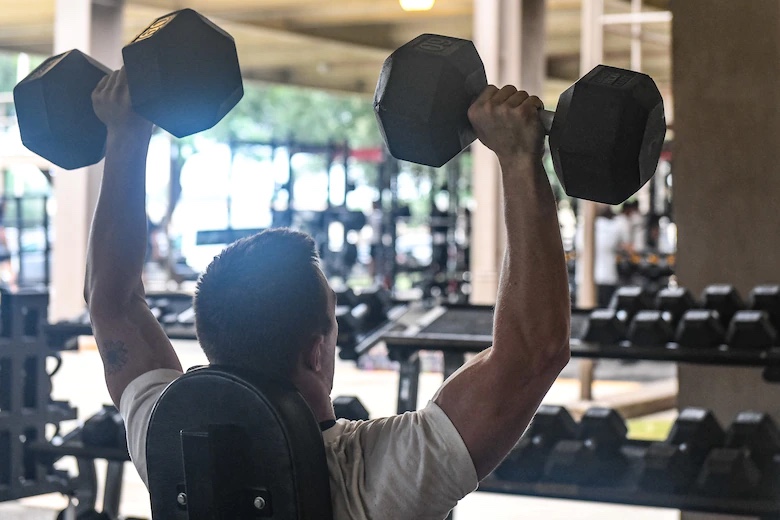
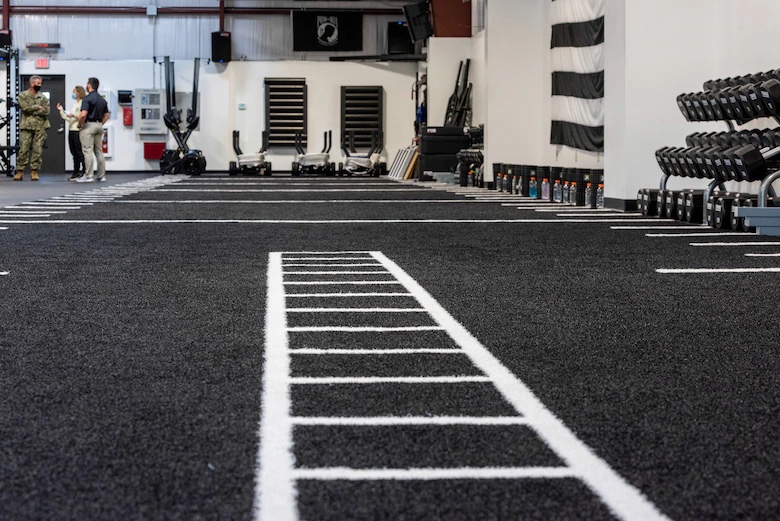
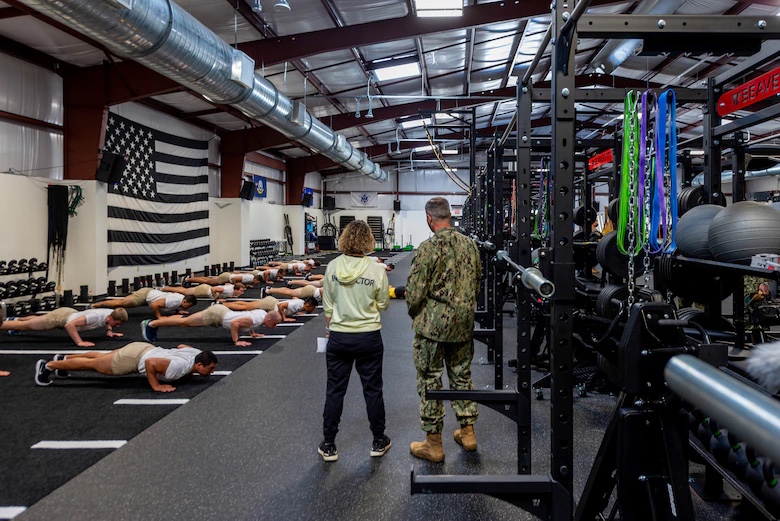
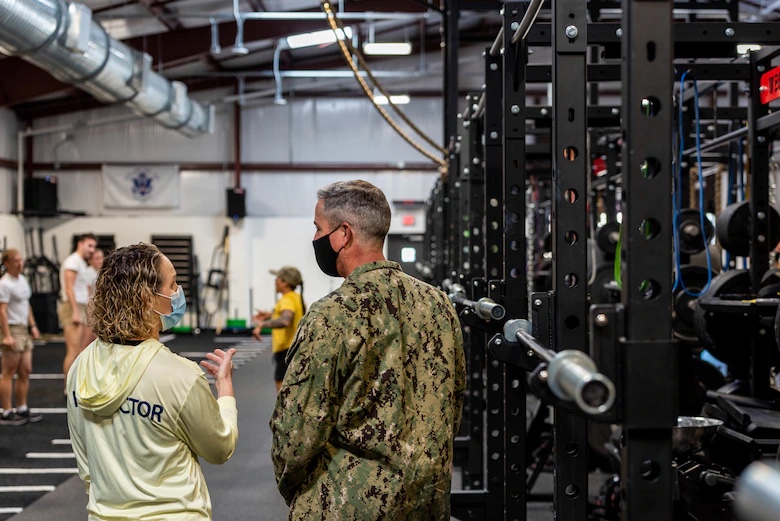
In an effort to apply the new H2F initiative towards a variety of fitness demographics, as well as Soldiers’ ACFT performance, the team of expert at USACIMT have begun a ten week training program for Soldiers of Fort Eustis that puts the new initiative to work.

The program volunteers come from a wide range of fitness demographics, including Soldiers who are in the Army Body Composition Program, post-partum, post-surgery, or simply just struggling to pass specific events in the ACFT.

When asked about their goals for the program, Staff Sgt. Jacob Walker stated, “My goal is to recover from surgery with the new knowledge the Army is implementing with the H2F program, as well as to take this information back to my unit and train others with it.”

Sgt. Kenya King stated, “One of my strongest goals in this program is to take the knowledge I gain to encourage soldiers on a better health approach while training for the ACFT.”

The training group, coordinated by the 2020 Drill Sergeant of the Year, Sgt. 1st Class Erik Rostamo, meets three times a week and applies the five domains of Holistic Health and Fitness expressed in the FM 7-22 regulation – physical, nutritional, mental, spiritual, and sleep – to create individualized training plans for each of the participants.

Putting the Doctrine to Use

Along with the individualized fitness plans, Rostamo and his team will assist the participants in building a plan for their nutritional, mental, and spiritual health.

The participants will also work with command dietician, Maj. Brenda Bustillos, as a resource for guidance on creating nutritional meal plans that will work with each individual’s health needs. She will host regular discussions with the Army Body Composition Program participants after each physical training session to discuss and encourage healthy eating habits.

For mental resiliency, the program develops personal readiness through weekly Master Resiliency Training courses, creating Specific, Measurable, Attainable, Relevant, Time-based goals, also referred to as SMART goals, and providing various cognitive challenges during physical training. An example of a cognitive challenge that Rostamo provided was placing playing cards throughout the PT circuit without letting the participants know prior to, and then asking them which cards were placed after they finish the PT circuit. This type of training will strengthen the participants’ ability to stay aware of their surroundings while focused on a specific task at hand.

Lastly, for the spiritual component, the USACIMT chaplain, Lt. Col. Paul Fritts, provides the participants with lectures throughout the program to inspire them and help them find their “why” factor.

“The spiritual component is one of the most important, yet most misunderstood components of the H2F program,” Rostamo stated.

Rostamo explained that the spiritual component is composed of the Soldier’s values, or internal warrior factor, that drive them to want to improve themselves and be the best version of themselves that they can be.

Transforming the Force

This ten-week program, along with many other similar demonstrations happening throughout the force, shows just how beneficial the Army’s new H2F initiative can be when implemented correctly by team and squad leaders.

According to Rostamo, this new initiative is creating a cultural change in the Army that will escape the “one size fits all” approach to readiness.

“It will require a lot more creativity on the team and squad leaders than it has in the past to give Soldiers a plan that works for them,” Rostamo states. “Personal readiness is crucial, especially when it comes to building cohesive teams.”

By Nina Borgeson, TRADOC Communications Directorate

TRADOC’s New “Project Athena” Initiative Promotes Personal, Professional Self-Development

Saturday, February 6th, 2021

Officers attending Basic Officer Leaders Course-B and Captains Career Courses are getting the opportunity to jump-start their self-development with a U.S. Army Training and Doctrine Command initiative called “Project Athena.”

Project Athena, named for the Greek goddess of war and signifying wisdom and learning, is a leader development program designed to inform and motivate Soldiers to embrace personal and professional self-development. These assessments are intended to serve Soldiers throughout their career and over the next year will extend to noncommissioned officer, warrant officer and Civilian Education System courses at all levels of professional military education.

Specific assessments vary based on the level of PME. Trained proctors at the Centers of Excellence are currently delivering a series of introductory assessments to BOLC-B students. Assessments tapping into more advanced capabilities are given progressively to CCC and later to other more senior military students in the Command and General Staff Officers’ Course.

Mission Command Center of Excellence Director Brig. Gen. Charles Masaracchia is spearheading the program for TRADOC and the Combined Arms Center. “Leaders need to ask themselves three questions: ‘Am I as good as I want to be, or need to be, to lead Soldiers? Am I willing to honestly answer an assessment about who I am right now? Am I willing to put in the effort to improve?’ If the answer is ‘I’m not as good as I need to be,’ then Athena can help.”

As an example, BOLC-B students execute the following assessments during the program of instruction: Nelson Denny Reading Test, Criterion Online Writing Evaluation Service, Social Awareness and Influence Self-Assessment, Self-Assessment Individual Difference – Inventory (SAID-I), Army Critical Thinking Test, and a Leader 180 (self and peer assessment). In contrast, CCC students conduct a full Leader 360 (includes self, peer and superior assessments), Social Skills Inventory, Individual Adaptability, SAID-I, and the Military and Defense Critical Thinking Test and Inventory.

Staff and faculty are then made available to interpret the results and provide feedback to the individual, upon request. This feedback, a crucial component of the program, will help students gain self-awareness, learn where they need improvement and guide them in the creation of a self-development plan.

Hundreds of learning resources, tied to each assessment and the areas assessed, are available at no cost to the individual. Armed with this information, Soldiers can begin the self-development process immediately and proceed at their own pace.

“Athena takes a comprehensive view of what Soldiers and leaders need to be able to do and the ways they can improve,” said Col. Samuel Saine, director of the Center for the Army Profession and Leadership. “Better self-awareness allows individuals to make better choices about what they do – with tangible feedback, they can quickly take action to address how they lead, communicate, think, and interact with others.”

Athena assessments began in July 2020 and CAPL and the CoEs are continuously reviewing the program’s execution and making adjustments as necessary. All students in the remainder of the CCCs and in CGSOC will begin using Athena assessments in early 2021.

“Leaders that answer their assessments openly and honestly, will benefit the most,” said Saine. “They can continue to evaluate feedback and adjust their personalized programs throughout their careers. The intent is to fuel a lifelong commitment to self-development and improvement. If we’ve accomplished that, we’ve met our goal.”

By Randi Stenson, MCCoE Public Affairs

FirstSpear Friday Focus: It’s Back—Multi-Purpose Pack in Woodland Camo

Friday, February 5th, 2021

It’s back in woodland camo! The Multi-Purpose Pack was originally developed as a medical pack for a US Special Operations unit, this pack can easily be adapted for use as a range bag, E&E pack, or 1-day pack. Features include hydration compartment, padded shoulder straps, 5 external pockets and compression straps.

Multi-Purpose Perfection

“My first experience with the MPP was borrowed from a friend during a shooting event. He swore by it, and let me borrow it for a few events to try out for myself. I was so impressed, I had to buy my own. This pack excels at modular packing and light carry. It fits far more gear than I anticipated, any never once showed signs of breaking. The stitching was superb and heavy duty. I’ve used his to create my range IFAK kit that I also leave in my truck for expedient ALS. I highly recommend this pack to everyone.”
— online review

• 5 external pockets including large hydration compartment
• Low profile padded shoulder straps
• Exterior compression straps
• Exceptional low profile range bag
• Developed as a med bag for a US SOF element
• Made in the USA

Currently available in woodland, manatee and ranger green.

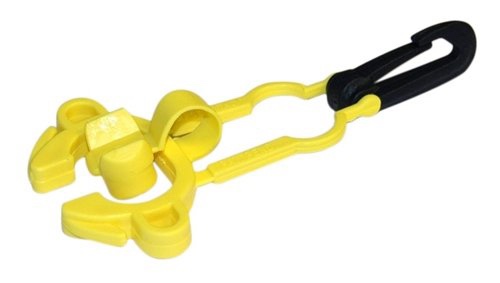
This weekend only—we are offering SSD readers a promo. Order any Multi-Purpose Pack and get a FREE Tough Hook.

*medical cell tag not included with tough hook (as photographed above)*

For more information go to: www.first-spear.com/multi-purpose-pack

Discovery Could Lead to Self-Propelled Robots

Thursday, February 4th, 2021

RESEARCH TRIANGLE PARK, N.C. — Army-funded researchers discovered how to make materials capable of self-propulsion, allowing materials to move without motors or hands.

Researchers at the University of Massachusetts Amherst discovered how to make materials that snap and reset themselves, only relying upon energy flow from their environment. This research, published in Nature Materials and funded by the U.S. Army, could enable future military robots to move from their own energy.

“This work is part of a larger multi-disciplinary effort that seeks to understand biological and engineered impulsive systems that will lay the foundations for scalable methods for generating forces for mechanical action and energy storing structures and materials,” said Dr. Ralph Anthenien, branch chief, Army Research Office, an element of the U.S. Army Combat Capabilities Development Command, now known as DEVCOM, Army Research Laboratory. “The work will have myriad possible future applications in actuation and motive systems for the Army and DOD.”

Researchers uncovered the physics during a mundane experiment that involved watching a gel strip dry. The researchers observed that when the long, elastic gel strip lost internal liquid due to evaporation, the strip moved. Most movements were slow, but every so often, they sped up.

These faster movements were snap instabilities that continued to occur as the liquid evaporated further. Additional studies revealed that the shape of the material mattered, and that the strips could reset themselves to continue their movements.

“Many plants and animals, especially small ones, use special parts that act like springs and latches to help them move really fast, much faster than animals with muscles alone,” said Dr. Al Crosby, a professor of polymer science and engineering in the College of Natural Sciences, UMass Amherst. “Plants like the Venus flytraps are good examples of this kind of movement, as are grasshoppers and trap-jaw ants in the animal world.”

Snap instabilities are one way that nature combines a spring and a latch and are increasingly used to create fast movements in small robots and other devices as well as toys like rubber poppers.

“However, most of these snapping devices need a motor or a human hand to keep moving,” Crosby said. “With this discovery, there could be various applications that won’t require batteries or motors to fuel movement.”

After learning the essential physics from the drying strips, the team experimented with different shapes to find the ones most likely to react in expected ways, and that would move repeatedly without any motors or hands resetting them. The team even showed that the reshaped strips could do work, such as climb a set of stairs on their own.

“These lessons demonstrate how materials can generate powerful movement by harnessing interactions with their environment, such as through evaporation, and they are important for designing new robots, especially at small sizes where it’s difficult to have motors, batteries, or other energy sources,” Crosby said.

The research team is coordinating with DEVCOM Army Research Laboratory to transfer and transition this knowledge into future Army systems.

By U.S. Army DEVCOM Army Research Laboratory Public Affairs

Brigantes Presents – The On-the-man Drone Capability Webinar

Wednesday, February 3rd, 2021


Innovations in hardware and software integration have made small, on-the-man drones a valuable and necessary asset for the troops on the ground in all military operations today and Brigantes are leading the way with demonstrating how these drones can be used effectively.

In the webinar, Matt Williams, CEO at Brigantes, discusses with leading drone experts, the key developments in smaller, lighter drones and how the innovations in hardware and software integration have made them a valuable and necessary asset for the guys on the ground in all military operations.

Agenda includes:
– Recce
– Mapping
– Survey
– Command and Control
– Planning
– Kinetic
– Distraction
– Targeting
– Training

Would you like to know more? Click here to register.

For more  information on how Brigantes can assist in your military procurement needs contact tribe@brigantes.com


Kombucha Tea Sparks Creative Materials Research Solution

Monday, February 1st, 2021

RESEARCH TRIANGLE PARK, N.C. — Kombucha tea, a trendy fermented beverage, inspired researchers to develop a new way to generate tough, functional materials using a mixture of bacteria and yeast similar to the kombucha mother used to ferment tea.


With Army funding, using this mixture, also called a SCOBY, or symbiotic culture of bacteria and yeast, engineers at MIT and Imperial College London produced cellulose embedded with enzymes that can perform a variety of functions, such as sensing environmental pollutants and self-healing materials.


The team also showed that they could incorporate yeast directly into the cellulose, creating living materials that could be used to purify water for Soldiers in the field or make smart packaging materials that can detect damage.

“This work provides insights into how synthetic biology approaches can harness the design of biotic-abiotic interfaces with biological organization over multiple length scales,” said Dr. Dawanne Poree, program manager, Army Research Office, an element of the U.S. Army Combat Capabilities Development Command, now known as DEVCOM, Army Research Laboratory. “This is important to the Army as this can lead to new materials with potential applications in microbial fuel cells, sense and respond systems, and self-reporting and self-repairing materials.”

The research, published in Nature Materials was funded by ARO and the Army’s Institute for Soldier Nanotechnologies at the Massachusetts Institute of Technology. The U.S. Army established the ISN in 2002 as an interdisciplinary research center devoted to dramatically improving the protection, survivability, and mission capabilities of the Soldier and Soldier-supporting platforms and systems.

“We foresee a future where diverse materials could be grown at home or in local production facilities, using biology rather than resource-intensive centralized manufacturing,” said Timothy Lu, an MIT associate professor of electrical engineering and computer science and of biological engineering.

Researchers produced cellulose embedded with enzymes, creating living materials that could be used to purify water for Soldiers in the field or make smart packaging materials that can detect damage.

These fermentation factories, which usually contain one species of bacteria and one or more yeast species, produce ethanol, cellulose, and acetic acid that gives kombucha tea its distinctive flavor.

Most of the wild yeast strains used for fermentation are difficult to genetically modify, so the researchers replaced them with a strain of laboratory yeast called Saccharomyces cerevisiae. They combined the yeast with a type of bacteria called Komagataeibacter rhaeticus that their collaborators at Imperial College London had previously isolated from a kombucha mother. This species can produce large quantities of cellulose.

Because the researchers used a laboratory strain of yeast, they could engineer the cells to do any of the things that lab yeast can do, such as producing enzymes that glow in the dark, or sensing pollutants or pathogens in the environment. The yeast can also be programmed so that they can break down pollutants/pathogens after detecting them, which is highly relevant to Army for chem/bio defense applications.

“Our community believes that living materials could provide the most effective sensing of chem/bio warfare agents, especially those of unknown genetics and chemistry,” said Dr. Jim Burgess ISN program manager for ARO.

The bacteria in the culture produced large-scale quantities of tough cellulose that served as a scaffold. The researchers designed their system so that they can control whether the yeast themselves, or just the enzymes that they produce, are incorporated into the cellulose structure. It takes only a few days to grow the material, and if left long enough, it can thicken to occupy a space as large as a bathtub.

“We think this is a good system that is very cheap and very easy to make in very large quantities,” said MIT graduate student and the paper’s lead author, Tzu-Chieh Tang.

To demonstrate the potential of their microbe culture, which they call Syn-SCOBY, the researchers created a material incorporating yeast that senses estradiol, which is sometimes found as an environmental pollutant. In another version, they used a strain of yeast that produces a glowing protein called luciferase when exposed to blue light. These yeasts could be swapped out for other strains that detect other pollutants, metals, or pathogens.

The researchers are now looking into using the Syn-SCOBY system for biomedical or food applications. For example, engineering the yeast cells to produce antimicrobials or proteins that could benefit human health.

The MIT-MISTI MIT-Imperial College London Seed Fund and the MIT J-WAFS Fellowship also supported this research.

SCUBAPRO Sunday – Underwater Contour Navigation

Sunday, January 31st, 2021

No matter what you are doing, you should have as many tools stacked in your favor or in your toolbox as you can to help back up your gauges and also make it easier on you. If all else fails, you can use your depth gauge and the depth around the target to find out where you are and where you need to go. It can be as simple as swimming with a reef on one side on the way out and the other on the way back.

Contour lines are used on charts and maps to represent the shape of the land and the ocean’s bottom. By using these lines, you can get a three-dimensional picture of what the bottom should look like.  It is hard to overstate the importance of contours when it comes to navigating. This can also be said about using the background from the water looking towards the land as a form of contour navigation. Knowing things that can help you tell where you are, like the piers’ compass heading, what direction does it go. What will the background look like behind your target, even the silhouette of the buildings? The movement of the moon will be in front or behind the target. If you have to use contour navigation, what would that look like?

You can also use the direction of the waves to find your way back to shore (along shorelines, waves will usually move in the direction of the shore) or using the contours of the bottom to make sure you’re moving in the right direction.

Good navigation begins long before you get into the water. You and your dive buddy should do a target and map/chart study to become very familiar with the target and surrounding area. Valuable information about the site, its features, depths, currents, moon phases, and surrounding features will help build a good dive plan. Discuss constitutes for your profile and which safety precautions you’ll take and agree on a primary route—lastly, walking thru what the dive will be like and what to do if you are lost or come up to different points.

Search for landmarks so you can reset yourself. Distinct underwater features can be found, including coral formations, objects, or differences in the bottom contour. Make sure to note any insights that stand out, and make sure to document every detail. Use what you have learned from the harbor’s contour or where you are diving as you pass through one of the following thresholds: 10 feet, 15 feet, or 20 feet, also. How is the bottom running? Remember to look for landmarks also along your dive route. Follow the light, look for lights, and even the moon if it is out. Check the angle of the moon at the start of your dive or if it hasn’t come up yet, which way will it raise and try to confirm this when you begin your descent. Before you go under, if you are turtle backing, you can use the moon or stars to help you navigate, so you don’t have to look at your navigation board continually. Before I went to BUD’S, I was a boat guy, and I learned to use the stars and moon to help me navigate, many times in the water and on land; this helped because I didn’t always have to be taking my compass out to make sure I was going the right way.

Depending on your dive computer, some like the SCUBAPRO Galileo 2 (G2) allows you to store pictures, so you can store a route card or a picture of the bottom, you can look at what the bottom should be looking like or have a picture of other things around the target to help. The G2 can also be used as a navigation/ attack board. Lastly, don’t be afraid to slow down a little. There is no reason to rush to be further lost than you are. Stop, and come up with a plan and then work that plan.