SIG SAUER - Never Settle

Archive for the ‘Guest Post’ Category

Army Research Shows Connection Between Stress, Stomach Ulcers

Monday, May 25th, 2020

RESEARCH TRIANGLE PARK, N.C. — New U.S. Army-funded research demonstrates a connection between stress and stomach ulcers.

The research, conducted at the University of Pittsburgh Brain Institute and funded by the Army Research Office traced neural pathways that connect the brain to the stomach, providing a biological mechanism that explains the connection.

ARO is an element of the U.S. Army Combat Capabilities Development Command’s Army Research Laboratory.

“The bidirectional connections between brain and gut are important conduits for communication within the mind-body axis,” said Dr. Frederick Gregory, ARO program manager. “The biological mechanisms into how stress might influence cognitive performance plays a central role in future strategies to mitigate Soldier stress through diet or other new gut-centric interventions. Not only is this important for combat missions but for the overall health and well-being of the entire Army.”

The findings, published this week in the Proceedings of the National Academy of Sciences, build a scientific basis for the brain’s influence over organ function and emphasize the importance of the brain-body connection.

Until now, research exploring the gut-brain interaction has largely focused on the influence of the gut and its microbiome on the brain and neurological disorders. But it’s not a one-way street – the brain also influences stomach function.

“Pavlov demonstrated many years ago that the central nervous system uses environmental signals and past experience to generate anticipatory responses that promote efficient digestion,” said Peter Strick, Ph.D., Brain Institute scientific director and chair of neurobiology at Pitt. “And we have long known that every increase in unemployment and its associated stress is accompanied by an increase in death rates from stomach ulcers.”

To find brain regions that control the gut, Strick and his coauthor David Levinthal, M.D., Ph.D., assistant professor of gastroenterology, hepatology and nutrition at Pitt, used a strain of rabies virus to track connections from the brain to the stomach.

After being injected into the stomach of a rat, the viral tracer made its way back to the brain by hopping from neuron to neuron – using the same trick that rabies virus uses to infiltrate the brain after entering the body through a bite or scratch – to reveal the brain areas that exert control over the stomach.

The researchers found that the parasympathetic – rest and digest – nervous system pathways trace back from the stomach mostly to a brain region known as the rostral insula, which is responsible for visceral sensation and emotion regulation.

“The stomach sends sensory information to the cortex, which sends instructions back to the gut,” Strick said. “That means our ‘gut feelings’ are constructed not only from signals derived from the stomach, but also from all the other influences on the rostral insula, such as past experiences and contextual knowledge.”

In contrast, the sympathetic – fight or flight – pathways of the central nervous system, which kick in when we’re stressed, predominantly trace back from the stomach to the primary motor cortex, which is the seat of voluntary control over the skeletal muscles that move the body around.

Identifying these neural pathways that connect the brain and stomach could provide new insights into common gut disorders.

For example, Helicobacter pylori infection typically triggers ulcer formation, but descending signals from the cerebral cortex could influence the bacteria’s growth by adjusting gastric secretions to make the stomach more or less hospitable to invaders.

These insights could also change clinical gastroenterology practice. Knowing that the brain exerts physical control over the gut gives doctors a new way to approach bowel problems.

“Several common gut disorders, such as dyspepsia or irritable bowel syndrome, might not get better with current treatments,” said Levinthal, who is also a gastroenterologist at UPMC. “Our results provide cortical targets that will be critical for developing new brain-based therapies that might be helpful for our patients.”

Gregory said that this is particularly relevant to combat casualty care where there are often bowel problems such as traveler’s diarrhea that can affect the overall health and performance of the military.

In addition to the U.S. Army, the National Institutes of Health and the DSF Charitable Foundation supported this work.

By U.S. Army CCDC Army Research Laboratory Public Affairs

SCUBAPRO Sunday – Memorial Day

Sunday, May 24th, 2020

Shortly after the Civil War, Memorial Day began as Decoration Day. The reason for that is because it was a day on which Americans, North and South, would decorate the graves of soldiers who died in the Civil War.

Maj. Gen. John A. Logan, who lead a group for Northen Civil War veterans, declared in 1868 that Decoration Day would be observed on May 30. The date was chosen only for the reason that it didn’t coincide with any battles fought. It was a day for the North and South to honor their fallen and decorate their graves. After World War I the holiday was broadened to include service members who died in all of the country’s wars, not just the Civil War.

Multiple cities claim to be the birthplace of this holiday, but President Lyndon Johnson formally gave the honor to Waterloo, N.Y., in 1966. Up until 1971, Memorial Day was observed on May 30, the date Logan had selected for the first Decoration Day. In 1968 Congress passed the Uniform Monday Holiday Act, which established Memorial Day as the last Monday in May to create a three-day weekend for federal employees. The same law also declared Memorial Day as a federal holiday. It did not go into effect until 1971.

Most people look at the Memorial Day weekend as the unofficial start of summer, mattress, and furniture sales or a day for cooking out. I know most of the people that read SSD will understand what the real meaning is. This is a day to remember the fallen man and woman of the military that have gone before us. Like most holidays in the U.S., it has been turned into just a weekend for sales and people to try and make money. But please take the time to think about the fallen, and their families that have as President Lincoln said: “Laid so costly a sacrifice upon the altar of Freedom.” We truly are lucky to live in the greatest country in the world, where “the pursuit of happiness” is a garneted right. You are never asked to do anything for it other than maybe do jury duty. But some people chose to serve for whatever reason and some die because they chose to server.

There are a couple small things you can do. One is if you fly an America flag lower it to half staff until noon. Then at noon raise it all the way up until sunset. Second, in the year 2000, the National Moment of Remembrance was passed in Congress this says at 3pm local time take a moment in your own way to remember the fallen.

Memorial Day is not Veterans Day. I have heard so many people say, “oh this weekend, we should really thank a veteran.” This isn’t for us; it is for the people that never came home and their families.

Lastly, I wanted to say something about what to say to someone else on Memorial Day as a greeting. Please do not say “Happy Memorial Day”. This is a little thing but it’s like saying happy funeral day. So, if you feel like “Happy Memorial Day” isn’t appropriate, try saying, “I hope you have a nice/good Memorial Day,”.

Long Live the Brotherhood


FirstSpear Friday Focus – Vision Augmentation System Soft Harness

Friday, May 22nd, 2020

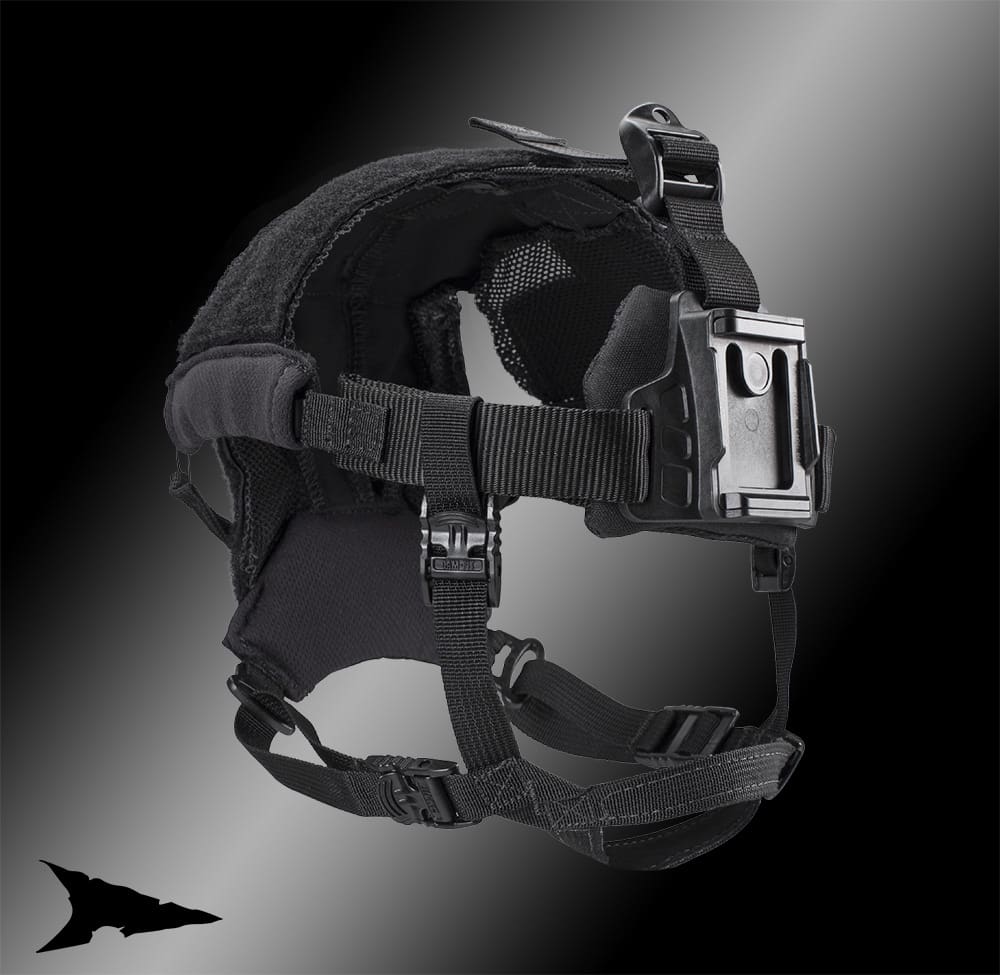
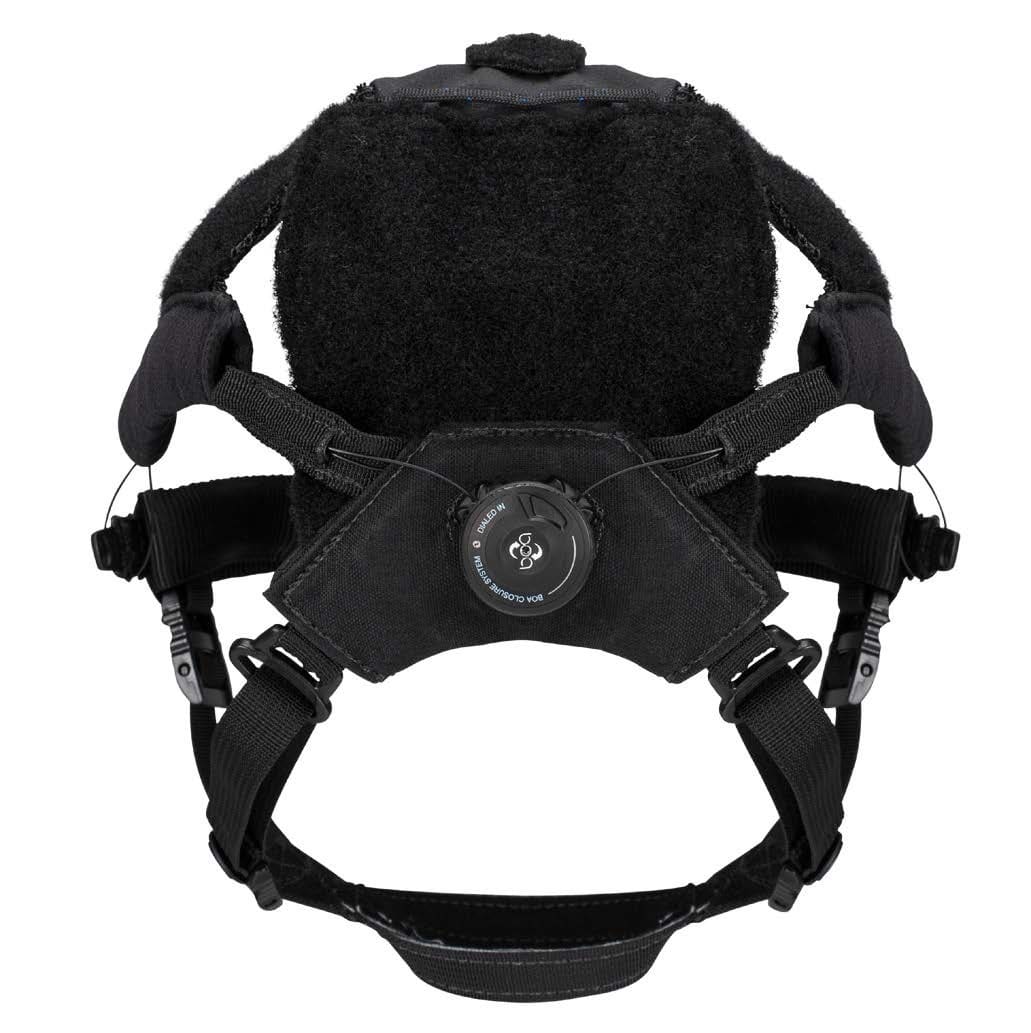
Today we are getting a closer look at an impressive night vision system capability from FirstSpear. Based off the popular FS Helmet Cover the Vision Augmentation System Soft Harness was designed to function as an extremely low profile and discreet method of wearing night vision goggle systems without the use of a traditional ballistic helmet or bump lid.

Fully Adjustable 4 point adjustment matched with the Boa® Fit System, the end user can find a perfect fit based off the equipment weight and profile they are using. Loop fields can be used to attach counter balance or batteries as well as strobes or FS Cell Tags. Available in Black, Coyote, and Multicam. 100% Made in the USA. Shroud included.

Features:
• Attaches to single or multi-tube systems
• Fully adjustable soft harness with shroud
• Comfortable fit
• Adjustable chin strap with positive lock hardware
• Boa® Fit System
• Easy cable management
• Attachment fields for IFF and the FirstSpear Battery Pack

www.first-spear.com/vas-vision-augmentation-system-soft-harness

Grey Ghost Precision teams up with Timney Triggers for some Giveaway Therapy

Thursday, May 21st, 2020
Grey Ghost Precision Timney Triggers Giveaway

Fun Fact: GGP puts Timney Triggers in all their rifles

Grey Ghost Precision and Timney Triggers just launched a giveaway that will help jump start your next rifle or pistol build. Three prize packs are up for grabs, including GGP receivers and frames, Timney Triggers, and some soft goods from GGP sister company Grey Ghost Gear as well. The giveaway ends on June 1st 2020, and the form to enter can be found here.

“With the ‘Coronapocalypse’ still taking its toll on all of us, we felt it was a good time to kick off another promotion to give fans a chance to win some high quality parts to take your rifle or pistol project to the next level.” said Ryan Cross, Grey Ghost’s Marketing Ninja. “Right now, a lot of our customers are stuck at home and are turning to DIY projects to lift their spirits. Receivers, frames and parts/components are flying off the shelves, presumably because most gun shops are still closed around the country, as well shooting ranges… not to mention the increase in political pushback against the 2nd Amendment and the upcoming election panic that we see so regularly. The rise in stress is pretty apparent, which gave us the inspiration to launch a cheeky anxiety themed giveaway with our friends at Timney. We picked our favorite Timney triggers to pair with our AR-15 receivers and pistol frames, instead of giving away complete rifles… because receivers (and frames) are still widely easily obtainable to more folks living behind enemy lines. If your FFL is able to transfer receivers or frames to you in your specific state, then you can get in on this too! And for those who are looking to build another custom handgun, we’ve included our Combat Pistol Frame and new in-house trigger as well, not to mention some of our favorite soft goods from Grey Ghost Gear to round it all off. While we don’t have the cure to everyone’s ailments, at least three lucky winners will feel pretty damn good in a couple weeks.”

GGP Timney First Prize Pack

The first prize bundle of the Get Triggered  Giveaway is a GGP Billet AR-15 Receiver set, which includes a Timney AR-15 Competition Trigger (the same trigger GGP installs in their MKII Light 556 complete rifles) as well as an Apparition SBR Bag from Grey Ghost Gear. The bag is a nice little bonus, as its sporty appearance throws off the fact that it can conceal a short barreled rifle, AR Pistol or even a full size rifle that has been taken down.

GGP Timney Second Prize Pack

The second prize is a GGP Cornerstone Forged Lower receiver, paired with a Timney Impact AR Trigger and a Grey Ghost Gear Range Bag.

GGP Timney Third Prize Pack

Last but not least, the third prize is a GGP Combat Pistol frame (a serialized, stripped frame that shares Glock compatibilities), a GGP Combat Trigger, and a Grey Ghost Gear Soft Pistol Case.

All of these prizes bundles contain serialized components that require a FFL transfer. Needless to say, only U.S. residents over the age of 21 that are able to possess said items and pass a background check can win. The terms and conditions of the giveaway can be found here. Even if you’re unable to win, subscribing to the newsletters is still a fun time.

SureFire Field Notes Ep. 59 – Bill Blowers on Tracking Performance

Thursday, May 21st, 2020

SureFire Field Notes is a multi-segment informational video series with tips and techniques from subject matter experts of all backgrounds. In this episode, Bill Blowers of Tap-Rack Tactical discusses how he measures performance in order to track progress and improve.

Bill was a police officer in Washington State for over 25 years, retiring in February 2018 as a Sergeant. He also served in the United States Army from 1986 to 1992. He was assigned to SWAT in 1995 and absent a single year, stayed on SWAT for the remainder of his career. He served as a ballistic shield carrier, breacher, entry team member, team training coordinator and ended as a team leader. As a team leader, Bill has successfully planned or participated in over 1500 pre-planned and in progress SWAT callouts. He has over 5000 training hours and has personally trained SWAT officers in different locations around the USA.

www.tap-rack.com

www.surefire.com


USMC’s PM Infantry Weapons Undergoing Largest Modernization Effort in Decades

Wednesday, May 20th, 2020

MARINE CORPS BASE QUANTICO, Va. —

Marine Corps Systems Command’s Program Manager for Infantry Weapons has begun a large-scale modernization project to increase the lethality of the infantry squad.

PM IW strives to equip and sustain the Marine Corps with fully-integrated infantry weapons, optics and nonlethal systems for the Ground Combat Element.

The portfolio’s modernization efforts adhere to Commandant of the Marine Corps Gen. David Berger’s vision to redesign the force to meet the challenges of a new age of great power competition. Through PM IW, the Corps plans to field numerous new weapon and optic systems over the next decade.

“This is the largest modernization of the infantry squad in the last 25 years,” said Lt. Col. Tim Hough, MCSC’s program manager for Infantry Weapons.

Strengthening systems

PM IW has begun the procurement of the Modular Handgun System, which will replace all Marine Corps pistols. This striker-fired pistol includes a plastic clip-on piece, enabling Marines to change grip sizes to accommodate different hand sizes. The weapon is compatible with the pistol-aiming module used by some units.

MCSC will begin fielding the system this fiscal year.

“The MHS improves on the precision and reliability of the legacy platforms, while also bringing with it new, more effective ammunition,” said Maj. Mike Brisker, weapons product manager for PM IW.

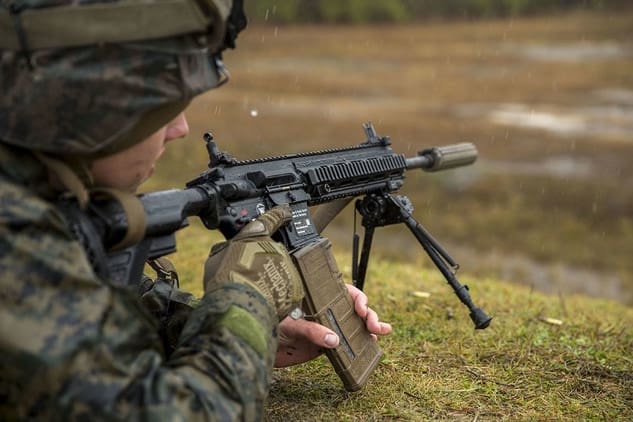
MCSC is expanding the use of the M27 Infantry Automatic Rifle. Originally fielded to infantry units as a replacement for the M249 Squad Automatic Weapon in 2011, the rifle received overwhelmingly positive feedback from Marines. This feedback led to the Marine Corps’ decision to field the M27 to all rifle platoons as their primary individual weapon.

“We expect fielding of [the M27] to conclude by the end of this fiscal year,” said Brisker.

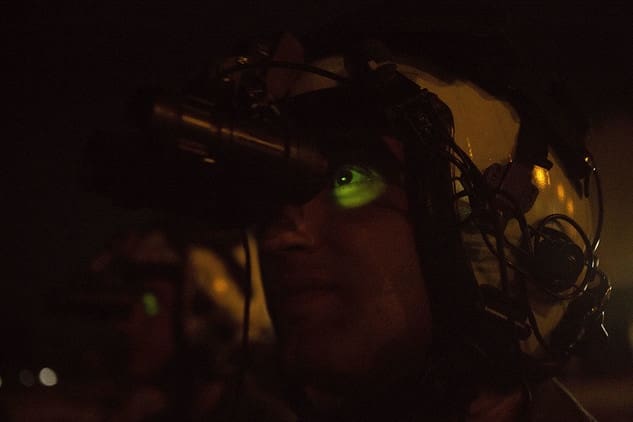
PM IW is also enhancing its optic systems. Fielded in spring 2020, the Squad Binocular Night Vision Goggle is a helmet-mounted system that offers improved depth perception, and the ability to detect and recognize targets in extreme low light, in inclement weather and in the presence of obscurants. The SBNVG provides additional capabilities that the legacy system, the AN/PVS-14, lacked.

Since awarding a contract in February 2020, PM IW plans to begin fielding the Squad Common Optic in fiscal year 2021. The SCO includes a magnified day optic, which improves situational awareness, decreases engagement times and increases probability of hit.

“The Squad Common Optic enables Marines to see farther and identify the enemy more quickly,” said Hough.

MCSC is collaborating with other services to field certain systems. For example, the Marine Corps will partner with the Army to procure the Next-Generation Squad Weapon system, intended to replace the M27 and become the primary individual weapon for infantry units.

The NGSW will provide a significant boost to the lethality of the individual soldier and Marine. The weapon includes an optic/fire control system that will incorporate a disturbed reticle to improve the shooter’s accuracy.

The Marine Corps could receive first deliveries of the NGSW as early as fiscal year 2025, said Brisker.

Additionally, PM IW and Fleet Marines are participating in the Army’s Integrated Visual Augmentation System and the Enhanced Night Vision-Binocular programs to help inform requirements and programmatic decisions in the future.

Enhancing performance

PM IW’s modernization efforts mirror MCSC’s mission to increase lethality among Marines. The command is continuously striving to equip Marines with the capabilities needed to successfully fulfill missions. To meet this goal, PM IW will continue to solicit feedback from Marines and industry.

“In line with the Commandant’s Planning Guidance, we’re looking to lighten the load and increase the overall lethality of Close Combat Forces—specifically infantry Marines,” said CW4 David Tomlinson, an infantry weapons officer with PM IW.

Tomlinson believes upgrading Infantry Weapon systems will ultimately enhance performance on the battlefield and increase survivability at a time when enemies are strengthening.

“These efforts show we are focused on staying abreast of advancements that are coming quickly,” said Tomlinson. “It also shows our desire to stay persistent, look toward the future, and make sure our Marines receive the best [systems] we can buy.”

Story by Matt Gonzales, MCSC Office of Public Affairs and Communication | Marine Corps Systems Command

Photos by LCpl Michaela R. Gregory and Kealii De Los Santos

Full Disclosure – Ep 1 Pt 2

Tuesday, May 19th, 2020

Full Disclosure is a behind the scenes look at how and why we design products at TYR.  Each episode is broken up into two parts.

Clever New Robot Rover Design Conquers Sand Traps


Monday, May 18th, 2020

RESEARCH TRIANGLE PARK, N.C. — Built with wheeled appendages that can be lifted, a new robot developed with U.S. Army funding has complex locomotion techniques robust enough to allow it to climb sand covered hills and avoid getting stuck. The robot has NASA interested for potential surveying of a planet or the Moon.

Using a move that researchers at Georgia Institute of Technology dubbed rear rotator pedaling, the robot, known as the Mini Rover, climbs a slope by using a design that combines paddling, walking, and wheel spinning motions. The rover’s behaviors were modeled using a branch of physics known as terradynamics.


The journal Science Robotics published the research as a cover article. The Army Research Office, an element of the U.S. Army Combat Capabilities Development Command’s Army Research Laboratory and NASA, through the National Robotics Initiative, funded the research.

“This basic research is revealing exciting new approaches for locomotion in complex terrain,” said Dr. Samuel Stanton, a program manager at ARO. “This could lead to platforms capable of intelligently transitioning between wheeled and legged modes of movement to maintain high operational tempo.”

According to the scientists, when loose materials like sand flow, that can create problems for robots moving across it.

“This rover has enough degrees of freedom that it can get out of jams pretty effectively,” said Dan Goldman, the Dunn Family Professor in the School of Physics at the Georgia Institute of Technology. “By avalanching materials from the front wheels, it creates a localized fluid hill for the back wheels that is not as steep as the real slope. The rover is always self-generating and self-organizing a good hill for itself.”

A robot built by NASA’s Johnson Space Center pioneered the ability to spin its wheels, sweep the surface with those wheels and lift each of its wheeled appendages where necessary, creating a broad range of potential motions. Using in-house 3-D printers, the Georgia Tech researchers collaborated with the Johnson Space Center to re-create those capabilities in a scaled-down vehicle with four wheeled appendages driven by 12 different motors.

“The rover was developed with a modular mechatronic architecture, commercially available components, and a minimal number of parts,” said Siddharth Shrivastava, an undergraduate student in Georgia Tech’s George W. Woodruff School of Mechanical Engineering. “This enabled our team to use our robot as a robust laboratory tool and focus our efforts on exploring creative and interesting experiments without worrying about damaging the rover, service downtime, or hitting performance limitations.”

The rover’s broad range of movements gave the research team an opportunity to test many variations that were studied using granular drag force measurements and modified Resistive Force Theory. The team began with the gaits explored by the NASA RP15 robot, and experimented with locomotion schemes that could not have been tested on a full-size rover.

The researchers also tested their experimental gaits on slopes designed to simulate planetary and lunar hills using a fluidized bed system known as SCATTER, or Systematic Creation of Arbitrary Terrain and Testing of Exploratory Robots, that could be tilted to evaluate the role of controlling the granular substrate.

In the experiments, the new gait allowed the rover to climb a steep slope with the front wheels stirring up the granular material – poppy seeds for the lab testing – and pushing them back toward the rear wheels. The rear wheels wiggled from side-to-side, lifting and spinning to create a motion that resembles paddling in water. The material pushed to the back wheels effectively changed the slope the rear wheels had to climb, allowing the rover to make steady progress up a hill that might have stopped a simple wheeled robot.

“In our previous studies of pure legged robots, modeled on animals, we had kind of figured out that the secret was to not make a mess,” Goldman said. “If you end up making too much of a mess with most robots, you end up just paddling and digging into the granular material. If you want fast locomotion, we found that you should try to keep the material as solid as possible by tweaking the parameters of motion.”

But simple motions had proved problematic for Mars rovers, which famously got stuck in granular materials. Goldman says this gait discovery might be able to help future rovers avoid that fate.

“This combination of lifting and wheeling and paddling, if used properly, provides the ability to maintain some forward progress even if it is slow,” Goldman said. “Through our laboratory experiments, we have shown principles that could lead to improved robustness in planetary exploration – and even in challenging surfaces on our own planet.”

The researchers hope next to scale up the unusual gaits to larger robots, and to explore the idea of studying robots and their localized environments together.

Though the Mini Rover was designed to study lunar and planetary exploration, the lessons learned could also be applicable to terrestrial locomotion – an area of interest to the Army.

By U.S. Army CCDC Army Research Laboratory Public Affairs