XC3 Weaponlight

Archive for the ‘Guest Post’ Category

The Army’s Official Face Mask to be Issued to New Soldiers in 2021

Thursday, December 17th, 2020

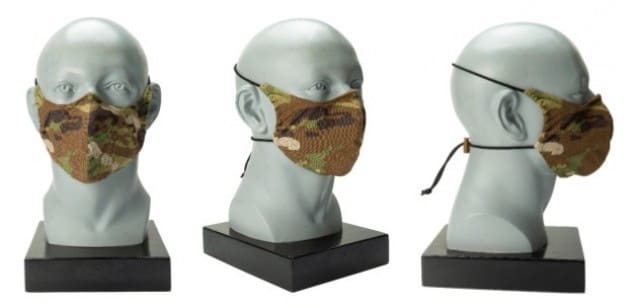
The official Army-designed, -tested, and -refined face mask – the Combat Cloth Face Covering (CCFC) – will be provided to new Soldiers during the second quarter of FY2021. This was one of the updates provided to the Army Uniform Board (AUB) during its 152nd meeting, which occurred on Nov. 18.

In response to the current pandemic, the Army has largely provided disposable or reusable, solid color masks to Soldiers who have also been permitted to use neck gaiters and other cloth items, such as bandanas and scarves, as face coverings. This past summer, the Army Uniform Board recommended and General James C. McConville, the U.S. Army Chief of Staff, approved issuing CCFCs to Soldiers at Initial Entry Training (IET) as part of their clothing bag. At the 152nd AUB, Army officials said that the Defense Logistics Agency (DLA) will begin issuing two CCFCs to each new Soldier during the second quarter of FY2021. The CCFCs will likely be available for purchase at the Army & Air Force Exchange Service (AAFES) uniform stores later in FY2021. (Note: Existing guidance on face coverings for current Soldiers remains unchanged and can be found at the end of this article.)

The CCFC was designed, developed, and produced along an expedited timeline. It normally takes 18–24 months for DLA to have the item available for order once the technical description, design, and components are approved and submitted. The CCFC, from inception to issuance, is slated to take less than one year.

The AUB also received updates on the implementation status of four other uniform changes from the 151st AUB, which took place in June 2020. A summary of these follow:

Improved Hot Weather Combat Uniform-Female (IHWCU-F): Expected to be added to the clothing bag in the fourth quarter of FY2021 and available for purchase in the second quarter of FY2022.

Hot Weather Army Combat Boot-Improved (HW ACB-I): Expected to transition to DLA Troop Support for new contracting action in the second quarter of FY2021 and be available for purchase by FY2024.

Black Athletic Socks: DLA estimates the sock will be available in the clothing bag in second quarter of FY2022.

Army Physical Fitness Uniform-Maternity (APFU-M): Prototypes are in development. The Army is working with the Air Force and Marines on their past maternity uniform efforts in order to expedite pattern development. Form, fit, and function evaluations are expected to occur in the third quarter of FY2021.

The AUB also discussed additional clothing articles, including items for new and expecting mothers. More information will be provided about these discussions in 2021 after Senior Leader decisions are made.

*************************

EXISTING FACE COVERING GUIDANCE:

SOLDIERS ARE AUTHORIZED TO WEAR THE NECK GAITER AND OTHER CLOTH ITEMS, SUCH AS BANDANAS AND SCARVES, AS FACE MASKS. TO PROTECT THE FACIAL AREA, THE CLOTH ITEM MUST COVER THE MOUTH AND NOSE AND EXTEND TO THE CHIN OR BELOW AS WELL AS TO THE SIDES OF THE FACE. THE ITEM MUST ALSO BE SECURED OR FASTENED TO THE FACE IN A MANNER THAT ALLOWS THE SOLDIER TO BREATHE WHILE ALSO PREVENTING DISEASE EXPOSURE OR CONTAMINATION.

SOLDIERS WILL NOT WEAR MASKS THAT HAVE PRINTED WORDING, PROFANITY, RACIST, DEMEANING OR DEROGATORY LOGOS, SCRIPT OR IMAGERY. SOLDIERS MUST NOT ATTEMPT TO CUT UP CLOTHING MATERIALS SUCH AS ARMY COMBAT UNIFORMS TO USE FOR FACE MASKS AS THESE MAY HAVE BEEN TREATED WITH CHEMICALS. IF AVAILABLE, CLOTH COLORS SHOULD BE SUBDUED AND CONFORM TO THE UNIFORM. LEADERS SHOULD APPROACH THIS AS A FORCE PROTECTION ISSUE; THEY ARE ASKED TO USE THEIR BEST JUDGMENT REGARDING THE CLOTH COLOR AND DESIGN OF FACE MASKS AND MUST ALSO CHECK FOR THE SERVICEABILITY OF FACE-SHIELDING MATERIALS. SOLDIERS SHOULD REPLACE ITEMS THAT BECOME SOILED, DAMAGED, OR DIFFICULT TO BREATHE THROUGH.

By Kinsey Kiriakos
Dutch Marine Corps Fields New Pulk Transport Sleds for Arctic


Thursday, December 17th, 2020

This release was provided by the Korps Mariniers or Dutch Marine Corps.

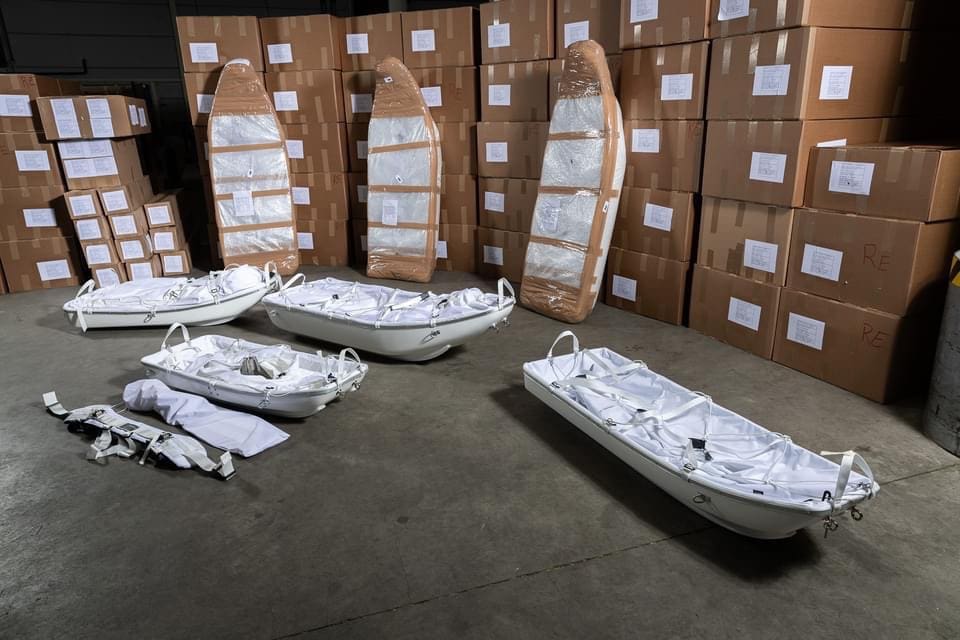
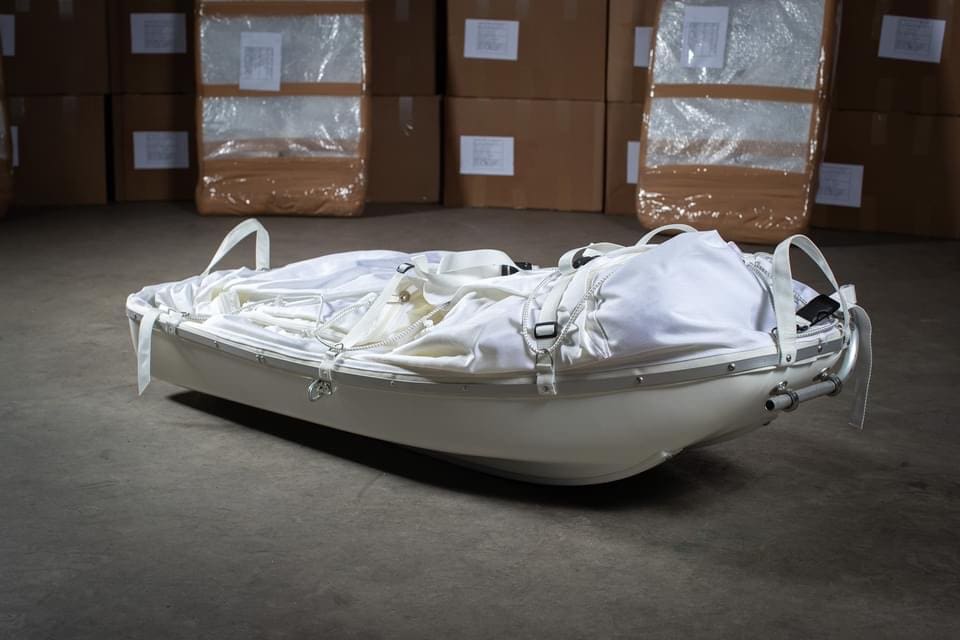
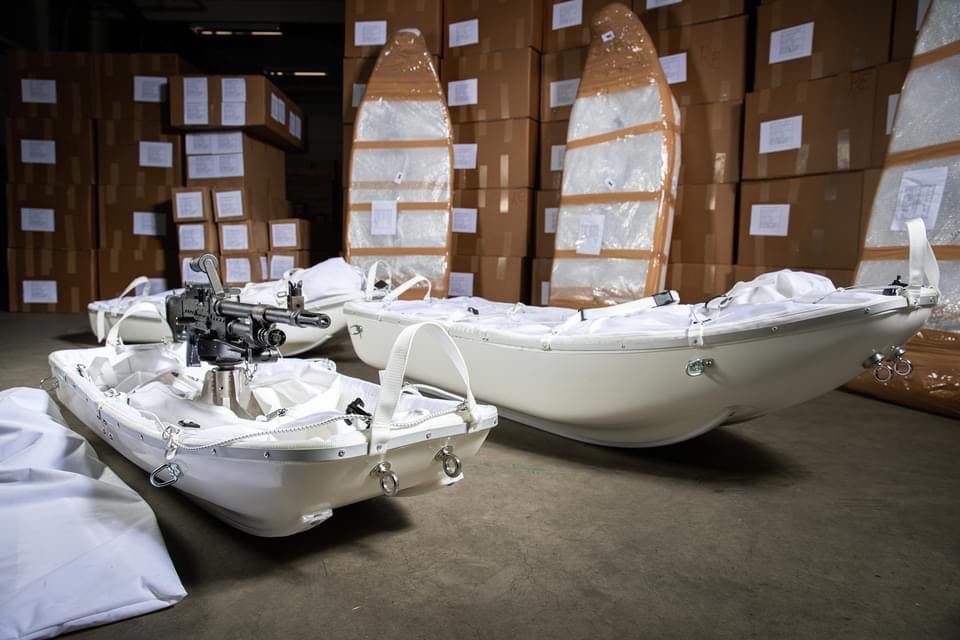
During the upcoming Joint Arctic Training on the Northflank in Norway, the first new Pulks will be deployed at the squadron level. Pulk is the English term for a short low-hanging small sleigh and is pronounced ?? pooluk” The Pulk offers good opportunities for Marines to take their equipment.

Arctic

Marine Corps units take in arctic conditions a lot of equipment such as (extra) clothing, fuel and tents. They need these items to survive at low temperatures. As a result, Marines are now carrying a heavy backpack while moving on skis in snowy areas. An additional disadvantage of a complete package on the man is that the function of the worn clothing is not fully utilized (breathing capacity).

Trials

After various tests, during previous winter training with Pulks, 4 different types have been chosen. The 120 cm General Purpose Machine Gun Pulk is directly suitable as a weapons platform. The 135 cm is the operator Pulk and suitable for every sierra operator, a 150 cm Pulk for every MAG helper and a 170 cm variant for general use of the various troops of a squadron.

Cooperation and guarantee

In collaboration with the Weapons System Management (WSM) section of the Group Commander Operational Units Marines (GC-OEM), the Clothing and Equipment (KL & OUT), and the Assortments Manager, have now been purchased for a squadron Pulks. Next year two more extraditions will follow, so that a fully Marine Combat Group will be equipped with new Pulks from then on.

Picatinny Engineers Develop Unique ‘Transformer’ Gunner Protection Armor

Thursday, December 17th, 2020

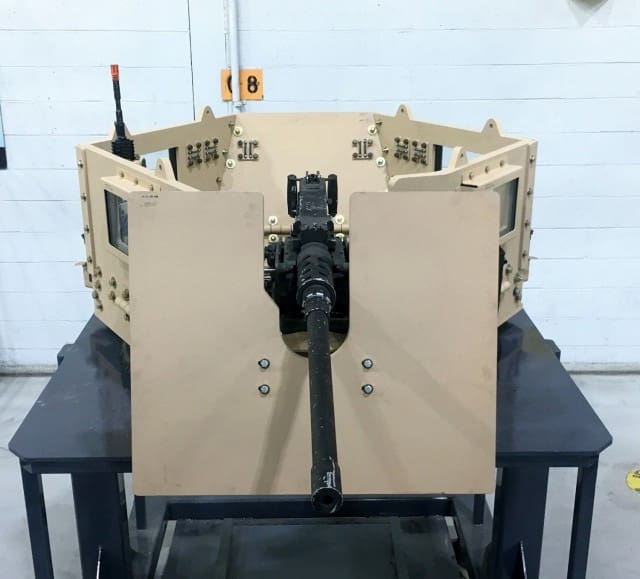
PICATINNY ARSENAL, N.J. — Engineers at Picatinny Arsenal have developed a unique gunner protection turret, quickly foldable to a reduced height, which will make it easier for the U.S. Marine Corps to transport the turret in a number of scenarios.

The versatility and compactness of the turret evokes comparisons to the “Transformer” science fiction movies, which feature robots that can transform themselves into common machinery, such as vehicles.

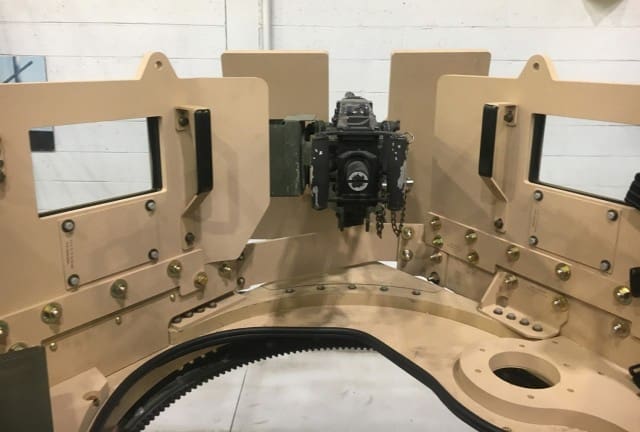
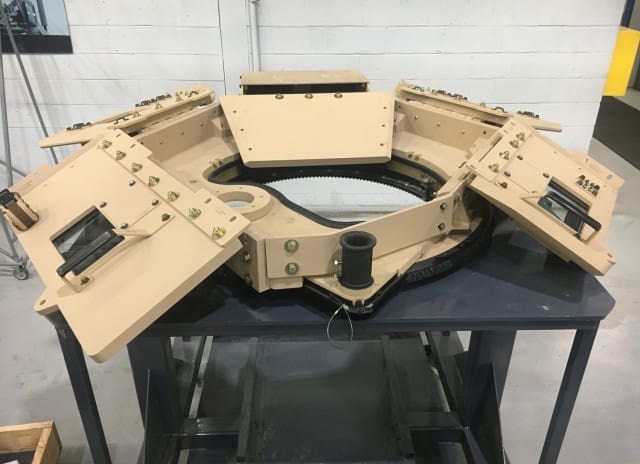
In its reduced configuration, the new turret allows for more efficient transportation aboard naval vessels, aircraft and ground transport systems. Designated as the Reducible Height Gunner Protection Kit (RHGPK), the turret can quickly fold to nearly one-third of its original height, thus allowing for adequate clearance within tight transportation decks.

Moreover, the reducibility feature is ideal for limited deck spaces aboard Naval amphibious transport dock ships and Maritime Prepositioned Force ships without the need to remove the RHGPK from the host vehicle. The new turret is undergoing test and evaluation with the Marine Corps System Command on the Joint Light Tactical Vehicle (JLTV) Heavy Guns Carrier (HGC) variant.

“The RHGPK essentially is an armored Transformer,” said Thomas Kiel, who leads the engineering design of gunner protection kit (GPK) turrets within the U.S. Army Combat Capabilities Development Command Armaments Center, located at Picatinny Arsenal.

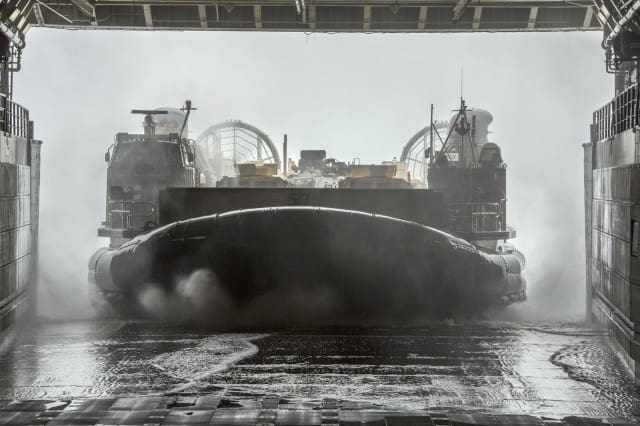
“The turret is unrecognizable once it’s reduced for transportation purposes,” Kiel added. Marine Corps expeditionary operations use fully amphibious platforms, such as the Landing Craft, Air Cushion (LCAC) to transport weapons systems, equipment, and personnel within assault elements from ship to shore and across the beach.

The RHGPK turret will be mounted on tactical vehicles being transported on amphibious ships entering hostile regions. “Marines need to be able to focus on the mission during a beach landing, and not be concerned with how to prepare a turret for the operation,” said Kiel. “The RHGPK has been engineered to allow Marines to raise the turret and mount the weapon in a matter of minutes, while on a moving landing craft.”

The turret is the latest addition to the portfolio of Objective Gunner Protection Kit (OGPK) family of protective armor kits for tactical vehicle turret gunners.

GPK turrets are protective structures that mount to a rotating bearing ring on the roofs of tactical wheeled vehicles. A turret typically is considered to be defensive weapon system due to its inherent opaque and transparent armor, which is configured to maximize the protective area surrounding the gunner. In addition to enhancing survivability, the turret is the primary weapon station for the vehicle platform, enabling the gunner to deliver firepower on targets.

“The voice of the warfighter is critically important when developing a new weapon system,” Kiel said. “Restrictions during the pandemic forced us to conduct our initial user evaluations with virtual models instead of physical prototypes.”

Also located at the Armaments Center, the Gaming, Interactive Technologies & Multimedia team worked closely with the GPK engineers to generate fully immersive, virtual reality scenarios. That made it possible to evaluate the overall effectiveness of the design, from the perspective of space requirements, protection, situational awareness and weapon functionality.

The RHGPK enables the Joint Light Tactical Vehicles, Medium/Heavy Tactical Vehicle Replacement and Logistics Vehicle System Replacement, to be transported in the lower vehicle stowage areas of Landing Platform/Dock (LPD 17) and Landing Helicopter Dock class ships. The turret’s reducible feature will also facilitate transportation by rail and air.

“The backbone of our design is the solid model,” said Kris Mayer, turret design engineer at the Armaments Center’s Prototype Integration Facility. “It is the source for manufacturing data and many other engineering functions,” he added. The solid model feeds all aspects of the design life cycle, including cost estimating, structural analysis, weight predictions, platform integration and weapons interfacing.

“When things are done properly, the fabricated hardware will look exactly like the computer model with no surprises,” said Mayer. Proper configuration management allows future design updates to be incorporated seamlessly.

Project Manager Soldier Lethality, located at Picatinny Arsenal, has primary responsibility for Gunner Protection Kit turret development under the Gunner Integrated Protection and Restraint System program. It also manages the procurement of turret systems within the Department of Defense.

“There are a wide variety of tactical vehicle platforms within the DoD,” explained Narayan Bhagavatula, Program Lead for Gunner Protection Systems. “Many of these require unique turret solutions because of specific user requirements and weapons that must be mounted,” he added. The GPK turret designs are generated in-house at the Armaments Center by Army civilian engineers.

Each turret within the portfolio of OGPKs has its own specific configuration. However many components are shared among the various designs. This results in more affordable products and a smaller logistics footprint for sustainment. Also, because the designs are owned by the U.S. government, competitive production contracts can be sourced among small and large businesses throughout the United States.

Picatinny Arsenal, located in northern New Jersey, provides a wide variety of guns, ammunition, products and related services to all branches of the U.S. military. The Armaments Center is part of the U.S. Army Combat Capabilities Development Command, or DEVCOM, which is under the Army Futures Command.

By Ed Lopez, Picatinny Arsenal Public Affairs

The THING 2 from Spiritus Systems

Wednesday, December 16th, 2020

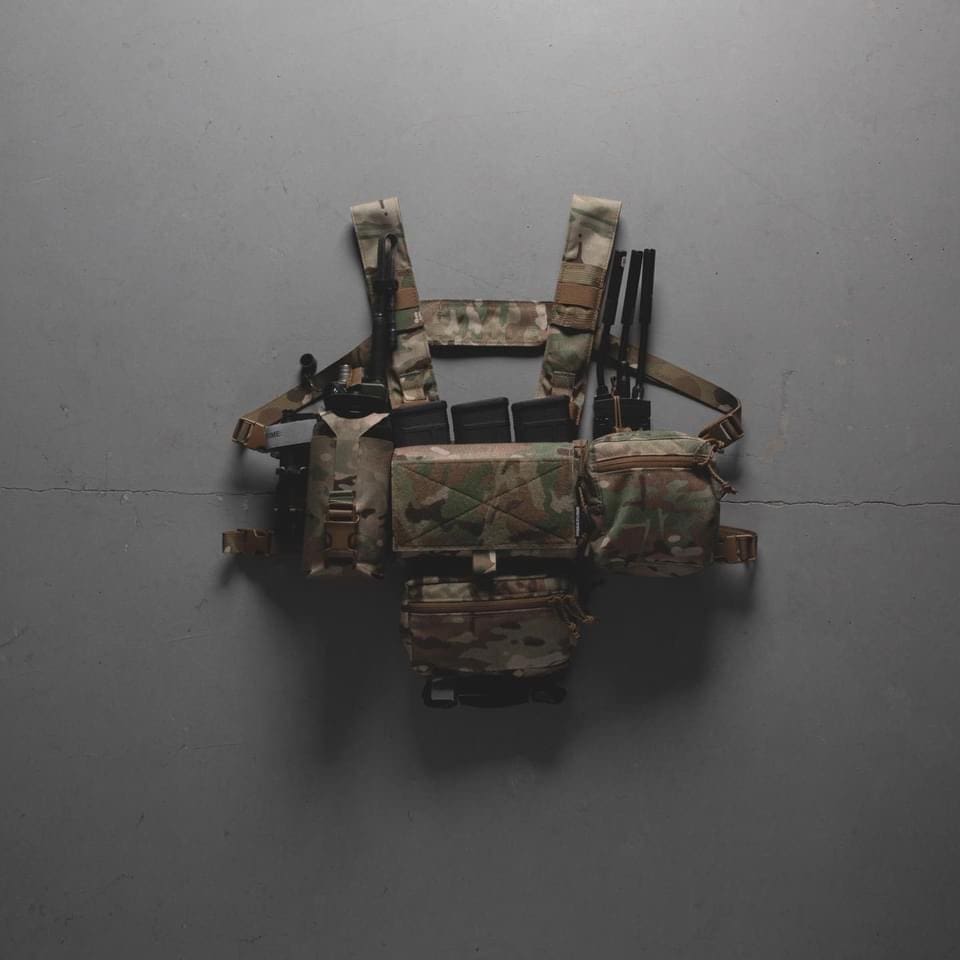
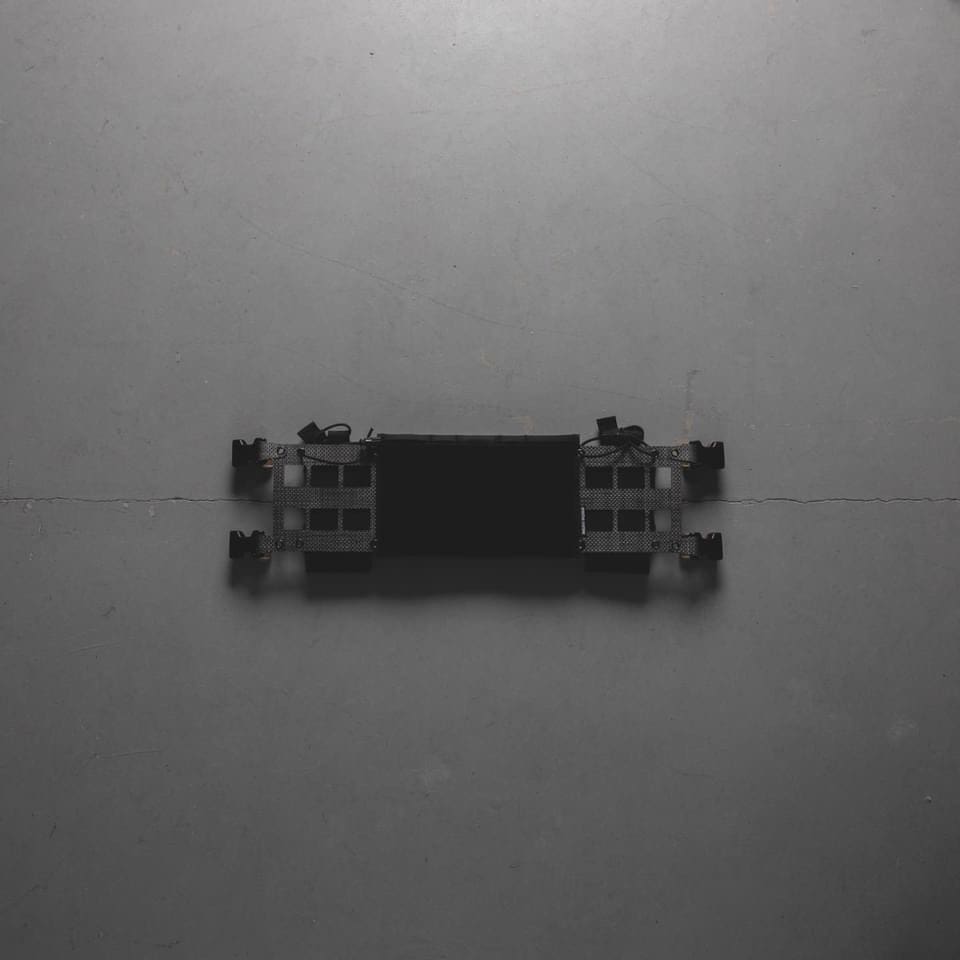
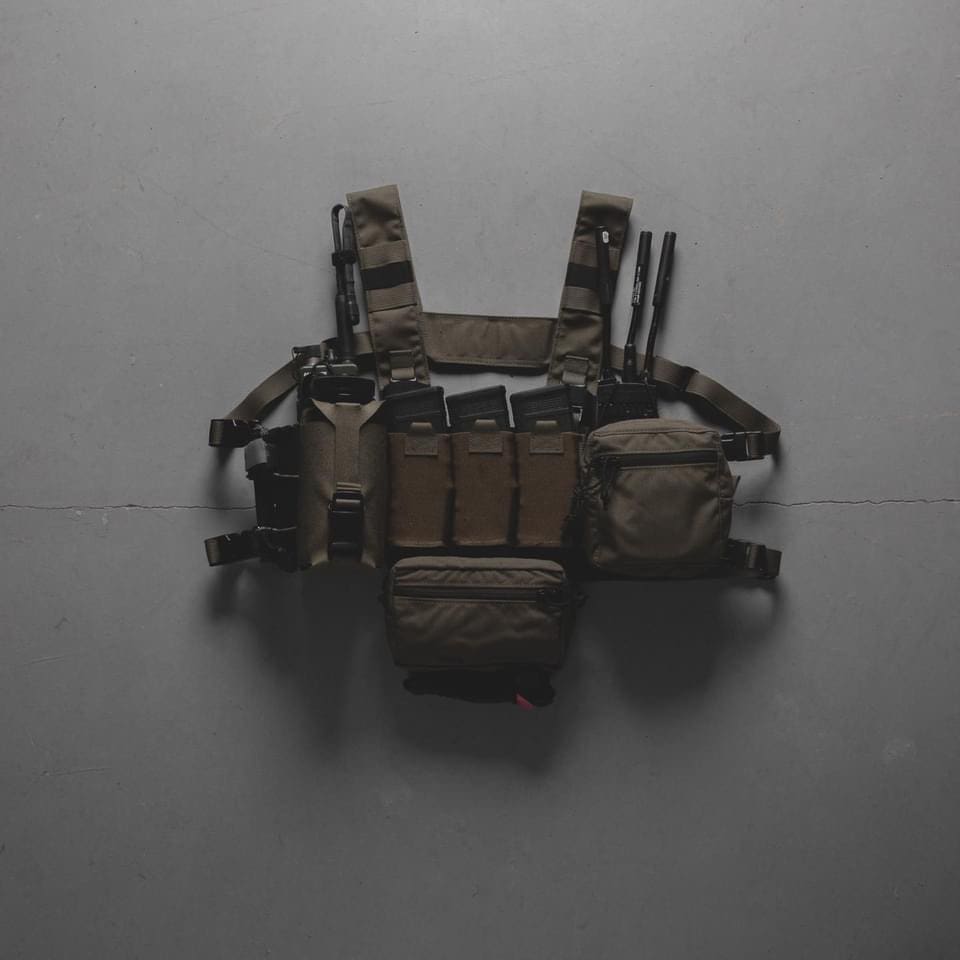
The THING 2 answers the call for end users who need to carry more. Expanding on the incredible modularity of the Micro Fight Chest Rig, The THING 2 allows for rapid expansion of your Micro Fight or Placard to cover longer duration mission profiles.

Using a 500d/1000d Fused laminate that is married to a Woven Polypropylene Laminate Sheeting we have created a lightweight, hydrophobic and efficient design. Because we use a rigid material, The Thing will not sag or distort when loaded with heavy equipment.

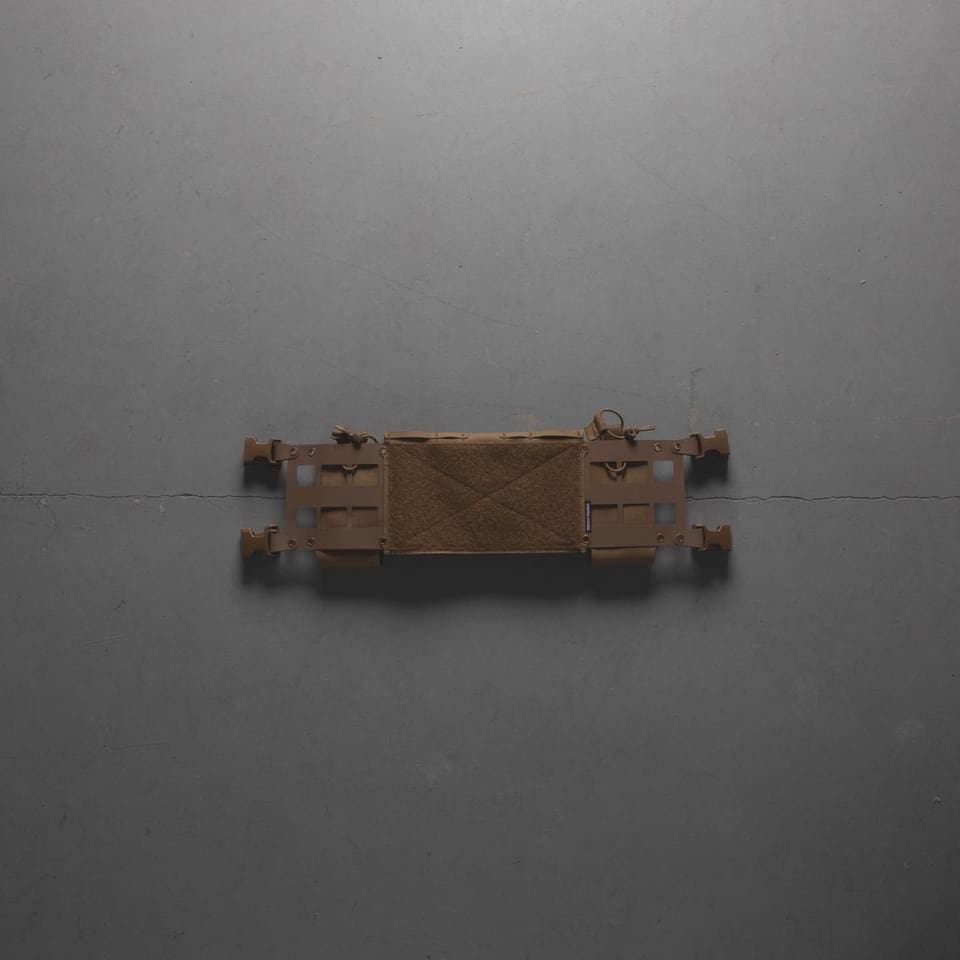
Each side of The Thing 2 has a Rigid 3 Column MOLLE filed for attaching pouches of your choice.

On the back side of each MOLLE field there are built in radio/magazine pouches.

Buckles are secured to THE THING 2 with eyelets which allow for full articulation of the buckles.

A Velcro field and retaining loops make attaching your Placard or your Micro Fight Chest Rig simple and fast. This allows for hot swapping of your primary load out from a chest rig, to your plate carrier.

The retaining loops also serve as tie down points for mission critical equipment.

The rear of The Thing 2 has a VELCRO lined slot for accepting sub load pouches such as the SACK or Lunchbox.

Capable of accepting most placard style systems on the market.

Velcro attachment Dimensions 9 1/2 ” x 5″ ??

Dimensions (Approximate) Height 6″ x Width 19″ x Depth 2″

www.spiritussystems.com

Some images shown with optional accessories, sold separately.

Brigantes Presents – Montane Tactical Website Launch

Wednesday, December 16th, 2020

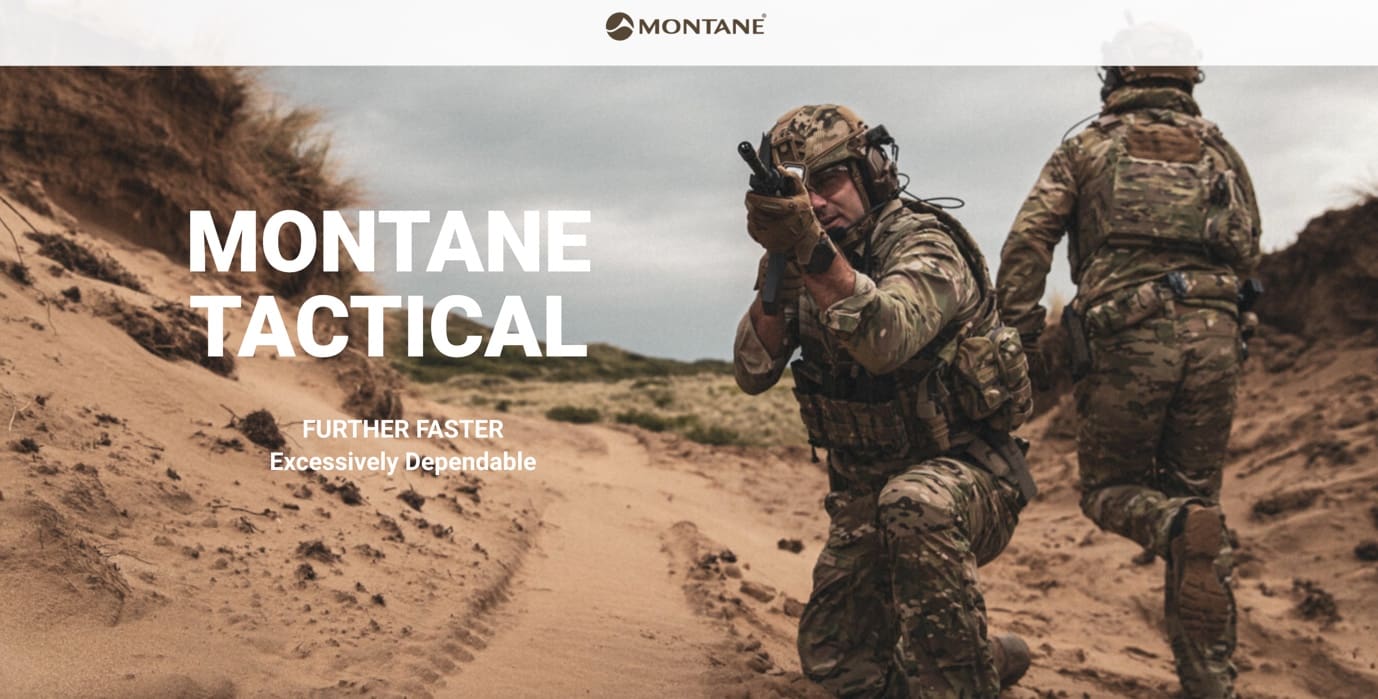
Montane, one of the UK’s leading outdoor clothing brands, launched the Montane Tactical Website.

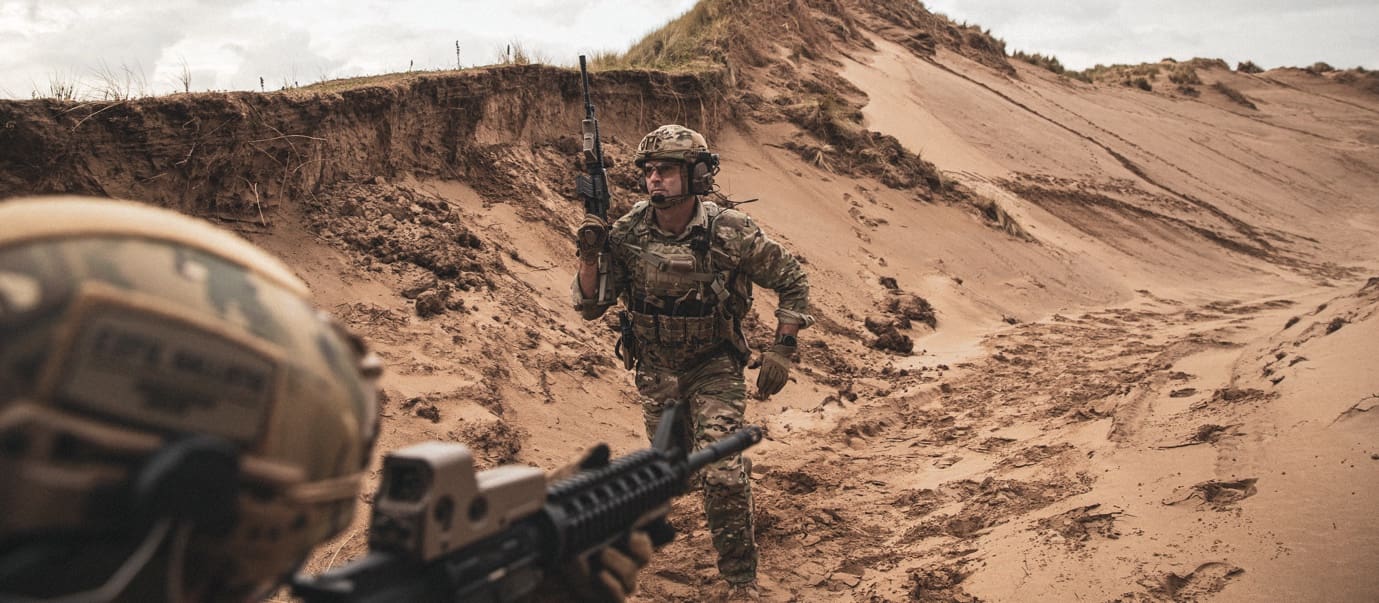
The Montane Tactical Range has been developed using the latest advances in technology and textiles. The high-quality clothing offers maximum mobility, breathability, and durability.

Whether the operator is wading through swamps and marshland, scaling mountain ranges or working in desert conditions, Montane Tactical apparel will keep the wearer operationally ready and comfortable.

With continuous R&D this initial range has been focused for use on long range light role operations. The range is also available in “Dark Shadow” for Police/Security/CP personnel.

Brigantes have worked closely with military specialists to produce advanced operational clothing underpinned with the technical European outdoor fit, award-winning design features and prestige of Montane’s products.

The close working relationship these two companies have shared over the years, has greatly benefitted those units who have adopted Montane Tactical as their issue kit already.

The dedication of Brigantes to bring Montane Tactical to the military user has resulted in Brigantes becoming the Global Licensee of Montane Tactical, providing further opportunities for the growth and development of the Montane Tactical brand. An exciting time for Montane Tactical and for Brigantes.

For the website tactical.montane.com

For more information on procurement contact:

tribe@brigantes.com or

international@brigantes.com

NY Guard Teammates Ready for National Guard Sniper Challenge

Wednesday, December 16th, 2020

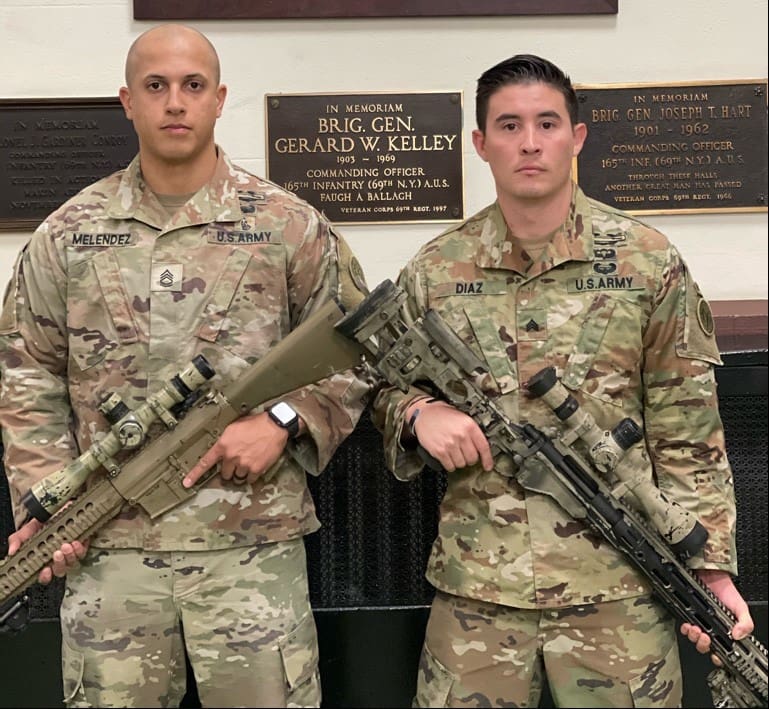
NEW YORK, New York – Sgt. 1st Class Matthew Melendez and Sgt. Andreas Diaz went to Afghanistan together, took the New York Police Department test together, graduated from the police academy together and served together in the sniper section of the 1st Battalion, 69th Infantry.

Diaz is even godfather to Melendez’s son.

Now the New York Army National Guard Soldiers are out to do one more thing together: win the annual Winston P. Wilson National Guard Sniper Competition.

The two New York City residents will be representing the New York Army National Guard when the latest edition of the competition kicks off on Dec. 4, 2020.

The sniper competition tests the Soldiers’ ability to acquire and engage targets using sniper rifles and pistols, their physical fitness, and their ability to approach and engage a target undetected.

Army National Guard teams from around the country, along with snipers from other services and other nations, will compete in the weeklong event at the Fort Chaffee Joint Maneuver Training Center in North Little Rock, Arkansas.

“This competition has always been on my list of things to do,” Melendez said. “For one reason or another, I have never been able to get there.”

Now his promotion to sergeant first class takes him out of the Battalion’s sniper section. “This is my last chance to get there, my last chance to check the block,” Melendez said.

Melendez, now a platoon sergeant in Alpha Company of the 1st Battalion, 69th Infantry, joined the New York Army National Guard in 2008. He joined the Battalion’s sniper section in 2009 and attended the Army sniper school in 2010.

In 2012 he deployed to Afghanistan with Bravo Company of the New York Army National Guard’s 2nd Battalion, 108th Infantry.

He and another sniper provided support to the infantry platoons on mission as dedicated marksmen and observers. He spent a lot of time watching areas of interest for the company and Battalion.

“I think that there is a popular misconception of sniping that it is 100 percent long-range shooting,” Melendez said. “That is about ten percent of what we do.”

“A big part of our job is the observation and reporting,” he said. “You use your fieldcraft to get in position and provide overwatch and observation.”

During a deployment to Afghanistan, Melendez met Diaz, another member of the 69th Infantry, who had deployed with the 108th as a machine gunner.

The two men hit it off and Melendez convinced Diaz to think about becoming a sniper instead.

When they returned from Afghanistan in 2013, both men applied to the New York City Police Department and passed the civil service test. When space in the police academy opened up in 2016, they were both in the same class.

In the meantime, Diaz joined the battalion sniper section in 2014, and the two served together with Melendez in charge.

When Melendez gave up the job he loved as sniper section sergeant, Diaz moved into the role.

With their Army sniper experience, joining a newly formed NYPD Long Range shooting team was the logical thing to do. The 60-member group is a recreational activity for police officers.

As team members, they have access to a range in the Catskill Mountains near Palenville, New York, where the team shoots, Diaz said.

“It’s the only range near New York City which lets you shoot out to 1,200 meters,” Diaz said.

They couldn’t bring their military weapons, but they got a chance to work together engaging targets at ranges of hundreds of yards. The team gave them range time, firearms and ammunition to get ready.

When Melendez and Diaz hit the ground in Arkansas for the sniper competition, Diaz will be the shooter and Melendez will act as his spotter.

Diaz has more recent experience at the sniper school –he graduated in 2017– so it makes sense for him to use the M-2010 sniper rifle, Melendez explained.

In the two-person sniper team, the spotter, armed with the M110 semi-automatic sniper rifle, provides close-in protection for the team while helping the shooter identify targets.

The M110 looks like a bigger M-16A2 and fires a 7.62 millimeter round with a range of 800 meters instead of the smaller 5.56 mm round usually fired by the M16/M4 weapons.

The shooter uses the bolt action M-2010 enhanced sniper rifle, with a range of more than a kilometer, to engage targets. Bolt action weapons don’t fire as quickly but are more accurate than semi-automatic weapons, Diaz said.

Melendez said he thinks their biggest weakness will be the team stalk and patrolling portions of the competition. “We just haven’t done it as a team as frequently,” he said.

Diaz said he wished they had a chance to test-fire the M-2010 they will be using for the competition before they get to Arkansas.

He will have to wait until they get to Fort Chaffee so he can do some test shooting and make sure the weapon is properly adjusted, he explained. He said that shooting from alternative firing positions will also be challenging.

“Anybody can shoot on their stomach lying down, but can you shoot on a platform that moves?” he said.

Both men agreed that the fact that they’ve worked together for so many years, and know each other so well, will be a significant advantage.

At a sniper competition held by the 27th Infantry Brigade Combat Team, he and Melendez beat other competitors because they worked so well together, Diaz reasoned.

“We have cohesion. We understand each other’s body language and without even speaking, we can get things done,” Diaz said.

By Eric Durr, New York National Guard

Marines Train with Dutch Counterparts during Exercise Coastal Caribbean Warrior

Monday, December 14th, 2020

SAVANETA, Aruba —

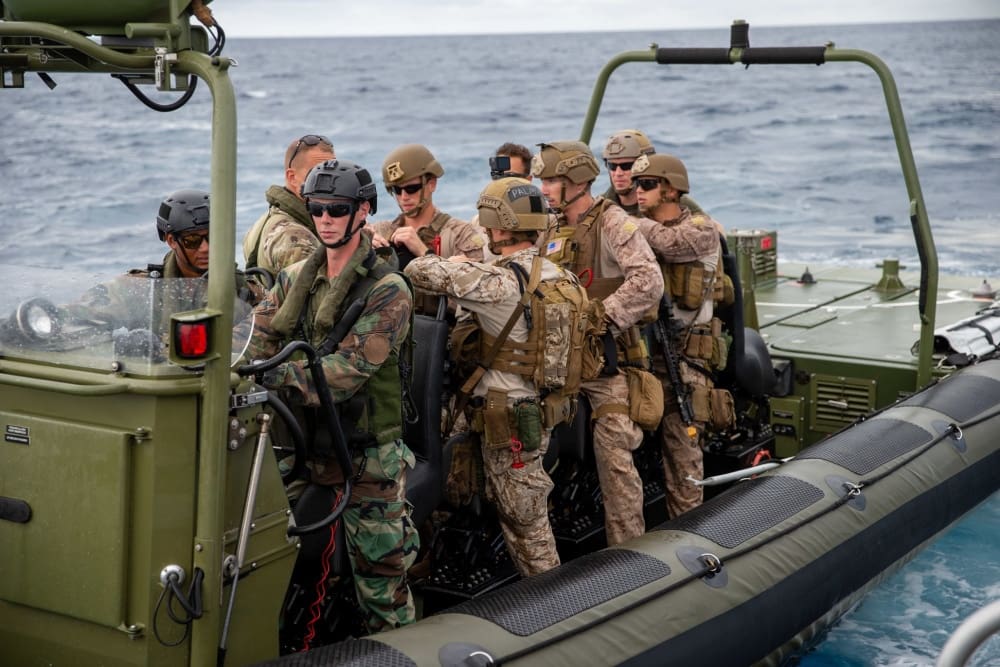
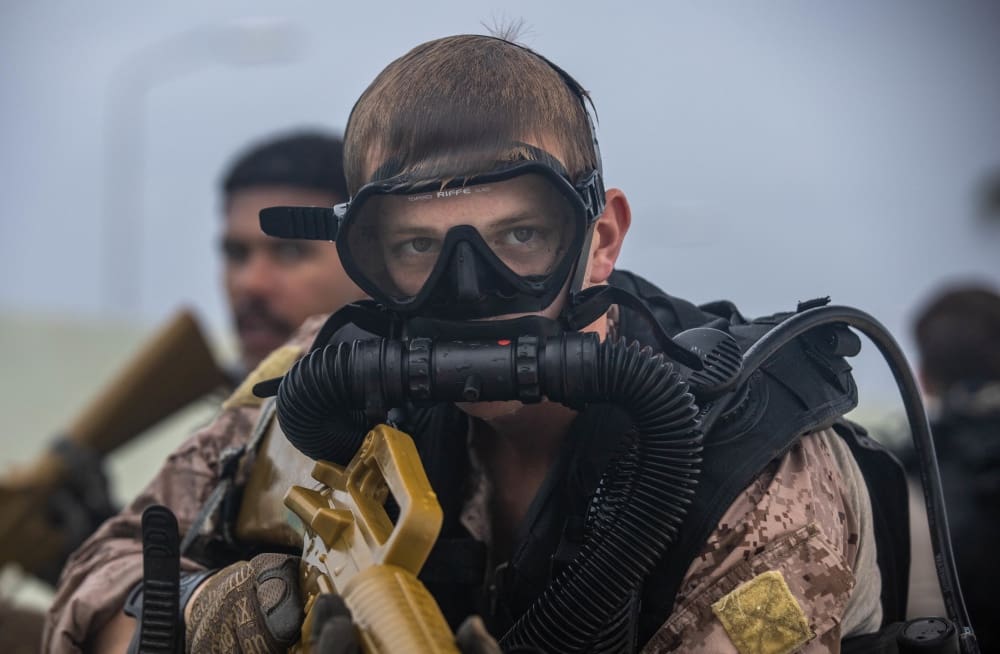
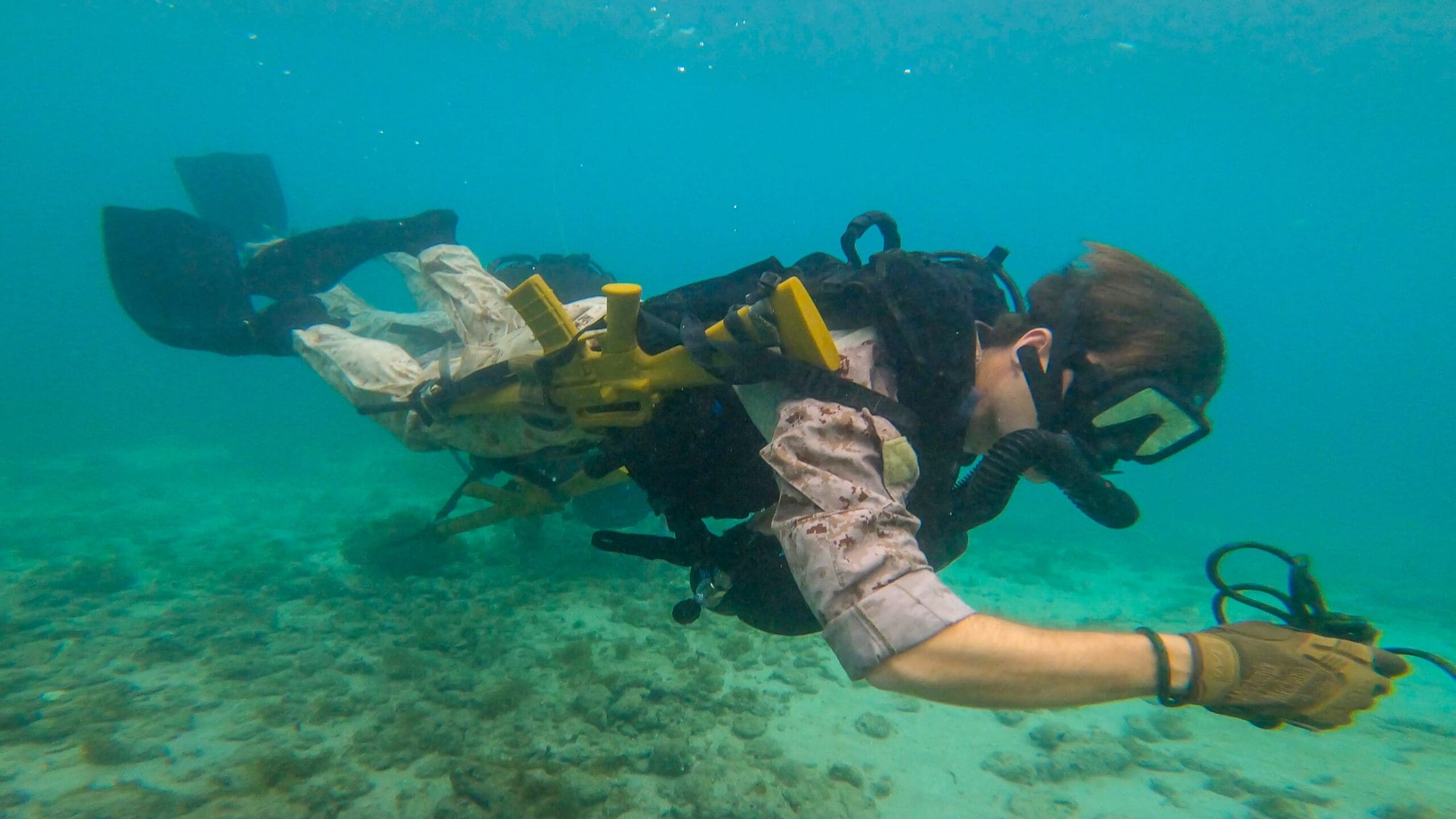
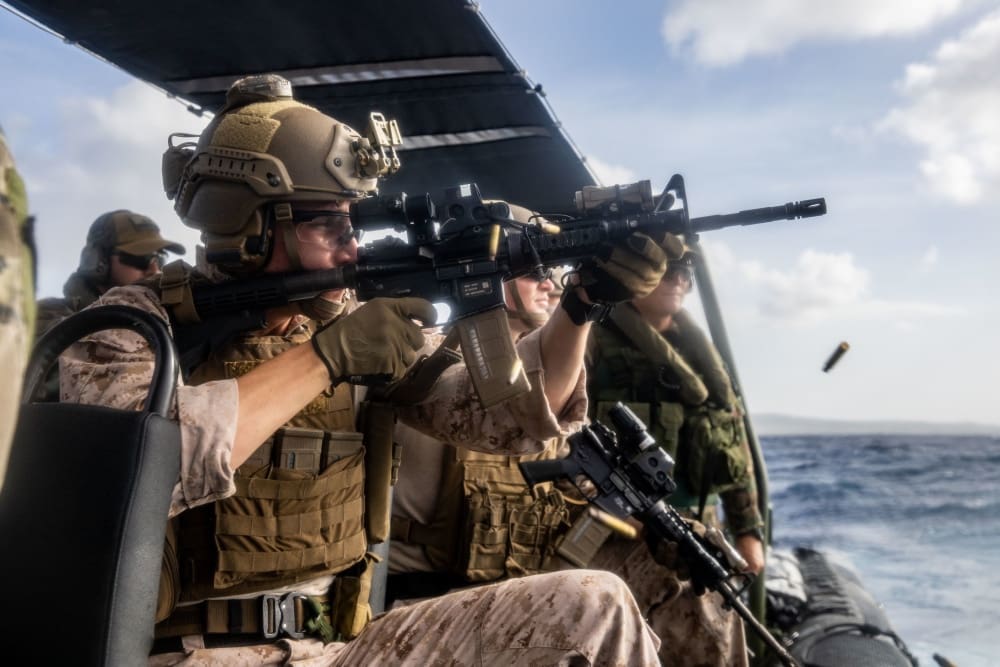
U.S. Marines with Charlie Company, 2nd Reconnaissance Battalion, 2nd Marine Division recently traveled nearly 1,600 miles to conduct open-water and dive training with Netherlands Marines from the 32nd Raiding Squadron in Savaneta, Aruba, on November 7.

The training increases interoperability between the Netherlands Marine Corps and the U.S. Marines as they work side-by-side as partner nations. 2nd Recon Battalion, stationed on Camp Lejeune, North Carolina, don’t often have the opportunity to work in tropical waters such as those of Aruba. To further develop the relationship between the two units, the Dutch Marines, will in turn, travel to Camp Lejeune in coming months to perfect their own tactics in a foreign climate and to perform myriad other types of training in the U.S.

“This is really a unique opportunity. The Dutch Marines’ subject-matter expertise in coastal tropics is invaluable to preparing us for combat situations in foreign regions.”

Capt. Joshua Foster, company commander of C Company, 2nd Recon Battalion

“The training circumstances here in Aruba are optimal,” said Netherlands Marine Corps Capt. Mark Brouwer, a Dutch exchange officer embedded with 2nd Recon Battalion. “We have everything in place here to train a lot better than we could’ve on Camp Lejeune. On top of that, the skills we teach to 2nd Recon, we do here on a daily basis.”

“This is really a unique opportunity,” said Capt. Joshua Foster, company commander of C Company, 2d Recon Battalion. “The Dutch Marines’ subject-matter expertise in coastal tropics is invaluable to preparing us for combat situations in foreign regions.”

The 32nd Raiding Squadron is regarded as an essential line of defense for the island of Aruba. Their effectiveness in conducting open water operations and their integration with their naval counterparts represent vital skills for 2nd Recon Battalion to hone. This bilateral training increases proficiency in a variety of skills necessary to complete their mission.

“There is nowhere else we could’ve trained with a full troop of Dutch Frogmen,” said Foster. “The environment here in Aruba is better suited to developing the skills that will help us in future operations, and it really helps us integrate with the Dutch who will be a really strong partner in the event we have to operate in Eastern Europe or the high North.”

2nd Recon Battalion completed a visit, board, search, and seizure training package as well as dive training, and a series of firing ranges. Being able to learn from the Netherlands Marines in their primary area of operations, helps 2nd Recon Battalion build a faster, more mobile, and more lethal force when operating in such diverse locations.

“The training is helping us build new unit operating procedures,” said Sgt. Zachary Palmgren, a team leader with 2nd Recon Battalion. “The water is clear so the dive teams can see what they’re doing and better build on the foundations they have. The VBSS training helps us integrate with the Dutch, and it shows us a more real-world application for the training we do at home.”

By working together, Marines from both nations developed a better understanding of how to implement new techniques. This type of bilateral training is critical, in particular when fighting in littoral and coastal regions. 2nd Recon Battalion’s mastery of these skills is paramount if they are to integrate effectively with their own naval counterparts.

By Lance Cpl Brian Bolin Jr., 2nd Marine Division

Kit Badger – Custom Load Development

Sunday, December 13th, 2020

Ivan has created this video on a local company that does custom load development for shooters.

Read the whole story at kitbadger.com/unknown-munitions-part-2-custom-load-development.