SIG SAUER - Never Settle

Archive for the ‘Guest Post’ Category

US Army Soldiers Provide Romanian Airmen New Equipment Training, Support Allied Readiness

Wednesday, March 24th, 2021

TOBYHANNA ARMY DEPOT, Pa. – Tobyhanna Army Depot personnel extended the organization’s reach last month when they traveled to a Romanian seaside community to train allies of the United States.

A two-person team traveled to Constanta, Romania last month to conduct Defense Advanced GPS Receiver (DAGR) New Equipment Training (NET) for Romanian Air Force artillery battalions. NET is an enduring workload for the depot and delivers training to military units after receipt of new assets, ensuring Warfighters across the globe know how to use lifesaving equipment on the battlefield.
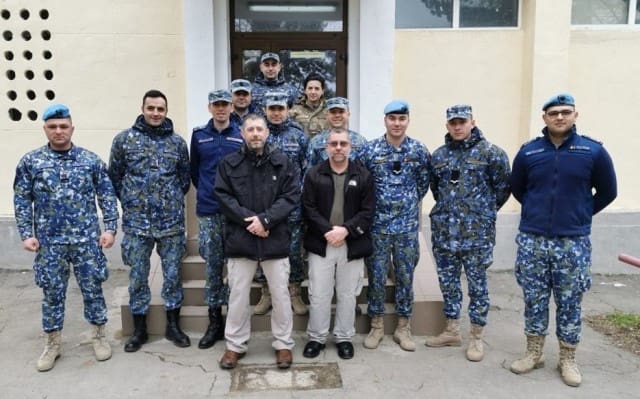
Depot personnel spent a week instructing Romanian Airmen on the overall operations of the DAGR, typically used as part of the Patriot missile system. While NET missions often encompass a wide range of service members, this iteration of the training focused on a targeted group of 11 users, who were educated on the functionalities of DAGR. Students learned through classroom instruction as well as hands-on, practical exercises designed to ensure they could perform to Army Standards when operating the asset. Tobyhanna’s instructors gave the students rave reviews for their enthusiasm.

“The Romanian Airmen were very sharp and quick to learn. They made our job easy,” said Gregory Wirth, a training instructor in the Field Logistics Support directorate. Fellow training instructor Vincent Zuranski agreed.

“We had a great rapport with the class,” they said, adding that one highlight of the trip was the authentic Romanian food the Airmen treated them to every day. Wirth and Zuranski also noted the region’s rich history, home to many ancient Greek and Roman settlements.

The mission was the NET team’s first excursion out of Northeastern Pennsylvania since the onset of the COVID-19 pandemic. While travel into the country was relatively easy, returning home to Tobyhanna was a significant challenge, according to Wirth.

“Because COVID-related guidelines are always changing, there was uncertainty about what we’d need to do to get back to the U.S.,” said Wirth. “We ended up needing a negative COVID test for return travel through Germany – not something easy to navigate while in a foreign country where you don’t speak the language. Luckily, our students and personnel at the embassy helped us obtain the necessary information so we could get home.”

Despite the challenges, the duo said the opportunity to travel was more than welcome.

“As someone who travels for a living, I found it difficult to not be able to support our important missions across the world. It was extremely exciting to get back out on the road to support our Warfighters,” Zuranski said.

In addition to DAGR, Tobyhanna provides NET for military personnel on the Common Remotely Operated Weapons System (CROWS) and a variety of other systems. The mission is directly aligned with the depot’s long-range strategic plan, Toby 2028, specifically the C5ISR Readiness and Shape the Future lines of effort.

The program benefits all members of Team Tobyhanna, according to Eric Walker, who supervises the NET team.

“NET ensures Soldiers worldwide get the training they need to keep themselves, and the world, safe. When our NET instructors return home, they share any new knowledge with the depot employees who are responsible for repairing the equipment here on-post. It’s win-win and a program we’re proud very to support.”

Tobyhanna Army Depot is a recognized leader in providing world-class logistics support for command, control, communications, computers, cyber, intelligence, surveillance and reconnaissance (C5ISR) systems across the Department of Defense. Tobyhanna’s Corporate Philosophy, dedicated work force and electronics expertise ensure the depot is the Joint C5ISR provider of choice for all branches of the Armed Forces and industry partners.

Tobyhanna’s unparalleled capabilities include full-spectrum logistics support for sustainment, overhaul and repair, fabrication and manufacturing, engineering design and development, systems integration, post production software support, technology insertion, modification, foreign military sales and global field support to our joint warfighters.

About 4,000 personnel are employed at Tobyhanna, which is located in the Pocono Mountains of northeastern Pennsylvania. Tobyhanna Army Depot is part of the U.S. Army Communications-Electronics Command. Headquartered at Aberdeen Proving Ground, Maryland, the command’s mission is to empower the Soldier with winning C5ISR capabilities.

By Danielle E. Weinschenk, Lead Public Affairs Specialist
AMC Delivers Multi-capable Airmen During Exercise Mosaic Tiger

Tuesday, March 23rd, 2021

MOODY AIR FORCE BASE, Ga. (AFNS) —

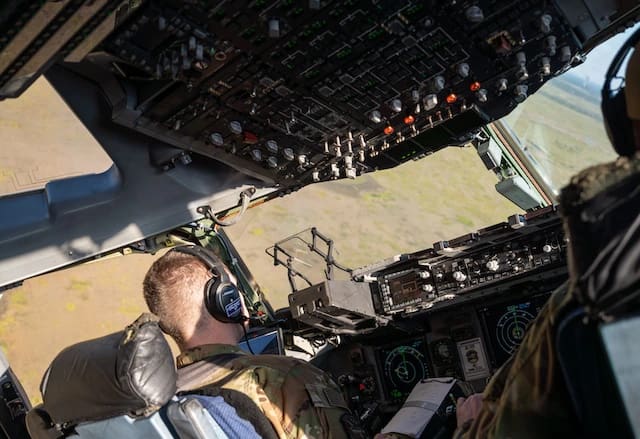
Aircrew from the 3rd Airlift Squadron at Dover Air Force Base, Delaware, and the 6th AS, at Joint Base McGuire-Dix-Lakehurst, New Jersey, participated in exercise Mosaic Tiger led by the 23rd Wing at Moody AFB Feb. 22-26.

The exercise tested Agile Combat Employment skills in a simulated deployed environment to train multi-capable Airmen for the future. Airmen from Air Mobility Command took part in the exercise to enhance readiness and reinforce AMC support to the joint warfighter as well as support of Air Combat Command.

ACE refers to the ability to launch, recover and maintain aircraft away from main air bases and employ the aircraft, as well as multi-capable Airmen from atypical locations. For this exercise, Moody AFB served as the headquarters, while Florida’s MacDill AFB, Patrick Space Force Base and Avon Park Air Force Range served as forward and contingency operating locations.

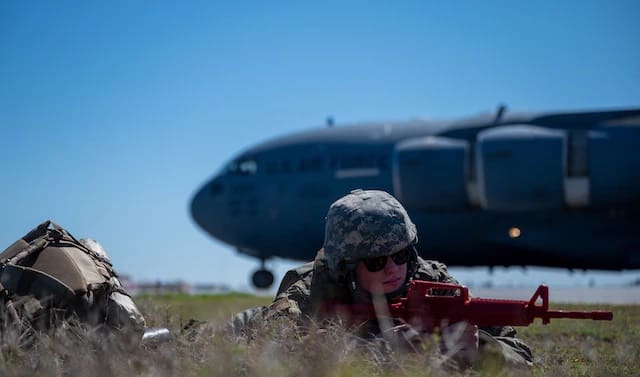
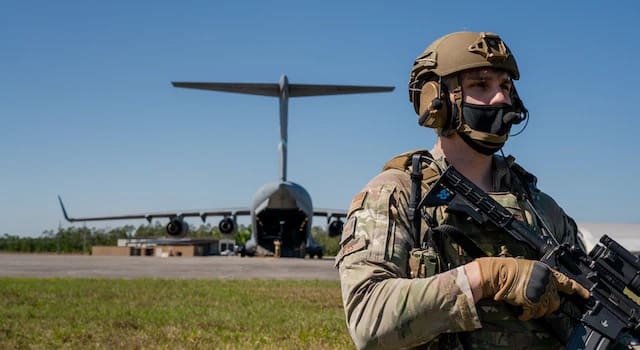
Multi-capable Airmen teams from a variety of Moody AFB units deployed to the locations across Florida. The Dover AFB C-17 Globemaster III provided passenger transportation and equipped Airmen downrange with necessary accoutrements.

“In order to create a realistic combat environment, you have to have logistical support to do so,” said Maj. Mike Gilpatrick, 6th AS chief of tactics. “In a realistic combat environment, the C-17 would be able to support ACE via delivering multi-capable Airman teams to various forward operating bases.”

Over the course of the five-day exercise, 13 AMC aircrew members transported over 244,370 pounds of cargo and 231 passengers to and from all exercise locations on the C-17. The cargo included vital equipment such as bomb-loading carts, aerospace ground equipment generators and a fuel truck.

“If you don’t have a C-17, you can’t accomplish as many objectives when you are trying to test out the capability,” Gilpatrick said. “We’re delivering multiple Airmen to multiple bases, and you can now have a more dynamic and challenging environment for the exercise to take place in. If you don’t have a C-17 there, you can’t deliver as many folks and stuff to places. Therefore, you can’t have as challenging of a problem set you have to solve.”

Moody AFB also supplied aircraft such as the A-10 Thunderbolt II, HH-60G Pave Hawk, HH-60W Jolly Green II and the HC-130J Combat King II. E-8 Joint Stars, belonging to Robins AFB, also provided support though ground surveillance.

“Our Airmen are performing at a very high and innovative level,” said Lt. Col. Kenneth Roberts, 23rd Mission Support Group deputy commander. “They’re looking for solutions, and the key in this new environment is finding those new solutions.”

Echoing Air Force Chief of Staff Gen. Charles Q. Brown, Jr.’s “Accelerate Change or Lose” strategy, Gen. Jacqueline Van Ovost, commander of AMC, said adaptive and agile Airmen, capable of accomplishing tasks outside their Air Force specialty code, are vital to delivering rapid global mobility in today’s operating environment.

“By operationalizing our innovate, execute and learn methodology, we will aggressively expand upon current capabilities to generate and project the force, defend installations and networks and keep the joint force informed and synchronized across the competition continuum,” Van Ovost said.

Capt. Reed Fleming, 3rd AS pilot said exercises such as Mosaic Tiger have helped mobility Airmen understand their role and skills necessary for the ACE concept.

“Through the implementation of the ACE concept, we’re going to see more integration and more cross talk, with ACC learning how they can use AMC effectively as well as AMC being willing to be flexible for the ACC assets,” Fleming said. “This (was) a great opportunity for us to come together to work (toward) a common goal.”

By A1C Faith Schaefer, 436th Airlift Wing Public Affairs

Advancement Creates Nanosized, Foldable Robots

Monday, March 22nd, 2021

RESEARCH TRIANGLE PARK, N.C. — Army-funded researchers created nanosized robots that could enable locomotion, novel metamaterial design and high-fidelity sensors.


Cornell University researchers created micron-sized shape memory actuators that fold themselves into 3D configurations and allow atomically thin 2D materials with just a quick jolt of voltage. Once the material is bent, it holds its shape, even after the voltage is removed.

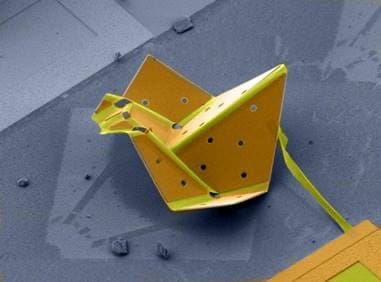
To demonstrate the technology, the team created what is potentially the world’s smallest self-folding origami bird.

“The research team is pushing the boundary of how quickly and precisely we can control motion at the micro- and even nano-scales,” said Dr. Dean Culver, program manager for Complex Dynamics and Systems at Army Research Office, an element of the U.S. Army Combat Capabilities Development Command, known as DEVCOM, Army Research Laboratory. “In addition to paving the way for nano-robots, the scientific advancements from this effort can enable smart material design and interaction with the molecular biological world that can assist the Army like never before.”

The research may result in future applications 10 to 20 years from now, he said.

In a peer-reviewed article published in Science Robotics, researchers said this work could make it possible for a million fabricated microscopic robots releasing from a wafer to fold themselves into shape, crawl free, and go about their tasks, even assembling into more complicated structures.

“We humans, our defining characteristic is we’ve learned how to build complex systems and machines at human scales, and at enormous scales as well,” said Prof. Paul McEuen, the John A. Newman Professor of Physical Science at Cornell University. “What we haven’t learned how to do is build machines at tiny scales.”

This is a step in that basic, fundamental evolution in what humans can do, of learning how to construct machines that are as small as cells, he said.

The researchers ongoing collaboration has generated a throng of nanoscale machines and components, each seemingly faster, smarter and more elegant than the last.

“We want to have robots that are microscopic but have brains on board,” said Prof. Itai Cohen, professor of physics at Cornell University. “That means you need to have appendages that are driven by complementary metal–oxide–semiconductor transistors, basically a computer chip on a robot that’s 100 microns on a side. The hard part is making the materials that respond to the CMOS circuits.”

This shape memory actuator developed by the research teams allows them to drive with voltage and make the materials hold a bent shape. The machines fold themselves fast–within 100 milliseconds. They can also flatten and refold themselves thousands of times and they only need a single volt to be powered to life.

“These are major advances over current state-of-the-art devices,” Cohen said. “We’re really in a class of our own.”

These actuators can bend with a radius of curvature smaller than a micron–the highest curvatures of any voltage-driven actuator by an order of magnitude. This flexibility is important because one of the bedrock principles of microscopic robot manufacturing is that the robot size is determined by how small the various appendages can be made to fold. The tighter the bends, the smaller the folds, and the tinier the footprint for each machine. It’s also important that these bends can be held by the robot, which minimizes the power consumption, a feature especially advantageous for microscopic robots and machines.


The devices consist of a nanometer-thin layer of platinum capped with a titanium or titanium dioxide film. Several rigid panels of silicon dioxide glass sit atop those layers. When a positive voltage is applied to the actuators, oxygen atoms are driven into the platinum and swap places with platinum atoms.

This process, called oxidation, causes the platinum to expand on one side in the seams between the inert glass panels, which bends the structure into its predesignated shape. The machines can hold that shape even after the voltage is removed because the embedded oxygen atoms bunch up to form a barrier, which prevents them from diffusing out.

By applying a negative voltage to the device, the researchers can remove the oxygen atoms and quickly restore the platinum to its pristine state. And by varying the pattern of the glass panels, and whether the platinum is exposed on the top or bottom, they can create a range of origami structures actuated by mountain and valley folds.

“One thing that’s quite remarkable is that these little tiny layers are only about 30 atoms thick, compared to a sheet of paper, which might be 100,000 atoms thick. It’s an enormous engineering challenge to figure out how to make something like that have the kind of functionalities we want,” McEuen said.

The team is currently working to integrate their shape memory actuators with circuits to make walking robots with foldable legs as well as sheet-like robots that move by undulating forward. These innovations may someday lead to nanorobots that can clean bacterial infection from human tissue, microfactories that can transform manufacturing and robotic surgical instruments that are 10 times smaller than current devices, according to Cohen.

The team is also researching the principles that need to change in order to design, manufacture and operate machines at this scale.

In addition to ARO, the National Science Foundation, the Cornell Center for Materials Research, the Air Force Office of Scientific Research, and the Kavli Institute at Cornell for Nanoscale Science funded the work.

By U.S. Army DEVCOM Army Research Laboratory Public Affairs

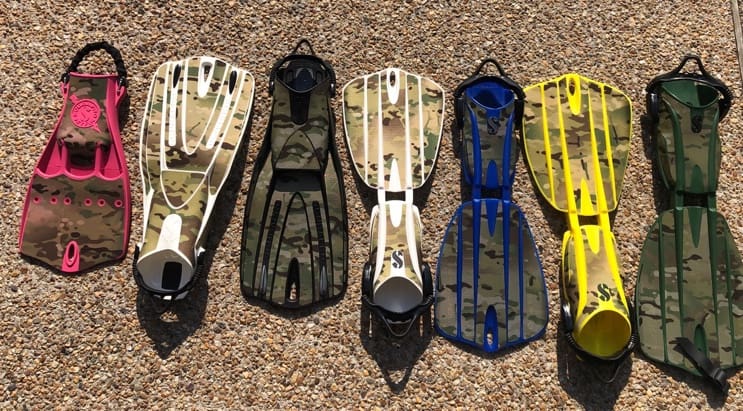
SCUBAPRO Sunday – Split Fins vs Paddles Fins

Sunday, March 21st, 2021

When you first went thru dive school, you were giving a set of fins, and that’s what you used. When you got to your command after, you were giving a set of fins, and that’s what you used (most of the time). But as you started to see other guys at the team using different fins and you would ask, “Hey, where did you get those, and do you like them?” You would hear “they use to issue them” or “I bought them at Lynnhaven Dive” (or insect local dive store name). My point is sometimes you never know what else is out there, and I see a lot of people using gear they don’t like, but it is what they were issued.


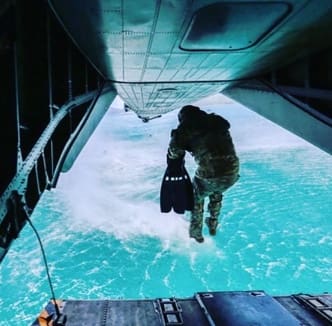
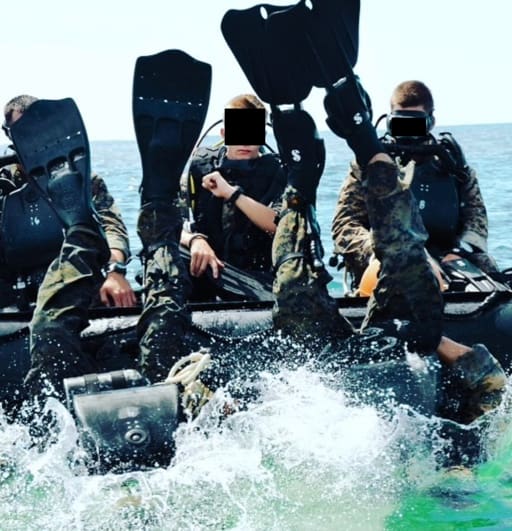
In the big picture of dive fins, there are two basic blade types paddles and split. Both fins help you move underwater quicker and smoother, although there are distinct advantages and disadvantages of each kind of dive fin. So how do you choose what is the right fin for you? Well, the easiest way is to try different ones out. Remember also that gone are the days that one fin does it all, or I should say one fin needs to do it all. Many people love Jet fins, but there is no point in carrying them with you in the jungle for river and stream crossing or try and put them on over combat boots for an OTB.

In propulsion capacity and air conservation, split and blade fins often vary.

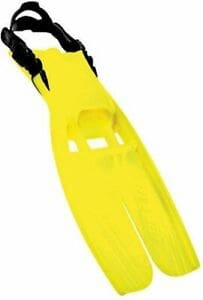
Split fins are based off of a whale’s tail with a slit down the middle, a relatively new choice for divers. When they came out. Instead of only moving them forward, this slit produces a vortex that lets divers get optimum thrusts and pace underwater.

Split fins act much like a propeller: the slit allows water to flow smoothly from both sides of the blade on the upward fin stroke, resulting in a foil shape. By creating the right lift, this shape helps you to step forward through the water. Split fins do not allow you to move fast in the water, and if you are a slow swimmer, there is a good chance you still will be. Their flow-through nature becomes less effective the harder you kick. Their design also provides less movement if you are pushing a lot of weight thru the water.

Paddle fins force the water back to help you move forward through the water, and they are more effective than split fins. Paddle fins often differ in length and stiffness, two factors contributing to speed and the kicking force required. Greater stiffness provides you with more forward momentum. Depending on the stiffness, this will make it harder to kick and lead to leg cramps. On the other hand, split fins do not have the rigidity of blade fins since they are relatively light and flexible.

Split fins channel any surface water in and out of their opening rather than over their arms. A spring-like movement is produced by this method, which provides a more robust and solid kick. Usually, you are using a flutter-type kick. It also decreases drag and effort, resulting in greater performance.

On most paddle fins, you will get spills of water over the sides of their blades. These fins are less powerful than split fins because of this reaction. It also results in more drag, and to go forward; you’ll need to kick more. That being said, many blade fins have ridges and stiffer sides to help fix that problem. The SCUBAPRO SeaWing’s and the Go Sport fins are just a couple of examples of that. I say those two because they are my go-to fins.

Split fins are said to be good for people with ankle or knee issues and divers who easily get cramps. Again, we say the same thing about the SCUBAPRO SeaWing’s  They are good for divers who only go straight without turns or moving in tight spaces. With the proper technique, the split fins can provide less joint pressure and pain because your strokes will feel less effective. I have found that they don’t give as much power for bigger divers, and if you have a lot of gear on, like a Dräger, a limpet, and your swim buddy, you have been pulling for two hours because he is “not a strong swimmer”. But they do have a place and a lot of people like them. The downside is. There are only two types, open or closed heal. There have not been any new break through’s when it comes to them.

Paddle fins are like the swiss army knife of fins. There are so many different ones to choose from that you can almost always find the right one for the job. They are ideal for use in strong currents or swimming against the tide. They allow you to use different kick styles in more technical dives, like the frog, scissor, reverse, or dolphin, to name a few. Those types of kicks are more effective with paddle-type fins. If you have to pull a lot of weight, like going over the beach with a ruck or have to perform a buddy rescue, blade fins are going to be the best for this. Paddles are also suitable for doing a hook and climb; if you are the guy with the pole doing the hook, paddles are the way to go.

To summarize, split fins have more efficient thrusts and oxygen conservation. They, however, have some drawbacks such as decreased speed and kicking ability. Paddle fins excel in both departments because they give you more strength underwater. Paddle fins may be used in a variety of situations, from combat swimmer to over the beach.

Although split fins have some advantages over paddle fins, it’s difficult to say if they’re better. One of the biggest advantages over the split fins is that there are so many types of paddle fins. It comes down to trying both types of fins out and decide for yourself. I like to look at fins like shoes (I was going to say running shoes, but I do not run, everyone knows it breads cowardness). You are not going to wear the same shoes in the jungle that you would in the mountains. So, if you look at fins like that; you might be able to use just one set but having more than one opens up many more options and helps you do the job better and posable easier.

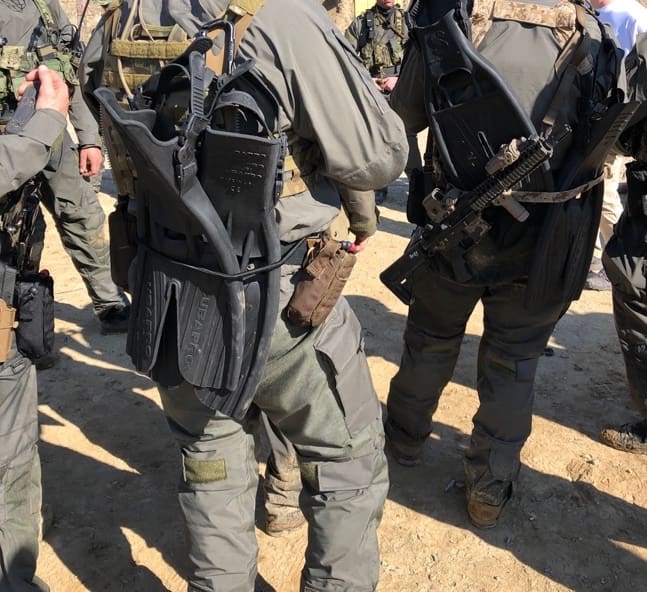
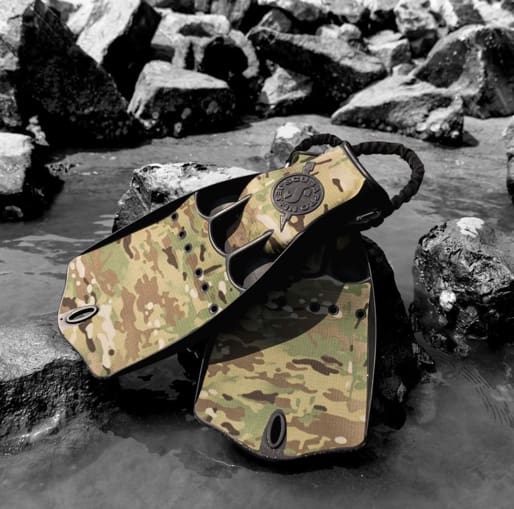
The fins have the Matbock Skins for SCUBAPRO, Jet fins, Seawing and Go Sport fins.

www.matbock.com/collections/skins/products/scuba-pro-skins

Army, Air Force Fund Research to Pursue Quantum Computing

Saturday, March 20th, 2021

RESEARCH TRIANGLE PARK, N.C. — Joint Army- and Air Force-funded researchers have taken a step toward building a fault-tolerant quantum computer, which could provide enhanced data processing capabilities.

Quantum computing has the potential to deliver new computing capabilities for how the Army plans to fight and win in what it calls multi-domain operations. It may also advance materials discovery, artificial intelligence, biochemical engineering and many other disciplines needed for the future military; however, because qubits, the fundamental building blocks of quantum computers, are intrinsically fragile, a longstanding barrier to quantum computing has been effective implementation of quantum error correction.

Researchers at University of Massachusetts Amherst, with funding from the Army Research Office  and the Air Force Office of Scientific Research, identified a way to protect quantum information from a common error source in superconducting systems, one of the leading platforms for the realization of large-scale quantum computers. The research, published in Nature, realized a novel way for quantum errors to be spontaneously corrected.

ARO is an element of the U.S. Army Combat Capabilities Development Command, known as DEVCOM, Army Research Laboratory. AFOSR supports basic research for the Air Force and Space Force as part of the Air Force Research Laboratory.

“This is a very exciting accomplishment not only because of the fundamental error correction concept the team was able to demonstrate, but also because the results suggest this overall approach may amenable to implementations with high resource efficiency, said Dr. Sara Gamble, quantum information science program manager, ARO. “Efficiency is increasingly important as quantum computation systems grow in size to the scales we’ll need for Army relevant applications.”

Today’s computers are built with transistors representing classical bits, either a 1 or 0. Quantum computing is a new paradigm of computation using quantum bits or qubits, where quantum superposition and entanglement can be exploited for exponential gains in processing power.

Existing demonstrations of quantum error correction are active, meaning that they require periodically checking for errors and immediately fixing them. This demands hardware resources and thus hinders the scaling of quantum computers.

In contrast, the researchers’ experiment achieves passive quantum error correction by tailoring the friction or dissipation experienced by the qubit. Because friction is commonly considered the nemesis of quantum coherence, this result may appear surprising. The trick is that the dissipation has to be designed specifically in a quantum manner.

This general strategy has been known in theory for about two decades, but a practical way to obtain such dissipation and put it in use for quantum error correction has been a challenge.

“Demonstrating such non-traditional approaches will hopefully spur more clever ideas for overcoming some of the most challenging issues for quantum science,” said Dr. Grace Metcalfe, program officer for Quantum Information Science at AFOSR.

Looking forward, researchers said the implication is that there may be more avenues to protect qubits from errors and do so less expensively.

“Although our experiment is still a rather rudimentary demonstration, we have finally fulfilled this counterintuitive theoretical possibility of dissipative QEC,” said Dr. Chen Wang, University of Massachusetts Amherst physicist. “This experiment raises the outlook of potentially building a useful fault-tolerant quantum computer in the mid to long run.”

By U.S. Army DEVCOM Army Research Laboratory Public Affairs

FirstSpear Friday Focus: FS Will Attend ADS Take Your Best Shot

Friday, March 19th, 2021

FirstSpear will attend ADS’ Take Your Best SHOT at Lost Rhino Brewery in Ashburn, Virginia, on March 25th, 2021. Attendees will be able to network with industry leading suppliers and learn about the latest and greatest products at each their respective booths. We look forward to being able to showcase some of our new products and technology.

“With most trade shows being predominantly virtual this spring, we appreciate ADS’ efforts to make an in-person exhibition possible,” said Ronnie Fowlkes Vice President of Business Development at FirstSpear.

Qualified attendees include active duty military, federal, state and local government agencies, law enforcement, and first responders. Military and government attendees must present official government-issued identification.

For more information about FirstSpear, check out www.first-spear.com.

For more information about Take Your Best Shot, check out events.adsinc.com.

New Infantry Squad Vehicle Tested at US Army Yuma Proving Ground

Friday, March 19th, 2021

There’s a new vehicle turning heads on the range at U.S. Army Yuma Proving Ground (YPG), and it will likely begin arriving in Army brigades in a matter of months.

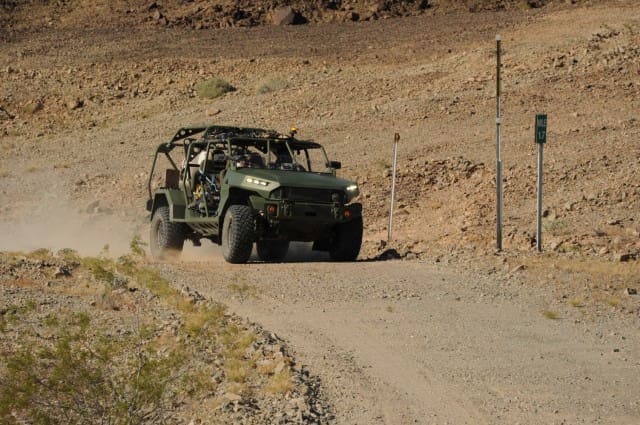
It’s the Infantry Squad Vehicle (ISV), and it promises to give Soldiers an opportunity to arrive to a fight faster, rested, and ready.

Powered by a 2.8 liter turbo diesel engine with a six speed automatic transmission, the four-wheel drive vehicle carries up to a nine Soldier infantry unit and their heavy gear. If it looks familiar, it is because the platform is based on a commercially-available vehicle.

“About 70% is common with the Chevy Colorado ZR2, and the rest is a mixture of commercial parts that you can modify and put onto the Chevy Colorado,” said Steve Herrick, product lead for Ground Mobility Vehicles. “About 90% of this can be bought on the commercial market.”

The ISV is meant to reduce the burden on infantry Soldiers weighed down by heavy gear and faced with rugged terrain. The fast and lean ISV can be air transported into locales within theater rapidly and efficiently.

“It provides an operationally relevant vehicle for a small tactical unit to be transported to a drop off point as quickly as possible in a mission-ready state,” said Sean Lamorena, test officer. “It’s intended to be transported by means of the infantry’s rotary or fixed wing aircraft platforms.”

“This vehicle is going to help Soldiers in the Infantry Brigade Combat Teams that currently walk everywhere,” added Herrick. “It’s made to be ‘a better boot,’ a capability that allows you to effectively change how you operate.”

Right now it’s being put through its paces across the more than 200 miles of rugged road courses at YPG to ensure it functions as it should wherever in the world it could be called on to serve.

“We’re performing reliability and maintainability (RAM) testing to support the evaluation in a desert environment,” said Lamorena. “We’re also doing two performance tests at the conclusion of RAM testing.”

Over the next few months, the ISV will traverse 5,000 miles across Yuma Test Center’s rugged ranges, including sand slope mobility tests that will see it tackle a sandy 30% grade—for perspective, the steepest grade on an interstate highway in the contiguous United States is 6%. Through much of the testing, the vehicle and its driver will be joined by plastic dummies weighted with sand in the vehicle’s remaining seats.

“We up-weight the vehicle to its operational weight expectation,” said Isaac Rodriguez, team leader in the Combat Automotive Systems Division. “We also install a data acquisition system that monitors GPS and the vital signs of the vehicle.”

During testing, simulated missions take the vehicle across road courses featuring various terrain conditions, from paved to gravel, to punishing desert washboard that would severely rattle a vehicle without four wheel drive. As they traverse these roads, test vehicle operators continually verify performance of all the platform’s performance.

“Yuma provides the capability of extreme weather differences, as well as a desert terrain,” said Herrick. “We can’t get those things that Yuma provides at other testing locations. The distances travelled on the courses and the weather conditions really help here.”

The rising temperatures as spring approaches will also help the testing.

“We’ll take advantage of the hot temperatures to execute cooling performance of the vehicle,” said Rodriguez. “We’ll load the vehicle up and verify that it is able to maintain its proper operating temperatures.”

Though the vehicle is manufactured by General Motors and the company’s desert proving ground is co-located at YPG, there are currently no plans to utilize their road courses in tests of the ISV.

“We have the capability to do so, but based on the scope of testing for this vehicle it isn’t necessary,” said Rodriguez. “If the customer added a requirement that would need to be done at that facility, we would certainly entertain that idea.”

Eventually, the Army intends to field 59 ISVs to each brigade, beginning with brigades within the 82nd Airborne Division in May. The testing completed at YPG is an important element of the success of this rapid adoption and deployment of the vehicle.

By Mark Schauer

Sean Matson Will Attempt To Break Men’s 1 mile Bomb-Suit World Record

Thursday, March 18th, 2021

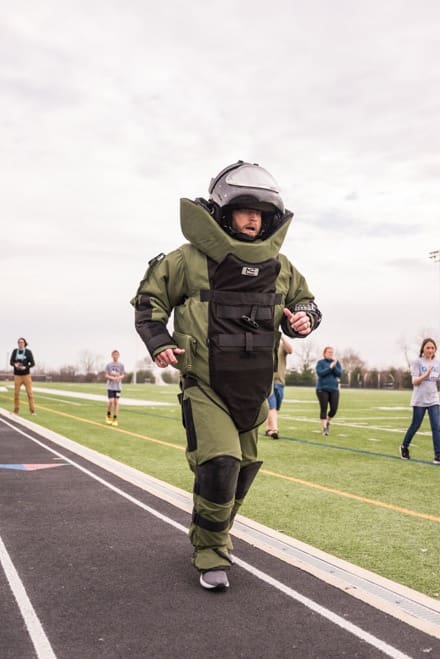
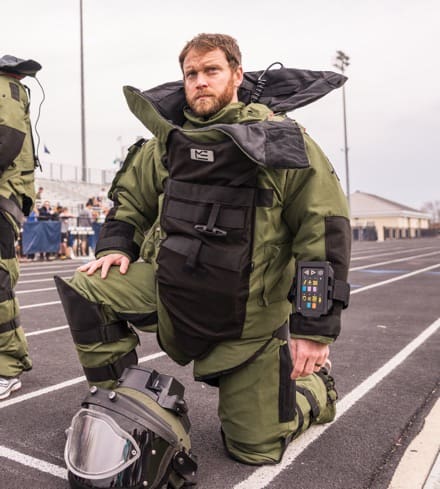
On 3 April 2021, I am setting out to break the men’s 1 mile Bomb-Suit World Record! The current record has been held by Mark Gibbs of the UK at a blistering fast time of 7:24.21. He has held this record since 2017.

In 2019, I attempted to break this record; however, wasn’t successful. Before the event, I “Planned my dive”, but when the race gun went off, I took off in a sprint and completely forgot all about my plan that I have “dove” in my head a thousand times. “Plan your dive, dive your plan”. My pace at the 1/2 mile was around 6 mins and my heart rate pegged and I was about to pass out, so I had to walk. Very humbling experience and also a HUGE lesson learned.

This year, I will have a pacer and training has been going extremely well. We are raising money for Get Head Strong and with proceeds from every purchase of the #TeamSean shirt will go directly to Get Head Strong.

Show support by purchasing his shirt with the discount code “SEAN“. www.militarymuscleinc.com/collections/military-families-program/products/military-families-program-team-sean-tee