XC3 Weaponlight

Archive for the ‘Guest Post’ Category

New Medical Device May Change the Face of Battlefield Treatment

Tuesday, December 29th, 2020

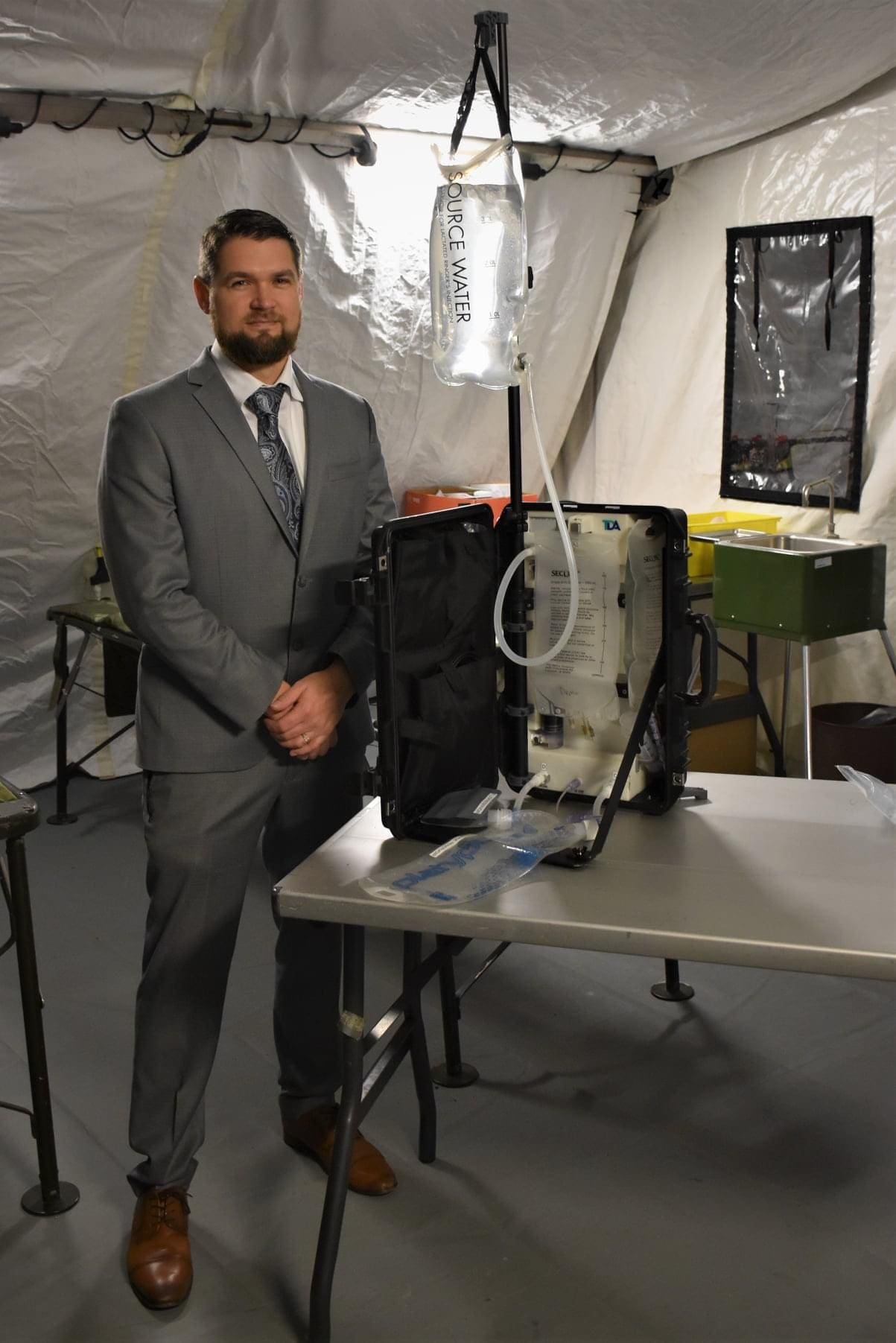
The U.S. Army Medical Materiel Development Activity has teamed with one of its commercial partners in the development of a novel medical device that may prove to be a “game-changer” in the frontline treatment of wounded Warfighters. Created by TDA Research, Inc., and funded through the Defense Health Agency’s Small Business Innovation Research program, the Lactated Ringer’s Solution Generator is a lightweight, portable unit that can produce sterile LR solution in austere locations from locally available freshwater sources. The device utilizes proprietary technology to produce one liter-size intravenous bags from a concentrated LR salt solution.

Composed of sodium, chloride, potassium, calcium and lactate, LR solution is used primarily to treat dehydration, deliver medication and restore fluid balance following bodily injury. It is also used to treat moderate hemorrhagic shock, as it has been shown to increase initial survival rates among patients and decrease the chances of organ damage.

Austin Langdon serves as assistant product manager for the LR Solution Generator program within USAMMDA’s Warfighter Deployed Medical Systems Project Management Office. He believes the device will help to save lives on the battlefield, and recently he demonstrated the unit for Army Brig. Gen. Michael J. Talley, Commanding General of the U.S. Army Medical Research and Development Command and Fort Detrick.

“Without question, this small device will dramatically reduce the Army’s logistical footprint of having to ship and store lactated Ringer’s solution, which is the fluid of choice for resuscitation if blood is not available on the battlefield,” said Langdon. “This unit can make LR solution from practically any water source, including ditch water.”

“I truly believe in this device and its application for military use in the near future, although it will probably find its way into civilian medicine as well,” he continued. “For the Army, the LR Solution Generator will increase our life-saving capabilities by helping to reduce our logistical supply chain demands — our ability to make LR solution in the field will also help ensure we’re able to use these critical bags before they expire.”

As a former Army flight medic, Langdon praised the unique qualities of the device, highlighting its size, weight and portability. The unit weighs less than 11 pounds and is stored in a hard-shell case that is approximately 10 inches wide by 18 inches long, and only 6 inches deep. The purification device runs on a rechargeable lithium-ion cell that can produce more than 30 bags of LR solution per single charge.

“Army leadership is continually seeking ways to reduce the logistical strain of getting much-needed resources to the frontline and far forward in Multi-Domain Operations,” said Langdon. “Products such as the LR Solution Generator are far-forward-leaning solutions that can help us think outside of our normal parameters of operation. This device, and others like it, will bring forth new innovation that will change our standard of operation and secure our valuable resources.”

By Jeffrey Soares, USAMMDA public affairs
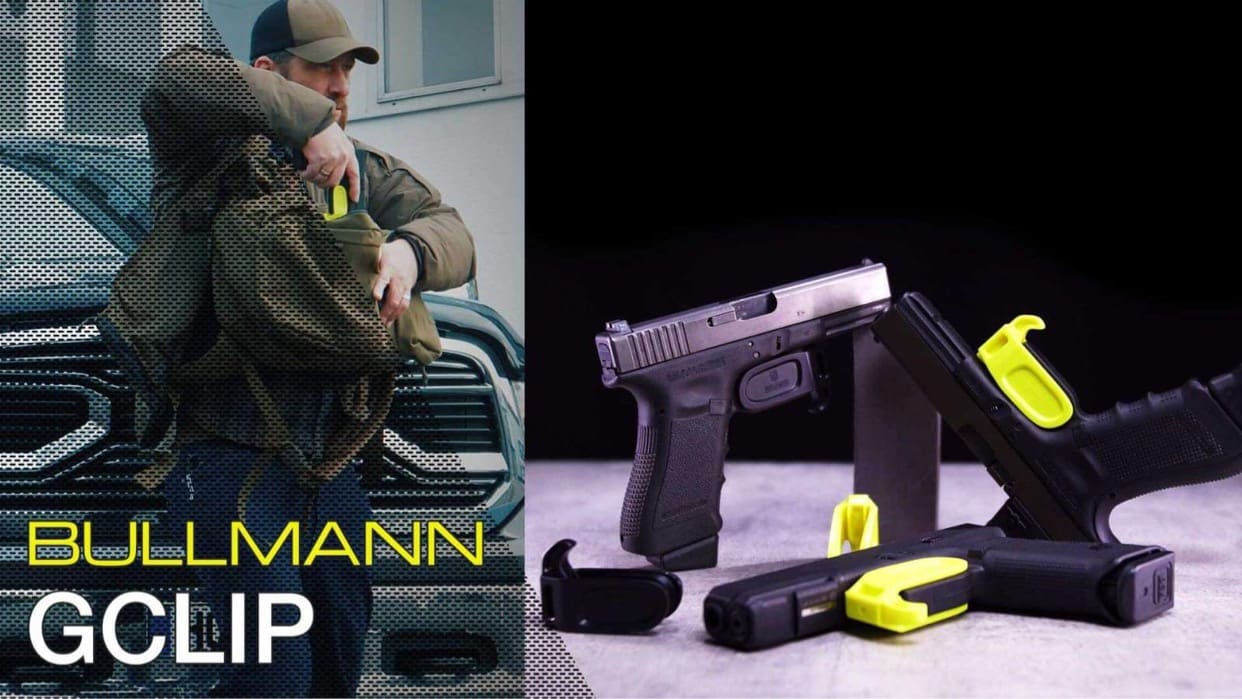
ePIG Group – GCLIP from Bullmann Tactical

Monday, December 28th, 2020

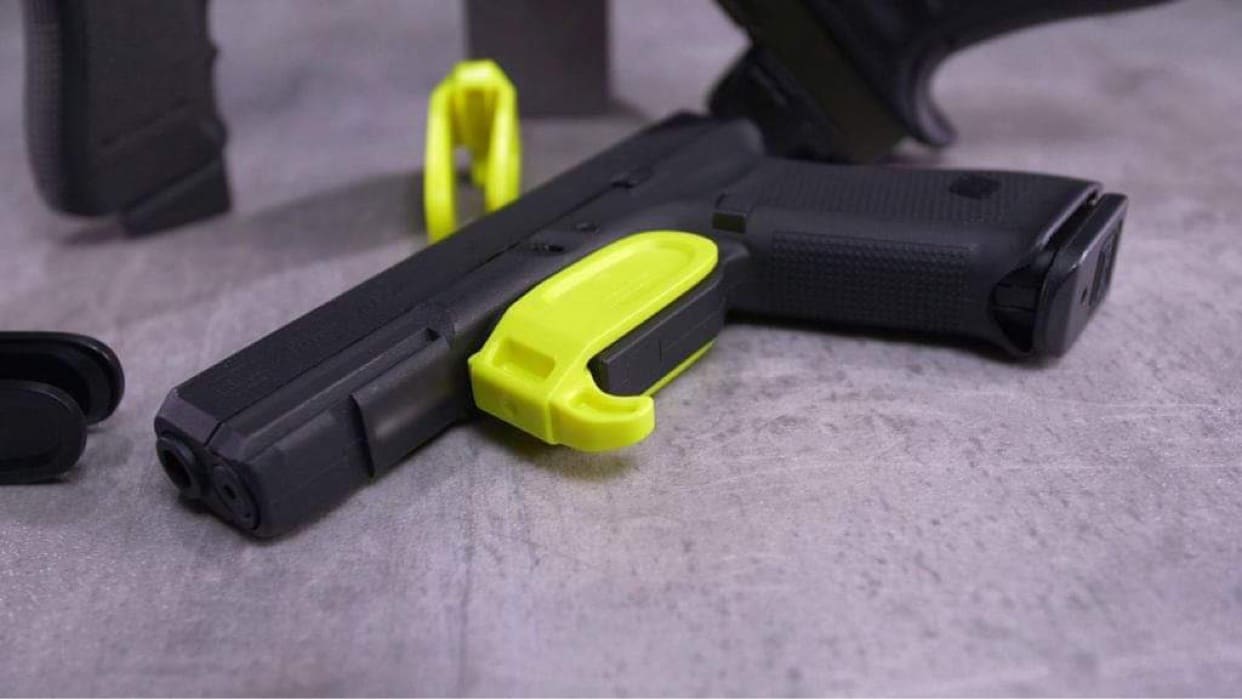
Germany’s Bullmann Tactical has introduced the GCLIP, a bikini-style cover for trigger guards of Glock pistols which they are touting as a safety device.

Made in Germany, the GClip includes two wings which click into place to encapsulate the trigger guard. It is removed by pushing forward on the front hook. Unlike other, similar devices in the market, it does not include a tether to pull the GCLIP free during presentation. However, it’s made form plastic so a hole could easily be added.

ePIG Group has created a video to showcase the GCLIP and demonstrate its use as an EDC device for concealed carry.

Offered in high visibility yellow, green and black.

You’ll note the video declares “paid promotion.” We weren’t compensated in any way for the video, or the article; ePIG Group was. It’s their video and we share it out of interest of seeing such holsters in Europe.

5th SFAB, ‘Ghost Brigade,’ Complete First-of-Its Kind-Rotation

Monday, December 28th, 2020

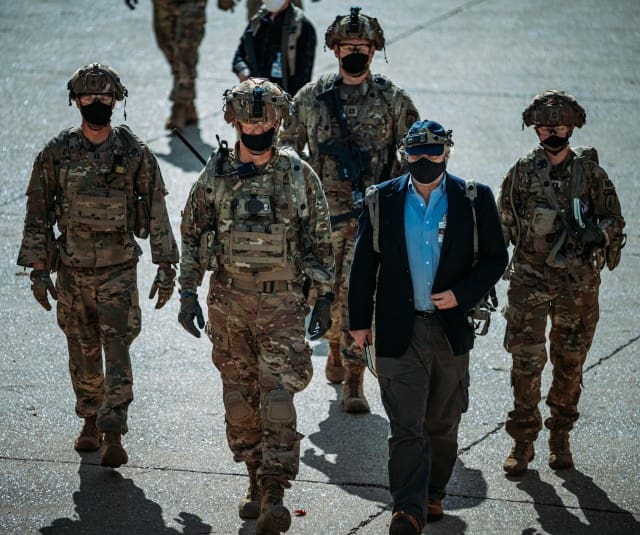
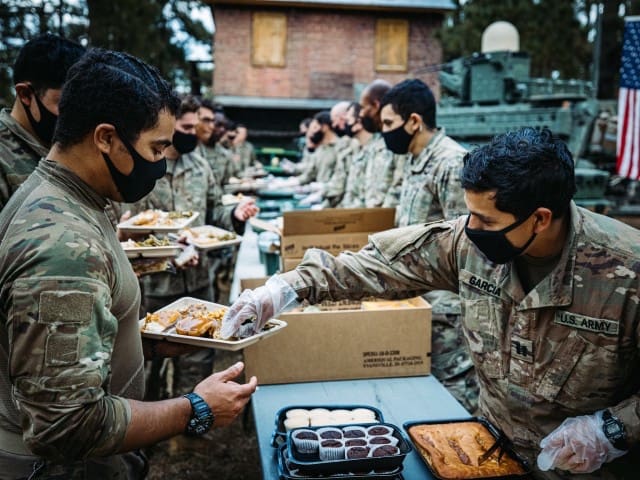
FORT POLK, La. – The 5th Security Force Assistance Brigade completed a first-of-its kind-rotation at the Joint Readiness Training Center’s 21-2 Rotation partnering an SFAB with a real-world unit, the Joint Base Lewis-McChord-based 1-2 Stryker Brigade Combat Team, “The Ghost Brigade,” in a decisive action validation exercise, Nov. 13-26, 2020.

“JRTC 21-02 was the culmination of 5th SFAB’s mission since its inception in June 2019 to man, equip, and train the Army’s newest combat brigade,” Brigade Operations Officer, Maj. Liam Walsh, said. “The training served as a proof of principle as the first SFAB Decisive Action CTC rotation.”

The Ghost Brigade closely integrated with SFAB Soldiers from the Brigade down to the Platoon level throughout the exercise.

“Our units worked alongside 5th SFAB, replicating the role of a professional, near-peer Allied army, which the SFAB was tasked to support as they would for a real-world partner force in the Indo-Pacific Command Area of Responsibility,” 1-2 SBCT Commander Col. Jared Bordwell said. “From the brigade to the individual levels, this rotation was all about supporting one another to make our team unbeatable.”

The SFAB is completely comprised of volunteers who were carefully vetted for service in the organization.

“This rotation has demonstrated that specially trained SFAB Soldiers, selected for their tactical expertise and professionalism, organized into small cohesive teams, and equipped with advanced communications systems can provide a decisive advantage to a threatened but capable foreign partner,” 5th SFAB Commanding General Brig. Gen. Curtis Taylor said.

Altogether, seven units participated in the rotation including the 593rd Expeditionary Sustainment Command, 404th Army Field Support Brigade, 16th Combat Aviation Brigade, 2-2 Stryker Brigade Combat Team, and the U.S. Marine Corps’ 6th Air Naval Gunfire Liaison Company.

Aviation support proved extremely critical during the rotation.

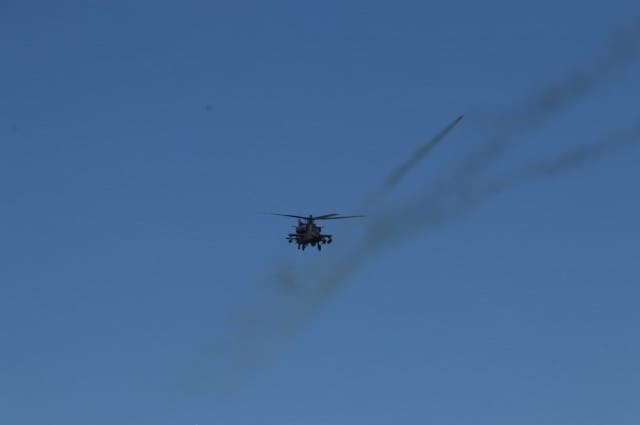
“The 16th CAB’s assets here allowed 5th SFAB to support 1-2 SBCT with a unique aviation capability of Apache and Blackhawk helicopters,” Brigade Aviation Officer, Maj. Ryan Hampton said. “Integrating recon, attack and lift assets for 1-2 SBCT’s scheme of maneuver allowed them to seamlessly expand their lethal reach across the battlefield.”

Hampton’s hard work in this regard earned him the title of, “Hero of the Battlefield” from JRTC Operations Group. Another Soldier recognized was 3rd Squadron Operations Advisor, Staff Sgt. Erica Myers.

“After training out here for two weeks, I really saw how diversity within our teams is a must,” Myers said. No one knows everything needed to successfully train alongside our partners, every Soldier is a crucial piece of the big picture.”

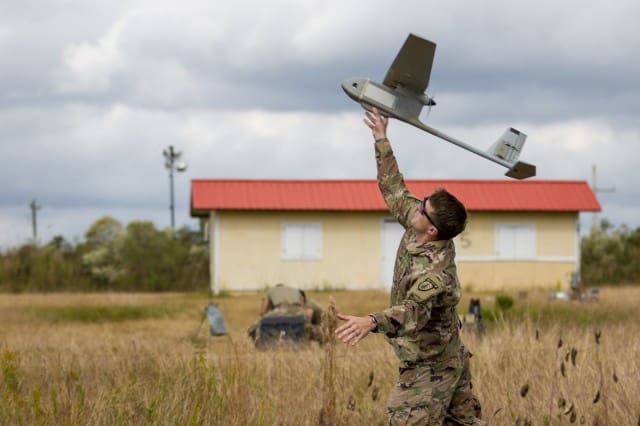
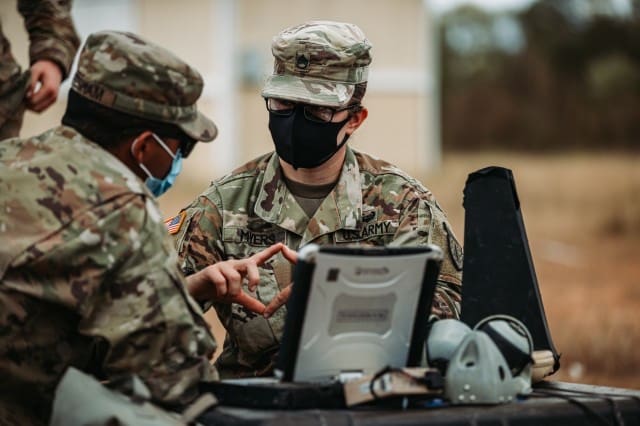
Myers’ also got the opportunity to advise several junior Soldiers from Ghost Brigade on the Raven Small Unmanned Aircraft System.

“They were certified but lacked confidence and understanding of their equipment,” Myers said. “The more time I had with them, the more confidence they gained. By the end of the rotation, I was able to get one of them their first solo flight and night flight.”

Myer’s Squadron Commander, Lt. Col. Timothy Ferguson shared a similar sentiment following the exercise.

“Our experience during JRTC 21-02 was a tremendous learning opportunity as it enabled us to visualize our role in the organization,” Ferguson said. “We gained invaluable experience through live repetition with our partnered force while forcing us to adapt and develop strategies across the competition, crisis, and conflict phases.

The 5th SFAB is expected to continue sending Teams into the Indo-Pacific region alongside U.S. partners there.

“As we look across the world today, there are many potential crisis scenarios where this kind of capability is absolutely vital to deterring aggression against US Allies and Partners,” Brig. Gen. Taylor said.

The 5th SFAB officially activated in May 2020 and has since sent Soldiers on missions to Thailand and Indonesia. With JRTC complete, the 5th SFAB has been validated for worldwide deployment in support of U.S. Combatant Commanders’ priorities.

By Maj William Leasure, 5th Security Force Assistance Brigade Public Affairs

SCUBAPRO Sunday – Rash Guards and UPF  

Sunday, December 27th, 2020

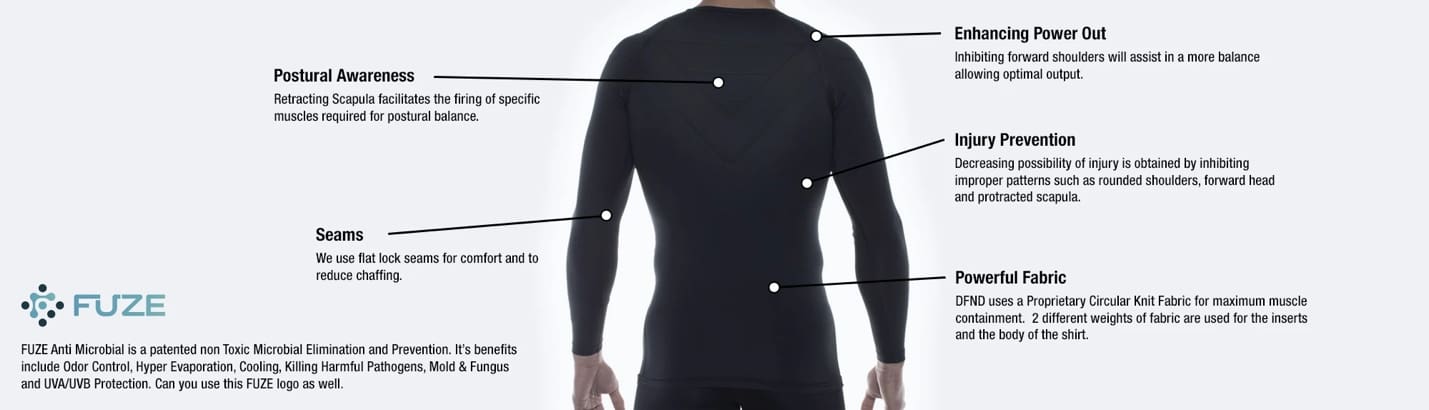
Rash guards were initially made to help prevent chafing on your skin against a surfboard, but it slowly made its way into almost every water sport. On land, rash guards can be used for everything from underbody armor (if worn under armor, make sure it is fire retardant none of SCUABRPOs rash guards meet the FR standards) mix martial arts to looking cool in the gym. (I can’t pull that last one-off, and to be honest, I would want to). Rash guards serve a couple of purposes in the water; they help make donning and doffing your wetsuit easier. They help protect you from the cold and sea life. Depending on the type/kind you use and how it’s made, it will help you keep warm, protect you from the sun, and, if made with some type of compression, it can help with craps and overall fatigue. DFND USA compression clothing provides medical-grade compress that adds in recovery and enables you to warm up faster. It is also great for long flights.

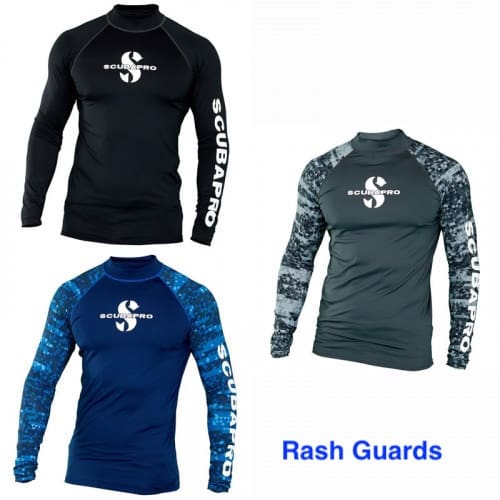
The SCUBAPRO UPF Collection Rash Guards are designed for diving but are suitable for other water sports. The long sleeve rash guards are made from high-quality polyester fabric, are form-fitting, comfortable, and dry quickly. They also provide UPF 50 UV protection, which puts them in the excellent UV protection category.  

The UPF 50 rating blocks 98% of UV radiation. Polyester is comfortable and abrasion-resistant, and it does an excellent job of retaining its shape after repeated use. A high neckline prevents uncomfortable chafing. The material dries quickly to enhance comfort between dives. If you want to add some thermal protection, not much can beat neoprene.

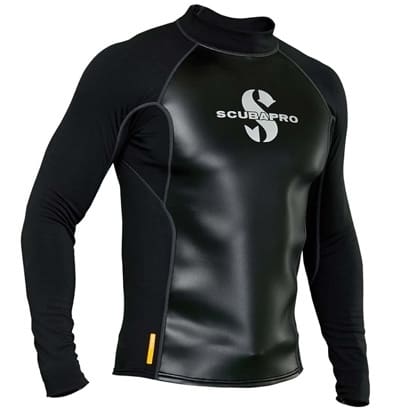
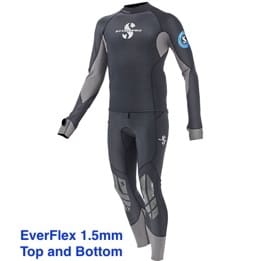
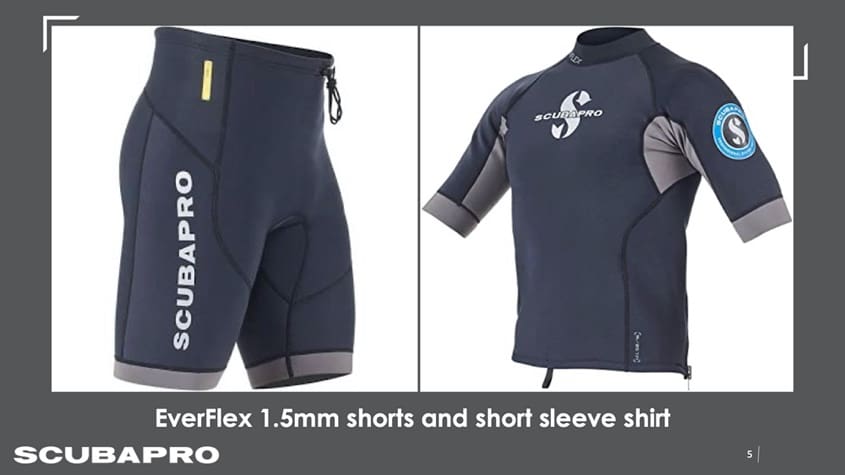
SCUBAPROs Everflex 1.5mm neoprene Rash Guards keep you warm while protecting you from scrapes and stings. The high-tech materials ideal for tropical diving, snorkeling, or pool training, these thermal tops are made with a special water-repellent, high-stretch Everflex neoprene on the outside and a combination of fleece and plush on the inside. They offer warmth, comfort, and lots of range of motion, plus they dry quickly and are great for layering. There are two styles of rash guards, tight and loose.

Neoprene is lightweight, durable, water-repellant, and a highly efficient insulator for heat retention. They are assembled using solvent-free glue, a 100% green process. High-tech plush and fleece lining reduces water flow and provides both comfort and extra warmth. Design helps block water intrusion to reduce convection. This design can also help keep you warm on the surface.  High-stretch neoprene is easy to don and doff and offers an excellent range of motion. They are designed to be worn by themselves, or you can use them as a base layer.

If your groups would like items like this without the reflective markings on them or you want special order items, please contact SCUBAPRO Customer service.

Kit Badger – Audit The ATF

Saturday, December 26th, 2020

In light of the recent ATF effort to classify Stabilizing Brace equipped pistols as Short Barreled Rifles to be regulated under the National Firearms Act, Kit Badger suggests the agency should be audited in order to bring an end to their efforts to strip freedoms from law abiding citizens.

Read the entire post at kitbadger.com/the-end-of-the-atf.

FirstSpear Friday Focus— Merry Christmas from FS

Friday, December 25th, 2020

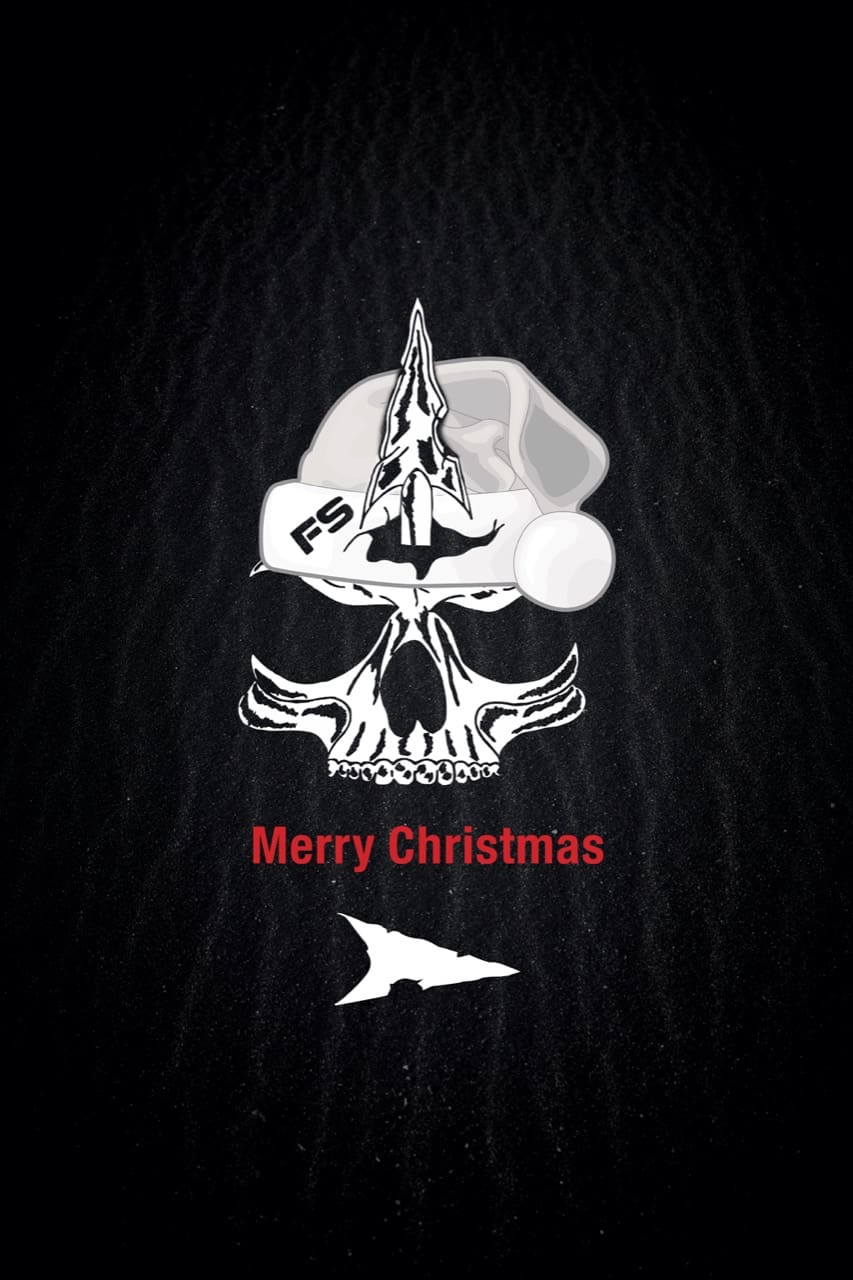
Happy Holidays and Merry Christmas from the FirstSpear team. We’re proud to bring you 100% American made products and to continue to support those at the tip of the spear.

Free domestic shipping on orders over $99; check out our non-standard, non-stocking page for discounted items.

For more information about FirstSpear, check out First-spear.com.

Check out our latest technology on first-spear.tech.

Nellis AFB’s 24th Tactical Air Support Squadron Inactivates, Leaving Mark on Joint Integration, Close Air Support Training

Thursday, December 24th, 2020

NELLIS AIR FORCE BASE, Nev. —

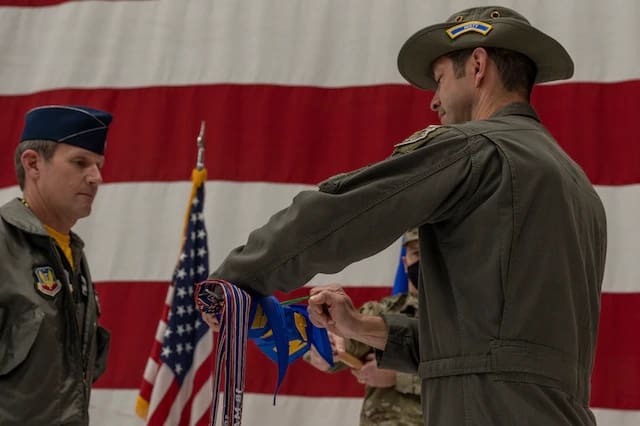
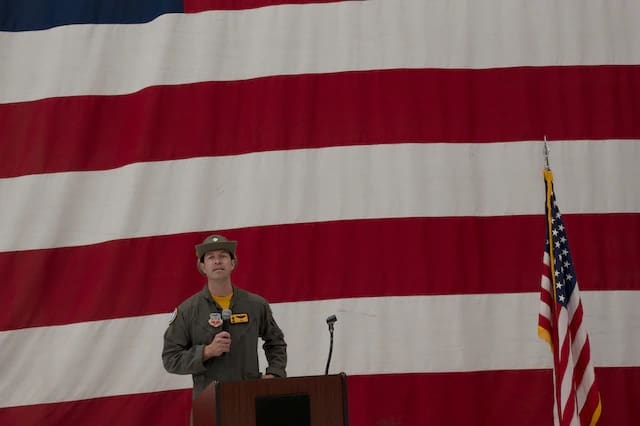
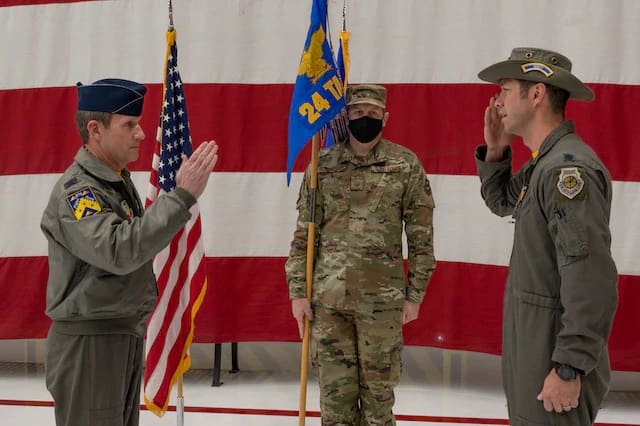
The 24th Tactical Air Support Squadron was inactivated during a ceremony at Nellis Air Force Base, Nevada, Dec. 23, 2020.

The inactivation is part of an overall Air Force strategy to reactivate the 65th Aggressor Squadron.

“Our era of great power competition is highlighting the need to integrate across domains – air, land, sea, space, cyberspace and information,” said Lt. Col. Jesse Breau, 24th TASS commander. The force that is able to effectively and consistently accomplish that integration will win against peer adversaries. Forces who are unable or who choose not to integrate in training will become obsolete.”

The Air Force is repurposing the F-16s assigned to the close air support-focused 24th TASS and moving them to an aggressor role as part of the 65th AGRS to enhance air-to-air training and provide adversary aircraft that will better replicate peer adversary military forces.

The 24th TASS was activated at Nellis in March 2018. Its primary mission was to train forward air controllers (Airborne) and joint terminal attack controllers. The squadron’s pilots flew F-16 Fighting Falcons, more commonly known as the “Viper.”

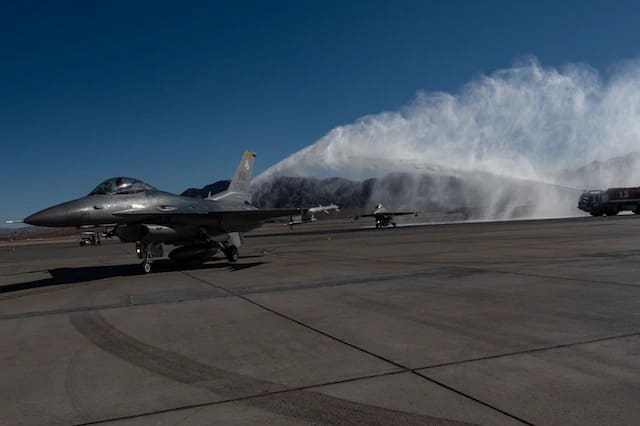
As part of the inactivation ceremony, a 24th TASS Viper conducted a fini flight, celebrating the unit’s rich history.

During the Vietnam era, the 24th TASS’ operators wore non-standard headgear known as Saigon Cowboy hats that link them to the rich heritage of USAF forward air controllers.

While activated at Nellis, the unit’s tactical air control party members hosted JTACs and meshed them with pilots from the combat air force. Pilots who completed a demanding seven-week course were then qualified to control CAS airstrikes from the cockpit of their fighter jets.

The 24th TASS’s mission was unique in that it was the only centralized FAC (A) training course in the United States Department of Defense. The former students and instructors from the 24th TASS will carry on the unit’s legacy of air-ground integration and CAS expertise as they move on to other assignments throughout the CAF.

“There are very few fighter pilots in the U.S. Air Force that know Army or Marine Corps doctrine and tactics. So in that sense, I think one of the key outputs of the forward air controller training course is an officer who can integrate joint fires,” said Breau. “Graduates of our course are focused on close air support and integrating airpower with surface forces’ maneuver and fires. They graduate as close air support subject matter experts, and bring that knowledge back to their combat units.”

The 24th TASS’s training leveraged the Nevada Test and Training Range and the wide range of aircraft types stationed at Nellis to provide premier CAS training. The course immersed fighter pilots into the TACP members’ mission through planning, briefing, executing the mission on range and debriefing with the JTACs.

“To integrate with the ground scheme of maneuver, our philosophy that’s written into joint fires doctrine is that a forward air controller should always be an extension of the tactical air control party,” said Maj. Andrew Bolint, 24th TASS director of operations. “So the JTACs on the ground with the special operations teams just need us to support their objectives and extend their capabilities, whether that’s firepower, sensors or communication.

“What I took away as a forward air controller pilot that completed and eventually managed the course is an understanding of the ground scheme of maneuver and the ground force commander’s objectives for each mission,” he added. “This taught me to better predict where and how to allocate weapons and sensors that would best support friendly forces on the ground.”

The result was a high level of trust and rapport between the JTACs and fighter pilots, along with an in-depth understanding of the purpose and role of all of the air and ground players involved in the training mission scenarios.

“The in-person planning and debriefs isn’t common for JTACs and pilots, however it is an invaluable way to increase the lethality of the CAS team,” said Master Sgt. Andrew MacDonald, 24th TASS TACP flight chief and JTAC instructor.

Although there will no longer be a centralized USAF F-16 FAC(A) training course, the future of air-ground integration is in good hands, according to Breau. Several Nellis Combat Training Squadrons are dedicated to joint integration exercises, and the USAF Weapons School continues to produce expert weapons officers.

“What will always be useful in large-scale combat operations will be the ability to mesh across domains, and the forward air controllers and JTACs that we’ve helped to train have the expertise to do that,” said Breau.

Additionally, the Congressional decision to maintain the A-10 platform ensures that Close Air Support focus and institutional knowledge remains.

“I think the 24th TASS has done an exceptional job of training for what a major conflict will look like, in terms of threats,” said 1st. Lt. Benjamin Harris, 24th TASS intelligence officer in charge. “Some of our training audience are unfamiliar with advanced integrated air defense systems and ground force tactics that we expect to face in a fight with peer adversaries.

“Since we plan, brief, execute and debrief every tactical air support mission as an air-ground team, our student pilots and operators completed the course with the ability to cover each other’s blind spots and leverage each other’s strengths,” he added.

The decision to inactivate the squadron was finalized in May 2020 by Gen. Mike Holmes, former commander of Air Combat Command.

Story by 2nd Lt Nicolle E. Mathison, 57th Wing Public Affairs

Photos by TSgt Alexandre Montes

National Cyber Range Complex Charleston and NIWC Atlantic Fosters Collaboration through Cybersecurity Simulation Exercises

Wednesday, December 23rd, 2020

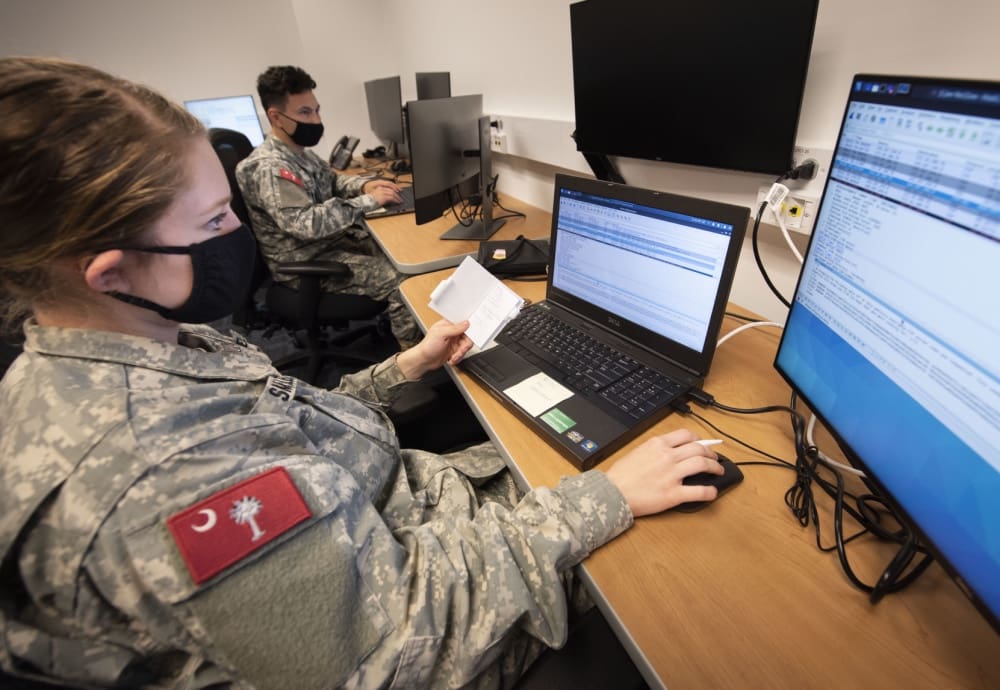
The National Cyber Range Complex (NCRC) Charleston, located at Naval Information Warfare Center (NIWC) Atlantic, recently hosted teams of cybersecurity professionals to compete and hone their cybersecurity skills in the NCRC Cyber Red Zone Capture the Flag (CTF) competition.

Based loosely on the outdoor “capture the flag” game, as well as the board game, “Battleship,” this year’s Cyber Red Zone CTF event was given a maritime twist. During CTF, 35 teams competed in 48-hour time slots to find hidden clues and virtual flags by hacking into mock computer systems. In order to accommodate all the teams of cybersecurity professionals from across the Department of Defense, as well as the three collegiate Reserve Officers’ Training Corps (ROTC) teams, the NCRC held 11 sessions from early October to mid-November with four teams competing concurrently in each session.

The NCRC Charleston hosted two teams in October with participants from The Citadel’s Cybersecurity Team, as well the Marine Corps Operational Test and Evaluation Activity (MCOTEA). Although NIWC Atlantic cybersecurity professionals have previously participated in past National Cyber Range CTFs, this was the first year NCRC Charleston hosted any teams.

“By learning how to thwart an attack, or better yet, seeing how an attacker attacks, it helps cybersecurity professionals design better defenses, which ultimately protects your information and mine,” said Jeff King, NCRC Charleston director.

For the CTF, the flags were assigned point values based on difficulty and each team worked under the pressure of time limits to accumulate points, said Scott West, NCRC Charleston lead event director. The teams with the most points won in their respective event.

During the NCRC Cyber Red Zone CTF, cadets from The Citadel used their offensive cybersecurity skills to compromise modern wireless networks, web applications, and Windows and Linux operating systems. During the event, cadets also researched specialized embedded Real Time Operating Systems (RTOS) and communications standards, to include the National Marine Electronics Association 2000 standard and Automatic Identification System. Both of these communications standards are commonly used on marine vessels for navigation and engine operations.

As part of the event, West said that the cadets learned new lessons and techniques while solving several of the competition’s more complex challenges.

“We had to learn a lot of protocols, a lot of new skills,” said Citadel Cadet Shiloh Smiles, The Citadel. “We had to apply things used in other areas here in ways that are difficult. I was just trying my best to get information and do some damage.”

Cadets that competed in the NCRC Cyber Red Zone CTF are also recipients of either the National Science Foundation (NSF) Scholarship for Service (SFS) or the DoD Cyber Scholarship Program (CySP).

“These cadets will go on to spend at least three years working for the United States government as cyber professionals, so CTF training really helps to prepare them for future tasks,” said West.


The Citadel cadets expressed their appreciation for participating in the CTF at NCRC Charleston as a chance to reinforce classroom training.

“I don’t think anywhere else could have provided an actual experience like this for us.” said Smiles. “I’m really thankful that I was able to have this opportunity.”

The NCRC CTF event offered a similar experience for Marine Corps cyber professionals to practice and sharpen skills in a realistic training environment.

“Members of the MCOTEA team use these types of events to maintain proficiency,” said King. “MCOTEA is the independent operational Test & Evaluation authority for the Marine Corps and is responsible for the operational and cyber testing of products that NIWC Atlantic builds prior to them going to warfighters.”

While the networks and systems in the CTF are simulated, the technology represented is common to many of the systems actively being developed, tested, and fielded across the DoD, said West.

“Serial-based protocols used in the CTF are actively used in U.S Navy vessels and Marine Corps vehicles,” said West. “These type of events provide those vulnerability assessment analysts with tools and realistic challenges needed to identify deployments and determine potential mission impact to assess risk to interconnected mission-critical systems.”

NCRCs conduct cyberspace testing, training and mission rehearsal/preparation events for the full spectrum of DoD customers including those involved in research, development, acquisition, testing, training and operations. The NCRC Charleston supports a wide variety of event types including science and technology demonstrations, developmental test & evaluation, operational test & evaluation, security controls assessments, cyberspace operations training, cyberspace tactics, techniques procedures development, forensics/malware analysis, and cyberspace operations mission rehearsal/preparation.

The Charleston facility is one of two OSD R&E resourced Navy cyber test and training range facilities, with NCRC Patuxent River as the second facility.

Story by Kris Patterson, Naval Information Warfare Systems Command (NAVWAR)

Photo by Joe Bullinger, US Navy