Phantom Lights

Archive for the ‘Guest Post’ Category

‘A Tribute to Persistence:’ SecAF Presents Air Force Cross to Special Tactics Airman

Monday, January 4th, 2021

CANNON AIR FORCE BASE, N.M. (AFNS) —

Snapped awake by the sound of belt-fed machine gun fire, then-Senior Airman Alaxey Germanovich, a 26th Special Tactics Squadron combat controller, surveys the compound he had dozed off in after several sleepless days of combat.
“I look around and I don’t see any of my American teammates,” Germanovich said. “(At that moment I said to myself) I need to find my friends right now.”

Grabbing his helmet and rifle, Germanovich bolted out of the compound and into the fight, where he saw several of the Army special forces Soldiers he was embedded with huddling for cover from behind a small rock.

“I knew then that I had to go get to my teammates and help them,” he said.

Germanovich’s base instinct would quickly turn into a grueling battle for survival, but it was those selfless impulses to save and protect his teammates that proved to be the difference between life and death for many of his teammates on that fateful day.

SecAF commends combat controller for valor

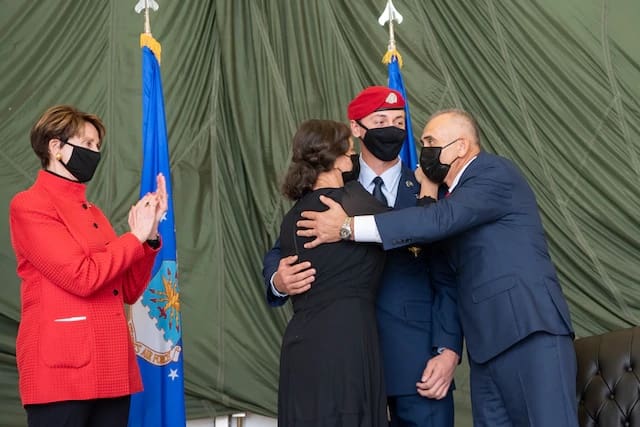
Secretary of the Air Force Barbara Barrett presented the Air Force Cross to now-Staff Sgt. Germanovich during a ceremony at Cannon Air Force Base Dec. 10.
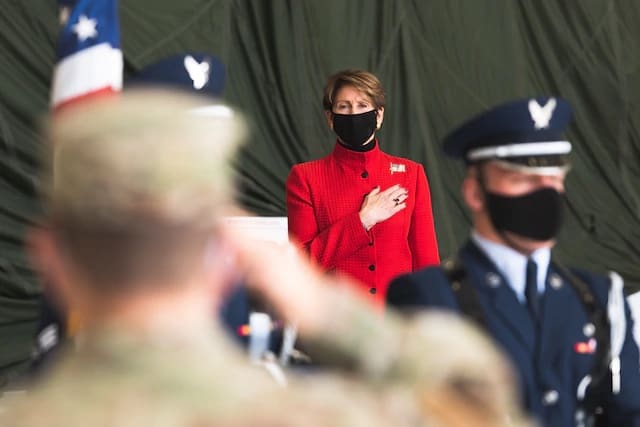
Germanovich was awarded the medal, second only to the Medal of Honor, for his actions April 8, 2017, during combat operations against enemy forces in Nangarhar Province, Afghanistan.

“This Air Force Cross is a tribute to your persistence (Staff Sgt. Germanovich),” Barrett said. “You risked your life and weathered blistering enemy fire to save the lives of others.”

In attendance were Col. Matthew Allen, 24th Special Operations Wing commander, the 7th Special Forces Group (Airborne) team Germanovich was attached to during the combat operations, and Germanovich’s family and friends.

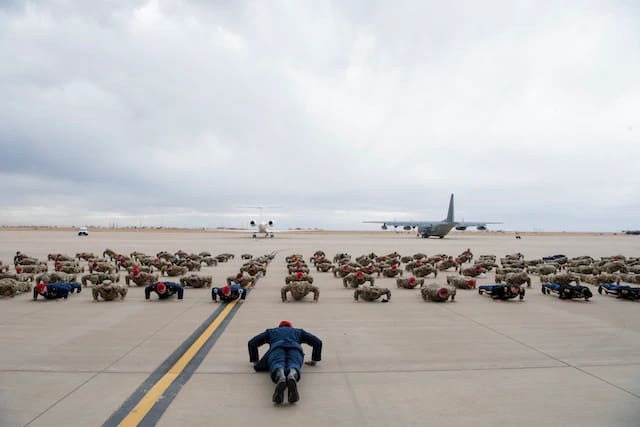
Following the ceremony, Germanovich led those in attendance in memorial pushups to commemorate the event, the firefight and the ultimate sacrifice paid during the clash by Army Staff Sgt. Mark De Alencar, a special forces Soldier assigned to 7th SFG (A) and a member of the team Germanovich was assigned to.

“This battle was a case study in toughness and extraordinary competence,” Allen said. “But it was also a case study in love. The type of love that demands teammates fight for one another and give everything they have.”

Germanovich’s actions as the air-to-ground liaison for his special operations forces team were credited with protecting the lives of more than 150 friendly forces and the lethal engagement of 11 separate fighting positions.

Facing hell, calling for fire

A native of Boiling Springs, South Carolina, Germanovich enlisted into the Air Force in November, 2012, with two goals in mind.
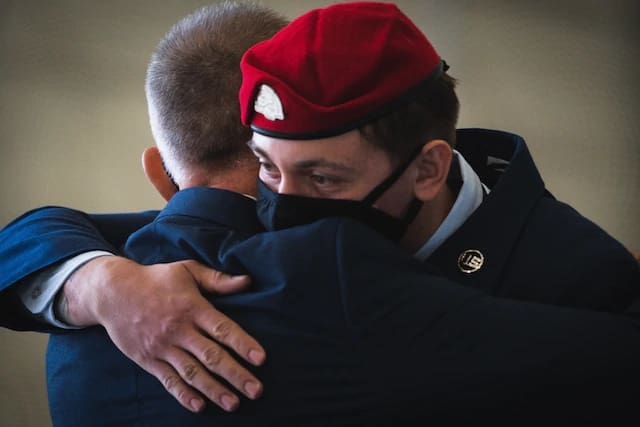
“I always knew I wanted a challenge,” Germanovich said. “I wanted to have a direct impact on the battlefield wherever I went.”

Five years later, both of those wishes would be granted when he deployed to Afghanistan and embedded with 7 SFG (A) Soldiers and their Afghan partners.

During his tour, the joint force was tasked with clearing several valleys in Nangarhar of fighters. As the multi-day operation progressed and the coalition forces pushed the insurgents closer to the Afghan border of Pakistan, the fighting became more and more violent. It reached a head as Germanovich sprinted through heavy enemy fire to help the Special Forces Soldiers on that fateful day.

After reaching the rock his teammates were pinned down behind, Germanovich began to call in airstrikes to try and suppress the attack.

“It was working to a degree,” Germanovich said. “But we were still receiving extremely effective fire, and one of our partner force members had gotten shot.”

To evacuate the wounded Afghan commando, Germanovich began to call for strikes extremely close to their position in order to create more separation between the coalition forces and the insurgents.

“As the bombs were falling out of the sky, I started screaming at everybody to run for cover,” Germanovich said.

After the partner force member was evacuated, the special operations forces team launched their counter-attack. A separate unit from across the valley was able to pinpoint a key enemy bunker during the firefight, and Germanovich’s element, led by De Alencar, crawled their way towards the position.

Once the fire team reached the top of the bunker, Germanovich and De Alencar dropped grenades into its entrance. Then, as Germanovich secured the opening and De Alencar and the other Special Forces Soldiers began to breach the bunker, insurgents ambushed the team from hidden positions to the south, mortally wounding De Alencar.

“The situation just became complete and utter chaos,” Germanovich said. “The team and I had expended all of our ordnance engaging enemy targets. We expended all of our grenades, there was no more pistol ammunition, and we were out of ammo completely.”

Lying prone with no cover from the attack, Germanovich put out a call to an AC-130W Stinger II gunship aircraft that was leaving the area in order to refuel.

“As they were leaving, I said ‘if you don’t come back, we’re dead.’” Germanovich said.

The gunship did return and began to fire on the enemy fighters, which gave Germanovich and the soldiers the opportunity to move away and evacuate De Alencar.

“All the while, we’re still taking effective fire from the enemy,” Germanovich said. “We began dropping ordnance and basically bombing up this mountainside until we got to safety.”

Germanovich’s actions proved decisive on that battlefield and demonstrated the enormous impact of Air Force Special Operation Command’s precision strike mission, which provides ground force with specialized capabilities to find, assess and engage targets.
“You (Germanovich) told me earlier that you did what any one of your teammates would have done in the same situation,” Allen said. “But we don’t know that. We do know what you did that day: face and devastate a numerically superior enemy … this is why America’s enemies do not take us head on.”

Germanovich’s ability to enable precision strike operations and his bravery in the face of hostile fire are incredibly courageous in their own right, but it was the reason behind his valiant performance that makes him an unquestionable hero.

“It was 100% my teammates,” Germanovich said. “If I’m in danger, I know without a doubt in my mind that my teammates are going to do everything in their power to make sure that I come back, and I would do everything that I could possibly do to make sure that they come back.”

Article by SrA Maxwell Daigle, 27th Special Operations Wing Public Affairs

Photos by SSgt Michael Washburn and A1C Drew Cyburt
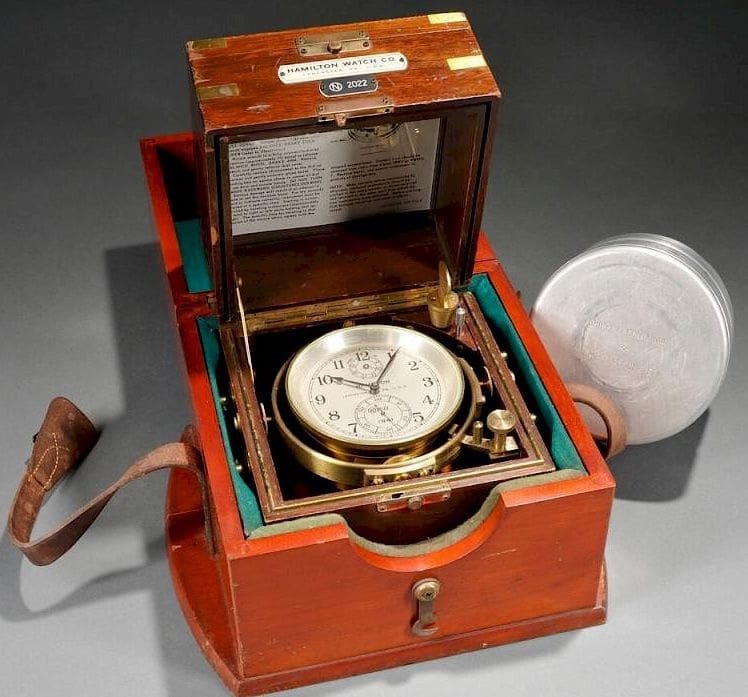
SCUBAPRO Sunday – The Watch That Won WWII

Sunday, January 3rd, 2021

As the world marked the 76th anniversary of the end of World War II, people can claim a lot of items was the “one thing” we had that is the main reason we won the war. The .50 machine gun, The Higgins Boat, The Jeep (G.P.), and the M1 Grand rifle. There are more items I could list, but it would take a long time. There is one that was one of the best-kept secrets to helping win the war. In every campaign, everyone in charge of a ship, a plane, a boat, or a bomb had one, or it was part of that item. It was the Hamilton watch. Renowned for its accuracy. Hamilton’s wartime contributions took many forms, long known for their accurate timepieces, and they were essential to the Allied Forces’ victory in WWII.


The Hamilton watch company was incorporated in1892 in Lancaster, PA. In 1891, an engineer’s inaccurate pocket watch led to a terrible train crash near Cleveland, Ohio. As a result of the investigation into that crash, an industry commission devised precise timekeeping standards for pocket watches (there were no wristwatches at this time) (get it time) used by railroad personnel. Pocket watches that met those exacting requirements were known as “railroad watches,” and a leader in making them was the. Hamilton watch company. Hamilton’s first production of those watches in March 1894 became so highly regarded for their accuracy  they were called the “Watch of Railroad Accuracy.”

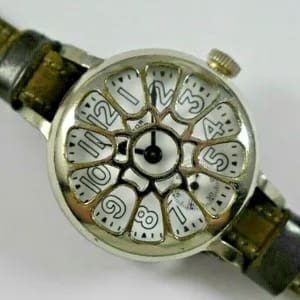
That reputation took Hamilton into World War I, as the official watch of the American Expeditionary Forces. Soldiers and some watch companies had devised strapped pocket watches to the wearer’s wrist so that their hands were free so they could still fight, and Hamilton took note. Soon, the 981 Wrist Watch was born. The below picture is a 981 with a shrapnel guard on it.

In the 1930s, its wristwatches’ accuracy led several new airlines to adopt Hamilton as their official timepiece. By 1940, Hamilton was one of America’s best-selling watch brands. They had their own designers, engineers, physicists, and metallurgists, and they were a leader in research in watch oils, hairsprings, jewel bearings, and escapement design. An Escapement is a mechanic, a device that permits controlled motion, usually in steps. In a watch or clock, it is the mechanism that controls the transfer of energy from the power source to the counting mechanism. For the ASVAB waivers in the room,  basically, it helps maintain a steady flow of energy. In the summer of 1939 and again late 1940, the United States Naval Observatory (the U.S. authority on timekeeping, chronometers, and other navigational equipment) sent letters to eight watch companies that might be interested in creating an American marine chronometer. Hamilton replied and requested a sample chronometer for them to study.

In Feb, of 1942, 13 weeks after the attack on Pearl Harbor, they delivered two prototypes for review to the U.S. Naval Observatory. Navy officials were “simply astonished” by their precision, innovations, and reproducibility. Timekeeping and measuring devices were of critical importance to the military for planning missions, dropping bombs, time fuses for the bombs, navigation for ships and planes, and countless other efforts. As part of the war effort, Hamilton produced top-secret mechanical time fuzes for the exact timing of the anti-aircraft fire, jewel bearings, hairsprings, aircraft clocks, elapsed time clocks, altimeters, tachometers, map measurers—even tools, dies, and precision machinery for another watch, instrument, and jewel makers.

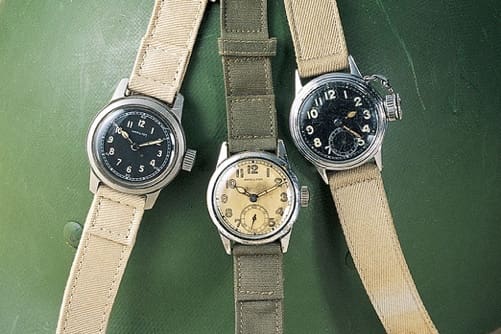
A lot of U.S. watchmakers made wristwatches for the military during WWII. Hamilton alone produced hundreds of thousands of them for the military and other special “military” sections. They also made them for Canada, the U.K., and the Russians. These included “hack” watches, “like in Let’s get a time hack” named for a mechanism in the movement, connected to the crown, which set time to the exact second. They were used to synchronize countless military attacks, troop and train movements, bombing raids, even training events.

Hamilton timepieces also included a top-secret Frogman watch, with a large “crown” over the regular crown to keep it watertight.

Hamilton made watches for almost every aspect of war. In the air, pilots, navigators of fighters, bombers, and even blimps navigate using a pocket watch as their “master time source.” This military version of Hamilton’s railroad watch was kept on simple rubber or spring shock absorbers in a small metal carrying case (to isolate it from magnetic fields, vibrations, and turbulence) with a glass window.

Also essential was Hamilton’s “bomb timer,” with wristwatch movement and dial mounted into a bombsight with a movie camera, which filmed the dial and target at the moment of impact to measure the bombs’ effectiveness. Hamilton’s most significant achievements in World War II were its marine chronometer and chronometer watches. Many experts consider its marine chronometer to be the finest ever produced. What makes this even more impressive is that, until World War II, Hamilton had never made such a timepiece. Before the invention of the GPS (you still should have a chart/ map and a way to navigate if the GPS goes down, especial if you are jumping your boats into the water), you would use time, speed, and distance to calculating longitude and plotting location and direction, from a place of departure or use the stars, you also needed to have the exact time to be in the right place to start an invasion.    

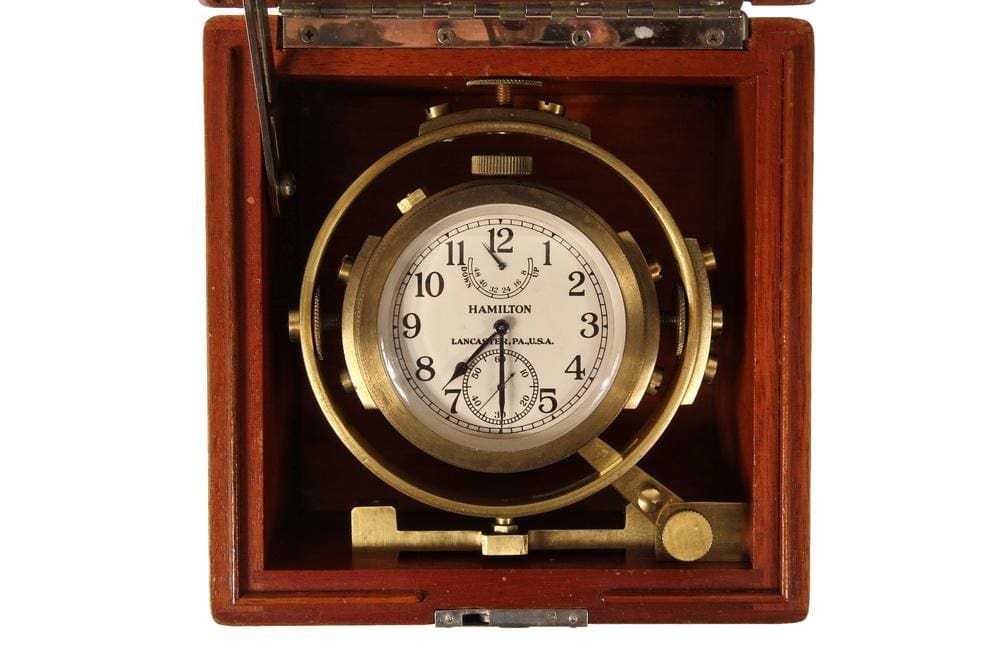
Hamilton’s marine chronometer Model 21 was based on traditional ones but with several improvements. Most evident was a unique balance and hairspring assembly, a radical departure from conventional chronometer design. Such advances made Model 21 more accurate than any other marine chronometer. Properly maintained, it kept time to within a half-second per day.

It wasn’t only the Navy (which bought around 9,000) that used them. The Army Air Corp bought 500, and the Maritime Commission bought 1,500. President Franklin D. Roosevelt had one in the White House map room to maintain a day and night watch. Hamilton continued making marine chronometers after the war; they made a little under 14,000 by 1970, when it ended U.S. production. Every vessel that belonged to the U.S. and many of our allies used a Hamilton chronometer for navigation. Battleships and aircraft carriers used the Model 21, housed in a glass-covered wooden box, with its movement swung on brass gimbals to keep it level and accurate even in the roughest seas. The Model 22 was used as an auxiliary timer for bigger ships and navigation on smaller vessels like destroyers, submarines, merchant marine, hospital ships, tankers, escort vessels, and P.T. boats. The model 22 was a chronometer watch, not a marine chronometer. Though smaller and less delicate than Model 21, Model 22 also was kept in a gimbaled wooden box. 

By war’s end in 1945, Hamilton timepieces ruled the sea, air, and land, getting victorious Allied troops to where they were going, whether on foot or by ship, plane, tank, submarine, or troop train. The Hamilton watch company made over 10,000-chronograph for the war effort. It should really be in the running, if not considered the one thing we could not have won the war without.

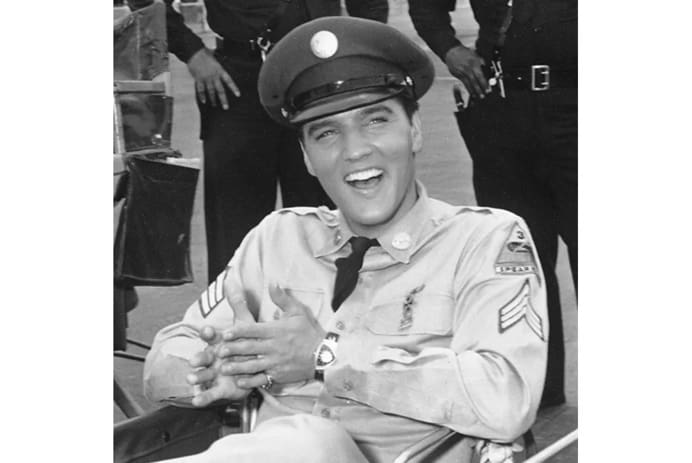
In 1957, Hamilton came out with the Ventura, the world’s first battery-powered watch; it was also helped by Elvis, who wore it in the 1961 movie “Blue Hawaii.”

The Hamilton watch served the U.S. military well into the Vietnam war and beyond; it is one of the longest serving watches in U.S. history.

As a foot note for Eric, in 1968, Hamilton was asked to design futuristic timepieces for the crew of Stanley Kubrick’s famous film, “2001: A Space Odyssey.” A few years after being commissioned to make a “futuristic” looking watch for the movie, Hamilton invented (along with Electro/Data Inc. of Texas) the digital watch. They designed the watch to look far more like HAL 9000 than the watches that were actually in A Space Odyssey.

Lastly, for E.G., they designed the watches for the first “Men in Black” movie.

In 1968 they moved production to Switzerland. In 1971, they were acquired by the Omega & Tissot Holding Company SSIH purchased the Hamilton brand and utilized the Hamilton name for several branding efforts, including numerous quartz watches in the 1980s. Then in 1984, they became a subsidiary of The Swatch Group.

Powerful Example: IVAS Program Uses Middle Tier and Other Transaction Authorities

Sunday, January 3rd, 2021

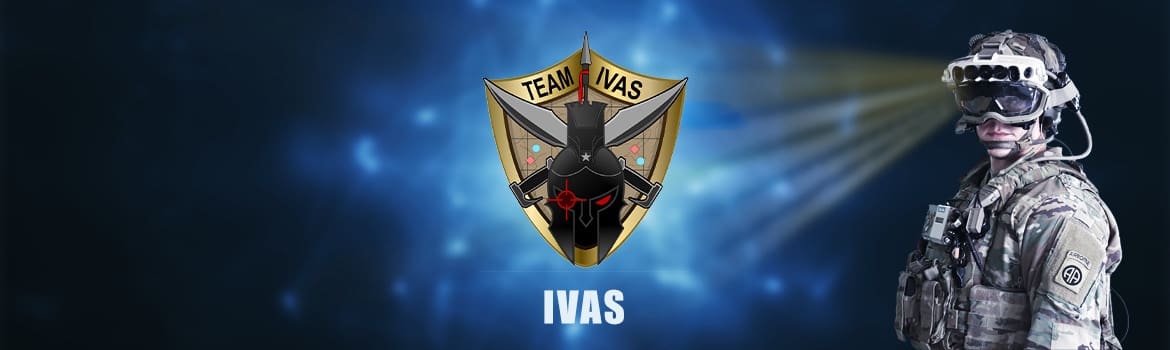
The Integrated Visual Augmentation System (IVAS) program office employed critical thinking and innovative practices in the strategy, planning and execution of IVAS–an acquisition program designed to give our Soldiers, Marines and Special Operators a decisive advantage in close-combat capability. The program team leveraged the Adaptive Acquisition Framework, Middle Tier of Acquisition Pathway/Rapid Prototyping Path as highlighted in DoDI 5000.80, as well as Other Transaction Authorities to contract with Microsoft and other traditional and non-traditional vendors. Additionally, they involved Soldiers in the design and test process (“Soldier-Centered Design”), collaborated with key stakeholders and industry as one team (the “right team”), and effectively identified, managed and drove down risk as development and testing progressed.

Click here to watch the video.

IVAS is a low-profile, ruggedized Heads-Up Display (HUD) with a body borne computer pack, Conformal Wearable Battery (CWB), squad radio, and integrated thermal and low light sensors that provides the Close Combat Force a single platform to fight, rehearse, and train. The IVAS suite of capabilities leverages tactical mixed reality to enable planning, networked information sharing via Tactical Cloud Package (TCP) and Cloud Services, and an augmented reality Synthetic Training Environment (STE) and Squad immersive Virtual Trainer (SiVT) that enables the Warfighter to fight ‘25 bloodless battles’ before engaging the enemy. IVAS integrates next generation situational awareness tools and high-resolution simulations to deliver a single platform that improves Soldier sensing, decision making, target acquisition, and target engagement. These capabilities will provide the increased lethality, mobility, and situational awareness necessary to achieve overmatch against our current and future adversaries.

Team IVAS is on target to begin production in March 2021, with first unit equipped in September 2021, accelerating the development process by more than four years compared to traditional acquisition processes.

Written by Tony Romano, DAU

I MEF Information Group, NIWC Pacific Put Next-generation Technology to the Test

Saturday, January 2nd, 2021

Marines with I Marine Expeditionary Force Information Group and personnel from Naval Information Warfare Center Pacific conducted characterization testing of the Mobile User Objective System at Marine Corps Tactical Systems Support Activity, on Camp Pendleton, California, in September 2020.

MUOS is a satellite communications system that provides voice and data communications for U.S. service members, anytime and anywhere in the world.

The testing supported PMW 146, the Navy’s Communications Satellite Program Office, which reports to Program Executive Office Command, Control, Communications, Computers and Intelligence and Space Systems.

The focus was on three areas of satellite communications: susceptibility of detection and geolocation of MUOS transmissions; susceptibility of detection and geolocation of legacy transmissions; and the performance of the MUOS radio in the presence of in-band radio-frequency interference.

“The purpose was to test the capabilities of the system, in a field environment, in a manner that Marines employ the system,” said Gunnery Sgt. Christopher Meser, the electromagnetic space operations chief at I MIG. “The testing allowed us to identify gaps and determine if the underlying issues were related to the equipment, training or procedures.”

Aside from testing various frequencies and equipment sets, one of the key takeaways from the event was furthering Navy-Marine Corps integration with the MUOS.

“This is part of supporting naval integration; being able to understand we are key stakeholders, both Navy and Marine Corps,” said Meser. “They provide the technical expertise, and we provide the field expertise.”

This is just one way that Marines with I MIG have been working side-by-side with the innovative minds at NIWC Pacific. During the past several months, I MIG Marines have provided hands-on feedback to help drive future research, development, test and evaluation, and engineering.

“Integration between I MIG and NIWC-PAC is good because we are able to provide them a firsthand look at how the equipment is employed in a real-world environment, which provides feedback to the engineers on how the system performs,” said Meser. “We are the end-users and being able to conduct a field-user evaluation further ensures the security and functionality of the equipment’s capability.”

Capt. Josh Gonzales, a space operations officer with PMW 146, said the participants operated the MUOS radios at various operational data rates in three data transmission types that included burst, flow, and stream. All three data types worked successfully and they were all clear and precise.

The results confirm the MUOS Wideband Code Division Multiple Access performed significantly better than legacy UHF in a contested environment. This is the second of three planned tests, the third test is planned for 2021, and will incorporate additional assets and more terminals to better simulate an operational environment.

Story by LCpl Isaac Velasco, I MEF Information Group

Friday Focus: Beanies, Neckies & Wool Socks

Friday, January 1st, 2021

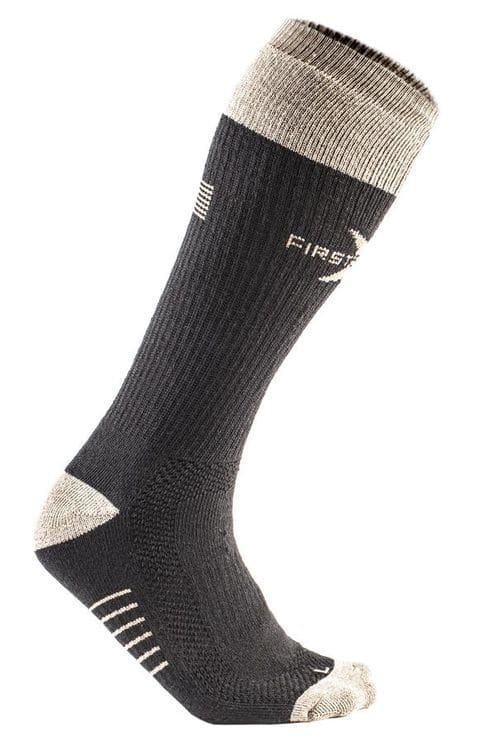
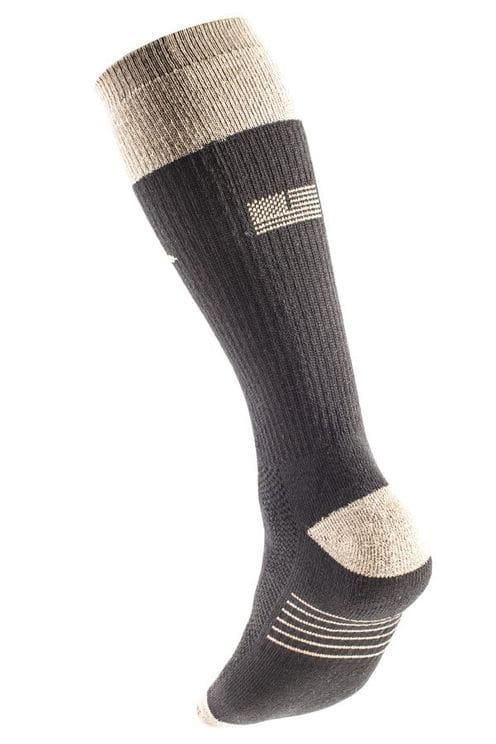
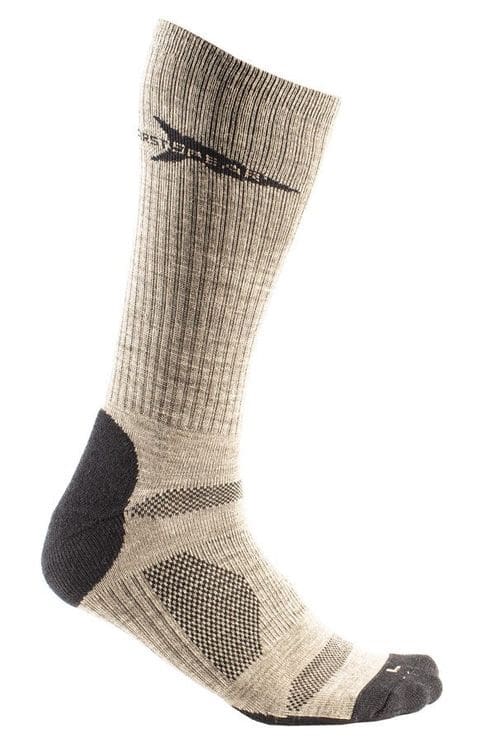
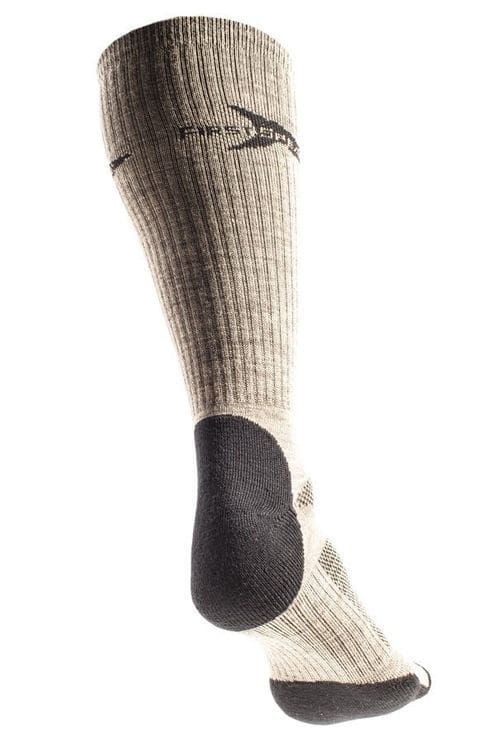
As the temperatures dive and the new year kicks off, check out FirstSpear all American wool Beanies, Neckies and wool socks. FS Neckies and Beanies are constructed from FirstSpear ACM BASE 100, a merino, poly, and modal blend. Featuring flat seams for maximum comfort under helmets and just enough material to double up over the ears when temperatures drop. Neckies are available in charcoal, FS sand, FS commando and heather grey. Beanies are available in black, charcoal, FS commando, FS sand and heather grey.


Unlike cotton, wool is the ultimate insulator and it absorbs a high amount of moisture all while maintaining its insulating properties when wet. The FirstSpear Boot Super Sock and Every Day Sock are 100% American made with USA materials. Both the EDS and BSS are constructed from a tubular knit for enhanced support and all day comfort.


The EDS features a reinforced heel and toe box, support ribbing through the arch, as well as light and thin across the top to help dissipate heat. Exceptional moisture wicking and antimicrobial properties will keep your feet dry and comfortable throughout the day.

EDS: 82% Merino Wool, 12% Nylon, 6% Lycra

BSS: 86% Merino Wool, 8% Nylon, 6% Spandex blend

Available and shipping now in sizes small through XL.

If you want to see out more FirstSpear gear in action, check out FirstSpear TV’s X-RAY Team.

www.first-spear.com/every-day-sock-eds

www.first-spear.com/boot-super-sock-bss

www.first-spear.com/neckie-acm-base-100

www.first-spear.com/beanie-acm-base-100

Army Researchers Acquire Two New Supercomputers

Friday, January 1st, 2021

ADELPHI, Md. — Army researchers are upgrading their computing capabilities with the acquisition of two new supercomputers.

The U.S. Army Combat Capabilities Development Command, now known as DEVCOM, Army Research Laboratory is home to the Department of Defense Supercomputing Resource Center, where computer scientists are welcoming the bi-annual technology refresh as part of the DOD High Performance Computing Modernization Program.

The two supercomputers, named Jean and Kay, recognize the remarkable achievements and enduring legacies of Jean Jennings Bartik and Kathleen “Kay” McNulty Mauchly, key contributors and computing pioneers as part of the original team of programmers of the Electronic Numerical Integrator and Computer, or ENIAC, the world’s first general purpose computer.

These systems will join the Betty system in the center’s production high-performance computing infrastructure. The Betty system is named in honor of Frances Elizabeth “Betty” (Snyder) Holberton, another key member of the original ENIAC programmer’s team.

The two systems are both Liqid Computing platforms containing 48 core Intel XEON (Cascade Lake Advanced Performance) processors integrated with the largest solid state file systems the DOD has deployed to date.

The systems are expected to enter production service in the mid-fiscal 2021 timeframe, and will join the center’s Centennial and Hellfire systems towards establishing a cumulative computational capability of 23.3petaflops.

“Jean and Kay will allow ARL to support many of DOD’s most significant modernization challenges to include digital engineering and other emerging workloads,” said ARL DSRC Director Matt Goss. “By adding specialized technology to augment traditional high performance computing with data analytics, these machines will serve as a spring board on which DOD scientists can make game changing discoveries.”

According to ARL computer scientist Bob Sheroke, these systems significantly enhance the program’s ability to support the DOD’s most demanding data-intensive computational challenges, and include emerging technologies and tools for artificial intelligence, data analytics and machine learning.

The systems include embedded capabilities to support persistent services in additional to traditional batch-oriented processing.

“The DOD High Performance Computing Modernization Program, established in 1992, has invested over $1.2 billion at the ARL DSRC, which has maintained the center’s posture as one of the program’s primary HPC centers and one of the top supercomputer sites in the national supercomputing infrastructure,” Sheroke said.

Visit www.arl.hpc.mil to learn more about center’s computational capabilities and support services.

By U.S. Army DEVCOM Army Research Laboratory Public Affairs

Royal Air Force Officer Brings Skills to Moody AFB

Thursday, December 31st, 2020

MOODY AIR FORCE BASE, Ga. (AFNS) —

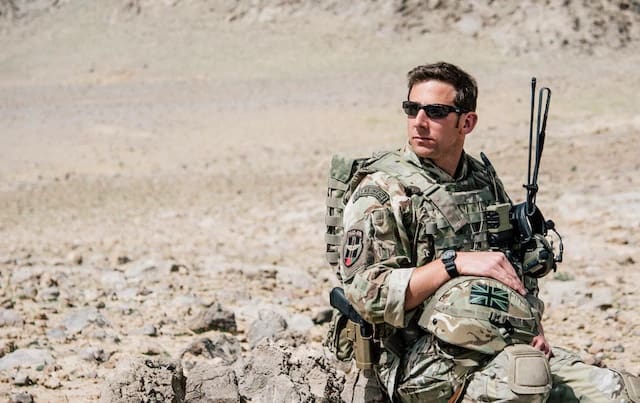
After nearly 14 years of service in the Royal Air Force, Flight Lieutenant Chris Bradshaw has traveled 4,300 miles from the Force Protection Force of the RAF Regiment to share his expertise with the 820th Base Defense Group at Moody Air Force Base.

As part of a larger exchange program between the RAF and U.S. Air Force that encompasses positions from the Pentagon down, Bradshaw currently holds the position of director of operations at the 824th BDS.

“The relationship that the Royal Air Force has had with the base defense group is longstanding because we are likely to operate together,” Bradshaw said. “Every year there is a tri-service exercise between the U.K., the French and the Americans. The position here is to help develop that exercising program to make sure relationships are maintained and that we can be interoperable as we move forward into next-generation warfare.”

The position is filled on a volunteer basis. Applicants volunteered about a year and a half early and the RAF chose from that list. After being chosen, Bradshaw still had to complete a number of tasks to secure his position in the 820th BDG.

“I’ve moved over my family as well,” Bradshaw said. “So to bring my wife, who is an active-duty Royal Air Force officer and my son – that was a bit more tricky, (but) fortunately, the (Royal) Air Force managed to give her a three-year career break. We had to jump through that hoop initially to make sure we could continue on the process.

“Then, it was all the visa applications, making sure that I came out here and got to meet who I was going to work for. Then, it was just bouncing back and forth to sort out schooling and education for my son. There was a lot, but it’s been worth it.”

The Force Protection Force’s role is to mitigate vulnerabilities and ensure end-to-end protection of air and space power, at home or deployed. Bradshaw previously worked in Train Advise Assist Command – Air, in the air-to-ground role as a joint terminal attack controller.

“(A few years ago), that’s what I did for (about) four and a half years,” Bradshaw said. “Having that experience and then working for the 93rd Air Ground Operations Wing, I understand what they’re talking about because I speak the language, too.

“I became the director of operations for the 824th BDS because they wanted to plug-and-play some experience of mine. I’ll sit in that position for 18 months. Then, the plan is to move up to the group where I’ll conduct work directly for the colonel in an area of his choosing.”

Bradshaw isn’t the only one bringing unique opportunities to the table. The BDG offers multiple capabilities such as air assault, airborne, ranger and jungle courses that Bradshaw will be able to participate in and learn from.

“That will be good for me operating as an entity on the ground, protecting and defending our RAF assets and infrastructure,” Bradshaw said. “To have that link would be quite beneficial. I’m not going to get the opportunity again and I need to prove the concept for future exchange personnel that it’s open; the door is there. You need to step in and jump out.”

The tactical skills Bradshaw has and will have learned are not the only things he’s taking away from his time with the BDG. Bradshaw says his favorite experience from the program has been seeing people from diverse backgrounds and he’s looking forward to meeting more as he moves to new positions.

“The U.S. is so huge compared to the U.K. that even at the squadron level, you’ve got people from so many different backgrounds, so many different life hurdles and obstacles they’ve had to overcome, that the breadth of individual is vast,” Bradshaw said. “I’ve been extremely well integrated, well looked-after. Everyone is extremely friendly. I still get treated equally, which is as expected.

“It’s been a big change for us having to come across to make this leap, but it’s been made easier by that fact that people have been so welcoming.”

By SrA Hayden Legg and A1C Taryn Butler, 23rd Wing Public Affairs

Marine Corps Begins Widespread Fielding of Suppressors

Wednesday, December 30th, 2020

MARINE CORPS BASE QUANTICO, Va. —

Marines risk their lives to protect others.

Many are trained to locate, close with and destroy the enemy by fire and maneuver, or repel the enemy’s assault by fire and close combat. They engage adversaries in any clime and place, no matter how arduous the conditions.

Marine Corps Systems Command is tasked not only with enhancing the lethality of warfighters. The command also strives to protect them.

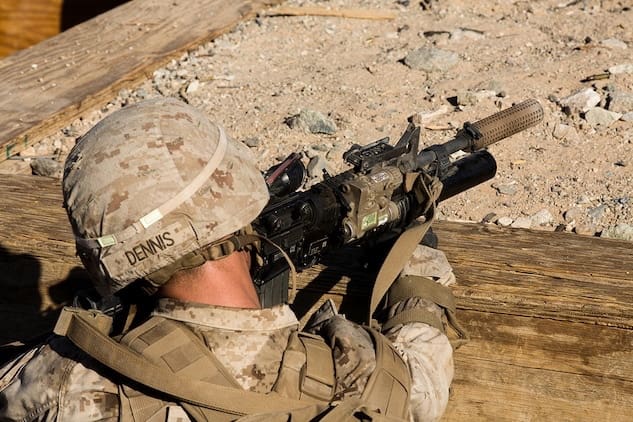
MCSC has taken another step toward increasing lethality and protection for Marines. In December, the command began the process of fielding thousands of suppressors to infantry, reconnaissance and special operation units for employment on the M27, M4 and M4A1 rifles.

Small arms suppressors are designed to reduce a weapon’s noise, flash and recoil. They are also time-efficient, as attachment and detachment only takes a few seconds. The mass fielding of the suppressors, and their myriad benefits, represents a monumental moment for the Marine Corps.

“We’ve never fielded suppressors at this scale,” said Maj. Mike Brisker, weapons product manager in MCSC’s Program Manager for Infantry Weapons. “This fielding is a big moment for the Marine Corps.”

MCSC works with CD&I, PP&O

In recent years, the Marine Corps had already begun suppressing its M38 and M4A1 rifles. However, an increased number of commanders felt suppressing additional weapons would increase the overall lethality of the infantry.

The impetus for equipping additional weapons with suppressors came from a series of experimentations at a 2016 “Sea Dragon” event, which enables the Marine Corps to experiment with current and emerging technologies and operational concepts.

At the event, a battalion employed the suppressors as part of a Marine Corps Warfighting Lab experimentation.

“The positive feedback from that experiment was the primary driving force behind procuring suppressors,” said Brisker. “We’ve had a few limited user experiments with various units since that time, and all of those events generated positive reviews of the capability.”

Before acquiring the suppressors, MCSC worked with the Marine Corps’ Combat Development and Integration; Plans, Policies and Operations; and the Fleet Marine Force to determine the optimal concept of distribution to support the close combat Marine.

“Our intent was to leverage commercially available technology to support the near-term modernization required for our close combat Marines,” said Billy Epperson, the Infantry Weapon Capabilities Integration Officer at CD&I.

Epperson added that the Marine Corps conducted Limited User Evaluations in 2019 with commercial suppressors provided by vendors showcasing the latest and greatest in technology to characterize requirements in support of an acquisition effort that began in fiscal year 2020.

In 2020, PM IW procured about 6,700 small arms suppressors through Defense Logistics Agency’s Tailored Logistic Program, and acquired more than 7,000 additional units on the first delivery order upon the contract award. Brisker said the goal is to field approximately 30,000 suppressors by fiscal year 2023.

How suppressors save lives

CWO4 David Tomlinson, MCSC’s infantry weapons officer, emphasized the importance of suppressors in exchanging information during battle. He said gun fights create a chaotic environment with intense noise levels, producing communication problems that can increase confusion.

“I would say the most important thing the suppressor does is allow for better inter-squad, inter-platoon communication,” said Tomlinson. “It allows the operators to communicate laterally up and down the line during a fire fight.”

Tomlinson said suppressors can save lives, as Marines engaged in battle can expose themselves from their firing position. The suppressor reduces their audible and visual signature, making it more difficult for the enemy to ascertain their location.

In addition to tactical advantages on the battlefield, the reduced noise of the suppressors also benefits a Marine’s long-term health, said Brisker. According to the U.S. Department of Veterans Affairs, hearing problems are by far the most prevalent service-connected disability among American veterans.

“In the big picture, the VA pays out a lot in hearing loss claims,” said Brisker. “We’d like Marines to be able to continue to hear for many years even after they leave the service. These suppressors have that benefit as well.”

Tomlinson mentioned how the news of the fielding of additional suppressors has created a groundswell of excitement among the units receiving them. He believes the myriad advantages suppressors provide will benefit the Marine Corps for years to come.

“As I travel and brief units, this capability has generated the most interest—from lance corporals to colonels,” said Tomlinson. “There has been an overwhelming excitement to receiving the suppressors, which we anticipate will serve as an effective capability for the warfighter.”

Story by Matt Gonzales, MCSC Office of Public Affairs and Communication, Marine Corps Systems Command

US Marine Corps photo by Sarah N. Petrock, 2d MARDIV Combat Camera