XC3 Weaponlight

Archive for the ‘Guest Post’ Category

Army Project Explores Ways to Encourage Protective COVID-19 Behaviors

Friday, May 1st, 2020

RESEARCH TRIANGLE PARK, N.C. — A U.S. Army-funded project is identifying how officials at different levels of government can work together to encourage protective behaviors to prevent the spread of COVID-19.

This is the new goal of an existing game-theory project funded as part of a Multi-University Research Initiative by the Army Research Office, an element of the U.S. Army Combat Capabilities Development Command’s Army Research Laboratory.

Most of the literature in game theory examines individual behavior, but this project, led by the University of Michigan along with Harvard University, University of California Los Angeles, University of Southern California and Washington University, explores what happens when decisions are made at multiple scales, such as during the current COVID-19 pandemic, where decisions are made by individuals, local governments, state governments and nations.

The research team saw the applications of their work to the COVID-19 pandemic and pivoted their modeling.

“The global pandemic is the most salient threat we face at the moment,” said Dr. Purush Iyer, an ARO program manager. “While the U.S. Army’s interest in network games includes understanding the impact of the adversarial groups in a host population, electronic warfare, and distributed weapon systems, we fully support exploring the impact of measures to control the spread of disease.”

According to the researchers, when human behavior is competitive, people don’t use resources in the way that is most efficient for the community—as seen in behaviors like mask, sanitizer and toilet paper hoarding. But most decisions about how to behave aren’t entirely individualistic. People make them as part of a community, and are swayed both by leadership and the incentives and disincentives that leadership can offer—as well as altruism.

The team is exploring how to model compliance or lack of compliance regarding COVID-19 orders and recommendations in their game-theory framework. The protective behaviors include not going out, wearing a mask when going out, handwashing and sanitizer use when returning from being out.

The factors that may influence compliance often include the prevalence of COVID-19 in the local community, a person’s vulnerability or proximity to vulnerable individuals, and general awareness. But they may also be affected by the timing of the order and even the words and phrases chosen to give the justification and restrictions. This aspect of the analysis will allow the team to then investigate community-wide behavior as a result of high-level policies.

The team plans to connect behaviors identified from such data with COVID-19 case data to discover which restrictions and recommendations are most effective.

“We’re also interested in understanding what additional mechanisms or policies could be introduced to make the overall system more efficient—for instance, enabling more collaboration among communities rather than competition,” said Mingyan Liu, leader of the project and the Peter and Evelyn Fuss Chair of Electrical and Computer Engineering at the University of Michigan.

Liu cited the way that states are currently fighting one another for federal supply of medical equipment even as some come together on a plan to begin re-opening the economy.

For now, the team is best equipped to model strategic decisions associated with social distancing at the individual and community levels, but they have plans to include economic concerns as well. The state that is able to remain open because its neighbors are closed is a free rider in the sense of limiting virus spread, but it may also play an important economic role in manufacturing and distribution, helping to head off shortages.

The researchers presented the work at a recent Call to Arms virtual conference from the National Science Foundation’s Networking Technology Systems group.
US Air Force Creates New AFSC for Special Warfare Officers

Thursday, April 30th, 2020

ARLINGTON, Va. (AFNS) —

The Air Force consolidated and transitioned officers of Air Force Special Warfare to a new Air Force specialty code to increase resourcing, improve talent management and enhance deployment capabilities.

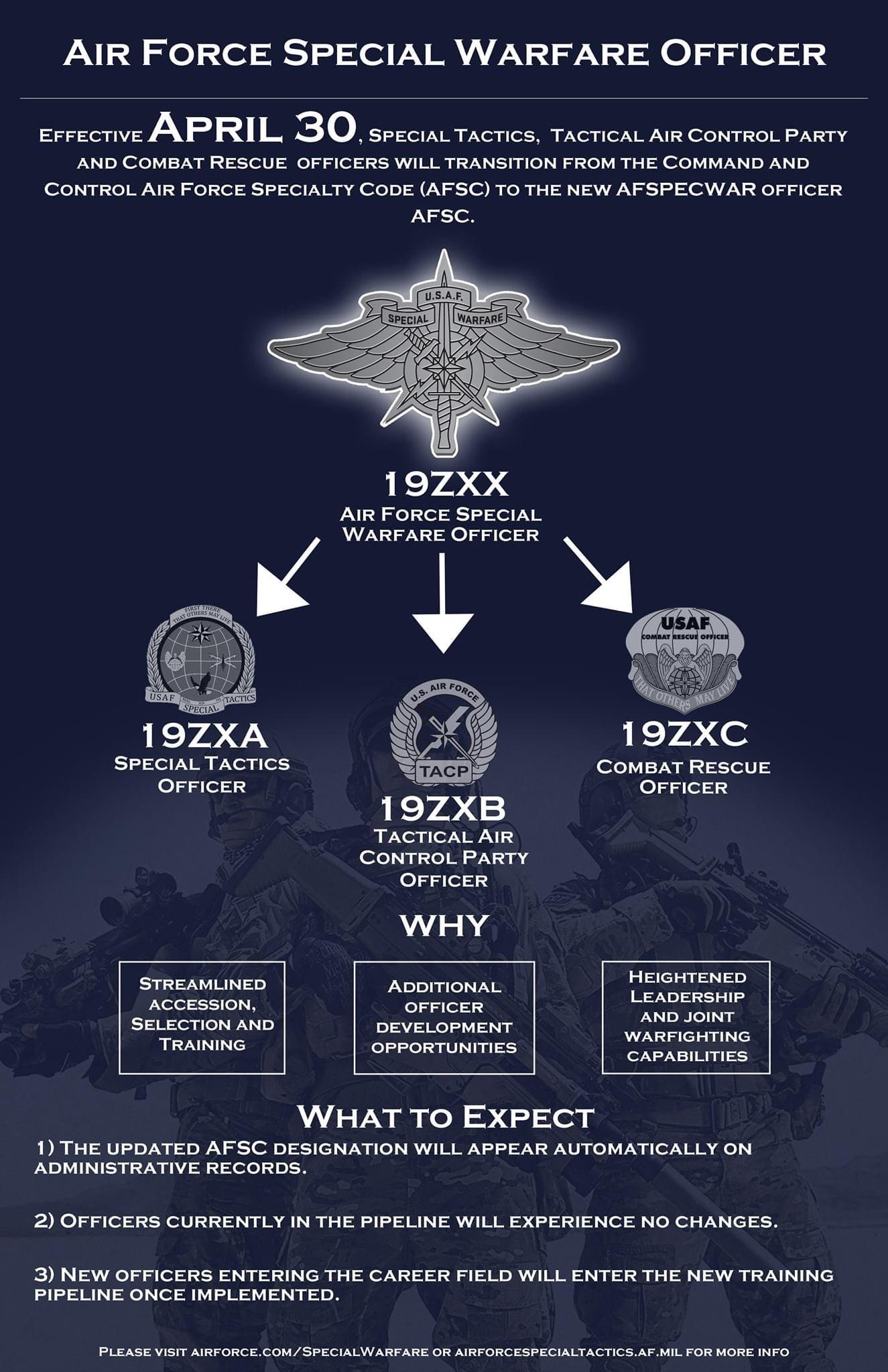
Effective April 30, special tactics, tactical air control party and combat rescue officers will transition from the command and control AFSC, 13XX, to the new AFSPECWAR officer AFSC, 19ZXX.

“The creation of a cadre of officers steeped in joint leadership and trained to lead the full spectrum of AFSPECWAR conventional and special operations missions will streamline accession, selection and common skills training,” said Col. Thomas Palenske, director of the AFSPECWAR directorate at the Pentagon. “These officers will share a common assessment and selection standard with a heightened benchmark for leadership capabilities to prepare them as next-generation leaders for the AFSPECWAR enterprise.”

The 19ZXX AFSC includes three shred-outs:

– Special tactics (19ZXA): Leads special operations forces conducting global access, precision strike and personnel recovery operations across all domains to support the joint force commander.

– Tactical air control party (19ZXB): Leads combat air forces and SOF conducting precision strike, the application and integration of joint fires and all-domain command and control operations to support the JFC.

– Combat rescue (19ZXC): Leads personnel recovery and SOF conducting personnel recovery operations to report, locate, support, recover and reintegrate isolated personnel across all domains to support the JFC.

All administrative systems such as MilPDS are expected to automatically update by May 1.

The transition to the new AFSC will be a direct conversion with no additional training required. While differences between special tactics, TACP and combat rescue officer training and development exist today, the development of a new 19Z assessment and selection process will create core standards for future special warfare officers.

“Upon the establishment of the 19Z officer training and developmental processes, every AFSPECWAR officer will exercise the unique competencies: ‘mission command’ culture, advanced combat skills, ground maneuver warfare expertise, air-mindedness and all-domain warfare capabilities,” said Col. Mark McGill, AFSPECWAR deputy director and officer career field manager. “They should see greater opportunities to serve in different positions across the Air Force and will serve the greater AFSPECWAR enterprise together.”

AFSPECWAR is the Air Force’s premier ground force that specializes in air, ground, space and cyber integration in hostile, denied or politically sensitive environments to achieve all-domain dominance. Officers in these career fields are charged with leading, organizing, training and equipping the special tactics teams, TACP and Guardian Angel weapon systems, which collectively execute global access, precision strike and personnel recovery operations.

The development and implementation of the new AFSC is a continuation of efforts to empower AFSPECWAR to be the elite and ready ground force the Air Force needs to dominate the air, space and cyber domains. In October 2019, enlisted members transitioned to new AFSCs that identify and categorize the AFSPECWAR operator, enabler and support specialties.

“The Department of the Air Force is modernizing to connect the joint force so we can more seamlessly integrate as a joint team,” Palenske said. “This transformation strengthens the connective tissue between AFSPECWAR Airmen enabling them to integrate the unique capabilities of the Air Force into an even more lethal, joint all-domain fighting force.”

Marine Corps Soliciting Proposals for New Hearing Enhancement Device

Thursday, April 30th, 2020

MARINE CORPS BASE QUANTICO, Va. —

The Marine Corps is asking for industry’s help in providing enhanced hearing protection to Marines.

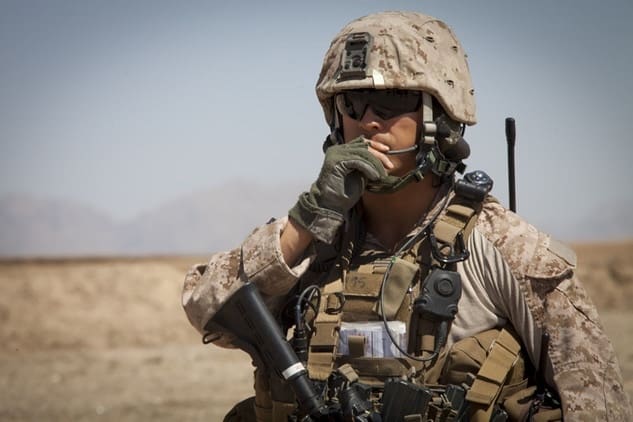
On April 22, Marine Corps Systems Command released a Request for Proposals for a suite of hearing enhancement devices that interoperate with the Enhanced Combat Helmet and Marine Corps tactical radios. The technology will increase Marines’ situational awareness in a variety of training and combat environments.

“The program manager for Infantry Combat Equipment intends to purchase Hearing Enhancement Devices for every infantry and infantry-like Marine,” said Lt. Col. Bryan Leahy, MCSC’s Individual Armor team lead.

In fiscal year 2020, MCSC received $10 million Operation and Maintenance, Marine Corps funding to purchase hearing enhancement devices.

Per the RFP, the hearing enhancement devices must be rugged and adaptable to various environments, from cold weather to extreme heat. The system would allow Marines to wear hearing protection, yet still enable them to communicate and understand their surroundings.

PM ICE will assess the submissions to ensure compatibility with Marine Corps radios and the Marine Corps ECH. The systems must include versions that are both communication-enabled and non-communications enabled.

MCSC estimates the new hearing protection will be fielded to infantry units in fiscal year 2021. PM ICE will conduct New Equipment Training with each unit receiving the technology.

Provides added hearing protection

In addition to improving Marines’ situational awareness, the hearing enhancement devices will also offer additional hearing protection.

The hearing enhancement devices will complement the Combat Arms Earplug Generation IV—the Marine Corps’ current hearing protection system—by offering a secondary level of protection to further avoid hearing damage.

“The hearing enhancement devices and current earplugs provide double hearing protection, giving Marines more protection from extremely loud noises,” Leahy said.

Leahy believes the Hearing Enhancement Devices will serve as an important asset for Marines on the battlefield.

“Purchasing these devices is a clear indication of how the Marine Corps is investing into the warfighter and giving Marines an edge on the battlefield and in training,” said Leahy.

Story by Matt Gonzales, MCSC Office of Public Affairs and Communication | Marine Corps Systems Command

Photo by Staff Sgt. Ezekiel Kitandwe

Army Futures and Concepts Center Evaluates New Force Structure

Wednesday, April 29th, 2020

WASHINGTON — The Army is designing a new calibrated force structure to bolster capabilities at the brigade level and above, catered to meet regional mission requirements.

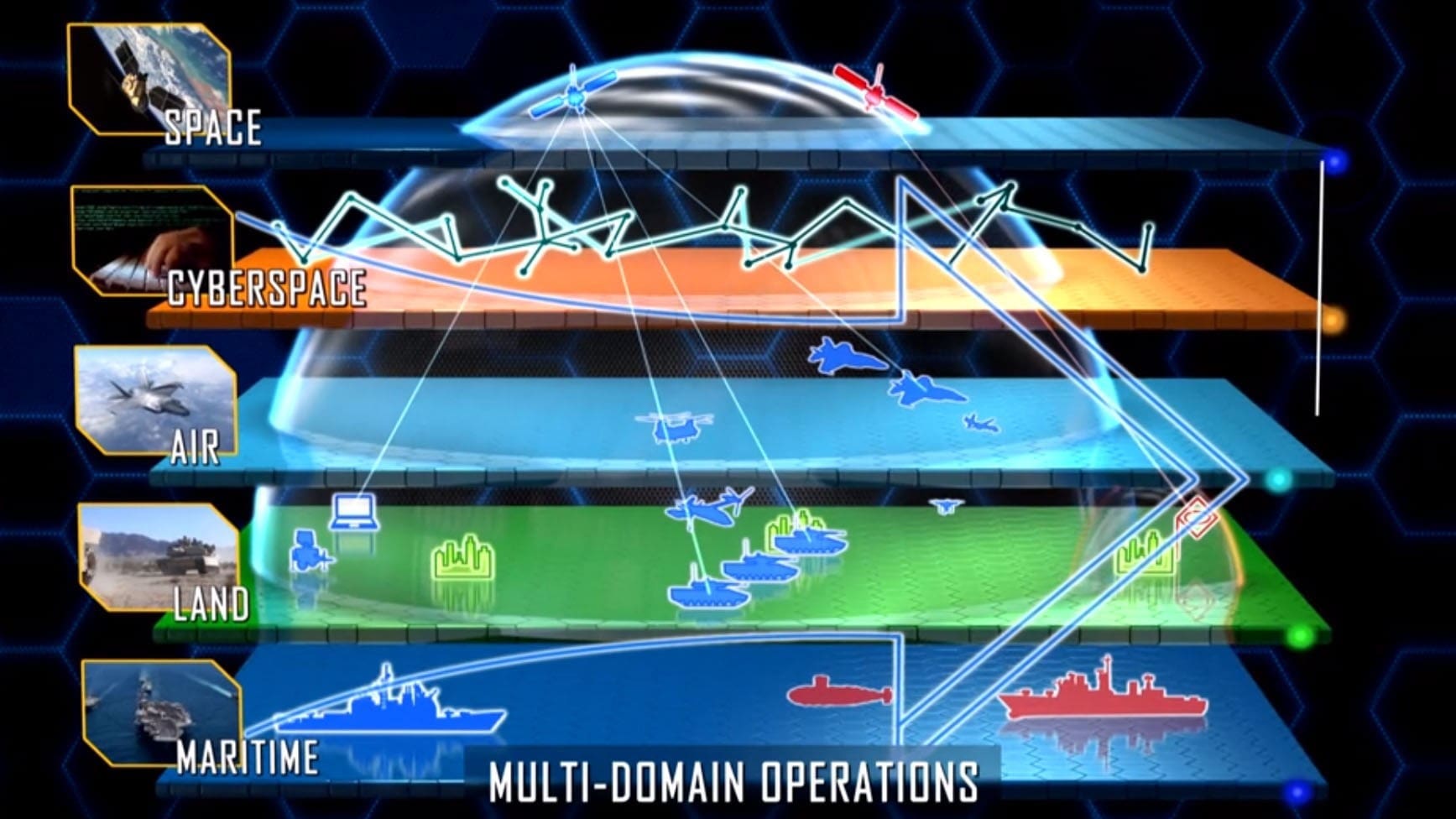
The Army Futures and Concepts Center recently started work on “AimPoint Force,” a new structure alignment that is optimized to meet multi-domain operational requirements and create overmatch, said its director, Lt. Gen. Eric Wesley, during a press briefing Tuesday.

The AimPoint process started when the MDO concept was published in December 2018. Then Army Chief of Staff Gen. Mark Milley directed FCC to design a force structure, resource unconstrained, that could fight MDO and win.

Affectionately called the Whiteboard Force, he said, the idea was to create a force structure that adhered to the MDO ideology but was free of any financial or resource constraints.

The whiteboard process eventually evolved into AimPoint after Army Chief of Staff Gen. James C. McConville and Gen. John Murray, head of Army Futures Command, which oversees the FCC, identified the need for a “resource-informed design to responsibly guide modernization efforts,” Wesley added.

“AimPoint is not a lockdown design,” he said. “It is an architect’s design for a force structure in the future.

“When you’re resource unconstrained, you can go out and buy a Maserati — it goes fast and turns well,” Wesley added. “When you’re resource informed, you might buy a Corvette. It still goes fast and turns well, but you have to mitigate some of the differences.”

As the Army shifts from its continual support of counterinsurgency to near-peer competition, the force must continue to build out the echelons above the brigade level to compete in large-scale operations, he said.

“Those echelons have been mortgaged a bit in the last 20 or 30 years because our (brigade combat teams) were so powerful relative to our opponent,” Wesley said. “Now, we are contested in all domains, and our two peer competitors are investing in their militaries.”

With an emphasis on information warfare, cyber, and space access, the Army must “build back some of that campaign quality at echelon,” he added. Further, the force will need a way to connect capabilities to exploit opportunities at the BCT level and below.

AimPoint also targets formational changes to overcome the geographical distinctions between the European and Indo-Pacific theaters, he said.

The “tyranny of distance” is a significant challenge in the Pacific region, officials said. In turn, AimPoint looks to tailor the Army’s long-range precision fires, future vertical lift, and air and missile defense capabilities to meet regional requirements, Wesley said.

In Europe, the Army will need to rely on the rapid deployment of maneuver ground forces, he said. Therefore, AimPoint experimentation will target long-range precision fires, network, next-generation combat vehicles, and Soldier lethality capabilities, to name a few.

Establishing a calibrated force posture is a core tenet under MDO, and it will continue to be informed by “political and resource decisions,” Wesley said.

However, the Army has already taken steps to improve its posture with the revival of V Corps — a headquarters that was deactivated in Germany in 2013. It is being reactivated at Fort Knox, Kentucky, to provide personnel who will rotate to an operational command post in Europe.

With the need for long-range fires in both regions, the FCC also supports the establishment of a new Theater Fires Command within the AimPoint construct.

“Building out the ability to integrate fires at echelon is important to fight at scale,” Wesley said. “Penetration requires long-range precision fires to strike a combined arms army” to disintegrate an adversary’s anti-access and area-denial defenses.

“These are problems that the BCT commander does not solve in theater. Some of that will have to be done at higher echelons,” he added.

By Devon Suits, Army News Service

Special Tactics Airmen Support Vital Training, Maintain Readiness Through COVID-19

Wednesday, April 29th, 2020

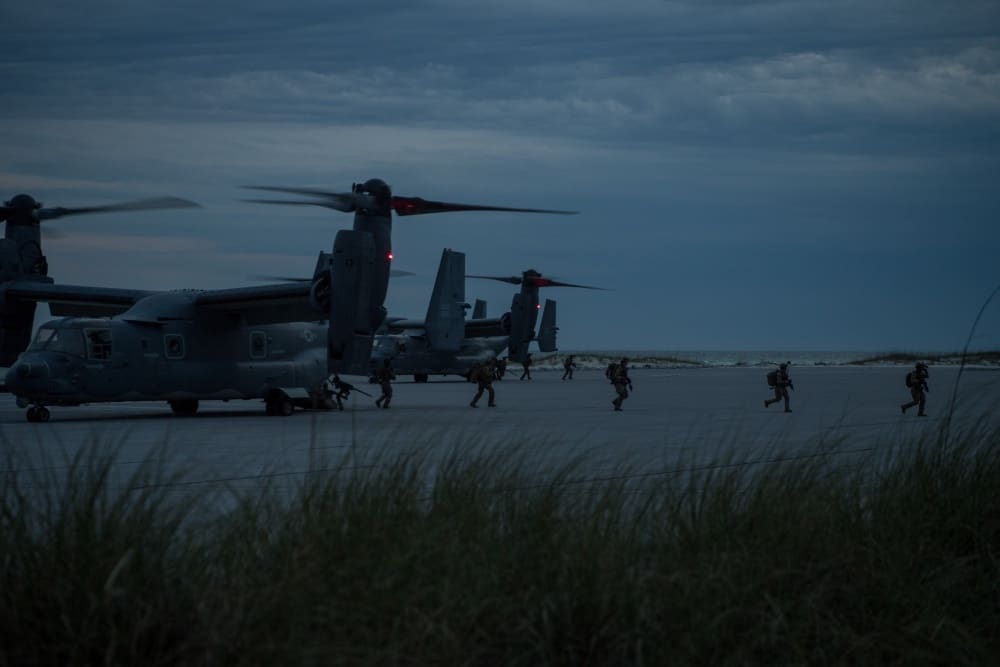
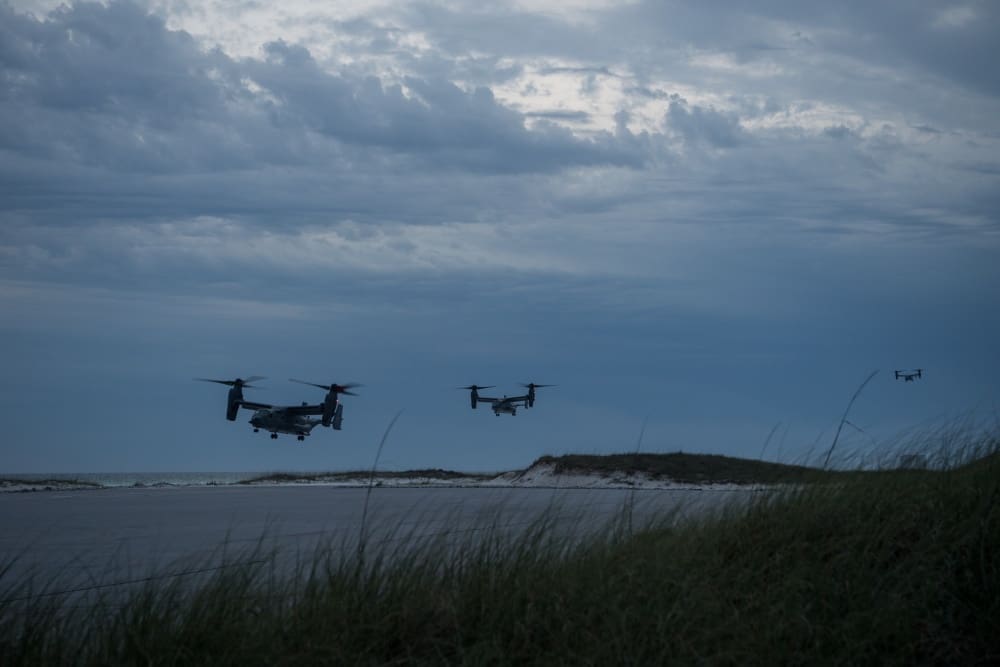
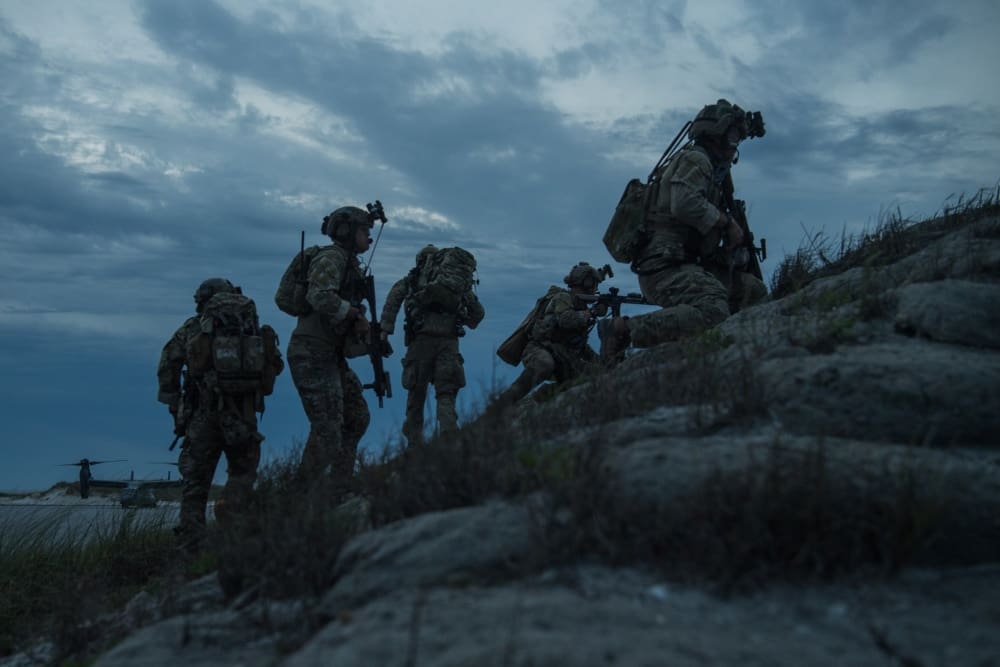
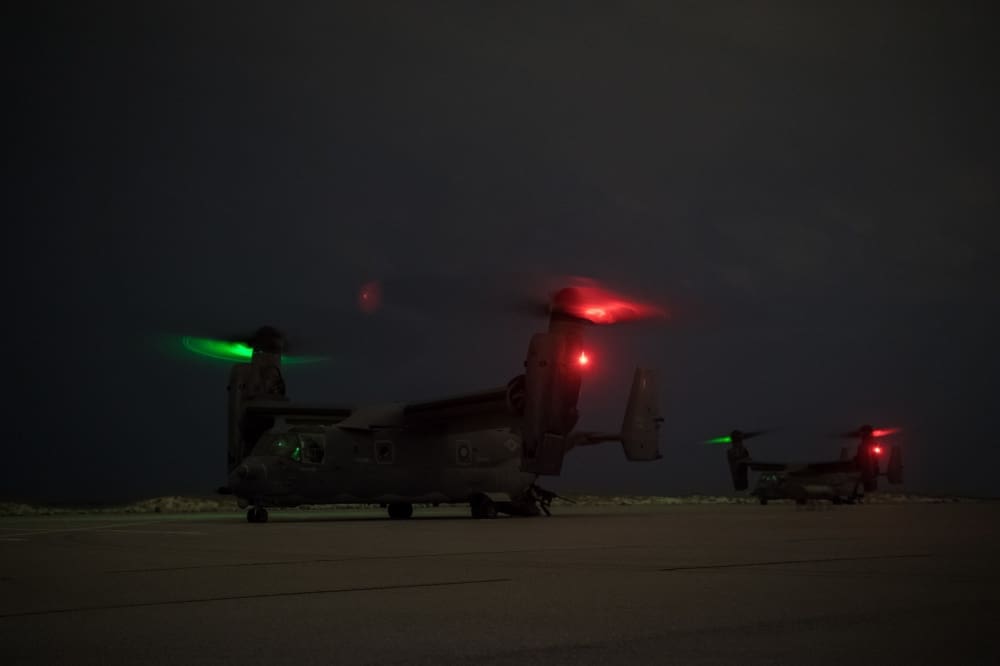
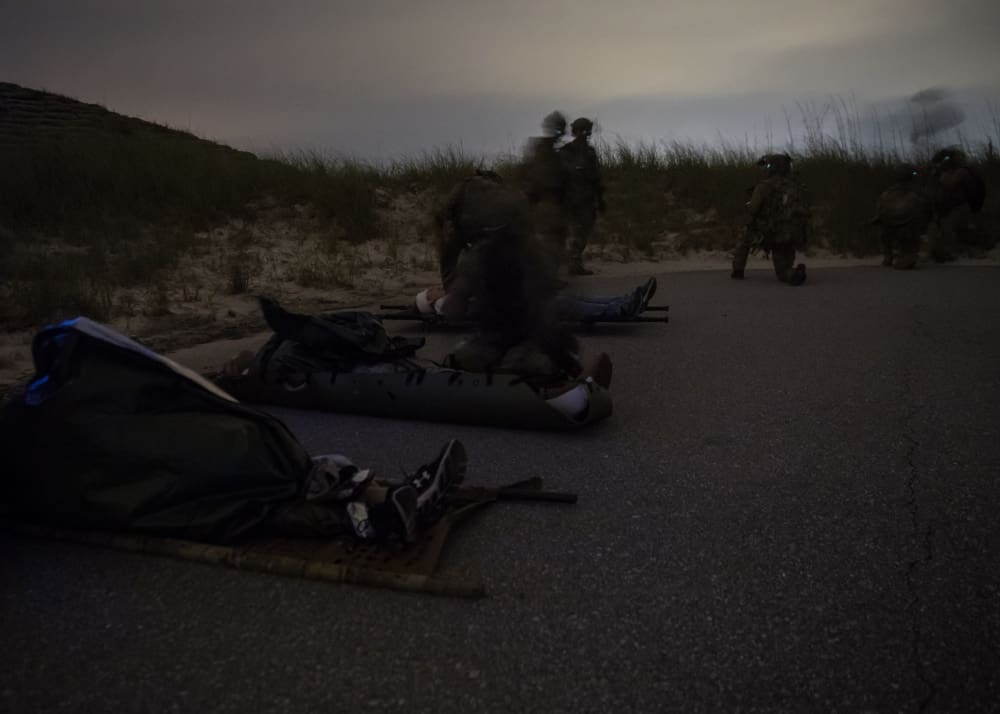
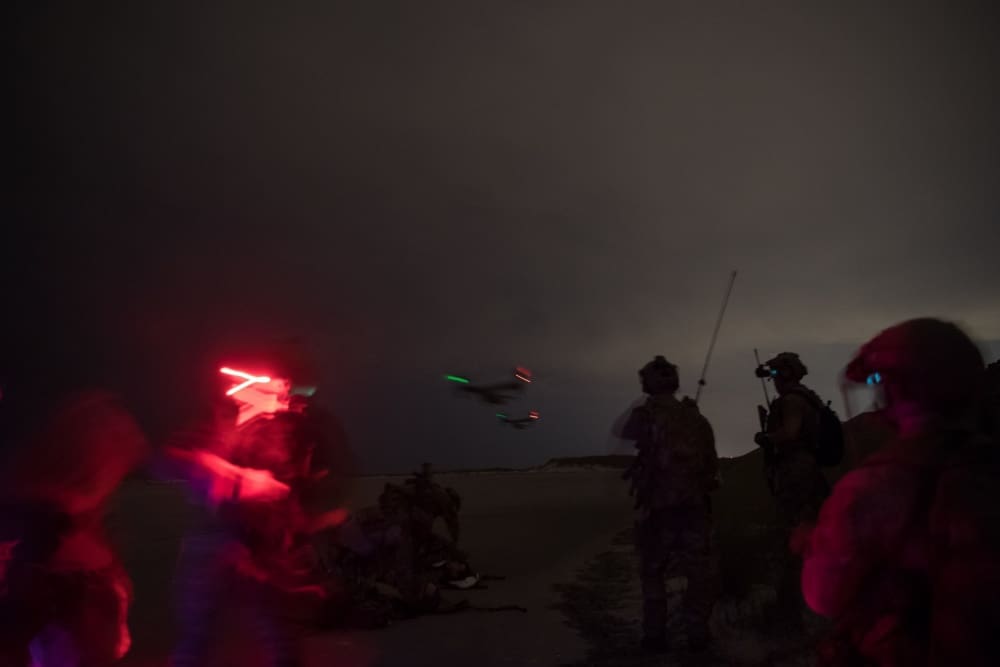
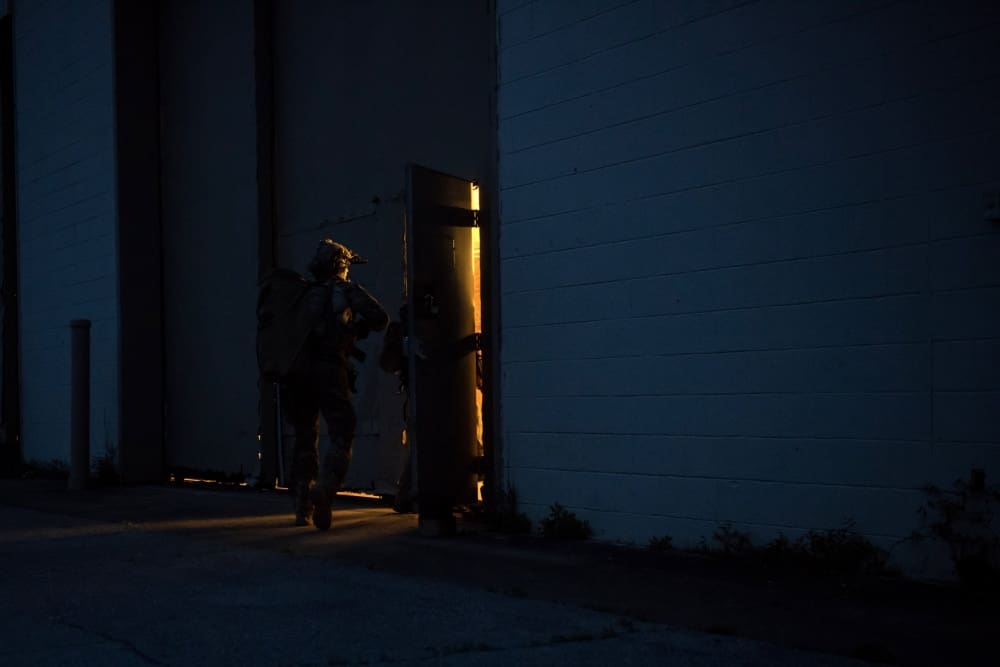
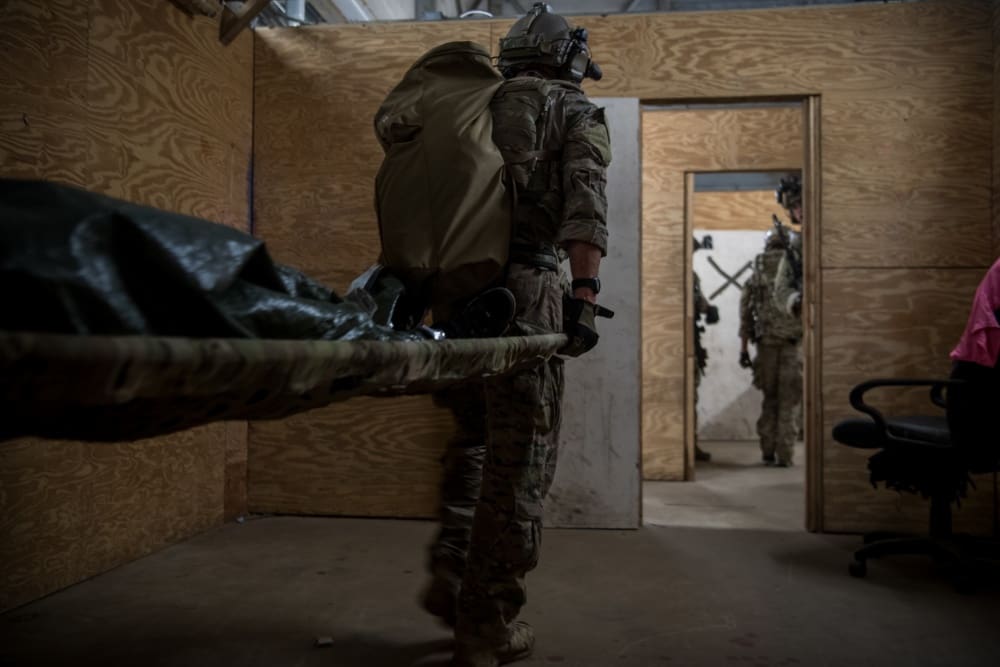
Special Tactics Airmen from the 23rd Special Tactics Squadron filled in to conduct interoperability training with the 14th Weapons Squadron assigned to the U.S. Air Force Weapons School detachment at Hurlburt Field, Florida for a Special Operations Force Exercise on April 22, 2020.

“The recent training event was done in conjunction with the 14th Weapons Squadron as part of their curriculum to produce Weapons Officers from various aircraft in [Air Force Special Operations Command].,” said Maj. Blake Jones, director of operations for the 23rd STS. “Their scenarios and full mission profiles necessitate the role of ground force as they train to conduct and support airfield seizures, non-combatant evacuations, hostage rescues and counter weapons of mass destruction operations. The 23rd STS picked up this great training opportunity after COVID-19 travel restrictions prevented other units from participating as planned.”

The exercise is a part of the 14th WPS’ demanding five and a half month syllabus exposing students to a wide range of joint special operations and combat air force capabilities. Being able to move forward with the training allowed the iteration of Weapons School students to stay on track with their training timeline.

“Our students require close interaction with skilled ground forces throughout their training to graduate them as the recognized experts in [Special Operations Forces] and [Combat Air Forces] integration,” said. Lt. Col. Jacob Duff, 14th WPS director of operations. “Our planned training partners, a different Special Tactics Squadron and multiple Army Special Forces units, were unable to travel to Hurlburt and the 23rd STS immediately stepped in to fill that gap. Without them, it would have been significantly more difficult to meet our training objectives and graduate the newest class of SOF Weapons Officers and enlisted Advanced Instructors.”

The SOFEX also provided a unique opportunity for local Special Tactics Airmen to conduct multifaceted training with a volume of aviation assets otherwise not easily replicated outside of a larger exercise. 

“Our recent participation allowed us to evaluate individual personnel and conduct training in mission planning, tilt-rotor assault, airfield seizure, landing zone establishment and control, terminal attack control, close quarters combat, personnel recovery and battlefield trauma care,” said Jones. “This was important because it gave many junior enlisted and junior officer [Special Tactics] personnel a crucial repetition mission planning with some of the best aviators in AFSOC as well as the opportunity to execute, work through contingencies and lead in a high-fidelity scenario.”

The units not only trained on the necessary skill sets needed to conduct a wide-range of special operations missions, increase lethality and maintain joint warfighting capabilities, but they were also tested on their ability to plan complex missions amidst COVID-19 preventative measures.

“The combat capabilities we are tasked to provide are not changing, but the constraints are different now so we must adapt,” said Jones. “We are adapting how we train, but also adapting how we resource and plan that training over teleconferences and web-based planning applications.”

In addition to reducing in-person mission planning, Special Tactics Squadrons have implemented several techniques to maintain readiness while keeping health of operators at the forefront, including sanitizing equipment, using face coverings when needed, conducting internal evaluations on prioritization of missions, staffing smaller training groups and taking advantage of local training opportunities.

“Stopping all training is not a feasible course of action because the second and third order effects months down the line are far too costly in terms of readiness,” said Jones. “Our squadron commits and deploys personnel operationally year-round, so we focused on ensuring we are still on track to field combat ready forces on time.” 

Special Tactics is U.S. Special Operations Command’s tactical air and ground integration force, and the Air Force’s special operations ground force, leading global access, precision strike, personnel recovery and battlefield surgery operations.

Story by 1st Lt. Alejandra Fontalvo, 24th Special Operations Wing Public Affairs

Photos by Staff Sgt. Rose Gudex

Soldiers Reminded to Exercise Ethical Responsibilities During Pandemic

Tuesday, April 28th, 2020

WASHINGTON — Even in difficult times, the rules still apply.

As the coronavirus continues to spread nationwide and the economy feels its impact, the Army Office of the General Counsel warns Soldiers that potential problems could arise if they choose to start fundraising campaigns for themselves or other Soldiers.

Some Soldiers or federal employees may have spouses or family members who have lost their jobs during the nationwide lockdown. Those shouldering additional financial burdens may want to turn to popular crowd-sourced fundraising websites such as GoFundMe or Kickstarter.

John Kent, associate deputy general counsel at the Army Office of General Counsel and expert in ethics, said Soldiers should familiarize themselves with which gifts are acceptable.

“A gift is OK in some instances and not OK in others,” Kent said. “The overarching rule is it’s not OK when the gift is either given because of the individual’s status as a Soldier or an Army employee, or when it comes from a prohibited source. But there are exclusions and exceptions to this rule that may apply.”

Soldiers and Department of Defense employees cannot use their status as a service member or government employee as a means for soliciting funds. Further, DOD regulations generally prohibit Soldiers from receiving funds from “prohibited sources” – such as companies or private organizations that do business with or have vested interests with the DOD. Soldiers and employees also cannot receive donations from federal personnel who earn a lower annual income.

Fundraising campaigns could be organized, but rigorous accountability of donors and records of sources must be kept.

“They are theoretically possible,” Kent said. “But the pragmatic problems with conducting them within the rules that we have to follow make that extremely difficult.”

Soldiers who choose to run such campaigns must be able to provide records, or otherwise they may have to return the funds. Kent said the problem could be escalated further if patrons donate anonymously.

“Some platforms cannot or will not identify who the real donors are,” he said. “And that poses a real problem.”

As an alternative to fundraisers, Soldiers can also apply for the Army Emergency Relief program to receive funds in financial emergencies. The funds can be applied towards utilities, rent and other living expenses.

As Soldiers become more publically visible in the fight against the global pandemic, they should understand the rules on accepting gifts from the public. Members of the National Guard, for instance, have deployed to assist hospitals in various states throughout the country, prominently in New York City and the northeast.

Soldiers generally may not accept gifts exceeding $20 in value from a prohibited source or given to them because of their official positions as Soldiers, and such gifts must not total more than $50 annually from any single source. Those gifts could include donations of protective equipment like masks and gloves. Unless an exception to the rule applies, gifts of cash may never be accepted from a prohibited source or because of one’s status as a Soldier.

Soldiers who have fallen ill with COVID-19 or another illness can receive certain gifts from their fellow Soldiers, to include food and other comfort items subject to certain limitations.  Mr. Kent recommends seeking advice from an ethics counselor before accepting or giving such gifts.

There are some exclusions and exceptions to the base rule against accepting gifts from prohibited sources or based on their official status.  For example, in addition to the $20 gift rule, Soldiers may accept gifts from prohibited sources if the gifts have been made available to everyone or all military members. For example, during Operation Desert Storm, Busch Gardens offered free admission to all military members and their families. Certain social gatherings that meet specific exceptions may also be acceptable. Soldiers could potentially accept financial assistance from a crowd-sourced relief fund, provided that it does not discriminate based on position, rank or pay.

Additionally, Soldiers may benefit from gifts that are accepted by authorized senior Army leaders on behalf of the Army and then distributed to Soldiers and Army organizations supporting Soldiers. Such gifts could include equipment and discounts or free passes to entertainment events like concerts or sports games.

Soldiers should contact their ethics advisors if they are offered or have received excessive gifts from prohibited sources. Kent said such cases should be reported as early as possible.

Soldiers who have any questions regarding acceptable gifts can consult ethics counselors through their first sergeant or chain of command. Questions on whether donations from prohibited donors or fellow Soldiers are acceptable should also be directed to counselors, he said. “If there is a way for a Soldier to accept a gift within the applicable gift rules the ethics counselor will try to identify how that can happen.”

Story by Joseph Lacdan, Army News Service

Photo by Lt JG Matthew Stroup

University, Army Collaborate on Face Masks for Soldiers

Monday, April 27th, 2020

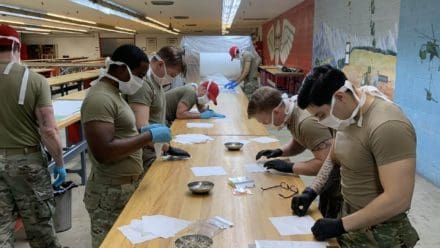
RESEARCH TRIANGLE PARK, N.C. –Soldiers from the 82nd Airborne Division will soon have a new defense against the COVID-19 virus thanks to a collaboration between the U.S. Army and North Carolina State University that will result in the production of more than 100,000 face masks for the Army.

The partnership between North Carolina State and the 82nd Airborne Division Innovations Council at Fort Bragg, North Carolina, was initiated by the Army Research Office, an element of the U.S. Army Combat Capabilities Development Command’s Army Research Laboratory at Research Triangle Park.

In response to the pandemic, researchers at NC State’s Nonwoven Institute developed a unique filtration material for face masks that can protect medical workers and Soldiers fighting the effects of COVID-19. The material is effective in filtering out viruses and bacteria and can still be cut and sewn using traditional techniques.

NC State donated 4,725 meters of its newly developed filtration material to the XVIII Airborne Corps and Fort Bragg.

“As a neighbor and member of the North Carolina community, the Army Research Office has endeavored to partner North Carolina State University and the University of North Carolina System with Army operations at Fort Bragg,” said Dr. Stephen Lee, an ARO senior scientist. “This is a special example where those relationships are paying off during the COVID-19 events.”

The XVIII Airborne Corps, the parent organization of the 82nd Airborne Division, specializes in parachute missions. Its parachute riggers already have the skillset, equipment and facilities needed to sew the masks.

The donated materials will make about 100,000 face masks for Soldiers.

“That is what the spirit of this partnership is – to build a deeper understanding and collaboration between academia and military personnel,” said Capt. Colby Miller, 82nd Airborne Division innovation officer, who helped instigate this collaboration.

The NC State Nonwovens Institute can manufacture more than 2,000 meters of the material an hour and intends to donate up to 1,000 meters per week to the Army on an ongoing basis during the pandemic.

By US Army CCDC Army Research Laboratory Public Affairs

Redesigned Arctic Tab Now Authorized for Wear in US Army Pacific

Monday, April 27th, 2020

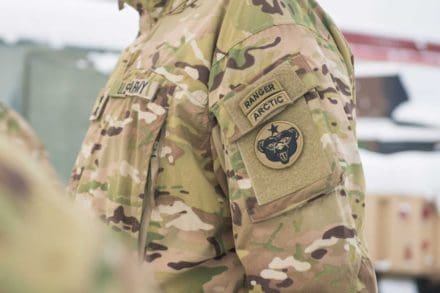
The Arctic Tab, a visual representation of a Soldier’s ability to train and thrive in cold environments, just got an upgrade.

Not only does the tab have a new look, it can now be worn outside the confines of the Last Frontier thanks to a new U.S. Army Pacific policy.

According to the policy, approved in February 2020 by USARPAC Commander, Gen. Paul J. LaCamera, Arctic Operations-qualified Soldiers assigned to USARPAC units, including major subordinate commands and direct-reporting units, can now wear the Arctic Tab while serving at USARPAC installations throughout its areas of operation. However, wear is not authorized when Soldiers are on temporary duty or deployment status outside the USARPAC theatre.

The new policy does more than expand where and how the Arctic Tab is worn. It reflects the importance of the U.S. Army’s ability to train and fight in an arctic environment.

“I think what makes U.S. Army Alaska and our units unique is that we are the Army’s proponent for cold weather training,” said Maj. Gen. Peter B. Andrysiak Jr., U.S. Army Alaska commander. “We not only live here; we thrive here, and I want to make sure the tab properly recognizes our unique expertise.”

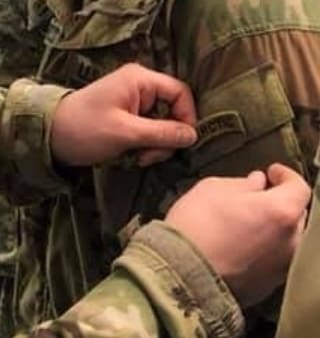
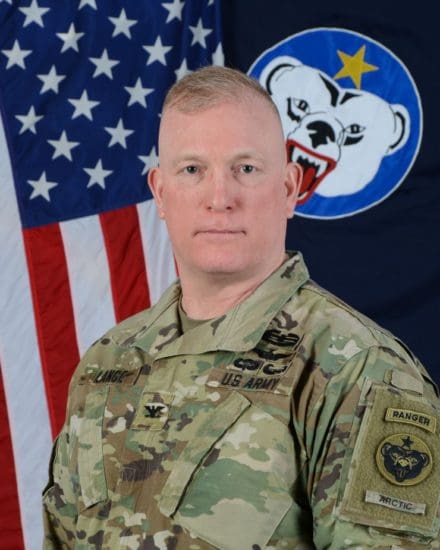
Originally worn below a Soldier’s unit patch, the Arctic Tab now rests above the patch, joining other prominent skills tabs such as the Ranger or Sapper Tabs. The previously rectangular-shaped tab was redesigned in November 2019 and now also sports the familiar rainbow arc of similar tabs.


The original version of the Arctic tab can be seen above, worn by COL Adam Lange, Deputy Commander, Sustainment, US Army Alaska.

A group of Soldiers who graduated the Northern Warfare Training Center’s Cold Weather Leaders Course, Jan. 17, 2020, became the first to wear the redesigned tab. The NWTC trains units and leaders in cold weather and mountain operations to increase warfighting capabilities. Learning those skills is vital for USARAK leaders at every level.

“As a leader, it is important I know and understand the harsh, arctic conditions and the impact it can have on Soldiers and equipment,” said Capt. Robin Furrer, a recent graduate of CWLC, “Soldiers operate and move differently when it is minus 25 out, and our equipment does as well. So it is important for us to have the knowledge to plan, make decisions, and adapt to these conditions.”

Although the look and placement of the tab has changed, what it takes to earn it remains the same.

Soldiers earn the Arctic Tab after completing either the CWLC or the Cold Weather Orientation Course held at the Black Rapids Training Site run by USARAK’s NWTC instructors. Upon graduating either course, Soldiers are qualified to implement basic, cold weather and ski training programs within their units to help mitigate the unique challenges they face while operating in harsh conditions.

“Anything can fail, even on the coldest days,” Steve Decker, an NWTC instructor, explained. “Soldiers attending these cold-weather courses are taught ways to get around those failures.”

CWLC is a 15-day course where squad- and platoon-level leaders hone the knowledge and skills required to perform small-unit operations in cold, snow-covered terrain. Soldiers learn everything from the basics of standing and moving on skis and snowshoes to a full range of arctic survival skills.

CWOC is a four-day course for commanders and staff officers to become more familiar with the knowledge and skills required in successfully planning and conducting operations in an arctic environment. Emphasis is placed on the effects of cold on personnel and material, the effects of a winter environment on operations, and planning considerations unique to the winter battlefield and cold regions. Cold weather risk-management procedures are stressed throughout the course.

“From jumping into minus 100, bitter, cold, exiting the aircraft over Prudhoe Bay, to conducting live-fire exercises at minus 30 in the Donnelly Training Area, the Northern Warfare Training Center’s team of professionals ensure our Soldiers are ready to deploy, fight, and win in any arctic environment,” said Command Sgt. Maj. Jeffrey Dillingham, USARAK’s senior enlisted leader. “We are the first line of defense in the West and the last line of defense in the Pacific. We are ready, we are arctic warriors, and we are arctic tough.”

Story by Spc. DeMarco Wills, US Army Alaska

Photos by US Army