“The willingness with which our young people are likely to serve in any war, no matter how justified, shall be directly proportional to how they perceive the Veterans of earlier wars were treated and appreciated by their nation.”
— President George Washington
So, I had a post all set and ready to go. I was about to share it with Eric so he could post. I wrote about Remembrance Day; (I have it at the end of this). I like to write about history as it pertains to the military, mainly the Navy. But something is going on that should not be ignored. It is only really talked about but when it happens to someone you know. But I think because of the stigma attached to it, no one will continue to talk about it. Many veterans out there are suffering from a lot of different things, physical and mental. Depending on what report you read, up to 22 veterans commit suicide every day. Some reports say higher and some lower, but they are not that far apart. Regardless of the daily number, Veterans have the highest suicide rate among any other group. It is not just the vets from the War on Terror, either. This number represents all the wars and conflicts from which we still have survivors. And it’s not only a U.S. problem, as many of our allies are dealing with the same issues. If you know someone or you might be having problems, PLEASE talk to someone, anyone. The Veterans Crisis Line is 1-800-273-8255 and press 1.
I have lost some very close friends to suicide, and I never want it to happen to anyone ever again. Please look out for the signs and symptoms; sometimes they are easy to see, while other times you have no clue and it will happen to someone close to you. But if you are thinking of hurting yourself, please talk to someone. If you believe the world is better with you not in it, it is not. The people you leave behind will always have to deal with what happened and still have to think they could have done more. I know I do, but I also know I did all I could have done to help. But there will always be that .01% that thinks I could have done more to help my brother. People, especially military people, are good at hiding things and it’s not always easy to see. Please keep an eye on your brother and sister. I look at the military as a family.
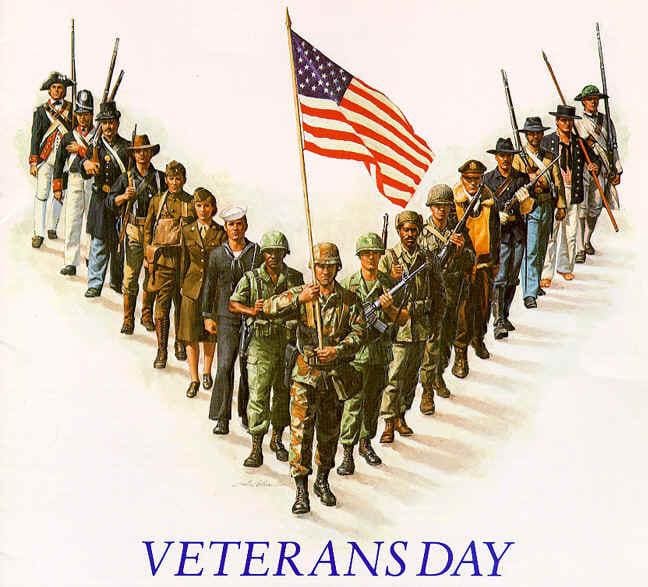
Remembrance Day, also known as Armistice Day or Poppy Day, was started by the U.S. and the U.K. to remember the fallen and honor the end of World War One, which occurred at 11 am on the 11th day of the 11th month of 1918. Traditions used to observe Remembrance Day include wearing poppies, and a two-minute silence at 11 am on the eleventh day of the eleventh month. It wasn’t long after WWI ended that the day the armistice was signed was adopted as a suitable time and date for countries involved in the war to mark their soldiers’ sacrifice, with official remembrance services taking place in the U.K. and USA in 1919. After World War II, both countries started to use that day to pay respect to the fallen from all wars. Despite the shared history, Remembrance Day has evolved in different ways. Depending on where you are in the world, it can be known as Armistice Day, Veterans’ Day, Remembrance Day, Poppy Day and may not even be celebrated on November 11th. In 1938 it was made a legal holiday in the U.S., and, in 1945, it was changed to honor all military veterans. Please take a moment on November 11th to remember those who serve and have served in the name of our country and who continue to bravely give their time for the freedoms we hold so dear.
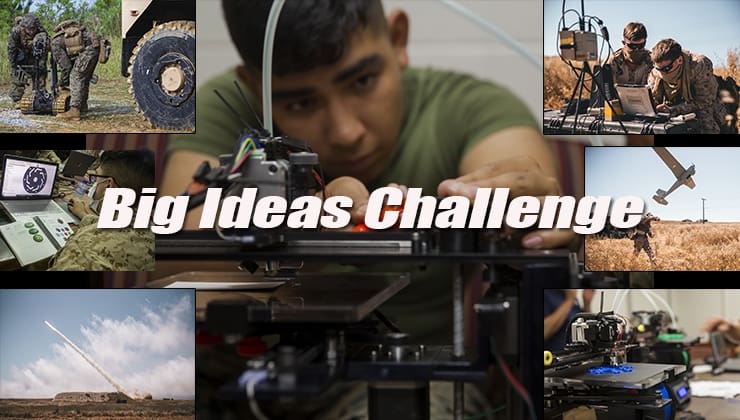
Lt. Gen. H. Stacy Clardy, the III Marine Expeditionary Force commanding general, launched the first Big Ideas Challenge last August to unleash the creativity and ingenuity of III MEF Marines and sailors against the most pressing challenges facing the Marine Corps.
Over 70 submissions were received from Marines and sailors of all ranks and military occupational specialties. Included in those submissions were inputs from Army and Air Force personnel, spouses and even non-SOFA status personnel.
“The submissions surpassed my expectations both in quantity received and in the quality of ideas that were submitted, especially due to the short time window for the challenge,” said Maj. Stephen Kent, action officer for the Big Ideas Challenge.
Proposals touched on a wide variety of topics, including administration, equipment, logistics, tactics, and quality of life.
“We received ideas for equipment modification, data tools, commercial off-the-shelf applications, education-based solutions and ideas to facilitate the Commandant of the Marine Corps’ vision, to name a few,” said Kent.
“We are looking forward to seeing some of these ideas get incorporated and are excited to see what kind of solutions our community comes up with…”
Maj Stephen Kent, action officer for the Big Ideas Challenge
The Marine Corps is constantly striving to enhance its force as a whole by implementing innovation challenges throughout the Corps. The 2nd Marine Logistics Group and 3rd MLG recently hosted events with notable results.
In those challenges, Marines of all ranks and backgrounds were encouraged to submit. One lance corporal received a Navy and Marine Corps Achievement Medal for using 3-D printing equipment at the unit to manufacture a $0.50 part to salvage damaged radio equipment.
Good ideas could come from any member of the command, so Lt. Gen. Clardy opened up the challenge to people throughout U.S. Forces Japan. In order to review and study the many submissions, the commanding general assigned an action officer to collect, review, sort, and present all submissions through a review board of Marines.
“My job is to ensure these ideas get routed to the staff and then ultimately the commanding general for final decision,” Kent explained. “We will strive to incorporate all of the good ideas within our means, regardless if they were selected as the top five.”
III MEF plans to announce the results of the challenge at the end of the month via social media. Marines are optimistic about the results.
“Because of the success of this event, we plan to hold it again this time next year,” Kent said. “We are looking forward to seeing some of these ideas get incorporated and are excited to see what kind of solutions our community comes up with in the future.”
Posted in Guest Post, USMC | Comments Off on III MEF Explores Innovative Concepts Through Big Ideas Challenges
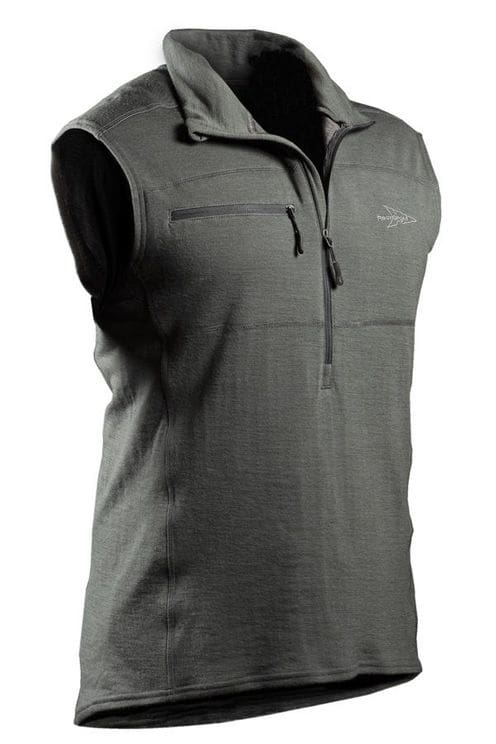
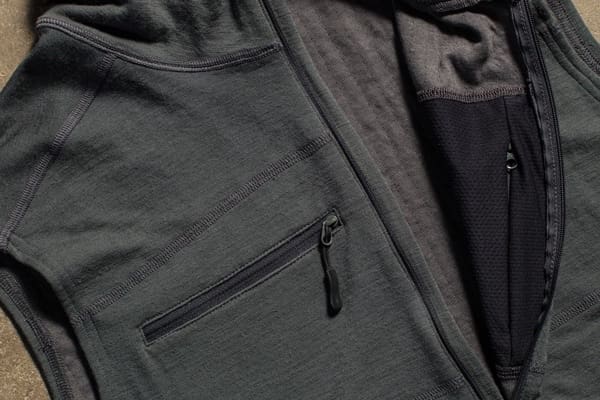
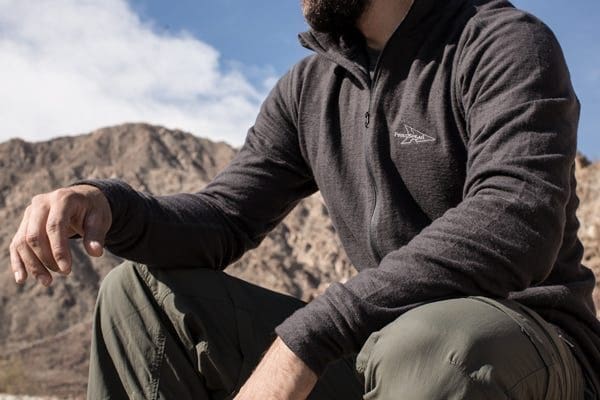
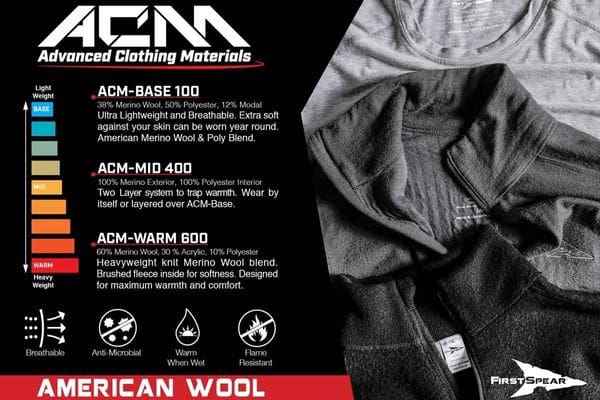
As temperatures take a dive layering becomes crucial. Enter FirstSpear’s ACM400 Merino Wool line. The FirstSpear Lightweight Vest (LWV) is low bulk, high warmth garment. Additional features include the quarter-zip closure in the front. Along with the external and hidden internal chest pockets which are lined with a lightweight comfort mesh. In the back, there is a hem scoop into a tailcoat style to cover your waistband when active or bending over. The LWV is designed with a closer fit to take advantage of the natural stretch feature of FS400 and be comfortable under a shell or additional layer.
What makes this merino package so unique is that it is a bi-ply material, not a blend. Using a super-fine polyester on the interior and merino wool layer on the exterior, this material combo does some very incredible things. When the user sweats or gets wet the poly layer will quickly wick away moisture from the body and transfer it to the absorbent wool layer. Once the moisture permeates into the wool layer it allows the poly to dry very quickly which helps avoid the typical stink you find with other synthetic layers, additionally wool is naturally antimicrobial which makes it incredibly difficult for the garment to produce bacteria that causes odors in all synthetic base layers. Furthermore, once the moisture is absorbed into the wool layer it will keep the user insulated and warm even when wet.
Another garment in the ACM400 lineup to consider is the Mid Shirt. The Mid Shirt is durable and ultra-soft with a 2/3 length front zipper that allows extra ventilation when you really warm up. The high collar keeps your neck covered and is great for when you are working with a sling.
“Excellent mid layer, insanely comfortable. I’ve been a cotton thermal guy for decades, saving the expensive wool layers only for those coldest hunts/trips. This ACM MID 400 though, has now changed all that. The ability of this shirt to wick sweat/moisture from the body to keep that chill away is awesome. Sizing is accurate and the extra length to stay tucked in is welcomed on this 6’2″ frame. The 2/3 zip allows you to regulate venting and is stellar at keeping wind chill at bay combined with one of the neckie’s. Quit reading reviews, invest in your base layer and thank First-Spear later.” — Online Reviewer
The Mid Shirt and LWV are Berry Compliant (100% American Made with 100% American Materials) and are available in Black, Charcoal, Commando, Manatee Grey and Sand. The composition and fabrication of the FS ACM 400 is exclusive to First Spear!
To check out FirstSpear Merino wool products, click here. For more information, check out First-Spear.com. To discover more about FirstSpear’s technology, check out First-Spear.tech.
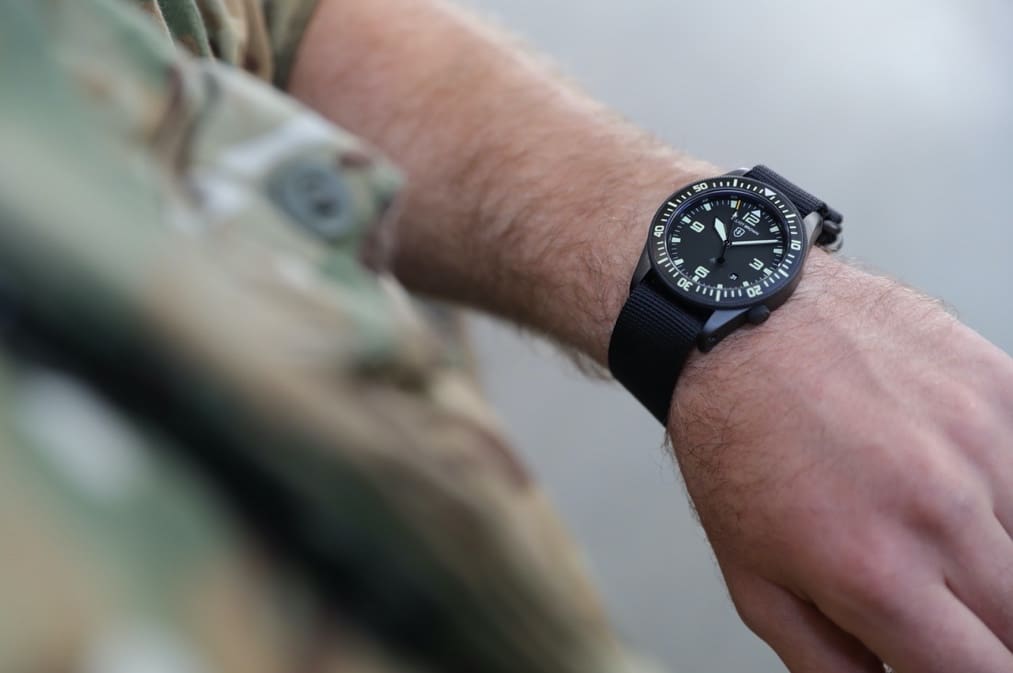
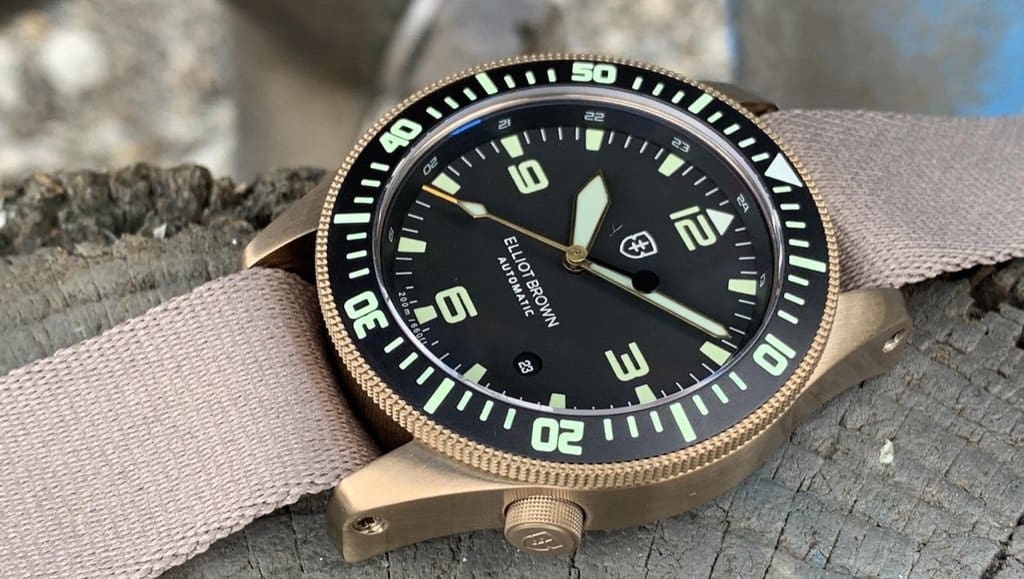
We are pleased to announce that we are now one of the few trusted global distributors for Elliot Brown Watches to the military. Brigantes have such a strong relationship with the team at Elliot Brown, as they are industry leaders in the development of new technologies in watch design and applying these innovations to their collections.
The Holton Professional range has been designed specifically for the military user. Incredibly, it has been depth tested to an unbelievable 1921m! Furthermore, developments with their Automatic Holton range, (a battery free watch) has been a real game changer.
See below a press release from Elliot Brown.
Some things are just meant to be.
The Holton Professional instantly won hearts and minds like no other watch we’ve created, hitting all the right notes with a no-nonsense approach to life, full-on military credibility, easy to wear sizing and durability beyond question.
Making an automatic version with all of the Holton’s tech spec fully in tact was one of the easiest decisions we’ve ever made. If you’re not familiar with watch terminology, ‘automatic’ is a collective term used to describe a self-winding, spring powered watch with what’s known as a mechanical movement rather than a quartz one powered by a battery. It can be hand wound by turning the crown (the winder) or simply worn where the motion of your wrist causes a semi-circular rotor to rotate, winding the spring automatically – hence the name. The movement we selected is a reliable workhorse, the NH35, and once housed inside our bespoke movement shield, suspended inside a toughened, waterproof and shock resistant stainless case, it’s fit for just about anything you care to throw at it.
So many automatics find themselves in watch winders or hidden inside a drawer for fear of damage during more active or risky activities or as a result of their cost of acquisition… not this one. It’s designed to be worn every day and never taken off, no matter what.
With specialist military development and the most arduous testing already under the Holton’s belt, it has to the ultimate off grid watch. No battery to change every few years, these models are human powered so they’ll go and go with nothing more than an occasional wash for at least 10 years (but of course we can replace and service any component should you wish to have yours fettled by our in-house Horologists). That’s the beauty of any Elliot Brown watch; we can keep it on your wrist for as many years as you wish to wear it.
The only discernible difference between auto and quartz Holton models is the deeper case back needed to house the deeper mechanical workings of the automatic movement.
Every Holton up to this point has been finished in a gorgeously technical, dark matt PVD gunmetal finish. PVD stands for Particle Vapour Deposition, the name given to the coating which has a hardness rating of 1200HV (stainless steel is about 300-400HV) and a fascinating fact is that one of our watches takes 12 hours to take on a full coat that meets our standards, which is roughly twice the industry ‘norm’ in terms of thickness so it’ll never be an issue. Particles bombard the watch case, impregnating the surface of the 316L marine grade stainless steel and build up to a point where there’s a rock hard shell. If we made the layer any thicker, the case would begin to loose the crisp definition we work so hard to engineer in. If you’ve had a watch in the past with a PVD coating that scratched off easily, our’s don’t do that, in fact we have never had to replace a coated case.
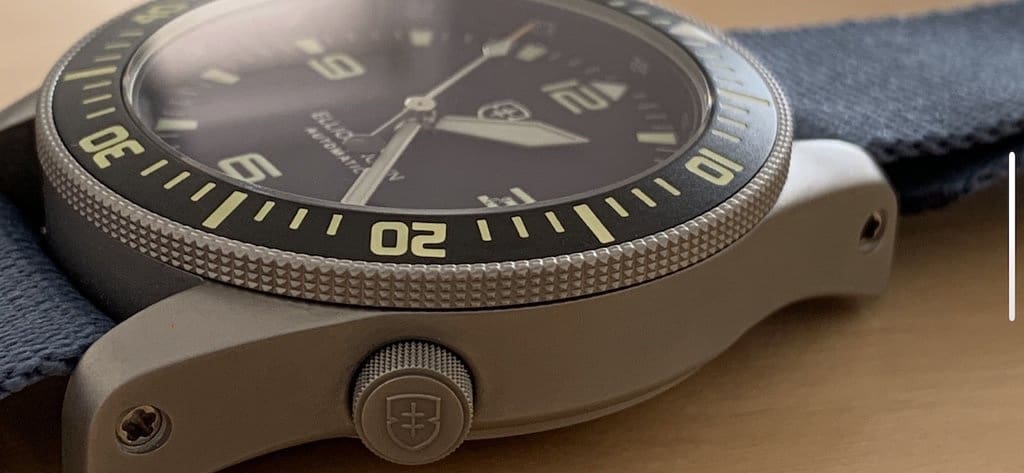
High grip hobnail knurling on crown and timing bezel
Sorry, we went all technical for a moment there… the real reason for mentioning Gunmetal PVD is that the Holton Automatic is also available in two other stunning finishes. The first is natural stainless steel but instead of brushing or polishing it, we vapour blast it with tiny particles (like sand blasting) to create the most incredibly fine matt finish that’s almost cast aluminium silver-grey in colour. With the pale grey-green Superluminova dial and bezel detailing hailing from the same colour family as the case, the result is literally stunning. Simple wins. It’s technical, easy on the eye, slightly less ‘military’ and it just so happens to work perfectly with our heritage webbing straps that lend it a field watch vibe.
The Holton Auto 101-A12-N10 uses gorgeous aged PVD bronze applied to a finely brushed case that oozes warmth with subtlety that doesn’t shout look at me. Instead it’s discreet, tasteful and oh so cool, with the look of something more vintage yet with the clean aesthetic of a modern classic.
The desert grey webbing strap is a thing of beauty too. A technical slice of fabric designed to stand the test of time with ultimate comfort. Every single thread of its finely woven finish made to our exacting standards on a Victorian loom. It’s colour sits between brown and grey and works with pretty much anything, much like a leather strap would but with heaps more durability and fitted with our matching bronze PVD patented clamp buckle.
It’s a hard decision choosing between them, but whichever you choose, each Holton Automatic is unmistakable as an ‘Elliot Brown’ which has become a right of passage in some circle.
The ultimate off grid watch?
We’ll let you be the judge of that 10 years from now when your watch can tell a few stories of it’s own.”
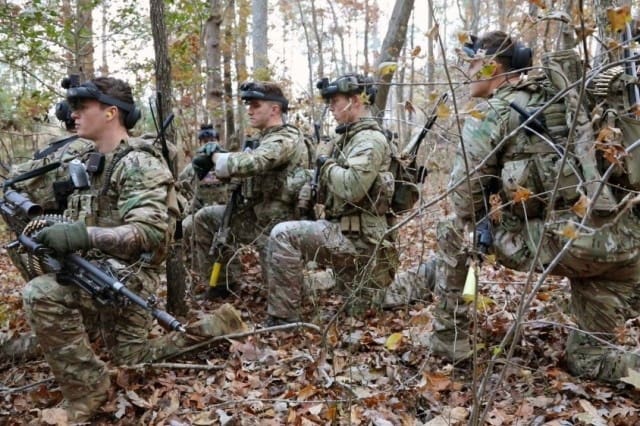
FORT BENNING, Ga. – The Army is on track to equip its Soldiers with state-of-the-art gear that will give them a decisive edge in close-quarters combat, items that include a high-tech goggle, a more lethal rifle, and binoculars that see in the dark, a senior Army leader says in an official video.
The items are among those the Army is working with industry to develop for Soldiers to use on future battlefields in close combat against “near-peer” adversaries, Brig. Gen. David Hodne, the Army’s Chief of Infantry, says in the video.
Hodne also heads the Army’s Soldier Lethality Cross-Functional Team, which is working to develop the three items. Three other officers from the team also appear in the video.
What Hodne calls the “signature modernization efforts” are: the Integrated Visual Augmentation System, known as IVAS; Next Generation Squad Weapons, or NGSW, and the Enhanced Night Vision Goggle-Binocular, or the ENVG-B.
The National Defense Strategy drafted under former Secretary of Defense James Mattis and published in 2018 “identified a worrisome erosion in overmatch between U.S. Forces and our near-peer competitors around the world,” says Hodne.
“Nearly two decades of sustained combat operations continues to yield seasoned leaders and combat veterans skilled in small-unit action,” he says. “However, near-peer competitors studied how we project power, how we fight, and what we fight with.”
Also informing the effort was the “Russian New Generation Warfare Study” that was led by retired Brig. Gen. Pete Jones, a former Chief of Infantry.
“This study,” says Hodne, “combined with the Close Combat Strategic Portfolio Review, and the 2018 National Defense Strategy revealed gaps that warranted serious consideration.”
“Near-peer threats have capabilities that match and in some cases exceed our capabilities,” he says. “In some cases, our adversaries can detect before they’re detected, and that means they can target, and engage, before we do.
“Our current capabilities are not sufficient for battlefields distributed in urban and subterranean environments,” says Hodne. “And we have to anticipate the implications of new technologies on the battlefield and foster a culture of experimentation and calculated risk-taking.”
A major focus of the effort, says Hodne, is the Close Combat Force, or CCF, those who close with and destroy the enemy in close combat.
That force is made up of Soldiers in five military job categories: Infantry, Cavalry scouts, combat engineers, and their accompanying forward observers and medics.
Together they account for 4% of the overall force, Hodne says, and the major percentage of battlefield casualties.
“Historically, 90 percent of battlefield casualties generally occur among four percent of the force,” he says.
“It’s for these specialties, those Soldiers with the purpose of closing with and destroying the enemy in close combat, where we’ve focused our efforts,” he says.
“It’s worth noting this particular cohort of close-combat Soldiers generally receives a small fraction of the budget portfolio intended for modernization,” says Hodne.
Integrated Visual Augmentation System
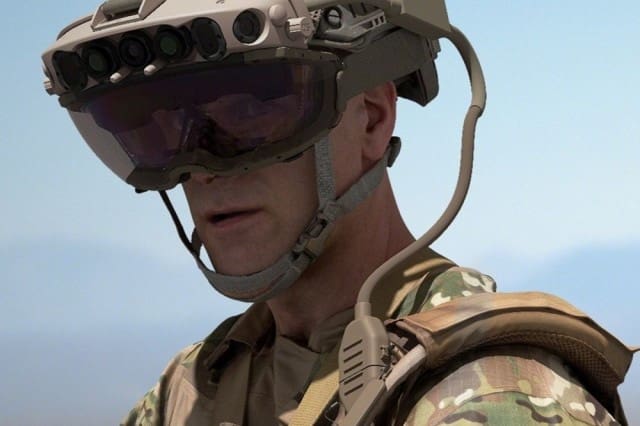
The first project highlighted in the video is the Integrated Visual Augmentation System, or IVAS. It’s a head-mounted digital goggle that connects to a small computer and a radio. A Soldier can see through it both in daylight and in the dark.
“IVAS takes night vision to a new level with leap-ahead digital technologies,” Lt. Col. Brad Winn says in the video. Winn is the Soldier Lethality CFT’s lead action officer for the IVAS.
“Department of Defense leaders wanted a single device Soldiers could use to fight, rehearse and train,” Winn says. “IVAS is that device. It improves Soldier sensing, decision-making, target acquisition, target engagement and situational awareness.”
According to the video, IVAS can show the Soldier battlefield information about where the enemy is and where others in the Soldier’s unit are; helps Soldiers see a target they need to shoot at, uses facial recognition software that can tell the Soldier who a person is; can translate various languages into English; and allows Soldiers to send one another various kinds of digital information, including map coordinates and imagery of what’s happening on the battlefield.
“IVAS has incorporated Intra-Soldier Wireless Connectivity and the ability to pass data among squad, platoon and company formations,” Winn says. “They can talk to each other and share images on and off the objective.”
That could include, for example, what a certain building or other objective looks like.
“The Soldiers following behind, or the next one on the objective, will know exactly what that objective looks like, whether it’s the inside of a building, wooded terrain – anywhere,” Winn says.
“IVAS enhances every aspect of Soldier lethality,” he says. “It improves and increases the Soldier’s situational awareness and enhances his or her ability to maneuver and outmaneuver our adversaries. IVAS will make a smarter, better-informed, more agile and lethal Soldier. It will save American lives on the battlefield.”
The Army has gathered more than 20,000 hours of testing involving nearly 1,000 Soldiers, Marines, and members of special operations forces, and expects to field the first unit in the latter part of 2021, Winn says.
The Army plans to field it to the entire Close Combat Force in the Army’s 58 brigade combat teams, in the Army’s Active and National Guard components, he says.
Next Generation Squad Weapons
A second item highlighted in the video are Next Generation Squad Weapons, or NGSW.
“Near-peer adversaries continue to acquire and develop capabilities that counter Army squad weapons and ammunition, reducing, and in some cases negating, our combat overmatch,” Maj. Wyatt Ottmar, the Soldier Lethality CFT’s project officer for the NGSW, says in the video.
The NGSW fires a 6.8 mm round. It would replace in the Close Combat Force the M249 and M4A1, both of which fire 5.56 mm rounds, says Ottmar.
Development of the NGSW is an outgrowth of the Army’s 2017 Small Arms Ammunition Configuration Study, which showed the need for a new weapon, Ottmar says.
The Army will test several rifle prototypes produced by various companies and expects to field a new squad weapon in the latter part of 2022.
Enhanced Night Vision Goggle-Binocular
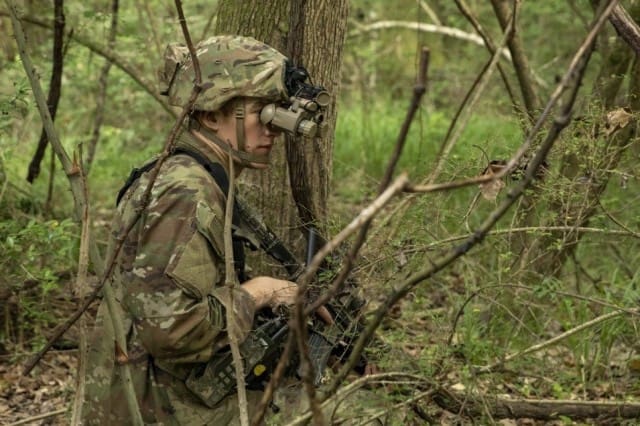
The third project outlined in the video is the Enhanced Night Vision Goggle-Binocular, or ENVG-B.
Night Vision Goggles are far from new, but the ENVG-B gives Soldiers a clearer view and are easier to use, Maj. James Siebert says in the video. Siebert is the Soldier Lethality CFT’s action officer for the ENVG-B project.
“The ENVG-B enables superior combat overmatch by providing Soldiers a binocular system that delivers unparalleled vision day and night in low light, no light, fog, smoke or inclement weather,” says Siebert.
“It offers greater clarity and better depth perception,” he says.
“Rather than looking down at a 2D map or smartphone device, Soldiers see virtual icons overlaid on their real-world view in real time,” says Siebert.
The video was one of several warfighting-related “Warrior Corner” videos produced for viewing by participants in the 2020 Virtual Maneuver Warfighter Conference, held online Sept. 9-10 by Fort Benning’s U.S. Army Maneuver Center of Excellence. The MCoE has since made them available to the public on YouTube.
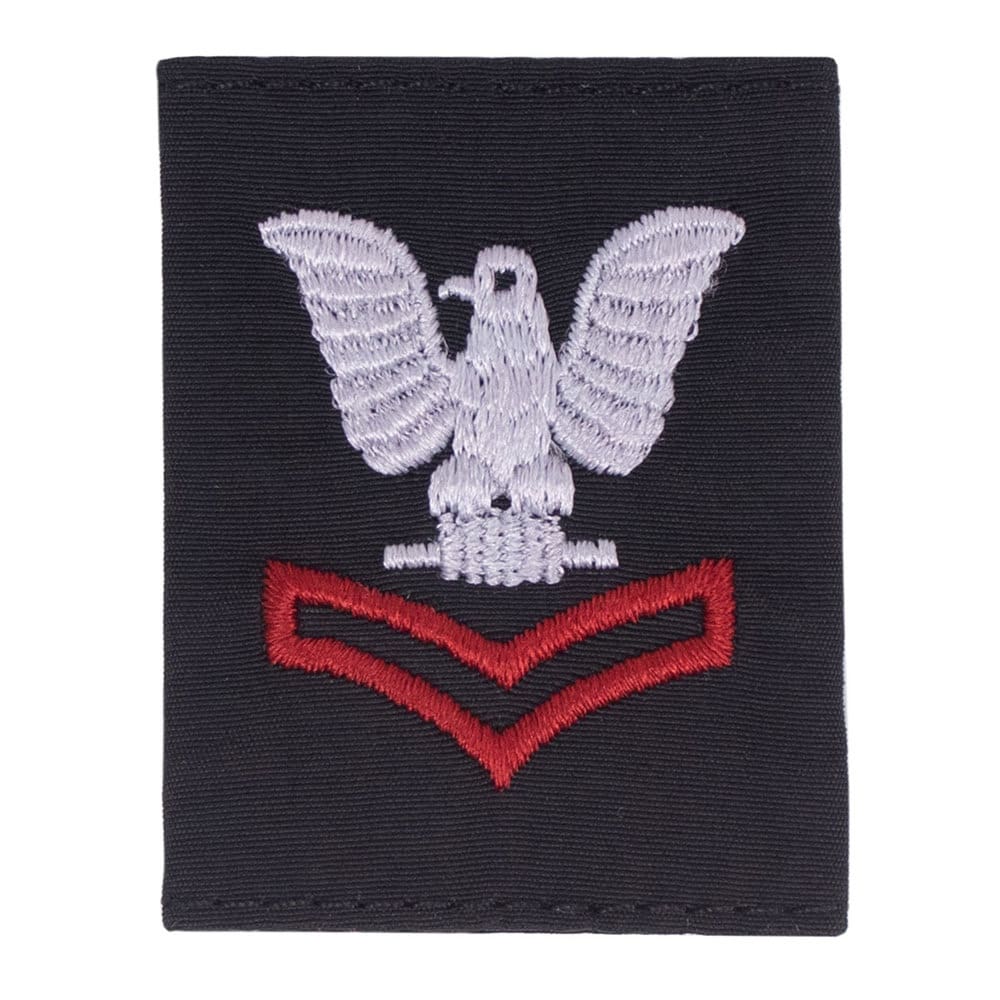
The Navy has authorized Sailors the option to wear the black Cold Weather Parka (CWP) sleeve-style rank insignia with the Navy Working Uniform Type III (NWU Type III) in non-tactical environments.
The Navy has authorized Sailors the option to wear the black Cold Weather Parka (CWP) sleeve-style rank insignia with the Navy Working Uniform Type III (NWU Type III) in non-tactical environments.
Effective immediately, the change was announced Oct. 29 in NAVADMIN 292/20. It allows wearing of the black CWP rank insignia with the NWU Type III parka and shirt as well as with the black fleece liner for all ranks, E-4 through O-10.
The black tab is not authorized in tactical environments, or where training requires complete camouflage protection, the message said.
“This policy change is based on the feedback received from the fleet via the rank insignia wear evaluation, Question of the Day video responses regarding insignia options, and ongoing complaints regarding the limited visibility of the camouflage pattern NWU Type III rank insignia,” Vice Adm. John B. Nowell, the Navy’s chief of personnel, wrote in the message.
Opting for the solid black parka tab was the best decision because fleet feedback showed it provides quick and easy identification of the wearers rank at the greatest possible distance with just a glance.
In addition, the items are already approved, in production and available at the Navy Exchanges, both in select uniform stores and can be ordered online at the Navy Exchange website.
Though metal insignia are authorized for wear with the cold-weather parka, the authorization is only for the sleeve-style rank insignia. The message describes the insignia as being of “solid black fabric with color thread (gold, silver, scarlet) denoting the wearers rank,” the message states.
“The back of the insignia is sewn together in the center to form a loop which facilitates placement on the NWU Type III rank tab.”
Feedback and recommendations regarding uniform policy, uniform components and uniform availability are welcome and can be provided via MyNavy Portal at www.mnp.navy.mil. Select Professional Resources, U.S. Navy Uniforms and *Ask The Chiefs.* Feedback can also be provided via the MyNavy UNIFORMS Mobile App.
By MC1 Mark D. Faram, Chief of Naval Personnel Public Affairs
Construction is well on its way at TYR Tactical® HQ in Peoria, AZ. Their $14M New Armor Manufacturing Facility will house state-of-the-art presses and autoclaves to support hard armor production. This much needed expansion, along with their current in-house Ballistic Test Range, will give them unmatched armor development capability.
Watch Phase One Now:
So why now?
Owner & CEO Jason Beck had this to say about the driving force behind the Armor Facility Expansion: “As one of the few remaining family owned businesses in our industry I feel a responsibility to always be the guy making everyone else strive to get better. I felt the armor industry had grown stagnate, become too reactionary, and too contract focused. The industry stopped innovating and the end user community simply deserved better. We have had a very productive year in spite of the ongoing pandemic. Investing back into the company and our people seemed like the right thing to do. We are building a world class armor production facility and adding next generation equipment, to continue to push our industry and build kit for the Next Generation Warrior®. Innovate or Die®!”
Jericho, Vt. – The Vermont National Guard will break ground on a new $27 million facility for the Army Mountain Warfare School on Thursday, Nov. 5 at Ethan Allen Firing Range in Jericho.
The socially-distanced ground-breaking ceremony is scheduled for 10:00 a.m.
“In my many conversations with the Secretary and the Chief of Staff of the Army, the Chief of the National Guard Bureau, and the Director of the Army National Guard, it was clear to me that replacing the facilities of the Army Mountain Warfare School allowed the Army to greatly expand and improve its capabilities,” said Vermont Senator Patrick Leahy. “As Appropriations Vice Chairman I was glad to be in a position to be able to ensure that it was funded, when the Army told me that despite the need it had not been included in the budget submission. I’m proud of the opportunity ahead of us for Vermonters to expand our ability to teach Soldiers and other members of our Armed Services how to not only survive, but to master and make the most of difficult terrain and cold climates.”
The 82,668 square foot facility will include educational space, billeting for 174 personnel, and a dining facility. The new schoolhouse will also offer students a unique four-story indoor climbing wall and will use a geothermal ground source system to provide heating and cooling. Space for the installation of photovoltaic panels will also be incorporated. Project completion is expected near April 2022.
“The Army Mountain Warfare School cadre are among the best and brightest in the field; this school is where students learn to become competent mountaineering professionals,” said Maj. Gen. Greg Knight, Vermont adjutant general. “This new facility is a testament to those Soldiers, and the thousands of graduates and cadre that have come through the school for nearly four decades.”
The Vermont National Guard has operated the only Army Mountain Warfare School in the country since 1983. They now instruct courses in basic, advanced, and specialty mountain warfare. They also provide additional mission specific training to United States and foreign military forces in a variety of countries.
“This new facility ensures the continuation of excellence in mountain warfare operations, and the lasting value this school brings to Vermont and the U.S. Army. Sincere thanks to Senator Leahy for his efforts in making this a reality,” said Knight.
Joint Force Headquarters, Vermont National Guard Public Affairs