FirstSpear

Archive for the ‘Guest Post’ Category

Max Talk 39: Patrol Immediate Action Drills (IAD): Break Contact – Front

Monday, September 30th, 2019

This is the thirty-ninth installment of ‘Max Talk Monday’ which shares select episodes from a series of instructional videos. Max Velocity Tactical (MVT) has established a reputation on the leading edge of tactical live fire and force on force training. MVT is dedicated to developing and training tactical excellence at the individual and team level.

This video teaches, with the help of army men on a sand table model, Patrol Immediate Actions Drills (IAD) for Break Contact Front.

This is the fourth installment of ‘Max Talk Monday’ which shares select episodes from a series of instructional videos. Max Velocity Tactical (MVT) has established a reputation on the leading edge of tactical live fire and force on force training. MVT is dedicated to developing and training tactical excellence at the individual and team level.

Max is a tactical trainer and author, a lifelong professional soldier with extensive military experience. He served with British Special Operations Forces, both enlisted and as a commissioned officer; a graduate of the Royal Military Academy Sandhurst. Max served on numerous operational deployments, and also served as a recruit instructor. Max spent five years serving as a paramilitary contractor in both Iraq and Afghanistan; the latter two years working for the British Government in Helmand Province, Afghanistan.

Website: Max Velocity Tactical

YouTube: Max Velocity Tactical

SCUBAPRO Sunday – Cramps

Sunday, September 29th, 2019

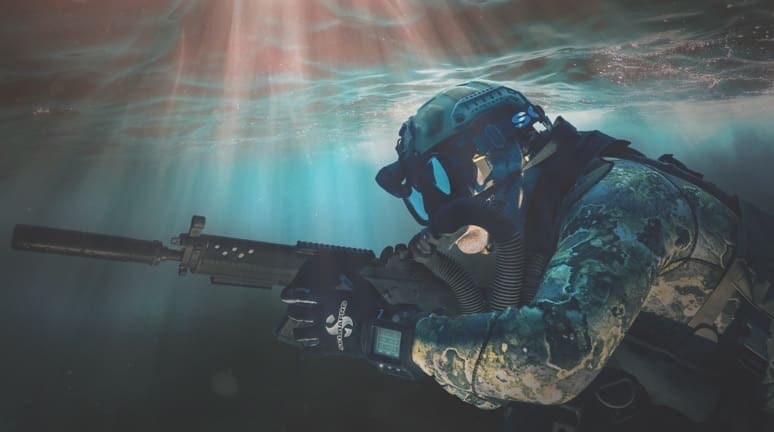
When you are doing a long dive there is a good chance that you are going to get a cramp. Cramping can happen for several reasons. Being dehydrated, diving for a couple of weeks straight or even you haven’t dove in a while. Most of the time you try and straightening out your leg that has the cramp while only kicking with your good leg, you try and grab your fin and stretch it out while keeping up with your swim buddy. Cramping occurs in the calves, hamstring, quadriceps, thighs and the feet—mainly due to the finning action that causes muscle fatigue and triggers muscle spasm. But mostly in diving, you get a cramp in your upper and lower calf from pointing your toes while you are diving.

So, what can you do to stop this from happening?

• Replace old equipment if it doesn’t fit you properly, it can cause feet related cramps. So that favorite pair of fins you stole when you were in training should be retired, hang them on your wall in your garage.

• Check the foot pockets of your fins to make sure your feet are comfortable enough and that there is sufficient room for them to move a bit. So, make sure your fins fit all the boots/footwear you are going to use, you might use a large in the summer but in the winter when you are wearing thicker boots or a dry suit you might need bigger fins. That also goes for shoes, like Vans or LALO’s that you might wear when doing a dive where you will need to have shoes on for climbing or good traction. You might have a size 10 for summer and a 12 for winter, so you can add insulation.

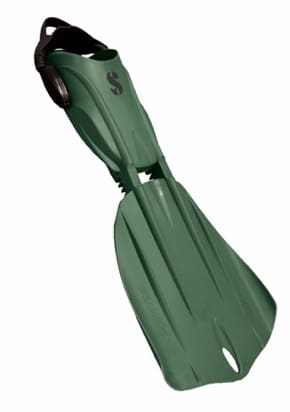
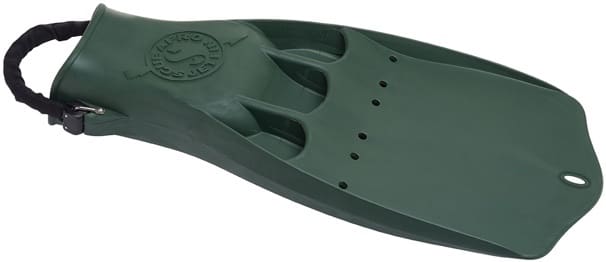
• Make sure you are using the right type of fin for the kick you use. Make sure the stiffness and surface area of your fins’ blades are what you need. Fins are designed for different types of kicks; Jet fins are great for a power kick or a frog kick, Seawing Nova’s are made to be great for propulsions with not as much effort as saying a jet fin. Also, look at the stiffness. There are two types of Seawing Nova. The Seawing Nova and the Seawing Nova Gorillas. The Gorillas are a stiffer fin, and they are great for a working diver or someone in good shape. So, pick the right one for the job you are doing and the environment you will be in.


• Your footwear should not be too tight as this will restrict circulation and bone movement in your foot. If you are diving in the winter and you add a dive sock to your booties to keep you warm, what you are doing is restricting your circulation, and that will make you cold and cause cramps. If you want to add layers have different sizes booties.

• The strap should not bite into the back of your heels too tightly, pushing on your Achilles tendon. This can happen if your footwear is too big and you are shoving your foot in and barely getting your strap around you heal or you are afraid you will lose your fin, so you pull the strap really tight. Something that could help with this is a self- adjusting fin, like a bungee strap or a steel spring. This will help keep the right pressure on your heel.  


Cramping generally affects people that have taken a long break from finning. I say finning and not diving because you don’t have to dive to fin. So, like all of your other skills, shooting, moving, and communicating. You need to practice finning, so you stay in finning shape. You should try and swim a couple of times a week and do it with fins on. When you are at the gym, don’t just do arms. Do functional workouts that include a lot of exercises for your calves and strengthening the specific muscle groups that cramp when diving. Also try and include foot flexing exercises, as one of the other reasons for cramping is your feet are not used to being pointed for long periods of time, as I mentioned above. I know a lot of groups are getting back into the water but are still living in the desert. So, when you have the chance try and get back into the water or into the gym.  

CIA’s Mi-17 Helicopter Comes Home

Sunday, September 29th, 2019

Final Mission of a Valiant Workhorse

Fifteen days after the attacks of September 11th, 2001—on President George W. Bush’s orders—the Central Intelligence Agency (CIA) deployed a small team into Afghanistan’s Panjshir Valley. Its mission: to launch U.S. operations against al-Qaida and its Taliban supporters. JAWBREAKER, as the operation would be called, was the United States’ first response to those attacks, and stands as an exemplar of the extraordinary capacity of CIA and the broader U.S. Government to respond swiftly and decisively in defense of the country. The JAWBREAKER team of seven Agency officers, three aircrew and two Afghan partners boarded a Russian-made, CIA-modified, Mi-17 heavy-duty helicopter on what would become a historic flight.

The Search for 10,000 Pieces

Robert Byer, CIA Museum director and curator, opened the ceremony by thanking attendees for joining CIA in celebrating what he described as an “incredibly auspicious day that has been many years in the making.” He briefly recounted the story of how the Mi-17 helicopter came to rest on CIA campus as a “macro-artifact” in CIA Museum’s growing collection. A macro-artifact, Mr. Byer explained, simply means that “we couldn’t fit it inside the building.” 

“In 2006, CIA museum began working on an exhibition about the Agency’s role leading up to Operation Enduring Freedom,” Mr. Byer explained. What began as a small collection of photographs and artifacts from those involved in the early response to 9/11 quickly grew to include flight kits, cartography and even a cockpit instrument from the Mi-17. “The aircraft was ubiquitous in the part of the world,” he said. “Rugged and dependable and described by those who flew aboard as ’10,000 parts all trying to come apart at once,’” he explained to laughter from the audience.

In the fall of 2018, Mr. Byer and the rest of the CIA Museum staff reunited that single cockpit instrument with the remaining 9,999 pieces of the Mi-17 with its delivery to CIA campus. “With today’s dedication,” he said, “we now have the full story of CIA’s response to those attacks on American soil. It [the exhibition] serves as a bookend to its 911 counterpart,” Mr. Byer said referring to the 9,000 pound rust-colored steel column on the Southwest side of CIA’s Original Headquarters Building that was recovered from World Trade Center 6 in New York City.

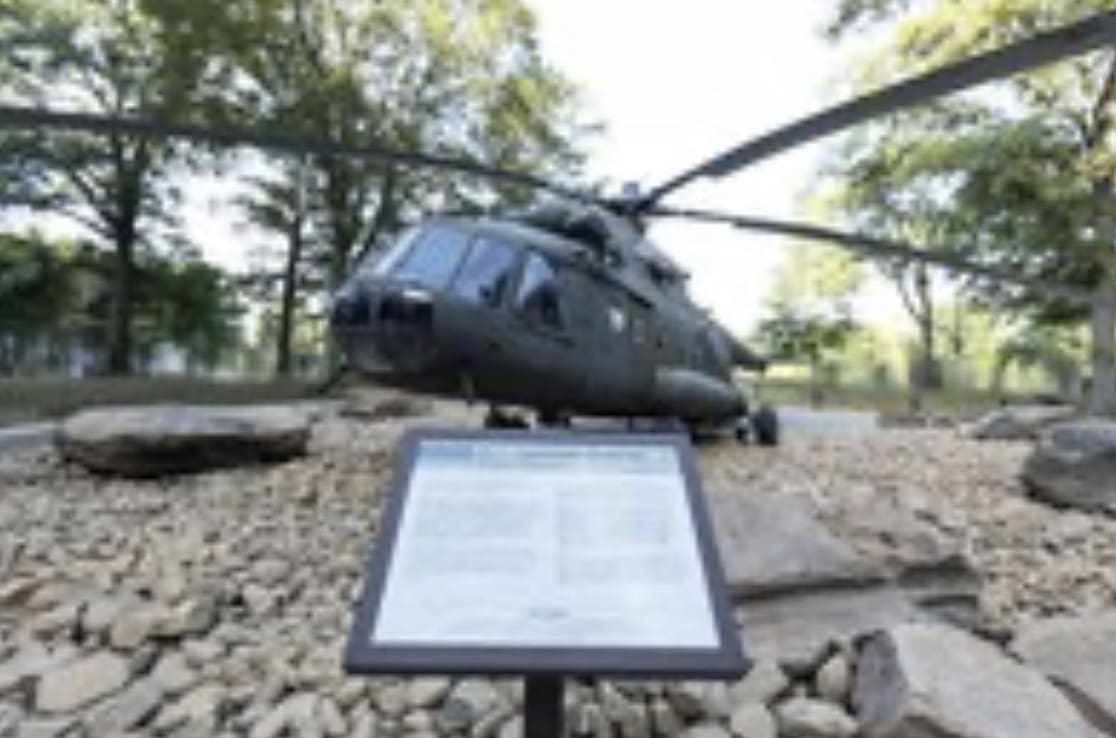
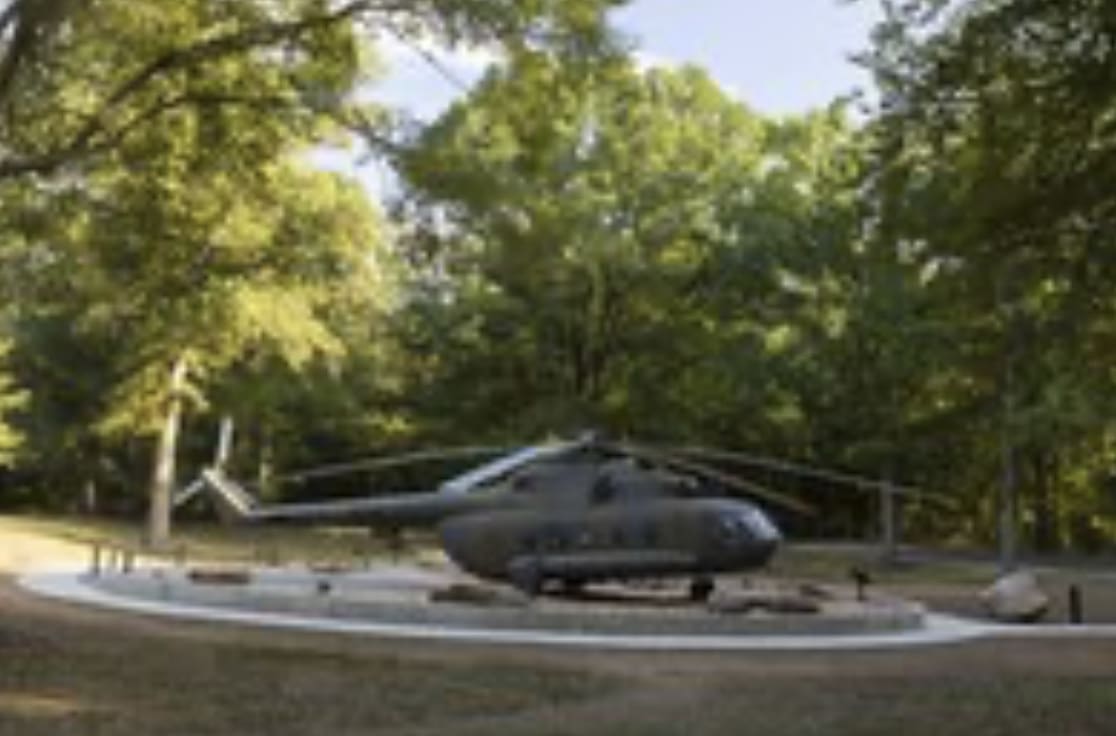
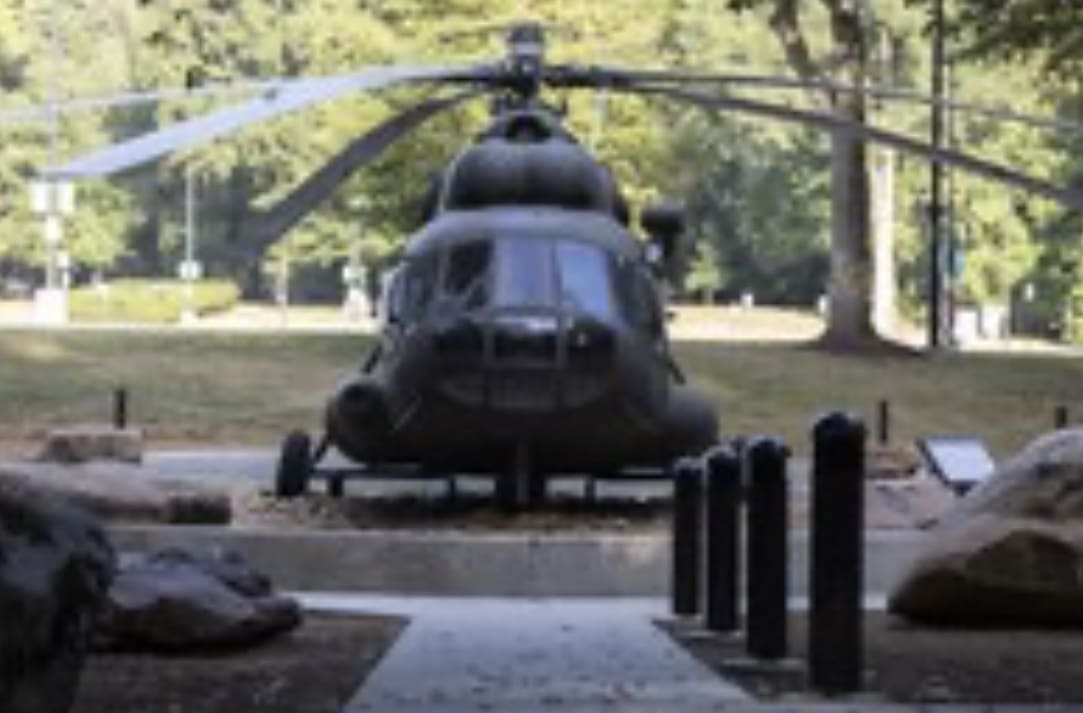
Today—exactly 18 years after the members of operation JAWBREAKER set foot in Afghanistan—CIA had the distinct honor of commemorating that mission with the dedication of the Mi-17 that shuttled team JAWBREAKER over the “Hindu Kush and into history.” Adorned with the tail number 9-11-01, the fully-restored Mi-17 helicopter is nestled amongst the trees in a large green space to the northeast of CIA’s Original Headquarters Building. The rocky landscape on which the helicopter sits was designed to mimic the Afghan landscape in which the helicopter served so well. Hundreds gathered at CIA Headquarters in Langley, Virginia, to see the helicopter in its final home and hear from the Agency officers who played a significant role in the success of CIA’s first response.

To Right a Terrible Wrong

Mr. Byer welcomed Gina Haspel, Director of the Central Intelligence Agency, to the stage to introduce the ceremony’s keynote speaker, Gary Schroen, who delayed his retirement to lead Operation JAWBREAKER in 2001. “Today’s ceremony is a celebration of the daring spirit that defines the Central Intelligence Agency,” Director Haspel said. She explained the importance of teamwork in the pursuit of success. “Gary and his team were at the tip of the spear, and at every step of the way there was an Agency family, here at Headquarters and across the world, who had their back.”

Director Haspel spoke of the courage and motivation of the JAWBREAKER team in their pursuit to “right a terrible wrong.” Her hope for this helicopter is that it serves as a reminder of the sacrifices made in defense of freedom and that visitor’s “gain a deeper appreciation of what it takes to keep our country safe and free.”

Business as Usual

Director Haspel introduced Mr. Schroen, the ceremony’s keynote speaker, as “a living legend and inspiration to every CIA Officer” and thanked him for his 50 years of service to the CIA.

Mr. Schroen took the stage to generous applause, a clear indication of the respect and admiration he commanded from those in attendance. He thanked Director Haspel for her remarks before launching into his recollection of the time, the operation and the sequence of events that led to his team landing in Afghanistan just two weeks after the attacks on American soil. “It’s an awkward looking piece of machinery,” he began. “But don’t be fooled – the Russians built it for utility and service, rather than looks and style.” He described the helicopter as a workhorse “designed to take a punishment,” which was exactly what the CIA needed.

He recounted the shudder of the helicopter as it began its ascent over the 14,500-foot Anjuman Pass and into Panjshir for the first time—a recollection that would make even the most valiant palms a bit sweaty. “We were very heavy,” he admitted. Between the passengers, weapons, fuel, ammunition and all of the other equipment, the team was pushing the helicopter’s payload to its outer extremes. “It wasn’t ‘business as usual,’” Mr. Schroen recalled. “But looking around the compartment, you would think it was – no one was dwelling on the danger we were in.”

Echoing Director Haspel’s comments on teamwork, Mr. Schroen noted that the success of the team was not theirs alone, but that of the “heroic efforts that this organization [CIA] made in getting the JAWBREAKER team ready.” He pointed to a number of officers and offices across the Agency that were instrumental to navigating the many processes needed to get JAWBREAKER airborne. He also credited the foundation which had been laid years prior, namely the relationships built with the Northern Alliance in Afghanistan, which would help JAWBREAKER navigate the unfamiliar territory.

Mr. Schroen concluded by expressing a simple hope that “we can all on occasion take a look at old 9-11-01 sitting out here, and remember that the seemingly impossible is in fact achievable.”

I often think there are things I’ll never get to share on SSD and then the CIA publishes something like this.

Army Project Brings Quantum Internet Closer To Reality

Saturday, September 28th, 2019

RESEARCH TRIANGLE PARK, N.C. — A U.S. Army research result brings the quantum internet a step closer. Such an internet could offer the military security, sensing and timekeeping capabilities not possible with traditional networking approaches.

The U.S. Army’s Combat Capability Development’s Army Research Laboratory’s Center for Distributed Quantum Information, funded and managed by the lab’s Army Research Office, saw researchers at the University of Innsbruck achieve a record for the transfer of quantum entanglement between matter and light — a distance of 50 kilometers using fiber optic cables.

Entanglement is a correlation that can be created between quantum entities such as qubits. When two qubits are entangled and a measurement is made on one, it will affect the outcome of a measurement made on the other, even if that second qubit is physically far away.

“This [50 kilometers] is two orders of magnitude further than was previously possible and is a practical distance to start building inter-city quantum networks,” said Dr. Ben Lanyon, experimental physicist at University of Innsbruck and the principal investigator for the project, whose findings are published in the Nature journal Quantum Information.

Intercity quantum networks would be composed of distant network nodes of physical qubits, which are, despite the large physical separation, nevertheless entangled. This distribution of entanglement is essential for establishing a quantum internet, researchers said.

“The demonstration is a major step forward for achieving large scale distributed entanglement,” said Dr. Sara Gamble, co-manager of the Army program supporting the research. “The quality of the entanglement after traveling through fiber is also high enough at the other end to meet some of the requirements for some of the most difficult quantum networking applications.”

The research team started the experiment with a calcium atom trapped in an ion trap. Using laser beams, the researchers wrote a quantum state onto the ion and simultaneously excited it to emit a photon in which quantum information is stored. As a result, the quantum states of the atom and the light particle were entangled.

The challenge is to transmit the photon over fiber optic cables.

“The photon emitted by the calcium ion has a wavelength of 854 nanometers and is quickly absorbed by the optical fiber,” Lanyon said.

His team therefore initially sent the light particle through a nonlinear crystal illuminated by a strong laser. The photon wavelength was converted to the optimal value for long-distance travel — the current telecommunications standard wavelength of 1,550 nanometers.

The researchers then sent this photon through the 50-kilometer-long optical fiber line. Their measurements show that atom and light particles were still entangled even after the wavelength conversion and the distance traveled.

“The choice to use calcium means these results also provide a direct path to realizing an entangled network of atomic clocks over a large physical distance, since calcium can be co-trapped with a high quality “clock” qubit. Large scale entangled clock networks are of great interest to the Army for precision position, navigation, and timing applications,” said Dr. Fredrik Fatemi, an Army researcher who also co-manages the program.

Story by U.S. Army CCDC Army Research Laboratory Public Affairs

Photo courtesy IQOQI InnsbruckHarald Ritsch

Kit Badger – Squad Goals

Friday, September 27th, 2019

FirstSpear Friday Focus – ACM Field Shirt

Friday, September 27th, 2019

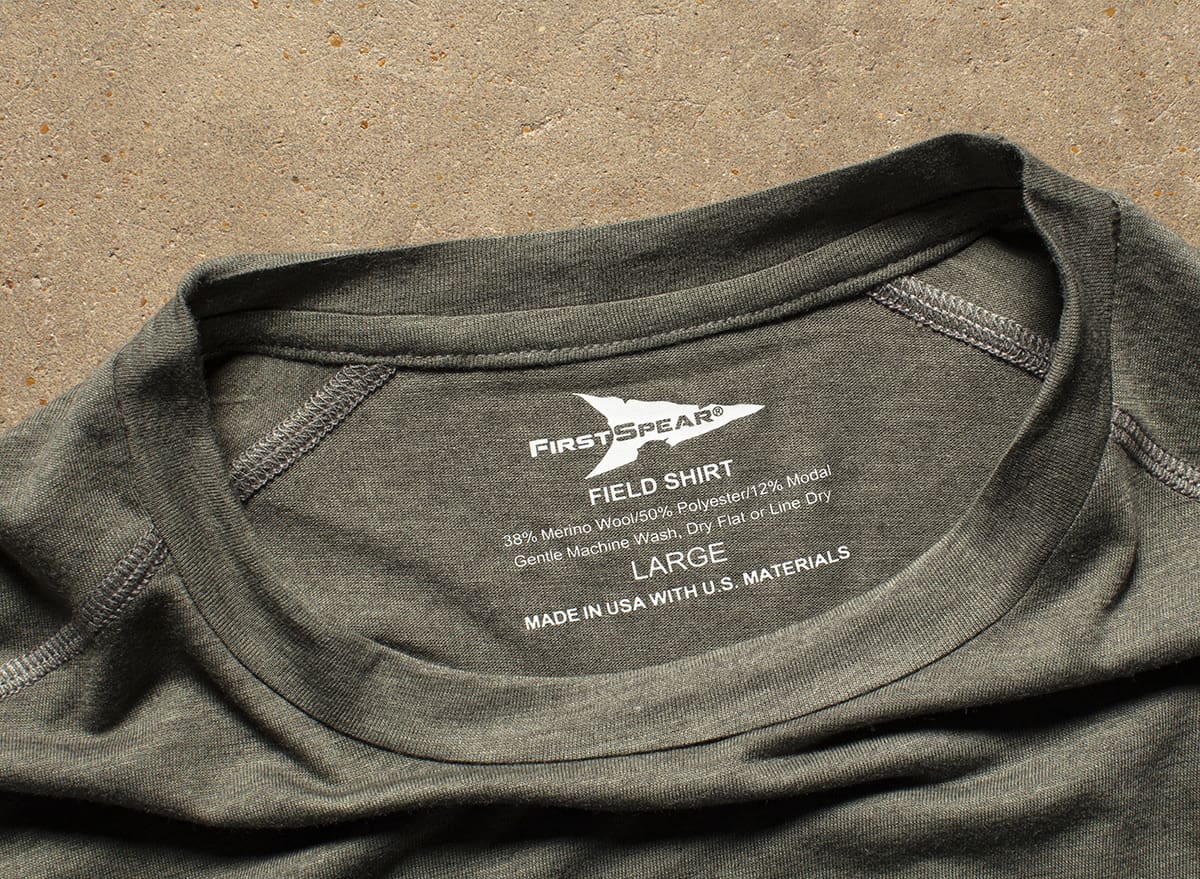
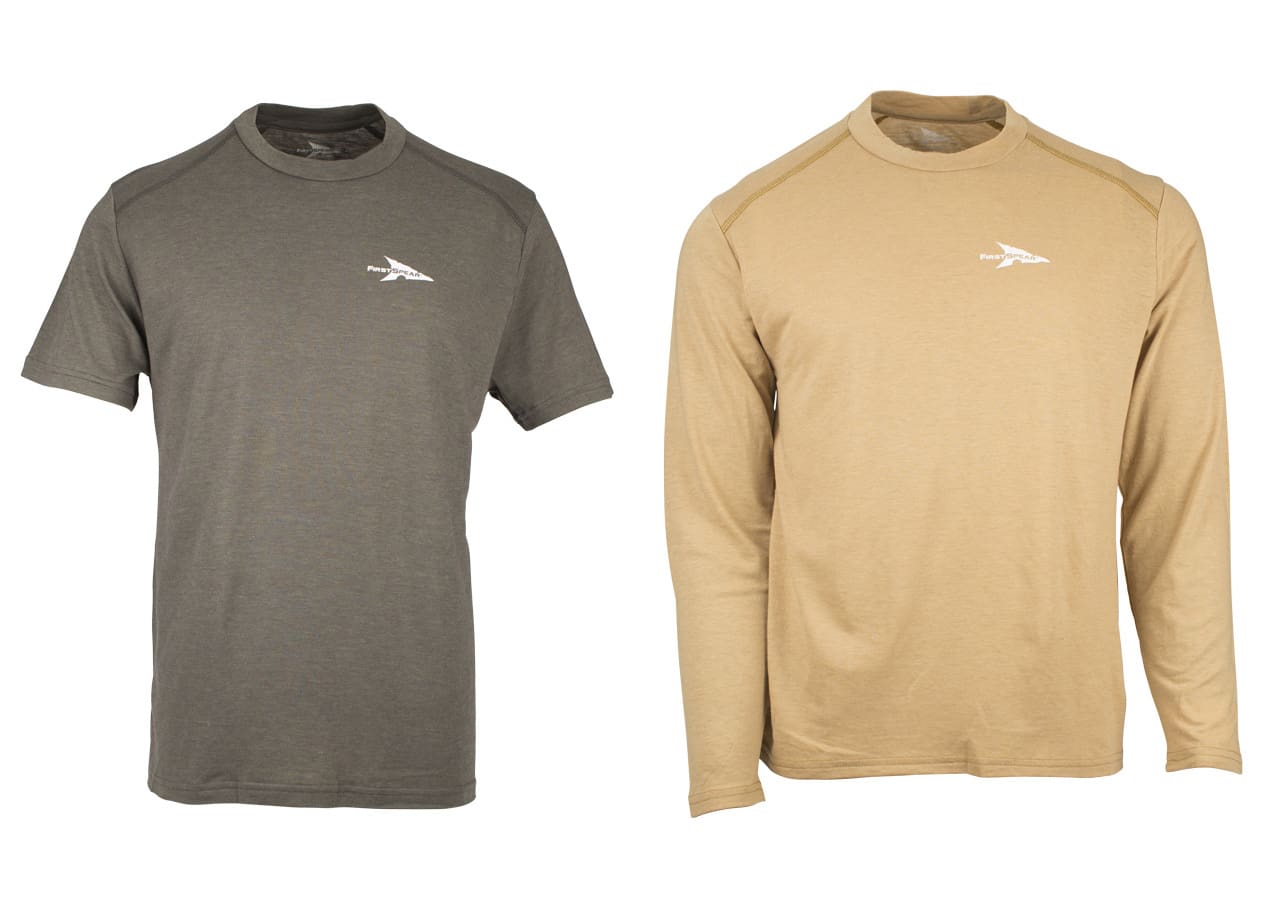
This Friday we are taking a look at the all American wool Field Shirts from FirstSpear. Available in short and long sleeve variations the Field Shirt is built from FS proprietary ACM BASE 100, the lightest weight merino wool package which happens to be 100% berry Compliant. This shirt works as an exceptional base layer to keep you cool when its hot or help trap warmth when your cold and even maintain insulation while wet. Blending comfort, performance, and fit to give you the very best functionality with the styles and colors to suit your next extreme adventure, train up and/or deployment.

Now available in sand, commando, charcoal, and black in sizes small – 2X. Now in stock and shipping.

https://www.first-spear.com/field-shirt-long-sleeve-acm-base-100

www.first-spear.com/field-shirt-short-sleeve-acm-base-100

Army Researchers Look for New Signs of TBIs in Soldiers

Thursday, September 26th, 2019

FORT LEONARD WOOD, Mo. — Researchers from the Phelps Health Medical Center in Rolla, Missouri, performed clinical testing on 35 Soldiers in the Urban Mobility Breacher Course at Fort Leonard Wood last week to determine if there are repeatedly present biological signs after traumatic brain injury, or TBI.
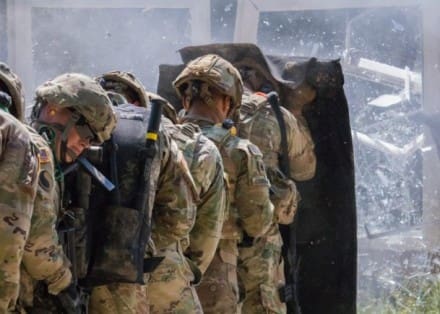
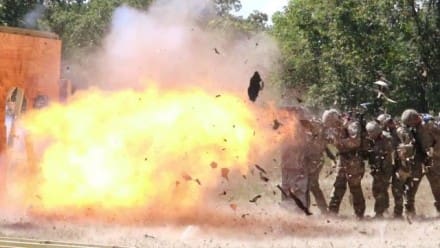
Officials said Soldiers in the UMBC were chosen as subjects due to their training, which requires them to endure concussive blasts, using light and heavy explosives to force entrance into otherwise inaccessible structures.

Medical personnel are searching for these signs, named biomarkers, through blood samples, urinalysis, and a new portable, cell-phone sized form of electroencephalogram, or EEG, called “BrainScope.”

Rosanne Naunheim, a Neurologist at Washington University in St. Louis ran BrainScope on Soldiers before and after their participation in the course this week.

“[The device] can diagnose if there’s most likely been previous concussive brain injury,” said Donald James, senior vice president of research and government affairs at Phelps Health.

“Before [Soldiers] have blast exposure with larger blasts, we’re doing EEGs and drawing blood work,” he said. He confirmed the researchers would return after the training to test for biomarker indication of TBI.
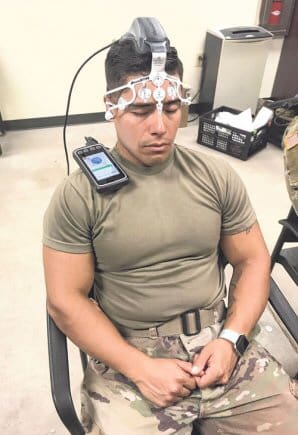
According to Naunheim, BrainScope determines likelihood of previous TBI by measuring the speed at which an electrical signal travels from the brain to the electrodes in the device and back to the brain, and then comparing subjects’ results against normal scores for their age range.

“We’re noticing a lot of people start with fairly low scores here (at the fort), because they may have had blast injuries in the past,” Naunheim said.

On a scale of 0 to 100, with 50 being normal, “We’re seeing quite a few people that have scores 0 to 10 even, which is quite low.”

Matthew Doellman, who spent 13 years in the Army, saw combat as a trauma nurse in the Middle East, and worked at General Leonard Wood Army Community Hospital, now serves as director of the Phelps Health program leading the research being done on base.

He said based on his experiences, the new EEG device is “without a doubt” critical to preserving the fighting capability of the force.

“When I was deployed to Afghanistan in 2011, we didn’t have a CAT scan machine,” which, he said, can be too large, expensive and slow to provide results in a forward operating environment.

Phelps Health officials agreed on the field application of the new device.

“This can be done in the field,” James said. “This technology could be right there in the medic station at the Forward Operating Base in any battle center.”

“The reason why that’s important is because a lot of times when you’re in Iraq, Afghanistan and other theatres of operation, as a unit commander you’re trying to make these determinations; ‘Do I need to send my medevac pilots out in this bad weather because this Soldier, we think he needs help,'” Doellman added.
2204A287-4767-4FAE-BB61-E0D798352165

Testing for TBI indicators through urinalysis began five years ago, after doctors discovered that multiple types of cancer could be diagnosed through biomarkers present in urine, according to James.

“I think we’re in the infancy of major breakthrough in, one, diagnosis of traumatic brain injury; and two, then coming up with innovative treatments that mitigate permanent (brain) damage,” he said, referring to this research as unprecedented.

Researchers said that if they found repeated presence of TBI biomarkers in the blood and urine, combined with results from the portable EEG, Soldiers and their commanders could see mitigation of permanent brain damage.

“[With] the research we’re doing today, hopefully the Soldier of the future will have less problems with TBI, and then they’ll live longer lives without any kind of detriment because of a blast or some kind of concussive event,” Doellman said.

The research conducted at Fort Leonard Wood is part of an Army Surgeon General-signed cooperative effort among researchers from Phelps Health Medical Center and four universities: Missouri University of Science and Technology, Washington University in St. Louis, University of Missouri at Columbia and University of Missouri at Kansas City.

By Sam Campbell, Leonard Wood

Selecting a SureFire 5.56 Suppressor with Barry Dueck

Thursday, September 26th, 2019

www.surefire.com