TYR Tactical

Archive for the ‘Guest Post’ Category

SCUBAPRO Sunday – Kokoda Track Campaign WW2

Sunday, November 3rd, 2019

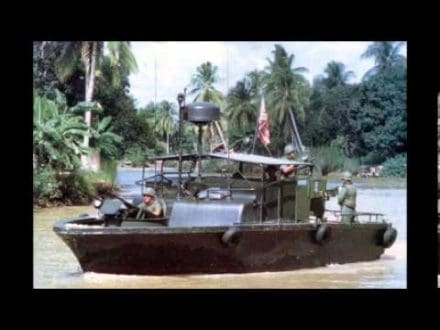
The 3rd of  November is Kokoda in Australia. The Kokoda campaign began with a full-scale attack on the Australian 39th Militia Battalion on 29 July 1942.  The battle lasted three months as the Australians were pushed back to their last line of defense on Imita Ridge. The Australians rallied at this point and forced the Japanese back across the track.  Kokoda was recaptured on 2nd November 1942, and the Australian flag was raised at a service the following day.

The Kokoda Track/Trail Campaign was fought between the Australians, the Americans, ,and the Japanese. It was primarily fought between the Aussies and the Japanese. The campaign consisted of a series of battles fought between July and November 1942 in what was then the Australian Papua New Guinea    

Kokoda was undoubtedly the most significant battle fought by Australians in the Second World War because it was fought so close to home. The Kokoda campaign saved Australia from possible invasion from the Japanese. Port Moresby held a robust tactical position and preventing the Japanese from reaching it was vital. The battle was fought over five months, and the odds were stacked heavily in favor of the Japanese, they outnumbered the Aussies 5-1, they had much better equipment, and a lot more of it, and at the time were considered the best jungle fighters in the world. The astounding feats performed by the Australian soldiers lead to the growth of Australia as a nation.
The Australian troops had to save Port Moresby from getting invaded from the Japanese because if so, the Japanese could have easily invaded Australia. The Australian forces fought exceptionally well in the harsh and unforgiving jungle of the Kokoda Track/ Trail. There were more than 600 Allies killed, and about 75% of the allied troops got sick, with diseases like malaria, dengue fever, and dysentery, to name a few. 

The Australians fought against all the odds and without the help of Great Britain. It was also fought mainly by Militia (reserve) troops or “chocolate soldiers” as the Australian Imperial Forces (AIF) called them because they were poorly trained, and it was said, “they would melt in the heat of battle.” At the start of the war, Australia sent its best troops the AIF to the middle east to help the brits. So, they stood up Militia Battalions to serve in Australia, to protect the homeland. Still, they used the loophole that Papua New Guinea was a territory, so they sent the 39th Militia there to help protect the island. This was one of the hardest fought battles in WW2 by anyone. I have attached a couple of links so you can read about this. As a lot of military units are getting back into the jungle, this is full of useful lessons learned and is an excellent piece of history. So raise a beer to the diggers and all the people that have gone before us.  


Wq6eGJV9Jsk

kokodacampaignww2.weebly.com


R2TD: A new tool for an ever-present threat

Sunday, November 3rd, 2019

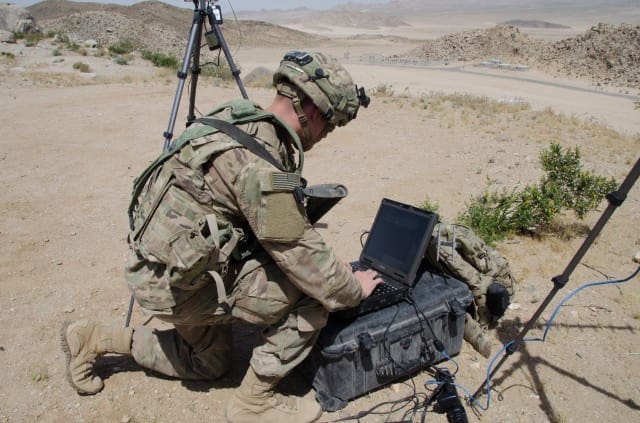
ABERDEEN PROVING GROUNDS, Md. — Seismic, acoustic and electromagnetic systems work to help Army find one of the oldest forms of field fortification: tunnels.

War is as old as human history. This means a lot of the reactive tactics and protective equipment must evolve in response to an attack becoming strong. As weapons became heavier and deadlier-swords went from bronze, to iron, to alloys of greater hardness and durability-the defense for them would evolve, protective clothing going from very thick fabrics, to leathers, to metals to the hard ceramics and Kevlar we know today.

Terrain use has evolved over time, too. As the stakes continue to rise and objectives evolve, merely taking hills, fields and transportation routes was always the start, but taking, holding and occupying towns and cities for longer periods of time will be key.

This means tunnels. Cities thousands of years old, such as Paris and its 200 miles of tunnels and catacombs, or modern American cities like New York, which has 665 miles of subway tunnels, will make tunnels a consideration of modern urban warfare. Newer cities may not have subways as an afterthought, but as a foundation of their planning. In India and China, for example, subway stations are the root of creating new cities as the population continues to grow.

Tunnels have been used to thwart invaders and penetrate fortifications since there were invaders and fortifications. For example, ancient Romans used tunnels-called qanats-to transport water to sustain their cities. Were any enemy able to find those tunnels, they could do incredible damage to the city of Rome.

Today, military thinkers like those at the Modern War Institute at West Point are considering underground warfare as a given, and they are considering the kind of equipment that would make underground warfighting most effective.

Project Manager Terrestrial Sensors, part of the Program Executive Office – Intelligence, Electronic Warfare & Sensors, has a key piece of tunnel warfare at the ready: Rapid Reaction Tunnel Detection equipment, or R2TD.

After all, to fight in tunnels, you have to find them first.

Dr. Steven Sloan, a research geophysicist with the U.S. Army Engineer Research and Development Center, has been working with his team on R2TD system for more than half a decade, which is less a piece of equipment than a suite of tools.

“What we’ve found over the years is that there’s no silver bullet that works in all geologies and all situations,” said Sloan. “So, we have multiple, different systems that each have their strengths in different things dependent on the setting that we’re working in, or what the target set is, then we can kind of mix and match to optimize detection.”

R2TD has seismic, acoustic and electromagnetic systems to detect different aspects of underground structures. Seismic to detect movement of dirt, for example. Acoustic to detect open space underneath the ground and electromagnetic to detect infrastructure like cables, wires, nails and even rails.

“The other two systems are actual in-ground permanently or semi-permanently installed, like an underground fence of sensors,” said Sloan. These other two systems are the border tunneling activity detection system-linear and the active seismic imaging system, which can counter adversaries using purpose-built tunnels or existing subsurface infrastructure, and assist in the survey of large areas for perimeter defense and the detection of existing tunnels and other subsurface anomalies, respectively.

“The thing with tunnels is they’re a low-tech counter to a high-tech adversary,” said Sloan. “So all it takes is his time and manpower to build one and there’s not a whole lot out there to stop them. It’s been around centuries and centuries for a lot of different conflicts.”

Sloan and his team know this, and thus they are often upgrading and tweaking the system.

“We’re upgrading the active seismic units that are in theater,” said Sloan. “We bring them back one at a time and we put in new hardware and new software that’s been developed over the last four or five years in there and then put them back over into their respective theaters of operations.”

“If someone was trying the tunnel under a facility to place explosives or something like that, you don’t want to be on the back end of that trying to figure out how it happened after it’s happened,” said Sloan. “It’s more of a preventative measure, or proactive rather than reactive. You won’t use this over every square inch of every facility that you would build. However, if you got some particularly vulnerable facilities in an area or something, some kind of secured facility that you really want to monitor, it’s another tool that you can use.”

By John Higgins, PEO IEW&S

FirstSpear Friday – KADRI Clothing Launches Valkyrie Field Pant

Friday, November 1st, 2019

I first met the founders of KADRI earlier this year at Warrior East and soon realized that this is the most significant innovation in the tactical industry in years. A product created out of necessity, they not only designed a new pant to fit their needs, but a completely new sizing schema as well. Like it or not, women are here to stay in squad cars, ambulances, and on the battlefield. I also see a need for their innovation in the outback as more and more women enjoy the outdoors for both leisure and work. It’s about time they had some clothing that was designed by them, for them.

Women need pockets. Women in the tactical field definitely need pockets. This simple concept is typically not even a second thought for men working in the same occupation. For them, it’s not so much a question of whether or not pockets are needed, but how many, what kind and what placement best suits their tactical needs. For women, however, this is a constant battle. Due to the wide array of women’s body shapes and sizes, women are stuck with either clothes that fit with little tactical function, or clothes that are functional that don’t fit. Most end up wearing men’s clothes and simply deal with the ill-fitted reality of their current situation: to work in a male-dominated industry, there are just some things women must deal with.

This was the problem founders of KADRI Clothing wanted to solve when they started their company. Founded by two women who served in special operations units, KADRI Clothing is a by-women-for-women adventure-tactical apparel brand created to address common issues women experience in the field and other tactical environments. This includes everything from the functional to the fit needs across multiple body types and various tactical occupations and adventure hobbies.

We got the opportunity to look at the first item from their product line—the Valkyrie Field Pant— and the revolutionary sizing and fit system that goes along with it in the best environment possible: on a shooting range with seven tactically-minded women.

KADRI Clothing owner and USMC veteran, Katheryn Basso, walked us through this innovative new product.

The Valkyrie Field Pant is arguably one of the most advanced female garments available today with features intelligently designed for women. The pant contains 11 functional pockets, including well-sized cargo pockets that maintain their volume no matter the thigh size, and two back welt pockets sized for an M4 mag or large cell phone.

Constructed with a DWR finished nylon/spandex blend with overbuilt construction for durability. Designed with a mid-rise waist, the Field Pant features two waist gussets as well as an extended crotch gusset to allow for the perfect amount of stretch and enhanced range of motion when on the move. Belt loops accommodate up to a 2” riggers belt and include two front cross-design loops to secure clip on accessories like a carabiner.

Potentially one of the most ground-breaking features of the Valkyrie Field Pant is the industry-first sizing system. The Waist-Hip Variation Representation, or WHVR, Matrix sizing system uses waist, hip and inseam measurements to find a customizable fit.

This revolutionary system allows women to choose their waist size and up to two sizes larger in their hips. For example, if you are a size 4 waist, you now have the option of purchasing pants with a size 4, 6, or 8 hip. Additionally, the Valkyrie Field Pant comes in short (30”), regular (32”) and tall (35”) inseams. These options enable women to purchase pants specifically designed for their unique body type.

For more information on the pants, visit www.kadriclothing.com

For more info on the FirstSpear and KADRI collaboration click here first-spear.tech/f/firstspear®-and-kadri-clothing-collaborate

To purchase, visit www.first-spear.com/valkyrie-field-pant

Hawaii-based Sailors Test Changes During Physical Fitness Assessment Study

Thursday, October 31st, 2019

PEARL HARBOR, Hawaii (NNS) — Ladies and gentlemen, it’s that time of the year again: physical fitness assessment season. As we’re surrounded by the unwavering dedication of command fitness leaders and the Sailors within each command, one can’t help but get in to the fitness spirit. On May 29, the former Chief of Naval Operations Adm. John Richardson visited Joint Base Pearl Harbor-Hickam and announced the addition of the 2-kilometer row cardio option and forearm plank that will replace the curl-up. On Oct. 7, Sailors gathered in the fitness center on base to commence the testing of the new workout metrics.

The study consisted of three different days of exercise. Day one focused on introducing Sailors to the 2-kilometer row, practicing the correct rowing technique. On day two, the Sailors performed pushups, the forearm plank and the 12-minute bike assessment. Day three focused on pushups, the forearm plank and the second trial of the 2-kilometer row. A big focus during this study was how Sailors perform the new plank as opposed to the curl-ups.

“The plank allows you to build that core strength,” said Lt. Cmdr. Melissa Laird, the work sponsor of the study from the 21st Century Sailor office. “It’s really a better test and better modality to assess that core strength than the curl-up is. It works on giving you good posture and it also has less chance of aggravating low back injuries which you can see with the curl-up.”

Laird also said that adopting a new form of cardio within the PFA allows Sailors an alternative to the standard 1.5-mile run. The rower uses approximately 70 percent of the body’s musculature so it provides a good cardiovascular workout that is low impact.

Sailors representing multiple commands volunteered to be the test subjects for this study. A seamless transition into adopting these two modalities for the PFA in the year 2020 is the end goal according to Laird.

Mr. Jay Heaney, a research physiologist from the Naval Health Research Center and the principle investigator for the study, explained the process of gathering the information from the Sailors’ performance and how it will be applied to the new PFA.

“We try to get as many people as we can within the age groups by gender,” said Heaney. “Then we look for what the norms are; what the high, medium and low scores are. From that, we will develop what the scoring metrics are for the different categories of the PFA.”

Heaney said that the Navy is trying to put a bigger emphasis on physical fitness as ship-based Sailors are required to climb ladder ways and do a lot of heavy lifting throughout their workday.

“I volunteered because I wanted to see what the new PFA would look like,” said Cryptologic Technician (Interpretive) 3rd Class Amanda Zwiebel. “Not only to prepare myself but to prepare my peers and my command.”

According to Heaney, at the end of the day, it is important that our service members have complete physical readiness. The addition of two new workouts to the PFA helps the U.S. Navy move in the right direction.


By Mass Communication Specialist Seaman Aja Bleu Jackson, NPASE West det. Hawaii Public Affairs

Brigantes Presents: The Helix Operations Combat Multi Harness

Wednesday, October 30th, 2019

The Helix Combat Multi Harness (HCMH) is a fully modular tactical harness system that has been developed over several years with significant end user input and trials. The system has been specifically designed for military operational use and can be used in a wide range of missions and tasks across all environments and operational theatres. Having a single system increases safety and reduces the training burden. The HCMH system has uniquely acquired UK helicopter clearances for specialist troop emplaning & deplaning techniques as well as fulfilling mission high access requirements. Unlike other off the shelf harnesses, the HCMH fully integrates with other ‘on the man’ systems such as life jackets and plate carriers, ensuring greater comfort and safety of the end user. 


The HCMH is issued as a single unit item complete with log cards. This allows logistics staff to easily administer the equipment. The system is initially vacuum packed which simplifies PPE inspection prior to first use. Once the system has been opened for use, all components are stored in one purpose designed breathable bag, which optimises storage. All items are interchangeable meaning when an item is damaged, it can be replaced, and the log card updated which is much more cost effective than replacing an entire system. 


The HCMH Pack includes the following components:

1 x Riggers Belt – A 45mm wide belt which fits into standard belt loops and can take molle attachments and heavier equipment such as pistol holders. It is fully adjustable and excess material is easily stowed away. The lightweight material has minimal volume to reduce water absorption and drying time. The outside surface of the belt uses fine velcro, allowing battle belts to be positioned on top of the belt and won’t move around. The belt includes a low-profile textile belay loop on the front of the belt which allows the user to connect quickly into an anchor or system using a tested belt.

2 x Gear Loops – These velcro into position onto the harness in the position required by the user. 

1 x Set of Leg Loops – These are very lightweight and compact due to the synthetic mesh which minimises their bulk and moisture retention. Weighing just 260g they can pack down into a pouch which is just 12 x 8cm. They are fully adjustable and use the same corrosion resistant buckles as the belt. They can be added to the sit harness in less than 15 seconds. 

1 x Chest Harness – Can be worn over or underneath plate carriers and is made from mesh fabric which minimises bulk, water absorption and drying time. The integrated attachment point for the chest ascender is compatible with body armour. 

2 x PerfectO Carabiners – This compact oval carabiner connects the chest harness to the sit harness. 

1 x Fifi Hook with retaining grommet and mouth tab – Provides a ladder attachment point to support the load of the operator and is useful for resting or situations where two free hands are required. 

1 x Chest Ascender  

1 x Storage Bag

1 x User Instructions

For more information contact international@brigantes.com

For UK sales contact warrior@brigantes.com

US Army Develops TITAN System To Tie ‘Deep Sensing’ To Long-Range Fires

Tuesday, October 29th, 2019

WASHINGTON — The Army plans to use one of the largest exercises in Europe since the Cold War to pilot new tactical space technology that will help Soldiers carry out mission command on a multi-domain battlefield.

An initial prototype of TITAN — Tactical Intelligence Targeting Access Node — will be tested during the Defender-Europe 20 exercise next spring. The exercise is set to have about 37,000 U.S. and European troops training in 10 nations across the continent.

The TITAN system, which is a scalable and expeditionary intelligence ground station, leverages space and high altitude, aerial, and terrestrial layer sensors to provide targetable data to fires networks. It also provides multi-discipline intelligence support to targeting, and situational awareness and understanding for mission command.

Today, the Army has roughly 100 tactical ground stations, 13 operational ground stations and a few other dissemination vehicles to inform battlefield commanders, said Brig. Gen. Rob Collins, Program Executive Officer for Intelligence, Electronic Warfare and Sensors, or PEO IEW&S.

But “some of those are more specific to the echelon,” he said Oct. 16 at the Association of the U.S. Army Annual Meeting and Exposition. “They’re not necessarily tailorable, easy to use or expeditionary as we want them to be.”

TITAN aims to consolidate much of those capabilities to better provide “deep sensing” information from intelligence, surveillance and reconnaissance sensors from all domains.

It also ties deep sensing to long-range precision strike options to defeat enemy anti-access/aerial denial environments, officials said.

An industry day is scheduled for Dec. 4 at Aberdeen Proving Ground, Maryland, to further discuss the way forward with TITAN.

A TITAN space prototype is expected to be delivered by early fiscal year 2022.

“How do you bring those ground stations together in one platform, or a series of platforms, that are modular, scalable and [with] open systems architecture,” said Willie Nelson, director of Army Futures Command’s Assured Positioning, Navigation and Timing Cross-Functional Team.

Collins said they are looking for a modular “Lego approach” for the system that will go through an iterative testing process, starting with the Defender exercise.

It is then expected to be rolled out in another exercise in the Pacific region to get additional user feedback later next year, Nelson said.

TITAN will fit into the Army’s Multi-Domain Task Forces being built up in the Pacific and in Europe. The system will work with the task force’s unit called I2CEWS, which stands for intelligence, information, cyber, electronic warfare and space.

It will “absolutely be part of that task force to be able to see deep and target deep,” Collins said. “It’s going to be a key capability, key enabler.”

TITAN will also play a large role in the Army’s space strategy, in which one of its main areas is battle management command and control.

“It’s leveraging both commercial and military capabilities to be able to provide eyes and ears on the battlefield for our Soldiers and our platforms,” Nelson said.

Since the sensors will compile massive amounts of data, TITAN will need to rely on artificial intelligence and machine learning to sift through it.

“As we start pulling in all this data, there’s going to be a significant and overwhelming amount for our intelligence Soldiers to be able to process,” Collins said.

The goal will then be to quickly deliver easily-digestible data to Soldiers in combat and to their systems.

“We just don’t collect this data for the sake of collecting it,” Collins said. “We collect it so that we can distribute that to kinetic, non-kinetic weapon systems and for commanders to be able to make decisions on the battlefield.”

By Sean Kimmons, Army News Service

SKD Tactical’s New Ultimate Tactical Warminess: FDT Cold Weather Gloves!

Tuesday, October 29th, 2019


SKD Tactical has released a new cold-weather version of their FDT (Full Dexterity Tactical) gloves for chillier climes and/or decreasing temperatures. They’re currently (as of this writing) in stock and available now in white and black, with additional colors to come.

28 1015S OCT 2019
Coldsville, USA

It’s a cold day at the local range, but not cold enough to dissuade the hardest among your crew. Everyone knows that you wear PIG FDT Alpha Gloves to shoot, but this time you pull the ALL-NEW PIG FDT Cold Weather Gloves out of your range bag! You beam with pride, saying “Check these out guys… insulated with touch screen compatibility on all five digits.” Shivering figures with numb fingers lean in with jealous eyes. Jaws fall slack in disbelief. As you pull on the fleece-lined wind-resistant gloves, you feel a wave of warmth settle on your hands, partly from the burning hot jealousy from your friends.

For gloves that will keep you warm while offering you unsurpassed tactile dexterity and touchscreen sensitivity, reach for the PIG FDT Cold Weather Gloves when the temperatures drop!

International customers in the United Kingdom, Denmark, Finland, Sweden, Hong Kong, and South Korea will need to contact international dealers.

PIG Full Dexterity Tactical (FDT) Cold Weather Glove

The PIG FDT Cold Weather Glove (CWG) finally brings PIG’s unsurpassed dexterity to a wind-resistant insulated glove. Maintaining the PIG-FDT line-up’s short cuff design, the ALL-NEW CWG includes features such as Touch Screen Compatibility (all 5 digits), grippy Silicon-print palm and a Terry cloth nose-wipe. When the temperatures drop, transition from your current FDT Gloves to the ALL-NEW WARMNESS that is the PIG FDT Cold Weather Glove!


Currently available in colors Black & White.
Carbon Grey available DEC 2019.


Coyote available MAR 2020.

Available in MENS SM-2XL, and WOMENS XS-XL!

Find all versions of the FDT glove line at: bit.ly/PIGglovesFDT

Find in-depth reviews of PIG and other gloves online at MM.

US Air Force Announces Criteria for New Remote Combat Effects Campaign Medal

Monday, October 28th, 2019

US Air Force Remote Combat Effects Campaign Medal

WASHINGTON (AFNS) —
Air Force officials announced nomination criteria for the new Remote Combat Effects Campaign Medal following the official establishment of the decoration May 22.

The new medal, established by then-Secretary of the Air Force Heather Wilson, is part of a continuing effort to recognize U.S. Air Force military members in a non-deployed status who directly participated in a Department of Defense combat operation from a remote location.

“Our remote operations community makes vital contributions to our national security and the security of our allies,” said Air Force Chief of Staff Gen. David L. Goldfein. “These Airmen play a crucial role in every campaign we undertake, and this medal is for them.”

The RCECM will be awarded to Airmen serving in remotely piloted aircraft, cyber, space and intelligence, surveillance and reconnaissance career fields, who create direct combat effects from remote locations and lead to strategic outcomes or the delivery of lethal force. In some circumstances, Airmen from other career fields may be considered for the RCECM, which will be considered on a case-by-case basis.

Service members may be awarded the RCECM for actions completed on or after Sept. 11, 2001, while also serving under the following conditions:
1) Was assigned or attached to a unit directly in support of a DoD combat operation as approved by the chief of staff of the Air Force (listed below)
2) Was serving in a remotely piloted aircraft; cyber; space or intelligence, surveillance and reconnaissance career field
3) Personally provided hands-on employment of a weapon system that has direct and immediate impact on combat operations
4) Was not physically exposed to hostile actions or at risk of exposure to hostile action

Qualifying DoD combat operations:
• Enduring Freedom, Sept. 11, 2001 – to be determined
• Iraqi Freedom, March 29, 2003 – Aug. 31, 2010
• New Dawn, Sept. 1, 2010 – Dec. 31, 2011
• Nomad Shadow, Nov. 5, 2007 – TBD
• Freedom’s Sentinel, Jan. 1, 2015 – TBD
• Inherent Resolve, June 15, 2014 – TBD
• Odyssey Lightning, Aug. 1, 2016 – Dec. 19, 2016
• Pacific Eagle – Philippines, Oct. 5, 2017 – TBD

Airmen who have received a DoD or Air Force campaign or expeditionary medal or ribbon for the same period of service are not eligible to receive the RCECM.

For more information and full eligibility criteria or submission procedures, visit myPers at mypers.af.mil and enter “RCECM” in the search window. A fact sheet and graphic is also available on the Air Force’s Personnel Center website.

Secretary of the Air Force Public Affairs