Phantom Lights

Archive for the ‘Guest Post’ Category

Max Talk 42: Gear Review: Crossfire DG3 Pack (Part 1)

Monday, October 28th, 2019

This is the forty-second installment of ‘Max Talk Monday’ which shares select episodes from a series of instructional videos. Max Velocity Tactical (MVT) has established a reputation on the leading edge of tactical live fire and force on force training. MVT is dedicated to developing and training tactical excellence at the individual and team level.

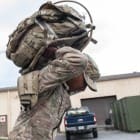
This is a gear review of the Crossfire DG-3 Pack. This is part 1, with part 2, a field trial of the pack, also available on YouTube. The U.S. Crossfire website is now up: crossfirepacks.com

More of these instructional videos can be found by subscribing to the Max Velocity Tactical YouTube Channel.

Detailed explanations can be found in the MVT Tactical Manual: Small Unit Tactics.

Max is a tactical trainer and author, a lifelong professional soldier with extensive military experience. He served with British Special Operations Forces, both enlisted and as a commissioned officer; a graduate of the Royal Military Academy Sandhurst. Max served on numerous operational deployments, and also served as a recruit instructor. Max spent five years serving as a paramilitary contractor in both Iraq and Afghanistan; the latter two years working for the British Government in Helmand Province, Afghanistan.

Website: Max Velocity Tactical

YouTube: Max Velocity Tactical

Excellence in Tactical Training.

SCUBAPRO Sunday – Adding Pockets

Sunday, October 27th, 2019

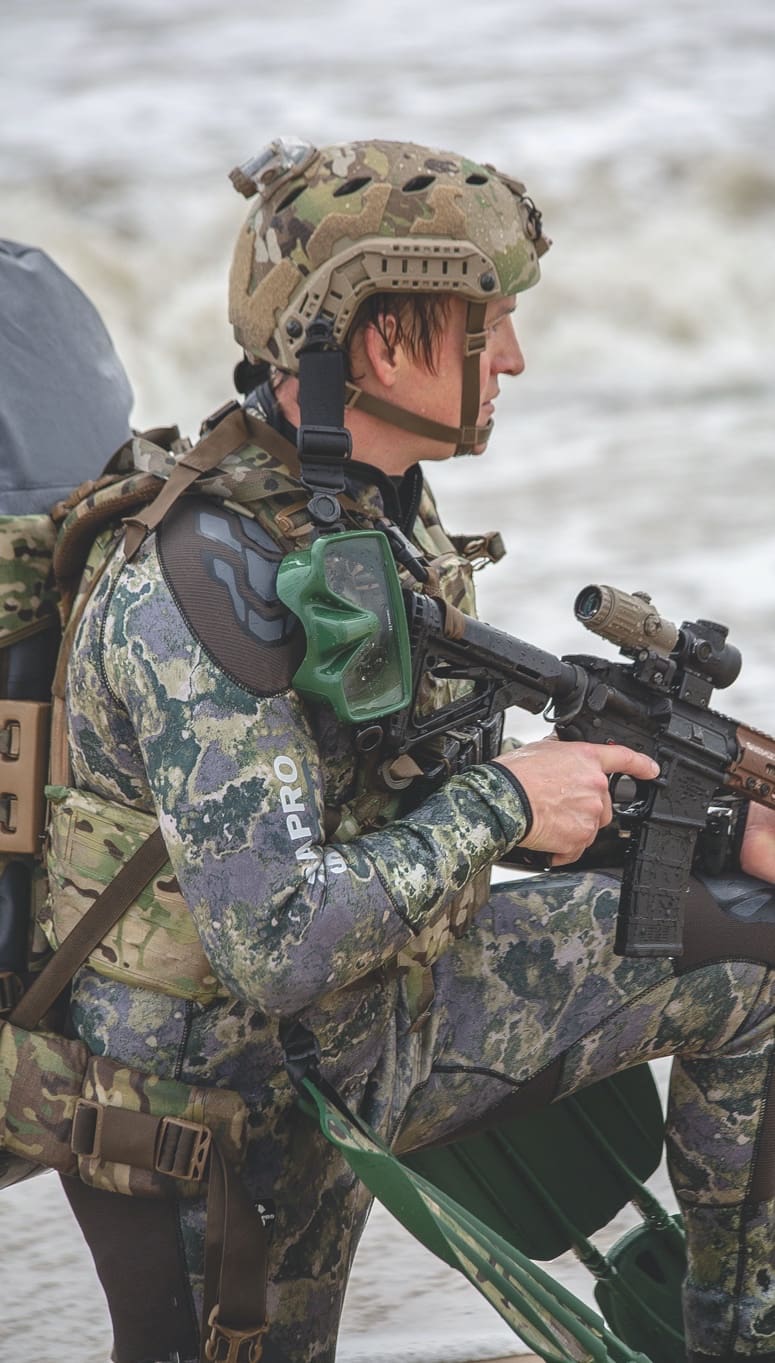
Typically when you are diving, you want to stay as streamlined as possible. It will help keep you on time and help you use less air. But sometimes you have more things to carry so you might need to add more storage. The major problem with pockets on your thighs or hips is the drag it will create. When these pockets are full, they add about two to four inches to your profile. You can wear your BDU’s, and that will add pockets to your legs and arms. If you chose to wear a uniform, I would recommend the Patagonia Jungle uniform. It is super light and dries fast. You can also add pouches onto your gear belt, or you can put one or two onto your rebreather straps. An old school M16 pouch is great for a spare mask or extra fin straps. You can cut the grenade pouches off of the sides to reduce the drag. Here are a few after-market pockets options that can help you streamline your profile without sacrificing your gear needs or altering your existing gear in any way.

SCUBAPRO HYBRID CARGO SHORTS form-fit to your body like you were born wearing a pair. On the underside of the nylon panels, a micro-plush interior makes the shorts warm and cozy. This fleece fabric absorbs less water, which keeps heat against the body, increasing overall warmth. They also dry quickly. They can be worn by themselves, over a wetsuit, or if you need a little more warmth, they are great for over dive skins in warm water. They are also useful for items that need to be at the ready or if you need to tuck something away while diving.


The SCUBAPRO Hydro’s Pro Cargo Thigh Pocket (full pocket with clips and straps) can provide the same storage as the Cargo shorts that capacity. Ideal for storing swimmer slates, lights, marker buoys, spare masks, compact cameras. Quick attachment via clips & thigh strap. The pocket has a large flap with a squeeze-style” side-release buckle closure. Bellow pocket design and large flap make access to stowed items easy and secure. The most significant feature is if you don’t need additional storage capacity, you can just remove the pocket for a more streamlined profile.

The SCUBAPRO Hydros Pro BCD Ninja Pocket is ideal for storing swimmer slates, lights, marker buoys, spare masks, compact cameras. Quick deploy when needed, roll-up when not. Pocket has a large flap with squeeze-style” side-release buckle closure. Bellow pocket design and large flap make access to stowed items easy and secure. All of the SCUBAPRO pockets are made from durable nylon fabric for strength and durability.

Another option is to glue pockets onto your wetsuit/ drysuit. This is way more permit, so make sure you get it right. You can do it yourself, but unless you have done things like this before, I would recommend having someone that has done it before showing you how to do it or have them do it. There are a lot of YouTube videos out there and articles about how to do this. There are pockets you can buy just for this purpose.

www.google.com

US Army Army Issues Over 10,000 Modern Simple Key Loaders to Units

Saturday, October 26th, 2019

ABERDEEN PROVING GROUND, Maryland — In an ongoing effort to modernize the Army’s network capabilities, Program Executive Office Command, Control and Communications-Tactical’s (PEO C3T) Project Lead Network Enablers (PL Net E) is conducting a Simple Key Loader (SKL) Turn-In and Exchange Program for units all over the world.

The SKL is a hand-held device that Soldiers use to load cryptographic keys onto their equipment; thereby, enabling secure communication. The legacy SKL V1 and V2 are now obsolete, due to their limited capabilities, and are being removed from the field — primarily through the Turn-In and Exchange Program managed by PL Net E’s Product Lead Communications Security (PdL COMSEC) whose responsibility is to develop, procure, test, field and sustain COMSEC solutions to protect the tactical network.

The main objective of the program is to collect legacy devices still in the field, which will reduce vulnerabilities associated with using older equipment, and replacing them with the new SKL V3.1. PL Net E coordinates the shipment of the collected devices back to the Tobyhanna Army Depot (TYAD), who then marks them for demilitarization and disposal. The issuing of the newer equipment continues to push the Army forward by deploying modern capabilities that are easy to use, resilient and hardened to protect against adversarial cyber threats. To date, the team has issued over 10,000 SKL V3.1s.

The Turn-In and Exchange Program is a coordinated effort with the U.S. Army Forces Command, National Guard, U.S. Army Reserve, Communications Security Logistics Activity (CSLA) and TYAD. “The SKL V3.1 Exchange Program schedule is developed in accordance with the Department of the Army Master Priority List, with the focus on deploying units and high priority missions. However, this doesn’t account for units that are not on the priority list that need modern or replacement SKLs,” said Mr. Scott Lambert, PdL COMSEC SKL Assistant Product Manager.

PdL COMSEC and CSLA came together and developed a strategy to address the backlog of units requiring upgraded devices who are not on the priority list. As a resolution, CSLA contributed 2,500 reconditioned V2.1 and V3.0 SKLs from depot stock to the Exchange Program. PL Net E is now collaborating with CSLA to issue the reconditioned V2.1s and V3.0s, as well as new V3.1s to units, depending on the circumstance. The partnership with CSLA frees up V3.1 assets that can fill the requirement of units not on the priority list, but in need of SKLs. “As a result of the collaboration, PdL COMSEC will avoid having to procure those 2,500 assets to meet demands,” said Mr. Lambert.

By Robin Schumacher, PL Network Enablers/PEO C3T Public Affairs

FirstSpear Friday Focus – 9oz Stratton Flannel

Friday, October 25th, 2019

FirstSpear’s all new winter weight Stratton Flannels have arrived early in three new great looking colors. 100% American made in the same cut as the 4oz we saw last month in a much heavier 9oz weight. Premium construction with oversized breast pockets, exterior hang loop, and two button closure on forearm and cuff. Machine washable and oversized to accommodate 3% shrinkage after a few cycles in the wash. The Stratton Flannel is an oversized design, step down one size from your normal t-shirt size for a standard fit.

Made in America – Now Shipping

www.first-spear.com/technical-apparel/stratton-flannel

Next-Generation Bomb Suit Lightens Load for Marines

Wednesday, October 23rd, 2019

MARINE CORPS BASE QUANTICO, Va. —
Explosive Ordnance Disposal Marines will soon receive a lighter and more capable bomb suit for protection against various threats.

Fielding in 2020, the EOD Advanced Bomb Suit incorporates several 21st century, next-generation technological advancements intended to help EOD Marines withstand arduous conditions on the battlefield.

The system protects against severe injuries caused by blast overpressure, shrapnel, heat and impacts. The suit also comprises an elaborate integrated ventilation system to reduce heat stress and improve breathing.

“The new EOD bomb suit provides the warfighter with additional protection and flexibility,” said Fernando Pena, Marine Corps Systems Command’s project officer for the suit. “It is a superior suit compared with the previous system.”

In 2014, the Corps fielded an innovative bomb suit that has provided protection to the warfighter. However, because threats are ever-evolving, the need to find new ways to safeguard EOD Marines is paramount in carrying out missions and defeating adversaries.

Master Sgt. Zachariah Kindvall, an MCSC subject matter expert for the EOD bomb suit, says the new system helps meet the warfighter’s ever-changing needs.

“The new EOD bomb suit will add another level of personal protection equipment for Marines to use,” said Kindvall. “It provides a higher level of protection than what we currently have.”

The EOD suit meets or exceeds the performance and characteristics of the legacy system. For example, the newer system has a more ergonomic design, offers superior overall balanced protection, and provides greater situational awareness and operational capabilities, said Pena.

Kindvall noted how the suit offers more comfort, reducing the risk of fatigue. He said engineers emphasized the design and fitting of the suit, making it easier for the warfighter to maneuver. The clothing is also easier to don and doff compared with the previous system.

“The foot protection, in particular, is much easier to walk in and provides much more comfort and protection,” said Kindvall.

Additionally, the suit is significantly lighter than its older counterpart—a characteristic of the system Kindvall says can help Marines. Lightening the warfighter’s load is important because too much gear can wear on the warfighter. The new bomb suit reduces weight while also enhancing protection and communication.

“Lightening the load gives Marines more flexibility during missions—even if it is just a reduction of a few pounds,” said Kindvall. “That weight reduction can be significant.”

Both Pena and Kindvall are confident the system will be advantageous on the battlefield. As Pena explained, the warfighter can investigate and perform render-safe procedures involving an improvised explosive device knowing the suit’s added stability can protect them from serious impact and other hazards.

“We as a program office must be proactive in understanding the dynamic changes of today’s threats as well as future threats,” said Pena. “The new EOD bomb suit helps to support this idea.”

By Matt Gonzales, MCSC Office of Public Affairs and Communication | Marine Corps Systems Command

Integrated Visual Augmentation System Brings AI to Soldier Training

Tuesday, October 22nd, 2019

WASHINGTON — The Army is now testing virtual-reality goggles that will allow Soldiers to rehearse combat missions that they are about to undertake.


The Integrated Visual Augmentation System, known as IVAS, will be tested by 82nd Airborne Division troops next month at Fort Pickett, Virginia. The IVAS goggles will allow Soldiers to see simulated images superimposed over the actual terrain.


The Soldiers will wear the goggles and miniature computer equipment as they negotiate obstacle courses, run land navigation and conduct other missions, said officials from Program Executive Office Soldier.

Called Soldier Touchpoint 2, the test is designed to provide feedback to PEO Soldier so the IVAS heads-up display can be further enhanced before 200,000 of the headsets begin to be fielded in 2021.

IVAS has been touted by senior leaders as a “game-changer” for Soldier lethality and a quick win for the modernization priority.

The IVAS headsets are a good example of how artificial intelligence is being used to enhance Soldier lethality, said Brig. Gen. Matthew Easley, director of the Army’s AI Task Force.

Each pair of IVAS goggles has “significant amounts of high-tech sensors onboard and processors,” Easley said at a Warriors Corner presentation Monday afternoon during the Association of the U.S. Army Annual Meeting and Exposition.

Each IVAS headset has integrated AI chips built into the system, he said.

“Those chips are doing visual recognition,” he said. “They’re tracking a Soldier’s eye movements, they’re tracking a Soldier’s hand as it interfaces with the system, and they’re tracking a Soldier’s voice.”

The IVAS headset “uses a customized AI piece” to make it work, he said.

AI will be an enabler for all of the Army’s modernization programs over the next decade, Easley said.

“Each one of those systems need AI,” he said, from Future Vertical Lift to Long-Range Precision Fires to the Next Generation Combat Vehicle.

“AI, as you know, is becoming a pervasive part of our society,” he said.

“Every system that you can think of — from self-driverless cars to ride-sharing applications, to restaurant recommendation systems to healthcare systems — they span every area of our society.

“They need to span every battlefield system that we have,” as well, he said, from maneuver to fire control.

By Gary Sheftick, Army News Service

Max Talk 41: CQB: Methods of Entry: Step Center

Monday, October 21st, 2019

This is the forty-first installment of ‘Max Talk Monday’ which shares select episodes from a series of instructional videos. Max Velocity Tactical (MVT) has established a reputation on the leading edge of tactical live fire and force on force training. MVT is dedicated to developing and training tactical excellence at the individual and team level.

This is a segment from the Max Velocity Tactical CQBC (Close Quarter Battle Course). The three day class covers Tactical Clearance methods. This specific period of instruction concerns the number one man entering an open doorway via the Step Center method of entry. The CQBC class is a three day event, day 1 on the flat range conducting individual skills and entry drills, using live fire and frangible ammunition. The latter two days are force on target and force on force at the CQB complex.

More of these instructional videos can be found by subscribing to the Max Velocity Tactical YouTube Channel.

Detailed explanations can be found in the MVT Tactical Manual: Small Unit Tactics.

Max is a tactical trainer and author, a lifelong professional soldier with extensive military experience. He served with British Special Operations Forces, both enlisted and as a commissioned officer; a graduate of the Royal Military Academy Sandhurst. Max served on numerous operational deployments, and also served as a recruit instructor. Max spent five years serving as a paramilitary contractor in both Iraq and Afghanistan; the latter two years working for the British Government in Helmand Province, Afghanistan.

Website: Max Velocity Tactical

YouTube: Max Velocity Tactical

Excellence in Tactical Training.

SCUBAPRO Sunday – Midway

Sunday, October 20th, 2019

The movie Midway is one of my favorite WW2 movies. They used a lot of real footage from the battle that was shot by director John Ford during the actual battle, (He also directed, They were Expendable, and Mister Roberts) you can tell it was old footage, but it does helps tell the story. So far Hollywood has not done a great job “remaking” movie or retelling the same story. They killed Red Dawn. Hopefully they use the same mindset that was used for Saving private Ryan, Band of Brothers and even Fury.