SIG SAUER - Never Settle

Archive for the ‘Guest Post’ Category

SCUBAPRO Sunday – Diver Propulsion Vehicles

Sunday, June 30th, 2019

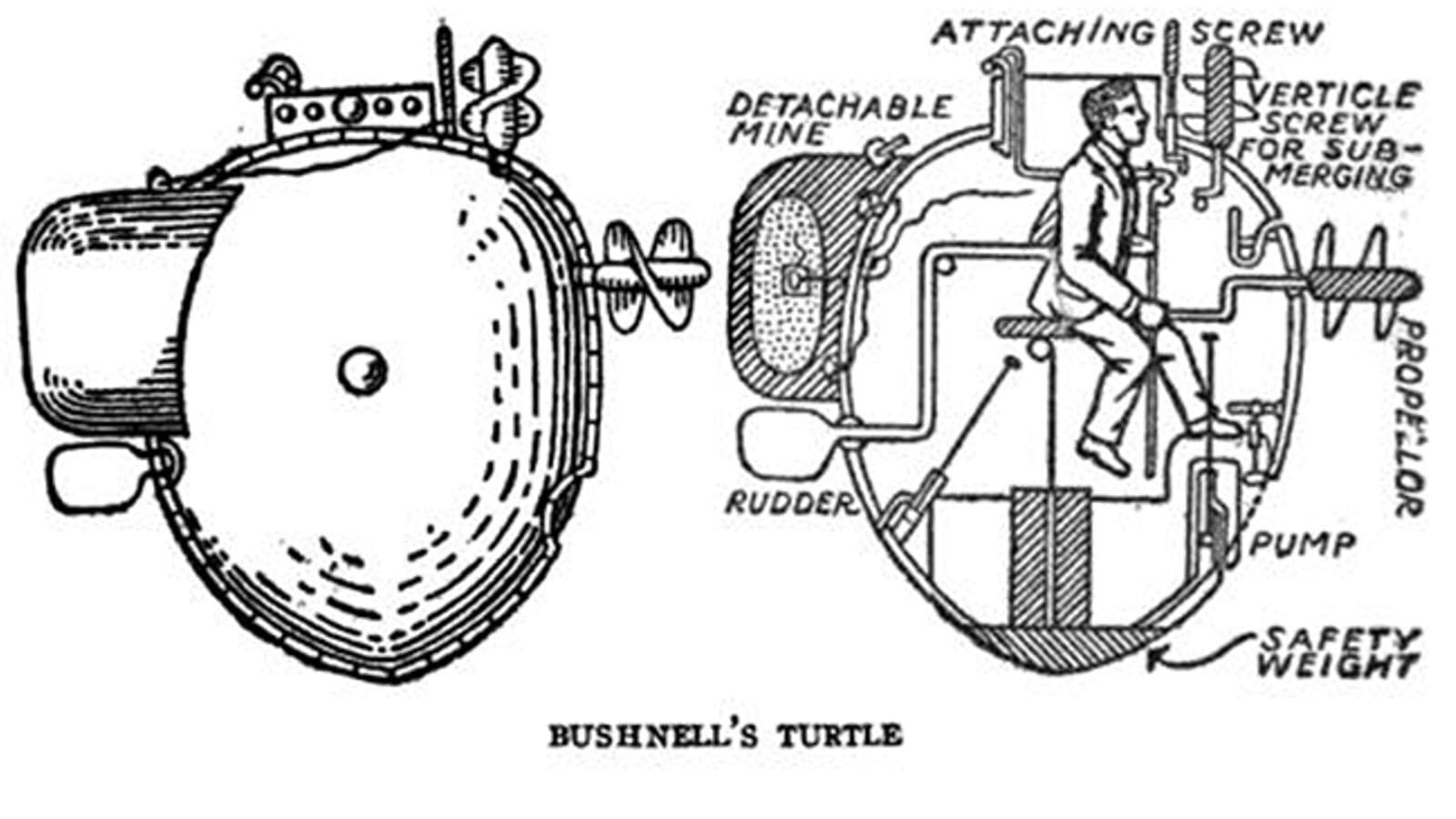
In the early 1770s, a Connecticut inventor David Bushnell started designing what would be the first submersible. It was a small egg-shaped and less than eight feet tall. Her hull was constructed from two oak shells held together by steel bands and waterproof with a thick layer of tar. It had ventilation tubes, a compass, and a device for determining depth. Attached to the exterior was a primitive bomb. The pilot entered the vessel through a hatch at the top. There were a couple of small glass windows that provided very light and visibility. It was operated by a hand crank that propelled it and a tiller that steered it. The operator also controlled the hand pump that regulated the ballast that submerged and surfaced the craft. Once submerged and the ventilation tubes were closed, there was about 30 minutes worth. It was called “Turtle” because of the two “shells” put together to make it.  


In the spring of 1776, about a year into the Revolutionary War, Bushnell wrote to General George Washington asking if the Turtle could be used in defense of New York City’s harbor. Washington accepted the offer. Around midnight on 6 September, the Turtle, piloted by Army sergeant Ezra Lee. That’s right, the first submarine action by the U.S. was the Army. 

It took Lee two hours to get to his target; a British ship named the HMS Eagle. Once he positioned himself beneath the vessel, he was supposed to drill into her hull using a bit attached to Turtle’s top hatch. Once the hole was deep enough, he would anchor his explosive device to the ship’s hull. He had about 30 minutes to get away from the Eagle before the charge would detonate. That was the plan, but Lee’s bit got stuck in a metal part of the hull. On his second attempt, the Turtle bobbed to the surface and was spotted. As he headed for shore, Lee released his “torpedo,” which exploded harmlessly in the middle of the East River. Again, he was Army.  

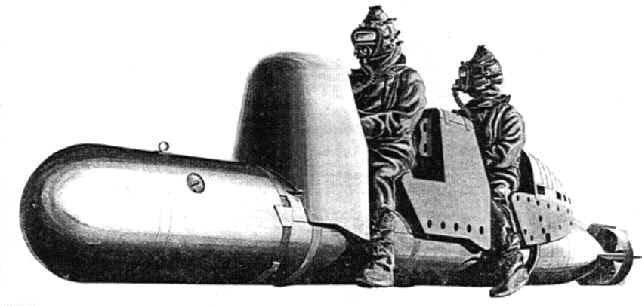
Although the Turtle was not technically a DPV, it was the U.S. first attempt at underwater warfare. The Human torpedoes or manned torpedoes are a type of diver propulsion vehicle used as secret naval weapons in World War II. The name was commonly used to refer to the weapons that Italy, and later Britain, deployed in the Mediterranean and used to attack ships. The first human torpedo was the Italian Maiale (“Pig”). In operation, it was carried by another vessel (usually a submarine) and launched near the target. It was electrically propelled, with two crewmen. With rebreathes and riding astride. They steered the torpedo at slow speed to the target. At the target, they would use a detachable warhead like a limpet mine and then rode the torpedo away. The idea was successfully applied by the Italian navy early in World War II and then copied by the British. They discovered how effective this weapon could be after three Italian units successfully penetrated the harbor of Alexandria and damaged the two British battleships HMS Queen Elizabeth and HMS Valiant, and a tanker. The official Italian name for their craft was Slow-running torpedo, but the Italian operators nicknamed it the “Pig” because they were difficult to steer. The British versions were named “chariots.”


They were used thru out WW2, After the war, the technology started to get better, and they were used thru out the cold war to put people onto beaches and other fun stuff like that. There are many types of DPVs out there, and I think it is better for me to post a link to a site that talks about them.

en.wikipedia.org/wiki/Diver_propulsion_vehicle

There are also some other ones out there. Make sure you get proper training before trying them.

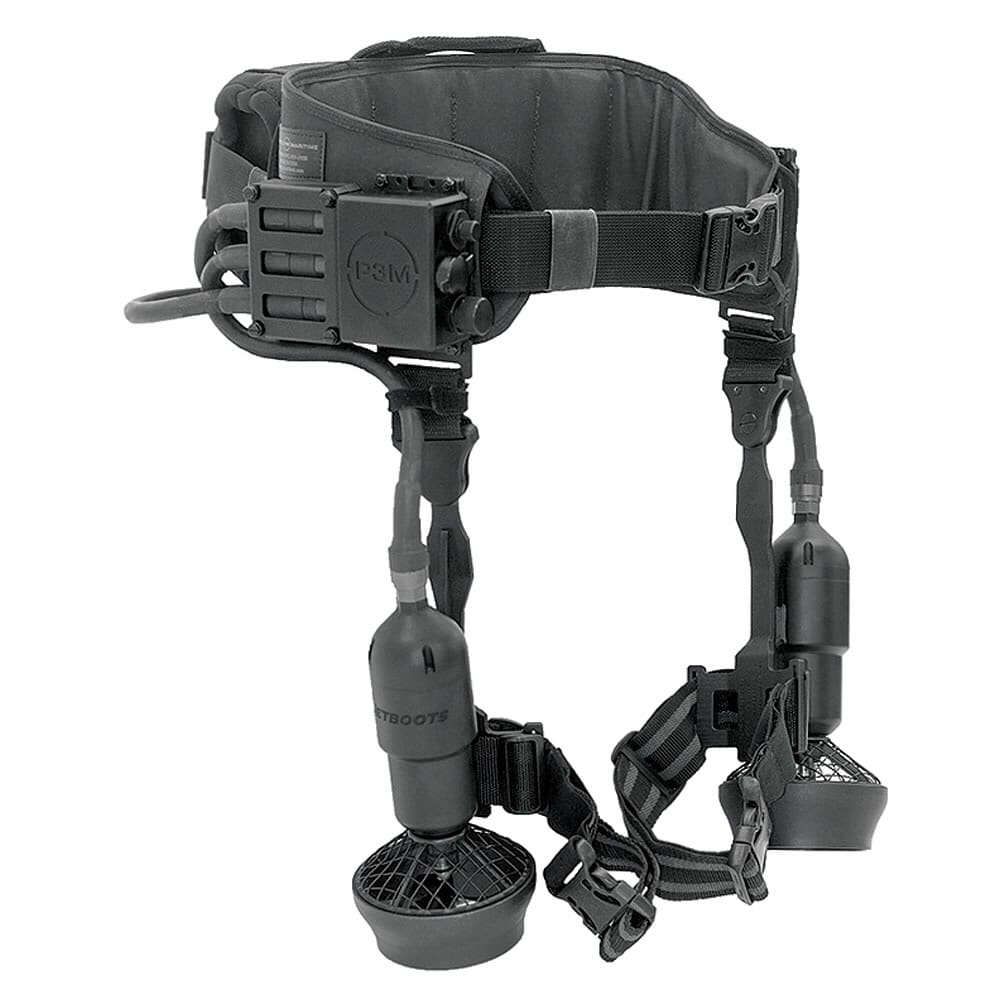
Jetboots Diver Propulsion System, (JDPS) is a unique hands-free diver propulsion system designed specifically for the military and commercial diver. JDPS uses brushless motors and lithium-ion batteries to achieve incredible propulsion at a meager total system weight, which enables previously impossible mission profiles. Jet boots were first used to help with hooking and climbing of GOPLAT and in currents. Now they are used more for getting from point A to B.


The most significant benefit of using a diver propulsion vehicle is you can go faster, cover more distance, and increase your bottom time. Since you won’t be kicking as much as you typically would be, you can stay down longer. They also help get divers into a place where because of the current you would not be able to get into. If you judge the tides wrong and trying to swim age against it, it can be impossible.  


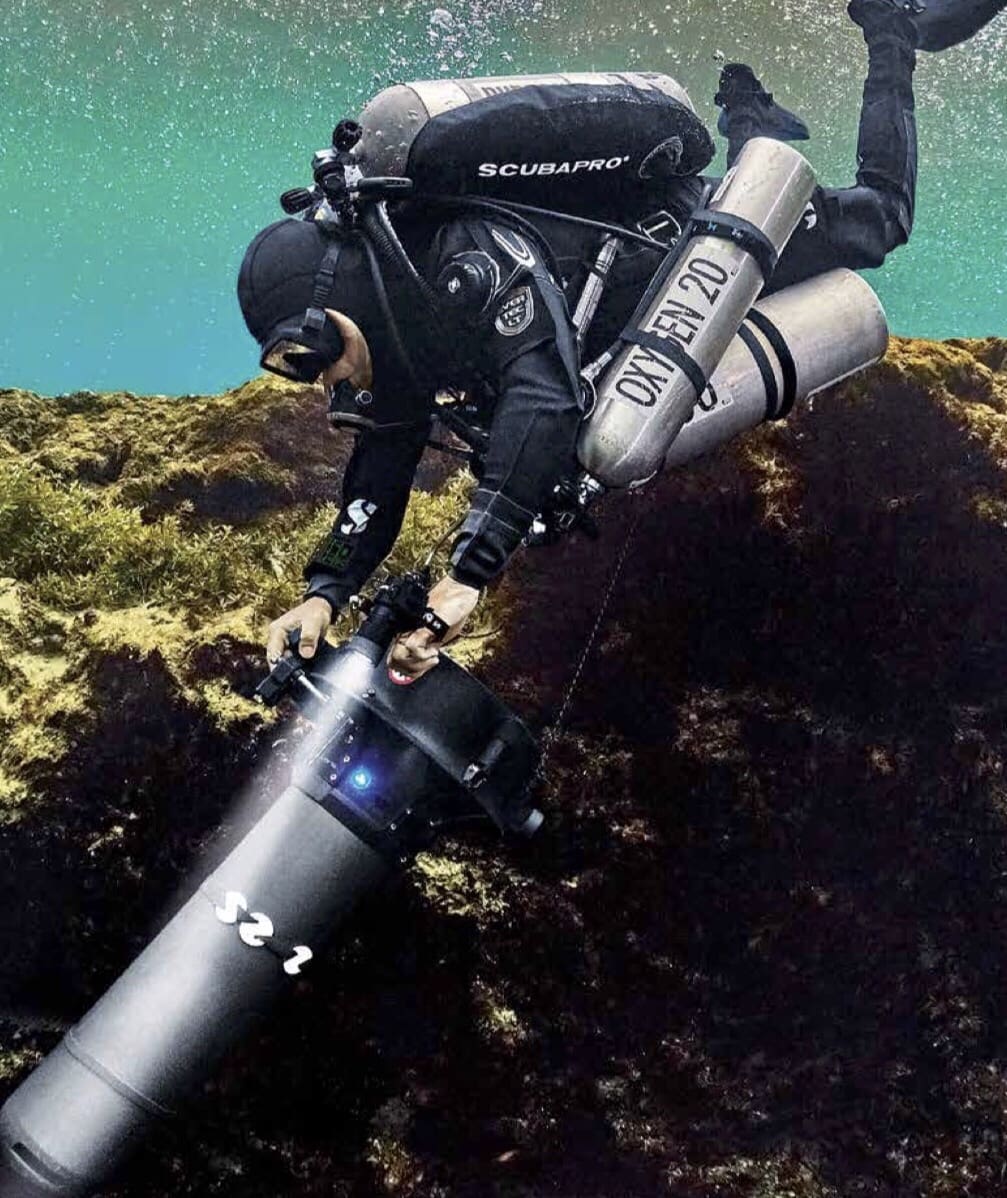
There are DPVs powerful enough to pull multiple divers at ones. The Suex is one of the best DPV’s out right now. I have seen it pull five fully loaded combat divers. Suex makes different models that can be used by themselves or linked together to work in pairs. The Suex represent the cutting-edge technology of underwater mobility. Performance, reliability, maneuverability, are the cornerstones that make Suex one of the leaders in the underwater scooter market. Diving a Suex is an incredible experience, ensures both high level of maneuverability in overhead environments and comfort during extensive cruising.  

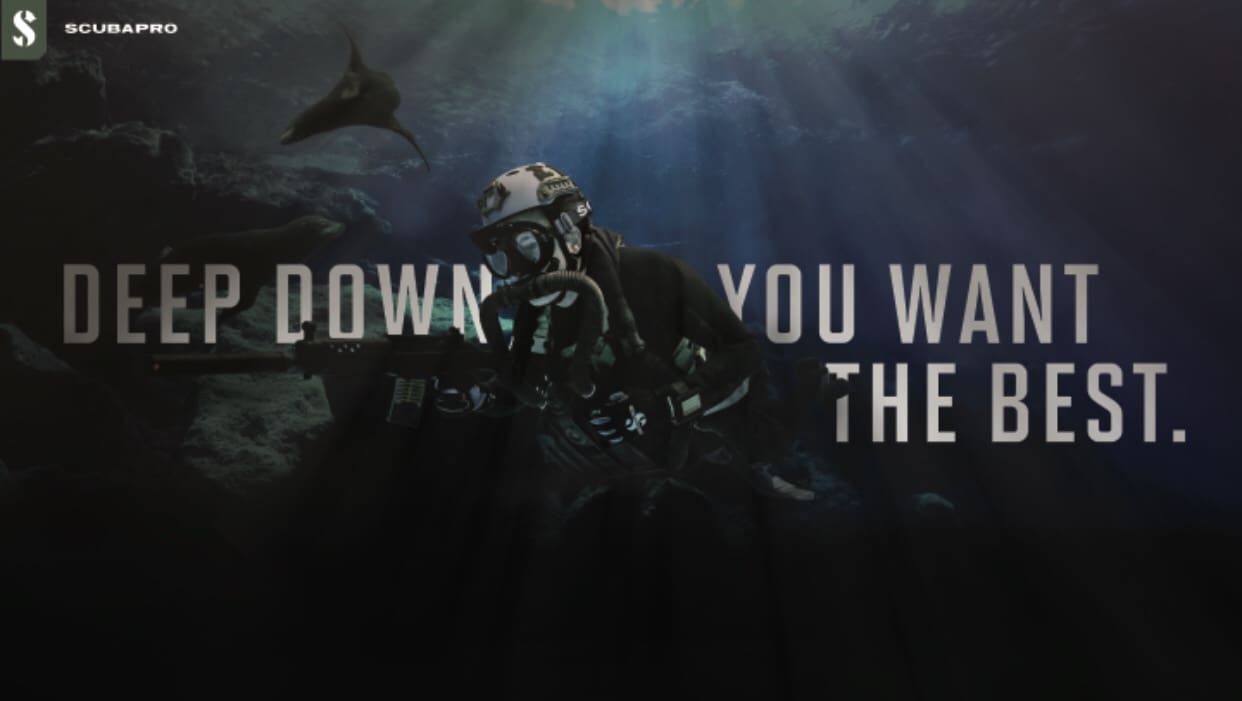
A lot of divers are being required to wear helmets when they are diving a DPV type devise.  SCUBAPRO makes a helmet mask system call the Odin straps. It gives you the ability to attach any SCUBAPRO masks that has quick clips directly to an Ops Core ARC Rail. They can be quickly donned and doffed. They can also be changed backed to the full mask strap. Divers should get additional training on how to pilot an underwater scooter before using them. While diving, an underwater scooter should only be used for horizontal movement. Ascend and descend using your fins. DPVs have come a long way and they are still moving forward faster and faster, in the water and in technology.

All Americans Conduct Jump Testing Of CSASS

Saturday, June 29th, 2019

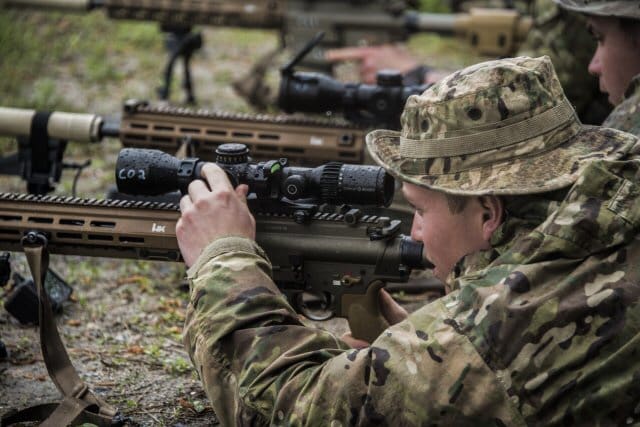
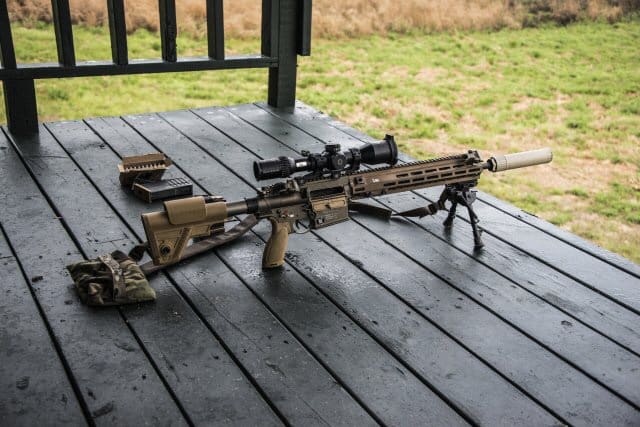
FORT BRAGG, N.C. — Operational testing of the Army’s newest precision rifle, the Compact Semi-Automatic Sniper System (CSASS) began recently, marking one of the final hurdles this system will face prior to fielding.

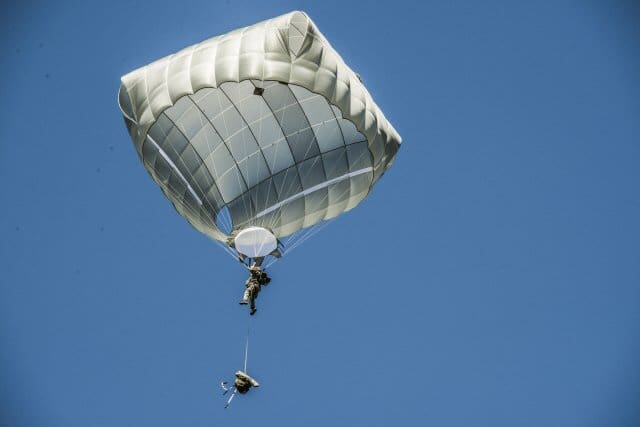
Snipers assigned to the 82nd Airborne Division recently participated in airborne infiltration test trials of what could potentially be the Army’s newest sniper system.

“The compact nature of the CSASS is appealing to airborne forces and particularly Snipers who are typically armed with long barreled precision rifles,” said Sgt. 1st Class Ross Martin, a Test NCO with the U.S. Army Operational Test Command’s Airborne and Special Operations Test Directorate (ABNSOTD).

“Current sniper systems are equipped with 20-inch barrels, sound suppression systems and full length stocks that provide accuracy and a stable firing platform required of any precision rifle,” said David Parris, a CSASS New Equipment Training (NET) trainer from the U.S. Army Tank-automotive and Armaments Command’s Soldier Weapons Support.

Being a product of battlefield evolution, the CSASS is more geared toward operations in urban environments and operating in and around armored vehicles where traditional length sniper systems can be cumbersome.

“The CSASS will feature a reduction in overall length (with the suppression system attached) and an adjustable stock that provides maneuverability and promotes a stable firing position,” said Victor Yarosh of Project Manager Soldier Weapons.

This will provide airborne snipers a more compact load during airborne infiltration operations and provide a precision rifle platform more conducive to their combat environment without reducing their lethality.

Spec. Nicholas Farmer of Orlando, Florida, a Sniper in C Troop, 1st Battalion, 73rd Cavalry Regiment immediately identified the attributes of a more compact precision rifle.

“The CSASS is much shorter and lighter than our current system which will make long dismounted movements and reaction to contact more efficient,” he said.

Spc. William Holland from Sylacauga, Alabama, a sniper with 2nd Battalion 508th Parachute Infantry Regiment echoed his fellow snipers assessment as, “lightweight and compact makes for a more manageable load during post drop operations.”

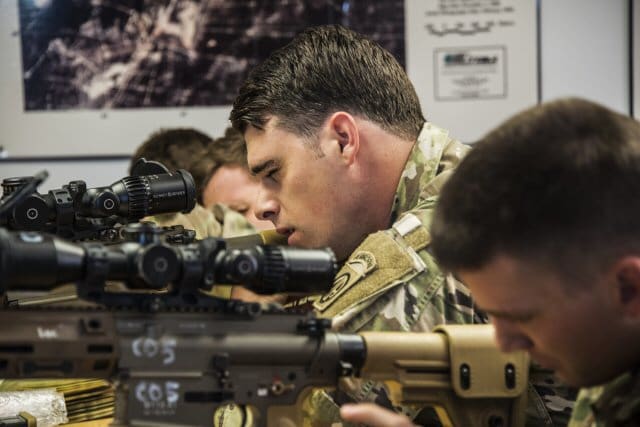
Prior to testing, Snipers participated in a NET which included familiarization with the system, maintenance, target engagement and zeroing procedures.

The critical task in testing any small arms platform intended for use by airborne forces is ensuring zero retention of the primary optic subsequent to airborne insertion. This is a critical gauge of the paratrooper’s lethality during airfield seizure and other follow on operations.

“This process establishes a baseline for site reticle locations prior to and post airborne insertion,” said Lacretia Cook, an instrumentation technician with the ABNSOTD.

“Testers can monitor any ‘shift’ in the weapons sight reticle.”

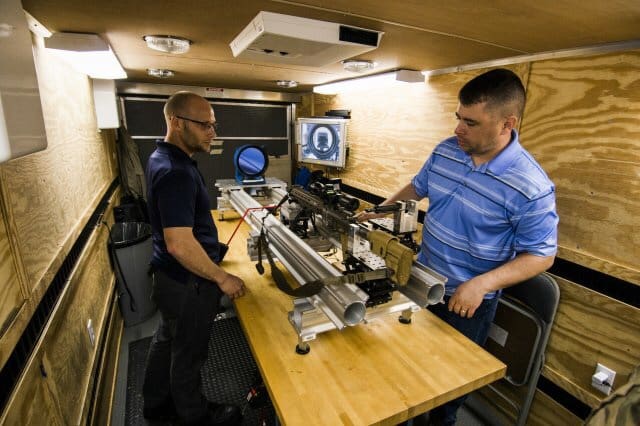
To evaluate this performance measure of the CSASS, the ABNSOTD test team employed the organization’s mobile weapons boresight collimator to ensure the snipers’ “pre-mission” zero was not degraded by shock associated with parachute infiltration.

Once this data was collected, snipers conducted a known distance live fire exercise to gauge lethality subsequent to static line and military free fall operations.

For Sgt. Christopher Landrum of Delano, California, the target audience of trained snipers was perfect.

“It’s vital that operational troops are the ones testing the system as they are best suited to recognize system requirements and mission capabilities,” he explained.

Sgt. 1st Class Darin Pott, a senior sniper with the 1st Battalion, 73rd Armored Regiment said he would also like to see Soldiers added to the process earlier.

“The Army should involve the sniper community at the earliest possible milestone of development,” he said.

“Operational Testing is about Soldiers. It is about making sure that the systems developed are effective in a Soldier’s hands and suitable for the environments in which Soldiers train and fight,” said Col. Brad Mock, Director of ABNSOTD.

“OTC is the U.S. Army’s only independent operational test organization,” said Lt. Col. David Dykema, deputy of ABNSOTD’s Test Division.

“We test Army, Joint, and Multi-service airborne and airdrop related warfighting systems in realistic operational environments, using Soldiers to determine whether the systems are effective, suitable, and survivable.

“Any time Soldiers and their leaders get involved in operational testing,” he added, “they have the opportunity to use, work with, and offer up their own suggestions on pieces of equipment that can impact development of systems that future Soldiers will use in combat.”

Story by Mike Shelton, Airborne and Special Operations Test Directorate, U.S. Army Operational Test Command Public Affairs

Photos by Mr. Chris OLeary, Videographer, Airborne and Special Operations Test Directorate, U.S. Army Operational Test Command Public Affairs

Flying Cross Helped US Army Roll Out New Uniforms for D-Day 75 Celebrations

Saturday, June 29th, 2019

Military uniforms have gone through many changes during the 224 year history of the US Army. Revolutionary War uniforms for example were very fancy and colorful by today’s standards, but by the time of the Civil War in the 1860’s uniforms had become more utilitarian. And by the Spanish-American War it was noted that Teddy Roosevelt’s “Rough Riders” looked more like cowboys than soldiers.

By the beginning of the 20th Century duller natural tones had become the new standard for uniforms and when the US Army entered WWI, it was in uniforms in a brownish-green color called “Olive Drab”.

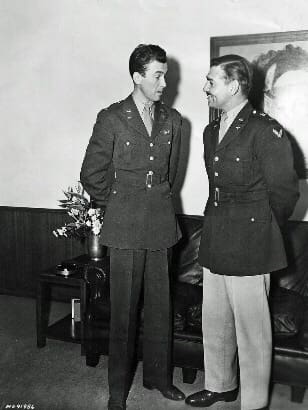
Hollywood stars Jimmy Stewart and Clark Gable wearing two versions of the 1940-Pattern Officers Service Uniform while serving as Captains in the Army Air Force during WWII.  (Source: US Army, Public Domain)

By WWII, the US Army service uniform featured the subdued colors of Olive Green and Taupe. Nonetheless, the 1940-Pattern Officers’ Service Uniform possessed an easy-going elegance. It evoked the refined shooting jackets and safari suits frequently seen in Hollywood movies, and was also frequently seen being worn by movie star soldiers like James Stewart and Clark Gable. This uniform also acquired the famous “Pinks-and-Greens” nickname due to the contrasting hues of the jacket and trousers.

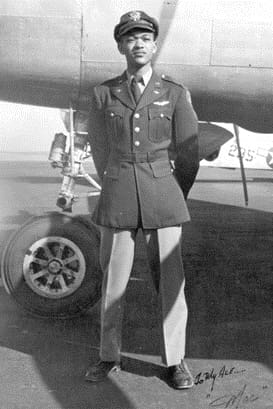
One of the original Tuskegee Airmen, Colonel Lloyd McKeethen pictured in his WWII “Pinks-and-Greens” uniform. (Source: goarmywestpoint.com/custompages/army/granddaughter)

By the end of the 1940’s however the wartime uniform had lost a great deal of its prestige, so a new look was introduced in 1954 with the “Class A”, or Dress Green Uniform. The Dress Green Uniform soldiered on through the Cold War, the Gulf Wars, and into the Global War on Terror.

Finally in 2008, the Class A Dress Greens Uniform was replaced by the blue Army Service Uniform (ASU). The ASU has however been very unpopular and it will be replaced by the new Army Service Green Uniform (AGSU) starting next year. The AGSU closely follows the style of the 1940-pattern Officers Dress Uniform – the famous WWII “Pinks-and-Greens”.

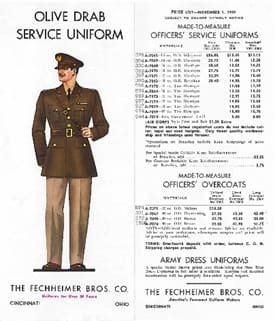
Fechheimer Brothers Company catalog from November 1941 showing fabric options and prices for private-purchase M1940-Pattern Officers’ Service Uniforms.

Flying Cross®, based in Cincinnati, Ohio was one of the original producers of the “Pinks and Greens”, and has been a leading manufacturer of uniforms for US military and law enforcement personnel for the past 175 years. Based on this long history of expertise, the Army approached the company in the spring of 2017 and has been working closely with Flying Cross ever since to roll-out the AGSU on time.

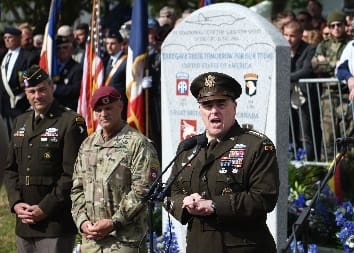
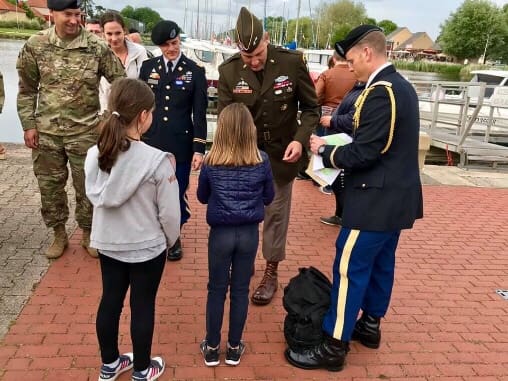
Chief of Staff of the U.S. Army, Gen. Mark A. Milley in Sainte Mere Eglise, France June 6, 2019. (U.S. Navy photos by Chief Mass Communication Specialist Michael McNabb)

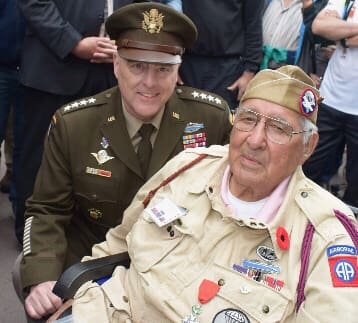
AGSUs are now being issued to a cross-section of Army personnel for wear-testing and user feedback. Earlier this month, Flying Cross also delivered 500 sets of the AGSU for Officers and NCOs participating in the 75th anniversary of D-Day.

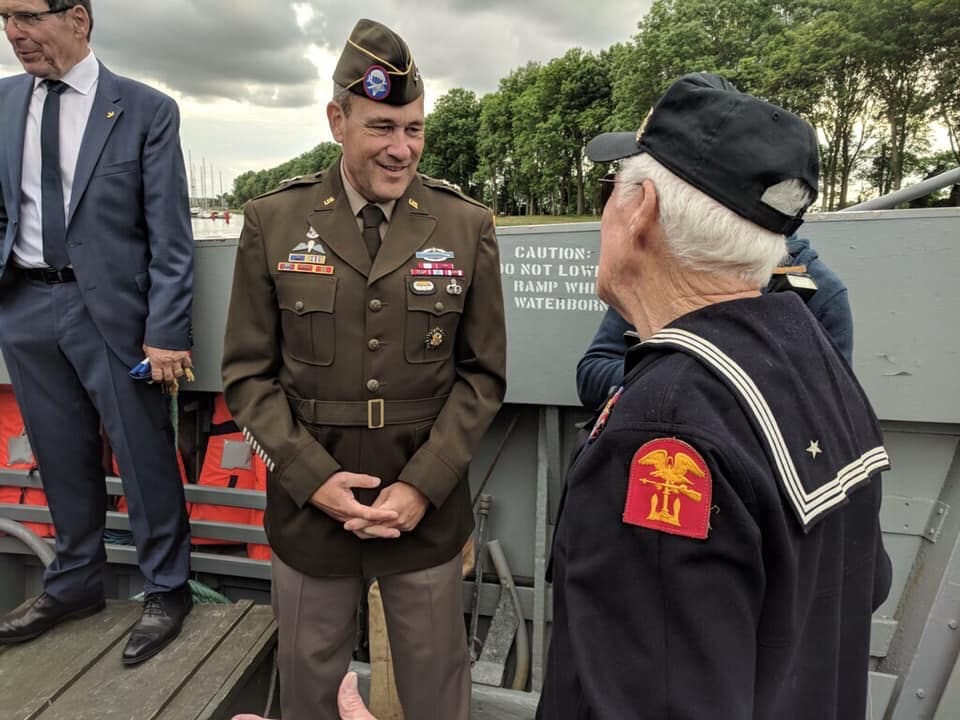
Maj. Gen. Brian Winski, 101st Airborne Division (Air Assault) at Carentan, France June 5, 2019. (US Army photos by Sgt. Steven Lopez, 101st Combat Aviation Brigade)

The Army Green Service Uniform capitalizes on the current retro style trend, includes a touch of old school Hollywood glamor, has a distinctly “American” look, and strongly connects the next generation of Soldiers with the heritage of the Greatest Generation of Soldiers.

For further information about Flying Cross and the Army Green Service Uniform, please visit www.goAGSU.com and follow Flying Cross on Instagram and Facebook.

FirstSpear Friday Focus – Pub Shorts V2

Friday, June 28th, 2019

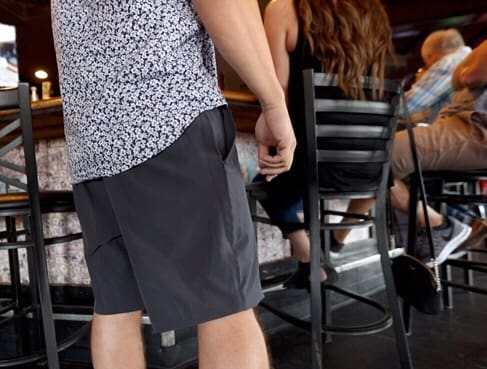
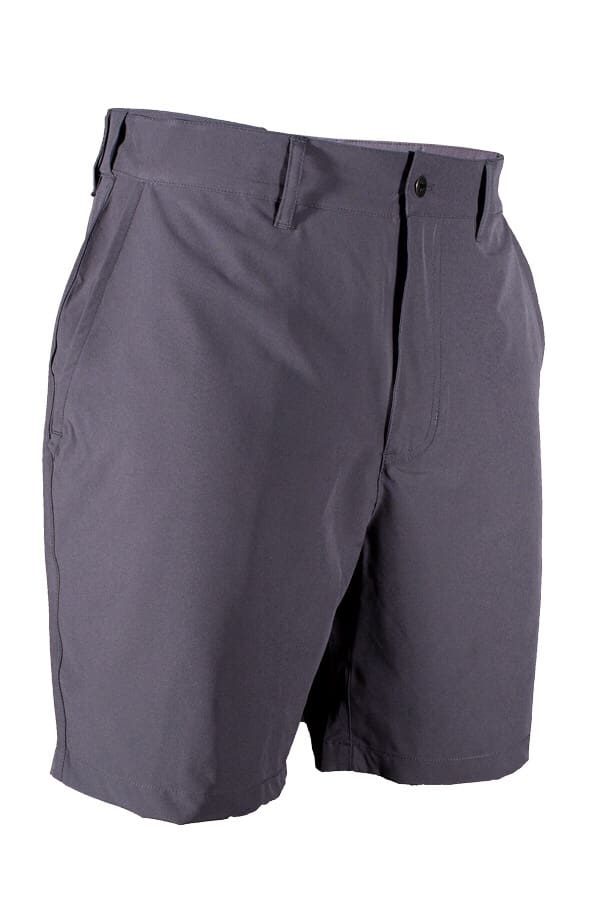
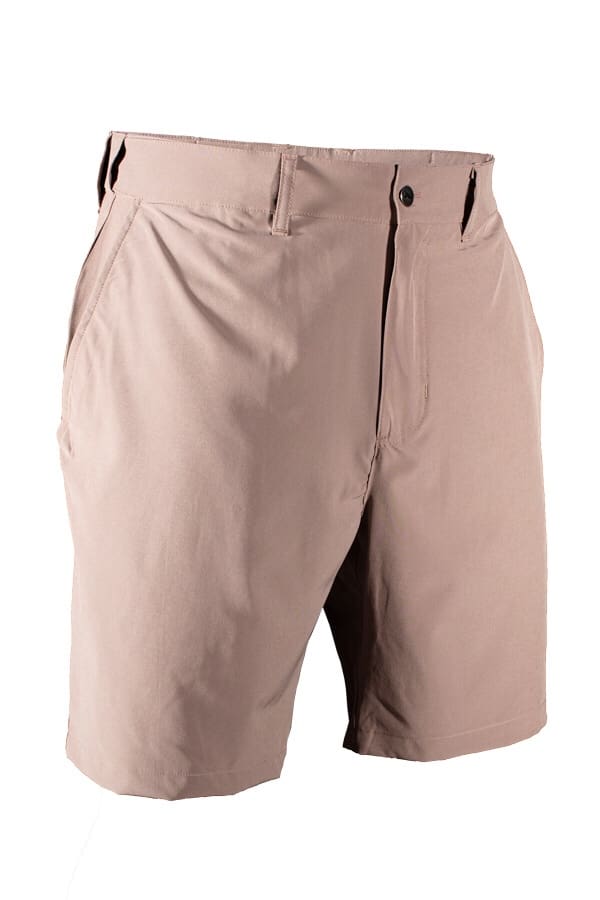
Today we are getting the first look at FirstSpear’s all new V2 Pub Shorts. Built with an all new light weight and super breathable material blend you are going to see increased comfort with more stretch and moisture wicking capabilities paired with a softer knit elastic waistband. Enhanced pocket design, 2nd belt loop added to back along with a shortened 8.5” inseam.

Ultra comfortable casual everyday shorts you can wear just about anywhere. Now shipping in two new colors Charcoal and Tan. 100% made in the USA.

www.first-spear.com/technical-apparel/outerwear/pub-shorts-7604

The Baldwin Files – The Fighting Load Continuum – Part 3

Thursday, June 27th, 2019

As I said in the comments in the Fighting Load Continuum (FLC), Part II, if I accomplish nothing else, I am hoping these articles will re-energize leaders’ emphasis on soldiers’ loads similar to what some of us experienced in the late 80s “Lightfighter” era. That focus in turn will presumably empower young leaders to make smarter decisions about what to carry and what not to carry. Carrying ONLY the mission essentials may or may not result in appreciably lighter individual loads, but I am making the argument that inculcating strict load discipline habits will assuredly enhance the unit’s chances for mission success. Bottom line up front, combat loads are both an enabling and debilitating mission factor that deserves much more active leadership attention then it is now receiving.
As we have already noted, the Army has a long-standing aspirational combat weight goal that it freely admits cannot realistically be achieved. Accept that fact but do not be afraid to attack the problem anyway. Be aggressive and do what can be done to lighten your unit’s load because it makes tactical sense. New technologies do tend to add weight – but also provide critical new or better capabilities. We talked about body armor specifically last time; good leaders prefer to bring people home alive – if not perfectly intact – so we accept the capability and the tradeoffs that body armor represents. Remember, human nature being what it is, unless ruthlessly controlled by leaders, units and individuals will ALWAYS carry as much as they can get on their backs “just in case” when going into combat.

A risk is a chance you take; if it fails, you can recover. A gamble is a chance taken; if it fails, recovery is impossible.

Erwin Rommel

Leaders cannot realistically avoid taking risks with soldiers’ lives in combat; however, leaders must do everything possible not to gamble with those lives. In terms of load management, the risk incurred is directly proportional to a unit’s ability to recover if a planning assumption proves to be mistaken. For instance, food and water are important to sustain combat power, but a temporary shortfall of those commodities is not likely to cost lives or have an immediately catastrophic impact on a mission. That is even true if the mission is unexpectedly and unavoidably extended or changed.

I will use a scenario based on a number of real world incidents to illustrate. Let us say a patrol (mounted or dismounted) went out in the morning for a short pre-scheduled meeting with a Host Nation counterpart. The meeting goes as planned, but on the way back a vehicle rolls over into the river – or perhaps just one soldier falls in and is swept under. Like it or not, the emergent recovery mission is now of indefinite duration. Still, if the patrol brought limited water or chow with them, it is of no great concern because remedial action is relatively easy. The patrol can make do until additional supplies can be delivered to them by vehicle, air or on foot if necessary. Sure, some stomachs may growl or mouths get dry before resupply gets there, but the situation remains low risk throughout. Indeed, our logistical system is optimized to rapidly deliver bulk consumables like water, food, and ammo.

On the other hand, if the patrol left behind Night Observation Devices (NODs) because they expected to complete the mission well before dark, that situation would be much more potentially dangerous. Recovery from that decision would be a lot more difficult and a low risk mission can quickly become high risk or even a gamble. We issue NODs individually and do not have many replacements on hand; therefore, they cannot be stockpiled and readily available like water, food, and ammo. Imagine the remaining soldiers of the parent unit trying to search individual bags and tuff boxes to collect NODs left in the rear and deliver them to the patrol before nightfall. A herculean task that – while not impossible – is best avoided. That is why I often use NODs to explain the “Gilligan’s Island Rule” mentioned in Part I. In short, it is rarely prudent to leave NODs behind even if the original mission is supposed to be a routine, daylight, “three hour tour.”

I also mentioned last time that I always cringe a little when I hear combat loads being compared / equated to civilian backpacking – even extreme forms of backpacking. While both involve packs, they are apples and oranges. An ultra-light enthusiast or even someone trying to summit Everest may be pitting himself against unforgiving nature. However, he is not also simultaneously moving to engage and destroy armed opponents that are intent on killing him first. Likewise, a civilian backpacker generally carries only his own gear and supplies. Conversely, soldiers always hump two categories of gear into combat, stuff carried to support him or herself, and – usually considerably more – stuff carried that is intended to support other members of the team. To that end, a combat soldier must always pack items in a manner that effectively supports the unit mission and his teammates – rather than for his own comfort and convenience. Beyond that, a soldier’s mission is not just to get somewhere and back. A soldier strives to get there, win the close fight with his team, and get back alive. That alone is the ultimate goal of combat. If a lighter load facilitates mission success, great. If a heavier load is needed to get the job done, so be it.

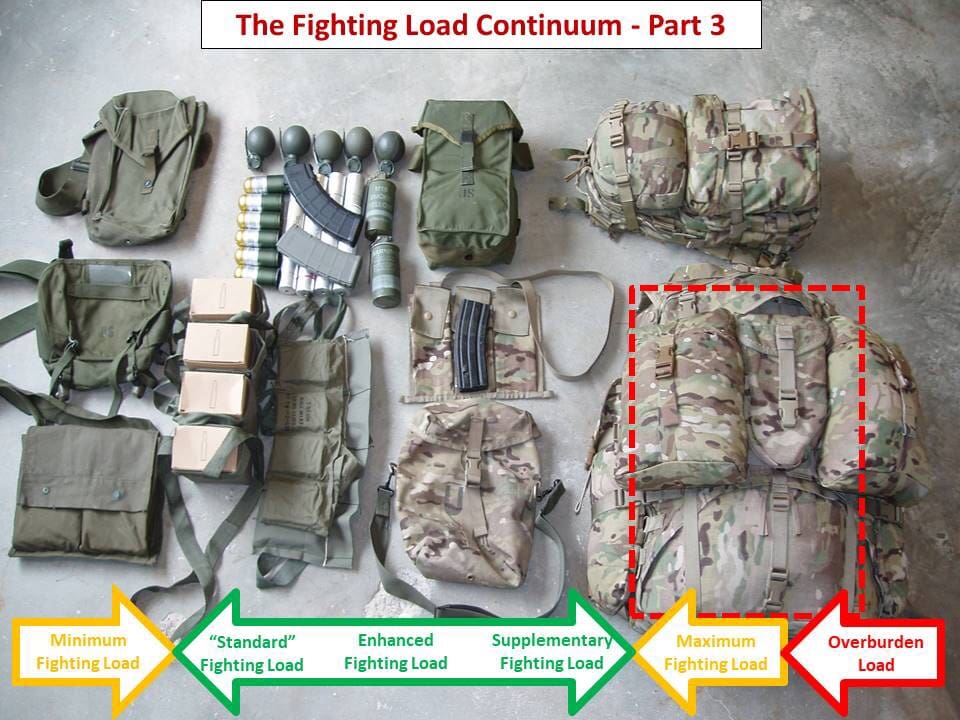
Appropriate packaging and packing of team materiel facilitates transferability and helps speed up mission transitions. The packaging of combat loads starts with distributing essential capabilities between the individual’s “fighting load” carrier, rucksack and assault pack. An additional challenge of effective load management – at the high end of the FLC especially – is not just about limiting the weight but also the bulk of a combat load. There are sound tactical reasons to keep the “cube” of any rucksack within the limits I have outlined in red on the large Molle rucksack in the attached picture. It is desirable that the pack dimensions not extend more than a couple of inches above the shoulders, much lower than the end of the tailbone, and no wider than the shoulders. Why is that? Easy, so the soldier can always fit readily through a fixed wing aircraft’s jump doors, down a ship’s passageways and – even more common in combat – thread through residential doorways, hallways or stairwells and still fight effective with a rucksack on if necessary. Note, I have purposely “inflated” this sample rucksack beyond the desirable size range – fully recognizing that overloading is more common than not.

Assault Packs and the Army issue Medium Rucksack provide smaller options that may be suitable in limited cases. Assault Packs like the one displayed (top right) in the attached picture are sized to carry an ASIP Radio (not shown) and accessories and can be used to carry other signaling devices like flares, smoke grenades, and visual or thermal panels critical during actions on the objective. Of course, additional ammunition for machineguns, some breaching tools, or demolitions might also be carried in these relatively small packs if needed. Similarly, some additional water and perhaps a singular piece of snivel gear might be loaded. Generally, there would not be room for substantial food or sleeping gear in this echelon of the FLC. Therefore, the “Assault Pack Load” alone is not going to be adequate for missions planned to extend beyond 24 hours. I would submit that despite falling into the so-called “3-Day Pack” category, the Medium Rucksack alone would probably be inadequate for a mission beyond 48 hours. Realistically, even filled to capacity including sustainment pouches, the large Molle and the FILBE rucksacks will still not get a unit much beyond 72 hours without at least a resupply of water and batteries.

As many of us have experienced in the past, when new “lightweight” gear has potentially reduced combat weight, the almost instinctive tendency is to use that “savings” to now carry more of something else. I suggest rejecting that understandable but counterproductive reaction. If a leader did not consider “something else” mission essential before, why is it mission essential now? It still sounds suspiciously like “nice to have” to me. For a time in the 82nd Airborne Division, I was a mortar platoon leader in a rifle company. We had both 60mm and 81mm mortars – 3 tubes each. The 60s (and their ammunition) were obviously the lighter option. If my platoon was tasked with harassing and interdiction (H&I) fires the 60s would do. However, if the company was going to be attacking a dug in enemy, the 81s were clearly the better choice. In short, because they were much more effective, the company humped the 81s more often than the 60s – despite the considerable extra weight. I say “the company” because, while the Mortar Platoon could haul the tubes and associated items, one or more of the Rifle Platoons had to carry most of the ammo. The reality of that considerable shared burden helped squash any inclination to seriously consider carrying any superfluous “nice to have” items.

Let us focus now on enhancing the packaging and transferability (P&T) of some common items in a combat load. At the bottom left of the attached picture is a claymore mine. It is the perfect embodiment of P&T. Everything needed to make the mine go boom is consolidated in the provided pouch. It is packed in the factory that way. It even has instructions with pictures on an inside flap just in case. This pouch can be readily carried internally or externally on any size rucksack. The claymore is not likely to be employed in an assault, but rather in the defense, after an objective is secured, or to deter pursuit in a break contact situation. When needed, the owner can disconnect it from the ruck, use the integral strap to carry it independently and / or pass it to someone else to employ – quick and easy. Unfortunately, not every item the military issues is so inherently P&T friendly. It behooves units to reconfigure those items into logical packets similar to the claymore example prior to launching on a combat mission. 

Some of this is probably a no brainer for people who have been doing it for a while. However, it is not something units do consistently well unless the leadership is paying attention. For instance, a radio should always be packaged with antenna, handmike or headset, and batteries even if it is only a contingency backup to the primary. If the radio is passed to someone else to use or just to carry, everything should stay together and the system constantly remains fully mission capable. As a side note, when talking about electronics or weapon systems especially, it is obviously preferable that whoever is carrying the item have enough training to put the item into operation and use it effectively in an emergency. In other words, it was necessary for the 11B (infantry) paratroopers I referenced above to hump additional mortar ammunition but it would make no sense to task them to carry the actual mortar tubes into battle.   

In the picture, I have displayed some of the old school P&T items and the current ones that a unit can still acquire. For many years, I carried the canvas “Bag, Carrying, Ammunition, M1,” a.k.a. the General Purpose (GP) Bag (top left) and the associated GP Strap. They date back to just before WWII. I bought this one, dated 1951, at a surplus store in Tacoma, Washington in 1979 and carried it for most of the rest of my career. I also jumped it many times. Usually, under the top flap of my Alice but also exposed for airfield seizures without a ruck. Inside would be star clusters, smoke grenades, binoculars, and in the late 80s a unit purchased sabre radio. Much like the claymore pouch, I could quickly separate this bag when I dumped my ruck and retain only the critical items I needed immediately. Additionally, since my troopers knew this was where I kept my most mission essential leadership stuff, if I went down they could readily grab the bag and continue the mission without me.

Those canvas GP Bags – and the equally rare nylon versions from the late 70s (top center) – as the name suggests, are great for general ammunition haulage. Numerous fragmentation or smoke grenades, 40mm rounds, loaded magazines of any caliber, bandoliers, machinegun belts, and so on, fit neatly inside the bag and can be dropped off and recovered easily and as often as necessary. Unfortunately, the GP Bags were no longer standard issue or readily available in the late 70s and 80s. Therefore, we used the ubiquitous buttpack (left center) with GP Strap in exactly the same fashion instead. As I recall, it was common practice for machinegun teams to leave a 50 round “starter belt” on the gun and backfeed ~250 rounds into buttpacks. The gun crew would carry what they reasonably could and – depending on how much ammunition needed to be carried – additional buttpack loads would be distributed to other members of the platoon. Indeed, buttpacks worked well for all the smaller munitions, but were not deep enough for parachute flares and star clusters. That is why I always personally preferred the GP Bag.

For some reason, simple pre-mission P&T preparation seems not to get the emphasis today that it did in years past. The GP Bags and the buttpacks are gone. There are only two standard issue items that I know of currently available to potentially address this recurring challenge. One would be sustainment pouches with GP Strap as shown (center bottom). While not reinforced the way the GP Bag was, the Molle and FILBE sustainment pouches have the volume to perform the same function. But, the FILBE pouch has no strap attachment points. And, unfortunately, the Molle pouch design is seriously flawed. The D-Rings on the side that the straps attach to are much too low. To be effective, the rings would have to be moved up at least 2 inches. The Army and Marines do issue a 6-magazine bandolier (center). I liked to use these to hang extra magazines in a vehicle; however, I do not care for them as a general purpose P&T tool since they are useless for anything other than M4 magazines. In combat, constantly feeding the crew served weapons is usually much more of a priority than replenishing individual riflemen. 

Can approaching the combat load challenge from a different angle, such as I am suggesting with the FLC concept, really facilitate junior leaders making appreciably better tactical load management decisions? I certainly believe it is a sounder place to start. It is surely worth an honest try. How we choose to frame a problem trends to limit or expand our suitable solution set choices. In the case of combat, winning the fight with the fewest possible casualties must be a leader’s priority and objective. As I have said before, he or she must think first in terms of minimum mission essential capabilities and avoid obsessing simplistically on load weights. In Part IV, I will be discussing leader tools already available like SOPs, inspections, and rehearsals that can be either enablers or obstacles to effective combat load management – depending on how they are used or misused.

LTC Terry Baldwin, US Army (Ret) served on active duty from 1975-2011 in various Infantry and Special Forces assignments. SSD is blessed to have him as both reader and contributor.


Army Tests Prototypes, Explores Technologies for Air, Missile Defense

Thursday, June 27th, 2019

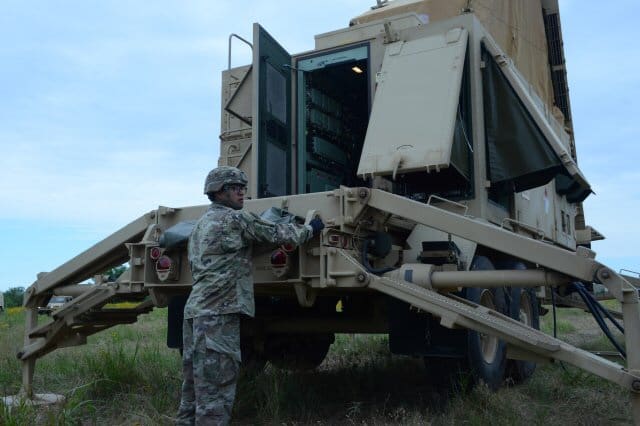
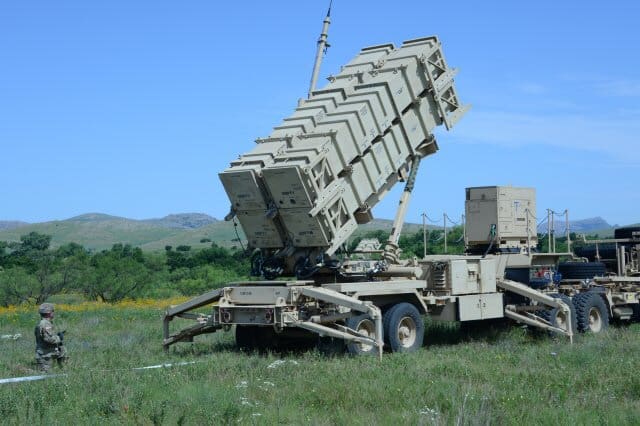
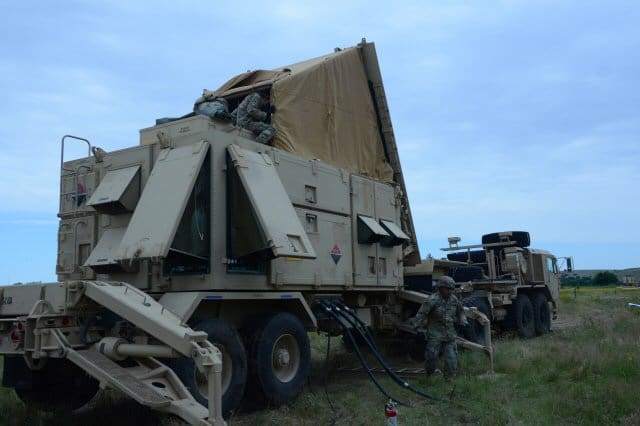
FORT SILL, Okla. — The Army completed on Monday an almost three-month-long capabilities demonstration of prototype radars aimed at replacing the one currently used by Patriot missile units.

The “sense-off” at White Sands Missile Range, New Mexico, tested three different prototypes of the Lower Tier Air and Missile Defense Sensor, or LTAMDS. The radars tracked simulated incoming missiles and live aircraft scenarios as experts observed their capabilities.

A board will convene to evaluate the data collected and the test results to select a single vendor for the LTAMDS contract by Sept. 30, said Terry Young, senior advisor to the director of the Air and Missile Defense Cross-Functional Team of Army Futures Command, Brig. Gen. Brian Gibson.

“We’re pleased with the conduct of the competition so far; many stellar Soldiers and civilians from varied organizations across our Army came together and worked very hard as a team to ensure a fair and thorough competition was conducted,” Young said. He made three trips out to White Sands this spring to observe each of the three vendors’ prototypes in action.

The plan is to field the new radar to the first Patriot battalion by the 4th quarter of fiscal year 2022, Young said. Eventually 15 battalions will be fielded by the end of FY 2031.

“The Patriot system has been around since the late ’70s,” he said, explaining that the radar system has been patched and updated continuously to keep pace with evolving threats over the last 40 years.

“Industry, technicians and our Patriot Soldiers have done wonders to keep the system updated to where it’s at today,” he said of the Patriot radar, but added that technology has grown by “leaps and bounds” over the past few years. “It’s time to get a new radar out there to keep up with the future fight,” he said.

With the proliferation of unmanned aerial systems and new technologies by near-peer nations such as China and Russia, U.S. air superiority on a future battlefield can no longer be taken for granted, Young said. This places increased importance on air and missile defense, he explained.

The LTAMDS is the No. 4 program of the four efforts the Air and Missile Defense CFT is currently working on, he said.

MSHORAD

The No. 2 priority program is the Maneuver Short Range Air Defense System, or MSHORAD, a new Stryker variant with a turret that will hold two hellfire missiles encased in an external pod, an M230LF 30mm chain gun, a 7.62 machine gun and another external pod housing four Stinger missiles.

The first five MSHORAD prototypes are on schedule to be delivered to the Army for testing beginning in October, Young said. The Army Test and Evaluation Command will “put it through the gamut and Soldiers will eventually be placed on the system to give their feedback through a series of touchpoints,” he said of the new weapon system.

The Army Futures Command, the acquisition community, AMD CFT and the Air Defense community are all very proud of the MSHORAD program and consider it a great example of teamwork and a “quick win” for the Army, Young said. By the second quarter of FY 23, the goal is to have 144 of the MSHORAD systems off the assembly line to field four complete battalions.

IRON DOME

The No. 3 priority program the CFT is working on is the Indirect Fire Protection Capability, or IFPC, to defeat everything from rockets and mortars to incoming cruise missiles.

“Right now, we’re thinking ‘Iron Dome’ offers the best solution for an initial capability for IFPC,” Young said. Iron Dome is an air defense system used by Israel effectively in over 1,900 combat engagements, he said. Further testing and experimentation with the Iron Dome System and its components will take place and help inform the Army’s enduring solution for IFPC, he said.

Young was part of a team that that went to Israel earlier this year to get briefed and observe the Iron Dome and its capabilities in action. The team included the AMD CFT director, the Air Defense Artillery School commandant and elements from Program Executive Office Missiles and Space.

The U.S. is currently negotiating with Israel for a contract to purchase two batteries of the Iron Dome system. These will be tested to see if the system can bridge the gap between the MSHORAD and the Patriot in order to protect high-value, fixed and semi-fixed assets, Young said.

BATTLE COMMAND SYSTEM

Currently, the No. 1 priority of the CFT is the Integrated Air and Missile Defense Battle Command System or IBCS, Young said. This system has made great progress in the last couple of years and recently became the responsibility of the CFT.

IBCS is a critical program for Air Defense and many other programs depend on its success, he said. “Many agencies and Soldiers are working hard on it and we have high expectations for a successful program,” he said.

A limited user test, or LUT, for the IBCS is planned for next spring at White Sands Missile Range.

The main objective of the AMD CFT is to cut the acquisition time for future weapon systems and equipment in half or less, “while at the same time ensuring a quality product that is cost-efficient and safe gets into the hands of our Soldiers,” Young said.

By Gary Sheftick, Army News Service

Col Matt Allen Assumes Command of 24th SOW – The Air Force’s Sole Special Tactics Wing

Wednesday, June 26th, 2019

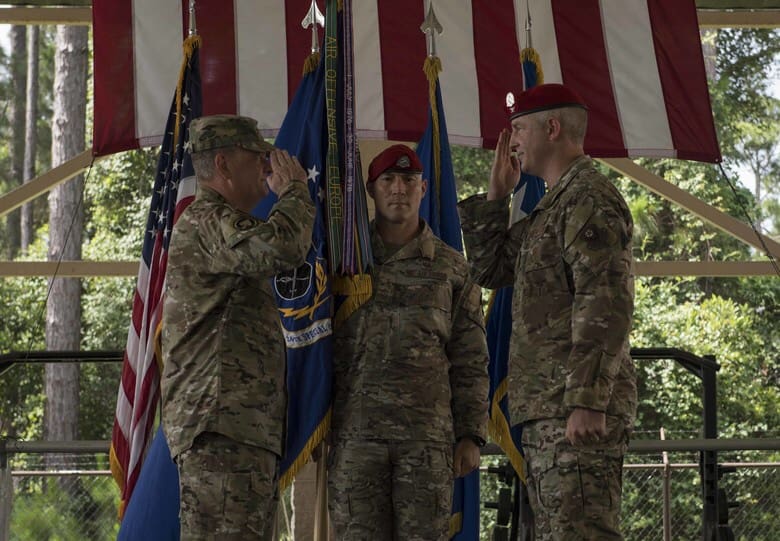
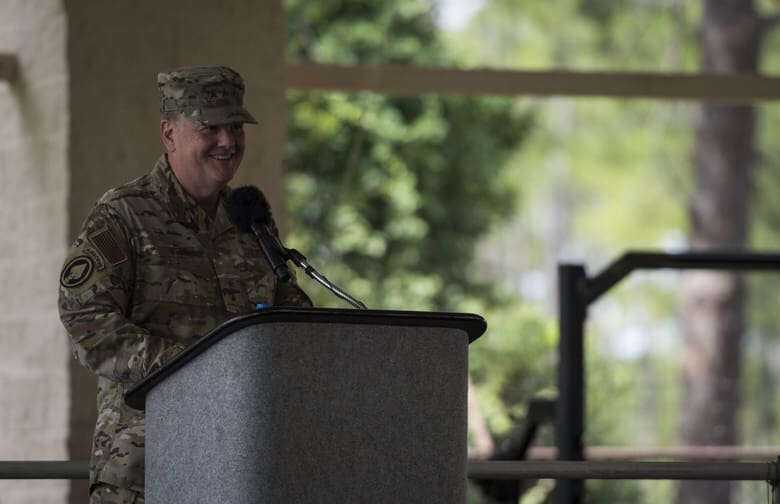
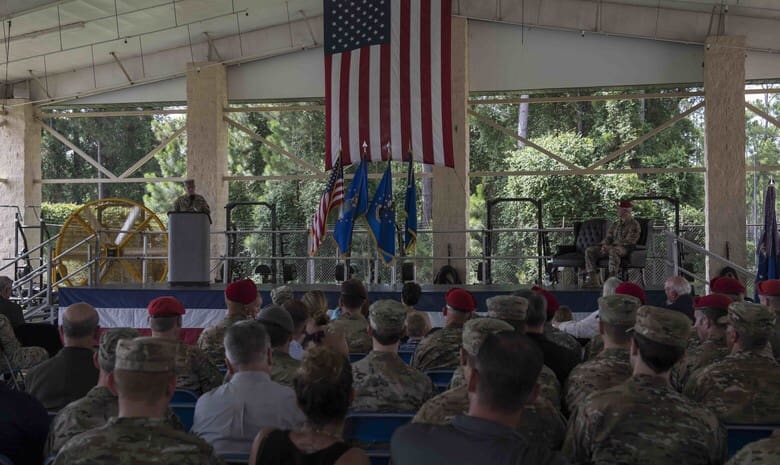
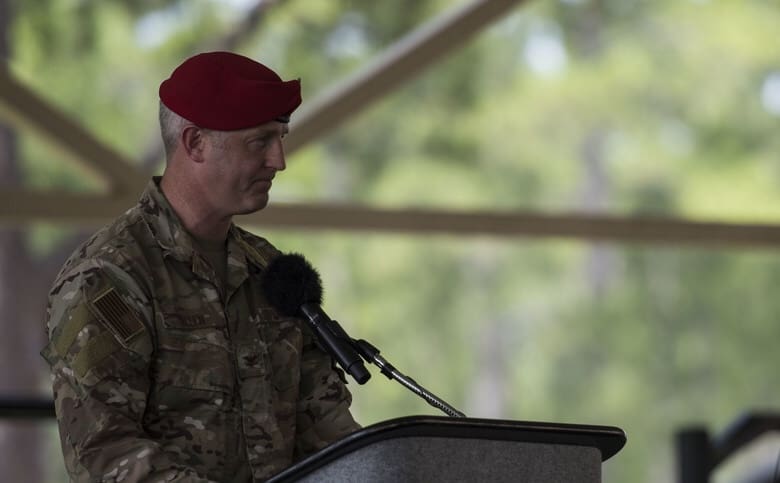
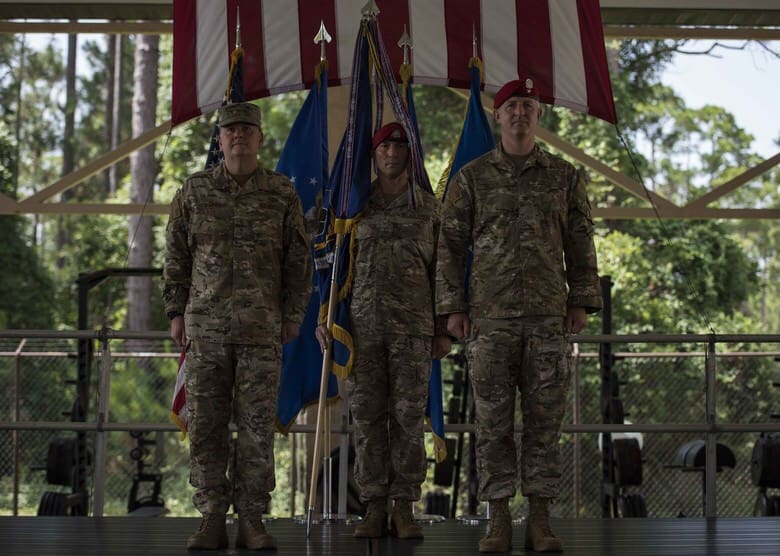
HURLBURT FIELD, Fla. – U.S. Air Force Col Matt S. Allen, a Special Tactics Officer, assumed command of the 24th Special Operations Wing during a ceremony at 10 a.m., June 24 at Hurlburt Field, Florida.

U.S. Air Force Lt. Gen. Brad Webb, commander of Air Force Special Operations Command, presided over the ceremony.

The 24th SOW is the only Special Tactics wing in the U.S. Air Force. The primary mission of the wing is to provide Special Tactics forces for rapid global employment to conduct global air, space, and cyber-enabled special operations across the spectrum of conflict to prepare for, fight, and win our nation’s wars. The 24th SOW is U.S. Special Operations Command’s tactical air/ground integration force and the Air Force’s special operations ground force that leads global access, precision strike, personnel recovery and battlefield surgery operations.

Since April 2018, when the 24th SOW had their last change of command, Special Tactics operators have conducted 264 combat missions, controlled over 500 aircraft and removed more than 730 enemies from the battlefield. Webb commended their efforts.

“To the 24 SOW, particularly, this is the message – you guys continually impress. You lead this command, AFSOC, in many ways,” Webb said. “This [major command] is drafting off the intellectual energy of this wing, and I am not ashamed to say that. Actually, you’re making us that much better.”

As the commander of the 24th SOW and roughly 2,500 Airmen, Allen is responsible for preparing Special Tactics forces to conduct global air, space, and cyber-enabled special operations across the spectrum of conflict to prepare for, fight, and win our nation’s wars.

“This is about putting the right person at the right place in the right time, and that person is Col. Matt Allen,” Webb said. “Matt, of course you are going to command during interesting times. You will lead your charges while you balance the demands of the present, counter [violent extremist organizations], with what is frankly, right on our door step or what will be in the future, and is expressed in the National Defense Strategy – great powers competition.”

Prior to assuming command of the 24th SOW, Allen was the commander of the 720th Special Tactics Group, here.

Over a 20-year career, Allen has served in three Special Tactics Squadrons as Team Leader, Director of Operations, and Commander. Colonel Allen has led and participated in joint special operations in Operations ENDURING FREEDOM, IRAQI FREEDOM, and ENDURING FREEDOM-Trans Sahara.

“I am proud and humbled to be here,” Allen said. “Immensely proud of this organization and our professional standards and incredibly humbled at the enormity of the task that lies ahead of us.”

Air Force Special Tactics is the most highly decorated community in the Air Force since the end of the Vietnam War and has received one Medal of Honor, nine Air Force Crosses, 46 Silver Stars, nearly 650 Bronze Stars medals (more than 250 with valor), and hundreds of Purple Hearts.

“Our men and women provide access, strike, recovery, and battlefield surgery across the spectrum of conflict, and foundational to this, is mission command,” Allen said. “The joint team depends on us to get it right the first time, every time, and we will continue to deliver.”

24th Special Operations Wing Public Affairs, Senior Airman Joseph Pick and Senior Airman Rachel Yates

Max Talk 27 – GEAR: Getting your Guerrilla on: Fight Light!

Monday, June 24th, 2019

This is the twenty seventh installment of ‘Max Talk Monday’ which shares select episodes from a series of instructional videos. Max Velocity Tactical (MVT) has established a reputation on the leading edge of tactical live fire and force on force training. MVT is dedicated to developing and training tactical excellence at the individual and team level.

A slight change of direction from tactical videos, this is a look at running light kit without a plate carrier / ballistic plates. Utilizing a battle belt with chest rig, adding a suitable backpack as necessary for patrols. It’s certainly a reality that in any kind of collapse or disaster situation,  many citizens will not, for many reasons, wear plate carriers. Reasons may include cost,  long-term duration of the crisis, temperature and environment, duration of missions, fitness levels, lack of food, general exhaustion.

Detailed explanations can be found in the MVT Tactical Manual: Small Unit Tactics.

Max is a tactical trainer and author, a lifelong professional soldier with extensive military experience. He served with British Special Operations Forces, both enlisted and as a commissioned officer; a graduate of the Royal Military Academy Sandhurst. Max served on numerous operational deployments, and also served as a recruit instructor. Max spent five years serving as a paramilitary contractor in both Iraq and Afghanistan; the latter two years working for the British Government in Helmand Province, Afghanistan.


Website: Max Velocity Tactical

YouTube: Max Velocity Tactical

Excellence in Tactical Training.